💥Join UPSC 2027,2028 Mentorship (July Batch) + XFactor Notes & Microthemes PDF

Author: Explains

  • National Apprenticeship Promotion Scheme

    • Outlay: Rs. 10,000 crore
    • Target: 50 lakh apprentices to be trained by 2019-20
    • Implementing Agency: Director General of Training (DGT) under Ministry of Skill Development and Entrepreneurship (MSDE)

    Incentivising employers:

    • It incentivises employers to engage apprentices
    • 25% of the total stipend payable to an apprentice would be shared with employers directly by Government of India
    • It is for the first time a scheme has been designed to offer financial incentives to employers to engage apprentices

    Basic training:

    • It also supports basic training which is an essential component of apprenticeship training
    • 50% of the total expenditure incurred on providing basic training would be supported by Government of India

    Benefits:

    • Will catalyze the entire apprenticeship ecosystem in the country and will offer a win-win situation for all stakeholders
    • It is expected to become one of the most powerful skill-delivery vehicle in the country

    Why Apprentices Training?

    • Apprenticeship Training is considered to be one of the most efficient ways to develop skilled manpower for the country
    • It provides for an industry led, practice oriented, effective and efficient mode of formal training
    • The National Policy of Skill Development and Entrepreneurship, 2015 launched by the Prime Minister focuses on apprenticeship as one of the key components for creating skilled manpower in India.
    • The present scheme also aims to achieve the objective as stated in the National Policy, 2015
    • The policy proposes to work pro-actively with the industry including MSME to facilitate tenfold increase opportunities in the country by 2020-20
  • Ask a Question, Answer a Question – Round 2

    The last dinner table experience was amazing. So many teachers and so many students! Click here to go to visit the Round 1

    This time, we intend to tweak the concept a little bit. Since prelims are fast approaching, let’s make it more useful.

    Do one of the following:

    1) Ask for a memory trick/ mnemonic which can help you retain a difficult passage in a subject.

    2) Suggest a memory trick on a difficult subject/ chapter which can help the readers.

    You may want to tell your strong points/ favorite subjects/ sub subjects which can help other users ask better queries.


    PS – Please, please, please – do not ask very vague questions, “How to remember all the names of the RED list?”

    PPS – Hope you have read Dr. V’s tit bits and his uncanny explanations on prelims questions. Try to step into his shoes and come up with memory hacks!

    PPS #2 – To the readers who view this blog on the app, you won’t be able to have a look at the comments so please open this blog over mobile or desktop web

  • [Update] Ask a Question, Answer a Question – Round 1

    Major Update:

    Hats off to the community for an amazing participation. We never do this thing (flashing numbers and claiming a top spot etc.), but these numbers are insane. Notice the REAL time users. If the participation remains this high over the weekend, we will make it a weekend affair!


    Think of this as a dinner table conversation with no theme. The idea of this blog is to experiment with a hypothetical BIG family dinner table setting!

    Do one of the following:

    1) Ask CD readers a question.

    2) Answer someone’s question.

    You may want to tell your strong points/ favorite subjects/ sub subjects which can help other users ask better queries.


    PS – Please, please, please – do not ask very basic questions akin to “i am in class 12th but want to become an IAS officer, what to do!”

    PPS – No questions on what book to study. But yeah you can ask about opinions on books, classes, subjects, optionals etc.

    PPS #2 – To the readers who view this blog on the app, you won’t be able to have a look at the comments so please open this blog over mobile or desktop web

  • Government Schemes for the development of North East India

    #1. Non-lapsable Central Pool of Resources

    Background:

    • The North Eastern Region (NER) comprises 8 States viz. Arunachal Pradesh, Assam, Manipur, Meghalaya, Mizoram, Nagaland, Sikkim and Tripura
    • All the States in the NER are Special Category States whose Development Plans are centrally financed on the basis of 90% Grant and 10% Loan
    • In October 1996, the then Prime Minister announced “New Initiatives for North Eastern Region” and stipulated that at least 10% of the Budget(s) of the Central Ministries/Department will be earmarked for the development of North Eastern States
    • But, what if they are not able to use all funds? We created a Central Pool of Resources for the North East out of the unspent amount of stipulated 10% of GBS to support infrastructure development projects in the North East
    • Subsequently, this fund became non-lapsable

    Objective:

    The broad objective of the Non-lapsable Central Pool of Resources scheme is to ensure speedy development of infrastructure in the North Eastern Region by increasing the flow of budgetary financing for new infrastructure projects/schemes in the Region.

    Funds from the Central Pool can be released for State sector as well as Central sector projects/schemes.


    #2. North East Rural Livelihood Project

    • North East Rural Livelihood Project (NERLP) is implemented in 4 North Eastern States of Mizoram, Nagaland, Sikkim and Tripura
    • 2 districts in each of these 4 states only
    • It was launched in 2013 for a period of 5 years
    • Aiding agency: World Bank
    • Objective: Create sustainable community institutions around women Self Help Groups (SHG), Community development groups (CDG) and the youth of the select districts
  • Reusable Launch Vehicle (RLV-TD) – Everything that you need to know

    source: NDTV

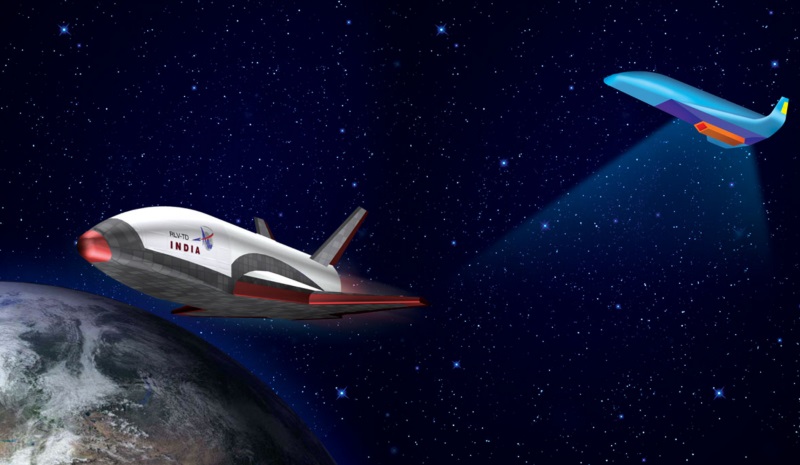
    First things first, let’s hold your excitement down – these are baby steps towards a fully functional RLV. What ISRO tested few days is a TD HEX-01 (Technology demonstrator) – It is a small, aircraft-like, winged structure.

    Before we go into the details of

    The RLV-TD is a series of technology demonstration missions that has been considered as a first step towards realising a Two Stage To Orbit (TSTO) fully re-usable vehicle.

    Technology demonstration (TD) project by ISRO is to test different parameters related from the launch to landing of a Reusable launch Vehicle viz.

    1. Testing the characterisation of aero-thermo dynamics of hypersonic flight
    2. To test autonomous mission management of hypersonic vehicles 
    3. To test re-entry technology for the vehicle

    Important Points 

    1. RLV-TD-HEX1, a prototype of actual vehicle, successfully launched on 23 May 2016 
    2. Launched From – SDRC, Sriharikota, AP
    3. 2 Stage Process – launching rocket (HS9 Solid state booster) & RLV-TD (atop the rocket)

    1st phase of testing RLV – Launched beyond the atmosphere after which RLV-TD separated & atmospheric reentry began @Ma5 (Hypersonic speed) – Navigation guidance and control system steered it accurately for a controlled descent  – landed in Bay of Bengal, 450km from Sriharikota. 

    RLV will require 5km landing airstrip which is not available as of now. Will be build at SDRC, Sriharikota in near future. 

    Ultimate Aim & Advantages of the RLV would be to send manned missions, including satellites into space and re-enter the Earth’s atmosphere without extreme P and Heat condition (T)

    1. Successful launch of RLV will have a huge impact on launching cost – will slash it down by 80% – RLV aims to achieve a low cost, reliable and on-demand space access 
    2. Future Moon and Mars missions, Inter-Planetary missions 
    3. Make India competitive Space player globally in terms of cheap affordable satellite launched (for LDCs), regular and periodic space missions and various space exercises like building its own Space Station in future similar to ISS, Tiangong-1
    4. India will join select league of nations – Only USA (Columbia, Challenger, Discovery, Endeavour, Atlantis), Russia (Soyuz) & China (Shenzhou) have their own Space flights. After successful induction of RLV, India will also have its own manned spacecraft capability.

    Development Process 

    1. In Jan 2012 – Prototype of RLV-TD was approved to be built & tested 
    2. RLV-TD developed at VSSC, Thiruvananthapuram
    3. Aerodynamic characterisation – done by National Aerospace Laboratories in India

    Thermal tiles does at VSSC, Trivandrum – Critical component during atmospheric reentry of the flight – to prevent the structure damage due to sudden rise in T due to Hypersonic speed (Ma5)

    Total 4 phases of Technology demonstration and assessment

    Technology will be developed and tested in phases through as series of experimental flights 

    1. HEX – Hypersonic Flight Experiment – Done May 23, 2016 
    2. LEX – Landing Experiment 
    3. REX – Return Flight Experiment 
    4. SPEX – Scramjet Propulsion Experiment

    The final version will take 10-15 years to be ready. Still long time to go!! Other agencies involved in building reusable launch vehicles 

    1. SpaceX – Elon Musk 
    2. ESA
    3. JAXA – Japan 
    4. Blue Origin (Jeff Bezos – Amazon) 

    Published with inputs from Gaurav
  • Coal is parching the planet as well as cooking it!

    source: Greenpeace Report

    The coal industry’s effects on water-deficient areas in the near future poses the most serious threat to water security around the world.

    Greenpeace’s analysis of the global coal-water conflict shows that the five countries with the highest water consumption by current coal power plants in red-list areas are, in order of magnitude, China, India, US, Kazakhstan and Canada.

    The world is reliant on coal for around 40% of its electricity generation and fast-growing countries such as Pakistan, Indonesia, Vietnam and Thailand are expected to join Asia’s three largest economies China, Japan and India in becoming big burners of coal.

    Although countries agreed to include 1.5C and 2C temperature targets in the Paris Climate Agreement signed in Paris last December, only a scaling up of national climate targets, and a major reallocation of energy finance, are likely to deliver a decisive shift away from coal in the power generation mix.

    Recommendations

    To reduce the coal industry’s demands on water use, Greenpeace says water management should be taken into account in all regional planning, and major restrictions placed on coal industry projects when their water demand exceeds the availability of water.

    A phase-out of coal, a long-held goal of environmental groups, should be prioritised in areas of water stress, the report adds. Policymakers should also opt for renewables, which use much less water than coal.


    Published with inputs from thethirdpole
  • USTR’s Special 301 Report & India’s Priority Watchlist status

    source: USTR

    If you have been following our coverage on this story – Intellectual Property Rights in India  along with the CD explains article written on the same link, you would be aware of a latest development –

    After releasing our National IPR Policy, our commerce minister, Nirmala Sitharaman maintained that –

    India does not recognise “unilateral measures” such as the U.S. Special 301 Report that tries to create pressure on countries to enhance IPR protection beyond the World Trade Organisation’s Agreement on Trade-Related Aspects of IPRs (TRIPS).


    So, this is a classic case of Uncle Sam bullying the minions with its internal reports!

    • The Report: Comes under US Trade Act 1974, Section 301 and is prepared by office of USTR
    • Office of US Trade Representative (USTR) has to prepare a list of countries, whose IPR regime has negative impact on American products in their markets
    • The resultant? Lo and behold, it’s the Special 301 report which rants about –
      • Weak and incompetent IPR regimes of a list of countries
      • Elaborate on their inadequate IPR policies and press for a censure

    The Special 301 report eventually ends up classifying countries into 3 groups:

    1. Priority Foreign Countries (PFC) – Red Flag! Most egregious offenders (Hello Ukraine!),
    2. Priority Watch List (PWL) – Serious offenders (India is here),
    3. Watch List (WL) – Less serious offenders
    The PWC number is *13

    Being in the PWL, India does not have much to fear and that probably is the reason why we could make bold statements like the one above! We have been a PWL since the inception of the report, which begs an inquiry into what’s the issue with India’s IPR and USTR?

    What does the 2016 Special 301 report has to say about India?

    +ives

    #1. In 2016, the United States continues to prioritize making progress on IPR issues through the High Level Working Group on Intellectual Property (IP Working Group), established by President Obama and Prime Minister Modi

    #2. The 2015 passage of the Commercial Courts, Commercial Division and Commercial Appellate Division of High Courts Bill may provide an important new tool for new patent and trademark applications

    #3. Acknowledged and applauded the establishment of India’s first anti-piracy policy unit in Telangana and Andhra Pradesh’s anti-piracy campaign, which resulted in the arrest of 11 individuals

    #4. Welcomed the deliberate and transparent process employed in India’s evaluation of a compulsory license application in 2015

    -ives

    1. Doesn’t have separate Anti-Camcording law to combat video piracy.
    2. Doesn’t have special takedown procedures against piracy websites
    3. Indian Patents Act prohibits “ever greening” of patents. As a result, Novartis lost patent of anti-cancer drug “Glivec”. USTR interprets it as an obstacle to IPR of MNCs.
    4. India permitted a domestic company NATCO to produce cheaper generic version of Bayer Pharma’s patented drug Nexvar. USTR interprets such “Compulsory licensing” as an obstacle to IPR of MNCs.
    5. India’s Drug Price Control Order 2013, permits certain Indian manufactured drugs to be sold at higher price. Same relaxation not given to foreign companies.
    6. India is the top supplier of counterfeit pharmaceuticals to USA. Patent holder lose billions of dollar each year due to counterfeit / pirated products.

    Should India (really) worry about the Priority Watchlist tag?

    1. Special 301 report violates WTO principles. It permits US government to take unilateral actions against any country. Despite the fact that USA, India, China – all have agreed to sort disputes through WTO dispute resolution mechanism
    2. Americans have just kept the carrot dangling, by keeping India in the ‘Priority Watch List’, so that the threat remains. And, OCRs are nothing but keeping the pressure on, so US will continue to play their games with Modi or whoever else comes in power. Americans only concerned with maximizing their profit. (Hardeep Singh Puri, Ex-UN representative)

    MCQs

    Q1. One of the reasons why USTR included India under the “priority watchlist” in its Special 301 report:

    1. Indian laws permit ever greening of patents by domestic companies but deny the same to Foreign companies.
    2. India is the biggest supplier of counterfeit medicines to USA.
    3. Sun Pharmaceutical’s plant in Punjab was violating quality guidelines set by US-FDA.
    4. None of above

    Q2. Which of the following statements are correct?

    1. US Trade Act permits their government to impose sanctions on “Priority foreign countries” listed under USTR’s special 301 report.
    2. Apart from India, Ukraine is also in “priority foreign country” list
    3. Despite Ukraine being a “Priority foreign country” under Special 301 report, USA has deferred sanctions on Ukraine, given the ongoing Crimean crisis.

    Correct choice

    1. Only 1 and 2
    2. Only 2 and 3
    3. Only 1 and 3
    4. All of them

    Q3.Correct statements about “Compulsory License” in Patent law?

    1. It is an Authorization given to a third party to manufacture a patented invention at cheaper price, without original patent owner’s willful consent.
    2. As such, Compulsory License is not permitted under Indian Patents Act, but SC has permitted it in Nexvar case for larger public interest.
    3. Both A and B
    4. Neither A nor B

    Q4. Incorrect statements about “Ever Greening” in Patent law?

    1. It is a practice of extending patents on pharmaceutical products by making slight changes to a drug molecule.
    2. Indian Patent Act prohibits ever greening but permits compulsory licensing.
    3. Both A and B
    4. Neither A nor B

    Q5. Indian Patent Controller General gave compulsory license to NATCO to manufacture Bayer pharma’s anti-cancer drug “Nexvar”, because _____.

    1. Bayer pharma was “evergreening” the patent of the drug molecule.
    2. Bayer pharma had forged clinical trial records to obtain the patent.
    3. Bayer pharma had obtained patent only for Germany and not for India.
    4. Bayer pharma was selling patented drug at an unaffordable price to Indian patients.

    Q6. Novartis lost patent right over its anti-cancer drug Glivec in India, because ____.

    1. Novartis was selling imported drug at an unaffordable price to Indian patients.
    2. Novartis had forged clinical trial records to obtain the patent.
    3. Novartis had obtained patent only for Switzerland and not for India.
    4. Novartis was “ever-greening” the patent of the drug molecule.

    Published with inputs from Gaurav
  • Mandates of International Seabed Authority & an introduction to Rare Earth Minerals

    • ISA: International Seabed Authority | HQ @ Kingston, Jamaica
    • ISA is a UN agency estd in 1995 under UNCLOS (all 167 member nations under UNCLOS are also ISA members) and has the mandate to issue licenses regarding exploration and mining of deep marine resources particularly deep seabed mining in International waters (beyond 370 km in Continental Shelf region)
    • Note: US is an observer state
    members in blue | observers in yellow

    ISA has set environmental regulations regarding marine exploration activities BUT not mining regulations for underwater deep seabed mining.

    By now ISA has opened 1.2million sq. km area for seabed exploration (one-third of India’s area) by granting 26 licenses since 2001 for exploration and mineral rights.

    Who can engage in seabed mining?

    1. ISA
    2. State owned enterprises
    3. Govt. sponsored companies

    Govt. which applied for licenses include – China, India, Russia, Singapore, Germany & UK & US defence major Lockheed Martin

    But why is Seabed mining such a hot topic?

    The vast repository of minerals, including the precious cobalt, zinc, manganese and rare earth minerals (REM) that are needed for smart phones, laptops and hybrid cars, are present in this hitherto unexplored area.

    Typically, an ore from seabed deposit is 7 times enriched with minerals than that mined from land. So you can imagine the earnesty with which nations and organisations want to pursue this area of influence (as they run out of resources on land).

    This repository of minerals is found in 3 kind of ores:

    1. Polymetallic manganese nodules that remain strewn across the ocean floor
    2. Cobalt-rich ferromanganese crusts that cover the seamounts
    3. Polymetallic sulphide deposits around hydrothermal vents

    A hydrothermal vent is a fissure in a planet’s surface from which geothermally heated water issues. As you can imagine, these would be commonly observed in volcanically active places. 

    At least 20 countries have been carrying out exploration activities since 2001. Deep sea mining is witnessing a fast revival after a lull of almost 40 years.

    What are these Rare Earth Minerals (REM)?

    • Rare earth minerals – 17 in numbers – D block elements – Important because of their applications in the fields of renewable energy (wind turbines, solar panel), defence (LASER, Radar), electronic gadgets (smartphones), Hybrid vehicle components, Medical imaging etc.
    • China produces ~95% of the total REMs followed by USA and India. Add to that, China has imposed quota limits on REM’s exports

    What’s up with India wrt. REMs?

    • In India, Monazite is found mainly in Rajasthan, Chattisgarh and Jharkhand. The problem here is that its extracts contain radioactive Thorium because of which it cannot be stored (hence, not mined)
    • That being said, India has collaborated with Japan since 2012 to develop rare earth materials
    • An agreement was signed for exploration and production of rare earths, following which India is setting up a monazite processing plant in Odisha

    This is how India’s resource distribution looks like

    If you were an environmentalist, you would list down these (adverse) consequences to sea bed mining

    1. Impact to the endemic species because of huge churning of the sediments and debris – exposure to sunlight might impact the growth and reproduction of species
    2. Destruction of marine species may impact the CO2 absorption capacities – hello global warming!
    3. Large robots, accompanied noise pollution may destroy habitats of rare species

    Concerns regarding ISA and mining licensing approvals

    1. ISA does not have the power to decide whether seafloor mining is good or bad. Its establishment is more tilted towards “exploiting” the resources
    2. There is insufficient scientific data to understand the impacts of deep sea mining; there are no regulatory frameworks in place to govern mining operations; and the capacity to enforce such frameworks does not yet exist
    3. No taxation/royalty on seabed miners, to keep a check on extraction of ores and controlling the mining through yearly ceiling limits and penalty clause to violators


    Published with inputs from Gaurav
  • [E&B Bodies #8] National Ganga River Basin Authority

    Need

    The need for revamping the river conservation programme was widely recognised in view of the shortcomings in the approach followed in GAP. It was felt necessary that a new holistic approach based on river basin as the unit of planning and institutional redesign should be adopted.

    Accordingly, the Government of India has given Ganga the status of a National River and has constituted the National Ganga River Basin Authority (NGRBA) on 20th February 2009 under Section 3(3) of the Environment (Protection) Act, 1986

    About

    • It is a planning, financing, monitoring and coordinating body of the centre and the states
    • The Ministry of Water Resources, River Development and Ganga Rejuvenation(MoWR, RD & GR) is the nodal Ministry for the NGRBA
    • It is chaired by the Prime Minister and has as its members the Union Ministers concerned, the Chief Ministers of the States through which Ganga flows, viz., Uttarakhand, Uttar Pradesh, Bihar, Jharkhand and West Bengal, among others
    • This initiative is expected to rejuvenate the collective efforts of the Centre and the States for cleaning the river

    Objectives

    • Ensuring effective abatement of pollution and conservation of the river Ganga by adopting a river basin approach to promote inter-sectoral co-ordination for comprehensive planning and management
    • Maintaining environmental flows in the river Ganga with the aim of ensuring water quality and environmentally sustainable development

    Functions

    It has both regulatory and developmental functions. It will take measures for effective abatement of pollution and conservation of the river Ganga in keeping with sustainable development needs. These include:

    • Development of a river basin management plan
    • Regulation of activities aimed at prevention, control and abatement of pollution in Ganga to maintain its water quality, and to take measures relevant to river ecology and management in the Ganga basin states
    • Maintenance of minimum ecological flows in the river Ganga
    • Measures necessary for planning, financing and execution of programmes for abatement of pollution in the river Ganga including augmentation of sewerage infrastructure, catchment area treatment, protection of flood plains, creating public awareness
    • Collection, analysis and dissemination of information relating to environmental pollution in the river Ganga
    • Investigations and research regarding problems of environmental pollution and conservation of the river Ganga
    • Promotion of water conservation practices including recycling and reuse, rain water harvesting, and decentralised sewage treatment systems
    • Monitoring and review of the implementation of various programmes or activities taken up for prevention, control and abatement of pollution in the river Ganga
    • Issue directions under section 5 of the Environment (Protection) Act, 1986 for the purpose of exercising and performing these functions and for achievement of its objectives

    Progress

    • The NGRBA is fully operational and is also supported by the state level State Ganga River Conservation Authorities (SGRCAs) in five Ganga basin States which are chaired by the Chief Ministers of the respective States
    • Under NGRBA programme, projects worth Rs. 4607.82 crore had been sanctioned up to 31st March 2014
    • It has started the Mission Clean Ganga with a changed and comprehensive approach to champion the challenges posed to Ganga through four different sectors- wastewater management, solid waste management, industrial pollution and river front development

    Task for you

    • Critically examine the magnitude of Ganga river pollution, its causes and challenges faced by the government in cleaning the river
    • Despite the enormous funds and time spent, efforts made to clean the River Ganga have not yielded desired results. Critically examine


    Published with inputs from Swapnil