đŸ’„Join UPSC 2027,2028 Mentorship (July Batch) + XFactor Notes & Microthemes PDF

Author: Explains

  • Who should have the last word on governance in Delhi?

    What exactly is the bone of contention?

    The recent disputes over governance in Delhi takes us back to question the fundamental philosophy of its formation and evolution over time.

    Even though Delhi has an elected Legislature having powers over all, save a few State List subjects, the ultimate authority still remains with the GOI, which could override the Delhi Government on any subject.


    Does this issue have any historical precedence? Or it’s just a Kejri-Modi battle to the glory?

    This is not a new question — the Constituent Assembly witnessed a contested discussion, with Deshbandhu Gupta supporting responsible government, and BR Ambedkar favouring greater control by the GOI owing to Delhi’s status as the national capital.


    A quick recap to the present day


    What are the possible options to resolve this dispute?

    There are three principles that must form the bedrock of formulating a new compact between the Delhi Government and GOI:

    1. Recommendations of Sitaramayya Committee set up by the Constituent Assembly to study this subject, Delhi must have a responsible government.
    2. The principle of subsidiarity must be observed for Delhi as it is observed for all other states. Meaning? 
      • This implies that the municipal corporations and other local bodies in Delhi, must be answerable first and foremost to the Delhi Government and not the GOI.
    3. The overriding power of the GOI which is currently all-pervasive must be re-looked into.

    With inputs from the Vidhi Centre For Legal Policy
  • Why does Dengue Wreck Havoc in Delhi’s Backyard?


    What is Dengue?

    According to the World Health Organisation, Dengue is a vector-borne disease transmitted by the bite of an infected female Aedes Aegypti mosquito.

    The mosquito becomes infected when it feeds on the blood of a person infected with the virus. After about one week, the mosquito can then transmit the virus while biting a healthy person.

    How many strains of dengue are there?

    There are 4 serotypes of the virus that causes dengue. These are known as DEN-1, DEN-2, DEN-3, DEN-4.

    Infection with one strain will provide life-time protection only against that particular strain. However, it is still possible to become infected by other strains and develop into severe dengue.

    You might not be grilled by UPSC in Mains but in case you are a doctor, this might come in handy during interviews!

    Can it spread from person to person?

    Dengue cannot be spread directly from person to person. However, a person infected and suffering from dengue fever can infect other mosquitoes.

    Where does dengue happen?

    Most cases occur in tropical areas of the world, including the Indian subcontinent, Southeast Asia, Southern China, Taiwan, the Pacific Islands, the Caribbean, Mexico, Africa, Central and South America.

    What are the symptoms of dengue?

    Dengue causes flu-like symptoms and lasts for 2-7 days. Dengue fever usually occurs after an incubation period of 4-10 days after the bite of the infected mosquito.

    High Fever (40°C/ 104°F) is usually accompanied by at least two of the following symptoms: headaches, pain behind eyes, nausea, vomiting, swollen glands, joint, bone or muscle pains and rash.


    What happens in severe dengue?

    Severe abdominal pain, persistent vomiting, bleeding gums, vomiting blood, rapid breathing, fatigue/ restlessness.

    What is the treatment for dengue?

    There is no vaccine or specific medication for dengue fever. Patients should seek medical advice, rest and drink plenty of fluids.

    Paracetamol can be taken to bring down fever and reduce joint pains. However, aspirin or ibuprofen should not be taken since they can increase the risk of bleeding.

    Patients who are already infected with the dengue virus can transmit the infection via Aedes mosquitoes after the first symptoms appear.

    As a precautionary approach, patients can adopt measures to reduce transmission by sleeping under a treated net especially during the period of illness with fever.

    What should I do if I suspect I have dengue?

    If you suspect you have dengue you need to see a doctor immediately. To diagnose dengue fever, your doctor will:

    1. Evaluate your signs and symptoms
    2. Test your blood for evidence of a dengue virus
    3. Review your medical and travel history

    Who spreads dengue and severe dengue?

    Dengue is spread through the bite of the female mosquito (Aedes aegypti). The mosquito becomes infected when it takes the blood of a person infected with the virus. After about one week, the mosquito can then transmit the virus while biting a healthy person.

    The mosquito can fly up to 400 meters looking for water-filled containers to lay their eggs but usually remains close to the human habitation.

    Aedes aegypti is a daytime feeder: The peak biting periods are early in the morning and in the evening before dusk.

    Aedes aegypti has evolved into an intermittent biter and prefers to bite more than one person during the feeding period. This mechanism has made Aedes aegypti a very highly efficient epidemic vector mosquito.

    Where do the mosquitoes breed?

    The mosquitoes thrive in areas close to human population (urban areas).

    The dengue mosquito lays its eggs in water-filled containers inside the house and surrounding areas of dwellings (this includes non-used bottles, containers, discarded waste, tyres etc.which hold water).

    The eggs hatch when in contact with water. Eggs can withstand very dry conditions and survive for months. Female mosquitoes lay dozens of
    eggs up to 5 times during their lifetime.

    Some Technological research areas to control Dengue

    #1. Insecticide-treated materials

    Insecticide-treated materials (ITMs) consist of long-lasting insecticidal nets, curtains and wall hangings. Bednets have proved highly effective in
    preventing diseases transmitted by nocturnally active mosquitoes.

    Insecticide-treated window curtains and sheet covers can also reduce dengue vector densities and transmission.

    In studies in Mexico and Venezuela, ITMs (particularly curtains) were well accepted by the communities as their efficacy was reinforced by
    the reduction of other biting insects as well as cockroaches, houseflies and other pests.

    #2. Lethal ovitraps

    Ovitraps or oviposition traps collect the eggs laid by the mosquitoes which develop into larva, pupa and adult mosquitoes.

    Lethal ovitraps (which incorporate an insecticide on the oviposition substrate), autocidal ovitraps (which allow oviposition but prevent adult
    emergence), and sticky ovitraps (which trap the mosquito when it lands) have been used on a limited basis. Studies have shown that population densities can be reduced with sufficiently large numbers of frequently-serviced traps.

    #3. Genetically-modified mosquitoes

    There are two methods of reducing disease transmission using genetics:

    Population suppression: reduce mosquito population such that it would not be able to sustain pathogen transmission. This includes sterility,
    reduced adult longevity, or decrease larva/pupa survival.

    Population replacement: Reduce inherent ability to transmit the pathogen. Mating will alter the genetic pool of the wild population.

    And now to the main question: What are the reasons for Dengue in Delhi?

    The reason for the temporal shift, say experts, is the erratic weather and rainfall that the country has witnessed this year.

    Many scientists are in agreement that a combination of higher mean temperature in a region and high humidity fosters higher rates of dengue transmission and incidence.

    Usually when it rains, the rainwater flushes away stagnant pools that act as sites for mosquito breeding. This year, we saw rainfall early in the season which was followed by long dry spells during which there has been high humidity, especially in Delhi.

    This has enabled a shift from the usual trend of dengue transmission that we have observed and the virus has struck parts of the country earlier than usual.

    So, are there sufficient resource management in Delhi? or does it again shows a huge mismanagement crisis?

    Published with inputs from Arun
  • 193 Countries Agreed on 17 Sustainable Development Goals. Why?

    UN Secretary-General Ban Ki-moon shares this “good news”.

    After 3 years of negotiations and debate, 193 countries agreed to a set of 17 development goals more bold and ambitious than anything that has come before them.

    But what are Sustainable Development Goals? Where have they evolved from?

    These 17 Sustainable Development Goals (SDGs) – part of a wider 2030 Agenda for Sustainable Development – build on the Millennium Development Goals (MDGs).

    There were 8 MDGs and they are going to expire by the end of this year (2015).


    But why didn’t we just renew them? Why was there a need to re-evaluate and re-program the development goals?

    1. The MDGs as you can see were very focus, concrete, target oriented which was a good thing to begin with, right?
    2. Wrong – The structures and 8 categorisation metrics ended up being so rigid that we left out other more important areas.

    A 2015 UN assessment of the MDGs found they fell short for many people:

    “The assessment of progress towards the MDGs has repeatedly shown that the poorest and those disadvantaged because of gender, age, disability or ethnicity are often bypassed.”

    Okay, fair point. So what do these SDGs look like? What went into the process of coming up with these 17 blocks of SDGs?

    In response to the accusation that the MDGs were too narrow in focus, the SDGs set out to tackle a whole range of issues, from gender inequality to climate change.

    The unifying thread throughout the 17 goals and their 169 targets is the commitment to ending poverty.

    Eradicating poverty in all its forms and dimensions, including extreme poverty, is the greatest global challenge and an indispensable requirement for sustainable development. 


    The consultation process to arrive at these 17 SDGs was one of the most transparent exercise ever to be undertaken in the UN history.

    A million voices formed the part of the process.


    Very quickly then, listing down the goals:

    1) End poverty in all its forms everywhere

    2) End hunger, achieve food security and improved nutrition, and promote sustainable agriculture

    3) Ensure healthy lives and promote wellbeing for all at all ages

    4) Ensure inclusive and equitable quality education and promote lifelong learning opportunities for all

    5) Achieve gender equality and empower all women and girls

    6) Ensure availability and sustainable management of water and sanitation for all

    7) Ensure access to affordable, reliable, sustainable and modern energy for all

    8) Promote sustained, inclusive and sustainable economic growth, full and productive employment, and decent work for all

    9) Build resilient infrastructure, promote inclusive and sustainable industrialisation, and foster innovation

    10) Reduce inequality within and among countries

    11) Make cities and human settlements inclusive, safe, resilient and sustainable

    12) Ensure sustainable consumption and production patterns

    13) Take urgent action to combat climate change and its impacts (taking note of agreements made by the UNFCCC forum)

    14) Conserve and sustainably use the oceans, seas and marine resources for sustainable development

    15) Protect, restore and promote sustainable use of terrestrial ecosystems, sustainably manage forests, combat desertification and halt and reverse land degradation, and halt biodiversity loss

    16) Promote peaceful and inclusive societies for sustainable development, provide access to justice for all and build effective, accountable and inclusive institutions at all levels

    17) Strengthen the means of implementation and revitalise the global partnership for sustainable development


    Published with inputs from Sumer


  • Indradhanush to revamp PSB. Will the 7 steps work?

    The Indradhanush framework for transforming the PSBs represents the most comprehensive reform effort undertaken since banking nationalisation in the year 1970.

    What is the Indradhanush Mission?

    Government of India’s 7 point reforms to revamp public sector banks and its performance.

    Why do we need (yet another scheme) Indradhanush!

    • In the past few years, Public Sector Banks which have got predominant share of infrastructure financing have been sorely affected due to delay caused in approvals and land acquisition so, many large projects have stalled.
    • It resulted in lower profitability for PSBs, mainly due to provisioning for the restructured projects as well as for gross non-performing assets (NPAs).
    • High levels of non-performing assets in state-run banks have made it hard for the government to revive investment or accelerate growth.


    Seven Colours to resurrect PSB?

    1. Appointments: 
      • The Government decided to separate the post of Chairman and Managing Director and there would be another person who would be appointed as non Executive Chairman of PSBs.
      • This approach is based on global best practices and as per the guidelines in the Companies Act to ensure appropriate checks and balances.
      • The selection process for both these positions has been transparent and meritocratic.
    2. Board of Bureau: 
      • The BBB will be a body of eminent professionals and officials, which replace the Appointments Board for appointment of Whole-time Directors as well as non-Executive Chairman of PSBs.
      • They will also constantly engage with the Board of Directors of all the PSBs to formulate appropriate strategies for their growth and development.
    3. Capitalisation:
      • As of now,the PSBs are adequately capitalized and meeting all the Basel III and RBI norms.
      • However, the GOI wants to adequately capitalize all the banks to keep a safe buffer over and above the minimum norms of Basel III.
      • Infusion of 25,000 crore rupees of capital into debt-laden banks in this fiscal in phased manner. Out of this 20,000 crore rupees would be injected in August 2015.
    4. De-Stressing PSBs: 
      • Projects are increasingly stalled/stressed thus leading to NPA burden on banks.
      • In a recent review, problems causing stress in the power, steel and road sectors were examined.
      • Pending policy decisions to facilitate project implementation/operation would be taken up by respective Ministries.
      • Flexibility in restructuring of existing loans wherever the Banks find
        viability.
      • Six new Debt Recovery Tribunals (DRT) to speed up the recovery of bad loans of the banking sector
      • To develop vibrant debt market for PSBs in order to reduce lending pressure on banks. Strengthen asset reconstruction of companies.
    5. Empowerment: 
      • There will be no interference from Government and Banks are encouraged to take their decision independently keeping the commercial interest of the organisation in mind.
      • Banks will build robust Grievances Redressal Mechanism for customers as well as staff so that concerns of the affected are addressed effectively in time bound manner.
      • The Government intends to provide greater flexibility in hiring manpower to Banks.
    6. Framework of Accountability: 
      • A new framework of Key Performance Indicators (KPIs) to be measured for performance of PSBs.
      • Streamlining vigilance process for quick action for major frauds including connivance of staff.
    7. Governance Reforms: 
      • The process of governance reforms started with “Gyan Sangam” – a conclave of PSBs and FIs organized at the beginning of 2015 in Pune.
      • There was focus group discussion on six different topics which resulted in specific decisions on optimizing capital, digitizing processes, strengthening risk management, improving managerial performance and financial inclusion.
      • Next Gyan Sangam will be held between 14 to 16 Jan 2016 to discuss strategy with top level officials.

    Are PSBs now ready to compete and flourish in a fast-evolving financial services landscape, What say?


    Published with inputs from Arun
  • India’s Bid to United Nations Permanent Seat

    What exactly is United Nations Security Council (UNSC)?

    1. UN Security Council was created following World War II to address the failings of another international organisation, the League of Nations, in maintaining world peace.
    2. It is one of the six principal organs of the United Nations and is charged with the maintenance of international peace and security.

    Then, who holds UNSC’s power?

    1. As of now, there are 15 members on the UNSC. Five of those (mostly powers who emerged victorious in the World War II), including the US, UK, France, China and Russia are permanent members.
    2. These members have the all-important veto power which would mean that a resolution or decision would not be approved. Many a times, veto has been used for their own interests.
    3. The remaining 10 non-permanent members are elected by the General Assembly for two-year terms, starting 1 January.
    4. Five members are replaced each year. India has been elected as a non-permanent member to the UNSC for 7 such terms, the last of which was in 2011-12.

    Okay, so where does India stands in all ?

    India want a permanent membership to the UNSC for two reasons.

    1. First, the veto power, which India could use to defend its interests, say against Pakistan (just like Russia did last year over the civil war in Ukraine).
    2. Second, the sheer prestige associated with permanent membership of a multilateral forum. India’s elevation will also be an acknowledgment of its rise as a global power, ready to play a key role in the council’s objectives of international peace and security.
    3. India also believes that the UNSC, which was constituted in 1945 after the World War II, does not reflect the geopolitical realities—the emergence of a multipolar world order largely thanks to the rise of developing economies like China, Brazil and India.
    4. Also, India is the largest contributor to the UN Peacekeeping Operations (UNPKO), with nearly 180,000 troops serving in 44 missions since it was established.
    5. India is also among the highest financial contributors to the UN, with the country making regular donations to several UN organs like the United Nations Democracy Fund (UNDEF).

    Sounds like a fair ask! So who all support India for this?

    1. Four of the five permanent members have supported India’s bid. China is the only permanent member that has been ambiguous in its support for India, owing to its close ties with Pakistan.
    2. Other member states, like the United Arab Emirates (UAE), Singapore, Malaysia and the whole of the African Union have also endorsed India’s bid.

    And who opposes?

    1. India’s nuclear-armed rival Pakistan has been leading the opposition to its inclusion in the UNSC’s list of permanent members.
    2. Other countries, part of an interest group called the “Uniting for Consensus” (UfC), also curiously called “The Coffee Club”, formed in 1995, are opposed to India (and the G4’s bid) for permanent seats.
    3. Italy, Pakistan, Mexico and Egypt were founder members of the UFC. The list also includes Argentina, South Korea, Spain, Turkey and Indonesia.

    Anyway, What’s the process to get into permanent membership?

    1. The reform of the Security Council can only take place if two-thirds of UN member states vote in favour, along with an affirmative vote from all the permanent members, who enjoy the veto power.
    2. Effectively, even if India secures the support of two-thirds of UN members, who are present and voting, it would still need the five permanent members to not use the veto and thereby, prevent the adoption of the reform process.

    So far, what’s the progress from India’s side?

    1. Recently, the UN General Assembly adopted a negotiating text by consensus for the long- pending Security Council reforms, setting the stage for talks on the issue at its 70th session, boosting India’s bid for a permanent seat in the revamped world body.
    2. India termed as “historic” and “path-breaking” the adoption of the document, saying the decision puts the Inter- Governmental Process formally on an “irreversible text-based negotiations path” and changes the “dynamics” of the negotiations on achieving UNSC reforms.
    3. China, predictably, said that this was a “technical” or “roll-over” decision. Pakistan too joined the chorus. Italy too has made their opposition clear.
    4. It is widely known that majority in the UN security Council do not want the council to be expanded. And they have been using their proxies to scuttle the process. And that will be the game in town in the months to come.
    5. Now, it will be for India, to team up with other like-minded countries across continents (L-69 and G-4 groupings, to begin with), to get the UNGA to push the text-based negotiations towards conclusion in the coming months and years.

    There is no time to sit back and rejoice. The uphill task has just begun. Now, with a text in front of the UNGA, the challenge is to take it forward with optimism.


    Published with inputs from Arun
  • Demystifying The Concept Of Diplomatic Immunity

    As the news gather storm over a Saudi diplomat facing allegations of rape and assault by two Nepalese women, we thought of demystifying the concept of diplomatic immunity, its different variants and international obligations governing it.

    Diplomatic immunity is a form of legal immunity to ensure that the diplomats are given safe passage. The diplomats are not prone to legal case/prosecution under the host country’s laws.

    Now, the obvious question arises, what is the need for such kind of immunity?

    Because this helps the Diplomats to perform their functions without fear, threat or intimidation from host country. You would have guessed this as well, right? Heh. So the budding IFS officers have something to look forward! Roam freely in a country *like a boss*! But let’s look over to some sober aspects of this provision.


    Diplomatic Immunity is classified under 3 heads:

    #1. Embassy

    An embassy is a primary diplomatic presence established by one country in another that it recognises.

    • The chief official posted here is Ambassador
    • It is usually situated in the capital city
    • There is only one embassy per foreign country

    Immunity: The diplomats along with their family members enjoy complete immunity. The administrative and technical staff, who are posted at embassy, receive immunity along with their families. This kind of immunity is inviolable. It is governed by The Vienna Convention on Diplomatic Relations.

    #2. Consular/Consulate Office

    • It is generally located where many of its citizens live or visit.
    • The purpose is to provide government services to individuals living in a country where consulate is located.
      <And now you would be thinking, if there is already a embassy for this, then why do we need it all!>

      We will try to understand with an example, that is, if millions of Indians are living in US, then would it feasible for all Indians living in different parts of US to visit Washington <where the Indian embassy is located> to avail services like renewing passport, or any other assistance. No right? Similarly, if American citizen who is willing to visit India will have to get their visa by visiting embassy. Wouldn’t it be difficult for Indian’s as well as American’s?

    That is the reason, India has multiple consulate offices at US. Now, let’s move on to the kind of services a Consulate provides?

    1. Issues visas to foreign nationals
    2. Issues and renews passports for its own citizens, living in a foreign country
    3. Assists its citizens travelling abroad with issues of marriage, divorce, adoption, legal emergencies, etc.

    IFS probables might be wondering about the immunity clause for such offices

    Immunity: Diplomats posted at consulate gets immunity, except for charges of serious crimes, if a warrant is issued. However, there is no diplomatic immunity for the family. This is also governed by The Vienna Convention on Consular Relations.

    #3. International Organisations

    Some countries would have missions in international organisations. The diplomatic immunity then depends on the status provided by the country, whose mission is located at other country. For instance, India has a permanent mission at United Nation. It enjoys the status of embassy. Therefore, all the immunity of an embassy applies here.

    <Now, starts the journey for the recent controversy, the most awaited thing for the stalwarts>

    So, what are the conditions when the immunity can be waived?

    Officially, the home country can waive immunity, when the official has committed a serious crime, unconnected with their diplomatic role.

    However, it is discretion of the home country to decide whether it wants to waive it or not. Alternatively, it can also prosecute the individual in their own country.

    Won’t it be better if we explore what Vienna Convention at this point of time?

    The diplomatic immunity cannot be violated, unless the country that has posted the diplomat waives it off.

    It also says that the diplomatic residence of a diplomatic agent shall enjoy the same status <protection> as the premises of mission. <Recently, the Gurgaon police violated this clause and entered the residence of Saudi diplomat to rescue the two Nepalese women.>

    I hope, if you are able to remember the curious case of Devyani Khobragade. Hope you could recall that! let’s bring that in this big picture now.

    She was posted as a deputy consul general at the Indian Consulate in New York. Since, she was posted in a consulate, she was governed under the Vienna Convention on Consular Relations, which provided her limited immunity. This led to her arrest and strip searched for alleged visa fraud, violating domestic laws of US.

    And later on, as you would remember, the Indian govt. transferred her to the Permanent Mission of India to UN, which enjoys the status of an embassy.

    Hope, it clears the grey areas present in the diplomatic immunity!


    Published with inputs from Pushpendra


  • Debating Santhara: The Right to Death

    What is Santhara?

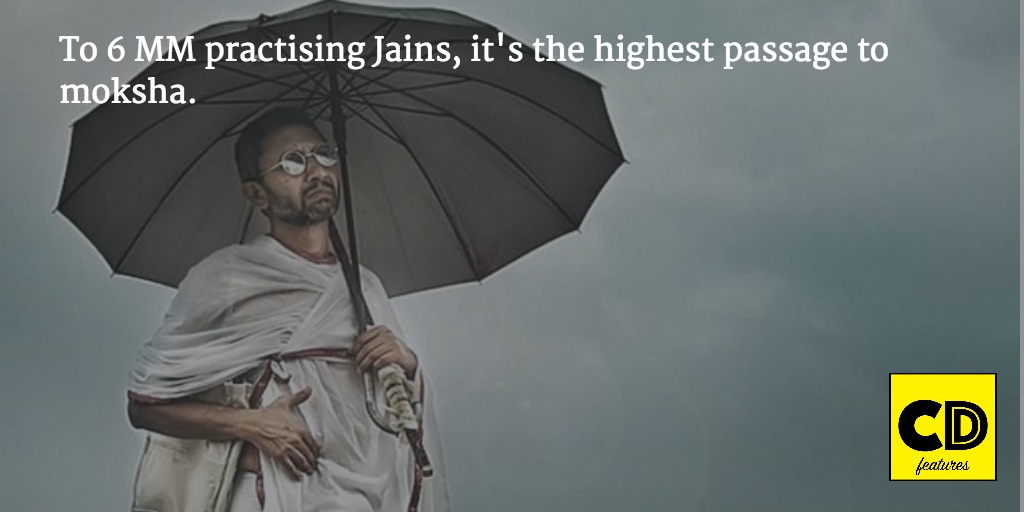
    Santhara also called as Sallekhana, Samadhi-marana, Sanyasana-marana, is the Jain ritual practice of facing death voluntarily at the end of one’s life.

    What’s so significant about this practice?

    1. From Jain community, Santhara, is believed to have been practised since the foundation of Jainism and finds mention in its agams (religious texts).
    2. The Pratikramana Sutra in Shravaka Anuvrata (the code of conduct for Jains) clearly explains santhara, saying that when all purposes of life have been served, or when the body is unable to serve any more purpose, a person can opt for it.

    Then, why do some people oppose it?

    1. Human rights activists alleged that it’s a social evil, and old people are made to undertake Santhara by family members who don’t want to look after them for a variety of reasons.
    2. The petition in the High Court compared the practice with that of Sati.

    Okay, so how did it all started? When did the case come up before the Rajasthan High Court?

    1. In 2006, Jaipur-based lawyer Nikhil Soni filed a public interest litigation and sought directions under Article 226 to the central and state governments to treat Santhara, the fast unto death practised by Swetambara Jains (Digambars call it Sallekhana), as illegal and punishable under the laws of the land.
    2. Calling it suicide and, therefore, a criminal act, the PIL also sought prosecution of those supporting the practice for abetment to suicide.
    3. The PIL argued that death by Santhara was not a fundamental right under Article 25 (freedom of conscience and free profession, practice and propagation of religion), because it violated the right to life guaranteed under Article 21. It argued that religious freedom is subject to public order, morality and health.

    What did the High court say in its order?

    1. The Bench said that it was not established that Santhara or Sallekhana is an essential practice of the Jain religion. Jain scriptures or texts don’t say that moksha (salvation) can be achieved only by Santhara.
    2. According to the judges, it was one thing to argue that Santhara is not suicide, and quite another to say that it is a permissible religious practice protected by Articles 25 and 26.
    3. The court asked the state to stop the practice in any form, and directed that any complaint made in this regard be registered as a criminal offence in accordance with Section 309 (attempted suicide) or Section 306 (abetment to suicide) of the IPC.

    So many articles cites, so much legalities brought into the picture! So, what did the Jain Community say?

    1. Jain community defends that, Santhara is an ancient religious practice aimed at self-purification.
    2. The vow of Santhara/Sallekhana is taken when all purposes of life have been served, or when the body is unable to serve any purpose of life. It is not the giving up of life, but taking death in their stride.

    How did the Jain community react to the judgment? What line have the Rajasthan, Madhya Pradesh and central governments taken?

    1. No government has articulated an official line, but politicians, including ministers, have criticised the judgment.
    2. Members of the Jain community took to the streets immediately by organising protest rallies.
    3. On August 24, the community took out massive silent rallies in several cities and towns. In meetings held before the rallies, members of the community openly criticised the judges, calling them ignorant and disrespectful of religious practices.

    How does constitution interpret this issue? <and this is the part which should be important for an IAS Aspirant>

    1. The preamble to the Constitution states that the Constitution secures to all its citizens liberty of thought, expression, belief, faith and worship.
    2. Article 25 guarantees that every person in India shall have freedom of conscience and a right to profess, practice and propagate religion.
    3. Article 29 goes further and declares that any section of citizens having a distinct culture shall have a right to conserve the same. If any law comes in conflict with constitutional rights, it will have to yield.”

    Relief from SC judgement?
    The Supreme Court restored the Jain religious practice of a ritualistic fast unto death by staying an order of the Rajasthan High Court, which compared it to an act of suicide.

    Some philosophical issues which spring out of this debate

    This has been a debate that pits state versus individual; law versus custom; and the right to life versus the right to choose the outcome of one’s own life.

    1. In the context of law the issue is presented as a conflict of rights, that is, between the right to freedom of religion and the right to life. When posed in this way, Santhara comes to be cast as a ritual or a religious practice, an action, rather than a way of knowing and being.
    2. It is framed as a choice to die rather than as a fast unto freedom, expressed in terms such as “she left her body” as opposed to “she died” or that “she is dead.”
      The practice exemplifies how the subject or self is regarded as continuing to exist and flourish long after it leaves the body, rather than as coming to an end.
    3. This practice cannot be compared to Sati, as some have done, arguing that it is coerced and mainly forced upon women. Not only is the vow made by both men and women in the Jain community, the fast is undertaken by the concerned subject for self-realisation, and not for some dead husband or for the sake of honour, self sacrifice, and all the other hugely problematic reasons given to justify violent acts towards women through the language of familialism and sacrality.

    Have other religious practices faced legal challenges earlier?

    1. Bal Diksha, the controversial practice in which children as young as 8 years take diksha to become ‘Bal Munis’, a role that requires them to observe a strict, regimented lifestyle, has been challenged in the courts.
    2. Case was filed in Goa against a naked Digambar monk for obscenity. When an amendment in the Wildlife Protection Act was proposed to ban domestic trade of peacock feathers, the community feared that monks would be stopped from carrying peacock feathers.
    3. The community is also against a ban on open defecation because that is the way some monks answer nature’s call.

    So, what’s your opinion on Santhara ritual? It’s curse or sacred in fundamental nature of ritual?


    Published with inputs from Arun
  • India’s immunization Program: How is IPV different from OPV?

    Before we proceed to understand how IPV works, let us first explore the concept of vaccination?


    The basic principle behind the vaccination/immunization is that the pathogen is introduced into the body either in the live attenuated/killed form, to generate memory cells. <Why and How of this will be explored in a short while>

    A vaccine will generate a primary immune response which helps in establishing the memory about the foreign antigen. This is what principally happens in the body, when a vaccine is provided into the body.

    Now, what will happen when actual virus attacks the body?
    There will be a strong secondary <mind it, primary response was seen during vaccination> immune response quickly, which will involve the massive production of antibodies against the same infection.

    Now, let’s analyse the difference between primary and secondary immune response?
    The primary immune response is weak in potency and work for short duration, where as secondary immune response generates large concentration of antibodies in short duration. The latter helps in providing strength and these antibodies circulate for the longer period of time, mitigating foreign antigens.

    Live Attenuated vis-a-vis Inactivated Vaccine
    In live attenuated (meaning weakened), the virus which is introduced in the body is not dead, it is only weakened. This virus shows more properties of a real polio virus, which will lead to vaccinated individual developing more memory of polio virus and handling it.

    Inactivated vaccines is produced by killing the disease-causing microbe with chemicals, heat, or radiation. Such vaccines are more stable and safer than live attenuated vaccines. The dead microbes can’t mutate back to their disease-causing state.

    Now, we come to explore the Vaccine Derived Virus
    Actual discussion starts here, because this will showcase the need to introduce IPV for Polio.

    One of the disadvantage of live attenuated vaccination is that the safety margins are little less, i.e. if a person is suffering from any serious ailment such as TB, HIV,etc., then his immune system is vulnerable, which might lead to multiplication and mutation of vaccine virus. This will cause clinical infection, which is also called vaccine derived infection.

    Now, it will be easy for you to understand the debate on OPV vs. IPV – How is IPV different from OPV?

    Injectable Polio Vaccine is made up of heat-killed virus that cannot cause the disease in any case, because the pathogen is not alive. However, it does produce the memory in the cells, required for immunity.

    Oral Polio Vaccine is made up of live-attenuated virus, which is nearly incapable of producing an infection.  This type of vaccination helps in providing immunity to wild-type of virus.

    Now, what exactly India is planning to do?

    1. National Technical Advisory Group on Immunisation (NTAGI) recommended that India should introduce Injectable vaccine, as we have achieved polio free status.<wild type infection only>
    2. India is introducing IPV in its Universal Immunization Programme (UIP).
    3. There will be shift from tri-valent variety OPV(P1, P2 and P3) to bivalent OPV (P1 and P3), so as to reduce incidence of vaccine-derived poliovirus.
    4. However, IPV will be administered for all the 3 strains of virus, providing immunity to a child from all 3 strains.
    5. IPV will be given in addition to existing OPV, in order to boost population immunity.

    Now, the obvious question that arises, that why are we stopping OPV for P2 type?

    The wild-type P2 variant was eliminated in 1999. As, it will not be administered in OPV form, the propensity to manifest as a vaccine derived infection will be countered.<In simple words, we will be able to eliminate vaccine derived polio virus of P2 type>

    If OPV can lead to vaccine-derived polio infection, then why don’t we switch to IPV only regimen? Because my friend, there are huge challenges in administering IPV:

    • It requires skilled professional, as the vaccine needs to be injected
    • The dosage is very costly, approx $1/dose!

    Any further questions?


    Published with inputs from Pushpendra
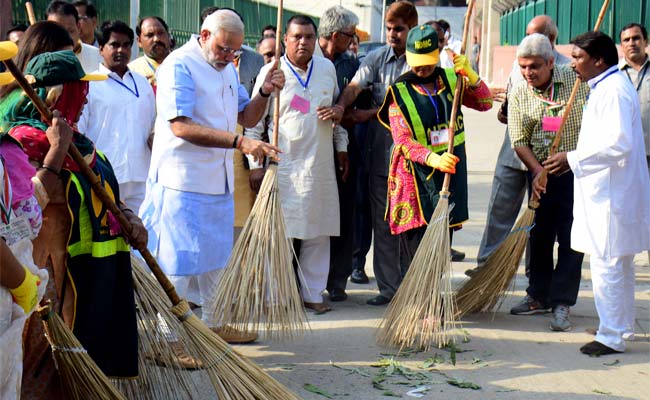
  • All about the Swachh Bharat Abhiyan

    What are the recent updates on Swachh Bharat Abhiyan?

    1. The union government had launched Swachh Bharat Abhiyan(SBA) on 2 October 2014 with two submissions, SBA (gramin) and SBA (urban).
    2. Budgetary provisions for the two submissions will be provided separately in the Demand for Grants of the Ministry of Drinking Water and Sanitation (MDWS) (for gramin) and the Ministry of Urban Development (for urban).
    3. Two other ministries, the Ministry of Women and Child Development (MWCD) and the Ministry of Human Resource Development (MHRD), more specifically, the latter’s Department of School Education and Literacy, will be responsible for the construction of anganwadi and school toilets.

    Let’s go back in time and come forward via a timeline, shall we?

    • Prior to the onset of SBA, the first major intervention by the union government was the Accelerated Rural Water Supply Programme (ARWSP) in 1972–73, to support states and union territories with financial and technical assistance to implement drinking water supply schemes in “problem villages.”
    • In 1986, a technology mission with stress on water quality, appropriate technology intervention, human resource development support and other related activities was introduced. This was renamed as the Rajiv Gandhi National Drinking Water Mission (RGNDWM) in 1991.
    • In 1999–2000, sector reform projects were evolved to involve the community in planning, implementation and management of drinking water-related schemes.
    • In 2002, this was scaled up as the Swajaldhara programme.
    • From 2009 onwards, it was rechristened as the National Rural Drinking Water Programme (NRDWP).

    The NRDWP and the Nirmal Bharat Abhiyan (NBA) have been the union government’s flagship programmes for rural drinking water and sanitation.

    However, the SBA draft, circulated on 22 August 2014, combines the drinking water supply and sanitation programmes and wishes to achieve safe-water supply and open defecation-free status in both urban and rural India by 2019, the year that will mark the 150th birth anniversary of Mahatma Gandhi.


    Can India be swachh without the caste ethos being completely eradicated?

    The Government draft acknowledges the need for better drinking water and sanitation facilities in both rural and urban India, especially for women and children.

    Some words from Government draft,

    “While having a toilet is important for everyone, access to safe, clean toilets brings particular benefits to women and girls. Freed from the need to defecate in the open, they no longer have to suffer the indignity, humiliation and often verbal and physical abuse when relieving themselves. Sexual harassment and rape are a risk for many women who without a household toilet have to wait until nightfall to seek the privacy of darkness outside to relieve themselves. Women and girls don’t need toilet facilities just for defecation; they also need privacy and dignity when menstruating. The symptoms of menstruation, pregnancy and the postnatal periods become more traumatic if women have no space to deal with them. The need for sanitation facilities within homes and in public places, which meet women’s physical and psychological demands, cannot be overemphasized. (GoI 2014).


    The draft deals with key challenges and the way forward to make the mission successful.

    1. Behavioural change influencing 590 million population in rural areas, the problem of convergence between the Mahatma Gandhi National Rural Employment Guarantee Scheme (MGNREGS) and NBA, lack of water availability in toilets, defunct toilets, inadequacy of staff at the ground level, these are the key challenges noted by the draft.
    2. A recent study by Coffey et al (2014) found that “many survey respondents’ behaviour reveals a preference for open defecation: over 40% of households with a working latrine have at least one member who defecates in the open.” Open defecation is a socially accepted traditional behaviour in India, especially in rural areas.
    3. It has been a tough job to convince a section of the population to regularly use constructed toilets. But, countries like Bangladesh and Indonesia have shown remarkable change in behaviour towards sanitation after comprehensive information, education and communication (IEC) was imparted.
    4. Grants to the States : “It would be better to release not as per the present formula giving entitlement of States, but on a projected basis, on the basis of the Detailed Project Report of a district as a whole both for water and sanitation.”

    What are the key financial roles for this mission to be a success?

    Well, At the moment, government is relying on the corporate social responsibility (CSR) and individual donations for funds. The fund under CSR would be channelled through Swachh Bharat Kosh (SBK) headed by secretary, Department of Expenditure.

    The SBA introduces awards for panchayati raj institutions (gram panchayats, block panchayats and district panchayats), individuals, officers, non-governmental organisations (NGO) and also for best practices.

    Parting Words

    1. Quite a bit of euphoria has been in the air with regard to the SBA, thanks to extensive media coverage.
    2. Responses to SBA can be categorised under two heads –
      • On the one hand, the upper classes/castes have appreciated the effort; they envisage a business opportunity and visualise a dirt-free India (in their eyes, dirt is associated with the lower castes/classes).
      • On the other hand, a large section of population (the deprived) has no clue as to what has been going around in the name of swachhta.

    But one thing for sure, without sufficient capital and well-trained labour, this mission may miss its deadline.

    What do you think?


    Published with inputs from Arun.
  • Syrian Civil War and The Refugee Crisis

    What exactly is this Syrian civil war?

    1. An ongoing armed conflict between the Syrian government and the rebel forces within Syria.
    2. It started in the spring of 2011 with the context of Arab spring.

    To understand the conflict let us know the historical background of Syria. So, where is Syria?

      1. Syria is one of the Arab Nations which shares its borders with Turkey, Lebanon, Israel, Jordan and Iraq.
      2. Damascus – capital of Syria.
      3. Syria became independent in 1946.
      4. Democratic rule was ended by a military coup in 1949.
      5. The military rule ended in 1954.
      6. From 1958-1961 Syria and Egypt were part of a union called as ‘United Arab Republic’ with Cairo as capital and Gamal Abdel Nasser as President.
      7. In 1961, Syria seceded from the Union after the Syrian Coup d’ĂȘtat – uprising by the Syrian Army officers.
      8. The country was named as Syrian Arab Republic.
      9. But the government was weak. Why? Due to the influence of United Arab Republic and a military coup happened in 1963 and 1966.

    That’s pretty complex! But UPSC is famous for asking about the details. What happened then? 

    In 1970, in another coup General Hafez al -Assad, the Minister of Defence seized the power.

    1. He became the P.M of Syria.
    2. In 1971, he was declared the President of Syria (until his death in 2000).
    3. Syria was a single-party state.
    4. Syrians could approve the President by referendum until the government controlled multi party 2012 election.
    5. The Syrians could not vote in multiparty elections for the legislature.

    The ascension of Bashar Al-Assad and the Shia-Sunni conflicts

    1. Son of Hafez al-Assad – Took over as the President of Syria after his Father’s death.
    2. The Syrians wanted democratic form of government but, ah well!
    3. The Assads belong to minority group Alawite (an offshoot of Shia which constitutes 12% of the total population).
    4. They controlled Syria’s security services which generated resentment among the Sunni Muslims (majority in Syria).

    Phew! That is a very complex history. What happened next that finally led to the war? It is important to cover the story comprehensively for an IAS Aspirant.

      1. Well, the discontent was high against the government in poorer areas among Sunnis + High poverty and drought.
      2. Socio-economic inequality increased after free market policies initiated by Hafez al-Assad.
      3. Bashar continued those policies and only the minorities (Shias) and Sunni merchant class benefited through that.
      4. Standard of living deteriorated + High youth unemployment rates.

    Then there were a few violation of human rights and eventually an uprising!

    In 2010 the protests from Tunisia spread across the Arab world. In 2011 Tunisia and Egypt experienced revolution. Libya had its own civil war. The Tunisia and Egypt revolution inspired the Syrians to protest against their government.

    Wow, that escalated quickly. So how did the protests turn into an armed rebellion?

    1. March 2011 – The initial protests were aimed at democratic reforms which started in Damascus.
    2. Till April 7, 2011, the protesters demanded democratic reforms, release of political prisoners, more freedom, abolition of emergency law and an end to corruption.
    3. On April 8, 2011, the protesters demanded Bashar’s resignation and protests spread across major cities in Syria.
    4. On 4th June, 2011, the Syrian security forces guarding on the roof of a post office fired at a funeral demonstration.
    5. The protesters set fire to the post office and killed the security officers and then seized weapons from a police station.
    6. The soldiers who refused to kill the protesters were executed and that led to the inclusion of soldiers into the protests to protect the protesters.

    And that led to the formation of the Free Syrian Army

    1. Formed by 7 Syrian officers who defected the Syrian armed forces. The other soldiers joined them.
    2. The aim was to bring down Assad government.
    3. Then the fight started between Free Syrian Army (FSA) and the Syrian Armed Forces.
    4. The people protested one side, the Syrian Kurds, FSA, Islamic State of Iraq and the Levant (ISIL) started armed rebellion against the Syrian government.
    5. ISIL controlled a third of Syrian territory and most of its oil and gas production.
    6. This led to a major twist in the Syrian civil war.
    7. Due to the civil war in the country huge scores of people died and many were displaced.
    8. Many people fled from Syria to other nations as refugees.
    9. This led to a major migrant crisis in the Middle East.


    UPSC will probably grill you down to your guts on how this issue will complicate situation in the middle east. These are the current themes doing rounds as the news evolves and you need to keep a tab on these developments for the IAS Mains.


    Published with inputs from Vinoth.