💥Join UPSC 2027,2028 Mentorship (July Batch) + XFactor Notes & Microthemes PDF

Author: CD Staff

  • [Burning Issue] Five Years of Paris Agreement

    We owe it to the next generation who will have to bear the burden of climate change and pay off the debt of the recovery…..

    The international community, including the European Union (EU) and India, gathered at the Climate Ambition Summit 2020. The Summit was held on the 5th anniversary of the Paris Agreement.

    This edition of Burning Issue takes stock of the progress made on climate action in the last 5 years.

    The story at a glance

    • Five years ago, as negotiations for the Paris climate agreement ran into overtime, a worldwide urgency was felt for reaching an accord. Thus came to being, the Paris Agreement.
    • Yet five years after the Paris pact was signed, the heady wine of global climate collaboration has been soured by rogue nations backsliding, and in the case of the US, even withdrawing from the agreement.
    • And effective climate action has been hampered by continued fossil fuel propaganda as well as by related economic policies like fossil fuel subsidies (as in the case for natural gas) anywhere in the world.
    • Under the agreement, 2020 was supposed to be a milestone year, with a deadline for setting more ambitious targets to cut emissions.
    • But, the deadly global pandemic had stalled all the efforts as well as talks. Then came, the Climate Ambition Summit 2020.

    What is the Paris Agreement?

    • The Paris Agreement is a legally binding international treaty on climate change. It was adopted by 196 Parties at COP 21 in Paris, on 12 December 2015 and entered into force on 4 November 2016.
    • Its goal is to limit global warming to well below 2, preferably to 1.5 degrees Celsius, compared to pre-industrial levels.
    • To achieve this long-term temperature goal, countries aim to reach global peaking of greenhouse gas emissions as soon as possible to achieve a climate-neutral world by mid-century.
    • It is a landmark process because, for the first time, a binding agreement brings all nations into a common cause to undertake ambitious efforts to combat climate change and adapt to its effects.

    Key points of the agreement

    The action plan

    • Implementation of the Paris Agreement requires economic and social transformation, based on the best available science.
    • The Agreement works on a 5- year cycle of increasingly ambitious climate action carried out by countries.
    • By 2020, countries submit their plans for climate action known as nationally determined contributions (NDCs).

    Five years after: Where are we now?

    All states have submitted their national contributions to mitigate and adapt to climate change. Distant hypothetical targets are being set. Seems like we are still speeding in the wrong direction or we are lagging far behind.

    (1) Unclear targets and response

    The world is still unclear since five years as to how the net-zero pledges will translate into shorter term targets. Few of the countries that have announced ambitious long-term goals have implemented national policies to reach them in time.

    (2) Degradation isn’t stopped

    Meanwhile, we continue to destroy the world’s carbon sinks, by cutting down forests – the world is still losing an area of forest the size of the UK each year, despite commitments to stop deforestation – as well as drying out peatlands and wetlands, and reducing the ocean’s capacity to absorb carbon from the air.

    (3) Countries aren’t scaling up their targets

    Although 151 states have indicated that they will submit stronger targets before December 31, only 13 of them, covering 2.4 per cent of global emissions, have submitted such targets. While states have been slow to update their national contributions for 2025-2030, several have announced exaggeratedly high “net zero” targets in the recent past.

    Issues in setting up targets

    A chasm between aspirations and emissions remains, as does the continued economic gap between developed and developing countries.

    (1) Credibility of the commitments

    • The credibility checks; Are these long-term net zero goals aligned with short-term actions, policies and measures? And we know very well.
    • Many net zero goals have not yet been embedded in national contributions and long-term strategies under the Paris Agreement.
    • Current national contributions are not on track for such a fall.  For many there is a mismatch between short-term actions and long-term commitments.

    (2) Fixing accountability

    • In any case, accountability under the Paris Agreement is limited. States are not obliged to achieve their self-selected targets.
    • There is no mechanism to review the adequacy of individual contributions. States are only asked to provide justifications for the fairness and ambition of their targets.
    • The transparency framework does not contain a robust review function, and the compliance committee is facilitative and limited to ensuring compliance with a shortlist of binding procedural obligations.

    (3) Fairness of climate action

    • The principles of equity, justice and fairness are fundamental to understanding and addressing the challenges of global climate change.
    • These principles are legally side-stepped in the Paris Agreement.
    • This is because the problem has been caused by the emissions of the rich countries for several centuries but will primarily impact the poorest people and poorest countries.

    Analysis: A success in making

    (1) Political resilience: A no mean achievement

    The accord itself has proved remarkably resilient. Bringing together 196 nations in 2015 was not easy. The failure, discord and recriminations of those decades were left behind as delegates from 196 countries hugged, wept and cheered in Paris.

    (2) All emitters concurred

    The agreement has proven to be inclusive and at scale, with the participation of countries representing 97% of global emissions. It gave a powerful signal of hope in the face of the climate emergency.

    (3) Clean energy shift

    Renewable energy will make up about 90% of the new energy generation capacity installed around the world, according to the International Energy Agency. That massive increase reflects rapid falls in the price of renewable energy (ex. solar tariffs in India) now competitive or cheaper than fossil fuel generation.

    (4) Worldwide quests for net-zero emissions

    Many nations led the way in adopting net-zero targets. In September this year, China surprised the world by its pledge to achieve net-zero emissions in 2060. US president-elect Joe Biden has also pledged to adopt a target of net zero emissions by 2050. That puts more than two-thirds of the global emitters under a commitment.

    (5) Normalizing 1.5C

    One of the biggest surprises of Paris was the inclusion of 1.5C as an aspirational limit on global temperature rise. Official recognition of 1.5C did not make it any less of a long shot. But it shifted the onus away from proponents of 1.5C having to defend its feasibility, to proponents of 2C having to defend sacrificing vulnerable communities.

    (6) Institutional change

    The Paris Agreement has no central enforcement mechanism. That does not mean it is unenforceable. Institutions ranging from financial regulators to city authorities are embedding the deal’s targets and principles in their policies, creating new avenues for accountability.

    A caution: For the world to be serious again

    Any sense of optimism about the progress driven by the Paris deal must be tempered by the harsh reality of how far there is to go. Here is what has yet to change.

    (1) Rising emissions

    Global greenhouse gas emissions have continued to grow, with a billion tonnes of CO2 added to annual figures between 2015 and 2018. The trend is dominated by emerging economies in Asia, as incumbent energy industries meet a hunger for development by any means. Advanced economies are not cutting emissions fast or consistently enough to offset growth elsewhere.

    (2) Rising temperatures

    As emissions rise, so too do temperatures. 2020 is set to be 1.2C warmer than pre-industrial times and among the three hottest years on record. Droughts and floods are confounding subsistence farmers the world over. The atmosphere will keep serving up new records for generations. Temperatures will not stabilize until emissions reach net-zero, because carbon dioxide builds up in the air.

    (3) Rising fossil fuel production

    The phrase “fossil fuels” do not appear in the Paris Agreement. Nor do the words “coal”, “oil” or “gas”. To meet the Paris goals, the vast majority of hydrocarbons need to stay in the ground — but that was too blunt a reality to concede for countries economically reliant on them.

    (4) The vulnerable continue to suffer

    Within and between countries, it is poor and marginalised people who are most exposed and continue to suffer the climate crisis. The Paris Agreement has failed to acknowledge that some people will experience loss and damage that cannot be mitigated against or adapted to.

    (5) Climate finance is still meagre

    Climate finance flows from rich governments have increased on the face of it. But the majority is delivered as loans, not grants, adding to the debt burden of developing countries.  There is no compensation for victims of climate disaster, only talking shops and insurance schemes they must pay the premiums for.

    Global scene

    (1) US retreat

    • The US – the world’s second-biggest emitter began the process of withdrawal from Paris, under President Trump in 2017.
    • The Kyoto 1997 protocol fell apart after the US signed but failed to ratify the agreement, leaving climate negotiations in limbo for a decade.
    • However, the president-elect Joe Biden announced the US’s return to the Paris Accord, accompanied by a battery of measures vide his election mandates.
    • Biden has also announced his support for a carbon border tax, a mechanism that the European Commission also wants to put in place.

    (A carbon border tax is a tax on carbon emissions attributed to imported goods that have not been carbon-taxed at the source.)

    (2) Chinese over-ambitions

    China surprised the world with a pledge to make itself carbon neutral by 2060. With this, China has an opportunity to assert its global leadership on climate before Biden takes an ambitious green agenda to the White House. China committed to values compared to 2005 levels:

    • Reduce carbon intensity by over 65% by 2030 (compared to its initial commitment of 60-65%)—it was at 48.1% at the end of 2019;
    • Increase non-fossil energy to around 25% by 2030 (compared to 20% in their current target)—it was at 15.3% at the end of 2019;
    • Increase forest stock volume to 6 billion cubic meters by 2030 (compared to 4.5 billion in their current target)—it was approximately 4.5 billion cubic meters at the end of 2019; and
    • Increase the total installed capacity of wind and solar to 1,200 gigawatts by 2030 (no previous target)—it was at 415 gigawatts at the end of 2019. 

    India and the Paris Agreement

    India has achieved 21% of its emissions intensity reduction target as a proportion of its GDP in line with its pledge to a 33-35% reduction by 2030.

    (1) Clean energy

    India, the world’s fourth-largest renewable energy market, has been one of the leaders in this transition. India has grown its renewables capacity by 250% in just the last five years and plans to expand it by another 500% to reach 450 gigawatts by 2030.

    (2) CO2 emission reduction

    The Emissions Gap Report has stated that India’s per capita emissions are actually 60% lower than the global average. Also, emissions in the country grew 1.4% in 2019, much lower than its average of 3.3% per year over the last decade, the report said.

    India was the only major G20 country that was on track towards keeping to its nationally determined commitments to halt runaway global warming.

    Climate Diplomacy and India

    • India has not caused the climate change crisis and, unlike developed nations, but it is meeting its obligations under the Paris Agreement. India is one of the few overachievers in terms of meeting the NDCs.
    • We cannot make lofty promises as China or the US does.
    • Climate negotiations potentially are more far-reaching for our polity, economy and society.
    • Several are suggesting that our best option is a “No” to more ambitious commitments.

    Going beyond coercive environmentalism

    China’s vigorous mobilization of state power to enforce new environmental norms in the last few years has helped China on climate issues. This has been hailed as the model for “authoritarian environmentalism” which has been more effective than the “liberal environmentalism”

    • The urgency of addressing climate change is likely to intensify in the immediate term with regime change in the US and overambitious Beijing.
    • India’s ability to influence the new geopolitics of climate change will depend a lot on its domestic political resilience (as in case of stubble-burning).
    • The question of penalizing stubble burning that chokes the cities of north-western India during the early winter months is only one of the issues in the larger argument.

    Gearing up for uncertainties

    • India needs to be cognizant that some are preparing tools of coercive climate diplomacy. EU is eyeing a carbon border adjustment mechanism by 2021.
    • The Biden administration will also look to favour a carbon tax with border adjustments, although whether it can get through such legislation remains uncertain.
    • Caution needs to be our watchword. For a sui generis state such as ours with varied interests, to gather allies with similar climate goals is not easy.

    Way forward: The grounds for optimism

    • The Paris agreement still provides the best hope of avoiding the worst ravages of climate breakdown: the question is whether countries are prepared to back it up with action, rather than more hot air.
    • Renewing the shorter term commitments is the best way ahead.
    • Making promises for the 2050s-60s is one thing, but major policy changes are needed now to shift national economies on to a low-carbon footing.
    • None of these (net zero) targets will be meaningful without very aggressive action in this decade. Diplomacy is inevitably a tool in global climate action.

    Conclusion

    • For many, there is a mismatch between short-term actions and long-term commitments. A credible short-term commitment with a clear pathway is the key.
    • Not all states will be in a position to pledge net-zero targets, nor should they be expected to.
    • All states, including India, can, however, pledge actions that are credible, accountable and fair.
    • Our real test on climate change is on building a new domestic consensus that can address the economic and political costs associated with an internal adjustment to the prospect of a great global reset.
  • [Burning Issue] Substance Abuse in India

    The rising abuse of narcotic drugs in India has come to limelight after the alleged suicide of a notable actor due to depression induced by chronic drug abuse. Since then, the Narcotics Control Bureau has been making high profile arrests over drugs possession (notably the cannabis).

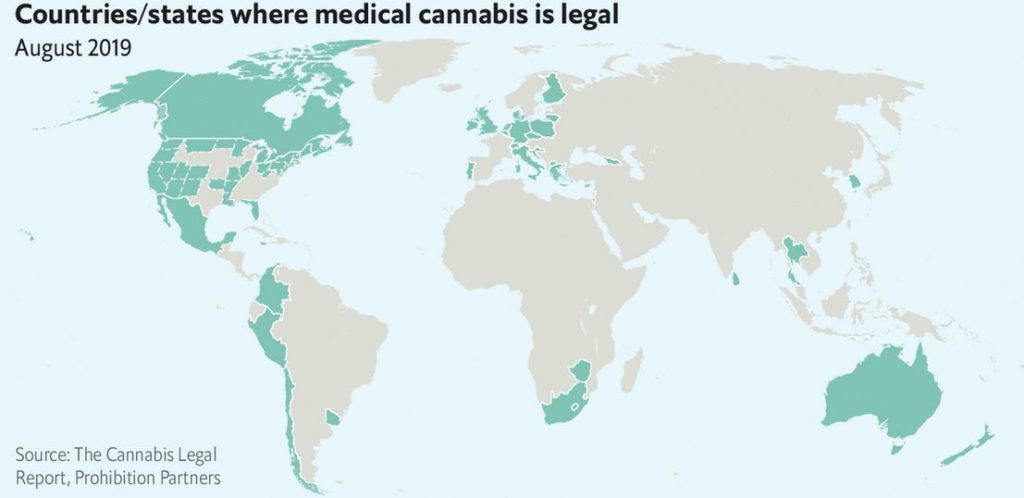
    And again in a contrary move, India surprisingly voted in favour of a highly divided resolution in the UN Commission for National Drugs to remove Cannabis from the category of most dangerous drugs.

    This arguably has led to mixed opinion whether to legalize cannabis in India, which has been long slated demand.

    Films like ‘Udta Punjab’ have graphically portrayed the crisis faced by the society and its youth with regard to the drug menace. While the film highlighted the drug menace in a bordering state, the rest of the country can by no means be complacent.

    Substance abuse in India: A deep malaise

    There is a worldwide consensus that misuse of narcotics and psychoactive substances is on the rise, and India is no exception to this. Look at this data:

    A 2019 national study conducted by AIIMS-Delhi on the prevalence of drug abuse in the country, establishes that:

    • A substantial percentage of people use psychoactive substances (alcohol, cannabis and opioids), and adult men top the list of drugs users.
    • Alcohol is the most commonly abused psychoactive substance followed by cannabis, opioids (heroin, opium) and inhalers.
    • Addiction generally begins with alcohol, moves towards nicotine and cannabis – considered as gateways to hard drugs – and then hard substances.

    National Crime Records Bureau’s (NCRB) annual Accidental Death & Suicides in India (ADSI) reports:

    • In the year 2019, 7719 out of the total 7860 suicide victims due to drug abuse/alcohol addiction were male.
    • Even in the data relating to deaths due to road accidents, drugs & alcohol are one of the most causative factors. 

    India’s vulnerability to Psychotropic substances

    The estimate of the global drug trade is of the order of $360 billion contributed by Heroin – $100-110 billion, Cocaine $110-130 billion, Cannabis $75 billion and synthetic drugs $60 billion.

    [A] Proximity to Drug Heavens

    India is unfortunately sandwiched between a few of the countries who are the biggest producers of illicit opium, while itself being known to be the largest manufacturer of licit opium.

    (1)  Golden Crescent

    • The Golden Crescent is the name given to one of Asia’s two principal areas of illicit opium production, located at the crossroads of Central, South, and Western Asia.
    • This space overlaps three nations, Afghanistan, Iran, and Pakistan, whose mountainous peripheries define the crescent.

    (2) Golden Triangle

    • The Golden Triangle is the area where the borders of Thailand, Laos, and Myanmar meet at the confluence of the Ruak and Mekong rivers.
    • It has been one of the largest opium-producing areas of the world since the 1950s.

    [B] Social Factors

    (1) Experimentation

    Youth are often motivated to seek new experiences, particularly those they perceive as thrilling or daring.  

    (2) Neurotic Pleasure and recreation

    Abused drugs interact with the neurochemistry of the brain to produce feelings of pleasure. The intensity of this euphoria differs by the type of drug and how it is used.

    (3) To bust mental stress

    Some adolescents suffer from depression, social anxiety, stress-related disorders, and physical pain. Using drugs may be an attempt to lessen these feelings of distress.

    [C] Cultural factors

    (1) Folk examples

    Many culture and religiosity in India moralize the use of Ganja, Bhang through Chillam and Hookahs. We can find many adults and the old-age population still practising such habits.

    (2) Peer-pressure

    Many teens use drugs “because others are doing it”—or they think others are doing it—and they fear not being accepted in a social circle that includes drug-using peers.

    (3) Hype and glorification

    Setting other national issues of importance apart, the mass media often creates hype and curiosity among the youth by audio-visuals, undue exaggerated reporting and media trials of the accused persons.

    Impacts of Drug Abuse

    (1) Psychological Impact

    Overt abuse of drugs causes chronic mental disorders and habit forming tendencies. I can have numerous long-term health effects. These include- depression, anxiety, panic disorders, increased aggression, increased aggression, paranoia and hallucinations.

    (2) Physiological impact

    Abusing a drug, or misusing a substance can produce other short-term effects, such as: changes in appetite, sleeplessness or insomnia,  increased heart rate, slurred speech, changes in cognitive ability, a temporary sense of euphoria and loss of coordination.

    (3) Social impact

    Not only impact drug abusers’ lives but equally affect their families and the community at large. Problems such as criminal activity, alienation, domestic violence, and child abuse or neglect may also be present in families experiencing substance abuse.

    (4) Economic Impact

    Studies show that drug abuse leads to poverty and family breakdown.  In families disrupted by drug abuse, poverty is often transmitted from parents to children.

    (5) Public hazards

    Injection drug use is the leading risk factor for new human immunodeficiency virus (HIV) infections. Tuberculosis (TB) rates have increased significantly among drug-using populations, especially drug-resistant TB in HIV-infected drug users.

    Drug abuse also results in numerous road accidents.

    Legal mechanisms in India

    (1) Indian Constitution

    • Article 47 of the Indian Constitution is one of the DPSP which directs the State to raise the level of nutrition and the standard of living and to improve public health as among its primary duties.
    • It states that the State shall endeavour to bring about prohibition of intoxicating drinks and drugs which are injurious to health.

     (2) NDPS Act

    • On November 14, 1985, the Narcotics Drugs and Psychotropic Substances (NDPS) Act was enacted, banning all narcotic drugs. This was amended in 1987.
    • Under the Act, it is illicit for a person to produce or manufacture/cultivate, possess, sell, purchase, transport, store, and/or consume any narcotic drug or psychotropic substance.

    (3) Nasha Mukt Bharat campaign

    • This campaign launched this year in 2020, is run for 272 Most Affected Districts’ by the Ministry of Social Justice and Empowerment.
    • It focuses on a three-pronged strategy combining- efforts of Narcotics Bureau, Outreach/Awareness by Social Justice and Treatment through the Health Dept.

    #Global initiatives: UN-CND

    • The UN Commission on Narcotic Drugs is one of the functional commissions of the UN Economic and Social Council.
    • It is the central drug policy-making body within the UN system and has important functions under the international drug control conventions.

    Challenges in curbing drug abuse

    (1) Local availability

    • Ephedrine is a banned drug that is quite shockingly, being sold in the country openly. It is manufactured in private labs in India, albeit under Government regulations, and it is suspected that these labs have been leaking it to the International drug.
    • Methamphetamine is the ‘baap’ of all drugs in the market. Youth disheartened by the costly drugs choose to switch over to crystal Meth, which can be easily manufactured in a laboratory.

    (2) Other sin goods are allowed

    • Alcohol and tobacco can be more harmful to individuals and society than recreational drugs like cannabis and ecstasy that are governed by disproportionately strict regulations.
    • This skewed regulatory framework leads to economic losses with a high number of people incarcerated and people in need not having access to opioids.

    (3) Flawed regulations

    • There is a loophole in the NDPS Act that it only bans the usage of buds and resins.
    • It is believed that the government intentionally kept this loophole to leave bhang, which is made out of leaves, out of the coverage under the law that would have prohibited its use even for religious purposes.

    (4) Illicit and large-scale Smuggling

    • The NCB has started a campaign to crack down on drug smuggling networks across the country and has identified several syndicates which operate from different parts of the country.
    • In fact, the agency has estimated that heroin business in India is worth around Rs1,44,000 crore (approximately 19 billion US dollars) and there are around 20 lakh dependent users of this high drug in the country.

    (5) Lack of rehab centres

    • Most of the de-addiction centres in India are run by NGOs and there is not even one exclusive government rehabilitation centre as they are either merged with public health centres (PHC) or major government hospitals.
    • The private rehabilitation centres charge at least Rs 10,000 – Rs 15,000 a month and only government hospitals are affordable for many people

    Centre-stage of the Debate: De-stigmatizing / Legalizing Cannabis

    The United Nations Commission on Narcotic Drugs (CND) voted to remove cannabis and cannabis resin from Schedule IV of the 1961 Single Convention on Narcotic Drugs, decades after they were first placed on the list. India was part of the voting majority.

    Why?

    Banning the production of the cannabis, and associated products, has not had any benefit whatsoever for India. As a youth, we all know some or other in our friend circle who consumes it immensely.

    India has the least priced cannabis available in the world that too after regulations. This causes more possibility of abuses.

    (1) Health benefits

    • The cannabinoids found in Cannabis is a great healer and has found mention in the Ayurveda.
    • It can be used to treat a number of medical conditions like multiple sclerosis, arthritis, epilepsy, insomnia, HIV/AIDS treatment, cancer.

    (2) Ecological benefits

    • The cannabis plant and seeds apart from being labeled a ‘super-foods’ as per studies, is also a super-industrial carbon negative raw material.
    • Each part of the plant can be used for some industry. Hemp currently is also being used to make bio-fuel, bio-plastics and even construction material in certain countries. Cosmetic industry has also embraced Hemp seeds.

     (3) Marijuana is addiction-free

    • An epidemiological study showed that only 9%  of those who use marijuana end up being clinically dependent on it.
    • The ‘comparable rates’ for tobacco, alcohol and cocaine stood at 32%, 15% and 16% respectively.

    (4) Good source of Revenue

    • By legalizing and taxing marijuana, the government will stand to earn huge amounts of revenue that will otherwise go to the Italian and Israeli drug cartels.
    • In an open letter to US President George Bush, around 500 economists, led by Nobel Prize winner Milton Friedman, called for marijuana to be “legal but taxed and regulated like other goods”.

    (5) A potential cash crop

    • The cannabis plant is something natural to India, especially the northern hilly regions. It has the potential of becoming a cash crop for poor marginal farmers.
    • If proper research is done and cultivation of marijuana encouraged at an official level, it can gradually become a source of income for poor people with small landholdings.

    (6) Prohibition was ineffective

    • In India, the consumption of synthetic drugs like cocaine has increased since marijuana was banned, while it has decreased in the US since it was legalized in certain states.
    • Moreover, these days, it is pretty easy to buy marijuana in India and its consumption is widespread among the youth. So it is fair to say that prohibition has failed to curb the ‘problem’.

     (7) Marijuana is less harmful

    • Marijuana consumption was never regarded as a socially deviant behaviour any more than drinking alcohol was. In fact, keeping it legal was considered as an ‘enlightened view’.
    • It is now medically proven that marijuana is less harmful than alcohol.

    Risks of Legalizing Cannabis

    (1) Health risks continue to persist

    • There are many misconceptions about cannabis. First, it is not accurate that cannabis is harmless.
    • Its immediate effects include impairments in memory and in mental processes, including ones that are critical for driving.
    • Long-term use of cannabis may lead to the development of addiction of the substance, persistent cognitive deficits, and of mental health problems like schizophrenia, depression and anxiety.
    • Exposure to cannabis in adolescence can alter brain development.

    (2) A new ‘tobacco’ under casualization

    • A second myth is that if cannabis is legalized and regulated, its harms can be minimized.
    • With legalization comes commercialization. Cannabis is often incorrectly advertised as being “natural” and “healthier than alcohol and tobacco”.
    • Tobacco, too, was initially touted as a natural and harmless plant that had been “safely” used in religious ceremonies for centuries.

    (3) Unconvincing Advocacy

    • Advocates for legalization rarely make a convincing case. To hear some supporters tell it, the drug cures all diseases while promoting creativity, open-mindedness, moral progression.
    • Too much trivialization of Cannabis use could lead to its mass cultivation and a silent economy wreaking havoc through a new culture of substance abuse in India.

    Way forward

    • Scaling up enforcement within and strict surveillance along our porous borders, airports and sea ports are the only way to check drug abuse for India.
    • For Cannabis/ Marijuana, it’s important to make a distinction between legalization, decriminalization and commercialization.   
    • As with alcohol and tobacco products, the use of cannabis must be regulated, taxed and monitored. Its threats must be conveyed through proper mechanism as we do in case of Tobacco.
    • We must ensure that there are enough protections for children, the young, and those with severe mental illnesses, who are most vulnerable to its effects.

    Conclusion

    • The debate on the legalization of marijuana in India has started on social media and other noted platforms.
    • It is to be noted that India’s tryst with cannabis is centuries old and even ancient texts mention the plant being used by both nobility and common folk.
    • Even today, we come across ‘holy men’ smoking marijuana in public and photographs of them blowing clouds of smoke are almost symbolic.
    • Hence, laws should be made to suit people so that they do not break the law to maintain their lifestyle.  Laws should weave around an existing lifestyle, not obstruct it. Or else laws will be broken.

    References

    https://www.ncbi.nlm.nih.gov/books/NBK64258/

    https://www.thehindu.com/todays-paper/tp-opinion/should-marijuana-be-legalised/article19468527.ece

    https://www.scoopwhoop.com/inothernews/legalize-marijuana/

    https://www.business-standard.com/article/opinion/the-economics-of-cannabis-120120401549_1.html

    https://indianexpress.com/article/opinion/editorials/clear-the-smoke-cannabis-decriminalisation-7094364/

  • [Burning Issue] COVID-19 Vaccination Challenges

    Universal vaccination programs have eliminated smallpox and reduced serious diseases including measles, mumps, rotavirus, and polio. But in the coming few months, India will witness another great event in its history — the great Covid vaccination exercise. This is vaccination going to be one of the most anticipated events in the country. This mass universal vaccination drive might prove to be a daunting task.

    Making of a vaccine

    • A vaccine has to pass three tests to be successful – quality, ease of delivery, and public acceptance.
    • Quality, in turn, has three attributes – safety, efficacy, and duration of protection.
    • These are initially assessed in animals, then in humans through rigorously three-phased clinical trials involving thousands of persons, followed by post-marketing surveillance of several thousands more.

    India’s potential in vaccine-making

    • The universal immunisation programme in India has well established and time-tested vaccine distribution systems.
    • India has run massive immunisation programme earlier too, makes 60% of the world’s vaccines and is home to half a dozen major manufacturers, including Serum Institute of India – the largest in the world.
    • Not surprisingly, there’s no lack of ambition when it comes to vaccinating a billion people against Covid-19.
    • India plans to receive and utilise some 500 million doses of vaccines against the disease and immunize up to 250 million people by July next year.

    Mechanisms available

    • India’s vaccine distribution network is operated through four government medical store depots (GMSDs) in Karnal, Mumbai, Chennai and Kolkata, which procure vaccines from the manufacturers.
    • About 53 state vaccine stores get their supplies either from these GMSDs or directly from manufacturers.
    • The state vaccine stores then distribute the vaccines to regional, district and sub-district level cold chain points via insulated vans.
    • The vaccine management has improved over the years thanks to a real-time supply chain management system known as the electronic vaccine intelligence network (eVIN).

    EVIN: The COVID-19 delivery system will use the UIP platform, with the innovative Electronic Vaccine Intelligence Network enhancing efficiency and diligence.

    CO-WIN Platform: This user friendly mobile app for recording vaccine data is working as a beneficiary management platform having various modules. Once people start to register for the app, the platform will upload bulk data on co-morbidity provided by local authorities.

    India’s efficacy

    • India ranked within the 51-75 percentile range among 89 countries on effective vaccine management as per a global analysis by WHO-UNICEF in 2018.
    • Its performance was relatively poor when it came to following the required vaccine arrival procedures and using the MIS system for estimating demand of vaccine, syringe, etc.

    Various challenges looming before the roll-out of Vaccine

    [A] Infrastructure and other ground challenges

    For India, the magnitude of the task at hand is huge. If we have 1.3 billion Indians, a two-dose vaccine (such as Moderna or Oxford vaccine) implies 2.6 billion doses that need to be given across the nation.

    (1) Supply-chain challenges

    • The  supply  chain  of  the  vaccines  has to  be  strictly monitored  for  temperatures as the vaccines tend to be very sensitive to temperature variations.
    • Storing  the vaccines  in  temperature controlled  boxes proves  to  be  challenging  in  India,  because  of problems  with electricity supply, which in many places in India tends to get interrupted frequently.

    (2) Infrastructure challenges

    • Getting vaccines to people who need them will require over a billion vials to be manufactured, filled and shipped, at top speed and in some cases, under extreme stress.
    • India needs to scale up its cold chain and distribution infrastructure for the last-mile connectivity.
    • Cooling facilities in the final delivery stages and a lack of storage at clinics would pose the biggest challenge to delivering vaccines on a high scale.

     (3) Inter-state disparity

    • What adds to the vaccination challenge is the inter-state disparity in the distribution of cold chain points across the country.
    • Jharkhand, Uttar Pradesh, and Bihar are among the least served states when it comes to cold chain infrastructure.
    • It won’t be easy to fill such deficits given that most of the private sector cold chain network is concentrated in the bigger cities and towns.

    [B] Access challenges

    (1) Access and affordability

    • Vaccine distribution poses another daunting challenge, and is accompanied by questions such as how much it will cost and who will pay for it.
    • Some of the concerns are about corruption over access to vaccines.

    (2) Vaccine safety

    • It is essential to assess safety as the vaccine will be administered to healthy persons.
    • This is a concern because some candidate vaccines have previously been known to have serious adverse effects.
    • The choices of vaccines, distribution, identifying groups for early vaccination, storage and more importantly, trained personnel, all play a role, the experts underline.

    (3) Uptake and monitoring

    • Apart from distribution and delivery, other issues would be vaccine uptake and monitoring.
    • Vaccine uptake requires confidence in the vaccines and the delivery system.
    • Documentation of vaccination and the tracking and investigation of vaccine safety events are essential components of monitoring.
    • India also has to battle with vaccine hesitancy. These have not been done well looking at the past experience.

    [C] Ethical challenges

    Acute humanitarian crises pose complex ethical dilemmas for policy-makers, particularly in settings with inadequate health-care services, which often become dependent on external agencies for urgently needed care.

    When resources, especially staff, are scarce, decision-makers often choose among interventions – implicitly or explicitly – on the basis of cost-effectiveness because they are seeking to maximize benefits.

    Many ethical issues surround the development and use of vaccines. These issues include

    • Requiring vaccination by law;
    • Development and testing of vaccines;
    • Informed consent about the benefits and risks of vaccination; and
    • Equitable distribution of vaccines

    Among these, one is very crucial, i.e.

    #Prioritization

    It is a matter of distributive justice. Distributive justice requires the fair allocation of scarce basic resources, such as shelter, food, potable water and vaccines is not an exception to this.

    • Different rules govern decision-making and priority-setting during acute crises.
    • Objective, transparent processes for making priority-setting decisions are extremely important to maintain trust in the vaccination plans.
    • Incidentally, the intent behind identifying the high-priority groups to receive the vaccine first was to safeguard them from severe disease and not to break the virus transmission chain.

    Prioritized group as per our Health Ministry

    Prioritized Population Groups include:

    1. Healthcare Workers in both Government and Private Healthcare facilities
    2. Frontline Workers including personnel from state and central police department, armed forces, home guard, civil defence organizations, disaster management volunteers and municipal workers and
    3. Prioritized Age Group, which includes those aged above 50 years & those with co-morbidities

    (Note: This is not the sequence, but categorization.)

    [D] The biggest global challenge: Vaccine Nationalism

    • Vaccine nationalism occurs when a country manages to secure doses of vaccine for its own citizens or residents before they are made available in other countries.
    • This is done through pre-purchase agreements between a government and a vaccine manufacturer.
    • It is harmful to equitable access to vaccines.

    Why it has to go away?

    • Most vaccine development projects involve several parties from multiple countries.
    • With modern vaccines, there are very few instances in which a single country can claim to be the sole developer of a vaccine.
    • And even if that were possible, global public health is borderless. As COVID-19 is illustrating, viruses can travel the globe.

    “An outbreak anywhere is an outbreak everywhere”.

    Way forward

    • Considering the large population and limited capacity of production and distribution of vaccine, it will not be easy to provide everyone around the world with the vaccine at the same time.
    • There is a need to develop a strategy for the same which will guide us in deciding who should receive the vaccine first.
    • In this context, any effective vaccine that is developed should be treated as a global public good and should be distributed equally around the world, regardless of where it was invented or of a country’s ability to pay.
    • There has to be a comprehensive global framework that will ensure priority for the most vulnerable populations.
    • International institutions — including the WHO — should coordinate negotiations ahead of the next pandemic to produce a framework for equitable access to vaccines during public health crises.

    Conclusion

    The allocation of a limited supply of vaccine calls for a fine balance between utility and equality and fairness. Accountability demands that decision-making be explicit, documented and open to public review.

    • Efforts to maximize utility can conflict with the egalitarian goal of helping the neediest.
    • When limited supplies are allocated to the most vulnerable, overall health utility is sometimes suboptimal.
    • From the perspective of value pluralism, balancing utility and equality should be the goal, rather than prioritizing one or the other.
    • When it comes to vaccination, the utility is fortunately often greatest when the most socially disadvantaged groups are targeted.

    References

    https://www.livemint.com/news/india/india-s-vaccine-distribution-challenge-explained-in-five-charts-11607106132744.html

    https://www.bbc.com/news/world-asia-india-55048925

    https://www.weforum.org/agenda/2020/09/covid-19-vaccine-global-health-covax/ https://intelligence.weforum.org/topics/a1G0X000006O6EHUA0?tab=publications

    https://www.thelancet.com/journals/laninf/article/PIIS1473-3099(20)30773-8/fulltext#seccestitle90

    https://www.devex.com/news/opinion-the-unspoken-covid-19-vaccine-challenges-distribution-and-corruption-98437

  • [Burning Issue] Farmers Agitation

    The ongoing stand-off between the Union government and protesting farmers does not show any signs of a resolution at the moment. Farmers, especially in Punjab and Haryana, have been protesting against the three agriculture laws enacted by the central government.

    The situation is extremely volatile since the farmers are determined not to leave Delhi and camp therein for months for further protests.

    The Three Contentious Laws: A quick recap

    Tap here for a comprehensive image

    (1) Farmers’ Produce Trade and Commerce (Promotion and Facilitation) Act, 2020:

    • It expands the scope of trade areas of farmers produce from select areas to “any place of production, collection, and aggregation”. It allows electronic trading and e-commerce of scheduled farmers’ produce.
    • It prohibits state governments from levying any market fee, cess or levy on farmers, traders, and electronic trading platforms for trade of farmers’ produce conducted in an ‘outside trade area’.

    (2) Farmers (Empowerment and Protection) Agreement on Price Assurance and Farm Services Act, 2020:

    • It creates a national framework for contract farming through an agreement between a farmer and a buyer before the production or rearing of any farm produce.
    • It provides farmers engaging with Agri-business firms, processors, wholesalers, exporters or large retailers for farm services and sale of future farming produce by a mutually agreed price framework.

    (3) Essential Commodities (Amendment) Act 2020:

    • It allows for the center to regulate food items through essential commodities.  
    • It also requires that imposition of any stock limit on agricultural produce be based on price rise

    Agitators at the forefront

    Farmers in Punjab and Haryana are known for their adamant attitudes. They are heavily dependent on public procurement and assured price through MSP. Nearly 88% of the paddy production and 70% of the wheat production in Punjab and Haryana (in 2017-18 and 2018-19) has been absorbed through public procurement.

    Why are farmers fuming over these laws?

    Image source: TOI

    These bills sought to bring much-needed reforms in the agricultural marketing system. However, farmers are apprehensive that the free market philosophy supported by these bills could undermine the Minimum Support Price (MSP) system and make farmers vulnerable to market forces.

    Let us look at all their concerns one by one:

    (1) Fear against the end of Mandi System

    • The APMC regulates the mandi (marketplace) where farmers bring their produce, and therefore, guarantees that they receive the MSP.
    • Since the state governments will not be able to regulate the trade outside the APMC markets, farmers believe the laws will gradually end the mandi system and leave farmers at the mercy of corporates.

    (2) Fear over MSPs and procurement guarantee

    • Farmers believe that dismantling the mandi system will bring an end to the assured procurement of their crops at MSP.
    • Similarly, farmers believe the price assurance legislation may offer protection to farmers against price exploitation, but will not prescribe the mechanism for price fixation.
    • They are demanding the government guarantee MSP in writing, or else the free hand given to private corporate houses will lead to their exploitation.

    (3) Fear of Arhatiyas

    • The arhatiyas (commission agents) and farmers enjoy a friendship and bonding that goes back decades.
    • On an average, at least 50-100 farmers are attached with each arhatiyas, who takes care of farmers’ financial loans and ensures timely procurement and adequate prices for their crop.
    • Farmers believe the new laws will end their relationship with these agents and corporates will not be as sympathetic towards them in times of need.

     (4) Fear over the end of subsidised electricity

    • Farmers concerns are also fuelled by the proposed Electricity (Amendment) Bill 2020 which might end their access to subsidised electricity.
    • The bill seeks to create an Electricity Contract Enforcement Authority (ECEA), a move aimed to further centralization.
    • Another concern is the transfer of subsidies through DBT. Farmers will have to pay first from their own pocket, after which they will get subsidies.

    (5) Fear over Contract Farming

    • The FAPA Act formalizes contract cultivation through a “national framework” and explicitly prohibits any sponsor firm from acquiring the land of farmers through purchase, lease or mortgage.
    • But farmers fear over the big corporate players’ monopoly over food processing industry and its supply chain dynamics.
    • They fear that their ownership rights would be at risk as the Act provides for debt instruments for the companies which have their own recovery mechanisms.

    (6) Fear over dispute resolution

    • The FAPA Act provided for a three-level dispute settlement mechanism by the conciliation board, Sub-Divisional Magistrate and Appellate Authority.
    • Since the highest level of appeal for the farmer against any private entity was the Appellate Authority, the farmer is effectively prevented from moving the Court.
    • Thus, they claim that the Act was highly skewed in favor of private entity as the individual farmers did not have the resources that private companies had.

    (7) Fear over EC Amendment Act

    • The original EC Act de-regulated food items including cereals, pulses, potato, onion, edible oilseeds, and oils, and could only be regulated in the extraordinary circumstances.
    • The new law states that government regulation of stocks will be based on rising prices.
    • This stock-limiting puts farmers at the peril of the government and thus prevent them from making from any profit during any extra-ordinary circumstances as most of the time they only have to bear losses. (Ex. Onion farmers in Maharashtra).

    What are the broader concerns?

    Agriculture per se deals with everything that a farmer does — right from field preparation and cultivation to also the sale of his/her own produce.

     (1) The centre has overreached

    • Article 246 of the Constitution places “agriculture” in entry 14 and “markets and fairs” in entry 28 of the State List.
    • But entry 42 of the Union List empowers the Centre to regulate “inter-State trade and commerce”.
    • While trade and commerce “within the State” are under entry 26 of the State List, it is subject to the provisions of entry 33 of the Concurrent List – under which the Centre can override.
    • The Centre, in other words, has passed a law that removes all impediments to both inter-and intra-state trade in farm produce, while also overriding the existing state APMC Acts. The FPTC Act does precisely that.

    (2) States authority grossly surpassed

    • The act of primary sale at a mandi by the farmer is as much “agriculture” as production in the field.
    • “Trade” begins only after the product has been “marketed” by the farmer.
    • Going by this interpretation, the Centre is within its rights to frame laws that promote barrier-free trade of farm produce (inter-as well as intra-state) and do not allow stockholding or export restrictions.
    • But these can be only after the farmer has sold. Regulation of the first sale of agricultural produce is a “marketing” responsibility of the states, not the Centre.

    (3) A totalitarian move

    • There is a debate around the constitutional provisions with regard to the respective domains of the State and the Union with regard to agricultural marketing,
    • However, issues affecting the farming community have a far greater bearing on the States relative to the Centre.
    • While enacting the Bills, the Centre extended little consideration to the sensitivity or consultations of the States who are busy fighting the pandemic this hour.

    (4) Media insensitivity

    • Punjab and Haryana farmers have been at the forefront of this struggle and the other regions were slow to catch up.
    • The media terming it as a movement of ‘middlemen’ carried out by opposition parties and covertly supported by the ‘Khalistanis’ is the most distressing aspect.
    • This claim, for which no evidence has been offered, has been amplified by many news channels.

    Wait! Before you make up your mind ….. Ever wonder, why did the govt intervene through these legislations?

    (1) Flawed argument over MSP

    • These bills do not mention to do away with MSPs. Moreover APMCs have never assured that farmers get MSPs (which itself has no legal backings).
    • Over 80% of all land holdings were small and marginal with less than 2 hectares of farm land and hence, most of them, far from selling, end up buying food for even their own consumption.
    • In such cases, the rise in MSP actually hurts these farmers instead of helping them. The government assured price only helps a few large farmers.

    (2) Food security is no more an issue

    • The roots of state intervention in agriculture, from government procurement to rationing and restrictions on private traders are to found in recurring food shortages in the period after Independence.  
    • Many experts believe that these incentives are not needed today because India is a food-surplus country now.
    • This is what the current reforms seek to abolish. The sharp rise in India’s agriculture exports is often cited as evidence of this fact.

    (3) An equalizing move for all

    • The average nutritional intakes in India are much lower than just developed countries and, the purported food surplus seems to be the result of inadequate food consumption due to affordability issues.
    • There still exists malnutrition as most of the public cannot afford good diets.
    • According to research by the International Food Policy Research Institute, 63.3% of people in rural India could not afford the Cost of a Recommended Diet (CoRD).

    (4) Protesting farmers are better off than the rest

    Data from a 2013 survey carried out by the National Statistical Office (NSO) shows that farmers from Punjab and Haryana had the highest incomes in the country.

    • The farmers who are protesting outside Delhi’s borders are among the richest among their peers in India.
    • A disproportional share in government procurement at MSP plays an important role in this.
    • States where there are no large-scale MSP operations tend to have lower prices in private markets as well. That incentivizes the richer farmers to lobby for the continuation of the status quo.

    (5) Contract farming was a long pending issue

    • Contract farming in India has shown that marginal and small farmers are generally excluded.
    • The problems they face include the following- highly one-sided i.e. pro-contracting agency contracts, delayed payments, undue rejections and outright cheating among others.
    • Hence it was necessary for the govt. to bring legislation.

    Much of government procurement at MSPs — of paddy, wheat and increasingly pulses, cotton, groundnut and mustard — happens in APMC mandis. In a scenario where more and more trading moves out of the APMCs, these regulated market yards will lose revenues. “They may not formally shut, but it would become like BSNL versus Jio. And if the government stops buying, we will be left with only the big corporates to sell to….

    Govt and farmers at crossroads: A timeline

    In its first term, the government was forced to retract its proposal to ease the 2014-15 land acquisition norms fearing a political backlash, following massive protests across the country.  But the peace it bought with the farmers was short-lived.

    Farmers’ angst in nooks and corners of rural India had been simmering, bursting out in spurts of violence like the one witnessed in Madhya Pradesh’s Mandsaur in 2017 where farmers were protesting, demanding loan waiver and higher crop prices.

    This was followed by the 2018 farmers’ agitation in Maharashtra. Moved by the poor implementation of the loan waivers, thousands of farmers undertook a march from Nashik to Mumbai demanding redressal. Though then the government decided to fulfil the demands, it, however, retreated.

    Why do farmers get on the streets?

    • It’s not that farmers’ agitation has picked pace only since 2014. But agriculture sector experts say farmers’ grievances have mostly remained unaddressed.
    • Rural distress has been on the rise, stoking farmers’ anger. Politics has added fuel, making a lethal cocktail.
    • Even though Punjab and Haryana are not as critical to the country’s food security as they were a few decades ago, they are extremely important in India’s farm economy.
    • Decades of high farm earnings also mean that the peasantry in these two states has much more in terms of material wherewithal to fight for its interests.
    • Therefore, the fact that the government’s attempts to undermine their interests by enacting the recent farm laws have triggered a sharp political backlash is hardly surprising.

    What do they want?

    • Farmers would want no restrictions on the movement, stocking and export of their produce.
    • For example, Maharashtra’s onion growers have vehemently opposed the Centre’s resort to banning on exports and imposition of stock limits whenever retail prices have tended to go up.
    • But these restrictions relate to “trade”.
    • When it comes to “marketing” — especially dismantling of the monopoly of APMCs — farmers, especially in Punjab and Haryana, aren’t very convinced about the “freedom of choice to sell to anyone and anywhere” argument.

    From the government’s standpoint, the elephant in the room would be if the farmers insist on an additional demand: Making MSP a legal right. That would be impossible to meet, even if the three farm laws get repealed.

    What options does the government have?

    While the farmers want the three farm laws to be repealed and a new law with a provision that ensures the MSP is not tinkered with, the government has maintained that MSP is not being done away with.

    These may be just fears, but they aren’t small.

    (1) Repealing the laws

    • Punjab farmer leaders, including two major political parties, demand repeal of these laws.
    • Overall, almost 90 per cent of the agri-produce is sold to the private sector. However, repealing would mean bringing back controls, licence raj and the resultant rent-seeking.
    • Milk, poultry, fishery, etc. don’t go through the mandi system and their growth rates are 3 to 5 times higher than that of wheat and rice.

    (2) Legally enforcing the MSPs

    • Another demand is making the MSP statutory and legally binding even on the private sector.
    • This is impractical as there are 23 commodities for which MSPs are announced, but in actual practice only wheat and rice enjoy MSPs in any meaningful manner and that too only in 6-7 states.
    • The FCI is overloaded with grain stocks that are more than 2.5 times the buffer stock norms.
    • If the government cannot cope up with excess production of just wheat and rice in any meaningful way, think of how it will handle 23 commodities under MSP.

    (3) Implementing Price Stabilization Scheme

    • The third policy option is to use the Price Stabilization Scheme to give a lift to market prices by pro-actively buying a part of the surplus whenever market prices crash.
    • Farmers can use Commodity Derivatives Exchanges where farmers can buy “put options” at MSP before they even sow their crops.
    • If the market prices at the time of harvest turn out to be below MSP, government can compensate them partly for lower market prices (which again aren’t feasible for the govt.)

    (4) Decentralizing MSPs and other subsidies

    • Another option is to totally decentralize the MSP, procurement, stocking, and public distribution system (PDS).
    • The Centre can get off from MSP, PDS, fertilizer subsidy, and MGNREGA and let the states decide it.
    • So, the whole money on food subsidy can be allocated to states on the basis of their share in all-India poverty/proportion of vulnerable population.

    A bigger challenge at the moment

    • Several farmers said that they had come prepared to dig in for a prolonged struggle.
    • Farmers are carrying ration that can last months and are in no mood to turn back. Any use of force by the state may lead to a major law and order disruption.
    • In the current situation, the police have already used water cannons and tear gas to disperse the agitated farmers — but both methods have failed.
    • This could lead to a severe law and order crisis.
    • Moreover, international voices are also rising on the credibility of the government to address the farmers concerns, which is not a healthy sign.

    Way forward: Give reforms a chance

    Reforms in agriculture have been overdue.  There has been rhetoric in last 10 years in favour of agricultural but very few concrete steps have been taken.

    One rhetoric is very clear now. The APMC mandis were never filled with good samaritans and neither is the MSP religiously enforced everywhere.

    • Just passing these laws won’t be enough. The success of liberalizing the farm market will hinge on effective implementation, constant monitoring and timely action.
    • Accelerating research and academic excellence could bring in the ‘best in class’ technologies and can multiply farmers’ incomes.
    • As far as the APMCs and commission agents are concerned, the governments should work on a clear roadmap to modernize them by facilitating them in providing value-added services.
    • They could be leveraged to set-up grading and sorting, warehousing, cold chains and food processing infrastructure. This way, it is a win-win-win for the state government, farmers and the commission agents.
    • While taking the control away from these agents, the government must also ensure that the gap is filled with foolproof mechanisms to ensure timely payments to farmers to avoid any cash crunch.

    Don’t fear the competition

    • When we create competition for their produce, the price improves. There are more buyers, more choices. Farmers can reap the benefits of that.
    • The COVID-19 crisis opened a window of opportunity to reform the agri-marketing system.  Patience and professionalism will bring rich rewards in due course, not noisy politics.

    Conclusion

    • The governments must try to allay the fears of farmers over the Farm Bills and it is never too late to rethink. Unconditional talks with farmers would be an appropriate starting point.
    • There is genuine uncertainty over what private procurement will mean. Will it mean greater corporate power over farmers, possibly unhealthy monopolies or duopolies?
    • Leveraging the reforms and moving forward rather is the most feasible solution than to protest amid the pandemic.
    • What farmers need and are asking for is legally guaranteed remunerative prices. If the Bills are perceived of good intent, then the government should not shy away from proper parliamentary scrutiny of all its details.
    • Political parties that are opposing these Bills should coordinate better keeping farmers’ interests in the forefront, and not their party politics.

    References

    https://theprint.in/opinion/newsmaker-of-the-week/farmers-protest-a-big-challenge-for-modi-bigger-than-demonetisation-gst/553541/

    https://www.hindustantimes.com/india-news/four-key-aspects-of-the-farmers-protest/story-UKuhPOVY7N3nAs1OZXBU0L.html

    https://www.businessinsider.in/india/news/apmc-and-msp-will-continue-under-new-farm-bills-2020/slidelist/78230172.cms

  • [Burning Issue] Inter-faith Marriages and Related Issues

    Dr. B R Ambedkar, in his lecture “Castes in India” in 1916 –

    One of the most intrinsic characteristics of the caste system is endogamy, which prohibits marriage outside of caste and the maintenance of caste in India is premised on the enforcement of strict endogamy.

    Discourse on interfaith marriages in India at present involves diverse narratives ranging from opposition and resistance to acceptance.

    Forced religious conversions for interfaith marriages cases are widely seen in news these days. And many states are attempting to ban religious conversion for the sole purpose of marriage. The state of Uttar Pradesh has seen its first arrest under the new ordinance so passed.

    What is Inter-faith Marriage?

    • Interfaith marriage, sometimes called a “mixed marriage”, is marriage between spouses professing different religions.
    • For individuals who choose interfaith marriage, love is their sole motivation and relationship is generally viewed in terms of individual compatibility.

    Interfaith Marriages in India

    • The right to marry is a part of the right to life under Article 21 of the Indian Constitution.
    • It is a universal right and it is available to everyone irrespective of their gender.
    • A forced marriage is illegal and is invalidated in different personal laws on marriage in India, with the right to marry recognized under various religious laws.

    Provisions for such marriages

    • The Special Marriage Act, 1954 (SMA) was enacted to facilitate the marriage of couples professing different faiths, and preferring a civil wedding.
    • However, some practical problems arise in registering such marriages.
    • The law’s features on prior public notice being given and objections for the safety and privacy of those intending to marry across religions.
    • To overcome this, many settle for marriage under the personal law of one of them, with the other opting for religious conversion.

    Core Issue: Religious Conversions

    Religious conversion is one of the most heated issues under interfaith marriage. There are various reasons for which people do convert their religion like:

    • Voluntary Conversions i.e. conversions by free choice or because of change of beliefs
    • Forceful Conversions i.e. conversions by coercion, undue influence or inducement
    • Marital Conversions i.e. conversions due to marriage
    • Conversion for convenience

    The larger Constitutional issue

    (A) Article 21

    • Many high courts across India have ruled that- an individual’s right to marry a person of his or her choice is a fundamental right that cannot be denied on the basis of caste or religion by anybody.
    • In the Hadiya Case (2016), the Supreme Court had ruled that the right to marry a person of one’s choice is integral to Article 21 (right to life and liberty) of the Constitution.

    (B) Article 25

    • Article 25 talks about the term “propagate” which means to promote or transmit or merely freedom of expression.
    • The question of whether ‘right to convert’ comes under the ambit of ‘right to propagate any religion’ holds fundamental importance to determine the constitutionality of anti-conversion laws.
    • There is no expressed provision for ‘conversion’ in the Indian Constitution but there are proponents whose contention is in the favour that right to conversion is implicit under Article 25 which emerges from freedom of conscience.

    (C) Rights of women

    • Any individual has the absolute right to choose a life partner and this cannot be affected by matters of faith.
    • Again, the perception of such marriages is considered okay for males but not for females.
    • This indicates gendered responses of the society towards such marriages.

    Furore over interfaith marriage

    Religious conversion has emerged as the practical way to cohabit as a couple, in a country where neither the inter-faith, inter-caste nor the live-in couples can earn societal approval.

    • As per some Personal laws, in order to get married conversion of religion to get equalized is the only way.
    • There are cases of being allegedly lured and honey-trapped by men and those girls now seeking their help to free themselves.
    • Interfaith marriages these days are believed to be a forced conversion of the women spouses.
    • Fundamentalists’ claims that men of a particular religion are trained on the intricacies of religious doctrine to allure other religion women for marriage in an attempt to finish off her religion.

    States narrative against interfaith marriages

    • Uttar Pradesh is the latest state to implement a law against forceful inter-faith conversions for marriage, amid similar steps by other states. Its proposed law defines punishment and fine for three different cases.
    1. Conversion is done though “misrepresentation, force, undue influence, coercion, allurement or by any fraudulent means” would face a jail term of one to 5 years, and a minimum fine of Rs 15,000.
    2. Conversion of a minor, a woman from the SC or ST would have to face a jail term from three to 10 years, with a minimum fine of Rs 25,000.
    3. If such conversion is found at the mass level, then those guilty would face a jail term from three to 10 years, with a minimum fine of Rs 50,000.
    • It proposes among other things that a marriage will be declared “shunya” (null and void) if the “sole intention” of the same is to “change a girl’s religion”.

    Such legislations are archaic because,

    • In the K.S. Puttuswamy or ‘privacy’ judgment, the Supreme Court had already clarified that any interference by the State in an adult’s right to love and marry has a “chilling effect” on freedoms.
    • The choice of a life partner, whether by marriage or outside it, is part of an individual’s “personhood and identity”, the apex court has held.
    • In the Lata Singh case, the top court recognised the country is going through a “crucial transformational period”.
    • It said the “Constitution will remain strong only if we accept the plurality and diversity of our culture”.

    Arguements by the States

    • It is accused that interfaith marriages often induce “undue influence”, “allurement” and “coercion” for religious conversions.
    • Often, negotiations and accommodation post-marriage involve the issue of identity and its expression in the family.
    • The recent murder of 20-year-old college girl by her stalker is a case in point. She was shot in the head from point-blank range. Matters came to head after she had filed a molestation complaint against the stalker month’s back, who was pressuring her to convert and marry him.
    • It translates as violence against women’s autonomy.

    Societal Response and Threats

    • The couple faces societal norms against their alliances that are sometimes labelled as immoral, unholy or acts based on lust.
    • It brings up the aspect of women as symbols of honour and ‘honour killings’ as one of the societal responses to interfaith marriages.
    • Response to such alliances may also go to the extent of killings and ex-communication of individuals (by Khap Panchayats) who attempt to cross their community’s boundaries.
    • Interfaith marriages also pose an ideological dilemma to different religious groups.
    • On the one hand, different religions promote the philosophy of acceptance and concern for fellow human beings, and on the other hand, there is rigidity in the process of marriage.

    Arguments in favour of such marriages

    • Interfaith marriages have the potential to build a strong base for community-level changes towards greater sensitivity and acceptance among different faiths/religions.
    • These marriages reflect the ‘genuine extent of heterogeneity’ in society, promote pluralism and diminish ‘ideological monopoly’ of different religions.

    A sole matter of individual rights

    • Ironically, interfaith marriages themselves are fairly common in India.
    • The freedom of decision of his/ her marriage shall lie with the person only. The need is to accept the fact.
    • Prohibition deprives a woman of her agency and, in effect, controls female sexuality.
    • There are many high profile examples in fields such as the arts, sports, journalism, and business as well as politics.

    Conclusion

    • Marriage is an extremely personal affair. The right to marry a person of one’s choice or to choose one’s partner is an aspect of constitutional liberty as well as privacy.
    • The issue of conversion can be resolved by actually agreeing to not convert.
    • Marriage done solely for the purpose of conversion and conversion by misrepresentation, force, fraud, undue influence, inducement, allurement should be discouraged.
    • In short, we should be focusing on dismantling the barriers of religion, caste and other divisions rather than bring up more barriers in these endeavours as is the attempt now.

    References

    https://thediplomat.com/2020/11/push-to-legislate-interfaith-marriages-sparks-backlash-in-india/

    https://indianexpress.com/article/explained/explained-what-a-2013-study-revealed-about-interfaith-marriages-6742991/

    https://www.deccanherald.com/specials/sunday-spotlight/why-we-can-t-have-laws-curtailing-the-right-to-marry-918518.html

    https://journals.sagepub.com/doi/pdf/10.1177/2393861717730620

  • [Burning Issue] Kerala’s Gagging Law

    India is one of such paradises on earth where you can speak your heart out without the fear of someone gunning you down for that, or, it has been until now. Even if the situation of Indians is a lot better than that of their fellow citizens of other nations, the picture is not really soothing or mesmerizing for Indians any more. This observation is being made with regard to the exercise of the right of freedom of speech and expression in the context of social media and the hurdles placed on that by the arbitrary use of the so-called cyber laws of the nation.

    The Kerala government withdrew its controversial ordinance allowing police to arrest individuals for social media posts just two days after it had been introduced.  It had introduced Section 118A in the Kerala Police Act, to penalise ‘offensive,’ ‘abusive,’ and ‘threatening’ social media posts. The amendment had triggered off a public outcry leading to its hasty withdrawal.

    Before delving into the issue in details, we should first understand the case of Kerala and its relation with the erstwhile Section 66A of the IT Act.

    What was Kerala’s Law?

    • Section 118A criminalized the communication of abusive, defamatory and intimidating speech.
    • It says that any expression, publication or dissemination of threatening, abusive, defamatory or humiliating content made through any mode of communication punishable if the person does it knowing it to be false and damaging to reputation or mind of another person.
    • A person, if convicted for the offence, could be punished with imprisonment of upto 3 years or fine of Rs. 10,000 or both.
    • This is not just for writing or creating such a post, but those who share that post or opinion will also face the same kind of punishment.

    Ambiguity over the Law

    • The terms like “threatening, abusing, humiliating or defaming” were not defined in Section 118A of the Kerala Police Act.
    • The outlawed sections spoke of vague notions like ‘annoyance’ and ‘inconvenience’, which are not defined in law anywhere.
    • But Section 2 of the same Act states that the words and expressions not defined under the said law shall have the meanings as defined in the Indian Penal Code (IPC) or Code of Criminal Procedure (CrPC).
    • Out of four actions criminalized under the latest amendment by Kerala, only defamation is clearly defined in the IPC.

    Section 66A in a new bottle

    Section 66A of the IT Act dealt with information related crimes in which sending information, by means of a computer resource or a communication device, which is inter alia offensive, derogatory and menacing is made a punishable offence.

    The entire provision was struck down by the Supreme Court in the Shreya Singhal judgement.

    • In judgement, the Court had found that Section 66A was contrary to both Articles 19 (free speech) and 21 (right to life) of the Constitution.
    • It lay in the fact that it had created an offence on the basis of undefined actions: such as causing “inconvenience, danger, obstruction and insult”.
    • These did not fall among the exceptions granted under Article 19 of the Constitution, which guarantees the freedom of speech.

    In addition, the court had noted that Section 66A did not have procedural safeguards like other sections of the law with similar aims, such as:

    1. The need to obtain the concurrence of the Centre before action can be taken.
    2. Police authorities could proceed autonomously, literally on the whim of their political masters.

    Criticisms of the Keralan law

    It needs no explanation that the law had the potential for great abuse against lay people and the media alike. It gives enormous, unbridled powers to the police. Anybody could be accused of humiliating someone and prosecuted.

    • Terming the law draconian, experts has said that the new law was another affront on free speech and its wide and vague ambit left it vulnerable to rampant misuse.
    • The law was no way related to women’s safety or anything that the government had earlier said.
    • The law would have been misused by people who may want to sue over the smallest disagreements and by those who are already misusing defamation laws.
    • Its misuse would not have been restricted to political criticism or religious opinion formation but “all ‘likes’, blogs, ‘unfriending’ now will be settled at police stations,” he says.
    • It mentioned “class of persons” in the law which could even mean deities, any group, organisation, brand or company.
    • It will effectively be a DDOS attack (denial-of-service attack) on the police functioning on the state, as well as on the police. There will be a huge rush of FIRs filed against all kind of issues between people.
    • Another aspect of worry was that it gave power to the police to file suo-motu cases against anyone.

    Bigger Picture: Freedom of Speech on Social Media

    • The Internet and Social Media has become a vital communications tool through which individuals can exercise their right to freedom of expression and exchange information and ideas.
    • In the past year or so, a growing movement of people around the world has been witnessed who are advocating for change, justice, equality, accountability of the powerful and respect for human rights.
    • In such movements, the Internet and Social Media has often played a key role by enabling people to connect and exchange information instantly and by creating a sense of solidarity.
    • And in the light of the growing use of the internet and social media as a medium of exercising this right, access to this medium has also been recognized as a fundamental human right.

    Hate Mongering: A new cool

    Social media today is a hotbed of toxic and hateful conversations. Curbing hate speech and fake news has emerged as a critical challenge for governments globally.

    • Unregulated social media promotes misinformation, hate speech, defamation, and threats to public order, terrorist incitement, bullying, and anti-national activities.
    • Abusive posts do promote violence against or threaten people based on their race, national origin, sexual orientation, gender and religious affiliation.
    • On grim situations, they include death threats and rape threats to women.
    • Also, the fake news panacea is not a new phenomenon linked to the rise of social media. Fake news has even lead to lynchings.

    Why controlling social media expressions is a difficult task?

    It is undeniable that the consequences of the narrative that takes shape on online platforms, more often than not, have real life implications.

    • The number of users on social media is ever-increasing and the volume of traffic is too huge to monitor.
    • The social media platforms are least bothered about public normalcy and social order.
    • They even with public policy departments seem to neglect their role in curbing hate- content and misinformation.
    • If over-regulated, the platforms would become ripe for the state’s control over the public perception through state-promoted posts.

    Limited cyber safeguards

    • There is no specific legislation in India which deals with social media except The Information Technology Act, 2000.
    • There are several provisions in it which can be used to seek redress in case of violation of any rights in the cyberspace, internet and social media.

    Other provisions are:

    Some of the safeguards include Section 67 IT Act (punishment for publishing or transmitting obscene material in electronic form); Section 506 IPC (punishment for criminal intimidation); Section 509 IPC (word, gesture or act intended to insult the modesty of a woman); Section 500 IPC (punishment for defamation).

    Way forward

    • The regulations to deal with such issues in India are insufficient and are also scattered across multiple acts and rules under the IPC, the IT Act and CrPC.
    • The need is to harmonize and unify the existing laws.
    • Moreover, there is a need to amend the draft intermediary guidelines rules to tackle modern forms of hate content that proliferate on the Internet.
    • Therefore, it is imperative for the government to recognize the menace of hate speech and ensure that there is proper regulation in place to tackle the issue.

    Keeping all this in mind, the Government should consult technical experts to look into all the possible facets of the use and misuse of social media and recommend a suitable manner in which it can be regulated without hindering the civil rights of citizens.

    Conclusion

    There is no doubt that we require some legal provisions to protect persons from cyber bullying. But the amendment brought in by Kerala provided ample scope for gross misuse.

    • It is clearly evident that social media is a very powerful means of exercising one’s freedom of speech and expression.
    • However, it is also been increasingly used for illegal acts which has given force to the Governments attempts at censoring social media.
    • Where on the one hand, the misuse of social media entails the need for legal censorship, on the other hand, there are legitimate fears of violation of civil rights of people.
    •  What is therefore desirable is regulation of social media, not its censorship.

    References

    https://thewire.in/government/kerala-free-speech-law-constitution

    https://indianexpress.com/article/explained/as-kerala-brings-new-gag-law-recalling-sc-rap-on-another-5-years-ago-7061423/

    https://www.thenewsminute.com/article/keralas-new-118a-law-is-section-66a-new-bottle-138185

    http://www.legalserviceindia.com/legal/article-426-social-media-and-freedom-of-speech-and-expression.html

    https://timesofindia.indiatimes.com/city/thiruvananthapuram/government-decides-to-backtrack-from-implementing-kerala-police-act-amendment/articleshow/79365385.cms

    https://www.oneindia.com/explained-what-is-118a-of-the-kerala-police-act-cs-3180068.html

  • [Burning Issue] India’s exit from RCEP

    India’s decision to stay out of the China-backed Regional Comprehensive Economic Partnership, or RCEP, Asia’s mega free-trade agreement (FTA), has been met both with a sense of approval and disappointment and divided economists on the issue.

    Context

    • Last week, the Regional Comprehensive Economic Partnership (RCEP) was signed by 15 countries led by China, Japan, South Korea, Australia, New Zealand, and the 10-country ASEAN group.
    • It is billed as one of the world’s largest Free Trade Agreement (FTA), accounting for nearly 30% of the global GDP covering 30% of the world’s population.
    • After long negotiations, India exited the grouping last November, saying it wanted to protect its economy from rising trade deficits with a number of RCEP members.
    • India’s decision is still the subject of much debate, and the RCEP has left a special window open for India to rejoin at a future date.

    Regional Comprehensive Economic Partnership (RCEP)

    Regional Comprehensive Economic Partnership (RCEP) is a free trade agreement (FTA) between –

    • The 10 members of ASEAN = Brunei, Cambodia, Indonesia, Laos, Malaysia, Myanmar, the Philippines, Singapore, Thailand, and Vietnam
    • Additional members of ASEAN +3 = China, Japan, South Korea
    • Members with which ASEAN countries have FTA = Australia, New Zealand

    What is the objective of RCEP?

    • RCEP aims to create an integrated market with 15 countries, making it easier for products and services of each of these countries to be available across this region.
    • The negotiations are focused on the following:

    Trade in goods and services, investment, intellectual property, dispute settlement, e-commerce, small and medium enterprises, and economic cooperation.

    China in RCEP

    • RCEP was pushed by Beijing in 2012 in order to counter another FTA that was in the works at the time: The Trans-Pacific Partnership (TPP).
    • The US-led TPP excluded China.  However, in 2016 US President Donald Trump withdrew his country from the TPP.
    • Since then, the RCEP has become a major tool for China to counter the US efforts to prevent trade with Beijing.

    Significance for China

    • The beginning of RCEP is a major development that will help China and trade in the Asia-Pacific region in the post-Covid-19 scenario.
    • It will give China access to Japanese and South Korean markets in a big way, as the three countries have not yet agreed on their FTA.
    • While China already has a number of bilateral trade agreements, this is the first time it has signed up to a regional multilateral trade pact.

    RCEP and India

    • India ended negotiation on RCEP over terms that were perceived to be against its interests.
    • The ties with China in recent months have been disturbed by the military tension in eastern Ladakh along the LAC.
    • In the meantime, India has also held a maritime exercise with Japan, Australia, and the United States for the “Quad” that was interpreted as an anti-China move.

    Why did India walk out?

    • India decided to exit RCEP negotiations over “significant outstanding issues”.
    • Its decision was to safeguard the interests of industries like agriculture and dairy and to give an advantage to the country’s services sector.
    • The current structure of RCEP still does not address these issues and concerns.

     (1) Escalated tensions with China

    • Escalated tension with China is considered to be a major reason for India’s decision.
    • Major issues that were unresolved during RCEP negotiations were related to the exposure that India would have to China.

    (2) Surge in imports

    • This included India’s fears that there was “inadequate” protection against surges in imports.
    • It felt there could also be a possible circumvention of rules of origin— the criteria used to determine the national source of a product.
    • In the absence of this, other partner countries could dump their products by routing them through other countries that enjoyed lower tariffs.

    (3) Rules of origin criteria

    • Its concerns on a “possible circumvention” of rules of origin — the criteria used to determine the national source of a product — were also not addressed.
    • Current provisions in the deal reportedly do not prevent countries from routing, through other countries, products on which India would maintain higher tariffs.
    • This is anticipated to allow countries like China to pump in more products.

    (4) Inability for countermeasures

    • India was unable to ensure countermeasures like an auto-trigger mechanism to raise tariffs on products when their imports crossed a certain threshold.
    • It also wanted RCEP to exclude most-favoured-nation (MFN) obligations from the investment, especially to countries with which it has border disputes.

    (5) No assurance of market access to India

    • RCEP also lacked clear assurance over market access issues in countries such as China and non-tariff barriers on Indian companies.
    • The agreement would have forced India to extend benefits given to other countries for sensitive sectors like defence to all RCEP members.

    (6) Trade balances paradox

    • India’s stance on the deal also comes as a result of learnings from unfavourable trade balances that it has with several RCEP members, with some of which it even has Free Trade Agreements.
    • Taking the current scenario, India only exports 20% to the RCEP countries, while the import is accounted for 35%.
    • Furthermore, RCEP members like China are well known for using non-tariff barriers against Indian products in the past, preventing India from growing its export to these countries.

    (7) Protecting domestic industries

    • Several sections of the Indian industry have raised concerns over RCEP.
    • They have argued that some domestic sectors may take a hit due to cheaper alternatives from other participant countries.
    • For instance, the dairy industry was expected to face stiff competition from Australia and New Zealand. Similarly, steel and textiles sectors have also demanded protection.

    The global hoax of FTAs

    • Our External Affairs Minister has inferred that the mantra of an open and globalised economy was used to justify unfair trade and production practices against India.
    • In the name of openness, we have allowed subsidised products and unfair production advantages from abroad to prevail.
    • The effect of past trade agreements has been to de-industrialize some sectors, said EAM without mentioning RCEP directly.
    • The consequences of future ones would lock us into global commitments, many of them not to our advantage.

    Gains from opting out

    India comprises half of the world population and accounts for nearly 40% of global commerce and 35% of the GDP. Without India, the RCEP does not look as attractive as it had seemed during negotiations.

    (1) A Diplomatic win

    • ASEAN has been keen on a diversified portfolio so that member states can deal with major powers and maintain their strategic autonomy. Without India, the ASEAN has no major partner except China.
    • India signalled that, despite the costs, China’s rise has to be tackled both politically and economically.

    (2) Not becoming China’s dumping ground

    • China provides enormous subsidies to its domestic products and goods. Consequently, this makes it vulnerable to the Indian market which becomes a dumping station.
    • China also needs greater access to the Indian market as Chinese companies have been suffering because of the US-China trade war that affected Chinese manufacturing companies in the past 2 years.
    • So, it could have proven to be a detriment to the Make in India initiative.

    (3) Relief for Indian Farmers

    • Farmers opine that RCEP deal could have aggravated the agrarian crisis.
    • The input prices are heavily taxed in India and thus the Indian farmers are not being provided with the profitable prices which result in significant losses and also throwing farmers into a debt trap.
    • India after green revolution emerged as a self-sufficient country in agricultural product.  It could have brought India’s ‘food sovereignty’ at stake as opening markets.

    Limited benefits that RCEP would have offered

    (1) Boosting the existing ties

    • Clubbing with the ASEAN has always been a principal policy priority for India’s Act East Policy.
    • The RCEP agreement would have complimented India’s existing FTAs with the ASEAN and some of its member countries.
    • It would have also helped achieve its goal of greater economic integration with countries East and South East of India through better access to a vast regional market ranging from Japan to Australia.

    (2) Expansion of services sector

    • The RCEP would have created opportunities for Indian companies to access new markets.
    • India is well placed to contribute to other countries in RCEP through its expertise in services.

    (3) Counterbalancing China

    • Both geopolitically and geo-economically, China now looks set to dominate the Indo-Pacific.
    • India’s allies in Southeast Asia, as well as Australia, wanted India to join it to balance China.
    • Some of these are founded on opacity that surrounds the Chinese government’s decision making.

    Wait! Did we miss the bus?

    (1) Capturing Foreign Markets

    • Trade with RCEP nations was a chance for Indian service, IT, health and education sectors to prove its leverage. That is to say, India’s service sector had huge export potential in RCEP.
    •  ‘Rules of origin’ could have also provided a possible chance for India to become a major hub in coordinating with the regional partners and establishing a trustable value chain.

    (2) Could have helped boost exports

    • Confederation of Indian Industry (CII) has called for signing RCEP agreement, as India could have also served as a major market for final good.
    • RCEP could have helped India in further export to the 3rd world nations, and primarily to West Asia, Africa and few European countries.

    (3) Isolation from global value chain

    • India’s absence in integrating with global value chains will impact India’s internal and external ambitions.
    • India’s own evidence shows that jobs linked to global value chains earn one-third more than those jobs focused on the domestic market.
    • The inability to accede to the RCEP and ensure India’s integration into these emerging global value chains means India will lose out on a key opportunity to create such high-quality, high-paying jobs.
    • Moreover, India’s absence in both of Asia’s two key economic architectures will take away from India’s goals as a regional and Indo-Pacific power, as well as a prospective global power.

    (4) Missed opportunity with ASEAN

    • The large size of the Indian economy and its negotiating heft would pose a valuable counterpoint to China within the grouping.
    • Several RCEP countries still hope India will reconsider its decision of staying out.
    • For ASEAN countries that led the RCEP negotiations, India’s presence would provide weight to the centrality of the ASEAN grouping in the region.
    • It is for this reason that Japan led the drafting of the special statement on India, which would waive the 18-month mandatory waiting period if India applied formally to rejoin the group.

    Why should India review its decision?

    The COVID-19 pandemic has left the global economy in a state of disarray. For the first time in 60 years, nearly every country in the RCEP grouping is facing a recession.

    (1) For a speedy economic recovery

    • With global trade and the economy facing a steep decline due to Covid-19 pandemic, RCEP could serve as a bulwark in containing the free fall of the global economy and re-energizing economic activity.
    • Further, the RCEP presents a unique opportunity to support India’s economic recovery, inclusive development and immediate job creation even as it helps strengthen regional supply chains.

    (2) Rhetoric vs reality

    • While deficits have increased for India in all foreign trade, India’s FTAs or PTAs (Preferential Trade Agreements) do not account for a bigger chunk of the trade deficit than they did before.
    • The growing trade deficits come from the downturn in India’s GDP since 2016, and the decline in manufacturing.
    • It is said that imports from China would have flooded had India entered RCEP, but haven’t they already flooded the country?

    (3) Learning from allies

    • In this regard, India can draw inspiration from Japan & Australia, India’s Quad partners.
    • They chose to bury their geopolitical differences with China to prioritize what they collectively see as a mutually beneficial trading compact.

    (4) Balancing the block

    • It is not just because gains from trade are significant, but the RCEP’s membership is a prerequisite to having a say in shaping RCEP’s rules.
    • This is necessary to safeguard India’s interests and the interests of several countries that are too small to stand up to the largest member, China.

    (5) China is too big to defeat

    • Even before the RCEP, China was an important player in regional trade and regional supply chains, and RCEP made its position stronger.
    • Interestingly, even with the Covid-19 pandemic, other countries went ahead and signed the RCEP agreement without India.
    • China now has an advantage vis-a-vis India in the 14 markets of RCEP. It also has more bilateral agreements in the region than India.

    (6) Doing away with Protectionism

    • It has been argued that Indian industry has hidden behind a wall of protectionism for far too long, and must open itself to global competition.
    • There is a tendency in Indian industry to seek protection, whenever any steps towards globalization are taken.
    • However, it is an acknowledged fact that globalization did benefit the Indian economy; it brought in newer technology and made Indian industry far more competitive.

    Way forward

    • India, as an original negotiating participant of RCEP, has the option of joining the agreement without having to wait 18 months as stipulated for new members in the terms of the pact.
    • A possible alternative for India is to review its existing bilateral FTAs with some of these RCEP members as well as newer agreements with potential for Indian exports.
    • There is also a growing view that it would serve India’s interest to invest strongly in negotiating bilateral agreements with the US and the EU, both currently a work in progress.
    • Nor is the problem only China, because India has a trade deficit with virtually every country in the Asia-Pacific.
    • The problem is a broader one, of India’s competitiveness, which has to be improved so that opening up leads to more benefits than costs, to industrialisation and not it’s opposite.

    Conclusion

    • Economic isolation can never be a not an option for India. It does not seem a good idea for India to be out of the agreement from its inception, only to join it later.
    • Given India’s own ambitions to generate growth and jobs within India, and becoming a key player and rule-maker on the world stage, India’s decision to withdraw from the RCEP is debatable.
    • India must now translate this withdrawal into a commitment for domestic reforms to prepare itself for the next opportunity to integrate itself into the global value chains and unleash Indian manufacturing.
    • However, having no deal is far more prudent than signing up for a bad one.
    • It is easy to succumb to the rapturous sound of global applause, but far tougher to make a tactical retreat in the larger national interest.

    References

    https://theprint.in/theprint-essential/how-will-rcep-benefit-member-nations-and-what-does-indias-exit-from-the-trade-pact-mean/545701/

    https://www.thehindu.com/business/a-day-after-rcep-jaishankar-slams-trade-pacts-globalisation/article33110309.ece

    https://www.thehindu.com/opinion/lead/indias-no-to-rcep-could-still-be-a-no/article33145957.ece

    https://www.hindustantimes.com/analysis/why-india-was-right-in-staying-out-of-rcep/story-IbGTgBnZBwS4vvJbzxITxH.html

    https://theprint.in/opinion/not-signing-rcep-could-be-one-of-modis-biggest-blunders-atmanirbhar-an-admission-of-defeat/548907/

    https://www.business-standard.com/article/opinion/india-rcep-and-economic-theory-120112300193_1.html

  • [Burning Issue] Strategic Autonomy vs NAM

    • Early this year, our PM attended the Non-Aligned Movement (NAM) virtual summit, after previously skipping two summits.
    • Not attending that last few summits, had signalled India’s sudden departure away from NAM and having adopted the policy of multi-alignment.
    • This has raised eyebrows of those who still believe in the true spirit of Non-Alignment of which India has been the champion for a long time.
    • The question of strategic autonomy is in limelight since the 2+ 2 talks between India and the US.

    Exploring India’s role in the launch of the Non-Aligned Movement (NAM) during the Cold War and its relations with participant countries today is pivotal to understanding ‘ India’s idea of strategic autonomy.

    What is NAM?

    • The Non-Aligned Movement (NAM) is a forum of 120 developing world states that are not formally aligned with or against any major power bloc.
    • After the United Nations, it is the largest grouping of states worldwide.
    • Drawing on the principles agreed at the Bandung Conference in 1955, the NAM was established in 1961 in Belgrade, SR Serbia, and Yugoslavia.
    • It was an initiative of then PM Jawaharlal Nehru, Ghanaian President Kwame Nkrumah, Indonesian President Sukarno, Egyptian President Gamal Abdel Nasser and Yugoslav President Josip Broz Tito.
    • The countries of the NAM represent nearly two-thirds of the United Nations’ members and contain 55% of the world population.

    Membership of NAM

    • Membership is particularly concentrated in countries considered to be developing or part of the Third World, though the NAM also has a number of developed nations.

    At that point in time, reason behind NAM creation

    • Non-alignment, a policy fashioned for the Cold War, aimed to retain the autonomy of policy (not equidistance) between two politico-military blocs i.e. the US and the Soviet Union.
    • The NAM provided a platform for newly independent developing nations to join together to protect this autonomy.
    • NAM was thus similar to neutrality in a sense of not taking sides, but with the difference that if their decisions and actions coincide with one of the fighting blocs, it is their own preference, their own worldview, not supporting the bloc who has similar standings.

    Relevance TODAY

    • Since the end of the Cold War, the NAM has been forced to redefine itself and reinvent its purpose in the current world system.
    • In the years since the Cold War’s end, it has focused on developing multilateral ties and connections as well as unity among the developing nations of the world, especially those within the Global South.

    Fading significance of the NAM

    • The policy of non-alignment lost its relevance after the disintegration of the Soviet Union and the emergence of unipolar world order under the leadership of the US since 1991.
    • De-colonization was largely complete by then, the apartheid regime in South Africa was being dismantled and the campaign for universal nuclear disarmament was going nowhere.
    • Freed from the shackles of the Cold War, the NAM countries were able to diversify their network of relationships across the erstwhile east-west divide.

    India and the NAM

    • India played an important role in the multilateral movements of colonies and newly independent countries that wanted into the NAM.
    • India’s policy was neither negative nor positive.
    • Country´s place in national diplomacy, its significant size and its economic miracle turned India into one of the leaders of the NAM and upholder of the Third World solidarity.
    • The principle of ‘acting and making its own choices’ also reflected India’s goal to remain independent in foreign policy choices, although posing dilemmas and challenges between national interests on international arena and poverty alleviation.
    • Namely, the economic situation with the aim to raise the population’s living standards challenged the country’s defence capacity and vice versa. Preserving the state’s security thus required alternative measures.
    • Wars with China and Pakistan had led India to an economically difficult situation and brought along food crisis in the mid-1960s, which made the country dependent on US food.
    • India’s position was further complicated due to agreements with the Soviet Union about military equipment.
    • This placed India again in a situation where on one hand the country had to remain consistent on the principles of NAM while on the other hand to act in a context with fewer choices.

    The guiding principle of NAM should be repurposed as a balance between ‘Global value consensus’,‘Freedom of Alignment’ and ‘Neutrality’.

    What is meant by Strategic Autonomy?

    • Strategic autonomy for India denotes its’ ability to pursue its national interests and adopt its preferred foreign policy without being constrained in any manner by other states.
    • In its pure form, strategic autonomy presupposes the state in question possessing overwhelmingly superior power.
    • This is what would enable that state to resist the pressures that may be exerted by other states to compel it to change its policy or moderate its interests.
    • Today’s ideation of ‘strategic autonomy’ is much different from the Nehruvian era thinking of ‘non-alignment’.
    • Strategic autonomy is today a term New Delhi’s power corridors are well-acquainted with. It is an issue & situation-based, and not ideological.

    Beyond Power-Politics nexus

    • Strategic autonomy for India is both about power-politics and responsibilities.
    • India’s quest for strategic autonomy is more about justice in terms of creating the international system where all states’ voices will be heard and decisions are made on value-based consensus.
    • Such an idea is often misunderstood and confused with ‘opposing some states and allying the others.’

    What dictates India’s alignment now?

    India acknowledged the importance of economic growth as a factor in domestic poverty alleviation and for the realization of national interests in the international arena.

    (1) National security

    • China’s rise and assertiveness as a regional and global power and the simultaneous rise of middle powers in the region mean that this balancing act is increasing in both complexity and importance, simultaneously.
    • China’s growth presents great opportunities for positive engagement, but territorial disputes and a forward policy in the region raise concerns for New Delhi, particularly in the Indian Ocean and with Pakistan.

    (2) Global decision-making

    • Another distinctive feature of India’s foreign policy has been the aim to adjust international institutions consistent with changes in international system.
    • The support for strengthening and reforming the UN as a multilateral forum, restructuring the international economic system and preserving independence in its decision-making has become an integral part of India’s foreign policy.

    (3) Prosperity and influence

    • India’s 21st century’s strategic partnerships with two of the biggest economies, the USA and EU rely heavily on trade and technology cooperation.
    • In addition, the partnership with the USA has touched the boundaries of strategic issues like cooperation on counter-terrorism, defence trade, joint military exercises, civil nuclear cooperation and energy dialogue.

    (4) Multi-polarism

    • Another means to execute India’s foreign policy strategy of autonomy has been forming extensive partnerships with other emerging powers.
    • India has been an active G4 country speaking for the reform of the UN Security Council and having been elected seven times as a non-permanent member.
    • As a result, there is an overlap of countries in different platforms, as can be seen in cases of India’s partnership with BRICS, SAARC, etc.
    • The purpose of India is to increase the participation and share of developing countries in global policy-making.

    Benefits out of strategic alignment

    • India needs investments, technology, a manufacturing ecosystem to employ millions of its young population and improve its living standards.
    • It requires advanced weapons and technologies for its military. India is ambitious and wants to be a great power and the US and the Western world recognise this and are willing to partner India.
    • US along with France, are India’s principal backers in the UN Security Council and also support its membership in it.
    • The Quad of India, US, Japan and Australia is also slowly institutionalizing the multilateral partnership that is committed to an open, secure, inclusive and prosperous Indo-Pacific region.

    China’s “not-peaceful rise”

    • India is a long term rival for China, which does not want India’s rise. It wants to keep India boxed into South Asia, and tries to keep it off balance using Pakistan which it arms and supports.
    • It has made inroads into the region using the Belt and Road Initiative (BRI). It continues to block India’s membership in the Nuclear Suppliers Group (NSG) and continues to needle in the UNSC over Kashmir.
    • We all know the recent heat up after Ladakh standoff. It occupies parts of Indian Territory and also claims the entire state of Arunachal.

    Hence, the Non-alignment is difficult because,

    • We have to safeguard ourselves from a power which has trampled upon all her neighbours most blatantly and the whole world has seen and withstood them with deafening silence.
    • China has kept our territory since 1962 violating all international norms and we could do nothing with this diplomatic tool called Non- Alignment.
    • Any policy formulation has to serve the national interest.
    • The US prefers its partners to pay for and manage their own security, but collaborate in all possible ways — weapons sale, sharing civil and military arsenals, diplomatic support, intelligence sharing etc.
    • It will be pragmatic to take advantage of the great power rivalry by suitably aligning with a power that India can derive maximum benefit from.

    But Wait, NAM still matters!

    (1) Global perception of India

    • India’s image abroad has suffered as a result of allegations that creep into our secular polity and a need arises to actively network and break out of isolation.
    • India’s partnership with America faces an uncertain future in the post-pandemic period ahead of the regime change under Joe Biden.
    • Indeed, India is overtly keen to upgrade a quadrilateral alliance with the US, Japan and Australia — but there too, we’re all dressed up and nowhere to go. There is no concrete commitment yet.
    • We can sense the growing proximity between the NAM member countries and China.
    • As it is, one-half of NAM comprises members of the Organisation of the Islamic Conference, which remains highly critical of the plight of Indian Muslims.

    (2) For the Impulsive U.S.

    • For India complete dependence on the U.S. to counter China would be an error.
    • As the U.S. confronts the challenge to its dominance from China, the classical balance of power considerations would dictate accommodation with Russia.
    • A strong stake in India’s relations with the US could reinforce Russia’s affinity for China.
    • Russia, these days looks less pragmatic to see Indian ties with its rivals as a joint venture, not an alliance in which they could pursue shared objectives to mutual benefit.

    Importance of NAM: As power booster for multilateralism

    The NAM  can never lose its relevance because-

    Cold War has revitalized with time: Critics of NAM who term it as an outcome of the Cold War must also acknowledge that a new Cold War is beginning to unfold, this time between the US and China, which if reflected in Trade War, Protectionism, Indo-Pacific narrative, etc.

    NAM provides a much bigger platform:  NAM becomes relevant to mobilize international public opinion against terrorism, weapons of mass destruction (WMDs), nuclear proliferation, ecological imbalance, safeguarding interests of developing countries in WTO (World Trade Organization) etc.

    NAM as a tool for autonomy: NAM’s total strength comprises 120 developing countries and most of them are members of the UN General Assembly. Thus, NAM members act as an important group in support of India’s candidature as a permanent member in UNSC.

    A podium for India’s leadership: India is widely perceived as a leader of the developing world. Thus, India’s engagement with NAM will further help in the rise of India’s stature as the voice of the developing world or global south.

    NAM for multilateralism:  Though globalization is facing an existential crisis, it is not possible to return to isolation. In the world of complex interdependence, countries are linked to each other one way or another. With rising threats such as climate change, terrorism, and receding multilateralism, the global south and NAM countries find themselves in a precarious condition.

    NAM as a source for soft power: India can use its historic ties to bring together the NAM countries. India’s strength lies in soft power rather than hard power. Therefore, NAM cannot be based on the current political structure where military and economic power is often used to coerce countries.

    NAM as a tool for institutional reforms: Global institutions such as WTO and the UN are facing an existential crisis because only a few nations dictate their functions. India can use the NAM platform to push for reforms in these institutions for a more equal and democratic world order.

    Elasticity is the guiding principle of diplomacy.

    – Anonymous

    Way Forward

    In the post-COVID-19 world, India will have to make a disruptive choice — of alignment.

    • In the threat environment marked by a pushy China, India should aim to have both- American support and stay as an independent power centre by cooperation with middle powers in Asia and around the world.
    • Complete dependence would be detrimental to India’s national interest such as its ties with Iran and Russia and efforts to speed up indigenous defence modernization.
    • Rather than proclaiming non-alignment as an end in itself, India needs deeper engagement with its friends and partners if it is to develop leverage in its dealings with its adversaries and competitors.
    • A wide and diverse range of strategic partners, including the U.S. as a major partner is the only viable diplomatic way forward in the current emerging multipolar world order.

    Conclusion

    Though sections of the Indian establishment still want to reinvent non-alignment under ever new guises, India is showing signs of pursuing strategic autonomy separately from non-alignment.

    • India continues to practice a policy of non-alignment in an attempt to maintain sovereignty and oppose imperialism.
    • Indo-US ties are complementary, and a formal alliance will only help realize the full potential of these relations.
    • India, thus, emphasizes the relations with the region and emerging powers not only in terms of economic development but also as actors with similar understandings and expectations of the world system.
    • In some way, the relations can be described as expectations without expectations. States interact with each other in expectations to change the international system, but without expectations to ‘ally or oppose.’
    • India believes in making value-based decisions and maintains its coherent foreign policy. As it is familiar with the phrase ‘multi-vector’ foreign policy, it is high time to maximise its potential.

    References

    https://www.orfonline.org/expert-speak/why-india-should-align-us-66233/

    https://www.dailypioneer.com/2020/state-editions/the-question-of-strategic-autonomy.html

    https://indianexpress.com/article/opinion/columns/raja-mandala-alliances-and-strategic-autonomy-indian-foreign-policy-5538447/

    https://www.thehindu.com/opinion/op-ed/what-is-in-a-nam-and-indias-alignment/article32555378.ece

    https://www.thehindu.com/todays-paper/tp-opinion/under-biden-unfurling-indias-foreign-policy-concerns/article33062436.ece

  • [Burning Issue] US and Indian Election System: A Comparison

    India and the US are the two largest democracies in the world but the electoral systems of the two countries are poles apart. While the Indian system is charmingly simple, the US system is extremely complex and confusing. Let’s have a look at that:

    A Brief about the US parliamentary system

    • The senate of the US is the upper house of the legislature. This senate, together with the United States House of Representatives forms the United States Congress.
    • The Senate has several powers, which include confirming appointments of federal judges, cabinet secretaries, other federal officials, military officials and ambassadors.
    • The Senate is also known as the world’s greatest deliberative body.

    Must read:

    The Process to become POTUS

    (1) Primary and Caucuses

    Before the general election, most candidates for president go through a series of state primaries and caucuses. Though primaries and caucuses are run differently, they both serve the same purpose. They let the states choose the major political parties’ nominees for the general election.

    • In general, primaries use secret ballots for voting. Caucuses are local gatherings of voters who vote at the end of the meeting for a particular candidate.
    • Then it moves to nominating conventions, during which political parties each select a nominee to unite behind.

    (2) National Convention

    After the primaries and caucuses, most political parties hold national conventions.

    • Conventions finalize a party’s choice for presidential and vice-presidential nominees. To become the presidential nominee, a candidate typically has to win a majority of delegates.
    • This usually happens through the party’s primaries and caucuses. It’s then confirmed through a vote of the delegates at the national convention.
    • But if no candidate gets the majority of a party’s delegates during the primaries and caucuses, convention delegates choose the nominee. This happens through additional rounds of voting.
    • The candidates then campaign across the country to explain their views and plans to voters. They may also participate in debates with candidates from other parties.

    (3) Electoral College

    • When Americans go to the polls in presidential elections they’re actually voting for a group of officials who make up the electoral college.
    • ‘Electoral College’ is the term given to the body of individuals who are selected or elected to be “electors”.
    • These electors then vote for the president and vice president of the US.
    • The electoral college meets every four years, a few weeks after election day, to carry out that task.
    • To win, a presidential candidate has to just attain a simple majority of 270 electoral votes.

    How does it work?

    • The number of electors from each state is roughly in line with the size of its population.
    • Each state gets as many electors as it has lawmakers in the US Congress (representatives in the House and senators).
    • California has the most electors – 55 – while a handful of sparsely populated states like Wyoming, Alaska and North Dakota (and Washington DC) have the minimum of three.
    • There are 538 electors in total.
    • Each elector represents one electoral vote, and a candidate needs to gain a majority of the votes – 270 or more – to win the presidency.

    Electing the ‘Electors’

    • Unlike India, it’s not just one election but a bunch of simultaneous elections in the US.
    • In many states, a voter will be choosing not just the US president but 20 different contestants on a single ballot.
    • These include the member of the US Senate and the House of Representatives, state senate, governor, state attorney general, Supreme Court judge, among others.

    Election Management

    • There is no centralised election management body like the Election Commission in India.
    • All 50 states, and within these, more than 3,000 counties have different management bodies.
    • The date of the election is fixed — the first Tuesday after the first Monday of November — since 1845.

    (4)General Elections

    • The General Election refers to the voting process in which every US citizen who is at least 18 years of age can vote to chose the President.
    • Unlike in most elections, the person who becomes president is not necessarily the candidate who wins the most votes on Election Day.
    • Instead, voting for the president of the United States takes place in two-steps.
    • First, voters cast ballots on Election Day in each state.
    • In nearly every state, the candidate who gets the most votes wins the “electoral votes” for that state, and gets that number of voters (or “electors”) in the “Electoral College.”
    • Second, the “electors” from each of the 50 states gather in December and they vote for president.
    • The person who receives a majority of votes from the “Electoral College” becomes President.

    Winning the elections

    • To win the US presidential election, one needs 270 electoral college votes, an absolute majority of the 538 electors.
    • The complexity of the election process and the multiplicity of authorities is a perfect breeding ground for confusion.
    • This, however, is perhaps the first time that a candidate — Donald Trump — has cast aspersions on the legitimacy of the election even before the first vote has been cast.

    A comparison with India

    (1) Election Management

    • There is no centralised election management body like the Election Commission in India.
    • All 50 states, and within these, more than 3,000 counties have different management bodies.
    • The date of the election is fixed — the first Tuesday after the first Monday of November — since 1845.

    (2) Electorates

    • Unlike India, it’s not just one election but a bunch of simultaneous elections in the US.
    • In many states, a voter will be choosing not just the US president but 20 different contestants on a single ballot.
    • These include the member of the US Senate and the House of Representatives, state senate, governor, state attorney general, Supreme Court judge, among others.

    (3) Political parties

    • The most important aspect of the difference between electoral process in India and USA comes from the nature of their party systems.
    • It is common knowledge that there are two dominant parties in the USA political scene with polar different ideologies, viz. the Democratic Party and the Republican Party.
    • Although the Libertarian Party, Green Party, and other smaller parties exist, they are considered to be independent entities as they are outliers and cannot quite compete with the two major ones.
    • India, however, has many parties that operate on the state level and only a few that successfully operate on the national level.

    (4) Electoral College

    • The onus to register as a voter lies on the voter and it is neither compulsory to register nor to vote.
    • The last date for registration varies from one month prior to the poll to the same day (polling day).
    • Any person turning 18 even on polling day is eligible to register.
    • The voter identification system varies too — from different photo identity proofs to self-authentication without a photo.

    (5) Voting systems

    • The voting systems are diverse — voting at polling stations on poll day, early voting in person, absentee voting by mail.
    • The ballot design varies from state to state. Voting technology varies from direct recording electronic voting machines (like Indian EVMs) to paper ballots (marked by pencil or pen).
    • But scanning is invariably used to facilitate counting. Some states have the VVPAT — Voter Verifiable Paper Audit Trail.
    • The hours of voting are longer — 13 hours — as compared to minimum eight hours (usually nine) in India.

    (6) Voters’ turnout

    • The turnout in the last presidential election was 61.8 per cent (compared to India’s 66.8 per cent). With low registration, this effectively means that less than 45 per cent of eligible Americans voted.
    • Voting demographics show that older people — 65 plus — tend to vote more than 18-24 year-olds by as much as 25 percentage points.
    • People with more education and income vote more than the less endowed.
    • Similarly, women vote in larger numbers. Blacks and Hispanics vote less because of lack of interest.

    (7) Election regulation

    • The US has two federal bodies — the Federal Election Commission (FEC) and the US Election Assistance Commission (EAC).
    • But both of them together do not add up to anything as powerful or effective as the EC in India.
    • In fact, they have no control over the election administration. Its role is confined to federal campaign finance regulations.
    • The EAC was created back only in 2002 to provide funding to states for upgrading their registration and voting systems besides establishing minimum voter identification standards. Its decisions are, however, not binding.

    References

    https://www.usa.gov/election#item-212585

    https://indianexpress.com/article/opinion/columns/us-presidential-elections-hillary-clinton-donald-trump-india-election-system-4030161/

    https://www.ndtv.com/world-news/10-point-guide-to-us-election-and-how-its-different-from-india-1622424

    https://www.indiatoday.in/news-analysis/story/donald-trump-joe-biden-us-presidential-election-america-india-election-commission-1738184-2020-11-05

  • [Burning Issue] Fiscal Stimulus & COVID

    “In an economy that is overleveraged to historic proportions, economic stimuli may not do the trick.”

    – Kenneth Eade

    Several governments across the world have announced fiscal stimulus measures to help their respective economies stay afloat. India, with large swathes of people facing the risk of infection, has nothing significant so far to show to the world.  The government and the RBI are still weighing their options to hand out a stimulus.

    What is a Fiscal Stimulus?

    A ‘stimulus’ is an attempt by policymakers to kick-start a sluggish economy through a package of measures. A monetary stimulus will see the central bank expanding money supply or reducing the cost of money (interest rates), to spur consumer spending. A fiscal stimulus entails the Government spending more from its own coffers or slashing tax rates to put more money in the hands of consumers.

    Need for a fiscal stimulus

    With monetary policy, both conventional and unconventional, having reached the limits of its effectiveness in most of the advanced industrial countries, the only instrument left for boosting demand is fiscal policy. There are calls for a government stimulus package to revitalize the economy.

     (1) Powering the Demand

    • When demand in an economy stays weak for long, businesses stop investing in new projects, unemployment rises, income shrinks and consumer confidence wanes. This prompts consumers to retreat further.
    • A stimulus could shot to consumer spending; it revives business confidence, restarts projects, creates jobs and sets off a virtuous cycle of feel-good, demand and growth.

    (2) Boosting the Employment

    • Many people have lost their jobs or seen their incomes cut due to the coronavirus crisis.
    • Unemployment rates have increased across major economies as a result.

    (3) Risking away the recession

    • The IMF says that the global economy will shrink by 3% this year. It described the decline as the worst since the Great Depression of the 1930s.
    • If the economy has to grow, it generally means more wealth and more new jobs and more spending, which is difficult without a stimulus package.

    (4) Business resumption

    • The COVID-19 pandemic came as a major blow to almost every sector of our economy and has created a credit-crunch. With most business permanently shut, others are crippled and reluctant to resume their business.
    • Almost all manufacturing industries were affected by the crisis. Pharma was actually identified as one of the very few “winners”, while motor vehicles were (and continues to be) one of the biggest “losers”.

    Precautions necessary before ANY stimulus decision

    Today’s stimulus measures have understandably been rolled out in haste — almost in a panic — to contain the economic fallout from the pandemic. Bad policies can contribute to inequality, sow instability, and undermine political support for the government precisely when it is needed to prevent the economy from falling.

     (1) Fear of liquidity trap

    • During periods of deep uncertainty, precautionary savings typically rise as households and businesses hold on to cash for fear of what lies ahead.
    • A liquidity trap is a situation in which, “after the rate of interest has fallen to a certain level, liquidity preference may become virtually absolute in the sense that almost everyone prefers holding cash.
    • Without a massive injection of emergency liquidity, there probably would have been widespread bankruptcies, losses of organisational capital, and an even steeper path to recovery.

    (2) Inflationary outcomes

    • The fiscal response is driven by the need to arrest a major slowdown in economic growth.  However, there could be medium-term risks to the future inflation path, in the absence of timely fiscal consolidation.
    • A sudden spike in demand is highly inflationary in nature.

    (3) Strain on the exchequer

    • Fiscal stimulus is warranted especially expenditures on health, food and income support for vulnerable households, and support for businesses.
    • This is likely to have a considerable impact on the government exchequer and the overall expenditure of the government on key sectors.

    (4) Deterioration of public finances

    • India’s fiscal deficit in 2019-20 stood at around Rs 7.7 lakh crore, i.e. 3.8% of GDP. Hence, India’s fiscal room to opt for a massive stimulus appears much more limited.
    • Any aggressive stimulus spending will not only result in a surge in India’s gross public debt but will also negatively impact its credit ratings, highlighting the country’s fiscal conundrum.

    India’s response to pandemic

    The COVID-19 pandemic has laid bare our pre-existing fault lines and exposed the country to an unprecedented crisis. This situation has led to bold policy measures by governments at all tiers.

    The Indian fiscal response is thus much weaker than what has been seen in advanced economies, but it is broadly in line with the average for emerging markets.

    FISCALMONETARY
    Economic Relief Package under Pradhan Mantri Garib Kalyan Yojana worth Rs 1.75 lakh crore (roughly 0.8% of the GDP).Repo rate and Reverse Repo rate reduced to 4.4% and 4% respectively on March 27 in an effort to boost liquidity into the system.
    Direct food, cooking gas and cash transfers to selected sections of the lower-income households.Liquidity measures worth Rs 3.7 trillion via Long Term Repo Operations (LTRO) and a reduction of 100bps in Cash Reserve Ratio (CRR).
    Insurance coverage for workers in the healthcare sector and wage support to low wage workers in terms of benefits for those currently working, as well as those who might lose their jobs.Provided relief to customers and lenders by granting a 3-month moratorium on loan repayments. SEBI has also relaxed its norms related to debt default on rated instruments.
    Additional Rs 150 billion (roughly 0.1% of GDP) to be devoted to health infrastructure. Several measures to ease tax burden, including postponing compliance deadlines.Second round of measures which include Rs 50,000 crore liquidity for NBFCs and MFIs via TLTRO 2.0, Reverse Repo rate reduced to 3.75% to kickstart investments, WMA limit for state governments increased.

    PM also announced Rs. 20 lakh crore packages for farmers, cottage industry, MSMEs, labourers, middle class etc., titled the Atmanirbhar Bharat Abhiyan in various tranches. These measures contain both fiscal and monetary measures combined into a single package.

    International experience with the stimulus

    India has surpassed almost all others in the stringency of its containment measures. However in terms of expenditure, India’s response isn’t that promising.

    • India’s fiscal stimulus to date, estimated at ₹1.7 trillion, is less than 1% of the country’s GDP, which is paltry compared to the magnitude of stimulus injections undertaken by many East Asian countries such as Japan (20%), Malaysia (16.2%) and Singapore (12.2%).
    • Even, Vietnam, Indonesia, Pakistan, and Egypt, all while averaging less stringent measures than those in India, have announced stimulus measures that are as large or more substantial, as a share of GDP.
    • Countries have also significantly expanded coverage of their cash transfer programmes from pre-COVID-19 levels; Bangladesh and Indonesia have increased the number of beneficiaries by 163% and 111%, respectively. Indonesia’s cash schemes now cover more than 158 million people (or 60% of the population).
    • Developing countries are resorting to drastic means to finance COVID-19 responses. Actions so far include the amendment of legal budget limits and the enhanced issuance of bonds — including a ‘pandemic bond’ by Indonesia.
    • Many developing countries have a dual strategy of providing immediate aid to workers who have been laid off and feeding poor families, while also trying to keep firms afloat. Indonesia, Vietnam, Bangladesh and China have all announced tax relief — in the form of deferments or reductions — for small and medium-sized enterprises (SMEs) in hard-hit regions.
    • Brazil has also created a $10 billion (₹760 bn) programme to allow businesses affected by COVID-19 to reduce workers’ salaries and hours by up to 70%, with the government partially compensating workers for up to three months.
    • One important omission from the Indian response is such direct wage support for micro, small, and medium enterprises, which account for the bulk of employment.

    While we might not be able to match these advanced economies in terms of financial resources, we can implement policies on a similar scale.

    “It is important that we note the weaknesses in our financial system, and work toward implementing solutions before the next crisis roars.”

    Analysis of India’s response

    The whole world is commending India’s efforts and bold initiatives that have prioritized “life over livelihood”. Based on the figures, it is safe to say that India has spent a lot less, especially on the fiscal front in terms of stimulus packages introduced by governments, as compared to other countries.

    One might argue that these responses cannot be compared to each other due to two main reasons.

    1. First, the number of cases as well as the rate at which they are increasing is much less in India due to the early implementation of lockdown.  
    2. And second, India’s economy is much more different than the ones whose data has been mentioned above, so it is not at all necessary for the same measures to be effective for our country as well.

    However, the economic crises faced by all these countries do share some common ground. Here’s what we can derive from this data:

    1) Sectors like small businesses and MSMEs have been adversely affected by this crisis in all countries irrespective of how developed they are. India is yet to address their issues directly; hence, a strong assumption is that we will soon see measures from the government’s side to provide them with some relief.

    2) India’s healthcare system is hardly as developed and advanced as in the above-mentioned countries. And yet, the amount these countries have allocated to this sector is much higher.

    3) Unemployment is on the rise everywhere. A report by the ILO said that more than 40 crore Indian workers in the unorganised sector are expected to lose their jobs. Hence, printing more money in order to give it directly to people in these times as income, something which is already being done in countries like the US and UK, is worth considering for India as well.

    4) Special focus has been given to worst affected industries like airlines, travel and e-commerce in these countries. We are yet to see something similar in India.

    Moving ahead: India needs to spend more

    • Under the ambit of fiscal policy, first, the government should front-load its $250 billion spending plan under the National Infrastructure Pipeline.
    • Second, it should announce a sizeable package to compensate, at least partially, the irrecoverable loss of income suffered by the Indian industry, be it big, small, or medium.
    • Third, this is an opportunity for India to position itself as the next global manufacturing hub in sectors such as textiles, food processing, pharma, and metals (particularly steel). Trade, tax and investment policies should be calibrated accordingly to achieve this.

    Under the ambit of monetary policy, following steps can amplify the impact of fiscal measures.

    • First, banks must extend term loans and working capital to Indian industry with a government backstop for the first loss up to 25%.  The government needs to provide credit protection to the banking system.
    • Second, banks should have discretion and flexibility to undertake loan restructuring aimed at ensuring the stability of operations across several sectors.
    • Third, a sharp reduction in lending rates is imperative. While the policy rate has fallen by 210 basis points, transmission to industry has been less than 60 basis points.
    • Fourth, banks must defer loan and interest payments by at least one year, as industry needs time to generate free cash flows.

    Three T’s for optimum impact

    To have the greatest impact with the least long-run cost, the stimulus should be timely, temporary, and targeted.

    • Timely, so that its effects are felt while economic activity is still below potential; when the economy has recovered, the stimulus becomes counterproductive
    • Temporary, to avoid raising inflation and to minimize the adverse long-term effects of a larger budget deficit, and
    • Well-targeted, to provide resources to the people who most need them and will spend them: for fiscal stimulus to work, it is essential that the funds be spent, not saved.

    We can hope that the above steps are taken expeditiously and translated into action on the ground to reboot the Indian economy at the earliest.

    Conclusion

    In conclusion, the ongoing debate might be a misleading factor to judge our response to this crisis. And it definitely doesn’t mean what we’re doing is enough. This crisis happens to be an uncertain and unprecedented one; holding back on spending clearly doesn’t seem to be an option for the Indian government right now.

    Maintaining the overall fiscal discipline, the government must not worry about the fiscal deficit, as reviving the economy is the need of the hour, even if it comes at the cost of high inflation, though such an outcome is unlikely.


    References

    https://www.livemint.com/opinion/columns/opinion-stimulus-is-the-need-of-the-hour-for-a-reboot-of-economic-activity-11587924077595.html

    https://www.business-standard.com/article/opinion/which-economic-stimulus-works-120060901820_1.html

    https://www.cbgaindia.org/study-report/numbers-edge-assessing-indias-fiscal-response-covid-19/

    https://thewire.in/economy/liquiduty-fiscal-stimulus-covid-19-relief

    https://bfsi.economictimes.indiatimes.com/news/policy/india-v/s-the-world-response-to-the-coronavirus-economic-crisis/75284378

    https://www.thehindu.com/opinion/op-ed/the-covid-19-fiscal-response-and-indias-standing/article32154153.ece