💥Join UPSC 2027,2028 Mentorship (July Batch) + XFactor Notes & Microthemes PDF

Author: CD Staff

  • [Burning Issue] GST Compensation

    During this pandemic, one significant area of loss of revenue to both the Centre and the states is GST. The states need all the funds they can get to ramp up the country’s rundown health system. The Compensation Act mandates compensating the states for revenue loss on GST implementation from the Compensation Fund.

    The Goods and Services Tax

    • GST launched in India on 1 July 2017 is a comprehensive indirect tax for the entire country.
    • It is charged at the time of supply and depends on the destination of consumption.
    • For instance, if a good is manufactured in state A but consumed in state B, then the revenue generated through GST collection is credited to the state of consumption (state B) and not to the state of production (state A).
    • GST, being a consumption-based tax, would result in loss of revenue for manufacturing-heavy states.

    Tap to read more about GST

    Compensation under GST regime

    The adoption of the GST was made possible by the States ceding almost all their powers to impose local-level indirect taxes and agreeing to let the prevailing multiplicity of imposts be subsumed under the GST.

    While the States would receive the SGST (State GST) component of the GST, and a share of the IGST (Integrated GST), it was agreed that revenue shortfalls arising from the transition to the new indirect taxes regime would be made good from a pooled GST Compensation Fund for a period of five years that is set to end in 2022.

    This corpus in turn is funded through a compensation cess that is levied on so-called ‘demerit’ goods.  This GST Compensation Cess or GST Cess is levied on five products considered to be ‘sin’ or luxury as mentioned in the GST (Compensation to States) Act, 2017 and includes items such as- Pan Masala, Tobacco, and Automobiles etc.

    Distributing GST compensation

    • The compensation cess payable to states is calculated based on the methodology specified in the GST (Compensation to States) Act, 2017.
    • The compensation fund so collected is released to the states every 2 months.
    • Any unused money from the compensation fund at the end of the transition period shall be distributed between the states and the centre as per any applicable formula.

    Issues with compensation

    • As the economy battles a pandemic and recession, the tax collection has dropped significantly.
    • At the same time, expenditure needs are sharply higher at the State level.
    • Using an equivalent of the Force Majeure clause in commercial contracts, the Centre is abdicating its responsibility of making up for the shortfall in 14% growth in GST revenues to the states.

    Why is the compensation necessary?

    • States no longer possess taxation rights after most taxes, barring those on petroleum, alcohol, and stamp duty were subsumed under GST.
    • GST accounts for almost 42% of states’ own tax revenues, and tax revenues account for around 60% of states’ total revenues.
    • Finances of over a dozen states are under severe strain, resulting in delays in salary payments and sharp cuts in capital expenditure outlay amid the pandemic-induced lockdowns and the need to spend on healthcare.

    What alternative has the Centre offered?

    • At the last meeting of the GST Council, states were offered two borrowing options to cover either the revenue losses due to GST implementation or the entire shortfall, including the effect of the pandemic.
    • The options involved states borrowing either under a special RBI window or from the market under different terms. The total compensation due from the Centre is ₹2.35 trillion.

    Why are the States resented?

    • Several States, including West Bengal, Kerala, Punjab and Tamil Nadu, have rejected the options and made clear that the onus is on the Centre to borrow from the market to make good any shortfall in the Compensation Fund.
    • This is because any additional borrowing by states would have deleterious macro-economic consequences.

    Alternatives to prevent losses

    • The input tax credit can help a producer by partially reducing GST liability by only paying the difference between the tax already paid on the raw materials of a particular good and that on the final product.
    • In other words, the taxes paid on purchase (input tax) can be subtracted from the taxes paid on the final product (output tax) to reduce the final GST liability.

    Way Forward

    (1) Reforming the regime

    • GST is a destination-based consumption tax, which must include all goods and services with very few exceptions.
    • That widening of the tax base itself will allow us to go back to the original recommendation of a standard rate of 12%, to be fixed for at least a five-year period.
    • Some extra elbow room for the States’ revenue autonomy could be allowed by States non-VATable surcharges on a small list of “sin” goods.
    • We must recognise the increasing importance of the third tier of government. After 28 years of the 73rd and 74th Amendments, the local governments do not have the promised transfer of funds, functions and functionaries.
    • Of the 12% GST, 10% should be equally shared between the States and the Centre, and 2% must be earmarked exclusively for the urban and rural local bodies.
    • The fresh approach also calls for an overhaul of the interstate GST and the administration of the e-way bill.

    (2) Raising the funds

    • Additional resources could be raised by increasing the tax or the cess but in the present difficult times it would not be advisable to raise the burden of either the tax or the cess.
    • The only way out of this difficult situation is borrowings.  The Centre should borrow in view of its higher borrowing and debt-servicing capacity and its ability to borrow at lower rates.
    • The borrowing capacity of the states, too, is not very inferior. A/c to the RBI, the states are consistently borrowing less than they can borrow (legally and financially), which makes sound financial sense. Thus it makes sense for the states to borrow.

     (3) Other measures

    • The Centre can offer to fully compensate states without any borrowing by the latter provided opposition-ruled states agree to amend laws that prevent the privatization of nationalized companies, including many banks.
    • The Centre would then use the proceeds from privatization and land and asset sales to compensate states from its own immediate borrowings.
    • The compensation cess and privatization proceeds can be used to honour the Centre’s promises to states.
    • The Centre should offer this deal along with another sweetener: all future privatization proceeds will be shared upto 20 per cent with the states in which those undertakings are located.
    • States can also be promised a share of other asset sales, too, including land leased by states to central entities.

    Conclusion

    GST is a crucial and long-term structural reform that can address the fiscal needs of the future, strike the right and desired balance to achieve co-operative federalism and also lead to enhanced economic growth. At present, what states need is hard cash. Only the central government has multiple options and the flexibility to raise the resources and pay the shortfall in GST compensation to the states. Some way forward can surely go a long way.

    ——————————————————————————————–

    References

    https://www.thehindu.com/business/Economy/what-is-the-gst-compensation-due-to-states/article32531827.ece

    https://www.thehindu.com/business/Economy/states-need-hard-cash-govts-letter-of-comfort-has-no-value-chidambaram-on-gst-compensation/article32570596.ece

    https://swarajyamag.com/economy/grand-deal-can-end-gst-compensation-tussle-centre-to-pay-if-states-back-bank-privatisation-bills

    https://indianexpress.com/article/opinion/editorials/gst-implementation-compensation-state-vs-centre-6591214/

    https://www.livemint.com/news/india/centre-clears-the-air-on-gst-dues-11599523064249.html

  • [Burning Issue] India’s GDP Contraction

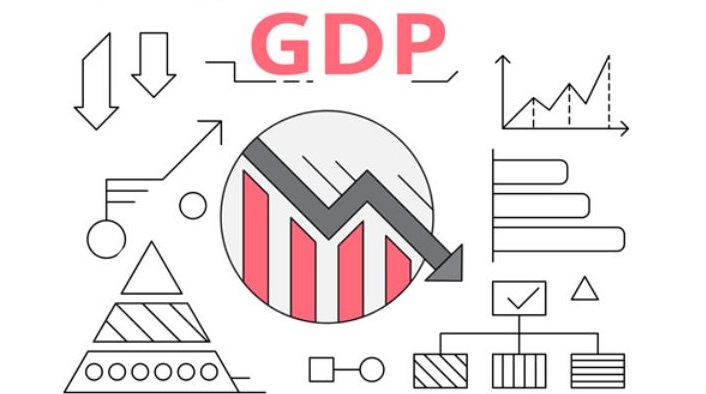
    India’s GDP for the period April to June 2020 has contracted by 23.9 percent. In other words, the total value of goods and services produced in India in April, May and June this year is 24% less than the total value of goods and services produced in India in the same three months last year.

    What is worse is that, because of the widespread lockdowns, the data quality is sub-optimal and most observers expect this number to worsen when it is revised in due course.

    India’s GDP numbers

    Almost all the major indicators of growth in the economy — be it production of cement or consumption of steel — show deep contraction. Even total telephone subscribers saw a contraction in this quarter.

    Chart 1: India’s GDP story since economic liberalization. Source: McKinsey and Express Research Group.

    Chart 2: Percentage change in key indicators. Source: Ministry of Statistics and Programme Implementation

    What contributes to India’s GDP?

    GDP measures the monetary value of all goods and services produced within the domestic boundaries of a country within a timeframe (generally, a year).

    In any economy, the total demand for goods and services — that is the GDP — is generated from one of the four engines of growth.

    1. The biggest engine is consumption demand from private individuals like us. Let’s call it C, and in the Indian economy, this accounted for 56.4% of all GDP before this quarter.
    2. The second-biggest engine is the demand generated by private sector businesses. Let’s call it I, and this accounted for 32% of all GDP in India.
    3. The third engine is the demand for goods and services generated by the government. Let’s call it G, and it accounted for 11% of India’s GDP.
    4. The last engine is the net demand for GDP after we subtract imports from India’s exports. Let’s call it NX. In India’s case, it is the smallest engine and, since India typically imports more than it exports, its effect is negative on the GDP.

    So total GDP = C + I + G + NX

    Tap to read more about:

    National Income Determination, GDP, GNP, NDP, NNP, Personal Income

    Now, look at Chart 4. It shows what has happened to each of the engines in Q1.

    Chart 4: Engines of growth falter. Source: MoSPI and Express Research Group

    Reasons for GDP contraction

    The biggest engines, which accounted for over 88% of the Indian total GDP saw a massive contraction. They are as follows:

    1. Private consumption — the biggest engine driving the Indian economy — has fallen by 27%.
    2. Investments by businesses: The second biggest engine — investments by businesses — has fallen even harder — it is half of what it was last year same quarter.
    • Net export demand: The NX has turned positive in this Q1 because India’s imports have crashed more than its exports. While on paper, this provides a boost to overall GDP, it also points to an economy where economic activity has plummeted.
    • Govt. Expenditure: Data shows that the government’s expenditure went up by 16% but this was nowhere near enough to compensate for the loss of demand (power) in other sectors (engines) of the economy.

    Issues with govt. expenditure

    • Even before the COVID crisis, government finances were overextended.
    • It was not only borrowing but borrowing more than what it should have. As a result, today it doesn’t have as much money.
    • It will have to think of some innovative solutions to generate resources. Chart 4 by McKinsey Global Institute provides ways in which an additional 3.5 per cent of the GDP can be raised by the government.

    Why can’t the government just spend to revive growth?

    • First, in all likelihood, temporary incomes coupled with job/income uncertainty will induce precautionary savings without any impact on growth.
    • Second, the fiscal situation was weak even before the pandemic. With revenues having cratered, funding of additional expenditure is through higher borrowings.
    • Any incremental debt should be seen in the context of future investments being hampered due to current consumption.

    Implications of GDP decline

    • With GDP contracting by more than what most observers expected, it is now believed that the full-year GDP could also worsen.
    • A fairly conservative estimate would be a contraction of 7% for the full financial year.
    • Chart 1 puts this in perspective. Since economic liberalisation in the early 1990s, Indian economy has clocked an average of 7% GDP growth each year. This year, it is likely to turn turtle and contract by 7%.
    • The worst affected were construction (–50%), trade, hotels and other services (–47%), manufacturing (–39%), and mining (–23%).
    • It is important to note that these are the sectors that create the maximum new jobs in the country.
    • In a scenario where each of these sectors is contracting so sharply — that is, their output and incomes are falling — it would lead to more and more people either losing jobs (decline in employment) or failing to get one (rise in unemployment).

    Impact on Economy

    The impact of an economic contraction on an average individual isn’t always in a direct way, like job losses or salary cuts. There are indirect ways as well. Let’s take a look at this pointwise.

    • Many companies are encouraging their employees to work from home. This has an impact on those working in the surrounding informal sector leading to a loss of economic activity.
    • If people cut down on consumption, it basically means they are spending less than before. This works in various ways. First, businesses, on the whole, see a fall in revenues and a fall in profits. Hence the employees are bound to be impacted.
    • Many businesses, in order to stay afloat, have fired employees. Some have cut salaries. Some others have rescinded on the job offers they made.
    • Even businesses that are on a strong wicket have given only bare-minimum increments to their employees this year.
    • Further, many big businesses have publicly announced that they are putting all their expansion plans on the backburner currently. If businesses don’t expand, then a fresh set of jobs don’t get created and hence expenditure.

    Getting recovered: Way forward

    Thinking beyond stimulus

    To achieve a stipulated economic growth, the government needs to start addressing some of the traditional sore points such as the large infrastructure deficit, the weak financial sector, archaic land and labour laws, and the administrative and judicial hurdles.

    • It is easy to prescribe abandoning fiscal prudence or ‘printing money’ to fund spending. But the risk is high compared to the reward.
    • This sets the base for any kind of “stimulus” — it should be well-targeted and have a large multiplier effect.
    • Instead, they argue, that India needs to broaden its consumer base beyond the top 10- 20 per cent of the population to improve long-term growth prospects.
    • This cannot happen with regular doses of consumption stimulus but through creating steady and well-paid employment for the bottom and middle segments.

    Bumpy road ahead

    • Firstly, in the months to come, private consumption will improve and so will investment as a result. But it will take a while for both consumption and investment to reach pre-COVID-19 levels.
    • With Covid-19 now spreading at the rate of more than 85,000 cases per day, it is no longer just an urban India phenomenon. As it spreads to semi-urban and rural India, it will impact consumption, though not in the same negative way as it did during total lockdowns.
    • To ease the pressure on consumption, banks have cut interest rates in the hope of people and businesses borrowing and spending more. People and businesses borrow and spend more when they are confident about their economic future. Right now, the confidence has to be instilled.
    • The government can reduce the GST burden. What it loses out in taxes per unit of sales, it will make up for in volume. The government, for its part, needs to step in and spend more, in the process create some economic activity.

    Not letting a good crisis go to waste

    • To conclude, it is worth saying that if all problems had solutions, they wouldn’t be called problems in the first place.
    • The government being clearly tied on spending-more front, it can possibly push in more economic reforms at this point of time.
    • One area that clearly needs reform is the GST system, which instead of freeing up the Indian economy has acted in a negative way. Another area that clearly needs reform is India’s public health infrastructure.
    • While these reforms may not lead to immediate benefits they will work well for the economy in the longer-term, something which we shouldn’t miss out on with the current focus on Covid-19.
    • Beyond that, there isn’t much that the government can do. Also, it is worth remembering here that the Indian economy was already in trouble before the pandemic struck.

    Conclusion

    When incomes fall sharply, private individuals cut back consumption. When private consumption falls sharply, businesses stop investing. Since both of these are voluntary decisions, there is no way to force people to spend more and/or force businesses to invest more in the current scenario.

    • For achieving rapid growth at a sustainable rate, India needs the government to invest in raising the productive capacity of the economy. The government will have to strike a combination of the two policy approaches:
    • The first is the process of “Unlocking”. It has been observed that with the economy moving from the stage of a total lockdown to a gradual opening up of the windows has reflected in the macro-economic numbers such as the Index of Industrial Production (IIP).
    • The second factor which will play a role in the economy’s growth prospects in the coming months is the possibility of a revival package from the government. This can be a course changer for the growth trajectory.
    • To boost growth presently, there should ideally be some additional capital expenditure by the government which goes beyond what has been provided in the budget. By increasing capital expenditure, the government can begin a virtuous cycle of creating assets as well as providing employment.


    References:

    https://indianexpress.com/article/explained/gdp-contraction-23-9-the-economics-behind-the-math-6578046/

    https://www.deccanherald.com/business/economy-business/gdp-contraction-no-easy-solutions-but-a-chance-for-deep-economic-reforms-883234.html

    https://www.newslaundry.com/2020/09/04/explained-how-will-indias-gdp-contraction-impact-you

  • [Burning Issue] Rolling-out of National Digital Health Mission

    The National Digital Health Mission (NDHM) announced by the PM on the 74th Independence Day has the potential to transform the healthcare sector, making it more technologically advanced, inclusive and delivery-driven.

    Digitizing Healthcare: A Backgrounder

    • The National Health Policy 2017 had envisaged creation of a digital health technology eco-system aiming at developing an integrated health information system.
    • A Digital Health ID was proposed to reduce the risk of preventable medical errors and significantly increase the quality of care.
    • In the context of this, the NITI Aayog, in June 2018, floated a consultation of a digital backbone for India’s health system — National Health Stack (NHS).
    • A committee headed by former Unique Identification Authority of India (UIDAI) chairman released the National Digital Health Blueprint (NDHB) in July 2019.
    • It recognised the need to establish a specialised ecosystem, called the National Digital Health Mission (NDHM) which finally landed on the tarmac on this Independence Day.

    The National Digital Health Mission

    • The NDHM is a digital health ecosystem under which every Indian citizen will now have unique health IDs, digitized health records with identifiers for doctors and health facilities.
    • The mission will significantly improve the efficiency, effectiveness, and transparency of health service delivery and will be a major step towards the achievement of the UN Sustainable Development Goal 3.8 of Universal Health Coverage, including financial risk protection.

    Components of the mission

    The suite of digital systems consists of Health ID, DigiDoctor, Health Facility Registry (HFR), Personal Health Records, e-Pharmacy, and Telemedicine.

    The mission envisages the creation of these core digital systems which are built to support timely access to safe, affordable healthcare for all citizens and will accelerate the country’s progress towards Universal Health Coverage (UHC).

    Unique features

    The mission has unique features which make it very attractive for all the stakeholders to be part of the system, some of which are as follows:

    Expected benefits

    (1) Prioritizing patients

    • Say, mortality from Covid-19 is significantly increased by comorbidities or the presence of other underlying conditions like hypertension or diabetes.
    • With digital health records, doctors can prioritise patients based on their test results.

    (2) Portability of health records

    • Portability of records fairly eases in a patient with the first hospital visit, or her/his most frequently visited hospital.
    • If she/he wishes to change a healthcare provider for cost or quality reasons, she can access her health records without carrying pieces of paper — prescriptions and test reports.
    • People will able to access their lab reports, x-rays and prescriptions irrespective of where they were generated, and share them with doctors or family members — with consent.

    (3) Easy facilitation

    • This initiative will allow patients to access healthcare facilities remotely through e-pharmacies, online appointments, teleconsultation, and other health benefits.
    • Besides, as all the medical history of the patient is recorded in the Health ID card, it will help the doctor to understand the case better, and improved medication can be offered.
    • It is non-prescriptive — unlike its predecessor from a few years ago, it steers away from designing a monolithic EMR (an electronic medical record) and instead only provides data facilitation exchange between patients, providers and payers.

    (4) Technology impetus in policymaking

    • Meanwhile, it is also not just individuals who could emerge beneficiaries of the scheme.
    • With large swathes of data being made available, the government too can form policies based on geographical, demographical, and risk-factor based monitoring of health.

    Various Issues

    The imminent adoption of NDHM in the absence of a data protection law has led for the policymakers to plan for two policies — security of health systems, and privacy of personal health records.

    With the unavailability of information security laws related to healthcare in India, the following could be the repercussions or could lead to violation of the mandatory requirements:

    (1) High Probability of Data Breach:

    The data breach occurs when any person or corporate generates, collects, stores, transmits or discloses digital health information in contravention to the provisions or standards laid down.

    (2) Data Ownership and Standardization Issues:

     An owner shall have the right to give/refuse or withdraw consent for the storage and transmission of digital health data. In terms of standardization, it is very important to transform the data before loading it to the target system.

    (3) Data Normalization Issues:

    Data Normalization is done to reduce data redundancy and improve data integrity. In view of the unavailability of such laws, it could bring redundancy as data could exist in multiple forms.

    (4) Data Collection, Storage and Transmission Challenges:

    The purpose of data generation, collection, storage and transmission is to facilitate health and clinical research and health care quality. But the unavailability of data protection and information security laws (for maintaining CIA- confidentiality, Integrity and Availability) could lead to the collection of data without informing the owner, lack of privacy controls while storing in the cloud and transmitting the data without the consent of the owner.

    (5) Illegal data selling and theft: Unavailability of appropriate laws could lead to incidents where digital health data is acquired or accessed without proper authorization. For example, monetizing the patient data for the purpose of research and innovation may also be misused by its illegal selling without the knowledge of the patient, thereby, leaking his sensitive data amounting to the violation of data privacy.

    (6) Data Quality Issues- There could be the following data quality issues that can be encountered without the proper laws in place:

    • Duplicated data: Repeated data making it difficult to uniquely identify the record;
    • Inconsistent data formats: Storing the same data in multiple tables from different data sources;
    • Inaccurate data: Either the data is obsolete or has errors in it;
    • Excessive data: Unusable data could be a waste of storage and cost;
    • Poorly Defined data: Causes misunderstanding around the proper methodology for data management.

    India has not yet enacted specific and full-fledged legislation on data protection. Of course, the Parliament of India had amended the Information Technology Act (2000) (“IT Act”) to include specific section 43A, but it only includes corporates and not individuals regarding compensation for failure to protect data.

    Other inherent issues

    • A fragmented private healthcare market consisting of single-doctor clinics, nursing homes, non-profits and corporate hospitals have varying adoption rates of digitization.
    • Corporate hospitals like Max, Apollo, Fortis, etc. have voluntarily adopted electronic health records standards notified by the government.
    • However, it is not possible for a patient to digitally transfer their health records from one type of hospital or a healthcare provider to another.
    • Critical to that is also the role of doctors, who will play a significant role in maintaining electronic digital data.
    • The growth path is powered by clinicians and we haven’t really been successful in filling the void.
    • India currently has 0.8 doctors per 1,000 patients, in comparison to over 2 per 1,000 in China and 2.6 in the US. The WHO recommends 1 doctor to 1,000 patients.

    Making it happen

    Many countries are lightyears ahead of India in their use of digital health records, but none has anchored its vision as robustly around the public health records, as has the current iteration of the NDHM.

    Making it a success will have to fill the voids discuss above.

    To enable seamless data exchange, all users must be incentivized or mandated to adopt a standard language of communication.  The spiraling burden for documentation had led to absurd situations. It is imperative that India, while embracing global standards, seriously rethinks what to document, when, why, and most importantly, by whom.

    Conclusion

    There is no doubt that NDHM launched will significantly improve the efficiency, effectiveness, and transparency of health services delivery including building a paperless system and will facilitate online consultation with the doctors. But data protection and privacy are the keys to the success of this mission.

    The usual conclusion rests with a generic statement-

    “These tectonic shifts won’t all happen all of sudden. Or within the cyclical tenure of bureaucrats or politicians. And they won’t occur in the absence of the long-overdue overhaul of healthcare delivery in India. But when they do, they will advance medicine and health for all.”


    References

    https://www.civilsdaily.com/mains/how-the-proposed-national-digital-health-mission-could-transform-health-system-in-india-what-are-the-concerns-with-it-10-marks/

    http://www.mondaq.com/india/healthcare/980800/national-digital-health-mission-harnessing-technology-to-strengthen-healthcare-in-india

    https://www.theweek.in/news/india/2020/08/15/explained-what-is-the-national-digital-health-mission-how-does-a-health-id-card-help.html

  • [Burning Issue] Fiscal Council in India: Certain solution in uncertain times

    The impact of COVID-19 on the economy is devastating and the government is forced to opt to borrow for spending more in order to support vulnerable households and engineer economic recovery due to the after-effects of COVID-19 pandemic on the economy.

    The BI highlights the need for bipartisan, independent Fiscal Council to report and analyse FRBM discrepancies and inaccurate fiscal projections.

    COVID Times: Fiscal situation and its unpredictability

    • The fiscal deficit of the Centre in 2019-20 as estimated by the Controller General of Accounts (CGA) was 4.6%, 0.8 percentage point higher than the revised estimate.
    • For 2020-21, even without any additional fiscal stimulus, the deficit is estimated at about 7% of GDP as against 3.5% estimated in the Budget due to a sharp decline in revenues.
    • The consolidated deficit of the Union and States could be as high as 12% of GDP and the overall debt could go up to 85%.

    What is the Fiscal Council?

    • A Fiscal Council is an independent fiscal institution (IFI) with a mandate to promote stable and sustainable public finances.
    • They aim to provide nonpartisan oversight of fiscal performance and/or advice and guidance — from either a positive or normative perspective — on key aspects of fiscal policy.
    • These institutions assist in calibrating sustainable fiscal policy by making an objective and scientific analysis.

    Important tasks of these IFIs: 

    1. Independent analysis, review and monitoring and evaluating of government’s fiscal policies and programmes
    2. Developing or reviewing macroeconomic and/or budgetary projections
    3. Costing of budget and policy proposals and programmes
    4. Presenting policymakers with alternative policy options

    Voices for a Fiscal Council

    • The 13th Finance Commission recommended that a committee be appointed by the Ministry of Finance which should eventually transform itself into a Fiscal Council.
    • The FC expected it to conduct an annual independent public review of FRBM compliance, including a review of the fiscal impact of policy decisions.
    • The FRBM Review Committee too made a similar recommendation underlining the need for an independent review by the Finance Ministry appointing the Council.

    Tap to read more about the FRBM Act:

    Explained: Fiscal Responsibility and Budget Management (FRBM) Act

    Why need a fiscal council?

    (1) Burgeoning deficits

    • For the current year, even without any additional fiscal stimulus, the deficit is estimated at about 7% of GDP as against 3.5% estimated in the Budget due to a sharp decline in revenues.
    • The consolidated deficit of the Union and States could be as high as 12% of GDP and the overall debt could go up to 85%.
    • Thus, it is necessary that the government must return to a credible fiscal consolidation path once the crisis gets over.

    (2) Transparency issues

    • Besides large deficits and debt, there are questions of comprehensiveness, transparency and accountability in the Budgets.
    • The practice of repeated postponement of targets, timely non-settlement of bill payments and off Budget financing to show lower deficits has been common.
    • The report of the CAG of India in 2018 has highlighted various advances done to keep the liabilities hidden.

    (3) Fiscal discipline

    • Many economists have faulted the government’s fiscal stance, arguing that this is no time for restraint; the government should spend more to stimulate the economy by borrowing as may be necessary.
    • In 2017, the N.K. Singh committee on the review of fiscal rules set up by the finance ministry suggested the creation of an independent fiscal council that would provide forecasts and advise the government on whether conditions exist for deviation from the mandated fiscal rules.
    • Also in 2018, the D.K. Srivastava committee on fiscal statistics established by the National Statistical Commission (NSC) also suggested the establishment of a fiscal council.

    Fiscal Council can be a game-changer. How?

    • Watchdog of public finance: An unbiased fiscal scrutiny will help raise the level of debate and brings in greater transparency and accountability.
    • Highlights populist measures: Accurate costing of various policies and programmes can help to promote transparency over the political cycle to discourage populist shifts in fiscal policy and improve accountability.
    • Public awareness: Scientific estimates of the cost of programmes and assessment of forecasts could help in raising public awareness about their fiscal implications and make people understand the budget.
    • Rule of law maintenance: The Council will work as a conscience keeper in monitoring rule-based policies, and in raising awareness and the level of debate within and outside Parliament.

    Challenges meddling between

    1) Lack of Political Will

    • Back in 2003 when FRBM was enshrined into law, it was thought of as the magic cure for fiscal ills.
    • The FRBM enjoins the government to conform to pre-set fiscal targets, and in the event of failure to do so, to explain the reasons for deviation
    • The government is also required to submit to Parliament a ‘Fiscal Policy Strategy Statement’ (FPSS) to demonstrate the credibility of its fiscal stance
    • However, there is a lack of in-depth discussion in Parliament on fiscal stance and the submission of the FPSS often passes off without even much notice.

    2) Adding up more to the accountability of the Govt.

    • Fiscal council will give macroeconomic forecasts which the Finance Ministry is expected to use for the budget, and if the Ministry decides to differ from those estimates, it is required to explain why it has differed.
    • Besides, forcing the Finance Ministry to use someone else’s estimates will dilute its accountability.
    • If the estimates go wrong, the Finance Ministry will simply shift the blame to the fiscal council.

    3) Fiscal Bias

    • Governments that are unsure of being re-elected may ignore the long-term consequences of fiscal deficits and use generous fiscal policy to increase their chances of re-election.
    • This may be possible because voters tend to see the short term benefits they can gain from a reduction in taxes and an increase in public spending but are not always fully aware of the possible long-term costs of this.
    • This may explain why unsustainable deficits are not systematically punished by voters

    4) Duplication of Work

    • As of now, both the Central Statistics Office (CSO) and RBI give forecasts of growth and other macroeconomic variables, questions will be raised about the need for Fiscal Council’s projections
    • Another argument made in support of a fiscal council is that it will act as watchdog & prevent the government from gaming the fiscal rules through creative accounting.
    • However, there is already an institutional mechanism in form of CAG to do the job of auditing & fiscal watchdog of government spending.

    Way forward

    • When the markets fail, governments have to intervene. Whenever governments seem obstructed, it is here that we need systems and institutions to ensure checks and balances.
    • In that respect, a Fiscal Council is an important institution needed to complement the rule-based fiscal policy.

    Alternatives to the situation

    • We can expect the CAG to scrutinize the budget after it is presented to Parliament for its fiscal stance and the integrity of the numbers, and give out a public report.
    • The CAG’s office will provide the secretarial and logistic support to the committee from within its resources.

    Global examples

    • The Office for Budget Responsibility (OBR) is a non-departmental public body funded by the UK Treasury, that the UK government established to provide independent economic forecasts and independent analysis of the public finances.
    • We can have a similar official watchdog at our behest!

    Conclusion

    • Of course, a fiscal council is not a ‘silver bullet’; if there is no political will, the institution would be less effective, and if there is political will, there is no need for such an institution.
    • That is also true of the FRBM Act. While we cannot state that the FRBM Act has been an unqualified success, it has also not been an abject failure either.


    References

    https://www.thehindu.com/opinion/lead/india-does-need-a-fiscal-council/article32432565.ece

    https://www.thehindu.com/opinion/lead/do-we-need-a-fiscal-council/article32046204.ece

    https://en.wikipedia.org/wiki/Fiscal_council

  • [Burning Issue] Free Speech Vs. Contempt of Court

    Power of judiciary lies neither in deciding cases, nor in imposing sentences, nor in giving punishment for its contempt, but in the trust, confidence and faith of the general public. Criticism is important for it helps to give us a new perspective and opens our eyes to things we may have overlooked or never considered.

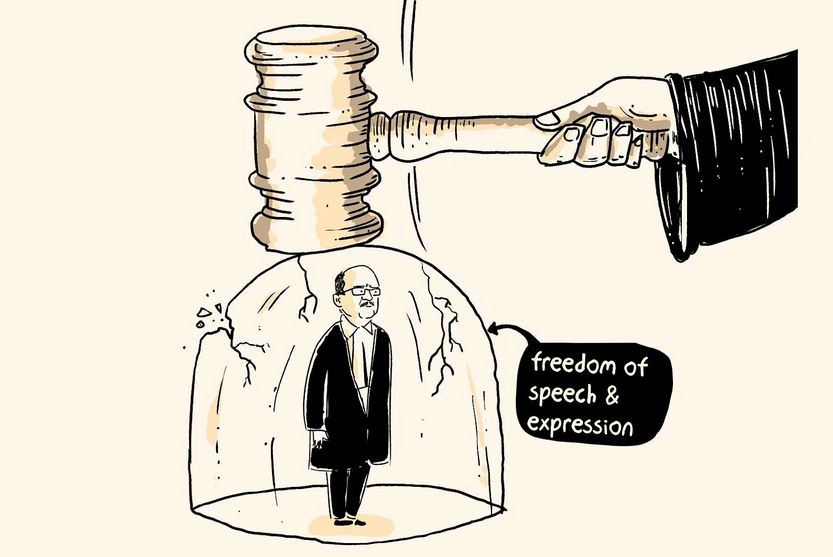
    But where do we draw the line between Contempt and criticism? Contempt of court is back in the news. This follows the initiation and conviction of contempt proceedings against a veteran advocate-activist by the Supreme Court of India, on its own motion.

    What is Contempt of Court?

    • Contempt of court, often referred to simply as “contempt”, is the offence of being disobedient to or disrespectful toward a court of law and its officers in the form of behaviour that opposes or defies the authority, justice and dignity of the court.

    History behind ‘Contempt’

    • The concept of contempt of court is several centuries old.
    • In England, it is a common law principle that seeks to protect the judicial power of the king, initially exercised by him, and later by a panel of judges who acted in his name.
    • Violation of the judges’ orders was considered an affront to the king himself.
    • Over time, any kind of disobedience to judges, or obstruction of the implementation of their directives, or comments and actions that showed disrespect towards them came to be punishable.

    Entry into our legal books

    • There were pre-Independence laws of contempt in India. Besides the early High Courts, the courts of some princely states also had such laws.
    • When the Constitution was adopted, contempt of court was made one of the restrictions on freedom of speech and expression.
    • Separately, Article 129 of the Constitution conferred on the Supreme Court the power to punish for its contempt.
    • Article 215 conferred a corresponding power on the High Courts.
    • The Contempt of Courts Act, 1971, gives statutory backing to the idea.

    What are the types of Contempt?

    In India contempt of court is of two types under the Contempt of Courts Act of 1971:

    • Civil contempt: Under Section 2(b), civil contempt has been defined as willful disobedience to any judgment, decree, direction, order, writ or another process of a court or willful breach of an undertaking given to a court.
    • Criminal contempt: Under Section 2(c), criminal contempt has been defined as the publication (whether by words, spoken or written, or by signs, or by visible representation, or otherwise) of any matter or the doing of any other act whatsoever which:
      1. Scandalizes or tends to scandalize, or lowers or tends to lower the authority of, any court, or
      2. Prejudices, or interferes or tends to interfere with the due course of any judicial proceeding, or
      3. Interferes or tends to interfere with, or obstructs or tends to obstruct, the administration of justice in any other manner.

    WAIT, What accounts for the scandalizing of the Judiciary?

    • Making allegations against the judiciary or individual judges, attributing motives to judgments and judicial functioning and any scurrilous attack on the conduct of judges are normally considered matters that scandalise the judiciary.

    What is not contempt of court?

    • Fair and accurate reporting of judicial proceedings will not amount to contempt of court.
    • Nor is any fair criticism on the merits of a judicial order after a case is heard and disposed of.
    • The Contempt Act was amended in 2006 to introduce truth as a valid defence if it was in the public interest and was invoked in a bonafide.

    Since we are done with what is not contempt, let us look at what constitutes contempt.

    Necessary ingredients for Contempt of Court in India

    1) Interference with Administration of Justice

    • In Brahma Prakash Sharma v State of UP, the Supreme Court had held that in order to constitute the offence of Contempt of Court, it was not necessary to specifically prove that an actual interference with the administration of justice has been committed.
    • The Court held that it was enough if a defamatory statement is likely or in any way tends to interfere with the proper administration of justice.

    2) Scandalizing the Court 

    • In the case of PN Dua v Shiv Shankar and others, the Supreme Court held that mere criticism of the Court does not amount to contempt of Court.
    • The Court observed that in a free marketplace of ideas, criticisms about the judicial system or Judges should be welcomed, so long as such criticisms do not hamper the administration of justice.
    • In the case of Baradanath Mishra v, the Registrar of Orissa High Court the court held that a common form of such contempt is the vilification (personal abuse) of the judges.

    3) Interference with due course of Justice

    • In Pritam Lal v. High Court of M.P the Supreme Court held that to preserve the proceedings of the Courts from interference and to keep the streams of justice pure, it becomes the duty of the Court, to punish the contemner in order to preserve its dignity.
    • No one can claim immunity from the law of contempt if his act or conduct in relation to Court interferes or obstructs the due course of justice.

    Issues with the Contempt

    Contempt is not just associated with judiciary, we have heard or read about journalist or cartoonist arrested for contempt of parliament. Now in general, Use of contempt power has the following issues:

    1) Curb on Civil Liberties

    • A law for criminal contempt gets in conflict with India’s democratic system which recognises freedom of speech and expression as a fundamental right.
    • In this manner, the judiciary draws resemblance with the executive, in using laws for a chilling effect on freedom of speech.
    • Former Justice of Supreme Court, V.R. Krishna Iyer, famously termed the law of contempt as “having a vague and wandering jurisdiction, with uncertain boundaries; contempt law, regardless of the public good, may unwittingly trample upon civil liberties”.

    2) Ambiguity of the concept

    • The definition of criminal contempt in India is extremely wide and can be easily invoked.
    • Also, suo motu powers of the Court to initiate such proceedings only serve to complicate matters.
    • Further, the Contempt of Courts Act was amended in 2006, to add truth and good faith as valid defences for contempt, but they are seldom entertained by the judiciary.

    3) Fair criticism is justified

    • In S.Mugolkar v. Unknown (1978), the Supreme Court held that the judiciary cannot be immune from fair criticism.
    • It held that contempt action is to be used only when an obvious misstatement with malicious intent seeks to bring down public confidence in the courts or seeks to influence the courts.

    4) Obsolete ideology

    • The punishment for contempt could procure submission but not respect for the judicial institution.
    • Already, contempt has practically become obsolete in foreign democracies, with jurisdictions recognising that it is an archaic law.
    • For example, England abolished the offence of “scandalizing the court” in 2013. Canada ties its test for contempt to real, substantial and immediate dangers to the administration. American courts also no longer use the law of contempt in response to comments on judges or legal matters.


    Need for the Contempt provisions: Arguments in favour

    https://d18x2uyjeekruj.cloudfront.net/wp-content/uploads/2020/08/cont.jpg

    1) Upholding the constitution

    • The powers of contempt of the Supreme Court and High Courts are independent of the Act 1971, that is, drawn from the Constitution.
    • So to delete the provision relating to ‘criminal contempt’ particularly ‘scandalizing of courts’ will have no impact on the power of the Superior Courts to punish for contempt in view of their inherent constitutional powers, as these powers are independent of statutory provisions.

    2) Ensuring Safeguards for Judiciary

    • The Judiciary is the guardian of rule of law in India and it needs to be made sure that it is protected with all kinds of problems that do or might hamper the fluent administration of justice.
    • The provision of powers to punish for contempt is significant for ensuring such respect of the Judiciary. Such kind of power is necessary to prevent interference with the course of justice and the authority of the court.

    3) Protecting public faith in Judiciary

    • Amendment in the definition of contempt may reduce the overall impact of the law and lessen the respect that people have for courts and their authority and functioning.
    • Also by abolishing the offence in India would leave a legislative gap.

    4) Impact on Subordinate Courts

    • The Constitution allows superior courts to punish for their contempt. The Contempt of Court Act additionally allows the High Court to punish for contempt of subordinate courts.
    • Thus, if the definition of contempt is removed, subordinate courts will suffer as there will be no remedy to address cases of their contempt.

    5) Fair criticism is not contempt

    • The 1971 Act contains adequate safeguards to exclude instances which may not amount to criminal contempt” as defined under Section 2(c) of the Act 1971.
    • It means that not all cases of contempt are considered.

    “Let me say at once that we will never use this jurisdiction as a means to uphold our own dignity. That must rest on surer foundations. Nor will we use it to suppress those who speak against us. We do not fear criticism, nor do we resent it. For there is something far more important at stake. It is no less than freedom of speech itself.”

    – Lord Denning

    Way forward

    • The Law Commission has held that there is a need to retain the provision regarding the contempt of courts. However, it also recommended the definition of contempt should be restricted to civil contempt, i.e., willful disobedience of judgments of the court.
    • The contempt of court should not be allowed to be used as a means to prevent criticisms.
    • In recent times, it is more important that courts are seen to be concerned about accountability, that allegations are done by impartial probes rather than threats of the contempt action, and processes are transparent.
    • If the contempt has to continue, a review mechanism within the judiciary should be there as a safeguard against judicial tyranny.

    In an era in which social media are full of critics, commentators and observers who deem it necessary to air their views in many unrestrained and uninhibited ways, the higher judiciary should not really be spending its time and energy invoking its power to punish for contempt of itself.

    Conclusion

    • Globalized human society as a singular entity and individual societies are moving towards the consensus of a world where an individual has greater autonomy, rights and dignity.
    • Healthy and constructive criticisms are the necessary features for the development of democracy.
    • In this perspective focus should be given precedence over ‘dignity of court’, but not blindly.
    • In this backdrop, there is a need to revisit the need for a law on criminal contempt, where India can learn from Britain which abolished the offence of scandalizing the judiciary as a form of contempt of court in 2013 based on the fact that the law was vague and not compatible with freedom of speech.

    Also read:

    Office of the Attorney General and its role in contempt cases


    References

    https://www.thehindu.com/opinion/lead/the-chilling-effect-of-criminal-contempt/article32198138.ece

    https://www.thehindu.com/news/national/the-hindu-explains-what-is-contempt-of-court/article32249810.ece

    https://www.prsindia.org/report-summaries/review-contempt-courts-act-1971

    https://papers.ssrn.com/sol3/papers.cfm?abstract_id=1311828

    https://thewire.in/law/supreme-court-contempt-of-court-respect-constitution-power

    http://www.legalserviceindia.com/legal/article-2638-contempt-of-court-a-comprehensive-analysis.html

    https://www.thehindu.com/opinion/editorial/scandalising-as-contempt-the-hindu-editorial-on-proceedings-against-prashant-bhushan/article32198126.ece

  • [Burning Issue] Defence Production and Export Promotion Policy, 2020

    The realities of International relations has ensured that the importance of hard power never diminishes. From China to USA, military power has time and again seen research, innovations and reforms. It is true if India wants to see itself as a hard power then innovation is the keyword. More precisely, indigenous production!  

    In order to provide impetus to self-reliance in defence manufacturing, multiple announcements were made under ‘Atmanirbhar Bharat Package’. The next step is a draft Defence Production and Export Promotion Policy 2020 (DPEPP 2020) formulated by the Ministry of Defence (MoD).

    With this edition of Burning Issues, let us look more closely into this policy, some challenges and solutions.

    History bears testimony to the fact that all nations with a strong military-industrial complex had a strong military force, resulting in a strong and vibrant foreign policy to stand comfortably amongst the comity of nations.

    Why the fuss about Indigenization?

    1) Reducing import dependence

    • India was the world’s second-largest arms importer from 2014-18, ceding the long-held tag as the largest importer to Saudi Arabia, which accounted for 12% of the total imports during the period, says 2019 SIPRI report.
    • Pakistan stood at the 11th position, accounting for 2.7% of all global imports.
    • Such higher import dependency leads to increase in the fiscal deficit.

    2) Security Imperative

    • Indigenization in defence is critical to national security also. It keeps intact the technological expertise and encourages spin-off technologies and innovation that often stem from it.
    • Indigenization is needed in order to avert the threats associated with the frequent ceasefire violations like that of the Uri, Pathankot and Pulwama attacks.
    • India is surrounded by porous borders and hostile neighbours need to be self-sufficient and self-reliant in defence production.

    3) Economic boost

    • Indigenization in defence can help create a large industry which also includes small manufacturers.
    • Example: USA has a strong defence industry with cmpanies like Lockheed martin contributing to economic growth as well.

    4) Employment generation

    • Defence manufacturing will lead to the generation of satellites industries that in turn will pave the way for a generation of employment opportunities.
    • As per government estimates, a reduction in 20-25% in defence-related imports could directly create an additional 100,000 to 120,000 highly skilled jobs in India.

    It was the military industrial set-up of Germany that enabled it to launch its offensive practically against the entire western world both in World War I and World War II.

    Defence Production and Export Promotion Policy, 2020

    The DPEPP 2020 is envisaged as overarching guiding document of MoD to provide a focused, structured and significant thrust to defence production capabilities of the country for self-reliance and exports.

    The policy has laid out the following goals and objectives:

    1. To achieve a turnover of Rs 1,75,000 Crores (US$ 25Bn) including export of Rs 35,000 Crore (US$ 5 Billion) in Aerospace and Defence goods and services by 2025.
    2. To develop a dynamic, robust and competitive Defence industry, including Aerospace and Naval Shipbuilding industry to cater to the needs of Armed forces with quality products.
    3. To reduce dependence on imports and take forward “Make in India” initiatives through domestic design and development.
    4. To promote the export of defence products and become part of the global defence value chains.
    5. To create an environment that encourages R&D rewards innovation creates Indian IP ownership and promotes a robust and self-reliant defence industry.

    The Policy brings out multiple strategies under the following focus areas:

    1. Procurement Reforms
    2. Indigenization & Support to MSMEs/Startups
    3. Optimize Resource Allocation
    4. Investment Promotion, FDI & Ease of Doing Business
    5. Innovation and R&D
    6. DPSUs and OFB
    7. Quality Assurance & Testing Infrastructure
    8. Export Promotion

    Outlined strategies:

    1) Procurement Reforms

    • A Project Management Unit (PMU) will be set up for the development and production of technologies involved, life cycle costs and maintenance requirements of platforms, equipment and weapon systems.
    • It also aims to move away from licensed production to design, develop and produce indigenously.
    • It also aims to own the design rights and IP of the systems projected in the Long Term Integrated Perspective Plan (LTIPP) and a Technology Assessment Cell (TAC) would be created.
    • The TAC would also assess the industrial capability for design, development and production, including re-engineering for production of major systems such as armoured vehicles, submarines, fighter aircraft, helicopters and radars with the major industries in the country.

    2) Indigenization And Support to MSMEs/Startups

    • The indigenization policy aims to create an industry ecosystem to indigenise the imported components (including alloys and special materials) and sub-assemblies for defence equipment and platforms manufactured in India. 5,000 such items are proposed to be indigenised by 2025.
    • More than 50 startups are currently developing new ‘fit-for-military-use’ technologies/products.

    3) Optimize Resource Allocation

    • The share of domestic procurement in overall Defence procurement is about 60%.
    • To enhance procurement from domestic industry, the procurement needs to be doubled from the current Rs. 70,000 crore to Rs. 1,40,000 crore by 2025.

    4) Investment Promotion and Ease of Doing Business

    • India is already a large aerospace market with rising passenger traffic and increasing military expenditure, as a result of which the demand for aircraft (fixed and rotary wings) is rising.
    • The opportunities in the aerospace industry have been identified in the following segments – aircraft build work, aircraft Maintenance, Repair and Overhaul (MRO), helicopters, engine manufacturing and MRO work, line replaceable units, Unmanned Aerial Vehicles (UAVs) and upgrades and retrofits.
    • The improvement in market size, demographic dividend and availability of diverse skill sets are evident from India’s ranking in the World Bank’s ‘Ease of Doing Business’ (EoDB) report.
    • The investments in the defence sector need to regularly sustain the steady supply of orders.

    5) Innovation and R&D

    • Innovations for Defence Excellence (iDEX) has been operationalised to provide necessary incubation and infrastructure support to the startups in the defence area.
    • iDEX would be further scaled up to engage with 300 more startups and develop 60 new technologies/products during the next five years.
    • Mission Raksha Gyan Shakti was launched to promote a greater culture of innovation and technology development and file a higher number of patents in Defence Public Sector Undertakings (DPSUs), Ordnance Factory Board (OFB). It would be scaled up for promoting the creation of Intellectual Property in the sector and its commercial utilization.

    6) FDI limit increased to 74% by automatic route

    • The liberalisation of FDI in defence manufacturing, raising the limit under the automatic route to 74%, has opened the door to more joint ventures of foreign and Indian companies for defence manufacturing in India.
    • It would also sustain domestic industrial activity in the research, design and manufacture of systems and sub-systems.

    Challenges in indigenous manufacturing

    India has its own set of inherent issues when it comes to indigenous manufacturing:

    1) Excess reliance on Public Sector

    • India has four companies (Indian ordnance factories, Hindustan Aeronautics Limited (HAL), Bharat Electronics Limited (BEL) and Bharat Dynamics Limited (BDL)) among the top 100 biggest arms producers of the world.
    • All four of these companies are public sector enterprises and account for the bulk of the domestic armament demand.
    • Governments usually have tended to privilege Defence Public Sector Units (DPSUs) over the private sector, despite ‘Make in India’.

    2) Policy delays

    • In the past few years, the government has approved over 200 defence acquisition proposals with the transfer of technology provision, valued around Rs 4 trillion, but most are still in relatively early stages of processing.

    3) Lack of Critical Technologies

    • Poor design capability in critical technologies, inadequate investment in R&D and the inability to manufacture major subsystems and components hamper the indigenous manufacturing.
    • The relationship between the R&D establishment, production agencies (public or private) and the end-user are extremely weak.

    4) Low advantage due to long gestation

    • The creation of a manufacturing base is capital and technology-intensive and has a long gestation period. For a factory to reach optimum levels of capacity utilization, it could take anywhere five to 10 to even 15 years to commence production.
    • By that time newer technologies make products outdated and unable to match with what the enemy may have acquired.

    5) ‘Unease’ in doing business

    • An issue related to stringent labour laws, compliance burden and lack of skills, affects the development of indigenous manufacturing in defence.
    • Overlapping jurisdiction of the Ministry of Defence and Ministry of Industrial Promotion impair India’s capability of defence manufacturing. Due to this, India hasn’t been able to attract decent FDI in defence.

    6) Lack of quality

    • The higher indigenization in few cases is largely attributed to the low-end technology.
    • Historically, India has been availing of technology through licence agreements from Russia and a smattering of Western countries.
    • For modern production, none of the entities has granted India the ToT owning to quality standards.
    • For example, Dassault had reportedly expressed its lack of confidence in the manufacturing quality of the HAL when the defence deal was being negotiated.

    7) FDI Policy

    • The original equipment manufacturers for setting up a business in India in partnership with public/private players want to have a major say in the management of manufacturing.
    • The earlier FDI limit of 49% was not enough to enthuse global manufacturing houses to set up bases in India.
    • Countries such as China and South Korea on the other hand, have become major manufacturing hubs in aeronautics and shipbuilding technology by being very liberal in their FDI policy.

    8) Lower R&D Allocation

    • Besides the FDI policy, inadequate investment in R&D and lip service to technology funding by making token allocations is an adequate commentary on our lack of seriousness in the area of Research and Development.
    • The allocation to DRDO remains sticky – around 6% of defence expenditure through successive parliamentary committees have recommended a minimum allocation of ten per cent.
    • Private sector giants such as the Tata, L&T and Mahindra and Mahindra invest less than one per cent of their turnover in R&D unlike in countries such as France where corporate organisations invest more than ten per cent

    9) Lack of skills

    • The second challenge is around talent available for the industry. The current sources of supply of talent are largely from the defence PSUs and user services.
    • Neither are they adequate in quantity nor in terms of skills and quality when evaluated from a perspective of the magnitude of demand arising from the need to build a robust homegrown industry.
    • There is a lack of engineering and research capability in our institutions. It again leads us back to the need for a stronger industry-academia interface.

    Along with the policy, what else can be done?

    1) Proper implementation of the policy framework

    • A long-term integrated perspective plan of the requirements of the armed forces should give the industry a clear picture of future requirements.
    • The real deal here is implementation and in future promoting forward-looking strategic partnerships between Indian and foreign companies, with a view to achieving indigenization over a period of time for even sophisticated platforms.

    2) Boosting MSMEs

    • There is visible incentivisation of Micro, Small and Medium Enterprises (MSME) in many spheres.
    • Their energetic response to the government’s initiatives is seen in their setting up of a Defence Innovators and Industry Association.
    • This bodes well for the future since MSMEs, which are the Tier-II and -III suppliers, are the crucibles of innovation and the true determinants of indigenization.

    3) PSUs overhaul

    • The Defence Research Development Organisation (DRDO), Ordnance Factory Board (OFB) and Hindustan Aeronautics Limited (HAL) need to revamp their organisational structure.
    • They must unload their bureaucratic burden, cut the red tape and take a leap towards becoming result-oriented, professional organisations.

    4) Mandatory Transfer of Technology for Subsystems

    • It is imperative that when India imports any weapon systems, there should be a plan for the ammunition and spares to be eventually manufactured in India so that we are not driven to seek urgent replenishments from abroad during crises.
    • The same goes for repair, maintenance and overhaul facilities for the upgrading of the weapons platforms.

    5) 100% indigenization should be the aim

    • There is also thinking within the establishment that ‘Make in India’ means every system is completely built in India.
    • Even a fighter plane like Rafale or Gripen has equipment and systems, which are made outside the country of its origin.
    • India cannot attempt to make them, but that effort should be separated from the main policy which should be looked at from a practical point of view.
    • As and when things materialise, the indigenous sub-system should be added.

    A note for private players

    • The private companies will have to acknowledge that they cannot get everything on a platter. They should not limit Make in India to just assembling or manufacturing through tie-ups with foreign players.
    • The private sector will have to invest money in research and stay put for the long haul. As for the government, it must handhold these companies and give them the required support.


    Conclusion

    The government has rightly clarified that self-reliance would not be taken to overzealous extremes. The thrust for indigenous research and development will coexist with the import of cutting-edge military technologies to obviate near-term defence vulnerabilities.

    There is still a huge amount of work left.

    With the new DPP in place, one hopes that it empowers the procurement process to become election-proof — national security cannot be held hostage to ineffective functioning of personnel who constitute the MoD and the political system.


    References:

    https://www.makeinindiadefence.gov.in/admin/webroot/writereaddata/upload/recentactivity/Draft_DPEPP_03.08.2020.pdf

    https://www.thehindu.com/opinion/lead/grasping-the-defence-self-reliance-nettle/article31635965.ece?homepage=true

    https://www.thehindu.com/opinion/columns/Defence-preparedness-the-way-forward/article14244118.ece

    http://www.indiandefencereview.com/news/make-in-india-challenges-before-defence-manufacturing/

    https://www.theweek.in/theweek/current/2019/05/25/how-make-in-india-in-defence-sector-is-still-an-unfulfilled-dream.html

    https://www.financialexpress.com/defence/recent-reforms-in-the-indian-defence-sector/1977971/

  • Best Practices under Aspirational Districts Programme (ADP)

    The Aspirational Districts Programme (ADP) was launched in January 2018 with the vision that renewed focus on interventions in the most backward districts of India. Anchored by NITI Aayog, the programme rests on the three pillars:

    • Convergence (of Central and State Schemes)
    • Collaboration (between Centre, State, District and Citizens)
    • Competition (among the districts through NITI Aayog’s Champions of Change dashboard)

    This edition of Burning Issues focuses on Best Practices that have been compiled by the Aspirational Districts Programme team of NITI Aayog under various areas of focus that include-

    In the cut-throat competition of civil services, each mark counts. “How can I make my answers different from the lot?”  is every aspirant’s constant worry. One way to do so is by quoting EXAMPLES in your answer. So, scroll down and find a list of contemporary best practices in various social sectors. Use these practices as examples in your mains papers to get that extra edge.


    [I] HEALTH AND NUTRITION


    1) Arogya Kunji (Chatra Dist. Jharkhand)

    Arogya Kunji initiative is an endeavor to ensure accessibility and availability of healthcare facilities in the district. It aims to extend the outreach and efficacy of timely medical aid and healthcare services in rural areas of this district through medical kits.

    2) Centralised Kitchens for Better Nutrition (Nandurbar Dist. Maharashtra) 

    In order to tackle deep-rooted problems of Malnourishment and Anaemia in the tribal-dominated district, the District Administration has established a Centralised Kitchen to provide hot and nutritious meals to children in residential schools, also known as Ashram Shalas.

    3) Model Anganwadi Centres (Ramgarh Dist. Jharkhand)

    The District Administration has established Model Anganwadi Centres across blocks to encourage best practices in management and improve learning outcomes.

    These Anganwadis host regular outreach and awareness campaigns in the community to promote better health and hygiene, such as VHSNDs (Village, Health, Sanitation & Nutrition Days) that have been benefiting families across blocks. The Model Anganwadis include an upgraded in-house kitchen where nutritious meals are prepared for children to ensure a balanced diet.

    4) ‘Hamar Swasthya’ App (Rajnandangaon in Chhattisgarh)

    It helps for early detection of Non-Communicable diseases (NCDs) and registers the medical record of patients so that doctors and health workers have access to the medical history of patients and initiate timely treatment and subsequent follow-ups.

    5) Hostels for pregnant tribal women (Vizianagaram in Andhra Pradesh)

    The District Administration has constructed Hostels for pregnant women of these villages. All the frontline workers including ASHAs and Anganwadis are creating awareness among the villagers about these Hostels. Pregnant women are brought to the Hostel one month prior to the Expected Delivery Date (EDD). There, they are provided with home-like care and support along with nutritional food and intensive medical care, under the close observation of gynaecologists.

    6) Kanya Taru Yojana (Hailakandi in Assam)

    For encouraging Hospital Delivery parents of girl children born in any of the Government Hospitals are gifted with 5 saplings (Coconut, Litchi, Assam Lemon, Guava & Amla).

    Parents are asked to take care of the saplings like their daughters. The fruits of the trees can be used to feed the child to develop her immunity through Vitamin C in Amla, fight malnutrition by Coconut and the profits earned from the sales could be redirected to investing in the girl’s education and improving green cover of the district.

    [II] EDUCATION


    1) Aakar Residential School for differently-abled (Sukma in Chhattisgarh)

    To ensure inclusion of differently-abled students and to reduce their dropout rates, the District has started Aakar Residential School. The School undertakes other special activities catering to the overall need of these children including therapies for their cognitive development.

    2) Bal Sansad (Shrawasti and Bahraich in Uttar Pradesh)

    Bal Sansad has been established in more than 3,200 schools across the District of Shrawasti in Uttar Pradesh. It provides a platform to young students to express their views on various issues like family, school, society, good values among other things. Students are not only informed about their rights as a citizen but also encouraged to speak freely about them.

    3) BALA- Building as Learning Aid (Shrawasti in Uttar Pradesh)

    It is an innovative concept for teaching through child-friendly, learning and fun-based physical environment by building new infrastructure or refurbishing the existing School and Anganwadi buildings. The concept was originally developed by Vinyas, Centre for Agricultural Research and Design with the support of UNICEF. BALA includes the development of the entire physical environment of the School – indoor, outdoor and semi-open spaces.

    4) Project Second Innings (Dahod in Gujarat)

    Project Second Innings was launched by the District Administration to increase attendance of students in schools and their learning outcomes. Retired teachers voluntarily sign-up for teaching primary and upper primary classes in various subjects including languages and Mathematics.

    5) Shiksha Saarthi Yojna (Singrauli in Madhya Pradesh)

    Shortage of teachers in schools of rural areas is a major reason for poor learning outcomes. The main reason for the shortage is that teachers from urban areas are unwilling to move to rural areas due to lack of infrastructural facilities. To address this issue and ensure the availability of teachers in primary schools, Shiksha Saarthi Yojna was launched.

    After the appointment of Shiksha Saarthis, student enrolments, attendance and proficiency level in all subjects have risen.

    [III] AGRICULTURE AND WATER RESOURCES


    1) Agriculture Entrepreneur Scheme (Ramgarh in Jharkhand)

    It is a promising example of coordination between District Administration, CSOs and local citizens to develop a sustainable and scalable model of Agricultural development. The scheme involves imparting training to selected ‘Agri-Entrepreneurs’ for the incorporation of best practices in farming for a cost-effective and profitable model of Agricultural development.

    2) Horticulture Price Agreement Initiative (Chhatarpur in Madhya Pradesh)

    To make farming a profitable venture, this initiative was launched. The initiative has forward and backward linkages and guarantees procurement at maximum price & partnership in local microprocessing units for farmers, while generating employment for the local youth. The target groups in this Scheme are small and marginal farmers, families with female heads, families with specially challenged people as head of the family and farmers of deprived castes.

    3) Sarvajal Project (Udham Singh Nagar in Uttarakhand)

    The project involves the installation of customised and decentralized drinking water solutions.

    It leverages technology to bring community-level safe drinking water to the underserved. The solar-powered, cloud-connected water dispensing kiosks installed under the project have enabled citizens residing in remote areas, accessibility to clean palatable water.

    4) ‘Taanka’ technique for rainwater harvesting and water conservation (Sonbhadra in Uttar Pradesh)

    Taankas are underground rainwater storage tanks up to the capacity of 25,000 litres. This initiative follows the standard rainwater harvesting technique wherein rainwater from rooftops is collected through gutters and then made to pass through a sieve before being stored. Use of taankas has helped the district save enough water for lean summer months when the water demand is at its peak and supply invariably falls short.

    [IV] FINANCIAL INCLUSION AND SKILL DEVELOPMENT


    1) Solar MAMAs (Gumla in Jharkhand)

    In the remote district, few hamlets have not yet been electrified due to scattered settlements, difficult topography and challenges of inaccessibility. To mitigate this challenge, the District Administration had organised local women in SHGs and trained them with skills needed for fabrication of solar panels, lights and photovoltaic circuits. These women are fondly addressed as Solar Mamas.

    2) Khawa cluster concept (Osmanabad in Maharashtra)

    In order to keep themselves afloat during severe droughts, farmers, within a Khawa cluster have come together, as an alternative to selling only milk. Khoya or Khawa (reduced dry milk) as a product has more demand and shelf life than milk and every farmer makes a profit for every litre. Farmers have organised themselves in cooperatives and are pooling their cattle for making Khawa (milk solids) from their daily milk production.

    [V] BASIC INFRASTRUCTURE


    1) Green technologies in Road Construction (Goalpara in Assam)

    Depleting natural resources and closure of stone quarries had gravely hampered the progress of all-weather road construction. Despite this challenge, in order to provide all-weather connectivity to citizens, the district adopted various Green technologies for the construction of roads. Through this measure, apart from reducing dependence on natural resources and recycling waste plastic, the district has also been able to bring down the cost of construction and maintenance.

    The technologies deployed by the district for construction of roads are-  Waste Plastic Technology, Cell Filled Concrete Technology, Geogrid Technology (Tenax 3D Grids), Cold Mix Technology and Interlocking Concrete Pavement Block (ICBP).

    2) ‘Liter of Light’ Portable Lights (Ranchi in Jharkhand)

    Here, women of Self-Help Groups (SHGs) are being trained to lighten the lives of villagers in the district by producing portable room lights, designed and developed by the students of Indian Institute of Technology (IIT), Mumbai.

    Recycled plastic bottles filled with water and a bit of bleach are fitted into the roof to provide lighting during the day, while at night, the same is upgraded with an LED bulb, micro-solar panels and a battery to provide a low-cost night lighting system.

    3) Patsendri: A model colony under PMAY (Mahasamund in Chhattisgarh)

    A Model Colony has been developed under the PM Awas Yojana (PMAY), with convergence between various physical work-related schemes and social sector schemes. Further expanding on this initiative, the District Administration has initiated convergence of various social sector schemes in Patsendri, and created a self-sustainable model for capacity building, employment generation, development & positive use of social capital, with a focus on the Patsendri Community.

    Firstly, the convergence of schemes has led to the development of a Model Colony, wherein the houses, community hall, drainage, CC road have been built under PMAY, toilets are built under NREGA, electricity connection is provided under the Saubhagya Yojana, transformers, poles, etc. are provided under the Mukhya Mantri Majra-Tola Vidyutikaran Yojana, & water supply is provided under the Nal-Jal Yojana by the Public Health Department.

    4) Swajal Water Testing (Barpeta, Assam)

    The greatest threat to public health from Arsenic originates from contaminated groundwater. High levels of inorganic Arsenic is naturally present in the groundwater of the Aspirational District of Barpeta in Assam. Contaminated water used for the purpose of food preparation and drinking poses a great threat to the public. With community ownership and through participative planning, villagers, especially women in Barpeta, were sensitized about safe water practices and trained to use Field Testing Kits to ascertain the quality of drinking water.

    [VI] GOVERNANCE


    1) BDO Scorecards (Hazaribagh in Jharkhand)

    To motivate the Block Development Officers (BDOs) who are the true foot soldiers of rural development in our country, here the District Administration has taken a first-of-its-kind initiative by devising a ‘BDO Scorecard’ to assess the performance of the BDOs in a transparent manner while taking into account the officers’ self-assessment.

    Civil Servants are the first point of contact for citizens with the Government, and a motivated civil service is the best instrument to achieve outcomes desired by the State and society.

    2) Lok Sewak App (Khandwa in Madhya Pradesh)

    This district has established a new dimension in the direction of good governance by using the Lok Sewak App; an e-attendance and field monitoring tool that uses Geo-tagging technology. Through this App, the district has ensured the presence of Government officials at workplace thereby leading to significant improvement in the quantum and quality of work and facilitating their accessibility to the public.

    The App has also ensured the availability of ASHA, Anganwadi workers, teachers and other key frontline workers involved in the implementation of various programmes.

    3) Infrastructure Snapshot App (Goalpara in Assam)

    Infrastructure Snapshot App, an innovative Android-based mobile application is a one-of-its-kind application developed specifically for the monitoring of Public Institutions like Government Offices, Schools, Health Centres and effective implementation of Government Schemes.

    The App has smart features like GPS location-based service to capture current location in both online and offline modes with data sync facility, filing grievances for issues pertaining to infrastructure, recording absence of Government personnel like doctors, teachers, Anganwadi workers, etc. along with pictorial evidence.

    The objective of the App is to reduce the gap between the public and the Administration and provide stepping stones for good governance through harnessing ICT.

    The App has led to an increment in the resolution of public grievances and fast service delivery to the public. The App has also multiplied the community’s involvement in uplifting and ameliorating the District Infrastructure.

    The App also serves as a platform for registering any emergency including disaster alerts, reporting issues pertaining to domestic violence, etc.

    4) Maha Land Bank System (Washim in Maharashtra)

    This district has created a unique repository of Government Land on a Portal, as a part of a State-wide programme in Maharashtra. The Land Bank serves as a repository of information for taking policy decisions on the allocation of Government Land such as the provision of Affordable Housing, Irrigation, Public Supply, Self-supplied Industries, Aquaculture, Mining, Tree Plantation, etc.

    5) Meekosam Meal Scheme (Vizianagaram in Andhra Pradesh)

    Labourers and daily wage workers coming to file their grievances and attend proceedings of the grievance cell, from places as far as 100 km will henceforth not have to return empty stomach.

    For a meal worth ` 28/-, ` 10/- is collected from the petitioner and balance ` 18 is directly paid to the owner of the canteen. This initiative has resulted in a sharp rise in the number of petitioners attending grievance cell meetings.

    For more insights into other best practices, you can refer to the document below. But the list above is also comprehensive and sufficient for mains exams.

    With inputs from:

    NITI Aayog Report on Best Practices in Aspirational Districts


  • [Burning Issue] One Year since the Repeal of Art. 370

    Exactly a year back, on August 5, 2019, the government of India revoked the special status granted under Article 370 of the Indian Constitution to the erstwhile state of Jammu and Kashmir. The move was made on the promise of a better life for every Kashmiri in terms of social and economic parameters.

    So, with one year anniversary, it is the perfect opportunity to analyze what the move has meant for the common people. Did it bring them the development as promised? The article looks at some of the changes that the state has seen in the last 1 year, no judgments(promise!).

    Background

    Read the complete thread here at:

    [Burning Issue] Reorganization of Jammu and Kashmir

    Visible impacts of the move

    (Obviously, the impacts from the repeal of Article 370 cannot be studied in isolation from impacts of COVID in the region.)

    (A) Political Impacts

    The legal talk

    • The abrogation of special status has extended the reach of Parliament and Indian Constitution over the region in its entirety.
    • The reorganization appendix gives an insight to which former laws passed by the state have been retained, repealed, and which central laws have been extended:
    • Example: 164 laws – 153 state laws and 11 Governor’s Acts – have been repealed; 166 state laws have been retained; 7 state laws have been retained with amendments; 106 central laws have been made applicable.
    • The Right to Information Act, 2005 and the Representation of People Act, 1951 are among the laws being extended to the UT in entirety.

    New Domicile Rules

    • This year center came out with a new list of criteria for attaining domicile in J&K.
    • Since then, 4 lakh people in Jammu and Kashmir have been issued domicile certificates.
    • A significant proportion has been given out to those who despite living or serving in the state for years were not considered the residents of the state due to the provisions of Artice 35A, which now stands repealed.

    Reduction in Corruption

    • The CMS-India Corruption Study 2017 placed Jammu and Kashmir among the top corrupt states in India, stating that 84 per cent of the people surveyed perceived increased corruption in public services.
    • With corruption almost becoming second nature to the political elites and administrators, the immediate casualty in J&K has been effective governance and justice.
    • This has undermined the trust of the Kashmiris in democracy and shattered their faith in the legitimacy of the politico-administrative setup, posing a direct challenge to peace operations.
    • The situation has relieved(for now) since the abrogation of special status and paves the way for curbing corrupt practices.

    (B) Social Impacts

    Public perception of the move

    • The abrogation of autonomy without the consent of the Kashmiris has raised the threat perception among the people regarding their identity and culture.
    • The lost ‘autonomy’ and Art. 370 had a symbolic and emotional significance for Kashmir’s people.

    New Low in Education 

    • The continued shutdowns and internet blockade has severely affected college and university students and so has the digital learning.
    • College students and research scholars, for instance, have not been able to fill the online forms for competitive exams, scholarship grants and research papers.
    • Most of the hostels in Kashmir University are shut indefinitely.

    Rehabilitation of Kashmiri Pandits

    • Construction of 6,000 transit accommodations for accommodating 3000 Kashmiri migrants and 849 flats have been constructed so far.
    • The Centre also reimburses monthly cash relief to the eligible Kashmiri migrants settled in Jammu.
    • Since the year 2014, the monthly cash relief has been enhanced twice i.e. from Rs 6600/- per family to Rs 10,000/- per family in 2015 and to Rs 13,000/- per family in 2018.

    Era of social security measures

    • The government introduced an array of insurance schemes including the Atal Pension Yojana in the newly carved Union Territory.
    • The Centre also launched 85 people-oriented development schemes, like PM-KISAN, PM-KISAN-Pension, Pradhan Mantri Jan Dhan Yojana, and Stand-Up India in Jammu and Kashmir.

    (C) Economic Impact

    Agriculture

    • The apple industry in Kashmir, worth INR 80 billion which contributes 8 per cent of J&K’s GDP, has been worst affected.
    • The farmers have highlighted their troubles in selling the produce in the local APMCs.
    • Threats from militants, coupled with the government’s severe clampdown delayed the harvest for over a month, dealing a crippling blow to the industry during the peak harvest season.

    Industries

    • Core sectors of the economy of J&K have witnessed a steep decline after the abrogation of Article 370.
    • The communications blockade, curfews, and militant threats has taken a toll on the economy of Kashmir by INR 178.78 billion.
    • More than 90,000 jobs in the sectors of handicraft and information technology have been lost.

    Tourism

    • Tourism, which forms 8-10% of J&K’s GDP, is in shambles after the lockdown.
    • Less than 50,000 tourists visited the U.T. between August and December 2019.

    (D) Security Impacts

    • According to the South Asia Terrorism Portal (SATP), the lockdown and increase in Army presence led to a decrease in terrorism-related deaths.
    • Lesser fatalities: There has been a decrease in terrorism-related deaths.
    • Youth joining militancy: The number of local recruits has increased. In 2020, until March, 87.5% of the militants killed were locals according to SATP.
    • Border intrusion: Infiltration attempts along the LoC, however, remain high as Pakistan-based terrorist groups continue to try to send more militants in the Valley.
    • Reduced covert attacks: There have been fewer improvised explosive devices (IEDs) and grenade attacks this year.

    (E) Geopolitical Impacts

    • The abrogation of Article 370 has also led to the internationalization of the Kashmir conflict.
    • Dividing Ladakh from J&K has not only fulfilled the demands of the people of the region but also has sent a clear message to China that it is an integral part of India where Indian constitution holds despite China sometimes claiming it to be its own territory.
    • Visibly after that, we have witnessed the increased cases of transgression by the Chinese PLA in Ladakh.
    • UNSC has met two times for closed-door meetings on the situation in Kashmir.
    • Pakistan’s quest for garnering Organization of Islamic Cooperation (OIC) support these days is quite prominent than earlier.

    Was Art. 370 the real problem?

    • Article 370, over the decades, was diluted many times but despite these dilutions, it bore great symbolic and psychological significance for Kashmiris.
    • It also displayed India’s asymmetric federalism, which granted differential rights to certain federal subunits, often in recognition of their distinctive ethnic identity.
    • For sure, the educational and health sectors in J&K should be have been improved but the reason for the underperformance of the educational and health sectors in Kashmir is not Article 370.
    • While private enterprises could set up industries in the former State on leased land, as they have over the years, acquisition of land by public sector enterprises from outside the State was never a problem.
    • Private investors do not set up shop in Kashmir due to militancy which is a product of an existing conflict; not because of Articles 370 or 35A.

    Way Forward

    (1) Building trust

    • The foremost challenge for New Delhi is rebuilding trust.
    • To rebuild the trust deficit and to win over the confidence of the Kashmiris, the government must immediately repeal the PSA – which should have become ultra vires, in the first place.
    • This will create a sense of oneness among the Kashmiris and will help change their perception towards New Delhi.

    (2) Addressing the distress 

    • Due attention must be given to address rural economic distress created after the unprecedented, unseasonal snowfall in November.
    • The government should compensate all the farmers with a farm credit or a loan waiver as it is done in other states.

    (3) Approaching with soft policies

    • New Delhi should ensure that the land’s pluralism is defended by assiduously handling the identity, cultural and religious issues.
    • In the present state of affairs, the political process is being hijacked and political leaders are under detention.
    • The release of the political class will send a positive signal.

    (4) Lifting the internet blackout

    • The government must immediately lift the internet blackout in all educational institutions.
    • Prolonging the internet curfew any longer will only alienate the students and the youth, who are already hurt and angered at the Centre’s unilateral action.

    (5) Resume educational institutions

    • Without any delay, the Centre must also announce the establishment of modern higher education institutions and IITs in its new UT.
    • Quality manpower is a prerequisite for the promised economic growth of the region.
    • Simultaneously, the Centre should actively help to restore regular functioning of closed educational institutions that have been shut since a year and equip them with all modern scientific facilities.
    • The Centre must also announce a new set of attractive scholarships for Kashmiri students.

    Conclusion

    Now is the time to renew ties with the region by initiating a series of serious and sincere interlocution measures to win over the confidence of the alienated population.

    It is necessary that focus on pressing local issues increases and we nurture new local leadership, so that, the grip of the political elite in the Valley loosens.

    Kashmir is known for its glorious past and it is high time that this glory returns to the valley.


  • [Burning Issue] National Education Policy 2020

    Image Source: Finshots

    Seeking to completely overhaul India’s education system, the Union Ministry of Education, formerly known as the Human Resource Development Ministry, introduced the National Education Policy 2020. The set of reforms encompasses a whole range of ideas and promises, from vocational education through schools to higher studies.

    “Education is the passport to the future, for tomorrow belongs to those who prepare for it today.” – Malcolm X

    Backgrounder: Education Policies in India

    Education Policy lays particular emphasis on the development of the creative potential of each individual. It is based on the principle that education must develop not only cognitive capacities -both the ‘foundational capacities ‘of literacy and numeracy and ‘higher-order‘ cognitive capacities, such as critical thinking and problem-solving — but also social, ethical, and emotional capacities and dispositions.

    The implementation of previous policies on education has focused largely on issues of access and equity. The unfinished agenda of the National Policy on Education 1986, modified in 1992 (NPE 1986/92), is appropriately dealt with in this Policy. A major development since the last Policy of 1986/92 has been the Right of Children to Free and Compulsory Education Act 2009 which laid down legal underpinnings for achieving universal elementary education.

    Evolution of Education Policy in India

    1. University Education Commission (1948-49)
    2. Secondary Education Commission (1952-53)
    3. Education Commission (1964-66) under Dr D. S. Kothari
    4. National Policy on Education, 1968
    5. 42nd Constitutional Amendment, 1976- Education in Concurrent List
    6. National Policy on Education (NPE), 1986
    7. NPE 1986 Modified in 1992 (Programme of Action, 1992)
    8. S.R. Subrahmanyam Committee Report (May 27, 2016)
    9. K. Kasturirangan Committee Report (May 31, 2019)

    Some of the major pathbreaking policies and their features:

    Earlier major Educational Policies

    (Year)

    Key Features

    1968

    • Based on the report and recommendations of the Kothari Commission (1964–1966)
    • India’s first National Policy which called for a “radical restructuring” and proposed equal educational opportunities
    • It gave the “three-language formula” to be implemented in secondary education

    1986

    • Introduced under Rajiv Gandhi’s Prime Ministership, expected to spend 6% of GDP on education for the 1st time
    • It called for “special emphasis on the removal of disparities and to equalize educational opportunity”
    • It called for a “child-centered approach” in primary education, and launched “Operation Blackboard
    • Also called for the creation of the “rural university” model, based on the philosophy of Mahatma Gandhi

    1992


    • 1986 Policy modified in 1992 by the P.V. Narasimha Rao government
    • It laid down a Three – Exam Scheme: JEE/AIEEE/State EEE (Engineering Entrance Exam)


     The National Education Policy, 2020

    • It marks the fourth major policy initiative in education since Independence.
    • The last one has undertaken a good 34 years ago and modified in 1992.
    • Based on two committee reports and extensive nationwide consultations, NEP 2020 is sweeping in its vision and seeks to address the entire gamut of education from preschool to doctoral studies, and from professional degrees to vocational training.

    Features of the 2020 policy:

    1) Languages

    • A perfect mix: The policy raises the importance of mother tongue and regional languages; medium of instruction until class 5 and preferably beyond should be in these languages. Sanskrit and foreign languages will also be given emphasis.
    • No compulsion: The policy also states that no language will be imposed on the students.
    • More to clarify: The government clarified that the language policy in NEP is a broad guideline; and that it is up to the states, institutions and schools to decide the implementation.

    2) School education

    • New structure of schooling: The “10 + 2” structure will be replaced with “5+3+3+4”.
    • Reforms in the exam: Instead of exams being held every academic year, school students will only answer three exams, in classes 3, 5 and 8.
    • Novel assessment by PARAKH: Board exams will be continued to be held for classes 10 and 12 but will be re-designed. Standards for this will be established by an assessment body PARAKH.
    • Report cards will be “holistic”, offering information about the student’s skills.
    • Inter-disciplinary approach: This policy aims at reducing the curriculum load of students and allowing them to be more “inter-disciplinary” and “multi-lingual”.
    • One example given was “If a student wants to pursue fashion studies with physics, or if one wants to learn bakery with chemistry, they’ll be allowed to do so.”
    • Software coding: Coding will be introduced from class 6 and experiential learning will be adopted.
    • The Midday Meal Scheme will be extended to include breakfasts. More focus will be given to students’ health, particularly mental health, through the deployment of counsellors and social workers.

    3) Higher education

    • Revamped UG/PG courses: It proposes a multi-disciplinary bachelors degree in an undergraduate programme with multiple exit options.
    • MPhil (Masters of Philosophy) courses are to be discontinued to align degree education with how it is in Western models.
    • Increasing GER: A Higher Education Council of India (HECI) will be set up to regulate higher education. The Council’s goal will be to increase the gross enrollment ratio.
    • The HECI will have three verticals: National Higher Education Regulatory Council (NHERC), to regulate higher education, including teacher education, while excluding medical and legal education; the National Accreditation Council (NAC), a “meta-accrediting body”; and the Higher Education Grants Council (HEGC), for funding and financing of universities and colleges.
    • This will replace the existing National Council for Teacher Education, All India Council for Technical Education and the University Grants Commission.
    • The National Testing Agency will now be given the additional responsibility of conducting entrance examinations for admissions to universities across the country, in addition to the JEE Main and NEET.
    • The policy proposes to internationalize education in India. Foreign universities can now set up campuses in India.

    3) Teacher education

    • The NEP 2020 puts forward many policy changes when it comes to teachers and teacher education.
    • To become a teacher, a 4 year Bachelor of Education will be the minimum requirement needed by 2030.
    • The teacher recruitment process will also be strengthened and made transparent.
    • The National Council for Teacher Education will frame a National Curriculum Framework for Teacher Education by 2021 and a National Professional Standards for Teachers by 2022.

    4) Other changes

    Under NEP 2020, numerous new educational institutes, bodies and concepts have been given legislative permission to be formed. This includes:

    • National Education Commission, headed by the PM of India
    • Academic Bank of Credit, a digital storage of credits earned to help resume education by utilising credits for further education
    • National Research Foundation, to improve research and innovation
    • Special Education Zones, to focus on the education of underrepresented group in disadvantaged regions
    • Gender Inclusion Fund, for assisting the nation in the education of female and transgender children
    • National Educational Technology Forum, a platform to facilitate the exchange of ideas on the technology used to improve learning

    The policy proposes new language institutions such as the Indian Institute of Translation and Interpretation and the National Institute/ Institutes for Pali, Persian and Prakrit. Other bodies proposed include the National Mission for Mentoring, National Book Promotion Policy, National Mission on Foundational Literacy and Numeracy.

    Regulatory cholesterol is the bane of governance in India, with poor outcomes to boot.

    An analysis: Hits and misses of the Policy

    NEP 2020 is an amalgamation of need-based policy, cutting-edge research and best practices, paving the way for New India.

    1) Targets ‘Antyodaya’

    With an extensive focus on universalizing access from early childhood to higher education, integrating over two crore out-of-school children, and concerted efforts directed at socio-economically disadvantaged groups, the policy ensures last-mile delivery, embodying “Antyodaya”.

    2) A revamped curriculum

    • Through a convergence of efforts and erasing traditional silos in workflows, early childhood care and education will be delivered through a new curriculum as well as a play- and activity-based pedagogy.
    • Along with a dedicated national mission for foundational literacy and numeracy, NEP 2020 will be significant for bolstering the most critical phases of learning, building a strong foundation for education.

    3) Departure from the ‘old’ school

    • NEP marks a departure from archaic practices and pedagogy.
    • Revamped curriculum, adult education, lifelong learning and the vision to ensure that half our learners have exposure to at least one vocational skill in the next five years is characteristic of the shift from rote to applied learning.
    • Through a skill gap analysis, practice-based curriculum and internships with local vocational experts, NEP 2020’s “Lok Vidya”, echoes the PM’s clarion call of being “Vocal for Local”.

    4) An evidence-based policy

    • With the NITI Aayog’s mandate to facilitate evidence-based policy, there is a strong belief in the fact that what can’t be measured can’t be improved.
    • Till date, India lacks a comprehensive system for regular, credible and comparable assessments of learning outcomes.
    • The MoHRD undertook a rigorous consultation process in formulating the draft policy – “Over two lakh suggestions from 2.5 lakh gram panchayats, 6,600 blocks, 6,000 Urban Local Bodies (ULBs), 676 districts were received.

    5) Focus on Teacher’s skilling

    • Teacher education is reimagined with a comprehensive curricular framework, multidisciplinary programmes and stringent action against substandard institutions.
    • Driven by SEQI’s vision for teacher adequacy and transparent systems for merit-based selection and deployment, online systems for teacher transfers and planning will ensure that the right teachers are in the right institutes.

    6) Academic credit bank

    • The creation of an academic credit bank, the impetus to research, graded autonomy, internationalization and the development of special economic zones are vital to rebranding India as the higher education destination.
    • Further, multilingual education and efforts to enhance the knowledge of India could restore the country’s educational heritage from the glory days of Takshashila and Nalanda — creating a system that’s modern yet rooted.

    7) Departure from over-regulation

    • NEP 2020 makes a bold prescription to free our schools, colleges and universities from periodic “inspections” and place them on the path of self-assessment and voluntary declaration.
    • Transparency, maintaining quality standards and a favourable public perception will become a 24X7 pursuit for the institutions, leading to all-round improvement in their standard.
    • A single, lean body with four verticals for standards-setting, funding, accreditation and regulation is proposed to provide “light but tight” oversight.

    8) Getting a job-ready generation

    • With the new policy coming in picture, the school and college education will not only be seen as a facilitator of degree but it will be treated as a medium to build personality and it’ll help the students in their holistic professional growth.
    • The flexibility and autonomy now presented to the future workforce will enable them to explore a variety of options and build more relevant and in-demand skills rather than following traditional career paths.

    9) Sweeping in vision

    • Based on two committee reports and extensive nationwide consultations, NEP 2020 is sweeping in its vision.
    • It seeks to address the entire gamut of education from preschool to doctoral studies, and from professional degrees to vocational training.
    • It acknowledges the 21st century need for mobility, flexibility, alternate pathways to learning, and self-actualization.

    Issues with the policy

    The new policy has tried to please all, and the layers are clearly visible in the document. It says all the right things and tries to cover all bases, often slipping off keel.

    1) Lack of integration

    • In both the thinking, and in the document, there are lags, such as the integration of technology and pedagogy.
    • There are big gaps such as lifelong learning, which should have been a key element of upgrading to emerging sciences.

    2) Language barrier

    • There is much in the document ripe for debate – such as language. The NEP seeks to enable home language learning up to class five, in order to improve learning outcomes.
    • Sure, early comprehension of concepts is better in the home language and is critical for future progress. If the foundations are not sound, learning suffers, even with the best of teaching and infrastructure.
    • But it is also true that a core goal of education is social and economic mobility, and the language of mobility in India is English.

    3) Multilingualism debate

    • Home language succeeds in places where the ecosystem extends all the way through higher education and into employment. Without such an ecosystem in place, this may not be good enough.
    • The NEP speaks of multilingualism and that must be emphasised. Most classes in India are de facto bilingual.
    • Some states are blissfully considering this policy as a futile attempt to impose Hindi.

    4) Lack of funds

    • According to Economic Survey 2019-2020, the public spending (by the Centre and the State) on education was 3.1% of the GDP.
    • A shift in the cost structure of education is inevitable.
    • While funding at 6% of GDP remains doubtful, it is possible that parts of the transformation are achievable at a lower cost for greater scale.

    5) A move in haste

    • The country is grappled with months of COVID-induced lockdowns.
    • The policy had to have parliamentary discussions; it should have undergone a decent parliamentary debate and deliberations considering diverse opinions.

    6) Overambitious

    • All aforesaid policy moves require enormous resources. An ambitious target of public spending at 6% of GDP has been set.
    • This is certainly a tall order, given the current tax-to-GDP ratio and competing claims on the national exchequer of healthcare, national security and other key sectors.
    • The exchequer itself is choked meeting the current expenditure.

    7) Pedagogical limitations

    • The document talks about flexibility, choice, experimentation. In higher education, the document recognizes that there is a diversity of pedagogical needs.
    • If it is a mandated option within single institutions, this will be a disaster, since structuring a curriculum for a classroom that has both one-year diploma students and four-year degree students’ takes away from the identity of the institution.

    8) Institutional limitations

    • A healthy education system will comprise of a diversity of institutions, not a forced multi-disciplinarily one.
    • Students should have a choice for different kinds of institutions.
    • The policy risks creating a new kind of institutional isomorphism mandated from the Centre.

    9) Issues with examinations

    • Exams are neurotic experiences because of competition; the consequences of a slight slip in performance are huge in terms of opportunities.
    • So the answer to the exam conundrum lies in the structure of opportunity. India is far from that condition.
    • This will require a less unequal society both in terms of access to quality institutions, and income differentials consequent upon access to those institutions.

     Making it happen: Way Forward

    This ambitious policy has a cost to be paid and the rest of the things dwells on its implementation in letter and spirit.

    Public investment is considered extremely critical for achieving the high-quality and equitable public education system as envisaged by the policy, that is truly needed for India’s future economic, social, cultural, intellectual and technological progress and growth.

    • Implementation of the spirit and intent of the Policy is the most critical matter.
    • It is important to implement the policy initiatives in a phased manner, as each policy point has several steps, each of which requires the previous step to be implemented successfully.
    • Prioritization will be important in ensuring optimal sequencing of policy points, and that the most critical and urgent actions are taken up first, thereby enabling a strong base.
    • Next, comprehensiveness in implementation will be key; as this Policy is interconnected and holistic, only a full-fledged implementation, and not a piecemeal one, will ensure that the desired objectives are achieved.
    • Since education is a concurrent subject, it will need careful planning, joint monitoring, and collaborative implementation between the Centre and States.
    • Timely infusion of requisite resources – human, infrastructural, and financial – at the Central and State levels will be crucial for the satisfactory execution of the Policy.
    • Finally, careful analysis and review of the linkages between multiple parallel implementation steps will be necessary in order to ensure effective dovetailing of all initiatives.

    Conclusion

    India’s political economy has simply not made quality education a top priority. What has changed in the last couple of decades is the explosion of aspiration and demand for education. But that demand has yet to be channelized into institutional change.

    Its’ too early to judge

    • This policy is an ambitious and complex document and it has been adopted during a pandemic and a lockdown, which renders discussion and debate difficult.
    • It lays down a roadmap for the next two decades. But, there are many reasons why this policy needs close scrutiny, a full debate, for what it says and what it doesn’t.
    • For instance, what are its implications for the majority of those covered under the acronym SEDGs (Socially and Economically Disadvantaged Groups) in the text?
    • This is particularly crucial as the document visualizes increased “benign” privatization of education, attempting to distinguish this from commercialization.
    • In a situation of growing privatization and the near-collapse of public institutions of higher education, how these policies will be implemented is a matter of concern.

    There is no getting away from the need for a highway and device access for all, to enable the future of learning. The NEP is but one step towards freedom in education. So much, including the concepts of synchronous learning, of batch-processing and of provision as patronage is gone and we must embrace the change.


    References

    https://www.civilsdaily.com/news/pib-highlights-of-the-national-education-policy-nep-2020/

    https://thediplomat.com/2020/07/indias-new-education-policy-streams-merge-into-a-river/

    https://www.bloombergquint.com/opinion/national-education-policy-the-hits-and-misses

    https://indianexpress.com/article/opinion/columns/national-education-policy-niti-aayog-6536524/

    https://www.thehindu.com/opinion/lead/an-education-policy-that-is-sweeping-in-its-vision/article32233396.ece

  • [Burning Issue] Disputes over Anti-Defection Law

    A CM takes oath at 4 am in the morning. MLAs are taken to an unknown destination or a resort with their mobiles and all communications virtually shut! Likewsie, if unconstitutional principles and practices no longer excite the citizens, but some political norms do, then our democracy is in trouble.

    Turbulence in governments — involving the “switching of sides” by elected representatives — has been increasingly frequent in recent months.  The ongoing political crisis in Rajasthan is neither new nor uncommon.  The past year has seen the toppling of two state governments in Karnataka and Madhya Pradesh amid allegations of political defections and horse-trading. There has also been turmoil in Goa and Manipur.

    Over the debate: The Anti-Defection Law

    The Anti-Defection Law under the Tenth Schedule of the Constitution punishes MPs/ MLAs for defecting from their party by taking away their membership of the legislature. It gives the Speaker of the legislature the power to decide the outcome of defection proceedings.

    • The anti-defection law was added to the Constitution through the Fifty-Second (Amendment) Act, 1985 when Rajiv Gandhi was PM.
    • It lays down the process by which legislators may be disqualified on grounds of defection by the Presiding Officer of a legislature based on a petition by any other member of the House.
    • A legislator is deemed to have defected if he either voluntarily gives up the membership of his party or disobeys the directives of the party leadership on a vote.
    • This implies that a legislator defying (abstaining or voting against) the party whip on any issue can lose his membership of the House.
    • The law applies to both Parliament and state assemblies.

    Exceptions under the law

    • Legislators may change their party without the risk of disqualification in certain circumstances.
    • The law allows a party to merge with or into another party provided that at least two-thirds of its legislators are in favor of the merger.
    • In such a scenario, neither the members who decide to merge nor the ones who stay with the original party will face disqualification.

    To get more details on the evolution of the act, tap here:

    https://www.civilsdaily.com/news/explained-anti-defection-law-and-its-evolution/

    Issues with the Anti-defection cases these days

    • Generally, when doubts are cast on the CM that he has lost the majority, the opposition and the Governor would rally for a floor test.
    • Now, this may seem like an administrative act. But loopholes around the law has brought politics into the picture. Let us understand the various ground situations involved:

    1) Defection proceeding

    • A Supreme Court Bench is scheduled to hear an appeal filed by the Rajasthan Assembly Speaker’s office challenging the State High Court order to defer anti-defection proceedings against former Deputy CM.
    • The petition said the HC has crossed its jurisdiction by asking the Speaker to put off his decision on the disqualification notices issued to dissident MLAs.
    • The High Court’s interim order granting extended time to rebel MLAs to file their replies to anti-defection notices amounted to a violation of Article 212 (courts not to inquire into the proceedings of the legislature).
    • The petition said that judicial review of ongoing anti-defection proceedings was limited.
    • The petition referred to the Constitution Bench judgment of the top court in the Kihoto Hollohan case in 1992 in this context.
    • Judicial review cannot be available at a stage prior to the making of a decision by the Speaker/Chairman and a prior action would not be permissible.
    • Nor would interference be permissible at an interlocutory stage of the proceedings, the verdict says.

    2) Summoning the house

    Rajasthan Governor returning the fresh proposal by the state Cabinet – seeking to convene a session of the Assembly has raised fresh legal questions on the powers of the Governor. But a Constitution Bench judgment of the Supreme Court has held that a Governor is bound to convene a meeting of the Assembly for a floor test on the recommendation of the Cabinet.

    • Article 174 of the Constitution gives the Governor the power to summon from time to time “the House or each House of the Legislature of the State to meet at such time and place as he thinks fit…”
    • However, the phrase “as he thinks fit” is read as per Article 163 of the Constitution which says that the Governor acts on the aid and advice of the cabinet.
    • Article 163(1) essentially limits any discretionary power of the Governor only to cases where the Constitution expressly specifies that the Governor must act on his own and apply an independent mind.
    • The Supreme Court in Nabam Rebia and Bamang Felix vs Deputy Speaker (2016) expressly said that the power to summon the House is not solely vested in the Governor.
    • The court has highlighted that Article 163 of the Constitution does not give the Governor a “general discretionary power to act against or without the advice of his Council of Ministers.
    • The discretionary powers are limited to specified areas like giving assent or withholding/referring a Bill to the President or appointment of a CM or dismissal of a government that has lost confidence but refuses to quit, etc.

    3) Floor test

    • Now, we know that the Governor cannot refuse the request of the Cabinet to call for a sitting of the House for legislative purposes or for the chief minister to prove his majority.
    • In fact, on numerous occasions, including in the 2016 Uttarakhand case, the court has clarified that when the majority of the ruling party is in question, a floor test must be conducted at the earliest available opportunity.
    • In 2016, the Supreme Court in Nabam Rebia and Bamang Felix vs Deputy Speaker expressly said that the power to summon the House is not solely vested in the Governor.

    4) Time Limit for defection plea

    • The Anti-defection law does not specify a time period for the Presiding Officer to decide on a disqualification plea.
    • Given that courts can intervene only after the Presiding Officer has decided on the matter, the petitioner seeking disqualification has no option but to wait for this decision to be made.

    5) Deciding on merger or split

    • The Tenth Schedule of the Constitution prohibits defection to protect the stability of governments but does not prohibit mergers.
    • Paragraph 4(2) of the Tenth Schedule, dealing with mergers, says that only when two-thirds of the members agree to “merge” the party would they be exempt from disqualification.
    • The “merger” referred to in Paragraph 4(2) is seen as a legal fiction, where members are deemed to have merged for the purposes of being exempt from disqualification, rather than a merger in the true sense.
    • Major political parties argue that a state unit of a national party cannot be merged without the party being merged at the national level.
    • However, the Tenth Schedule identifies this dichotomy between state units and national units.
    • As per Paragraph 4(2), “merger” of a party means merger of a legislative party of that House and not the national party.

    Yet another feature: ‘Resort’ Politics

    • The sight of legislators being packed off in luxury buses, and lodged in comfortable, even luxurious, hotels and resorts, has become a common feature of Indian politics.
    • It usually happens when a state government is in crisis, when a crucial election for a Rajya Sabha seat is underway and numbers are fluid, or when a rebellion is underway to change the regime in a state.
    • A political party — or the rebel faction — then rushes to consolidate the legislators who are in its favour.
    • The objective is to ensure that these legislators don’t succumb to temptations and inducements offered by the other side, and instead, remain under constant surveillance.
    • The method then adopted is to lock them in, till the crisis is resolved one way or the other.

    What we can learn from the ongoing situation?

    As recent events have made clear, however, the Tenth Schedule is no longer an effective check on the phenomenon of defection, and an urgent reconsideration is required. There are a few reasons why this is so.

    1)  Loopholes are present in the law itself

    • The first is that the defecting MLAs have found a way around the restrictions in the Tenth Schedule.
    • Instead of formally “crossing the floor” or voting against their party in a confidence motion, they resign from the party.
    • This brings down the party’s strength in the House, and the government is toppled.
    • A few months later, when by-elections are held, the same MLAs then stand for election on the ticket of the opposition party and are returned to the assembly.

    2) Judiciary can ‘conditionally’ intervene

    • Unfortunately, in their recent judgments, the courts have failed to stop defection practices (although, arguably, the language of the Tenth Schedule does not leave much room to the judiciary).
    • No matter how well-drafted a constitutional provision is, ultimately, its implementation depends upon constitutional functionaries acting in good faith.
    • As BR Ambedkar pointed out soon after the framing of the Constitution, every constitutional text can be subverted if those charged with running the affairs of government are inclined to do so.

    3) Political commitment is under question

    • In recent times, it has become clear that the major constitutional actors involved in times of constitutional instability — i.e., the governors and the speakers — do not act in good faith.
    • In every constitutional crisis over the last few years, governors/speakers have acted like partisan representatives of the political party that appointed them, and have flouted constitutional conventions with impunity.
    • Instances include decisions regarding which party to call first to form the government in a hung house, to order — or refusing to order — floor tests to prove majorities.

    4) Horse-trading persists in Indian politics

    • More recently, the Rajasthan High Court effectively injuncted the Speaker of the Rajasthan Assembly from acting upon disqualification notices, despite clear SC precedent to the contrary.
    • It can be pointed out that horse-trading of legislators persists.
    • It has been widely reported that huge sums of money are offered to MLAs to desert their parties and bring down the government.

    5) Role of Legislators is being compromised

    • The anti-defection law has restrained legislators from effectively carrying out their functions.
    • In a parliamentary system, legislators are expected to exercise their independent judgement while determining their position on an issue.
    • The choice of the member may be based on a combination of public interest, constituency interests, and party affiliations.
    • This fundamental freedom of choice could be undermined if the member is mandated to vote along the party line on every Bill or motion.

    6) Accountability of the government is compromised

    • The anti-defection law deters legislators from holding the government accountable for its actions.
    • One of the key features of parliamentary democracy is that the government is accountable for its decisions.
    • However, the anti-defection law deters a legislator from his duty to hold the government accountable, by requiring him to follow the instruction of the party/coalition on almost every decision.

    7) Overall decision making is hindered

    • The anti-defection law leads to major decisions in the legislature being taken by a few party leaders and not by the larger body of legislators.
    • This implies that anyone who controls the party leadership can issue directions to all legislators.
    • Thus, voting in the House will be as per the wishes of a few party leaders/ coalition leader rather than the beliefs of all legislators or the need for urgency.
    • Consensus if often dictated against which democratization within political parties is sought.

    8) Clueless voters are the ultimate losers

    • The anti-defection law breaks the chain of accountability between elected representatives and the voter.
    • The legislator would have to justify his decision if he differs from such a view.
    • If he dissented from the party line, he would lose his seat and would be unable to work for the citizens’ interests on other issues.
    • This further reduces the accountability of elected representatives to citizens.

    Way Forward

    In sum, therefore, the anti-defection law needs to be improved than repealed.

    Over the years, several amendments/recommendations have also been suggested to reform various aspects of the law.  Let’s consider some of them:

    Sources: Law Commission, 1999; National Constitution Review Commission, 2002; Law Commission Report, 2015; Law Commission Draft Report, 2018; Dinesh Goswami Committee on electoral reforms, 1990, Halim Committee on anti-defection law, 1998 (from R. Kothandaraman Ideas for an alternative Anti-Defection law, 2006); PRS

    Conclusion

    We must know that politics has a way of getting ahead of principles and practices, and establishing its own norms. It is important to understand how this growing pattern makes a mockery of Indian democracy, speaks poorly of elected representatives and is an insult to the voter.

    Need of the hour is complete revamp of the anti-defection law. As Gandhiji, would put it ‘Politics without principle’, is a sin which should be avoided in all case.


    References

    https://www.prsindia.org/sites/default/files/parliament_or_policy_pdfs/Anti-Defection%20Law%20Intent%20and%20Impact_0.pdf

    https://www.civilsdaily.com/story/anti-defection-law/

    https://www.civilsdaily.com/news/explained-anti-defection-law-and-its-evolution/

    https://www.hindustantimes.com/analysis/why-the-anti-defection-law-has-failed-to-deliver/story-JtDhlEFHZ8VPpnNBD7Fv9J.html

    https://www.thehindu.com/opinion/lead/getting-ahead-of-constitutional-practices/article32233269.ece