💥Join UPSC 2027,2028 Mentorship (July Batch) + XFactor Notes & Microthemes PDF

Category: Burning Issues

  • Balancing Safety and Investment: Can India Build a Trusted Nuclear Ecosystem ?

    N4S 

    India is looking to ease its liability laws to limit supplier liability and attract foreign investment for reviving nuclear energy projects and meeting clean energy goals.

    UPSC frames broad, issue-based questions linking nuclear energy to climate goals, energy security, and public safety – like the 2018 GS3 question on expanding India’s nuclear programme. Most aspirants  focus only on technical or legal specifics, missing deeper themes like foreign investment, private sector entry, and clean energy targets.

    This article addresses that gap by offering conceptual clarity through well-structured sub-sections. It connects legal reform to strategic goals – for instance, “Challenges in Amending Nuclear Laws” discusses political and ethical hurdles, while “Why Is India Considering Amending Its Nuclear Laws?” ties the changes to India’s 100 GW nuclear energy target by 2047.

    PYQ ANCHORING

    GS 3: With growing energy needs should India keep on expanding its nuclear energy programme? Discuss the facts and fears associated with nuclear energy. [2018]

    MICROTHEMES: Renewable Energy

    India is considering easing Civil Liability for Nuclear Damage Act, 2010 (CLNDA 2010) to reduce accident-related penalties on suppliers, addressing foreign firms’ concerns over unlimited liability. The step aims to revive stalled nuclear projects and advance India’s clean energy targets.

    About the Civil Liability for Nuclear Damage Act, 2010 (CLNDA)

    The CLNDA is India’s law that deals with compensation and responsibility in case of a nuclear accident. It ensures that people affected by such accidents are compensated quickly and fairly.

    • It is based on global rules like the Convention on Supplementary Compensation (CSC, 1997), made after the Chernobyl disaster. India joined this agreement in 2016.
    • The law follows international principles from earlier nuclear safety agreements (Vienna, Paris, and Brussels Conventions).

    Key Features:

    • Strict Liability: The company running the nuclear plant is always responsible for any damage, even if it wasn’t their fault.
    • Compensation Cap: The operator has to pay up to ₹1,500 crore.
    • Government Support: If damages go beyond that, the Indian government steps in and pays up to around ₹2,100–₹2,300 crore.

    Claims and Disputes:

    • A special Nuclear Damage Claims Commission is set up to handle compensation claims and solve disputes.

    Unique Point – Supplier Liability:

    • Unlike other countries, India’s law holds suppliers (those who provide parts, materials, or services) also responsible.
    • If a nuclear accident happens due to faulty equipment or poor-quality services, the plant operator can make the supplier pay—this is allowed under Section 17(b).

    Key Concerns regarding CLNDA,2010

    ConcernDescriptionExamples
    Supplier Liability and Legal AmbiguitiesThe inclusion of Section 17(b) allows operators to seek recourse against suppliers for defective equipment or wilful misconduct. This, along with Section 46, raises the possibility of multiple civil claims.Raises apprehensions among suppliers (domestic and foreign) due to fear of unlimited or prolonged liability.
    Insurance and Definition GapsUnclear insurance mechanisms and a broad, ambiguous definition of “nuclear damage” complicate liability coverage.Results in limited availability of insurance and reluctance of suppliers to engage in the sector.
    Deterrent to Foreign InvestmentIndia’s liability framework diverges from international norms like the CSC, where liability rests solely with the operator.Acts as a barrier to nuclear deals and collaborations, notably with countries such as the United States.
    Impact on Nuclear Sector GrowthInvestor uncertainty stemming from liability provisions has slowed project implementation and financing.Projects like Jaitapur Nuclear Power Plant (9.6 GW) have seen delays, affecting energy security.
    Challenges to Clean Energy TargetsDelayed nuclear expansion undermines India’s commitment to its 500 GW non-fossil fuel target by 2030.With nuclear power contributing only ~3% to the total energy mix, decarbonization is significantly hampered.

    Need for Nuclear Liability Reforms

    1. Attract foreign nuclear suppliers
      India’s Civil Liability for Nuclear Damage Act (CLNDA), 2010 holds suppliers liable for unlimited accident damages, discouraging companies like GE and Westinghouse. Amending the law to cap supplier liability would encourage their participation.
      Example: Reuters reports a draft amendment to cap liability at contract value. Business Standard notes supplier reluctance due to existing rules.
    2. Achieve ambitious nuclear targets
      India aims to scale up nuclear power from ~8 GW to 100 GW by 2047 to meet energy demand and climate goals. This requires large investments and global partnerships, which current laws hinder.
      Example: Budget 2024 set a 100 GW nuclear goal. India currently operates 24 reactors (~8,180 MW); aims for ~40 GW by 2035.
    3. Encourage private sector investment
      The Atomic Energy Act (1962) and CLNDA (2010) restrict private ownership of nuclear facilities. Amendments could allow firms like Reliance, Adani, or NTPC to build and operate reactors.
      Example: Parliament (April 2025) formed committees to study changes. NTPC invited bids to indigenize 15 GW nuclear capacity.
    4. Align liability rules with global norms
      Internationally, liability for accidents usually rests with plant operators, not equipment suppliers. India plans to adopt this model by capping supplier liability and making operators primarily responsible.
      Example: Deloitte India says a liability cap will ease supplier fears. Draft law proposes limiting supplier liability to contract value.
    5.   Balance reforms with safety concerns
      The 2010 CLNDA was shaped by the Bhopal gas tragedy, emphasizing supplier accountability. Any changes must balance investment needs with public trust in safety and compensation mechanisms.
      Example: Business Standard notes the law’s roots in Bhopal. Critics continue to invoke the tragedy when opposing liability dilution.
    6. Address political and legislative hurdles
      Amending nuclear laws requires parliamentary approval and faces political resistance. Opposition parties criticize the proposed reforms and cite past government positions against amendments.
      Example: Budget 2024 announced planned reforms. Congress recalled the 2015 MEA statement opposing changes. Minister Jitendra Singh confirmed committees are reviewing with no set timeline.
    7. Strengthen regulatory oversight
      Greater private and foreign participation demands stricter safety regulations. India plans to enhance monitoring of nuclear fuel use, reactor design, and waste disposal through updated frameworks.
      Example: Business Standard reports on a proposed new authority for nuclear fuel and waste. All reactor designs will require AERB approval.
    Types of Liability

    Term: What It Means

    Operator LiabilityThis means the company that runs the nuclear plant (like NPCIL in India) is fully responsible if something goes wrong—like a radiation leak or accident.

    Supplier LiabilityThis means the company that supplied the parts or technology (like Westinghouse or GE) can also be held legally responsible if their component caused the problem.

    Key Difference:

    Operator liability is the default model worldwide – only the operator (plant owner) pays compensation.
    Supplier liability, which India added in 2010 (CLNDA), says the operator can also sue the supplier if a defect in their equipment caused the accident.

    Why is this controversial?
    Foreign companies don’t want supplier liability. They fear being sued for billions if something goes wrong years later.India added it because of public concerns after the 1984 Bhopal gas disaster, where the supplier (Union Carbide) avoided full accountability.

    Evolution of Nuclear Liability Laws in India

    Time PeriodEvent / DevelopmentDetails and Impact
    1962Atomic Energy Act, 1962 enactedEstablished the foundation for India’s nuclear energy program, regulating nuclear materials and facilities. Focus was on development and safety, but did not clearly define liability for nuclear accidents. The government held full control over nuclear activities.
    1998India conducts nuclear tests (Pokhran-II)Boosted India’s nuclear program but increased global focus on nuclear safety and liability. Highlighted the need for clear liability rules as nuclear energy expanded.
    2008India-US Civil Nuclear AgreementOpened doors for foreign nuclear technology and fuel imports, but liability concerns remained a sticking point. Foreign suppliers hesitated due to India’s unclear liability rules.
    2010Civil Liability for Nuclear Damage Act (CLNDA), 2010 enactedIndia’s first dedicated nuclear liability law. Made the plant operator strictly liable for accidents, but controversially included clauses allowing operator to sue suppliers for defective equipment causing damage (supplier liability). This worried foreign companies.
    2013Supreme Court Judgment on Nuclear LiabilityThe SC upheld key provisions of the CLNDA, including supplier liability clauses, reinforcing the operator’s right to seek recourse against suppliers. The court stressed the importance of victim compensation but also confirmed government’s position on supplier liability.
    2014Political Opposition and DebateThe opposition and some industry voices demanded changes to reduce supplier liability to attract foreign investment. The government faced pressure balancing public safety concerns and industry interests.
    2015-2020Government reviews amendment proposalsTo attract foreign companies like Westinghouse (US) and EDF (France), the government considered amending laws to align with international standards like the Convention on Supplementary Compensation (CSC). Discussions focused on limiting supplier liability to build confidence for technology transfer and investment.
    2022Rising push for private sector involvementIndia set ambitious targets to increase nuclear power capacity to 100 GW by 2047. Legal reforms discussed to allow private companies to build and operate nuclear plants, requiring clarity and fair liability provisions to de-risk investments.
    2023 onwardsOngoing legal and policy reformsDraft amendments and policy frameworks aim to balance strict operator liability (to protect public safety) with limited supplier liability (to attract foreign and private investors). The Supreme Court continues to emphasize victim rights while acknowledging the need for a sustainable investment climate.

    Challenges in amending Nuclear Liability Laws

    Amending nuclear laws in India – especially the Atomic Energy Act, 1962 and the Civil Liability for Nuclear Damage Act (CLNDA), 2010 – faces several complex challenges across political, legal, public, and strategic domains. These include:


    1. Political Sensitivity and Opposition Resistance

    • Amendments to nuclear laws are politically contentious, especially those seen as diluting liability provisions.
    • Opposition parties (like Congress and Left) often invoke the legacy of the 1984 Bhopal gas tragedy, accusing the government of compromising victim rights and accountability.
    • Any shift perceived as favoring foreign suppliers may trigger public and parliamentary backlash.

    2. Public Sentiment and Safety Concerns

    • The CLNDA 2010 was enacted amid strong public demand for corporate accountability.
    • Reducing supplier liability could be seen as prioritizing business interests over citizen safety and victims’ compensation.
    • Civil society and activists continue to raise concerns about weakening safeguards.

    3. Legal and Constitutional Complexity

    • Changes to the liability regime may involve constitutional interpretation, especially related to Right to Life (Article 21) and environmental safety.
    • Any amendment reducing accountability could face judicial review or Public Interest Litigations (PILs).

    4. International Commitments vs. Domestic Law

    • India must balance its commitments to international nuclear conventions (e.g. CSC – Convention on Supplementary Compensation) with its domestic liability framework.
    • While global norms place liability primarily on the operator, India’s current law uniquely allows operator recourse against suppliers (Section 17(b) of CLNDA).

    5. Multi-Ministry Coordination and Bureaucratic Delay

    • Amendments require consensus among multiple agencies: Department of Atomic Energy (DAE), Ministry of External Affairs, AERB, NITI Aayog, Law Ministry, etc.
    • Internal differences and risk-averse bureaucracy slow down the reform process.
    • As of 2025, no fixed timeline exists for proposed amendments.

    6. Strategic Autonomy and Technology Dependence

    • While reforms may attract foreign suppliers and investments, critics argue this could increase dependence on U.S./Western tech firms.
    • Strategic concerns include protecting India’s autonomy in nuclear fuel cycles, reactor design, and waste management.

    7. Absence of a Strong Regulatory Framework

    • Bringing in private and foreign players demands robust safety, monitoring, and liability enforcement mechanisms, which need to be developed alongside legal changes.
    • Without strong regulation, trust in safety may erode—especially in the event of an incident.

    Way Forward

    1. Legislative Reforms

    • Amend Section 17(b): Limit supplier liability to intentional wrongdoing or gross negligence, in line with global norms.
    • Amend Atomic Energy Act: Allow private firms to participate, especially in Small Modular Reactors (SMRs).

    2. Financial Safeguards

    • Insurance Consortium: Create an international pool to cover supplier liability risks.
    • Risk-Sharing Fund: Establish a domestic fund to reduce taxpayer burden and support accident compensation.

    3. Diplomatic & Bilateral Solutions

    • Sign IGAs: Partner with countries like the U.S., France, and Japan to clarify liability terms and set up dispute resolution.
    • Revive Projects: Use diplomatic assurances to restart stalled projects like Jaitapur and Kovvada.

    4. Strengthen Regulation & Safety

    • Empower AERB: Ensure independent, strong oversight of safety and operations.
    • Third-Party Audits: Mandate external safety checks for all reactors.
    • Disaster Protocols: Fast-track nuclear emergency response systems to build public trust.

    5. Investment Incentives

    • Tax Breaks & Subsidies: Encourage private investment in nuclear energy.
    • Low-Interest Loans/Grants: Offset high costs of insurance and safety compliance.

    #BACK2BASICS: ATOMIC ENERGY REGULATION FRAMEWORK

    A. ACTS AND RULES

    Name of Act/RulePurposeKey Provisions/Notes
    Atomic Energy Act, 1962Principal legislation for atomic energy regulation in IndiaEmpowers Central Government for control and development of atomic energy.Regulates mining, production, and use of nuclear materials- Establishes plants and institutions.Authorizes licensing and prohibits unauthorized use
    Civil Liability for Nuclear Damage Act, 2010Establishes liability for nuclear accidentsOperator’s liability capped at ₹1,500 crore.Right of recourse against suppliers (Section 17(b))Enables Nuclear Liability Fund.Aligns with CSC treaty
    Environmental Protection Act, 1986 (relevant provisions)Governs environmental safety of nuclear operations– Mandates EIAs for nuclear facilities- Sets radiation and environmental safety standards
    Radiation Protection Rules, 2004 (under Atomic Energy Act)Regulates radiation exposure– Licensing for medical/industrial radiation use- Safety measures and radiation monitoring requirements
    Atomic Energy (Radiation Protection) Rules, 2004Ensures safe use and transport of radioactive materials– Mandatory Radiological Safety Officers (RSOs)- Monitoring, reporting, and record-keeping obligations
    Atomic Energy (Safe Disposal of Radioactive Waste) Rules, 1987Governs disposal of radioactive waste– Approval from AERB required for disposal methods- Focus on health and environmental protection

    B. REGULATORY BODIES

    NameEstablishedFunctions
    Department of Atomic Energy (DAE)1954 (under PMO)– Develops policies for nuclear energy- Oversees research and development- Coordinates nuclear power programs
    Atomic Energy Regulatory Board (AERB)1983– Independent regulator for radiation and nuclear safety- Issues licenses, guidelines, and safety inspections- Ensures compliance with radiation protection norms

    C. INTERNATIONAL COMMITMENTS

    Treaty/AgreementIndia’s PositionKey Features
    Nuclear Non-Proliferation Treaty (NPT)Not a signatoryIndia maintains sovereign control over nuclear arsenal and civilian use
    Convention on Nuclear Safety (CNS)SignatoryPromotes safety of nuclear power plants through peer review and reporting
    Convention on Supplementary Compensation for Nuclear Damage (CSC)SignatoryProvides global legal framework for nuclear liability and compensation
    IAEA Safeguards Agreement (as part of Indo-U.S. deal)Signatory (2009)Applies IAEA safeguards to civilian nuclear facilities for transparency and non-diversion

    Why Is India Considering Amending Its Nuclear Laws?

    ObjectiveExplanationExamples
    To Attract Private and Foreign ParticipationThe Civil Liability for Nuclear Damage Act (CLNDA), 2010 imposes strict liability on operators and allows right of recourse against suppliers. This discourages global companies from participating.Firms like Westinghouse (USA) and EDF (France) have stayed away due to fear of unlimited liability.
    To Meet Clean Energy TargetsIndia aims to expand nuclear power capacity from 8 GW to 100 GW by 2047 as part of its energy transition plan. Private and foreign capital is essential for achieving this goal.The current public sector capacity alone is insufficient to meet this target.

    Concerns Over Foreign Investment and Liability

    IssueConcernExample
    Fear of Legal ResponsibilityForeign firms are concerned they’ll be held liable for accidents even if their equipment fails.Westinghouse and Areva avoided Indian markets for this reason.
    Exclusive Operator LiabilityUnder Indian law, NPCIL (public operator) bears full liability even when fault lies with the supplier.Suppliers are not directly accountable.
    Legacy of Industrial AccidentsMemories of the Bhopal Gas Tragedy make both public and political leadership cautious about reducing liability for foreign companies.In 2012, the NDA opposed dilution of liability citing past industrial disasters.

    How Will Legal Amendments Help Achieve the 100 GW Goal?

    ChangeExpected ImpactExamples
    Foreign ParticipationAligning liability provisions with global norms will open the door for foreign investment and technology.Westinghouse and EDF have expressed interest, contingent on liability changes.
    Domestic Private Sector InvolvementAmending the Atomic Energy Act, 1962 could allow Indian private companies to construct and run nuclear plants.Firms like L&T and BHEL could contribute infrastructure and components.
    Investment in SMRsLegal certainty may attract investment in Small Modular Reactors (SMRs)—a scalable and future-ready technology.SMRs are suitable for remote areas and industrial use, and can complement renewables.

    What Are Small Modular Reactors (SMRs)?

    FeatureDetails
    DefinitionCompact nuclear reactors with capacity up to 300 MW, factory-built for easier transport and quicker installation.
    AdvantagesUse passive safety features, suitable for remote regions, industrial power, and grid integration with renewables.
    Global TrendBeing explored by countries like the USA, UK, Russia, and now India for decentralized nuclear expansion.

    Challenges in Technology Transfer of SMRs

    ChallengeExplanationExamples
    Profit-Driven SharingPrivate foreign firms are unlikely to share SMR tech unless it guarantees high returns.US firms may restrict tech transfer without IP safeguards.
    Export ControlsNational governments may block tech transfer citing national security.The US government regulates exports strictly—learning from past issues with China.
    Partial Transfers OnlyEven friendly countries often withhold core technology.Russia’s Rosatom allowed India to build subcomponents of VVER reactors but retained control over hot sections.

    SMASH MAINS MOCK DROP

    India’s nuclear liability regime, while rooted in justice and accountability, has become a major roadblock to the country’s clean energy transition. Critically examine the need for reforming the Civil Liability for Nuclear Damage Act, 2010, in the context of India’s energy security and climate commitments. 

  • Presidential References under Article 143: Clarifying Law or Confusing Constitutional Boundaries?

    Presidential References under Article 143: Clarifying Law or Confusing Constitutional Boundaries?

    N4S:

    India’s Constitution has a tool to avoid fights between its main institutions: Article 143.
    This article explains how the President can ask the Supreme Court for advice before disputes grow. In UPSC, the question is not “What is Article 143?” but “How does it help checks and balances?” (2023 GS 2). Many aspirants just list cases without showing its purpose. This article keeps the focus on how 143 acts as a safety valve between the executive, legislature, and judiciary.
    It covers five important opinions (Berubari, Third Judges, etc.) and links them to current issues like the 2025 case of Governors delaying state bills. These examples show how 143 can reduce tension between Centre and States and keep governance running smoothly

    PYQ ANCHORING

    GS 2:  “Constitutionally guaranteed judicial independence is a prerequisite of democ racy”. Comment. [2023]

    MICROTHEME- Separation of Powers

    The Indian Constitution is more than just a legal text, it’s a dynamic blueprint for governance that grows through court rulings and legislative responses. One standout feature of this framework is Article 143, which allows the President to ask the Supreme Court for its opinion on important legal or constitutional questions. As noted in Law Commission Report No. 272, this reflects the judiciary’s role as a co-equal branch of government. Justice Fali S. Nariman rightly called such provisions a mark of “mature constitutional statesmanship.”

    About the issue
    In May 2025, President Droupadi Murmu used Article 143 to ask the Supreme Court for advice about Articles 200 and 201, which deal with how Governors and the President give approval to state laws. This came after the Supreme Court set deadlines for acting on State Bills, sparking an important debate about the balance of power between the Centre and the states. Since 1950, there have only been 15 such Presidential references, showing that this is a rare and special tool in the Constitution. It helps clear up tricky constitutional questions without leading to bitter legal battles.

    President's_14_Questions_to_Supreme_Court

    Role of Article 143 in Indian System of Checks and Balances

    Article 143 of the Indian Constitution empowers the President to seek the Supreme Court’s opinion on significant legal or constitutional matters. This advisory role doesn’t settle disputes like a court judgment but helps clarify complex issues before they become bigger problems. By doing so, Article 143 acts as a tool to maintain a healthy balance between the different branches of government and supports smooth governance.

    PointExplanationExample
    1. Advisory Role Prevents ConflictsAllows the President to seek Supreme Court’s opinion on complex legal or constitutional questions, helping avoid disputes between branches.Sikkim Merger Case (1975): Clarified legality of merging Sikkim with India.
    2. Supports Separation of PowersHelps maintain balance by ensuring the executive consults judiciary on important matters, preventing unilateral decisions.Keshavananda Bharati (1973): Helped define limits on constitutional amendments.
    3. Encourages Dialogue Between BranchesPromotes cooperation rather than confrontation among legislature, executive, and judiciary.Advisory opinions on questions referred by the President on federal disputes.
    4. Provides Authoritative Legal GuidanceOffers the government expert legal advice to act within constitutional limits, even though opinions are not binding.Opinion on appointment of judges or state emergencies.
    5. Prevents Constitutional CrisesEarly judicial input reduces chances of constitutional conflicts escalating into crises.Reference on Presidential powers during Emergency (1975).
    6. Limits and Challenges ExistAdvisory opinions are non-binding; the President may choose not to seek advice, limiting the tool’s effectiveness.Occasional reluctance of executive to refer controversial issues.

    Five Landmark Advisory Opinions Under Article 143 That Shaped India’s Legal and Political Landscape

    Article 143 allows the President to ask the Supreme Court for its advice on important legal or constitutional questions. Though these opinions are advisory, they have often clarified complex issues and influenced Indian governance deeply. Below are five key cases where Article 143 advisory opinions played a pivotal role.

    CaseSignificance of Advisory OpinionImpact on Indian Polity or Governance
    1. Kerala Education Bill, 1957, In re (1959)Examined if the Kerala government’s Education Bill violated fundamental rights or religious freedoms under the Constitution.Balanced state legislative power with minority rights, influencing education policy and minority protections.
    2. Berubari Union Case, In re (1960)Advised on whether a portion of Indian territory could be ceded to Pakistan under a treaty, and the procedure required.Affirmed Parliament’s power to amend the Constitution for ceding territory, clarifying India’s sovereignty and treaty powers.
    3. Sea Customs Act, S. 20(2), In re (1964)Clarified interpretation of customs law related to import duties and exemptions under constitutional law.Helped unify tax law application and ensured clarity in customs regulations.
    4. Powers, Privileges and Immunities of State Legislatures, In re (1965)Defined the extent of legislative privileges and immunities granted to state legislatures and their members.Strengthened legislative autonomy while balancing judicial oversight.
    5. Presidential Poll, In re (1974)Addressed questions regarding the conduct and validity of the Presidential election process under the Constitution.Reinforced the legitimacy and transparency of Presidential elections.

    Comparison of Constitutions

    India is among the few democracies where the executive can formally consult the judiciary. In contrast, other countries follow diverse models:

    1. Canada: The Supreme Court of Canada has an advisory jurisdiction under the Supreme Court Act (s. 53), and opinions are regularly sought on constitutional and legal questions. For instance, the 2014 reference on Senate reform and the 1998 Quebec secession reference have had long-lasting legal and political consequences.
    2. United States: The U.S. Constitution maintains a strict separation of powers. Article III does not allow the Supreme Court to issue advisory opinions. 
    3. United Kingdom: Although it does not have a written constitution, the UK’s judicial system allows opinions from the Law Lords (now the Supreme Court) via declaratory judgments in matters of significant legal uncertainty.
    4. Australia: The High Court cannot provide advisory opinions due to constitutional constraints (Section 76).
    5. France: The Conseil Constitutionnel reviews laws pre-promulgation, effectively offering binding advisory review on constitutional compliance.

    Thus, India’s mechanism is more aligned with Canada’s model, blending judicial authority with executive consultative processes. India’s model is more flexible than the U.S., yet more limited in scope and enforceability compared to France and Canada.

    Way Forward

    1. Set Clear Rules for Advisory References: The Supreme Court should codify guidelines on what kinds of questions are allowed, how soon they must be answered, and in what form. Canada’s model ensures precise questions, public hearings, and fixed timelines.
    2. Keep it Focused on Legal and Constitutional Issues: The reference power should only be used for constitutional interpretation, not political or vague issues (e.g., Ram Janmabhoomi case, 1993, which blurred legal lines and judicial neutrality).
    3. Make the Process More Transparent and Inclusive
      Allow public experts, think tanks, and civil society to submit inputs, like in the Right to Privacy and Section 377 hearings, where diverse voices strengthened the judgment.
    4. Clarify Whether Opinions are Binding or Not
      A constitutional amendment or Supreme Court ruling should define the legal status of advisory opinions (e.g., Berubari Case, 1960, saw the govt selectively use the Court’s opinion).
    5. Build Accountability through Reporting
      The SC should publish data on Article 143 cases how many came in, how many were answered, and whether the government acted on them, within its Annual Report.
    6. Consult States on Federal Matters
      If a reference affects State powers, a formal consultation mechanism should be built in. This aligns with the Punchhi Commission (2010) and would improve Centre-State trust.

    #BACK2BASICS: Presidential Reference under Article 143

    Article 143 lets the President ask the Supreme Court for advice on important legal or factual questions that affect the public. This idea comes from a similar power given to the British Governor-General back in 1935.

    Under this article, the President can seek the Court’s opinion on any big public issue (Article 143(1)) or on cases already before other courts, especially involving treaties (Article 143(2)). Such questions are heard by a bench of at least five Supreme Court judges.

    While the Court’s advice isn’t binding, it carries great weight and helps settle major constitutional questions peacefully. As Justice V.R. Krishna Iyer said, these references create a “solemn judicial discussion on national issues.”

    Some famous examples where Article 143 opinions shaped India include:

    • Delhi Laws Act (1951): Set limits on delegated law-making powers.
    • Kerala Education Bill (1958): Balanced Fundamental Rights and policy goals.
    • Berubari Case (1960): Said giving away Indian territory needs a constitutional amendment.
    • Presidential Poll Case (1974): Upheld election validity even with electoral vacancies.
    • Third Judges Case (1998): Strengthened the system of appointing judges through the collegium.
    • Keshav Singh Case (1965): Balanced court review with legislative privileges.

    Significance of Article 143

    1. Clarifies Constitutional Doubts: Helps resolve legal ambiguities (e.g., 2025 reference on Articles 200 & 201 clarifies timelines for gubernatorial assent).
    2. Protects Federal Balance: Offers a peaceful way to handle Centre-State tensions (e.g., Cauvery Water Dispute, 1992).
    3. Ensures Executive Accountability: Keeps actions within constitutional limits (e.g., Kerala Education Bill, 1958 clarified Rights vs. Directive Principles).
    4. Enables Judicial Innovation: Allows creative interpretation (e.g., Third Judges Case, 1998 led to Collegium system).
    5. Resolves Legal Grey Areas: Settles vital legal questions (e.g., Berubari Case, 1960—territory cession needs constitutional amendment).
    6. Reduces Future Litigation: Prevents disputes from escalating to court (e.g., 70,000+ pending SC cases in 2023).

    Challenges with Article 143

    1. Vague or Political References: Questions may be too broad or sensitive (e.g., Ram Janmabhoomi, 1993; Court declined to opine).
    2. Not Legally Binding: Opinions can be ignored (e.g., Berubari Case, 1960—initially overlooked by govt).
    3. Possible Political Misuse: Used to delay tough decisions (e.g., during politically sensitive times).
    4. Lack of Public Input: No space for civil society participation.
    5. Adds to SC Workload: Non-binding references divert attention (e.g., 80,000+ pending cases in 2024).
    6. Can Strain Federal Relations: Opposition states may view it as Centre overreach (e.g., 2025 reference on Governors’ powers).

    SMASH MAINS MOCK DROP

    “Article 143 reflects the Indian Constitution’s commitment to mature constitutional statesmanship.”Discuss the significance of the Supreme Court’s advisory jurisdiction under Article 143 in maintaining constitutional balance, with suitable examples.

  • Digital Diplomacy: Are digital alliances redefining traditional notions of sovereignty ?

    Digital Diplomacy: Are digital alliances redefining traditional notions of sovereignty ?

    N4S

    This article uses subsea cables as the entry point to discuss India’s evolving digital diplomacy and tech collaboration with the U.S. UPSC rarely names niche themes like “subsea cables” directly. Instead, it wraps them under bigger umbrellas like: Climate change in geopolitics (2022 PYQ), Emerging tech and India’s global standing or Digital infrastructure as a tool of diplomacy or national security. This is precisely where aspirants often falter. Many either skip topics like subsea cables thinking they are too technical or fail to link them with core GS themes like international relations. Additionally, students tend to write in silos, missing the broader frameworks like the TRUST initiative, iCET, or India Stack diplomacy. This article breaks down the microtheme clearly and connects subsea cable diplomacy with broader strategic and policy frameworks. It not only introduces the key concepts but also structures them using clear subheads such as “Autonomy vs Dependency,” “Cybersecurity & Trust Deficits,” and “Digital Diplomacy & Soft Power.” It further supports learning with timelines, data points, and bilateral initiatives like INDUS-X and iCET. 

    PYQ ANCHORING

    GS 2: Clean energy is the order of the day. Describe briefly India’s changing policy towards climate change in various international fora in the context of geopolitics. [2022]

    Microtheme :  Miscellaneous

    What connects continents, powers economies, and carries the lifeblood of the digital world – yet lies silent beneath the oceans? Subsea cables. In 2024, when Houthi rebels sabotaged one in the Red Sea, the world felt the shock – not from a missile, but from a buffering screen. As India and the U.S. deepen ties around these invisible arteries of the internet, a new form of diplomacy is rising – not over borders, but through bandwidth. This makes securing cables as critical as securing frontiers.

    But in this new geopolitical theatre, a few critical questions emerge – Will digital alliances redefine traditional notions of sovereignty and non-alignment? And how prepared is India to guard its digital borders in a world where cyber threats travel faster than missiles?

    Bilateral U.S.-India Trade and Technology Collaboration

    The commercial engagement between India and the United States is intensifying, focusing on strategic sectors and technology supply chain diversification. This effort includes refining the Technology for Resilient, Open and Unified Security and Trust (TRUST) framework, a successor to the U.S.-India Initiative on Critical and Emerging Technology (iCET).

    Subsea Cables and Strategic Importance

    • Subsea cables are crucial, carrying over 95% of international data traffic.
    • China’s expansion in subsea infrastructure highlights the need for trusted alternatives.
    • The TRUST framework emphasizes India’s role in subsea cable development in the Indo-Pacific.
    • India currently hosts around 17 subsea cables, with ongoing construction to increase this number.

    India’s Strategic Advantages

    • India’s geographical position makes it a natural hub for global cable networks.
    • Critical maritime chokepoints like the Strait of Hormuz and Malacca enhance its strategic position.
    • India’s bandwidth requirement is expected to grow by 38% from 2021 to 2028.

    Challenges and Recommendations

    • The licensing process for undersea cables in India involves over 50 clearances.
    • India relies on foreign-flagged cable repair ships, causing delays in outage responses.
    • Reforming the licensing regime and developing a domestic repair ecosystem are essential steps.

    Role of the United States

    • The U.S. is encouraged to invest in digital infrastructure in the Indo-Pacific.
    • Meta’s investment in a 50,000-kilometre undersea cable project aims to boost connectivity in the Indian Ocean.
    • Enhanced subsea cable collaboration is crucial for the broader U.S.-India trade deal.

    Are digital alliances redefining traditional notions of sovereignty and non-alignment?

    In the 20th century, sovereignty was defined by territorial control, and non-alignment meant remaining equidistant from Cold War power blocs. In the 21st century, with data, digital infrastructure, and cyber norms becoming strategic assets, digital alliances are reshaping both these ideas – blurring lines between autonomy and interdependence.

    AspectTransformationExplanation with Example
    1. Digital SovereigntyFrom control over territory to control over data, infrastructure, and cyber norms.USA and India’s TRUST framework and restrictions on foreign 5G vendors reflect efforts to assert digital sovereignty.
    2. Strategic AlignmentsNon-alignment shifting to issue-based alignments in tech and cyber domains.India’s partnerships with the U.S. (iCET) and QUAD digital initiatives show selective alignment with like-minded democracies.
    3. Normative Power PoliticsNations choose digital value systems (open vs authoritarian).India’s preference for G7 digital norms over China’s Digital Silk Road shows ideological choices in cyberspace.
    4. Autonomy vs DependencyBalancing access to global tech with domestic control and self-reliance.India’s semiconductor mission and Digital Public Infrastructure (DPI) aim to reduce reliance on foreign tech giants.
    5. Collective CybersecuritySovereignty threatened by transnational cyber threats, requiring joint responses.The 2024 Red Sea cable sabotage by Houthi rebels led to Indo-U.S. efforts to secure subsea digital infrastructure.
    6. Digital Diplomacy & Soft PowerTechnology becomes a tool of influence and international legitimacy.India exporting UPI, Aadhaar stack to Global South countries boosts its soft power and diplomatic outreach.

    India-USA Tech Collaboration

    PeriodLandmark Initiatives / StepsNature of EngagementAnalysis
    1950s – 1970s(Foundation Phase)IIT Kanpur (1959) with U.S. university consortiumU.S. support during Green Revolution – USAID & Ford Foundation projectsAid-driven, capacity buildingU.S. acted as a mentor, transferring knowledge and supporting foundational sectors like agriculture and education.
    1980s -1990s(Cautious Cooperation)NASA – ISRO projects (SITE)- Technology Safeguards Agreement (1990s) Limited cooperation post1998 nuclear testsSelective engagement under constraintsCold War politics and India’s nuclear stance limited full-scale cooperation, but civil tech engagement grew incrementally.
    2000s(Strategic Turn)India–U.S. Civil Nuclear Deal (2005)– Next Steps in Strategic Partnership Defense and space technology transfers beginStrategic recognition and easing of tech restrictionsMarked a shift from control regimes to trust-building; U.S. saw India as a strategic partner in tech and security.
    2010s(Deepening Ties)DTTI (Defense Tech & Trade Initiative)US-India JCERDC for clean energyU.S.–India Strategic & Commercial DialogueTech trade, innovation partnershipsCollaboration diversified into clean energy, smart cities, cybersecurity, and defense co-production.
    2020 : Watershed YearCOVID-19 tech & health collaborationGrowing trust amid China-U.S. tensionsIndia bans Chinese apps, shifts supply chainsU.S. pushes “trusted partners” in techGeopolitics meets tech strategyPandemic + geopolitical churn pushed India and U.S. closer in digital health, cybersecurity, semiconductors, and supply chain security. Tech cooperation became a tool of strategic alignment.
    2020s: Present(High-Tech Strategic Collaboration)iCET (2023): AI, quantum, 6G, semiconductors- INDUS-X (2023): Defense innovation bridge- Collaboration in critical minerals, space & biotechTRUST FrameworkPeer-to-peer, co-development modelTech is now central to the bilateral strategic agenda. The relationship has matured into a global democratic tech alliance.

    Challenges in India-USA tech collaboration

    India–USA tech collaboration has made significant strides, but it faces several challenges that stem from differences in regulatory systems, strategic priorities, and capacity gaps. The key challenges:


    1. Regulatory and Policy Mismatches

    • Data Protection and Privacy: India’s evolving data protection regime (like the Digital Personal Data Protection Act, 2023) may conflict with U.S. norms on cross-border data flows.
    • Export Controls: U.S. laws like the International Traffic in Arms Regulations (ITAR) restrict certain technology transfers, especially in defense and dual-use tech.
    • Intellectual Property Rights (IPR): Differences in IPR enforcement and patent laws create friction in innovation and joint research ventures.

    2. Strategic Trust and Bureaucratic Caution

    • Legacy of Technology Denial Regimes: Past restrictions still influence bureaucratic inertia and mutual suspicion in sensitive sectors like defense and space.
    • Slow Implementation: Agreements like DTTI (Defense Technology and Trade Initiative) often face delays due to differing procurement policies and bureaucratic red tape.

    3. Asymmetry in Technological Capabilities

    • R&D Gap: The U.S. leads in cutting-edge tech (AI, quantum, semiconductors), while India still lags in basic research funding and innovation infrastructure.
    • Dependence on Imports: India relies on U.S. hardware and platforms, which may reinforce dependence rather than true co-development unless capacity-building is prioritized.

    4. Commercial and Investment Barriers

    • Market Access Issues: U.S. firms often cite policy unpredictability, localization requirements, and tax concerns in India.
    • Visa and Talent Mobility: Restrictions on H1-B and STEM talent movement from India to the U.S. hurt long-term research and tech sector integration.

    5. Strategic Autonomy vs. Alignment

    • Non-alignment Tradition: India prefers tech collaboration without compromising its strategic autonomy. The U.S., on the other hand, sees tech alignment as part of broader geopolitical coalitions (e.g., Quad, IPEF).
    • China Factor: India’s strategic caution in being perceived as part of a U.S.-led anti-China bloc may limit full convergence on tech supply chains and standards.

    6. Cybersecurity and Trust Deficits

    • Cyber Espionage Concerns: Both sides have concerns about surveillance, IP theft, and supply chain vulnerabilities.
    • Lack of Unified Standards: Absence of harmonized cybersecurity frameworks and trusted telecom/equipment protocols can hinder integration.

    Way Forward

    1. Establish a Joint Tech Standards Task Force to align regulations on data, AI, cybersecurity, and cross-border data flows.
    2. Negotiate sector-specific MoUs to ease U.S. export controls in key areas like defense tech, semiconductors, and space.
    3. Create a U.S.–India Innovation Fund to jointly finance R&D in emerging technologies through public-private partnerships.
    4. Set up bilateral tech incubators in universities to support startup collaboration and cross-border innovation.
    5. Fast-track working groups under DTTI and iCET, with quarterly reviews and time-bound targets for project delivery.
    6.  Appoint dedicated Tech Liaison Officers to coordinate across ministries and remove bureaucratic hurdles.
    7. Liberalize STEM visa pathways and expand H1-B reforms to enable smoother mobility of tech talent

    #BACK2BASICS : India’s digital diplomacy

    Components

    ComponentWhat it MeansExample
    Digital CommunicationUsing social media, websites, and online platforms to talk directly with people and governments.Embassies tweeting updates, live virtual meetings between diplomats.
    Cybersecurity CooperationWorking together to protect digital networks, prevent cyberattacks, and share info on threats.India-US sharing info on cyber threats, setting security standards.
    Technology PartnershipsCollaborating on digital infrastructure, tech development, and innovation.Joint projects on subsea cables, 5G networks, or AI research.
    Public Diplomacy OnlineEngaging global audiences by sharing culture, policies, and values through digital channels.Virtual cultural festivals, online educational campaigns by governments.
    Data and Digital Policy DialogueDiscussing rules and standards for data privacy, internet governance, and digital trade.Negotiating digital trade agreements or data sharing rules.
    Crisis Management & ResponseUsing digital tools to coordinate during emergencies like pandemics or cyberattacks.India and other countries sharing COVID-19 data online.
    Building Digital TrustEstablishing norms, agreements, and frameworks to ensure reliable, secure digital interaction.TRUST framework for secure tech cooperation between India and US.

    Steps taken by India to promote Digital Diplomacy

    India has actively promoted Digital Diplomacy as part of its foreign policy and global leadership strategy, using digital tools, platforms, and policy initiatives to influence global tech governance and enhance South-South cooperation. The key steps taken by India to advance digital diplomacy globally:


    1. Digital Public Infrastructure (DPI) Diplomacy

    • India Stack Export: India has offered its digital platforms like Aadhaar (digital ID), UPI (unified payments interface), and DigiLocker to other countries as models for inclusive digital governance.
    • India Stack Global Partnerships: Countries like Sri Lanka, Mauritius, Philippines, and Namibia are adopting or piloting elements of India Stack.
    • India–UNDP Digital Public Infrastructure Partnership (2023): Promotes DPI adoption in Global South through technical assistance and policy frameworks.

    2. G20 Leadership on Digital Issues (2023)

    • Presidency Agenda: India prioritized digital public infrastructure, digital skilling, cyber security, and global digital commons.
    • G20 Digital Economy Ministers’ Meeting: Led to the endorsement of DPI as a framework for inclusive digital transformation globally.

    3. Development Partnerships in Digital Capacity Building

    • Indian Technical and Economic Cooperation (ITEC): Offers training in e-governance, cybersecurity, and digital technologies to officials from over 160 countries.
    • Bilateral Tech Cooperation: Digital cooperation agreements with countries like France, Australia, UAE, and Japan focusing on AI, 5G, and fintech.

    4. Role in Multilateral Digital Governance

    • Active Participation in Global Forums: India engages in UN bodies (like ITU, IGF), BRICS, G20, and Quad to shape digital norms.
    • Global Digital Health Partnership (GDHP): India has contributed digital tools and expertise for telemedicine and digital health records post-COVID.

    5. Digital Economy Agreements and Platforms

    • Indo-Pacific Economic Framework (IPEF): India is part of negotiations shaping digital trade, cross-border data flows, and tech standards.
    • BIMSTEC and SCO Engagement: Promotes digital connectivity and cyber cooperation within regional blocks.

    6. Cybersecurity and Capacity Sharing

    • Global Cybersecurity Capacity Building: India offers CERT-In (Computer Emergency Response Team) support and training to Global South nations.
    • Bilateral cybersecurity MoUs: Signed with countries like the U.S., Japan, Australia, and Singapore to share cyber threat intelligence and best practices.

    7. Digital Diplomacy through Soft Power

    • MyGov, PMO Twitter Diplomacy: India uses digital platforms for direct global outreach.
    • COVID Diplomacy via CoWIN: India offered CoWIN platform to WHO as a global digital public good and shared it with several developing countries.

    SMASH MAINS MOCK DROP

    In the age of digital diplomacy, subsea cable infrastructure is emerging as a key element of geopolitical strategy. Discuss India’s strategic positioning and policy readiness in this context, with reference to its collaboration with the United States.

  • Contempt of Court : Should it be retained ?

    Contempt of Court : Should it be retained ?

    N4S

    This article helps you clearly understand the power boundaries between the legislature and the judiciary, especially in the context of contempt of court and judicial review. UPSC often picks such complex, ongoing debates and frames open-ended, analytical questions around them. For instance, a question like “The Supreme Court checks arbitrary parliamentary power” demands that aspirants critically analyse constitutional boundaries, institutional roles, and recent judgments. However, many aspirants falter by presenting emotional arguments instead of structured reasoning. Some avoid using real-life examples, which weakens their answers. This article addresses all of that. It uses actual cases like Prashant Bhushan, Justice Karnan, and the Salwa Judum verdict to anchor theoretical principles in real events. One standout feature of this article is the section “Should the contempt provision be retained?” which walks you through the constitutional basis, global comparisons, and legal safeguards in a way that is directly useful in the exam. 

    PYQ ANCHORING

    GS 2: The Supreme Court of India keeps a check on arbitrary power of the Parliament in amending the Constitution. Discuss critically. [GS 2]

    Microtheme: Judiciary Vs Legislature

    The Supreme Court has clarified that simply passing a law, even if it contradicts a previous court order, cannot be deemed contempt of court. This ruling came in the context of a contempt petition concerning Chhattisgarh’s law that legalized auxiliary armed police (Special Police Officers or SPOs) despite an earlier Supreme Court directive to disband the “Salwa Judum” force.

    The Court underlined that legislatures have full authority to enact or repeal laws. Even if they choose to override a court directive, such acts are not contemptuous, as long as the new law isn’t struck down under judicial review. This reinforces the doctrine of separation of powers, maintaining that courts interpret laws – but don’t veto legislative functions .

    Upholding Separation of powers //mains

    DimensionJudgment’s ContributionExample
    Legislative Supremacy in LawmakingRecognized that legislatures can make or amend laws, even if it affects a prior court judgment.Chhattisgarh passed a law legalizing SPOs despite SC’s earlier Salwa Judum verdict.
    Judicial Review, Not ContemptSaid that if a law is unconstitutional, the remedy is judicial review, not contempt of court.Petitioners were told to challenge the Chhattisgarh law’s validity, not seek contempt action.
    Prevents Judicial OverreachEnsures courts do not punish legislatures for exercising their core function of lawmaking.SC declined to hold the state legislature in contempt merely for enacting a new law.
    Checks and Balances MaintainedAllows courts to strike down unconstitutional laws but not criminalize the act of legislating.If the SPO law violates fundamental rights, it can be struck down, not treated as contempt.

    Issues with Contempt of Court

    IssueExplanationExamples
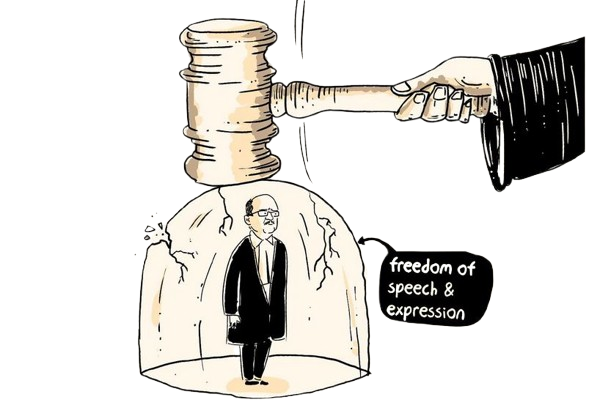
    1. Chilling Effect on Freedom of SpeechContempt law can discourage individuals from voicing legitimate criticism of the judiciary, even when done in public interest.Prashant Bhushan (2020): Held guilty for tweets criticizing the CJI and the judiciary’s handling of cases during the pandemic. His tweets were argued to be fair criticism, yet resulted in conviction.
    2. Vague and Broad DefinitionThe definition of criminal contempt includes “scandalising the court” and “lowering the authority of the court”, which are subjective and open-ended.Arundhati Roy (2002): Faced contempt for her affidavit alleging bias in the court’s order against Narmada Bachao Andolan.Suo motu contempt proceedings are often triggered by media statements or articles critical of court judgments.
    3. Violates Natural JusticeJudges who feel aggrieved often sit on benches deciding contempt, raising conflict of interest concerns.In Justice C.S. Karnan case (2017), the Supreme Court initiated contempt against a sitting High Court judge and sentenced him to jail—he was denied legal representation and hearing on merits.
    4. Limited Right to AppealAfter conviction for criminal contempt, the only recourse is a review petition, usually heard in chambers by the same judges, with no guaranteed oral hearing.Prashant Bhushan’s review plea (2021) was rejected in chambers without an oral hearing, despite public debate and support for open justice.
    5. Executive Paralysis / MisuseFear of contempt may lead government officers to over-comply with court directions or hesitate in exercising discretion.In UP police encounter cases, officials reportedly hesitated in following SOPs for fear of judicial reprimand.Delhi sealing drive: Municipal officers rushed action fearing contempt of Supreme Court orders, often at cost of public order and process.
    6. Outdated in Global ContextThe offence of “scandalising the court” has been abolished in many democracies as inconsistent with freedom of speech.UK abolished it through the Crime and Courts Act, 2013. In R v. Gray (1900), this was a valid offence, but modern courts in US, Canada, and NZ now permit robust public scrutiny of judges and courts. India still uses this colonial-era tool.

    Should the contempt provision be retained? 

    The recent judgement is more than just a technical clarification. It establishes a constitutional norm: judges interpret laws, legislatures make laws, and neither should step into the domain of the other. This is especially relevant in the context of India’s contempt of court jurisprudence, which has long drawn criticism for various reasons.

    In 2018, the Department of Justice asked the Law Commission of India to examine whether the Contempt of Courts Act, 1971 should be amended or diluted. After due consultation, the Law Commission concluded that the law should be retained, and offered the following reasons:

    GroundExplanationExample
    Volume of CasesA significant number of pending civil and criminal contempt cases shows that the law is still frequently used.Numerous contempt proceedings in High Courts and the SC over non-compliance of orders.
    Constitutional SourceThe contempt power originates in the Constitution (not the Act). The 1971 Act merely outlines procedure, not substance.Even if the Act is repealed, Articles 129 & 215 allow courts to punish contempt.
    Subordinate Courts ProtectionThe Act allows High Courts to punish contempt of subordinate courts, a power not clearly provided by the Constitution.If the Act is diluted, district courts may become vulnerable to interference without remedy.
    Global ComparisonWhile the UK formally abolished “scandalising the court,” it remains punishable under other laws. India faces far more such cases.UK’s last such case was in 1931, but India still regularly sees contempt cases.
    Safeguards ExistThe Act has inbuilt filters, like requiring AG/SG consent for criminal contempt. Not every criticism is punished.Courts routinely drop cases if intent to obstruct justice is absent.
    Checks Judicial OverreachIronically, the 1971 Act helps discipline the courts by laying down procedures for contempt. Diluting it may give more arbitrary power.Without statutory procedure, judges may exercise inherent contempt powers more broadly.

    Judicial Decisions to constitute Contempt of Court in India 

    1. Interference with Administration of Justice: In Brahma Prakash Sharma v State of Uttar Pradesh, the Supreme Court had held that in order to constitute the offence of Contempt of Court, it was not necessary to specifically prove that an actual interference with administration of justice has been committed. 
    2. Scandalizing the Court: In the case of PN Dua v Shiv Shankar and others, the Supreme Court held that mere criticism of the Court does not amount to contempt of Court. 
    3. Vilification of the Judge : In the case of Baradanath Mishra v the Registrar of Orissa High Court judgement, the court said that in a contempt case the court has to ask whether the vilification is of the Judge as a judge, or it is the vilification of the Judge as an individual. If the latter the Judge is left to his private remedies and the Court has no power to commit for contempt. 
    4. Interference with due course of Justice: In Pritam Lal v. High Court of M.P the Supreme Court held that to preserve the proceedings of the Courts from interference and to keep the streams of justice pure, it becomes the duty of the Court, to punish the contemnor in order to preserve its dignity.

    Way Forward

    1. Narrow the definition of “scandalising the court”: Amend the Contempt of Courts Act to exclude fair criticism and clearly define what amounts to criminal contempt.
    2. Create a screening mechanism for contempt cases: Set up a panel (e.g. senior advocate or retired judge) to filter cases before courts take them up, especially in suo motu matters.
    3. Train judges to handle criticism democratically: Include modules on media literacy, democratic tolerance, and public accountability in judicial training programs.
    4. Protect subordinate courts through administrative mechanisms: High Courts should establish support systems for subordinate judges instead of relying only on contempt powers.
    5. Publish annual data on contempt cases: Courts should release regular reports on contempt filings, hearings, and outcomes to ensure transparency and public trust.

    #BACK2BASICS: Contempt of Court //pre

    Contempt of court refers to actions or behaviors that are disrespectful to, or that obstruct or interfere with, the administration of justice by a court. It protects the authority and dignity of the judiciary from acts that obstruct or interfere with justice.

    Constitutional Basis:

    The Supreme Court’s authority to penalize contempt – whether civil or criminal – stems directly from the Constitution itself:

    1. Article 129 declares the Supreme Court a court of record and grants it inherent power to punish for contempt of itself.
    2. Article 142(2) further empowers the Court to enforce its orders by punishing anyone in contempt of its decrees.

    While the Contempt of Courts Act, 1971 and the 1975 Rules outline how contempt cases should be handled (like requiring AG/SG consent), they don’t actually provide the constitutional authority – the root power lies in the Constitution.

    In the 2020 Prashant Bhushan case, the Supreme Court reaffirmed that even if certain legal procedures weren’t followed, its inherent constitutional power under Article 129 still permitted it to proceed – though it acknowledged contempt proceedings must still be conducted fairly. Additionally, during the Constitution drafting, Dr. Ambedkar ensured that this contempt power would be explicitly recognized under Article 129 to avoid future ambiguity.

    Legal Definition

    The Contempt of Courts Act, 1971 defines contempt; the 2006 amendment allows truth and good faith as defences.

    • Types:
      • Civil Contempt is the wilful disobedience of court orders.

    Punishment: Offenders may face up to 6 months imprisonment, or a ₹2,000 fine, or both.

    What Is Not Contempt: Fair reporting and genuine criticism of judgments after disposal are not considered contempt.

    SMASH MAINS MOCK DROP

    In India’s constitutional scheme, the legislature has the authority to make laws, while the judiciary has the power of review. Critically examine this separation of powers in light of recent judicial pronouncements on contempt of court and legislative supremacy.

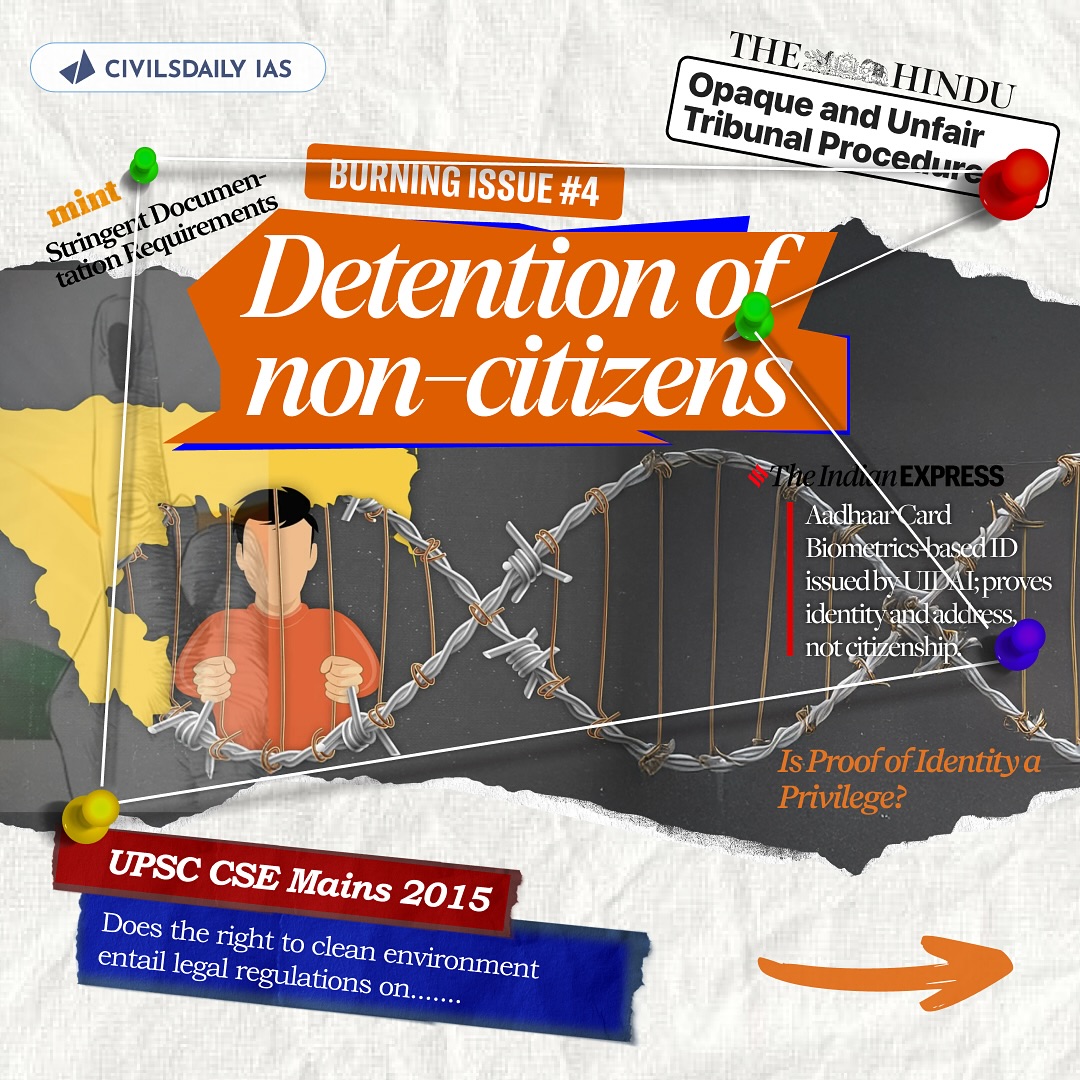
  • Detention of non-citizens: Is Proof of Identity a Privilege ?

    Detention of non-citizens: Is Proof of Identity a Privilege ?

    N4S: “When identity becomes a burden, not a right.” That’s the core message of this article. UPSC often frames questions on such topics through the lens of Fundamental Rights, constitutional morality, or state vs individual debates. For instance, the 2015 question on the right to a clean environment during Diwali used Article 21 to anchor a contemporary issue. Similarly, detention and citizenship in Assam can be asked through Article 21 (life and liberty), Article 22 (procedural safeguards), or Article 14 (equality). Many aspirants falter because they either stick to legal jargon without connecting to ground realities, or they narrate facts without showing how it affects real lives or violates constitutional values. This article helps bridge that gap. It does not just list laws and events but humanises them. When it says detention “detains rights” (see ‘Impact on Detainees’ section), it moves from abstract policy to lived experience. The example of a woman being excluded due to spelling errors (“Rahima Khatun” vs “Rahima Khatoon”) underlines how a minor glitch can alter one’s life — making your answer come alive. A very special feature of this article is how it connects macro-constitutional ideals with micro-level injustices (like in the section ‘Marginalisation of Vulnerable Groups’ and ‘Loss of Records due to Floods’). 

    PYQ ANCHORING

    GS 2:  Does the right to clean environment entail legal regulations on burning crackers during Diwali? Discuss in the light of Article 21 of the Indian Constitution and Judgement(s) of the Apex Court in this regard. [2015]

    MICROTHEMES:  Fundamental Rights

    Assam’s immigration detention system, initially designed to manage undocumented migration, has become a symbol of bureaucratic overreach and human suffering. Far from being just an administrative process, it has trapped thousands—many of them poor, marginalised, and paperless—in a cycle of fear, uncertainty, and indefinite confinement. At its core, this regime doesn’t just detain people—it detains rights, raising urgent alarms about India’s constitutional promises of liberty, dignity, and fair procedure.

    How can a democracy justify indefinite detention without trial? What happens when proof of identity becomes a privilege? And can a nation uphold its Constitution while turning detention into default?

    ‘Proof of Identity’ : India & Assam

    In India, the proof of identity system is largely document-based and applies to citizens for various purposes — accessing government schemes, voting, banking, travel, etc. There is no single universal ID that conclusively establishes citizenship; instead, a mix of documents are used to prove identity, address, and date of birth.

    Common Identity Documents in India:

    • Aadhaar Card – Biometrics-based ID issued by UIDAI; proves identity and address, not citizenship.
    • Voter ID (EPIC) – Issued by the Election Commission; used to prove Indian citizenship for electoral purposes.
    • Passport – Issued by the Ministry of External Affairs; considered proof of citizenship.
    • PAN Card – Primarily for income tax; proves identity, not citizenship.
    • Birth Certificate, School Certificates, and Government Service Records – Used to prove date/place of birth and lineage.
    • Ration Card, Driving Licence, etc. – Often used for address and family-based identification.

    Most of these documents are accepted in a presumptive and inclusive way, meaning people are generally presumed to be citizens unless proven otherwise.

    How is Assam Different?

    Assam operates under a distinct and exclusionary framework due to its unique history of migration and the NRC (National Register of Citizens) process. Here, the burden of proving citizenship is far higher, more complex, and often punitive in nature.

    Key Differences in Assam:

    1. Legacy Data Requirement: Individuals must prove that they or their ancestors were in Assam before March 24, 1971 (as per the Assam Accord). Requires linking one’s name to pre-1971 documents (like 1951 NRC or 1971 electoral rolls), a huge burden in a state prone to floods and displacement.
    2. Family Tree Verification: People must prove lineage through official documents — often not available for women, orphans, or displaced persons. Minor spelling errors (e.g., “Rahima Khatun” vs. “Rahima Khatoon”) can lead to exclusion.
    3. Foreigners Tribunals (FTs): Individuals suspected of being illegal immigrants may be summoned by FTs to prove citizenship. Even if one has Aadhaar or Voter ID, it may not be accepted as conclusive proof.
    4. Presumption of Illegality: Unlike the rest of India, in Assam, individuals are presumed to be foreigners until proven otherwise, reversing the usual principle of natural justice.
    5. Detention and Exclusion: Failure to prove identity/citizenship can lead to detention in designated centres and loss of legal rights.

    While most Indians rely on flexible, inclusive identity documentation for everyday life, Assam applies a rigid, high-stakes system focused on citizenship verification, rooted in historical anxieties over migration. This makes identity not a tool for inclusion, but a test of belonging — often with life-altering consequences.

    Issues in  NRC Process

    The NRC (National Register of Citizens) process in Assam, intended to identify illegal migrants, has been mired in controversy due to deep procedural and structural flaws. While the goal was to create a fair and accurate record of legal residents, the implementation raised serious humanitarian and constitutional concerns. The process disproportionately affected the poor, rural, and marginalized communities—often not because they were illegal immigrants, but because they lacked paperwork, faced systemic disadvantages, or encountered bureaucratic opacity. The table below highlights key issues that plagued the NRC process, undermining both its credibility and fairness.

    FactorExplanationExample
    Stringent Documentation RequirementsProof of ancestry before March 24, 1971 required.Rural residents lacked land/birth records due to illiteracy or displacement.
    Loss of RecordsFloods and natural disasters destroyed old documents.Many families in flood-prone Assam lost records multiple times.
    Minor DiscrepanciesDifferences in names/spelling across documents led to exclusion.“Rafiqul” vs “Rafiqul Islam” flagged as suspicious.
    Marginalisation of Vulnerable GroupsAffected women, Bengali Muslims, and tribal groups disproportionately.Women lacked independent lineage proof due to patriarchal norms.
    Opaque and Unfair Tribunal ProceduresNo transparency or meaningful opportunity to appeal decisions.People declared foreigners without notice or hearing.

    Impact on Detainees

    Threat to Liberty & Well-beingConstitutional Principles AffectedExamples
    1. Indefinite detention without trialArticle 21 – Right to Life and Personal LibertyMany declared foreigners have been held in detention for years without deportation or conviction.
    2. Detention of Indian citizens due to document issuesArticle 14 – Right to Equality before LawPoor, illiterate individuals lacking documents are more likely to be wrongfully detained.
    3. Poor living conditions in detention centresArticle 21 – Dignity as part of Right to LifeReports reveal lack of medical care, overcrowding, and denial of basic needs in detention facilities.
    4. No legal aid or fair representationArticle 22 – Protection against arbitrary arrest and detentionMany accused of being foreigners are tried in quasi-judicial Foreigners Tribunals without proper legal help.
    5. Disproportionate impact on marginalized groupsArticle 15 – Non-discrimination on grounds of religion, caste, etc.Bengali Hindus and Muslims are most affected, raising concerns of discriminatory implementation.
    6. Uncertainty, fear and mental health traumaDirective Principles – Human dignity and social justice (Article 39A)Even children of detainees suffer from trauma, education loss, and social stigma.

    Constitutional Violations Under Article 21 and 22

    ProvisionViolationExample
    Article 21: Right to Life and Personal LibertyDetention without fair legal basis undermines personal liberty.Innocent individuals held for years without real deportation prospects.
    Article 22: Procedural SafeguardsLack of information on grounds of detention; no legal aid.Detainees often unaware of reasons or denied timely counsel.
    Detention Without Trial or ConvictionLaw allows detention mainly through judicial process, not executive action.People detained by quasi-judicial tribunals despite no criminal charge.
    No Legitimate Preventive PurposePreventive detention requires imminent threat, not document issues.Detentions continue even when deportation is not feasible.
    Executive OverreachDetentions ordered by executive/tribunals without judicial oversight.Judiciary bypassed, undermining rule of law and access to remedy.

    Way Forward for Reforming India’s Detention Regime

    India’s detention regime urgently requires a rights-based, rule-of-law-oriented overhaul. The following steps offer a tight and actionable path forward:

    1. Enact a Comprehensive Law: India needs a dedicated and codified immigration and detention law that clearly defines grounds for detention, outlines procedures, provides safeguards, and distinguishes between illegal immigrants, stateless persons, and asylum seekers.
    2. Reform Foreigners Tribunals: Make Foreigners Tribunals more transparent and accountable by ensuring judicial oversight, standardized procedures, and access to free legal aid. Appeals must be allowed before a competent and impartial authority.
    3. Cap Detention Periods: Introduce a legally mandated, time-bound limit on administrative detention — for example, six months — beyond which individuals must be released if deportation is not feasible.
    4. Develop Alternatives to Detention: Shift towards community-based monitoring, reporting obligations, or bail systems for those not posing security risks, especially families, the elderly, and children.
    5. Ensure Humane Conditions: Detention centres must comply with basic human rights standards, including access to healthcare, clean living spaces, and education for children. Independent bodies should regularly audit these facilities.
    6. Address Statelessness and Identity Gaps: Formulate a clear national protocol for dealing with stateless persons and those excluded from citizenship due to documentation gaps, in line with international principles.
    7. Protect the Vulnerable: Women, children, and marginalised communities require special procedural protections during verification and detention processes to avoid systemic injustice.
    8. Establish Parliamentary Oversight: Institutionalise regular reporting to Parliament or a standing committee on the number of detainees, conditions in centres, and legal outcomes to ensure transparency and accountability.

    Only by combining legal clarity, administrative fairness, and humane treatment can India reconcile its immigration control with constitutional values and international obligations.

    #BACK2BASICS: Detention Regime in India

    India’s detention regime refers to the legal and administrative framework under which individuals are detained — either as foreigners or under preventive detention laws — without regular criminal trial. It is especially relevant in the context of immigration enforcement and national security.


    1. Detention under Foreigners Act, 1946

    • Who can be detained?
      Foreigners who are:
      • Overstaying visas
      • Entering illegally
      • Declared as “foreigners” by a Foreigners Tribunal (particularly in Assam)
    • Legal Basis:
      The Foreigners Act, 1946 empowers the government to detain and deport any foreign national without a criminal conviction.
    • Purpose:
      Detention is considered administrative, not punitive — aimed at deportation.

    2. Detention in the Context of NRC (National Register of Citizens) in Assam

    • Special Case:
      People excluded from the NRC and declared as “foreigners” by Foreigners Tribunals may be detained.
    • Problem:
      Many of those detained:
      • Were Indian citizens wrongfully excluded
      • Had no country to be deported to (e.g., stateless)
    • Detention Centres:
      Special prisons within jails, and standalone facilities, such as the large centre in Goalpara (Assam).

    3. Preventive Detention under Indian Constitution

    • Constitutional Provision:
      Article 22(3)–(7) allows preventive detention in the interest of:
      • National security
      • Public order
      • Foreign affairs
      • Maintenance of essential supplies
    • Laws Allowing Preventive Detention:
      • NSA (National Security Act), 1980
      • COFEPOSA (for economic offences)
      • J&K PSA (Public Safety Act)
    • Safeguards:
      • Detention beyond 3 months requires advisory board approval.
      • Detainee may not be told full grounds of arrest if it’s against public interest.

    4. Detention of Refugees and Asylum Seekers

    • India is not a signatory to the 1951 UN Refugee Convention.
    • Refugees like Rohingyas and undocumented migrants may be detained as illegal foreigners.
    • Detention is not governed by a uniform refugee law — policies vary by government orders.

    5. Key Concerns with India’s Detention Regime

    IssueExplanation
    Lack of Legal AidMany detainees cannot access lawyers or understand the legal process.
    Indefinite DetentionWithout bilateral agreements, deportation is impossible — leading to endless jailing.
    Poor Detention ConditionsOvercrowding, lack of medical care, and absence of facilities for women/children.
    Statelessness RiskMany excluded individuals have no citizenship anywhere.
    Arbitrary and DisproportionateMinor documentary issues lead to grave consequences, violating natural justice.

    India’s detention regime, particularly in Assam, raises serious human rights, constitutional, and due process concerns. While the state has a right to control illegal immigration and ensure national security, the current system lacks transparency, uniform safeguards, and accountability, making it vulnerable to misuse and injustice — especially for the poor and marginalised.

    Chronology of NRC (National Register of Citizens) in Assam

    Year/PeriodEvent/Development
    1951 – The First NRCAfter India’s first Census, the NRC was created in Assam to record who was living there legally. It wasn’t updated thereafter — it stayed frozen in time.
    1971 – Bangladesh Liberation WarWar in East Pakistan (now Bangladesh) led to a massive refugee influx into Assam. This caused tensions over identity, jobs, and land among locals.
    1979–1985 – Assam AgitationA mass movement led by student bodies like AASU demanded the identification and deportation of “illegal foreigners” (mainly from Bangladesh).
    1985 – Assam Accord SignedThe Centre and protest leaders signed the Assam Accord. It set March 24, 1971, as the cut-off date for identifying foreigners and promised an NRC update.
    2005–2013 – NRC Update Gains SteamNRC update efforts revived under Congress and BJP. Pilot projects began but stopped due to violence. In 2013, the Supreme Court took charge of the process.
    2015 – NRC Update Process Officially BeginsPeople in Assam had to prove that they or their ancestors were in India before March 24, 1971, using documents like land records and voter lists.
    2018 – Draft NRC ReleasedThe first draft excluded over 40 lakh people, leading to panic, confusion, and widespread controversy.
    2019 – Final NRC PublishedOn August 31, 2019, the final NRC was released, excluding 19.06 lakh people. Appeals were to be made in Foreigners Tribunals. Many were dissatisfied with the list.
    Post-2019 – What Now?The NRC hasn’t been officially notified. The Assam government rejected it, and it may be rechecked or redone. Excluded individuals face legal uncertainty and fear.

    SMASH MAINS MOCK DROP

    In the context of the NRC process in Assam, examine how document-based identity verification challenges the constitutional promises of liberty, equality, and due process. Suggest a rights-based framework to reconcile immigration control with fundamental rights.”

  • Foreign University Campuses in India: Global Promise or Market Gamble ?

    Foreign University Campuses in India: Global Promise or Market Gamble ?

    N4S: India is inviting top foreign universities to set up campuses here—to improve access, bring in global quality, and help Indian students get world-class education without going abroad. UPSC often asks such topics in the form of big-picture questions—like in 2015, when it asked if foreign universities will actually improve Indian higher education. Many students struggle with these because they either stay too generic (just talking about GER numbers) or miss out on real-world details that make an answer stand out. This article helps bridge that gap. It walks you through key facts—from the new UGC 2023 rules (like how Deakin University is setting up in GIFT City, or how foreign campuses can set their own fees and hire freely) to the deeper concerns (like no reservation for marginalized students or risk of only elite courses being offered). One thing that makes this article truly special is how it doesn’t just list pros and cons—it shows you both the promise and the problems in one go. For example, yes, it can stop brain drain (India loses $15–20 billion a year), but it can also make education more commercial if not done right. With clear subheadings like “Challenge of Commercialisation” and “Way Forward,” this article makes your UPSC prep more grounded, specific, and confident.

    PYQ ANCHORING

    GS 2: The quality of higher education in India requires major improvements to make it internationally competitive. Do you think that the entry of foreign educational institutions would help improve the quality of higher and technical education in the country? Discuss. [2015]

    MICROTHEMES: Education

    From the ancient universities of Takshashila and Nalanda, where students and scholars from across Asia gathered to study medicine, astronomy, and philosophy, India once stood as a beacon of global learning. Centuries later, as the world reinvents education for the 21st century, India is once again at a crossroads. With over 500 million youth aged 5–24, the country holds immense human capital potential—but with a Gross Enrollment Ratio of just 27.3%, it risks falling short of global benchmarks (USA: 88.2%, China: 51.7%).

    To unlock this demographic dividend, NEP 2020 sets a bold target of 50% GER by 2035. Achieving it will require not just more seats and campuses, but a fundamental reimagining of how Indian universities engage with the world. The internationalization of higher education—from foreign universities setting up campuses in India to Indian institutions integrating global best practices—is not a luxury. It is a strategic necessity.

    UGC 2023 Regulatory Framework for Foreign Higher Educational Institutions (FHEIs)

    In a landmark move to globalize India’s higher education ecosystem, the University Grants Commission (UGC) in 2023 notified a dedicated regulatory framework allowing Foreign Higher Educational Institutions (FHEIs) to set up independent campuses in India.

    This framework marks a decisive shift in India’s education policy—from regulating entry to actively facilitating global collaboration, in line with the National Education Policy (NEP) 2020.


    Key Features of the UGC 2023 FHEI Framework:

    1. Eligibility Criteria
      • Only top 500 globally ranked universities or reputed foreign institutions in their home country are eligible.
      • Institutions must demonstrate academic excellence, financial stability, and commitment to Indian law.
    2. Autonomy in Operations
      • FHEIs can:
        • Set their own admission criteria and fee structure.
        • Recruit foreign or Indian faculty without salary caps.
        • Offer degrees identical to their home campuses, with no equivalence requirement from UGC.
    3. Location Flexibility
      • FHEIs can set up campuses anywhere in India, including Special Economic Zones (SEZs) and GIFT City.
      • Notable examples:
        • Deakin University and University of Wollongong in GIFT City
        • University of Southampton in Gurugram
        • Illinois Institute of Technology, USA in Mumbai (first U.S. university approved by UGC)
    4. Safeguards and Compliance
      • Campuses must adhere to Indian laws, including provisions related to national security and student protection.
      • UGC retains the power to inspect, review, and de-register FHEIs found in violation.
    5. Prohibited Programs
      • Programs that may compromise India’s national interest, sovereignty, or religious harmony will not be permitted.
    6. Quality Assurance
      • Foreign institutions are required to maintain academic standards equal to their home campuses.
      • No franchise or third-party collaborations allowed—only direct investment is permitted.

    Evolution of Internationalization of Education in India

    PeriodMilestone / PhaseKey Highlights
    Ancient India (Before 12th Century)Global Learning CentresUniversities like Takshashila, Nalanda, and Vikramashila attracted scholars from China, Korea, Tibet, Sri Lanka, and Southeast Asia. India was a global education hub.
    Colonial Period (1857–1947)Introduction of Western EducationBritish-established universities (e.g., Calcutta, Bombay, Madras) shifted focus toward colonial administrative needs. Knowledge exchange was one-way: India imported Western models.
    Post-Independence (1950s–80s)Self-reliance and Institution BuildingFocus on building Indian institutions (e.g., IITs, IIMs) with limited foreign collaboration. Internationalization was minimal and state-controlled.
    1991–2000Liberalization and Global ExposureEconomic reforms led to openness in higher education. Indian students began going abroad in larger numbers; collaborations with foreign institutions increased modestly.
    2000–2010Growing Mobility and MoUsIndian institutions signed MoUs for faculty exchange, joint research, and dual degrees. Regulatory bodies like UGC and AICTE began recognizing foreign qualifications.
    2010–2020Global Rankings and Policy AttentionIndian HEIs began engaging more with global rankings (e.g., QS, THE). Internationalization became a policy goal. Study in India campaign launched (2018).
    2020 (NEP 2020)Policy BreakthroughThe National Education Policy 2020 called for the entry of top 100 foreign universities, student/faculty exchange, joint campuses, and credit transfer systems.
    2023–PresentRegulatory Framework for FHEIsUGC’s 2023 guidelines officially allow foreign universities to set up campuses in India. Deakin, Wollongong, and IIT Chicago began operational plans. This marks the first institutional-level internationalization from within.

    Recommendations on Internationalisation of Higher Education

    YearCommittee / PolicyRecommendationRationale / Logic
    2005–09National Knowledge Commission (NKC)Advocated entry of reputed foreign universities and promotion of academic collaboration.To expand capacity, improve quality, and align Indian education with global standards.
    2009Yash Pal Committee on Higher EducationSupported allowing foreign universities with regulation; emphasised interdisciplinary learning.To break silos, encourage innovation, and make Indian institutions globally competitive.
    2011Narayan Murthy Committee on IITsRecommended international faculty recruitment, global research tie-ups, and foreign student intake.To boost research output and improve global ranking of IITs.
    2016T.S.R. Subramanian Committee (NEP Drafting Committee)Supported international partnerships, mobility programs, and entry of foreign universities.To enhance quality, encourage competition, and reduce outflow of Indian students.
    2018Draft Higher Education Commission of India (HECI) BillProposed a regulatory framework encouraging international tie-ups and foreign entry.To simplify governance and enable international-level academic freedom and diversity.
    2020National Education Policy (NEP) 2020Called for top 100 global universities to operate in India; promoted internationalisation of curricula, faculty, and students.To raise Gross Enrollment Ratio, reverse brain drain, and position India as a global knowledge hub.
    2023UGC Regulatory Framework for Foreign Higher Educational Institutions (FHEIs)Allowed foreign universities to set up independent campuses with autonomy.To institutionalise NEP goals, diversify higher education, and attract global investment in academia.

    Challenge of Commercialisation of Higher Education

    As India opens its doors to foreign universities under the UGC 2023 framework, the promise is clear: global standards, research collaboration, and expanded access. But beneath the surface lies a critical concern — is internationalisation driving a shift from education as a public good to a market commodity? With rising costs, profit-driven models, and elite-focused institutions entering the scene, internationalisation may unintentionally deepen inequity and fuel the commercialisation of learning.

    Trend / MechanismHow It Fuels CommercialisationExample
    Premium Pricing ModelsForeign campuses may charge high tuition fees, excluding lower-income students and reinforcing education as a privilege.Deakin University (GIFT City) and University of Wollongong reportedly plan fee structures on par with international campuses.
    Market-Driven Course OfferingsPrograms are often designed based on employability or market demand, not social need or foundational knowledge.Foreign universities focusing on STEM, business, and finance, with limited emphasis on humanities or regional studies.
    Brand over SubstanceStudent choices may lean more on global brand perception than academic quality, creating a two-tier system.IIT Chicago’s Mumbai campus gaining traction largely due to name recognition, not proven Indian-market relevance yet.
    Faculty as Market AssetsRecruitment and salaries become aligned with market value rather than teaching quality or public service.Foreign institutions are allowed to recruit without salary caps, potentially poaching top faculty from Indian public universities.
    Exclusion of Affirmative ActionForeign universities are not obligated to follow reservation policies, which may exclude historically marginalised groups.No reservation norms for foreign campuses under UGC 2023 — undermines social justice goals of Indian higher education.
    Franchise Model Risks in DisguiseThough formally disallowed, informal tie-ups may still function as for-profit franchise centres under other legal names.Past concerns about foreign “study centres” operating without oversight resurface in newer forms under international collaboration banners.

    Way Forward

    1. Focus on Quality, Not Quantity: Only top-tier institutions with academic depth should be allowed. Australia’s Tertiary Education Quality and Standards Agency (TEQSA) model can offer guidance.
    2. Tailor to Indian Needs: Programs must align with India’s skill gaps, regional priorities (e.g., Agri-tech in Punjab, AI in Bengaluru), and local language and culture.
    3. Balanced Curriculum: Move beyond just STEM. Encourage liberal arts, humanities, and interdisciplinary courses, critical for holistic education.
    4. Regulatory Autonomy with Accountability: Like Singapore’s EduTrust Scheme, India can offer autonomy with regular audits to ensure quality.
    5. Collaboration with Indian Institutions: Encourage joint degrees, research hubs (e.g., IIT Madras-Zurich ETH) to combine global and local strengths.
    6. Incentives for Tier-II Cities: To decongest metros and ensure equitable growth, promote campuses in underserved regions with sops (e.g., land grants, PPPs).
    7. Feedback Loop Mechanisms: Empower NAAC/NIRF to evaluate foreign campuses regularly and create a public dashboard for transparency.

    #BACK2BASICS: Foreign University Campuses in India: Global Promise or Market Gamble?

    Why It Matters

    AreaSignificanceExamples / Data
    Capacity ExpansionHelps bridge India’s huge demand–supply gap in higher education.India needs 800–900 universities by 2035 (Economic Survey 2022–23).
    Global Exposure at HomeOffers international learning without the cost of going abroad.73% of Indian students value global exposure (QS Student Survey).
    Curbing Brain DrainRetains talent and saves foreign exchange.7.5 lakh Indians went abroad in 2022 (MEA); FHEIs could save $15–20 bn annually (NITI Aayog).
    Boosting Research EcosystemsEnables institutionalised partnerships and innovation networks.IITB–Monash and IITD–Queensland models.
    Strategic DiplomacyAligns with India’s global partnerships and regional strategy.India–UK Roadmap 2030, India–Australia CSP.
    Local Job CreationSpurs regional growth and skilling ecosystems.NYU Abu Dhabi created 5,000+ jobs — GIFT City campuses could follow suit.
    Legal BackingSC has upheld institutional autonomy for private and foreign actors.TMA Pai Foundation v. State of Karnataka (2002).

    Initiatives

    InitiativePurpose / MechanismExample
    NEP 2020Framework for internationalisation at home.Encourages FHEIs, student mobility, global tie-ups.
    UGC Dual Degree & TwinningEnables joint Indian–foreign academic credentials.Ashoka–Sciences Po; IIT–Queensland dual programs.
    GIFT City IncentivesSEZ-style model to attract FHEIs.100% tax exemption, no forex control.
    SPARC & GIANPromotes research collaboration and global faculty visits.IIT–Monash; international lectures across NITs/IITs.
    Study in India ProgrammeAttracts foreign students to Indian campuses.Scholarships and branding for Indian institutions.
    Budget Push & Digital Scale-UpExpands capacity for both domestic and hybrid international models.₹1.12 lakh crore in 2023–24; National Digital University.

    Challenges

    IssueWhy It’s a ConcernExamples / Implications
    Not-so-elite BrandsFHEIs entering India aren’t always top-tier.Risks of “diploma mill” image in a market with IITs, IIMs, ISB.
    Narrow Course FocusEmphasis on business & IT limits academic depth.Neglects liberal arts, social sciences, research fields.
    Poor Campus InfrastructureRented, vertical campuses lack full-campus experience.No libraries, green zones, sports—hurts brand perception.
    Regulatory MazeFCRA, FEMA, and land laws still complex.Delays and compliance costs discourage foreign entry.
    Style Over SubstanceHeavy marketing without strong faculty or curriculum.Short-term enrolments but poor long-term trust.
    Low Research InvestmentMost focus only on teaching; little research capacity.No PhDs or global labs; weak academic impact.
    ROI ConcernsHigh fees, unclear job value deter value-conscious students.Domestic students ask: is the premium worth it?
    Global Financial HeadwindsGeopolitical shifts and post-COVID cutbacks affect foreign expansion.Foreign universities reassessing Indian plans amid cost pressures.

    Bottom Line:
    Foreign university campuses offer India a chance to scale, diversify, and globalize its higher education system — but only if backed by equity, rigour, and ecosystem support. Without guardrails, they risk becoming expensive outposts rather than engines of academic excellence.

    SMASH MAINS MOCK DROP

    While the entry of Foreign Higher Educational Institutions (FHEIs) in India promises global exposure and capacity expansion, it also raises serious concerns about equity, autonomy, and the commodification of education.” Critically examine in the context of UGC’s 2023 regulatory framework.

  • NATIONAL SECURITY DOCTRINE

    NATIONAL SECURITY DOCTRINE

    “Strategy without doctrine is like a ship without a compass.”

    India faces security threats that are no longer just about tanks at the border—they range from terror attacks and border stand-offs to cyber hacks and information warfare. From Kargil in 1999 to Galwan in 2020, the nature of threats has become sharper, faster, and more complex. Yet, even today, India does not have a formal National Security Doctrine (NSD)—a clear document that outlines what we see as threats, how we respond, and how we prepare.

    About National Security Doctrine

    A National Security Doctrine is a comprehensive framework of guiding principles, strategic beliefs, and operational postures that shape a nation’s military, diplomatic, and internal security responses. It goes beyond reactive tactics, providing predictability, strategic clarity, and inter-agency coordination. It serves as:

    • A blueprint for defense and foreign policy.
    • A guide to modern warfare readiness.
    • A communication tool for deterrence.
    • A confidence-building measure for both citizens and allies.

    India’s only formal doctrinal articulation is the 2003 Nuclear Doctrine, which emphasizes “credible minimum deterrence” and a “No First Use” policy. However, in the absence of a broader doctrine, India’s responses to terrorism, cyber threats, or asymmetric warfare lack cohesive strategy.

    Reasons for Avoiding a Formal NSD till now

    ReasonExplanationExample / Impact
    1. Strategic AmbiguityIndia prefers flexibility over fixed rules to adapt to evolving threats and maintain tactical surprise.No declared doctrine behind surgical strikes or Balakot airstrikes, yet effective messaging.
    2. Political SensitivitiesA formal doctrine requires firm stances on internal conflicts, Pakistan/China policy, and preemptive action—politically risky topics.No government has committed to codifying a doctrine since independence.
    3. Institutional FragmentationLack of coordination among military, intelligence, foreign and home ministries hinders unified strategy-making.Army, Navy, and Air Force have separate doctrines; no integrated national framework.
    4. Civil-Military DisconnectStrategic planning is dominated by civilian bureaucracy; the military often remains outside national security doctrine-making.NSD requires greater integration of armed forces in policy, which is still evolving post–CDS creation.
    5. Fear of MisinterpretationA public doctrine may be seen as provocative or escalate tensions with neighbours, especially nuclear-armed ones.Explicit offensive postures could alarm Pakistan or China, triggering unintended consequences.
    6. Changing Nature of ThreatsWith threats evolving rapidly—cyber, AI, grey-zone warfare—leaders may see fixed doctrines as limiting or outdated.The absence of a doctrine allows dynamic responses to emerging hybrid threats.

    Existing Indian Steps Toward a Doctrine

    • 2003 Nuclear Doctrine: Emphasised No First Use, credible minimum deterrence.
    • Defence Planning Committee (2018): Tasked with formulating a national security strategy.
    • Integrated Theatre Command Development: Moves toward joint force structures.
    • National Cyber Security Strategy (Draft): Awaiting clearance, fits within NSD.
    • Strategic Agreements: BECA (US), France-India joint doctrines, QUAD-level interoperability.

    Committees & Reports on National Security Doctrine

    YearCommittee / ReportWhat They Recommended / Observed
    1999Kargil Review Committee (KRC) – chaired by K. SubrahmanyamFirst major call for a National Security Doctrine and Strategy. It recommended better intelligence coordination, creation of a National Security Council Secretariat (NSCS), and a comprehensive strategy document to avoid future surprises like Kargil.
    2001Group of Ministers (GoM) Report on Reforming the National Security SystemEndorsed KRC’s call for a codified doctrine; proposed integration of intelligence and military decision-making, establishment of agencies like NSCS, Defence Intelligence Agency (DIA), and Strategic Policy Group (SPG).
    2012Naresh Chandra Task Force on National SecurityRecommended formulating a comprehensive National Security Strategy, clarifying roles of civil and military leadership, and streamlining civil-military synergy.
    2018Defence Planning Committee (DPC) – chaired by NSA Ajit DovalMandated to draft a National Security Strategy and provide guidance on defence preparedness, capability development, and strategic planning. The draft strategy was reportedly prepared but not released.
    2019N. Ramachandran Committee on Police ReformsIndirectly linked national security to internal stability. Emphasized the need for a cohesive internal security doctrine, especially to tackle Left-Wing Extremism, insurgency, and terrorism.
    2021Parliamentary Standing Committee on Defence (17th Lok Sabha)Criticized the government’s delay in formulating a National Security Strategy and demanded its early release, especially in light of threats from China and Pakistan.
    2023National Security Advisory Board (NSAB) & Strategic Community (unofficial inputs)Various former military officials and strategic experts (e.g., Lt. Gen. D.S. Hooda, Shivshankar Menon) publicly called for a codified NSD, given India’s evolving hybrid threat environment. While not formal committee reports, these have added urgency to the debate.

    Need of a National Security Doctrine 

    India’s threat matrix is no longer conventional—it is layered, persistent, and multidimensional. A National Security Doctrine won’t just define how India defends itself—it will shape how India thinks strategically, coordinates internally, and projects power externally.

    I. Evolving External Threat Landscape

    • Volatile Geopolitical Neighborhood
      Sandwiched between two nuclear-armed adversaries, India faces frequent tensions—Doklam (2017), Galwan (2020), Kargil (1999). A codified doctrine helps anticipate and manage conflict in a region where, as Kautilya’s Mandala Theory notes, “the immediate neighbor is your enemy.”
    • Reactive vs Proactive Posture
      India largely responds after the event (e.g., Uri, Pulwama). A doctrine enables pre-emptive preparedness, much like China’s “Active Defence” doctrine.
    • Strategic Signaling Asymmetry
      While China uses its Sun Tzu–style strategy for psychological dominance, India lacks clear messaging. A doctrine enhances geopolitical signaling and deterrence credibility.
    • Ambiguity in Nuclear Posture
      Despite a 2003 doctrine, No First Use remains debated (e.g., Parrikar’s 2016 remark). An updated, unambiguous doctrine strengthens nuclear deterrence and diplomatic clarity.

    II. Need for Internal Coherence and Integration

    • Civil–Military Disjoint
      Without a unified national doctrine, civilian and military leadership lack alignment. As India builds Integrated Theatre Commands, an NSD is essential for operational coherence (similar to the U.S. National Security Strategy).
    • Fragmented Inter-Agency Coordination
      Defence, Home, MEA, and intelligence agencies operate in silos. A doctrine offers Command, Control & Communication (C3) for seamless inter-agency synergy.
    • Disjointed Internal Security Vision
      Issues like Left-Wing Extremism, communal violence, and insurgency are treated piecemeal. A doctrine can unify internal threats under a comprehensive national security architecture.

    III. Countering Hybrid and Unconventional Threats

    • Cross-Border Terror and Grey-Zone Warfare
      Despite Balakot and surgical strikes, terror persists. A doctrine enables a “massive but non-escalatory” retaliation framework to handle such unconventional threats.
    • Hybrid Warfare and Cyber Threats
      India faces cyberattacks, disinformation campaigns, and territorial salami slicing. An NSD provides clarity on thresholds, attribution, and coordinated response.

    IV. Strategic Synergy in Foreign and Defence Policy

    • Lack of Diplomatic–Defence Alignment
      India’s foreign and defence policies often move in parallel, not together. A doctrine would align both, akin to the Nixon–Kissinger model, where foreign policy was shaped by security realism.

    Way Forward

    1. Institutionalize a Periodic National Security Strategy (NSS)
      Draft and update a National Security Strategy every 4–5 years to assess threats, set priorities, and ensure strategic continuity across governments.
      (Kargil Review Committee recommended this in 1999 — still pending)
    2. Adopt a Tiered Doctrine Framework
      Structure the NSD into layered sub-doctrines—defence, cyber, internal security, intelligence, diplomacy—under one unified doctrine.
      (UK’s Integrated Review, 2021, offers a successful model)
    3. Align NSD with Budgeting and R&D Priorities
      Ensure defence allocations, capital procurement, and R&D (e.g. DRDO, iDEX) are guided by doctrinal needs—not ad hocism.
      (U.S. Quadrennial Defense Review aligns strategy with defence capability planning)
    4. Embed Cyber, AI, and Hybrid Threat Preparedness
      Explicitly incorporate responses to cyberattacks, AI-led disinformation, and digital sabotage within the NSD.
      (NATO’s Cyber Defence Centre addresses emerging tech threats)
    5. Link Diplomacy with Security Strategy
      Align foreign policy instruments—alliances, economic corridors, maritime presence—with national security goals.
      (India’s IPOI, QUAD, IMEC exemplify strategic-diplomatic alignment)
  • Digital Diplomacy in Action: How Can India and Africa Grow Together ?

    Digital Diplomacy in Action: How Can India and Africa Grow Together ?

    N4S: Article shows India’s digital handshakes reshaping Africa’s tech future. UPSC usually frames these themes as broad GS‑2 questions that demand you trace India’s soft‑power tools and then weigh their limits, just as the 2021 PYQ asked you to “examine India’s influence in Africa”; it likes verbs such as analyse, assess, and evaluate. Aspirants often falter by listing summits and lines of credit but missing fresh angles like digital public infrastructure, or by ignoring hard challenges under “Cracks in the Code” such as the rural gender gap in mobile use. This piece plugs those gaps: the subhead “India and Africa: Rewiring the Global Digital Order” gives ready examples of sovereign‑friendly tech diplomacy ([MOSIP rollout in Ethiopia]), while “India’s Digital Diplomacy: A New Pillar of Foreign Policy” arms you with policy language and programmes ([e‑VidyaBharati tele‑education, UPI adoption in Mauritius]) that can lift answers from generic to specific. Its standout gem is the “Back2Basics: India‑Africa Digital Compact” box, which turns abstract cooperation into three crisp takeaways—open‑source ethos, skill transfer, and shared Global‑South leadership—perfect for an eye‑catching intro or conclusion.

    PYQ ANCHORING

    GS 2:  “If the last few decades were of Asia’s growth story, the next few are expected to be of Africa’s.” In the light of this statement, examine India’s influence in Africa in recent years. [2021]

    MICROTHEME: Groupings beyond South Asia

    The African Union wants to use digital technology to boost development across the continent by 2030. This shift is also shaping how India engages with Africa. Earlier, India focused on government-led support like training and infrastructure through low-interest loans. Now, it’s also working with social enterprises that bring affordable, impactful tech solutions. This newer approach is more inclusive and adaptable, using digital tools and collaboration to build stronger, long-term ties with African countries.

    But as this digital partnership deepens, some thought-provoking questions arise: Could India’s grassroots-driven digital model become Africa’s blueprint for leapfrogging traditional development hurdles? As Africa goes digital, will tech collaboration with India empower local innovation—or risk creating new dependencies? Might this growing alliance between two Global South giants quietly rewrite the rules of global digital power?

    India and Africa: Rewiring the Global Digital Order from the Global South

    India’s growing digital partnership with Africa is not merely transactional—it reflects a deeper, strategic shift. By offering affordable, scalable, and sovereign-friendly digital models, India is helping Africa leapfrog traditional barriers. In doing so, it’s quietly challenging the global digital status quo, long dominated by Western big-tech and donor-driven ecosystems.


    DimensionIndia’s RoleExamples
    1. Digital Public InfrastructureIndia shares its open-source digital stack (like Aadhaar and UPI models) to build foundational digital identity and payment systems in Africa.Collaboration on MOSIP (Modular Open Source Identity Platform) in Morocco and Ethiopia; discussions on UPI-like systems.
    2. Tech-Led Development DiplomacyIndia supports telemedicine, e-learning, and e-governance platforms tailored to African needs.PAN-Africa e-Network Project connected 53 African countries with Indian hospitals and universities.
    3. Affordable InnovationIndia exports frugal, high-impact technologies through public-private-social partnerships.Solar-powered ed-tech solutions, low-cost diagnostic devices, and vernacular content platforms for rural Africa.
    4. Skill Development & Human CapitalIndia invests in digital skilling and capacity-building through ITEC and other training programs.Thousands of African professionals trained under the Indian Technical and Economic Cooperation (ITEC) program.
    5. South-South SolidarityIndia positions itself as a partner, not a patron—emphasizing co-creation over conditional aid.India-Africa Forum Summits highlight mutual respect and shared development goals.
    6. Challenging Western Digital DominanceIndia promotes digital sovereignty and open-source alternatives to Western big-tech platforms.Advocacy for inclusive global digital governance in G20 and BRICS; Digital Public Infrastructure being positioned as a global public good.

    India’s Digital Diplomacy: A New Pillar of Foreign Policy

    India’s foreign policy is undergoing a quiet digital revolution. From exporting open digital platforms to shaping global tech norms, India is increasingly leveraging digital tools to build influence, foster development, and promote digital sovereignty. This digital-first approach is becoming a cornerstone of India’s global engagement strategy—particularly with the Global South.


    DimensionIndia’s RoleExamples
    1. Exporting Digital Public InfrastructureIndia positions its digital stack—built on identity, payments, and data empowerment—as a model for inclusive digital growth.UPI, Aadhaar-like identity systems, and DigiLocker being adapted in countries like Sri Lanka, Mauritius, and the Philippines.
    2. Tech for Development PartnershipsIndia uses digital platforms as a form of soft power to assist developing nations with governance, education, and healthcare.e-VidyaBharati (tele-education) and e-ArogyaBharati (telemedicine) for African countries.
    3. Capacity Building & Digital SkillingIndia trains officials, students, and professionals from partner countries in IT and digital governance.ITEC programs, NASSCOM partnerships, and India Stack training modules offered to over 160 countries.
    4. Digital Sovereignty AdvocacyIndia champions open-source, low-cost digital solutions that give countries more control over their data and tech ecosystems.MOSIP adopted by Morocco, Philippines, and Togo; global talks on data privacy and open digital governance.
    5. Strategic Alliances on Tech NormsIndia builds coalitions around cyber norms, digital trade, and ethical AI to ensure a multipolar digital order.Participation in Quad tech group, G20 Digital Economy Working Group, and Global Partnership on AI (GPAI).
    6. Positioning as a Global Digital MentorIndia frames itself as a knowledge partner offering scalable, inclusive digital solutions to fellow developing countries.G20 presidency pitch: “Digital Public Infrastructure as a Global Public Good” adopted in the Leaders’ Declaration.

    India’s digital diplomacy is no longer just about tech transfers—it’s about reshaping global digital rules from a position of trust, inclusivity, and innovation. As the world seeks alternatives to digital hegemony, India’s model offers a compelling, democratic blueprint.

    Cracks in the Code: Challenges in India’s Digital Diplomacy

    While India’s digital diplomacy has gained momentum, it faces several roadblocks that could limit its global impact. From infrastructure gaps at home to strategic trust issues abroad, India’s ambition to become a digital mentor to the Global South is challenged by a mix of internal weaknesses and external complexities. Addressing these is key to sustaining its digital leadership.


    ChallengeWhy It MattersExamples
    1. Digital Divide at HomeA large section of India’s population still lacks access to quality internet, digital literacy, or basic digital tools—limiting the credibility of its global digital leadership.Only around 43% of rural households have internet access (NFHS-5), raising concerns when India promotes inclusive tech abroad.
    2. Fragmented ImplementationIndia’s success stories like UPI and Aadhaar are often state-led but lack consistent implementation across all regions and services.Rollout of digital services varies drastically across Indian states—making global replication challenging without uniform governance.
    3. Lack of Follow-up MechanismsMany digital aid and training programs are launched with enthusiasm but suffer from weak monitoring and long-term support.PAN-Africa e-Network saw initial success but later faced sustainability issues due to lack of follow-up funding and local ownership.
    4. Geopolitical Trust DeficitDespite promoting digital sovereignty, India still struggles to be seen as a fully neutral tech partner in a multipolar world.Some African and ASEAN countries are cautious, comparing India’s outreach with China’s large-scale infrastructure backing.
    5. Limited Private Sector IntegrationIndian tech diplomacy often overlooks partnerships with its own start-up and tech ecosystem, missing out on agility and innovation.Few Indian startups are part of foreign development missions, even though they offer scalable, low-cost digital solutions.
    6. Regulatory UncertaintyIndia’s evolving data, privacy, and cybersecurity laws create uncertainty for partner nations considering Indian tech models.Delays and back-and-forth on the Data Protection Bill have made other countries hesitant to adopt similar legal frameworks.

    What is the significance of India-Africa Digital Compact?

    1. Promoting Digital Inclusion: India is sharing its proven Digital Public Infrastructure (DPI) models—such as Aadhaar (digital ID), UPI (digital payments), and DIKSHA (digital education)—to help African nations leapfrog traditional development barriers and expand access to essential services. This approach is designed to make digital tools affordable, adaptable, and accessible, particularly for underserved populations.

    2. Open-Source and Public Good Approach: Unlike proprietary or surveillance-heavy models from other countries, India’s digital solutions are open-source and promoted as digital public goods. This ensures that African nations can adopt and adapt these technologies without restrictive licensing or geopolitical strings attached.

    3. Capacity Building and Knowledge Transfer: The compact emphasizes co-development and skill-building rather than one-sided technology transfer. Initiatives like the IIT Madras campus in Zanzibar and technical collaborations for national digital ID systems foster local talent and innovation.

    4. Addressing Socio-Economic Gaps: By focusing on digital financial inclusion, healthcare, education, and governance, the compact aims to tackle persistent challenges such as rural-urban divides, gender gaps in digital access, and weak infrastructure.

    5. Mutual Growth and Global South Leadership: The partnership boosts economic growth for both regions, reinforces India’s leadership in the Global South, and supports Africa’s voice on the world stage. It is rooted in mutual respect and long-term partnerships, offering a model for equitable, resilient development.

    What are the challenges to India-Africa Digital Compact?

    1. High Cost of Digital Access: Many African countries experience prohibitively expensive data and device costs, with mobile data sometimes exceeding 5% of average monthly income. This restricts internet use, especially among low-income and rural populations.

    2. Digital Divide and Inequality: There are pronounced gaps in internet connectivity between rural and urban areas, and a significant gender gap in digital access and literacy. For example, women in sub-Saharan Africa are 37% less likely than men to use mobile internet, deepening socio-economic disparities.

    3. Weak Energy and Infrastructure: Reliable electricity is essential for digital services, but many African regions suffer from inconsistent power supplies. This slows the deployment and reliability of digital infrastructure and services.

    4. Limited Digital Skills and Capacity: Both India and Africa face challenges in digital literacy and skills mismatch. The rapid pace of digital transformation requires robust investments in education and capacity-building to ensure populations can effectively use new technologies.

    5. Regulatory and Governance Issues: There are concerns about the lack of robust digital governance frameworks in Africa. Issues include weak enforcement of data protection, limited stakeholder engagement, and insufficient alignment with local legal and human rights frameworks, such as the African Charter on Human and Peoples’ Rights.

    6. Affordability and Policy Gaps: Even as broadband coverage expands, the cost remains a barrier. There is a need for policies that prioritize not just connectivity, but also affordability and equitable access, including for marginalized groups.

    7. Sustainable Financing: Bridging the “missing middle” of Africa’s digital infrastructure requires significant investment—estimated at $100 billion for broadband alone. Many African countries face budget constraints that make such investments challenging without external support.

    8. Local Adaptation and Ownership: While India’s digital models are open-source and adaptable, successful implementation in Africa requires meaningful local engagement, adaptation to local contexts, and building local expertise to ensure long-term sustainability.

    Way Forward

    1. Make Digital Access Affordable
      Expand low-cost internet and provide subsidies for digital devices, especially targeting rural and underserved communities, so more people can get online.
    2. Build Reliable Energy and Connectivity
      Invest in renewable energy and stronger digital infrastructure to ensure steady power and internet access, overcoming current electricity and network challenges.
    3. Share Open-Source Tech That Fits Local Needs
      Continue offering India’s proven digital platforms (like Aadhaar and UPI) as open-source tools that African countries can adapt and scale in ways that work for them.
    4. Focus on Training and Skill Building
      Deepen cooperation through joint research, training programs, and academic partnerships to develop local digital talent and improve digital literacy.
    5. Encourage Partnerships Between Governments and Tech Innovators
      Bring together governments, startups, and tech companies from both regions to co-create solutions, boost investment, and speed up digital adoption.
    6. Promote Inclusive Policies and Respect Local Priorities
      Design digital initiatives that close gender and social gaps, involve African partners in decision-making, and ensure fair, sustainable benefits for all communities.

    #BACK2BASICS: India-Africa Digital Compact

    India and Africa are teaming up to boost digital inclusion by sharing India’s proven tools like Aadhaar (digital IDs), UPI (payments), and DIKSHA (education). These tools are open-source, low-cost, and designed to be adapted locally—especially useful for Africa’s underserved communities. Unlike big-tech models from the West or surveillance-heavy ones from China, India offers digital public goods with no strings attached.

    Why It Matters:

    1. Promoting Digital Inclusion
      India is sharing its successful digital tools like Aadhaar (ID), UPI (payments), and DIKSHA (education) to help African countries deliver essential services to people who have long been left out.
    2. Open-Source, No Strings Attached
      Unlike some global tech powers, India offers its digital systems as public goods—open-source, low-cost, and free from political or commercial conditions.
    3. Focus on Skills and Co-Development
      The partnership is not just about handing over tech—it includes training, education, and local innovation. Initiatives like IIT Madras in Zanzibar reflect this hands-on, long-term approach.
    4. Targeting Real Gaps
      The compact aims to fix deep-rooted problems like poor access to healthcare, financial exclusion, digital illiteracy, and gender gaps, especially in rural and underserved areas.
    5. Shared Growth and Leadership
      It supports economic growth in both regions and strengthens their voice in global digital policy discussions, setting an example of South-South collaboration rooted in equality.

    What’s Holding It Back:

    1. High Cost of Access
      Internet and devices are still too expensive in many African countries, often costing more than 5% of a person’s monthly income.
    2. Digital Inequality
      There’s a wide gap between urban and rural areas, and women in particular have far less access to mobile internet and digital tools.
    3. Weak Infrastructure
      Poor electricity supply and limited internet infrastructure make it hard to roll out and maintain digital systems in many regions.
    4. Shortage of Skills
      Both India and Africa need more investment in digital education and training to keep up with rapidly changing technology.
    5. Regulatory and Governance Gaps
      Many African countries lack strong laws around data protection and digital rights, raising concerns about privacy and accountability.
    6. Affordability and Policy Shortfalls
      Even where internet exists, many people can’t afford it. There’s a need for better policies that make digital access truly equitable.
    7. Lack of Funding
      Building Africa’s digital backbone needs huge investment—over $100 billion for broadband alone—but many governments don’t have the money or support yet.
    8. Need for Local Ownership
      India’s tools are adaptable, but success depends on African countries taking charge—shaping these tools to fit local needs and building in-house expertise for the long run.

    SMASH MAINS MOCK DROP

    “India’s growing digital partnerships with Africa reflect a shift from aid-based engagement to capacity-building diplomacy. Critically examine how digital diplomacy can become the cornerstone of a deeper, mutually beneficial India–Africa partnership.

  • A new vision for North East: Infrastructure vs Ecological Sensitivity ?

    A new vision for North East: Infrastructure vs Ecological Sensitivity ?

    N4S: Article shows Northeast shifting from neglected hinterland to strategic green growth bridge. UPSC loves to turn this theme into GS‑3 questions that start with a concept like “carrying capacity” and then make you marry it to a real region, just as the 2019 PYQ asked you to first define the term and then apply it; expect verbs such as “explain” and “critically assess” followed by a demand for on‑ground examples. Many aspirants stumble because they either stop at textbook ecology without linking to development, or they gush about infrastructure but forget ecological limits, so their answers look lopsided. The piece fixes that blind spot: under “Balancing Infrastructure Development with Ecological Sensitivity in the North East” it walks you through precise trade‑offs, citing the 2021 Sikkim landslide and 160 Brahmaputra hydropower plans, while “NE: Zone of Untapped Potential” hands you a neat compare‑and‑contrast grid to frame the region’s carrying‑capacity stress points. “Strategic Integration of the Northeast” then shows how projects like the Sela Tunnel or the India–Myanmar–Thailand Highway can be justified only if they respect fragile ecosystems—exactly the synthesis UPSC rewards. The article’s superpower is its “Back2Basics: North East – Significance, Initiatives and Challenges” box, a one‑stop map of facts and schemes (₹38,856‑crore green‑energy MoUs, Champhai Solar Park, PM‑DevINE) that you can sprinkle across answers to prove both depth and currency.

    PYQ ANCHORING

    GS 3: Define the concept of carrying capacity of an ecosystem as relevant to an environment. Explain how understanding this concept is vital while planning for sustainable development of a region. [2019]

    MICROTHEME:  Ecosystem carrying capacity and SDG

    Once seen as India’s remote hinterland, the Northeast is now rewriting its story — not as a periphery, but as a strategic, ecological, and digital frontier. With its eight vibrant states — the “Ashtalakshmi” — the region shares over 5,400 km of international borders, holds immense biodiversity, and boasts rich renewable resources. And the winds of change are real. From insurgency to infrastructure, from isolation to innovation — the Northeast is finding its place at the heart of India’s growth vision.

    Backed by investments of over ₹1.5 lakh crore and empowered by the Act East Policy, the region is fast becoming a vital bridge to ASEAN. Yet, as NITI Aayog’s SDG Index (2021–22) shows, while progress is visible, development remains uneven. The Economic Survey 2024–25 puts it plainly: this is a zone of untapped potential — and the time to unlock it is now. 

    In such a scenario, some pertinent questions that come up are – Can India balance infrastructure development with ecological sensitivity in this fragile region? How can strategic integration of the Northeast redefine India’s foreign and economic policy in the Indo-Pacific era?

    About ‘Rising Northeast’ Investor Summit

    The ‘Rising Northeast’ Investor Summit, organized by the Ministry of DoNER, is India’s big push to rebrand the Northeast from a remote outpost to a high-potential investment and strategic hub. It’s not just about showcasing the region — it’s about inviting the nation (and the world) to be part of its transformation story.

    Here’s what makes it big:

    1. Massive Infrastructure Push: The Ministry of Road Transport and Highways is putting its money where its mouth is — 10% of its entire budget is going to the region. This translates to nearly 5,000 km of highways and over $5 billion in investment.
    2. Green Growth with MoUs
      In a show of climate-smart development, ₹38,856 crore worth of MoUs have been signed for renewable energy projects — signalling a shift from insurgency zones to green energy hubs.
    3. Digital First Northeast: A whopping ₹1.5 lakh crore has gone into digital and physical connectivity, including BharatNet and the Digital Northeast Vision. Today, 90% of the region has 4G access, and 80% of rural homes are fiber-connected.
    4. Skilling for Tomorrow: Over 2,000 youth have been trained under skill schemes like Suryamitra and Jal Urjamitra, making sure local communities aren’t left behind as investment flows in.
    5. Strategic Gateway to ASEAN: With 5,484 km of international borders, the Northeast isn’t just a frontier — it’s India’s bridge to Southeast Asia, aligning perfectly with the Act East Policy.

    NE: Zone of Untapped Potential

    India’s Northeast, once seen as distant and fragile, is now stepping into the spotlight as both a strategic bridge and a growth engine. With rich resources, cultural depth, and rising connectivity, the region is no longer a forgotten corner — it’s becoming central to India’s future. Yet, the promise remains only partially fulfilled. The following reasons hold it back:

    Area of PotentialWhat ExistsWhat Holds It Back
    1. Geography & ConnectivityBorders 5 countries; gateway to ASEAN; key to Act East PolicyRemoteness; dependency on Siliguri Corridor; challenging terrain
    2. Natural ResourcesRich in hydropower, solar, forests, biodiversity, organic farming, tourism potentialEnvironmental concerns; lack of investment; poor logistics
    3. Human CapitalYoung population; high literacy; cultural diversity; emerging skill-training programsBrain drain; lack of local jobs and industries; low industrial base
    4. Infrastructure₹1.5 lakh crore invested; 4G access in 90% areas; BharatNet rollout; highway expansionLast-mile gaps; patchy inter-state transport; slow logistics development
    5. Security & GovernancePeace accords signed; insurgency reduced; investment summits like ‘Rising Northeast’Lingering ethnic tensions; fragile inter-group trust; perception of instability
    6. Strategic & Political RelevanceCentral to India’s Indo-Pacific, BIMSTEC, and Act East Policy; shares 5,484 km international bordersUnder-leveraged in foreign policy; weak economic diplomacy with neighbors

    Balancing Infrastructure Development with Ecological Sensitivity in the North East

    India’s North East is a region of immense ecological, cultural, and strategic significance. Home to more than 200 tribes, four global biodiversity hotspots, and vast hydrological resources, it is also one of the country’s least connected regions. In recent years, national priorities such as Act East Policy, border security, and economic integration have driven a surge in infrastructure development — roads, tunnels, railways, dams, and border trade corridors.

    Yet, this progress comes with a warning: can we build without breaking what is already fragile?

    ChallengeExplanationExample
    Ecological DisruptionRoad and dam construction often leads to deforestation, loss of wildlife corridors, and increased vulnerability to disasters.The 2021 landslide in Sikkim was partly attributed to road cutting for border infrastructure.
    Lack of Cumulative Impact AssessmentProjects are cleared in isolation, ignoring the broader impact on connected ecosystems.Over 160 hydropower projects are planned across the Brahmaputra basin, with little basin-level planning.
    Neglect of Local Consent and Customary RightsMany projects bypass community consultation, undermining tribal autonomy and causing unrest.The protests in Dibang Valley (Arunachal) against large dams reflect tensions between state-led projects and indigenous rights.
    Poor Regulatory OversightEnvironmental Impact Assessments are often poorly implemented, with limited local language access and tokenistic public hearings.Reports show that many EIAs for Northeast road projects fail to account for landslide risk or wildlife movement.
    Strategic vs. Sustainable Trade-OffBorder and defence infrastructure often bypass standard clearances under “strategic” exemption.The Char Dham-style road expansion to Indo-China borders in Arunachal has raised ecological concerns.
    Climate Change VulnerabilityGlacial retreat, extreme rainfall, and warmer winters are already stressing ecosystems, which are further strained by unregulated development.Flash floods in Assam and glacial lake outbursts in Sikkim have increased in frequency and intensity.

    Strategic Integration of the Northeast: A Gamechanger for India’s Indo-Pacific Policy

    Lever in the NortheastHow It Recasts India’s Indo-Pacific PolicyExample / Project
    Land Bridge to Southeast AsiaTurns Northeast into a logistics and trade corridor connecting India to ASEAN overland. Enhances connectivity under Act East.India–Myanmar–Thailand Trilateral Highway (expected completion: 2025); Kaladan Multimodal Transit Project linking Mizoram to Sittwe port in Myanmar.
    Gateway for Indo-Pacific ManufacturingOffers a cost-effective manufacturing base for “China+1” supply chains; links landlocked NE to Bay of Bengal export markets.Assam’s Bamboo Industrial Park, MSME electronics cluster near Guwahati; Japanese investment in Manipur’s logistics centres for Indo-Myanmar trade.
    Energy Hub & Green CorridorExports clean energy to neighbouring countries; anchors India’s climate leadership in the region.Arunachal’s 2,880 MW Dibang Hydropower Project; Tripura–Bangladesh grid connectivity; Meghalaya’s pumped storage project in planning stage.
    Secure Hinterland for Maritime StrategyStrengthens eastern defence posture; dual-use infrastructure improves military mobility and maritime preparedness.Sela Tunnel in Arunachal Pradesh (strategic all-weather access to Tawang); airstrip upgrades in Pasighat and Tezpur for drone ops.
    Soft Power & Cultural Diplomacy NodeUses shared culture and heritage to build people-to-people links in the Indo-Pacific; counters hard-power narratives.India-ASEAN Youth Summit in Guwahati; Northeast Buddhist Circuit linking Sarnath–Tawang–Myanmar; Tai-Ahom and Naga textile exchanges with Thailand and Laos.
    BBIN & BIMSTEC Integration ModelMakes NE a live demo for regional cooperation without Chinese footprint; shows India can deliver inclusive growth corridors.Phulbari–Banglabandha ICP (India–Bangladesh) functional; BBIN motor vehicle agreement being piloted via Bhutan-bound trucks from Assam.

    Way Forward

    Way Forward: A Strategic Northeast for a Rising India

    To unlock the full potential of the Northeast and align it with India’s Indo-Pacific aspirations, a multi-pronged, inclusive, and ecological development model is essential. The following six action pillars can shape the path ahead:

    1. Connect to Compete
      Prioritise timely completion of strategic corridors and logistics infrastructure to integrate the Northeast with ASEAN and BIMSTEC trade routes. Projects like the Trans-Arunachal Highway and Kaladan Multimodal Transit must be accelerated with border market linkages.
    2. Build and Back Local Industry
      Develop SEZs, agro-processing hubs, and bamboo-based value chains tailored to the region’s strength. Single-window investment facilitation and credit access for MSMEs should be expanded.
    3. Secure Through Dialogue
      Institutionalise peace accords, continue inter-state border settlements, and enhance integrated border management to ensure stability and investor confidence.
    4. Green the Growth Model
      Make climate resilience non-negotiable. Invest in renewable energy, disaster-proof infrastructure, and community-led conservation to balance development with ecology.
    5. Empower Through Skills and Tech
      Align skilling with local industries—handloom, tourism, logistics—and scale digital infrastructure to enable telemedicine, smart governance, and e-commerce even in remote districts.
    6. Brand the Northeast Globally
      Position the region as India’s cultural and eco-tourism frontier. Promote festivals, living traditions, and heritage circuits as instruments of soft power and sustainable livelihoods.

    #BACK2BASICS: NORTH EAST -SIGNIFICANCE,INITIATIVES AND CHALLENGES

    Significance of the North East for India

    1. Geo-strategic Gateway
      With 5,400+ km of international borders, the region links India to ASEAN and BIMSTEC, boosting Act East and regional trade. (India–Myanmar–Thailand Highway; Sittwe Port, Myanmar)
    2. Renewable Energy Powerhouse
      Home to 40% of India’s hydropower potential and vast solar-wind-biomass reserves, it’s key to green growth. (Champhai Solar Park & 20 MW Solar Project, Mizoram)
    3. Cultural Capital
      Diverse ethnicities and rich traditions amplify India’s soft power and cultural diplomacy. (Hornbill Festival, Nagaland; Ziro Festival, Arunachal)
    4. Biodiversity Hotspot
      One of India’s richest ecozones with endemic wildlife and fragile ecosystems. (Kaziranga National Park – one-horned rhino; Loktak Lake, Manipur)
    5. Organic & Agri Hub
      Ideal for organic farming, horticulture, and food security through native crops. (Sikkim – fully organic state; Assam – tea plantations)
    6. Human Capital Engine
      High literacy, English fluency, and tech-savvy youth position it for skilling and digital innovation. (IIT Guwahati alumni; 5G telemedicine in Arunachal)
    7. Tourism & Wellness Zone
      Eco-tourism, Ayurveda, and indigenous culture attract global travellers. (Living Root Bridges, Meghalaya; Loktak Lake, Manipur)
    8. Industrial & Connectivity Lift-Off
      Improved logistics, digital networks, and niche sectors like bamboo and semiconductors are emerging. (First semiconductor plant in Assam; Kaladan Multimodal Project)

    Initiatives for the North East – Grouped by Key Focus Areas

    1. Connectivity & Infrastructure

    • PM-DevINE (Prime Minister’s Development Initiative for North East Region) – ₹6,600 crore scheme launched in 2022 for infrastructure, health, agri-tech, and youth skilling.
    • North East Special Infrastructure Development Scheme (NESIDS) – For roads, power, water supply in backward areas.
    • Bharatmala & Sagarmala Projects – Enhancing highway and port-based connectivity in the Northeast.
    • India–Myanmar–Thailand Trilateral Highway – Key link under Act East Policy.
    • Kaladan Multimodal Transit Project – Connecting Mizoram to Sittwe Port in Myanmar.
    • Udan 5.0 (Regional Air Connectivity) – Inclusion of remote airstrips (e.g. Pasighat, Tezpur, Dibrugarh).

    2. Economic Development & Industrial Growth

    • North East Industrial Development Scheme (NEIDS) 2017 – Incentives for setting up industries, logistics hubs, and MSMEs.
    • Bamboo Technology Parks – Promoting sustainable bamboo-based industries (e.g., Assam, Tripura).
    • Mega Food Parks & Cold Chains – Agro-processing clusters in Assam and Meghalaya.
    • Digital North East Vision 2022 – Digital literacy, connectivity, BPO promotion in the region.
    • National Logistics Policy (2022) – Emphasis on multimodal logistics in Northeast corridors.

    3. Power & Renewable Energy

    • North Eastern Region Power System Improvement Project (NERPSIP) – Strengthening transmission in all 8 states.
    • Hydropower projects – Dibang, Subansiri Lower (Arunachal), and Loktak downstream (Manipur).
    • Green Energy Corridors – Linking solar parks and hydro assets to national grid.

    4. Social Development & Health

    • Aspirational Districts Programme – Focused development in lagging districts (e.g., Dhalai in Tripura, Hailakandi in Assam).
    • Eklavya Model Residential Schools – Tribal youth education in remote areas.
    • Ayushman Bharat & 5G Telemedicine Pilots – Health coverage and digital access to remote communities.

    5. Education & Skilling

    • Ishan Uday & Ishan Vikas Schemes – Scholarships and exposure programs for NE students.
    • Skill India in NE – Sector-specific training (e.g., tourism, food processing, logistics).
    • NERIST & IIT Guwahati Expansion – Strengthening regional technical education ecosystem.

    6. Culture, Tourism & Soft Power

    • Swadesh Darshan – Northeast Circuit – Tourism infrastructure in destinations like Tawang, Kaziranga.
    • Hornbill Festival Support – Funding and promotion through Ministry of Culture and DoNER.
    • North East Film Festival – Promoting regional cinema and talent.
    • Act East Policy Cultural Wing – Building cross-border ethnic, linguistic and religious links.

    7. Governance, Peace & Border Management

    • MHA’s Special Infrastructure Scheme – For policing, border posts, and intelligence in disturbed areas.
    • Reduction in AFSPA Coverage – Gradual withdrawal from parts of Assam, Manipur, and Nagaland (2022–24).
    • Bru Refugee Rehabilitation Agreement – Settlement of displaced communities in Tripura (2020).
    • Border Area Development Programme (BADP) – Targeted development in strategic villages near China, Myanmar, Bangladesh.

    Challenges Faced by the North East

    1. Infrastructure Gaps
      Roads, rail, health, and education infrastructure lag behind. (Low road density in Arunachal; poor rail access in Nagaland interiors)
    2. Security & Insurgency Legacy
      Old conflicts and border tensions deter investment and stability. (ULFA remnants in Assam; Nagaland–Myanmar skirmishes)
    3. Weak Industrial Base
      Lack of industries fuels unemployment and outmigration. (Youth exodus from Manipur due to job scarcity)
    4. Connectivity Barriers
      Difficult terrain delays transport and market integration. (Highway delays in Arunachal interiors)
    5. Climate & Environmental Risks
      Floods, quakes, and landslides damage infrastructure and ecosystems. (2022 Assam floods – major displacement and crop loss)
    6. Governance & Coordination Deficits
      Overlapping jurisdictions slow project execution. (Kaladan Project – delays due to bureaucratic hurdles)
    7. Resource Underuse
      Huge untapped hydro, solar, and minerals remain underexploited. (Only 7% of 129 GW hydro potential harnessed)
    8. Financial & Skill Exclusion
      Low credit access and poor skilling limit local enterprise. (Low MSME loan coverage; high literacy, but skills mismatch)

    SMASH MAINS MOCK DROP

    With reference to India’s Northeast, analyse how the untapped potential be realised in ecologically fragile regions.

  • Inter-State Water Disputes: Can Cooperation Over Shared Resources Ever Prevail Over Conflict?

    Inter-State Water Disputes: Can Cooperation Over Shared Resources Ever Prevail Over Conflict?
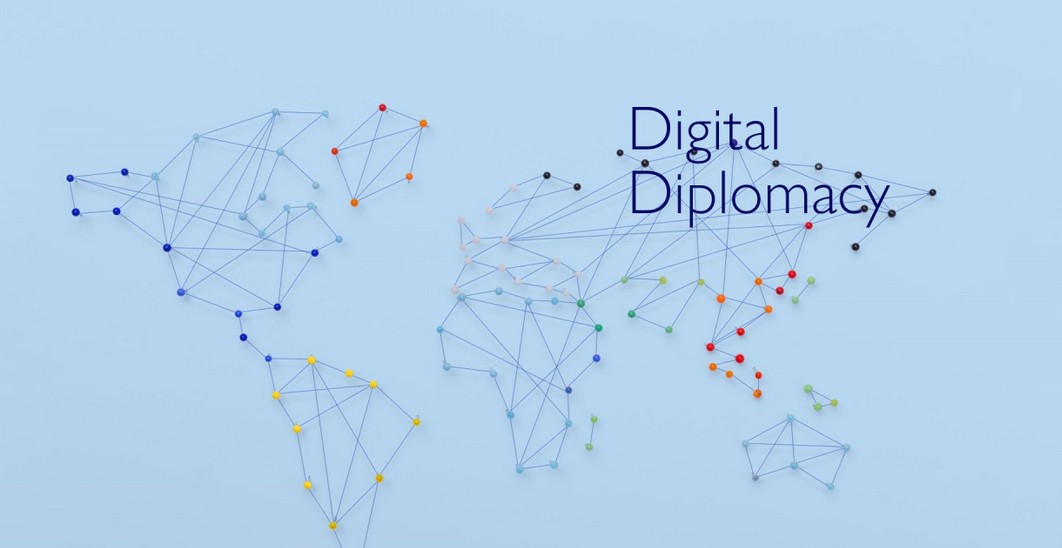
    N4S: Rivers unite India, but politics keeps dividing them – and this article shows how.  UPSC often frames water disputes as system-failure questions (like the 2013 mains on structural vs process flaws). Many just cite Cauvery or case laws, but miss deeper issues – no standing tribunal, murky data, Centre-state blame games – all unpacked under “Fundamental Structural Ambiguities” and “Challenges in Tribunal Functioning.” This piece fills that gap. It maps how tribunals crawl (“Process of Dispute Resolution”), why awards stall (Cauvery took 17 years), and how Article 262’s vagueness lets disputes return to the Supreme Court.

    Bonus: it blends legal structure with lived realities-like Sutlej farmers in “Punjab-Haryana Water Dispute”-so you can fuse policy with people in your answers.

    PYQ ANCHORING

    GS 2: Constitutional mechanisms to resolve the inter-state water disputes have failed to address and solve the problems. Is the failure due to structural or process inadequacy or both? Discuss. [2013]

    MICROTHEMES: Nature of Indian Federalism

    “Dip your feet in the Sutlej, and feel the cool embrace of history and tradition.” – This belief draws people to the sacred rivers of Punjab and Haryana, rivers that have nourished these lands for centuries. But while these waters have sustained generations, they are now at the heart of one of India’s most contentious water disputes.

    Tensions flared after Bhakra Beas Management Board’s decision to release 4,500 extra cusecs from Bhakra to Haryana, triggering strong political and legal pushback from Punjab. As the states clash, the rivers they rely on bear the brunt.

    So, how did we reach this point? Can cooperation over shared resources ever outweigh the political tug-of-war? And most critically, can we find a solution that ensures fair access to water while preserving the future of these lifelines?

    About the Punjab-Haryana Water Dispute

    The Punjab-Haryana water sharing dispute is not new. It has deep historical roots that go back to the very formation of Haryana as a separate state, and revolves around the complex sharing of river waters, unfinished projects, and political sensitivities that have lasted for decades.

    • The dispute dates back to 1966 when Haryana was created from Punjab and was promised a share of river waters from the Ravi and Beas rivers
    • The Satluj-Yamuna Link (SYL) canal was proposed to deliver Haryana’s share but remains incomplete due to Punjab’s resistance. 
    • The current issue involves Punjab and Haryana over the release of additional water from the Bhakra dam, managed by the Bhakra Beas Management Board (BBMB).
    • On April 30, 2025, BBMB ordered the release of 8,500 cusecs of water to Haryana for drinking needs, which Punjab opposed, claiming Haryana had already withdrawn 104% of its annual share
    • Water levels in the Bhakra, Pong, and Ranjit Sagar dams are low due to poor snowfall in the Himalayas. 
    • Punjab argues that BBMB’s decision is unilateral and has refused to open the Nangal dam sluice gates.

    Process of Dispute Resolution

    StepsDetails
    Legal BasisDisputes resolved under Inter-State River Water Disputes (IRWD) Act, 1956; supported by Article 262 of the Constitution.
    Initial StepA state government formally complains to the Centre, stating a dispute exists or may arise.
    Central Government RoleExamines the matter and tries to resolve it via negotiation. If it fails, a tribunal is formed.
    Tribunal FormationAd hoc tribunal is set up with a chairperson (Supreme Court judge), judicial members, and technical experts.
    Tribunal ProceedingsStates present technical and legal arguments. Tribunal studies rainfall, usage patterns, crop needs, etc.
    TimelinesOriginally, no time limit. Disputes often take decades. 2019 amendment proposes stricter timelines.
    Legal Binding NatureAward becomes binding once notified in the Gazette by the Centre. Awards can’t be challenged in ordinary courts.
    Enforcement MechanismNo strict enforcement mechanisms; states delay or defy compliance due to political reasons.
    Judicial OversightThough barred under Article 262, states approach SC under Articles 131 or 136 in practice.
    Reform Proposals2019 Bill proposes permanent tribunal, Dispute Resolution Committee (DRC), and data agency.

    Fundamental Structural Ambiguities in resolving disputes

    1. Institutional and Procedural Gaps

    • Ad hoc nature of tribunals: Tribunals are formed only after disputes reach a crisis stage; there’s no permanent mechanism.
    • Absence of strict timelines: Until the 2019 amendment, tribunals had no binding deadlines, leading to long delays (e.g., Cauvery tribunal took 17 years).
    • No clear enforcement mechanism: Awards need central notification to become binding, and even then, enforcement remains weak.
    • Overlapping forums and lack of finality: Multiple forums (tribunals, SC, Centre) operate simultaneously, with unclear jurisdictional limits.

    2. Federal and Political Tensions

    • Centre-state friction: States often allege the Centre’s decisions are politically influenced (e.g., Tamil Nadu vs. Karnataka).
    • Perceived partiality in dispute resolution: The Centre’s dual role as a neutral arbiter and political actor creates trust deficits.

    3. Legal and Constitutional Ambiguity

    • Judicial overlap: Article 262 restricts SC’s role once a tribunal is set up, but states still approach courts via Articles 131 or 136, causing confusion.
    • Lack of clarity on legal hierarchy: It’s unclear how tribunal awards interact with constitutional rights and Supreme Court judgments.

    4. Data and Technical Challenges

    • Opaque data-sharing: No standardized, independent authority to collect and verify hydrological data.
    • Technical weakness: Lack of scientific modelling or agreed methodologies for calculating water sharing, flows, and drought management.

    5. Absence of Preventive and Cooperative Mechanisms

    • No early conflict resolution systems: There are limited platforms for dialogue or mediation before legal escalation.
    • Underutilised river boards and inter-state coordination bodies: Mechanisms like river boards (per River Boards Act, 1956) have rarely been established or made effective.

    6. Normative and Equity Framework Gaps

    • Unclear role of equity and sustainability: No codified framework for factoring in historical use, equity among stakeholders, or ecological needs.
    • Inconsistent tribunal reasoning: Different tribunals apply varying standards of equity, population needs, and usage history, lacking uniformity.

    Challenges in tribunal functioning

    1. Delays and Lack of Time-Bound Resolution

    • Slow constitution of tribunals: The Centre often takes years to constitute a tribunal even after a dispute is formally raised by states.
    • Prolonged proceedings: Tribunals frequently take over a decade to deliver awards.
      • Example: The Cauvery Water Disputes Tribunal was constituted in 1990 and gave its final award only in 2007 — a gap of 17 years.

    2. Non-Binding Nature and Delayed Notification of Awards

    • Tribunal awards do not become binding until notified by the central government, creating room for political delay.
      • Example: Cauvery award remained unimplemented for years due to notification delays and legal-political wrangling.

    3. Enforcement Challenges

    • No institutional mechanism for enforcement: Even after notification, compliance depends on political will and Centre’s intervention.
    • States refuse compliance in politically sensitive times or if the award is seen as unfavorable.
      • Example: Karnataka’s reluctance to release Cauvery waters post-tribunal award led to recurring standoffs.

    4. Jurisdictional Ambiguity and Judicial Overlap

    • Though Article 262 bars SC intervention once a tribunal is set up, states still approach courts under Article 131 or 136.
      • This leads to parallel litigation and confusion over final authority.
      • Example: Both Karnataka and Tamil Nadu moved the Supreme Court after the Cauvery award, despite an existing tribunal.

    5. Lack of Uniform Standards and Precedents

    • Each tribunal applies different criteria — some focus on historical usage, others on economic needs or ecological flows.
    • This lack of standard methodology leads to inconsistency and perceived unfairness.
      • Example: The Krishna tribunal gave weightage to catchment area and utilization, while Cauvery focused more on crop water needs.

    6. Political Interference and Erosion of Trust

    • Perception that tribunal processes are politically influenced, especially when the Centre delays action or notification.
    • States lose faith in tribunal neutrality if the ruling party at the Centre is seen favoring a particular state.

    7. Absence of Permanent Institutional Framework

    • Each dispute leads to an ad hoc tribunal with fresh staffing, rules, and procedures.
    • No continuity or institutional memory is maintained.

    8. Technical and Data Disputes

    • Lack of transparent, real-time, and credible hydrological data hampers tribunal assessment.
    • States often dispute each other’s data; no independent river basin authority exists to validate claims.
      • Example: In Mahanadi dispute, Odisha and Chhattisgarh had conflicting data on water usage and flow patterns.

    Way Forward

    1. Time-Bound Tribunal Process
      Amend the Inter-State River Water Disputes Act to set fixed timelines for tribunal awards and their publication in the Gazette.
    2. Establish a Permanent Tribunal
      Create a standing tribunal with multiple expert benches to handle disputes continuously and reduce delays.
    3. Set Up River Basin Authorities
      Form inter-state basin organizations for key rivers to manage planning, usage, and dispute prevention jointly.
    4. Strengthen Centre-State Coordination
      Use platforms like the Inter-State Council and NITI Aayog for political dialogue and consensus building.
    5. Adopt Global Norms
      Incorporate international principles like the Berlin Rules and Integrated Water Resources Management (IWRM) for fair and sustainable sharing.
    6. Use Technology for Transparency
      Deploy real-time water monitoring and forecasting systems to promote data sharing and reduce mistrust.

    #BACK2BASICS: Global principles in resolving inter-state river water disputes

    Norm / Rule / ConventionKey PrincipleRelevance to India 
    Helsinki Rules (1966)Equitable and reasonable use of watercourses; Obligation not to cause appreciable harm to other statesThough non-binding, this principle supports fair sharing in Indian disputes like Krishna and Cauvery
    UN Convention on the Law of the Non-Navigational Uses of International Watercourses (1997)Reinforces principles of equitable use, prior notification, and cooperation between riparian statesReflects the need for basin-level cooperation in India’s inter-state river basins (e.g., Mahanadi)
    Berlin Rules (2004)Expands Helsinki Rules to include environmental sustainability, public participation, and human rightsCalls for river management in India to consider ecological flows and inclusive planning (e.g., Western Ghats rivers)
    Integrated Water Resources Management (IWRM)Promotes coordinated development and management of water, land, and related resources across sectorsEmphasizes basin-level institutions like river basin authorities, which India lacks formally
    Principle of Prior Notification and ConsultationStates must inform and consult co-basin states before undertaking major projectsCould reduce friction as seen in Polavaram (Andhra–Odisha–Telangana) and Mahanadi (Chhattisgarh–Odisha) disputes
    No Significant Harm PrincipleA state should not cause significant harm to others through its water useApplicable to disputes involving upstream usage impacting downstream states (e.g., Yamuna, Cauvery)
    Obligation to CooperateCountries (or states) must cooperate in good faith to manage shared resourcesThis is lacking in many Indian disputes marked by political one-upmanship

    Constitutional Provisions on Water Resources

    The legal framework that governs water sharing and disputes in India is grounded in the Constitution.

    • Article 262 of the Indian Constitution: This article provides a specific mechanism for the resolution of inter-state river water disputes. It empowers Parliament to enact laws to adjudicate such disputes, barring the jurisdiction of the courts. It has been the basis for the creation of the Inter-State Water Disputes Act, 1956.
    • Water as a Union Subject (Article 246):  Under the Constitution, water resources and their management primarily fall under the Union List (List I) of the Seventh Schedule. However, states are given jurisdiction over “water” under the Concurrent List, which leads to potential conflicts when inter-state water disputes arise.
    • Inter-State Water Disputes Act, 1956: The Act provides a detailed legal framework for resolving inter-state water disputes. It stipulates that if states cannot resolve a dispute by negotiation, a Water Disputes Tribunal is to be constituted. This process is critical in managing conflicts like the one between Punjab and Haryana.
    • Doctrine of Equitable Distribution: This principle, implied in Indian water law, suggests that water should be distributed fairly among states. However, the execution of this principle often faces challenges, particularly in the context of regional differences and political dynamics, as seen in the Punjab-Haryana dispute.
    • The Role of Parliament: Parliament holds the authority to resolve issues of inter-state water disputes by passing legislation. For example, the Cauvery Water Disputes Tribunal was created under a Parliamentary law, although delays in such decisions have often exacerbated tensions between states.

    SMASH MAINS MOCK DROP

    Despite constitutional provisions and legislative mechanisms, inter-state river water disputes in India remain unresolved for decades. Analyse the structural, political, and legal factors contributing to this failure. Suggest reforms to ensure time-bound, equitable, and enforceable resolution of such disputes.”