💥Join UPSC 2027,2028 Mentorship (July Batch) + XFactor Notes & Microthemes PDF

Category: Ranker Webinars

  • (In case you missed it) Get FREE Tikdams Handbook PDF and Recorded session| Tikdams to boost your UPSC Prelims 2023 score by 30+ marks: Intelligent Elimination Techniques by Zeeshan sir

    (In case you missed it) Get FREE Tikdams Handbook PDF and Recorded session| Tikdams to boost your UPSC Prelims 2023 score by 30+ marks: Intelligent Elimination Techniques by Zeeshan sir

    Session concluded successfully | Register below to Get Zeeshan sir’s Tikdam PDF handbook, Video recorded session and access to the Immersive Learning Telegram group


    Table of Content


    Knowledge alone is not enough to clear UPSC Prelims. Elimination techniques alone are not enough to crack this exam. One needs both to clear UPSC Prelims from 2014 onwards. Since UPSC Prelims is the toughest exam out of Interview and Mains with over 10 lakh aspirants getting disqualified, it’s always better to think about increasing 20-30 marks with your existing knowledge using elimination techniques. 

    Why is it that with the same syllabus, the same study materials and similar syllabus and similar study materials, most candidates score differently? For some, just a reading of the Spectrum book is enough to answer all the Modern History questions, but for others, despite reading the same book they are still confused on the D-Day.

    Common Sense is NOT Common.

    If it’s about prelim exam performance, then aspirants fall into either of these four categories. Which category are you in currently?

    1) Prelims score 0-40: They need to work on improving their knowledge and learn answering tricks
    2) Prelims score 50-70: They have decent knowledge and decent answering tricks.
    3) Prelims score 80-100: They have good knowledge but they need to develop answering tricks.
    4) Prelims score 120+: They have excellent knowledge and know all the answering tricks.


    Session concluded successfully | Register below to Get Zeeshan sir’s Tikdam PDF handbook, Video recorded session and access to the Immersive Learning Telegram group


    IMPORTANCE OF ELIMINATION TECHNIQUE

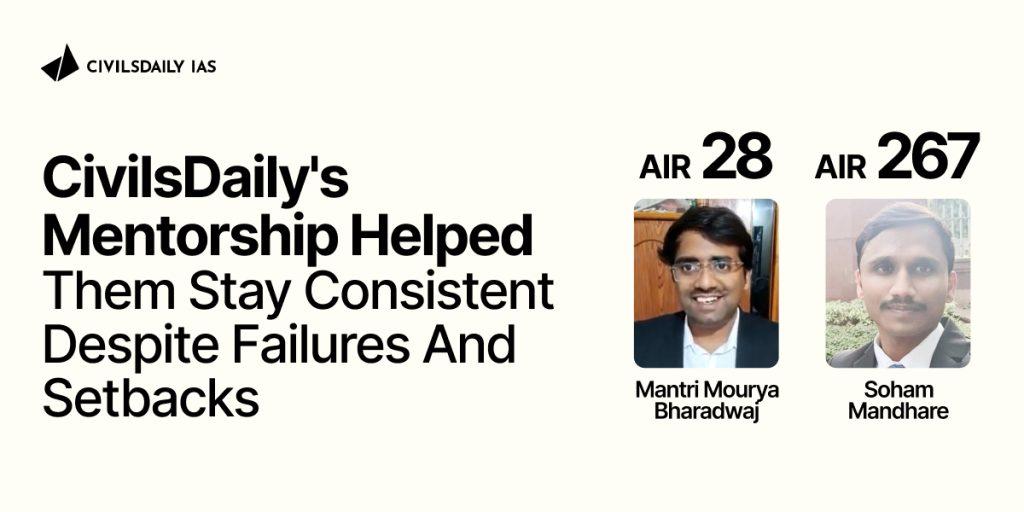
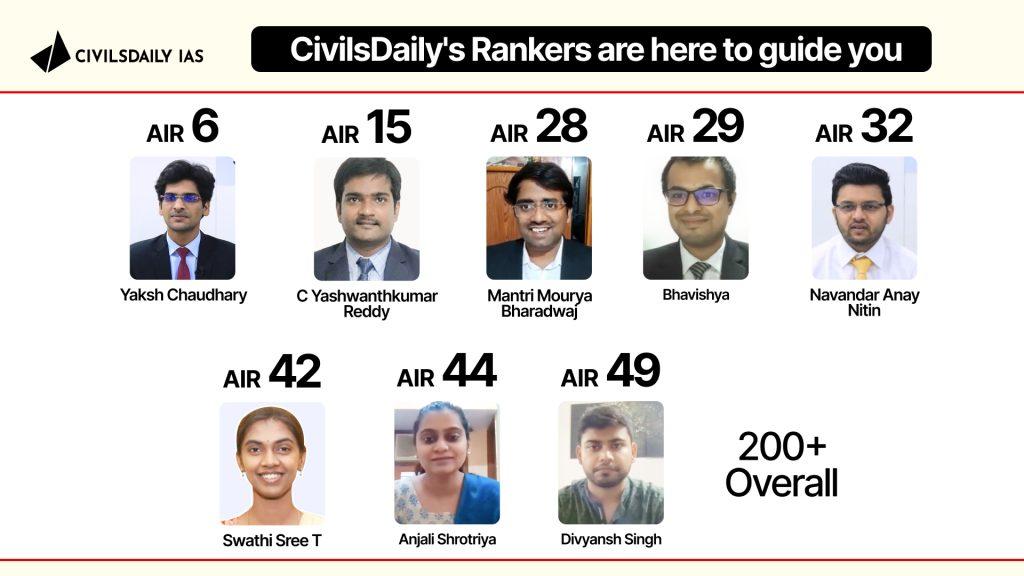
    CivilsDaily’s toppers from Abhishek Saraf, AIR 8, and UPSC 2019 to UPSC 2021 toppers like AIR 28 Mourya; AIR 32 Anay and many more have benefitted from Tikdams.

    Other than these thousands of CivilsDaily’s students have benefitted from these techniques.

    So, what to do?
    Clearing Prelims is all about Knowledge + Answering Tricks (Tikdams). And while you are studying hard to improve your knowledge, Zeeshan sir will help you improve your answering techniques, for absolutely FREE!

    Session concluded successfully | Register below to Get Zeeshan sir’s Tikdam PDF handbook, Video recorded session and access to the Immersive Learning Telegram group

    Masterclass details: Key takeaways

    This is your opportunity to learn the tricks that can help you score 120+ in your Prelims.

    • Smart hacks and tricks to eliminate options in MCQs
    • Solving MCQs with limited knowledge
    • Increase marks by 30+ marks in UPSC Prelims GS-1
    • Identifiers to select questions and apply Tikdams
    • Tricky topics where you can apply Tikdams
    • Tikdam PDF and recorded videos by Zeeshan sir
    • Open Q&A session with Zeeshan sir

    Venue and Timing

    Session concluded successfully

    Date: 22/10/2022

    Time: 7:30 P.M.

    This was an online Masterclass (webinar).

    Session concluded successfully | Register below to Get Zeeshan sir’s Tikdam PDF handbook, Video recorded session and access to the Immersive Learning Telegram group

    Tikdam PDF and Recorded sessions by Zeeshan sir

    Post-webinar we will email you the Tikdam handbook and recorded session.

    We will also add you to the exclusive Telegram group by Zeeshan sir for Immersive Learning.


    CD’s UPSC Hall of Fame 2021

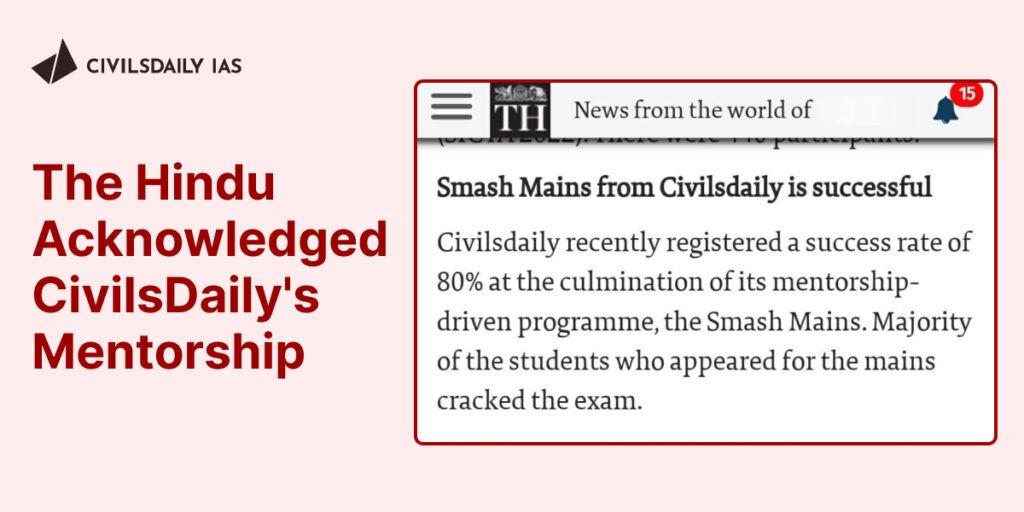
    Our success is acknowledged by the Hindu

  • 21st October 2022| Daily Answer Writing Enhancement

    Topics for Today’s questions:

    GS-1          Social empowerment, communalism, regionalism & secularism.

    GS-2         Bilateral, regional and global groupings and agreements involving India and/or affecting  India’s interests.

    GS-3          Conservation, environmental pollution and degradation, environmental impact assessment.

    GS-4         Case Studies

    Question 1)


    Q.1 Do you think feminist movements in India have historically lacked inclusivity, often growing within a limited Western upper-class psyche? (15 Marks)


    Question 2)

    Q.2 Africa’s development is fundamental to India’s foreign policy in order to enable the latter’s rise as one of the global system’s poles. Discuss. (10 Marks)

    Question 3)

    Q.3 The recently launched Mission LiFE will be a global initiative by India to combat climate change and make it a people’s movement across the world. Comment. (10 Marks)

    Question 4)  

    Q. 4 The transgender community has been a part of India’s social set up since the very beginning but never recognized as a reputable part of the society. ‘Hijra’ is a term traditionally used in India for transgender women who were born male. The role and value of this community in accordance with the sacred Hindu texts condenses to the performance of blessings at marriage and birth ceremonies for good fortune. With the advent of the British Raj in the 19th century, the acts of “cross-dressing” were registered as a criminal offence and if such offences were committed repeatedly, imprisonment followed. Thus, began the criminalization of hijras. Today, although legally supported and socially empowered as compared to earlier times, hijras are still subject to transphobic discrimination-associated violence, poverty, and segregation. In light of the above, answer the following: (a) Identify the challenges faced by transgenders during the different stages of their life. (b) Discuss the reasons for the continuing discrimination against transgenders in India despite several initiatives for their upliftment in recent times. (20 Marks)


    HOW TO ATTEMPT ANSWERS IN DAILY ANSWER WRITING ENHANCEMENT(AWE)?

    1. Daily 4 questions from General studies 1, 2, 3, and 4 will be provided to you.

    2. A Mentor’s Comment will be available for all answers. This can be used as a guidance tool but we encourage you to write original answers.

    3. You can write your answer on an A4 sheet and scan/click pictures of the same.

    4.  Upload the scanned answer in the comment section of the same question.

    5. Along with the scanned answer, please share your Razor payment ID, so that paid members are given priority.

    6. If you upload the answer on the same day like the answer of 11th  February is uploaded on 11th February then your answer will be checked within 72 hours. Also, reviews will be in the order of submission- First come first serve basis

    7. If you are writing answers late, for example, 11th February is uploaded on 13th February , then these answers will be evaluated as per the mentor’s schedule.

    8. We encourage you to write answers on the same day. However, if you are uploading an answer late then tag the mentor like @Staff so that the mentor is notified about your answer.

    *In case your answer is not reviewed, reply to your answer saying *NOT CHECKED*. 

    1. For the philosophy of AWE and payment: 

  • 20th October 2022| Daily Answer Writing Enhancement

    Topics for Today’s questions:

    GS-1          Urbanization, their problems and their remedies.

    GS-2         Salient features of the Representation of People’s Act.

    GS-3         Indian Economy and issues relating to planning, mobilization, of resources, growth, development and employment.

    GS-4          Contributions of moral thinkers and philosophers from India and the world.

    Question 1)


    Q.1 Cities in India function as magnets. However, the unprecedented urbanization comes at a price. Discuss. (15 Marks)


    Question 2)

    Q.2 Critically evaluate the electoral bonds in context of introducing transparency in the electoral system. (15 Marks)

    Question 3)

    Q.3 International Monetary Fund (IMF) recently lauded India’s Direct Benefit Transfer (DBT) Scheme as a “logistical marvel”. Highlighting the objectives of the scheme, elaborate upon its achievements. (15 Marks)

    Question 4)  

    Q.4 “Change does not roll in on the wheels of inevitability, but comes through continuous struggle.” – Martin Luther King Jr. What does this quote mean to you? (10 Marks)


    HOW TO ATTEMPT ANSWERS IN DAILY ANSWER WRITING ENHANCEMENT(AWE)?

    1. Daily 4 questions from General studies 1, 2, 3, and 4 will be provided to you.

    2. A Mentor’s Comment will be available for all answers. This can be used as a guidance tool but we encourage you to write original answers.

    3. You can write your answer on an A4 sheet and scan/click pictures of the same.

    4.  Upload the scanned answer in the comment section of the same question.

    5. Along with the scanned answer, please share your Razor payment ID, so that paid members are given priority.

    6. If you upload the answer on the same day like the answer of 11th  February is uploaded on 11th February then your answer will be checked within 72 hours. Also, reviews will be in the order of submission- First come first serve basis

    7. If you are writing answers late, for example, 11th February is uploaded on 13th February , then these answers will be evaluated as per the mentor’s schedule.

    8. We encourage you to write answers on the same day. However, if you are uploading an answer late then tag the mentor like @Staff so that the mentor is notified about your answer.

    *In case your answer is not reviewed, reply to your answer saying *NOT CHECKED*. 

    1. For the philosophy of AWE and payment: 

  • [Sansad TV] Perspective: Data Localization- Is India prepared?

    UPSC 2023 countdown has begun! Get your personal guidance plan now! (Click here)

    Context

    • In 2006 British mathematician Clive Humbly said that Data is the oil of the 21st Century.  This has indeed turned out to be true with the rapid growth of the digital economy.
    • Data plays an increasingly important role as an economic and strategic resource.
    • In this article, we shall learn about our stand on the issue of data localization and what are the challenges on this front.

    The ‘Data’ under debate

    data-localization
    • Data is any collection of strategic, personal and transactional information that is stored in a way so computers can easily read it.
    • These days, most people refer to data to mean information about their messages, social media posts, online transactions, and browser searches.
    • Big data refers to the immense amount of data that can now be collected, stored, and analyzed to find patterns.

    What is Data Localization?

    data
    • Data localization refers to various policy measures that restrict data flows by limiting the physical storage and processing of data within a given jurisdiction’s boundaries.
    • As per the UN’s digital economy report, 2021 64.2 zettabytes of data were created in 2020 which is a 314 percent increase from 2015.
    • It can be used to make decisions with economic impacts, environmental impacts or effects on health, education or society in general.
    • The volume of data in the world is increasing exponentially.

    Why is Data important?

    • This large collection of information about people’s online habits has become an important source of profits.
    • Your online activity can expose a lot about who you are, and companies find it valuable to use the information to target advertisements to you.
    • Governments and political parties have also gained interest in these data sets for elections and policymaking.

    India’s favor for Data Localization

    • India’s recent drafts and statements have strong signals for data localization, which means that data of Indians (even if collected by an American company) must be stored and processed in India.
    • Along with an RBI directive to payment companies to localize financial data, the Ministry of Commerce’s draft e-commerce policy is currently in public consultation.
    • The IT Ministry has drafted a data protection law that will be introduced in Parliament and has also framed draft intermediary rules that were leaked earlier.
    • These laws, broadly speaking, could require Facebook, Google, and Amazon to store and process in India information such as an Indian’s messages, searches, and purchases.
    • In some cases, they restrict what type of data these companies can collect. In others, it requires only a copy of the data to be in the country.
    • By requiring a copy of the data to be stored in India (data mirroring), the government hopes to have more direct control over these companies, including the option to levy more taxes on them.
    • The government also argues for data localization on the ground of national security, to prevent foreign surveillance and attacks.

    Arguments in favor of data localization

    • Data accessibility: It will help Indian law enforcement access user data. This especially gained prominence when incidences of lynchings across the country were linked to WhatsApp rumours whose stance on encrypted content frustrated government officials.
    • Cost saving: Along with government support, most domestic-born technology companies (which tend to have heavy foreign investments) support data localization. Most of these firms store their data exclusively in India.
    • Privacy protection: Some Indian companies have strongly argued that data regulation for privacy and security will have little teeth without localization, citing models in China and Russia.
    • Prevent snooping: Secures citizen’s data and provides data privacy and data sovereignty from foreign surveillance. Example – Facebook shared user data with Cambridge Analytica to influence voting.
    • Employment generation: Many argue that localization would lead to a larger presence of MNC’s in India overall, such as local offices, and increase tax liability and open more jobs.
    • Corporate accountability: Greater accountability from firms like Google, Facebook etc. about the end use of data. Minimizes conflict of jurisdiction due to cross-border data sharing and delay in justice delivery in case of data breach.

    Argument against data localization

    • Backlash from partner countries: Industry bodies, especially those with significant ties to the US, have slung heavy backlash.
    • Politicization of issue: Much of this sentiment hampers to the values of a globalised, competitive internet marketplace, where costs and speeds determine information flows, rather than nationalistic borders.
    • Unease of doing business: Opponents say that this, in turn, may backfire on India’s own young start-ups that are attempting global growth, or on larger firms that process foreign data in India.
    • Domestic misuse of data: Critics caution against state misuse and surveillance of personal data. They also argue that security and government access is not achieved by localisation.
    • Huge cost of storage:  Huge costs are involved to fulfill data localisation requirements. The servers need 24×7 power supply and the power outages may lead to shutdown of critical ins

    Policy moves in India: Data Protection Bill

    • The Justice Srikrishna Committee in its report accompanying the draft Personal Data Protection Bill notes that eight of the top 10 most accessed websites in India are owned by U.S. entities
    • The Bill calls for a copy of user data to be mandatorily localized in India.
    • This reality has often hindered Indian law enforcement agencies when investigating routine crimes or crimes with a cyber element.

    Is location sole measure of claiming data rights?

    • Questions around whether access to data is determined by the location of the user, location of data or the place of incorporation of the service provider have become central considerations for governments seeking to solve the cross-border data sharing conundrum
    • The Clarifying Lawful Overseas Use of Data (CLOUD) Act, passed by the U.S. Congress earlier this year, seeks to de-monopolize control over data from U.S. authorities
    • The law will for the first time allow tech companies to share data directly with certain foreign governments
    • This requires an executive agreement between the U.S. and the foreign country certifying that the state has robust privacy protections and respect for due process and the rule of law
    • The CLOUD Act creates a potential mechanism through with countries such as India can request data not just for crimes committed within their borders but also for transnational crimes involving their state interests

    Identifying the Indian Government’s Stated Goals

    The first step is to identify and define the Indian government’s objectives precisely. As explained in the previous section, the following four objectives have been articulated in multiple Indian government documents.

    • securing faster and better access to personal data for law enforcement
    • spurring increased economic growth and employment
    • preventing foreign surveillance, and
    • better enforcing data protection laws

    Way Forward

    • Conduct a full-scale assessment: To understand the exact requirements and to reach alignment on the necessary actions.
    • Review the potential market opportunity: This should be done in a particular region or country to determine if it warrants its own IT and data infrastructure.
    • Define a target state for a possible regional IT and data infrastructure and operations: This should include the extent to which the company will use local providers or set up its own localized capabilities.
    • Implement proper budgeting and planning: This should include the necessary support from global and regional IT and data teams.
    • Identify specific security and privacy controls: Given the data types and the severity of the risks, these might include tokenization to protect personally identifiable information (PII) during the migration to local infrastructure and field-level encryption for securing sensitive personal data.
    • Infrastructure development: Undertake the actual data migration and set up the local infrastructure and operations securely.

    UPSC 2023 countdown has begun! Get your personal guidance plan now! (Click here)

  • 19th October 2022| Daily Answer Writing Enhancement

    Topics for Today’s questions:

    GS-1          Population and associated issues

    GS-2         Salient features of the Representation of People’s Act.

    GS-3          Various Security forces and agencies and their mandate.

    GS-4          Emotional intelligence-concepts, and their utilities and application in administration and governance.

    Question 1)


    Q.1 Recently, the country has seen a growth in the number of hate crimes. Highlighting the reasons for it, suggest ways of responding to such crimes. (10 Marks)


    Question 2)

    Q.2. Delineate the grounds of disqualification under The Representation of the People Act, 1951. Also, discuss the remedial measures available to the disqualified representatives. (15 Marks)

    Question 3)

    Q.3 What are the trans-national challenges to policing? How can Interpol help to manage such challenges? (10 Marks)

    Question 4)  

    Q.4 “It is very important to understand that emotional intelligence is not opposite of intelligence, it is not triumph of heart on head, it is a unique intersection of both.”- David Caruso. Examine the statement with suitable examples in the context of a public servant discharging his/her duties. (10 Marks)


    HOW TO ATTEMPT ANSWERS IN DAILY ANSWER WRITING ENHANCEMENT(AWE)?

    1. Daily 4 questions from General studies 1, 2, 3, and 4 will be provided to you.

    2. A Mentor’s Comment will be available for all answers. This can be used as a guidance tool but we encourage you to write original answers.

    3. You can write your answer on an A4 sheet and scan/click pictures of the same.

    4.  Upload the scanned answer in the comment section of the same question.

    5. Along with the scanned answer, please share your Razor payment ID, so that paid members are given priority.

    6. If you upload the answer on the same day like the answer of 11th  February is uploaded on 11th February then your answer will be checked within 72 hours. Also, reviews will be in the order of submission- First come first serve basis

    7. If you are writing answers late, for example, 11th February is uploaded on 13th February , then these answers will be evaluated as per the mentor’s schedule.

    8. We encourage you to write answers on the same day. However, if you are uploading an answer late then tag the mentor like @Staff so that the mentor is notified about your answer.

    *In case your answer is not reviewed, reply to your answer saying *NOT CHECKED*. 

    1. For the philosophy of AWE and payment: 

  • [Yojana Archive] Kashmir: Poetry and Mysticism

    yojana

    Context

    In the evolution and development of literary, criticism, metaphysics and poetics in Sanskrit, Kashmir holds an important place as being the birthplace or residence of several prominent literary critics, theoreticians, philosophers and commentators.

    Contributions of Kashmir in the field of literature

    (1) Sages

    • The list includes names such as Panini, Chandracharya, Bharata, Kshemendra, Abhinavagupta, Vasugupta, Somananda, Somadeva, Bilhana, Kalhana, Patanjali, Anandavardhana and many others.
    • Panini’s Astadhyayi is the basis of Sanskrit grammar, while Bharata’s Natyashastra is the foundational text for theorising on dramaturgy.

    (2) Poetry

    • The poetic theories of auchitya, guna, rill and dhvani are the contributions of Kashmir to Indian poetics.
    • From Buddhism to Shaivism to Sufism, Kashmir’s literary and cultural landscape has enriched the corpus of mysticism and literature in India.

    (3) Philosophers

    • The great philosopher Abhinavagupta lived in Kashmir in the 11th century and his name has become inseparable from the philosophy of Kashmir Shaivism.
    • This system of philosophy teaches the concepts of abhas-vad (intuition) and pratyabhijna (recognition).
    • Abhinavagupta also added the ninth rasa, “shanta rasa” to the typology of eight rasas enumerated by Bharata in Natyashastra.
    • His other compositions include Tantraloka, Abhinavabharati, commentary on the Bhagavad Gita titled Gitartha Samgraha and Parmarthasara.

    (4) Persian poetry

    • There was a robust spiritual environment wherein saint-poets such as Lal Ded flourished and composed vaakhs (four-line stanzas).
    • In contemporary Kashmiri poetry, Bimla Raina has preserved the tradition of the singing of Lal-Ded’s vaakhs.

    (5) Secular literature  

    • Sheikh Noor-ud-din Noorani was a master in the rishi or reshut parampara of Kashmir wherein his mystical thought blended the values of Kashmir Shaivism and Sufism.
    • He composed four-to six-line poems known as shrukh in Kashmiri and is also credited with translating the Holy Quran into Kashmiri.
    • The tradition of great women saints and mentors is preserved in the verses and dargahs in Kashmir.

    (6) Music

    • The first all-women Sufi band was formed in 2015 in the region and they call themselves “Yemberzal” and are dedicated to preserve the Sufiana mausiqi, the tradition of Sufi music and Kashmiri classical music.

    UPSC 2023 countdown has begun! Get your personal guidance plan now! (Click here)

  • Now Daily Answer Writing Enhancement (AWE) Program comes with 24*7 doubt clearing | Enrollments are open for Nov-Dec batch, timetable inside

    Now Daily Answer Writing Enhancement (AWE) Program comes with 24*7 doubt clearing | Enrollments are open for Nov-Dec batch, timetable inside

    Click here for the timetable


    Table of Content


    The competition in the UPSC examination is fierce. Guys, after UPSC Prelims 2023, you will have very limited time on your hand BUT you have to cross the higher bar.

    Thousands of aspirants are very much familiar with the butterflies in their stomachs at this pointKnowing the unpredictability of this journey, many believe that only hard work can make them luckier. But shockingly, even after working with all their might, 90% of them remain very much clueless about their “strategy” being right or wrong. 

    And this is high time to make sure that the foundation for your Answer writing skills is vital. Our AWE (Answer Writing Enhancement Program) is back again with new features (details below) to sharpen your Answer writing skills.

    Given the available time till Mains and UPSC 2023-24 aspirants, Daily AWE Program is back for a new batch. We have got you covered with all the conceptual clarity on important topics. CD’s Exam Prep program has curated an exclusive series to help you strengthen the basics for UPSC Mains answer writing. 

    Also, you will get a lot of pointers to polish your writing skills for UPSC-CSE 2022-23. At the end of each session, you get a LIVE 24*7 Doubt-Clearing session with our faculty to get all your doubts cleared.


    Let’s keep the momentum going.

    Answer writing practices through Civilsdaily’s Daily AWE program can reduce test anxiety and helps you ace the GS Mains answer writing. And what could be a better way to practice for UPSC Mains Examinations than attempting Questions which are the closest to the demands of the UPSC Civil Services Mains Examination? 

    The more you are accustomed to sitting for a period of time, answering questions, and pacing yourself, the more comfortable you will feel when you actually sit down to take the real UPSC Mains examinations yourself.

    We are working hard to make the program more effective and loaded with features, highlight the best answers, and show the competency levels of students.

    What does the Program include?

    Weekly 20 Questions + Doubt Clearing Session (Newly Added)

    • Daily 4 questions from General studies 1, 2, 3, and 4 will be provided to you. A sample 2-week schedule is available below.
    • Doubt clearing 24*7 via WhatsApp. You can also mail at staff@civilsdaily.com for doubt clearing
    • On Day 1 we post the questions with the mentor’s comments and on the next day, we provide the model answers for the previous day.
    • A Mentor’s Comment will be available for all answers. This can be used as a guidance tool but we encourage you to write original answers.
    • You can write your answer on the same day and attach a scanned copy. Within 72 hours, a review of your answer will be provided.
    • Also, write the Razor payment ID, when you attach your answer.
    • If you are writing answers late, then please tag the mentor, to let him know about your submission. These answers will be evaluated as per the mentor’s schedule.

    SCHEDULE:

    Here is the schedule till December to give you an idea about how we will follow the Syllabus:

    NOTE: For GS2 and GS3, we take questions from recent current affairs. This ensures coverage of both static and current affairs.

  • 18th October 2022| Daily Answer Writing Enhancement

    Topics for Today’s questions:

    GS-1          Effects of globalization on Indian society.

    GS-2          Issues relating to poverty and hunger.

    GS-3         Food processing and related industries in India- scope’ and significance, location, upstream and downstream requirements, supply chain management.

    GS-4        Aptitude and foundational values for Civil Service, integrity, impartiality and non-partisanship, objectivity, dedication to public service, empathy, tolerance and compassion towards the weaker sections.

    Question 1)


    Q.1 Globalisation has been the main culprit in aggravating the challenges faced by India’s poor. Comment. (15 Marks)


    Question 2)

    Q.2 Explaining the concept of multi-dimensional poverty, state the measures which have been taken to address this problem in India. (10 Marks)

    Question 3)

    Q.3 Explain the significance of backward and forward linkages in the Food Processing Industry. Also, discuss the challenges in establishing robust linkages in India. (10 Marks)

    Question 4)  

    Q.4 Explain the meaning of self-efficacy, along with its key determinants. Also, discuss the significance of high self-efficacy for a civil servant. (10 Marks)


    HOW TO ATTEMPT ANSWERS IN DAILY ANSWER WRITING ENHANCEMENT(AWE)?

    1. Daily 4 questions from General studies 1, 2, 3, and 4 will be provided to you.

    2. A Mentor’s Comment will be available for all answers. This can be used as a guidance tool but we encourage you to write original answers.

    3. You can write your answer on an A4 sheet and scan/click pictures of the same.

    4.  Upload the scanned answer in the comment section of the same question.

    5. Along with the scanned answer, please share your Razor payment ID, so that paid members are given priority.

    6. If you upload the answer on the same day like the answer of 11th  February is uploaded on 11th February then your answer will be checked within 72 hours. Also, reviews will be in the order of submission- First come first serve basis

    7. If you are writing answers late, for example, 11th February is uploaded on 13th February , then these answers will be evaluated as per the mentor’s schedule.

    8. We encourage you to write answers on the same day. However, if you are uploading an answer late then tag the mentor like @Staff so that the mentor is notified about your answer.

    *In case your answer is not reviewed, reply to your answer saying *NOT CHECKED*. 

    1. For the philosophy of AWE and payment: 

  • 17th October 2022| Daily Answer Writing Enhancement(AWE)

    Topics for Today’s questions:

    GS-1          Salient features of Indian Society, Diversity of India.

    GS-2         Effect of policies and politics of developed and developing countries on India’s interests

    GS-3         Science and Technology- developments and their applications and effects in everyday life

    GS-4        Attitude: content, structure, function; its influence and relation with thought and behaviour; moral and political attitudes; social influence and persuasion.

    Question 1)


    Q.1 Explore and evaluate the impact of ‘Work from Home’ on family relationships. (10 Marks)


    Question 2)

    Q.2 India needs to identify the priority areas to further its techno-diplomacy amidst the complexities of expanding digital space and New and Emerging Strategic Technologies. Discuss. (15 Marks)

    Question 3)

    Q.3 ‘Plant-based’ meat is slowly gaining popularity even outside the developed countries. What do you understand by plant-based meat? What are its advantages? What are the concerns associated? (10 Marks)

    Question 4)  

    Q.4 Young people with ethical conduct are not willing to come forward to join active politics. Suggest steps to motivate them to come forward. (10 Marks)


    HOW TO ATTEMPT ANSWERS IN DAILY ANSWER WRITING ENHANCEMENT(AWE)?

    1. Daily 4 questions from General studies 1, 2, 3, and 4 will be provided to you.

    2. A Mentor’s Comment will be available for all answers. This can be used as a guidance tool but we encourage you to write original answers.

    3. You can write your answer on an A4 sheet and scan/click pictures of the same.

    4.  Upload the scanned answer in the comment section of the same question.

    5. Along with the scanned answer, please share your Razor payment ID, so that paid members are given priority.

    6. If you upload the answer on the same day like the answer of 11th  February is uploaded on 11th February then your answer will be checked within 72 hours. Also, reviews will be in the order of submission- First come first serve basis

    7. If you are writing answers late, for example, 11th February is uploaded on 13th February , then these answers will be evaluated as per the mentor’s schedule.

    8. We encourage you to write answers on the same day. However, if you are uploading an answer late then tag the mentor like @Staff so that the mentor is notified about your answer.

    *In case your answer is not reviewed, reply to your answer saying *NOT CHECKED*. 

    1. For the philosophy of AWE and payment: 

  • [Sansad TV] Perspective: e-RUPI: Digital Currency Push

    UPSC 2023 countdown has begun! Get your personal guidance plan now! (Click here)
    Context

    • The Reserve Bank of India will soon commence limited pilot launches of the digital rupee for specific use cases.
    • A concept note on the Central Bank Digital Currency was released on Friday.
    • It explains the objectives, choices, benefits and risks of issuing digital rupee.

    What is Central Bank Digital Currency (CBDC)?

    • CBDC is a central bank-issued digital currency which is backed by some kind of assets in the form of either gold, currency reserves, bonds and other assets, recognised by the central banks as a monetary asset.
    • The present concept of CBDCs was directly inspired by Bitcoin, but a CBDC is different from virtual currency and cryptocurrency.
    • Cryptocurrencies are not issued by a state and lack the legal tender status declared by the government.

    What are the types of E-Rupee?

    • Based on the usage and the functions performed by the digital rupee and considering the different levels of accessibility, CBDC can be demarcated into two broad categories:
    • General purpose (retail) (CBDC-R): It is an electronic version of cash primarily meant for retail transactions. It will be potentially available for use by all — private sector, non-financial consumers and businesses — and can provide access to safe money for payment and settlement as it is a direct liability of the central bank.  
    • Wholesale (CBDC-W): It is designed for restricted access to select financial institutions. It has the potential to transform the settlement systems for financial transactions undertaken by banks in the government securities (G-Sec) segment, inter-bank market and capital market more efficiently and securely in terms of operational costs, use of collateral and liquidity management.

    What are the forms of CBDC?

    The central bank says e-rupee, or CBDC, can be structured as token-based or account-based.

    1. Token-based CBDC: It would be a bearer instrument like banknotes, meaning whosoever holds the tokens at a given point in time would be presumed to own them. In this, the person receiving a token will verify that his ownership of the token is genuine. It is viewed as a preferred mode for CBDC-R as it would be closer to physical cash.
    2. Account-based CBDC: It would require maintenance of record of balances and transactions of all holders of the CBDC and indicate the ownership of the monetary balances.  In this case, an intermediary will verify the identity of an account holder. This system can be considered for CBDC-W.

    What’s the model for issuance?

    • There are two models for issuance and management of CBDCs under the RBI’s consideration — direct model (single tier model) and indirect model (two-tier model).
    • Direct model: Here the central bank will be responsible for managing all aspects of the digital rupee system such as issuance, account-keeping and transaction verification.
    • Indirect model: It would be one where the central bank and other intermediaries (banks and any other service providers), each play their respective role. In this model, the central bank will issue CBDC to consumer’s indirectly through intermediaries and any claim by consumers will be managed by the intermediary.

    What is Currency chest?

    Currency in India is managed by Currency chest. Currency chest is a place where the Reserve Bank of India (RBI) stocks the money meant for banks and ATMs. These chests are usually situated on the premises of different banks but administrated by the RBI.

    Why India needs a digital rupee?

    • Online transactions: India is a leader in digital payments, but cash remains dominant for small-value transactions.
    • High currency in circulation: India has a fairly high currency-to-GDP ratio.
    • Cost of currency management: An official digital currency would reduce the cost of currency management while enabling real-time payments without any inter-bank settlement.

    Why is CBDC preferred over Cryptocurrency?

    • Sovereign guarantee: Cryptocurrencies pose risks to consumers.  They do not have any sovereign guarantee and hence are not legal tender.
    • Market volatility: Their speculative nature also makes them highly volatile.  For instance, the value of Bitcoin fell from USD 20,000 in December 2017 to USD 3,800 in November 2018.
    • Risk in security: A user loses access to their cryptocurrency if they lose their private key (unlike traditional digital banking accounts, this password cannot be reset).
    • Malware threats: In some cases, these private keys are stored by technical service providers (cryptocurrency exchanges or wallets), which are prone to malware or hacking.
    • Money laundering: Cryptocurrencies are more vulnerable to criminal activity and money laundering.  They provide greater anonymity than other payment methods since the public keys engaging in a transaction cannot be directly linked to an individual.
    • Regulatory bypass: A central bank cannot regulate the supply of cryptocurrencies in the economy.  This could pose a risk to the financial stability of the country if their use becomes widespread.
    • Power consumption: Since validating transactions is energy-intensive, it may have adverse consequences for the country’s energy security (the total electricity use of bitcoin mining, in 2018, was equivalent to that of mid-sized economies such as Switzerland).

    Features of CBDC

    • High-security instrument: CBDC is a high-security digital instrument; like paper banknotes, it is a means of payment, a unit of account, and a store of value.
    • Uniquely identifiable: And like paper currency, each unit is uniquely identifiable to prevent counterfeiting.
    • Liability of central bank: It is a liability of the central bank just as physical currency is.
    • Transferability: It’s a digital bearer instrument that can be stored, transferred, and transmitted by all kinds of digital payment systems and services.

    Key benefits offered

    • Faster system: CBDC can definitely increase the transmission of money from central banks to commercial banks and end customers much faster than the present system.
    • Financial inclusion: Specific use cases, like financial inclusion, can also be covered by CBDC that can benefit millions of citizens who need money and are currently unbanked or banked with limited banking services
    • Monetary policy facilitation: The move to bring out a CBDC could significantly improve monetary policy development in India.
    • Making of a regional currency: In the cross border payments domain, India can take a lead by leveraging digital Rupee especially in countries such as Bhutan, Saudia Arabia and Singapore where NPCI has existing arrangements.

    Others benefits:

    • It is efficient than printing notes (cost of printing, transporting, and storing paper currency)
    • It reduces the risk of transactions
    • It makes tax collection transparent
    • Prevents money laundering

    Issues involved with CBDC

    • Innovation with centralization: The approach of bringing a sovereign digital currency stands in stark contrast to the idea of decentralization.
    • Liability on RBI:  when bank customers wish to convert their deposits into digital rupee, the RBI will have to take these liabilities from the books of banks and onto its own balance sheet.
    • Inflationary risk: Central banks would indulge in issuing more digital currencies which could potentially trigger higher inflation.
    • User adoption: User adoption could also pose a major setback for the smooth roll out of the CBDC in India. The main challenges would always be user adoption and security.
    • Reduced savings: Many, including various central bankers, fear that people may begin withdrawing money from their bank accounts as digital currencies issued by Central banks become more popular.
    • Volatility: the risk is higher and there is more price volatility and lesser acceptance as a money instrument globally, unless the trust factor and investor protection factors change.

    Way forward

    • The launch of CBDCs may not be a smooth affair and still requires more clarity in India. There are still a lot of misconceptions about the concept of digital currency in the country.
    • The effectiveness of CBDCs will depend on aspects such as privacy design and programmability.
    • There is a huge opportunity for India to take a lead globally via a large-scale rollout and adoption of digital currencies.

    Conclusion

    • RBI is creating small pivot for experimenting CBDC where financial transaction is happening through digital currency.
    • CBDC has to be a gradual process, various nuances has to be taken care not only about its utilization but also about the impact it will make.
    • More clarity on the concept in the days to come will be the key for CBDCs and much will depend on how the whole concept will evolve in India which is predominantly a paper currency market.

    UPSC 2023 countdown has begun! Get your personal guidance plan now! (Click here)