💥Join UPSC 2027,2028 Mentorship (August Batch) + XFactor Notes & Microthemes PDF

Distribution: weekly

  • The issues around data localisation

    Context

    The contentious clauses on local data storage in the revised Personal Data Protection Bill need re-examination.

    What Personal Data Protection Bill contains?

    • Greater control to an individual: The draft law is a comprehensive piece of legislation that seeks to give individuals greater control over how their personal data is collected, stored and used.
    • The promise of improvement over the current privacy law: Once passed, the law promises a huge improvement on current Indian privacy law, which is both inadequate and improperly enforced.
    • Criticism of the bill: The proposed bill has attracted criticism on various grounds such as-
      • The exceptions created for the state.
      • The limited checks imposed on state surveillance, and-
      • Regarding various deficiencies in the structures and processes of the proposed Data Protection Authority.

    The issue over the “data localisation”

    • Data within the country: The phrase, which can refer to any restrictions on cross-border transfer of data, has largely come to refer to the need to physically locate data within the country.
    • Provisions for the transfer of personal data outside India: The PDP Bill enables the transfer of personal data outside India, with the sub-category of sensitive personal data have to be mirrored in the country (e. a copy will have to be kept in the country).
      • Ban on transfer of critical data outside the country: Data processing/collecting entities will, however, be barred from transferring critical personal data (a category that the government can notify at a subsequent stage) outside the country.
      • Different from Justice Srikrishna committee report: These above provisions have been changed from the earlier version of the draft Bill, released by the Justice Srikrishna Committee in 2018. 
      • The 2018 draft imposed more stringent measures that required both personal and sensitive personal data to be mirrored in the country (subject to different conditions).
      • Welcome move: The move to liberalise the provisions in the 2019 version of the Bill is undoubtedly welcome, particularly for businesses and users.

    How removing the restriction matters?

    • Reduction in cost to business: Liberalised requirements will limit costs to business and ensure users have greater flexibility in choosing where to store their data.
    • More proportionate approach: The changes in the 2019 draft reflect a more proportionate approach to the issue as they implement a tiered system for cross-border data transfer, ostensibly based on the sensitivity/vulnerability of the data.
    • Move-in accordance with the right to privacy: This seems in accord with the Supreme Court’s dicta in the 2017 Puttaswamy case.
    • Conditions for interference in privacy: The Court had made it clear that interference in the fundamental right to privacy would only be permissible if inter alia deemed necessary and proportionate.

    Test of proportionality in the bill

    • On closer examination, it appears that even the revised law may not actually stand the test of proportionality.
    • The three-argument for imposing norms: There are broadly three sets of arguments advanced in favour of imposing stringent data localisation norms:
      • Sovereignty and government functions. Referring to the need to recognise Indian data as a resource to be used to further national interest (economically and strategically), and-
      • To enable enforcement of Indian law and state functions.
      • Accruing benefits to the local industry: The second claim is that economic benefits will accrue to local industry in terms of creating local infrastructure, employment and contributions to the AI ecosystem.
      • Protection of civil liberties: Regarding the protection of civil liberties, the argument is that local hosting of data will enhance its privacy and security by ensuring Indian law applies to the data and users can access local remedies.
    • Contradiction in the claim of protection? If data protection was required for the above purposes, it would make sense to ensure that local copies were retained of all the categories of personal data provided for in the Bill (as was the case with the previous draft of the law).
      • Sectoral obligations: In the alternative, sectoral obligations would also suffice as is currently the case with sectors such as digital payments data, certain types of telecom data, government data, etc.
    • Will data localisation lead to privacy protection? We note that the security of data is determined more by the technical measures, skills, cybersecurity protocols, etc. put in place rather than its mere location.
      • Localisation may make it easier for domestic surveillance over citizens.
      • Enabler of better exercise of privacy by citizens: It may also enable the better exercise of privacy rights by Indian citizens against any form of unauthorised access to data, including by foreign intelligence.
      • Effectiveness matters: The degree of protection afforded to data will depend on the effectiveness of the applicable data protection regime.
    • Protecting privacy through less intrusive measures: Insofar as privacy is concerned, this could be equally protected through less intrusive, suitable and equally effective measures such as requirements for contractual conditions and using adequacy tests for the jurisdiction of the transfer.
      • Such conditions are already provided for in the PDP Bill as a set of secondary conditions.
      • The European Union’s General Data Protection Regulation too uses a similar framework.
      • Extra-territorial operation: The extraterritorial application of the PDP Bill also ensures that the data protection obligations under the law continue to exist even if the data is transferred outside the country.
    • Giving an individual a choice: If privacy protection is the real consideration, individuals ought to be able to choose to store their data in any location which afford them the strongest privacy protections.
      • It is arguable that data of Indians will continue to be more secure if stored and processed in the European Union or California.
      • These two jurisdictions have strong data protection laws and advanced technical ecosystems.

    Way forward

    • Identification of the issues: The joint parliamentary committee ought to, ideally, identify the need, purpose and practicality of putting in place even the (relatively liberal) measures contained in the PDP Bill.
    • Broader thinking at policy level: Further, in order for localisation-related norms to bear fruit, either in terms of protecting citizen rights, enabling law enforcement access to data or enabling the development of the local economy, there has to be broader thinking at the policy level.
      • This may include for instance-
      • Reforming surveillance-related laws.
      • Entering into more detailed and up-to-date mutual legal assistance treaties.
      • Enabling the development of sufficient digital infrastructure, and
      • Creating appropriate data-sharing policies that preserve privacy and other third party rights, while enabling data to be used for socially useful purposes.


  • Location in news: Idlib Province


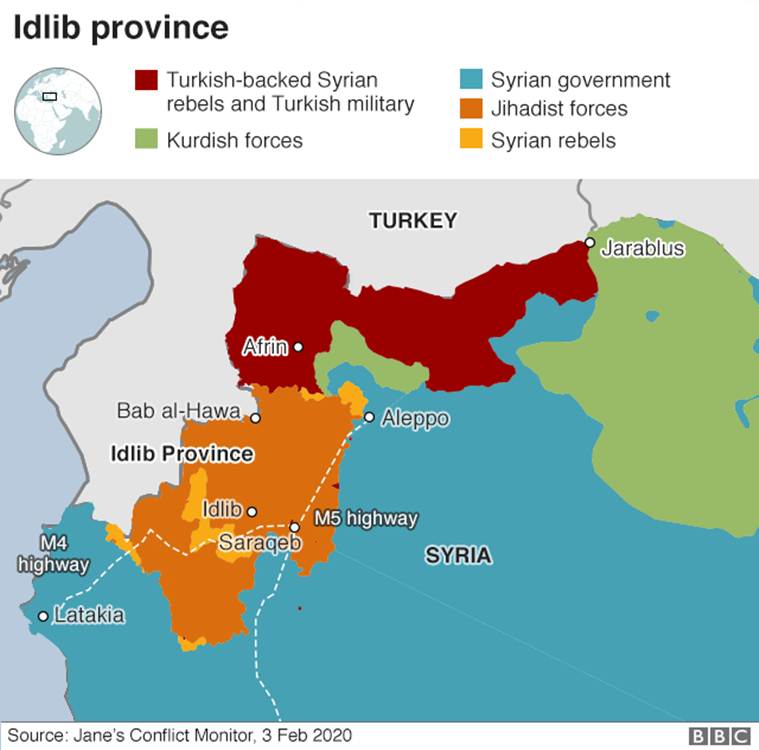
    The nine-year-old war in Syria is currently raging in the northwestern province of Idlib, with rapidly escalating tensions between government forces of President Bashar al-Assad and the Turkish military.

    Background

    • President’s Assad’s forces are backed by Russia, who are clashing with thousands of Turkish troops south of its border with Syria.
    • Turkey has closed the border and is trying to seal itself from waves of displaced refugees as Assad presses forth with a brutal campaign to take back Idlib.

    Why is Idlib important?

    • Assad has been pushing to recapture Idlib, which, along with parts of neighbouring Hama, Latakia and Aleppo, are the last remaining strongholds of the rebel opposition and other groups that have been attempting to overthrow Assad since 2011.
    • At one point, the opposition held large parts of Syria under its control, but that changed after Assad, with Russian military support, slowly regained control over most of the country.
    • In 2015, Idlib province was overtaken by opposition forces.
    • Now, Syrian government forces are attempting to capture the strategic M4 and M5 national highways that connect Idlib, Aleppo and Damascus, the capital of the country.
    • Idlib skirts the two national highways and lies between Aleppo in the north and Damascus in the south.
    • It’s proximity to the Turkish border makes Idlib strategically important to the Syrian government.

    Who controls Idlib now?

    • Since the province fell to opposition forces, there is no one group that controls Idlib, but rather, several separate factions.
    • International watchdogs say that the dominant faction in Idlib is the Hayat Tahrir al-Sham (HTS), a UN-designated terrorist organization set up in 2017, with links to al-Qaeda.
    • Also operating in Idlib is the Turkey-backed Syrian National Army, an armed opposition group. Included in the mix are the remnants of the Islamic State.
    • Watch groups say that other factions in Idlib strongly oppose the presence of IS fighters in the province.

    Why is Idlib important for Turkey?

    • Idlib’s proximity to the Turkish border makes it not only important for the Syrian government, but also a cause of concern for Turkey.
    • Since the war started in Syria, thousands of displaced Syrians have sought refuge in Turkey over the years.
    • According to the latest known figures, Turkey presently hosts some 3.6 million refugees and is feeling the socio-economic and political strain of their presence in the country.
    • More conflict in Idlib would only serve to displace more people, pushing them towards the Turkish border.
    • Turkey has been witnessing a surge in hostility among its citizens towards refugees and a fresh wave of refugees will only exacerbate the situation.
  • Yongle Blue Hole (YBH)


    Carbon more than 8,000 years old has been found inside the world’s deepest blue hole — the Yongle Blue Hole (YBH).

    Yongle Blue Hole (YBH)

    • The deepest known marine cavern is the Yongle blue hole, which measures roughly 300 metres from top to bottom.
    • Blue holes are marine caverns filled with water and are formed following dissolution of carbonate rocks, usually under the influence of global sea level rise or fall.
    • Its waters are mostly isolated from the surrounding ocean and receive little fresh water from rainfall, making it a rare spot to study the chemistry of oxygen-deprived marine ecosystems.
    • What distinguishes them from other aquatic caverns is that they are isolated from the ocean and don’t receive fresh rainwater.
    • They are generally circular, steep-walled and open to surface.

    Significance of YBH

    • YBH has a depth of 300 metres, far deeper than the previously recorded deepest blue hole, Dean’s Blue Hole in Bahamas, which had a depth of 202 metres.
    • However, like most blue holes, it is anoxic i.e. depleted of dissolved oxygen below a certain depth. This anaerobic environment is unfavorable for most sea life.
    • Such anoxic ecosystems are considered a critical environmental and ecological issue as they have led to several mass extinctions.
    • Concentrations of carbon, usually found in deep marine holes like YBH, provide a natural laboratory to study carbon cycling and potential mechanisms controlling it in the marine ecosystem.
    • The transition from aerobic to anaerobic environment adversely affects the biogeo-chemistry of the ocean.
  • Making the super-rich pay their fair share

    Context

    It is now beyond obvious that India cannot revive its economy without increasing public spending, and so increasing its fiscal resources is essential. Among other measures, this requires urgent adoption of legislation and institutional reforms to end financial opacity.

    The opacity in the data

    • Unlikely Budget estimates: The Union Budget was presented, based on numbers for revised estimates for the current year and Budget estimates for the coming year that the Finance Ministry itself knows are
    • Where else the opacity in data extends: The opacity of data also extends to cross-border movement of funds generated through a range of activities, including tax evasion, misappropriation of state assets, laundering of the proceeds of crime, and bribery.
      • Even here, India still has a lot to do, as confirmed by the recent publication of the Financial Secrecy Index by the Tax Justice Network, a U.K.-based financial advocacy group.
    • Financial Secrecy Index rank: On the surface, India has managed to reduce its contribution to global financial secrecy, with its rank falling from 32 on the 2018 index to 47 in 2020.
      • But this is partly because the new edition of the index covers more countries than it did two years ago.

    Transparency Reforms by the government

    • Arrangement with Switzerland: It is true that the government has adopted and supported a few transparency reforms, such as the automatic exchange of tax and financial information with other jurisdictions, like Switzerland.
      • What the arrangement with Switzerland mean? If an Indian citizen has an account with a Swiss bank and has a balance over a certain threshold, this information will be sent to the Indian tax authorities automatically.
    • Beneficial ownership register: The government did create a beneficial ownership register- which would allow the identification of the beneficial owner of an asset regardless of whose name the title of the property is in.
      • Exemption making the law weak: The law is weak since it exempts a lot of people at the discretion of the authorities.
      • Also, this register is not accessible to the public.

    Making multinationals and the super-rich pay their fair share of taxes 

    • Need to do more: Stopping the financial haemorrhage and making multinationals and the super-rich pay their fair share of taxes requires much more.
    • Capital flight and consequence for the country’s development: Capital flight out of India by Indian elites and foreigners alike has been undermining our country’s development for decades.
      • Outdated international system: An important part of these flows is the result of artificial profit shifting by multinational companies taking advantage of an outdated international tax system.
    • How the multinationals shifts profits? These multinationals may be making profits in India but can easily declare those profits in a low tax jurisdiction like Hong Kong and justify that transaction as a payment for the use of a patent.
      • The magnitude of loss-$27.5 billion: According to one estimate, this strategy represented a loss of $27.5 billion in 2014 for the Indian government, up from $142 million in 2000.

    Onshore financial services and issues with it

    • Paradoxical decision: Three years ago, the government took the paradoxical decision to set up onshore international financial services in the country.
      • This is how the International Financial Services Centre in the Gujarat International Finance Tec-City (GIFT-City), Gandhinagar, emerged.
      • It was modelled after offshore financial centres such as Hong Kong, Singapore, the City of London and Dubai.
    • Increasing the possibility of regulatory arbitrage: While this has not created much employment, it has led to growing possibilities for regulatory arbitrage by financial firms, with potentially very problematic consequences.

    The issue with the policy of tax incentives

    • Little evidence of attracting investment: The government keeps granting tax incentives on a discretionary basis, even though there is little evidence that these incentives attract investment.
    • What factors matters for investment: Recent research by International Monetary Fund, factors such as-
      • Quality of infrastructure.
      • A healthy and skilled workforce.
      • Market access and-
      • Political stability matters much more.
    • Consequences of the policy-reduction in tax revenue: The massive reduction in corporate tax rates has thus far not led to any increase in private investment.
      • But it has meant a significant reduction in tax revenues, with devastating consequences.
      • Implications for health, educations etc.: Reduction in tax revenue translates into a lack of resources for education, healthcare, food and nutrition and infrastructure.
      • Low tax-GDP ratio: India is already an outlier among similarly placed developing countries with its low tax-GDP ratio of 18%.
      • Making the budget dependent on indirect taxes: The government budget is also highly dependent on indirect taxes like the Goods and Services Tax which are regressive and hit ordinary citizens harder.

    Way forward

    • Legislation to end financial opacity: Adoption of legislation and institutional reforms to end financial opacity- including, for example-
      • Opening the beneficial ownership register to the public and-
      • Stopping the creation of onshore tax havens is the need of the hour.
    • Opening the debate on how to make the multinationals pay their fair share: The Government of India must also assume a more vocal role in the international debate about how to make multinationals pay their fair share of taxes.
      • This means continuing to appeal for a United Nations tax body, which is much more legitimate than the Organisation for Economic Co-operation and Development (OECD).
      • The issue with the OECD’s proposal: The OECD’s proposals, published at the end of 2019, are neither ambitious nor fair enough.
    • Explore the possibility of going alone: If the organisation continues to remain deaf to the demands of developing countries, India must be prepared to go it alone, thinking unilaterally about how to make multinationals pay what they owe.


  • Youth can be a clear advantage for India

    Context

    The demographic dividend is close to five-decade-long demographic opportunities that can be leveraged only with suitable policies and programmes

     The youngest population in the world

    • Median age at 28 years: By 2022, the median age in India will be 28 years.
      • In comparison, it will be 37 in China and the United States.
      • 45 in western Europe, and 49 in Japan.
    • The demographic dividend
      • The working-age population more than non-working: India’s working-age population has numerically outstripped its non-working age population.
      • An extraordinary opportunity: A demographic dividend, said to have commenced around 2004-05, is available for close to five decades.

    The two caveats

    • The demographic dividend is an extraordinary opportunity. There are, however, two caveats.
    • First: Dividend available in different states at different times.
      • India’s population heterogeneity ensures that the window of demographic dividend becomes available at different times in different States.
      • Example of Kerala vs. Bihar: While Kerala’s population is already ageing, in Bihar the working-age cohort is predicted to continue increasing till 2051.
      • Decline in 11 major states by 2031: By 2031, the overall size of our vast working-age population would have declined in 11 of the 22 major States.
    • Second: Many factors that matter for harnessing the dividend
      • Factors that matter: Harnessing the demographic dividend will depend upon the-
      • Employability of the working-age population.
      • Health.
      • Education.
      • Vocational training and skill.
      • Besides appropriate land and labour policies, as well as good governance.
      • Demography is not destiny: India will gain from its demographic opportunity only if policies and programmes are aligned to this demographic shift. Demography is not destiny.

    Need for skills

    • Need for the additional jobs: The Economic Survey 2019 calls for additional jobs to keep pace with the projected annual increases in the working-age population.
    • Lack of education and skills: UNICEF 2019 reports that at least 47% of Indian youth are not on track to have the education and skills necessary for employment in 2030.
      • Possibility of demographic disaster: The projected demographic dividend would turn into a demographic disaster if an unskilled, under-utilised, and frustrated young population undermines social harmony and economic growth.
    • Poor learning outcomes: While over 95% of India’s children attend primary school, the National Family Health Surveys (completed up to 2015-16) confirm that poor infrastructure in government schools, malnutrition, and scarcity of trained teachers have ensured poor learning outcomes.

    What needs to be done?

    • Adopt a uniform school system: A coordinated incentive structure prompting States to adopt a broadly uniform public school system focusing on equity and quality will yield a knowledge society faster than privatising school education can accomplish.
    • Ensure training in line with the market demand: Most districts now have excellent broadband connectivity-
      • Let geography not trump demography: Irrespective of a rural or urban setting, the public school system must ensure that every child completes high school education, and is pushed into appropriate skilling, training and vocational education in line with market demand.
    • Invest and modernise: Modernise school curricula, systematically invest in teacher training so that they grow in their jobs to assume leadership roles while moving beyond the tyranny of the syllabus.
    • Use of technology: Deploy new technology to accelerate the pace of building human capital by putting in place virtual classrooms together with massive open online courses (MOOCS) to help prepare this huge workforce for next-generation jobs.
      • Investing in open digital universities would further help yield a higher educated workforce.

    Focus on women

    • Translating literacy into skill: Growing female literacy is not translating into relevant and marketable skills.
      • A comprehensive approach is needed to improve their prospects vis-à-vis gainful employment.
      • Need of the flexible policies: Flexible entry and exit policies for women into virtual classrooms, and into modules for open digital training, and vocational education would help them access contemporary vocations.
    • The need for equal pay: Equal pay for women will make it worth their while to stay longer in the workforce.
    • The deferred bonus: Economist Yogendra Alagh has written that the significance of this “deferred bonus” (women entering the workforce), could be higher than the immediate benefits of the dividend from shifts in population age structure.

    Health care

    • In India, population health is caught between the rising demand for health services and competition for scarce resources.
    • Impact of economy on rural health: The National Sample Survey Office data on health (75th round, 2018), shows that a deep-rooted downturn in the rural economy is making quality health-care unaffordable.
      • People are availing of private hospitals less than they used to, and are moving towards public health systems.
      • Diverting public investment from However, central budget 2020-21 lays emphasis on private provisioning of health care which will necessarily divert public investment away from public health infrastructure.
    • The Ayushman Bharat Yojana: It links demand to tertiary in-patient care.
      • This promotes earnings of under-utilised private hospitals, instead of modernising and up-grading public health systems in each district.
    • We need to assign 70% of health sector budgets to integrate and strengthen primary and integrated public health-care services and systems up to district hospital levels.
      • Include out-patient department and diagnostic services in every health insurance model adopted, and-
      • Implement in ‘mission mode’ the Report of the High-Level Group, 2019, submitted to the XV Finance Commission.
    • The elderly population in India is projected to double from 8.6% in 2011 to 16% in 2040.
      • This will sharply reduce the per capita availability of hospital beds in India across all major States unless investments in health systems address these infirmities.

    Conclusion

    The policies that we adopt and their effective implementation will ensure that our demographic dividend, a time-limited opportunity, becomes a boon for India.


  • Explained: How to unify defence resources

    • The Chief of Defence Staff (CDS) General Rawat said his office is working on a tentative timeline for the establishment of joint commands among the three defence services.
    • With the creation of the CDS post on December 31, the government has set the ball rolling for bringing jointness and integration among the services.

    What are joint commands?

    • Simply put, it is a unified command in which the resources of all the services are unified under a single commander looking at a geographical theatre.
    • It means that a single military commander, as per the requirements, will have the resources of the Army, the Navy and the Air Force to manage a security threat.
    • The commander of a joint command will have the freedom to train and equip his command as per the objective and will have logistics of all the services at his beckoning.
    • The three services will retain their independent identities as well.
    • A committee headed by Lieutenant General D B Shekatkar had earlier recommended three new commands: Northern, for China; Western, for the Pakistan border’ and Southern, for maritime security.

    Present commands

    • There are two tri-services commands at the moment.
    • The joint command at the moment, the Andaman and Nicobar Command (ANC), is a theatre command, which is headed by the chiefs of the three services in rotation.
    • It was created in 2001 after a Group of Ministers had given a report on national security following the Kargil War.
    • The Strategic Forces Command was established in 2006 and is a functional tri-services command.

    What is the structure right now?

    • There are 17 commands, divided among the three services. The Army and the Air Force have seven commands each, while the Navy has three commands.
    • The commands under the Army are Northern, Southern, Eastern, Western, Central, Southwestern and the Army Training Command.
    • The Air Force has Eastern, Western, Southern, Southwestern, Central, Maintenance and Training commands, and the Navy is divided into Western, Eastern and Southern commands.
    • These commands report to their respective services and are headed by three-star officers.
    • Though these commands are in the same regions, they are no located together.

    Advantages of  joint commands

    • One of the main advantages is that the leader of unified command has control over more varied resources, compared to the heads of the commands under the services now.
    • For instance, the head of one of the proposed commands, Air Defence Command, will have under him naval and Army resources, too, which can be used as per the threat perception.
    • And the officer commanding the Pakistan or China border will have access to the Air Force’s fighter jets and can use them if needed.
    • However, that not all naval resources will be given to the Air Defence Command, nor will all resources of the Air Force come under another proposed command, Peninsula Command, for the coasts.
    • The Peninsula Command would give the Navy Chief freedom to look at the larger perspective in the entire Indian Ocean Region in which China’s presence is steadily increasing.
    • The other key advantage is that through such integration and jointness the three forces will be able to avoid duplication of resources.
    • The resources available under each service will be available to other services too. The services will get to know one another better, strengthening cohesion in the defence establishment.

    How many such commands are expected to roll out?

    • While the number of commands India needs is still being studied, the CDS has envisaged that there could be between six to nine commands. It is not certain how many land-based theatre commands on the borders will come up.
    • The CDS said it will be studied, and the study group will be given the options for creating two to five theatre commands.
    • One possibility is to have single commands looking at the China and Pakistan borders respectively, as they are the two major threats.
    • The other option is to have a separate command for the border in the J&K region, and another command looking at the rest of the western border.
    • There could be independent commands looking at the border with China which is divided by Nepal.
    • A proposed Logistics Command will bring the logistics of all the service under one person, and the CDS is also looking at a Training and Doctrine Command so that all services work under a common doctrine and have some basic common training.

    Do militaries of other countries have such commands?

    • Several major militaries are divided into integrated theatre commands.
    • China’s People’s Liberation Army has five theatre commands: Eastern, Western, Northern, Southern and Central. Its Western Theatre Command is responsible for India.
    • The US Armed Forces have 11 unified commands, of which seven are geographic and four functional commands. Its geographic commands are Africa, Central, European, Indo-Pacific, Northern, Southern and Space.
    • Cyber, Special Operations, Transportation and Strategic are its functional commands.
  • Delhi’s ‘Happiness Class’

    On the upcoming visit to India, US President Trump will visit a Delhi government school, where they will attend a happiness curriculum class.

    What is Delhi’s ‘happiness curriculum’?

    • The curriculum calls for schools in India to promote development in cognition, language, literacy, numeracy and the arts along with addressing the well-being and happiness of students.
    • It further says that future citizens need to be “mindful, aware, awakened, empathetic, firmly rooted in their identity…” based on the premise that education has a larger purpose, which cannot be in isolation from the “dire needs” of today’s society.
    • For the evaluation, no examinations are conducted, neither will marks be awarded.
    • The assessment under this curriculum is qualitative, focusing on the “process rather than the outcome” and noting that each student’s journey is unique and different.

    Objectives of the curriculum

    The objectives of this curriculum include:

    • developing self-awareness and mindfulness,
    • inculcating skills of critical thinking and inquiry,
    • enabling learners to communicate effectively and
    • helping learners to apply life skills to deal with stressful and conflicting situations around them

    Learning outcomes of this curriculum

    The learning outcomes of this curriculum are spread across four categories:

    • becoming mindful and attentive (developing increased levels of self-awareness, developing active listening, remaining in the present);
    • developing critical thinking and reflection (developing strong abilities to reflect on one’s own thoughts and behaviours, thinking beyond stereotypes and assumptions);
    • developing social-emotional skills (demonstrating empathy, coping with anxiety and stress, developing better communication skills) and
    • developing a confident and pleasant personality (developing a balanced outlook on daily life reflecting self-confidence, becoming responsible and reflecting awareness towards cleanliness, health and hygiene).

    How is the curriculum implemented?

    • The curriculum is designed for students of classes nursery through the eighth standard.
    • Group 1 consists of students in nursery and KG, who have bi-weekly classes (45 minutes each for one session, which is supervised by a teacher) involving mindfulness activities and exercise.
    • Children between classes 1-2 attend classes on weekdays, which involves mindfulness activities and exercises along with taking up reflective questions.
    • The second group comprises students from classes 3-5 and the third group is comprised of students from classes 6-8 who apart from the aforementioned activities, take part in self-expression and reflect on their behavioural changes.
  • Biojet fuel that powered the IAF aircraft


    In his monthly Mann ki Baat radio address, PM hailed the use of biofuel in an Indian Air Force transport aircraft.

    What did PM cite?

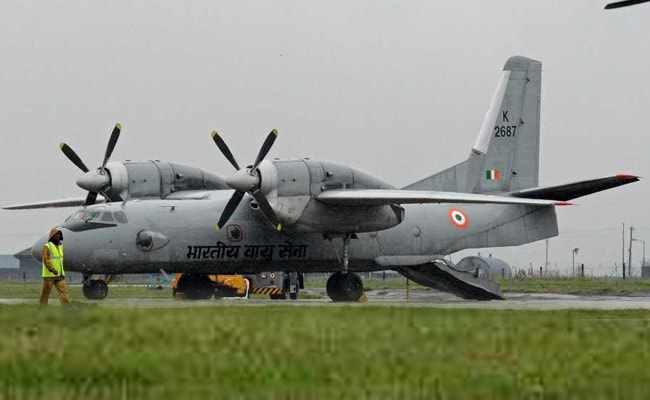
    • IAF’s An-32 aircraft successfully used a 10% blend of Indian biojet fuel and took off from Leh’s Kushok Bakula Rimpoche Airport on January 31.
    • This was the first time that this mix was used in both engines of an aircraft.
    • Leh is at an altitude of 10,682 ft above mean sea level and is among the world’s highest and most difficult operational airfields.
    • Even during clear weather, operating an aircraft at Leh is a challenge, given the reduced power output of the engines in the rarefied atmosphere, turbulent winds, and proximity of the mountains.

    What is Biojet fuel?

    • Biojet fuel is prepared from “non-edible tree borne oil” and is procured from various tribal areas of India.
    • This fuel is made from Jatropha oil sourced from Chattisgarh Biodiesel Development Authority (CBDA) and then processed at CSIR-IIP, Dehradun.
    • Generally, it is made from vegetable oils, sugars, animal fats and even waste biomass, and can be used in existing aviation jet engines without modification.
    • Jatropha oil is suitable for conversion to jet fuel. This biojet fuel has received wide acceptance from the airline industry.

    Why it matters?

    • Evaluating the performance of biojet fuel under conditions prevalent in Leh was considered extremely important from an operational perspective.
    • The success of the flight validated the capability of the aircraft’s engines to operate smoothly with biojet fuel at the extremities of the operational envelope.
    • The tests were conducted by a team comprising test pilots from the Aircraft and Systems Testing Establishment (ASTE), Bengaluru and pilots from the operational squadrons.
    • The successful test flight also demonstrated the IAF’s capability to absorb newer technology, while sponsoring indigenization.
  • [pib] Bay of Bengal Offshore Sailing Expedition (BBSE)


    Indian Naval Sailing Vessels Mhadei and Tarini set sail for the Bay of Bengal Offshore Sailing Expedition from the Indian Naval Ocean Sailing Node at Goa.

    BBSE

    • This would be the maiden major mixed crew sailing expedition of the Indian Navy with crew composition of five naval officers including two women officers in each boat.
    • It would be covering a total distance of 6,100 Nautical miles each and will be at sea for 55 days.
    • The prolonged voyage of nearly three months during this expedition would showcase harnessing of renewal energy namely wind energy to propel the boats.
    • The expedition is also in pursuance of the GOI mission of ‘Nari Shakti’ providing opportunity to women officers at par with men.
    • The sailing vessels as part of the expedition would make replenishment halts at ports of Phuket, Yangon, Chittagong and Colombo.

    About the vessels

    • Mhadei and Tarini inducted in the Indian Navy on 08 February 2009 and 18 February 2017 respectively have been the vessels of choice for the naval expeditions in various sailing expeditions, including three circumnavigations and thus have thousands of miles tucked under their belt.
    • Mhadei has successfully completed two circumnavigations, three Cape to Rio trans-Atlantic races and several other expeditions around various continents.
    • The vessel has covered in excess of 1,36,000 nautical miles.
    • Tarini created history in 2017-18 when six Indian Naval women officers sailed the vessel on maiden circumnavigation voyage titled Navika Sagar Parikrama.
    • She thereafter also participated in mixed crew Kochi to Seychelles sail training expedition during the 10th-anniversary celebration of the IONS.
  • The next mission

    Context

    After the success of the SBM, government is looking for the next mission in the form of Jal Jeevan Mission.

    Investment in Sanitation

    • Investment of over 1 lakh crore: The central and state governments have invested in excess of one lakh crore on sanitation over the past five years.
    • Where the fund was used? A majority of these funds have gone towards-
      • Incentivising the poor and marginalised households to construct and use household toilets.
      • Bringing about behaviour change, and-
      • Building capacities of field functionaries.
    • The success of the mission: Over 10 crore toilets have been built in rural India and nearly 55 crore people have stopped defecating in the open, all in just five years.
      • This has contributed in bringing down global open defecation by more than half.
    • Return on the investment in sanitation: The returns on these investments have been manifold, and their effects on the broader economy, markets and employment have been significant.
      • 400 % return: The UNICEF recently estimated that investments in sanitation in India are yielding a 400 per cent return with each rural household in an open-defecation-free village saving Rs 50,000 on account of avoided medical costs and time savings.
    • Future prospects for the sanitation infrastructure: The Toilet Board Coalition has estimated that the sanitation infrastructure and services market in India will be worth over $60 billion by 2021.
      • Many new jobs, even in the most rural areas of the country, apart from reducing health and environmental costs and generating savings for households.
    • Growth in the sanitation-related business: The business of manufacturing toilet-related hardware accessories have reported huge growth in sales during the SBM period.
      • They project a continued uptrend through retrofitting and upgrades.
      • This has been corroborated by another recent study by UNICEF in which they have estimated that SBM has resulted in creating over 75 lakh full-time equivalent jobs over the past five years, giving the rural economy a major boost.

    A milestone, not a finish-line

    • Sustaining the success: The government is committed to ensuring that this success is sustained.
    • On October 2, 2019, the prime minister said that we must all ensure that people continue to use toilets and that no one is left behind.
    • Allocation of 10,000 crores in the Budget: This has been backed up by the finance minister in the budget for 2020-21.
      • In the budget, she announced about Rs 10,000 crore for rural sanitation to focus on-
      • ODF sustainability.
      • Bio-degradable waste management.
      • Greywater management.
      • Sludge management and-
      • Plastic waste management for all villages by 2024.

    Next Mission- Piped Water Supply

    • Jal Jeevan Mission: The next critical basic service, is piped water supply. On Independence day this year, the prime minister announced the Jal Jeevan Mission (JJM).
      • With the goal of ensuring piped water supply for all households of India by 2024 and with a commitment of Rs 3.6 lakh crore of central and state funds for the scheme.
      • The budgetary allocation of 12,000 crores: In the Union budget for 2020-2021, the government has already allocated Rs 11,500 crore for JJM, with an additional Rs 12,000 crore being made available through extra-budgetary resources.
    • Earmarking 50% grants for drinking water and sanitation: In addition, a huge impetus to the rural water supply and sanitation sector is the earmarking of 50 per cent of the Rs 60,750 crore grant for rural local bodies provided under the Fifteenth Finance Commission for drinking water and sanitation.
      • Making local bodies more responsible: This will ensure that the gram panchayats and local communities are responsible for the upkeep of their water and sanitation infrastructure, providing a boost to the sustainability of service delivery to people.
      • Making sanitation and water supply everyone’s business: This approach will ensure that just like sanitation, provision of water supply and its upkeep will also become everyone’s business.

    Conclusion

    It is fairly clear now that investment in sanitation is actually a facilitator for broader economic, health and social gains. The government should ensure the sustainability of SBM and replicate its success in implementing the JJM.