💥Join UPSC 2027,2028 Mentorship (August Batch) + XFactor Notes & Microthemes PDF

Distribution: weekly

  • Habitable-zone Planet Finder (HPF)


    At 100 light-years from Earth, a low-mass star was sending signals in a pattern that suggested that an exoplanet was orbiting the star confirmed the Habitable-zone Planet Finder (HPF).

    Habitable-zone Planet Finder

    • NASA’s Kepler mission observed a dip in the host star’s light, suggesting that the planet was crossing in front of the star during its orbit.
    • To confirm, researchers turned to an instrument called Habitable-zone Planet Finder (HPF). It has confirmed that there is indeed an exoplanet.
    • HPF is an astronomical spectrograph, built by Penn State University scientists, and recently installed on the 10m Hobby-Eberly Telescope at McDonald Observatory in Texas.
    • The instrument is designed to detect and characterize planets in the habitable zone — the region around the star where a planet could sustain liquid water on its surface — around nearby low-mass stars.
    • The newly confirmed planet, called G 9-40b, is the first one validated by HPF. It is about twice the size of Earth and orbits its star once every six Earth-days.

    How it works

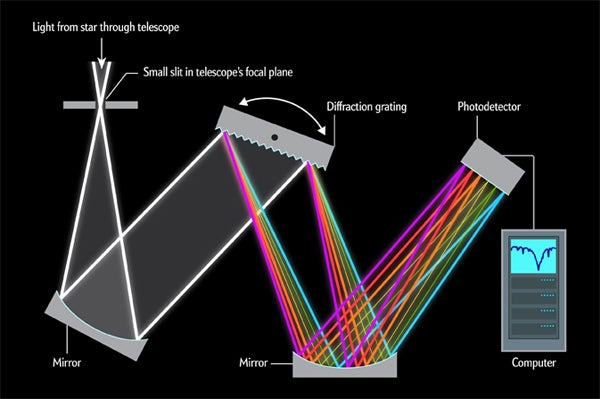
    • A spectrograph is an instrument that splits light into its component wavelengths.
    • Scientists then measure the properties of light over a specific portion of the spectrum and draw conclusions on what is responsible for the trends they observe.

    Why need HPF?

    • Kepler’s observations alone were not enough to confirm a planet. It was possible that a close stellar companion was responsible for the dip in the star’s light.
    • Precision spectroscopic observations from HPF ruled out this possibility.
    • Shooting a high-power laser into the air, researchers generated a “laser guide star”, and subsequent observations found no evidence of blending of light or other stellar companions.
    • Finally, using HPF, an analysis of a set of radial velocities helped provide estimates for the planet’s mass.
  • Worldwide Educating for the Future Index (WEFFI) 2019


    India has jumped five ranks in the Worldwide Educating for the Future Index (WEFFI) 2019.

    About WEFFI

    • The report is published by The Economist Intelligence Unit. The report and index were commissioned by the Yidan Prize Foundation.
    • The index ranks countries based on their abilities to equip students with skill-based education.
    • The report analyses the education system from the perspective of skill-based education “in areas such as critical thinking, problem-solving, leadership, collaboration, creativity and entrepreneurship, as well as digital and technical skills.”

    Global scenario

    • Among the world’s largest economies, the US, UK, France and Russia all fell back in the index, while China, India and Indonesia took steps forward.
    • Finland was at the apex of the index, with strengths across each category followed by Sweden.

    India’s performance

    • India ranked 35th on the overall index in 2019 with a total score of 53, based on three categories – policy environment, teaching environment and overall socio-economic environment.
    • India scored 56.3 in policy environment falling from a 61.5 score in 2018.
    • India’s score of 52.2 in the teaching environment category and 50.1 in the socio-economic environment category increased significantly from 32.2 and 33.3 in 2018 respectively.
    • Earlier, India ranked 40th with an overall score of 41.2 across categories in 2018.

    What made India progress?

    • The report attributed India’s growth to the new education policy introduced by the government.
    • India’s Finance Minister Nirmala Sitharaman, in the Union Budget 2020, had highlighted a
    • The New Education Policy announced in this year budget under ‘Aspirational India’ will focus on “greater inflow of finance to attract talented teachers, innovate and build better labs.
    • The policy will focus further on skill-based education.

    Various shortcomings highlighted

    • The 2018 WEFFI report had highlighted the shortcomings in India’s education system emphasizing upon its inability to utilise the opportunity of internationalizing its higher education system.
    • A decentralized education system is another shortcoming of India’s education policy according to the 2019 report.
    • Well-intentioned policy goals relating to future skills development often do not get filtered downward, a hazard in economies such as the US and India that have large, decentralized education systems, the report said.
  • Tilhan Mission

    The government will launch Tilhan Mission to make the country self-reliant in oilseed production.

    Why such mission?

    • India is the fourth largest vegetable oil economy in the world after the USA, China and Brazil.
    • Today, the oilseeds account for 13% of the cropped area in the country.
    • Still, India is the largest importer of palm oil in the world.

    Oilseed production in India

    • Total Oilseeds production in the country during 2019-20 is estimated at 34.19 million tonnes which is higher by 2.67 million tonnes than the production of 31.52 million tonnes during 2018-19.
    • Further, the production of oilseeds during 2019-20 is higher by 4.54 million tonnes than the average oilseeds production.
  • [Burning Issue] Genome India Project

    The Union Govt. has given clearance to an ambitious gene-mapping project, estimated to be worth Rs 238 crore. The project is said to be among the most significant of its kind in the world because of its scale and the diversity it would bring to genetic studies.


    Genome India Project

    • The Genome India Project has been described by those involved as the “first scratching of the surface of the vast genetic diversity of India”.
    • It involves over 20 scientists from institutions including the Indian Institute of Science (IISc) in Bengaluru and a few IITs.
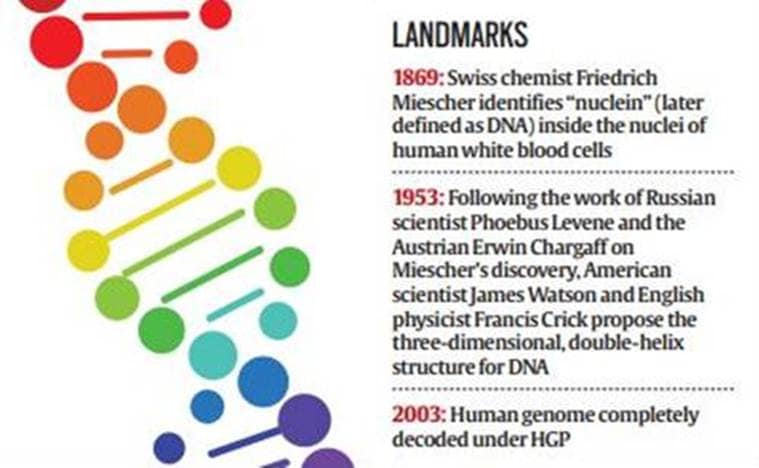
    • It is inspired by the Human Genome Project (HGP 1990-2003) an international programme that led to the decoding of the entire human genome.

    About Human Genome Project

    • One of the most comprehensive genome mapping projects in the world is the Human Genome Project (HGP), which began in 1990 and reached completion in 2003.
    • The international project, which was coordinated by the National Institutes of Health and the US Department of Energy, was undertaken with the aim of sequencing the human genome and identifying the genes that contain it.
    • The project was able to identify the locations of many human genes and provide information about their structure and organisation.

    What is a Genome?
    • Every organism’s genetic code is contained in its Deoxyribose Nucleic Acid (DNA), the building blocks of life.
    • The discovery that DNA is structured as a “double helix” by James Watson and Francis Crick in 1953, started the quest for understanding how genes dictate life, its traits, and what causes diseases.
    • A genome is all the genetic matter in an organism. It is defined as “an organism’s complete set of DNA, including all of its genes.
    • Each genome contains all of the information needed to build and maintain that organism.
    • In humans, a copy of the entire genome contains more than 3 billion DNA base pairs.
    • Each pair consists of 23 pairs of chromosomes for a total of 46 chromosomes, which means that for 23 pairs of chromosomes in each cell, there are roughly 20,500 genes located on them.

    What does genome-mapping tell us?

    • Some of the genes are lined up in a row on each chromosome, while others are lined up quite close to one another and this arrangement might affect the way they are inherited.
    • For example, if the genes are placed sufficiently close together, there is a probability that they get inherited as a pair.
    • Genome mapping, therefore, essentially means figuring out the location of a specific gene on a particular region of the chromosome and also determining the location of and relative distances between other genes on that chromosome.

    What is the significance of GIP?

    • HGP has a major diversity problem as most genomes (over 95%) mapped under HGP have been sourced from urban middle-class white people.
    • Thus, HGP should not really be seen as representative of the human genome.

    In this context, the GIP aims to vastly add to the available information on the human species and advance the cause, both because of the scale of the Indian population and the diversity here. This diversity can be depicted by:

    Horizontal Diversity: The Indian subcontinent has been the site of huge migrations, where the first migrations were from Africa. Also, there have been periodic migrations by various populations from all around the world, making this a very special case of almost all races and types intermingling genetically.

    Vertical Diversity: There has been endogamy or inter-marriage practised among distinct groups, resulting in some diseases passed on strictly within some groups and some other traits inherited by just some groups. Studying and understanding both diversities would provide the bedrock of personalised healthcare for a very large group of persons on the planet.

    Its applications

    • Significantly, genome mapping enables scientists to gather evidence if a disease transmitted from the parent to the child is linked to one or more genes.
    • Furthermore, mapping also helps in determining the particular chromosome which contains that gene and the location of that gene in the chromosome.
    • Genome maps have been used to find out genes that are responsible for relatively rare, single-gene inherited disorders such as cystic fibrosis and Duchene muscular dystrophy.
    • Genetic maps may also point out scientists to the genes that play a role in more common disorders and diseases such as asthma, cancer and heart disease among others.
    • Researchers from several international institutions mapped the handful of genes whose mutation causes several different kinds of cancers.

    Challenges involved

    Fear of Scientific Racism

    • The question of heredity and racial purity has obsessed civilisations, and more scientific studies of genes and classifying them could reinforce stereotypes and allow for politics and history to acquire a racial twist.
    • The work on cranial volume measurements of the physician Samuel Morton (regarded in America as the father of scientific racism) justified slavery before the US Civil War.
    • In India, a nation divided by identity politics, scientific work in mapping genetic groups may further strengthen the divisions in the society based on the prevalent notion of race.

    Data & Storage

    • After collection of the sample, the anonymity of the data and questions of its possible use and misuse would need to be addressed.
    • India is yet to pass a Data Privacy Bill with adequate safeguards and launching the GIP before the privacy question is settled could give rise to another set of problems.

    Medical Ethics

    • In a project that aims only to create a database of genetic information poses a risk of doctors privately performing gene modification.
    • Selective breeding or Eugenics has always been controversial for long, as recently a Shenzhen-based scientist, created the world’s first gene-edited babies, has been sentenced to three years in prison.

    A word of Caution

    • Mapping the genetic diversity of India would further scientific understanding of evolution both from a biological (intra- and inter-species interaction, species-ecology interactions, etc) and sociological (migration patterns, rituals, etc) point of view.
    • Caution must be exercised that the effort to map India’s genetic diversity doesn’t devolve into the politically-motivated and discriminatory effort to root indogeneity in misguided notions of biological essentialism.


    Way Forward

    • The budget for FY21 spoke of expanding genome mapping to agriculture—a greater understanding of the genetic basis for susceptibility to diseases like blights, rusts, etc, would aid genetic engineering efforts to reduce chemical dependence in agriculture.
    • Nor would healthcare be the only field to which the benefits of the project would accrue.
    • To gain fully from the genomics revolution, India needs to collect information about the genetics of its population and train manpower capable of interpreting it.
    • The information that is needed has to come from a large and sustained collection of data — fully sequenced individual genomes along with medical histories for the individuals who volunteer for this effort.
    • Genome India Project provides an opportunity for India to make leap and bounds progress in the fields of biotechnology, agriculture and healthcare.
    • Thus, it should be carried with maximum speed and maximum caution.


    References

    https://www.civilsdaily.com/news/genome-india-project/

    https://www.financialexpress.com/opinion/genome-india-project-a-boon-for-personalised-medicine-that-mustnt-be-misused-for-origin-tracing/1866186/

    https://indianexpress.com/article/opinion/editorials/genome-india-project-india-genetic-diversity-6259645/

  • International Mother Language Day


    Friday, February 21 was International Mother Language Day.

    International Mother Language Day

    • It has been observed since 1999 to promote “linguistic and cultural diversity and multilingualism”, according to the UN.
    • Of the world’s 6,000 languages, 43% are estimated as endangered, according to the UN.
    • On the other hand, just 10 languages account for as many as 4.8 billion speakers — over 60% of the world population.
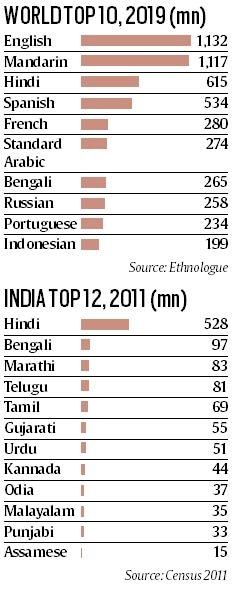
    • Globally, English remains the most widely spoken language with 1.13 billion speakers in 2019, followed by Mandarin with 1.17 billion, according to the online database Ethnologue.

    Why February 21?

    • UNESCO declared International Mother Language Day in 1999, to commemorate a 1952 protest against West Pakistan’s imposition of Urdu as the official language of East Pakistan (present-day Bangladesh).
    • According to a report, police opened fire on demonstrating Dhaka University students and “some people were killed”.
    • When thousands thronged the university the next day, police fired again, killing more people.
    • In Bangladesh, since 1953, February 21 is observed as Ekushe Day, after the Bengali word for twenty-one.
    • According to the South Asia Democratic Forum, five among those killed were recognised as “language martyrs — Abul Barkat, Abdul Jabbar, Rafiquddin Ahmad, Abdus Salman and Shafiur Rahman.

    Data on Indian languages

    • Hindi is third with 615 million speakers while Bengali is seventh with 265 million.
    • In India, Hindi is the most spoken language with over 528 million speakers in 2011, as per the Census.
    • Bengali had 97.2 million speakers in 2011, followed by Marathi (83 million), while other languages with over 50 million speakers are Telugu (81 million), Tamil (69 million), Gujarati (55.5 million) and Urdu (50.8 million).
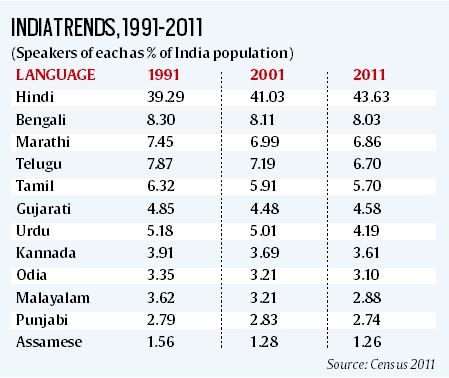
    • Percentage trends from 1991 to 2011 underline the growth of the most widely spoken language, Hindi, which was spoken by 39.29% of the Indian population in 1991, and whose share grew to 43.63% in 2011.
    • For other languages in India’s top 12, the 2011 percentage share has fallen when compared to that in 1991.
  • Gearing up to fight the next big viral outbreak

    Context

    India is ill-prepared to deal with the new strain of coronavirus (SARS-CoV-2) that is causing worldwide panic. Policymakers must take forceful action to prevent the spread of the new virus and heed the urgent warnings of global public health professionals about new pathogens.

    No country is adequately prepared

    • Finding of the Global Health Security Index: The World Health Organization (WHO)’s Global Health Security Index finds that no country is adequately prepared.
    • It assesses 195 countries across six categories
      • Prevention
      • Early detection.
      • Rapid response.
      • Health system quality.
      • Standards.
      • Risk environment.
    • India’s dismal rank: India is ranked 57th.
      • That the country scores around the global average is no comfort, because the global average is a low 40.2 out of 100, and India’s score is 46.5. (For the record, the U.S. is ranked first and China 51st).

    Four-point health agenda

    • The prospect of new outbreaks puts four items on the health agenda in the spotlight that require both immediate and longer-term action:
      • Early detection and prevention.
      • Better collaboration across health service providers.
      • More investment in health systems; outcomes, and education; and-
      • Better care of the environment and biodiversity, which directly affects people’s health safety.

    Thailand’s outstanding example

    • Sixth rank on Health Security Index: That Thailand is ranked sixth in the Health Security Index- the highest ranking for an Asian country.
      • The rank says a great deal about the country’s track record in disease prevention, early detection, and rapid response linked to investments in its public health system.
      • When the deadly Middle East Respiratory Syndrome (MERS), also caused by a coronavirus, broke out in 2015, Thailand quickly notified the WHO of its first confirmed case and acted transparently to arrest the spread.
      • This is in stark contrast to delayed notification by China’s officials of the recent outbreak.

    India’s record in past outbreaks

    • Underscoring inadequacies: The influenza A (H1N1) outbreaks since 2009 in Rajasthan, Maharashtra, Tamil Nadu and other States have acutely underscored the need for better detection, awareness of symptoms and quarantining.
    • Protocols for surveillance: Clearer protocols for all three types of surveillance are needed in all States.
      • And these protocols need to be communicated to health professionals at all levels and the public in local languages.

    Conducting stress tests on health system

    • Countries need to do the stress tests for their preparedness to deal with health emergencies.
    • Exposing the crucial gap: Each State in India should do this to expose crucial gaps in areas such as-
      • Adequacy and supply of diagnostic equipment.
      • Health facilities.
      • Hygienic practices, and-
      • Prevention and treatment protocols.
    • Ensuring strong supply chains: Queues of desperate shoppers trying to buy hand sanitizer, face masks and other protective products in Hong Kong and China highlight the need for strong supply chains for products that people need during health emergencies.

    The partnership between countries and with the private sector

    • Partnership to ensure supply chains: Partnerships between private and public sectors, and between countries– that can sustain supply chains and bolster the medical capacity of countries struggling to cope.
      • Collaborative approach in Asia: In Asia, collaborative approaches exist, for example, for combating tuberculosis, AIDS and malaria.
    • Need to do more: More is needed to tackle health emergencies on the scale of recent outbreak, particularly on funding.
      • Emergency loan option: There could be an emergency loan facility, with a “deferred drawdown option” as the World Bank uses for disasters, natural or health.
      • The loan option can help augment own resources in times of a public health catastrophe.
    • Investment is the best defence: But the best defence of all is to invest more, and more efficiently, in health and education to prepare populations and strengthen health services.
      • Low health expenditure: Health expenditure by the government in India is less than 5% of Gross Domestic Product, which is low for a middle-income country.
      • Spending at that level limits, among other things, the availability of health professionals during crises.
      • According to WHO, India has only 80 doctors per 1,00,000 people.

    Investment in health, education

    • Kerala’s experience: Kerala’s experience in 2018 with the deadly Nipah virus showed the value of investing in education and health over the long term.
    • What measures were taken in Kerala? The availability of equipment for-
      • Quick diagnosis.
      • Measures to prevent diseases from spreading and-
      • Public information campaigns- all helped to keep the mortality rate from the Nipah virus relatively low.
      • Having capable public health professionals helped in the information exchange with WHO and other international bodies.

    The relation between environmental degradation and health

    • A new dimension of new pathogens: One of the many dimensions of new pathogens that is getting increased attention is the link with environmental degradation.
    • The relation between pollution and viral respiratory infection: The interaction between particulate matter from pollution and viral respiratory tract infections, especially in the young and the elderly, as well as the malnourished, has been increasingly noted in epidemiological studies.
      • Many of the highest air pollution readings are being recorded in Indian cities.
    • Most vulnerable country: An HSBC study of 67 countries ranks India as the most climate-vulnerable one because of the impact of severe temperature increases and declines in rainfalls.
      • Reasons for vulnerability: The effects of such occurrences are magnified by the high density of the country’s population, the sheer number of people in harm’s way, and the high incidence of poverty.
      • Research is increasingly connecting global warming to vector-borne viruses.

    Conclusion

    The dangerous trend for disease spillovers from animals to humans can be traced to increased human encroachment on wildlife territory; land-use changes that increase the rate of human-wildlife and wildlife-livestock interactions; and climate change. Protecting the precious biodiversity should be a priority.


  • [pib] International protection for Great Indian Bustard, Bengal Florican and Asian Elephant

    India’s proposal to include Great Indian Bustard, Asian Elephant and Bengal Florican in Appendix I of UN Convention on migratory species was unanimously accepted at the undergoing CMS CoP in Gandhinagar.

    Great Indian Bustard

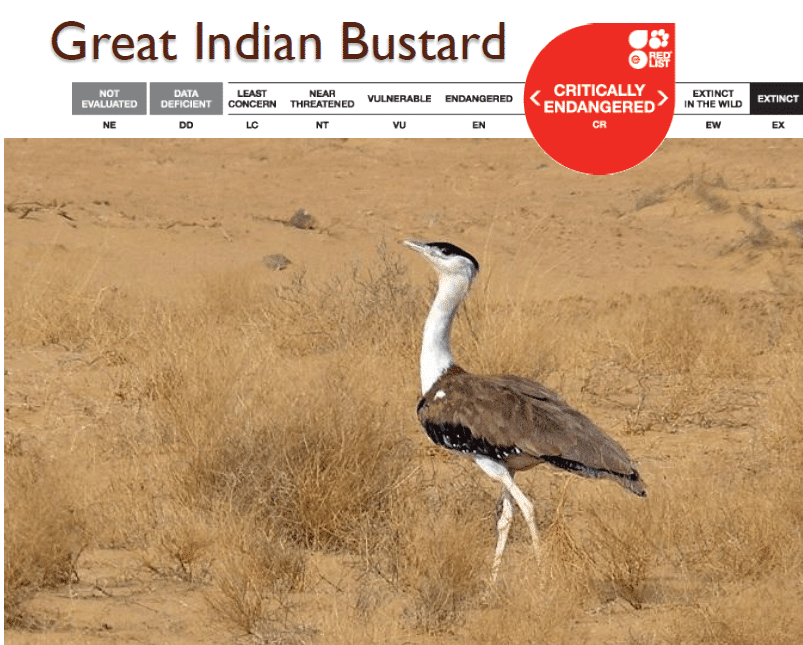
    • The Great Indian Bustard, an iconic, critically endangered and conservation dependent species, exhibits transboundary movements, and its migration exposes it to threats such as hunting in the boundary area of Pakistan-India and power-line collisions in India.
    • Inclusion of the species in Appendix I of CMS will aide in transboundary conservation efforts facilitated by International conservation bodies and existing international laws and agreement.

    Asian Elephant

    • The Government of India has declared Indian elephant as National Heritage Animal. It is also provided with the highest degree of legal protection by listing it in Schedule I of the Wildlife (Protection) Act, 1972.
    • The Great Indian Bustard is a Critically Endangered species with a small population of about 100–150 individuals that is largely restricted to Thar desert in Rajasthan, India.
    • The species has disappeared from 90% of this range; their population has reduced by 90% within 50 years (six generations), and their threats are expected to increase in future.

    Bengal Florican

    • The Bengal Florican an iconic, critically endangered species of topmost conservation priority, exhibits transboundary movements, and its migration exposes it to threats such as land-use changes, collision with power transmission line at the boundary area of India-Nepal and probable power-line collisions.
    • Inclusion of the species in Appendix I of CMS will aid in transboundary conservation efforts facilitated by International conservation bodies and existing international laws and agreement.
    • It populations has declined as a result of habitat loss, hunting and the species no longer breeds outside Protected Areas in the Indian subcontinent, except in a few areas of Assam.
  • Buddah Nullah

    The Punjab govt. has approved ₹650 crore in the first phase for rejuvenation of the highly polluting Buddah Nullah — a seasonal tributary of Sutlej in Ludhiana.

    Buddah Nullah

    • Buddah Nullah or Budha Nala is a seasonal water stream that runs through the Malwa region of Punjab.
    • It passes through highly populated Ludhiana and drains into Sutlej River, a tributary of the Indus river.
    • It has also become a major source of pollution in the region as well the main Sutlej river, as it gets polluted after entering the highly populated and industrialized Ludhiana city, turning it into an open drain.
    • Also, since a large area in south-western Punjab solely depend on the canal water for irrigation, and water from Buddha Nullah enters various canals after Harike waterworks.

    Why such move?

    • The pollution in the Buddah Nullah is a major threat to public health and environment and the main sources of pollution in the nullah are direct flow of pollutants by industries and dairies.
    • Also, treated effluents from existing STPs, based on UASB technology, does not meet the required quality and overflow from sewer lines add to the problem.
    • The NGT has already directed the government to take proactive steps to immediately address the problem.
  • Trading with America

    Context

    Trump has made India’s trade headache more acute. But he has also opened up opportunities.

    Political polarisation in both countries

    • Impeachment attempt: The Democrats in the US have struggled to oust Trump from the White House and rarely find anything they can agree with their President on.
    • The deeper political divide in India: While ousting Narendra Modi through a legal process of impeachment is not an option in India, the political divide is even deeper.
    • No consensus on foreign policy
      • Under Trump, consensus on foreign policy in Washington has broken down.
      • In Delhi, the Opposition has never been willing to acknowledge the diplomatic successes of the government.
      • But the usually bipartisan support for foreign policy in the strategic community has eroded.
      • Many leading voices of the establishment who have a long and distinguished service have become major critics of foreign policy.

    Comparison of India’s trade with the US and China

    • Trade with the US: In 1995, total two-way trade, including goods and services, between India and the US was $11 billion.
      • In 2018, it crossed $140 billion.
      • It is reported to be around $150 billion in 2019.
      • In trade with the US, India enjoys a surplus of nearly $23 billion.
      • A 14-fold increase in trade turnover in 25 years is certainly not something to sneer at.
      • Can India and the US do better on trade? Yes, of course.
      • Only a few years ago, the two sides were looking at an annual trade target of $500 billion. That looks rather ambitious amidst the current disputes
    • Trade with China: India’s China trade too has risen, even more rapidly.
      • From a couple of hundred million dollars in the mid-1990s to nearly $90 billion in 2019.
      • India has a deficit of nearly $57 billion with China.

    Trade disputes between India-US

    • Trade has long been a contentious issue between Delhi and Washington.
    • There had been enduring tension since the late 1980s between the US demand for-
      • Greater market access.
      • Intellectual property protection.
      • And a host of other demands and India’s own cautious approach to economic liberalisation.
    • Rise in pressure under Trump administration: All recent US administrations have applied continuous pressure on India for trade agreements.
      • The pressure has significantly risen under President Trump.
    • Trade dispute at the centre of the relationship: If his predecessors were willing to cut some slack for India by citing larger political and strategic considerations in the bilateral ties, Trump has put trade disputes at the front and centre of the relationship.
      • Officials in the Department of Commerce and the US Trade Representative’s office have adopted extremely aggressive tactics in the negotiation with India.
    • Result of a radical reorientation of US trade policy: Trump has undertaken a radical reorientation of US trade policy.
      • For Trump, this is a matter of long-standing ideological conviction as well as a political convenience.
      • He has bet that the anti-free-trade White working classes in the American rust belt are the key to his re-election.
    • No option but to deal with it: Given America’s pole position in the global trading system, you have no option but to deal with it.
      • Trump is getting away with his demand for the restructuring of trade relations with key economic partners.
      • He has renegotiated the NAFTA with neighbours Canada and Mexico and has compelled China to start reducing the massive trade deficit with the US.
    • The difference in India and China’s response to the US: In response to Trump’s pressure, Xi reaffirmed his commitment to economic globalisation and domestic liberalisation and wooed American investors with even greater vigour than before.
      • India embracing protectionism: India appears to be sending the opposite signal — of a definitive drift towards protectionism. India’s trade troubles are certainly not limited to the engagement with the US.

    Problem with India’s trade policies

    • India walking away from RCEP: Delhi walked away at the very last minute from signing the RCEP agreement last year to deep disappointment among its partners including the ASEAN, Australia, Japan and New Zealand.
      • The trade deficit with China: One of the main arguments cited by India was the massive trade deficit with China and the potential danger of it widening further under RCEP.
    • Failure in negotiations with the EU: The European Union is reluctant so far to restart trade negotiations that ended in great frustration for Brussels some years ago.
    • No deal with Australia and New Zealand: Australia and New Zealand have given up.
    • Neighbours complaint: India’s immediate neighbours complain that India’s rhetoric on connectivity and regionalism is matched by the multiple non-tariff barriers that continue to constrain commerce across the South Asian frontiers.
    • Why so many deals are pending? It is certainly probable, statistically, one in a million, that the fault lies, always, with India’s partners. But one would think there might be a real problem with Delhi’s own trade policies.

    Conclusion

    • New opportunity: Trump has certainly made India’s trade headache more acute. But he has also opened up opportunities.
      • His trade war on China has put pressure on the global supply chains centred around China.
      • India not the beneficiary of the US-China trade war: Many companies are moving their production out of China, but only a few are turning towards India.
      • While Delhi has talked the talk on taking advantage of the US-China trade war, it is yet to get its act together.
    • No opposition against protectionism at home: What makes Delhi’s devaluation of trade as a key instrument of economic growth potentially irreversible is the fact that there is little domestic political opposition to it.
    • Time to take a hard look at trade policy: For now, though, India’s partnership with the US might not only survive the current trade tensions but advance during Trump’s visit.
      • There is so much happening elsewhere in the relationship — especially in the defence and security domain.
      • But the time has come for Delhi to take a hard look at its current trade policy that threatens to undermine India’s regional and international prospects.


  • Assisted Reproductive Technology Regulation Bill, 2020


    The Union Cabinet has approved the Assisted Reproductive Technology Regulation Bill, 2020 to monitor medical procedures used to assist people to achieve pregnancy.

    What is ART?

    • Assisted reproductive technology (ART) is used to treat infertility.
    • Assisted reproductive technology includes medical procedures used primarily to address infertility.
    • This subject involves procedures such as in vitro fertilization, intracytoplasmic sperm injection, cryopreservation of gametes or embryos, and/or the use of fertility medication.

    Highlights of the bill

    • National Board: The Bill provides for a national Board which will lay down a code of conduct to be observed by those operating clinics.
    • Standardization: It will also formulate minimum standards for laboratory and diagnostic equipment and practices to be followed by human resources employed by clinics and banks.
    • National registry: Under the proposed law, a national registry and registration authority will maintain a database to assist the national Board to perform its functions.
    • Confidentiality clause: The Bill will also ensure confidentiality of intending couples and protect the rights of the child.

    Strict punishment:

    • India has one of the highest growths in the number of ART centres and ART cycles performed every year.
    • India has become one of the major centres of this global fertility industry, with reproductive medical tourism becoming a significant activity.
    • This has also introduced a plethora of legal, ethical and social issues; yet, there is no standardisation of protocols and reporting is still very inadequate.
    • The Bill thus proposes stringent punishment for those who practise sex selection; indulge in sale of human embryos or gametes and those who operate rackets.

    Other such Bills

    Taken together, theses proposed legislations create an environment of safeguards for women’s reproductive rights, addressing changing social contexts and technological advances.

    Surrogacy Regulation Bill 2020

    • The Surrogacy (Regulation) Bill, 2020 proposes to regulate surrogacy in India by establishing National Board at the central level and State Boards and Appropriate Authorities in the States and Union Territories.
    • The major benefit of the Act would be that it will regulate the surrogacy services in the country.
    • While commercial surrogacy will be prohibited including sale and purchase of human embryos and gametes, ethical surrogacy to the Indian Married couple, Indian Origin Married Couple and Indian Single Woman (only widow or Divorcee) will be allowed on fulfillment of certain conditions.
    • As such, it will control the unethical practices in surrogacy, prevent commercialization of surrogacy and will prohibit potential exploitation of surrogate mothers and children born through surrogacy.

    Medical Termination Pregnancy Amendment Bill 2020

    • The Medical Termination of Pregnancy Act, 1971 (34 of 1971) was enacted to provide for the termination of certain pregnancies by registered medical practitioners and for matters connected therewith or incidental thereto.
    • The said Act recognised the importance of safe, affordable, accessible abortion services to women who need to terminate pregnancy under certain specified conditions.
    • Besides this, several Writ Petitions have been filed before the Supreme Court and various High Courts seeking permission for aborting pregnancies at gestational age beyond the present permissible limit on the grounds of foetal abnormalities or pregnancies due to sexual violence faced by women.