💥Join UPSC 2027,2028 Mentorship (August Batch) + XFactor Notes & Microthemes PDF

Distribution: weekly

  • [pib] ‘1000 Springs’ Initiative


    Union Tribal Affairs Ministry has launched “1000 Spring Initiatives” and an online portal on GIS-based Spring Atlas with hydrological and chemical properties of the Springs on the occasion.

    ‘1000 Springs’ Initiative

    • The ‘1000 Springs Initiative’ aims at improving access to safe and adequate water for the tribal communities living in a difficult and inaccessible part of rural areas in the country.
    • It is an integrated solution around natural springs.
    • It includes the provision of infrastructure for piped water supply for drinking; provision of water for irrigation; community-led total sanitation initiatives; and provision for water for backyard nutrition gardens, generating sustainable livelihood opportunities for the tribal people.
    • It will help in harnessing the potential of perennial springs’ water to address the natural scarcity of water in tribal areas.

    Spring Atlas

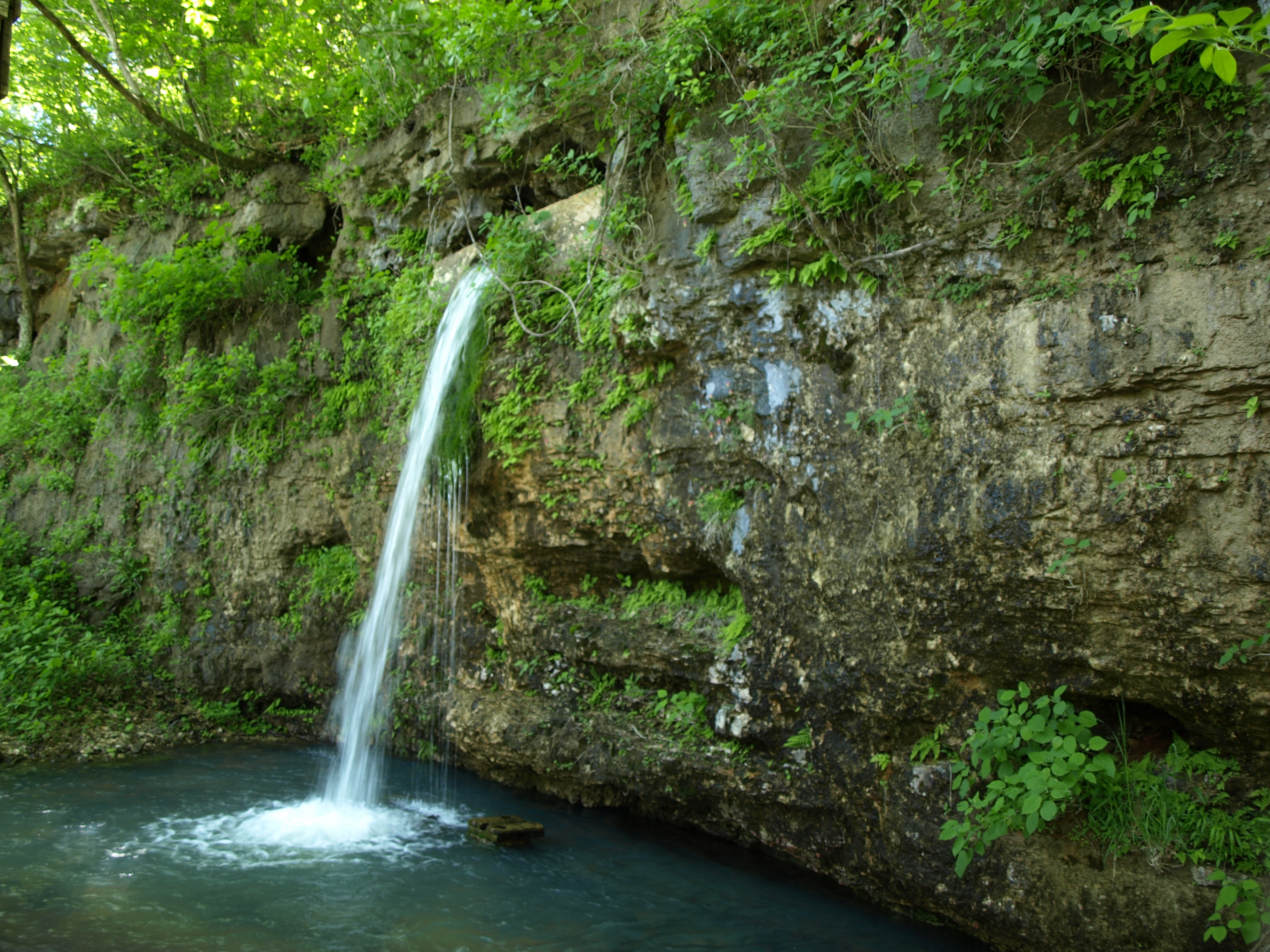
    • Springs are natural sources of groundwater discharge and have been used extensively in the mountainous regions across the world, including India.
    • However, in the central and eastern Indian belt with more than 75% tribal population, it remains largely unrecognized and under-utilized.
    • An online portal on GIS-based Spring Atlas has been developed to make these data easily accessible from an online platform.
    • Presently, data of more than 170 springs have been uploaded on the Spring Atlas.
  • Debating water quality

    Context

    The competitive politics of Delhi election has brought the issue of drinking water to centre stage.

    Controversy over BIS water status report

    • Politicising of the report: The controversy started with the release of the BIS report for 21 major Indian cities, in keeping with the objectives of the ‘Jal Jeevan Mission’.
      • The mission aims to provide safe piped water to all households by 2024.
      • The fact that drinking water in Delhi was ranked the most unsafe, as the samples failed in 19 out of 28 parameters, was challenged by the Government of Delhi and the Delhi Jal Board (DJB).
    • Compilation of information on the existing status: The study is scheduled to cover all districts in the country within a year. Supply of potable water obviously requires first compilation of information on the existing status
    • Water as an urgent concern: The fact that water should be treated as an urgent concern for public health and the ecosystem of the country cannot be denied.
    • Imperceptible threat: The threats to human health due to poor water quality, except when they appear as an epidemic, are largely imperceptible.
      • This generally subjects the population to subtle health problems without its knowledge or consent.

    Pollution and water crisis in India

    • Pollution contributing to water crisis: India is on the throes of a severe water crisis, not only because of a gradual reduction in per capita availability of water due to a rising population but also because of rising and unchecked pollution in the country’s rivers and water bodies.
      • It is a fact which is mostly overlooked in the deliberations on water resources management.
    • Only 30% sewage treatment capacity in major cities: As per published estimates of the Central Pollution Control Board, the country has a treatment capacity of only about 30% of sewage generated in the major cities.
      • Not to talk of other urban and rural areas where the sewage finds its way to local water bodies or rivers without treatment.

    Impending water stress in the country

    • NITI Aayog report: A 2018 Report of the NITI Aayog has observed that currently, 600 million Indians face high to extreme water stress.
      • The report also states that about two lakh people die every year due to inadequate access to safe water.
    • Demand twice the supply by 2030: The crisis is only going to get worse.
      • By 2030, the country’s water demand is projected to be twice the available supply, implying severe water scarcity for hundreds of millions of people.
    • High methane in Yamuna water in Delhi: For the water coming from the Yamuna released from Haryana, the DJB has to often stop the supply for a few days if the concentration of methane goes up beyond a certain level.
      • This is because the tri-chloromethane that may be produced during the disinfection process is highly carcinogenic.
      • The effect may surface on human health not immediately but over a period of time.

    The capital’s high pollutant load and need for improvement in governance

    • Contributing 50% pollutant: Delhi, which constitutes less than 1% of the total catchment of the Yamuna, contributes more than 50% of total pollutant load in the river.
      • Delhi has 7,000 km of sewer line as on date, against a requirement of 24,000 km.
      • The 17 sewage treatment plants being operated by the DJB are able to take care of not more than 30% of sewage treatment.
    • There is no sewerage system at all for over 45% of the population in unauthorised and even regularised colonies and rural areas.
    • As of now, there are 18 major drains carrying sewage, garbage and industrial effluents into the Yamuna.
    • Solid waste dumping in Yamuna: It is not only the untreated sewage water and industrial effluents, but also the solid wastes and construction material discharged by individuals, companies and municipal bodies that have caused the suffocation of the Yamuna.
      • Also, floodplains have been encroached upon by settlements.
    • Challenge of supplying quality water: Ensuring the supply of quality drinking water is not only expensive, but it also needs improvement in governance.
      • It needs technical knowledge on measurement and regulation of water quality.
      • It is not the fault of the DJB or the Delhi government alone that they have not been able to ensure a 100% supply of quality water to the citizens of Delhi.
      • Given the constraints they face, especially those concerning the water resources management and laws in the country.

    Conclusion

    The Jal Jeevan Mission, even if it has not been so far structured, conceptualised and funded adequately, has begun the important work of gathering information on the scale and scope of the problem and making it available in an open and transparent manner. The best outcome is that the competitive politics of the Delhi election has ensured a political debate on water quality.


  • Explained: Assam-Mizoram Boundary Dispute


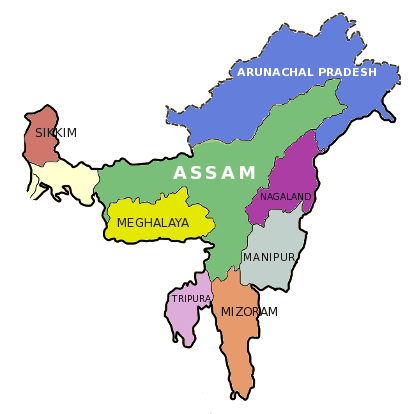
    Assam is at the centre of a fresh inter-State border row in the northeastern region. The Mizoram government has sought the revision of the boundary with Assam, based on the Bengal Eastern Frontier Regulation (BEFR) of 1873 and the Inner Line of the Lushai Hills Notification of 1993.

    Background

    • Since 1962 most of the state borders of states carved out of Assam were divided following the myopic vision of the Central government.
    • On ground these borders still do not run in sync with the tribal territories and identities, creating repetitive conflicts in the region and disturbing its peace.
    • Assam finds itself at the center of all the conflicts since most of the neighboring states were carved out of its territory since independence.
    • This was done to consolidate the Indian Union at the time by catering to the aspirations of the local tribes and including them in the mainstream by giving them independent statehoods.

    What is the dispute?

    • Mizoram shares a 123-km border with southern Assam and has been claiming a 509-square mile stretch “occupied” by the neighbouring State.
    • Mizoram used to be the Lushai Hills district of Assam before being made a Union Territory in 1972 and a State in 1987.
    • Both States have been disputing an extensive stretch of this boundary.

    About Bengal Eastern Frontier Regulation

    • The Inner Line Regulations, commonly referred to as the Inner Line Permit system (ILP), first gained legal effect through the Bengal Eastern Frontier Regulation, 1873.
    • At present the BEFR continues to apply, but only in present-day Arunachal Pradesh, Nagaland and Mizoram.
    • It had been lifted in the whole of Assam, as well as the entirety of present-day Meghalaya.
    • The BEFR allows Arunachal Pradesh, Manipur, Mizoram and Nagaland not to let non-resident Indians in without an inner-line permit for a temporary stay.

    Present status of ILP

    • The Foreigners (Protected Areas) Order, 1958 is the modern embodiment of the ILP.
    • This Order was passed in furtherance of the Foreigners Act, 1946.
    • The Order defined the ‘inner line’ throughout present-day India starting from Jammu and Kashmir and ending at Mizoram.
    • This inner line is different from the one envisioned in the Bengal Frontier Regulations.
    • This line represents the furthest point up to the international border where a foreigner can visit on the strength of a visa alone.
  • ‘MH-60R and AH-64E Apache’ Choppers


    During his speech in Ahmedabad, Mr. Trump announced: deals to sell over $3 billion state-of-the-art military helicopters and other equipment to the Indian Armed Forces.

    MH-60 Romeo helicopters

    • The incoming 24 multirole MH-60 Romeo helicopters are expected to boost the Indian Navy’s efforts to expand its role in the Indian Ocean Region.
    • The MH-60 Romeo Seahawk, made by defence giant Lockheed Martin, is one of the most advanced naval helicopters in the world, used by the US Navy among others.
    • It is the most capable and mature Anti-Submarine Warfare (ASW) Anti-Surface Warfare (ASuW) multi-mission helicopter available in the world today, the makers say.
    • MH-60 Romeo Seahawks have equipped with anti-submarine Mark 54 torpedoes and Hellfire air-to-surface missiles, along with precision-kill rockets.
    • It also has an advanced system for passive detection, location, and identification of emitters. It can not only track and hunt ships but is also used by the US Navy as an anti-submarine weapon.

    Apache helicopters

    • Indian Army will receive six more Apache helicopters in addition to the 22.
    • The Apaches can operate at high altitudes and will be deployed along the Pakistan border. The Army is likely to get the helicopters armed with Stinger air-to-air missiles and Hellfire Longbow air-to-ground missiles.
    • Among the Apache’s modern capabilities are the ability to shoot fire-and-forget anti-tank missiles, air-to-air missiles, rockets, and other munitions.
    • It also has modern electronic warfare capabilities to provide versatility in network-centric aerial warfare.
    • The choppers are all-weather capable and have high agility and survivability against battle damage.
    • They can be easily maintained in field conditions as well as during operations in the tropical and desert regions.
  • National Technical Textiles Mission

    The Cabinet Committee on Economic Affairs has given its approval to set up a National Technical Textiles Mission with a view to position the country as a global leader in Technical Textiles.

    What are Technical Textiles?

    • Technical textile is a textile product manufactured for non-aesthetic purposes, where the function is primary criterion.
    • They are functional fabrics that have applications across various industries including automobiles, civil engineering and construction, agriculture, healthcare, industrial safety, personal protection etc.
    • Technical Textiles is a high technology sunrise sector which is steadily gaining ground in. India.

    National Technical Textiles Mission

    • The Mission would have a four year implementation period from FY 2020-21 to 2023-24.
    • It will move into sunset phase after four years period.
    • A Mission Directorate in the Min. of Textiles headed by an eminent expert in the related field will be made operational.
    • The Directorate will not have any permanent employment and there will be no creation of building infrastructure for the Mission purpose.

    Components of the mission

    Component-I:  Promoting both (i) fundamental research at fibre level and (ii) application-based research in geo-textiles, agro-textiles, medical textiles, mobile textiles and sports textiles and development of bio­degradable technical textiles.

    Component-II: Promotion and Market Development.

    Component-III: Export promotion of technical textiles and ensuring 10% average growth in exports per year upto 2023-24. An Export Promotion Council for Technical Textiles will be set up for this purpose.

    Component-IV: Promoting technical education at higher engineering and technology levels related to technical textiles.

  • [pib] Exercise Indradhanush

    The Indian Air Force (IAF) and Royal Air Force (RAF) jointly commenced the fifth edition of Exercise Indradhanush at Air Force Station Hindan.

    Ex. Indradhanush

    • It is a joint air force exercise conducted by the Royal Air Force (RAF) of United Kingdom and the Indian Air Force (IAF) being held since 2006.
    • The exercise is tasked to enhance mutual operational understanding between the two air forces via close interaction.
    • The focus of this edition of the exercise is ‘Base Defence and Force Protection’.
    • This theme is of significance considering the recent threats to military establishments from terror elements.
  • Cop out in Delhi

    Context

    Political parties across the spectrum escape the blame for continuing to use the police as an instrument to further their political agenda.

    The backdrop of violence in protest against CAA in Delhi

    • The culmination of dithering by police: It was the culmination of weeks of dithering and selective action on the part of the Delhi Police in dealing with those agitating against the Citizenship Amendment Act (CAA).
    • No preventive action is taken: No preventive action appears to have been taken, and when the national capital was rocked by agitators in different areas the police appeared to have been caught by surprise.
    • Hesitation in acting against the rioters: There appeared to be hesitation on the part of the police in taking firm action against the rioters who continued to be on the rampage, destroying public and private property.
      • There was a disturbing scene of a rioter openly brandishing his firearm at a policeman.

    Disturbing patterns in the Police actions

    • Delhi Police- The extremes of action and inaction: The Delhi Police is the best-resourced police in the country.
      • It is looked upon as a model by state police forces across the country. Its response, in fact, shows a disturbing pattern.
      • There have been extremes of action and inaction.
      • Forcible entry: In Jamia Millia Islamia, the police is alleged to have entered the campus forcibly and roughed up students after their march against the CAA turned violent.
      • Inexplicable delay: In JNU, there was an inexplicable delay in responding to violence by a group of outsiders within the campus.
    • Bengal Police-Turning blind eye to rioters’vandalism: In West Bengal, with Mamata Banerjee leading the charge against the CAA, the message to the police was clear.
      • They turned Nelson’s eye to rioters’ vandalising government and private property; the Eastern Railways alone suffered a loss of Rs 72.19 crore.
    • Uttar Pradesh Police- Excesses committed during protests.
      • In UP, where over 20 people were killed, the Allahabad High Court has called for a detailed report on the alleged police excesses.
    • Karnataka Police- Over-zealousness.
      • In Karnataka, the High Court has blamed the Mangaluru police of “over-zealousness” in dealing with the anti-CAA protests.
    • Party bias in the Police actions: Police response invariably reflects the bias of the ruling party.
      • The partisan police response to situations, which were strikingly similar, has caused dismay and consternation among the people.
      • One must get to the root of the problem.

    Observations and the Supreme Court guidelines

    • National Police Commission observation: The National Police Commission recorded as far back as 1979 that “the present culture of the police system appears a continuation of what obtained under the British regime when the police functioned ruthlessly as an agent for sustaining the government in power”.
      • In such a situation, the Commission went on to say, “police find it difficult to play their lawful role and make their performance acceptable to the people at large”.
    • The Supreme Court directions: The Supreme Court issued a set of six directions in 2006 to state governments with a view to transforming the ethos and working philosophy of the police.
      • Setting up the State Security Commission: The SC’s most important direction was about setting up of a State Security Commission with a view to insulate the police from external pressures.
      • It is true that several states have enacted laws purportedly in compliance with the Supreme Court’s orders.
      • Recommendation not supported in letter and spirit: But these acts, as their critical examination reveals, violate the letter and spirit of the judicial directions. The old order continues for all practical purposes.
    • The Justice Dhingra Committee report on anti-Sikh riots: In its recently released report on the 1984 anti-Sikh riots, the report slammed the Union government and the Delhi Police.
      • It observed that a large number of crimes remained unpunished for the simple reason that there was “lack of interest shown by the police and by the authorities in handling these cases as per law or to proceed with the intention of punishing the culprits”.
      • The effort of the police and the administration “seems to have been to hush up the criminal cases concerning riots”.

    Way forward

    • Implement the recommendations of NPC: It is unfortunate that the NPC recommendations have not been acted upon even after the Supreme Court’s directions. No wonder, in the recent agitation in different states, the police have acted in the manner they did.
    • Interference of the political parties need to be reduced: The police are, no doubt, to blame for not being able to function in an objective and impartial manner. There is definitely a failure of leadership also. The political leadership need to ensure the autonomy of the police.
    • Role of media: The media cannot escape its responsibility for treating the police as a convenient punching bag from time to time and not taking up the cause of police reforms as aggressively as it should be doing.
    • Introspection by the Supreme Court: The Supreme Court would also need to introspect as to why the implementation of its directions has been so ineffective.
  • More psychological than an empowering voter option

    Context

    The recently-concluded Delhi Assembly elections were the 45th Assembly polls since the inception of the none of the above (NOTA) option in 2013. And Delhi, although mostly urban, is widely regarded as the microcosm of India.

    NOTA in Delhi

    • Delhi’s preference to NOTA is less than the national average.
    • From 0.63% in 2013, Delhi polled 0.39% of those favouring NOTA in 2015, a statistically significant reduction indeed.
      • It now increased to 46% in 2020; again statistically significant.
    • While 96% of the constituencies had a reduced percentage of NOTA votes in 2015 than 2013, the NOTA percentage has increased in 71% constituencies this year.
    • In the Lok Sabha elections, Delhi polled 0.47% and 0.52% of those favouring NOTA, in 2014 and 2019, respectively.
    • Takeaway: Roughly one in 200 voters of Delhi opted for NOTA in the last six to seven years, with relatively larger support for NOTA in reserved constituencies.

    Gujarat and Maharashtra examples

    • Interestingly, in the 2017 Gujarat Assembly elections, despite being 1.8%, NOTA got more votes than any political party other than the Indian National Congress and the Bharatiya Janata Party (except the Independents).
    • Again, in the 2019 Maharashtra Assembly election, NOTA became a runner-up in two constituencies – Latur (Rural) and Palus-Kadegaon.
    • Do these cases mark any significant shift in the voter mindset?

    Essence and scope of NOTA

    • Not a right to reject: In 2013, India became the 14th country to institute negative voting through NOTA.
      • However, it is not a “right to reject”.
    • Toothless option: NOTA in India is a toothless option.
      • Former Chief Election Commissioner of India S.Y. Quraishi, had observed in an article: “Even if there are 99 NOTA votes out of a total of 100, and candidate X gets just one vote, X is the winner, having obtained the only valid vote. The rest will be treated as invalid or ‘no votes’.”
    • Not right to select: NOTA enfeebles the electorate as it does not empower to “select” either.
    • Democratic means to express resentment: Certainly NOTA provides democratic means to express resentment anonymously rather than boycotting the polls outright.
      • A group of women activists in Kerala out on the road urging people not to elect any candidate if no woman was present in the fray.
      • A youth group in Tamil Nadu that campaigned for NOTA as a protest vote against corruption.
    • Pleas to extend the scope of NOTA: There have been pleas to extend the scope of NOTA.
      • Recommendation of re-elections: In 2018, a former CEC, T.S. Krishnamurthy, has recommended holding elections again in those constituencies where the victory margin is less than the total numbers of NOTA.
      • Right to reject in place of NOTA: A PIL has been filed in Madras High Court seeking the full right to reject in place of NOTA.

    Cases of extending the scope of NOTA

    • Maharashtra SEC order: In June 2018, the Maharashtra State Election Commission (SEC) issued an order that said:
      • “If it is noticed while counting that NOTA has received the highest number of valid votes, the said election for that particular seat shall be countermanded and a fresh election shall be held for such a post.”
    • NOTA as a fictional candidate in Haryana: In November 2018, the SEC of Haryana went a step further and issued an order where NOTA is treated like a “fictional candidate” in municipal polls from December 2018.
      • If NOTA gets the maximum vote, none of the “real” candidates will be declared elected, and the elections will be cancelled and held afresh.
      • What is more, the candidates securing votes less than NOTA would be barred from contesting in that re-election.
    • Example from Indonesia: Interestingly, in Makassar, Indonesia, the only candidate in the 2018 election for mayor received 35,000 less votes than NOTA, which forced a repeat election in 2020.

    The optimism expressed by the Supreme Court on NOTA

    • The SC’s anticipation: While introducing NOTA, the Supreme Court anticipated that “there will be a systemic change and the political parties will be forced to accept the will of the people and field candidates who are known for their integrity.”
      • Thus, its percentage should either increase to enforce the political parties to field candidates with “integrity”.
      • Or NOTA percentage should consistently decrease if the electorates feel that the system has achieved the desired level of cleansing.
    • No increase or decrease in NOTA votes: In contrast, the share of NOTA votes in India remained around a meagre level of 1% on an average; 1.11% in the 2014 Lok Sabha, and 1.08% in 2019, if we consider constituency-wise averages.
    • What this represents? This perhaps represents a confused state of mind of the electorate. Has the perceived cynicism of Indian voters regarding the right to reject been exaggerated?

    Would NOTB- None of The Below more advantageous?

    • Last option disadvantage? Is NOTA, as the last button of all EVMs in the country, a psychological issue as far as the electorates are concerned?
    • First position on ballot advantage: A 2004 article in The Journal of Politics, have discussed the possible advantage of the first position in the ballot, at least in the U.S. context.
    • NOTB instead of NOTA: Although there is no such concrete study to gauge the Indian voter’s mindset, one wonders whether using NOTB (‘none of the below’) instead of NOTA- with such an option as the first on the electronic voting machine — might produce a significantly different outcome or not.
      • An experiment, after changing the rule suitably, can be attempted, at least.

    Conclusion

    Extending the scope of NOTA by empowering it with the right to reject along with other changes like placing NOTA at the top of EVM would help in making the election process clean and fair.


  • Poverty and its measurement

    US President recently praised India for having lifted “over 270 million people out of poverty” in “a single decade”, and said that “12 Indian citizens are lifted out of extreme poverty every single minute of every single day”.

    What is poverty?

    • Poverty can be defined as a condition in which an individual or household lacks the financial resources to afford a basic minimum standard of living.
    • Economists and policymakers estimate “absolute” poverty as the shortfall in consumption expenditure from a threshold called the “poverty line”.
    • The “depth” of poverty indicates how far the poor are below the poverty line.

    Defining the poverty line

    • The official poverty line is the expenditure incurred to obtain the goods in a “poverty line basket” (PLB).
    • Poverty can be measured in terms of the number of people living below this line (with the incidence of poverty expressed as the head count ratio).

    Committees for poverty estimates

    • Six official committees have so far estimated the number of people living in poverty in India — the working group of 1962; V N Dandekar and N Rath in 1971; Y K Alagh in 1979; D T Lakdawala in 1993; Suresh Tendulkar in 2009; and C Rangarajan in 2014.
    • The government did not take a call on the report of the Rangarajan Committee; therefore, poverty is measured using the Tendulkar poverty line.
    • As per this, 21.9% of people in India live below the poverty line.

    Poverty Line Basket (PLB)

    • The PLB comprises goods and services considered essential to a basic minimum standard of living — food, clothing, rent, conveyance, and entertainment.
    • The price of the food component can be estimated using calorie norms or nutrition targets.
    • Until the 1990s, the calorie norms method was used — it was based on the minimum number of calories recommended by the Indian Council of Medical Research (ICMR) for a household of five members.
    • However, this method does not consider the different food groups that are essential for health — this is why the Tendulkar Committee targeted nutritional outcomes.
    • The Lakdawala Committee assumed that health and education is provided by the state — therefore, expenditure on these items was excluded from the consumption basket it proposed.
    • Since expenditure on health and education rose significantly in the 1990s, the Tendulkar Committee included them in the basket.
    • As a result of revisions to the basket and other changes in the method of estimation, the percentage of people living below the poverty line in 1993-94 rose from 35.97% to 45.3%.

    Issues with PLB

    • The PLB has been the subject of much debate. The 1962 group did not consider age and gender-specific calorie requirements.
    • Expenditure on health and education were not considered until the Tendulkar Committee — which was criticized for setting the poverty line at just Rs 32 per capita per day in urban India (and at Rs 27 in rural India).
    • And the Rangarajan Commission was criticized for selecting the food component arbitrarily — the emphasis on food as a source of nutrition overlooks the contribution of sanitation, healthcare, access to clean water, and prevalence of pollutants.

    Why are poverty numbers important?

    • Poverty numbers matter because central welfare schemes like Antyodaya Anna and Rashtriya Swasthya Bima Yojana use the definition of poverty given by the NITI Aayog or the erstwhile Planning Commission.
    • The Centre allocates funds for these schemes to states based on the numbers of their poor.
    • Errors of exclusion can deprive eligible households of benefits.

    Alternate measures of poverty: The MPI

    • In 2011, Oxford University researchers Sabina Alkire and James Foster devised the multidimensional poverty index (MPI) to capture poverty using 10 indicators.
    • These indicators include nutrition, child mortality, years of schooling, school attendance, ownership of assets, and access to proper house, electricity, drinking water, sanitation, and clean cooking fuel.
    • Poverty is measured in terms of deprivation in at least a third of these indicators.
    • The MPI is a more comprehensive measure of poverty because it includes components that capture the standard of living more effectively.
    • However, uses “outcomes” rather than expenditure — the presence of an undernourished person in the household will result in it being classified as “poor”, regardless of the expenditure on nutritious food.

    MPI measures of India

    • In 2015-16, 369.546 million (nearly 37 crore) Indians were estimated to meet the deprivation cut-off for three or more of the 10 indicators.
    • While the overall headcount multidimensional poverty ratio in 2015-16 was 27.9%, the number was 36.8% for rural and 9.2% for urban India.
    • There were wide variations across states — poverty was the highest for Bihar (52.5%), followed by Jharkhand (46.5%), Madhya Pradesh (41.1%), and Uttar Pradesh (40.8%).
    • It was the lowest for Kerala (1.1%), Delhi (4.2%), Punjab (6.1%), Tamil Nadu (7.3%) and Himachal Pradesh (8.1%).

    So what is the current “level” of poverty in India?

    • The National Statistical Office (NSO) Report on Household Consumer Expenditure for 2017-18 was junked in 2019 — so there are no data to update India’s poverty figures.
    • Even the MPI report published by Oxford Poverty and Human Development Initiative used data from the fourth round of the National Family Health Survey, figures for which are available only until 2015-16.
    • Social scientists used data from a leaked version of the consumer expenditure data to conclude that the incidence of poverty in India increased from 31.15% to 35.1% between 2011-12 and 2017-18.
    • The absolute number of poor people also increased from 270 million to 322.22 million over the same period, which translates to 52 million more poor people in six years.
  • Kalasa-Banduri Nala Project


    The cost of Kalasa-Banduri Nala Project on the Mahadayi River skyrockets by 1,674% since inception. It rose from about ₹94 crores (2000) to ₹1,677.30 crores (2020) due to the ongoing inter-State river water dispute.

    Kalasa-Banduri Nala Project

    • The project is undertaken by the Government of Karnataka to improve drinking water supply to the three districts of Belagavi, Dharwad, and Gadag.
    • It was planned in 1989; Goa raised an objection to it.
    • It involves building across Kalasa and Banduri, two tributaries of the Mahadayi river to divert water to the Malaprabha, a tributary of Krishna River.
    • Malaprabha river supplies the drinking water to Dharwad, Belgaum, and Gadag districts.

    About Mahadayi Water Dispute

    • The Mahadayi river basin drains an area of 2032 square kilometres of which 375 square km lies in Karnataka, 77 sq km in Maharashtra and the remaining in Goa.
    • It originates in the Belagavi district of Karnataka, briefly passes through Maharashtra and flows through Goa (where its known as Mandovi), and drains to the Arabian Sea.
    • Since the eighties, Karnataka has been was contemplating linking of Mahadayi with Malaprabha river, a tributary of Krishna.
    • In 2002, Karnataka gave the idea a shape in the form of the Kalasa-Bhanduri project.
    • Goa strongly opposed it as Mahadayi is one of the two rivers the State is dependent on and thus Mahadayi Water Disputes Tribunal was set up in 2010.

    Read more about the Mahadayi Dispute and award of the tribunal at:

    https://www.civilsdaily.com/news/verdict-of-mahadayi-water-disputes-tribunal-comes/