💥Join UPSC 2027,2028 Mentorship (August Batch) + XFactor Notes & Microthemes PDF

Distribution: weekly

  • Ecological Significance of Northeast India

    northeast
    Umiam Lake

    Central Idea

    • A recent case involving Umiam Lake in Meghalaya highlights the delicate balance between economic growth and ecological preservation in Northeast India.

    Umiam Lake

    • Umiam Lake, locally known as Dam Sait, is a reservoir situated in the hills 15 km (9.3 mi) north of Shillong in Meghalaya, India.
    • The lake was created by damming the Umiam River during the early 1960s.
    • The principal catchment area of the lake and dam spans over 225 square km.
    • The Umiam Dam was constructed by the Assam State Electricity Board primarily for hydroelectric power generation.
    • The Umiam Stage I powerhouse, located north of the lake, consists of four 9-MW turbine generators that began operating in 1965.
    • It was the first reservoir-storage hydroelectric project commissioned in the northeastern region of India.

    Umiam Lake and the Environment

    • PIL on Cleanliness: The Meghalaya High Court heard a PIL concerning Umiam Lake’s cleanliness, emphasizing the need to protect natural beauty amid development.
    • Guidelines Insufficiency: The court noted that the Meghalaya Waterbodies Guidelines did not address the pressing issue of unchecked construction around waterbodies.

    Ecological Significance of North East

    • Biodiverse Region: Northeast India boasts abundant natural resources, including oil, gas, minerals, and fresh water. It features vital biodiversity hotspots like the Garo-Khasi-Jaintia hills and the Brahmaputra valley.
    • Environmental Challenges: Despite being industrially underdeveloped, deforestation, floods, and existing industries threaten the region’s fragile ecosystem.

    Legal Framework for Environmental Protection

    • Environmental Laws: India has formulated several environmental laws, particularly in the 1980s. Offences against the environment are treated as “public nuisance” under sections of the Indian Penal Code.
    • District Council Autonomy: The Sixth Schedule of the Constitution grants District Councils autonomy, limiting state authority over matters like land use. This lack of regulation impacts land preservation around water bodies.

    Role of PILs and Judicial Activism

    • Environmental Litigation: PILs and judicial activism under Articles 32 and 226 have led to impactful environmental litigation, imposing penalties and guidelines.
    • National Green Tribunal: The National Green Tribunal imposed heavy fines on states like Meghalaya and Manipur for illegal mining and improper waste management.

    Sustainable Development and Ecology

    • Negative List in NEIDS: The North East Industrial Development Scheme (NEIDS) incorporates a “Negative List,” excluding entities without compliance with environmental standards from incentives.
    • Holistic Policy Approach: The “Act Fast for Northeast” policy should encompass both trade and commerce and the preservation of the environment to achieve balanced development.
    • Need for Comprehensive Legislation: A uniform and comprehensive environmental legislation that addresses environmental concerns at all levels of governance is crucial.

    Conclusion

    • The delicate balance between development and environmental preservation is crucial for Northeast India’s future.
    • Sustainable policies, strict enforcement of guidelines, and holistic development approaches are vital to ensure the region’s rich ecology thrives alongside economic growth.
  • Crisis Gripping Surat’s Diamond Industry

    diamond

    Central Idea

    • Surat, acclaimed as India’s diamond city, is grappling with a distressing upheaval in its diamond industry. Job losses and tragic suicides have plagued the once-thriving sector.
    • This article delves into the origins of the crisis and its complex implications.

    Surat’s Diamond Dominance

    • Economic Hub: Surat, located in Gujarat, is renowned for processing 90% of the world’s diamonds, with over 6,000 units cutting and polishing rough gems sourced globally.
    • Employment Powerhouse: Employing more than a million craftsmen and workers, the diamond industry contributes significantly to India’s economy, generating an estimated annual revenue of Rs1.6 trillion or more.
    • Exports Significance: Cut and polished diamonds constitute 65% of India’s gem and jewellery exports, amounting to Rs1.76 trillion in 2022-23.

    Dark Clouds over Surat

    • Tragedy Strikes: Amidst the turmoil, nine individuals tied to the diamond industry have tragically taken their own lives. Over 20,000 workers have lost their jobs as the sector grapples with a multifaceted crisis.
    • Diminished Earnings: Many workers have experienced wage reductions of up to 30% due to shortened working hours, fewer workdays, and unpaid leaves during the summer, extending up to a month for some.
    • Gone Bonuses: The customary lavish Diwali bonuses, once a source of joy for diamond industry workers, have become a distant memory.

    Unraveling the Factors

    • Sluggish Demand: Global consumer spending cuts due to high interest rates in the US and Europe and a slowing Chinese economy have contributed to a demand downturn.
    • Offtake Plunge: Despite exports totalling Rs1.76 trillion in 2022-23 (marginally lower than the previous year), global diamond demand plummeted by almost 30% within three months.
    • Geopolitical Impacts: With Russia being a significant source of rough diamonds (around 35% of supply), political tensions such as the Ukraine conflict have led to restrictions on Russian diamonds. Sanctions on major diamond miner Alrosa have disrupted the supply chain.
    • Lab-Grown Rivalry: The emergence of lab-grown diamonds, replicated under lab conditions and cheaper than natural counterparts, poses a significant challenge. These synthetic gems are becoming more popular and are 20% cheaper than natural diamonds of the same size.

    Conclusion

    • Surat’s diamond industry, once a beacon of prosperity, finds itself at a crossroads.
    • The convergence of economic shifts, geopolitical dynamics, and technological advancements has disrupted its foundation.
    • As Surat navigates this tumultuous terrain, a resilient and adaptable strategy is essential to ensure the industry’s longevity and viability in a changing world of diamonds.
  • Sculptures shed light on ancient Mylara Cult

    mylara

    Central Idea

    The recent discovery of two sculptures in the Basrur region near Kundapura, Udupi (Karnataka), has brought to light the existence of the ancient Mylara cult in the coastal area.

    What is the news?

    • A remarkable sculpture, discovered in a well at Basrur, showcases a royal hero seated on a horse, wielding a sword and a bowl in his right and left hands, respectively.
    • Notably, this sculpture lacks the depiction of Mylaladevi on the horse’s back.

    About Mylara Cult

    • Mylara, a revered folk deity, is believed to be a divine incarnation of Lord Shiva.
    • Known by various names such as Mailara, Khandoba, Khanderao, and Khandnatha, this deity holds a diverse range of titles that highlight its multifaceted nature.
    • Its origins can be traced back to the 12th century Shaivite tradition, associated with the revered Lingayat saint and philosopher Siddharama, aka. Siddharameshwara or Siddhalinga.
    • The influence of the Mylara cult spans across the southern regions of India, encompassing Karnataka, Maharashtra, Andhra Pradesh, and Tamil Nadu.

    Historical Significance

    • Basrur was a thriving trading hub during the Medieval period, bustling with trading guilds like Uhayadesi and Nanadesi.
    • These guilds actively participated in trade, making Basrur a pivotal center for various cults and cultural exchange.
    • The Mylara cult, known for its prominence in the Deccan region, flourished in Basrur as well.
  • Unlocking Bharat NCAP: How safe is your Car?

    bharat ncap bncap

    Central Idea

    • India is set to launch its own Bharat New Car Assessment Programme (NCAP) for four-wheelers starting from 1 October, with the aim of making cars safer and improving consumer awareness.

    What is Bharat NCAP?

    • Definition: BNCAP is a safety assessment program for passenger vehicles weighing less than 3.5 tonnes and capable of seating up to eight people.
    • Global Alignment: It brings India in line with other regions around the world, including the US, Europe, Japan, Australia, and Latin America, which have their own NCAPs.
    • Goal: The program aims to promote transparency, create consumer awareness, and assist buyers in making informed decisions based on safety credentials.

    Implementation Details

    • Applicability: It will apply to type-approved motor vehicles of category M1 with a gross vehicle weight less than 3.5 tonnes, manufactured or imported in India.
    • Category M1: Category M1 motor vehicles are designed for the carriage of passengers, comprising eight seats, in addition to the driver’s seat.
    • Voluntary Nature: Bharat NCAP will be voluntary for car manufacturers. Cars will only be tested upon the request of the makers.

    Crash Testing Methodology

    bncap ncap

    • Types of Tests: The testing will include 3 types of crash tests: frontal, side, and pole-side impact tests.
    • Speed and Scoring: Frontal tests will be conducted at 64 kmph, while side and pole-side tests will be conducted at 50 kmph and 29 kmph, respectively. Scoring will be based on adult safety for front passengers and child safety at the rear.
    • Star Ratings: A car must score at least 27 out of 32 points for adult safety to achieve a 5-star rating, while a minimum score of 41 out of 49 points will earn a 5-star rating for child safety. Additional points will be awarded for restraint systems like ISOFIX anchorages.

    Significance of Bharat NCAP

    • Consumer Awareness: BNCAP ratings will provide consumers with an indication of the level of protection offered to occupants, covering areas such as adult occupant protection, child occupant protection, and safety assist technologies.
    • Promoting Safer Cars: It will serve as a consumer-centric platform, allowing customers to choose safer cars based on their Star Ratings, and encouraging manufacturers to produce safer vehicles.
    • Enhanced Safety and Export Potential: Bharat NCAP aims to ensure structural and passenger safety in cars while increasing the exportworthiness of Indian automobiles.
    • Aatmanirbhar Initiative: It aligns with the goal of making the Indian automobile industry self-reliant.

    Importance of Crash-Testing Vehicles in India

    • Road Crash Burden: Despite having only 1% of the world’s vehicles, India accounts for 11% of global road crash fatalities.
    • Existing Testing Standards: While India’s Central Motor Vehicle Rules (CMVR) mandate safety and performance assessments, including basic conformity crash tests, they do not provide crash test ratings. This has led to international automakers selling vehicles in India with lower safety ratings to reduce costs.
    • Changing Purchase Criteria: Safety is increasingly becoming a significant factor influencing car purchases in India.

    Expected Performance of Indian Cars

    • Progress in Crash Testing: Global NCAP has been crash-testing Indian cars since 2014, with notable progress in recent years.
    • Star Ratings Achieved: Out of the 62 crash tests conducted so far, older cars scored poorly, with 20 cars receiving 0 stars. However, eight cars, all less than three years old, achieved 5-star ratings for adult safety.
    • Easier and Cost-Effective Testing: With testing centers in Pune, Manesar, and Indore now equipped to conduct these tests, it will become easier and more cost-effective for manufacturers to have their cars tested in India.
    • Leveraging Star Ratings: The implementation of Bharat NCAP is expected to encourage more car manufacturers to seek star ratings for their vehicles, leveraging these ratings to enhance their market position.

    Conclusion

    • Enhancing Safety Standards: Bharat NCAP aims to encourage more automakers to voluntarily undergo safety assessments and build vehicles that meet global standards.
    • Congruence with Global NCAP: The government aims to align Bharat NCAP with Global NCAP standards, resembling the global gold standard.
    • Boosting Export Potential: The implementation of Bharat NCAP is expected to enhance the export-worthiness of Indian automobiles.
  • Building resilience against landslides

    What’s the news?

    • The recent tragic occurrences of landslides in Himachal Pradesh have thrust the Himalayan ecosystem into the spotlight, underscoring its fragility and the imperative to address the vulnerabilities it faces.

    Central idea

    • As the world’s youngest and most rugged mountain range, the Himalayas are a testament to the delicate balance between natural processes, environmental changes, and human activities. To comprehend and address the challenges posed by geohazards and foster sustainable development, a holistic approach backed by advanced technology and collective efforts is essential.

    What are landslides?

    • Landslides are geological events characterized by the sudden movement of rock, soil, and debris down slopes. They can range from small soil shifts to large-scale, destructive movements triggered by factors such as geological conditions, climatic events like heavy rainfall, and human activities like construction and deforestation.
    • Landslides take various forms, including rockfalls, mudslides, debris flows, and avalanches, and they can have significant impacts on landscapes, infrastructure, and communities.

    Factors behind the vulnerability of the Himalayan region to landslides

    • Tectonic Activity: The ongoing collision of tectonic plates beneath the Himalayas results in geological instability, causing fractures and creating weak zones prone to landslides.
    • Surface Processes: Erosion, weathering, and precipitation, including rain and snow, weaken the terrain. These processes, coupled with tectonic forces, make the ecosystem inherently fragile.
    • Climate-Induced Events: Climate change leads to extreme events like heavy rainfall and snowfall. Such events, along with freezing and thawing cycles, saturate the soil and elevate the risk of landslides.
    • Anthropogenic Stresses: Human activities such as deforestation, construction, and mining disrupt the natural equilibrium of slopes. Removing vegetation reduces soil stability and increases its susceptibility to landslides.
    • Hydro-meteorological Factors: Slope gradient, elevation, rock strength, and soil type influence landslide susceptibility. Intense rainfall or rapid snowmelt saturates the ground, triggering landslides on weakened slopes.
    • Riverine Flow and Deforestation: River erosion and slope cutting expose slopes to increased instability. Deforestation removes vegetation that holds soil in place, escalating the landslide risk.
    • Geological Stresses: The convergence of tectonic plates triggers earthquakes, releasing subterranean stresses. This can lead to rock movement along slopes, exacerbating landslide potential.
    • Challenges in Prediction: Complex terrain and varied meteorological conditions in the Himalayas make developing effective landslide prediction systems challenging. Monitoring rainfall thresholds and geological indicators is critical for accurate warnings.

    Impacts of landslides

    • Loss of Life and Infrastructure: Landslides pose a significant risk to human lives, often resulting in casualties and injuries. Buildings, roads, bridges, and other infrastructure can be severely damaged or destroyed, leading to disruptions in communities and hindrances to daily life.
    • Displacement and Evacuation: Landslides can force people to evacuate their homes and communities, often on short notice. This displacement can lead to temporary or long-term homelessness, with people seeking refuge in shelters or with relatives.
    • Economic Consequences: The aftermath of landslides can result in substantial economic losses. Rebuilding damaged infrastructure, homes, and businesses, as well as restoring disrupted services, can place a strain on local economies.
    • Environmental Degradation: Landslides can alter landscapes and natural habitats, leading to erosion, sedimentation of water bodies, and changes in water flow patterns. This can negatively impact ecosystems, aquatic life, and overall environmental health.
    • Infrastructure Disruption: Roads, railways, and other transportation networks can be blocked or damaged by landslides, causing disruptions to travel and hindering the movement of goods and services.
    • Water Quality Issues: The movement of debris and soil during landslides can introduce pollutants into water bodies, potentially affecting water quality and posing risks to human health.
    • Long-Term Effects: Landslides can have lasting impacts on the affected areas. Changes in topography, water drainage patterns, and vegetation can persist for years, influencing local ecosystems and land use.
    • Psychological and social impact: Beyond physical damage, landslides can have psychological effects on survivors, leading to trauma and anxiety. Communities may experience social challenges as they cope with the aftermath and work toward recovery.

    The Imperative for a Unified Council of Himalayan States

    • Diverse Geological and Climatic Factors: The Himalayan region spans diverse geological and climatic conditions, making it imperative to have a collaborative body that comprehensively understands and addresses the varied challenges each state faces.
    • Interconnected Vulnerabilities: Landslides, flash floods, and other hazards often transcend state borders, affecting multiple regions simultaneously. A unified council can facilitate cross-border coordination in disaster management and response.
    • Knowledge and Resource Sharing: Different states possess valuable insights and expertise in handling regional challenges. A unified council can facilitate the sharing of best practices, data, and resources, promoting more effective decision-making.
    • Common Socioeconomic Issues: Many Himalayan states share socioeconomic concerns related to sustainable development, tourism, and livelihoods. A unified council can collectively address these issues, leveraging combined expertise for better outcomes.
    • Environmental Protection: The fragile Himalayan ecosystem requires joint efforts to combat environmental degradation, deforestation, and unsustainable practices. A unified council can formulate and enforce policies for ecosystem conservation.
    • Mitigation Strategies: Developing and implementing landslide mitigation and preparedness strategies demands a coordinated approach. A unified council can pool resources, knowledge, and technology to create effective solutions.
    • Integrated Early Warning Systems: Establishing AI/ML-driven Early Warning Systems for landslides and other disasters requires data integration and real-time monitoring. A unified council can streamline these efforts for the entire region.
    • Disaster Resilience: In the face of climate-induced events, disaster resilience is paramount. A unified council can ensure uniform standards for infrastructure development, emergency response, and community awareness.

    Conclusion

    • The recent landslides in Himachal Pradesh have thrust the Himalayan ecosystem into the limelight, underscoring its vulnerability and the pressing need for enhanced resilience. As we progress, the Himalayas stand as both a challenge and an opportunity, with their natural riches and scenic allure offering a canvas for harmonizing growth and preservation.
  • Environmental-Social-Governance (ESG) Framework

    CSR

    What’s the news?

    • The growing importance of Corporate Social Responsibility (CSR) and Environmental-Social-Governance (ESG) frameworks in the business world.

    Central Idea

    • In recent years, Corporate Social Responsibility (CSR) has evolved from a mere obligation into a potent tool for companies to contribute to society and the environment. Concurrently, the ESG disclosures gained prominence as a means to showcase energy conservation efforts and align with global commitments to combat climate change.

    What is Corporate Social Responsibility (CSR)?

    • CSR refers to the practice of companies and businesses taking on initiatives and actions that contribute positively to society, the environment, and various social causes beyond their core profit-making activities.
    • CSR has become a legal requirement for certain companies under the Companies Act of 2013 in India.

    CSR

    What is Environmental-Social-Governance (ESG)?

    • The ESG framework assesses a company’s performance and impact in three key areas: environmental sustainability, social responsibility, and corporate governance.
    • ESG goes beyond traditional financial metrics to measure a company’s efforts and policies related to issues such as energy conservation, carbon footprint reduction, diversity and inclusion, employee well-being, community engagement, ethical business practices, and more.

    The significance of ESG

    • Addressing Climate Change: ESG provides a structured approach for businesses to tackle environmental issues, particularly climate change. It helps companies mitigate risks, enhance sustainability, and contribute to global climate goals.
    • Social Responsibility: ESG encompasses social aspects such as diversity, employee well-being, and community engagement. Prioritizing these areas fosters ethical practices and positive relationships with stakeholders.
    • Strong Governance: The “G” in ESG underscores effective corporate governance, which promotes transparency, accountability, and ethical business conduct. This builds investor trust and long-term sustainability.
    • Financial Performance: Companies emphasizing inclusion and diversity tend to achieve financial goals more consistently. Additionally, ESG integration enhances resilience during crises and supports innovation.
    • Meeting Stakeholder Expectations: ESG aligns with consumer and investor preferences for environmentally and socially conscious practices. Companies embracing ESG attract responsible consumers and investors.
    • Regulatory Compliance: ESG disclosure requirements are evolving, reflecting their increasing importance. Adhering to ESG standards positions companies to comply with changing regulations.
    • Long-Term Value: ESG contributes to long-term value creation by managing risks, fostering stakeholder relationships, and positioning companies for sustainable growth.

    The confluence of ESG and CSR and their advantages

    • Enhanced Sustainability: By aligning sustainable business goals with the established CSR framework, companies can expedite the transition to environmentally friendly and socially responsible practices. This alignment ensures that sustainability becomes a central tenet of the company’s operations.
    • Multi-Stakeholder Approach: Implementing both ESG and CSR requires the collaboration and shared vision of internal and external stakeholders. This approach fosters better communication, cooperation, and effective execution of CSR initiatives, which benefits the company’s overall impact.
    • Boosted Brand Recognition: The combination of ESG and CSR efforts enhances a company’s brand image, portraying it as environmentally conscious, socially responsible, and committed to ethical practices. This positive perception resonates with customers and stakeholders alike.
    • Risk Mitigation: Effective CSR practices coupled with ESG considerations help companies manage risks associated with environmental and social factors. This proactive approach minimizes potential negative impacts on the business’s reputation and bottom line.
    • Supply Chain Optimization: The confluence of ESG and CSR prompts companies to rethink and optimize their supply chains, from procurement to production. This transformation encourages environmentally friendly practices and reduces the overall environmental footprint.

    Case Studies: Embodied Synergy

    • Global giants such as Google and the luxury brand Chanel exemplify the positive outcomes of blending CSR and ESG principles.
    • Google’s substantial investment in an energy-efficient supply chain significantly boosted its brand while catalyzing its green transition.
    • Similarly, Chanel’s partial stake acquisition in a natural fiber manufacturer demonstrates a commitment to sustainable supply chain practices.
    • These examples illustrate the potential of combining CSR and ESG for transformative impact.

    What are the concerns raised?

    • Transition Costs: The transition from traditional to sustainable business practices can be accompanied by high costs. Integrating ESG principles and expanding CSR initiatives might require substantial investments in infrastructure, technology, and employee training, which could strain financial resources.
    • Risks and Uncertainties: Certain environmental or social initiatives might not yield immediate returns or could face opposition from stakeholders.
    • Smaller Businesses: The smaller businesses might find it challenging to prioritize ESG given their limited resources. Balancing ESG considerations alongside day-to-day operations could be more difficult for smaller enterprises compared to larger corporations.
    • Legitimacy of Self-Regulation: CSR is legally mandated in India but is self-regulated and voluntary in some regions, like the EU, UK, and US. Some experts raise concerns about the legitimacy of private self-regulation compared to regulation imposed by legislative bodies.

    Way forward

    • Advocating Regulatory Mandates for ESG: Push for regulatory mandates for ESG similar to CSR to ensure a structured approach. Collaborate to define legal integration, especially for smaller businesses.
    • Incentivizing ESG Investments: Reforms in economic policies and taxation can offer incentives like tax concessions, spurring ESG investments for sustainable practices.
    • Comprehensive Policy Frameworks: Implement organization-wide policy frameworks, embedding sustainability into all decisions, ensuring accountability, and facilitating regulatory compliance.
    • Holistic Integration: Infuse CSR across supply chains, led by transparent, larger corporations setting standards for others.
    • Digital connectivity and financial inclusion: with a projected 40 percent of the population transitioning to urban life by 2030, the aspirations of rural regions are harmonizing with urban benchmarks. However, the translation of intentions into action necessitates addressing crucial imperatives such as digital connectivity and financial inclusion.
    • Unified Approach: Blending CSR and ESG aligns business goals with sustainability, benefiting consumers, investors, employees, and society overall.

    Conclusion

    • The amalgamation of CSR and ESG provides a dynamic route towards sustainable growth. This synergy encapsulates responsible corporate citizenship and offers a transformative pathway to address challenges collectively. By harmonizing these two pillars, businesses contribute to a future where progress is intertwined with responsibility, promising a thriving world for all.

    Also read:

  • Places in news: Yasuni National Park

    yasuni national park

    Central Idea

    • Ecuadorians made a historic decision by rejecting oil drilling by a referendum in Yasuni National Park, a biodiverse Amazonian region.

    About Yasuni National Park

    • Yasuni National Park, declared a UNESCO biosphere reserve in 1989, spans 1 million hectares and harbors exceptional biodiversity.
    • It is part of the Amazon rainforest, which itself is a global hotspot for species diversity.
    • It is situated in the northeastern part of Ecuador, within the Napo and Pastaza provinces.
    • It covers an area of approximately 9,820 square km (3,791 square miles).
    • The park is considered one of the most biologically diverse areas on Earth.

    Unique features

    • Biodiversity: It is estimated that Yasuni contains around 670 species of birds, over 150 species of amphibians, and numerous large mammals like jaguars, pumas, and tapirs.
    • Indigenous Communities: Yasuni is home to several indigenous communities, including the Waorani and Kichwa peoples, who have lived in the area for generations and have a deep connection to the land.
  • Drilling in the North Sea: History and environmental concerns

    north sea

    Central Idea

    • Recent endorsement by U.K. Prime Minister of plans for fresh fossil fuel drilling off Britain’s coast has sparked a debate among environmental experts.
    • Amidst global concerns about climate change, the decision raises questions about the country’s commitment to sustainability and its impact on climate goals.

    Evolution of North Sea Drilling

    • Origins and Legislation: The North Sea drilling history dates back to the 1958 Geneva Convention on the Continental Shelf, which set the stage for exploration in the region.
    • Continental Shelf Act: The U.K. Parliament’s enactment of the Continental Shelf Act in 1964 established the country’s jurisdiction over oil and gas resources beneath its seabed.

    Milestones and Concerns in Drilling

    • Early Exploration and Challenges: British Petroleum (BP) was granted the first exploration license in 1964, leading to natural gas discovery the following year.
    • Forties Field Discovery: BP’s breakthrough commercial oil discovery in the Forties Field in 1970 marked a significant milestone.
    • Expanding Operations and Safety Revamp: The following years witnessed increased exploration activities and installation of oil platforms. The Piper Alpha disaster in 1988 prompted crucial safety reforms.

    Rationale and Concerns

    • Government’s Position: In an official statement, the government justified the move as a strategy to enhance Britain’s energy independence.
    • Environmental Alarm: However, environmental experts express apprehension, especially given the global push towards averting irreversible climate change.

    North Sea Transition Authority and Offshore Licensing

    • NTSA’s Role: The North Sea Transition Authority (NTSA) is responsible for regulating the oil, gas, and carbon storage sectors.
    • Offshore Licensing Round: The NTSA is currently conducting the 33rd offshore oil and gas licensing round, aiming to award more than 100 licenses.
    • Timing and Awards: The first licenses are expected to be granted in the autumn, furthering the expansion of drilling operations.

    Shaping Geopolitical Energy Dependence

    • Energy Security Concerns: The Prime Minister emphasized the necessity of domestic oil and gas sources, even as the country aims to reach net-zero emissions by 2050.
    • Strategic Implications: The decision is portrayed as an effort to reduce reliance on oil and gas imports, which could originate from potentially unfavourable sources.

    Ecological Concerns and Climate Impact

    • Adverse Environmental Effects: Offshore drilling poses risks to workers, marine ecosystems, and climate health. It contributes to ocean warming, rising sea levels, and threatens marine biodiversity.
    • Carbon Pollution Impact: Carbon pollution settling into oceans contributes to acidification, endangering coral reefs and shellfish.

    Evaluating UK’s Climate Commitments

    • Climate Change Committee Report: The Climate Change Committee (CCC) pointed out deficiencies in the U.K.’s preparations for climate change under the National Adaptation Programme.
    • Adaptation Implementation: The CCC’s assessment highlighted a lack of substantial implementation of adaptation measures to address climate risks.
    • Inconsistent with Paris Agreement: The Climate Action Tracker assesses the U.K.’s climate action as not fully aligned with the Paris Agreement.
    • Long-Term Targets: The U.K.’s Nationally Determined Contributions (NDCs) and long-term targets do not reflect a fair share of global efforts to mitigate climate change.
    • Incompatibility with Limits: Licensing new oil and gas extraction plans contradicts the 1.5°C temperature rise limit set by the Paris Agreement.

    Conclusion

    • The UK’s endorsement of offshore drilling reflects a complex balancing act between energy security, economic considerations, and environmental stewardship.
    • As the world grapples with the imperative of combating climate change, the decisions made today hold the potential to shape the course of a sustainable future.
  • Debate over India’s Smartphone Manufacturing Dreams

    smartphone

    Central Idea

    • A recent dispute between former RBI governor Raghuram Rajan and Minister of State for Electronics Rajeev Chandrasekhar has brought to light differing opinions on the effectiveness of a Central government initiative aimed at bolstering electronics manufacturing in India.
    • The disagreement centers around whether the scheme truly promotes self-sufficiency and robust manufacturing or merely generates low-level assembly jobs dependent on imports.

    Critical Overview of the PLI Scheme

    • Government Intentions: Around five years ago, India embarked on a mission to invigorate domestic manufacturing as a cornerstone of economic growth.
    • Dual Strategy: The government employed a dual strategy of raising import duties (the ‘stick’) and providing incentives (the ‘carrot’) to stimulate manufacturing. The Production-Linked Incentive (PLI) scheme emerged as a key component, offering financial support to companies engaged in production within India.

    Triumphs and Concerns

    • Focus on Smartphone Manufacturing: Among various sectors, smartphone manufacturing stood out as the frontrunner in embracing the PLI scheme.
    • Impact of PLI on Smartphone Exports and Imports: The program yielded impressive results, witnessed by a surge in mobile phone exports from $300 million in FY2018 to a remarkable $11 billion in FY23. Furthermore, imports of mobile phones saw a decrease from $3.6 billion in FY2018 to $1.6 billion in FY23.

    Delving into Critiques

    • Rising Component Imports: A central point of contention involves the surge in imports of mobile phone components like display screens, batteries, cameras, and printed circuit boards between FY21 and FY23.
    • Redefining Manufacturing: The critique challenges the conventional notion of localized manufacturing, asserting that manufacturers primarily assemble imported components.

    Counterarguments

    • Diverse Component Uses: The response counters the claim by asserting that imported components, such as screens and batteries, could serve multiple industries beyond mobile phones.
    • Partial PLI Implementation: The response clarifies that only approximately 22% of mobile production in India is supported by the PLI scheme.
    • Import Dependency Clarification: It is emphasized that not all imports are utilized for mobile phone production.

    Central Disagreement

    • Critical Viewpoint: One perspective underscores that even if a percentage of imports are used for production, India’s net exports remain in the red.
    • Crux of Disagreement: The heart of the disagreement centres on whether the PLI program can generate sustainable job growth and elevate India’s manufacturing prowess to encompass value-added production.

    Conclusion

    • The spirited exchange encapsulates the intricacies of India’s electronics manufacturing scheme.
    • While both sides present compelling viewpoints, a fundamental question persists: Can the PLI program truly foster enduring job opportunities and propel India towards becoming a hub of value-enriched manufacturing?
    • As India charts its economic course, striking the right balance between incentivizing domestic production and investing in comprehensive socio-economic advancement remains a formidable challenge.
  • 15th BRICS SUMMIT

    What’s the news?

    • India’s pivotal role in the upcoming BRICS summit in South Africa from August 22 to 24 underscores its evolving diplomatic challenges and potential impact on global geopolitics.

    Central idea

    • The global geopolitical stage is once again witnessing the active participation of India. With the BRICS (Brazil, Russia, India, China, and South Africa) summit around the corner, India finds itself at a crucial juncture of international diplomacy. This summit not only tests the waters of Indian diplomacy but also holds clues to the trajectory of global geopolitics.

    All you need to know about BRICS

    • BRICS is an acronym for the grouping of the world’s leading emerging economies, namely Brazil, Russia, India, China, and South Africa.
    • Jim O’Neill, a British economist, coined the term ‘BRIC’ to describe the four emerging economies of Brazil, Russia, India, and China. He made a case for BRIC on the basis of econometric analyses projecting that the four economies would individually and collectively occupy far greater economic space and become among the world’s largest economies.
    • The importance of BRICS is self-evident: it represents 42% of the world’s population, 30% of the land area, 24% of global GDP, and 16% of international trade.
    • The five BRICS countries are also members of the G-20.

    Agenda of the BRICS

    The regular annual summit and deliberation of BRICS has considerably widened over the years to encompass topical global issues such as:

    • International terrorism
    • Climate change
    • Food and energy security
    • International economic and financial situation
    • Reform of the Bretton Woods Institutions
    • Trade protectionism and the WTO

    Significance of BRICS for India

    • Economic Cooperation: BRICS countries together account for a substantial portion of the world’s population and GDP. For India, being part of this grouping allows for enhanced economic cooperation, trade, investment, and collaboration in various sectors, contributing to economic growth and development.
    • Global Influence and Voice: BRICS provides India with a platform to engage on the global stage and express its views on important international issues. As a member of BRICS, India’s voice is amplified in discussions related to global economic governance, trade, climate change, and more.
    • Geo-political: BRICS offers India the opportunity to diversify its economic and diplomatic engagements beyond traditional partners. It helps India strengthen ties with fellow emerging economies, reducing dependency on a few major economies.
    • Strategic : The BRICS Summit provides India with a forum for engaging in strategic dialogues with like-minded countries on various geopolitical and security matters. This is particularly important given India’s strategic interests in its neighborhood and beyond.
    • Trade and Investment Opportunities: BRICS countries offer substantial trade and investment opportunities for India. The collective market potential of these nations can help Indian businesses expand their global footprint and increase exports.
    • Development Cooperation: BRICS member countries often cooperate in areas of mutual interest, such as development financing, infrastructure projects, and technology sharing. This cooperation can benefit India’s efforts to address its development challenges.
    • Technology and Innovation Sharing: BRICS cooperation can facilitate the sharing of technology, innovation, and best practices among member countries, aiding India’s efforts to modernize its industries and infrastructure.
    • Joint Efforts on Global Challenges: BRICS members often work together to address global challenges, such as climate change, sustainable development, and poverty alleviation. Collaborative efforts can amplify India’s contributions to these issues.

    Achievements of BRICS

    • Establishment of the New Development Bank (NDB): BRICS countries established the New Development Bank in 2014 to fund infrastructure and sustainable development projects in member countries and other emerging economies.
    • Contingent Reserve Arrangement (CRA): The CRA was established to provide member countries with financial support in times of crisis. It acts as a mechanism to address short-term liquidity pressures and enhance financial stability among BRICS nations.
    • Economic Cooperation and Trade: BRICS countries have increased economic cooperation and trade among themselves.The BRICS Trade Fair promotes business-to-business interactions, showcasing products and services from member countries and facilitating trade deals.
    • Joint Efforts on Global Challenges: BRICS members have collaborated on addressing global challenges such as climate change, sustainable development, and poverty alleviation. BRICS members issued a joint declaration at the 2018 summit in South Africa, emphasizing their commitment to the Paris Agreement and sustainable development.
    • Academic and Cultural Exchanges: BRICS countries have promoted academic and cultural exchanges, fostering mutual understanding and collaboration among scholars, students, and cultural groups from member states.The BRICS Network University fosters collaboration among universities in member countries, promoting academic research and exchange programs.
    • Strengthened Global South Voice: BRICS has become a platform for emerging economies to assert their interests and perspectives on global issues. It has strengthened the representation of the Global South in international discussions.
    • Infrastructure Investment: The BRICS NDB has funded various infrastructure projects in member countries, contributing to development and job creation while addressing critical infrastructure gaps.The NDB approved a $1 billion loan to South Africa for renewable energy projects, supporting the country’s transition to cleaner energy sources.

    15th BRICS Summit 2023

    The 15th BRICS Summit was held in Johannesburg, South Africa, from 22-24 August 2023.

    The important highlights of the Summit are as follows:

    • Theme: “BRICS and Africa: Partnership for Mutually Accelerated Growth, Sustainable Development and Inclusive Multilateralism”.
    • Gifts from India: The PM of India gifted Bidri Surahi, Nagaland Shawl, and Gond Paintings to BRICS leaders.
    • BRICS-Africa Outreach and BRICS Plus Dialogue: India participated in the BRICS-Africa Outreach and BRICS Plus Dialogue:
    • Participation: The meeting included leaders from BRICS countries along with guest countries from Africa, Asia, and Latin America.
    • Invitation for International Initiatives: India extended invitations for countries to join international initiatives like the International Solar Alliance, One Sun One World One Grid, Coalition for Disaster Resilient Infrastructure, One Earth One Health, Big Cat Alliance, and Global Centre for Traditional Medicine.

    Joint Statement: Leaders express support for India’s G20 Presidency.

    • Support for G20 Presidencies: Backed Brazil and South Africa’s G20 Presidencies in 2024 and 2025, focusing on global South representation.
    • Opposition to Unilateral Measures: Condemned unilateral coercive actions, advocated inclusive multilateralism, and upheld international law.
    • Global Governance Enhancement: Aimed to improve global governance through agility, efficiency, representation, and democratic accountability.
    • Human Rights Cooperation: Committed to cooperating on human rights under equality and mutual respect principles within BRICS and international platforms.
    • Agriculture and Food Security: Strived for fair agricultural trade, ending hunger, sustainable agriculture, and resilient practices.
    • UN Reform: Supported comprehensive UN reform, including the Security Council, for enhanced democracy, effectiveness, and developing country representation.
    • Peaceful Conflict Resolution: Committed to peaceful dispute resolution through dialogue and inclusiveness while recognising women’s participation in peace processes.

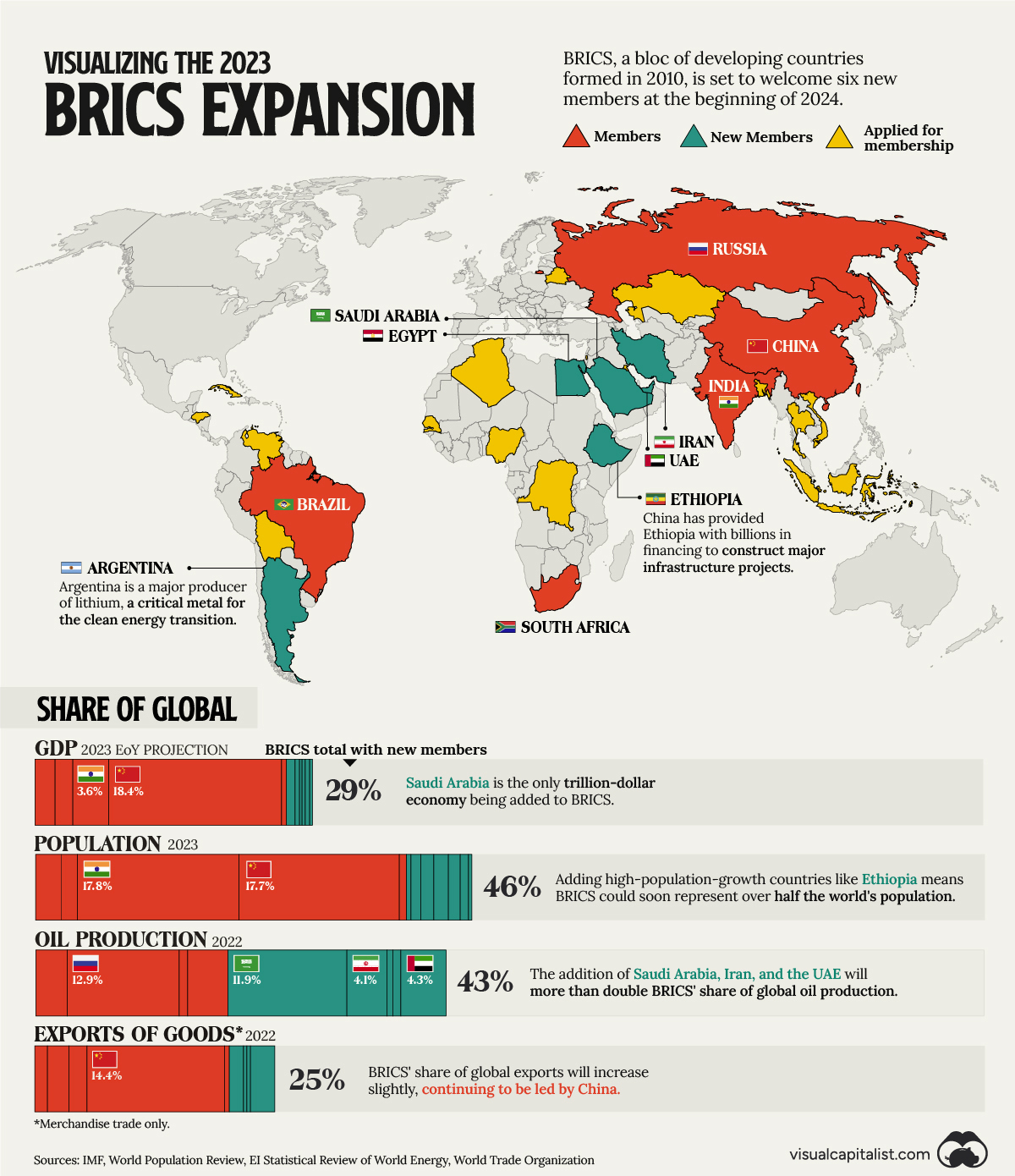
    Expansion of BRICS

    More than 40 countries have expressed interest in joining BRICS, and 22 have formally asked to be admitted. Therefore, leaders of the BRICS in the 15th Summit have agreed on mechanisms for considering new members.
    Expansion of BRICS

    • First phase of expansion: The countries including Argentina, Egypt, Ethiopia, Iran, Saudi Arabia, and the UAE have received invitations to join BRICS. This new membership is set to take effect from January 1, 2024.

    Reasons for the BRICS expansion:

    • China’s strategic move for global influence.
    • FOMO: Fear of missing out on a visible club.
    • Limited options in other groups.
    • Anti-western sentiment and Global South unity

    Challenges faced by BRICS

    • Divergent National Interests: BRICS members have diverse economic and political priorities, which can sometimes lead to conflicting interests. Example: China’s emphasis on export-led growth might conflict with India’s efforts to reduce its trade deficit with China, creating economic tensions within the group.
    • Economic Inequalities: Challenge: Economic disparities among BRICS countries can hinder equitable distribution of benefits from cooperation. Example: South Africa, with a smaller economy compared to China and India, might find it challenging to compete for investment and trade opportunities within the group.
    • Geopolitical Competition: Geopolitical rivalries and regional conflicts among BRICS members can strain cooperation. Example: China’s territorial disputes in the South China Sea have led to tensions with other BRICS countries like India, which has concerns over freedom of navigation.
    • Differing Political Systems: BRICS countries have different political systems and levels of political freedom, impacting their approaches to governance and international relations. Example: Russia’s political landscape differs significantly from the democratic systems in Brazil, India, and South Africa, potentially affecting consensus on certain issues.
    • Infrastructure and Connectivity Gaps:  Inadequate infrastructure and connectivity gaps within BRICS countries can hinder trade and collaboration. Example: Insufficient transport and logistics infrastructure in some member countries can hinder smooth movement of goods and services.
    • Institutional Limitations: The institutional structure of BRICS, including the New Development Bank, might face limitations in terms of resources, decision-making processes, and lending capacity. The NDB might struggle to finance large-scale projects without relying on external resources beyond the BRICS nations.
    • Economic Volatility: Economic fluctuations and market vulnerabilities can impact the stability of BRICS economies. Example: The global economic recession triggered by the COVID-19 pandemic affected BRICS nations differently, leading to varying levels of economic contraction and recovery.
    • Regional and Bilateral Disputes: Regional and bilateral disputes among BRICS members can strain the group’s unity and shared objectives. Example: The Doklam standoff between India and China in 2017 created tensions and highlighted potential areas of conflict within BRICS.
    • Leadership Rotation and Priorities: Each BRICS member country holds the rotating presidency for a year, which can impact the continuity of the group’s priorities. Example: Each new presidency might emphasize different areas of cooperation based on its national interests and foreign policy goals.

    Reforms needed in BRICS

    • Inclusion of Civil Society and Private Sector: Involve civil society organizations and the private sector in discussions and initiatives to broaden perspectives and encourage innovation.
    • Promotion of Sustainable Development Goals (SDGs): Align BRICS activities more explicitly with the United Nations’ SDGs to foster sustainable and inclusive development across member countries.Launch joint projects on renewable energy deployment across member countries, addressing SDG 7 (Affordable and Clean Energy).
    • Humanitarian and Disaster Response Collaboration: Establish a BRICS Disaster Response Task Force to coordinate resources and expertise during natural disasters.
    • Expanding Membership or Partnerships: Consider the possibility of expanding the membership or establishing strategic partnerships with other emerging economies that share similar interests and values.
    • Promotion of Digital Connectivity: Foster digital connectivity and technological collaboration among BRICS members to capitalize on the benefits of the digital economy.
    • Regular Assessment of Goals and Progress: Periodically evaluate the achievements, challenges, and relevance of BRICS objectives to ensure they remain aligned with member countries’ evolving interests.
    • Climate Change and Environmental Cooperation: Establish a BRICS Environmental Fund to finance joint environmental protection and conservation projects.

    Way Forward for India

    • BRICS’ Role: BRICS can serve as an alternative platform to address global governance deficiencies, despite its imperfections. It could initiate discussions on more inclusive global governance.
    • Navigating Complexity: India’s geopolitical choices are complex due to its affiliations in various forums. India’s participation in non-Western platforms reflects a response to historical inequities.
    • Balancing Geopolitical Shifts: As competing blocs emerge, India must balance affiliations between a China-centric and a West-centric world order. Striking this balance is crucial to India’s global positioning.
    • Managing China’s Rise: India needs to consider whether its actions inadvertently support China’s ascent. While India must moderate China’s influence, it should avoid alienating other global South nations.
    • Safeguarding National Interests: India’s active participation in global forums must align with promoting equitable global governance while ensuring its national interests are safeguarded.

    Conclusion

    • Amid global uncertainties, India’s role in the BRICS summit gains prominence. Balancing between non-Western forums and Western ties, India aims for equitable global governance while managing China’s ascendancy. These decisions could mold India’s path and impact the evolving international landscape.