💥Join UPSC 2027,2028 Mentorship (August Batch) + XFactor Notes & Microthemes PDF

Distribution: weekly

  • Ensuring Aviation Safety: The Urgent Need for Comprehensive Reforms

    Aviation

    Central idea

    • In 2010, a tragic accident at Mangalore airport claimed the lives of 158 people. Despite prior warnings and PILs filed by the Environment Support Group, the concerned authorities neglected to address safety concerns regarding the airport’s second runway. It highlights the lack of accountability and transparency in the system, the failure to learn from past accidents, and the urgent need for reforms in India’s aviation sector.

    Background

    • In 1997, the Environment Support Group raised concerns about the inadequacy of Mangalore airport’s second runway during emergencies. However, the PIL filed by the NGO was dismissed by the Karnataka High Court.
    • In 2002, another PIL emphasized the potential dangers of the runway, but it faced the same fate. Dissatisfied with the verdict, the group approached the Supreme Court, which ruled that the government must adhere to applicable laws and environmental norms during airport construction
    • Following the Mangalore crash, the Ministry of Civil Aviation established the Civil Aviation Safety Advisory Council (CASAC) to identify deficiencies and propose corrective measures.
    • CASAC pointed out the court of inquiry’s failure to identify critical errors and suggested improvements, particularly at airports like Mangalore and Calicut. However, their warnings were disregarded by the Ministry and the DGCA.
    • The subsequent accident at Calicut on August 7, 2020, claiming 21 lives, further exposed the disregard for safety concerns.
    • The recommendations made by the committee formed after the accident remain unimplemented due to prioritizing commercial interests over safety.

    Lessons ignored

    • Neglecting Compliance with Laws and Norms: Government agencies responsible for airport construction failed to comply with applicable laws and environmental norms, as mandated by the Supreme Court. This negligence resulted in violations that ultimately led to the tragic crash.
    • Dismissing Expert Opinions: The Supreme Court’s dismissal of the PIL that highlighted the violations and safety concerns surrounding Mangalore airport indicates a reluctance to hold government agencies accountable. The judiciary’s unwillingness to intervene despite expert opinions undermined the pursuit of justice and prevention of future accidents.
    • Lack of Accountability: The blame for accidents was often placed solely on pilots, while the systemic deficiencies and regulatory failures were overlooked. The absence of accountability within the aviation sector perpetuated a culture of negligence and hindered efforts to address underlying safety issues.
    • Failure in Accident Investigations: The investigations conducted by the DGCA and AAIB failed to identify the root causes of accidents and provide effective preventive measures. Instead of rectifying systemic shortcomings, investigations often resorted to blaming pilot error, leaving the real issues unresolved.
    • Neglecting Recommendations: The warnings and recommendations put forth by the Civil Aviation Safety Advisory Council (CASAC) were disregarded by the Ministry of Civil Aviation and the DGCA. The failure to implement necessary safety measures, such as Runway End Safety Areas (RESA), despite expert advice, highlights a disregard for passenger safety.
    • Prioritizing Commercial Interests: Commercial interests were given precedence over safety considerations, as implementing certain safety measures would have affected the runway length and payload. This compromise on safety standards underscores the need to prioritize the well-being of passengers over commercial gains.

    Role and responsibilities of Civil Aviation Safety Advisory Council (CASAC)

    • Identify Deficiencies: CASAC is tasked with identifying deficiencies in safety measures, regulations, infrastructure, and operational practices across airports, airlines, and regulatory bodies. It conducts thorough assessments and inspections to pinpoint areas where safety standards may be compromised.
    • Provide Recommendations: Based on its assessments, CASAC formulates recommendations and proposes corrective measures to address the identified deficiencies. These recommendations cover a wide range of aspects, including operational procedures, infrastructure improvements, training programs, safety audits, and regulatory enhancements.
    • Review Reports and Investigations: CASAC reviews accident investigation reports and court of inquiry findings related to aviation accidents and incidents. It examines these reports to determine if proper root cause analysis has been conducted and if adequate preventive measures have been recommended. CASAC ensures that critical errors or safety gaps are identified and addressed in the reports.
    • Advise on Safety Enhancements: CASAC advises the Ministry of Civil Aviation on safety enhancements, both immediate and long-term. It provides guidance on the implementation of best practices, industry standards, and international safety protocols. CASAC’s recommendations aim to improve safety outcomes and minimize risks within the aviation sector.
    • Monitor Compliance: CASAC monitors the compliance of airports, airlines, and regulatory bodies with recommended safety measures and regulations. It reviews progress reports submitted by stakeholders to assess their adherence to the proposed corrective actions. This monitoring function ensures that safety improvements are implemented effectively.
    • Collaborate with Stakeholders: CASAC collaborates with various stakeholders in the aviation industry, including airlines, airports, regulatory bodies, industry experts, and international organizations. It engages in discussions, knowledge-sharing, and cooperative initiatives to promote a collective approach to aviation safety.
    • Continuous Evaluation: CASAC conducts periodic evaluations and reviews of the aviation sector’s safety performance. It assesses the effectiveness of implemented safety measures, identifies emerging safety concerns, and recommends adjustments or additional measures as required.

    Way ahead: The Need for Urgent Action in the aviation sector

    • Regulatory Reforms: Initiate comprehensive regulatory reforms to strengthen oversight and enforcement mechanisms. This includes enhancing the authority, capabilities, and resources of regulatory bodies like the DGCA to effectively monitor compliance with safety regulations.
    • Transparent and Independent Investigations: Establish an independent and transparent accident investigation process that identifies root causes without bias or external influence. This will enable the implementation of effective preventive measures and foster a culture of learning from past incidents.
    • Safety Management Systems: Promote the adoption of Safety Management Systems (SMS) by airlines and airports. An SMS provides a systematic approach to identifying and managing safety risks, ensuring proactive safety measures are in place, and promoting continuous improvement.
    • Robust Training and Human Factors Programs: Enhance training programs for aviation personnel, including pilots, air traffic controllers, and maintenance staff, focusing on areas such as emergency procedures, risk management, and human factors. Emphasize the importance of fatigue management and mental well-being to mitigate human error.
    • Infrastructure Upgrades: Invest in upgrading and modernizing airport infrastructure, including runways, taxiways, and air traffic control systems. Ensure compliance with international safety standards and implement necessary enhancements to address deficiencies.
    • Enhanced Collaboration: Foster collaboration and information sharing among industry stakeholders, including airlines, airports, regulators, and international aviation organizations. Establish platforms for regular communication and exchange of best practices to drive collective efforts towards improved safety.
    • Accountability and Transparency: Strengthen accountability mechanisms to ensure that responsible individuals and entities are held liable for safety lapses. Foster a culture of transparency, where safety-related information is shared openly, and reporting systems protect whistleblowers.
    • Public Awareness and Passenger Education: Increase public awareness about aviation safety and passenger rights through education campaigns. Empower passengers to make informed decisions regarding safety when choosing airlines and demand transparency from regulatory bodies.

    Conclusion

    • The Mangalore airport crash and subsequent incidents have shed light on the critical need for comprehensive reforms in the aviation sector to ensure the safety of passengers and personnel. The establishment of the CASAC was a step in the right direction. However, to achieve a safer aviation environment it requires collective efforts, commitment, and ongoing vigilance to prevent accidents, learn from past incidents, and ensure the well-being of passengers and personnel in the skies.

    Get an IAS/IPS ranker as your personal mentor for UPSC 2024 | Schedule your FREE session and get the Prelims prep Toolkit!

    Also read:

    [Burning Issue] Air India Aircraft Deal and its Significance
  • Alarming Decline in Antarctic Sea Ice: A Harbinger of Global Concerns

    Antarctic

    Central Idea

    • The recent record-breaking drop in Antarctic Sea ice extent on February 19 has raised significant concerns about the impacts of global warming. This worrying trend, accompanied by rising global temperatures, poses a threat to coastal cities and has far-reaching consequences for weather patterns and underwater ecosystems. As sea ice continues to melt and global sea levels rise, urgent action is needed to address the environmental challenges presented by this alarming decline.

    Melting Sea Ice and Rising Sea Levels: A worrying trend

    • Over the past six years, the Antarctic Sea ice cover has witnessed substantial declines, resulting in a rise in global sea levels.
    • NASA reports that meltwater from Antarctic ice accounts for approximately one-third of the global average sea level rise since 1993.
    • The sea ice extent in 2023 has often been notably lower than the levels seen in 2022, which had the second-lowest summer sea ice extent in Antarctica.
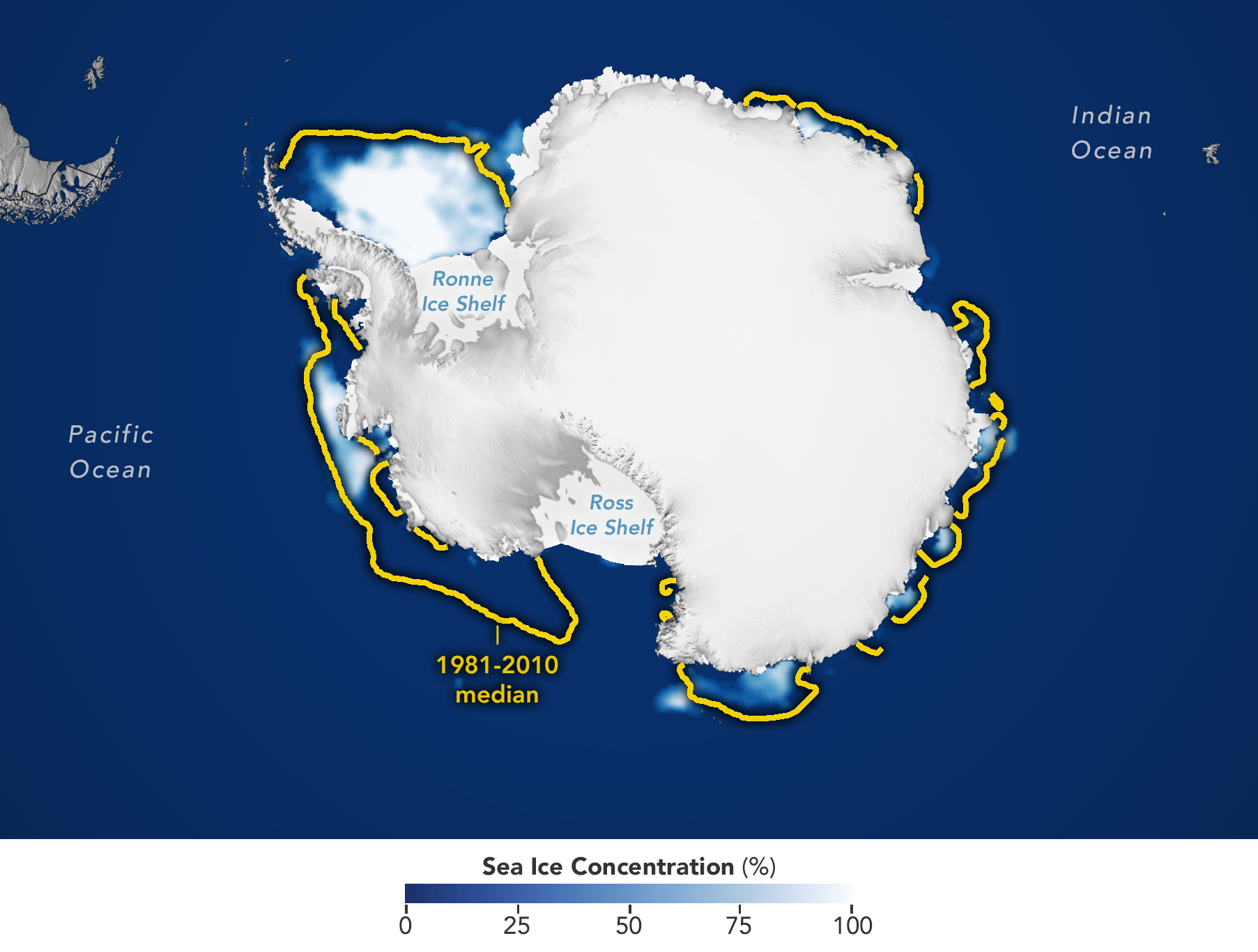
    • The Antarctic Sea ice extent as of May 21, 2023, has significantly shrunk compared to the median extent between 1981 and 2010
    • The April temperature in the Antarctic region in 2023 was 0.93°C higher than the 1910-2000 average for that month, marking the second-highest increase in the millennium.

    Antarctic

    Impact decline in Antarctic Sea ice on Global Weather and Ecosystems

    • Weather Pattern Alterations: The Southern Ocean, surrounding Antarctica, plays a crucial role in transferring heat from the atmosphere to the global oceans. Increased melting of Antarctic sea ice introduces cold, fresh water into the ocean, disrupting the circulation patterns of hot, cold, fresh, and salty water globally. This alteration in temperature and density can subsequently affect weather patterns, including wind patterns, precipitation, and storm formation.
    • Oceanic Currents and Nutrient Flows: Changes in water temperature and density due to melting sea ice can disrupt oceanic currents and nutrient flows. These currents are vital for distributing heat, nutrients, and oxygen across the world’s oceans. The disturbance in these flows can have cascading effects on marine ecosystems, impacting the distribution and availability of nutrients for various organisms.
    • Impact on Underwater Ecosystems: Sea ice serves as a critical habitat for various organisms, including algae, krill, and other marine life. Diminishing sea ice reduces the availability of food and alters the feeding patterns and reproductive cycles of species dependent on these ecosystems. This disruption can have significant consequences for the entire Antarctic food chain, affecting species such as whales, seals, penguins, and seabirds.
    • Altered Albedo Effect: The decline in sea ice coverage reduces the Earth’s albedo effect. Albedo refers to the ability of a surface to reflect sunlight back into space. Sea ice has a high albedo, meaning it reflects a significant portion of incoming solar radiation. As sea ice diminishes, darker ocean water absorbs more solar radiation, leading to increased warming and amplifying the overall warming trend.
    • Feedback Loops: The impacts of melting sea ice create feedback loops that exacerbate the effects of climate change. For example, as sea ice melts, more heat is absorbed by the ocean, further accelerating the melting process. These feedback loops contribute to the amplification of warming trends and the intensification of associated environmental changes.

    Facts for prelims

    What is ice-albedo feedback cycle?

    • The ice-albedo feedback cycle, also known as the snow-ice albedo feedback, refers to a positive feedback mechanism that amplifies the effects of global warming. It involves the interaction between ice or snow cover and solar radiation.
    • The albedo of a surface refers to its ability to reflect sunlight. Ice and snow have high albedo values, meaning they reflect a significant portion of incoming solar radiation back into space.
    • This reflection helps to cool the Earth’s surface. However, when ice or snow melts, it reveals darker surfaces beneath, such as dark ocean water or land, which have lower albedo values. These darker surfaces absorb more solar radiation, leading to increased warming
    • The ice-albedo feedback cycle operates in both polar regions, but it is particularly significant in the Arctic and Antarctic regions, where extensive ice and snow cover exist.
    • The reduction in sea ice extent and the melting of glaciers and ice sheets contribute to this feedback mechanism, accelerating the warming trend and exacerbating the impacts of climate change.

    Understand this way: How do the ice-albedo feedback cycle operate?

    • Initial Warming: Due to various factors, including greenhouse gas emissions, the Earth’s temperature increases, leading to the melting of ice and snow cover.
    • Reduced Albedo: As ice and snow melt, the reflective white surface is replaced by darker surfaces with lower albedo values. These surfaces absorb more solar radiation rather than reflecting it back into space.
    • Increased Heating: The absorption of more solar radiation by darker surfaces results in increased heating of the Earth’s surface and atmosphere.
    • Further Melting: The increased heating leads to more melting of ice and snow, further reducing the overall ice and snow cover.
    • Amplification of Warming: With less ice and snow cover, more heat is absorbed, contributing to a positive feedback loop. The amplified warming results in further ice and snow melt, creating a cycle of increasing temperatures.

    Impact of Rising Sea Levels on coastal communities around the worldwide

    • Increased Flooding and Erosion: As sea levels rise, coastal areas are more susceptible to storm surges, high tides, and extreme weather events. This puts low-lying regions, including coastal cities and communities, at greater risk of inundation, property damage, and displacement of residents.
    • Coastal Infrastructure Vulnerability: Increased flooding and erosion can lead to the degradation and loss of critical infrastructure, disrupting transportation, energy supply, and essential services. This vulnerability can have substantial economic, social, and public safety implications.
    • Threat to Freshwater Resources: Rising sea levels can infiltrate freshwater sources and contaminate underground aquifers, particularly in coastal regions where freshwater and saltwater interfaces occur. This intrusion of saltwater can compromise drinking water supplies, agricultural irrigation, and ecosystems dependent on freshwater resources, exacerbating water scarcity issues.
    • Displacement of Communities: As coastal areas become uninhabitable due to sea-level rise and increased flooding, communities may face the prospect of forced relocation. This displacement can result in the loss of homes, cultural heritage, and livelihoods, leading to social disruption, economic challenges, and psychological impacts on affected populations.
    • Ecological Impacts: Coastal ecosystems, including mangroves, coral reefs, and wetlands, provide critical habitats, buffer against storms, and support biodiversity. Rising sea levels can inundate and degrade these ecosystems, leading to the loss of valuable ecological services, increased vulnerability to coastal hazards, and reduced coastal resilience.
    • Economic Consequences: The impacts of sea-level rise and coastal flooding can disrupt tourism, fishing, and shipping industries, leading to economic losses, job displacements, and decreased productivity. Additionally, the costs of coastal protection measures and infrastructure adaptations to rising sea levels can place a significant burden on local economies and governments.

    Way Forward

    • Strengthening International Cooperation: Collaborate at global forums to address climate change and its impact on Antarctica, emphasizing the need for reduced emissions and sustainable practices.
    • Enhanced Monitoring and Research: Invest in further research to understand the dynamics of melting sea ice, its impact on ecosystems, and potential mitigation strategies.
    • Promoting Sustainable Practices: Encourage sustainable practices and responsible tourism in the Antarctic region to minimize human impact on the fragile ecosystem.
    • Climate Resilience Planning: Develop robust climate resilience plans for coastal cities and communities, considering rising sea levels and potential threats posed by diminishing sea ice.
    • Raising Public Awareness: Educate the public about the consequences of melting Antarctic sea ice, fostering a collective sense of responsibility and encouraging individual actions to mitigate climate change.

    Conclusion

    • The alarming decline in Antarctic sea ice poses grave threats to global sea levels, weather patterns, and underwater ecosystems. Urgent action is required to mitigate climate change, reduce greenhouse gas emissions, and promote sustainable practices. Through international collaboration, research, and public awareness, we can strive to protect the Antarctic region and safeguard coastal communities worldwide from the impacts of melting sea ice. The time to act is now, as the consequences of inaction will be felt by future generations.

    Get an IAS/IPS ranker as your personal mentor for UPSC 2024 | Schedule your FREE session and get the Prelims prep Toolkit!

    Must read:

    Oceans absorb 90% of human-induced planet warming: Study
  • Diversifying Our Understanding of Religion and Caste in Contemporary India

    Religion

    Central Idea

    • The recent outcome of the Karnataka elections provides an opportunity to broaden our understanding of religion and caste as categories of identity and belief. It is essential to recognize that these identities go beyond mere labels and hold pan-India significance. Amidst the rapid urbanization of Gurugram, the interplay of technology, finance, infrastructure, and land markets has brought about intriguing effects on traditional aspects of life. Notably, the strengthening of caste and religious identities has occurred alongside the transformation of the local landscape

    Contemporary dynamics of the religion and caste in society

    • Social Media: The emergence and widespread use of social media platforms have significantly influenced the dissemination of information and the expression. Social media platforms have provided individuals with new avenues to express their beliefs, connect with like-minded individuals, and engage in discussions and debates related to religion and caste.
    • Leisure Cultures: Changing patterns of leisure activities and cultural practices have contributed to the reshaping of religious and caste identities. The ways in which people engage with leisure, entertainment, and cultural events often intersect with their religious and caste affiliations. These leisure cultures can reinforce existing identities, foster a sense of community, and contribute to the preservation and celebration of religious and caste traditions.
    • Globalization of Identities: The increased mobility, migration, and transnational interactions have allowed for the transmission and adoption of religious and caste practices, beliefs, and ideologies across different geographical locations. This globalization of identities has influenced how individuals perceive and express their religious and caste affiliations.
    • Emphasis on Heritage: The promotion and celebration of cultural heritage, rituals, and customs have become significant aspects of identity formation and community building. This focus on heritage can reinforce religious and caste affiliations and contribute to the preservation of traditional practices.

    Complexities of contemporary identities

    • Intersectionality: Contemporary identities are often multifaceted and intersectional, encompassing multiple dimensions such as gender, class, religion, caste, and regional affiliations. Individuals’ identities are shaped by the interaction of these diverse factors, leading to complex experiences and perspectives.
    • For example: In the context of Gurugram, caste identities intersect with the effects of urbanization, globalization, and economic transformations, creating intricate social dynamics.
    • Shifting Meanings: The meanings attached to religious and caste identities have evolved over time. Globalization, technology, and changing social norms have influenced the ways in which individuals understand and express their religious and caste affiliations. These shifting meanings challenge traditional understandings and necessitate a deeper exploration of the contemporary dynamics surrounding religion and caste.
    • Hybridity and Adaptation: As individuals navigate the complexities of a rapidly changing world, they might combine elements of their religious and caste backgrounds with new cultural practices, beliefs, and expressions. This hybridity reflects the fluid nature of contemporary identities and the ways in which individuals negotiate their sense of self within evolving social contexts.
    • Global Influences: Increased exposure to diverse cultural and religious influences from around the world can impact individuals’ beliefs, practices, and self-perception. This global exchange of ideas and cultural practices contributes to the complexities of contemporary identities, blurring traditional boundaries and fostering new forms of identity expression.
    • Individual Agency: Contemporary identities are influenced by individual agency, as individuals actively construct and negotiate their own sense of self and belonging. People have the autonomy to choose, reinterpret, or reject religious and caste identities based on their personal experiences, beliefs, and aspirations. This individual agency adds complexity to the understanding of contemporary identities and challenges rigid categorizations.

    Why religious and caste sentiments thrive despite the seemingly impersonal nature of modern relations?

    • Historical Significance: Religion and caste have deep historical roots in India, shaping the social, cultural, and political fabric of the country for centuries. These identities have been intricately woven into people’s lives and community structures, and their significance continues to endure even in the face of modernization. Historical legacies and the sense of identity associated with religion and caste contribute to the persistence of these sentiments.
    • Social Cohesion and Belonging: Religion and caste provide individuals with a sense of belonging and community. They offer a framework for social cohesion, providing a sense of identity, support, and solidarity. In an increasingly fragmented and individualistic society, religious and caste affiliations can offer a sense of belongingness and a support system that individuals seek for social integration and a sense of purpose.
    • Cultural Identity and Tradition: Religion and caste are deeply intertwined with cultural practices, rituals, and traditions which provide individuals with a connection to their cultural heritage and a sense of continuity with their ancestors.
    • Social Networks and Support: Religious and caste communities network foster a sense of mutual aid and communal bonds, creating a support system that individuals rely on in times of need. This social support and network-based assistance further reinforce the importance of religious and caste identities.
    • Political and Power Dynamics: Religion and caste continue to play a significant role in political mobilization, electoral strategies, and the distribution of resources and benefits. Political parties often exploit religious and caste identities for electoral gains, further reinforcing their salience and significance in public discourse.

    Why the newly emerging religious identities sometimes manifest as hostility towards those of different faiths?

    • Identity Assertion: The formation of new religious identities can be driven by a desire to assert and strengthen one’s own religious beliefs and practices. In some cases, this assertion may result in a sense of exclusivity and superiority, leading to hostility towards those who hold different beliefs. Individuals may perceive their newly emerging religious identity as being under threat from other faiths, and this defensive response can contribute to animosity and hostility.
    • Socialization and Group Dynamics: If individuals are surrounded by like-minded individuals who reinforce a particular narrative of their religious identity, it can lead to the development of a group mentality that views other faiths with suspicion or hostility. Group dynamics, such as peer pressure, conformity, and the need for social acceptance, can further amplify negative attitudes towards different faiths.
    • Perceived Threats and Insecurity: When new religious identities emerge, followers may perceive threats to their beliefs, traditions, or cultural practices from other faiths or societal changes. This perceived threat can evoke a defensive response, fueling hostility towards those seen as posing a challenge to their newly formed religious identity.
    • Political Instrumentalization: Political actors may exploit religious sentiments and manipulate the narrative to gain support or advance their agenda. This instrumentalization can create an us versus them mentality, deepening divisions and fostering animosity towards religious groups perceived as adversaries.
    • Economic Competition and Social Hierarchies: Economic disparities and perceived inequalities can fuel resentment towards religious groups seen as benefiting disproportionately or hindering one’s own economic advancement. This can result in the projection of animosity onto religious differences.
    • Lack of Interfaith Dialogue and Understanding: Insufficient opportunities for interfaith dialogue and understanding can contribute to the persistence of hostility between religious communities. Limited interactions and communication between followers of different faiths may perpetuate stereotypes, misunderstandings, and a lack of empathy. Without platforms for open dialogue and mutual respect, tensions can escalate, leading to hostility.

    Way forward: Adopting a forward-looking approach

    • Contextual Understanding: Instead of relying solely on historical perspectives, it is crucial to engage with the complexities of the present. This involves analyzing the influence of social media, new leisure cultures, globalization of caste and religious identities, the politics of heritage, and the rise of consumer culture.
    • Critical Questions: To address the contemporary manifestations of religious and caste identities, we need to ask fundamental questions. For instance, we must explore why religious and caste feelings gather strength despite the apparent prevalence of impersonal relations in a world organized through contracts and other similar mechanisms.
    • Contemporary Relevance: The explanations regarding religious identity and caste should be grounded in the present rather than relying solely on the perspectives of historical figures like Gandhi and Ambedkar. While acknowledging their important contributions, we need to apply their vantage points to analyze and understand the contemporary realities.
    • Interdisciplinary Approach: Addressing the complexities of caste and religious identities requires an interdisciplinary approach that combines insights from sociology, anthropology, history, political science, and cultural studies, among other disciplines. By bringing together diverse perspectives, we can gain a more comprehensive understanding of the multifaceted nature of these identities and their implications for contemporary society.
    • Dialogue and Empathy: Encouraging interfaith dialogue, promoting understanding, and fostering empathy are crucial steps towards mitigating hostility and building bridges between different religious communities. Creating platforms for open and respectful discussions can help dispel stereotypes, bridge gaps in understanding, and promote mutual respect.
    • Evolving Definitions: Given the altered meanings of caste and religion in a rapidly changing society, it is important to continuously reassess and redefine these concepts. By recognizing the shifting dynamics and meanings associated with caste and religion, we can develop more nuanced perspectives that align with the contemporary reality.

    Conclusion

    • As we witness the diversification of religion and caste in contemporary India, it is imperative to embrace a nuanced understanding that moves beyond historical interpretations. Recognizing the multifaceted factors influencing modern identities and the complexities of the present allows for a more comprehensive analysis. By exploring the contemporary dynamics and asking pertinent questions, we can better comprehend the changing meanings of religion and caste in today’s society and address the challenges and opportunities they present.

    Get an IAS/IPS ranker as your personal mentor for UPSC 2024 | Schedule your FREE session and get the Prelims prep Toolkit!

    Also read:

    The Caste Census and Mandal Politics: Analysis
  • Antarctic Sea Ice Cover at Record Low

    antarctic

    Central Idea

    • Sea ice in Antarctica reached its smallest area on record in February for the second consecutive year, continuing a decade-long decline.

    Ice cover decline: Key data

    (1) Square km decline

    • The European Union’s Copernicus Climate Change Service (C3S) provided the figures, highlighting the significant decrease in Antarctic sea ice.
    • On February 16, the ocean surface covered by ice around Antarctica shrank to 2.09 million square kilometers (800,000 square miles), the lowest level since satellite records began.

    (2) Warming trends

    • Both the North and South poles have experienced significant warming, with temperatures rising by approximately 3 degrees Celsius compared to late 19th-century levels, three times the global average.
    • Arctic sea ice has been diminishing by about 3 percent per year since the late 1970s, while sea ice in Antarctica has remained relatively constant with large annual variations.

    (3) Regional variances and vulnerabilities

    • Recent ice cover reduction during the southern hemisphere summer has been most pronounced in West Antarctica, which is more vulnerable to the impacts of global warming compared to East Antarctica.
    • Antarctica witnessed its first recorded heatwave in 2020, with temperatures 9.2 degrees Celsius above the mean maximum. Unusual temperature spikes have been observed in various parts of Antarctica.
    • The Arctic has also experienced significant declines in sea ice, with the record minimum sea ice extent occurring in 2012.

    Impact of declining Ice Cover

    • Global sea level rise: Melting ice in Antarctica contributes to rising sea levels worldwide.
    • Disruption of ecosystems: Declining ice cover disrupts habitats and food sources for ice-dependent species.
    • Increased warming: Less ice reflects sunlight, leading to more heat absorption and further ice melting.
    • Changes in ocean circulation: Declining ice cover can disrupt currents and impact global climate patterns.
    • Release of stored carbon: Melting ice releases trapped carbon, potentially affecting marine ecosystems and contributing to climate change.
    • Amplification of global warming: Reduced ice cover creates a positive feedback loop, exacerbating climate change.
    • Disruption of biodiversity and food chains: Changing ice conditions impact species relying on ice algae and affect the overall Southern Ocean ecosystem.

    Future projections

    • The Intergovernmental Panel on Climate Change (IPCC) predicted with high confidence that the Arctic Ocean would become practically ice-free in September at least once by mid-century.
    • The decreasing trends in both Arctic and Antarctic sea ice highlight the urgent need to address climate change and its impact on the Polar Regions.


    Get an IAS/IPS ranker as your personal mentor for UPSC 2024

  • What is PARAKH Program?

    Central Idea

    • The Ministry of Education has organized a workshop in New Delhi to discuss the unification of 60 school examination boards operating across different states and union territories.
    • The key component of this plan is PARAKH, the National Assessment Centre established under the National Council of Educational Research and Training.

    What is PARAKH?

    • PARAKH stands for Performance Assessment, Review, and Analysis of Knowledge for Holistic Development.
    • It is an organization created to bring school boards from various states and union territories onto a unified platform.
    • It has been launched as part of the implementation of the National Education Policy (NEP)-2020.
    • It acts as a constituent unit of the NCERT.
    • It is tasked with holding periodic learning outcome tests like the National Achievement Survey (NAS) and State Achievement Surveys.
    • It will work on three major assessment areas: large-scale assessments, school-based assessment, and examination reforms.

    Key objectives of PARAKH

    • Uniform Norms & Guidelines: Setting comprehensive norms, standards, and guidelines for student assessment and evaluation in all recognized school boards.
    • Enhance Assessment Pattern: Encouraging school boards to adopt assessment patterns aligned with the skill requirements of the 21st century.
    • Reduce Disparity in Evaluation: Establishing uniformity across state and central boards, which currently employ different evaluation standards, resulting in significant score disparities.
    • Benchmark Assessment: Developing a benchmark assessment framework to move away from rote learning and align with the objectives of the NEP 2020.

    Outcomes of the recent workshop

    (1) Establishing Equivalence of Boards

    • The Centre is planning for the equivalence of boards to facilitate seamless transitions for students across different boards or regions.
    • The objective is to align curriculum standards, grading systems, and evaluation methodologies to enhance the credibility and recognition of certificates and grades obtained across boards.

    (2) Moving away from Rote Examination Culture

    • The workshop highlighted the need to reassess the prevailing rote examination culture in the education system.
    • There is a growing realization that holistic assessments, considering various dimensions of a student’s abilities and potential, are equally important.

    (3) Standardization and Fairness in Assessments

    • The discussion emphasized the importance of well-designed and standardized question papers to ensure fairness and consistency across schools and boards.
    • Striking a balance between formative and summative assessments was identified as a means to reduce the burden of high-stakes examinations while effectively measuring student progress.

    Conclusion

    • PARAKH’s significance lies in its potential to bring about transformative change, facilitating collaboration, and benchmarking assessments.
    • It is an important step towards creating a standardized and equitable assessment system, providing students with a fair platform to demonstrate their abilities and skills.


    Get an IAS/IPS ranker as your personal mentor for UPSC 2024

  • C-20: Preventing the Erosion of Civil Society Independence

    C-20

    Central Idea

    • The civil society process of G-20, known as C-20, which is meant to provide a platform for independent voices and hold governments accountable, has been co-opted by the ruling party in India. Critiques argue that under the guise of civil society representation, C-20 has become a tool to further a politico-religious vision and legitimize neoliberal economic policies. This distortion of C-20 raises concerns about its credibility and ability to serve as a counter-balance to undue business influence.

    What is C-20?

    • C-20 refers to the civil society process of the Group of Twenty (G-20) summit.
    • The C-20 process provides a platform for civil society organizations to engage with G-20 member governments, discuss relevant issues, and advocate for policy changes.
    • It aims to ensure that the voices and concerns of civil society are taken into account in the decision-making processes of G-20.
    • C-20 focuses on economic, social, and cultural issues, and its participants include non-governmental organizations, grassroots movements, and other civil society actors.

    Facts for prelims

    What is U20?

    • A city diplomacy initiative called the “Urban 20” (U20) was launched in December 2017 within G20 ecosystem.
    • It was meant to collectively raise critical urban issues of G20 cities during the G20 negotiations.
    • U20 specifically focuses on climate change, sustainable development, and socio-economic issues in connection with the Sustainable Development Goals.

    What is SAI20?

    • SAI20 stands for Supreme Audit Institutions (SAIs) of G20 countries.
    • It is a forum where SAIs from G20 countries can engage with each other to share their experiences and expertise in auditing public policies and governance practices.
    • The group meets annually to discuss important issues related to public auditing and to develop joint initiatives to promote good governance and accountability in their respective countries.

    What are the concerns about C-20 ‘s credibility?

    • Politicization: The C-20 process in India has been co-opted by the party in power, using it as a platform to further its own politico-religious vision. This raises questions about the independence and neutrality of the civil society process.
    • Lack of diversity: The composition of C-20 has raised concerns about the overwhelming presence of members from a single religion, which goes against the principle of inclusiveness. The dominance of a particular religious group undermines the diversity and representation of civil society voices.
    • Censorship and suppression: There have been instances of censorship and attempts to control the narrative within C-20. Participants have been asked to refrain from making political statements about G-20 and C-20, limiting their ability to critically address policies and actions that may be detrimental to biodiversity and community interests.
    • Limited influence: The C-20 process, along with other engagement forums of G-20, has not been allowed to play an independent role in holding governments accountable or countering undue business influence. The influence of civil society in shaping G-20 decisions and policies remains limited.
    • Lack of transparency: The selection and decision-making processes within C-20 have been criticized for lacking transparency. The way the C-20 architecture is set up, with its Secretariat housed in a civil society organization linked to a particular political ideology, raises concerns about the independence and fairness of the process.

    Impact of using international engagement forums for political gains?

    • Undermining credibility: When international engagement forums, such as the G-20 and its civil society process, are used for political and electoral gains, it undermines their credibility and purpose. These platforms are meant for meaningful dialogue, collaboration, and decision-making on global issues, and politicizing them for short-term domestic interests erodes their legitimacy.
    • Diminishing trust and cooperation: Political exploitation of international engagement forums can lead to a breakdown of trust and cooperation among participating countries and civil society organizations. It creates an atmosphere of suspicion and undermines the spirit of mutual respect and collaboration that these forums are intended to foster.
    • Weakening global governance: The instrumentalization of international engagement forums for political gains can weaken global governance mechanisms. It hampers the ability of these forums to address pressing global challenges effectively and make informed decisions based on the common good, as decisions may be driven by narrow political considerations rather than sound policy-making.
    • Impact on international reputation: The misuse of international engagement forums can have a negative impact on a country’s international reputation. It may be seen as a breach of trust and an attempt to manipulate global platforms for domestic political purposes, damaging the country’s standing in the international community.
    • Impeding progress on global issues: When international engagement forums are exploited for political and electoral gains, the focus shifts from addressing global issues to advancing narrow domestic agendas. This can hinder progress on crucial matters such as climate change, sustainable development, poverty alleviation, and human rights, which require international collaboration and concerted efforts.
    • Alienating civil society: The politicization of international engagement forums can alienate civil society organizations and undermine their trust in the process. When civil society voices are co-opted or marginalized for political gains, it weakens their role as independent actors, reduces their influence, and stifles their ability to contribute meaningfully to global policy discussions.
    • Loss of long-term benefits: Prioritizing short-term political and electoral gains over the long-term benefits of meaningful international engagement can lead to missed opportunities for economic, social, and diplomatic advancements. It undermines the potential for constructive dialogue, knowledge sharing, and collaboration that can yield positive outcomes for the country and the global community.

    Way ahead: Addressing the concerns over C-20

    • Enhance transparency and inclusiveness: There should be greater transparency in the selection processes of C-20 members and the decision-making mechanisms. Efforts should be made to ensure diverse representation from different religions, ideologies, and sectors, fostering inclusivity and avoiding the dominance of any particular group.
    • Safeguard independence: Measures should be taken to ensure the independence of C-20 from government influence. The Secretariat and coordination should be entrusted to neutral and independent organizations or institutions that have a proven track record of upholding the principles of civil society engagement.
    • Strengthen civil society networks: Civil society organizations should strengthen their networks, collaborations, and solidarity to amplify their voices and advocate for meaningful engagement in the C-20 process. This can involve building alliances with other organizations, sharing information and resources, and collectively advocating for the principles of inclusiveness and accountability.
    • Promote critical dialogue: Open and constructive dialogue should be encouraged within C-20, allowing for diverse perspectives and critical analysis of G-20 policies and actions. Participants should have the freedom to raise concerns, offer alternative viewpoints, and contribute to the discourse without fear of censorship or reprisal.
    • Advocate for policy coherence: Civil society organizations should actively engage in advocacy and policy dialogue with both the government and international bodies like the G-20. They should highlight the need for policy coherence that integrates social, environmental, and economic dimensions, ensuring that biodiversity conservation, sustainability, and the rights of marginalized communities are prioritized.
    • Strengthen public awareness: Efforts should be made to increase public awareness about the G-20 and its civil society process, including C-20. This can involve disseminating information, organizing awareness campaigns, and facilitating public participation in discussions and decision-making processes.
    • International solidarity: Civil society organizations in India should foster collaborations and exchanges with international civil society networks and organizations working on similar issues. Sharing experiences, strategies, and best practices can strengthen the collective voice of civil society globally and exert pressure for more accountable and inclusive processes.

    Conclusion

    • The co-optation of C-20 by the ruling party in India has undermined its credibility as an independent civil society platform. Civil society organizations participating in C-20 must reflect on whether they will legitimize this distortion or challenge it, as their decisions will shape the future of this crucial platform for global dialogue and accountability.

    Get an IAS/IPS ranker as your personal mentor for UPSC 2024 | Schedule your FREE session and get the Prelims prep Toolkit!

    Also read:

    G20: India at Urban20 (U20)


  • Plight of Single-Teacher Schools: A Call for Urgent Action

    Single-Teacher Schools

    Central Idea

    • The presence of single-teacher schools in India, particularly in Jharkhand, continues to persist despite the Right to Education Act mandating a minimum of two teachers in every school. The prevalence of such schools poses significant challenges, hampering the quality of education and depriving children of their right to a proper education. The alarming situation of single-teacher schools, calls attention to recent findings, and emphasizes the need for urgent action to address this issue.

    Single-Teacher Schools

    Plight of Single-Teacher Schools in India

    • Even after 14 years since the implementation of the Right to Education Act, the proportion of single-teacher schools in India remains high at 14.7%.
    • In Jharkhand alone, nearly one-third of primary schools fall under the single-teacher category, significantly impacting the quality of education.
    • While Jharkhand is a poor performer, a few States had a similar or even higher proportion of single-teacher schools such as Andhra Pradesh (34%), Telangana (30%) and Karnataka (29%).
    • In nine of India’s 21 major States, the share of children studying in single-teacher schools was well above 10%, rising to 25% in Jharkhand.
    • A recent report titled Gloom in the Classroom sheds light on the severity of the situation in Jharkhand.
    Did you know?

    ·       The Right to Education Act states that every school must have at least two teachers.

    Reasons attributed to the presence of Single-Teacher Schools in certain states

    • Low Population Density and Scattered Settlements: In states with low population density and scattered settlements, such as Himachal Pradesh, it becomes challenging to establish multiple schools in close proximity. Limited resources and logistical difficulties make it economically unviable to have multiple teachers in such areas. As a result, single-teacher schools are often the only feasible option to provide education to children in remote locations.
    • Low Fertility Rates: States with low fertility rates, such as Himachal Pradesh and Kerala, may have a smaller number of students in schools. In these cases, single-teacher schools serve as a more efficient and cost-effective arrangement to cater to the relatively smaller student population. With fewer students, consolidating them into larger schools may not be practical or necessary.
    • Viability of Mini-Schools: In some states, single-teacher schools are a result of the viability and historical existence of mini-schools. Mini-schools were established in sparsely populated areas before the Right to Education Act came into force. Some states, like Kerala, have successfully managed to merge mini-schools, while others continue to have single-teacher schools as separate entities.
    • Staffing Challenges and Budget Constraints: State governments facing staffing challenges and budget constraints may opt for under-staffing schools in underprivileged areas, leading to the prevalence of single-teacher schools. Limited resources and difficulties in recruiting and retaining teachers, especially in remote or economically disadvantaged regions, contribute to the staffing issues.
    • Resistance to Remote Postings: Remote areas often lack basic amenities and facilities, making it challenging for teachers to adjust to such environments. Reluctance to accept postings in remote locations can lead to a shortage of teachers, resulting in single-teacher schools as a temporary solution.

    Measures to tackle the challenges associated with single-teacher schools

    • Infrastructure and Resources: Adequate investment in infrastructure, including the establishment of additional classrooms, is crucial to accommodate more teachers and reduce the burden on existing staff. Providing schools with sufficient teaching resources, such as textbooks, learning materials, and technological tools, can enhance the teaching-learning process.
    • Recruitment and Retention: State governments must prioritize the recruitment of qualified teachers, ensuring a sufficient number of professionals in underprivileged areas. Encouraging and incentivizing teachers to accept postings in remote areas can help overcome the resistance to such assignments.
    • Policy Reforms: The Right to Education Act needs to be rigorously implemented, emphasizing the requirement for a minimum of two teachers in each school. State governments should allocate adequate funds to address staffing needs and enforce compliance with the act. Policy reforms should focus on promoting equity and inclusivity, targeting marginalized communities and ensuring access to quality education for all children.
    • Community Engagement: Building awareness among parents and communities about the importance of education and the impact of single-teacher schools is crucial. Encouraging community participation in school management committees and fostering collaboration between schools, parents, and local organizations can drive collective efforts to improve the educational environment.

    Way forward: Revitalizing the Education Movement

    • It is imperative to revive the momentum for the right to education that once echoed across the nation.
    • A renewed movement is necessary to advocate for quality education, raise awareness about the persisting challenges, and hold authorities accountable for ensuring children’s right to education.
    • The recent protests in Jharkhand, which highlighted the unmet demand for quality education, serve as a reminder of the urgent need to address the plight of single-teacher schools.

    Conclusion

    • The prevalence of single-teacher schools in Jharkhand and several other states indicates a systemic failure in fulfilling the right to education. Immediate action is required to improve infrastructure, recruit qualified teachers, implement policy reforms, and foster community engagement. By prioritizing education and addressing the challenges associated with single-teacher schools, we can ensure that every child has access to quality education and the opportunity to thrive.

    Get an IAS/IPS ranker as your personal mentor for UPSC 2024 | Schedule your FREE session and get the Prelims prep Toolkit!

    Also read:

    [Sansad TV] Reforms in Content and School Text Books
  • RBI Surplus Transfer to Govt.

    surplus rbi

    Central Idea

    • The Central Board of Directors of the RBI approved the transfer of ₹87,416 crore as surplus to the Union government for the accounting year 2022-23.
    • This amount is almost three times the ₹30,307 crore transferred in the previous fiscal year.

    Reserve funds of RBI

    The RBI has two types of reserves: Currency & Gold Revaluation Account (CGRA) and Contingency Fund (CF).

    1. CGRA: It represents the value of gold and foreign currency held by the RBI on behalf of India and fluctuates based on market movements.
    2. Contingency Fund: It is a provision to meet unexpected contingencies arising from the RBI’s monetary policy and exchange rate operations.

    Calculation of Surplus

    • RBI’s surplus is the amount transferred to the government after meeting its needs and provisions.
    • The surplus is determined by deducting expenses, including provisions made to the CF, from the RBI’s income, mainly generated through interest on securities.

    How does RBI earn its INCOME?

    The RBI earns profits through various functions and operations it carries out, including:

    1. Managing the borrowings of the Government of India and State governments.
    2. Supervising and regulating banks and non-banking finance companies.
    3. Managing the currency and payment systems.

    RBI generates income through the following sources:

    1. Returns on its foreign currency assets, such as bonds and treasury bills of other central banks or top-rated securities.
    2. Interest earned on holdings of local rupee-denominated government bonds or securities.
    3. Interest earned from lending to banks for short tenures, such as overnight loans.
    4. Management commission received for handling government and state government borrowings.

    Expenditure by RBI

    The RBI’s expenditures include-

    1. Costs related to printing currency notes
    2. Staff salaries
    3. Commissions paid to banks for government transactions and
    4. Payments to primary dealers for underwriting borrowings

    How the transfer of surplus takes place?

    • The RBI, as a central bank, is not a commercial organization owned or controlled by the government.
    • The RBI was initially a private shareholders’ bank but was nationalized by the government in January 1949.
    • According to Section 47 (Allocation of Surplus Profits) of the Reserve Bank of India Act, 1934, the RBI transfers the excess of income over expenditure to the government.
    • This provision mandates the transfer of profits to the Central Government after accounting for necessary provisions and obligations.

    Does the RBI pay tax on these earnings or profits?

    • No, the RBI is exempted from paying income tax or any other tax as per Section 48 (Exemption of Bank from income-tax and super-tax) of the RBI Act, 1934.
    • This exemption ensures that the RBI is not liable to pay income tax or super-tax on its income, profits, or gains.

    Policy inputs

    (1) Y H Malegam Committee

    • It reviewed the adequacy of reserves and surplus distribution policy in 2013, recommended a higher transfer to the government.
    • Prior to this recommendation, the RBI transferred a portion of the surplus to the Contingency Fund and the Asset Development Fund.
    • Following the Malegam committee’s recommendation, the percentage of surplus transferred to the government significantly increased from 53.40% in 2012-13 to 99.99% in 2013-14.

    (2) Bimal Jalan Committee

    • The RBI in November 2018 had constituted a 6-member committee, chaired by former governor Dr Bimal Jalan.
    • It was tasked to review the current economic capital framework (ECF), after the Ministry of Finance asked the central bank to follow global practices.

    Key recommendations

    1. Differentiate between realised equity and revaluation balances for RBI’s economic capital.
    2. Adopt Expected Shortfall (ES) for measuring market risk with a target of ES 99.5% confidence level.
    3. Maintain Contingent Risk Buffer (CRB) between 6.5% and 5.5% of RBI’s balance sheet.
    4. Implement surplus distribution policy based on realised equity.
    5. Review RBI’s Economic Capital Framework every five years.


    Get an IAS/IPS ranker as your personal mentor for UPSC 2024 | Schedule your FREE session and get the Prelims prep Toolkit!

  • Rasht-Astara Railway Link

    rasht

    Russia and his Iran has signed a deal to finance and build the 162 km Rasht-Astara Iranian railway, the main connection in the emerging North-South Transport Corridor.

    Rasht-Astara Railway Link

    • The Rash Astra Railway is a 162-kilometer railway connecting Rasht (Iran) and Astara (Azerbaijan) on the border.
    • It is part of the International North-South Transport Corridor (INSTC) and will significantly diversify global traffic flows.
    • The railway will facilitate connections between Russian ports on the Baltic Sea and Iranian ports in the Indian Ocean and the Gulf.

    About INSTC

    • The INSTC is a 7,200-kilometer Multi-Mode Transit System connecting India, Iran, Azerbaijan, Russia, Central Asia, and Europe.
    • It promotes transportation cooperation among member states and includes ship, rail, and road routes.
    • Membership has expanded to include additional countries, and observer states and Baltic countries have expressed interest in joining.

    Significance of INSTC for India

    • Central Asia trade: India has invested in the Chabahar Port in Iran, which serves as a doorway for trade with Central Asian countries.
    • Extended connection: INSTC offers potential connections to the Baltic, Nordic, and Arctic regions.
    • Bypassing Pakistan: INSTC provides an alternate route for India to connect with Central Asia, bypassing obstacles in Pakistan.
    • Fastest freight: It reduces transit time by 40% and freight costs by 30% compared to the Suez Canal route.
    • Alternative to Suez: Russia claims the project could ultimately rival the Suez Canal in terms of trade flows.

    Challenges of INSTC

    • Challenges include limited financial support from major international institutions due to US sanctions on Iran.
    • Harmonization of tariffs and customs, increased private sector involvement, and improved informational connectivity are necessary for success.

    Conclusion

    • More financing, cooperation, political will, and strategic planning are required to realize the full benefits of INSTC.
    • Addressing demand deficits and enhancing informational connectivity are crucial.
    • Collaboration and the establishment of industrial parks and special economic zones can contribute to the corridor’s development and commercial value.


    Key terminologies

    Multi-Mode Transit System: A system that integrates multiple modes of transportation, such as ship, rail, and road, for efficient movement of goods.

    Joint Comprehensive Plan of Action (JCPOA): An agreement reached in 2015 between Iran and world powers regarding Iran’s nuclear program.

    Suez Canal: A major global trade route connecting the Mediterranean Sea to the Red Sea.

    Chabahar Port: A port in Iran’s Sistan-Balochistan province, providing India with access to Central Asian countries.

    Baltic Countries: Countries located in the Baltic region of Northern Europe, including Latvia and Estonia.


    Get an IAS/IPS ranker as your personal mentor for UPSC 2024 | Schedule your FREE session and get the Prelims prep Toolkit!

  • 25 years of Kudumbashree Scheme

    kudumbashree

    Central Idea: President Droupadi Murmu inaugurated the silver jubilee celebrations of Kudumbashree.

    What is Kudumbashree?

    • Kudumbashree is a poverty eradication and women empowerment program implemented by the State Poverty Eradication Mission (SPEM) in Kerala, India.
    • The program was established in 1997 based on recommendations from a task force appointed by the state government.
    • It was created in the context of devolving powers to the Panchayat Raj Institutions (PRIs) and the People’s Plan Campaign in Kerala.
    • Membership in Kudumbashree is open to all adult women, with one membership allowed per family.
    • In 2011, the Centre recognized Kudumbashree as the State Rural Livelihoods Mission (SRLM) under the National Rural Livelihoods Mission (NRLM).

    Working mechanism

    • Kudumbashree operates through a three-tier structure:
    1. Neighbourhood Groups (NHGs),
    2. Area Development Societies (ADS), and
    3. Community Development Societies (CDS).
    • The community network was gradually expanded to cover the entire state between 2000 and 2002.

    Evolution and Contributions of Kudumbashree

    • Kudumbashree has transformed significantly over the past 25 years.
    • During the Kerala flood, Kudumbashree donated a substantial amount to the Chief Minister’s relief fund, surpassing contributions from tech giants and foundations.
    • The organization was initially conceptualized as an all-women poverty alleviation program.
    • Despite being flood victims themselves, Kudumbashree members showed resilience and contributed generously to help others.

    Role during the COVID-19 Pandemic

    • Kudumbashree played a crucial role in responding to the challenges of the COVID-19 pandemic.
    • They manufactured and distributed masks and sanitisers.
    • The organization set up COVID treatment centres and worked as the nodal agency for COVID management in several local bodies.
    • ‘Janakeeya Hotels’ provided affordable meals to those in need, including those in home quarantine.

    Empowerment and Social Impact

    • Kudumbashree has empowered women and facilitated grassroots planning for employment generation, poverty alleviation, and women’s empowerment.
    • It mobilized women for community activities and increased their participation in local bodies.
    • Kudumbashree’s initiatives include micro-enterprises, agricultural projects, rural development, and compassion programs.
    • The organization has made significant strides in empowering Dalit and tribal women.

    Challenges and Future Directions

    • Critics highlight the need for Kudumbashree to evolve gender perspectives and alternative development models.
    • Despite criticism, Kudumbashree’s contribution to poverty reduction is unparalleled.
    • The organization aims to address gender-based crimes and eliminate social evils.
    • Mental and cultural empowerment are deemed crucial for overcoming the ‘gender paradox’ in Kerala.

    Conclusion

    • Kudumbashree success in reducing poverty is widely recognized.
    • Continued efforts are needed to combat gender-based crimes and challenges.
    • Kudumbashree aims to be a force for positive societal change and women’s empowerment.


    Get an IAS/IPS ranker as your personal mentor for UPSC 2024 | Schedule your FREE session and get the Prelims prep Toolkit!