💥Join UPSC 2027,2028 Mentorship (July Batch) + XFactor Notes & Microthemes PDF

Distribution: yearly

  • [pib] Oeko-Tex Certification for Eri Silk

    Why in the News?

    The North Eastern Handicrafts and Handlooms Development Corporation (NEHHDC), under the Ministry of Development of North Eastern Region (DoNER), has achieved the prestigious Oeko-Tex certification for its Eri Silk.  

    What is Oeko-Tex Certification?

     Details
    EstablishmentFounded in 1992 by the Oeko-Tex Association.

    Comprises 18 independent textile research and testing institutes.

    Certification SystemIndependent testing and certification for textile safety and environmental standards.
    Key StandardsSTANDARD 100: Tests textiles for harmful substances.
    MADE IN GREEN: Ensures environmentally friendly and socially responsible production.
    LEATHER STANDARD: For leather products, free from harmful chemicals.
    STeP: Certification for sustainable textile production facilities.
    ECO PASSPORT: Certifies safe chemicals used in textiles.
    DETOX TO ZERO: Supports elimination of hazardous chemicals in production.
    Testing ProcessProducts tested for harmful substances like heavy metals, formaldehyde, azo dyes, etc.
    Global RecognitionTrusted worldwide for ensuring product safety, environmental friendliness, and social responsibility.
    BenefitsConsumers: Assurance of safe, chemical-free products.
    Manufacturers: Access to global markets, improved brand reputation.
    Environment: Promotes sustainable and eco-friendly production.
    UsageFound on clothing, home textiles, bedding, footwear, and more.

    About Eri Silk 

    • Eri Silk is the world’s only vegan silk, where the moth naturally exits the cocoon, making it cruelty-free.
      • Unlike conventional silk production, where cocoons are boiled to extract the silk filament.
    • It is also known as Ahimsa Silk.
    • It is primarily produced in the North-Eastern states of India, especially Assam; also found in Meghalaya, Nagaland, Manipur, and other states.
    • Its production is deeply rooted in the traditions of tribal communities in Assam and adjacent hill areas.

    Significant Features of Eri Silk:

    • Production Process: Known as Ericulture; involves rearing silkworms on castor plants; the silk is spun rather than reeled due to the naturally pierced cocoons.
    • Eco-Friendly: Requires minimal chemicals and water; only 20 litters of water needed to convert 1 kg of raw Eri fiber into yarn.
    • Unique Properties: Isothermal (temperature-regulating), anti-fungal, washable, durable, and less shiny than other silks.

    PYQ:

    [2013] What is an FRP composite material? How are they manufactured? Discuss their application in aviation and automobile industries. (100 words)

  • ISRO’s SSLV-D3 successfully launches EOS-08 Satellite

    Why in the News?

    • Indian Space Research Organisation (ISRO) successfully launched the EOS-08 Earth Observation Satellite using the Small Satellite Launch Vehicle (SSLV)-D3.
      • This marks the third and final development flight of the SSLV.

    About EOS-08 Satellite:

    Details
    Type Earth Observation Satellite (EOS)
    Design Platform Built on ISRO’s Microsat/IMS-1 bus, known for its compact and efficient design.
    Orbit Operates in a Circular Low Earth Orbit (LEO) at an altitude of 475 km with an inclination of 37.4°.
    Mission Life 1 year
    Payloads Electro Optical Infrared Payload (EOIR): Captures images in MIR and LWIR bands for surveillance, disaster monitoring, and environmental assessments.
    Global Navigation Satellite System-Reflectometry (GNSS-R) Payload: Monitors ocean surface winds, soil moisture, and inland water bodies using GNSS-R-based remote sensing.
    SiC UV Dosimeter: Monitors UV irradiance, particularly for ISRO’s Gaganyaan Mission, ensuring safety against UV radiation.
    Technological Innovations Integrated Avionics System: Combines Communication, Baseband, Storage, and Positioning (CBSP) functions into one system.
    Embedded Technologies: Includes a Structural Panel Embedded with PCB, Embedded Battery, enhancing structural efficiency and power reliability.
    Advanced Antennas: Micro-DGA (Dual Gimbal Antenna) and M-PAA (Phased Array Antenna) for precise control and enhanced signal transmission.
    Flexible Solar Panels & Nano Star Sensor: Improves energy efficiency and satellite orientation in space.

    Back2Basics: Small Satellite Launch Vehicle (SSLV)-D3

    • SSLV is designed to launch Mini, Micro, or Nanosatellites (10 to 500 kg) into a 500 km planar orbit.
    • SSLV is a 3-stage launch vehicle with all solid propulsion stages and a liquid propulsion-based Velocity Trimming Module (VTM) as the terminal stage.
    • SSLV is designed for low cost and low turn-around time.
    • The vehicle offers flexibility in accommodating multiple satellites and is capable of launch-on-demand.
    • SSLV requires minimal launch infrastructure, making it a versatile option for satellite deployment.

    PYQ:

    [2018] With reference to India’s satellite launch vehicles, consider the following statements:

    1. PSLVs launch the satellites useful for Earth resources monitoring whereas GSLVs are designed mainly to launch communication satellites.
    2. Satellites launched by PSLV appear to remain permanently fixed in the same position in the sky, as viewed from a particular location on Earth.
    3. GSLV Mk III is a four-stage launch l vehicle with the first and third stages l using solid rocket motors; and the second and fourth stages using liquid rocket engines.

    Which of the statements given above is/are correct?

    (a) 1 only

    (b) 2 and 3

    (c) 1 and 2

    (d) 3 only

  • [16th August 2024] The Hindu Op-ed:  An obstinate refusal to focus on welfare

    [16th August 2024] The Hindu Op-ed:  An obstinate refusal to focus on welfare

    PYQ Relevance:

    Mains:

    Q. 1 Performance of welfare schemes that are implemented for vulnerable sections is not so effective due to absence of their awareness and active involvement at all stages of policy process. Discuss. (UPSC IAS/2014) 

    Q. 2 Hunger and Poverty are the biggest challenges for good governance in India still today. Evaluate how far successive governments have progressed in dealing with these humongous problems. Suggest measures for improvement. (UPSC IAS/2017) 

    Note4Students: 

    Mains: Underfunding issues related to welfare schemes;

    Mentor comments:  The government’s stubborn refusal to prioritize welfare is baffling, especially in a country where, according to its own data, around 34% of the population survives on less than ₹100 a day, and over 81 crore people depend on free foodgrains to make ends meet. The National Democratic Alliance (NDA) in its current term, NDA 3.0, seems to be perpetuating the trend set in its previous two terms by cutting back on welfare allocations, as evidenced by the analysis below based on Budget documents.

    Let’s learn!

    __

    Why in the News? 

    On the welfare front, the government has once again failed to boost expenditure on crucial welfare schemes that support the country’s marginalized populations.

    Underfunding issues related to welfare schemes:

    • Declining Budget Allocations as per GDP%: Both MGNREGA and NFSA have seen continuous declines in their budget allocations as a share of GDP since 2014-15, with MGNREGA’s allocation dropping from 0.29% to 0.26% and NFSA’s from 0.72% to 0.63%.
      • The combined budget allocation for MGNREGA and NFSA has decreased by 25% since 2014-15, highlighting a long-term trend of underfunding these essential welfare schemes. 
    • Stagnating Real Wages and Increased Demand: With stagnating rural real wages and increased demand for work under MGNREGA, the current budget does not account for the rising number of person-days generated, which increased by 5.74 crore in the first quarter of the financial year.  
    • Neglect of Vulnerable Groups: The National Social Assistance Programme, which provides monetary support to vulnerable groups such as widows, the elderly, and disabled individuals, has not seen any increase in its allocation. Its budget remains stagnant at ₹200 per month for the elderly and ₹300 for widows, despite inflation and the rising cost of living.  
    • Chronic Malnutrition Rates: Over 50% of children under the age of five in India suffer from chronic malnutrition, with anaemia rates in women and children significantly higher than the global average—20% and 15%, respectively.  
    • Declining Budget Allocations: The budget allocation for the Saksham Anganwadi and Poshan 2.0 schemes has decreased by more than 50% since 2014-15, dropping from 0.13% of GDP to 0.06% of GDP. This reduction in funding undermines the effectiveness of these programs aimed at combating child malnutrition and hunger.
    • Mid-Day Meal (MDM) Programme: The MDM programme, which provides meals to about 12 crore children, has also seen its funding halved since 2014-15 as a share of GDP. 
      • Despite its success in improving attendance and nutritional outcomes, the lack of adequate funding limits its potential to address hunger effectively.
    • Education Funding Decline: The share of central expenditure on education (primary and secondary) has declined from 0.37% of GDP in 2014-15 to 0.22% today.  
    • Health Budget Allocation: While the budget allocation for health has seen a slight increase from 0.25% to 0.28% of GDP since 2014-15, this increase is still inadequate given the high out-of-pocket health expenses that push millions into poverty each year.

    What Government can do?

    • Increase Budget Allocations to Meet Actual Needs: The government should significantly increase the budget allocations for welfare schemes such as MGNREGA and NFSA to ensure they meet the actual demand for employment and food security.
      • For instance, allocating at least ₹2 lakh crore for MGNREGA, which is approximately 1% of GDP, would help clear pending dues and provide adequate employment opportunities for rural households. This increase would not only address the immediate needs of the population but also stimulate rural economic growth by enhancing purchasing power and consumption.
    • Implement Targeted Policy Reforms and Monitoring Mechanisms: The need to establish robust monitoring systems to track the effectiveness and utilization of funds allocated to welfare schemes is crucial.
      • The government should implement targeted policy reforms that focus on the specific needs of vulnerable groups, such as widows, the elderly, and disabled individuals, ensuring that their support systems are adequately funded and responsive to inflation and rising living costs.  

    Conclusion: The government must increase budget allocations for welfare schemes and implement targeted reforms with effective monitoring to address underfunding, ensuring vulnerable groups receive necessary support amidst rising costs.

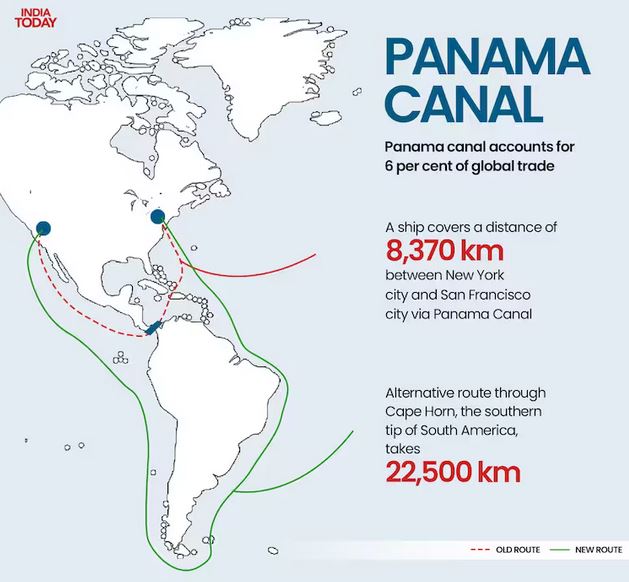
  • Why climate change poses an existential threat to Panama Canal?   

    Why in the News?

    The Panama Canal, which links the Atlantic and Pacific Oceans through the Isthmus of Panama, opened to ships 110 years ago. Now, it is facing a serious threat to its existence.

    System of Water Elevators

    • The Panama Canal utilizes a sophisticated lock system that functions as water elevators, allowing ships to navigate the elevation difference between the Atlantic and Pacific Oceans. This system is essential because the two oceans are at different elevations, with the Pacific being slightly higher.

    Operation of the Locks

    1. Ship Enters: A ship approaches the first lock chamber, which is at sea level. The gate opens to allow the ship into the chamber and then closes behind it.
    2. Water Level Adjustment: The valve between the first and second chamber (at a higher elevation) is opened, allowing water to flow into the first chamber from the adjacent higher chamber. This increases the water level in the first chamber.
    3. Transition: Once the water levels between the two chambers are equalized, the gate between them opens, allowing the ship to move into the next chamber. This process is repeated until the ship reaches the desired elevation of 85 feet at Gatun Lake.
    4. Lowering: The reverse process occurs when lowering ships back to sea level at the other end of the canal.

    Note: Each passage requires over 50 million gallons (approximately 200 million liters) of freshwater, primarily sourced from Lake Gatun, which is vital for the canal’s operation.

    Threat of Climate Change

    • Recent droughts have led to significantly lower water levels in Lake Gatun because droughts were exacerbated by climate change and the El Niño phenomenon, which have led to significantly reduced water levels in the lake.
    • In 2023, rainfall was 43% lower than average, making it one of the driest years on record for the region.  which reduced the number of ships able to transit the canal.
    • In December, traffic dropped to as low as 22 ships per day, highlighting the vulnerability of the canal to climatic variations.

    Contentious Solution

    • Proposed Dam: This $1.6 billion project aims to create an additional water source for the canal on the Rio Indio, potentially securing water availability for the next 50 years. However, it has sparked controversy due to its social implications.
      • Displacement Issues: The dam would flood the homes of approximately 2,000 residents, predominantly from lower socio-economic backgrounds, forcing them to relocate and lose their livelihoods. This raises significant ethical concerns regarding the balance between infrastructure needs and the rights of affected communities

    Conclusion:

    Before proceeding with the Rio Indio dam project, engage in thorough consultations with the affected communities, ensuring their voices are heard in the decision-making process. Need to develop a fair compensation and resettlement plan that prioritizes the socio-economic well-being of displaced residents, offering alternative livelihoods and housing options to minimize the negative impact on vulnerable populations.

    Do you know about another elevation-based canal system? 

    1. Kiel Canal (Germany): The Kiel Canal features locks that raise and lower vessels to navigate the elevation differences between the North Sea and the Baltic Sea. It is one of the busiest artificial waterways in the world.
    2. Welland Canal (Canada): This canal connects Lake Ontario and Lake Erie and includes a series of locks that lift ships approximately 43 meters (141 feet) to bypass Niagara Falls. It is an essential part of the Great Lakes shipping route.

    Trade from Panama Canal: 

    • The Panama Canal moves roughly $270 billion worth of cargo annually, which is the trade route taken by 40% of all U.S. container traffic alone. It handles about 5% of all global maritime trade.

    Mains PYQ:

    Mention the significance of straits and isthmus in international trade. (UPSC IAS/2022)

  • How can traffic which causes air pollution be controlled?    

    Why in the News?

    India has 83 of the world’s 100 most polluted cities. Air pollution caused 2.1 million deaths, with 99% breathing air below WHO standards.

    Share of Road Transport in India’s CO2 Emissions as per the International Energy Associates

    • Road transport is responsible for approximately 12% of India’s total CO2 emissions. Within this sector, heavy vehicles are a significant contributor to particulate matter (PM2.5) emissions, which are particularly harmful due to their ability to penetrate deep into the lungs and enter the bloodstream. 
    • Studies indicate that heavy vehicles contribute to about 60-70% of total vehicular PM emissions and 40-50% of total Nitrogen Oxide (NOx) emissions in urban areas. This highlights the critical role that road transport plays in India’s overall air pollution problem.

    Why has the vehicular scrapping policy not been effective in States like Karnataka and Maharashtra?

    • Insufficient Scrapping Facilities: Both states have a limited number of registered vehicle scrapping facilities (RVSFs). For instance, Karnataka has only two authorized RVSFs located in Devanahalli and Koratagere, which are unable to handle the volume of vehicles eligible for scrapping.
    • Voluntary Compliance: The policy’s reliance on voluntary participation has resulted in low engagement from vehicle owners. For example, the policy targets around 20 lakh vehicles for scrapping, but without mandatory compliance, many older, polluting vehicles continue to operate on the roads
    • Lack of Awareness and Less Incentives: There is a lack of awareness regarding the benefits of scrapping old vehicles among the public. Although the policy offers incentives, such as tax relief for scrapping vehicles may not be sufficient to encourage widespread participation.
    • Bureaucratic delays: The implementation of the scrapping policy has faced bureaucratic delays and inconsistencies. In Maharashtra, despite announcing incentives for scrapping old vehicles, the actual impact has been limited due to slow bureaucratic processes and a lack of effective enforcement.

    Steps taken: 

    The Bureau of Energy Efficiency (BEE) has taken several significant steps towards enhancing fuel efficiency and reducing carbon emissions in the transport sector through the implementation of the Corporate Average Fuel Economy (CAFE) norms. 

    • Introduction of CAFE Norms: The BEE has proposed the CAFE III and CAFE IV norms, which aim to set stringent targets for carbon emissions from passenger vehicles.
      • CAFE III, effective from 2027 to 2032, sets a target of 91.7 grams of CO2 per kilometer, while CAFE IV, from 2032 to 2037, aims for 70 grams of CO2 per kilometer. These targets are designed to drive innovation and encourage the adoption of cleaner technologies in the automotive sector.
    • Transition to WLTP Testing: A significant step is the commitment to transition from the Modified Indian Driving Cycle (MIDC) to the World Light Duty Vehicle Testing Procedure (WLTP) by March 31, 2027.
      • The WLTP provides a more accurate and globally harmonized measure of a vehicle’s fuel consumption and emissions, ensuring that the targets reflect real-world driving conditions more effectively.
    • Penalties for Non-Compliance: The BEE has outlined financial penalties for manufacturers that fail to meet the established fuel efficiency standards.
      • For instance, if a manufacturer’s average fuel efficiency exceeds the limit by up to 0.2 liters per 100 km, a penalty of ₹25,000 per vehicle applies. If it exceeds by more than 0.2 liters, the penalty increases to ₹50,000 per vehicle.

    Way forward: 

    • Enhance Infrastructure and Accessibility: Need to increase the number of registered vehicle scrapping facilities (RVSFs) across states like Karnataka and Maharashtra to make the process more accessible.
    • Strengthen Policy Enforcement and Incentives: Transition from voluntary to mandatory compliance for the scrapping of old and polluting vehicles. This can be supported by enhancing public awareness campaigns that highlight the environmental and financial benefits of vehicle scrapping.

    Mains PYQ:

    Q Mumbai, Delhi and Kolkata are the three Megacities of the country but air pollution is a much more serious problem in Delhi as compared to the other two. Why is this so? (UPSC IAS/2015)

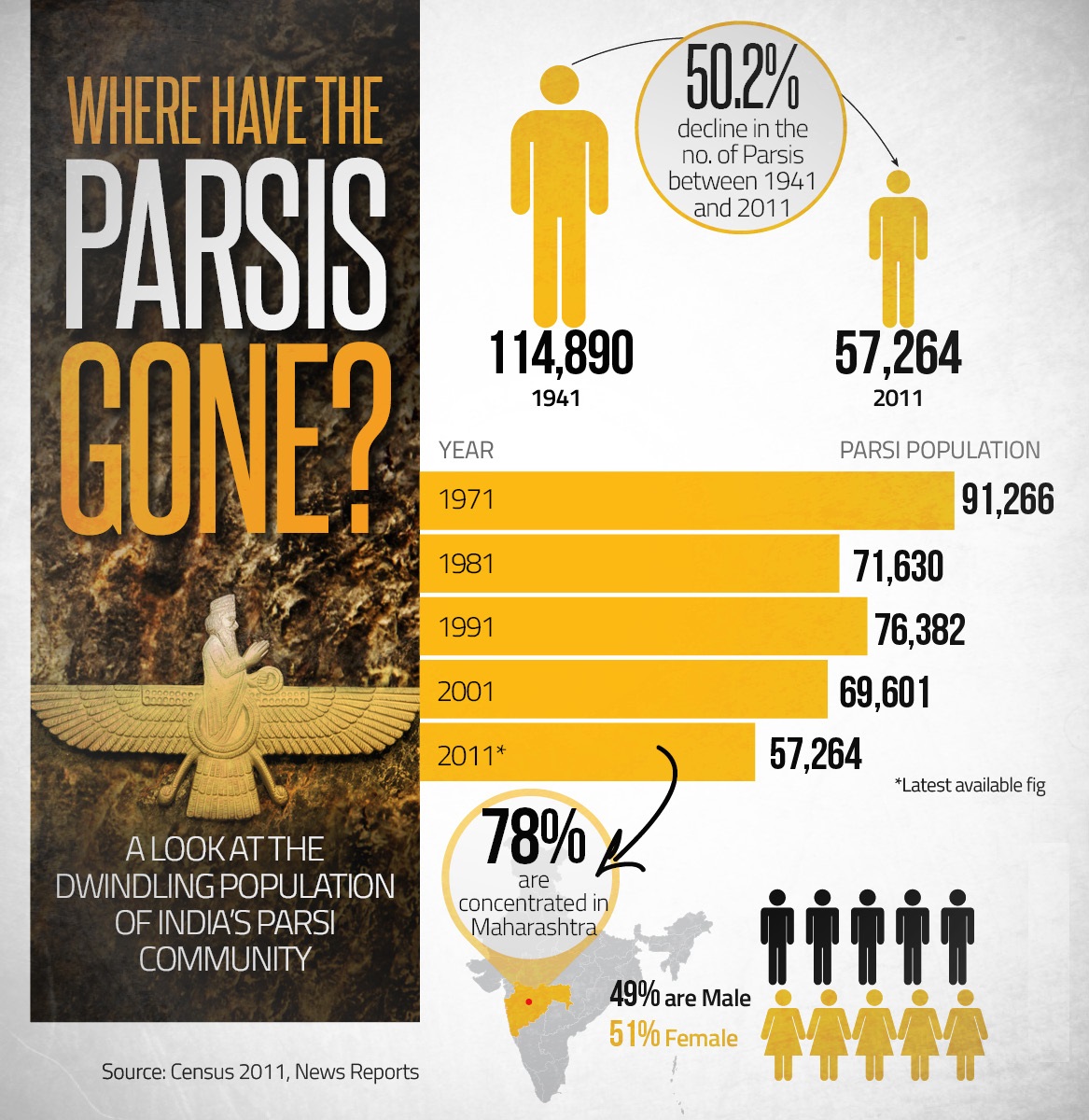
  • Jiyo Parsi Scheme

    Why in the News?

    The Minister for Minority Affairs has launched a dedicated portal for Jiyo Parsi Scheme.

    What is the Jiyo Parsi Scheme?

    • It is a Central Sector Scheme launched in 2013-14 by the Ministry of Minority Affairs.
    • It aims to arrest the population decline of the Parsis, a minority community in India.
    • It focuses on stabilizing and increasing the Parsi population through scientific protocols and structured interventions.
    • Features of the Scheme:
      • Financial support for infertility treatments and related medical care in empanelled hospitals.
      • Assistance for childcare and support for elderly Parsis.
      • Programs to raise awareness and encourage participation within the Parsi community.
    • Target Groups:
      • Parsi married couples of childbearing age needing assistance.
      • Young adults and adolescents in the Parsi community for disease detection, with parental/legal guardian consent.

    Significance of the scheme:

    • This scheme has successfully facilitated the birth of over 400 Parsi children.
    • It preserves the cultural heritage and identity of the Parsi community.
    • It ensures the long-term sustainability of the community in India.
    • It demonstrates government commitment to supporting minority communities and promoting diversity.

    PYQ:

    [2011] In India, if a religious sect/community is given the status of a national minority, what special advantages it is entitled to?

    1. It can establish and administer exclusive educational institutions.
    2. The President of India automatically nominates a representative of the community to Lok Sabha.
    3. It can derive benefits from the Prime Minister’s 15-Point Programme.

    Which of the statements given above is/are correct?

    (a) 1 only

    (b) 2 and 3 only

    (c) 1 and 3 only

    (d) 1, 2 and 3

  • Indian Astronomers discover new method for Solar Cycle Amplitude Prediction

    Why in the News?

    • Astronomers from the Indian Institute of Astrophysics (IIA) have developed a new method to predict the amplitude of the upcoming solar cycle.

    What is Space Weather?

    • Space weather refers to the varying conditions within the solar system and its heliosphere, influenced by the Sun and solar wind.
    • The main components of space weather include: solar wind, coronal mass ejections, and solar flares.
    • These components can compress the Earth’s magnetosphere, triggering geomagnetic storms.
    • This can disrupt communication, power transmission, damage spacecraft electronics, and pose threats to astronauts.

    Solar Cycle and Its Importance

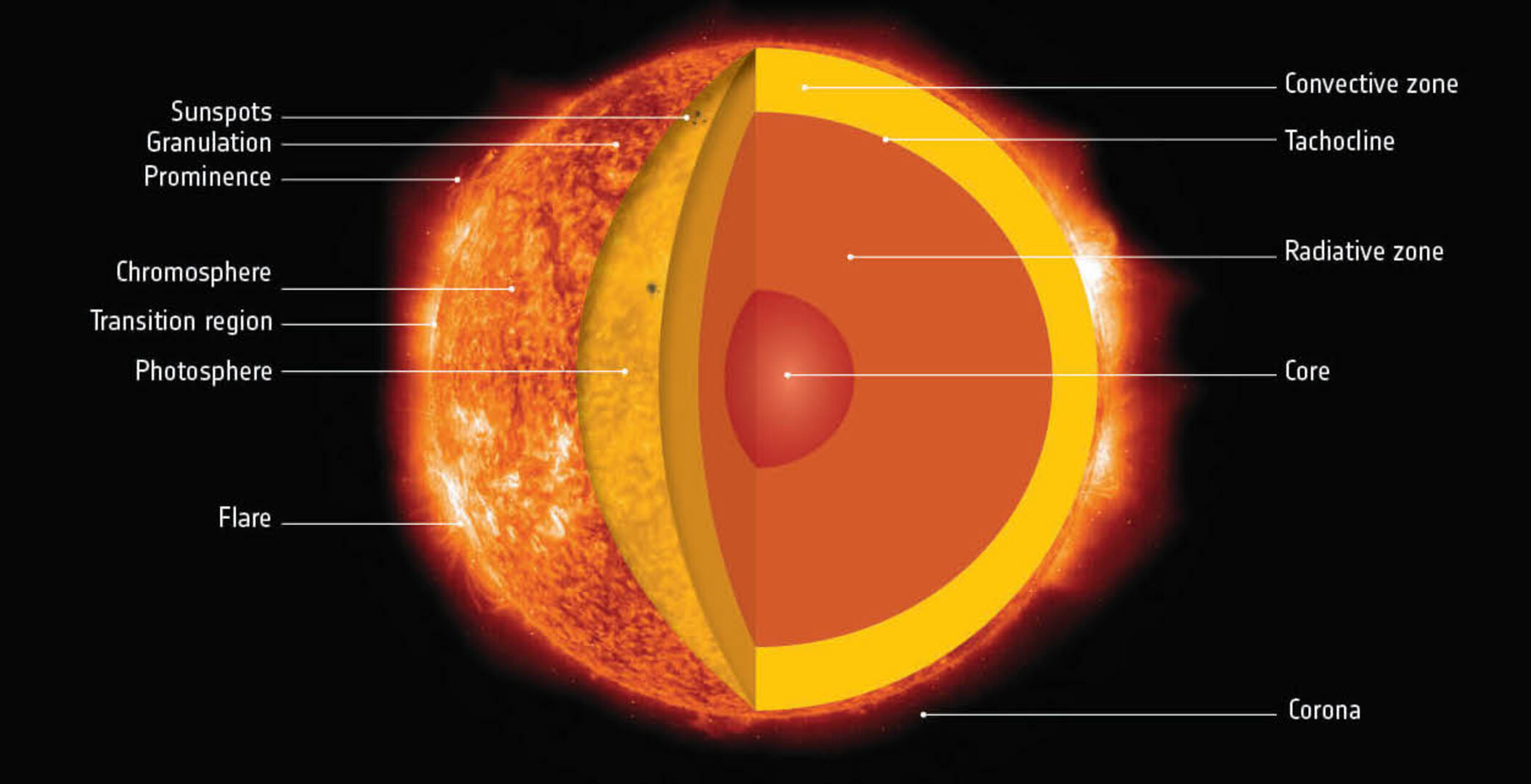
    • The activity of the Sun follows an approximately 11-year periodic cycle, marked by variations in the number of sunspots on the Sun’s surface.
    • This solar cycle influences space weather, Earth’s atmosphere, and climate variations.
    • Predicting the amplitude of the solar cycle is a major challenge in astrophysics, as it directly affects related phenomena and space weather.

    Research Findings

    • IIA researchers discovered that the width of supergranular cells on the solar surface during the minimum year of the solar cycle is correlated with the number of sunspots observed during the subsequent solar cycle maximum.
    • This simple method can be used to predict the strength of the upcoming solar cycle, which is valuable for space weather forecasting.

    What are Supergranular Cells?

    • Supergranular Cells are large convective cells on the Sun’s surface, with diameters of about 30,000 km.
    • These cells are part of the solar convection zone where hot plasma rises, cools as it reaches the surface, and then sinks back down in a continuous cycle.
    • Characteristics:
      • Supergranular cells are larger than granules, another type of convective cell on the Sun. Its borders, known as supergranular lanes, are about 5,000 km thick.
      • Plasma within these cells moves from the center of the cell toward the edges, where it sinks back into the Sun’s interior. This movement creates a network of lanes that can be observed on the solar surface.
      • Supergranular cells are associated with the magnetic field concentrations on the Sun’s surface, often where sunspots and other magnetic features appear.

    PYQ:

    [2022] If a major solar storm (solar flare) reaches the Earth, which of the following are the possible effects on the Earth?

    1. GPS and navigation systems could fail.
    2. Tsunamis could occur at equatorial regions.
    3. Power grids could be damaged.
    4. Intense auroras could occur over much of the Earth.
    5. Forest fires could take place over much of the planet.
    6. Orbits of the satellites could be disturbed.
    7. Shortwave radio communication of the aircraft flying over pola-regions could be interrupted.

    Select the correct answer using the code given below:

    (a) 1, 2, 4 and 5 only
    (b) 2, 3, 5, 6 and 7 only
    (c) 1, 3, 4, 6 and 7 only
    (d) 1, 2, 3, 4, 5, 6 and 7

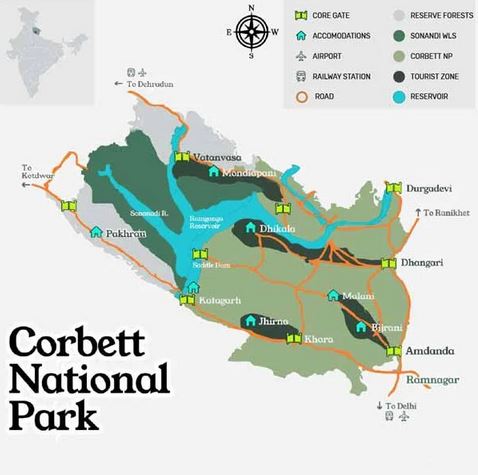
  • Corbett Tiger Reserve

    Why in the News?

    The Jim Corbett National Park and Tiger Reserve authorities have recently concluded an awareness campaign to celebrate World Elephant Day (August 12).

    About Corbett Tiger Reserve

    Details
    Location
    • Situated in the foothills of the Himalayas in Uttarakhand.
    • Spread over Pauri, Nainital, and Almora districts.
    Establishment
    • Established in 1936 as Hailey National Park (first National Park of India).
    • Renamed Corbett National Park in 1957 in honor of Jim Corbett.
    • Total area now extends to 1,288.31 sq. km.
    Terrain
    • Several valleys, with rivers Ramganga, Pallaen, and Sonanadi flowing through them.
    Geographical Features
    • Spread over the Bhabar and lower Shivalik regions.
    • Porous tract with boulders and sand deposits, deep water table.
    Flora
    • Sal and mixed forests, with grasslands called ‘Chaur’.
    • Evergreen Sal, Sheesham, and Kanju trees are common.
    • Lantana weed is a widespread irritant in the reserve.
    Fauna
    • Home to tigers and elephants as key species.
    • Also hosts leopards, small carnivores, ungulates like sambar and spotted deer, birds, reptiles (gharials, crocodiles), and fishes.


    PYQ:

    [2020] Among the following Tiger Reserves, which one has the largest area under “Critical Tiger Habitat”?

    (a) Corbett

    (b) Ranthambore

    (c) Nagarjunasagar- Srisailam

    (d) Sunderbans

  • National Pest Surveillance System (NPSS)

    Why in the News?

    The Centre has launched the AI-based National Pest Surveillance System (NPSS) to help farmers connect with agriculture scientists and experts for pests’ control.

    What is the National Pest Surveillance System (NPSS)?

    • The NPSS is an AI-based platform launched by the government on August 15, 2024.
    • It is designed to help farmers connect with agricultural scientists and experts for effective pest control using their phones.
    • It aims to reduce farmers’ dependence on pesticide retailers.
    • It provides data for selected crops i.e. Rice, Cotton, Maize, Mango and Chilies.

    How will farmers use it?

    • Farmers can take photos of infested crops or pests using the NPSS platform, which are then analyzed by scientists and experts.
    • Then they will suggest the correct quantity of the pesticide at the right time, reducing excessive pesticide use.
    • Target Groups: Approximately 14 crore farmers across India.

    Significance

    • It will reduce crop damage, improve pest management practices, and reduce the risk of soil damage by minimizing excessive pesticide use.

    PYQ:

    [2014] With reference to Neem tree, consider the following statements:

    1. Neem oil can be used as a pesticide to control the proliferation of some species of insects and mites.

    2. Neem seeds are used in the manufacture of biofuels and hospital detergents.

    3. Neem oil has applications in pharmaceutical industry.

    Which of the statements given above is/are correct?

    (a) 1 and 2 only

    (b) 3 only

    (c) 1 and 3 only

    (d) 1, 2 and 3

  • The Seductive Trap of the Civil Services    

    Why in the News?

    Public service doesn’t have exclusive rights to serve the nation, nor does it offer any special opportunities for doing so.

    Present Status of Civil Services in India

    1. Reputation and Credibility: Recent controversies, such as the case of IAS probationer Puja Khedkar, who has allegedly misused quotas and provided false documentation shadow over the credibility of UPSC.
    2. High Aspirations and Struggles: The civil service job is a highly demandable career in India. It is often viewed as a prestigious and stable option which leads to a competitive environment where many aspirants repeatedly attempt the UPSC exams leading to mental health struggles and societal pressure. 
    3. Coaching Industry Influence: The expansive coaching industry thrives on the aspirations of civil service candidates by capitalizing on the high failure rates and the desperation of aspirants.

    About the Kothari Commission: 

    • The Kothari Commission, officially known as the Education Commission of 1964-66, was established by the Government of India to comprehensively evaluate the educational system and recommend reforms. It was chaired by Dr. D. S. Kothari.
    • The Commission aimed to align education with national development goals and address various shortcomings in the existing system. 
    • Its report, titled “Education and National Development,” was submitted on June 29, 1966.

    Suggestions from the Kothari Commission:

    The Kothari Commission’s recommendations, which aimed to reform education and public service, can provide a framework for addressing the current challenges in the civil services:

    1. Age Limit Adjustments: The government should reduce the upper age limit for candidates from around 34-35 years to 25 years, with allowances for special categories which could help mitigate the prolonged pursuit of civil services and reduce the burden on young aspirants.
    2. Limiting Attempts: Restricting the number of attempts to three, with an additional attempt for special categories which could help streamline the process and discourage the excessive commercialization of coaching services that exploit aspirants’ ambitions.
    3. Broadened Perspectives on Service: Encouraging young people to view various professions as valid forms of national service rather than solely focusing on government positions.

    Way forward: 

    • Reforming Recruitment and Training Processes: To enhance credibility and transparency in civil services recruitment, the UPSC and related bodies could implement stricter verification processes for candidates’ credentials, including quotas and documentation.
    • Diversifying Career Awareness and Opportunities: The government, along with educational institutions like CBSE can promote awareness of diverse career paths beyond civil services, emphasizing the value of contributing to the nation through various professions.

    Mains PYQ:

    Q Initially Civil Services in India were designed to achieve the goals of neutrality and effectiveness, which seems to be lacking in the present context. Do you agree with the view that drastic reforms are required in Civil Services. Comment (UPSC IAS/2017)