💥Join UPSC 2027,2028 Mentorship (August Batch) + XFactor Notes & Microthemes PDF

GS Paper: GS1

  • Groundwater Extraction Lowest in 18 years

    groundwater

    Groundwater extraction in India saw an 18-year decline, according to an assessment by the Central Ground Water Board (CGWB).

    What is Groundwater?

    groundwater

    • Groundwater is the water found underground in the cracks and spaces in soil, sand and rock.
    • It is stored in and moves slowly through geologic formations of soil, sand and rocks called aquifers.
    • Aquifers are typically made up of gravel, sand, sandstone, or fractured rock, like limestone.
    • Water can move through these materials because they have large connected spaces that make them permeable.
    • Aquifers, hand-dug wells, and artesian wells are different types of sources of groundwater.

    Declining trend of groundwater extraction

    • The total annual groundwater recharge for the entire country is 437.6 billion cubic metres (bcm) in 2022.
    • However the extraction for entire country is only 239.16 bcm, according to the 2022 CGWB report.
    • By comparison, an assessment in 2020 found that the annual groundwater recharge was 436 bcm and extraction 245 bcm.
    • The 2022 assessment suggests that groundwater extraction is the lowest since 2004, when it was 231 bcm.

    Implications of the CGWB report

    • A detailed analysis of the assessment indicates increase in ground water recharge.
    • This is mainly attributed to:
    1. Increase in recharge from canal seepage,
    2. Return flow of irrigation water and
    3. Recharges from water bodies/tanks & water conservation structures.

    Significance of groundwater

    • Groundwater supplies drinking water to a sizeable population in India and almost 99% of the rural population.
    • It helps grow our food. 64% of groundwater is used for irrigation to grow crops.
    • It is an important component in many industrial processes.
    • It is a source of recharge for lakes, rivers, and wetlands.

    Why discuss this?

    • Depletion: People face serious water shortages because groundwater is used faster than it is naturally replenished.
    • Contamination: In other areas groundwater is polluted by human activities.

    Reasons for Depletion

    • Increased demand for water for domestic, industrial and agricultural needs and limited surface water resources lead to the over-exploitation of groundwater resources.
    • Limited storage facilities owing to the hard rock terrain, along with the added disadvantage of lack of rainfall, especially in central Indian states.
    • Green Revolution enabled water-intensive crops to be grown in drought-prone/ water deficit regions, leading to over-extraction of groundwater.
    • Frequent pumping of water from the ground without waiting for its replenishment leads to quick depletion.
    • Subsidies on electricity and high MSP for water-intensive crops is also leading reasons for depletion.
    • Inadequate regulation of groundwater laws encourages the exhaustion of groundwater resources without any penalty.
    • Deforestation, unscientific methods of agriculture, chemical effluents from industries, and lack of sanitation also lead to pollution of groundwater, making it unusable.
    • Natural causes include uneven rainfall and climate change that are hindering the process of groundwater recharge.

    Impact of groundwater depletion

    • Lowering of the water table: Groundwater depletion may lower the water table leading to difficulty in extracting groundwater for usage.
    • Reduction of water in streams and lakes: A substantial amount of the water flowing in rivers comes from seepage of groundwater into the streambed. Depletion of groundwater levels may reduce water flow in such streams.
    • Subsidence of land: Groundwater often provides support to the soil. When this balance is altered by taking out the water, the soil collapses, compacts, and drops leading to subsidence of land.
    • Increased cost for water extraction: As the depleting groundwater levels lower the water table, the user has to delve deep to extract water. This will increase the cost of water extraction.

    Regulation of Groundwater in India

    (1) Central Ground Water Authority (CGWA)

    • It has the mandate of regulating ground water development and management in the country.
    • It is constituted under the Environment (Protection) Act of 1986.
    • CGWA issues advisories, public notices and grant No Objection Certificates (NOC) for ground water withdrawal.

    (2) National Aquifer Mapping and Management Programme (NAQUIM)

    • The NAQUIM is an initiative of the Ministry of Jal Shakti for mapping and managing the entire aquifer systems in the country.
    • It maintains the Hydrological Map of India.

    (3) Atal Bhujal Yojana 

    • It is a Central Sector Scheme, for sustainable management of groundwater resources with community participation in water-stressed blocks.

    Way Forward

    • Routine survey: There should be regular assessment of groundwater levels to ensure that adequate data is available for formulating policies and devising new techniques.
    • Assessment of land use pattern: Studies should be carried out to assess land use and the proportion of agricultural land falling under overt-exploited units.
    • Changes in farming methods: To improve the water table in those areas where it is being overused, on-farm water management techniques and improved irrigation methods should be adopted.
    • Reforms in power supply subsidies: The agricultural power-pricing structure needs to be revamped as the flat rate of electricity adversely affects the use of groundwater.
    • Monitoring extraction: There should be a policy in place to monitor the excessive exploitation of groundwater resources to ensure long-term sustainability.


    Click and get your FREE Copy of CURRENT AFFAIRS Micro Notes

  • MHA annual report underlines need to update NPR

    The Home Ministry in its latest annual report has underlined the need to update the National Population Register (NPR) database across the country, except Assam.

    What did the MHA say?

    • The report said the NPR is prepared under various provisions of the Citizenship Rules, 2003, framed under the Citizenship Act, 1955.
    • In 2015, a few fields such as name, gender, date and place of birth, place of residence and father’s and mother’s name were updated and Aadhaar, mobile and ration card numbers were collected.
    • To incorporate the changes due to birth, death and migration, the MHA pressed the need to update it again.

    What is National Population Register (NPR)?

    • The NPR is a Register of usual residents of the country.
    • It is being prepared at the local (Village/sub-Town), sub-District, District, State and National level.
    • This is carried under provisions of the Citizenship Act 1955 and the Citizenship Rules, 2003 (Registration of Citizens and issue of National Identity Cards).
    • It is mandatory for every usual resident of India to register in the NPR.
    • A usual resident is defined for the purposes of NPR as a person who has resided in a local area for the past 6 months or more or a person who intends to reside in that area for the next 6 months or more.

    Why NPR is under fire?

    • Though NPR was first compiled in 2010 and updated in 2015, the new questions were part of a trial exercise involving 30 lakh respondents in September 2019.
    • The exercise has perceived the first step toward the compilation of the National Register of Indian Citizens (NRIC) according to Citizenship Rules, 2003.

    How are NRIC and NPR related?

    • Out of the NPR, a set of all usual residents of India, the government proposes to create a database of “citizens of India”.
    • Thus, the “National Register of Indian Citizens” (NRIC) is a sub-set of the NPR.
    • The NRIC will be prepared at the local, sub-district, district and State levels after verifying the citizenship status of the residents.
    • The rules say the particulars of every family and individual found in the Population Register shall be verified and scrutinized by the Local Registrar.

    How NPR is different from Census?

    • The census involves a detailed questionnaire — there were 29 items to be filled up in the 2011 census.
    • They are aimed at eliciting the particulars of every person, including age, sex, marital status, children, occupation, birthplace, mother tongue, religion, disability and whether they belonged to any SC or ST.
    • On the other hand, the NPR collects basic demographic data and biometric particulars.
    • While the census is legally backed by the Census Act, 1948, the NPR is a mechanism outlined in a set of rules framed under the Citizenship Act, 1955.


    Click and get your FREE Copy of CURRENT AFFAIRS Micro Notes

  • 27th edition of UN-Conference of Parties (UN-COP)

    cop

    The port city of Sharm El-Sheikh, Egypt is hosting the 27th edition of the UN-Conference of Parties (UN-COP).

    Quick recap

    • Last year, PM Modi, at the 26th edition of the COP in Glasgow, Scotland, committed to India becoming net-zero, or in effect carbon neutral, by 2070 along with Panchamrita
    • Environment Minister will be leading the Indian delegation to COP-27 in Egypt.
    • India is determined to press developed countries into making good their unfulfilled commitment to deliver $100 billion a year of climate finance by 2020 and every year thereafter till 2025.

    Conference of Parties (CoP): A Backgrounder

    • The CoP comes under the United Nations Climate Change Framework Convention (UNFCCC) which was formed in 1994.
    • The UNFCCC was established to work towards “stabilisation of greenhouse gas concentrations in the atmosphere.”
    • It laid out a list of responsibilities for the member states which included:
    1. Formulating measures to mitigate climate change
    2. Cooperating in preparing for adaptation to the impact of climate change
    3. Promoting education, training and public awareness related to climate change
    • The UNFCCC has 198 parties including India, China and the USA. COP members have been meeting every year since 1995.

    COP1 to COP25: Key takeaways

    • COP1: The first conference was held in 1995 in Berlin.
    • COP3: It was held in Kyoto, Japan, in 1997, the famous Kyoto Protocol (wef 2005) was adopted. It commits the member states to pursue limitation or reduction of greenhouse gas emissions.
    • COP8: India hosted the eighth COP in 2002 in New Delhi. It laid out several measures including, ‘strengthening of technology transfer… in all relevant sectors, including energy, transport and R&D,  and the strengthening of institutions for sustainable development.
    • COP21: it is one of the most important that took place in 2015, in Paris, France. Here countries agreed to work together to ‘limit global warming to well below 2, preferably at 1.5 degrees Celsius, compared to pre-industrial levels.’

    Significance of COP

    • The event will see leaders from more than 190 countries, thousands of negotiators, researchers and citizens coming together to strengthen a global response to the threat of climate change.
    • It is a pivotal movement for the world to come together and accelerate the climate action plan after several discussion.

    Key agenda of the COP27

    Ans. Loss and Damage Funding

    • The term ‘Loss and Damage’ refers to the economic and non-economic impacts of climate change, including extreme events in countries that are particularly vulnerable to the adverse effects of climate change.
    • Rich countries, historically responsible for the climate crisis, have bullied poorer nations to protect polluters from paying up for climate damages.
    • The term was brought up as a demand in 1991 by the island country of Vanuatu, which was representing the Alliance of Small Island States (AOSIS).


    Try this PYQ:

    Q.With reference to the Agreement at the UNFCCC Meeting in Paris in 2015, which of the following statements is/are correct?

    1. The Agreement was signed by all the member countries of the UN and it will go into effect in 2017.
    2. The Agreement aims to limit the greenhouse gas emissions so that the rise in average global temperature by the end of this century does not exceed 2 degree Centigrade or even 5 degree Centigrade above pre-industrial levels.
    3. Developed countries acknowledged their historical responsibility in global warming and committed to donate dollar 1000 billion a year from 2020 to help developing countries to cope with climate change.

    Select the correct answer using the code given below:

    (a) 1 and 3 only

    (b) 2 only

    (c) 2 and 3 only

    (d) 1, 2 and 3


    [wpdiscuz-feedback id=”xhsg56vfu5″ question=”Please leave a feedback on this” opened=”1″]Post your answers here.[/wpdiscuz-feedback]


    Click and get your FREE Copy of CURRENT AFFAIRS Micro Notes

  • In news: Wangala Dance of Garo Tribe

    wangala

    This newscard is an excerpt from a picture in the print edition of TH.

    Wangala Dance

    wangala

    • Wangala is also called the festival of “The Hundred Drums“.
    • It is a harvest festival celebrated by the Garo tribe in Meghalaya, Nagaland and Assam and Greater Mymensingh in Bangladesh.
    • In this post-harvest festival, they give thanks to Misi Saljong the sun god, for blessing the people with a rich harvest.
    • Wangala is celebrated in the months from September to December, with different villages setting different dates for the occasion.

    Course of celebration

    • The ceremony performed on first day is known as “Ragula” is performed inside the house of the chief.
    • On the second day is known as “Kakkat“.
    • Folks dressed in their colorful costumes with feathered headgears dance to the tune of music played on long oval-shaped drums.
    • While the men beat the drums, the line moves forward in rhythmic accord.
    • The ‘orchestra’ of men includes drums, gong and flutes, punctuated by the sonorous music of an primitive flute made of buffalo horn.


    Click and get your FREE Copy of CURRENT AFFAIRS Micro Notes

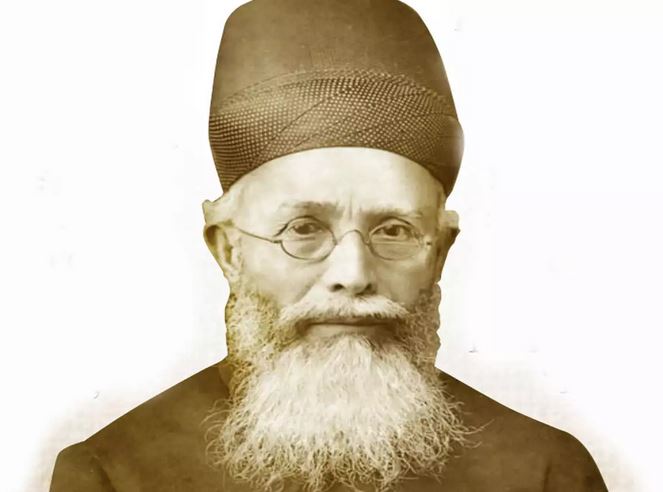
  • Person in news: Dadabhai Naoroji

    dadabhai

    This year, 2022, marks the 130th anniversary of the election, in 1892, of the first person of Indian origin, Dadabhai Naoroji to the House of Commons.

    Why in news?

    • Election of Rishi Sunak as British PM with a narrow majority has brought to focus Naoroji.
    • He too had won Finsbury seat as a MP with a three vote’s majority.

    Dadabhai Naoroji (1825-1917)

    • Dadabhai Naoroji is well known as the “Grand Old Man of India” and “Unofficial Ambassador of India”.
    • He was a Liberal Party Member of Parliament in the British House of Commons, represnting Finsbury Central between 1892 and 1895.
    • He was the second person of Asian descent to be a British MP, the first being Anglo-Indian MP David Ochterlony Dyce Sombre.
    • He was an Indian political leader, merchant, scholar and writer who was served as 2nd, 9th, and 22nd President of the Indian National Congress from 1886 to 1887, 1893 to 1894 & 1906 to 1907.
    • His book Poverty and Un-British Rule in India brought attention to his theory of the Indian “wealth drain” into Britain.
    • He was also a member of the Second Communist International (1889).

    Other works

    • Started the Rast Goftar Anglo-Gujarati Newspaper in 1854.
    • The manners and customs of the Parsees (Bombay, 1864)
    • The European and Asiatic races (London, 1866)
    • Admission of educated natives into the Indian Civil Service (London, 1868)
    • The wants and means of India (London, 1876)
    • Condition of India (Madras, 1882)

    Influence on Gandhi and Jinnah

    • Before his Finsbury win, Naoroji met a young student of law in Inner Temple, 23-year-old Mohandas K Gandhi, and left an everlasting impact on the future leader.
    • He also met another aspiring lawyer then enrolled at Lincoln’s Inn — 16-year-old Mohammed Ali Jinnah, who was to serve for a while as Naoroji’s secretary.
    • Jinnah had the distinction of hearing Naoroji’s maiden speech in the House of Commons from the Visitors’ Gallery.


    Click and get your FREE copy of Current Affairs micro notes

  • A call to ban use of fossil fuels

    fossil fuels

    Context

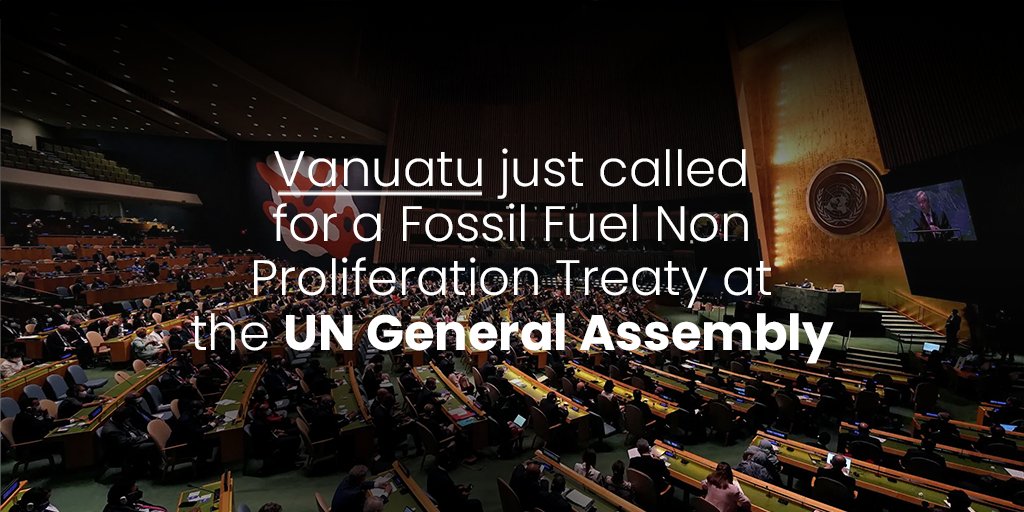
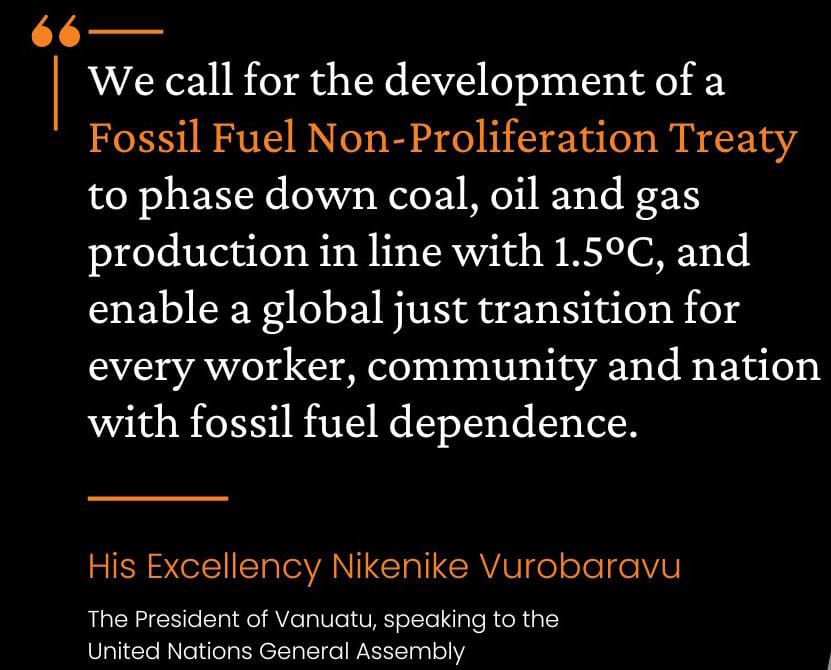
    • The President of Vanuatu, a small Pacific Island, wanted the General Assembly to adopt a universal Non-Proliferation Treaty to ban the use of fossil fuels across the world.

    Why such extreme call on fossil fuel ban?

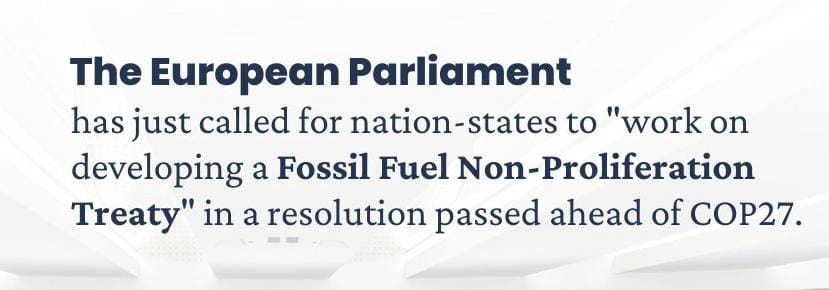
    • Unlikely discussion on climate change: There is a strong belief in some quarters that the next climate conference, just days away in Sharm El Sheikh in Egypt this year (COP27) may not discuss climate change mitigation largely on account of the ongoing energy stress in Europe.
    • Ukraine conflict and rising energy demand: It is felt that the Russia Ukraine crisis and resulting global energy supply shortages have dented everyone’s ability to reduce emissions. This may be a legitimate view but the discussion on coal in the United Nations General Assembly, in September, points to an opposite possibility.

    fossil fuels

    Why this demand is significant?

    • Vanuatu represents the strong voice of island nations: Usually, such a call by a nation whose contribution to the global energy supplies and emissions is negligible would have gone unnoticed. But Vanuatu represents a strong and vocal group of small islands developing states whose voice is heard with attention and empathy in the UN.
    • Endorsement from various stakeholders: More so, when it is a matter that will affect the global discourse on climate change. The small island group has gone around seeking endorsements from various quarters governments, the corporate world and civil society.
    • Support from Indian quarters: Interestingly, the Mayor of Kolkata, capital of one of the largest coal producing States in India, has lent his voice of support.

    fossil fuels

    Similar demand of ban on coal use

    • Demand of coal ban on Glasgow conference: Vanuatu’s plea comes in the wake of a similar call for phaseout of coal which was made last year at the Glasgow climate conference.
    • From phaseout to phasedown: After strong protest by the Indian interlocutors, the language of the decision at Glasgow was toned down from phaseout to phase down of unabated coal power and inefficient fuel subsidies.
    • Unfair for developing countries: When India argued that a phaseout was unfair to countries that were heavily dependent on coal power in the medium term, there was consternation among climate enthusiasts. Given this background, the Alliance of Small Island States (AOSIS) may be preparing the ground to make the fossil fuel elimination a part of national climate plans at COP 27.

    What will be the implications of fossil fuel ban?

    • No responsibility of polluting countries under UN charter: a call to end fossil fuels through a mandate in the UN has very different implications than when it is presented under the UN Climate Change Convention. A UN mandate of this nature is divorced from the legal responsibility of the polluting countries to reduce their emissions on the basis of responsibility, capability and national circumstances, as required by the Climate Change Convention.
    • No commitment technological and financial innovations: It also makes no provisions for technological and financial innovations that are necessary to ensure the transition.
    • Attempt of securitization of climate: A few months ago, a similar attempt had been made in the UN to treat the matter of climate change as that of global security and request the UN Security Council to resolve it. This was dropped because of the opposition of most of the global south, which saw in this an attempt to address climate change not through international cooperation and consensus but by imposing the wish of a select few on others.

    fossil fuels

    What should be the way forward?

    • Without sacrificing the developing economy: A plan to drastically reduce coal fired power would in fact do very little to arrest the problem of climate change globally but may create insurmountable difficulties in securing the progress of developing economies towards key sustainable development goals.
    • Just and equitable transition: If the transition to a world of lower emissions has to be sustainable, it must also be just and equitable.
    • Equal access to alternative energy: It must ensure equal access to energy and secure energy supplies to all, not just to a few. While the developed economies have full access to alternative sources of energy, because of their strength in terms of technology and resources, the developing nations are handicapped. Therefore, a just transition needs to be built on the promise that green energy and a green future will be available to all.
    • Promoting the philosophy LiFE: It is in this context that the call for Lifestyle for Environment (LiFE) issued by Prime Minister Narendra Modi and the UN Secretary General, jointly in India recently, assumes importance. Consumers in countries that consume at an unsustainable pace and contribute to rising emissions have a much greater responsibility to clean up the planet and support the growth of green energy.
    • Most vulnerable should be attended first: The world today is suffering from the adverse effects of climate change which have devastated homes and the livelihoods of large populations in various parts of the vulnerable world. Addressing these impacts and preparing the world for an uncertain future should be the priority.

    Conclusion

    • It is high time that building climate resilient infrastructure in the developing and growing countries is given as much importance as phasing down coal and investment in energy innovations and alternative technologies.

    Mains Question

    Q. What will be the implication for developing countries if call on ban on fossil fuel is adopted? Explain the LiFE in the light of climate transition debate.

    Click and Get your FREE copy of Current Affairs Micro notes


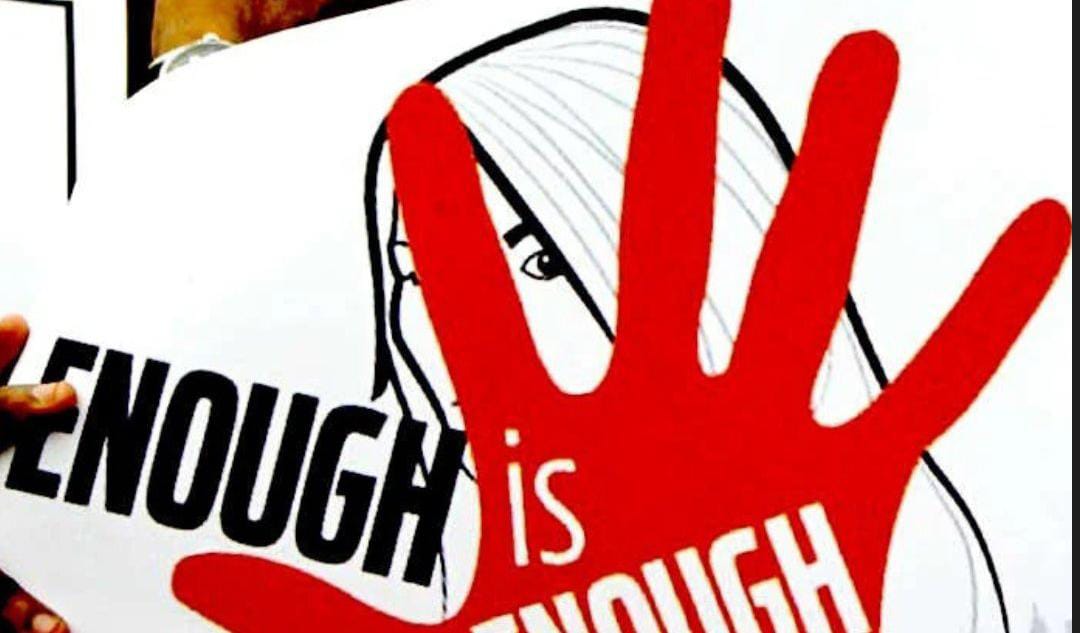
  • Two finger test: Undermining the dignity of women

    finger test

    Context

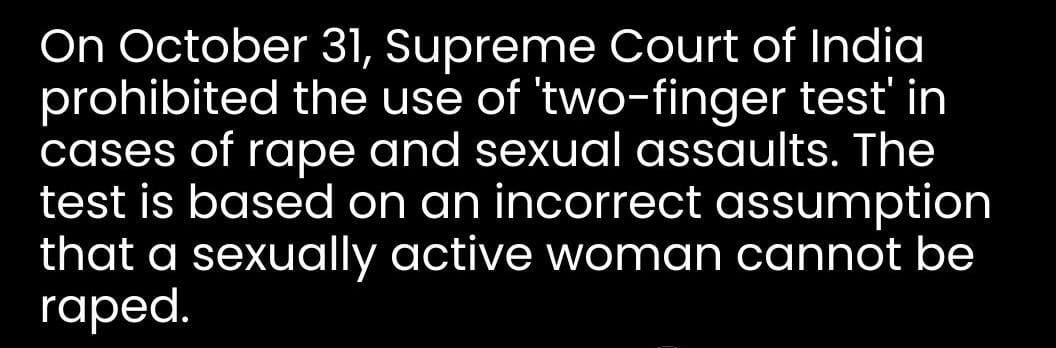
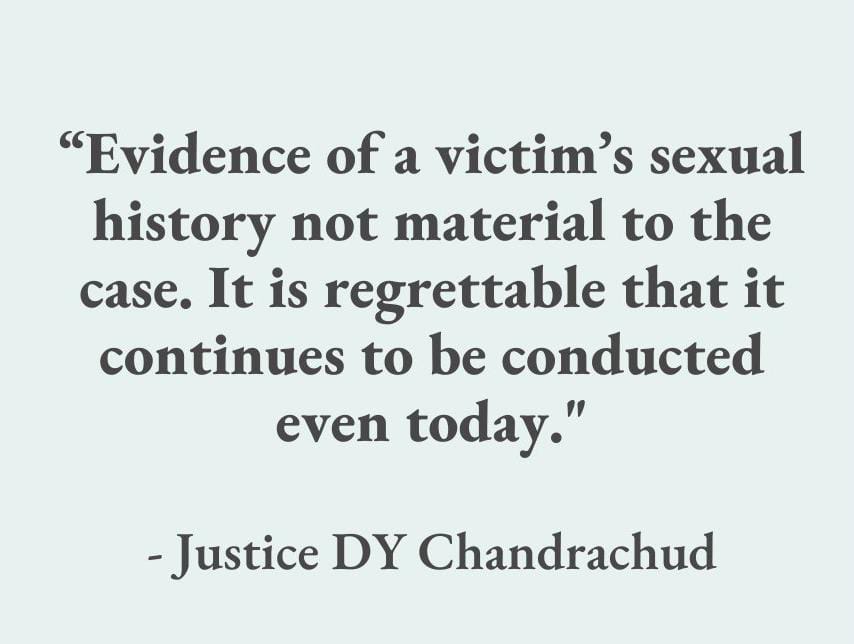
    • On October 31, a two-judge bench of the Supreme Court noted that the two-finger test is a sexist medical practice that re-victimizes and re-traumatizes rape survivors. The Court also issued directions to the Union and state governments to implement the 2014 guidelines of the Ministry of Health and Family Welfare for health providers in sexual violence cases.

    What is two finger tests?

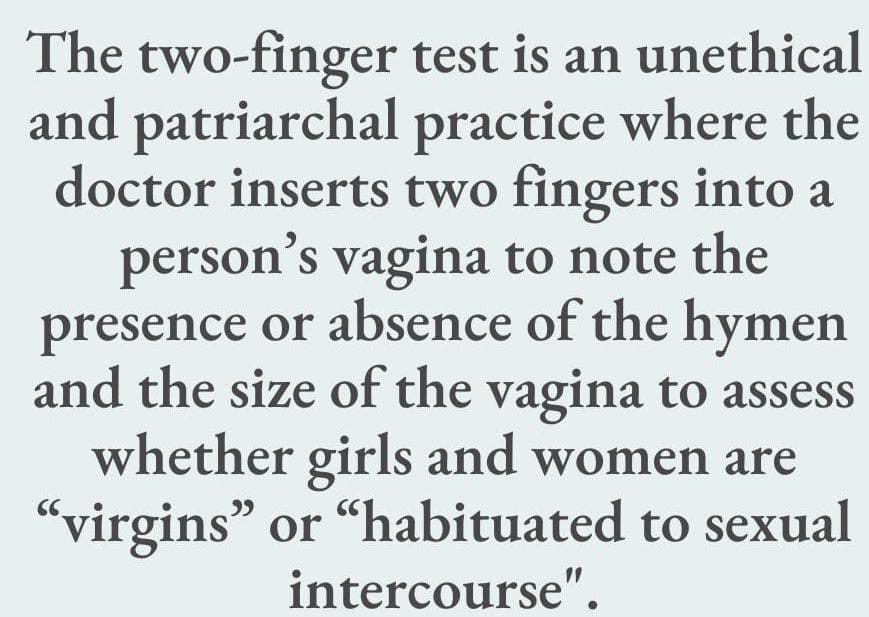
    • The two-finger test involves the medical examiner inserting their two fingers into the vagina of a survivor to note the presence or absence of the hymen and the so-called laxity of the vagina.

    finger test

    What is the expert doctor’s opinion?

    • Misogynistic belief: While a hymen can be torn and its orifice may vary in size for many reasons unrelated to sex, the origin of the two-finger test lies in the misogynistic belief that a torn hymen is an indication that the survivor is habituated to sex and therefore, cannot be raped or is more likely to make false claims about being raped.

    What is the law against such infringement of bodily privacy?

    • SC prohibited test in Rajesh v. State of Haryana 2013 case: “Medicalization of consent” where women’s bodies are given precedence over their voices. Recognizing this as an invasion of privacy and a violation of a survivor’s dignity, the Supreme Court prohibited the test in Lillu at Rajesh v. State of Haryana (2013).
    • Guidelines for medico-legal care for survivors of sexual violence: Shortly after, in March 2014, taking forward the recommendations of the Justice J S Verma Committee Report, the Ministry of Health & Family Welfare issued guidelines for medico-legal care for survivors of sexual violence. These guidelines explicitly prohibited the two-finger test and discussed the need for training medical examiners to respond to the needs of the survivors in a sensitive and non-discriminatory manner.

    Why the practice of two finger tests still persists?

    • Lack of political will: Nearly eight years since the guidelines were issued, the two-finger test still remains a reality. Its prevalence is a reflection of the complete lack of political will to address the issue.
    • No pan-India comprehensive review: While fragmented pieces of narratives and research indicate that the two-finger test continues in rape cases to date, it is incumbent upon the executive to undertake a comprehensive pan-India review to assess the nature and extent of the problem.
    • Change in format and unclarity: The changed format (introduced after the passing of the Criminal Law Amendment Act, 2013) of the medico-legal certificate used by doctors in rape cases did not require them to make a note of the finding of the two-finger test. However, according to the lawyers, this did not mean that the test was not happening anymore. Some says they it was no longer being recorded as such but was still being conducted.
    • Poor medical infrastructure: The continued existence of the two-finger test is a result of the overall poor state of forensic medicine infrastructure in India.
    • Lack of awareness: Lack of awareness amongst the medical community about the unscientific nature of the two-finger test.

    finger test

    What is the opinion of the court?

    • Government must enforce the protocol: The Court commenting on the sorry state of affairs and issuing directions to the government on enforcement of the protocol including the emphasis on workshops and the medical school curriculum is significant.
    • Holding a person, a guilty of misconduct: The Court took a step further by holding a person conducting the two-finger test on a rape survivor guilty of misconduct. It is unclear if the Court was making a reference to professional misconduct on part of the medical examiner.

    finger test

    What should be the way forward?

    • Caregiving to victim: Medical practitioners must see themselves as caregivers when handling sexual violence cases.
    • Awareness about legal system: Medical practitioners should be made to understand as their role in the criminal legal system, specifically towards rape survivors.
    • Training of medical examiners: The training in medical school must prepare medical examiners for their role in the justice system.
    • Police should play an active role: The institution of police should be sensitized on the continued use of the two-finger test in rape cases.
    • Modules on sexuality: Training and workshops designed for doctors needs to include modules on sexuality and discrimination.

    Conclusion

    • Two finger test is further traumatizing the victim of rape. Despite the directives of courts years ago and unscientific nature, two finger test continues. Women empowerment is not only about the earnings and livelihood its also about the right to privacy and dignity of life.

    Mains Question

    Q. What is two finger tests? what is the law against the two-finger test? give the reasons for continuation of two finger test?

    Click and Get your FREE copy of Current Affairs Micro notes


  • Are there anti-superstition laws in India?

    superstition

    Context

    • The brutal murders of two women as part of “ritualistic human sacrifices” in the Pathanamthitta district of Kerala have left the country in shock. Chilling details of the killings have sparked a debate about the prevalence of superstitious beliefs, black magic and sorcery in Kerala. In the absence of a comprehensive law to counter such acts, the call for a strict anti-superstition law has grown louder.

    superstition

    What is Superstition?

    • Superstition is an irrational belief usually founded on ignorance or fear and characterized by obsessive reverence for omens, charms etc. It is a notion, act or ritual that derives from such belief.

    What is Witchcraft?

    • Black magic is also known as Witchcraft is usage of supernatural power for evil and selfish purposes and to perform malicious practices to destroy someone physically or mentally or financially.
    • Black magic makes humans victims of baseless fears, reverses fortunes and confusions.

    superstition

    What is the status of such killings in India?

    • As per the 2021 report of the National Crime Records Bureau (NCRB), six deaths were linked to human sacrifices, while witchcraft was the motive for 68 killings.
    • In 2020, India saw 88 deaths due to witchcraft and 11 died as part of human sacrifices.
    • The maximum number of witchcraft cases were reported from Chhattisgarh (20), followed by Madhya Pradesh (18) and Telangana (11). Kerala saw two cases of human sacrifice, the NCRB report states.

    What are the laws over superstition in India?

    • No central law: In India, there is no central law that exclusively deals with crimes related to witchcraft, superstition, or occult-inspired activities. In the absence of a nationwide legislation, a few States have enacted laws to counter witchcraft and protect women from deadly ‘witch-hunting’.

    superstition

    Anti-superstition Laws enacted by the states

    • Bihar: Bihar was the first State to enact a law to prevent witchcraft, identification of a woman as a witch and “eliminate torture, humiliation and killing of women.” The Prevention of Witch (Daain) Practices Act came into force in October 1999. Anyone who identifies a person as a “witch” and acts to aid this identification can face a jail term of up to three months, or a fine of ₹1,000, or both.
    • Jharkhand: A similar law was passed in Jharkhand in 2001 the Prevention of Witch (Daain) Practices Act.
    • Chhattisgarh: Even though Chhattisgarh is one of the worst-affected States in terms of witchcraft-related crimes, the State enacted the Chhattisgarh Tonahi (witch) Pratadna Nivaran Act only in 2005. As per the law, a person convicted for identifying someone as a witch can be sentenced to up to three years of rigorous imprisonment with a fine
    • Odisha: Following the directions of the Odisha High Court to frame a law to deal with rising cases of witch-hunting in the State, the Odisha Prevention of Witch-Hunting Bill was passed by the Assembly in 2013. The bill provides penalties for a witch doctor, or a person claiming to be a black magician
    • Maharashtra: In Maharashtra, the Maharashtra Prevention and Eradication of Human Sacrifice and other Inhuman, Evil and Aghori Practices and Black Magic Act, 2013 was passed after the murder of anti-superstition activist Dr. Narendra Dabholkar.
    • Rajasthan: The state of Rajasthan enacted the Rajasthan Prevention of Witch-Hunting Act in 2015 to “provide for effective measures to tackle the menace of witch-hunting and prevent the practice of witchcraft.
    • Assam: The Assam Witch Hunting (Prohibition, Prevention and Protection) Act, 2015, which received the President’s assent in 2018, prohibits witch hunting completely. The law states, no person shall identify, call, stigmatize, defame or accuse any other person as witch by words, or by signs or indications or by conducts or actions or any other manner or instigate, aid or abet such an act or commit witch hunting.
    • Karnataka: The latest law was passed in Karnataka where the Karnataka Prevention and Eradication of Inhuman Evil Practices and Black Magic Act, 2017 came into effect in January 2020. The law bans several practices related to black magic and superstition, like forcing a person to walk on fire at religious festivals and the practice of piercing rods from one side of the jaw to the other.

    Conclusion

    • States governments are doing their best to criminalize the rituals of human sacrifices by enacting stringent laws. There is need to have a concrete nationwide anti-superstition law and as a society every individual should be made a stakeholder in awareness against human sacrifices based on witchcraft and rituals.

    Mains Question

    Q. What is Superstition? Are there any anti-superstition laws in India that criminalizes the rituals such as human sacrifices and witch-hunting? Discuss.

    Click and Get your FREE copy of Current Affairs Micro notes

  • Arts in news: Tambo Art

    tambo

    Wayanad farmer creates Ashoka Chakra using Tambo art.

    What is Tambo Art?

    • Tambo art is an artistic technique that consists of creating a design with different varieties of rice directly in a rice field.
    • The origin of this art can be traced to Japan where people plant paddy of various varieties and hues to create the desired images.
    • The image of Ashoka Chakra has been created using four varieties of paddy seeds such as Nazar bath, Kala bath, Kaki sala and Ramlee.
    • They will ripen in shades that range from brown to golden, light brown to black, green to black and green to white and black.


    UPSC 2023 countdown has begun! Get your personal guidance plan now! (Click here)

  • Climate Crisis, India’s Solution – Mission LiFE

    Mission LiFE

    Context

    • Prime Minister Narendra Modi on October 20 unveiled the action plan for Mission LiFE (Lifestyle for Environment), an India-led global mass movement that will nudge individuals and communities for action to protect and preserve the environment.

    What is LiFE?

    • Importance of individual efforts: Mission LiFE makes environmental protection and conservation a participative process and recognizes the importance of each effort no matter how small or big to save the environment both at the level of the individual and at the level of the community.
    • Chaning utilization attitude: The idea promotes an environmentally conscious lifestyle that focuses on ‘mindful and deliberate utilization’ instead of ‘mindless and wasteful consumption’.
    • Creating social networks: The LIFE Movement aims to utilize the power of collective action and nudge individuals across the world to undertake simple climate-friendly actions in their daily lives. The LIFE movement, additionally, also seeks to leverage the strength of social networks to influence social norms surrounding climate.
    • Creating Pro-planet people: The Mission plans to create and nurture a global network of individuals, namely ‘Pro-Planet People’ (P3), who will have a shared commitment to adopt and promote environmentally friendly lifestyles.
    • Seeks to behavioral change and individual actions: Through the P3 community, the Mission seeks to create an ecosystem that will reinforce and enable environmentally friendly behaviors to be self-sustainable. LIFE recognizes that small individual actions can tip the balance in the planet’s favour.

    Do you know pro-planet initiatives worldwide?

    • Denmark:  Denmark promotes the use of bicycles by limiting parking within the city Centre and providing exclusive bike lanes.
    • Japan: Japan has its unique “walk-to-school” mandate, which has been in practice since the early 1950s.

    Mission LiFE

    Why is the need for such movement?

    • Wrong perception about conservation: Environment protection, has for far too long been perceived as a policy issue by the general masses. There has been a perception that only national governments and international organizations can do something to protect the Earth and environment.

    How mission LiFE will be helpful?

    • Mindless consumption of resources: The human race is plundering Planet Earth at a pace that far outstrips its capacity and ability to support life. A recent study says that if the current rate of consumption were to continue, by 2050, humans would need two more planets, in addition to the Earth, to continue to exist.
    • Declining natural resources and beauty: This means that we could be staring at major climatic crises in the years to come and our future generations may never get to experience the beauty of nature, the glaciers, the oceans, the snow and the rivers, that we have been fortunate to see and experience.
    • Unsustainable consumption pattern: What threatens our existence more than anything else is the pace at which we are producing and consuming. The consumption pattern of the world is mindless and pays scant regard to the environment.
    • Attitude change through mission LiFE: Mission LiFE tries to remind the world that the mindset of “use and throw” must immediately be replaced by “reduce, reuse and recycle” so that our scarce resources are not overexploited, and the world doesn’t crumble under the weight of all the waste that it is generating by the second.
    • Small efforts big Impact: Mission LiFE is a philosophy which shows how this can be made possible. It shows the power of small efforts to make big impacts. It believes in the individual’s capacity to change the world. It is the mantra to reverse historical and cultural wrongs wrecked upon the environment. Mission LiFE is the call to action for citizens and governments to save the planet.

    Mission LiFE

    What are India’s efforts for LiFE?

    • Environment friendly culture: In India, the cultural ethos of limiting needs and treating the environment and its resources with reverence has produced very visible results. India constitutes 17 per cent of the world’s population, but our contribution to global carbon emissions is only four per cent.
    • Less carbon footprint per head: Against the developed world’s carbon footprint of four tonnes per head, the carbon footprint of an average Indian counts to only 1.5 tonnes.
    • Multiple global initiatives: Despite not being part of the problem, with numerous global initiatives such as the International Solar Alliance, the One Sun One World One Grid initiative, and the Coalition for Disaster Resilient Infrastructure, India has taken the lead in presenting and building solutions for the world by bringing the global community together.
    • Focus on collective actions of world community: The need to build these global alliances to fight climate change stems from the understanding that only collective action can save the world from the vagaries of climate change that are increasingly becoming a reality and are rising in ferocity.
    • Mindful utilization of resources: India offering knowledge from its religious and cultural ethos to the world, Mission LiFE aims to pull the world away from a “mindless and destructive” consumerist approach towards a “mindful and deliberate utilization” of resources. It is also, at the same time, an effort to prevent India from heading that way.
    • Shift towards sustainable policies: India is already working towards building a circular economy and moving towards a stage where all our energy requirements are met through the use of renewables. Our policies are all aligned towards ensuring sustainable development, where nature is not disregarded for development but where the most marginalized are not left to their destiny by denying them development.

    Mission LiFE

    Conclusion

    • Actions against climate change is not just a fervent hope but an emergent necessity. Through mission LiFE India is trying to portray climate crisis from individual perspective. Mission LiFE has a potential to transform climate change movement into the mass movement.

    Mains Question

    How Mission LiFE will help in conservation of Environment? Critically analyze the India’s efforts to make LiFE a successful mission?

    UPSC 2023 countdown has begun! Get your personal guidance plan now! (Click here)