💥Join UPSC 2027,2028 Mentorship (August Batch) + XFactor Notes & Microthemes PDF

GS Paper: GS1

  • What are Eclipses?

    eclipse

    India recently witnessed a partial solar eclipse. Let’s take a look over all dynamics of Eclipses.

    What are Eclipses?

    • An eclipse takes place when one heavenly body such as a moon or planet moves into the shadow of another heavenly body.
    • There are two types of eclipses on Earth: an eclipse of the Moon and an eclipse of the Sun.

    [I] A Lunar Eclipse

    eclipse

    • The moon moves in an orbit around Earth, and at the same time, Earth orbits the sun. Sometimes Earth moves between the sun and the moon.
    • When this happens, Earth blocks the sunlight that normally is reflected by the moon. (This sunlight is what causes the moon to shine.)
    • Instead of light hitting the moon’s surface, Earth’s shadow falls on it. This is an eclipse of the moon — a lunar eclipse.
    • A lunar eclipse can occur only when the moon is full. (But not every full moon is also a lunar eclipse. Can you guess why?)

    Observing a Lunar Eclipse

    • A lunar eclipse can be seen from Earth at night.
    • A lunar eclipse usually lasts for a few hours.
    • At least two partial lunar eclipses happen every year, but total lunar eclipses are rare.

    There are two types of lunar eclipses: total lunar eclipses and partial lunar eclipses.

    • A total lunar eclipse occurs when the moon and the sun are on exact opposite sides of Earth. Although the moon is in Earth’s shadow, some sunlight reaches the moon.  The sunlight passes through Earth’s atmosphere, which causes Earth’s atmosphere to filter out most of the blue light. This makes the moon appear red to people on Earth.
    • A partial lunar eclipse happens when only a part of the moon enters Earth’s shadow. In a partial eclipse, Earth’s shadow appears very dark on the side of the moon facing Earth. What people see from Earth during a partial lunar eclipse depends on how the sun, Earth and moon are lined up.
    • In a penumbral lunar eclipse, only the more diffuse outer shadow of Earth – the penumbra – falls on the moon’s face. This third kind of lunar eclipse is much more subtle, and much more difficult to observe than either a total or partial eclipse of the moon.

    [II] A Solar Eclipse

    eclipse

    • Sometimes when the moon orbits Earth, it moves between the sun and Earth.
    • When this happens, the moon blocks the light of the sun from reaching Earth.
    • This causes an eclipse of the sun or solar eclipse.
    • During a solar eclipse, the moon casts a shadow onto Earth.

    There are three types of solar eclipses.

    The first is a Total Solar Eclipse

    • A total solar eclipse is only visible from a small area on Earth.
    • The people who see the total eclipse are in the centre of the moon’s shadow when it hits Earth.
    • The sky becomes very dark as if it were night. For a total eclipse to take place, the sun, moon and Earth must be in a direct line.

    The second type is a Partial Solar Eclipse

    • This happens when the sun, moon and Earth are not exactly lined up.
    • The sun appears to have a dark shadow on only a small part of its surface.

    The third type is an Annular Solar Eclipse

    • An annular eclipse happens when the moon is farthest from Earth. Because the moon is farther away from Earth, it seems smaller. It does not block the entire view of the sun. The moon in front of the sun looks like a dark disk on top of a larger sun-coloured disk. This creates what looks like a ring around the moon.
    • During a solar eclipse, the moon casts two shadows on Earth. The first shadow is called the Umbra. This shadow gets smaller as it reaches Earth. It is the dark centre of the moon’s shadow.
    • The second shadow is called the Penumbra. The penumbra gets larger as it reaches Earth. People standing in the penumbra will see a partial eclipse. People standing in the umbra will see a total eclipse.

    Observing a Solar Eclipse

    • Solar eclipses happen once every 18 months.
    • Unlike lunar eclipses, solar eclipses only last for a few minutes.

    Why don’t solar eclipses happen at every New Moon?

    • The reason is that the Moon’s orbit tilts 5° to Earth’s orbit around the Sun.
    • Astronomers call the two intersections of these paths nodes.
    • Eclipses only occur when the Sun lies at one node and the Moon is at its New (for solar eclipses) or Full (for lunar eclipses) phase.
    • During most (lunar) months, the Sun lies either above or below one of the nodes, and no eclipse happens.

    [III] Planet Transits

    • When a planet comes between Earth and the Sun, it is called a transit.
    • The only 2 planets that can be seen transiting the Sun from Earth are Venus and Mercury because they are the only planets that orbit inside Earth’s orbit.
    • From 2000–2199, there will be 14 transits of Mercury.
    • However, Venus transits are even rarer with only 2 this century, in 2004 and 2012.


    UPSC 2023 countdown has begun! Get your personal guidance plan now! (Click here)

  • The Art of Bhoota Kola

    bhoota

    There has been a controversy over the folk art of Bhoota Kola recently depicted in a famous Kannada movie.

    What is Bhoota Kola?

    • Bhoota Kola is an animistic ritual dance performance where local spirits or deities are worshipped.
    • It is believed that a person performing the ritual has temporarily become a god himself.
    • This performer is both feared and respected in the community and is believed to give answers to people’s problems, on behalf of the god.
    • There are several ‘Bhootas’ who are worshipped in the Tulu-speaking belt of Dakshina Kannada, Uttara Kannada and Udupi districts.
    • It is usually performed in small local communities and rural areas.

    How is it performed?

    • The Kola (or dance performance for the Gods) is basically performed in an area near the temple of the village deity which is usually close to large open fields.
    • The ritual involves music, dance, recital, and elaborate costumes.
    • Recitals in Old Tulu recount the origins of the deity and tell the story of how it came to the present location.
    • The divine medium start their traditional performances as the local folklore called ‘paddanas’ are recited.


    UPSC 2023 countdown has begun! Get your personal guidance plan now! (Click here)

  • Take immediate action against hate speech: SC

    hate-speech

    The Supreme Court has expressed concern over growing incidents of hate speeches in the country and directed the governments and police authorities to take suo motu action in such cases without waiting for lodging of formal complaints.

    Why in news?

    • There has been rising incidents of hate speeches targeting a particular community in India.

    What is ‘Hate Speech’?

    • There is no specific legal definition of ‘hate speech’.
    • The Law Commission of India, in its 267th Report, says: “Hate speech generally is an incitement to hatred primarily against a group of persons defined in terms of race, ethnicity, gender, sexual orientation, religious belief and the like
    • Thus, hate speech is any word written or spoken, signs, visible representations within the hearing or sight of a person with the intention to cause fear or alarm, or incitement to violence.”
    • In general, hate speech is considered a limitation on free speech that seeks to prevent or bar speech that exposes a person or a group or section of society to hate, violence, ridicule or indignity.

    How is it treated in Indian law?

    • Provisions in law criminalize speeches, writings, actions, signs and representations that foment violence and spread disharmony between communities and groups and these are understood to refer to ‘hate speech’.
    • Sections 153A and 505 of the Indian Penal Code are generally taken to be the main penal provisions that deal with inflammatory speeches and expressions that seek to punish ‘hate speech’.

    [I] Section 153A:

    • Promotion of enmity between different groups on grounds of religion, race, place of birth, residence, language, etc., and doing acts prejudicial to maintenance of harmony’, is an offence punishable with three years’ imprisonment.

    [II] Section 505:

    • 505(1): Statements conducing to public mischief– The statement, publication, report or rumour that is penalized under Section 505(1) should be one that promotes mutiny by the armed forces, or causes such fear or alarm that people are induced to commit an offence against the state or public tranquillity. This attracts a jail term of up to three years.
    • 505(2): It is an offence to make statements creating or promoting enmity, hatred or ill-will between classes.
    • 505(3): Same offence will attract up to a five-year jail term if it takes place in a place of worship, or in any assembly engaged in religious worship or religious ceremonies.

    Why curb hate speeches?

    • Creates social divide: Individuals believe in stereotypes that are ingrained in their minds and these stereotypes lead them to believe that a class or group of persons are inferior to them and as such cannot have the same rights as them.
    • Threat to peaceful co-existence: The stubbornness to stick to a particular ideology without caring for the right to co-exist peacefully adds further fuel to the fire of hate speech.

    Issues in regulating hate speech

    • Powers to State: Almost every regulation of speech, no matter how well-intentioned, increases the power of the state.
    • Hate speeches are Political: The issue is fundamentally political and we should not pretend that fine legal distinctions will solve the issue.
    • Legal complications: An over-reliance on legal instruments to solve fundamentally social and political problems often backfires.

    Way forward

    • Subjects like hate speeches become a complex issue to deal with, in a country like India which is very diverse, as it was very difficult to differentiate between free and hate speech.
    • There are many factors that should be considered while restraining speeches like strong opinions, offensive comments towards certain communities, the effect on values like dignity, liberty and equality.
    • We all have to work together and communicate efficiently for our country to be a healthy place to live in.


    UPSC 2023 countdown has begun! Get your personal guidance plan now! (Click here)

  • PM launches Mission LiFE

    Prime Minister, in the presence of UN Secretary-General Antonio Guterres, launched ‘Mission LiFE’ (Lifestyle For Environment).

    What is Mission LiFE?

    • NITI Aayog has conceptualized the idea of mission LiFE.
    • It states that the aim of the mission is to follow a three-pronged strategy for changing our collective approach toward sustainability.
    • PM elaborated that Mission LiFE emboldens the spirit of the P3 model i.e. Pro Planet People.
    • The approach of LiFe campaign includes:
    1. Focus on individual behaviours: To make life a mass movement (Jan Andolan).
    2. Co-create globally: Crowdsourcing empirical and scalable ideas
    3. Leverage Local Cultures: Leverage climate-friendly social norms and beliefs of different cultures worldwide to drive the campaign

    Understanding Sustainable living

    • United Nations Environment Programme (UNEP) is the global authority that sets environmental agenda and promotes the implementation of environmental dimension of sustainable development.
    • UNEP says that as the population of the world is increasing the demand for food, fashion, travel, housing, etc also increases.
    • Hence, a sustainable living approach is necessary to make a balance between the needs of the present generation with that of the future.
    • Sustainable living means acknowledging day-to-day life choices and reflecting if there can be alternatives that may impact the environment less.


    UPSC 2023 countdown has begun! Get your personal guidance plan now! (Click here)

  • Lothal: ‘Oldest Dock in the World’, to get heritage complex

    lothal

    Prime Minister has reviewed the construction of the National Maritime Heritage Complex (NMHC) site at Gujarat’s Lothal via video conferencing.

    Where is Lothal?

    • Lothal was one of the southernmost sites of the Indus Valley civilization, located in the Bhal region of what is now the state of Gujarat.
    • The port city is believed to have been built in 2,200 BC. Lothal was a thriving trade centre in ancient times, with its trade of beads, gems and ornaments reaching West Asia and Africa.
    • The meaning of Lothal (a combination of Loth and (s) thal) in Gujarati is “the mound of the dead”.
    • Incidentally, the name of the city of Mohenjo-daro (also part of the Indus Valley Civilisation, now in Pakistan) means the same in Sindhi.
    • In the region, it can be compared with other Indus port towns of Balakot (Pakistan), Khirasa (in Gujarat’s Kutch) and Kuntasi (in Rajkot).

    When was it discovered?

    • Indian archaeologists started the search for cities of the Harappan Civilisation post-1947 in Gujarat’s Saurashtra.
    • Archaeologist SR Rao led the team which discovered a number of Harappan sites at the time, including the port city of Lothal.
    • Excavation work was carried out in Lothal between February 1955 and May 1960.
    • Adjacent to the excavated areas stands the archaeological site museum, where some of the most prominent collections of Indus-era antiquities in India are displayed.

    How was it identified as port city?

    • The National Institute of Oceanography in Goa discovered marine microfossils and salt, gypsum crystals at the site, indicating that sea water once filled the structure and it was definitely a dockyard.
    • It had the world’s earliest known dock, connecting the city to an ancient course of the Sabarmati river.
    • A metropolis with an upper and a lower town had in on its northern side a basin with vertical wall, inlet and outlet channels which has been identified as a tidal dockyard.
    • Satellite images show that the river channel, now dried, would have brought in considerable volume of water during high tide, which would have filled the basin and facilitated sailing of boats upstream.

    What heritage value does it hold?

    • Lothal was nominated in April 2014 as a UNESCO World Heritage Site, and its application is pending on the tentative list of UNESCO.
    • It is the only port-town of the Indus Valley Civilisation.
    • Its heritage value is comparable to following ancient port-towns around the world-
    1. Xel Ha (Peru)
    2. Ostia (Port of Rome)
    3. Carthage (Port of Tunis) in Italy
    4. Hepu in China,
    5. Canopus in Egypt
    6. Gabel (Byblos of the Phoenicians),
    7. Jaffa in Israel,
    8. Ur in Mesopotamia
    9. Hoi An in Vietnam

    Building up of Heritage Complex

    • The project began in March 2022, and is being developed at a cost of Rs 3,500 crore.
    • It will have several innovative features such as Lothal mini-recreation, which will recreate Harappan architecture and lifestyle through immersive technology.
    • It has four theme parks – Memorial theme park, Maritime and Navy theme park, Climate theme park, and Adventure and Amusement theme park.


    UPSC 2023 countdown has begun! Get your personal guidance plan now! (Click here)
  • Official Language Panel and a fresh ‘Hindi Imposition’ Row

    The 11th volume of the Report of the Official Language Committee headed by Home Minister submitted to President has triggered angry reactions from the CMs of Tamil Nadu and Kerala, who have described the Report as an attempt to impose Hindi on non-Hindi-speaking states.

    About the Official Language Panel (for Hindi)

    • The Committee of Parliament on Official Language was set up in 1976 under Section 4 of The Official Languages Act, 1963.
    • Section 4 of the Act says there shall be constituted a Committee on Official language, on a resolution to that effect being moved in either House of Parliament.
    • It should have the previous sanction of the President and passed by both Houses.

    Terms of reference of the committee

    • The Committee is chaired by the Union Home Minister, and has, in accordance with the provisions of the 1963 Act, 30 members — 20 MPs from Lok Sabha and 10 MPs from Rajya Sabha.
    • The job of the Committee is to review the progress made in the use of Hindi for official purposes, and to make recommendations to increase the use of Hindi in official communications.

    History of its establishment

    • With the active promotion of Hindi being mandated by Article 351 of the Constitution, the Official Language Committee was set up to review and promote the use of Hindi in official communications.
    • The first Report of the Committee was submitted in 1987.

    Issues with the committee

    • The name of the Committee is a little misleading.
    • This is because unlike the other Parliamentary panels, the Committee on Official Language is constituted by the Home Ministry.
    • It does not submit its report to Parliament like other Committees of Parliament.
    • The contents of the report submitted are not in the public domain.
    • The panel has the largest representation from the ruling majority party. This has made states more furious.

    What has the Shah panel recommended in its latest (2021) report?

    • Medium of instruction: The panel has made around 100 recommendations, including that Hindi should be the medium of instruction in IITs, IIMs, and central universities in the Hindi-speaking states.
    • Administrative communication: The language used for communication in the administration should be Hindi, and efforts should be made to teach the curriculum in Hindi, but the latter is not mandatory.
    • Hindi translation of HC verdicts: High Courts in other states, where proceedings are recorded in English or a regional language can make available translations in Hindi, because verdicts of High Court of other states are often cited in judgments.
    • Mandate for govt. officials: The panel wants state governments to warn officials that their reluctance to use Hindi would reflect in their Annual Performance Assessment Report (APAR).

    Why are these recommendations under criticism?

    The crux of the recommendations is being ‘perceived’ that-

    • There is a deliberate attempt to reduce the usage of the English language in official communication and to increase the usage of Hindi.
    • Knowledge of Hindi would be compulsory in a number of government jobs.

    Is this the first time that such recommendations have been made?

    • The makers of the Constitution had decided that both Hindi and English should be used as official languages for the first 15 years of the Republic.
    • But in the wake of intense anti-Hindi agitations in the south, the Centre announced that English would continue to be used even after 1965.
    • On January 18, 1968, Parliament passed the Official Language Resolution to build a comprehensive program to increase the use of Hindi for official purposes by the Union of India.

    UPSC 2023 countdown has begun! Get your personal guidance plan now! (Click here)

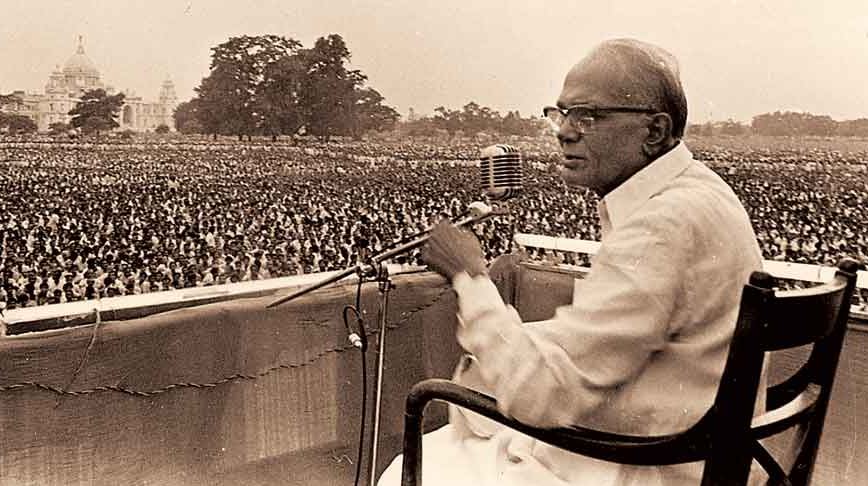
  • Person in news: Jayaprakash Narayan (JP)

    jp

    Union Home Minister unveiled a 15-foot statue of Jayaprakash Narayan or JP on his 120th birth anniversary at the socialist icon’s birthplace, Sitab Diara village in Bihar’s Saran district.

    Who was Jayaprakash Narayan?

    • JP was born in 1902 in Bihar’s Sitab Diara, a village prone to frequent-flooding, after which his family moved to a village in Uttar Pradesh’s Balia district.
    • He quit college to join the non-cooperation movement, before going to study at the University of California, Berkeley, where he was influenced by the ideas of Karl Marx.

    Political affiliations

    • JP returned to India in 1929 and joined the freedom struggle and the Indian National Congress, upon the invitation of Jawaharlal Nehru and drawn by a speech by Maulana Abul Kalam Azad.
    • He went on to become the founding members of the Congress Socialist Party (CSP).
    • However after independence took it out of the Congress and formed the Socialist Party, which was merged with J B Kripalani’s Kisan Mazdoor Praja Party to form the Praja Socialist Party.

    Dissociation from active politics

    • While Nehru was keen on JP joining the Union government, JP sought to distance himself from electoral politics, opting to focus on social causes instead.
    • He was disillusioned with political parties and called for communitarian democracy.
    • Parties, he believed, were centralized and susceptible to moral and financial corruption.

    The JP movement

    • Students in Gujarat began demonstrating in late 1973, in response to mounting mess bills.
    • The protests became widespread in the state, with workers, teachers and several other groups joining in the movement, calling for a change in government.
    • JP saw the youth of Gujarat that had been able to bring about political change as an alternative route from electoral.
    • The protests against corruption grew widespread, and students of Bihar began their movement in March 1974.
    • The students approached JP, who left his self-imposed political exile and led the movement. At a rally in Patna he called for Sampoorna Kranti (Total Revolution).

    Opposition to the Emergency

    • When Indira Gandhi imposed an Emergency on June 25, 1975, JP shifted his focus to opposing the authoritarian rule and opposition parties looked to him for leadership.
    • The Socialists were naturally drawn to him ideologically, while the RSS and its political front the Jana Sangh sought to return to the mainstream, and were happy to be dissolved into the Janata Party that JP had formed.
    • JP is celebrated for launching a popular, mass movement against the Indira Gandhi government, which led to the formation of the Janata Party government in the 1977 general election.
    • This was the first non-Congress government in the country.

    Try this PYQ:

    Who among the following were the founders of the “Hind Mazdoor Sabha” established in 1948?

    (a) B. Krishna Pillai, E.M.S. Namboodiripad and K.C. George

    (b) Jayaprakash Narayan, Deen Dayal Upadhyay and M.N. Roy

    (c) C.P. Ramaswamy Iyer, K. Kamaraj and Veeresalingam Pantulu

    (d) Ashok Mehata, T.S. Ramanujan and G.G. Mehta


    [wpdiscuz-feedback id=”z8t4wjbqux” question=”Please leave a feedback on this” opened=”1″]Post your answers here.[/wpdiscuz-feedback]


    UPSC 2023 countdown has begun! Get your personal guidance plan now! (Click here)

  • Marital rape, MTP Act and the Society

    Marital rapeContext

    • The recent Supreme court judgment expands the definition of rape to marital rape for the MTP Act. Marital rape is still not criminalised. If society does not accept “marital rape” as even a moral offence, how will a woman convince doctors to terminate her pregnancy based on the exception provided by the SC’s verdict.

    Background

    • The Supreme Court has held that all women, irrespective of their marital status, are entitled to safe and legal abortion till 24 weeks of pregnancy under the Medical Termination of Pregnancy (MTP).

    What is Medical Termination of Pregnancy (MTP) Act?

    • Abortion in India has been a legal right under various circumstances for the last 50 years since the introduction of the Medical Termination of Pregnancy (MTP) Act in 1971
    • The Act was amended in 2003 to enable women’s access to safe and legal abortion services.

    Marital rapeWhat are the Changes in Medical Termination of Pregnancy (MTP) Act, 2021?

    • The gestation limit: The gestation limit for abortions has been raised from the earlier ceiling of 20 weeks to 24 weeks, but only for special categories of pregnant women such as rape or incest survivors. But this termination would need the approval of two registered doctors.
    • Doctor’s approval: All pregnancies up to 20 weeks require one doctor’s approval. The earlier law, the MTP Act 1971, required one doctor’s approval for pregnancies up to 12 weeks and two doctors’ for pregnancies between 12 and 20 weeks.
    • Contraceptive failure: Women can now terminate unwanted pregnancies caused by contraceptive failure, regardless of their marital status. Earlier the law specified that only a “married woman and her husband” could do this.
    • In case of fetal disability:  There is also no upper gestation limit for abortion in case of fetal disability if so decided by a medical board of specialist doctors, which state governments and union territories’ administrations would set up.

    What is marital rape?

    • Marital rape is the act of sexual intercourse with one’s spouse without her consent.
    • It is no different manifestation of domestic violence and sexual abuse.
    • It is often a chronic form of violence for the victim which takes place within abusive relations.

    Marital rapeStatistics on Marital rape in India

    • The NFHS-5 survey (2019-21):
    • The survey said that 32% of ever-married women have suffered spousal physical, sexual, or emotional violence, and 27% have suffered at least one form of violence.
    • Twenty-nine percent of ever- married women have experienced spousal physical violence and 14% have suffered emotional violence.
    • The form of sexual violence most commonly reported by women is that their husband used physical force to have sexual intercourse when they did not want to (5%).
    • Four per cent reported that their husband forced them with threats or in other ways to perform sexual acts they did not want to and 3% of them reported that their husband forced them to perform any sexual acts they did not want to.
    • Women in rural areas are more likely (34%) than women in urban areas (27%) to experience one or more forms of spousal violence.

    Why modern India still not accepting marital rape as a rape?

    • Definition: The definition of rape codified in Section 375 of the Indian Penal Code (IPC) includes all forms of sexual assault involving non-consensual intercourse with a woman.
    • Non-Criminalization: Non-Criminalization of marital rape in India emanates from Exception 2 to Section 375.
    • Exemption: Section 375 defines rape and lists seven notions of consent which, if vitiated, would constitute the offence of rape by a man. However, the provision contains a crucial exemption, Sexual intercourse or sexual acts by a man with his own wife, the wife not being under eighteen years of age, is not rape.
    • Marriage as perpetual consent: As per current law, a wife is presumed to deliver perpetual consent to have sex with her husband after entering marital relations. The concept of marital rape in India is the epitome of what we call an “implied consent”. Marriage between a man and a woman here implies that both have consented to sexual intercourse, and it cannot be otherwise.

    What is the link between marital rape and MTP Act?

    • The distinction and the cultural ethos: Married women have a different world attire, jewellery, rituals compared to widows or unmarried or deserted women .So is the right to sexual intercourse. In contrast, unmarried women do not have a right to sex. So what does the right to terminate pregnancy mean for them
    • Ownership of women’s sexuality: Unmarried women cannot have sex, married women cannot say no to sex because men own women’s sexuality. Husbands can use the legal remedy of restitution of conjugal rights against runaway wives. Ownership is integral here
    • Cause of Disharmony: An unmarried woman does not have an owner. It causes confusion and disorder. Women’s sexuality is seen as a cause of disharmony.

    Marital rapeWhy marital rape must be a crime?

    • Associated physical violence: Rape by a spouse, partner or ex-partner is more often associated with physical violence.
    • Mental harassment: There is research showing that marital rape can be more emotionally and physically damaging than rape by a stranger.
    • Compulsive relationship: Marital rape may occur as part of an abusive relationship.
    • Revengeful nature: Furthermore, marital rape is rarely a one-time event, but a repeated if not frequent occurrence.
    • Obligation on women: In the case of marital rape the victim often has no choice but to continue living with their spouse.

    Present regulations in India

    • Indian Penal Code criminalizes rape in most cases, although marital rape is not illegal when the woman is over the age of 18.
    • However, until 2017, men married to those between 15 and 18 could not be convicted of rape.
    • Marital rape of an adult wife, who is unofficially or officially separated, is a criminal offence punishable by 2 to 7 year in prison; it is not dealt by normal rape laws which stipulate the possibility of a death sentence.
    • According to the Protection of Women From Domestic Violence Act (2005), other married women subject to such crime by their husband may demand for financial compensation.
    • They also have the right to continue to live in their marital household if they wish, or may approach shelter or aid homes.

    Way forward

    • Sanctioning marital rape is an acknowledgment of the woman’s right to self-determination (i.e., control of all matters relating to her body.
    • The recent judgment on the MTP Act has extended the definition of rape to marital rape which is a big step in the right direction.
    • However in a society with strong social norms and value systems every stakeholder should have more than a legitimate motive. It has to play an important role.

    Mains Question

    Q.While abortion is available under legal regulations in the country, Discuss the relationship between the Medical Termination of Pregnancy Act and Marital Rape.

    UPSC 2023 countdown has begun! Get your personal guidance plan now! (Click here)

  • Ponniyin Selvan and the Cholas

    In all the buzz around the Tamil film Ponniyin Selvan: 1 or PS1, a fictional period drama, a point of focus has been the Chola dynasty that the film is based on.

    Why in news?

    • A notable actor has spoke about the progressiveness of the Chola era.
    • He mentioned the architectural marvels and temples, the social setup of the time, and how cities were named after women.

    Behind the name- PS1

    • The fictional account of the Chola kingdom appeared in a weekly journal in the early 1950s and garnered popularity.
    • These were later compiled into a novel called ‘Ponniyin Selvan’, which became the inspiration for the movie, whose second part is due for release in 2023.

    Who were the Cholas?

    • The Chola kingdom stretched across present-day Tamil Nadu, Kerala, and parts of Andhra Pradesh and Karnataka around 9th to 12th century AD.
    • The dynasty was founded by the king Vijaylaya, described as a “feudatory” of the Pallavas.
    • Despite being a relatively minor player in the region among giants, Vijaylaya laid the foundation for a dynasty that would rule a major part of southern India.

    Might of the Cholas

    (1) Defense

    • One of the biggest achievements of the Chola dynasty was its naval power, allowing them to go as far as Malaysia and the Sumatra islands of Indonesia in their conquests.
    • The domination was such that the Bay of Bengal was converted into a “Chola lake” for some time.

    (2) Economy

    • While the extent of this domination is disputed, the Cholas had strong ties with merchant groups and this allowed them to undertake impressive naval expeditions.
    • In general, even merchant guilds, which had close ties to the court, had to hire their own guards because roads could be dangerous.

    (3) Culture

    • Another feature is how the practice of building grand temples, common to the dynasties of the region around this time, was ramped up in an unprecedented way by the Cholas, according to Kanisetti.
    • The grand Brihadeeswara temple of Thanjavur, built by the Cholas, was the largest building in India in that period.
    • Additionally, artworks and sculptures were commissioned by Chola kings and queens, including the famous bronze Nataraja idols.

    Women under the Cholas

    • The role of women in the royal family is being brought to focus given their impact on public life.
    • But that is not to suggest that ordinary women wielded equal power as men.
    • The royal women’s proximity to male power was valued, rather than women in general.

    Local annexations

    • When the Chola King Rajadhiraja came to power in 1044, he was able to “subdue” Pandyan and Kerala kings, and presumably to celebrate these victories performed the Ashvamedha sacrifice.
    • The Chola rulers sacked and plundered Chalukyan cities including Kalyani and massacred the people, including Brahmans and children.
    • They destroyed Anuradhapura, the ancient capital of the rulers of Sri Lanka.


    UPSC 2023 countdown has begun! Get your personal guidance plan now! (Click here)

  • Urban planning can change the future of cities to happy cities

    Urban planningContext

    • In the recent few years, the growth of the economy and urbanization have accelerated. Rapid unplanned urbanization has put extreme pressure on natural resources.
    • Unplanned urbanization, however, exerts great strain on our cities. In fact, the Covid-19 pandemic has revealed the dire need for the planning and management of our cities.

    What does urban planning mean?

    • Urban planning, also known as regional planning, town planning, city planning is a technical and political process that is focused on the development and design of land use and the built environment, including air, water, and the infrastructure passing into and out of urban areas, such as transportation, communications, and distribution networks and their accessibility.

    What are ‘Happy Cities’?

    • A term that follows the Green City, Sustainable City, Liveable City, in the lingo of urban planning

    What is a smart city?

    • A smart city is one that uses information and communication technologies to enhance citizen engagement. It is a neo-vision which seeks to improve the delivery of services in urban areas. The following story maps out the steps being taken by India to explore this concept in practice.

    What is the Smart Cities Mission?

    • Sustainable cities: The Smart Cities Mission aims at developing 100 cities, which were shortlisted, into self-sustainable urban settlements.
    • Chronology: The mission was launched on June 25, 2015 and was projected as one aimed at transforming the process of urban development in the country.
    • Comprehensive revamp: Among its strategic components is ‘area-based development’, which includes city improvement (retrofitting), city renewal (redevelopment) and city extension (Greenfield development), plus a pan-city initiative in which ‘smart solutions’ are applied covering larger parts of the city.

    Fast Facts – Urbanization in India

    • Most Urbanized States: Tamil Nadu 43.9%; Maharashtra 4%; Gujarat  37.4%
    • 3 out of world’s 21 mega cities: Mumbai (19 mill); Delhi (15 mill); Kolkata (14 mill)

    Urban planningUrban planning challenges

    Planning

    • Many urban governments lack a modern planning framework
    • The multiplicity of local bodies obstructs efficient planning and land use
    • Rigid master plans and restrictive zoning regulations limit the land available for building, constricting cities’ abilities to grow in accordance with changing needs.

    Housing

    • Building regulations that limit urban density – such as floor space indexes – reduce the number of houses available, thereby pushing up property prices
    • Outdated rent control regulations reduce the number of houses available on rent – a critical option for the poor
    • Policy, planning, and regulation deficiencies lead to a proliferation of slums

    Service delivery

    • There is a strong bias towards adding physical infrastructure rather than providing financially and environmentally sustainable services

    Infrastructure

    • Most urban bodies do not generate the revenues needed to renew infrastructure, nor do they have the creditworthiness to access capital markets for funds
    • Urban transport planning needs to be more holistic – there is a focus on moving vehicles rather than meeting the needs of the large numbers of people who walk or ride bicycles in India’s towns and cities.

    Environment:

    • The deteriorating urban environment is taking a toll on people’s health and productivity and diminishing their quality of life.

    Urban planningSolution offered by NITI ayog committee report on urban planning

    • Demystifying Planning and Involving Citizens: While it is important to maintain the master plans’ technical rigour, it is equally important to demystify them for enabling citizens’ participation at relevant stages. Therefore, the committee strongly recommends a ‘Citizen Outreach Campaign’ for demystifying urban planning.
    • Steps for Enhancing the Role of Private Sector: The report recommends that concerted measures must be taken at multiple levels to strengthen the role of the private sector to improve the overall planning capacity in the country.
    • Revision of Town and Country Planning Acts: Most States have enacted the Town and Country Planning acts, that enable them to prepare and notify master plans for implementation. However, many need to be reviewed and upgraded.
    • Revision of Town and Country Planning Acts: Most States have enacted the Town and Country Planning Acts, that enable them to prepare and notify master plans for implementation. However, many need to be reviewed and upgraded.

    Interesting fact

    India is home to 11% of the total global urban population.

    Government initiatives

    • Atal Mission for Rejuvenation and Urban Transformation (AMRUT);
    • Pradhan Mantri Awas Yojana (PMAY) – Housing for all (Urban),
    • Smart Cities Mission (SCM),
    • Swachh Bharat Mission (SBM),
    • Heritage City Development and Augmentation Yojana (HRIDAY);
    • Deen Dayal Antyodaya Yojana – National Urban Livelihoods Mission (DAY-NULM).

    Conclusion

    • What is now increasingly understood, is that urban planning and design can be a powerful contributor to the happiness of citizens. The structure and layout of our streets, the availability of green spaces, the possibility of using urban spaces freely, the inclusion of beauty in public space.
    • It is safe to assume that when there are avenues for a community to come together in a pleasant environment, which is accessible to everyone, it can only increase well-being.

    Mains question

    Q. Can urban planning and design change Indian cities to be happy cities? Express your views by addressing the roadblocks in the same.

    UPSC 2023 countdown has begun! Get your personal guidance plan now! (Click here)