💥Join UPSC 2027,2028 Mentorship (July Batch) + XFactor Notes & Microthemes PDF

GS Paper: GS1

  • [pib] Ionospheric based monitoring of large earthquakes

    Scientists of Indian Institute of Geomagnetism (IIG) an autonomous institution of the DST have extensively studied the signatures of recent large earthquakes into the ionosphere with an ambitious aim to derive the seismic source characteristics from the ionosphere.

    CLAIMS

    • The research is a part of the interdisciplinary program ‘Coupled Lithosphere-Atmosphere- Ionosphere-Magnetosphere System (CLAIMS)’ of IIG.
    • CLAIMS focuses on energy transfer to the atmosphere during solid Earth processes such as earthquakes as well as tsunamis.

    Key terms: Co-seismic Ionospheric Perturbations (CIP)

    • In general, the Earth crust uplift during an earthquake produces compressional (i.e. pressure) waves in the overlying atmosphere.
    • These waves propagate upward in the region of exponentially decreasing atmospheric neutral density, and thus, wave amplitude increase with atmospheric heights.
    • On arrival at ionospheric heights, the waves redistribute ionospheric electron density and produce electron density perturbations (disruption) known as CIP.

    Objective of CLAIMS

    • The spatial distribution of near field co-seismic Ionospheric perturbations (CIP) associated with this event could reflect well the ground deformation pattern evolved around the epicentre.
    • These CIPs were derived using the Global Positioning System (GPS) measured Total Electron Content (TEC).
    • The CIP distribution was estimated at Ionospheric piercing point (IPP) altitude.

    Other factors affecting CIP

    The major effective non-tectonic forcing mechanisms at ionospheric altitudes are the-

    1. orientation between the ambient geomagnetic field and seismic induced neutral wave perturbations.
    2. orientation between the moving satellite line of sights and the wave perturbations.
    3. ambient ionospheric electron density gradient.

    Back2Basics

    Ionosphere

    • The ionosphere is the ionized part of Earth’s upper atmosphere, from about 60 km to 1,000 km altitude.
    • It is a region that includes the thermosphere and parts of the mesosphere and exosphere.
    • It is ionized by solar radiation.
  • COVID-19 and its impact on climate talks

    Context

    • Amidst the pandemic, people are breathing cleaner air and are witness to clearer, bluer skies as the human movement has been restricted due to lockdowns imposed by various countries.
    • But while the air may be getting cleaner, the lockdowns are not exactly good news for climate change research.
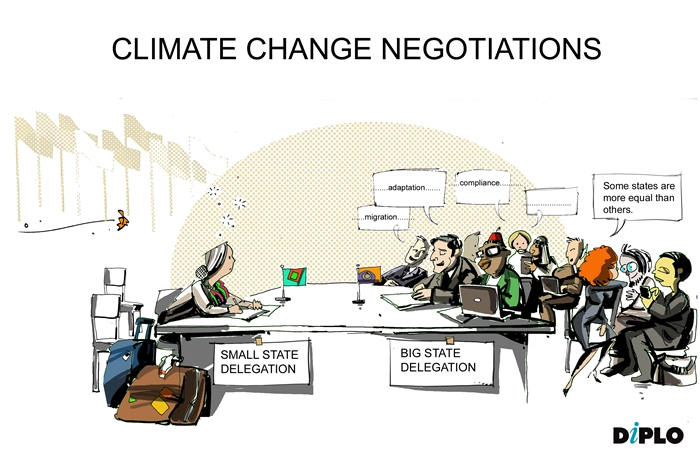
    • Climate talks are witnessing setbacks in the form of funding cuts, cancelled climate conferences and reduced political will to tackle climate change.

    COVID-19 impacting climate change research

    • The hard paced climate change research has been halted and it might become difficult to restart the conversation around it, even after the pandemic is brought under control.
    • The major projects that were scheduled to gather environmental data have all been cancelled or postponed and the crisis has also cast a shadow on routine monitoring of weather and climate change.
    • Further, because commercial flights are running at a lesser frequency, it has also become difficult to collect ambient temperatures and the wind speed, which is taken by in-flight sensors.
    • The other reason that other research has more or less been halted is because of restrictions including lockdowns, insistence on working from home and other social distancing requirements.

    Scope for a back seat

    • Due to the looming health crisis, human kind’s immediate survival is the biggest concern at the moment.
    • However, completely ignoring environmental policy may not be in humanity’s best interest.
    • Largely we still view the environment, and life on earth, as separate. This separation is a dangerous delusion.
    • We can and must do better if we want to prevent the next infectious pandemic.

    Climate change and infectious diseases are not separate

    • The two are not directly related, which is to say that climate change did not lead to the spread of the coronavirus.
    • However, there is a possibility that climate change could have exacerbated the impact of COVID-19 by making the consequences worse for some humans.
    • For instance, air pollution’s impact on human health could make some consequences of the disease more severe for a few humans.
    • A 2003 study on air pollution and the case fatality rate for SARS showed that people exposed to air pollution were more likely to suffer severe consequences from the disease.
  • Pink Supermoon/ Paschal Moon

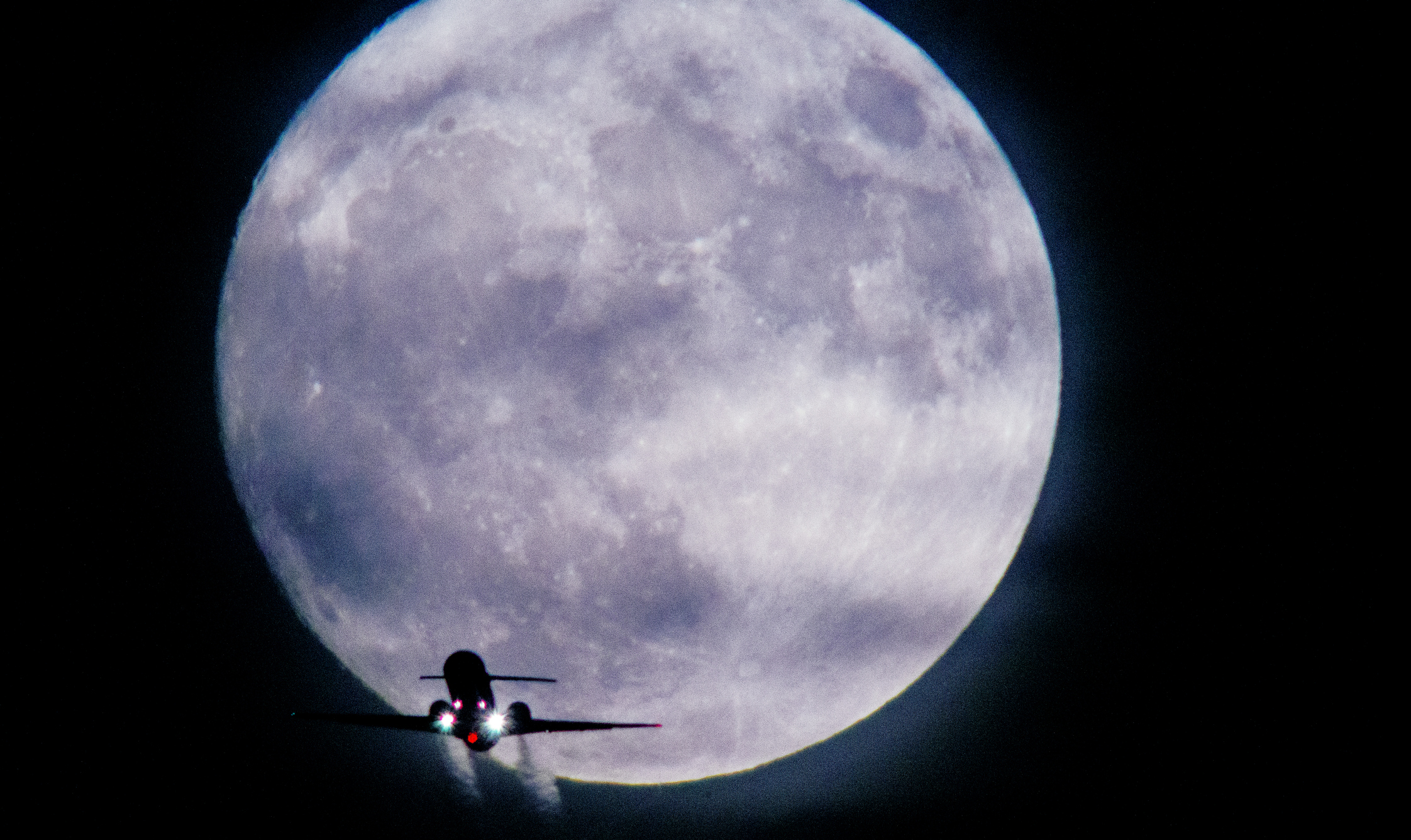
    A supermoon is all scheduled to show up in the sky on April 7. It would be the biggest and brightest full moon of 2020.

    Pink Supermoon

    • According to NASA, a supermoon takes place when a full moon is at its closest to the Earth.
    • When the full moon appears at perigee (closest point from the earth) it is slightly brighter and larger than a regular full moon — and that is what we call a “supermoon.”
    • They are called Supermoons because they are 7 per cent bigger and 15 per cent brighter, compared to an average full Moon.
    • The moon will not be originally pink in colour. It got its name from the pink wildflowers – Wild Ground Phlox – that bloom in the spring and are native to North America.
    • It is also called Paschal moon because, in the Christian calendar, this is used to calculate the date for Easter – the first Sunday after the Paschal Moon is Easter Sunday.
  • Earth Hour

    The Earth Hour, observed annually on the last Saturday of March, was recently celebrated.

    Earth Hour

    • Earth Hour is a worldwide movement organized by the World Wide Fund for Nature (WWF).
    • It is held annually encouraging individuals, communities, and businesses to turn off non-essential electric lights, for one hour, from 8:30 to 9:30 p.m. on a specific day towards the end of March as a symbol of commitment to the planet.
    • It was started as a lights-off event in Sydney, Australia, in 2007.
  • World Happiness Report, 2020


    The World Happiness Report for 2020 has been recently released.

    The World Happiness Report

    • The WHR is an annual publication of the UN Sustainable Development Solutions Network.
    • It contains articles and rankings of national happiness based on respondent ratings of their own lives which the report also correlates with various life factors.
    • The 2020 report for the first time ranks cities around the world by their subjective well-being and digs more deeply into how the social, urban and natural environments combine to affect our happiness.

    Highlights of the 2020 report

    • Finland has been declared the world’s happiest nation for the third year running.
    • As in each of the previous seven reports, Nordic states dominated the top ten, along with countries such as Switzerland, New Zealand and Austria. Luxembourg also edged into the tenth spot for the first time this year.

    Why Finland?

    • People in Finland are said to be shy, away from spontaneous demonstrations of joy, valuing instead the quiet and solitude of the country’s vast forests and thousands of lakes.
    • The northern country’s long dark winters were reputed to be behind high levels of alcoholism and suicide, but a decade-long public health drive has helped cut rates by more than half.
    • Finland’s residents enjoy a high quality of life, security and public services, with rates of inequality and poverty among the lowest of all OECD countries.

    India’s dismal performance

    • India was at a 144 rank nestled between Lesotho and Malawi nations.
    • Pakistan, on the other hand, has been ranked 66.
  • What is Windrush Scandal?


    The British government has apologised for its treatment of Britons of Caribbean origin, which were wrongly detained or deported for being illegal immigrants, after the publication of a devastating official report.

    What is the scandal?

    • The Windrush scandal is a 2018 British political scandal concerning people who were wrongly detained, denied legal rights, threatened with deportation, and, in at least 83 cases wrongly deported from the UK.
    • Many of those affected had been born British subjects and had arrived in the UK before 1973, particularly from Caribbean countries as members of the “Windrush generation”.
    • As well as those who were wrongly deported, an unknown number were wrongly detained, lost their jobs or homes, or were denied benefits or medical care to which they were entitled.
    • A number of long-term UK residents were wrongly refused re-entry to the UK, and a larger number were threatened with immediate deportation by the Home Office.
    • The scandal also prompted a wider debate about British immigration policy and Home Office practice.

    Windrush Generation

    • The Windrush generation is named after one of the many vessels that ferried some half a million people from the Caribbean islands to the U.K. in the late 1940s.
    • The “Empire Windrush” ship had brought one of the first groups of West Indian migrants to the UK in 1948.
    • The generation refers to migrants from the Caribbean Commonwealth who had come to the U.K. at a time when they had the right to remain indefinitely in Britain but had had their rights questioned under a toughened immigration regime.
  • Persons in news: Sheikh Mujibur Rahman

    March 17 is the birth anniversary of Bangabandhu Sheikh Mujibur Rahman (1920-1975), the founding leader of Bangladesh and the country’s first Prime Minister.

    Sheikh Mujibur Rahman

    Sheikh Mujibur Rahman in 1950.jpg

    • Before joining politics, Rahman studied law and political science in Kolkata and Dhaka and agitated for Indian independence.
    • He is referred to as Sheikh Mujib or simply Mujib, the title ‘Bangabandhu’ meaning ‘friend of Bengal’.
    • In 1949, he joined the Awami League, a political party which advocated greater autonomy for East Pakistan.
    • A popular leader in East Pakistan, Rahman played an important role in the six-point movement and the Anti-Ayub movement.

    Role in Bangladesh liberation

    • In 1970, his party secured an absolute majority in the Pakistani general elections; the country’s first, winning more seats than all parties in West Pakistan, including Zulfikar Ali Bhutto’s Pakistan People’s Party.
    • The election results were not honoured; leading to a bloody civil war, and Sheikh Mujib declared Bangladesh’s independence from Pakistan on March 26, 1971.
    • The declaration coincided with a ruthless show of strength by the Pakistani military, in which tanks rolled out on the streets of Dhaka and several students and intellectuals were killed.
    • India under then PM Indira Gandhi provided full support to Rahman and Bangladesh’s independence movement, resulting in the creation of a sovereign government at Dhaka in January 1971.

    His legacy

    • Rahman, who had been arrested and taken to West Pakistan, returned to Bangladesh after being freed in January 1972.
    • For the next three years, Rahman held the new country’s prime ministerial post, and became a celebrated icon in India as well, admired for his moving speeches and charismatic personality.
    • On 15 August 1975, Rahman was killed in a military coup along with his wife and three sons, including 10-year-old Sheikh Russel.
    • His daughters, the current Prime Minister Sheikh Hasina and her younger sister Sheikh Rehana, survived as they were abroad at the time.
  • Earth’s spin has slowed over time


    Earth spun 372 times a year 70 million years ago, compared to the current 365. This means the day was 23½ hours long, compared to 24 today.

    Faster Earth in the olden days

    • It has long been known that Earth’s spin has slowed over time.
    • Previous climate reconstructions, however, have described long-term changes over tens of thousands of years.
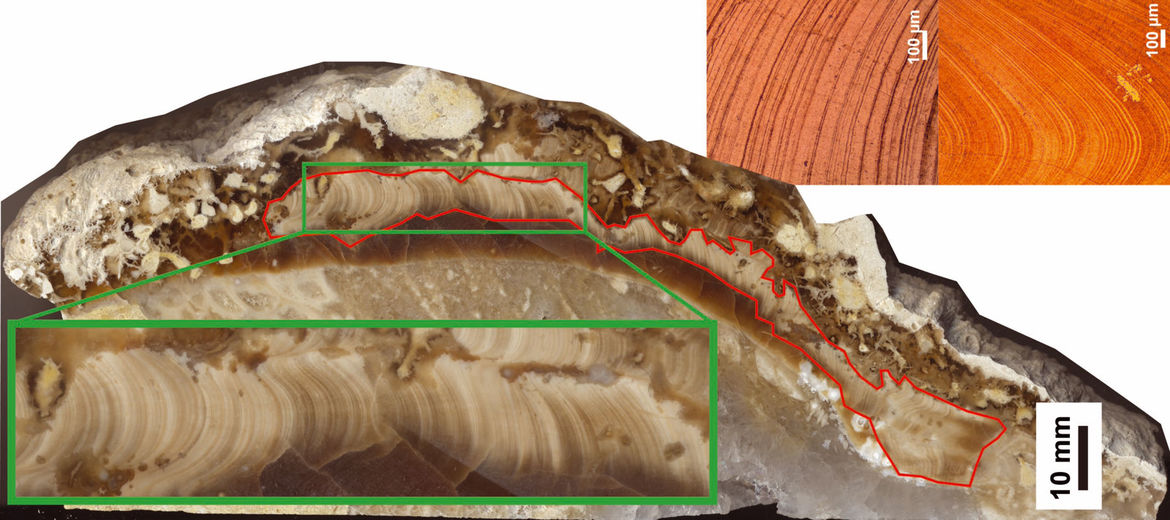
    • The new study looked at daily and annual variations in the mollusc shell.

    About the Mollusc

    • A mollusc is an invertebrate of a large phylum which includes snails, slugs, mussels, and octopuses. They have a soft unsegmented body and live in aquatic or damp habitats, and most kinds have an external calcareous shell.
    • The ancient mollusc, Torreites Sanchez, belonged to an extinct group called rudist clams.
    • At 70 million years ago, it belonged to the Late Cretaceous — it was around the time this epoch ended, some 65 million years ago, that dinosaurs went extinct.

    How did researchers conclude this variation?

    • Torreites sanchezi grew very fast, laying down daily growth rings.
    • Using lasers on a single individual, scientists sampled tiny slices and counted the growth rings accurately.
    • This allowed them to determine the number of days in a year 70 million years ago, and more accurately calculate the length of a day.

    Significance of the research

    • It is important to note that the period of Earth’s orbit has remained the same. In other words, one year 70 million years ago was as long as one year today.
    • However, if there were a calendar then, the year would have been 372 “days” long, with each “day” half-an-hour shorter than one day today.
    • Today, Earth’s orbit is not exactly 365 days, but 365 days and a fraction, which is why our calendars have leap years, as a correction.

    The Moon’s retreat

    • Friction from ocean tides, caused by the Moon’s gravity, slows Earth’s rotation and leads to longer days.
    • And as Earth’s spin slows the Moon moves farther away at 3.82 cm per year.
    • If this rate is projected back in time, however, the Moon would be inside the Earth only 1.4 billion years ago.
    • This new measurement, in turn, informs models of how the Moon formed and how closes it has been to Earth over their 4.5-billion-year gravitational relationship.
  • [pib] Effects of Himalayan slip on its Hydrology

    Researchers from the Indian Institute of Geomagnetism have found the mighty Himalayas subside and move up depending on the seasonal changes in groundwater.

    Tectonic activity and groundwater

    • The Himalayan foothills and the Indo-Gangetic plain are sinking because its contiguous areas are rising due to tectonic activity associated with landmass movement or continental drift.
    • The new study shows that subsidence and uplift are found to be associated with seasonal changes in groundwater, apart from the normal, common reasons.
    • Water acts as a lubricating agent, and hence when there is water in the dry season, the rate of the slip of the fault in this region is reduced.
    • In the Himalaya, seasonal water from glaciers, as well as monsoon precipitation, plays a key role in the deformation of the crust and the seismicity associated with it.
    • The subsidence rate is associated with groundwater consumption.

    Findings of the study

    • The researchers have made the combined use of GPS and Gravity Recovery And Climate Experiment (GRACE) data, which has made it possible for them to quantify the variations of hydrologic mass.
    • The GRACE satellites, launched by the US in 2002, monitor changes in water and snow stores on the continents.
    • The combined data suggest a 12% reduction in the rate of the subsurface slip. This slip refers to how fast the fault is slipping relative to the foot and hanging wall.
    • The slip occurs at the Main Himalayan Thrust (MHT), due to hydrological variations and human activities, over which there is the periodic release of accumulated strain.

    About GRACE Mission

    • The Gravity Recovery and Climate Experiment (GRACE) was a joint mission of NASA and the German Aerospace Center.
    • Twin satellites took detailed measurements of Earth’s gravity field anomalies from its launch in March 2002 to the end of its science mission in October 2017.
    • By measuring gravity anomalies, GRACE showed how mass is distributed around the planet and how it varies over time.


  • [pib] Methanotrophs: the methane-oxidizing bacteria


    Scientists at Agharkar Research Institute (ARI), Pune have isolated 45 different strains of methanotrophic bacteria which have been found to be capable of reducing methane emissions from rice plants.

    What are Methanotrophs?

    • They are bacteria that metabolize and convert methane into carbon-di-oxide.
    • They can effectively reduce the emission of methane, which is the second most important greenhouse gas (GHG) and 26 times more potent as compared to carbon-di-oxide.
    • In rice fields, Methanotrophs are active near the roots or soil-water interfaces.
    • Besides methane mitigation studies, Methanotrophs can also be used in methane value addition (valorization) studies.
    • Bio-methane generated from waste can be used by the Methanotrophs and can be converted to value-added products such as single-cell proteins, carotenoids, biodiesel, and so on.

    Why rice fields?

    • Rice fields are human-made wetlands and are waterlogged for a considerable period. Anaerobic degradation of organic matter results in the generation of methane.
    • Rice fields contribute to nearly 10% of global methane emissions.
    • Very few studies in the world have focused on Methanotrophs from tropical wetlands or tropical rice fields.
    • Practically no cultures of indigenously isolated Methanotrophs from India were available.
    • Native and relevant Methanotrophs isolated from rice fields can be excellent models to understand the effect of various factors on methane mitigation.

    Must read:

    https://www.civilsdaily.com/news/greenhouse-gas-emissions-from-indian-paddy-fields-very-high-ny-based-study/