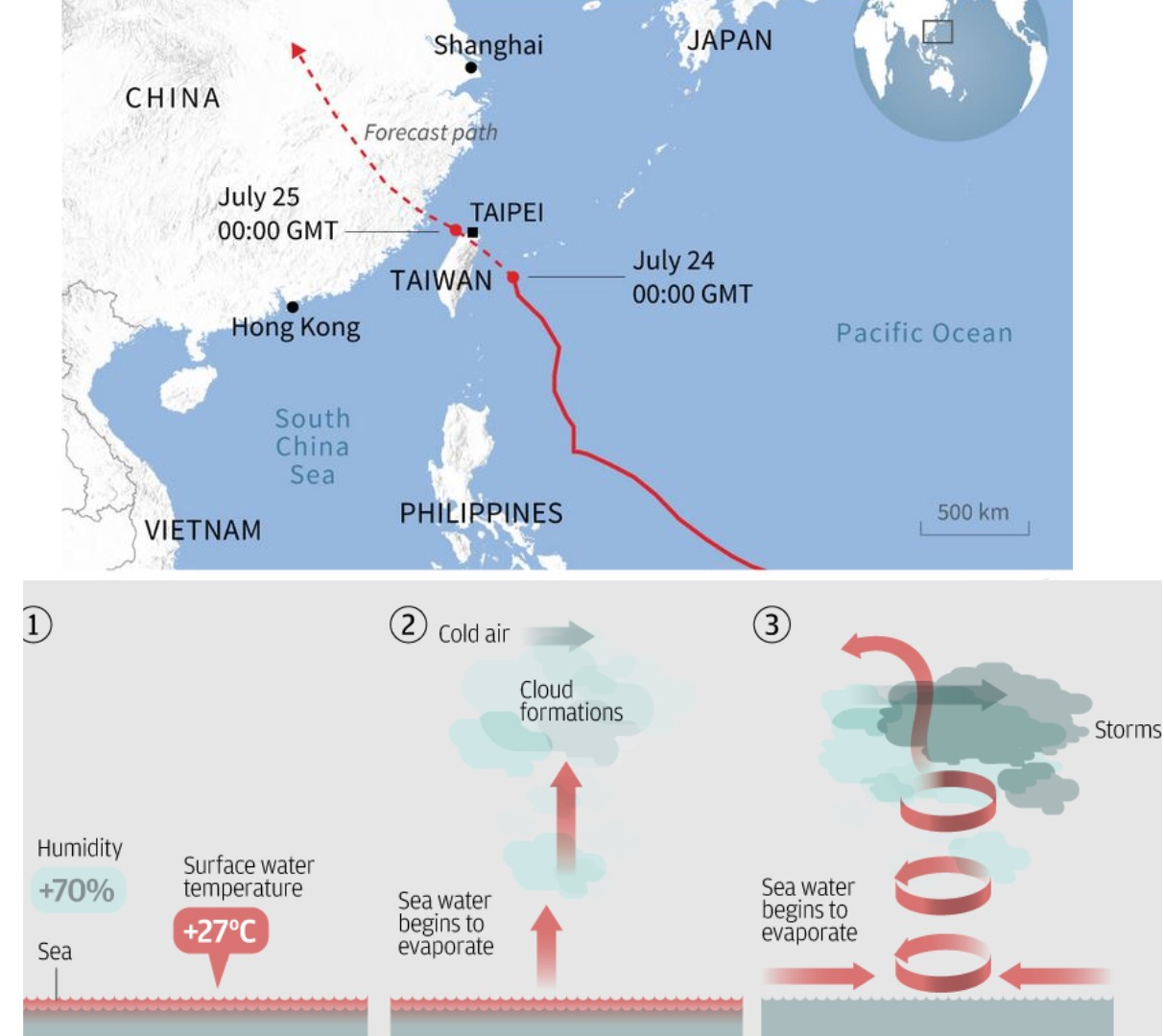
After making landfall in the Philippines, Typhoon Gaemi is heading towards Taiwan.
What is a Typhoon?
A typhoon is a mature tropical cyclone that forms in the Northwest Pacific Ocean, primarily between 100°E and 180°E.
It is characterised by strong winds, and heavy rain, and can cause significant damage due to high wind speeds, storm surges, and flooding.
Factors causing its formation:
It needs sustained ocean temperatures of 26.5°C or higher.
High moisture content in the mid-troposphere.
Presence of the Coriolis force to initiate rotation.
Minimal vertical wind shear to allow for storm growth.
Atmospheric instability to promote rising motion and thunderstorm activity.
An initial low-pressure area or tropical wave to trigger development.
Formation Regions: Northwest Pacific Ocean in areas east of the Philippines, southeast of Japan, and near Taiwan; South China Sea and in Western North Pacific near the Mariana Islands and Guam.
Note: Typhoons do not form in the South Atlantic Ocean and the southeastern Pacific Ocean because of cooler sea surface temperatures and higher wind shear in those regions.
PYQ:
[2015] In the South Atlantic and South-Eastern Pacific regions in tropical latitudes, cyclone does not originate. What is the reason?
(a) Sea surface temperatures are low
(b) Inter-Tropical Convergence Zone seldom occurs
(c) Coriolis force is too weak
(d) Absence of land in those regions
Budget 2024 maintains the same approach as previous years regarding social sector allocations.
Decreasing allocations in the Budget for social sector schemes
Education Sector: The allocations for school education increased by ₹5,000 crore and for higher education by ₹3,000 crore. The increased recoveries from fees and self-financing schemes suggest a shift towards cost recovery in educational institutions.
Health Sector: The allocation for the Department of Health and Family Welfare rose by only ₹1,500 crore.
Food Subsidy: There is a limited increase in food subsidies despite rising economic costs and the need to update coverage based on the latest population figures.
Shift in Approach: The government giving greater emphasis on cost-effectiveness and privatization in education and health, shifting focus towards contributory schemes like the Atal Pension Yojana.
Social Sector Schemes in Budget 2024-25
Social Protection Schemes:
POSHAN Scheme: There is a slight increase from ₹11,600 crore to ₹12,467 crore, but still less than the actual expenditure in 2022-23.
Saksham Anganwadi Scheme: The allocation increased to ₹21,200 crore from ₹20,554 crore, but no increase in salaries for Anganwadi workers or honorarium for mid-day meal cooks.
Maternity and Social Assistance:
Samarthya Scheme: The budget reduced to ₹2,517 crore from ₹2,582 crore. The PMMVY scheme’s maternity benefits have remained unchanged since 2017.
NSAP: Allocation for social security pensions remains unchanged at ₹9,652 crore, reducing real coverage and value.
Schemes for the Unemployed
The ‘Prime Minister’s Package for Employment and Skilling’ includes government-sponsored internships, formalization of jobs through incentives for EPFO enrolments, and skill-development programmes
An allocation of ₹2 lakh crore over five years for the employment package, linked to industry response
Schemes for Street Vendors
The PM SVANidhi Scheme (PM Street Vendor’s AtmaNirbhar Nidhi) aims to benefit over 50 Lakh street vendors across India
All lending institutions, including NBFCs, are participating in the scheme to provide affordable loans to street vendors
Employment Challenges
Stagnant Wages and Dampened Demand: The Indian economy faces significant challenges with stagnant wages, which affect consumer demand. This stagnation can hinder overall economic growth and employment generation.
Reliance on the Private Sector for Job Creation: The government is increasingly looking to the private sector to address employment challenges.
Initiatives like the ‘Prime Minister’s Package for Employment and Skilling’ aim to incentivize private sector job creation through government-sponsored internships and skill development programs.
Limited Budgetary Allocations: The budgetary allocations for employment-related schemes are limited, with the entire employment package amounting to ₹2 lakh crore over five years.
Focus on Supply-Side Solutions: The current approach emphasizes supply-side measures to incentivize the private sector rather than addressing the underlying demand-side issues, such as low consumer spending and economic uncertainty.
Way forward:
Enhance Social Sector Investments: The government should significantly increase budget allocations for critical social sector schemes, particularly in education, health, and social protection.
Comprehensive Employment Strategy: Need to develop a holistic approach to employment that addresses both supply and demand-side issues.
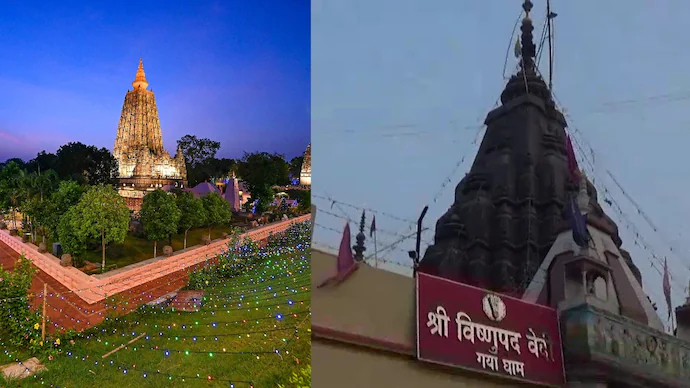
Finance Minister announced during her Union Budget speech that corridor projects will be built for the Vishnupad Temple at Gaya and the Mahabodhi Temple at Bodh Gaya in Bihar.
These will be modelled on the Kashi Vishwanath Temple Corridor, to transform them into world-class pilgrim and tourist destinations.
About the Vishnupad Temple at Gaya
Details
Dedicated to
Lord Vishnu
Significance
Contains a 40 cm long footprint of Lord Vishnu; considered sacred in Hinduism; attracts pilgrims for “Pind Daan” rituals.
Historical Importance
Believed to be over 1000 years old; associated with various legends and historical references in Hindu texts.
Architecture
Built in Shikhara style;
Features intricate carvings and silver-plated flagposts;
Constructed of grey granite blocks.
Built by
Queen Ahilyabai Holkar of Indore in 1787.
Festivals and Rituals
Major site for “Pind Daan” rituals during Pitru Paksha;
Attracts thousands of pilgrims during this period.
Mythology
The footprint is believed to be where Lord Vishnu placed his foot to subdue the demon Gayasur.
Associated River
Located on the banks of the Phalgu River, considered sacred for ritual offerings.
Access and Visitation
Accessible year-round; major pilgrimage site with facilities for devotees.
Recent Developments
Ongoing efforts for preservation and restoration; improved infrastructure for pilgrims.
About the Mahabodhi Temple Complex:
Details
Location
Bodh Gaya, Bihar;
Significance
Marks the location where Buddha attained enlightenment
UNESCO Status
World Heritage Site since 2002
Historical Importance
One of the four holy sites related to Buddha’s life (Enlightenment).
Other holy sites: Lumbini (Birth) in Nepal, Sarnath (First Sermon) in Uttar Pradesh, Kushinagar (Death) in Uttar Pradesh
Original Construction
Built by Mauryan Emperor Ashoka around 260 BCE
Reconstruction
Reconstructed in brick during the late Gupta period (5th or 6th centuries)
Archaeological Finds
Indicates site of veneration since the Mauryan period.
Vajrasana (Diamond Throne): Located within the temple, dated to the third century BCE
Main Temple Structure
Dates from the 6th century CE, incorporates parts from 2nd or 3rd century CE
Architectural Features
Two large shikhara towers, the largest over 55 meters high
Influenced Jain, Hindu, and Buddhist architecture globally
Materials
Made mostly of brick covered with stucco
Bodhi Tree
Direct descendant of the original tree under which Buddha attained enlightenment
Traditional Accounts
Describes 7 weeks Buddha spent meditating after enlightenment at various spots within the complex
Decline and Revival
Declined after Huna invasions and early Islamic invasions.
Revived under the Pala Empire (8th-12th century).
Declined again after 12th century CE invasions by Turk armies.
Q1 Though women in post-independent India have excelled in various fields, the social attitude towards women and the feminist movement has been patriarchal.” Apart from women’s education and women empowerment schemes, what interventions can help change this milieu? (UPSC IAS/2021) Q2 Women empowerment in India needs gender budgeting. What are the requirements and status of gender budgeting in the Indian context? (UPSC IAS/2016)
Prelims:
Which of the following gives ‘Global Gender Gap Index’ ranking to the countries of the world? (UPSC IAS/2017) a) World Economic Forum b) UN Human Rights Council c) UN Women d) World Health Organization
Note4Students:
Prelims: Employment and Unemployment Trends;
Mains:Women issues; Gender gap; Inequality;
Mentor comments: The gender gap refers to the disparities between men and women in various aspects of society, including economic, social, political, and cultural dimensions. It encompasses differences in outcomes, opportunities, and treatment based on gender.
As per the Periodic Labour Force Survey (PLFS) by the Ministry of Statistics and Programme Implementation (MoSPI) offers detailed data on employment, unemployment, and labour force participation. The latest PLFS report for 2022-23 shows a 3.3% unemployment rate for males and 2.9% for females. The Centre for Monitoring the Indian Economy (CMIE) noted a rise in the unemployment rate to 8.1% in April 2024. The PLFS also recorded a labour force participation rate (LFPR) increase to 41.4% in June 2024, with improvements for both genders.
Let’s learn —
Why in the News?
The Lokniti-CSDS survey cites job difficulty and inflation as key factors in the Lok Sabha Elections 2024 results. The India Employment Report (IER) 2024 notes unemployment rose to 5.8% by 2019.
Present Employment and Unemployment Trends:
Unemployment Rates: Unemployment in India rose from just above 2% in 2000 and 2012 to 5.8% in 2019, but improved to 4.1% in 2022. Time-related underemployment remains high at 7.5%.
Labour Force Participation Rate (LFPR): LFPR fell from 61.6% in 2000 to 49.8% in 2018 but partially recovered to 55.2% in 2022. Female LFPR, however, saw significant improvement, especially in rural areas, rising from 24.6% in 2018 to 36.6% in 2022.
Gender Disparities and Trends:
Female LFPR vs. Male LFPR: Female LFPR in India remains low compared to the global average of 53.4% (2019) and decreased from 38.9% in 2000 to 23.3% in 2018. However, there was a 12% increase in rural areas from 2018-22, contrasting with the modest rise in male LFPR.
Unpaid Family Labour: Females are more engaged in unpaid family labour (36.5% in 2022) compared to males (9.3%). The gender gap in unpaid family labour is significant, particularly in rural areas (31.4% difference) compared to urban areas (8.1% difference).
Gendered Employment Preferences and Opportunities:
Traditional Occupations: Many women, especially in urban slums, prefer traditional home-based occupations (like bandhani and embroidery) due to their flexibility, despite the lower income.
Barriers to Enterprise Development: Women face challenges in developing their own enterprises due to limited access to capital and restrictive social norms.
Collectivising through self-help groups (SHGs) and federations can offer new skills and market access, as demonstrated by the Kutch Mahila Vikas Sangathan (KMVS).
The importance of market access:
Empowerment through Market Interaction: Access to markets enhances women’s empowerment by enabling them to navigate and circumvent traditional gender norms, increasing their economic independence and decision-making capabilities.
Reduction of Gender Norm Constraints: Market access allows women to bypass restrictive gender norms, such as prohibitions against certain types of labour, by facilitating the use of hired services and technology.
Economic and Family Benefits: Women’s increased participation in income-generating activities contributes to family income and welfare, improving their position within the family and reducing economic vulnerability.
Reduced Migration: Opportunities for women to engage in economic activities close to home reduce migration and dependency on male family members, leading to enhanced family welfare and stability.
Vibrant Water Markets and Agency: In regions with vibrant water markets, women’s ability to influence agricultural input purchases increases, contributing to greater agency and empowerment in decision-making.
Way Forward:
Focus on External Work Participation: Need to Prioritize creating opportunities for women to work outside the home to directly impact their empowerment.
Long-Term Strategy Required: The government shouldImplement long-term strategies to improve the work environment for women, including safety and basic facilities.
Mandate Workplace Facilities: By ensuring public policy mandates the availability of essential facilities (e.g., toilets and crèches) in small- and medium-sized manufacturing or business units.
Improve Female Labor Force Participation (LFPR): Enhancing female LFPR can lead to better overall employment rates and increased family income.
The 2024 World Economic Forum (WEF) report on global gender gaps has ranked India at 129 out of 146 economies, marking a decline of two positions from the previous year.
Key Highlights by WEF Report:
Gender Parity Regression: India’s gender parity levels in educational attainment dipped in the 18th edition of the report, with a score of 0.964, down from a perfect 1.000 in the 17th edition.
This decline is attributed to a 17.2 percentage point gap between men’s and women’s literacy rates, causing India to rank 124th on this indicator.
Data Update and Period Variation: WEF’s Insight and Data Lead, Ricky Li, explained that the regression is due to updated data from UNESCO for the 2022 and 2023 periods, contrasting with the data from 2018, 2021, and 2022 used in the previous edition.
This emphasizes the impact of periodic updates and corresponding periods on the gender parity score.
What do figures from the Unified District Information System for Education and the All India Survey on Higher Education indicate?
Overall Enrolment and Gender Ratio: UDISE+ (2021-22) shows that girls constitute 48% of the school population, with enrolment increasing from 46.8% in preschool/kindergarten to 48.3% in higher secondary education.
Gross Enrolment Ratio (GER) in Higher Education: AISHE (2021-22) reports that the GER for women in higher education is 28.5%, slightly higher than the male GER of 28.3%, indicating a positive trend in female participation in higher education.
Trends in Female Enrolment: Female enrolment has seen a 32% increase since 2014-15, demonstrating significant progress in higher education, despite challenges such as lower enrolment in STEM fields and regional disparities in secondary education access.
Are girls more likely to complete secondary education when they have access to it?
Yes, girls are more likely to complete secondary education when they have access to it. The data from UDISE+ (2021-22) shows that while there is a slight drop in the percentage of girls enrolled in secondary education (47.9%), those who do have access to secondary education are more likely to continue to higher secondary education, where the gender gap narrows again to 48.3%.
This trend indicates that providing access to secondary education facilities helps girls stay in school and complete their education.
What needs to be done to ensure girls and boys, don’t drop out? (Way forward)
Addressing Socio-Cultural Barriers: Raising awareness about social issues such as early marriage, which disproportionately affects girls, is essential. Collaborating with local authorities and community leaders to advocate for girls’ education can help mitigate these challenges
Community Involvement: Engaging parents and the community in the educational process can foster a supportive environment for students. This can include parent workshops, support groups, and regular communication about student progress.
Flexible Learning Options: Offering flexible learning arrangements, such as part-time schooling or distance education, can accommodate students facing economic or personal challenges. This flexibility can help students balance their responsibilities while continuing their education.
Vocational Training and Skill Development: Incorporating vocational training programs into the school curriculum can equip students with practical skills that increase their employability. This can motivate students to stay in school as they see a direct link between education and future job opportunities
Mains PYQ:
Q Can the vicious cycle of gender inequality, poverty and malnutrition be broken through microfinancing of women SHGs? Explain with examples. (2021)
On 22nd July in 1947, the Constituent Assembly of India adopted the National Flag.
PC: The Better India
About the National Flag Day
The Constituent Assembly met in New Delhi at 10 o’clock, chaired by Dr. Rajendra Prasad.
The Assembly had been meeting since December 9, 1946, discussing various subjects.
The Chair announced the first agenda item: “aMotion by Pandit Jawaharlal Nehru about the Flag.”
Jawaharlal Nehru’s Resolution on National Flag
India’s first Prime Minister, Jawaharlal Nehru, moved the Resolution:
The National Flag of India shall be a horizontal tricolour of deep Saffron (Kesari), white, and dark green in equal proportion.
In the centre of the white band, there shall be a navy blue Wheel representing the Charkha.
The design of the Wheel is based on the Chakra from the Sarnath LionCapital of Ashoka.
The diameter of the Wheel approximates the width of the white band.
The ratio of the width to the length of the Flag shall be 2:3.
The motion was adopted unanimously by the Assembly.
Adoption by Popular Acclaim:
Nehru mentioned that the Flag was adopted by popular acclaim and sacrifice over the past decades.
Nehru clarified that the Flag was not meant to be seen in communal terms.
The design was intended to represent the spirit and tradition of India, grown over thousands of years.
Reactions and Support
There were no significant objections to Nehru’s Resolution.
Several members, including Seth Govind Das, V I Muniswami Pillai, Chaudhri Khaliquzzaman, S Radhakrishnan, Saiyid Mohammad Saadulla, Frank R Anthony, and Sarojini Naidu, paid tributes to the Flag and supported the Resolution.
H V Kamath suggested adding a Swastika inside the Chakra to symbolize peace but withdrew the amendment after seeing the Flag’s design.
Dr. P S Deshmukh preferred retaining the original tricolour with the Charkha but did not push his amendment, respecting the House’s preference.
Back2Basics: History of Our National Flag
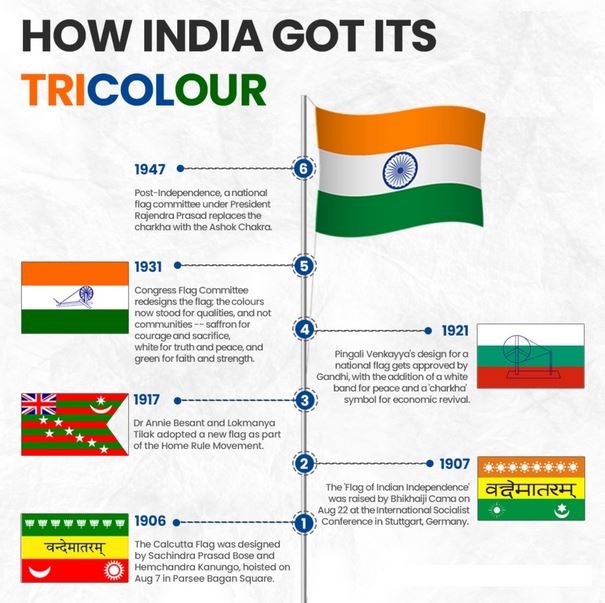
First Public Display in Kolkata (1906):
The first national flag of India was hoisted on August 7, 1906, in Kolkata at Parsee Bagan Square (Green Park).
The flag had three horizontal stripes of red, yellow, and green, with “Vande Mataram” inscribed in the center.
Symbolism: The red stripe included symbols of the sun and a crescent moon, while the green stripe featured eight half-open lotuses.
The flag is believed to have been designed by freedom activists Sachindra Prasad Bose and Hemchandra Kanungo.
Indian Flag in Germany:
In 1907, Madame Cama and her group of exiled revolutionaries hoisted an Indian flag in Germany.
This event marked the first time the Indian flag was hoisted in a foreign country.
Home Rule Movement Flag:
Dr. Annie Besant and Lokmanya Tilak introduced a new flag in 1917 as part of the Home Rule Movement.
The flag featured alternate red and green horizontal stripes, with seven stars in the Saptarishi configuration.
It included a white crescent and star in one top corner, and the Union Jack in the other.
Version by Pingali Venkayya:
Pingali Venkayya, an Indian freedom fighter, is credited with the design of the modern Indian tricolour.
Venkayya first met Mahatma Gandhi in South Africa during the second Anglo-Boer War (1899-1902).
He conducted extensive research and published a book in 1916 that included possible designs for the Indian flag.
At the All India Congress Committee in Bezwada in 1921, Venkayya proposed a basic flag design to Gandhi, featuring two bands of red and green to represent Hindus and Muslims.
PYQ:
[2014] The national motto of India, ‘Satyameva Jayate’ inscribed below the Emblem of India is taken from
A large number of people from the Bhil tribe recently gathered at a rally in Rajasthan’s Mangarh Dham to raise the demand for an independent ‘Bhil state’.
Background of the Bhil Pradesh Demand
The idea of a tribal state, comprising parts of Rajasthan, Madhya Pradesh, Gujarat, and Maharashtra, has been discussed previously.
The demand for a separate tribal state in western India was put forward by the Bharatiya Tribal Party (BTP) formed in2017.
The Bhil community has been demanding that 49 districts be carved out of the four states to establish Bhil Pradesh.
The demand for Bhil Pradesh has been raised repeatedly since Independence.
Historical Context
Bhil social reformer and spiritual leader Govind Gurufirst raised the demand for a separate state for tribals in 1913.
The demand followed the Mangarh massacre, where hundreds of Bhil tribals were killed by British forces.
The massacre took place six years before the Jallianwala Baghmassacre and is sometimes referred to as the “Adivasi Jallianwala”.
Reasons for the Demand
Earlier, the tribal-majorityregions were a single entity but were divided post-Independence.
According to the 2011 census, tribals comprise almost 14% of Rajasthan’s population.
Several Union governments have brought various laws and schemes for tribals but have been slow in implementation.
Example of Implementation Issues
The Provisions of the Panchayats (Extension to Scheduled Areas) Act, 1996, aimed to decentralize governance and empower gram sabhas in tribal areas.
The Rajasthan government adopted the law in 1999, but its rules were only formulated in 2011.
Many people, including local leaders, are still unaware of the law.
Prithipal Singh Randhawa, leader of the Punjab Students Union (PSU), was murdered in Ludhiana on July 18, 1979.
At the time of his death, he was 27 years old and among the most prominent leaders of the student union movement in Punjab during the 1970s.
Who was Prithipal Singh Randhawa?
Randhawa hailed from Hoshiarpur in Punjab and joined Punjab Agricultural University (PAU), Ludhiana, in 1972.
On October 5, 1972, students protested outside Regal Cinema in Moga district against black marketing of tickets.
The police opened fire, killing four people, including student leaders Swarn Singh and Harjeet Singh.
In response, Randhawa launched a mass movement, leading to the arrest of the responsible police officers.
On October 26, 1974, he organized the massive Moga Sangram rally, addressing issues like student fee hikes and the United States’ imperial war in Vietnam.
He was assassinated on July 18, 1979, after abduction.
His rising popularity and anti-establishment stance led to his arrest and 19-month imprisonment under the Maintenance of Internal Security Act (MISA) during the Emergency.
His death led to massive protests in Punjab, Haryana, and Delhi.
Back2Basics:Maintenance of Internal Security Act (MISA): Overview
The MISA was a controversial law enacted by the Indian government in 1971.
It was primarily aimed at ensuring internal security and public order during times of political unrest and emergencies.
MISA was heavily used during the Emergency period (1975-1977) declared by Prime Minister Indira Gandhi.
Key Provisions:
Preventive Detention: MISA allows for the preventive detention of individuals without trial for a maximum period of two years. This was intended to pre-emptively address threats to national security.
Detention without Charges: Individuals could be detained without being charged with a specific offense, based on the suspicion of being a threat to national security or public order.
No Right to Legal Representation: Detainees under MISA did not have the right to legal representation or a fair trial.
Limited Judicial Review: The act severely restricted the scope of judicial review, making it difficult for courts to intervene in cases of detention under MISA.
Controversy and Criticism:
Human Rights Violations: MISA was widely criticized for its draconian measures and violation of fundamental human rights, including the right to liberty, freedom of speech, and due process.
Political Repression: The act was seen as a tool for political repression, used by the government to silence opposition and dissent.
Abuse of Power: There were numerous instances of abuse of power under MISA, with individuals being detained on vague or politically motivated grounds.
Repeal:
After the end of the Emergency in 1977, the newly elected Janata Party government repealed MISA in 1978 as part of its efforts to restore democratic norms and civil liberties.
The legacy of MISA remains a stark reminder of the potential for misuse of power and the importance of safeguarding democratic principles and human rights.
PYQ:
[2022] Which of the following is/are the exclusive power(s) of Lok Sabha?
To ratify the declaration of Emergency
To pass a motion of no-confidence against the Council of Ministers
To impeach the President of India
Select the correct answer using the code given below:
The origin of life on Earth remains one of the world’s most enduring mysteries.
Numerous competing theories exist, but none have conclusive proof.
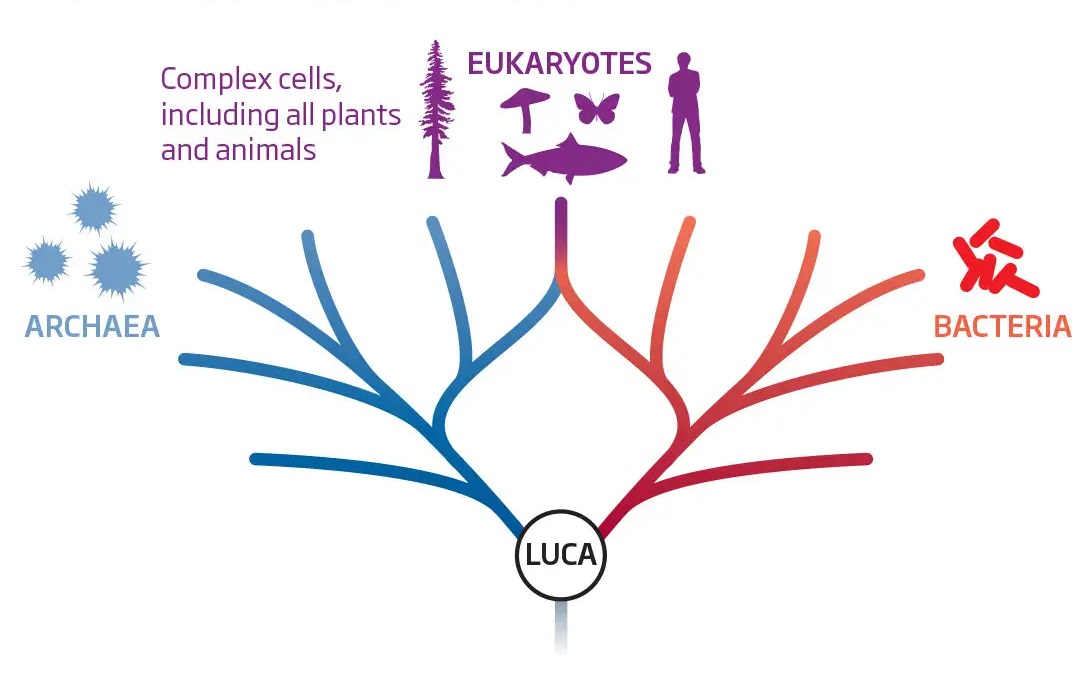
A significant concept in understanding the origin of life is the Last Universal Common Ancestor (LUCA).
What is the Last Universal Common Ancestor (LUCA)?
Researchers believe that all life forms— the Bacteria, the Archaea, and the Eukarya —originated from a single cell known as the last universal common ancestor (LUCA).
It is suggested to have been a “cellular organism that had alipid bilayer and used DNA, RNA, and protein“.
There is a lack of clarity about direct fossil evidence of LUCA.
However, the shared features of modern genomes provide significant insights into this ancient ancestor.
LUCA and the Molecular Clock:
The molecular clock theory was proposed by molecular biologist Emile Zuckerkandl and biochemist Linus Pauling in the 1960s and later refined by biologist Motoo Kimura.
The theory allows scientists to reconstruct the evolutionary timeline.
According to the theory, the rate at which mutations are addedor removed from a population’s genome is proportional to the rate of acquiring new mutations, which is constant.
By calibrating the molecular clock with known events, such as the emergence of the first mammals or the age of certain fossils, researchers can estimate the time between evolutionary events.
Recent Research Findings on LUCA’s Age and Genome
Researchers at the University of Bristol and Exeter estimate that LUCA originated around 4.2 billion years ago, nearly 1 billion years earlier than previously thought.
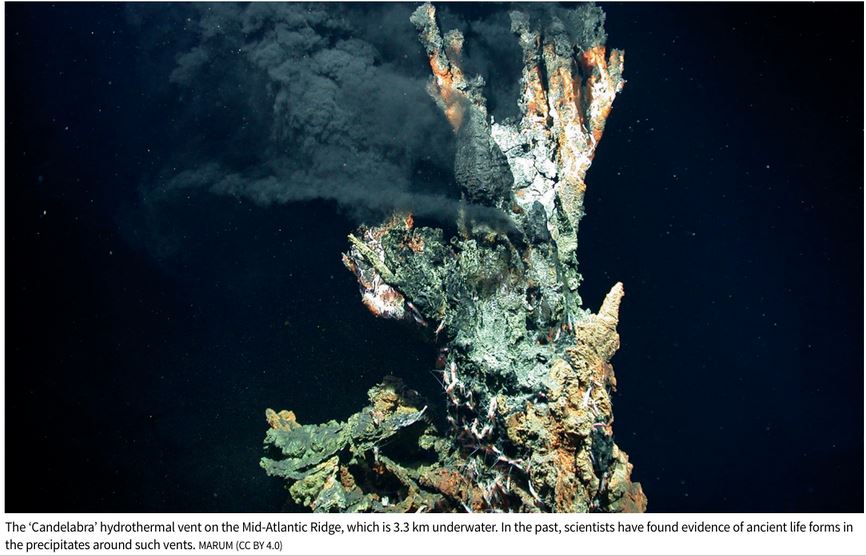
They obtained evidence from the 3.3 km deepCandelabra’ hydrothermal vent on the Mid-Atlantic Ridge.
LUCA had a small genome of about 2.5 million bases encoding 2,600 proteins, sufficient for survival in a unique niche.
Its metabolites may have created a secondary ecosystem for other microbes.
The presence of immunity genes in LUCA suggests it had to defend against viruses.
Evidence Verification using Miller-Urey Experiment
In 1952, Stanley Miller and Harold Urey conducted an experiment at the University of Chicago, simulating lightning strikes on a mixture of methane, ammonia, and water, which resulted in the formation of amino acids.
This demonstrated that complex organic compounds could arise from inorganic compounds under the right conditions.
Which is older: LUCA or fossils?
LUCA’s estimated origin at 4.2 billion yearspredates the earliest fossil records by almost 1billion years.
Fossil records from the Pilbara Craton in Australia suggest life emerged around 3.4 billion years ago, but the study pushes this date back.
Alternative Theories:
(1) Extraterrestrial Origin
Another prominent theory suggests that meteorites from space could have brought the building blocks of life to Earth.
This theory is supported by various discoveries.
In August 2019, French and Italian scientists reported finding 3.3 billion-year-old extraterrestrial organic material.
Japan’s Hayabusa 2 mission to the asteroid Ryugu detected more than 20 amino acids, further supporting the possibility of an extraterrestrial origin for the building blocks of life.
(2) Oparin-Haldane Hypothesis
In the 1920s, Alexander Oparin and J.B.S. Haldane independently proposed theories regarding the origin of life.
They suggested that life originated from a “primordial soup” in a prebiotic environment on the young Earth.
This concept is now known as the Oparin-Haldane hypothesis.
PYQ:
[2012] Which one of the following sets of elements was primarily responsible for the origin of life on the Earth?
![[22nd July 2024] The Hindu Op-ed: Focus on female employment to counter unemployment](https://www.civilsdaily.com/wp-content/uploads/2024/07/22-july1-1568x882.jpg)