💥Join UPSC 2027,2028 Mentorship (July Batch) + XFactor Notes & Microthemes PDF

GS Paper: GS1

  • Mahad Satyagraha: A Landmark Event in the Dalit Movement

    Why in the news?

    The Mahad Satyagraha is hailed as the foundational event of the Dalit movement, marking the community’s collective rejection of the caste system and assertion of human rights.

    About Mahad Satyagraha

    • The Mahad Satyagraha, also known as Chavdar Tale (Lake) Satyagraha, was led by B. R. Ambedkar on 20 March 1927 in Mahad, Raigad District of Maharashtra.
    • Its aim was to assert the right of untouchables to use water from a public tank.
    1. Background:
    • Untouchables (Dalits) were segregated in Indian society and banned from using public water bodies and roads used by other Hindu castes.
    • In August 1923, the Bombay Legislative Council passed a resolution allowing depressed classes to use government-maintained places, but it faced opposition from savarna Hindus.
    • In January 1924, Mahad passed a resolution in its municipal council to enforce the act but failed to implement it due to protests.
    1. Satyagraha:
    • In 1927, Ambedkar launched a satyagraha to assert untouchables’ rights to use water in public places.
    • Mahad was chosen for the event due to its support from ‘caste Hindus’.
    • Surendranath Tipnis, president of the Mahad municipality, invited Ambedkar to hold a meeting there.
    • Ambedkar drank water from the tank, followed by thousands of untouchables.
    • He encouraged Dalit women to abandon customs of untouchability and wear saris like high-caste women, which they embraced.
    • A riot erupted over rumors of Ambedkar planning to enter a Hindu temple, and the tank was purified with cow-urine and cow-dung.
    • Ambedkar planned a second conference in Mahad in December 1927 but faced legal obstacles due to a case filed by caste Hindus.
    • On 25 December 1937, the Bombay High Court ruled that untouchables have the right to use water from the tank.
    1. Legacy:
    • On 19 March 1940, Ambedkar arranged a rally in Mahad to commemorate the Satyagraha as “Empowerment Day.”

    Back2Basics: Key Initiatives and Movements Led by Dr. B.R. Ambedkar

    Initiative Location Objective
    Temple Entry Movement (1920s-1930s) Various Locations Advocating for the right of Dalits to enter Hindu temples.
    Mahad Satyagraha (Chavdar Tale Satyagraha) Mahad, Maharashtra Asserting the rights of untouchables to use water from a public tank.
    Kalaram Mandir Movement (1930) Nashik, Maharashtra Demanding temple entry rights for Dalits at the Kalaram Mandir.
    Annihilation of Caste (1936) Publication of “Annihilation of Caste,” advocating for the abolition of the caste system.
    Formation of Independent Dalit Political Party (Independent Labour Party) (1936) Addressing the political concerns and aspirations of Dalits.
    Push for Separate Electorate by Dr. B.R. Ambedkar (1932) India Advocating for separate electorates for Dalits to ensure their political representation and empowerment.
    Legal Advocacy (1940s-1950s) Drafting of the Hindu Code Bills, contribution to the framing of the Indian Constitution.
    Conversion to Buddhism (1956) Nagpur, Maharashtra Symbolizing a rejection of the caste system through mass conversion ceremony to Buddhism.


    PYQ:

    [2018] Which one of the following is a very significant aspect of the Champaran Satyagraha?

    (a) Active all-India participation of lawyers, students and women in the National Movement

    (b) Active involvement of Dalit and Tribal communities of India in the National Movement

    (c) Joining of peasant unrest to India’s National Movement

    (d) Drastic decrease in the cultivation of plantation crops and commercial crops

  • Anniversary of the Jallianwala Bagh Massacre

    Why in the news?

    On April 13, 1919, Brigadier-General Reginald Dyer ordered British troops to open fire on a peaceful gathering in Jallianwala Bagh, Amritsar, leaving a deep scar on India’s collective memory.

    Jallianwala Bagh Massacre

    1. Background: Protesting the contentious Rowlatt Act
    • The act officially known as the Anarchical and Revolutionary Crimes Act, 1919 was passed in 1919 by the Imperial Legislative Council.
    • It had authorized the British government to arrest anybody suspected of terrorist activities.
    • It also authorized the government to detain such people arrested for up to 2 years without trial.
    • It empowered the police to search a place without a warrant. It also placed severe restrictions on the freedom of the press.
    • The primary intention of colonial govt. was to repress the growing nationalist movement in the country.
    • The British were also afraid of a Ghadarite Revolution in Punjab and the rest of the country.
    1. The day
    • The massacre took place on 13 April 1919 when troops of the British Indian Army (Gurkha and Sikh infantry regiments) under the command of Col. Reginald Dyer fired rifles into a crowd of Indians.
    • The civilians had assembled for a peaceful protest to condemn the arrest and deportation of two national leaders, Satya Pal and Saifuddin Kitchlew.
    • Dyer without warning ordered his troops to fire at the unarmed crowd which included children as well.
    • The indiscriminate firing went on for about 10 minutes which resulted in the deaths of at least 1000 people and injured more than 1500 people.
    1. Aftermath
    • In protest against the massacre, Rabindranath Tagore gave up his knighthood.
    • Gandhiji relinquished his title ‘Kaiser-e-hind’ bestowed on him by the British for his services during the Boer War in South Africa.
    • Michael O’Dwyer, the then Lieutenant-Governor of Punjab, who had approved the actions of Dyer, was assassinated by Udham Singh in London in 1940 as revenge against the massacre.
    • The heroic treatment of Dyer’s heinous act again set a benchmark of colonial arrogance.

    Hunter Commission for Inquiry

    • In October 1919 the Secretary of State for India, Edwin Montagu, ordered the formation of a committee of inquiry into the events in Punjab.
    • Referred to as the Disorders Inquiry Committee, it was later more widely known as the Hunter Commission (Not to be confused with Hunter Education Commission).
    • The commission inquiry was concluded without any significant conclusion.
    • Still, there are long-standing demands in India that Britain should apologize for the massacre.

    PYQ:

    [2012] The Rowlatt Act aimed at:

    (a) Compulsory economic support to war efforts

    (b) Imprisonment without trial and summary procedures for trial

    (c) Suppression of the Khilafat Movement

    (d) Imposition of restrictions on freedom of the press

  • Data for better education, a brighter future for students

    PYQ Relevance:

    Mains: 

    Q National Education Policy 2020 isin conformity with the Sustainable Development Goal-4 (2030). It intends to restructure and reorient education system in India. Critically examine the statement.(UPSC IAS/2020)

    Q The quality of higher education in India requires major improvement to make it internationally competitive. Do you think that the entry of foreign educational institutions would help improve the quality of technical and higher education in the country. Discuss.(UPSC IAS/2015)

    Mentore comment: The release of the Annual Status of Education Report (ASER) 2023 in mid-January has once again drawn significant attention, following a tradition dating back to 2005, with exceptions during the COVID-19 years. Among the multitude of insights provided by the report, particular focus has been placed on the foundational skills of 14-18 year olds, which has garnered headlines. While the learning outcomes data raises concerns, it is imperative for practitioners and policymakers to delve deeper into the data to extract actionable insights aimed at enhancing education and overall outcomes for India’s adolescents and youth.

    Why in the news? 

     The Annual Status of Education Report (ASER) 2023 was released in mid-January this year.

     Foundational learning trajectories as per ASER 2023 Beyond Basics survey  

    • District level Representation: The survey was conducted in 28 rural districts across 26 states, providing insights into the activities, abilities, and aspirations of 14-18 year olds at the district level, though not nationally representative.
    • Literacy : Overall, 26% of 14-18 year olds cannot read a standard two level text in their regional language, reflecting concerning literacy levels.  
    • Distribution of Children without Basic Reading Skills: Among 14-18 year olds without basic reading skills, 57% are enrolled in standard 10 or below, while 28% are not enrolled in any educational institution. This suggests a need for targeted interventions and efforts to encourage school attendance.

    Challenges in Reading Improvement: 

    • Many children who struggle with reading may face ridicule and embarrassment, leading to disengagement with reading. The availability of reading materials, including beyond textbooks, is crucial for developing reading habits and abilities.

    Children and careers

    • Educational Aspirations: More than 60% of surveyed adolescents aim to obtain a college education, with a higher percentage of girls aspiring for higher education compared to boys.
    • Work Aspirations: One in five respondents had not seriously considered their future careers. Among those who had, joining the police or defense forces was prominent for boys, while becoming a teacher or doctor was prominent for girls.
    • Perceptions of Vocational Education: Vocational education faced negative perceptions in some areas, seen as a fallback option for those unable to secure white-collar jobs. However, in Solan, Himachal Pradesh, context-driven vocational courses such as tourism and hotel management gained aspirational value, encouraging students to aspire for related professions with the support of on-the-job training and readily available career information.

    Challenges related to careers 

    • Need for Support and Mentorship: Youth require support, mentorship, and inspiration to evaluate their aspirations, identify alternative prospects, and prepare for their chosen paths.
    • Lack of Familiarity with Professions: Nearly half of the surveyed adolescents with work aspirations do not personally know anyone working in their desired profession, indicating a need for greater exposure and guidance.

     Digita literacy as per ASER 2023 report

    • Smartphone Ownership: Boys in the 14-18 age group are more than twice as likely to own smartphones compared to girls, with 43.7% of males owning smartphones compared to 19.8% of females
    • Digital Literacy: Girls are less likely to know how to use smartphones or computers compared to boys, with males outperforming females in tasks like using email, Google Maps, and other digital functions
    • Educational Usage: While about two-thirds of youth use smartphones for educational purposes, there is a notable emphasis on entertainment and social media over educational activities, indicating a need to leverage digital technology for educational purposes
    • Gender Gaps: The gender gap extends to online safety awareness, with boys being more familiar with safety settings than girls, highlighting the need for comprehensive strategies to address the digital gender divide

    Suggestive measures to address the identified issues:

    • Improving Foundational Learning: Encourage school attendance by addressing the needs of 14-18 year olds without basic reading skills, with a particular emphasis on those not enrolled in any educational institution.
    • Role of Community Libraries: Ensure effective management of community libraries and engage committed individuals to cultivate a culture of reading and support readers of all ages and abilities.
    • Educational and Career Aspirations: Address the lack of familiarity with professions by offering exposure opportunities and guidance to help youth make informed career choices.
    • Digital Literacy and Gender Gaps:  Promote educational usage of smartphones by leveraging digital technology for educational purposes and bridging the gender gap in online safety awareness.
    • Addressing Vocational Education Perceptions: Encourage context-driven vocational courses that align with local aspirations and provide on-the-job training and career information to support career choices.

    Conclusion 

    To address literacy and career challenges, prioritize targeted interventions to improve educational access and support, enhance digital literacy among girls, promote vocational education, and leverage digital technology for educational purposes, bridging gender gaps.


  • Mount Etna’s Volcanic Vortex Rings: A Rare Natural Phenomenon

    Mt. Etna

    Why in the news?

    Mount Etna, located on the east coast of Sicily in Italy recently gained attention for emitting circular rings of vapor from its summit, known as volcanic vortex rings.

    About Mount Etna

    • Mount Etna is located on the east coast of Sicily, Italy.
    • It is an active stratovolcano, characterized by its conical shape formed by layers of hardened lava, ash, and volcanic rocks.
    • It is Europe’s tallest active volcano, standing at approximately 3,329 meters (10,922 feet) above sea level.
    • It is one of the most active volcanoes in the world and has been erupting for thousands of years, with the first recorded eruption dating back to around 1500 BCE.
    • Mount Etna and its surrounding area have been designated as a UNESCO World Heritage Site since 2013, recognizing its geological significance and natural beauty.
    • It boasts five craters responsible for eruptions, alongside numerous vents along its slopes.

    What are Volcanic Vortex Rings?

    • Volcanic vortex rings are a rare phenomenon observed when gas, primarily water vapor, is rapidly released through a vent in the volcano’s crater, forming circular rings of smoke above the mountain.
    • This phenomenon, similar to smoke rings blown by cigarette smokers, occurs when gas is expelled through a nearly perfect circular vent in the crater.
    • These rings can rise in the air for up to 10 minutes but may disintegrate quickly under windy conditions.

    Volcanism in Italy

    • The volcanism of Italy is due chiefly to the presence, a short distance to the south, of the boundary between the Eurasian Plate and the African Plate.
    • Italy is a volcanically active country, containing the only active volcanoes in mainland Europe (while volcanic islands are also present in Greece, in the volcanic arc of the southern Aegean).
    • The lava erupted by Italy’s volcanoes is thought to result from the subduction and melting of one plate below another.
    • Other active volcanoes include Mt. Stromboli and Vesuvius.

    Historical and Recent Observations

    • Etna produces more vapor rings than any other volcano on Earth, making it a hotspot for studying this phenomenon.
    • The occurrence of volcanic vortex rings was first documented in 1724 at Mount Etna and Vesuvius in Italy, and has since been observed at various volcanoes worldwide.
    • Recent observations of this phenomenon have been reported at volcanoes in Alaska, Ecuador, Guatemala, Iceland, Italy, Japan, Vanuatu, New Zealand, and Nicaragua.

    Recent Volcanic Eruptions in News:

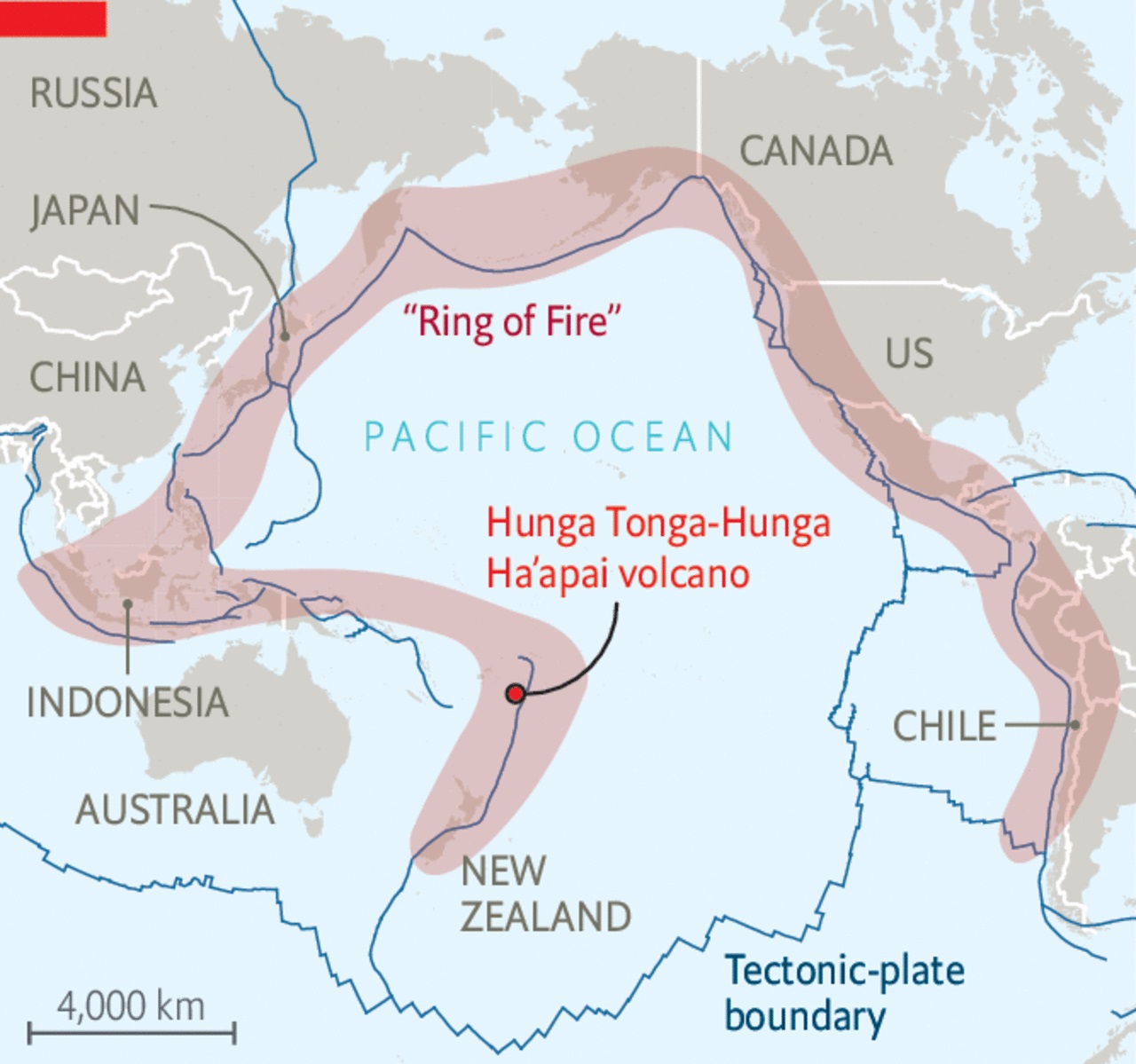
    Many of the world’s most active volcanoes are concentrated in the Pacific Ring of Fire, encompassing regions like New Zealand, Southeast Asia, Japan, and the western coast of the Americas. This volatile area also experiences about 90% of all earthquakes globally.

    • Kilauea, Hawaii: The Kilauea volcano in Hawaii captivated the world with a nearly nonstop eruption that began in 1983 and continued for an astonishing 35 years until 2018. Remarkably, it rekindled in 2021, with the eruption still ongoing.
    • Dukono, Indonesia: Erupting since August 1933, Dukono volcano in Indonesia stands as a testament to long-term volcanic activity, defying the passage of time.
    • Santa Maria, Guatemala: The eruption of Santa Maria in Guatemala commenced in June 1922 and persists to this day, underscoring the enduring nature of certain volcanic phenomena.
    • Yasur, Vanuatu: Yasur in Vanuatu first erupted around 1270 and has maintained its volcanic activity, continuing as of June 9, 2023.

    Understanding Volcanoes

    • Volcanoes are geological features characterized by openings or vents through which lava, tephra (small rocks), and steam erupt onto the Earth’s surface.
    • They result from both their own eruptions and the broader processes of tectonic plate movement.
    • Volcanic eruptions are essentially the result of magma, or molten rock, beneath the Earth’s surface rising, bubbling, and ultimately overflowing, much like boiling milk spilling out of a pot on a stove.
    • The magma seeks pathways to vents within the volcano, where it erupts and is expelled across the land and into the atmosphere, a phenomenon referred to as lava.

    Appearance Formation Eruption Style Notable Examples
    Cinder Cones Small, steep, conical Formed from basaltic magma with high gas content Often explosive eruptions with cinders/scoria Paricutin (Mexico), Sunset Crater (USA)
    Composite/Stratovolcanoes Tall and symmetrical Result from alternating layers of lava, ash, etc. Both explosive and effusive eruptions Mount St. Helens (USA), Mount Fuji (Japan)
    Shield Volcanoes Broad and gently sloping Primarily formed from basaltic magma Primarily non-explosive with extensive lava flows Mauna Loa, Mauna Kea (Hawaii)
    Lava Domes Rounded dome-like shape Formed from slow extrusion of viscous magma Typically non-explosive but can be dangerous Novarupta Dome (Alaska), Mount St. Helens’ Lava Dome (USA)


    PYQ:

    [2018] Consider the following statements:

    1.    The Barren Island volcano is an active volcano located in the Indian Territory.

    2.    Barren Island lies about 140 km east of Great Nicobar.

    3.    The last time the Barren Island volcano erupted was in 1991 and it has remained inactive since then.

    Which of the statements given above is/are correct?

    (a) 1 only

    (b) 2 and 3

    (c) 3 only

    (d) 1 and 3

  • On Unemployment in Indian States

    Why in the news? 

    A recent report by the International Labour Organization (ILO) and the Institute for Human Development (IHD) revealed that two out of every three unemployed individuals were young graduates.

    Unemployment across Indian States: 

    • Highest Unemployment Rate: At almost 10%, Goa’s unemployment rate is more than three times the national average of 3.17%.
      • Four of the top five states with high unemployment rates (Goa, Kerala, Haryana, and Punjab) are comparatively richer states.
    • Lower Unemployment Rates: Maharashtra and Gujarat, which are rich states in western India, experience unemployment rates far less than the national average.
    • Unemployment in Northern and Southern states: All northern states (Jammu and Kashmir, Punjab, Haryana, Uttarakhand, and Himachal Pradesh) and most southern states have unemployment rates higher than the national average, except Karnataka.
    • Unemployment below the National Average: Out of the 27 states considered, 12 states have unemployment rates less than the national average.
    • Lower unemployment rates in poorer states: Except for Maharashtra and Gujarat, most states with unemployment rates lower than the national average also have per capita incomes lesser than the national average.

    What is the Relationship between Urbanisation and Unemployment? (ILO observations)

    • Relationship between Self-employment and Unemployment: The trend line shows a downward slope, indicating a negative relationship between self-employment and unemployment.
    • Informal self-employment mainly in Agriculture and Rural Economy: A significant portion of informal self-employment is in agriculture and the rural sector.

    • Relationship between Labor Force and Unemployment: Figure 3 illustrates a positive relationship between the urban share of the labor force and the unemployment rate. Highly urbanized states tend to have higher unemployment rates (Positive relationship).
    • High Unemployment and Urbanized states: States like Goa and Kerala, which are highly urbanized, experience high unemployment rates. This is attributed to the limited scope for informal jobs in urban settings compared to rural agriculture, which acts as a reserve for absorbing surplus labor.
    • Limited Informal Sectors: Although informal sectors exist and thrive in urban settings, they have limited capacity to absorb job-seekers compared to rural agriculture.
    • Exceptions states: Gujarat and Maharashtra, despite being highly urbanized, have lower unemployment rates compared to states like Uttar Pradesh and Madhya Pradesh.

    Nexus between Education and Employment:

    • Highly educated labor force and unemployment: Kerala, with a highly educated labor force (30% of graduates), faces high unemployment.
      • In contrast, Gujarat and Maharashtra have lower proportions of graduates in their labor force (14% and 20% respectively) and experience lower unemployment rates despite being richer and urbanized.
    • High unemployment among graduates: Graduates may lack the skills required for the growing modern sector, highlighting the need for improved teaching infrastructure and standards.
      • Graduates aspire to high-wage jobs that match their skills, leading to unemployment if the modern sector doesn’t expand enough to absorb them.

    Conclusion: Addressing youth unemployment necessitates improving education quality to match job market demands, fostering skill development for the modern sector, promoting entrepreneurship, and enhancing rural employment opportunities. Policy interventions should target these areas for inclusive growth and employment generation.

  • Tribes in news: Jenu Kuruba

    Why in the news?

    This newscard is an excerpt from an articles which delves into the historical and social context of the Jenu Kuruba community, including their displacement from their traditional lands in the Western Ghats due to conservation efforts.

    About Jenu Kuruba

    • The Jenu Kuruba tribe, numbering around 37,000, resides primarily in the Nilgiris region, bordering Kerala and Karnataka.
    • Their traditional occupation involves collecting honey in the forest, reflected in their name where ‘Jenu’ means ‘honey’ in Kannada.
    • In the early 20th century, they lived in forest huts and engaged in cultivation.

    Social organization of Jenu Kurubas’

    • They speak the Jenu Kurumba language, which is related to Kodava or considered a rural dialect of Kannada.
    • Historically, they engaged in activities like food gathering, collecting minor forest produce, and handling elephants.
    • They typically reside in small settlements known as Hadi and practice shifting cultivation.
    • Social organization within the community is semi-nomadic, with decentralized authority led by a head-man (yajamana) and a ritual head or shaman (gudda).

    Their rehabilitation

    • The tribe has fought for their rights to live in reserved forests, most recently in 2020 under the Forest Rights Act.
    • In 2021, protests continued against the forest department for promoting eco-tourism and safaris, which are deemed illegal under Indian and international laws.
    • From the 1970s onwards, many Jenu Kurubas have been evicted from their homes due to conservation efforts in tiger reserves like Nagarhole and Bandipur.
    • Those relocated outside the forest often work as daily wagers, agricultural laborers, or on coffee estates in Kodagu.

    PYQ:

    [2013] Consider the following pairs :

    Tribe: State

    1. Limboo Limbu : Sikkim

    2. Karbi : Himachal

    3. Dongaria Kondh : Odisha

    4. Bonda : Tamil Nadu

    Which of the above pairs are correctly matched?

    (a) 1 and 3 only

    (b) 2 and 4 only

    (c) 1, 3 and 4 only

    (d) 1, 2, 3 and 4


    [2014] With reference to ‘Changpa’ community of India, consider the following statement :

    1.    They live mainly in the State of Uttarakhand.

    2.    They rear the Pashmina goats that yield a fine wool.

    3.    They are kept in the category of Scheduled Tribes.

    Which of the statements given above is/are correct?

    (a) 1 only

    (b) 2 and 3 only

    (c) 3 only

    (d) 1, 2 and 3

  • Sangeet Natak Akademi organizes ‘Shakti – Festival of Music and Dance’

    Why in the news?

    Sangeet Natak Akademi is set to host ‘Shakti, a festival of music and dance’ as part of its Kala Pravah series at 7 Shaktipeeths.

    Shakti – Festival of Music and Dance

    Events will be held at:

    1. Kamakhya Temple, Guwahati
    2. Mahalakshmi Temple, Kolhapur, Maharashtra
    3. Jwalamukhi Temple, Kangada, Himachal Pradesh
    4. Tripura Sundari Temple, Udaipur, Tripura
    5. Ambaji Temple, Banaskantha, Gujarat
    6. Jai Durga Shaktipeeth, Deoghar, Jharkhand
    7. Shaktipeeth Maa Harsidhi Temple, Jaisinghpur, Ujjain, Madhya Pradesh

    What are Shaktipeeths?

    • Shaktipeeths are sacred sites in Hinduism associated with the Goddess Shakti or Devi, the divine feminine energy.
    • According to Hindu mythology, these sites are believed to be where various body parts of the goddess Sati/ Shakti fell to the earth when her body was dismembered by Lord Vishnu’s.
    • There are numerous Shaktipeeths spread across the Indian subcontinent and beyond, each considered highly sacred by devotees of the Goddess.

    Here are some major Shaktipeeths often seen in news:


    Temple Place (State/Country)
    Shankari Devi Temple Trincomalee (Sri Lanka)
    Kamakshi Amman Temple Kanchipuram (Tamil Nadu)
    Shrinkala Temple Pradmunyee (Pandua, West Bengal)
    Chamundeshwari Temple Mysuru (Karnataka)
    Jogulamba Devi Alampuram (Telangana)
    Bhramaramba Mallikarjuna Temple Srisailam (Andhra Pradesh)
    Mahalakshmi Temple Kolhapur (Maharashtra)
    Ekveera Temple Mahur (Maharashtra)
    Mahakaleswar Temple Ujjain (Madhya Pradesh)
    Kukkuteswara Swamy Temple Pithapuram (Andhra Pradesh)
    Biraja Temple Jajpur (Odisha)
    Bhimeswara Temple Draksharamam (Andhra Pradesh)
    Kamakhya Temple Guwahati (Assam)
    Alopi Devi Mandir Prayagraj (Uttar Pradesh)
    Jwalamukhi Temple Jwalamukhi (Himachal Pradesh)
    Mangla Gauri Temple Gaya (Bihar)
    Vishalakshi Temple Varanasi (Uttar Pradesh)
    Sharada Peeth Sharda, Kashmir (Pakistan Occupied Kashmir)

    About Sangeet Natak Akademi

    • It is the national level academy for performing arts set up by the Government of India.
    • It was set up by the Indian education ministry on 31 May 1952 and became functional the following year, with the appointment of its first chairman, Dr. P. V. Rajamannar.
    • Dr Rajendra Prasad, the first President of India, inaugurated it on 28 January 1953 in a special function held in the Parliament House.

    Functions:

    • The academy functions as the apex body of the performing arts in the country to preserve and promote the vast cultural heritage of India expressed in music, dance and drama.
    • It also works with governments and art academies in states and union territories of the country. 

    Awards and fellowships:

    1. Sangeet Natak Akademi Award
    2. Sangeet Natak Akademi Fellowships (Ratna Sadsya)
    3. Ustad Bismillah Khan Yuva Puraskar
    4. Tagore Ratna and Tagore Puraskar
  • Insights from History: Coalition Governments in Colonial India

    Why in the news?

    • Prime Minister recently suggested a link between the Congress manifesto and the Muslim League (which is responsible for the Partition of India), prompting a political debate.
    • In rebuttal, critics reminded of a coalition governments formed by Hindu Mahasabha in Bengal, Sindh, and North-West Frontier Province (NWFP) in the 1940s with the Muslim League.

    Provincial Elections of 1937:

    [A] Indian National Congress

    • Congress performed admirably in the 1937 provincial elections, held under the mandate of the Government of India Act of 1935.
    • It won 711 of a total 1,585 provincial assembly seats, with absolute majorities in 5 of the 11 provinces (Madras, Bihar, Orissa, Central Provinces, and United Provinces) and a near-majority in Bombay (86 out of 175).
    • Congress ministries were formed in all of these provinces.
    • Sometime later, the Congress also formed governments in the North West Frontier Province (NWFP) and Assam.

    [B] Non-Congress Parties

    • Non-Congress governments were formed in the remaining 3 provinces — Sindh, Punjab, and Bengal.
    • In Sindh, a coalition led by the Sind United Party formed the government; in Punjab, Sikandar Hayat Khan’s Unionist Party won a majority.
    • And in Bengal, Fazlul Huq’s Krishak Praja Party (KPP) formed a coalition government with the Muslim League— even though the Congress was the single largest party with 54 seats.

    [C] Religion based Parties

    • Notably, the Muslim League, which claimed to be the sole representative of Indian Muslims, performed abysmally in the elections.
    • The League won just 106 out of the 482 seats allotted to Muslims under separate electorates, and it failed to win even a single seat in the NWFP.
    • The Hindu Mahasabha, which had entered electoral politics in the 1930s under V D Savarkar’s leadership, too fared miserable.

    Ideological Alignment and Political Alliances

    • Dr. B.R. Ambedkar noted ideological similarities between the Hindu Mahasabha and the Muslim League, both advocating for the two-nation theory.
    • This ideological convergence paved the way for short-lived political alliances, particularly during the turmoil following Congress’s resignation from provincial ministries in 1939.

    Reasons for such Alliance

    • Opposition to Quit India Movement:  When Mahatma Gandhi launched the Quit India Movement in 1942, the Muslim League and Hindu Mahasabha refrained from participating, opting to support the British war effort.
    • Support for British War Efforts: Savarkar, in a letter, instructed Mahasabha members to remain loyal to their positions and not join the movement, while Syama Prasad Mookerjee pledged support to suppress any internal disturbances.
    • Increased Push for Partition: Jinnah, meanwhile, intensified his campaign for Pakistan, capitalizing on the absence of Congress leaders and positioning himself as the sole spokesman for Muslims.

    Muslim League: 

    • The All India Muslim League was formed in 1906 in Dhaka, Bengal Presidency, British India.
    • It was established in response to the perceived marginalization and political underrepresentation of Muslims in the Indian National Congress.
    • The founding members of the Muslim League included prominent Muslim leaders such as Nawab Salimullah Khan of Dhaka, Nawab Viqar-ul-Mulk, Aga Khan III, and Muhammad Ali Jinnah, who later emerged as its most influential leader.
    • The primary objective of the Muslim League was to safeguard the political rights and interests of Muslims in India.
    • It advocated for separate electorates for Muslims, reservations in government jobs and legislative bodies, and other measures to protect Muslim identity and interests.

    Hindu Mahasabha:

    •  The Hindu Mahasabha was founded in 1915 in Amritsar, Punjab, by Madan Mohan Malaviya and others.
    • It aimed to unite Hindus under one political umbrella and promote Hindu nationalism.
    • Besides Madan Mohan Malaviya, prominent leaders included Lala Lajpat Rai, B. S. Moonje, and Vinayak Damodar Savarkar.
    • It promoted the idea of Akhand Bharat (Undivided India) and opposed the partition of India on religious lines.

     Implications of this Coalition

    • The period following Congress’s participation in the Quit India Movement saw the rise of the Muslim League’s influence, with League ministries established in several provinces by 1943.
    • Jinnah’s strategy to capitalize on Congress’s absence contributed to his claim as the sole representative of Indian Muslims, furthering the demand for Pakistan.

    PYQ:

    [2018] In the Federation established by The Government of India Act of 1935, Residuary Power were given to the:

    (a) Federal Legislature

    (b) Governor General

    (c) Provincial Legislature

    (d) Provincial Governors

  • In news: Total Solar Eclipse

    Why in the news?

    A rare Total Solar Eclipse will be visible across North America on April 8.

    What are Eclipses?

    • Eclipses are astronomical events that occur when the sun, moon, and Earth align in specific ways.
    • There are two primary types of eclipses: solar and lunar.
    1. A solar eclipse happens when the moon comes between the sun and Earth during a new moon, blocking out the sun’s light.
    2. Conversely, a lunar eclipse occurs when the Earth is positioned between the sun and the moon during a full moon, casting a shadow on the moon.

    What is a Total Solar Eclipse?

    • During a total solar eclipse, the moon passes between the sun and Earth, entirely covering the face of the sun along a small path of our planet’s surface.
    • This is called the “path of totality.”
    • The daytime sky turns dark, similar to dusk or dawn, and nocturnal animals have been known to wake up, confused into believing night has arrived.

    Stages of a Total Solar Eclipse

    A total solar eclipse unfolds in several distinct stages.

    1. It starts with a partial eclipse phase as the moon begins to pass between Earth and the sun, partially blocking it and leaving the sun looking like it has a crescent shape.
    2. In the subsequent Baily’s Beads phase, points of light from the sun shine around the moon’s edges because of the irregular lunar topography, producing small beads of light.
    3. In the diamond ring phase, a single bright spot appears along the lunar edge even as the sun’s atmosphere leaves a ring of light around the moon. This phenomenon precedes totality.
    4. After totality, the other phases repeat as the moon keeps moving along its path until the eclipse ends.

    Other types of solar eclipses:

    1. Partial Solar Eclipse
    • This happens when the sun, moon and Earth are not exactly lined up.
    • The sun appears to have a dark shadow on only a small part of its surface.
    1. Annular Solar Eclipse
    • An annular eclipse happens when the moon is farthest from Earth. Because the moon is farther away from Earth, it seems smaller. It does not block the entire view of the sun. The moon in front of the sun looks like a dark disk on top of a larger sun-coloured disk. This creates what looks like a ring around the moon.
    • During a solar eclipse, the moon casts two shadows on Earth. The first shadow is called the Umbra. This shadow gets smaller as it reaches Earth. It is the dark centre of the moon’s shadow.
    • The second shadow is called the Penumbra. The penumbra gets larger as it reaches Earth. People standing in the penumbra will see a partial eclipse. People standing in the umbra will see a total eclipse.

    Why don’t solar eclipses happen at every New Moon?

    • The reason is that the Moon’s orbit tilts 5° to Earth’s orbit around the Sun.
    • Astronomers call the two intersections of these paths nodes.
    • Eclipses only occur when the Sun lies at one node and the Moon is at its New (for solar eclipses) or Full (for lunar eclipses) phase.
    • During most (lunar) months, the Sun lies either above or below one of the nodes, and no eclipse happens.

    PYQ:

    2013:

    Consider the following phenomena

    1. Size of the sun at dusk

    2. Colure of the sun at dawn

    3. Moon being visible at dawn

    4. Twinkle of stars in the sky

    5. Polestar being visible in the sky

    Which of the above are optical illusions?

    (a) 1, 2 and 3

    (b) 3, 4 and 5

    (c) 1, 2 and 4

    (d) 2, 3 and 5


    Practice MCQ:

    Which of the following statements best characterizes a Total Solar Eclipse?

    (a) A total solar eclipse occurs when the Moon partially blocks the Sun, leaving a visible ring of sunlight around the Moon’s silhouette.

    (b) During a total solar eclipse, the Moon completely covers the Sun, casting a shadow on a narrow path on the Earth’s surface called the umbra.

    (c) Total solar eclipses occur more frequently than partial solar eclipses due to the precise alignment of the Sun, Earth, and Moon.

    (d) Total solar eclipses can only be observed from specific locations on Earth, making them rare and highly sought-after astronomical events.

  • Ikshvaku Period Lead Coins unearthed in Phanigiri

    Why in the news?

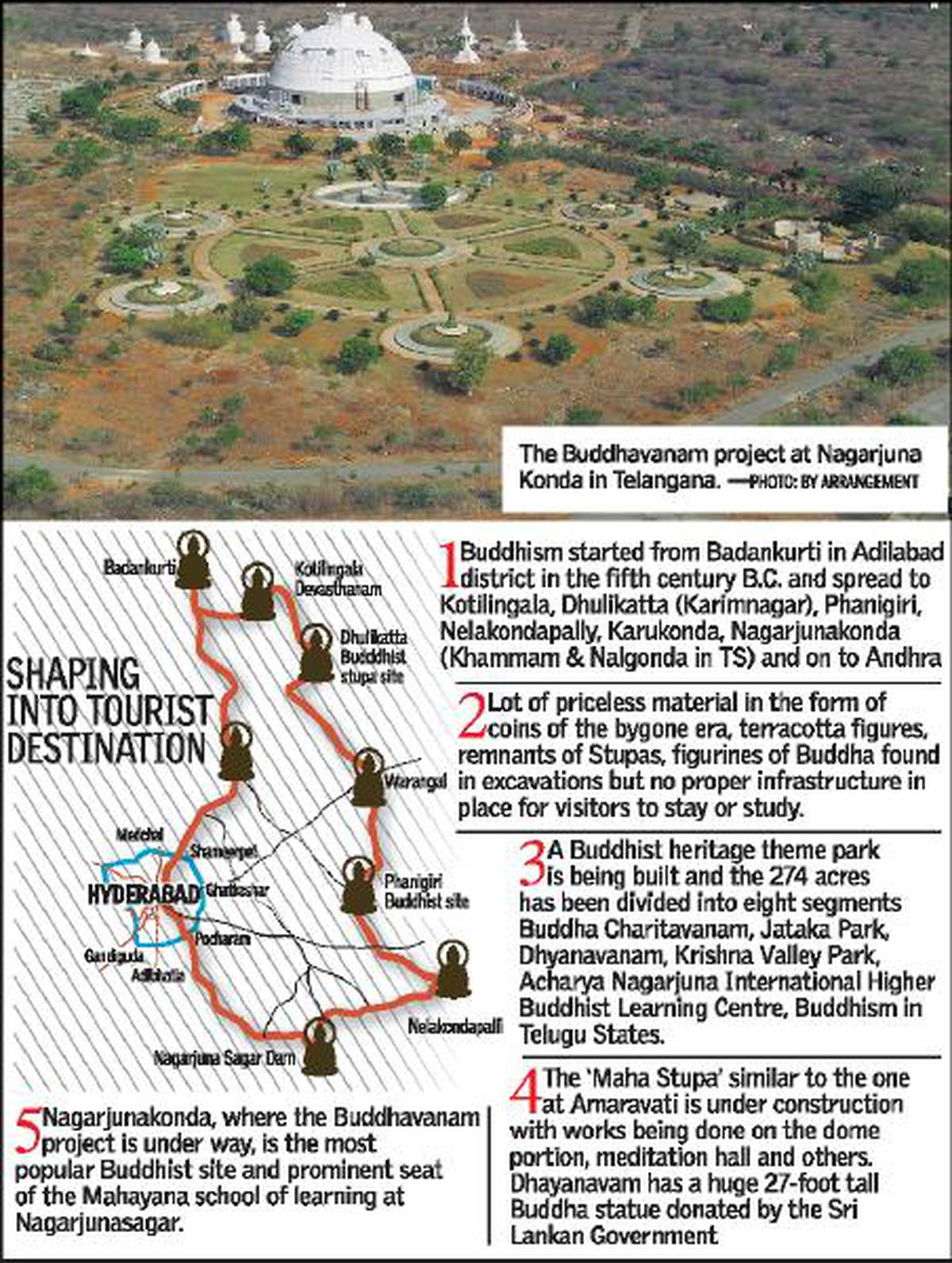
    • Telangana’s Department of Heritage has recently unearthed a lead coin hoard belonging to Ikshvaku Period at Phanigiri, a renowned Buddhist heritage site.
    • The coins numbering 3,730 bore an elephant symbol on the obverse and a Ujjain symbol on the reverse.

    Who were the Ikshvaku (225-340 A.D)?

    1. Origin and Rule
    • The Ikshvaku dynasty was a feudatory under the patronage of the Satavahanas.
    • Their capital was located at Vijayapuri, modern-day Nagarjunakonda in Andhra Pradesh.
    • They ruled over the delta of the Krishna and Godavari rivers on the east coast of the Andhra region.
    • They claimed to be descendants of the legendary king Ikshvaku, mentioned in ancient Sanskrit texts such as the Rigveda and Ramayana.
    • The dynasty’s founder was Vasishthiputra Chamtamula, who rose to power after the decline of the Satavahana dynasty.
    1. Cultural Affiliations
    • The Ikshvakus were Shaivites and performed Vedic rites, but they also patronized Buddhism, which flourished during their reign.
    • Under the reign of Vasishthi-putra Ehuvala Chamtamula, the Ikshvaku kingdom reached its zenith, marked by the construction of numerous Hindu and Buddhist shrines.
    • Their inscriptions and coins have been discovered at various archaeological sites, including Nagarjunakonda, Jaggayyapeta, Kottampalugu, Gurazala, Rentala, and Uppugunduru.
    1. Decline:
    • Successive rulers, such as Mathari-putra Vira-purusha-datta, Vasishthi-putra Ehuvala Chamtamula, and Vasishthi-putra Rudra-purusha-datta, contributed to the expansion and governance of the kingdom.
    • By the mid-4th century, the Pallavas had gained control of the former Ikshvaku territory, marking the decline of the dynasty.

    About Phanigiri

    • Phanigiri village derived its name from the shape of the hillock, which appears to be like a snake hood.
    • The word Phani in Sanskrit means snake and Giri means hillock.
    • Studies suggest that the village had a vibrant life from 1000 BC to 18th century AD.
    • Phanigiri is believed to be one of the important Buddhist monasteries strategically located on the hilltop, on the ancient trade route (Dakshinapatha) connecting the west and the east coast of the Deccan.
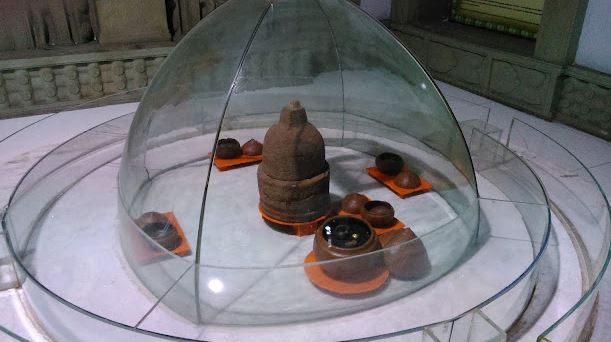
    • Various stages of earlier excavations here discovered Mahastupa, apsidal Chaityagrihas, Votive stupas, pillared congregation halls, Viharas, platforms with staircases at various levels, octagonal stupa chaitya, 24-pillared mandapam, circular Chaitya.
    • Cultural materials included terracotta beads, semi-precious beads, iron objects, Brahmi label inscriptions and holy relic casket.


    PYQ:

    [2017] How do you justify the view that the level of excellence of Gupta Numismatic Art is not at all noticeable in later times?