An NGO has released rare photographs of the Mashco Piro tribespeople, one of the world’s 100-odd uncontacted tribes.
Who are the Mashko Piro people?
The Mashco Piro tribe, possibly numbering over 750, are nomadic hunter-gatherers.
They live in the Amazon jungles of the Madre de Dios Region, near Peru’s border with Brazil and Bolivia.
Almost all uncontacted tribes, including the Mashco Piro, live in the jungles of the Amazon and Southeast Asia.
The Mashco-Piro speak a dialect of the Piro language.
The tribe is highly reclusive and only occasionally contacts the Yine people, another native group.
Threats from the logging activities
Logging companies has been allotted 53,000 hectares in the Madre de Dios forests to extract cedar and mahogany.
The Mashco Piro have expressed their disapproval of the logging companies through the Yine people, reporting feelings of pressure and upset due to company assaults.
Historical Context:
The Mashco Piro’s territory was invaded during Peru’s rubber boom in the 1880s, resulting in displacement, enslavement, and mass killings.
Survivors moved further upstream on the Manu River and have lived in isolation since then.
Protective measures from the Government
In 2002, the Peruvian government established the Madre de Dios Territorial Reserve to protect the Mashco Piro’s territory.
However, large parts of their traditional lands lie outside the reserve and have been sold as logging concessions.
The Peruvian government has forbidden all contact with the Mashco Piro to prevent the spread of diseases to which the tribe has no immunity.
As logging companies encroach on their territories, the Mashco Piro have nowhere left to go.
PYQ:
[2016] Consider the following pairs:
Community sometimes in the affairs of mentioned in the news
Kurd : Bangladesh
Madhesi : Nepal
Rohingya : Myanmar
Which of the pairs given above is/are correctly matched?
Q What is the significance of Indo-US defence deals over Indo-Russian defence deals? Discuss with reference to stability in the Indo-Pacific region. (UPSC IAS/2020)
Q Quadrilateral Security Dialogue (Quad) is transforming itself into a trade bloc from a military alliance, in present times Discuss. (UPSC IAS/2020)
Mentor comment: India’s strategic autonomy refers to its ability to pursue national interests and foreign policy without external constraints. This concept has gained renewed significance in the context of a multipolar world, where India seeks to balance relationships with major powers like the U.S. and Russia while navigating regional dynamics, particularly in the Indo-Pacific. However, India’s strategic autonomy is often challenged by external pressures, as seen in its cautious approach to alliances like the Quad and its historical non-alignment stance. The effectiveness of this autonomy remains variable, influenced by geopolitical developments and internal policy decisions
Let’s learn!
__
Why in the news?
On July 11, 2024, U.S. Ambassador Garcetti stated, “In times of conflict there is no strategic autonomy,” after PM Modi’s visit to Moscow, highlighting U.S. concerns about India’s stance.
Current State of India-U.S. Relations:
Steady Trajectory with Stress Points: The strategic partnership between India and the U.S. remains steady overall, but stress points have emerged, particularly concerning India’s stance on the Ukraine war.
Ukraine War and India’s Neutrality: India maintained its strategic partnership with Russia, expanded energy cooperation, and refused to condemn the invasion, which caused friction with the U.S. and its allies.
Western Perception: The West views India’s position as economic support for Russia, widening the stress points in the India-U.S. partnership over the past two and a half years.
Strategic Autonomy:
Strategic autonomy means making decisions that best serve a nation’s interests, free from external pressures. It involves having the conviction, will, and resources to take autonomous decisions.
All Indian governments since Independence have followed strategic autonomy, reflected in policies like non-alignment, multi-alignment, and multi-directional foreign policy.
U.S. Criticism:
Ambassador Garcetti’s Comments: He questioned India’s ability to exercise strategic autonomy during crises, suggesting that it becomes meaningless during such times.
India’s Response: India asserts its right to take autonomous foreign policy decisions, emphasizing strategic autonomy as a cornerstone of its international relations.
Historical Evolution of India’s Foreign Policy:
Non-Alignment: Initially, India maintained equidistance from both the capitalist and communist blocs, leveraging non-alignment and Asian solidarity to mobilize Third World voices and pursue its interests.
Cold War Dynamics: With shifting global alliances, India strengthened ties with the Soviet Union while retaining strategic autonomy.
Post-Cold War Era: After the collapse of the Soviet Union and the communist bloc, India sought greater economic integration and a closer strategic partnership with the West.
Great power rivalry
Multipolar Global Order: The world is transitioning from a unipolar to a multipolar order, with the U.S. maintaining its position as the most powerful country, while China is rising as a strong competitor, and Russia is challenging Western security architecture.
This shift impacts global dynamics, especially in regions like West Asia, where conflicts like the shadow war between Israel and Iran further complicate the power balance.
India’s Strategic Autonomy: India aims to maintain its strategic autonomy by balancing relations between great powers without joining any alliance system.
Strategic autonomy is essential for India to navigate the complexities of global power rivalries and pursue its national interests independently.
Recasting India-Russia Partnership: Despite Russia’s deepening ties with China, India seeks to recast its historical partnership with Russia into a more equal bilateral relationship.
Way Forward:
Strengthening Strategic Partnerships While Ensuring Autonomy: Indian Govt. needs to deepen strategic ties with the U.S. and Europe, emphasising shared values in defense, technology, and economic cooperation while maintaining a robust partnership with Russia. Simultaneously need to ensure these relationships are based on mutual respect and recognition of India’s strategic autonomy, allowing India to independently navigate complex global dynamics.
Diversification of Alliances: Govt. shoulddevelop and strengthen ties with other emerging powers such as Japan, Australia, and Southeast Asian nations.
Domestic Capability Building: Indian Govt. should focus on self-reliance in critical sectors such as defence, technology, and energy through initiatives like ‘Make in India.’ Reduce dependency on foreign suppliers by investing in domestic manufacturing and innovation.
Turkish delegation visited to strengthen military cooperation with the junta, shifting alliances to Turkey and Russia.
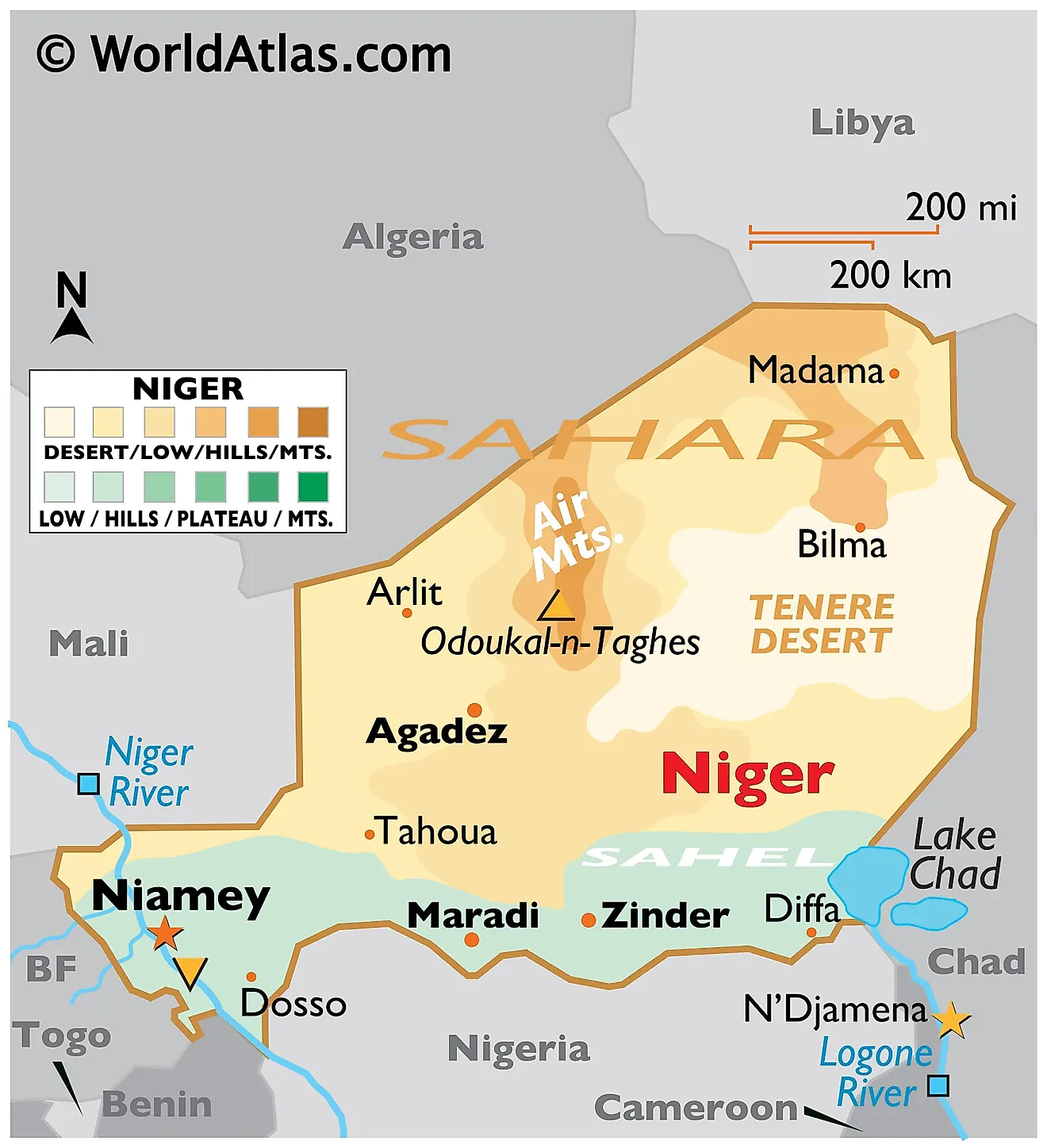
Geography: Landlocked in West Africa, bordered by Algeria, Libya, Chad, Nigeria, Benin, Burkina Faso, and Mali. Population ~26.3 million; capital Niamey.
Key Points:
Gained independence from France in 1960.
Political instability with coups and a military junta in 2023.
It faces significant challenges including desertification, water scarcity, and economic development issues.
It is one of the world’s poorest nations despite having large uranium reserves.
Ivory Coast
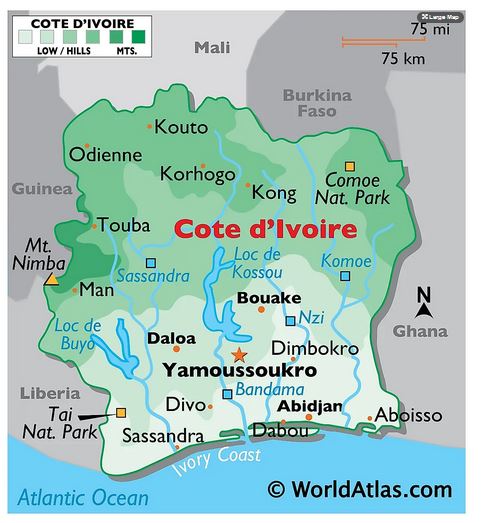
Recent discoveries have revealed substantial oil reserves estimated at six billion barrels, potentially making Ivory Coast a net oil exporter by the end of the decade.
The Baleine field, operated by Eni, aims to reach significant production levels by 2026.
Geography: Located on the southern coast of West Africa; bordered by Liberia, Guinea, Mali, Burkina Faso, Ghana, and the Gulf of Guinea. Population ~30.9 million; capital Yamoussoukro.
Key Points:
Gained independence from France in 1960.
Experienced political instability, now relatively stable since 2016.
Fast-growing economy dependent on cocoa, coffee, and expanding into gold mining and oil refining.
Abidjan is a major hub for West African economic activities.
Pacific Island States
Participated in a summit with Japan expressing concerns over military build-ups and the need for regional peace and security.
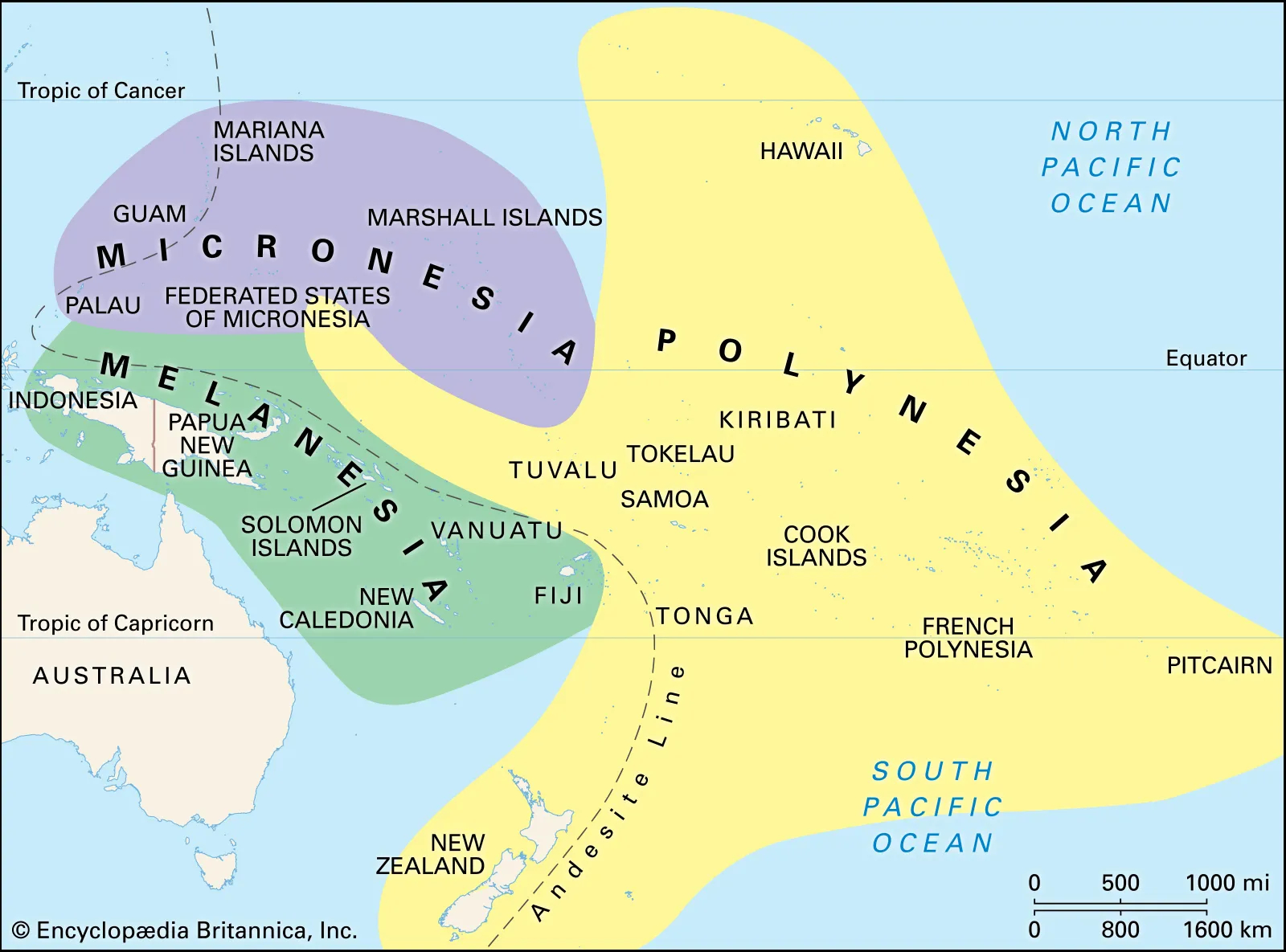
Geography: Vast region in the Pacific Ocean, categorized into Melanesia, Micronesia, and Polynesia; diverse climates and ecosystems.
They face challenges such as climate change impacts, biodiversity loss, and varying levels of development.
Economic activities include tourism, agriculture (especially coconut and palm oil), and fishing.
These islands play a crucial role in global biodiversity and climate resilience efforts.
PYQ:
[2022] Consider the following pairs:
Region often mentioned in the news: Country
Anatolia: Turkey
Amhara: Ethiopia
Cabo Delgado: Spain
Catalonia: Italy
How many pairs given above are correctly matched?
(a) Only one pair
(b) Only two pairs
(c) Only three pairs
(d) All four pairs
[2018] Consider the following pairs:
Towns sometimes mentioned in news: Country
1. Aleppo: Syria
2. Kirkuk: Yemen
3. Mosul: Palestine
4. Mazar-i-Sharif: Afghanistan
Which of the pairs given above are correctly matched?
In the recently concluded general elections in the U.K., a record 263 women MPs, making up 40% of the total, have been elected to the House of Commons.
Political representation of Women in the world:
Have women been fairly represented in Parliament in independent India?
Women were granted the right to vote from the First General Elections in 1952, yet their representation in the Lok Sabha has been low.
Statistics about women’s representation: The women’s representation in Lok sabha in between of 1952 and 2004 was about ranged from 5% to 10%.
The percentage women’s representation had increased to 12% in 2014 and stands at 13.6% in the 18th Lok Sabha while in the Rajya Sabha (upper house), the figure is 13%.
Constitutional Amendments: The 73rd and 74th amendments in 1992/1993 provided one-third reservation for women in panchayats and municipalities, but similar reservations for the Lok Sabha and State assemblies have not been successful until recently.
Note: The global average of 26.9% of women in National parliaments.
Women’s Representation in State Legislatures:
No state has more than 20% women representation in its legislative assembly.
Chhattisgarh has the highest representation with 18% women MLAs.
Himachal Pradesh has just one woman MLA and Mizoram has none.
Should political parties provide internal reservations to increase women’s political participation?
Globally, higher representation for women is achieved through voluntary or legislated compulsory quotas for candidates within political parties or reserved seats in parliament.
So, quotas within political parties offer more democratic choices to voters and flexibility in candidate selection. It means quota in Political parties could be the most important step to increase women’s representation in Parliament.
Some parties, like Naam Tamilar Katchi in Tamil Nadu, have adopted voluntary quotas (50% for women candidates), but such measures alone have not significantly improved overall representation.
When will the 106th constitutional amendment be implemented?
The 106th Amendment Act provides for 33% reservation for women in the Lok Sabha and state legislative assemblies, including the Delhi Legislative Assembly.
The reservation will come into effect after an exercise of delimitation is undertaken following the first census conducted after the commencement of the 106th Amendment Act.
The women’s reservation will be in operation for a period of 15 years from its commencement.
Way Forward:
Public Awareness and Advocacy: Need to conduct widespread awareness campaigns to highlight the importance of gender equality in political representation.
Capacity Building and Support Mechanisms: Need to implement comprehensive capacity-building programs aimed at empowering women politically. For example,provide training in leadership skills, campaign management, and legislative processes.
Mains PYQ:
Q The reservation of seats for women in the institutions of local self-government has had a limited impact on the patriarchal character of the Indian Political Process.” Comment. (UPSC IAS/2019)
The Supreme Court has reserved its decision on sub-caste reservations for SC/STs. Any ruling on this matter must be substantiated not only legally but also academically.
What is the Sub-categorization of castes?
It refers to the practice of further dividing larger caste categories into smaller groups or sub-groups based on specific criteria such as socio-economic status, geographical location, historical background, or specific needs for policy implementation.
Background of the Case:
The case involves the validity of sub-classification within the SC and ST categories for providing reservations in government jobs and education.
In 2004 Supreme Court strikes down Andhra Pradesh Scheduled Castes (Rationalisation of Reservations) Act, 2000, citing violation of the right to equality in the E.V.Chinnaiah v State of Andhra Pradesh case and emphasised that the SC list should be treated as a single, homogeneous group
Only Parliament has the power to sub-classify SCs and STs for reservations
The Supreme Court is now considering whether states have the power to create sub-classifications within these reserved categories.
The case stems from a 1975 Punjab government notification that divided its 25% reservation for SCs into two categories: half for Balmikis (Valmikis) and Mazhabi Sikhs, and the other half for the remaining groups within the SC category.
Objectives behind the implementation of reservations and present SC scenario:
Objective of Reservations: The primary objective of reservations, as advocated by Dr. B.R. Ambedkar, is to ensure equitable representation and opportunities for historically marginalized communities, particularly Scheduled Castes (SCs).
Present SC scenario: Despite reservations, certain sub-castes within SCs continue to face challenges in securing adequate representation in jobs and education. This under-representation is often attributed to factors such as inadequate educational opportunities, economic disparities, and historical discrimination.
The policy of economic empowerment in India and its associated challenges:
Policies for Economic Empowerment: These policies complement reservations by focusing on enhancing the ownership of capital assets (like land and businesses) and improving educational attainment among SC individuals
For example, Self-Employment Scheme for Rehabilitation of Manual Scavengers (SRMS), National Scheduled Castes Finance & Development Corporation (NSFDC) and National Safai Karamcharis Finance & Development Corporation (NSKFDC).
These policies are aimed at building capabilities and enabling greater participation in economic activities.
Challenges: There are challenges in implementing economic empowerment policies including inadequate access to credit and financial resources, lack of skill development initiatives, and persistent socio-economic barriers that hinder the upward mobility of SC communities.
Intersection with Reservations: Integrating economic empowerment with reservations is crucial to ensure that individuals from SC backgrounds not only secure reserved positions but also have the necessary skills and resources to thrive in competitive environments.
What must be our focus? (Way Forward)
Holistic Approach: There is a need for a holistic approach that combines reservations with targeted economic and educational interventions. This approach should address both systemic discrimination and socio-economic barriers faced by SC communities.
Capacity Building: There should be emphasis on enhancing the educational infrastructure and skill development programs tailored to the needs of SC individuals.
Data-Driven Policy: The policy decisions related to sub-caste reservations should be informed by empirical data that assesses the actual impact of discrimination versus socio-economic factors on under-representation.
Mains PYQ:
Q Whether National Commission for Scheduled Castes (NCSC) can enforce the implementation of constitutional reservation for the Scheduled Castes in the religious minority institutions? Examine (UPSC IAS/2018)
Q1 National Education Policy 2020 conforms with the Sustainable Development Goal-4 (2030). It intends to restructure and reorient the education system in India. Critically examine the statement. (UPSC IAS/2020)
Q2 The quality of higher education in India requires major improvement to make it internationally competitive. Do you think that the entry of foreign educational institutions would help improve the quality of technical and higher education in the country? Discuss. (UPSC IAS/2015)
Note4Students:
Prelims: About NTA and its function
Mains: Challenges and issues related to NTA
Mentor comments:The National Testing Agency (NTA) has faced widespread protests from students across India over alleged irregularities in exams like NEET-UG, CSIR-UGC NET, and UGC-NET, including suspected question paper leaks and technical glitches. Students have demanded a re-examination of affected tests, a thorough investigation into the irregularities, and the scrapping of the NTA due to its lack of transparency and accountability. Prominent student organizations like ABVP, NSUI, AISA, and SFI have organized nationwide strikes, demonstrations, and protests outside the Ministry of Education headquarters, with some calling for the Education Minister’s resignation.
Let’s learn!
Why in the news?
The NTA faced severe criticism after awarding grace marks to 1,563 candidates in the NEET-UG exam due to delays at seven examination centres. This led to a record 67 candidates sharing the top rank, prompting allegations of inflated marks
About the National Testing Agency (NTA):
The National Testing Agency (NTA) was established by the Government of India in 2017 to conduct entrance examinations for professional courses.
It aimed to conduct Multiple Choice Question (MCQ)-type examinations electronically, utilizing specialists in the science of testing to set up question banks and evaluator frameworks.
NTA conducts over 15 entrance exams, including the Common University Entrance Test (CUET), NEET-UG, and various UGC courses.
It operates as a lean organization with most work outsourced and is headed by a chairman and a chief executive officer (typically an IAS officer).
Challenges and issues related to NTA:
Lack of Transparency and Accountability:
The NTA has been embroiled in allegations of irregularities in the conduct of exams like NEET-UG, including suspected question paper leaks, distribution of wrong question papers, and technical glitches.
This has significantly dented the credibility and trust in the NTA among students, parents, and educators.
Operational and Administrative Challenges: The centralized nature of the NTA has created operational and administrative challenges, with many of the empanelled test centers lacking proper infrastructure like CCTV monitoring.
The award of grace marks to candidates and the unusual spike in the number of students securing full marks in exams like NEET have raised questions about the procedures adopted by the NTA.
The continued use of traditionalpen-and-paper mode exams creates multiple opportunities for malpractice, from the setting and printing of the paper to its distribution and delivery.
Steps taken by the Government:
Institutional Initiatives:
The government has appointed a reform Dr. K. Radhakrishnan committee, to recommend reforms to enhance the exam processes of the NTA.
Govt. also appointed Pradeep Singh Kharola as the new chief of NTA.
The education ministry has sought a detailed report from the Bihar Police’s Economic Offences Unit regarding the purported irregularities in the NEET (UG) 2024 exam held in Patna.
Strengthening Security and Processes:
The Govt. has recognized the need to strengthen the NTA’s security infrastructure, adopt advanced technologies, and enhance the overall efficiency and transparency of its examination processes.
In response to the controversy over the award of grace marks, the NTA decided to retract the grace marks given to 1,563 students and offered them the option to take a re-test.
Impact on the School System due to entrance exam:
Rise of Coaching Centers:
The prominence of national-level entrance exams has shifted the focus from regular school education to specialized coaching centers designed to prepare students specifically for these exams.
The proliferation of coaching centres has led to the emergence of ‘dummy’ schools where students are enrolled only to meet regulatory requirements but primarily attend coaching classes.
Neglect of Holistic Education: The emphasis on entrance exams has led to the neglect of holistic education that schools traditionally provide, focusing instead on rote learning and exam-specific strategies.
Declining Standards: The school system’s academic standards are declining as students and educators prioritize entrance exam preparation over comprehensive education.
Students are missing out on foundational knowledge and skills that are critical for their overall development and future academic success.
Way forward:
Holistic Evaluation:
Reinstate the practice of incorporating school-leaving marks into the final entrance exam scores to ensure a more holistic evaluation of students.
Emphasize the importance of school education by making it a significant component of the entrance examination process.
Comprehensive Curriculum:
Enhance the school curriculum to ensure it provides a strong foundation in various subjects, critical thinking, and problem-solving skills.
Encourage a balanced approach to education that values both school learning and entrance exam preparation.
The ECI released a technical Standard Operating Procedure (SOP) on July 16 for verifying burnt memory in EVMs and VVPATs, following an April Supreme Court verdict.
What is the Burnt Memory of EVM?
“Burnt memory” in Electronic Voting Machines (EVMs) refers to the firmware or software program permanently written onto the microcontroller’s memory during the manufacturing process.
This memory controls the EVM’s operations, and “burnt” implies it is fixed and cannot be altered or reprogrammed easily.
What was the case before the Supreme Court, and what did it order?
Case Before the Supreme Court:
The Supreme Court was hearing a challenge to the reliability of Electronic Voting Machines (EVMs). The judgment was delivered on April 26, 2024, during the Lok Sabha election.
The Supreme Court upheld the EVM-VVPAT system and rejected the plea for a return to paper ballots and for 100% counting of VVPAT slips.
The court directed the Election Commission of India (ECI) to allow second and third-placed candidates to seek verification of burnt memories of EVMs and VVPATs of up to 5% of machines in an Assembly constituency or an Assembly segment of a Lok Sabha constituency.
Court’s Orders:
The burnt memory/microcontroller in 5% of the EVMs (control unit, ballot unit, and VVPAT) per assembly constituency/assembly segment of a parliamentary constituency shall be checked and verified for tampering or modification.
Candidates who are at Sl. No. 2 or Sl. No. 3 behind the highest polled candidate can request verification in writing.
Candidates or their representatives have the option to be present during the verification process. Requests for verification must be made within seven days of the declaration of the result.
The actual cost or expenses for the verification will be notified by the ECI, and the candidate requesting the verification will bear the expenses. These expenses will be refunded if tampering is found.
What is the process to be followed for the verification of EVMs and VVPATs?
Technical SOP by ECI:
Mock Poll: A mock poll of up to 1,400 votes per machine will be conducted in the presence of candidates or their representatives.
Result Comparison: If the results of the machines and VVPAT slips match, it will be concluded that the burnt memory or microcontrollers have not been tampered with.
Selection of Machines: Candidates can select the polling stations, EVMs, BUs, CUs, and VVPATs they want checked.
Verification Team: Trained engineers from the EVM manufacturers, Bharat Electronics Ltd (BEL) and Electronics Corporation of India Ltd (ECIL) will perform the checks.
Technical Methods: Various technical methods will be used to verify the fidelity of firmware burnt into a microcontroller through a public process.
When will this process of checking start?
Preliminary Step: Verification will commence after it is confirmed by the High Courts of the respective states that no Election Petitions have been filed regarding the constituencies in question.
Election Petitions: Petitions challenging the election outcome can be filed within 45 days of the results being declared. Since the results were announced on June 4, petitions can be filed until July 19.
Applications Received: Eleven applications cover 118 polling stations or sets of EVMs and VVPATs. Applications have been received from candidates from BJP, Congress, DMDK, and YSRCP.
Way forward:
Enhanced Transparency and Confidence: Conduct regular and public verification processes of EVMs and VVPATs with involvement from political parties and independent observers to build public trust and confidence in the electoral system.
Technological Upgradation and Training: Invest in upgrading EVM technology and provide comprehensive training for election officials and engineers to ensure efficient and accurate verification and operation of voting machines.
In May, a speeding car, allegedly driven by a teenager, resulted in the deaths of two young techies in Pune.
The Juvenile Justice Board (JJB) initially granted the minor bail on conditions like writing a 300-word essay on road safety. This decision sparked public outrage and criticism from the Maharashtra Deputy CM.
Later, the JJB canceled the minor’s bail and sent him to an observation home, which was again challenged in the Bombay High Court.
The Bombay High Court eventually ordered the release of the minor, stating that the JJB’s remand order was illegal and that the minor should be in the care of his paternal aunt as per the Juvenile Justice Act.
What were the provisions led under the previous Juvenile Justice (Care and Protection of Children) Act of 2015?
Definitions:
Section 2 defines a “child” as a person below the age of 18 years.
Section 2(13) defines “children in conflict with law” as those who are alleged or found to have committed an offence.
Section 2(14) defines “children in need of care and protection” as those meeting certain criteria, such as being homeless, engaged in illegal labour, victims of abuse, etc.
Juvenile Justice Boards (JJBs):
Section 4 mandates the establishment of Juvenile Justice Boards in each district.
Section 4(2) states that the JJBs shall comprise a Metropolitan Magistrate or a Judicial Magistrate of the First Class and two social workers.
Section 8 outlines the powers and functions of the JJBs in handling cases related to children in conflict with the law.
Child Welfare Committees (CWCs):
Section 27 requires the establishment of Child Welfare Committees in each district.
Section 28 defines the composition and functions of the CWCs in the care, protection, treatment, development, and rehabilitation of children in need of care and protection.
Adoption Procedures:
Chapter VIII (Sections 56-65) provides a comprehensive adoption regime, including the establishment of the Central Adoption Resource Authority (CARA).
Sections 56-65 outline the adoption procedures and ensure transparency and accountability.
Rehabilitation and Social Reintegration:
Section 39 emphasizes the rehabilitation and social reintegration of children in conflict with the law through various measures, including counseling, education, skill development, and community-based programs.
Preliminary Assessment for Heinous Offences:
Section 15 mandates a preliminary assessment by the JJB to determine if a child in the age group of 16-18 years accused of committing a heinous offence should be tried as an adult.
Children’s Court:
Section 19 provides for the establishment of a Children’s Court to try children in the age group of 16-18 years accused of committing heinous offences.
Mandatory Reporting:
Section 19(1) makes it mandatory to report the presence of a child in need of care and protection to the authorities, and failure to do so is a punishable offence.
Registration of Child Care Institutions:
Section 41 requires all childcare institutions, whether run by the government or NGOs, to be registered within six months of the commencement of the Act.
Penalties:
Chapter XI (Sections 75-85) prescribes penalties for various offences, including the non-registration of childcare institutions and the sale and procurement of children.
Amendment in 2021
Empowering District Magistrates: The amendment authorized District Magistrates, including Additional District Magistrates, to issue adoption orders under Section 61 to ensure speedy disposal of cases and enhance accountability.
Strengthening Child Welfare Committees (CWCs): The eligibility parameters for the appointment of CWC members were redefined, and criteria for disqualification were introduced under Section 28 to ensure that only competent and capable individuals were appointed.
Categorization of Offences: The amendment categorized offences where the maximum sentence is more than 7 years imprisonment but no minimum sentence is prescribed or the minimum sentence is less than 7 years as “serious offences” under Section 2(54).
Addressing Implementation Challenges: The amendment introduced changes to remove difficulties arising in the interpretation of various provisions of the Act and to clarify the scope of certain provisions.
Need for Accountability:
Promoting Justice and Fairness: Accountability ensures that juvenile offenders are held responsible for their actions in a manner that aligns with principles of justice and fairness.
Preventing Recidivism and Ensuring Rehabilitation: Holding juvenile offenders accountable helps in addressing underlying issues that contribute to their offending behaviour.
Maintaining Public Confidence and Trust: Accountability in the juvenile justice system enhances public confidence in the legal process and ensures transparency in decision-making.
Conclusion: Implement comprehensive rehabilitation programs that are tailored to the individual needs of juvenile offenders, focusing on mental health support, educational opportunities, vocational training, and family reintegration.
Mains PYQ:
Q Examine the main provisions of the National Child Policy and throw light on the status of its implementation. (2016)
The Karnataka Cabinet has approved a bill mandating that industries, factories, and other establishments appoint local candidates in 50% of management positions and 75% in non-management positions.
The bill was cleared in a Cabinet meeting chaired by the Chief Minister.
Key features of the Bill:
Definition of a Local Candidate:
Born in Karnataka
Domiciled in Karnataka for 15 years
Proficient in speaking, reading, and writing Kannada
Passed a required test by the nodal agency
Educational Requirements:
Must have a secondary school certificate with Kannada as a language, or
Pass a Kannada proficiency test specified by the nodal agency
Training and Relaxation Provisions:
Industries and establishments must train local candidates within three years if qualified locals are unavailable
Establishments can apply for relaxation if local candidates are insufficient
The government’s decision on relaxation applications is final
Local candidates must constitute at least 25% in management and 50% in non-management positions
Non-compliance penalties range from ₹10,000 to ₹25,000
Do you know?
The Punjab and Haryana High Court earlier quashed the Haryana State Employment of Local Candidates Act, 2020, which mandated 75% reservation for state domiciles in the private sector jobs.
This decision was made because the State had overstepped its legislative authority and imposed undue restrictions on private employers.
Background and Rationale:
Long-pending Demand:
The bill has been passed in response to longstanding demands for 100% job reservation for Kannadigas.
Earlier in July, Kannada organizations organized rallies in parts of the State, demanding immediate implementation of the Sarojini Mahishi Report.
Sarojini Mahishi Report:
The Sarojini Mahishi report, submitted in 1984 by Mahishi, former Union Minister and the first woman MP from Karnataka, included 58 recommendations.
The report recommended 100% reservation for locals in group C and D jobs in Central government departments and public sector undertakings (PSUs) in Karnataka.
Reservation for Locals in Jobs: Constitutionality Check
Provision
Potential Violation
Article 14
Guarantees equality before the law and equal protection of the laws.
Reservation for locals could create unequal opportunities for non-locals, violating the principle of equality.
Article 15
Prohibits discrimination on grounds of religion, race, caste, sex, or place of birth.
Reserving jobs for locals based on place of birth or domicile status may constitute discrimination against non-locals.
Article 16
Ensures equality of opportunity for all citizens in matters relating to employment or appointment to any office under the State.
Though it allows reservation for backward classes, it does not explicitly extend this provision to private employment, making mandatory quotas for locals potentially unconstitutional.
Article 19
Guarantees the freedom to move freely throughout the territory of India.
Imposing local reservations could restrict the free movement of people seeking employment opportunities across states, infringing upon their freedom of movement and residence.
PYQ:
[2017] One of the implications of equality in society is the absence of:
Q) ‘The long-sustained image of India as a leader of the oppressed and marginalised nations has disappeared on account of its new found role in the emerging global order.’ Elaborate. (UPSC IAS/2019)
Prelims: Consider the following statements: (UPSC IAS/2020) 1) The value of Indo-Sri Lanka trade has consistently increased in the last decade. 2) “Textile and textile articles” constitute an important item of trade between India and Bangladesh. 3) In the last five years, Nepal has been the largest trading partner of India in South Asia.Which of the statements given above is/are correct? (a) 1 and 2 only (b) 2 only (c) 2 only (d) 3 only
Note4Students:
Prelims: India-Nepal Bilateral Ties;
Mains: Neighbourhood First Policy; Panchasheel Principles;
Mentor comment: India and Nepal share deep geographical, civilizational, historical, economic and cultural ties. They have an open border and close people-to-people connections. The 1950 India-Nepal Treaty of Peace and Friendship forms the bedrock of their special relationship, granting citizens of both countries equal economic and educational opportunities. India is Nepal’s largest trade partner and source of foreign investment. The two countries have extensive cooperation in areas like defense, disaster management, infrastructure development, water resources, and education. During recent years, the Indian government has been observing some strains and gaps in this relationship, which needs urgent attention seeing the regional geopolitical situations.
Let’s learn!
__
Why in the news?
India-Nepal relations have involved a significant decline in bilateral ties since 2015, which has now presented an opportunity for improvement.
Key events and issues that contributed to the strain include:
•New Constitution in Nepal: In 2015, Nepal’s Constituent Assembly adopted a new constitution, which India had wanted to be reworked. Despite promises made during visits to New Delhi, the draft was promulgated unamended, leading to tensions. •Economic Blockade: India imposed an economic blockade on Nepal, which lasted nearly six months. This blockade was seen as a response to the new constitution and was widely criticized for its impact on Nepal’s economy and relations with India. •Increased Chinese Influence: Nepal’s PM Khadga Prasad Oli reacted to the blockade by signing 10 agreements with China, covering areas such as trade, transit, power, and transport. This move further strained the India-Nepal relationship. •Political and Diplomatic Tensions: The Indian government became more involved in Nepali governance and politics, leading to accusations of interference. The RSS and the BJP were also accused of attempting to influence Nepal’s politics and culture to align with India’s image. •Border Disputes: The publication of an updated political map by India in October 2019, which included the disputed Limpiyadhura-Kalapani triangle, led Nepal to amend its constitution to include the same region on its map. This further exacerbated the border disputes between the two countries.
The present context of Power and Prowess between both countries:
Conjecture in Nepal: There is speculation in Nepal about what Narendra Modi’s third term as Prime Minister means, given the legacy of the blockade, Hindutva activism, economic stifling, and geopolitical coercion.
Indian Exceptionalism: India’s long history of interfering in Nepal’s politics and governance goes against the principle of non-interference, as seen in the Panchsheel doctrine.
India’s overbearing attitude towards Nepal seems to be based on power rather than prowess (skill or expertise), which could lead to a more stable and economically energized Nepal, benefiting India’s National Security and Economy.
Legacy of India’s existing Policies: Modi’s foreign policy and national security teams remain unchanged, leading to questions about whether he will become more moderate or aggressive to compensate for the BJP’s domestic slowdown.
Modi’s“Neighbourhood First“ initiative has been unsuccessful, and he may need to correct his policies on Nepal as the closest neighbor.
Nepal is not just a basket-case neighbor but the seventh largest remittance-sending country to India, helping support livelihoods in India’s poorest regions.
Nepalian Viewpoint:
Eroded Ability to Engage Equally
Nepal’s political, civil society, bureaucratic, and security institutions have lost the ability to engage with their Indian counterparts as equals. This is due to the ongoing political turmoil in Nepal.
Nepal’s political leadership has included both weak and subservient figures. The worst example was during the prime ministership of Pushpa Kamal Dahal (‘Prachanda’), the Maoist leader.
Dahal’s Subservience to India
During his 2023 visit to India, Nepali PM Pushpa Kamal Dahal avoided raising issues that could have upset Modi. He failed to discuss pending bilateral matters like air routes, the Limpiyadhura-Kalapani dispute, and the Eminent Persons’ Group (EPG) report.
To please the RSS, Dahal and his team wore saffron robes at a temple in Madhya Pradesh.
Dahal signed a power trade deal that let India refuse imports from Nepal’s Chinese-backed hydropower plants and allowed the Indian embassy to distribute grants in Nepal.
Considering the South Asian Region and India’s Peaceful Existence:
Nepal’s Cordiality towards India: Presently, New Delhi is far from considering Nepal as the future connectivity gateway to the Chinese mainland via railways and roadways breaching the Himalayan rampart.
A continuing ‘Himalayan paranoia’, with its origins in the 1962 debacle with China, fuels geo-strategic insecurity in New Delhi think-tanks.
India’s Missed Opportunities: Indian economists fail to note the enormous savings in Military expenditure represented by Nepal’s presence as a ‘benign buffer’along the central stretch of the Himalaya, especially after the concerns over the Indian exchequer’s inability to bear military costs and pensions (Agniveer Scheme).
The open Nepal-India border is the prototype for a future South Asia at peace, but New Delhi analysts constantly harp on the insecurity it represents for India.
Nepal’s Suffering and India’s Misconceptions
The Maoists used shelters across the unregulated border during their decade-long insurgency against the Nepali state.
Every summer, the Indian media claims Nepal “releases” monsoon waters into the Ganga plain, but Nepal has no significant storage dams, and the Gandaki and Kosi barrages are controlled by India.
‘Nepal studies’ is not an academic discipline in India, which contributes to Indian citizens viewing Nepal as poor, ungrateful, and even malevolent.
Conclusion: Frustrated Nepalis want India to treat them as an equal partner, not a “big brother”. India’s policymakers should accept that Nepal is a separate country from India. Nepal should try to clear up misconceptions about itself and suggest ways to improve relations.
![[19th July 2024] The Hindu Op-ed: India and a Case for Strategic Autonomy](https://www.civilsdaily.com/wp-content/uploads/2024/07/19-july-1568x882.jpg)
![[17th July 2024] The Hindu Op-ed: Centralised examinations have not aced the test](https://www.civilsdaily.com/wp-content/uploads/2024/07/17-july-1568x882.jpg)
![[16th July 2024] The Hindu Op-ed: ‘Big brother’ to ‘Brother’, a Nepal-India reset](https://www.civilsdaily.com/wp-content/uploads/2024/07/16-july-1568x882.jpg)