💥Join UPSC 2027,2028 Mentorship (August Batch) + XFactor Notes & Microthemes PDF

GS Paper: Social Empowerment

  • Evolution of the Malaiyali Tribe

    malaiyali

    Central Idea

    • The Malaiyali tribe, scattered across Tamil Nadu’s hilly regions, has undergone a remarkable transformation over two centuries.
    • From their initial foraging lifestyle to settling atop the Yelagiri hill and constructing traditional clay huts, the tribe has transitioned into a more modern way of life.
    • Amidst the evolving landscape, one old-fashioned hut remains as a testament to their history.

    Malaiyali Tribe

    • Historical Settlement: Over 200 Malaiyali tribespeople established a comprehensive system on Yelagiri hill with clay huts for shelter, storage, farming, and cattle.
    • Modern Evolution: Today, only one antiquated hut endures, belonging to tribesman Govinthasamy, while the rest have given way to brick-and-mortar homes.
    • Malaiyali Tribe: “Malai” means hill and “yali” means people, depicting the tribespeople who settled across Tamil Nadu’s hilly regions.

    Significance of Red Clay

    • Integral Material: Red clay played a pivotal role in building huts, burying the dead, and sustaining the tribe’s lifecycle from birth to death.
    • Unique Construction: Huts were constructed with red clay on teak wood frames, embodying the tribe’s connection to nature.
    • Practicality and Value: Despite its worn appearance, the hut holds immense value due to the scarcity and high cost of materials like teak wood.

    Distinctive Hut Features

    • Roofing: A 12-foot thatched roof made of dry bamboo leaves, waxed with cow dung to prevent leaks during monsoons.
    • Interior Space: Deceptively small from outside, the hut accommodates eight people and an attic for storing household items.
    • Functional Evolution: Originally meant for living, the hut transformed into a storage space for seeds during sowing and grains post-harvest.
    • Elevated Structure: The hut stands on a teak wood stilt to prevent flooding during heavy rains and deter rodents.
    • Storage Space: Stilts create additional storage beneath the house for grains or poultry.
    • Traditional Living: The one-room structure housed various activities, highlighting the tribe’s reliance on agriculture.
  • 530 districts reported free of Manual Scavenging: Centre

    manual scavenging

    Central Idea

    • The Social Justice Ministry revealed that while 530 districts have reported themselves as manual scavenging-free, a significant number of districts are yet to do so.
    • Despite the government’s assertion that manual scavenging-related deaths have not occurred in the last five years, fatalities during sewer and septic tank cleaning persist.

    Manual Scavenging in India

    • Manual scavenging is the practice of removing human excreta by hand from sewers or septic tanks.
    • India banned the practice under the Prohibition of Employment as Manual Scavengers and their Rehabilitation Act, 2013 (PEMSR).
    • The Act bans the use of any individual for manually cleaning, carrying, disposing of or otherwise handling in any manner, human excreta till its disposal.
    • In 2013, the definition of manual scavengers was also broadened to include people employed to clean septic tanks, ditches, or railway tracks.
    • The Act recognizes manual scavenging as a “dehumanizing practice,” and cites a need to “correct the historical injustice and indignity suffered by the manual scavengers.”

    Reasons for its persistence

    • Low Awareness and Marginalization: Manual scavenging is often carried out by marginalized sections of society who are unaware of their rights, making them vulnerable to exploitation.
    • Enforcement Issues: Weak enforcement of the Act and the exploitation of unskilled laborers contribute to the persistence of manual scavenging.
    • High Cost of Automation: The high cost of adopting automated cleaning methods in sewers is a deterrent for municipal authorities.
    • Cheaper Availability of Unskilled Labor: Contractors resort to illegal employment of unskilled labourers who are willing to work at lower wages, perpetuating the practice.
    • Caste Dynamics: The practice is reinforced by the existing caste hierarchy, with a majority of manual scavengers belonging to lower castes.

    Various Policy Initiatives

    • Prohibition of Employment as Manual Scavengers and their Rehabilitation (Amendment) Bill, 2020: The proposed amendment seeks to mechanize sewer cleaning, provide on-site protection, and offer compensation in case of sewer-related deaths.
    • Prohibition of Employment as Manual Scavengers and their Rehabilitation Act, 2013: This Act goes beyond dry latrine prohibitions and outlaws all forms of manual excrement cleaning in insanitary latrines, open drains, or pits.
    • Rashtriya Garima Abhiyan: The “Maila Mukti Yatra,” initiated in 2012, aims to eradicate manual scavenging nationwide, starting from Bhopal.
    • Prevention of Atrocities Act: This Act serves as protection for sanitation workers, as a significant number of manual scavengers belong to the Scheduled Caste.
    • Compensation: The PEMSR Act and the Supreme Court’s decision in the Safai Karamchari Andolan vs. Union of India case mandate compensation of Rs 10 lakh for victims’ families.
    • National Commission for Safai Karamcharis (NCSK): Investigating the conditions of waste collectors in India, the NCSK provides recommendations to the government.
    • Proper Distinction: The Ministry now recognizes the difference between sanitation work and manual scavenging.
    • Enumeration of Sanitization Workers: The enumeration of sanitation workers will be conducted in 500 AMRUT cities as part of the National Action Plan for Mechanised Sanitation Ecosystem (NAMASTE).
    • NAMASTE Scheme: The NAMASTE scheme aims to eliminate unsafe sewer and septic tank cleaning practices, enhancing the safety and dignity of sanitation workers.

    States and UTs with Pending Declaration of Manual Scavenging-Free Districts

    • Concerning Data: Jammu and Kashmir, Manipur, Telangana, Andhra Pradesh, West Bengal, and Jharkhand are among the States and UTs with the highest number of districts yet to declare themselves as manual scavenging-free.
    • Disparity among States: While States like Bihar, Rajasthan, and Tamil Nadu have achieved 100% declaration of manual scavenging-free districts, several other States and UTs have reported only 15% to 20% of districts as free from the practice.

    Way forward

    • Regular surveys and social audits must be conducted against the involvement of manual scavengers by public and local authorities.
    • There must be proper identification and capacity building of manual scavengers for alternate sources of livelihood.
    • Creating awareness about the legal protection of manual scavengers is necessary.
  • India’s Unique Approach to Conflict Resolution in the Ukraine Crisis

    Central Idea

    • China’s recent mediation efforts in the Ukraine crisis have drawn attention to India’s distinct approach to conflict resolution. While China has positioned itself in opposition to the American approach, India has employed symbolic instruments of power to enhance its soft power appeal. Prime Minister Narendra Modi has projected India as the mother of democracies and a moral force for global peace.

    India’s engagement with Ukraine in the context of the Ukraine crisis

    • Expressions of Solidarity: Through various statements and interactions, India has conveyed its support for Ukraine’s sovereignty and territorial integrity.
    • Direct Communication: Prime Minister Modi has engaged in telephonic conversations with Ukrainian President Volodymyr Zelenskyy on multiple occasions. This direct communications underline India’s commitment to engaging with Ukraine at the highest level and addressing the crisis.
    • Support for Peace Efforts: India has extended support for peace efforts in Ukraine. Prime Minister Modi has conveyed India’s commitment to peace and stability in the region, emphasizing the importance of resolving the conflict through diplomatic means.
    • Alignment with Global Players: India’s engagement with Ukraine aligns its response to the crisis with that of other global players, such as the United States. Recognizing the interconnectedness of geopolitical dynamics, India seeks to bring its stance into alignment with key stakeholders involved in conflict resolution.
    • Balancing Act: India’s engagement with Ukraine does not indicate a complete shift in its historical ties with Russia. While expressing solidarity with Ukraine, India also acknowledges Russia’s military and geopolitical importance, considering it in the context of its own military preparedness and regional stability.
    • Rising Stature: India’s active involvement in the Ukraine crisis highlights its growing stature and recognition in the international arena. By engaging with Ukraine, India positions itself as a relevant player in resolving global conflicts and reinforces its commitment to global peace and stability.
    • Aspirations for Global Role: India’s engagement with Ukraine reflects its aspirations to play a constructive role in shaping international relations. By expressing support for Ukraine and actively engaging in conflict resolution efforts, India aims to contribute to a peaceful resolution and assert its position as a responsible global actor.

    India’s ambiguity in the Ukraine conflict

    • Evasive Position in UN Resolutions: India has been criticized for taking an ambiguous stance in many UN resolutions concerning the Ukraine conflict. While expressing disapproval of the war, India has avoided taking a clear position, particularly in conflicts involving its traditional allies. This ambiguity raises concerns, especially considering India’s aspiration to become a permanent member of the UN Security Council.
    • Lack of Condemnation: Despite expressions of solidarity and support for peace efforts, India has refrained from explicitly condemning Russian belligerence in Ukraine. This reluctance to condemn Russia’s actions contradicts India’s commitment to opposing territorial aggression and rights violations, which is expected of a nation aspiring to be a global voice for peace and stability.
    • Historical Ties with Russia: India’s historical ties with Russia, rooted in military and geopolitical importance, contribute to its ambiguity in the Ukraine conflict. India’s military dependence on Moscow and its traditional alliance with Russia create a complex dynamic that influences India’s stance and makes it hesitant to take a clear position against Russian aggression.
    • Strategic Autonomy Doctrine: India’s strategic autonomy doctrine, which emphasizes the pursuit of an independent foreign policy, further adds to its ambiguity in the Ukraine conflict. India’s focus on balancing multiple alignments and preserving its strategic interests may limit its willingness to take a firm and unequivocal position on the conflict.
    • Challenges in Matching China’s Influence: India’s limited material resources and comparatively lower economic and military potential pose challenges in matching China’s influence in the Ukraine conflict. This may result in a cautious approach, as India navigates its own geopolitical considerations and seeks diplomatic space in the emerging nexus between Russia and China.
    • Soft Power Considerations: India’s ambiguity in the Ukraine conflict can also be attributed to soft power considerations. While India sympathizes with Ukraine as a victim of aggression, it seeks to maintain its historical ties with Russia. Balancing these considerations may lead to a nuanced and ambiguous position that prioritizes maintaining relations with both parties involved in the conflict.

    India’s soft power and its role in foreign policy at present

    • Cultural Heritage and Diversity: India’s rich cultural heritage, diverse traditions, and ancient civilizational history contribute to its soft power appeal. The promotion of Indian culture, including yoga, Ayurveda, cuisine, music, and dance, enhances India’s global influence and attracts people from around the world.
    • Diaspora and Indian Community: India’s large diaspora and the presence of Indian communities around the world contribute to its soft power. The Indian diaspora serves as a bridge between India and other nations, fostering cultural exchanges, economic ties, and people-to-people connections.
    • Economic Growth and Technological Advancements: India’s emergence as a global economic power and advancements in technology have bolstered its soft power. India’s success in sectors such as information technology, space exploration, and pharmaceuticals enhances its reputation and attractiveness as a partner in various fields.
    • Development Cooperation and Humanitarian Assistance: India’s active engagement in development cooperation and humanitarian assistance initiatives in various countries elevates its soft power. Through projects like capacity-building programs, infrastructure development, and assistance during crises, India promotes goodwill and strengthens relationships with partner nations
    • Global Leadership and Multilateral Engagement: India’s active participation in global forums, such as the United Nations, G20, and BRICS, showcases its commitment to global problem-solving and its aspiration to play a leadership role. India’s voice on international platforms amplifies its soft power and contributes to shaping global narratives.
    • Public Diplomacy and Cultural Exchanges: India’s emphasis on public diplomacy, cultural exchanges, and people-to-people interactions fosters mutual understanding and strengthens diplomatic ties. Initiatives like cultural festivals, exchange programs, and scholarships enable greater engagement and create lasting connections between India and other nations.
    • Bollywood and Indian Cinema: The popularity of Indian cinema, particularly Bollywood, has a significant impact on India’s soft power. Indian films, with their colourful storytelling, music, and dance sequences, have a wide international audience, contributing to India’s cultural influence and positive image abroad.
    • Yoga and Spiritual Practices: India’s promotion of yoga and spiritual practices has gained global recognition and has become a prominent aspect of its soft power diplomacy. Yoga has been embraced by people worldwide, leading to the establishment of International Yoga Day and numerous yoga centres across the globe

    India’s approach to conflict resolution in the Ukraine crisis: Challenges

    • Limited Influence: India’s influence in the Ukraine crisis is relatively limited compared to major global powers involved in the conflict, such as the United States, Russia, and European Union. As a result, India may find it challenging to have a significant impact on the resolution process.
    • Geographical Distance: India’s geographical distance from the conflict zone poses a challenge in actively engaging and mediating in the Ukraine crisis. Physical proximity and regional dynamics often play a crucial role in conflict resolution efforts.
    • Resource Constraints: India’s resource constraints, both in terms of economic and military capabilities, limit its ability to exert significant pressure or provide substantial assistance to the parties involved in the conflict. This constraint may hinder India’s effectiveness in playing a direct role in resolving the crisis.
    • Balancing Multiple Interests: India faces the challenge of balancing its relationships with key actors in the Ukraine crisis, particularly Russia and Ukraine. India has historically maintained close ties with Russia, while also seeking to strengthen relations with other global powers. Striking a delicate balance without jeopardizing its strategic interests can be complex.
    • Competing Priorities: India has a diverse range of domestic and international priorities that demand attention and resources. These competing priorities may divert attention and resources away from active engagement and conflict resolution efforts in the Ukraine crisis.
    • Regional Implications: India’s approach to conflict resolution in the Ukraine crisis needs to consider the broader regional implications, particularly in the Indo-Pacific region. India’s strategic considerations related to China, the United States, and other regional dynamics may influence its approach to the crisis.
    • International Consensus: Building consensus among the international community on the way forward in resolving the Ukraine crisis can be challenging. Diverse perspectives, conflicting interests, and differing approaches to the conflict among global powers may complicate India’s efforts to find a common ground for conflict resolution.

    Conclusion

    • India’s approach to conflict resolution in the Ukraine crisis stands apart from China’s mediation efforts. India’s engagement with Ukraine, symbolic projection of soft power, and balancing act between Russia and the West highlight its unique position in the global order. While India faces challenges in matching China’s influence, its commitment to global peace and stability remains steadfast

    Get an IAS/IPS ranker as your personal mentor for UPSC 2024 | Schedule your FREE session and get the Prelims prep Toolkit!

    Also Read:

    India’s role in Russia-Ukraine war


  • Critical Analysis of EWS Reservation

    EWS

    Context

    • Shortly after the Supreme Court on Monday, 7 November, upheld the validity of the 103rd Constitutional Amendment Act, which introduced 10 percent reservations for Economically Weaker Sections (EWS) in government jobs and educational institutions, Tamil Nadu’s DMK termed the split verdict a ‘setback’ to a century-old fight for social justice.

    What is the idea of reservation?

    • Based on historical injustice: Reservation is intrinsically linked to the historical injustice meted out to Shudras and Dalits.
    • Reservation for egalitarian society: It was during the anti-caste movement that the idea of reservation came up as a way for an egalitarian social order, to ensure fair representation in the socio-political order, and to mitigate and compensate for the inhuman exclusion of humans based on ascriptive status.
    • Equal participation in nation building: Reservation is implemented in politics, education and public employment so that all those in the hierarchy can participate in nation-building on equal terms.
    • Reservation is not a poverty alleviation: R. Ambedkar and E.V. Ramasamy ‘Periyar’ spoke about reservation as a means of providing representation; not as a poverty alleviation programme.

    Reasoning behind granting reservation based on social status

    • Historical benefits to upper caste: Merit is often the mantra used against the idea and implementation of reservation. Historically, Brahmins had the monopoly in offering sacrifice, receiving gifts, becoming priests, spiritual mentorship, and teaching.
    • Monopoly over resources: Vaishyas had the monopoly in wealth-generating professions. These monopolies were rooted in, and buttressed by, the authority of scriptures like the Manusmriti and treatises like the Arthasashtra.
    • Monopoly over the education: The top three Varnas had access to learning. In the colonial era, under the progressive pressures of modernization and democratization, the traditional monopolies based on caste order were diffused into the secular domains of bureaucracy, legal practice, professorship, etc.
    • Upper caste reservation in certain professions: Leaders professing equality, such as Jyotirao Phule, Periyar and Ambedkar, wanted to annihilate the arbitrary reservation for certain professions, being implemented based on fanciful mythical stories.
    • Democratization of employment and education: Essentially, the mission was to ‘de-reserve’ education and employment opportunities from a handful of castes to make them available to the remaining castes which were aspiring to be a part of the newly independent nation.
    • Idea of Merit to oppose the reservation: The merit mantra was very effective at stopping, or at least stalling, the ‘de-reservation’ process. But when the bill for EWS reservation was passed hastily in Parliament in 2019, there was no concern for merit.

    EWS

    How categorization of poor under EWS is unfair?

    • The bar of 8 Lakh is absurd: Individuals from upper caste communities who earn up to ₹8 lakh a year and may own a 1,000-square feet home are being called economically weak.
    • Poverty estimation: In India, more than 30 crore citizens have been classified as being below the poverty line (spending less than ₹32 a day in urban areas and under ₹27 a day in rural areas).
    • Lower caste forms the majority of Poor: Data from India (overall) as well as individual States show that Scheduled Castes (SCs) and Other Backward Classes (OBCs) have a higher share of poor people than upper castes in both urban and rural India.
    • Different income criteria for different community: We now live in a country where a household earning more than ₹75 per day is considered above the poverty line, while an upper caste household earning ₹2,222 a day is considered economically weak. According to the Department of Revenue data, households earning more than ₹10 lakh constitute less than 1% of India’s population.

    EWS

    Credibility of Data for EWS reservation was never questioned

    • Mandal commission data was critically analyzed: In the 1990s, renowned scholars from privileged communities viciously attacked the Mandal Commission claiming that it lacked credible data. In fact, the Mandal Commission report was based on official data curated from the Censuses of 1891 and 1931.
    • No credible data for EWS reservation: Further, B.P. Mandal formulated his concept of ‘backwardness’ by factoring in the social, educational and economic dimensions of different caste communities. But now, neither justification nor credible data has been presented while arguing that 10% reservation must be provided for the upper caste poor.
    • EWS reservation is equating the unequal’s: The Mandal Commission report said, “To equate unequal’s is to perpetuate inequality”. By giving the go-ahead for the EWS quota, Supreme Court has equated unequal’s in the category of affirmative action.
    • More privilege to already privileged community: The EWS quota is unfair because it twists the idea of social justice by bequeathing further privilege to communities who are historically situated to benefit from the oppressive caste system.

    Other criticism of EWS reservation?

    • SC/ST and OBC are outside the EWS reservation: A Dalit or an OBC who does not get a job within this quota still belongs to the EWS, but he is excluded. That is the Constitutional issue, which you have to answer. How have you excluded them, how have you excluded the poor, how have you excluded those who earn only 20,000 a month who do not get jobs amongst the Dalits?
    • Disturbing the basic structure: The government of tinkering with the “basic structure” of the Constitution.
    • Ultimate goal is removal of reservation: Government basically testing the waters and this will pave the way for the removal of caste-based reservation.
    • Opening the lid for further reservation: There is demand that government should raise the existing reservation cap for SC, OBC and minorities in line with their proportion in the population now since a decision has been taken to break the 50 per cent ceiling set by the top court.

    Conclusion

    • It is true that historically reservation is based social inequalities. Despite having the good credentials and marks upper caste or open categories were denied jobs. Justice to upper castes is not the injustice to lower castes. This is against the principal of natural justice. However exclusion of SC/ST and OBC from EWS category is certainly a matter of debate.

    Mains Question

    Q. What is the Ambedkar’s idea of reservation? Critically analyze the EWS reservation upheld by supreme court.

    Click and Get your FREE copy of Current Affairs Micro notes

  • Two finger test: Undermining the dignity of women

    finger test

    Context

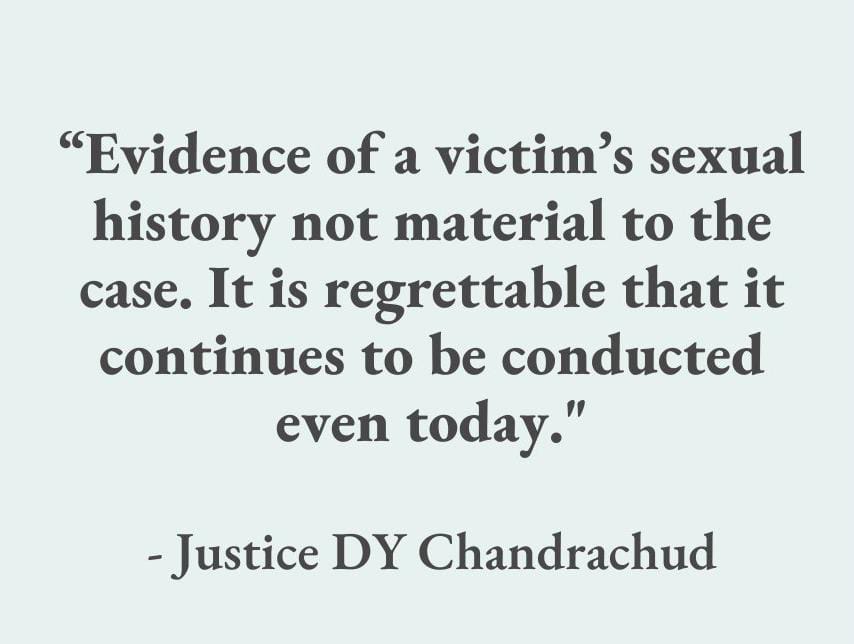
    • On October 31, a two-judge bench of the Supreme Court noted that the two-finger test is a sexist medical practice that re-victimizes and re-traumatizes rape survivors. The Court also issued directions to the Union and state governments to implement the 2014 guidelines of the Ministry of Health and Family Welfare for health providers in sexual violence cases.

    What is two finger tests?

    • The two-finger test involves the medical examiner inserting their two fingers into the vagina of a survivor to note the presence or absence of the hymen and the so-called laxity of the vagina.

    finger test

    What is the expert doctor’s opinion?

    • Misogynistic belief: While a hymen can be torn and its orifice may vary in size for many reasons unrelated to sex, the origin of the two-finger test lies in the misogynistic belief that a torn hymen is an indication that the survivor is habituated to sex and therefore, cannot be raped or is more likely to make false claims about being raped.

    What is the law against such infringement of bodily privacy?

    • SC prohibited test in Rajesh v. State of Haryana 2013 case: “Medicalization of consent” where women’s bodies are given precedence over their voices. Recognizing this as an invasion of privacy and a violation of a survivor’s dignity, the Supreme Court prohibited the test in Lillu at Rajesh v. State of Haryana (2013).
    • Guidelines for medico-legal care for survivors of sexual violence: Shortly after, in March 2014, taking forward the recommendations of the Justice J S Verma Committee Report, the Ministry of Health & Family Welfare issued guidelines for medico-legal care for survivors of sexual violence. These guidelines explicitly prohibited the two-finger test and discussed the need for training medical examiners to respond to the needs of the survivors in a sensitive and non-discriminatory manner.

    Why the practice of two finger tests still persists?

    • Lack of political will: Nearly eight years since the guidelines were issued, the two-finger test still remains a reality. Its prevalence is a reflection of the complete lack of political will to address the issue.
    • No pan-India comprehensive review: While fragmented pieces of narratives and research indicate that the two-finger test continues in rape cases to date, it is incumbent upon the executive to undertake a comprehensive pan-India review to assess the nature and extent of the problem.
    • Change in format and unclarity: The changed format (introduced after the passing of the Criminal Law Amendment Act, 2013) of the medico-legal certificate used by doctors in rape cases did not require them to make a note of the finding of the two-finger test. However, according to the lawyers, this did not mean that the test was not happening anymore. Some says they it was no longer being recorded as such but was still being conducted.
    • Poor medical infrastructure: The continued existence of the two-finger test is a result of the overall poor state of forensic medicine infrastructure in India.
    • Lack of awareness: Lack of awareness amongst the medical community about the unscientific nature of the two-finger test.

    finger test

    What is the opinion of the court?

    • Government must enforce the protocol: The Court commenting on the sorry state of affairs and issuing directions to the government on enforcement of the protocol including the emphasis on workshops and the medical school curriculum is significant.
    • Holding a person, a guilty of misconduct: The Court took a step further by holding a person conducting the two-finger test on a rape survivor guilty of misconduct. It is unclear if the Court was making a reference to professional misconduct on part of the medical examiner.

    finger test

    What should be the way forward?

    • Caregiving to victim: Medical practitioners must see themselves as caregivers when handling sexual violence cases.
    • Awareness about legal system: Medical practitioners should be made to understand as their role in the criminal legal system, specifically towards rape survivors.
    • Training of medical examiners: The training in medical school must prepare medical examiners for their role in the justice system.
    • Police should play an active role: The institution of police should be sensitized on the continued use of the two-finger test in rape cases.
    • Modules on sexuality: Training and workshops designed for doctors needs to include modules on sexuality and discrimination.

    Conclusion

    • Two finger test is further traumatizing the victim of rape. Despite the directives of courts years ago and unscientific nature, two finger test continues. Women empowerment is not only about the earnings and livelihood its also about the right to privacy and dignity of life.

    Mains Question

    Q. What is two finger tests? what is the law against the two-finger test? give the reasons for continuation of two finger test?

    Click and Get your FREE copy of Current Affairs Micro notes


  • Are there anti-superstition laws in India?

    superstition

    Context

    • The brutal murders of two women as part of “ritualistic human sacrifices” in the Pathanamthitta district of Kerala have left the country in shock. Chilling details of the killings have sparked a debate about the prevalence of superstitious beliefs, black magic and sorcery in Kerala. In the absence of a comprehensive law to counter such acts, the call for a strict anti-superstition law has grown louder.

    superstition

    What is Superstition?

    • Superstition is an irrational belief usually founded on ignorance or fear and characterized by obsessive reverence for omens, charms etc. It is a notion, act or ritual that derives from such belief.

    What is Witchcraft?

    • Black magic is also known as Witchcraft is usage of supernatural power for evil and selfish purposes and to perform malicious practices to destroy someone physically or mentally or financially.
    • Black magic makes humans victims of baseless fears, reverses fortunes and confusions.

    superstition

    What is the status of such killings in India?

    • As per the 2021 report of the National Crime Records Bureau (NCRB), six deaths were linked to human sacrifices, while witchcraft was the motive for 68 killings.
    • In 2020, India saw 88 deaths due to witchcraft and 11 died as part of human sacrifices.
    • The maximum number of witchcraft cases were reported from Chhattisgarh (20), followed by Madhya Pradesh (18) and Telangana (11). Kerala saw two cases of human sacrifice, the NCRB report states.

    What are the laws over superstition in India?

    • No central law: In India, there is no central law that exclusively deals with crimes related to witchcraft, superstition, or occult-inspired activities. In the absence of a nationwide legislation, a few States have enacted laws to counter witchcraft and protect women from deadly ‘witch-hunting’.

    superstition

    Anti-superstition Laws enacted by the states

    • Bihar: Bihar was the first State to enact a law to prevent witchcraft, identification of a woman as a witch and “eliminate torture, humiliation and killing of women.” The Prevention of Witch (Daain) Practices Act came into force in October 1999. Anyone who identifies a person as a “witch” and acts to aid this identification can face a jail term of up to three months, or a fine of ₹1,000, or both.
    • Jharkhand: A similar law was passed in Jharkhand in 2001 the Prevention of Witch (Daain) Practices Act.
    • Chhattisgarh: Even though Chhattisgarh is one of the worst-affected States in terms of witchcraft-related crimes, the State enacted the Chhattisgarh Tonahi (witch) Pratadna Nivaran Act only in 2005. As per the law, a person convicted for identifying someone as a witch can be sentenced to up to three years of rigorous imprisonment with a fine
    • Odisha: Following the directions of the Odisha High Court to frame a law to deal with rising cases of witch-hunting in the State, the Odisha Prevention of Witch-Hunting Bill was passed by the Assembly in 2013. The bill provides penalties for a witch doctor, or a person claiming to be a black magician
    • Maharashtra: In Maharashtra, the Maharashtra Prevention and Eradication of Human Sacrifice and other Inhuman, Evil and Aghori Practices and Black Magic Act, 2013 was passed after the murder of anti-superstition activist Dr. Narendra Dabholkar.
    • Rajasthan: The state of Rajasthan enacted the Rajasthan Prevention of Witch-Hunting Act in 2015 to “provide for effective measures to tackle the menace of witch-hunting and prevent the practice of witchcraft.
    • Assam: The Assam Witch Hunting (Prohibition, Prevention and Protection) Act, 2015, which received the President’s assent in 2018, prohibits witch hunting completely. The law states, no person shall identify, call, stigmatize, defame or accuse any other person as witch by words, or by signs or indications or by conducts or actions or any other manner or instigate, aid or abet such an act or commit witch hunting.
    • Karnataka: The latest law was passed in Karnataka where the Karnataka Prevention and Eradication of Inhuman Evil Practices and Black Magic Act, 2017 came into effect in January 2020. The law bans several practices related to black magic and superstition, like forcing a person to walk on fire at religious festivals and the practice of piercing rods from one side of the jaw to the other.

    Conclusion

    • States governments are doing their best to criminalize the rituals of human sacrifices by enacting stringent laws. There is need to have a concrete nationwide anti-superstition law and as a society every individual should be made a stakeholder in awareness against human sacrifices based on witchcraft and rituals.

    Mains Question

    Q. What is Superstition? Are there any anti-superstition laws in India that criminalizes the rituals such as human sacrifices and witch-hunting? Discuss.

    Click and Get your FREE copy of Current Affairs Micro notes

  • old age problems that we should address now

    old ageContext            

    India will be facing the immediate challenge –The ageing of the population. Challenge to ensure a decent quality of life for the old age people in the near future, planning and providing for it must begin today.

    Background

    • Life expectancy in India has more than doubled since Independence from around 32 years in the late 1940s to 70 years or so today, a historical achievement.
    • Over the same period, the fertility rate has crashed from about six children per woman to just two, which liberated women from the cycle of continuous child bearing and child care.

    What is ageing of the population?

    • Meaning: Population ageing is a shift in the distribution of a country’s population towards older ages.
    • Reason behind it: Decline in the fertility rate and Rise In the life expectancy. An increase in longevity increases the average age of the population by increasing the numbers of surviving older people.
    • Impact of the ageing population:, labor supply shortage, change in patterns of saving and investment, deteriorate fiscal balance, lack of adequate welfare system etc.
    • Challenges they impose: Social security, elderly Healthcare, Dependence on the family etc.

    What is the status in India?

    • According to the National Commission on Population, The share of the elderly (persons aged 60 years and above) close to 9% in 2011.
    • It is growing fast and may reach 18% by 2036.

    old ageProblems faced by elderly

    • Depression: According to survey by Abdul Latif Jameel foundation in Tamilnadu, 30-50% of people above age of 60 has a symptoms of depression.The proportion with depression symptoms is much higher for women than men, and rises sharply with age. In most cases, depression remains undiagnosed and untreated.
    • Loneliness: Loneliness one the major factor leading to depression. A large majority of elderly persons living alone are women, mainly widows.
    • Hardship of age: Monetary assistance can certainly help to cope with many health issues.
    • Poverty and poor health: Old age pensions are vital. Cash helps to lead a dignified life.

    old ageCurrent government schemes for elderly

    Pradhan Mantri Vaya Vandana Scheme – This is one of the most popular senior citizen pension schemes in India.

    • Designed for senior citizens above 60 years of age, the policy term of this Prime Minister Senior Citizen Scheme extends to ten years.
    • The pensioner can choose the frequency of the payment – monthly/quarterly/half- yearly/annually.
    • You can earn interest of 8% per annum over this scheme.
    • The minimum and maximum capping of pension are Rs. 3,000 per month and 10,000 per month, respectively

    National Programme for the Health Care of Elderly (NPHCE)

    • Introduced in 2010, this scheme concentrates on preventive as well as promotive, care for the maintenance of overall health.
    • This program was launched to address the health issues faced by seniors.
    • The district-level objectives include providing dedicated health facilities in district hospitals, community health centres (CHC), primary health centres (PHC), and sub-centres (SC) levels through State Health Society.
    • These facilities maybe free or highly subsidized.

    Varishta Mediclaim Policy

    • This policy aids seniors by covering the cost of medicines, blood, ambulance charges, and other diagnosis related charges.
    • Designed for senior citizens between the age of 60 and 80 years, this helps meet the health-related expenses of senior citizens.
    • Income tax benefits are allowed for payment of premium.
    • Although the policy period is for one year, you can extend the renewal up to the age of 90 years.

    Rashtriya Vayoshri Yojana

    • This scheme provides physical aids and assisted-living devices to the elderly above 60 years of age that belong to the BPL (below the poverty line) category.
    • If senior citizens wish to avail this, then they must have a BPL card.
    • This is a Central Sector Scheme and is entirely funded by the Central Government.

    Varishta Pension Bima Yojana

    • This pension scheme, launched by the Ministry of Finance, is for senior citizens above 60 years.
    • The LIC of India has the authority to operate this scheme.
    • Any Medical check-ups is not necessary to avail this policy.
    • It offers assured pension with a guaranteed interest rate of 8% per annum for up to 10 years –
    • You can opt for monthly, quarterly, half-yearly, and yearly pension – depends on how you’d like to receive it.

    Vayoshreshtha Samman

    This scheme focuses on those seniors who have made significant contributions in their disciplines and recognized their efforts.

    It was upgraded to the National Award in 2013, and since then, awards have been granted below thirteen categories.

    https://www.civilsdaily.com/news/old-age-poverty/Conclusion

    • Social security pensions, of course, are just the first step towards a dignified life for the elderly. They also need other support and facilities such as health care, disability aids and assistance with daily tasks, recreation opportunities and a good social life. They can be the active contributor to the economy having the years of experience and mentorship to the demographic dividend.

    Mains Question Q.

    Discuss the challenges before our elderly today? What steps have been taken by government to address these challenges?

    UPSC 2023 countdown has begun! Get your personal guidance plan now! (Click here)


  • Indian caste system

    Context

    • Indra Meghwal, a nine-year-old boy from Jalore, Rajasthan, got killed. Indra had dared to drink from the pitcher of Chail Singh, the upper-caste principal of the school, a man so driven by caste entitlement and hatred that it was only death, a hate-filled sacrifice, that could keep the tradition alive.

    What is caste system?

    • Caste is a form of social stratification characterised by endogamy, hereditary transmission of a style of life which often includes an occupation, ritual status in a hierarchy, and customary social interaction and exclusion based on cultural notions of purity and pollution.

    How caste system evolved?

    • According to one long-held theory about the origins of South Asia’s caste system, Aryans from central Asia invaded South Asia and introduced the caste system as a means of controlling the local populations. The Aryans defined key roles in society, then assigned groups of people to them.

    Problem’s created by caste system

    • Marriages: Most Indian marriages are arranged by parents. Several factors were considered by them for finding the ideal spouse. Out of which, one’s caste is a significant factor. People do not want their son or their daughter to marry a person from another caste. Just like the word “untouchables” suggests, a Brahmin would never marry a person from an SC or ST caste.
    • Education: Public universities have caste-based reservations for students coming from underprivileged backgrounds. A person from this background can secure a seat in a top tier college with par or below par academic scores based on reservation. However, impoverished Brahmans are disadvantaged with this reservation system. For example, a Brahman has to score 100% on certain exams to get into a top tier university. While the lower caste applicant can even bypass the exam for getting a seat in the university.
    • Jobs: A significant amount of public sector jobs are allocated based on caste reservation. Impoverished communities from Brahman backgrounds get affected significantly because of this reservation.

    Case study / Value addition

    Remember the exemplary act of Gopalganj IAS officer, Rahul Kumar, who had set an example by eating at the dalit widow’s house after villagers objected to her serving the mid-day meal to their children in the local school.

    How Can the Government Solve this Caste Issue?

    • Intercaste Marriage: Cross caste marriage can possibly eradicate the upper and lower caste mentality. Around 5% of marriages in India are between different castes. Around a quarter of the population on matrimonial sites are open to intercaste marriages at the moment.
    • Intercaste Dining: Addressing caste-related issues at large public events can contribute to diversity and inclusion efforts. Several dining events were organized by local state governments to incorporate people from all around the country.

    Affirmative actions by government

    • Provisions in the Constitution
    • Reservations in jobs
    • Reservations in Centre and State legislatures
    • Provisions in panchayats
    • Protect stakeholders by various Acts, safeguarding their land, livelihood, and save them from social evils

    Way forward

    • Prime Minister Narendra Modi’s political agenda includes caste elimination from the country. India has improved to some extent in this 21st century on several fronts.
    • However, there is still lots of room to grow. The Indian government has an effective plan of bringing people together from all walks of life. Yet, certain inherent ideological contradictions will stand in the way while solving this issue. Regardless, that should not deter our hope in escaping the shackles of casteism.

    Conclusion

    • It is just as Dr. Bhimrao Ambedkar said, “Caste will stand in your way for political and economical reforms within India.” According to him, eradicating such a strong foundation is extremely difficult yet doable. However, the path to reform has many roadblocks in it.

    Mains question

    Q. Do you think Caste will stand in way for political and economical reforms within India today? Analyse in context of incidents of social discrimination based on caste hierarchy.

    UPSC 2023 countdown has begun! Get your personal guidance plan now! (Click here)


  • Tribes in news: Santhal Tribe

    The Santhal community is in the spotlight after a political alliance nominated one of its leaders for the Presidential election, Droupadi Murmu, for the election to the highest Constitutional post of India.

    Santhal Tribe

    • Santhal, also spelt as Santal, literally means a calm, peaceful man. Santha means calm, and ala means man in the Santhali (also spelt as Santali) language.
    • Santhals are the third largest Scheduled Tribe community in India after Gonds and Bhils.
    • The Santhali population is mostly distributed in Jharkhand, Odisha and West Bengal.

    Historical background

    • The Santhals were a nomadic stock before they chose to settle in the Chotanagpur plateau.
    • By the end of the 18th century, they had concentrated in the Santhal Parganas of Jharkhand (earlier Bihar).
    • From there, they migrated to Odisha and West Bengal.

    Demographic details

    • Tribal communities, outside the Northeast, generally have lower levels of literacy.
    • But the Santhals have higher – a result of a pro-school education awareness since at least the 1960s – literacy rate compared to other tribes in Odisha, Jharkhand and West Bengal.
    • Many of the community have entered the creamy layer of Indian society.
    • For example, Jharkhand CM Hemant Soren is a Santhal.
    • The incumbent Comptroller and Auditor General of India (CAGI) Girsh Chandra Murmu, who was the first Lt Governor of the UT of Jammu and Kashmir, is also a Santhal.

    Cultural features of Santhals

    (1) Religion

    • Despite their social upliftment, the Santhals are usually connected to their roots.
    • They are nature worshippers and could be seen paying obeisance at Jaher (sacred groves) in their villages.
    • River Damodar holds a special place in the religious life cycle of a Santhal.
    • When a Santhal dies, his or her ashes and bones are immersed in the Damodar for a peaceful afterlife.
    • Their traditional dress includes dhoti and gamuchha for men and a short-check saree, usually blue and green, for women, who generally put on tattoos.

     (2) Society

    • Various forms of marriage are accepted in the Santhal society – including elopement, widow remarriage, levirate, forced (rare) and the one in which a man is made to marry the woman he has impregnated.
    • Divorce is not a taboo in the Santhal society. Either of the couple could divorce the other.

    (3) Artforms

    • Santhals are fond of their folk song and dance that they perform at all community events and celebrations.
    • They play musical instruments like kamak, dhol, sarangi and flutes.
    • Most Santhals are agriculturists, depending on their farmlands or forests.
    • Their homes, called Olah, have a particular three-colour pattern on the outer walls.
    • The bottom portion is painted with black soil, the middle with white and the upper with red.

    (4) Language

    • Their tribal language is called Santhali, which is written in a script called Ol chiki, developed by Santhal scholar Pandit Raghunath Murmu.
    • Santhali language belongs to the Munda group.
    • Santhali written in OI-Chiki script is recognised as one of the scheduled languages in the Eighth Schedule to the Constitution.

    Back2Basics: Santhal Rebellion

    • The Santhal rebellion also known as Santhal Hool was a revolt by the Santhal in present-day Jharkhand, India, against the British East India Company and the Zamindari System.
    • It began on June 30, 1855, and the East India Company declared martial law on November 10, 1855, which lasted until January 3, 1856, when martial law was lifted.
    • The insurrection was put down by the Presidency soldiers.
    • The four Murmu Brothers – Sidhu, Kanhu, Chand, and Bhairav – spearheaded the revolt.


    UPSC 2023 countdown has begun! Get your personal guidance plan now! (Click here)

  • Supreme Court recognizes Sex Work as a ‘Profession’

    In a significant order recognising sex work as a “profession”, the Supreme Court has directed that police should neither interfere nor take criminal action against adult and consenting sex workers.

    What did the Supreme Court say?

    • Sex Work is a profession whose practitioners are entitled to dignity and equal protection under law.
    • Criminal law must apply equally in all cases, on the basis of ‘age’ and ‘consent’.
    • It need not be gainsaid that notwithstanding the profession, every individual in this country has a right to a dignified life under Article 21 of the Constitution, the court observed.
    • The order was passed after invoking special powers under Article 142 of Constitution.

    A caution to the police

    • It is clear that the sex worker is an adult and is participating with consent, the police must refrain from interfering or taking any criminal action.
    • The Bench ordered that sex workers should not be “arrested or penalised or harassed or victimised” whenever there is a raid on any brothel.
    • Since voluntary sex work is not illegal and only running the brothel is unlawful.
    • Basic protection of human decency and dignity extends to sex workers and their children, the court noted.
    • A child of a sex worker should not be separated from the mother merely on the ground that she is in the sex trade, the court held.
    • Further, if a minor is found living in a brothel or with sex workers, it should not be presumed that the child was trafficked.

    Sexual crimes against sex workers

    • The court ordered the police to not discriminate against sex workers who lodge a criminal complaint of offence committed against them is of a sexual nature.
    • Sex workers can also be victims of sexual assault should be provided every facility including immediate medico-legal care.
    • The court said media should take “utmost care not to reveal the identities of sex workers, during arrest, raid and rescue operations.

    Sex work in India

    • According to the Indian Penal Code (IPC), prostitution in its broader sense is not really illegal per se.
    • But there are certain activities which constitute a major part of prostitution that are punishable under certain provisions of the act, which are:
    1. Soliciting prostitution services in public places
    2. Carrying out prostitution activities in hotels
    3. Indulging in prostitution by arranging for a sex worker
    4. Arrangement of a sexual act with a customer

    Various issues faced by Sex Workers

    • Stigma and Marginalization: This is experienced as the major factor that prevents women in sex work from accessing their rights.
    • Denial of basic amenities: Due to this discrimination, women in sex work have been denied safety, proper healthcare, education and, most importantly, the right to practice the business of making money from sex.
    • Risks of violence: People in sex work are not only at a higher risk for violence, but they are also less likely to get protection from the police—often the very perpetrators of this violence.
    • Backwardness: Illiteracy, ignorance and fear of the medical establishment make it difficult for women to access healthcare.
    • Health hazards: Current discourse on HIV/AIDS has served to further stigmatize sex workers by labeling them as “vectors” and “carriers” of the disease.

    Protection against forceful sex work

    • The Immoral Traffic (Prevention) Act, 1986 is an amendment of the original act.
    • As per this act, prostitutes are to be arrested if they are found soliciting their services or seducing others.
    • Furthermore, call girls are prohibited from making their phone numbers public.
    • They can be punished for up to 6 months along with penalties if found doing so.

    Constitutional protection

    Article 23 of the Indian Constitution, amended in 2014, includes the following provisions:

    1. Prohibition of human trafficking and forced labour.
    2. Traffic in human beings and bears and other similar forms of forced labour are prohibited and any contravention of this provision shall be an offence punishable in accordance with the law.
    3. Nothing in this article precludes the State from imposing compulsory service for public purposes, and the State shall not discriminate solely on the basis of religion, race, caste, or class, or any combination thereof, in imposing such service.

    So, where does India stand?

    • Prostitution is not illegal in our country, but soliciting and public prostitution are.
    • Owning a brothel is also illegal, but because places like GB Road are already in place, these laws are rarely enforced.

    What will change in India if the Centre accepts the court’s direction?

    • Sex workers will be accorded equal legal protection.
    • If a sex worker reports a criminal/sexual or other type of offence, the police will take it seriously and act in accordance with the law.
    • If a brothel is raided, the sex workers involved will not be arrested, penalised, harassed, or victimised.
    • Any sex worker who is a victim of sexual assault will be given all of the same services as a survivor of sexual assault, including immediate medical attention.
    • Police will be required to treat all sex workers with dignity and not verbally or physically abuse them, subject them to violence, or coerce them into any sexual activity.

    Where do other countries stand?

    Some countries choose to outright ban the practice, while others have attempted to regulate prostitution and provide health and social benefits to sex workers.

    Here are a few examples of countries where prostitution is legal:

    • New Zealand: Prostitution has been legal since 2003. There are even licenced brothels operating under public health and employment laws, and they get all the social benefits.
    • France: Prostitution is legal in France, though soliciting in public is still not allowed.
    • Germany: Prostitution is legalised and there are proper state-run brothels. The workers are provided with health insurance, have to pay taxes, and they even receive social benefits like pensions.
    • Greece: The sex workers get equal rights and have to go for health checkups as well.
    • Canada: Prostitution in Canada is legal with strict regulations.

    Conclusion

    • While sex worker collectives have shown tremendous progress in asserting the rights of sex workers across India, they face an uphill battle as the country continues to foster a globalized economy.
    • In the globalized world, sex work will become more institutionalized, functioning through escort services, and will no longer need traditional street brothels.
    • Legislators needs to ensure all rights to the sex workers at par with citizens.


    UPSC 2023 countdown has begun! Get your personal guidance plan now! (Click here)