💥UPSC 2026, 2027, 2028 UAP Mentorship (March Batch) + Access XFactor Notes & Microthemes PDF

Search results for: “”

  • Non-Transparent Collegium, Is there any Alternative?

    Collegium

    Context

    • Once again, the Collegium of the Supreme Court of India is in the news, and once again for the wrong reasons. This time, it is because of the difficulty hat its five judges have in getting together for one meeting. Justice Chandrachud and Justice Nazeer withhold approval.Apparently, they do not object to the names but object to the procedure of circulation.

    What is Collegium system?

    • The Collegium of judges is the Indian Supreme Court’s invention.
    • It does not figure in the Constitution, which says judges of the Supreme Court and High Courts are appointed by the President and speaks of a process of consultation.
    • In effect, it is a system under which judges are appointed by an institution comprising judges.
    • After some judges were superseded in the appointment of the CJI in the 1970s, and attempts made subsequently to affect a mass transfer of High Court judges across the country.

    Collegium

    What was the perception around Independence of judiciary under threat?

    • There was a perception that the independence of the judiciary was under threat. This resulted in a series of cases over the years.
    1. First Judges Case (1981): SC ruled that the “consultation” with the CJI in the matter of appointments must be full and effective. However, it rejected the idea that the CJI’s opinion, albeit carrying great weight, should have primacy.
    2. Second Judges Case (1993): Introduced the Collegium system, holding that “consultation” really meant “concurrence”. It added that it was not the CJI’s individual opinion, but an institutional opinion formed in consultation with the two senior-most judges in the Supreme Court.
    3. Third Judges Case (1998): On a Presidential Reference for its opinion, the Supreme Court, in the Third Judges Case (1998) expanded the Collegium to a five-member body, comprising the CJI and four of his senior-most colleagues.

    What are the problems associated with collegium system?

    • Emphasis on Seniority principle: Collegium system emphasizes excessively on seniority.
    • No discussion on merit and objectivity: However, following the seniority convention offers a semblance of certainty and transparency, even though it takes away from selecting judges on other objective criteria such as merit and competence.
    • Collegium changes its own decision: At times, the sanctity of Collegium’s own decisions no longer stands. Its own previous decision to appoint other persons to the Supreme Court was reversed, without any explanation or justification.
    • Lack of procedure: Besides this, no one knows how judges are selected, and the appointments made reek of biases of self-selection and in-breeding.
    • Widely known Nepotism: Sons and nephews of previous judges or senior lawyers tend to be popular choices for judicial roles.
    • Lack of checks and balances: With its ad hoc informal consultations with other judges, which do not significantly investigate criteria such as work, standing integrity and so on, the Collegium remains outside the sphere of legitimate checks and balances.
    • Opaque system: The lack of a written manual for functioning, the absence of selection criteria, the arbitrary reversal of decisions already taken, the selective publication of records of meetings.

    Collegium

    Collegium system is blessing in disguise

    • Protect independence of judiciary: The framers of the Constitution were alive to the likely erosion of judicial independence.
    • On May 23, 1949, K T Shah stated that the Judiciary, which is the main bulwark of civil liberties, should be completely separate from and independent of the Executive, whether by direct or by indirect influence.
    • NJAC Declared unconstitutional: In 2016, the Supreme Court struck down a constitutional amendment for creating the National Judicial Appointments Commission (NJAC).
    • Distrust on political executive: The SC strongly disapproved of any role for the political executive in the final selection and appointment of judges. The SC said that “reciprocity and feelings of payback to the political executive” would be disastrous to the independence of the judiciary.

    What is National Judicial Appointment Commission (NJAC)?

    • What is NJAC?
    • guarantee the independence of the system from inappropriate politicisation,
    • Strengthen the quality of appointments,
    • Enhances the fairness of the selection process,
    • Promotes diversity in the composition of the judiciary, and
    • Rebuilds public confidence in the system.
    • NJAC was missed opportunity of reforms: The SC in its majority decision declared the NJAC unconstitutional and missed an opportunity to introduce important reformatory changes in the functioning of the judiciary.
    • Judicial majority could have been discussed: According to the experts, the Supreme Court could have read down the law, and reorganised the NJAC to ensure that the judiciary retained majority control in its decisions. However, it did not amend the NJAC Act to have safeguards that would have made it constitutionally valid.
    • No reforms in the collegium system: It also did not reform the Collegium in any way to address the various concerns voiced by one and all, including the Court itself, Instead, to the disappointment of all those who hoped for a strong, independent and transparent judiciary, it reverted to the old Collegium based appointments mechanism.

    Collegium

    Conclusion

    • Appointments to the top court seem to be the preserve of judges from the High Court with a handful of appointments from the Bar. Surely some nodding acknowledgement should be given to a specific provision made by the founding fathers in the Constitution. Judges appointing the judges is not a sustainable practice for future of judiciary.

    Mains Question

    Q.What is NJAC? Why Collegium system is blessings in disguise? Explain the Collegium system of appointments.

    UPSC 2023 countdown has begun! Get your personal guidance plan now! (Click here)


  • Section 66A of IT Act

    66a

    The Supreme Court has ordered States and their police forces to stop prosecuting free speech on social media under Section 66A of the Information Technology Act which was declared unconstitutional by the court in a judgment seven years ago.

    What did Section 66A do?

    • Introduced in 2008, the amendment to the IT Act, 2000, gave the government power to arrest and imprison an individual for allegedly “offensive and menacing” online posts, and was passed without discussion in Parliament.
    • Section 66A empowered police to make arrests over what policemen, in terms of their subjective discretion, could construe as “offensive” or “menacing” or for the purposes of causing annoyance, inconvenience, etc.
    • It prescribed the punishment for sending messages through a computer or any other communication device like a mobile phone or a tablet, and a conviction could fetch a maximum of three years in jail.
    • In 2015, the apex court struck down the law in the landmark case Shreya Singhal v. Union of India, calling it “open-ended and unconstitutionally vague”, and thus expanded the contours of free speech to the Internet.

    Why was the law criticized?

    • The problem was with the vagueness about what is “offensive”.
    • The word having a very wide connotation was open to distinctive, varied interpretations.
    • It was seen as subjective, and what might have been innocuous for one person, could lead to a complaint from someone else and, consequently, an arrest arbitrarily.

    So, how did 66A come under the Supreme Court’s scrutiny?

    • The first petition came up in the court following the arrest of two girls in Maharashtra by Thane Police in November 2012 over a Facebook post.
    • The girls had made comments on the shutdown of Mumbai for the funeral of a political leader.
    • The arrests triggered outrage from all quarters over the manner in which the cyber law was used.
    • The petition was filed by Shreya Singhal, then a 21-year-old law student.

    What were the grounds for the challenge?

    • The objective behind the 2008 amendment was to prevent the misuse of information technology, particularly through social media.
    • The petitioners argued that Section 66A came with extremely wide parameters, which allowed whimsical interpretations by law enforcement agencies.
    • Most of the terms used in the section had not been specifically defined under the Act.
    • The law was a potential tool to gag legitimate free speech online and to curtail freedom of speech and expression guaranteed under the Constitution, going far beyond the ambit of “reasonable restrictions” on that freedom.

    What did the Supreme Court decide?

    • In March 2015, a bench of Justices J. Chelameswar and R.F. Nariman ruled in Shreya Singhal v. Union of India declared Section 66A unconstitutional for “being violative of Article 19(1)(a) and not saved under Article 19(2).”
    • Article 19(1)(a) gives people the right to speech and expression whereas 19(2) accords the state the power to impose “reasonable restrictions” on the exercise of this right.
    • The decision was considered a landmark judicial pushback against state encroachment on the freedom of speech and expression.
    • The bench also read down Section 79– now at the centre of the ongoing “intermediary liability” battle between the Centre and micro-blogging platform Twitter– defining key rules for the relationship between governments and commercial internet platforms.
    • Section 79 says that any intermediary shall not be held legally or otherwise liable for any third party information, data, or communication link made available or hosted on its platform.


    UPSC 2023 countdown has begun! Get your personal guidance plan now! (Click here)

  • Promise and perils of Flex Fuel Vehicles

    flex

    The auto sector is testing many new technologies to reduce carbon emissions. Flex fuel is one technology that has gained currency.

    What are Flex Fuel Vehicles?

    • Like traditional vehicles, flex fuel vehicles have an internal combustion engine, but instead of regular petrol, it can run on blended fuel—petrol with ethanol or methanol.
    • The ethanol mix can vary between 20% and 85%.
    • The vehicle has additional sensors and different programming of the engine control module to assess the blend of the fuel and adjust accordingly.
    • Unlike electric hybrid vehicles, no bulky parts need to be added to the basic gasoline vehicle architecture.
    • Upgrading existing vehicles to run on high blend of ethanol fuel, however, is possible but expensive and not considered feasible.

    Are they better than traditional vehicles?

    • Flex fuel vehicles are seen as a one-shot solution for multiple problems—pollution, oil import bill and glut in sugar production.
    • According to the US department of energy, they have lower overall greenhouse gas emissions, between 40-108%, depending on the feedstock used to produce them.
    • It could also help bring down India’s crude oil import bill.
    • Further, India also suffers from a glut in sugar production of 6 million tonnes and in sugar season 2020-21, about 2.4 million tonne was diverted to produce 302 litres of ethanol for blending.
    • India has set a target of 20% blending rate for 2025.

    Is there a catch in flex-fuel technology?

    • There is unlikely to be any direct benefit to the consumer.
    • Though ethanol costs much lower than petrol at ₹47-64/ltr depending on the sugarcane source, oil marketing companies are expected to pocket the cost differential.
    • It is also controlled by the government. So, chances of frequent revision are high.
    • On the contrary, the fuel economy is likely to fall by 4-8%.

    What are the challenges?

    flex

    • For mass adoption, an adequate supply of different types of ethanol blends is needed across the country.
    • This would have to be in addition to the existing network as current vehicles on the road would have to be supplied with fuel that has only 10% ethanol blending.
    • This means significant investment in infra by oil firms.
    • At the same time, a constant supply of ethanol would have to be ensured.
    • Since this largely comes from sugarcane in India, which is a water-guzzling crop, any drought could have an impact on blending rates.

    How do they fit in with carbon neutrality?

    • With electrification already on the horizon, flex fuel vehicles are seen as a stop-gap arrangement.
    • The benefit for the environment is less as compared to battery EVs or hydrogen fuel cell vehicles of the future.
    • With much lower cost of running, they also offer better economy for consumers.
    • The Toyota pilot project notwithstanding, there is also resistance from the industry.
    • They want to prioritize investments and not get stretched thin between hybrid and battery electric, fuel cell and flex fuel technologies.


    UPSC 2023 countdown has begun! Get your personal guidance plan now! (Click here)

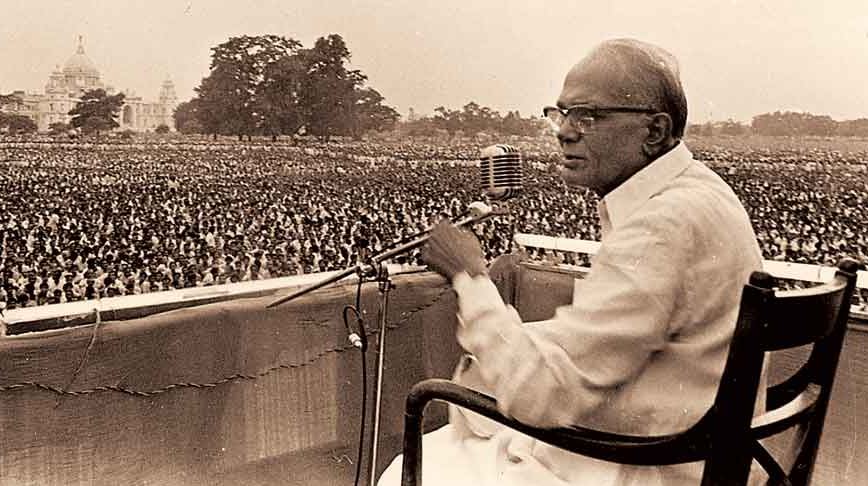
  • Person in news: Jayaprakash Narayan (JP)

    jp

    Union Home Minister unveiled a 15-foot statue of Jayaprakash Narayan or JP on his 120th birth anniversary at the socialist icon’s birthplace, Sitab Diara village in Bihar’s Saran district.

    Who was Jayaprakash Narayan?

    • JP was born in 1902 in Bihar’s Sitab Diara, a village prone to frequent-flooding, after which his family moved to a village in Uttar Pradesh’s Balia district.
    • He quit college to join the non-cooperation movement, before going to study at the University of California, Berkeley, where he was influenced by the ideas of Karl Marx.

    Political affiliations

    • JP returned to India in 1929 and joined the freedom struggle and the Indian National Congress, upon the invitation of Jawaharlal Nehru and drawn by a speech by Maulana Abul Kalam Azad.
    • He went on to become the founding members of the Congress Socialist Party (CSP).
    • However after independence took it out of the Congress and formed the Socialist Party, which was merged with J B Kripalani’s Kisan Mazdoor Praja Party to form the Praja Socialist Party.

    Dissociation from active politics

    • While Nehru was keen on JP joining the Union government, JP sought to distance himself from electoral politics, opting to focus on social causes instead.
    • He was disillusioned with political parties and called for communitarian democracy.
    • Parties, he believed, were centralized and susceptible to moral and financial corruption.

    The JP movement

    • Students in Gujarat began demonstrating in late 1973, in response to mounting mess bills.
    • The protests became widespread in the state, with workers, teachers and several other groups joining in the movement, calling for a change in government.
    • JP saw the youth of Gujarat that had been able to bring about political change as an alternative route from electoral.
    • The protests against corruption grew widespread, and students of Bihar began their movement in March 1974.
    • The students approached JP, who left his self-imposed political exile and led the movement. At a rally in Patna he called for Sampoorna Kranti (Total Revolution).

    Opposition to the Emergency

    • When Indira Gandhi imposed an Emergency on June 25, 1975, JP shifted his focus to opposing the authoritarian rule and opposition parties looked to him for leadership.
    • The Socialists were naturally drawn to him ideologically, while the RSS and its political front the Jana Sangh sought to return to the mainstream, and were happy to be dissolved into the Janata Party that JP had formed.
    • JP is celebrated for launching a popular, mass movement against the Indira Gandhi government, which led to the formation of the Janata Party government in the 1977 general election.
    • This was the first non-Congress government in the country.

    Try this PYQ:

    Who among the following were the founders of the “Hind Mazdoor Sabha” established in 1948?

    (a) B. Krishna Pillai, E.M.S. Namboodiripad and K.C. George

    (b) Jayaprakash Narayan, Deen Dayal Upadhyay and M.N. Roy

    (c) C.P. Ramaswamy Iyer, K. Kamaraj and Veeresalingam Pantulu

    (d) Ashok Mehata, T.S. Ramanujan and G.G. Mehta


    Post your answers here.


    UPSC 2023 countdown has begun! Get your personal guidance plan now! (Click here)

  • Species in news: Sloth Bear

    sloth bear

    The first World Sloth Bear Day was observed yesterday to generate awareness and strengthen conservation efforts around the unique bear species endemic to the Indian subcontinent.

    Sloth Bear

    • The sloth bear (Melursus ursinus) is an important species and endemic to the Indian subcontinent with small populations in Nepal and Sri Lanka.
    • Classified as “vulnerable” on the IUCN Red List, sloth bears are endemic to the Indian sub-continent and 90% of the species population is found in India.
    • Listed under Schedule I of the (Wildlife Protection) Act of India, 1972, the species has the same level of protection as tigers, rhinos and elephants.
    • Commercial international trade of the sloth bear (including parts and derivatives) is prohibited as it is listed in Appendix I of the Convention on International Trade in Endangered Species (CITES).
    • The sloth bears are omnivorous and survived on termites, ants and fruits.

    Why protect sloth bears?

    • For a long time, sloth bears were exploited as dancing bears. Though the practice has been banned there are still a few cases of rescue.
    • Sloth bears are one of the most aggressive extant due to large human populations often closely surrounding reserves that hold bears.
    • Aggressive encounters and attacks are relatively frequent, though in some places, attacks appear to be a reaction to encountering people accidentally.


    UPSC 2023 countdown has begun! Get your personal guidance plan now! (Click here)

  • CD Pune is expanding.

    CD Pune is expanding.

    Work with an exceptionally talented and driven team changing the face of UPSC prep.

    Dear All,

    Civilsdaily has become a force to reckon with.

    And we are rocking at Pune with full-house.

    A career in education with Civilsdaily empowers you to help students, to be respected by officers, and to experience job satisfaction in a way that is impossible in many other careers.

    Our awesome offices will leave a lasting impression on you. Come and visit us.

    Civilsdaily IAS, First floor, 518, Ramprasad, opposite Radhika Bhel, Sadashiv Peth, Pune, Maharashtra 411030

  • 12th October 2022| Daily Answer Writing Enhancement(AWE)

    Topics for Today’s questions:

    GS-1          The Freedom Struggle — its various stages and important contributors/contributions from different parts of the country.

    GS-2        Structure, organization and functioning of the Executive and the Judiciary

    GS-3        Indian Economy; Changes in industrial policy and their effects on industrial growth. 

    GS-4        Ethics and Human Interface: Essence, determinants and consequences of Ethics in-human actions; dimensions of ethics; ethics – in private and public relationships.

    Question 1)


    Q.1 It is sometimes argued that the national movement failed to nurture national identity as primary identity which resulted in partition. Examine the reasons behind the parallel development of nationalism and communalism during the course of the movement. (15 Marks)


    Question 2)

    Q.2 Highlighting the options available to the governor of a state when a bill reaches him/her from the assembly, examine whether the state government can challenge the decision made by the governor. (10 Marks)

    Question 3)

    Q.3 What are critical minerals? What are the challenges involved for India in securing such minerals? Suggest some steps to secure the mineral supply. (15 Marks)

    Question 4)  

    Q.4 What do you understand by ‘civic virtue’ in public life? What are the challenges in practicing it in today’s time? How can these challenges be overcome? (10 Marks)


    HOW TO ATTEMPT ANSWERS IN DAILY ANSWER WRITING ENHANCEMENT(AWE)?

    1. Daily 4 questions from General studies 1, 2, 3, and 4 will be provided to you.

    2. A Mentor’s Comment will be available for all answers. This can be used as a guidance tool but we encourage you to write original answers.

    3. You can write your answer on an A4 sheet and scan/click pictures of the same.

    4.  Upload the scanned answer in the comment section of the same question.

    5. Along with the scanned answer, please share your Razor payment ID, so that paid members are given priority.

    6. If you upload the answer on the same day like the answer of 11th  February is uploaded on 11th February then your answer will be checked within 72 hours. Also, reviews will be in the order of submission- First come first serve basis

    7. If you are writing answers late, for example, 11th February is uploaded on 13th February , then these answers will be evaluated as per the mentor’s schedule.

    8. We encourage you to write answers on the same day. However, if you are uploading an answer late then tag the mentor like @Staff so that the mentor is notified about your answer.

    *In case your answer is not reviewed, reply to your answer saying *NOT CHECKED*. 

    1. For the philosophy of AWE and payment: 

  • 3 Lakh RTI Pleas pile up across India

    rti

    A good 17 years after India got the Right to Information (RTI) Act, the transparency regime in the country remains a mirage with nearly 3.15 lakh complaints and appeals pending with 26 information commissions across India.

    RTI Pendency in India

    • According to a report by Satark Nagrik Sangathan, the backlog of appeals or complaints is increasing in commissions every year.
    • The number of appeals and complaints pending in 2021 was 2,86,325 with data from 26 commissions and in 2022, it was 3,14,323.
    • The highest number of pending cases was in Maharashtra at 99,722, followed by UP at 44,482, Karnataka at 30,358, the Central Information Commission at 26,724 and Bihar at 21,346.

    What is the Right to Information?

    • RTI is an act of the parliament that sets out the rules and procedures regarding citizens’ right to information.
    • It replaced the former Freedom of Information Act, 2002.
    • Under the provisions of RTI Act, any citizen of India may request information from a “public authority” (a body of Government or “instrumentality of State”) which is required to reply expeditiously or within 30.
    • In case of a matter involving a petitioner’s life and liberty, the information has to be provided within 48 hours.
    • The Act also requires every public authority to computerize their records for wide dissemination and to proactively publish certain categories of information so that the citizens need minimum recourse to request for information formally.

    What led to the introduction of RTI in India?

    There has been a variety of internal and external pressures on governments to adopt RTI.

    • Corruption and scandals: The crisis was brought into force due to a lack of transparency in the working of the government.
    • Modernization and the Information Society: The expansion of the Internet into everyday life has increased the demand for more information by the public, businesses and civil society groups.
    • International pressure: The World Bank, the IMF and others have pressed countries to adopt laws to reduce corruption and to make financial systems more accountable.
    • Wider recognition of Public Interest: Public interest is a nebulous concept, not defined in any freedom of information laws, understandably so, as it is a very subjective concept.

    Governing of the RTI

    The Right to information in India is governed by two major bodies:

    1. Central Information Commission (CIC) – Chief Information commissioner who heads all the central departments and ministries- with their own public information officers (PIO)s. CICs are directly under the President of India.
    2. State Information Commissions (SIC)– State Public Information Officers or SPIOs head over all the state department and ministries. The SPIO office is directly under the corresponding State Governor.

    State and CIC are independent bodies and CIC has no jurisdiction over the SIC.

    (1) Central Information Commission

    • The Commission consists of a Chief Information Commissioner and not more than ten Information Commissioners.
    • At present (2019), the Commission has six Information Commissioners apart from the Chief Information Commissioner.
    • They are appointed by the President on the recommendation of a committee consisting of the PM as Chairperson, the Leader of Opposition in the Lok Sabha and a Union Cabinet Minister nominated by the PM.
    • The CIC/IC shall hold office for such term as prescribed by the Central Government or until they attain the age of 65 years, whichever is earlier. They are not eligible for reappointment.

    Power and functions

    • It is the duty of the Commission to receive and inquire into a complaint from any person regarding information request under RTI, 2005.
    • The Commission can order an inquiry into any matter if there are reasonable grounds (suo-moto power).
    • While inquiring, the Commission has the powers of a civil court in respect of summoning, requiring documents etc.

    (2) State Information Commission

    • The Commission consists of a State Chief Information Commissioner and ten State Information Commissioners.
    • They are appointed by the Governor on the recommendation of the committee consisting of the CM as Chairperson, the Leader of the Opposition in the Legislative Assembly and a state Cabinet Minister nominated by the CM.
    • They should be a person of eminence in public life and should not hold any other office of profit or connected with any political party or carrying on any business or pursuing any profession.
    • Terms of service are similar to that of CIC.

    Constitutional backing of the RTI

    • The Indian constitution has an impressive array of basic and inalienable rights termed as fundamental rights contained in part-III.
    • These include the right to equal protection of the laws and the right to equality before the law, the right to freedom of speech and expression also the right to life and personal liberty.
    • Since RTI, is implicit in the Right to Freedom of Speech and Expression under Article 19 of the Indian Constitution, it is an implied FR.
    • These are backed by the right to constitutional remedies that is, the right to approach the supreme court and high court under Article 32 and 226 respectively in case of infringement of any of FRs.
    • The state is not only under an obligation to respect the FRs of the citizens but also equally under an obligation to ensure conditions under which the right can be exercised.
    • The objective of the right to information act is to protect these constitutional rights.

    Benefits of RTI

    • Greater accessibility of information: A person can seek information from any public authority in the form of copies, floppy disks, sample material etc under RTI.
    • Efficient governance: RTI Act helps us in knowing the efficiency of the government functioning.RTI has become a reality consistent with the objectives of having a stable, honest, transparent and efficient government.
    • Citizen’s participation: Information under RTI can be sought easily by requesting the public officer and assistant public officer in any public authority.
    • Government obligation: Obtaining information from any public authority is obligatory for them.
    • Maintenance of public record: Under RTI Act, it is the duty of public authorities to maintain records for easy access and to publish within 120 days the name of the particular officers who should give the information and in regard to the framing of the rules, regulations etc.
    • Empowerment of Citizens: Every citizen has been empowered to be informed about anything that affects their life directly or indirectly.

    Limitations to the RTI

    • Not an absolute right:  The RTI and Right to Privacy are not absolute rights, both the rights, one of which falls under Article 19(l)(a) and the other under Article 21 can obviously be regulated, restricted and curtailed in the larger public interest.
    • Subjected to restrictions: The RTI, being integral part of the right to freedom of speech, is subject to restrictions that can be imposed upon that right under Article 19 (2).
    • Limitations under the rules: Rule 4 of RTI Act puts word limit (No. of words needed in different language is different to express the same idea) as 250 words.  Word Limit, The Hidden power of Information Officer, is the cause of rejection of an application.
    • Only information already available on record is accessible: The RTI Act provides access only to that information that existent and is available in records of the public authorities.
    • Certain information may constitute contempt of court: Any information, the disclosure of which is expressly barred by any Court of law or tribunal or, which may constitute contempt of Court under the Contempt of Court Act, 1971, cannot be released.
    • Information causes a breach of privilege: The Constitution of India provides some privileges to the Parliament and the State Legislature, so it is clear that such information cannot be issued by the public authority.
    • Information relating to Intellectual Property and trade secrets: Any information, including commercial confidence, trade secrets or intellectual property cannot be disclosed.

    Challenges in exercising RTI

    • Information explosion: Different types of information is sought which has no public interest and sometimes can be used to misuse the law and harass the public authorities e.g. asking for desperate and voluminous information.
    • Popular (mis)use: Some chauvinists file RTI to attain publicity. It is often used as a vindictive tool to harass or pressurize the already burdened public authorities.
    • Rising cases of non-disclosure: Some provisions of Indian Evidence Act provide to hold the disclosure of documents.  Similar is the case with the Official Secrets Act, 1923.
    • Limited ambit of RTI: While the office of the CJI is now under the RTI’s ambit, the CBI is exempt.
    • Threats to whistleblowers: There are rising cases of intimidation, threat and murders of RTI activists. There are no safeguards against the victimisation of the person who makes the complaint.

    Significance of RTI

    • The RTI Act, 2005 did not create a new bureaucracy for implementing the law. Instead, it tasked and mandated officials in every office to change their attitude and duty from one of secrecy to one of sharing and openness.
    • RTI has been seen as the key to strengthening participatory democracy and ushering in people-centred governance.
    • Access to information has empowered the poor and the weaker sections of society to demand and get information about public policies and actions, thereby leading to their welfare.
    • It showed an early promise by exposing wrongdoings at high places, such as in the organisation of the Commonwealth Games, and the allocation of 2G spectrum and coal blocks.

    Way Forward

    It is well recognized that RTI is pathbreaking, but has not proved sufficient, to improve governance in its capacity due to various shortcomings.  We need to improvise a lot on various parameters as discussed under:

    • Speedy disposal: The increasing backlog of cases is exacerbated by the fact that most Commissions are functioning at reduced capacity. The government must ensure the timely appointment of chiefs and members of ICs.
    • Prioritization of cases: There should be a prioritization of cases dealing with information related to life and liberty. Information regarding matters like food distribution, social security, health and other priority issues should be proactively disclosed.
    • Digitalization: Governments should put in place a mechanism for online filing of RTI applications and bring all authorities under one platform.
    • Reducing technicalities: The technicalities of filing an RTI application should be more simplified. The literacy rate of rural India is quite low and thus they find it quite difficult to comply with the procedural.
    • Protecting whistleblowers: There is an urgent need to protect the whistle blowers who are targeted or attacked so easily. The impending bill should be passed or else an ancillary strict measure should be taken in this regard.


    UPSC 2023 countdown has begun! Get your personal guidance plan now! (Click here)

More posts