India and the US have entered into an agreement to establish a semiconductor fabrication plant aimed at producing chips for national security, next-generation telecommunications, and green energy applications.
Key Features of the Semiconductor Fabrication Plant
The semiconductor fab will focus on advanced sensing, communication, and power electronics.
The India Semiconductor Mission will support the project and involves a strategic partnership between Bharat Semi, 3rdiTech, and the US Space Force.
The plant will manufacture infrared, gallium nitride, and silicon carbide semiconductors, critical components for national security and commercial sectors.
Shakti Partnership
The fab, titled “Shakti” (meaning power), is the first-ever technology partnership between Indian businesses and the US Space Force, and the first of its kind in the Quad, a strategic forum comprising India, the US, Japan, and Australia.
The project will focus on three key areas essential for modern warfare:
Advanced sensing
Advanced communications
High-voltage power electronics
These areas also have significant applications in commercial sectors such as railways, telecom infrastructure, data centers, and green energy.
AboutIndia’s Semiconductor Mission (ISM):
Details
Launch Year
2021
Financial Outlay
₹76,000 crore under the Ministry of Electronics and IT (MeitY)
Objective
• Develop a sustainable semiconductor and display ecosystem in India
• Reduce reliance on imports
• Position India as a global leader in semiconductor manufacturing
Core Focus
Financial support for investments in:
– Semiconductor fabs
– Display fabs
– Semiconductor design
– Assembly, Testing, Marking, and Packaging (ATMP) facilities
Components of ISM
Scheme for Semiconductor Fabs
• Provides fiscal support for setting up semiconductor wafer fabrication (fabs) facilities
• Aims to attract large investments for semiconductor fabs in India
Scheme for Display Fabs
• Offers fiscal support for setting up TFT LCD/AMOLED display fabs
• Encourages investments in display fabrication technologies
Scheme for Compound Semiconductors
• Provides 30% capital expenditure support for setting up Compound Semiconductors, Silicon Photonics, Sensors, and ATMP/OSAT facilities
Design Linked Incentive (DLI) Scheme
• Offers financial incentives and design infrastructure support for semiconductor design
Significance of Next-Generation Telecom
Next-gen telecom (5G and beyond) will revolutionize industries with high-speed internet, IoT, AI, and smart infrastructure.
It is crucial for national security, economic competitiveness, and advancing green energy and sustainable development.
India’s adoption of 5G will drive innovation across sectors, promoting technological self-reliance and global leadership in telecommunications.
India has achieved Tier 1 status in the Global Cybersecurity Index (GCI) 2024, published by the International Telecommunication Union (ITU).
With a score of 98.49 out of 100, India is now among the top nations demonstrating role-model cybersecurity practices.
AboutGlobal Cybersecurity Index (GCI):
Details
Launch
2015, by the International Telecommunication Union (ITU)
About ITU
• Founded on 17 May 1865 as the International Telegraph Union
• Presently has 193 member states, with South Sudan joining most recently in 2011
• India became a member in 1869
Objective
• Measures the commitment of countries to cybersecurity based on five pillars.
• Helps identify areas for improvement and encourages capacity and capability building.
Five Pillars
• Legal: Laws and regulations on cybercrime and cybersecurity
• Technical: Implementation of technical capabilities via national and sector-specific agencies
• Organizational: National strategies and organizations implementing cybersecurity
• Capacity Development: Awareness, training, education, and incentives for cybersecurity
• Cooperation: Partnerships between agencies, firms, and countries
Strengths and Weaknesses
• Most countries are strongest in the Legal pillar.
• The Capacity Development and Technical pillars are where most countries are weakest.
GCI 2024 Five-Tier Analysis
• Tier 1 (Role-modelling): Score of 95-100
• Tier 2 (Advancing): Score of 85-95
• Tier 3 (Establishing): Score of 55-85
• Tier 4 (Evolving):
PYQ:
[2020] In India, under cyber insurance for individuals, which of the following benefits are generally covered, in addition to payment for the loss of funds and other benefits?
1. Cost of restoration of the computer system in case of malware disrupting access to one’s computer
2. Cost of a new computer if some miscreant willfully damages it, if proved so.
3. Cost of hiring a specialized consultant to minimize the loss in case of cyber extortion
4. Cost of defence in the Court of Law if any third-party files a suit
Select the correct answer using the code given below:
The Ministry of Earth Sciences (MoES) successfully concluded the Swachh Sagar, Surakshit Sagar 3.0 campaign on September 21st, 2024, organizing beach clean-up drives at more than 80 locations across India’s coastline.
What is Swachh Sagar, Surakshit Sagar 3.0?
It is a 75-day citizen-led campaign for improving ocean health through collective action.
It is the third edition of a flagship initiative launched to raise awareness about marine pollution and promote the conservation of coastal areas.
The campaign is part of India’s broader Swachh Bharat Mission and Swachhata Hi Seva initiative and aims to promote cleanliness, sustainable practices, and protect marine ecosystems.
It also commemorated International Coastal Cleanup Day.
Key Highlights
More than 60 tons of waste were removed, including plastic, metal, cloth, rubber, and wood debris.
The campaign promoted sustainable coastal practices and encourages communities to adopt eco-friendly habits, playing a vital role in reducing marine debris and conserving biodiversity.
In 2019, MRSA caused over 100,000 deaths, and although vancomycin has been the main treatment for 40 years, a new study shows it may not stay effective for long.
About Vancomycin
Vancomycin is an antibiotic that has been a cornerstone in the treatment of methicillin-resistant Staphylococcus aureus (MRSA) infections for over 40 years.
It is a glycopeptide antibiotic that works by inhibiting the synthesis of bacterial cell walls, making it particularly effective against gram-positive bacteria like MRSA.
It has remained effective against MRSA due to its ability to target bacteria that have become resistant to other antibiotics like methicillin.
For decades, vancomycin has been the first-line treatment for severe MRSA infections, such as those affecting the bloodstream, heart, bones, and lungs.
How Vancomycin is losing its effectiveness against MRSA?
MRSA rarely develops resistance tovancomycin, but when it does, it leads to the emergence of vancomycin-resistant Staphylococcus aureus (VRSA).
Resistance Mechanism: When S. aureus acquires the vanA operon, a gene cluster responsible for vancomycin resistance, it can resist the antibiotic. However, this resistance usually comes with a fitness cost—the bacteria tend to grow slower, making them less virulent.
Fitness Compensation: Recent research shows that S. aureus can evolve to overcome this fitness cost, allowing VRSA to grow faster and remain resistant even in the absence of vancomycin. This adaptation means the bacteria are less likely to lose their resistance and can spread more easily.
Mutations: The study found that additional mutations in the VRSA strains exposed to vancomycin helped the bacteria adapt and maintain resistance. These mutations made the bacteria more fit, ensuring they could thrive even in the presence of vancomycin.
Diminishing Options: As VRSA continues to adapt, vancomycin may no longer be reliable for treating MRSA infections. This raises concerns about the long-term viability of the antibiotic, prompting the need for new treatment strategies.
PYQ:
[2014] Can overuse and free availability of antibiotics without Doctor’s prescription, be contributors to the emergence of drug-resistant diseases in India? What are the available mechanisms for monitoring and control? Critically discuss the various issues involved.
Prime Minister Narendra Modi stated on Thursday that over the past decade, India has implemented “comprehensive” reforms to revolutionize the food-processing sector.
What are the steps taken by Govt in food processing industry in India?
Priority Sector Lending: In April 2015, food and agro-based processing units were included as agricultural activities under the Priority Sector Lending norms, facilitating easier access to credit for these businesses.
FDI Policies: The government allows 100% Foreign Direct Investment (FDI) under the automatic route for the food processing sector, encouraging foreign investment and technological transfer.
Special Food Processing Fund: A fund of ₹2,000 crore was established with NABARD to support food processing projects and infrastructure development.
Regulatory Reforms: The Food Safety and Standards Authority of India (FSSAI) shifted from product-by-product approvals to an ingredient-based approval process in 2016, simplifying compliance for businesses.
Infrastructure Development: Initiatives such as the Pradhan Mantri Kisan Sampada Yojana (PMKSY) aim to create a robust infrastructure for food processing through cold storage facilities, processing units, and logistics support.
Status of food processing industries in India
Economic Contribution: The sector accounts for approximately 13% of India’s total exports and 6% of industrial investment. It is expected to generate around 9 million jobs by 2024.
Growth Rate: The industry has been growing at an average annual rate of about 11.18% over recent years, indicating significant potential for expansion.
Market Share: Despite being one of the largest producers of agricultural commodities, India’s food processing sector represents only about 10% of total food production.
What are the still challenges present in food processing industry in India?
Inadequate Infrastructure: A lack of cold storage and transportation facilities leads to over 30% post-harvest losses.
Fragmented Supply Chains: The supply chain is highly fragmented, causing inefficiencies and increased costs due to poor connectivity and coordination among stakeholders.
Regulatory Complexities: The industry is burdened by a complex web of regulations that can hinder business operations and compliance efforts.
Lack of Skilled Labor: There is a significant shortage of skilled professionals in areas such as food technology and quality control, which hampers innovation and adherence to safety standards.
Limited Technology Adoption: Many processors still rely on outdated technologies, which affects productivity and product quality. High costs and lack of technical expertise further inhibit technological advancements.
What should be done by Govt to resolve these challenges? (Way forward)
Infrastructure Investment: Increase investments in cold chain logistics and transportation infrastructure to minimize post-harvest losses and improve supply chain efficiency.
Financial Support Mechanisms: Facilitate easier access to finance through specialized loans for small and medium enterprises (SMEs) in the food processing sector.
Skill Development Programs: Enhance vocational training initiatives focused on food technology and safety management.
Regulatory Simplification: Streamline existing regulations to reduce bureaucratic hurdles. A unified regulatory framework could help clarify compliance requirements and foster a more conducive environment for business operations.
Promote R&D Investment: Encourage investment in research and development to foster innovation within the sector.
Mains PYQ:
Q Elaborate the policy taken by the Government of India to meet the challenges of the food processing sector. (UPSC IAS/2019)
The government has approved the extension of the PM-AASHA scheme, allocating ₹35,000 crore, to ensure farmers receive better prices for their produce and to regulate price fluctuations of essential commodities for consumers.
What is PM-AASHA?
Pradhan Mantri Annadata Aay Sanrakshan Abhiyan (PM-AASHA) is an umbrella scheme launched by the Government of India in September 2018, aimed at ensuring remunerative prices for farmers’ produce. It integrates various existing schemes to provide a comprehensive approach to price support, including:
Price Support Scheme (PSS): Physical procurement of specific crops by central agencies.
Price Deficiency Payment Scheme (PDPS): Direct payments to farmers for the difference between the Minimum Support Price (MSP) and market prices.
Pilot of Private Procurement & Stockist Scheme (PPPS): Involvement of private players in crop procurement.
The scheme has been extended until 2025-26 with a financial outlay of ₹35,000 crore to enhance its effectiveness and reach.
What are the implications of PM-AASHA?
Income Security: By ensuring MSP, PM-AASHA aims to stabilize farmers’ incomes and protect them from price fluctuations in the market.
Increased Production: The assurance of remunerative prices is expected to encourage farmers to increase production, particularly in pulses and oilseeds, which have historically been underproduced.
Market Stability: The scheme helps regulate prices of essential commodities, making them affordable for consumers while ensuring fair compensation for producers.
Strengthened Procurement Mechanism: The integration of various schemes under PM-AASHA enhances the overall procurement process, making it more efficient and transparent.
What are the issues related to MSP?
Limited Coverage: MSP is primarily applicable to a few crops like wheat and rice, leaving many farmers without guaranteed prices for their produce.
Inefficient Procurement Infrastructure: The existing infrastructure for procurement is inadequate, leading to delays and inefficiencies that affect farmers’ ability to sell their produce at MSP.
Lack of Awareness: Many farmers are unaware of their rights regarding MSP or how to access these benefits effectively.
Regional Disparities: There are significant regional disparities in the implementation of MSP. States like Punjab and Haryana benefit more from MSP due to better procurement systems, while farmers in other states may struggle to access these benefits.
Market Distortions: The MSP system leads to market distortions, encouraging overproduction of certain crops while neglecting others.
What should be done to resolve the issues related to MSP?
Expand MSP Coverage: The government should consider extending MSP to a wider range of crops, particularly those that are crucial for food security and farmer livelihoods.
Enhance Procurement Infrastructure: Investments should be made in developing better procurement facilities, including storage and transportation systems, especially in rural areas.
Increase Awareness Campaigns: Implementing educational programs for farmers about their rights regarding MSP and how they can benefit from it would empower them significantly.
Mains PYQ:
Q What do you mean by Minimum Support Price (MSP)? How will MSP rescue the farmers from the low income trap? (UPSC IAS/2016)
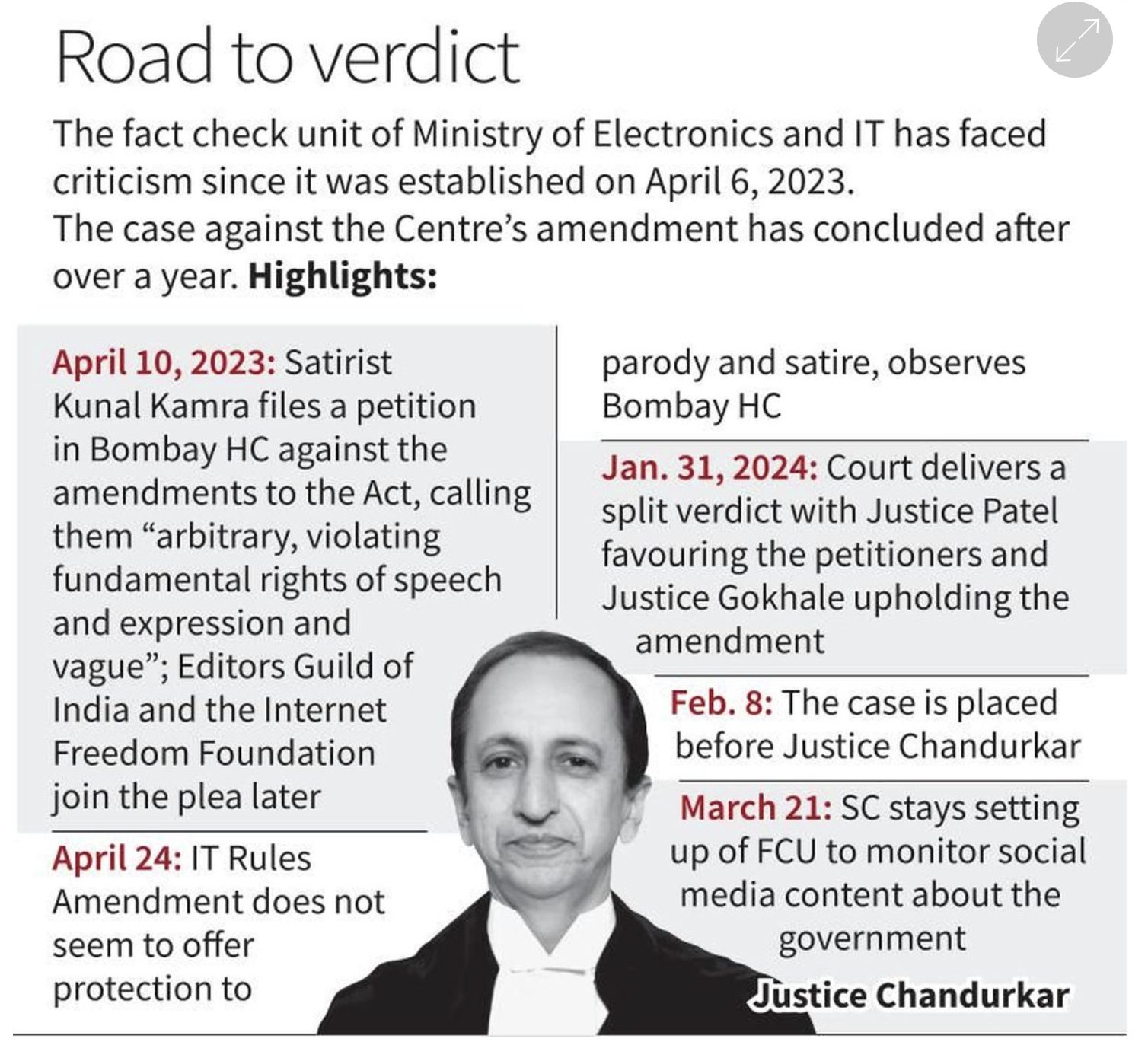
The Bombay High Court on Friday struck down the amended IT Rules, 2023, which allowed the Centre to establish a fact-check unit for monitoring government-related misinformation.
Background of the Case
In April 2023, the Ministry of Electronics and IT (MEiTY) amended the Information Technology (IT) Rules, 2021, to establish a Fact Check Unit (FCU) aimed at identifying “fake, false, and misleading” information about the Central government on social media platforms.
Reason Behind the Strike Down
Violation of Fundamental Right: Justice Chandurkar struck down the amended IT Rules 2023 on grounds that they violated Articles 14 (right to equality), 19 (freedom of speech and expression), and 19(1)(g) (freedom to practice any profession) of the Constitution.
Lack of clear defination: The terms “fake, false and misleading” were deemed vague due to the absence of clear definitions, leading to potential misuse and a chilling effect on intermediaries’ operations.
The ruling emphasized that the lack of clarity in the rules could lead to arbitrary censorship by the government, undermining democratic principles.
What are the IT Rules 2023?
The Information Technology (Intermediary Guidelines and Digital Media Ethics Code) Amendment Rules, 2023 empower the government to mandate social media platforms like Facebook, Twitter, Instagram, and YouTube to remove content deemed “fake, false or misleading” regarding government affairs.
The Fact Check Unit (FCU) was designated as the authority to identify such content. If intermediaries failed to comply with its directives, they risked losing their safe harbour status under Section 79 of the IT Act, 2000.
The implications of FCU:
Potential censorship of political discourse and criticism.
Increased pressure on social media platforms to comply with government directives.
A risk of undermining independent journalism and fact-checking efforts by civil society organizations.
Way forward:
Clear Definitions and Safeguards: Introduce precise definitions for terms like “fake, false, and misleading” and establish an independent oversight mechanism to prevent arbitrary censorship, ensuring the protection of free speech and democratic values.
Strengthen Accountability: Encourage collaboration between the government, civil society, and tech platforms to create transparent and accountable fact-checking processes while protecting intermediaries’ safe harbour status and upholding freedom of expression.
The Supreme Court has dismissed the curative petitions filed by major telecom service providers, seeking relief from the 2019 judgment regarding Adjusted Gross Revenue (AGR) dues.
What is Adjusted Gross Revenue (AGR)?
AGR is the usage and licensing fee that telecom operators are charged by the Department of Telecommunications (DoT).
It forms the basis for calculating telecom companies’ dues to the government, including the license fee and spectrum usage charges (SUC).
The AGR is divided into:
Spectrum Usage Charges (SUC): These are pegged at 3-5% of AGR, depending on the telecom company’s spectrum holdings.
License Fees: Telecom operators are required to pay 8% of their AGR as a license fee to the government.
Contention over AGR Calculation
The DoT maintains that AGR should include all revenues earned by telecom companies, including non-telecom sources such as deposit interest, asset sales, and dividends.
Telecom operators, on the other hand, insist that AGR should only include revenues generated from core telecom services, excluding income from non-telecom sources like interest and capital gains.
Legal Disputes on AGR
Beginning of the Dispute (2005): The AGR saga began in 2005 when the Cellular Operators Association of India (COAI) challenged the government’s definition of AGR in court. The dispute centered on whether non-telecom revenue should be included in the AGR calculation.
TDSAT Ruling (2015): In 2015, the Telecom Disputes Settlement and Appellate Tribunal (TDSAT) ruled in favor of telecom companies. TDSAT held that AGR should include only revenue from core telecom activities and exclude non-core sources such as rent, profit from the sale of assets, dividends, and interest income.
Supreme Court Ruling (2019): Setting aside the TDSAT decision, the SC upheld the DoT’s definition of AGR on October 24, 2019, declaring that AGR must include all revenue sources, including non-telecom activities like interest and capital gains. This ruling significantly increased the financial liabilities of telecom companies, as they had to pay outstanding dues.
Financial Impact of the AGR Ruling
The Supreme Court ruling had serious financial implications for telecom companies:
Massive Liabilities: Telecom companies, especially Vodafone Idea and Bharti Airtel, faced huge financial liabilities. The ruling resulted in unpaid dues amounting to over ₹1.4 lakh crore, which included penalties and interest.
Vodafone Idea’s Crisis: Vodafone Idea, in particular, was hit hard by these liabilities and faced potential insolvency, with its future in the Indian telecom sector hanging in the balance.
Sector Consolidation: The financial pressure from the AGR liabilities led to the consolidation of the telecom sector, with smaller players exiting the market.
PYQ:
[2019] In India, which of the following review the Independent regulators in sectors like telecommunications, insurance, electricity, etc.?
Ad Hoc Committees set up by the Parliament
Parliamentary Department Related Standing Committees
Finance Commission
Financial Sector Legislative Reforms Commission
NITI Aayog
Select the correct answer using the code given below:
The Union Cabinet has approved the “Biotechnology Research Innovation and Entrepreneurship Development (Bio-RIDE) scheme” to support cutting-edge research and development in biotechnology.
About Bio-RIDE Scheme
Details
Objective
To support cutting-edge research, bio-entrepreneurship, and bio-manufacturing in biotechnology.
Total Outlay
₹9,197 crore for the 15th Finance Commission period (2021-22 to 2025-26).
Components
Merges Biotechnology Research and Development (R&D) and Industrial & Entrepreneurship Development (I&ED).
Introduces Bio-manufacturing and Bio-foundry as new components.
Key Aims
Fostering Innovation: Promote bio-entrepreneurship and strengthen India’s position in biotechnology.
Bridging Gaps: Accelerate research and product development.
Implementation Focus
Promoting Bio-Entrepreneurship: Seed funding, incubation, mentorship for startups.
Advancing Innovation: Grants for research in synthetic biology, bio-pharma, and bio-plastics.
Focus Areas
Extramural Funding for research in agriculture, healthcare, bioenergy, and environmental sustainability.
Nurturing human resources in biotechnology.
Industry-Academia Collaboration
Synergies between academic institutions and industry to accelerate commercialization of bio-based products.
Significance
Enhances bio-innovation and supports sustainable development.
Contributes to achieving green goals and global leadership in biotechnology.
PYQ:
[2019] Atal Innovation Mission is set up under the
(a) Department of Science and Technology
(b) Ministry of Labour and Employment
(c) NITI Aayog
(d) Ministry of Skill Development and Entrepreneurship
Q). ‘India is an age-old friend of Sri Lanka.’ Discuss India’s role in the recent crisis in Sri Lanka in the light of the preceding statement. (UPSC CSE 2022) Q). In respect of India — Sri Lanka relations, discuss how domestic factors influence foreign policy. (UPSC CSE 2013)
Mentor’s Comment: The preference for leftist and rightist ideologies in global geopolitics is influenced by a variety of factors, each reflecting distinct political, economic, and social dynamics. In times of economic distress, leftist ideologies often resonate with populations facing inequality and poverty. They advocate for social welfare programs, wealth redistribution, and increased government intervention in the economy to address systemic issues.
The recent presidential elections in Sri Lanka, held on September 21, 2024, marked a significant turning point in the country’s political landscape. Anura Kumara Dissanayake, the leader of the leftist National People’s Power (NPP) coalition and chief of the Janatha Vimukthi Peramuna (JVP), emerged victorious, signaling a departure from the traditional political parties that have dominated Sri Lankan politics for decades.
_
Let’s learn!
Why in the News?
There are some significant political developments following the recent ninth presidential election held on September 21, 2024.
It marks the first time in Sri Lanka’s history that a presidential election required a second round of counting to determine the winner.
This change reflects a significant shift in the electoral landscape since the introduction of the executive presidency in 1978.
What does leftist victory signify for Sri Lanka’s political landscape?
Political Paradigm Shift: Dissanayake’s leadership marks the first time a president with a pronounced leftist ideology has taken office, indicating a potential shift towards more state intervention in the economy. It signals a rejection of the traditional parties that have dominated Sri Lankan politics for decades.
Public Sentiment and Economic Crisis: Dissanayake’s campaign focused on anti-corruption and economic reform, resonating with voters who blame corruption for the nation’s economic collapse.
Geopolitical Implications: The new administration’s leftist leanings may influence Sri Lanka’s foreign relations, particularly its ties with China and India, as Dissanayake is perceived as potentially favoring China.
What are the future Governance challenges?
Need for Parliamentary Majority: Although elected president, Dissanayake faces the challenge of securing a parliamentary majority to implement his policies effectively.
Balancing Act: He must navigate between leftist ideals and the need for foreign investment and cooperation, particularly with entities like the IMF, which has provided crucial financial support.
Addressing Tamil Aspirations: Engaging with the Tamil minority and addressing their calls for greater autonomy will be critical for national unity and stability.
Systemic Change: the Leftist party has promised to address systemic corruption and may seek to abolish or reform the executive presidency, reflecting a desire for democratic renewal.
Implication on India:
• Economic Impact: Sri Lanka’s share in India’s total exports has declined from 2.16% in FY15 to just 1.3% in FY22. India relies heavily on the port of Colombo for global trade, with approximately 60% of India’s transhipment cargo handled by the port. • Strategic Implications: India sees the crisis as an opportunity to counter China’s influence in Sri Lanka, which has been a concern due to Sri Lanka’s proximity to China. India has provided $4 billion in financing facilities to Sri Lanka. • Strengthening Bilateral Relations: Although India’s support during the crisis has generated goodwill, underlying anti-India sentiment and the need for Sri Lanka to balance relations with multiple major economies pose challenges to deeper engagement. • Refugee Influx: India has witnessed a large influx of ethnic Tamil community refugees from Sri Lanka during past political or social crises.
How will this address the ongoing economic crisis?
Renegotiation of IMF Terms: The leftist leadershave committed to renegotiating the austerity measures imposed by the IMF.
Further, they alsohave plans to adjust taxation policies, including raising the personal income tax exemption threshold and removing VAT on essential goods.
Production-Based Economy: The present government envisions transforming into a production-based economy. This shift aims to reduce reliance on imports and enhance local production capabilities.
Bilateral Debt Agreements: Sri Lanka inherits a complex debt situation but aims to seek better terms for existing agreements with international creditors, including China and India. Hence they will prioritize negotiations that enhance fiscal sustainability while addressing public needs.
Opportunities for India:
Tea Exports: Amid the decline in Sri Lanka’s tea production, India is well-positioned to capture markets significantly in countries that import orthodox tea, such as Iran, Turkey, Iraq, China, and Canada.
Textile Exports: Indian apparel exporters are receiving orders from the UK and Latin American countries where Indian textiles had very little or no presence before the crisis.
Conclusion: As the first leftist candidate to be elected president, he faces the daunting challenge of steering the nation through its worst economic crisis while navigating complex geopolitical dynamics and entrenched political interests.
![[21st September 2024] The Hindu Op-ed: The stakes in Sri Lanka’s ninth Presidential election](https://www.civilsdaily.com/wp-content/uploads/2024/09/21-SEP-1568x882.jpg)