UPSC-CSE 2021 results have shaken the long held belief that the examination can only be cleared after multiple attempts. Most of the UPSC-CSE toppers like Satyam Gandhi (AIR 10), Ria Dabi (AIR 15), Yash Jaluka (AIR 4), Mamta Yadav (AIR 5) and Shashwat Tripurari (AIR 19) cleared the exam as fresh graduates in their very first attempt. How were they able to do it?
If you watch their strategy videos, you can find a common pattern — they started 12-24 months in advance before the exam.
One of the benefits of starting your preparation early is the time you would get to revise and practice test series upon completing the syllabus. Also, you would get ample time to pay attention to every subject. There are totally 9 papers in UPSC-CSE Mains and 2 papers in Prelims exams. Not to forget, the daily current affairs. Many aspirants need time to figure out how they can prepare in an understandable manner. That’s why starting your preparation eight months before the exam is not advisable.
We understand how annoying it might be for you if you were to study in a certain way for months together and then realise that it doesn’t align with the UPSC-CSE way of doing things. So, what’s the best way to prepare?
This is what Civilsdaily mentor Rahul sir would be discussing in the upcoming webinar.
Webinar Details
If you want to get the nuances of UPSC-CSE preparation right in the first go, then this free webinar is for you!
Colonial land revenue settlements, heavy burden of new taxes, eviction of peasants from their lands, and encroachments on tribal lands.
Exploitation in rural society and growth of intermediary revenue collectors, tenants and moneylenders.
Expansion of revenue administration over tribal lands leading to their loss of hold over agricultural and forest land.
Promotion of British manufactured goods, heavy duties on Indian industries, especially export duties, leading to devastation of Indian handloom and handicraft industries.
Important Civil Uprisings
(1) Sanyasi Revolt (1763-1800)
Cause: The disastrous famine of 1770 and the harsh economic order of the British and the restrictions imposed on the pilgrims visiting the holy places.
Sanyasis were joined by a large number of dispossessed small zamindars, disbanded soldiers and rural poor. They raided Company factories and the treasuries, and fought the Company’s forces.
Curtailed by: Warren Hastings
Also referred to as the Fakir Rebellion.
Important leaders: Majnum Shah, Chirag Ali, Musa Shah, Bhawani Pathak and Debi Chaudhurani
Anandamath, a semi-historical novel by Bankim Chandra Chattopadhyay, is based on the Sanyasi Revolt.
(2) Revolt in Midnapore and Dhalbhum (1766-74)
Cause: Introduction of new land revenue system by the English in 1772.
The zamindars of Midnapore sided with the ryots in case of conflict between the ryots and the English revenue collecting officials.
Important leaders: Damodar Singh and Jagannath Dhal.
(3) Revolt of Moamarias (1769-99)
It was a potent challenge to the authority of Ahom kings of Assam.
The Moamarias were low-caste peasants who followed the teachings of Aniruddhadeva (1553-1624).
To crush these revolts, the Ahom ruler had to request for British help. The revolt weakened kingdom and it fell to a Burmese invasion and finally came under British rule.
(4) Revolt of Raja of Vizianagaram (1794)
In 1758, a treaty was made between the English and Ananda Gajapatiraju, the ruler of Vizianagaram, to jointly oust the French from the Northern Circars. In this mission they were successful.
English refused to honour the terms of the treaty. Anand Raju died before he could seriously tackle the English.
The East India Company demanded a tribute of three lakh rupees from Vizayaramaraju and asked him to disband his troops. This angered the raja as there were no dues to be paid to the Company.
The raja supported by his subjects rose up in revolt. The raja died in a battle at Padmanabham.
(5) Resistance of Kerala Varma Pazhassi Raja (1797; 1800-05)
Kerala Varma Pazhassi Raja, popularly known as Kerala Simham (Lion of Kerala) or ‘Pyche raja’, was the de facto head of Kottayam (Cotiote) in Malabar region.
Cause: The Third Anglo-Mysore War (1790-92), extended English paramountcy over Kottayam in violation of an earlier agreement of 1790 which had recognized the independence of Kottayam.
The Poligars of Dindigal and Malabar rose up against the oppressive land revenue system under the British during 1801-06.
In September 1799, in the first Polygar War, the poligars of Tirunelveli District rose up in open rebellion.
Kattabomma Nayak of Panchalamkurichi was considered as the main leader of the rebellion. Though he managed to escape initially, he was later captured in Pudukottai, and publicly hanged in front of other Polygars as a warning.
The Second Polygar war of 1800-01, given the magnitude of participation, is also known as the ‘South Indian Rebellion’.
The suppression was followed by signing of the Carnatic Treaty on July 31, 1801, whereby the British assumed direct control over Tamil Nadu.
(7) Diwan Velu Thampi’s Revolt (1808-1809)
The East India Company’s harsh conditions imposed on the state of Travancore, after both of them agreed to a subsidiary alliance arrangement under Wellesley in 1805, caused deep resentment in the region.
Prime Minister Velu Thampi rise against the Company and assisted by the Nair troops. Velu Thampi addressed a gathering in Kundara and was later known as the ‘Kundara Proclamation’.
The Maharaja of Travancore had not wholly supported the rebellion and defected to the side of the Company. Velu Thampi killed himself to avoid capture. The rebellion petered out.
(8) Kutch or Cutch Rebellion (1816-1832)
There was a treaty between the British and Maharaja Bharamal II of Kutch in 1816, by which power was vested in the throne.
The British interfered in the internal feuds of the Kutch and, in 1819, Raja Bharmal II raised Arab and African troops with the firm intention of removing the British from his territory.
A British resident governed the areas as the de facto ruler with the help of a regency council.
(9) Rising at Bareilly (1816)
Immediate cause: The imposition of the police tax which aroused the burning indignation of the citizens.
Several armed Muslims from Pilibhit, Shahjahanpur and Rampur rose in rebellion for the defense of the faith and the Mufti.
(10) Upsurge in Hathras (1817)
Cause: Progressive increase in high revenues, talukdar Dayaram constantly failed to pay arrears and even committed many acts of hostility by giving harbour to government fugitives.
So, the Company with a large army attacked Hathras in February 1817.
Rebels involved: Bhagwant Singh, Raja of Mursan
(11) Paika Rebellion (1817)
The Paiks of Odisha were the traditional landed militia and enjoyed rent free land tenures for their military service and policing functions on a hereditary basis.
Cause: British conquest of Odisha in 1803, and the dethronement of the Raja of Khurda had greatly reduced the power and prestige of the Paiks. Further, the extortionist land revenue policy of the Company caused resentment among zamindars and peasants.
Bakshi Jagabandhu Bidyadhar had been the military chief of the forces of the Raja of Khurda. In 1814, Jagabandhu’s ancestral estate of Killa Rorang was taken over by the Company, reducing him to penury.
The spark was lighted by the arrival of a body of Khonds into the Khurda territory in March 1817.
With active support of Mukunda Deva, the last Raja of Khurda, and other zamindars of the region, Bakshi Jagabandhu Bidyadhar led a sundry army of Paikas forcing the East India Company forces to retreat for a time.
The rebellion came to be known as the Paika Bidroh (rebellion). The rebellion was brutally repressed by 1818. In 1825 Jagabandhu surrendered under negotiated terms.
The Paik Rebellion succeeded in getting large remissions of arrears, reductions in assessments, suspension of the sale of the estates of defaulters at discretion, a new settlement on fixed tenures and other adjuncts of liberal governance.
(12) Ahom Revolt (1828)
Cause: Defying on the pledge to withdraw from Assam after the First Burma War (1824-26), the British attempted to incorporate the Ahoms’ territories in the Company’s dominion. This sparked off a rebellion in 1828 under the leadership of Gomdhar Konwar, an Ahom prince along with compatriots.
Finally, the Company decided to follow a conciliatory policy and handed over Upper Assam to Maharaja Purandar Singh Narendra and part of the kingdom was restored to the Assamese king.
(13) Surat Salt Agitations (1840s)
Cause: The government’s step to raise the salt duty from 50 paise to one rupee.
The government withdrew the additional salt levy and its measure to introduce Bengal Standard Weights and Measures in face of people’s determined bid to resort to boycott and passive resistance.
(14)Kolhapur and Savantvadi Revolts
The Gadkaris were a hereditary military class which was garrisoned in the Maratha forts.
These garrisons were disbanded during an administrative reorganization in Kolhapur state after 1844. The Gadkaris rose in revolt and occupied the Samangarh and Bhudargarh forts.
Similarly, the simmering discontent caused a revolt in Savantvadi areas. A number of Sawantwadi rebels were tried for treason and sentenced to various terms of imprisonment.
Ultimately, after the imposition of martial law and meting out brutal punishment to the rebels, the order could be restored in Sawantwadi region.to bring the region under control.
(15) Wahabi Movement
It was essentially an Islamic revivalist movement founded by Syed Ahmed of Rai Bareilly who was inspired by the teachings of Abdul Wahab (1703-87) of Saudi Arabia and Shah Waliullah of Delhi.
Syed Ahmed condemned the western influence on Islam and advocated a return to pure Islam and society. Syed Ahmed was acclaimed as the desired leader (Imam).
A countrywide organization with an elaborate secret code for its working under spiritual vice-regents (Khalifas) was set up, and Sithana in the north-western tribal belt was chosen as a base for operations.
Since Dar-ul-Harb (territory of War or Chaos) was to be converted into Darul-Islam (the land of Islam), a jihad was declared against the Sikh kingdom of Punjab.
After the defeat of the Sikh ruler and incorporation of Punjab into the East India Company’s dominion in 1849, the English dominion in India became the sole target of the Wahabis’ attacks.
The Wahabis played an important role in spreading anti-British sentiments. A series of military operations by the British in the 1860s weakened the Wahabi resistance.
(16) Kuka Movement
Founded in 1840 by Bhagat Jawahar Mal (also called Sian Saheb) in western Punjab. A major leader of the movement after him was Baba Ram Singh (founded the Namdhari Sikh sect).
Its basic tenets were abolition of caste and similar discriminations among Sikhs, discouraging the consumption of meat and alcohol and drugs, permission for intermarriages, widow remarriage, and encouraging women to step out of seclusion.
On the political side, the Kukas wanted to remove the British and restore Sikh rule over Punjab; they advocated wearing hand-woven clothes and boycott of English laws and education and products.
So, the concepts of Swadeshi and non-cooperation were propagated by the Kukas, much before they became part of the Indian national movement in the early twentieth century.
As the movement gained in popularity, the British took several steps to crush it in the period between 1863 and 1872. In 1872, Ram Singh was deported to Rangoon.
Peasant Movements
(1) Narkelberia Uprising
Mir Nithar Ali (1782-1831) or Titu Mir inspired the Muslim tenants in WestBengal to rise against landlords, mainly Hindu, who imposed a beard-tax on the Faraizis, and British indigo planters.
Often considered the first armed peasant uprising against the British, this revolt soon took on a religious hue. The revolt later merged into the Wahabi movement.
(2) The Pagal Panthis
The Pagal Panthi, a semi-religious group mainly constituting the Hajong and Garo tribes was founded by Karam Shah.
But the tribal peasants organized themselves under Karam Shah’s son, Tipu, to fight the oppression of the zamindars.
They refused to pay rent above a certain limit and attacked the houses of zamindars. The government introduced an equitable arrangement to protect these peasants, but the movement was violently suppressed.
(3) Faraizi Revolt
The Faraizis were the followers of a Muslim sect founded by Haji Shariat-Allah of Faridpur in Eastern Bengal. They advocated radical religious, social and political changes.
Shariat-Allah son of Dadu Mian (1819-60) organized his followers with an aim to expel the English intruders from Bengal. The sect also supported the cause of the tenants against the zamindars.
Most of the Faraizis joined the Wahabi ranks.
(4) Moplah Uprisings
Cause: Hike in revenue demand and reduction of field size, coupled with the oppression of officials, resulted in widespread peasant unrest among the Moplahs of Malabar.
The second Moplah uprising occurred after the Moplahs came to be organised by the Congress and the Khilafat supporters during the Non-cooperation Movement.
Tribal Revolts
Causes for Tribal Revolts
The land settlements of the British affected the joint ownership tradition
As agriculture was extended in a settled form by the Company government, the tribals lost their land, Shifting cultivation in forests was curbed and this added to the tribals’ problems.
Exploitation by the police, traders and money-lenders.
Christian missionaries came to these regions and their efforts interfered with the traditional customs of the tribals. Some general laws were also abhorred for their intrusive nature.
Characteristics of Tribal Revolts
Tribal identity or ethnic ties lay behind the solidarity shown by these groups.
The resentment against the imposition of laws by the ‘foreign government’ that was seen as an effort at destroying the tribals’ traditional socioeconomic framework.
Many uprisings were led by messiah-like figures who encouraged their people to revolt.
The tribal uprisings were doomed from the beginning, given the outdated arms.
(1) Pahariyas’ Rebellion
The British expansion on their territory led to an uprising by the martial Pahariyas of the Raj Mahal Hills in 1778.
The British were forced to usher in peace by declaring their territory as damni-kol area.
(2) Chuar Uprising
Cause: Famine, enhanced land revenue demands and economic distress goaded the Chuar aboriginal tribesmen of the Jungle Mahal of Midnapore district and Bankura district (in Bengal) to take up arms.
The most significant uprising was under Durjan (or Durjol) Singh in 1798. Other leaders were Madhab Singh, Raja Mohan Singh.
The uprising lasted from 1766 to 1772 and then, again surfaced between 1795 and 1816.
(3) Kol Mutiny (1831)
Cause: Large-scale transfers of land from Kol headmen to outsiders like Hindu, Sikh and Muslim farmers and money-lenders who were oppressive and demanded heavy taxes. Besides, the British judicial and revenue policies badly affected the traditional social conditions of the Kols (inhabitants of Chhotanagpur).
The Kols resented this and in 1831, under the leadership of Buddho Bhagat, the Kol rebels killed or burnt about a thousand outsiders. Only after large-scale military operations could order be restored.
(4) Ho and Munda Uprisings (1820-1837)
The Raja of Parahat organized his Ho tribals to revolt against the occupation of Singhbhum. The revolt continued till 1827 when the Ho tribals were forced to submit.
However, later in 1831, they again organized a rebellion, joined by the Mundas of Chotanagpur, to protest against the newly introduced farming revenue policy and the entry of Bengalis into their region.
Though the revolt was extinguished in 1832, the Ho operations continued till 1837.
(5) Santhal Rebellion
Cause: The Santhals of Rajmahal Hills resented the oppression by revenue officials, police, money-lenders, landlords—in general, by the “outsiders’ (whom they called diku).
The Santhals under Sido and Kanhu rose up against their oppressors, declared the end of the Company’s rule and asserted themselves independent in 1854.
It was only in 1856 after extensive military operations that the situation was brought under control. Sido died in 1855, while Kanhu was arrested in 1866.
A separate district of Santhal Parganas was created by the Government to pacify the Santhals.
(6) Khond Uprising
The Khonds lived in vast hill tracts stretching from Tamil Nadu to Bengal, covering central provinces, and in virtual independence due to the inaccessible mountainous terrain.
Their uprisings from 1837 to 1856 were directed against the British, in which the tribals of Ghumsar, china-ki-medi, Kalahandi and Patna actively participated.
The movement was led by Chakra Bisoi in the name of the young Raja.
The main issue was the attempt by the government to suppress human sacrifice (Mariah), the introduction of new taxes by the British and the influx of Zamindars and money-lenders.
The British formed a Maria agency, against which the Khonds fought with Tangi, a king of battle-axe, bows-arrows and even swords.
Latter Savaras and some local militia clans also joined in, led by Radha Krishna Dand Sena. Chakra Bisoi disappeared in 1855 after which the movement petered out.
(7) Early Munda Uprising (1789-1832)
In the period of 1789-1832, the Munda rose up in rebellion seven times against the landlords, dikhus, money-lenders and the British, who instead of protesting them sided with the oppressors.
In the post-1857 period with a hope of a better future, many Mundas turned to the Evangelical Lutheran mission, which was overseeing mission work in Chhotanagpur.
However, many apostates became more militant and broke away, spearheading the cause of seeking redressal of their grievances once they realized that the missionaries could not provide the solution to them.
Their movement identified as ‘sardariladai’ or ‘war of the leaders’ was fought with the aim of expelling dikhus; and restoration of the Munda domination over their homeland.
The tribal chiefs rose up against the erosion of Khuntkatti System or Joint tenures.
While it failed it did not peter out but remained dormant and in need of a charismatic leader. It was given a new life by Birsa Munda in 1899.
(8) Bhils and Kolis Uprisings
Cause: The Bhils were concentrated in the hill ranges of Khandesh in the previous Maratha territory. The British occupation in 1818 brought in the outsiders and accompanying dislocations in their community life.
A general Bhil insurrection in 1817-19 was crushed by the British Military forces and though some conciliatory measures were taken to pacify them, they again revolted under the leadership of Seva Ram in 1825 and the situation remained unsettled until 1831 when the Ramosi Leader Umaji Raje of Purandhar was finally captured and executed.
Minor revolts again took place in 1836 and 1846 as well.
The Bhils’ local rivals for power, the Kolis of Ahmednagar district, also challenged the British in 1829 but were quickly subdued by a large army contingent.
The seeds of rebellion, however, persisted, to erupt again in 1844-46, when a local Koli leader successfully defied the British government for two years.
(9) Ramosi Risings
The Ramosis, the hill tribes of the Western Ghats, had not reconciled to British rule and the British pattern of administration.
They rose under Chittur Singh in 1822 and plundered the country around Satara.
(10) Khasi Uprising
The Khasis, Garos, Khamptis and the Singphos organized themselves under Tirath Singh to drive away the strangers from the Brahmaputra Valley.
The uprising developed into a popular revolt against British rule in the area.
Samanvaya: Free 1-to-1 mentorship for UPSC IAS 2022
Fill up this form to schedule a free on-call discussion with senior mentor from Civilsdaily regarding 60 days plan for prelims 2022. Once submitted we will call you within 24 hours. Click here
A sneak peek into our 1-1 mentoring session for Prelims
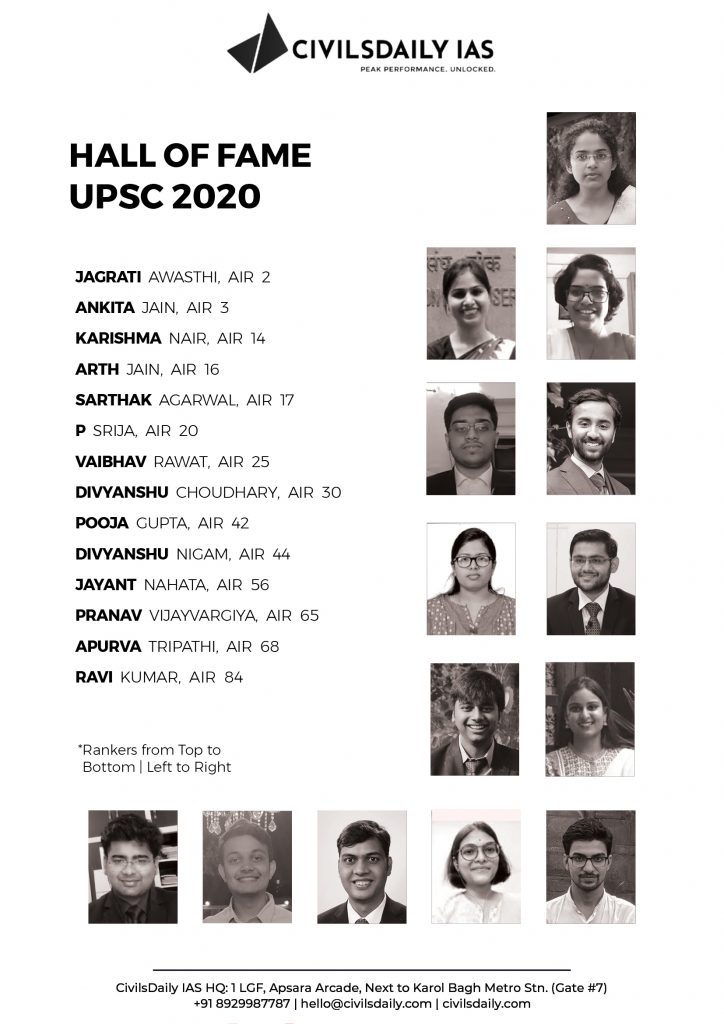
Civilsdaily helped 100+ aspirants get ranks in UPSC 2020. We helped 30 students secure ranks in the Top 100. After speaking with them personally on our UNHERD platform, we understood that there was one thing that was common between all the rankers!
All the rankers committed themselves and NEVER postponed their preparation. They did not waste a single day but started preparing immediately. We also asked them WHY did they start immediately and did not wait?
You will fall into a vicious cycle – Our toppers said that if aspirants do not start preparing immediately, they often fall into a vicious cycle of doubt and confusion. They wait for the right moment to start preparing but keep delaying it for numerous reasons like work, college, not-ready, etc. The more time they waste, the more confused they get, and the syllabus starts piling up. The toppers told us that the best thing they did was to start immediately and it helped them succeed!
Lack of self-analysis can cost you 3-4 years – The toppers revealed that self-analysis is one of the most important things for an aspirant. You need to know the syllabus, the previous year questions for every topic, your strengths, your weaknesses, your learning speed, the best time to study, how to plan the study, etc. Most aspirants who fail the exam do not do self-analysis and just keep reading. This does not help as it wastes a lot of their time. In fact, if you are not sure about your strengths and weaknesses, it could easily cost you 3-4 years in preparation. The toppers also told us that they asked mentors for assessments when they felt confused. Self-analysis helped them focus on their weaknesses and improve them. And finally, they were able to crack the exam.
UPSC is the biggest killer of self-belief – Our toppers told us that the UPSC exam is so tough and vast that it often kills an aspirant’s self-confidence. It becomes extremely difficult for them to remain consistent and motivated for the entire year. The rankers revealed that when they faced inconsistency and lacked self-confidence, they often spoke with their mentors who guided them. They found help in the mentors who understood their concerns and kept them motivated, especially when they felt down and depressed. This helped the rankers become consistent and prepare with the same energy every day!
Self-study with no guidance doesn’t help – The rankers of 2020 told us that preparing for UPSC is like walking on a desert. You will be lost without a guide. They said that even when they were self-studying, they kept asking for guidance from mentors. What to study, what not to study, how to improve their answers, which areas to focus on, etc. The toppers stayed constantly in touch with mentors who helped them at every step. They did the hard work themselves but it would have been a waste if the hard work was not in the right direction.
Always overachieve your daily target by 25% – The toppers said that they had a study plan with targets for every day! But that was not all. They always tried to overachieve the targets by at least 25%. Every time they overachieved, it gave them the confidence to do the same every day. And by the end of their preparation, they had a clear advantage over other aspirants because they studied 25% more than everyone, every single day!
The toppers of 2020 told us that their handwork, right guidance, and smart planning at an early stage helped them succeed. They said that they did not want to postpone their preparation even by a single day as it would cost them ranks. And they were right! They started preparing immediately and are now rank-holders in UPSC!
While UPSC 2023 may seem like a year away from now, looking at the syllabus one can say it’s just about the right time away. As Prelims 2022 approaches in June, more and more aspirants will realising how close they are to 2023 and begin preparing immediately. But it may just be too late by then!
If you are reading this today, you are in luck. You have the opportunity to realise the urgency immediately. March has just begun and you can have an advantage of at least siix months over other aspirants if you start preparing today. And even with a year in your hand, it would take a high level of extremely focused study to crack the exam in June 2023.
The fact is this: You CANNOT waste a single day in experimenting, hunting for resources, trying to collect reading material, etc. Every day from today is more valuable than anything you can imagine, and this is the time to focus with every bit of concentration you have.
Given the time constraint and the urgency of the situation, you need to be practical. Speak with our mentors and get your preparation organised. Our mentors can help you streamline your preparation within 24 hours and will help you save precious time.Right now, nothing is more valuable than your time and if you wish to use it effectively, all it would take is a call with our mentors.
The urgency is real, you can calculate yourself. And every moment you waste is an opportunity wasted. All you need to do is fill this form and our senior mentors will get in touch with you, with a solution designed especially for you! Speak with us, now as it’s a free 1-on-1 mentorship session with 40 minutes dedicated only for you.
Get Motivated to Maintain Overall Consistency for UPSC
It’s understandable we are humans and not programmable robots who can maintain the same level of interest everyday. However, maintaining an overall consistency throughout our preparation is neccessary to clear this competitive and vast exam.
Our philosophy behind MENTORSHIP is to get you out of this Snooze cycle. This ensures that you are the BEST VERSION of yourself in this journey. If you are under the impression that mentorship is weekly calls you attend, then you are mistaken, my friend. Trust us, your mentor will be your ‘FRIEND, PHILOSOPHER AND GUIDE’.
TO EACH THEIR OWN – Every aspirant is different. Their strengths and weaknesses are different. Their time availability is also different. Identifying this is important so you don’t end up making unrealistic targets and lose momentum. Your mentor will make sure you start slow but remain consistent to build your confidence. Making your schedule structured based on our experience of working with 2500+ students is our first priority.
TRACK YOUR PROGRESS – When you see yourself grow, it becomes easier to motivate yourself to push boundaries. Tracking your progress can happen in many ways like mentorship calls or chat sessions or by regular tests. The idea is to ensure that you don’t go off track in your preparation, and even if you do, we have your back.
EVOLUTION – A constant guidance is important to bring consistency to your UPSC preparation. Guidance is not about clearing your doubts or asking you to study when you don’t. It is also about the evolution of your preparation. This is where you and your mentor work as a team. A constant effort to PLAN AND BUILD UP YOUR ABILITY to learn in a faster and more efficient way.
TALK IT OUT – The biggest hurdle in achieving your highest level of consistency is the emotional part. Every now and then, you. surround yourself with negative thoughts, you feel scared and depressed. Instead of resolving these emotional issues, you avoid them as it seems like a waste of your precious time. You have to understand that ignoring emotional troubles does not solve them. What your doing is building an emotional time bomb that may burst a week before your mains or prelims! This is where your MENTOR AS A FRIEND comes in. All our mentors have been through this journey. We understand your fears and anxieties. So, TALK IT OUT.
Don’t let inconsistency keep you away from your dreams.
Fill up the SAMANVAYA form given below. Let us know your problems and we will find a solution to it, just like our students say ” TOGETHER WE CAN AND WE WILL”.
How has Civilsdaily Mentorship, helped Aspirants become Toppers?
The most difficult challenge faced by EVERY candidate is inconsistency. Be it inconsistency in studies, answer-writing practice, covering the syllabus, or revision, every candidate finds it difficult to cope with. Buthow do successful candidates manage to FIGHT Inconsistency so consistently?
In UPSC 2020, Civilsdaily helped 80+ students secure ranks in their exams. In the top 100, every 3rd ranker was a Civilsdaily student.
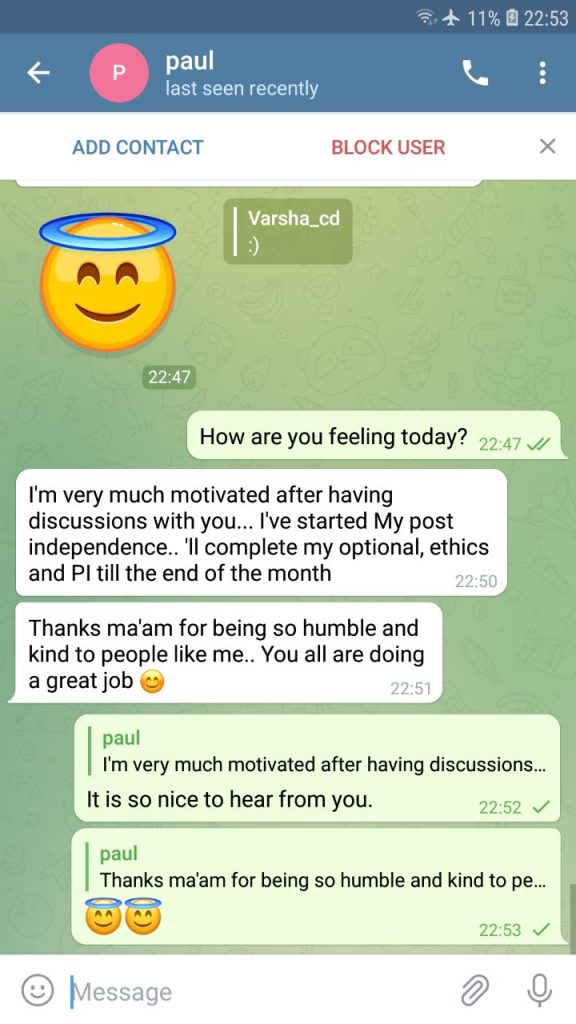
A very recent success story would be Vishwa Shah, student of Civilsdaily Mentor, Sukanya Ma’am. Vishwa has cleared the GPSC exam to become the Deputy Superintendent of Police in Gujarat. He has penned a thank-you note yesterday. Heartiest Congratulations to Vishwa!
One of our other Civilsdaily Student, Shubham Nagargojecleared the exams in 2020 to become an IPS Officer. Shubham was gracious enough to let us know how he felt about Civilsdaily Samanvaya Guidance under Parth sir.
To know how all of them cleared the exam with our mentorship, visit the UnherdPodcast.
Now that results are announced for UPSC 2021 Prelims, out of 15 out of 25 students of Santhosh Gupta sir have been recommended to Mains. One such student, Rahul expresses his gratitude and extends his appreciation.
Most of our Mentors like Sudhanshu sir, Sajal sir, Santhosh sir, Pravin sir, Parth Verma sir and Sukanya Ma’am were UPSC aspirants themselves and have attended UPSC Mains more than five times and UPSC Interview more than twice. Hence their mentorship is always a blend of the best test series, comprehensive notes and current affairs knowledge.
All of them dedicate their time weekly to give 1-on-1 mentorship to every student where they discuss last week’s performance and next week’s approach.
Be it Telegram, Whatsapp or Habitiat channels, they are always available and clear student’s doubts in a turnaround time of 24 Hours.
Why Civilsdaily Mentors are the GPS for Your UPSC-CSE Preparation
Remember there is always light at the end of the tunnel and if you want to get out of the tunnel you have to follow the direction of the light! Our mentors’ give you direction which is divided into daily modules. All you have to do is study and complete them on time.
As every year passes by, we don’t get confident by the previous years’ performance and become laidback. Instead, we become more hungry to convert all our students into toppers.REGISTER HERE TO SCHEDULE YOUR FIRST FREE SAMANVAYA COUNSELLING SESSION IN NEXT 24 HOURS
How are Current Civilsdaily Students Gearing up for UPSC-CSE 2022?
Initially, our Civilsdaily student Smriti wasn’t confident about Prelims when she began her preparation. Though she had joined Civilsdaily in 2020, she started studying for UPSC-CSE back in 2019. At that time, Smriti had enrolled in multiple institutes. Though, most of these institutes had promised a personal mentor, she was unable to get in touch with them on a daily basis. Also those mentors never scheduled test-series on a weekly basis. Hence, despite preparing for a year, Smriti had scored only 35 marks out of 200 in her first test series by Civilsdaily.
She then started writing 20-25 test series over the course of UAP 2021 and in her last test, her scores have drastically improved. She now scores in the range of 130-135 marks in prelims’ and 110+ in mains’ papers.
In Smriti’s own words she describes her Samanvaya Mentorship Experience to be —
“Our parents provide us financial and emotional support, friends provide us moral support and the right mentor gives you logistic and logical support for UPSC. There are days when I felt I won’t be able to compete against lakhs of aspirants. That’s when my mentor, Ravi sir reminded me of my improvement and encouraged me that I can crack it with the same consistency. We need someone, who tells us we are performing well especially when we cannot see that ourselves. The mentorship at Civilsdaily helped me become mentally stronger as a person. In other institutes, mentors are allotted only for doubt resolution. But at Civilsdaily, I am getting end-to-end mentorship via value added notes, classes, test series and detailed evaluation.”
Similarly our another Civilsdaily student, Ashishsums up his Samanvaya experience with Civilsdaily mentor,Pravin Sir, “Because of Pravin sir’s support, I am able to understand a topic in lesser time.”
This is how Pravin sir evaluates Ashish’s Mains Test Series every week. After every test series evaluation, Pravin sir schedules a 1 hour call to discuss how Ashish can improve his marks and the sources he can refer for key topics.
It’s Your Turn Get the Free 40 Min Counselling Session By a CD Mentor
Civilsdaily mentors are so dedicated, consistent and focused for your UPSC goal, that you will eventually become focused into turning your dreams to reality.
At the core of Civilsdaily UPSC mentorship, lies the fact that each one of you will have a unique journey while preparing for the exam. Some will get through on the first attempt without much effort while others will take both more time and more effort.
We want to understand you better to help you optimize your journey so you can focus on the right things and not waste time on the wrong ones. We are asking you to tap into the valuable experiences of mentors who underwent the same grind and realize the pitfalls and understand the shortcuts to make it.
In the first counselling session, we will understand your weaknesses. We then help you to stick to one plan or strategy throughout your preparation. We will then follow up with you on a daily basis to check if you are right on track. TALK TO OUR MENTORS & CLARIFY YOUR DOUBTS NOW
The Chief Justice of India (CJI), Justice N.V. Ramana, while delivering the annual (and the 19th edition) D.P. Kohli Memorial Talk minced no words in condemning the utter subordination of agencies to the executive and its disastrous consequences for the cause of justice.
Key takeaways
Resisting the pressure: The CJI called upon investigators to stand up to unethical pressures in order not to betray the trust reposed in them by the public.
Strong court: We need a strong Supreme Court and equally strong High Courts to keep our investigators on the straight and narrow path.
Fixed tenure: Earlier, CBI Directors were changed at will.
Mandatory tenure was meant to insulate the CBI Director from the caprice of the executive.
This process has since been expanded to include the CJI in the selection panel.
Strong leadership: The CBI now has some of the brightest Indian Police Service officers in its higher echelons.
However, it is not enough if the middle-rung supervisors alone are straightforward.
Should there be an umbrella organisation?
The CJI had proposed an umbrella organisation that will oversee all investigating agencies.
This idea was meant to avoid having multiple agencies looking into the same set of allegations.
Apart from its impracticality, such a novel body could generate its own problems — of turf wars and ego clashes.
Way forward
There is a need to focus on weeding out the dishonest among officers and rewarding those who have shown and proven themselves to be honest and professionally innovative.
Conclusion
There needs to be a strong and virtuous leader who will not only be honest but also stick his neck out to protect his deputies if and when confronted by an unscrupulous political heavyweight.
First Nikaalo Prelims Open Test was an eye opener for many by highlighting your weak spots. Knowing WEAK AREAS in early stage of preparation can give you time to improve upon them. Hence, as promised we are conducting the 2nd All India Open Prelims Test under our mission Nikaalo Prelims 2022.
GET READY TO EXPERIENCE THE COMPLETE EXAMINATION PATTERN!
We are conducting both GENERAL STUDIES and CSAT test with high quality UPSC level questions along with Test Discussion.
We at Civilsdaily understand the nuances of setting a paper. Through five cases explaining five questions, we’ll try to give you an idea about the varied difficulty level of prelims questions.
These questions have been taken from the first test of Nikaalo Prelims All India Open Mock Test 2020 about Government Schemes and Policies.
CASE 1 – The oldest trick in the book.
DELIBERATELY CHANGING NAMES TO CONFUSE YOU. BE IT SCHEMES OR CONCEPTS. UPSC IS WELL KNOWN TO FLIP NAMES OF SIMILAR-SOUNDING SCHEMES AND CONCEPTS. LOOK AT THIS QUESTION.
Ques. Which of the following are the result areas of STRIVE
Improved performance of ITI.
Improved and Broadened Apprenticeship Training.
India International Skill Centers
Select the correct answer from the codes given below:
a. 1 and 2 only
b. 2 and 3 only
c. 1 and 3 only
d. 1 only
Correct answer- 1 and 2 only
In the above question, STRIVE has been used for SANKALP. Both of them were announced at the same time for boosting Skill India Mission. It is very easy to get confused mark a wrong answer.
CASE 2: Misleading names
A LOT OF TIMES ESPECIALLY IN MATCH THE FOLLOWING TYPE OF QUESTIONS MISLEADING NAMES ARE USED.
Ques. Consider the following pairs:
Schemes Objectives
NIDHI: nurturing ideas and innovations into successful startups.
SATYAM: rejuvenate research in yoga and meditation.
MANAK: to help build a critical human resource pool for strengthening and increasing the research & development base.
Which of the pairs given above are correctly matched?
a. 1 and 2 only
b. 2 and 3 only
c. 1 and 2 only
d. 1, 2 and 3
Correct answer: 1, 2 and 3
Misleading yet important names of initiatives under Ministry of Science and Technology have been used here. All pairs are correctly matched but it is very easy to get confused.
CASE 3: Are you rooted in society?
UPSC has been playing with the expenditure figures and other such facts. It is done not only for the sole reason of checking your rote memory, but the ability to think in-depth about the issues faced by various sections.
Ques. With reference to ‘Kisan Urja Suraksha evam Utthaan Mahabhiyan (KUSUM) Scheme’, consider the following statements:
The scheme provides for the installation of grid-connected solar power plants each of capacity up to 2 MW in the rural areas.
The farmers will have to spend 50% of the total expenditure to acquire and install solar pumps.
Which of the statements given above is/are correct?
a. 1 only
b. 2 only
c. Both 1 and 2
d. Neither 1 nor 2
Correct answer: 1 only
A very important scheme. The farmers have to tolerate only 10% of the total expenditure to acquire and install solar pumps. The Central Govt. will provide 60% cost while the remaining 30% will be taken care of by bank as credit. One must understand the inability of Indian farmers to spend 50% on solar pumps. This would have helped in eliminating options also.
CASE 4: Going international.
INTERNATIONAL COLLABORATION AND AID IN OUR SCHEMES AND POLICIES ARE RELEVANT. IF YOU EVER READ ABOUT THEM, KNOW THAT THE ISSUE IS OF CRITICAL IMPORTANCE FOR THE GOVERNMENT AND SOCIETY.
Ques. With reference to Atal Bhujal Yojana, consider the following statements:
It is a Centrally Sponsored Scheme with funding pattern of 50:50 between Government of India and states.
This scheme is approved by the World Bank.
Which of the following statements given above is/are correct?
a. 1 only
b. 2 only
c. Both 1 and 2
d. Neither 1 nor 2
Correct answer: 2 only
Here the Government of India’s collaboration with World Bank makes it important. Half of the financial contribution is from the World Bank in this initiative.
Students must not ignore the contribution of international institutions especially if it is of such overwhelming nature.
YOU SHOULD BE ABLE TO REMEMBER THE BARE MINIMUM. THERE IS NO OTHER WAY IN SUCH QUESTIONS. YOU EITHER KNOW THEM OR YOU DON’T.
Ques. Which of the following are the components of the National Social Assistance Programme (NSAP)?
National Family Benefit Scheme (NFBS)
Annapurna.
Indira Gandhi National Widow Pension Scheme (IGNWPS)
Select the correct answer from the codes given below:
a. 1 and 3
b. 2 and 3
c. 3 only
d. 1, 2, and 3
Correct answer: 1, 2 and 3
The National Social Assistance Programme (NSAP) which came into effect from 15th August 1995, represents a significant step towards the fulfilment of the Directive Principles in Article 41 of the Constitution.
It is a very important scheme under Ministry of Rural Development. Students are supposed to do flagship schemes of various ministries.
WHAT IS NIKAALO PRELIMS?
Mission Nikaalo prelims is a free fast-paced revision sequence to brush up your concepts for prelims. Major pillars of the programs are:
Prelims SPOTLIGHT
This initiative is meant to help you revise details and facts that can be asked in prelims. They are simplified, synthesized and prepared using most authentic sources. These can easily slip your mind or you can easily confuse these. Continuous Revision for the same is required. The themes picked up in the spotlight are not random but after analyzing and scrutinizing the PYQs of several years. Dare you to miss the updates!
Static Subject Revision and Tests
Coverage and Relevance are the 2 Pillars of our Tests. Practicing tests is crucial part of Prelims preparation.
3. Nikaalo Prelims Discussion on Civilsdaily IAS Official space
All material, notes and doubt sessions will take place on Civilsdaily IAS Official Space.
We, at Civilsdaily are extremely happy for everyone who has cleared mains this time. Thank you for giving us a reason to cheer for you. It’s important to give yourself a pat or two, share the news with your family, eat a sweet and start preparing for Interview immediately.
You are just one step closer to achieving your LBSNAA dream! So don’t take the final round for granted and prepare with the same gusto as you did for Prelims and Mains.
For those that couldn’t make it this year, hang in there and don’t lose heart. You still have 2 more months for UPSC 2022 prelims. Before you start your preparation, get afree 1-on-1 counselling from us and understand how you can better your performance in 2022.
Don’t forget to upload your DAF 1 and draft DAF 2 in the above link.
Our team will reach out to you. We will discuss how to best fill your DAF 2, what should be your next step and how to prepare for different aspects.
Highlights of Transcend: Focused offerings for 3 distinct groups of IAS Mains-qualified aspirants
Freshers
Work Ex
Veterans
Dedicated Habitat group, telephonic and the zoom/google meet sessions, SWOT analysis via personalized questionnaire & in-person mock interviews with the panel.
This year, we intend to raise the bar even higher by providing trailblazing professional, personalized mentorship. There are 3 broad categories into which the IAS Mains-qualified candidates are be divided:
#1. Freshers: Facing 1st UPSC interview without work-ex
These candidates have given dedicated and exclusive time to UPSC preparation, often right after their graduation. We also have candidates who decide for UPSC a little later in life. These candidates have a wide variety of backgrounds. Some have quit their jobs to prepare for CSE, some may have household and family responsibilities, etc.
The interview, in the case of these aspirants, will focus on academics, mental alertness, critical power of assimilation, leadership and teamwork, variety and depth of interest, etc.
Freshers have the advantage of ‘excitement’ and ‘happy-go-lucky’ attitude, but they also suffer from fear-of-the-unknown.
For them, Transcend will revolve around psychological strengthening and belief formation besides personality development and polishing of soft skills.
#2. Work-Experience: Facing 1st UPSC interview with work-ex
The second category is of working professionals. These candidates have the advantages of leadership, tactfulness, foresight, and maturity. Of all other categories of candidates, the responses of working professionals are expected to be brief, well crafted, balanced, logical and reflecting emotional intelligence. Leadership is another area these aspirants are tested for.
Transcend will focus intensely on each of these general traits. Stress will be on the trends highlighted by the latest research in these domains.
#3. Veterans: Have faced the UPSC interview board in the past
Candidates who have appeared in the UPSC interview, probably more than once; but have consistently scored low marks.
Such a person has the advantage of the experience of the official set-up. She is aware of the entire process, her DAF and does not have fear-of-the-unknown. She has possibly taken mock interviews in her previous attempts but success eludes her owing to some fundamental flaw, which if unidentified, will compromise her chances yet again.
For veterans, our Transcend mentors will analyze your DAF, previous mock interviews, transcript of real interview/s and will have detailed discussions to pinpoint the weakness. Then will follow the personalized recovery strategy.
We are the only institution in this space that brings such high levels of clarity and purpose to the interview program.
All in all, ‘Transcend’ from Civilsdaily is the finest tool you can choose to uncover the shimmering light of your personality and to realize the simmering desire of your heart.
Take that final leap. You are in good hands now.
What to expect in the coming weeks?
#1. Once you submit your DAF 1 and other details on the link & email, we request you to send a video snippet (shot over a mobile selfie at pravin[at]civilsdaily.com) on the questions listed below. These are basic, time tested questions that do not need any preparation but helps us understand your default presentation styles:
Why do you want to join the civil services?
Why should you be selected over the other candidates?
Which in-service officer has inspired you the most and why?
One feedback that you received from a friend, peer or superior which fundamentally changed the way you operate in the world or look at the world?
We want you to be uninhibited, relaxed and natural when you make this video. All questions are compulsory (especially 2, 4 and 5).
#2. We will get back to you with the feedback on your DAF and this video exercise.
#3. Post that, your progress will be tracked in mock interviews and taken over the telephone, skype, and panel-driven mocks and you will be given access to interact with both our in-house mentors and industry experts to fine-tune your reasonings.
We will work on your innate tendencies and help you carve out the best version of yourself.
The Nepal Prime Minister, Sher Bahadur Deuba, paid a long-awaited visit to India last week (April 1-3). Sworn in in July 2021, this was his first bilateral visit abroad, in keeping with tradition.
Positive outcomes of the visit
Among the highlights was the operationalisation of the 35 kilometre cross-border rail link from Jayanagar (Bihar) to Kurtha (Nepal).
The second project that was inaugurated was the 90 km long 132 kV double circuit transmission line connecting Tila (Solukhumbu) to Mirchaiya (Siraha) close to the Indian border.
In addition, agreements providing technical cooperation in the railway sector, Nepal’s induction into the International Solar Alliance, and between Indian Oil Corporation and Nepal Oil Corporation on ensuring regular supplies of petroleum products were also signed.
The Mahakali Treaty covers the Sarada and Tanakpur barrages as well as the 6,700 MW (approximately) Pancheshwar Multipurpose project.
Both sides have agreed to push for an early finalisation of the detailed project report.
The joint vision statement on power sector cooperation recognises the opportunities for joint development power generation projects together with cross border transmission linkages and coordination between the national grids; it can provide the momentum.
Issues in India-Nepal relations
Over the years, a number of differences have emerged between India and Nepal that need attention.
The relationship took a nosedive in 2015, with India first getting blamed for interfering in the Constitution drafting process and then for an “unofficial blockade” that generated widespread resentment against India.
Revision of Treaty of Peace and Friendship: As one of the oldest bonds, the 1950 Treaty of Peace and Friendship was originally sought by the Nepali authorities in 1949 to continue the special links they had with British India.
It provides for an open border and for Nepali nationals to have the right to work in India.
But today, it is viewed as a sign of an unequal relationship, and an Indian imposition.
The idea of revising and updating it has found mention in Joint Statements since the mid-1990s.
Demonetisation is another irritant. In November 2016, India withdrew ₹15.44 trillion of high value (₹1,000 and ₹500) currency notes. Many Nepali nationals who were legally entitled to hold ₹25,000 of
Indian currency (given that the Nepali rupee is pegged to the Indian rupee) were left high and dry.
The Nepal Rashtra Bank, which is the central bank, holds ₹7 crore and estimates of public holdings are ₹500 crore.
After more than five years, it should certainly be possible to resolve this to mutual satisfaction.
Kalapani boundary issue: These boundaries had been fixed in 1816 by the British, and India inherited the areas over which the British had exercised territorial control in 1947.
While 98% of the India-Nepal boundary was demarcated, two areas, Susta and Kalapani remained in limbo.
In November 2019, India issued new maps following the division of the State of Jammu and Kashmir as Union Territories, Jammu and Kashmir and Ladakh.
Though the new Indian map did not affect the India-Nepal boundary in any material way, a new map of Nepal was endorsed by the legislature through a constitutional amendment.
While it did not alter the situation on the ground, it soured relations with India and added a new and emotive irritant.
Way forward
The political narrative has changed in both countries and these issues can no longer be swept under the carpet or subsumed by invoking a ‘special relationship’.
Part of the success of Mr. Deuba’s visit was that none of the differences was allowed to dominate the visit.
Yet, to build upon the positive mood, it is necessary these issues be discussed, behind closed doors and at Track 2 and Track 1.5 channels.
Conclusion
The need today is to avoid rhetoric on territorial nationalism and lay the groundwork for quiet dialogue where both sides display sensitivity as they explore what is feasible. India needs to be a sensitive and generous partner for the “neighbourhood first” policy to take root.
A sneak peek into our 1-1 mentoring session for Prelims
Civilsdaily helped 100+ aspirants get ranks in UPSC 2020. We helped 30 students secure ranks in the Top 100. After speaking with them personally on our UNHERD platform, we understood that there was one thing that was common between all the rankers!
All the rankers committed themselves and NEVER postponed their preparation. They did not waste a single day but started preparing immediately. We also asked them WHY did they start immediately and did not wait?
You will fall into a vicious cycle – Our toppers said that if aspirants do not start preparing immediately, they often fall into a vicious cycle of doubt and confusion. They wait for the right moment to start preparing but keep delaying it for numerous reasons like work, college, not-ready, etc. The more time they waste, the more confused they get, and the syllabus starts piling up. The toppers told us that the best thing they did was to start immediately and it helped them succeed!
Lack of self-analysis can cost you 3-4 years – The toppers revealed that self-analysis is one of the most important things for an aspirant. You need to know the syllabus, the previous year questions for every topic, your strengths, your weaknesses, your learning speed, the best time to study, how to plan the study, etc. Most aspirants who fail the exam do not do self-analysis and just keep reading. This does not help as it wastes a lot of their time. In fact, if you are not sure about your strengths and weaknesses, it could easily cost you 3-4 years in preparation. The toppers also told us that they asked mentors for assessments when they felt confused. Self-analysis helped them focus on their weaknesses and improve them. And finally, they were able to crack the exam.
UPSC is the biggest killer of self-belief – Our toppers told us that the UPSC exam is so tough and vast that it often kills an aspirant’s self-confidence. It becomes extremely difficult for them to remain consistent and motivated for the entire year. The rankers revealed that when they faced inconsistency and lacked self-confidence, they often spoke with their mentors who guided them. They found help in the mentors who understood their concerns and kept them motivated, especially when they felt down and depressed. This helped the rankers become consistent and prepare with the same energy every day!
Self-study with no guidance doesn’t help – The rankers of 2020 told us that preparing for UPSC is like walking on a desert. You will be lost without a guide. They said that even when they were self-studying, they kept asking for guidance from mentors. What to study, what not to study, how to improve their answers, which areas to focus on, etc. The toppers stayed constantly in touch with mentors who helped them at every step. They did the hard work themselves but it would have been a waste if the hard work was not in the right direction.
Always overachieve your daily target by 25% – The toppers said that they had a study plan with targets for every day! But that was not all. They always tried to overachieve the targets by at least 25%. Every time they overachieved, it gave them the confidence to do the same every day. And by the end of their preparation, they had a clear advantage over other aspirants because they studied 25% more than everyone, every single day!
The toppers of 2020 told us that their handwork, right guidance, and smart planning at an early stage helped them succeed. They said that they did not want to postpone their preparation even by a single day as it would cost them ranks. And they were right! They started preparing immediately and are now rank-holders in UPSC!
While UPSC 2023 may seem like a year away from now, looking at the syllabus one can say it’s just about the right time away. As Prelims 2022 approaches in June, more and more aspirants will realising how close they are to 2023 and begin preparing immediately. But it may just be too late by then!
If you are reading this today, you are in luck. You have the opportunity to realise the urgency immediately. March has just begun and you can have an advantage of at least siix months over other aspirants if you start preparing today. And even with a year in your hand, it would take a high level of extremely focused study to crack the exam in June 2023.
The fact is this: You CANNOT waste a single day in experimenting, hunting for resources, trying to collect reading material, etc. Every day from today is more valuable than anything you can imagine, and this is the time to focus with every bit of concentration you have.
Given the time constraint and the urgency of the situation, you need to be practical. Speak with our mentors and get your preparation organised. Our mentors can help you streamline your preparation within 24 hours and will help you save precious time.Right now, nothing is more valuable than your time and if you wish to use it effectively, all it would take is a call with our mentors.
The urgency is real, you can calculate yourself. And every moment you waste is an opportunity wasted. All you need to do is fill this form and our senior mentors will get in touch with you, with a solution designed especially for you! Speak with us, now as it’s a free 1-on-1 mentorship session with 40 minutes dedicated only for you.
Get Motivated to Maintain Overall Consistency for UPSC
It’s understandable we are humans and not programmable robots who can maintain the same level of interest everyday. However, maintaining an overall consistency throughout our preparation is neccessary to clear this competitive and vast exam.
Our philosophy behind MENTORSHIP is to get you out of this Snooze cycle. This ensures that you are the BEST VERSION of yourself in this journey. If you are under the impression that mentorship is weekly calls you attend, then you are mistaken, my friend. Trust us, your mentor will be your ‘FRIEND, PHILOSOPHER AND GUIDE’.
TO EACH THEIR OWN – Every aspirant is different. Their strengths and weaknesses are different. Their time availability is also different. Identifying this is important so you don’t end up making unrealistic targets and lose momentum. Your mentor will make sure you start slow but remain consistent to build your confidence. Making your schedule structured based on our experience of working with 2500+ students is our first priority.
TRACK YOUR PROGRESS – When you see yourself grow, it becomes easier to motivate yourself to push boundaries. Tracking your progress can happen in many ways like mentorship calls or chat sessions or by regular tests. The idea is to ensure that you don’t go off track in your preparation, and even if you do, we have your back.
EVOLUTION – A constant guidance is important to bring consistency to your UPSC preparation. Guidance is not about clearing your doubts or asking you to study when you don’t. It is also about the evolution of your preparation. This is where you and your mentor work as a team. A constant effort to PLAN AND BUILD UP YOUR ABILITY to learn in a faster and more efficient way.
TALK IT OUT – The biggest hurdle in achieving your highest level of consistency is the emotional part. Every now and then, you. surround yourself with negative thoughts, you feel scared and depressed. Instead of resolving these emotional issues, you avoid them as it seems like a waste of your precious time. You have to understand that ignoring emotional troubles does not solve them. What your doing is building an emotional time bomb that may burst a week before your mains or prelims! This is where your MENTOR AS A FRIEND comes in. All our mentors have been through this journey. We understand your fears and anxieties. So, TALK IT OUT.
Don’t let inconsistency keep you away from your dreams.
Fill up the SAMANVAYA form given below. Let us know your problems and we will find a solution to it, just like our students say ” TOGETHER WE CAN AND WE WILL”.
How has Civilsdaily Mentorship, helped Aspirants become Toppers?
The most difficult challenge faced by EVERY candidate is inconsistency. Be it inconsistency in studies, answer-writing practice, covering the syllabus, or revision, every candidate finds it difficult to cope with. Buthow do successful candidates manage to FIGHT Inconsistency so consistently?
In UPSC 2020, Civilsdaily helped 80+ students secure ranks in their exams. In the top 100, every 3rd ranker was a Civilsdaily student.
A very recent success story would be Vishwa Shah, student of Civilsdaily Mentor, Sukanya Ma’am. Vishwa has cleared the GPSC exam to become the Deputy Superintendent of Police in Gujarat. He has penned a thank-you note yesterday. Heartiest Congratulations to Vishwa!
One of our other Civilsdaily Student, Shubham Nagargojecleared the exams in 2020 to become an IPS Officer. Shubham was gracious enough to let us know how he felt about Civilsdaily Samanvaya Guidance under Parth sir.
To know how all of them cleared the exam with our mentorship, visit the UnherdPodcast.
Now that results are announced for UPSC 2021 Prelims, out of 15 out of 25 students of Santhosh Gupta sir have been recommended to Mains. One such student, Rahul expresses his gratitude and extends his appreciation.
Most of our Mentors like Sudhanshu sir, Sajal sir, Santhosh sir, Pravin sir, Parth Verma sir and Sukanya Ma’am were UPSC aspirants themselves and have attended UPSC Mains more than five times and UPSC Interview more than twice. Hence their mentorship is always a blend of the best test series, comprehensive notes and current affairs knowledge.
All of them dedicate their time weekly to give 1-on-1 mentorship to every student where they discuss last week’s performance and next week’s approach.
Be it Telegram, Whatsapp or Habitiat channels, they are always available and clear student’s doubts in a turnaround time of 24 Hours.
Why Civilsdaily Mentors are the GPS for Your UPSC-CSE Preparation
Remember there is always light at the end of the tunnel and if you want to get out of the tunnel you have to follow the direction of the light! Our mentors’ give you direction which is divided into daily modules. All you have to do is study and complete them on time.
As every year passes by, we don’t get confident by the previous years’ performance and become laidback. Instead, we become more hungry to convert all our students into toppers.REGISTER HERE TO SCHEDULE YOUR FIRST FREE SAMANVAYA COUNSELLING SESSION IN NEXT 24 HOURS
How are Current Civilsdaily Students Gearing up for UPSC-CSE 2022?
Initially, our Civilsdaily student Smriti wasn’t confident about Prelims when she began her preparation. Though she had joined Civilsdaily in 2020, she started studying for UPSC-CSE back in 2019. At that time, Smriti had enrolled in multiple institutes. Though, most of these institutes had promised a personal mentor, she was unable to get in touch with them on a daily basis. Also those mentors never scheduled test-series on a weekly basis. Hence, despite preparing for a year, Smriti had scored only 35 marks out of 200 in her first test series by Civilsdaily.
She then started writing 20-25 test series over the course of UAP 2021 and in her last test, her scores have drastically improved. She now scores in the range of 130-135 marks in prelims’ and 110+ in mains’ papers.
In Smriti’s own words she describes her Samanvaya Mentorship Experience to be —
“Our parents provide us financial and emotional support, friends provide us moral support and the right mentor gives you logistic and logical support for UPSC. There are days when I felt I won’t be able to compete against lakhs of aspirants. That’s when my mentor, Ravi sir reminded me of my improvement and encouraged me that I can crack it with the same consistency. We need someone, who tells us we are performing well especially when we cannot see that ourselves. The mentorship at Civilsdaily helped me become mentally stronger as a person. In other institutes, mentors are allotted only for doubt resolution. But at Civilsdaily, I am getting end-to-end mentorship via value added notes, classes, test series and detailed evaluation.”
Similarly our another Civilsdaily student, Ashishsums up his Samanvaya experience with Civilsdaily mentor,Pravin Sir, “Because of Pravin sir’s support, I am able to understand a topic in lesser time.”
This is how Pravin sir evaluates Ashish’s Mains Test Series every week. After every test series evaluation, Pravin sir schedules a 1 hour call to discuss how Ashish can improve his marks and the sources he can refer for key topics.
It’s Your Turn Get the Free 40 Min Counselling Session By a CD Mentor
Civilsdaily mentors are so dedicated, consistent and focused for your UPSC goal, that you will eventually become focused into turning your dreams to reality.
At the core of Civilsdaily UPSC mentorship, lies the fact that each one of you will have a unique journey while preparing for the exam. Some will get through on the first attempt without much effort while others will take both more time and more effort.
We want to understand you better to help you optimize your journey so you can focus on the right things and not waste time on the wrong ones. We are asking you to tap into the valuable experiences of mentors who underwent the same grind and realize the pitfalls and understand the shortcuts to make it.
In the first counselling session, we will understand your weaknesses. We then help you to stick to one plan or strategy throughout your preparation. We will then follow up with you on a daily basis to check if you are right on track. TALK TO OUR MENTORS & CLARIFY YOUR DOUBTS NOW
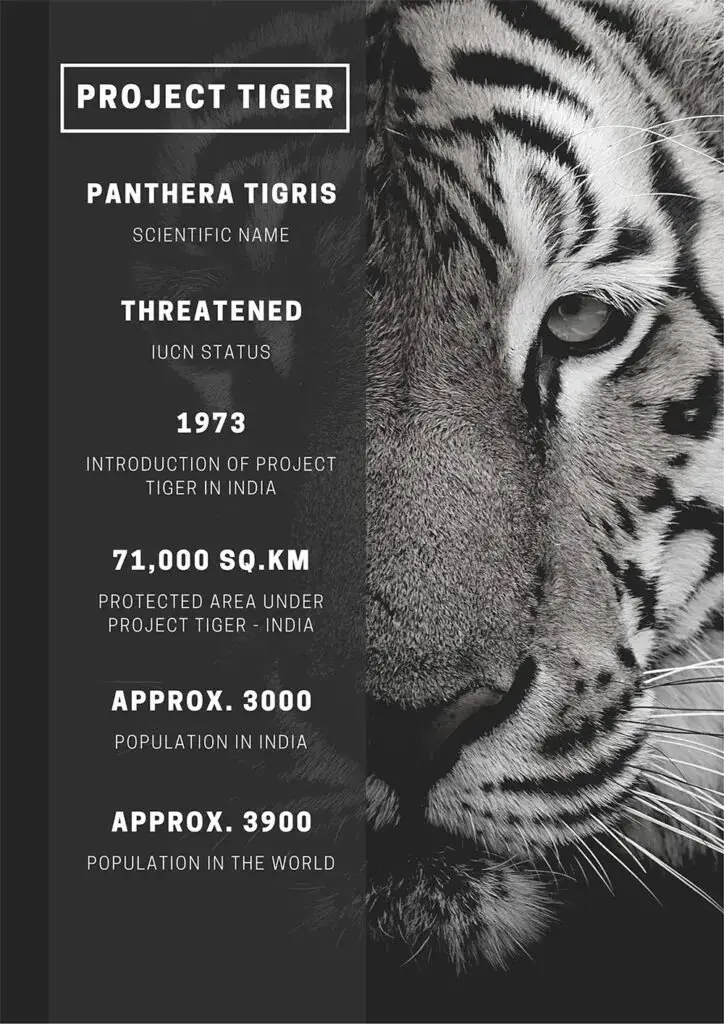
Project Tiger started in 1973, one of the largest species conservation initiatives in the world, is in its 49th year.
It has helped in restoring the population and strengthening conservation efforts for tigers.
However there are many challenges too. Managing the tiger population, giving them safe habitat, avoiding human-tiger conflicts are some of the issues that the project has faced.
Having said that, less than three thousand populations still puts these majestic cats in endangered species.
What more needs to be done to create a safe and secure environment for tigers? What are the challenges? We will try to find out in this article.
What is Project Tiger?
Launched from Jim Corbett National Park, Uttarakhand, the project is an ongoing scheme of the Ministry of Environment, Forest and Climate Change (MoEFCC).
The centrally sponsored scheme is applicable in nine reserves of different States, namely Assam, Bihar, Karnataka, Madhya Pradesh, Maharashtra, Odisha, Rajasthan, Uttar Pradesh, and West Bengal.
Project Tiger has been converted into a statutory authority, National Tiger Conservation Authority (NTCA) by providing enabling provisions in the Wild Life (Protection) Act, 1972 through an amendment, via Wild Life (Protection) Amendment Act, 2006. The NTCA addresses ecological and administrative concerns for conserving tigers. It provides a statutory basis for the protection of tiger reserves and provides strengthened institutional mechanisms for the protection of ecologically sensitive areas and endangered species.
Purpose of Project Tiger
The tiger is a unique animal that plays a pivotal role in the health and diversity of an ecosystem.
Predation balance: It is a top predator which is at the apex of the food chain.
Regulation of herbivores: It keeps the population of wild ungulates in check, thereby maintaining the balance between prey herbivores and the vegetation upon which they feed.
Ecosystem balance: Therefore, the presence of tigers in the forest is an indicator of the well being of the ecosystem.
Tourism: Apart from the ecological services provided by the animal, the tiger also offers direct use such as attracting tourists, which provide incomes for local communities.
Execution of the Project
Project Tiger was administered by the NTCA. The overall administration of the project is monitored by a steering committee, which is headed by a director. A field director is appointed for each reserve, who is assisted by a group of field and technical personnel.
Shivalik-Terai Conservation Unit
North-East Conservation Unit
Sunderbans Conservation Unit
Western Ghats Conservation Unit
Eastern Ghats Conservation Unit
Central India Conservation Unit
Sariska Conservation Unit
Kaziranga Conservation Unit
The various tiger reserves were created in the country based on the ‘core-buffer’ strategy:
Core Area: are free of all human activities. It has the legal status of a national park or wildlife sanctuary. It is kept free of biotic disturbances and forestry operations like a collection of minor forest produce, grazing, and other human disturbances are not allowed within.
Buffer Areas: are subjected to ‘conservation-oriented land use’. They comprise forest and non-forest land. It is a multi-purpose use area with twin objectives of providing habitat supplement to spillover population of wild animals from the core conservation unit and providing site-specific co-developmental inputs to surrounding villages for relieving their impact on the core area.
Issues with the Project
Implementation bottlenecks: The efforts were hampered by poaching, as well as debacles and irregularities in Sariska and Namdapha, both of which were reported extensively in the Indian media.
Forest Dwellers Rights: The Forest Rights Act passed by the Indian government in 2006 recognizes the rights of some forest dwelling communities in forest areas. This has led to controversy over implications of such recognition for tiger conservation.
Man-Animal Conflict: Some have argued that this is problematic as it will increase conflict and opportunities for poaching; some also assert that “tigers and humans cannot co-exist”.
Abuse of Authority: Others argue that this is a limited perspective that overlooks the reality of human-tiger coexistence and the abuse of power by authorities, evicting local people and making them pariahs in their own traditional lands.
Other efforts to save Tigers
India is home to 70 percent of the global tiger population. Therefore, the country has an important role to play in tiger conservation.
[1] Project Tiger
(discussed above)
[2] CITES (Convention on International Trade in Endangered Species of Wild Fauna and Flora)
Besides protecting tiger territory, other measures being taken to save the tiger include: curbing wildlife trade through international agreements.
CITES is an international agreement between governments aimed at ensuring that international trade in specimens of wild animals and plants, including tigers, does not threaten their survival. India ratified this treaty in 1976.
[3] Global Tiger Forum and Tiger Range Countries
Established in 1994, the Global Tiger Forum is the only inter-governmental body for tiger conservation.
Its membership includes seven tiger range countries: Bangladesh, Bhutan, India, Cambodia, Myanmar, Nepal and Vietnam.
[4] CA|TS
14 tiger reserves have been accredited under CA|TS (Conservation Assured | Tiger Standards) categories.
The CA|TS is a set of criteria that examines the management of tiger sites to gauge the success rates of tiger conservation.
[5] St. Petersburg Declaration
This resolution was adopted In November 2010, by the leaders of 13 tiger range countries (TRCs) assembled at an International Tiger Forum in St. Petersburg, Russia
It aimed at promoting a global system to protect the natural habitat of tigers and raise awareness among people on white tiger conservation.
[6] Various NGOs
International NGO members consist of World Wildlife Fund, International Fund for Animal Welfare (IFAW), and TRAFFIC.
Several national NGOs from India and Nepal are also members.
Success of the Project Tiger
The four-year tiger census report, Status of Tigers in India, 2018 shows numbers of the big cat have increased across all landscapes.
The total count has risen to 2,967 from 2,226 in 2014 — an increase of 741 individuals (aged more than one year), or 33%, in four years.
At present, India has around 75% of tiger population and its source areas amongst the 13 tiger range countries in the world.
2.24% of country’s geographical area is spread out in 51 tiger reserves in 18 States.
Various threats to Tigers
Despite measures being initiated to protect wild tigers, habitat loss and poaching continue to pose a threat to the animal’s survival.
Tiger parts are used in traditional Chinese medicines, tiger skin is used for decorative and medicinal purposes and tiger bones are again used for medicinal purposes for curing body pain, et al.
Between 2000 and 2014, TRAFFIC’s research found that parts of a minimum of 1,590 Tigers were seized in Tiger range States, an average of two Tigers per week.
Other existential threats to tigers
Man-Animal conflict: This largely seems a normal phenomenon in India. We broadly remember the case of Tigress Avni which was finally shot dead by the forest officials in Maharashtra.
Shrinking habitat: This often leads to territorial conflicts among the Tigers.
Issues with Tourism: Excess of tourist activities is problematic for animals. Frequent visits in reserved forests areas disrupt them to move freely for their prey.
Climate Change: The effects of climate change and floods are a major problem. The latest study by WWF shows that Sundarban which is one of the biggest home of tigers in India would sink entirely in 2070.
Way forward
The process of tiger conservation should be more dynamic and compatible with the future possibilities of climatic changes as well.
The Forest Department and the Central government can collaborate to protect the natural corridors to ensure the free movement of the tigers for better food resources.
Campaigns such as ‘Save the Tiger’ are recommended as effective measures to make people across the country and globe aware of the significance of conserving tiger species.
Sensitization of local communities against poaching is also a crucial measure in this regard.
We have to make the environment and development co-exist and go hand in hand by planning our future developmental goals in such a manner that our environmental goals are not compromised.