The Dual Command System of Policing is being implemented in Bhopal and Indore.
What is the ‘Dual Command’ System?
Under the dual command system, the District Magistrate and the Superintendent of Police (SP) share powers and responsibilities in a district.
Under this structure, the DM is entrusted with issuing arrest warrants, licenses while the SP has powers and responsibilities to investigate crime and make arrests.
The system is designed to ensure a lower concentration of power and making the police more accountable to the DM at the district level.
How does the commissionerate system empower the police?
Under the police commissionerate system, the powers of both policing and magistracy are concentrated with the commissioner, who is directly accountable to the state government and the state police chief.
The commissioner of police under the commissionerate system exercises the powers and duties of a District Magistrate.
These powers are also available to any officer under the commissioner who is not below the rank of an Assistant Commissioner of Police.
The police are also empowered to conduct externment proceedings and issue written orders to remove a person from their jurisdiction of the commissionerate for a maximum of two years.
Need for such system
Various committees constituted to suggest police reforms have recommended implementation of a police commissioner system.
Rapidly urbanized cities: This is for cities which have witnessed rapid urbanization and have a population of more than 10 lakhs.
Better accountability: In the 6th report of the National Police Commission, it noted that as compared to police in districts, police in commissionerate in small areas had a better account of themselves.
Complex security threats: It further pointed out that in urban areas, the changing dynamism and growing complexities of security threats required a swift and prompt response.
Quick responsivity: Usually in large urban areas, law and order situations develop rapidly, requiring a speed and effective operational response from the police.
Avoiding delayed action: In districts where the SPs and DMs do not have an understanding, orders to swiftly act are rarely issued in time which aggravates the situation.
Issues with the system
Power-sharing: There needs to be some clarity on what powers will be taken away from the revenue officers, collectors, SDMs and how it will impact the society before implementing it.
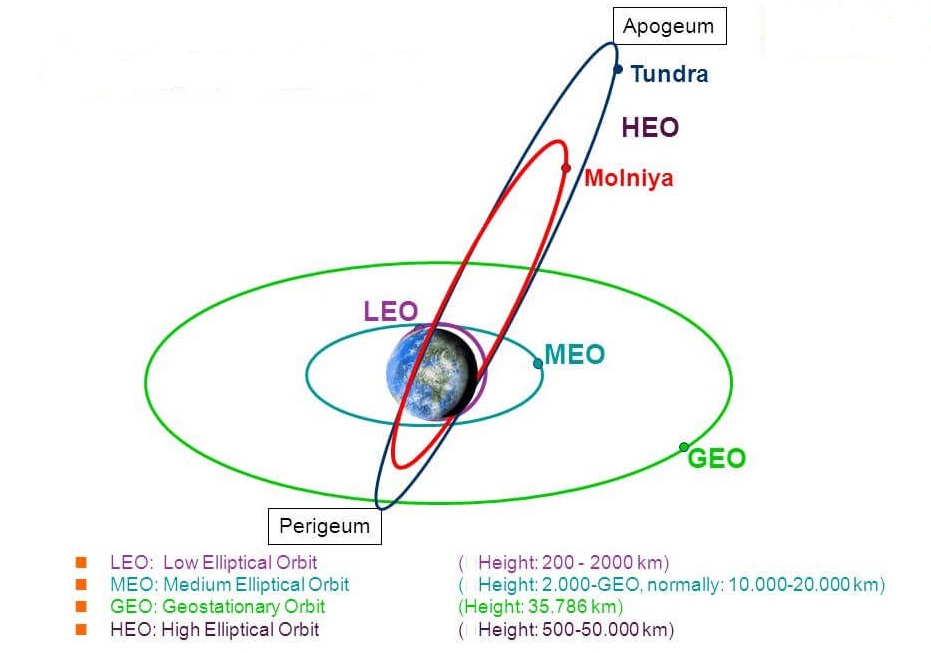
Russia has successfully placed into orbit a military satellite believed to be part of the Kremlin’s early warning anti-missile system. This launch could be delivering a Tundra satellite.
Tundra Satellite
The Tundra or EKS (Edinaya Kosmicheskaya Sistema) series of satellites is the next generation of Russian early-warning satellites.
The development of the EKS started in 2000.
These satellites carry a secure emergency communications payload to be used in case of a nuclear war.
They are launched on Soyuz-2-1b Fregat boosters into Molniya-orbits, inclined highly elliptical 12 h orbits.
What are Tundra Orbits?
A Tundra orbit is a highly elliptical geosynchronous orbit with a high inclination (approximately 63.4°), an orbital period of one sidereal day.
A satellite placed in this orbit spends most of its time over a chosen area of the Earth, a phenomenon known as apogee dwell.
It makes satellites particularly well suited for communications satellites serving high latitude regions.
The ground track of a satellite in a Tundra orbit is a closed figure 8 with a smaller loop over either the northern or southern hemisphere.
This differentiates them from Molniya orbits designed to service high-latitude regions, which have the same inclination but half the period and do not hover over a single region.
Back2Basics: Types of Orbits
[1] Geostationary orbit (GEO)
Satellites in geostationary orbit (GEO) circle Earth above the equator from west to east following Earth’s rotation – taking 23 hours 56 minutes and 4 seconds – by travelling at exactly the same rate as Earth.
This makes satellites in GEO appear to be ‘stationary’ over a fixed position.
In order to perfectly match Earth’s rotation, the speed of GEO satellites should be about 3 km per second at an altitude of 35 786 km.
This is much farther from Earth’s surface compared to many satellites.
GEO is used by satellites that need to stay constantly above one particular place over Earth, such as telecommunication satellites.
Satellites in GEO cover a large range of Earth so as few as three equally-spaced satellites can provide near-global coverage.
[2] Low Earth orbit (LEO)
A low Earth orbit (LEO) is, as the name suggests, an orbit that is relatively close to Earth’s surface.
It is normally at an altitude of less than 1000 km but could be as low as 160 km above Earth – which is low compared to other orbits, but still very far above Earth’s surface.
Unlike satellites in GEO that must always orbit along Earth’s equator, LEO satellites do not always have to follow a particular path around Earth in the same way – their plane can be tilted.
This means there are more available routes for satellites in LEO, which is one of the reasons why LEO is a very commonly used orbit.
It is most commonly used for satellite imaging, as being near the surface allows it to take images of higher resolution.
Satellites in this orbit travel at a speed of around 7.8 km per second; at this speed, a satellite takes approximately 90 minutes to circle Earth.
[3] Medium Earth orbit (MEO)
Medium Earth orbit comprises a wide range of orbits anywhere between LEO and GEO.
It is similar to LEO in that it also does not need to take specific paths around Earth, and it is used by a variety of satellites with many different applications.
It is very commonly used by navigation satellites, like the European Galileo system of Europe.
It uses a constellation of multiple satellites to provide coverage across large parts of the world all at once.
[4] Polar Orbit
Satellites in polar orbits usually travel past Earth from north to south rather than from west to east, passing roughly over Earth’s poles.
Satellites in a polar orbit do not have to pass the North and South Pole precisely; even a deviation within 20 to 30 degrees is still classed as a polar orbit.
Polar orbits are a type of low Earth orbit, as they are at low altitudes between 200 to 1000 km.
[5] Sun-synchronous orbit (SSO)
SSO is a particular kind of polar orbit. Satellites in SSO, travelling over the polar regions, are synchronous with the Sun.
This means they are synchronised to always be in the same ‘fixed’ position relative to the Sun.
This means that the satellite always visits the same spot at the same local time.
Often, satellites in SSO are synchronised so that they are in constant dawn or dusk – this is because by constantly riding a sunset or sunrise, they will never have the Sun at an angle where the Earth shadows them.
A satellite in a Sun-synchronous orbit would usually be at an altitude of between 600 to 800 km. At 800 km, it will be travelling at a speed of approximately 7.5 km per second.
[6] Transfer orbits and geostationary transfer orbit (GTO)
Transfer orbits are a special kind of orbit used to get from one orbit to another.
Often, the satellites are instead placed on a transfer orbit: an orbit where, by using relatively little energy from built-in motors, the satellite or spacecraft can move from one orbit to another.
This allows a satellite to reach, for example, a high-altitude orbit like GEO without actually needing the launch vehicle.
Reaching GEO in this way is an example of one of the most common transfer orbits, called the geostationary transfer orbit (GTO).
Africa’s Great Green Wall (GGW) program to combat desertification in the Sahel region is an important contribution towards combating climate change, Food and Agriculture Organization (FAO) said in a study.
Note the countries swept by the GGW project on the African map.
About GGW Program
The Great Green Wall project is conceived by 11 countries located along the southern border of the Sahara and their international partners, is aimed at limiting the desertification of the Sahel zone.
Led by the African Union, the initiative aims to transform the lives of millions of people by creating a mosaic of green and productive landscapes across North Africa.
The initial idea of the GGW was to develop a line of trees from east to the west bordering the Saharan Desert.
Its vision has evolved into that of a mosaic of interventions addressing the challenges facing the people in the Sahel and the Sahara.
Why was such project incepted?
The project is a response to the combined effect of natural resources degradation and drought in rural areas.
It aimed to restore 100 million hectares of degraded land by 2030; only four million hectares had been restored between 2007 and 2019.
It is a partnership that supports communities working towards sustainable management and use of forests, rangelands and other natural resources.
It seeks to help communities mitigate and adapt to climate change, as well as improve food security.
You can also reach us to know more, call us at:- 8882914738
A quick bit about Santosh Gupta:-
Santosh sir has scored above 140 twice in UPSC prelims and 120 plus in all 6 attempts. He has written all 6 mains and has appeared for Interviews 3 times. He has qualified UPSC EPFO and BPSC 56-59th also.
He is Prelims coordinator at Civilsdaily and also course coordinator for ongoing Smash Prelims program for UPSC Prelims-2022.
He has been teaching and mentoring UPSC aspirants for the last 5 years with tremendous interest in environment, ecology, and polity.
Though, you can prepare for UPSC and give your attempts anytime till 32 years, the optimal time to begin your preparation is during the college days. A graduation degree is for 3 years and almost all toppers have prepared for the same amount of time to get the success they now enjoy.
One of the biggest advantage for a college student is that they can easily switch to study mode as there are no other additional family responsibilities or expectations. Plus, an IAS officer who clears the exam within 23 years is more likely to hold the highest position of cabinet secretary than someone who cleared it in their late twenties. Youthful enthusiasm is the biggest internal motivation that college students possess which can help them in clearing this exhausting exam.
So, now that you have broken the news to your parents about wanting to write the UPSC-CSE exam, you might be now wondering — what is UPSC-CSE? How to prepare for it? Should I attend a coaching institute? What is the syllabus? How many hours to study… the list is endlessand daunting.
However, you would have missed the obvious question— What kind of questions come in the paper and what kind of answers UPSC expects from an aspirant?
Is UPSC CSE really about reading Unlimited Sources?
Some of us will ask advices from all our friends and family on how to prepare for the exam, resulting in confusion in following through the UPSC syllabus. Don’t let these questions play the devil and make you postpone your UPSC preparation by a few more years. Having the right direction and guidance can help you save 2-3 critical attempts in UPSC. Listen to our Civilsdaily student and AIR 132 2020 UPSC topper Lakshay Chaudhary on how he improved his performance after 2 attempts with the guidance of civilsdaily mentors.
Without much ado, register yourself for our free 1-on-1 counselling session at Civilsdaily known as Samanvaya. Your counsellors are trained mentors who have given the Mains exam six times and have attended UPSC interview multiple times. Experienced mentors like Sajal sir and Ajay sir have nearly mentored 500+ students.
What are the other mistakes in UPSC preparation first-time aspirants are likely to make?
About 60% of the UPSC toppers have mostly prepared the wrong way in their first attempt. This could range from books, notes to time and consistency. If you want to start in the right direction, then it’s about time you booked a slot with your Samanvaya mentor.
First time aspirants often make the mistake of reading many sources for a single subject. If there is a new book in the market, they will not hesitate to buy it. UPSC preparation is not about reading multiple books, but one book multiple times. Few others, answer the essay paper in a very academic and technical manner. Most of the first time aspirants skip studying for the language and CSAT paper. In the first few months of preparation all of us read the entire 24 pages of newspaper and waste 3-4 hours time. Some of us are over-confident of clearing the exam with our own preparation or by our institute’s coaching. We might be making notes but we will not be updating them or revising them. First time aspirants struggle to understand what to skip in a book or what to cover. They take atleast 2-3 months to finish books like Laxmikanth and yet don’t have conceptual clarity.
You can go through this video over here to get a basic understanding of the UPSC preparation.
Toppers were once Beginners. And they began with Samanvaya.
We, at Civilsdaily, are extremely proud to announce the incredible success of our students who have made their dreams come true. Today, we celebrate the hard work, commitment, and dedication with which they prepared for this exam, and succeeded! They are the heroes of today and leaders of tomorrow, and we are extremely glad to have been a part of their journey.
We are also happy to announce that 78 Civilsdaily students (and counting) are now rank holders in UPSC. Our success rate has increased by 77% from last year in terms of rank holders. Civilsdaily is proud to say that 20 of our students are in the top 100 ranks. And this is a phenomenal 25% increase in our success rate for the top 100 positions since last year.
And finally, we are extremely proud of our mentors whose tireless efforts helped our students become officers today. Their daily guidance, skilled mentorship, round-the-clock support, and dedication to work with the students day-in and day-out has led to this wonderful occasion where we celebrate the success of our students together!
How is Samanvaya, UPSC Counselling Session Planned?
At Civilsdaily, your assigned mentors interact with you on a daily basis. They are not just teachers, but coaches, philosophers, and guides. And this is how they will help you succeed:
Motivating you for one whole year and pushing you to complete the modules on time.
Helping you restart preparation despite low scores in test series.
Helping you study for 6 hours everyday if you are working.
Guiding you on how to revise the whole syllabus 3 months before prelims and mains.
Providing you topic-wise notes.
Teaching you elimination techniques, tikdams and helpful strategies like 4-2-4 model of preparation.
Keeping you updated on what to study and from where to study.
1.30 minute counselling session:Once you fill the form, our senior mentors get on a 30-40 minute call with you to understand your preparation level, study constraints, your strategy for the last 6 months, and create measurable targets for next week, next month and so on. You will hear back from us within 24 hours. The first counselling session is absolutely free for all, however there are limited slots available. So please register now.
2.Access to our invite-only chat platform, Habitat: This is where you can post your daily doubts, discuss your test questions and have real-time, live discussions on news and op-eds, and connect with other aspirants in your optional groups.
3. 1 on 1 mentor allotment: The mentor will be available on scheduled calls with you throughout all the stages of your UPSC preparation and will daily assess, evaluate, and plan the next module according to the available time. We will help you pick the right books, make you practice answers daily, evaluate them and design practical & personalstrategies that you can follow everyday
Nanotechnology is science, engineering, and technology conducted at the nanoscale, which is about 1 to 100 nanometers. Nanoscience and nanotechnology are the study and application of extremely small things and can be used across all the other science fields, such as chemistry, biology, physics, materials science, and engineering.
Nanotechnology proposes the construction of new nanoscale devices that possess extraordinary properties as they are lighter, smaller and less expensive, and more precise. Materials reduced to the nanoscale can show properties compared to what they exhibit on a macro-scale, enabling unique applications.
Two main approaches are used in nanotechnology:
Bottom-up approach – materials and devices are built from molecular components that assemble themselves chemically by principles of molecular recognition.
Top-down approach – nano-objects are constructed from larger entities without atomic-level control.
Why do we need it?
(1) Health sector
Nanomedicine: It has healthcare applications such as treatment and diagnostics of various diseases using nanoparticles in medical devices, as well as nanoelectronic biosensors and molecular nanotechnology.
Smart pills: Nano-level electronic devices that are shaped and designed like pharmaceutical pills but perform more advanced functions such as sensing, imaging, and drug delivery.
Cancer detection and treatment: Regular chemotherapy and radiation damages body’s healthy cells during the treatment. New nanomedicine approaches are being used in the treatment of skin cancer, which enables efficient delivery of drugs and other therapeutic treatments to specific tumor sites and target cells with low toxic side-effects.
Nanobots: Nanobots are micro-scale robots, which essentially serve as miniature surgeons. They can be inserted into the body to repair and replace intracellular structures. They can also replicate themselves to correct a deficiency in genetics or even eradicate diseases by replacing DNA molecules. Nanobots can also be used to clear artery blockages by drilling through them.
Nanofibers: Nanofibers are being used in wound dressings and surgical textiles, as well as in implants, tissue engineering, and artificial organ components.
Nanotech-based wearables: Such wearables have embedded nanosensors in the cloth that record medical data such as heartbeat, sweat components, and blood pressure. It helps save lives by alerting the wearer and medical professionals of any adverse changes faced by the body
(2) Food Industry
Nanotechnology provides the potential for safe and better quality food and improved texture and taste of the food.
A contamination sensor, using a flash of light can reveal the presence of E-coli.
Antimicrobial packaging made out of cinnamon or oregano oil or nanoparticles of zinc, calcium, etc., can kill bacteria.
The nano-enhanced barrier can keep oxygen-sensitive food fresh.
Nano-encapsulating can improve the solubility of vitamins, antioxidants, healthy omega, etc.
Nanobarcodes are used to tag individual products and trace outbreaks.
(3) Electronic components
Nanotechnology has greatly improved the capacity of electronic components by:
Reducing the size of the integrated circuits’ transistors
Improving the display screens of the electronic devices
Reducing power consumption, weight, and thickness of the electronic devices.
(4) Energy-efficient
This technology can improve the efficiency of the existing solar panels. It can also make the manufacturing process of solar panels cheaper and efficient.
It can improve the efficiency of fuel production and consumption of petroleum materials.
It is already being made use of in many batteries that are less-flammable, efficient, quicker-charging and are lightweight and higher power density.
(5) Textile industry
Nanotechnology has already made revolutionary changes in the textile industry and is estimated to make a market impact worth hundreds of billions of dollars.
Nanoscience has now produced stain and wrinkle resistant cloths and may further improve upon the existing innovations.
(6) Environment
It has the potential to address the current problem of pollution.
It can provide for affordable, clean drinking water through swift detection of impurities and purification of water.
The nanotechnology can be used to remove industrial water pollutants in the groundwater through chemical reactions at a cheaper rate.
Nanotechnology sensors and solutions also have the potential to detect, identify, filter and neutralise harmful chemical or biological agents in the air and soil.
(7) Transport
Nanotechnology contributes to manufacturing lighter, smarter, efficient and greener automobiles, aircraft and ships.
It also allows various means to improve transportation infrastructures like providing resilience and longevity of the highway and other infrastructure components.
The nanoscale sensors and devices can also provide for cheap and effective structural monitoring of the condition and performance of the bridges, rails, tunnels, etc. They can also enhance transportation infrastructure that makes the drivers avoid collisions and congestions, maintain lane position, etc.
(8) Space
Materials made of carbon nanotubes can reduce the weight of the spaceships while retaining or increasing the structural strength.
They can also be used to make cables that are needed for the space elevator. Space elevators can significantly reduce the cost of sending materials to the orbit.
The nanosensors can be used to monitor the chemicals in the spacecraft to look into the performance of the life support system.
(9) Agriculture
The nanocapsule can enable effective penetration of herbicides, chemical fertilizers, and genes into the targeted part of the plant. This ensures a slow and constant release of the necessary substance to the plants with minimized environmental pollution.
The nanosensors and delivery systems can allow for precision farming through the efficient use of natural resources like water, nutrients, chemicals etc.
The nanosensors can also detect the plant viruses and soil nutrient levels.
Nano-barcodes and nano-processing could also be used to monitor the quality of agriculture produce.
Carbon Nanotubes
Carbon nanotubes (CNTs) are cylindrical molecules that consist of rolled-up sheets of single-layer carbon atoms (graphene).
They can be single-walled (SWCNT) (dia<1nm) or multi-walled (MWCNT) (dia>100nm), consisting of several concentrically interlinked nanotubes. Their length can reach several micrometers or even millimeters.
Like their building block graphene, CNTs are chemically bonded with sp2 bonds, an extremely strong form of molecular interaction
Applications:
Used in electric wires to reduce losses
It can replace silicon made transistors as they are small and emit less heat and it can revolutionise electronics
Can be used in solar cell
Graphene
Graphene is a one-atom-thick sheet of carbon atoms arranged in a honeycomb-like pattern. Graphene is considered to be the world’s thinnest, strongest and most conductive material – of both electricity and heat.
All of these properties are exciting researchers and businesses around the world – as graphene has the potential to revolutionize entire industries – in the fields of electricity, conductivity, energy generation, batteries, sensors and more.
Issues in Nanotechnology
The nanotechnology may pose a potential risk to the environment, health and other safety issues.
Since this field is still at its nascent stage, the likely risks are contentious. As for whether or not this technology requires special government regulation, the issue is still debated.
The regulatory authorities like the US Environmental Protection Agency and the Health and Consumer Protection Directorate of the European Commission have started assessing the potential risks posed by the nanoparticles.
The organic food sector is the first to be regulated so that the engineered nanoparticles are excluded from the organic produce. It has been implemented in Australia, UK and Canada as well as all the food certified under the Demeter International Standards.
Nanotoxicology is the study of potential health risks of nanomaterials. The human body can easily take up the nanomaterials as they are small in size.
However, there is a need for detailed research on how it would behave inside an organism. The behaviour of nanoparticles based on their size, shape and surface reactivity must be thoroughly analysed before launching them into the market.
Nanopollution is the generic term that is used to describe the waste generated by the nanodevices or nanomaterials during the manufacturing process.
Nanowastes may be of risk due to their size and different properties and interactions. Since the man-made nanoparticles are not naturally made, living organisms may not have the appropriate means to deal with them.
The risk of nanotechnology on health, environment, society, economy, security, and trade is not yet fully assessed. This in itself is a threat.
Government Measures
Nanotechnology regulatory board to regulate industrial nano products
Nano technology institutes like Indian Institute of Nano sciences at Bangalore,Mumbai,kolkata
Nano technology initiatives program by Department of Information technology and for nano electronic products
Nano mission:1000 crore allotted for 5 years for development of nano technology
Department of Science and Tech-Nanomission (nano-biotechnology activities) through DBT, ICMR, and CoE in Nanoelectronics by MeitY support nanoscience, nanotechnology, nanobiotechnology, and nanoelectronics activities.
Eighteen sophisticated analytical instruments facilities (SAIFs) established by DST across India play a major role in the advanced characterization and synthesis of nanomaterials for various applications.
The Center of Excellence in Nanoscience and Nanotechnology established by DSTNanomission helps research and PG students in various thrust areas.
Thematic Units of Excellence (TUEs) for various areas of nanoscience and nanotechnology play a major role in product-based research to support nanotechnology.
Visveswaraya Ph.D. fellowships offered by MeitY supports various nanotechnology activities in the country.
INSPIRE scheme supports research fellows to work in interdisciplinary nanotechnology, nanoscience, and nano-biotechnology areas.
DST-Nanomission supports more than 20 PG teaching programs to create a baseline for nanoscience and nanotechnology in India, out of about 70 PG programs currently running in India.
Mission on Nano Science and Technology (Nano Mission)
Launched in 2007.
It is as an “umbrella capacity-building programme”.
The Mission’s programmes will target all scientists, institutions and industry in the country.
It will also strengthen activities in nano science and technology by promoting basic research, human resource development, research infrastructure development, international collaborations, among others.
It will be anchored in the Department of Science and Technology and steered by a Nano Mission Council chaired by an eminent scientist.
Outcomes and significance of the mission
As a result of the efforts led by the Nano Mission, today, India is amongst the top five nations in the world in terms of scientific publications in nano science and technology (moving from 4th to the 3rd position).
The Nano Mission itself has resulted in about 5000 research papers and about 900 Ph.Ds and also some useful products like nano hydrogel based eye drops, pesticide removal technology for drinking water, water filters for arsenic and fluoride removal, nanosilver based antimicrobial textile coating, etc.
The Nano Mission has thus helped establish a good eco-system in the country to pursue front-ranking basic research and also to seed and nurture application-oriented R&D, focused on useful technologies and products.
Conclusion
Nanotechnology provides a bright future for humankind. However, much is yet to be known about its impacts and risks. The government, before indulging in the promotion and launch of this new technology, must invest more in basic research to understand this field.
Parliament’s “performance” is assessed at the end of a session, typically in terms of bills discussed and passed. It is equally necessary to take stock of the issues facing the country and set expectations about what Parliament should be doing when the session is to commence.
Analysing the repeal of laws from the standpoint of the parliamentary system and the functioning of Parliament
In the current session, three farm Acts will probably be presented for repeal.
Not referred to select committee: Three Acts were passed earlier amidst demands to refer them to a select committee.
This Lok Sabha — increasingly the Rajya Sabha as well — poses a riddle for the theory of representative democracy.
The ruling majority has a handsome majority — a 300 plus representation in the Lok Sabha — and by the standards of the FPTP system, a reasonable vote share of over 37 per cent.
Yet, laws passed by Parliament are increasingly being seen as unacceptable.
This non-acceptance is, perhaps, restricted to a small section. But the arguments put forward by them remain persuasive.
The “majority” government seems less representative than many minority governments of the past.
The government may have the majority in numbers, but does not have the capacity to take the majority along.
At this juncture, an important responsibility lies with the Opposition.
Suggestions
1] Role of the opposition
Coordinate: In Parliament, the Opposition will need to ensure coordination on common issues, strategise on parliamentary procedures and above all, endeavour to represent voices that have been suppressed by the current regime.
Avoid disruption: Acrimony might be unavoidable given that the current regime doesn’t give adequate respect to differences of opinion.
But it is incumbent on the Opposition to avoid creating pandemonium merely as a tactic.
Noise and sloganeering cannot replace the responsibility to represent.
Pandemonium is only a cover up for bad coordination and lack of homework.
2] Role of the ruling party MPs
Probe the executive: The role of ruling party MPs is not merely to ram through the House whatever the government wishes but to also probe the executive delicately.
Assert the role as a representative: In allowing the government to sidestep all opposition, the MPs from the ruling party create an atmosphere wherein they lose any semblance of authenticity in their role as representatives.
Independence of ruling party members is connected both to intra-party democracy and to intra-party factionalism.
Need for intellectual position: It is also important that they have an intellectual position of their own.
The litmus test to their independence will be in how they express themselves in Parliament.
In any case, for Parliament to regain its representative character, ruling party members need to be more sincere about the parliamentary system, and unafraid of executive power.
3] Role of civil society
Protests have played, and will continue to play, a critical role in forcing us to confront the issue of representation.
It must be reiterated that no democracy can exist without a robust civil society.
Its tension-ridden relationship with party politics must be recognised.
In that sense, the rising antinomy between Parliament and protests is more because of the unrepresentativeness of Parliament than due to the rebellious ways of civil society.
Consider the question “What is the significance of the opposition to the laws enacted by the legislature? Suggest the steps need to be taken by the various participants in democracy.”
Conclusion
All the participants in the democracy need to recognise their role and ensure the the smooth functioning of democracy.
“I followed multiple strategies, multiple sources and asked advices from multiple people when I began my preparation in 2016. Yet, I felt a lack of guidance. By 2020, I followed a single strategy, a single source and took guidance from only Civilsdaily. And finally I cleared the exam after 2 attempts. ”
Lakshay Chowdhary was an ardent follower of Civilsdaily current affairs from 2016. In 2018, he took the help of our Mains Answer Writing program and reached till the level of interview. However, by a few marks his name didn’t feature in the final list. That’s when he decided he will not prepare full-time but will take a job, support his family and prepare for UPSC-CSE once again. He decided to take mentorship for all the 3 stages from Civilsdaily mentors Santosh sir and Pravin sir. That’s when, he achieved the remarkable feat of clearing the exam with a high All India Rank of 132.
Free Open for All, Q&A Webinar by Lakshay Choudhary
They say, it’s better to get guidance from those who have failed than those who won. Because, those who have failed will know what mistakes they have made. However, for UPSC we would like to tweak this a little bit.
“It’s better to get guidance from someone who has given several attempts and then went onto become a UPSC Topper”
This Ask me Anything session by UPSC Topper Lakshay Choudhary will give all UPSC aspirants clarity on the right process to prepare the exam and the right strategy to excel. Lakshay, an aspirant from commerce background was confused like anyone initially. He chose the wrong optional, he started answer-writing practice after prelims, he was a subject expert but not an overall player, he studied for 12 hours everyday and never took breaks.
So, what did he do that reduced his stress and prepare with limited sources yet achieve maximum marks? What did he do because of which he left only one question in 2020 Mains exam, while previously he couldn’t answer 2-3 questions from every paper? How did he clear the exam with just 6-8 hours of daily preparation when he couldn’t replicate success with 12 hours daily preparation in 2016? Attend his webinar on Monday to find out.
Key Takeways of Ask me Anything Session with Lakshay Chowdhary
1. When to start writing Mains answers. Is it better to practice 2-3 answers everyday even if there is a year more for UPSC exam?
2. How many times in a month did Lakshay write Essay answers? Why practicing Essay Paper is important even as a beginner?
3. Preparing for Current Affairs as a working professional. How did Lakshay reduce his newspaper reading time by using the Civilsdaily app?
Consolidated notes from mentors and developing his own. How did Lakshay manage to create 1-2 pages of notes for the most important topics from every subject which helped him finish an answer within 250 words?
Preparing without fear-factor. Why is it less stressful to prepare for UPSC as a working professional?
Prelims, Mains and Optional — all in a day. How did Lakshay divide his daily schedule into three sessions?
Negotiables vs Non Negotiables. What is required for UPSC exam and what is not?
Be a practical risk-taker. When is it okay to switch an optional and why should you wait till the next attempt to change your study materials?
Webinar Details
Be ready with your list of doubts and get them clarified once and for all on Monday! Register for thisfree webinar by Lakshay Chowdhary(AIR 132).
The recent partial opening of land borders between India and Pakistan signals a thaw in the troubled relations between the two South Asian neighbours.
How normalising relations with Pakistan help India?
Reduce India’s vulnerability to China: From the Indian standpoint, as a Centre for Policy Research report argues, a continuing freeze in relations with Pakistan will “enhance India’s external vulnerability to other actors, in particular, China”.
Impact on bilateral trade: After the Pulwama terror attack, bilateral trade between the two countries plummeted from around $2 billion in 2017-18 to a paltry $280 million in 2020-21 (April to February).
Steps to normalise relations
1] Pakistan needs to revoke suspension of trade with India
Pakistan needs to revoke the unilateral suspension of trade with India undertaken in August 2019 due to India’s decision to dilute Article 370.
Suspension against GATT and SAFTA: The trade suspension by Pakistan is inconsistent with the General Agreement on Tariffs and Trade (GATT) and the South Asian Free Trade Area (SAFTA) agreement — the two international law instruments that regulate trade between India and Pakistan.
GATT, as part of the World Trade Organisation (WTO), allows countries to adopt trade-restraining measures on certain grounds such as public health and conservation of exhaustible natural resources (Article XX) and for national security purposes (Article XXI).
Neither the WTO nor SAFTA permits a country to suspend trade with another member country on grounds that it disapproves a domestic law enacted by the latter.
2] Pakistan needs to confer MFN status on India
Pakistan needs to reverse its practice of not according the most favoured nation (MFN) status to India.
MFN is a principle of non-discrimination in trade given in Article I of GATT.
Breach of GATT: Pakistan is in breach of Article I of GATT towards India since the formation of the WTO in 1995.
3] India should restore Pakistan’s MFN status
India should restore Pakistan’s MFN status that it revoked after the Pulwama terror attack by hiking the tariff rates on all Pakistani imports to an unfeasible rate of 200 per cent.
Such a move by India will put the ball in Pakistan’s court.
If Pakistan fails to reciprocate, India should exert pressure on Islamabad by mounting a legal challenge.
4] Explore the special trading arrangement under GATT
Article XXIV.11 allows India and Pakistan to enter into any special trading arrangement without fully complying with GATT conditions that typically apply to countries signing free trade agreements.
This merciful rule that only India and Pakistan enjoy, out of 160 odd WTO members, was incorporated in GATT to enable the two sides to overcome the economic hardships caused by Partition.
Consider the question “How normalising trade relations will India and Pakistan? Suggest the steps both the countries need to take in this regard.”
Conclusion
India should appreciate that the rise of China, not Pakistan, poses the graver threat. Strengthening bilateral trade can be an important lever towards establishing a working relationship with Pakistan.