💥UPSC 2026, 2027, 2028 UAP Mentorship (March Batch) + Access XFactor Notes & Microthemes PDF

Search results for: “”

  • [23rd August 2024] The Hindu Op-ed: The Kursk gambit, Ukrainian tactics, and battle realities

    [23rd August 2024] The Hindu Op-ed: The Kursk gambit, Ukrainian tactics, and battle realities

    PYQ Relevance:
    Q (a): Russia and Ukraine war has been going on for the last seven months. Different countries have taken independent stands and actions keeping in view their own national interests. We are all aware that war has its own impact on the different aspects of society, including human tragedy. What are those ethical issues that are crucial to be considered while launching the war and its continuation so far? lllustrate with justification the ethical issues involved in the given state of affair. (b): Write short notes on the following in 30 words each: (i) Constitutional morality (ii) Conflict of interest (iii) Probity in public life (iv) Challanges of digitalization (v) Devotion to duty (UPSC IAS/2022)

    Mentor comment: Ukraine had recently launched a surprising military offensive into the Kursk region of Russia, capturing several hundred Russian soldiers and gaining control over approximately 1,000 square kilometers of territory. This move is seen as a bold tactic to shift the war dynamics and boost morale among Ukrainian forces and civilians. While Ukraine made gains in Kursk, Russian forces are advancing towards the Ukrainian city of Pokrovsk, a crucial logistics hub. The capture of Pokrovsk could again escalate the political tensions reflecting Russia’s position in the ongoing conflict

    Let’s learn!

    __

    Why in the News? 

    Ukraine’s recent military incursion into the Kursk region of Russia outlines its tactical and political implications in the ongoing conflict.

    Ukrainian Incursion:

    • Surprise Attack: Ukraine launched an unexpected offensive into the Kursk region, capturing several hundred Russian soldiers and seizing approximately 1,150 square kilometers of territory.
    • Strategic Goals: The operation aims to divert Russian forces from their offensive in Ukraine, particularly around the critical city of Pokrovsk, which is under siege and vital for Ukrainian logistics.
    What are the long-term implications of Ukraine’s capture of Kursk for future negotiations?
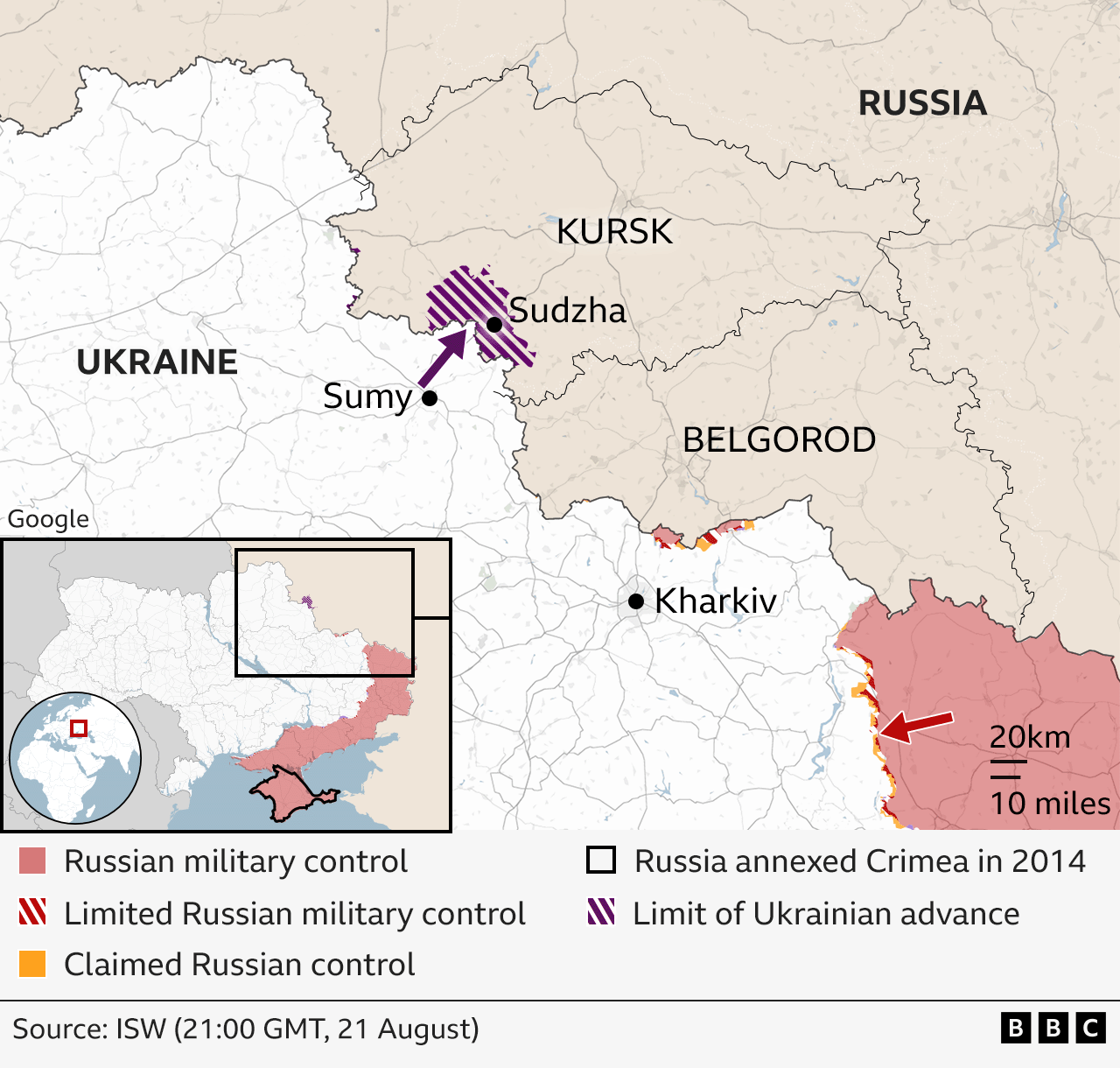

    Territorial Gains as Leverage: By occupying Kursk, Ukraine has secured valuable territory that can serve as a bargaining chip in future negotiations. This strategic advantage is crucial, especially if Ukraine faces reduced military support from the West, particularly in the event of a change in U.S. leadership.

    Pressure on Russia:  The need for Russia to defend its territory in Kursk diverts resources from ongoing offensives in Eastern Ukraine, particularly in Donbas. This could weaken Russia’s overall military effectiveness and complicate its strategy, potentially leading to a more favorable environment for negotiations for Ukraine.

    Significance of Pokrovsk: It is formerly known as Krasnoarmiisk and Grishino, is a city and the administrative center of Pokrovsk Raion in Donetsk Oblast, Ukraine.

    • Key Logistics Hub: Pokrovsk’s capture by Russian forces would significantly enhance their operational capabilities in Eastern Ukraine, potentially leading to further territorial gains.
    • Ukrainian Withdrawal: Ukrainian troops are being ordered to withdraw from Pokrovsk, indicating the pressure they face from advancing Russian forces.

    Tactical and Political Analysis:

    • Operational Secrecy: Ukraine’s successful execution of the incursion was attributed to exceptional operational security, which prevented leaks and allowed for a covert buildup of forces.
    • Russian Response: Russia’s military has reacted slowly, focusing on containing the incursion rather than reversing it, revealing weaknesses in their intelligence and troop readiness.
    • Increase in Bargaining Power: The incursion enhances Ukraine’s negotiating position for potential future discussions, especially with looming uncertainties regarding Western military support.
    • Risks for Ukraine: While the offensive has been a tactical success, it poses risks of overstretching Ukrainian forces and facing significant losses in the overall region if Russia mounts a concentrated counterattack.
    Can India make Putin stop Russia’s War in Ukraine?

    India has been warming to the West in recent years, especially given rising border tensions with China, but, at the same time, India cannot disallow its relationship with Russia considering United States. India’s visit (in July 2024) comes as Ukraine pushes its initiative in Russia’s southwestern region of Kursk.

    Humanitarian Concern: India during the recent talks with Putin in July, secured several concessions and seemingly chided the Russian leader over the war, calling the deaths of children killed in a Russian strike on a hospital “unbearable.”
    Economic interests of India: Bilateral trade with Russia soared last year on the back of its energy purchases, with India in July topping China as the largest importer of Russian oil. PM Modi and Zelensky are expected to discuss issues of bilateral and multilateral cooperation” and sign multiple documents.

    Conclusion: The Kursk operation marks a significant shift in the conflict, with Ukraine demonstrating its capability to operate within Russian territory. Ukrainian offensive stands out and deserves and merits closer scrutiny because no country since Hitler’s Germany has ever invaded any part of Russia.

    However, the long-term viability of this strategy remains uncertain as both sides prepare for ongoing military engagements.
  • Building on favourable change in the 2024 Waqf Bill  

    Why in the News?

    The Waqf Bill 2024, also known as the Waqf (Amendment) Bill, has been referred to a Joint Parliamentary Committee (JPC) after allies of the Narendra Modi government expressed reluctance to pass it immediately, and opposition parties voiced criticism of the Bill.

    Concerns Acknowledged by the JPC

    1. Inclusion of Non-Muslims: The proposal to include non-Muslim members in state waqf boards has faced significant opposition. Critics argue that this undermines the religious autonomy of Muslim institutions, as similar provisions do not exist for Hindu temples or other religious bodies.
    2. Increased Authority of District Collectors: The Bill grants more powers to district collectors, allowing them to arbitrate disputes over waqf properties. This has raised concerns about potential government overreach and the effectiveness of local waqf boards in managing properties.
    3. Impact on Inheritance Rights: The proposed changes could affect the inheritance rights of heirs, particularly women, by allowing the creation of family waqfs that may not fully comply with Islamic inheritance laws. This raises questions about fairness and equity in the distribution of waqf assets.

    The rationale of the family waqt:

    • Family waqf is rooted in the Islamic principle that charity begins at home
    • The Quran encourages spending money on parents and relatives (2:215), and the Prophet Muhammad emphasised the importance of spending on one’s family as a highly rewarded act of charity.


    1. Potential for Misuse: There are fears that the amendments could lead to the misuse of waqf properties, exacerbating existing issues of encroachment and mismanagement, rather than effectively addressing them.

    Newly Proposed Section 3A(2)

    • Key Features: This section stipulates that a Muslim can create a family waqf only concerning one-third of their property if excluding heirs, and it prohibits the complete exclusion of female heirs. However, it allows for the possibility of token benefits being granted to female heirs, which could still result in unequal distributions.
    • Concerns: Critics argue that this provision may not sufficiently protect women’s rights under Islamic inheritance laws, as it could permit arrangements that do not provide equitable benefits to female heirs compared to their male counterparts.

    Implementation of Waqf Boards Worldwide

    • India: India has 30 waqf boards, each responsible for managing waqf properties within their respective states. These boards oversee approximately 900,000 properties, with a focus on ensuring that waqf assets are used for charitable purposes.
    • Middle Eastern Countries: In many Middle Eastern nations, waqf properties are often managed by government-appointed bodies, and the legal framework tends to be more integrated with Islamic law. For instance, in countries like Egypt and Turkey, waqf management is closely tied to state regulations, which can vary significantly from those in India.
    • Colonial impact: The evolution of waqf laws has been influenced by colonial histories, with some countries, such as Egypt and Tunisia, abolishing family waqfs altogether, while others, like Malaysia and Indonesia, have maintained them with varying degrees of regulation.

    Way forward:

    • Strengthen Waqf Governance: Ensure robust oversight and accountability of waqf boards by balancing state involvement with respect for religious autonomy. This includes safeguarding the inheritance rights of heirs, particularly women, and preventing government overreach while maintaining effective management of waqf properties.
    • Promote Inclusivity and Equity: Amend the Waqf Bill to address concerns about the inclusion of non-Muslims in waqf boards and ensure equitable distribution of waqf assets in line with Islamic inheritance laws.
  •  How South China Sea tensions pose a threat to international trade? 

    Why in the News?

    Tensions between China and the Philippines have sharply escalated after a violent clash between their sailors in the South China Sea (SCS) last week. Currently, escalating tensions in the South China Sea are heightening global security concerns over this vital trade route.

    How Important is the South China Sea for World Trade?

    • About a third of global maritime trade passes through the 3.5 million square kilometre South China Sea annually, according to UNCTAD.
    • Around 40% of petroleum products traded globally are delivered via the South China Sea every year.
    • In 2016, an estimated $3.4 trillion to $3.6 trillion worth of goods and commodities travelled the seaway.
    • Tens of thousands of cargo vessels move through the South China Sea every year, carrying around 40% of China’s, one-third of India’s and 20% of Japan’s trade with the rest of the world.
    • The South China Sea is a vital crossroads for both intra-Asian trade as well as for commerce with the rest of the world, especially Europe, the Middle East and Africa.

    What makes the South China Sea such a Controversial Issue?

    • Beijing claims almost all of the South China Sea as its own, angering its neighbours who say China’s territorial ambitions cut into their exclusive economic zones.
    • China ignored a 2016 ruling by an international arbitration court that Beijing has no legal or historical basis for its expansive claims under international law.
    • The Chinese military has staged increasingly aggressive actions in the seaway recently, including clashes with Filipino ships, fueling fears of a full-scale conflict.
    • Vietnam and the Philippines have filed claims with the UN for extended continental shelves in the South China Sea.
    • Concerns that Beijing may use military force to bring Taiwan under its control have further raised tensions in the region.

    Why is the South China Sea Contested?

    • Availability of Natural gas and oil: The South China Sea is estimated to hold about 5.38 trillion cubic meters of proven and probable natural gas and 11 billion barrels of oil reserves.
    • Rare earth elements: The disputed waters also contain large deposits of rare-earth minerals crucial to China’s technological ambitions, including electric vehicle batteries and advanced electronics.
      • Some estimates suggest the Pacific Ocean contains a thousand times more rare-earth minerals than the currently known land reserves, more than half of which are controlled by China.

    Biggest Chokepoint in the South China Sea

    • The Malacca Strait, which lies between Malaysia, Indonesia and Singapore, is considered the biggest chokepoint in the South China Sea.
    • Last year, 23.7 million barrels of oil and petroleum products were moved through the strait per day, 13% higher than through the Strait of Hormuz.
    • The Malacca Strait is just 64 kilometers wide at its narrowest point and is already vulnerable to congestion and collisions.
    • Experts predict that if China invades Taiwan, the U.S. and its allies could blockade the Malacca Strait, limiting China’s access to oil and exports

    What should India do? (Way forward)

    • Enhance Strategic Partnerships: India should strengthen its maritime collaborations with key regional players like ASEAN nations, Japan, and Australia while deepening its involvement in forums such as the Quad to promote a rules-based order in the Indo-Pacific and ensure freedom of navigation in the South China Sea.
    • Bolster Naval Capabilities: India should continue to modernize and expand its naval presence in the Indo-Pacific, focusing on securing critical sea lanes and chokepoints like the Malacca Strait to safeguard its trade routes and energy supplies in the event of escalating tensions.

    Mains PYQ:

    Q South China Sea has assumed great geopolitical significance in the present context. Comment.(2016)

  • Dealing with Death at Work    

    Why in the News?

    On August 21, 2024, a deadly explosion at the Escientia plant in Atchutapuram SEZ killed 17 workers and injured over 50, triggered by a solvent leak involving MTBE. The incident, part of a troubling safety trend, has prompted a government inquiry and calls for stricter safety regulations, particularly due to the exemption from regular inspections for SEZ units.

    • Previous Incidents: This accident is part of a troubling pattern, as it follows another major explosion in the same SEZ last year, and recalls a deadly styrene vapour leak incident in 2020 that killed 12 people.
    • Government Response: The Andhra Pradesh government has ordered a high-level inquiry into the incident. Chief Minister N. Chandrababu Naidu has expressed condolences and promised support for the victims’ families.

    Importance of Safety Audits

    • Preventing Future Accidents: Regular safety audits can help identify potential hazards and ensure compliance with safety regulations, reducing the risk of catastrophic incidents.
    • Accountability: Audits enforce accountability among management to adhere to safety standards, promoting a culture of safety within organizations.
    • Regulatory Compliance: Conducting safety audits helps organizations ensure compliance with local, state, and national safety regulations.
    • Public Trust: Enhancing safety measures and transparency can restore public confidence in industrial operations, particularly in regions prone to industrial accidents.

    Safety Law and Guidelines:

    • Factories Act, 1948: Governs worker safety in factories, mandating safety audits and safety officer appointments. Requires safety committees with management and employee reps to address hazards.
    • IS 14489:1998: Provides guidelines for occupational safety and health audits, focusing on compliance, deviations, and safety management effectiveness across sectors.
    • Occupational Safety, Health and Working Conditions Code, 2020: Consolidates labor laws, mandates regular safety audits for hazardous processes, and grants inspectors authority to enforce compliance.
    • CIMAH Rules: Require industries with hazardous processes to prepare safety reports and conduct regular audits to prevent major accidents, enforced by state safety authorities.
    • Integrated Guidance Framework for Chemicals Safety: Offers guidance for safety audits in handling hazardous chemicals, emphasizing compliance with MSIHC Rules and robust audit practices.

    Note:

    IS 14489:1998 is an Indian Standard titled “Code of Practice on Occupational Safety and Health Audit.” It provides comprehensive guidelines for conducting occupational safety and health audits in various workplaces.

    Way forward: 

    • Implement Regular Safety Audits: Enforce routine safety audits for all industrial units, including SEZs, to identify hazards and ensure compliance with safety standards, thus preventing future incidents and promoting a culture of safety.
    • Strengthen Regulatory Oversight: Close regulatory gaps by applying safety standards uniformly across all sectors, including exempted units, and enhance transparency and accountability in safety practices to restore public trust.
  • A look at ongoing Indian Space Missions

    Why in the News?

    Since Chandrayaan 3’s successful moon landing on August 23, 2023 and its declaration of National Space Day, ISRO has remained highly active with several key missions, despite a quieter phase at Sriharikota.

    Key Missions and Milestones:

    Details Date
    Chandrayaan 3
    • Successful Moon landing by Vikram lander.
    • August 23 declared as India’s National Space Day.
    August 23, 2023
    Aditya L1
    • Solar science mission to study the Sun.
    • Reached Earth-Sun L1 point on January 6, 2024.
    • Studied solar storm in May 2024.
    Launched: September 2, 2023
    L1 Orbit: January 6, 2024
    Gaganyaan TV-D1
    • First abort mission for Gaganyaan program.
    • Tested Crew Escape System (CES); crew module recovered by INS Shakthi.
    October 21, 2023
    XPoSat
    • X-ray Polarimeter Satellite to study radiation polarization.
    • Second such space observatory after NASA’s IPEX.
    Launched: January 1, 2024
    INSAT-3DS
    • Meteorological satellite launched to support GSLV credibility for NISAR mission.
    • Enhances weather forecasting capabilities.
    Launched: February 17, 2024
    RLV-TD (Pushpak)
    • Reusable Launch Vehicle tests (LEX-02 and LEX-03) conducted.
    • Simulated landing conditions for future Orbital Return Flight.
    LEX-02: March 22, 2024
    LEX-03: June 7, 2024
    SSLV
    • Final development flight of Small Satellite Launch Vehicle (SSLV).
    • Successfully placed EOS-08 and SR-0 Demosat in orbit.
    August 16, 2024
    ISRO Roadmaps
    • 25-year roadmap until 2047.
    • Plans for crewed lunar missions, sample-return missions, and the Bharatiya Antariksh Station (BAS) by 2035.
    Announced: December 2023
    Next-Generation Launch Vehicle (NGLV)
      • New 3-stage launch vehicle under development to replace GSLV.
    • Powered by semi-cryogenic, liquid, and cryogenic engines.
    • Project report submitted to Union Cabinet.
    Project report submitted: February 2024
    NSIL Missions
    • Agreement with SpaceX for GSAT-20/GSAT-N2 launch.
    • SSLV launch service agreement with an Australian company.
    2024
    Private Space Missions
    • Agnikul Cosmos launched SoRTeD-01, first semi-cryogenic engine vehicle from Indian soil.
    • Skyroot and Dhruva Space progressing with tests and launches.
    2024
    IN-SPACe Initiatives
    • Released ‘Norms, Guidelines, and Procedures for Authorisation of Space Activities’.
    • Granted first satellite broadband license to Eutelsat
    • OneWeb and first ground station service license to Dhruva Space.
    • 100 % Direct FDI policy.
    2024
  • [pib] World Audio Visual & Entertainment Summit (WAVES)

    Why in the News?

    Union Minister of Information and Broadcasting has launched 25 challenges as part of the ‘Create in India Challenge – Season 1’ for the World Audio Visual & Entertainment Summit (WAVES).

    About WAVES

    • It is an international summit organized by the Ministry of Information & Broadcasting, Government of India.
    • The first edition will take place from 20-24 November 2024 in Goa.
    • The summit will be hosted in Goa in collaboration with the State Government of Goa.
    • The Entertainment Society of Goa will act as the Nodal Agency for the event, following an MOU with Ministry of Information & Broadcasting.
    • It is supported by industry partners like the Federation of Indian Chambers of Commerce & Industry (FICCI) and the Confederation of Indian Industry (CII).
    • Purpose:
      • WAVES aims to be a pivotal forum for fostering dialogue, trade collaboration, and innovation within the evolving media and entertainment industry.
      • The summit will showcase India as a hub for innovation and excellence in the media and entertainment sector, attract investments, and position India as a global leader in the entertainment business.

    Location & Collaboration:

    • WAVES is designed to promote sustainable growth in the media and entertainment industry.
    • It will help attract global trade and investment to India, positioning the country as a key player in the global entertainment landscape.
    • The summit will bring together industry leaders, stakeholders, and innovators to explore new opportunities, tackle challenges, and shape the future of the sector.

    PYQ:

    [2014] Though 100 percent FDI is already allowed in non-news media like a trade publication and general entertainment channel, the government is mulling over the proposal for increased FDI in news media for quite some time. What difference would an increase in FDI make? Critically evaluate the pros and cons.

  • In news: Gumti River

    Why in the News?

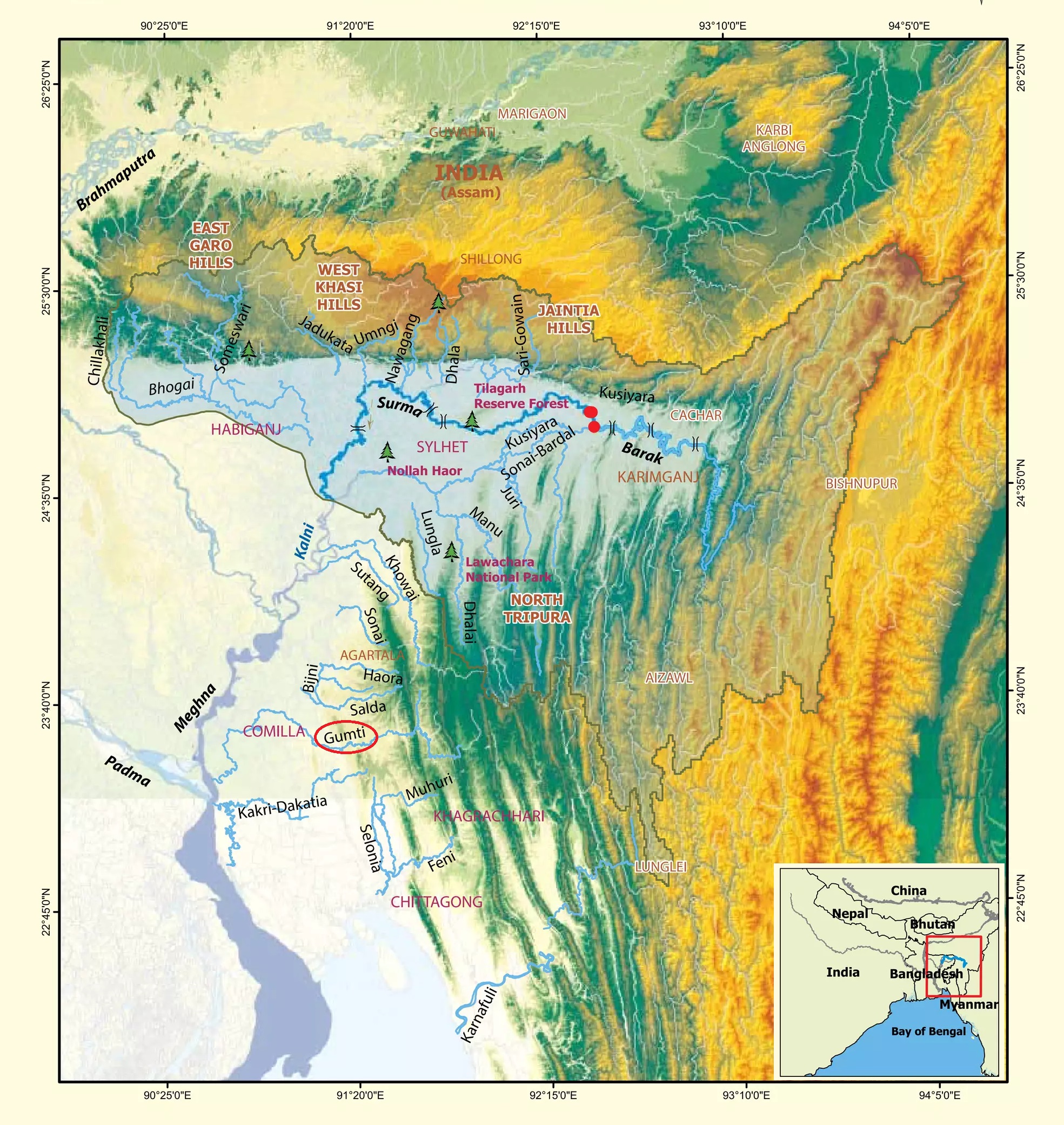
    India has refuted allegations that the recent floods in eastern Bangladesh were caused by the opening of the Dumbur dam over Gumti River in Tripura.

    About Gumti River

    Details
    Origin Dumboor Lake, Tripura, India
    Length Approximately 150 kilometers
    Course
    • Flows southward through Tripura, India, and then into Bangladesh;
    • Joins the Meghna River.
    Tributaries
    • Left: Raima, Manu
    • Right: Deo, Khowai
    Terrain Hilly terrain in upper course, fertile plains in lower course
    Biodiversity Supports diverse flora and fauna
    Projects Installed
    • Gumti Hydroelectric Project: Located near Dumbur; Generates hydroelectric power in Tripura; Bangladesh also receives 40 MW.
    • Gumti Irrigation Project: Supports irrigation for agriculture in Tripura, India


    PYQ:

    [2014] Consider the following rivers:

    1. Barak
    2. Lohit
    3. Subansiri

    Which of the above flows / flow through Arunachal Pradesh?

    (a) 1 only

    (b) 2 and 3 only

    (c) 1 and 3 only

    (d) 1, 2 and 3

  • Why has Malaysia tweaked its ‘Orangutan Diplomacy’?

    Why in the News?

    Malaysia, after initially introducing its version of soft power called “Orangutan Diplomacy” following China’s successful “panda diplomacy,” has now reversed its decision.

    What is Orangutan Diplomacy?

    • It is a Malaysian strategy that seeks to use orangutan conservation as a tool of soft power, inspired by China’s “panda diplomacy.”
    • It had first announced plans to gift orangutans (IUCN Status: Critically Endangered) to palm oil-buying countries.
    • It engages other countries in conservation efforts, focusing on symbolic adoptions rather than sending animals abroad.
    • Reasons behind:
      • Palm Oil Industry Criticism: Malaysia faces criticism for deforestation due to palm oil plantations, threatening orangutans.
      • Enhance Image: It aims to counter negative perceptions and showcase commitment to sustainability and position Malaysia as a leader in wildlife protection.
      • Global Cooperation: It seeks to strengthen ties with major palm oil importers like China, India, and the EU through conservation partnerships.

    Criticisms:

    • Habitat Concerns: Critics argue real conservation requires protecting habitats, not just symbolic actions.
    • Comparisons to Panda Diplomacy: Malaysia’s effort lacks the infrastructure and commitment seen in China’s panda conservation.

    PYQ:

    [2021] With reference to ‘palm oil’, consider the following statements :​

    1. The palm oil tree is native to Southeast Asia.​

    2. The palm oil is a raw material for some industries producing lipstick and perfumes.​

    3. The palm oil can be used to produce biodiesel.​

    Which of the statements given above are correct?​

    (a) 1 and 2 only

    (b) 2 and 3 only

    (c) 1 and 3 only

    (d) 1, 2 and 3

  • [Free UPSC Orientation Session] On Unfair Advantages, Breakthrough Preparation Strategies & Mentorship || Join on 25th August 2024 At 7 PM

    [Free UPSC Orientation Session] On Unfair Advantages, Breakthrough Preparation Strategies & Mentorship || Join on 25th August 2024 At 7 PM

    You don’t need more beginner level advice. What you need is a identifying Unfair Advantages, Strategies, High Momentum Plan and Support System.

    Register for the free orientation session on 25th Aug 2024 at 7:00. Join to know about Yearlong ‘Mentorship’ & Study schedule To Crack UPSC 2025-26 In ‘First Attempt’ With IAS Rank

    UPSC, IAS, Mentorship, Civilsdaily, Webinar

    Register for the free orientation session on 25th August 2024 at 7:00 to take your UPSC-CSE 2025 and 2026 preparation from ‘Zero To Advanced Level’


    Read what Prayas Sir says about Unfair Advantages, Breakthrough Prep Strategies and UPSC Mentorship

    Over 10 Lac aspirants try their luck at UPSC-CSE every year but only handful makes it to the list. Majority of the aspirants prepare in an ‘unconscious mode‘. Meaning they are just dragging themselves through the daily grunt of this prep without realising it is not going anywhere or they have no advantages over others. This is an important question because in the end the seats are limited and unless you can show (via exam process) that you are more deserving than others, its a lost cause and massive waste of your prime career years. I want you to join me this Sunday, 25th Aug 2024 at 7PM and deep dive into these three fundamental questions –

    Question 1 – What are the unfair advantages I have over others in this cut-throat All India Level Competitive exam where seat are always limited?

    Question 2 – What is my prep strategy and how is it better and different from others? Ask Do I even have a prep strategy?

    Question 3 – Do I understand the importance of feedback and mentorship and how it can take me to advance level of prep in just few months?

    Join me on 25th Aug 2024 at 7PM to get these answers and find clarity and focus in your UPSC preparation because if there is any institute that can answer these questions with original and rigorous thinking which is also deeply effective, then that’s Civilsdaily.

    UPSC, IAS, Mentorship, Civilsdaily, Webinar

    Led by a team of experienced and rigorously trained (for the latest UPSC requirements and pattern) Faculties and Mentors, Civilsdaily is the first and only platform to introduce deeply researched UPSC-CSE content and programs led by real-time 1:1 Mentoring. 

    As a UPSC aspirant, you live in a world populated with infinite sources churning out countless content themes endlessly, adding only short-term value to your preparation, if at all. Giving you false hope that your preparation is moving forward. All this is in the name of FREE preparation content. We chose not to play that game.

    Instead, we create only limited content themes and programs every week. But content and program that is original rigorously researched for UPSC requirements by trained faculties and led by Mentors. Just what is actually required to qualify CSE, it’s something we continue to do. 

    At Civilsdaily, we treat Mentorship as a specialization. Not every Mains or interview candidate can be a mentor. Most such mentors will suggest cosmetic changes and will only help you evolve slowly. It is easy to find comfort in sentences like ‘every topper is different’ and’ they have their own path’. Finding what’s different about you and then figuring out your own path is why Mentorship is essential.

    We walk the talk by helping you craft your own way of preparation. A method that enhances your probability of qualifying UPSC-CSE in a single attempt. We give you that near-perfect certainty. Delivering this consistently to hundreds of aspirants (now rankers) in the past was challenging. We still stick to it and keep getting better at it with each passing year. 

    At CD, we understand the science and the art of everything UPSC. If you have a problem, we will sit with you and find a solution. If that doesn’t work, then we try solution 2. Eventually, we will make sure you end up making progress. What’s the point of any content, program, or mentorship without progress? This is precisely why aspirants trust they have the best shot at clearing the exam with Civilsdaily. 

    We invest a significant amount of time, effort, and energy into creating lectures, notes, and tests, understanding your needs as an aspirant. We take this responsibility seriously because, ultimately, your future depends on it.

    The heart of the Civilsdaily platform is the Yearlong Mentorship Program. For years, aspirants have enrolled here because they couldn’t find such depth and passion towards quality content and Mentorship anywhere. Their search inevitably ends at Civilsdaily. Enrollment in these programs and Mentorship also makes us accountable to aspirants for the value they get. 

    In the past few years, we’ve worked quietly in the background with hundreds of aspirants; many now serve as IAS, IPS, IFS and more. We are very proud of what we’ve achieved.

    UPSC, IAS, Mentorship, Civilsdaily, Webinar

    Join me for a Zoom session on 25th August 2024 at 7:00 p.m. This session is a must-attend for you If you are attempting UPSC for the first time in 2025 or 2026 or have attempted earlier and now preparing for next year, then it is going to be a valuable session for you too.

    In the session, we will discuss how mentorship works. Why Mentorship is a must when you attempting for the first time.

    We will deal with all the aspects for a comprehensive UPSC Preparation. We’ll talk about starting with the basics, and move to advanced level.

    See you in orientation session”

    Register for orientation session for UPSC 2025 and 2026 prep


    In this masterclass, you will get:

    1. A 45-minute deep dive on how to plan your 2025 UPSC strategy from the start to the end.
    2. How do first-attempt IAS Rankers get the most out of their one year prep?
    3. Insider tips that only the top IAS and IPS rankers know and apply to get rank.

    By the end, you’ll have razor-sharp clarity and a clear path to crack UPSC 2025 and 2026 with confidence and near-perfect certainty. 

    Join UPSC orientation session on 25th August 2024, 7:00 pm

    (Don’t wait—the next webinar won’t be until Septemeber 24)


    These masterclasses are packed with value. They are conducted in private with a closed community. We rarely open these webinars for everyone for free. This time we are keeping it for 300 seats only.

    Ready to attend the UPSC Webinar?


    Not sure yet?

    We recommend you register here. It takes less than 10 seconds to register.

    • No spam! Once in a while, we’ll only send you high-quality exam-related content. 
    • We will inform you about the upcoming Masterclasses that might benefit you.
    • You can demand one free mentorship call from verified Civilsdaily mentors. 
    • You can always choose to unsubscribe. 
  • Centre directs UPSC to withdraw ad for lateral entry into bureaucracy: Why has the policy been criticized?

    Why in the News?

    The Central government asked the Union Public Service Commission (UPSC) on Tuesday, August 20, to cancel an advertisement from three days earlier that called for applications to fill senior government positions through lateral recruitment.

    What is ‘Lateral Entry’ into the Bureaucracy?

    • Definition: Lateral entry refers to the recruitment of personnel from outside the traditional civil services into senior and middle-level positions in the central government. These entrants come from various backgrounds, including state/UT governments, public sector undertakings (PSUs), statutory organizations, research institutes, universities, and the private sector.
    • Objective: The idea is to bring in individuals with domain expertise and specialized knowledge to enhance the efficiency and effectiveness of governance. These individuals are usually appointed on contracts of three years, which can be extended to a total of five years.

    What are the Positions Open for Lateral Entry?

    • Positions Advertised: Lateral entry initially focused on Joint Secretary-level positions, which are high-ranking roles within a Department. Over time, positions for Director and Deputy Secretary levels were also opened.
    • Roles and Responsibilities:
      • Joint Secretary: Third-highest rank in a Department, responsible for decision-making and administrative head of a wing within the Department.
      • Director/Deputy Secretary: Middle-level officials, performing roles similar to Joint Secretaries in most ministries.

    What was the Union Government’s Logic Behind Introducing Lateral Entries?

    • Rationale: The government introduced lateral recruitment to bring in fresh talent and specialized skills that may not be available within the traditional civil services.
    • NITI Aayog’s Recommendation: The policy was recommended in 2017 by NITI Aayog in its three-year Action Agenda and by the Sectoral Group of Secretaries (SGoS) on Governance.

    How Many People Have Been Appointed via Lateral Recruitment So Far?

    • First Round (2018): The first round attracted 6,077 applications for Joint Secretary-level positions. Nine individuals were eventually selected and appointed in 2019.
    • Subsequent Rounds: Additional rounds of recruitment occurred in 2021 and May 2023. As of August 2024, a total of 63 appointments have been made through lateral entry, with 57 lateral entrants currently holding positions in various Ministries/Departments.

    What is the Criticism of Lateral Entry Recruitment?

    • Lack of Reservations: A significant criticism of lateral recruitment is the absence of quotas for Scheduled Castes (SC), Scheduled Tribes (ST), and Other Backward Classes (OBC).
    • Promotion Concerns: Critics like Mayawati have pointed out that lateral entry deprives lower-level employees in the civil services of promotion opportunities, which would otherwise be available through a merit-based system.

    Way forward: 

    • Incorporate Inclusive Quota Provisions: To address the criticism regarding the absence of reservations, the government could consider introducing a reservation policy for Scheduled Castes (SC), Scheduled Tribes (ST), and Other Backward Classes (OBC) in lateral entry recruitment.
    • Establish a Transparent and Merit-Based Selection Process: To ensure the credibility and effectiveness of lateral recruitment, the government should enhance transparency in the selection process. This could involve clearly defined eligibility criteria, objective assessment methods, and regular monitoring of the performance of lateral entrants.

    Mains PYQ:

    Q Has the Cadre-based Civil Services Organization been the cause of slow in India? Critically examine. (UPSC IAS/2014)

  • Imports weaken Indian pharma

    Why in the News?

    • The government has introduced two import-based initiatives to meet domestic needs, which could potentially dampen the growth of the domestic industry.
    • New medicines are generally under patent protection, preventing Indian companies from producing affordable generics/biosimilars.

    Impact of two initiatives on Domestic Industry:

    • Global Tendering for 120 Medicines: The Department of Expenditure (DoE) allowed the Ministry of Health to buy 120 medicines, including popular anti-diabetes and anti-cancer drugs, through global tenders for government programs. This decision, which specifies certain brands for over 40 of these medicines, could increase the monopoly of foreign companies in India.
    • Customs Duty Removal on Cancer Medicines: The 2024-25 Union Budget proposed removing the 10-12% customs duty on three cancer medicines marketed by AstraZeneca. While intended to reduce prices, this measure is unlikely to significantly lower costs and may instead increase reliance on imports, further disadvantaging domestic producers.

    Status of Indian Pharma

    • India is a leading manufacturer of vaccines, accounting for 60% of global production.
    • India supplies 70% of vaccines used by the WHO.
    • India is a major exporter of generic drugs, accounting for 20% of global exports.
    • The industry is expected to grow to over $130 billion by 2030.

    What are Biosimilar guidelines?

    • Biosimilar guidelines in India are regulatory frameworks established by the Central Drugs Standard Control Organization (CDSCO) and the Department of Biotechnology (DBT) to govern the development, approval, and marketing of biosimilars.
    • Biosimilars are biologic medical products that are highly similar to an already approved original biologic (known as the reference product), with no clinically meaningful differences in terms of safety, purity, and potency.

    Status Biosimilars: 

    • Significant Market Size: The biosimilar market in India is valued at approximately $2.2 billion, and it is projected to reach $40 billion by 2030. This growth is driven by the expiration of patents for several key biologics, which opens the door for biosimilar development.
    • Product Approvals: As of now, over 70 biosimilars have been approved in India, covering a range of therapeutic areas, including oncology, diabetes, and autoimmune diseases. Notable examples include:
      • Adalimumab (for rheumatoid arthritis)
      • Trastuzumab (for breast cancer)
      • Filgrastim (for neutropenia)
      • Insulin glargine (for diabetes)

    Outdated Biosimilar Guidelines in India:

    • Obsolete and Resource-Intensive:
      • India’s biosimilar guidelines are outdated, requiring mandatory animal studies, which are no longer necessary in developed countries like the U.S. and EU with stringent regulatory standards.
      • The guidelines also mandate clinical trials, while WHO and U.K. guidelines treat clinical trials as an exception rather than a rule.
    • Barrier for Domestic Producers:
      • The stringent requirements for animal studies and mandatory clinical trials create significant barriers for Indian producers, making it difficult for them to compete with their global counterparts.
    • Impact on Patient Access:
      • According to the International Generic and Biosimilar Medicines Association, eliminating these duplicative requirements could lead to significant savings in time and resources, ultimately improving patient access to affordable biosimilars.

    Way forward: 

    • Update Regulatory Guidelines: Modernize India’s biosimilar guidelines by removing unnecessary requirements like mandatory animal studies and clinical trials, aligning them with global standards to reduce barriers for domestic producers.
    • Support Local Production: Utilize provisions in the Patents Act to promote domestic manufacturing of affordable medicines, reducing reliance on imports and strengthening the local pharmaceutical industry.
  • What is Tera Hertz Spectrum?

    Why in the News?

    The Telecom Regulatory Authority of India (TRAI) released its recommendations on the Tera Hertz Spectrum.

    About Tera Hertz (THz) Spectrum

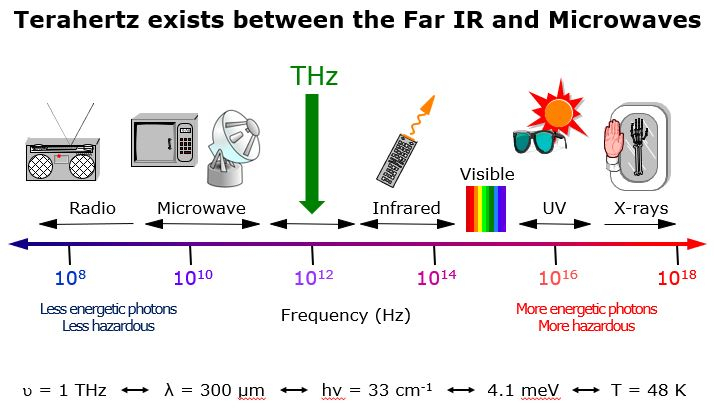
    • The THz Spectrum refers to a range of electromagnetic waves with frequencies between 100 GHz (gigahertz) and 10 THz (terahertz). 
      • This spectrum lies between microwaves and infrared light.
      • It is known as the “THz gap” because it has been less explored compared to other parts of the electromagnetic spectrum.
    • Key Features:
      • Unique Properties: THz waves can pass through many materials like clothing, paper, and wood but are absorbed by water and metals.
      • Applications: Used for advanced technologies like imaging, communications, and spectroscopy.
      • Potential Uses: Security scanning, medical imaging, and high-speed wireless communication.

    Impact of recent recommendation:

    • THEA will encourage innovation in Tera Hertz technologies, supporting the ‘Make in India’ initiative.
    • The opening of specific frequency bands will boost the development and deployment of next-generation wireless technologies and automotive safety systems in India.

    PYQ:

    [2020] With reference to Visible Light Communication (VLC) technology, which of the following statements are correct?

    1. VLC uses electromagnetic spectrum wavelengths 375 to 780 nm.

    2. VLC is known as long-range optical wireless communication.

    3. VLC can transmit large amounts of data faster than Bluetooth.

    4. VLC has no electromagnetic interference.

    Select the correct answer using the code given below:

    (a) 1, 2 and 3 only

    (b) 1, 2 and 4 only

    (c) 1, 3 and 4 only

    (d) 2, 3 and 4 only

  • Global Finance Central Banker Report Cards, 2024

    Why in the News?

    The Reserve Bank of India (RBI) Governor has been awarded an “A+” rating for the second consecutive year in the Global Finance Central Banker Report Cards 2024.

    About the Global Finance Central Banker Report Cards

    • The Central Banker Report Cards are published annually by Global Finance, a magazine that has been grading central bank governors since 1994.
    • The report grades the central bank governors of nearly 100 countries, territories, and districts, including major institutions like the European Union, the Eastern Caribbean Central Bank, the Bank of Central African States, and the Central Bank of West African States.
    • Grading Scale:
      • The ratings range from “A+” for excellent performance to “F” for outright failure.
      • The grades assess success in key areas such as inflation control, economic growth, currency stability, and interest rate management.

    Significance 

    • This recognition highlights his exceptional performance in managing India’s monetary policy, particularly in areas such as inflation control, economic growth, currency stability, and interest rate management.

    PYQ:

    [2016] ‘Global Financial Stability Report’ is released by which organisation?

    (a) European Central Bank

    (b) International Monetary Fund

    (c) International Bank for Reconstruction and Development

    (d) Organisation for Economic Co-operation and Development

  • Shiveluch Volcano

    Why in the News?

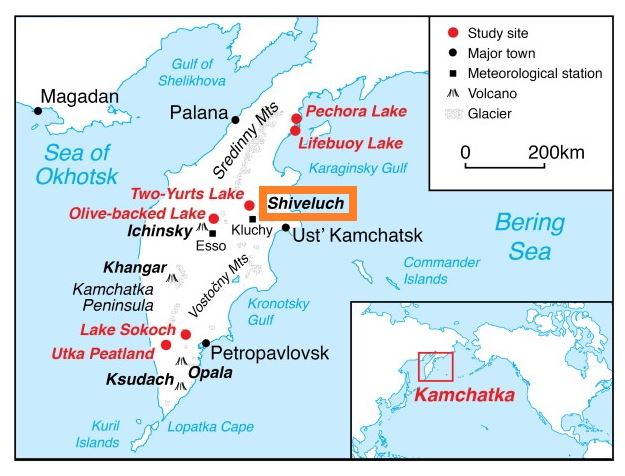
    The Shiveluch Volcano in Russia erupted following a 7.0 magnitude earthquake off the country’s eastern coast.

    About Shiveluch Volcano

    Details
    Location
    • Kamchatka Peninsula, Russia
    • Approximately 56°39′N 161°21′E
    • Stratovolcano (Composite Volcano)
    • Approximately 3,283 meters (10,771 feet)
    Geological Features Large actively growing lava dome, andesitic to dacitic lava
    Eruption History Frequent eruptions; significant activity in 2005, 2010, and ongoing in 2023-2024
    Hazards Ash plumes, pyroclastic flows, lahars
    Kamchatka Peninsula
    • Lies in far eastern Russia, between the Sea of Okhotsk on the west and the Pacific Ocean and Bering Sea on the east.
    • One of the world’s most concentrated areas of geothermal activity, with about 30 active volcanoes.
    • Approximately 1,200 km long and 480 km across at its widest.
    • Climate: Severe, with prolonged, cold, and snowy winters and wet, cool summers.
    • Regional Capital: Petropavlovsk-Kamchatsky.
    • Kuril Island chain runs from the southern tip of the peninsula to near Japan’s northern Hokkaido Island.
  • WHO investigating new Polio strain in Meghalaya

    Why in the News?

    The World Health Organization (WHO) is investigating a suspected new strain of polio in a two-year-old child from Tikrikilla, Meghalaya.

    What is Vaccine-Derived Polio?

    • The Oral Polio Vaccine (OPV) contains a weakened form of the poliovirus that activates an immune response in the body.
    • The vaccine-virus is excreted after vaccination and can circulate in the environment.
    • In rare cases, if the population is under-immunized, the excreted virus can mutate over time and revert to a form capable of causing paralysis.
    • This mutated virus is known as circulating vaccine-derived poliovirus (cVDPV).

    About Polio:

    Details
    Nature of Disease Crippling and potentially deadly viral infectious disease affecting the nervous system.
    Types of Poliovirus WPV1 (Wild Poliovirus type 1)
    WPV2 (Wild Poliovirus type 2, eradicated globally)
    WPV3 (Wild Poliovirus type 3, eradicated globally)
    Current Status WPV1 remains in circulation in Afghanistan and Pakistan.
    Transmission Primarily through the faecal-oral route or contaminated water/food.
    Affected Population Largely affects children under 5 years of age.
    Impact Virus multiplies in the intestine, may invade the nervous system, causing paralysis.
    Prevention No Cure: Preventable through immunization.
    Vaccines:
    OPV: Oral Polio Vaccine given at birth, with doses at 6, 10, 14 weeks, and a booster at 16-24 months.
    IPV: Injectable Polio Vaccine given with the 3rd dose of DPT under UIP.
    India’s Status
    • Pulse Polio Immunization Initiative (1995)
    • Declared polio-free by WHO in 2014, with the last wild poliovirus case reported in 2011.


    PYQ:

    [2016] ‘Mission Indradhanush’ launched by the Government of India pertains to:

    (a) immunization of children and pregnant women

    (b) construction of smart cities across the country

    (c) India’s own search for the Earth-like planets in outer space

    (d) New Educational Policy

  • [21st August 2024] India’s Ethanol Blending Target: Progress, Challenges, and Regional Dynamics

    Why in the News? 

    India is on track to achieve its ambitious goal of blending 20% ethanol with petrol by 2025-26. While significant progress has been made in increasing ethanol production, the initiative is not without its challenges. The food versus fuel debate and concerns about fuel efficiency in existing vehicles continue to loom large over the ethanol economy.

    State of Ethanol Production in India

    • Dramatic Increase in Ethanol Blending: Ethanol blending percentage rose from 8% in 2021 to 13-15% in recent years. Significant progress indicates a strong push towards meeting the 20% blending target.
    • Substantial Investment in Production Capacity: The sugar industry has invested approximately ₹40,000 crore to boost ethanol production. This investment is key to increasing the country’s ethanol production capacity.
    • Nearing Production Targets: India is close to achieving its target of producing 1,380 crore litres of ethanol. Production contributions come from both sugarcane-based and grain-based distilleries.
    • Government Roadmap and NITI Aayog Projections: NITI Aayog’s roadmap called for a significant increase in ethanol production, with a focus on grain-based distilleries. By December 2023, nearly all ethanol capacity targets had been achieved. The expansion has primarily relied on sugarcane-based production.

    The Food vs. Fuel Debate & other Concerns

    • Food Security Concerns: The push for ethanol blending has raised alarms about its potential impact on food security. Increased use of food grains, particularly maize, for ethanol production is at the center of the concern.
    • Rising Maize Imports: Recent data shows an increase in maize imports from April to June this year.The rise is driven by higher demand for fuel ethanol and restrictions on using sugarcane products.
    • Price hike Concerns: Despite industry assurances of sufficient food stocks, the diversion of grains for ethanol production could lead to price hikes. Sectors like poultry, livestock feed, and starch production could be negatively affected.India’s maize yield is still below global averages, intensifying concerns about the strain on food supplies.
    • Water Usage Concerns: Expanding sugarcane production to meet ethanol targets has significant environmental implications, especially concerning water usage. Sustaining ethanol production from sugarcane may require an additional 400 billion litres of water.
    • Impact on Agricultural Sustainability: The increased water demand for sugarcane could divert irrigation resources from essential food crops. This diversion raises concerns about the long-term sustainability of agriculture in the region.
    • Competition for limited resources: Government policy supports using maize, surplus rice, and damaged grains for ethanol production. This approach could intensify competition for these resources, potentially impacting food availability.
    • Impact on Vehicle Efficiency: Ethanol has a lower energy content, which can reduce fuel efficiency in vehicles not designed for higher ethanol blends. A NITI Aayog report indicates that ethanol blending could decrease fuel efficiency by an average of 6% in such vehicles.

    The ongoing debate underscores the need to shift towards more sustainable 2G and 3G ethanol technologies. These advanced technologies have less impact on food security compared to 1G ethanol, which relies on food grains and sugarcane.

    Regional Variations in Ethanol Production and Policy

    Ethanol production and its economic impact vary widely across different Indian states, influenced by local economic priorities, agricultural practices, and policy frameworks.

    • Uttar Pradesh: As the largest contributor to India’s ethanol blending program, Uttar Pradesh is fully aligned with the central government’s ethanol mission. The state has reserved 25% of its ethanol production for Extra Neutral Alcohol (ENA), used in liquor production. However, the higher value of ethanol made from molasses, especially B-heavy molasses, has made fuel ethanol more attractive to distilleries.
    • Tamil Nadu: In Tamil Nadu, the lucrative liquor market dominates the ethanol economy, and fuel ethanol production has not gained as much traction. The state government controls the liquor market, and the high water requirements for sugarcane cultivation limit the expansion of ethanol production from this crop. There is also resistance to using rice for ethanol production due to its association with liquor.
    • Maharashtra: Maharashtra presents a different scenario, where ENA production for industrial uses, such as manufacturing and medicine, is more profitable than ethanol blending. However, there is potential for ethanol production to become more attractive if steady contracts for blending can be secured, reducing the need for additional processing after ensuring purity.

    Conclusion

    India’s ethanol blending program has made significant progress, but the challenges of balancing food security, agricultural sustainability, and vehicle efficiency must be carefully managed to ensure the initiative’s long-term success. The varying approaches and impacts across different states underscore the need for a balanced and inclusive strategy to achieve the national ethanol blending targets.

  • India-Malaysia Comprehensive Strategic Partnership

    Why in the News?

    India and Malaysia have elevated their relationship to a ‘Comprehensive Strategic Partnership’ following talks between Prime Ministers Modi and Ibrahim, aiming to overcome past tensions.

    What is a Comprehensive Strategic Partnership (CSP)?

    • The Comprehensive Strategic Partnership (CSP) represents a deepened level of engagement between two nations, encompassing a broad spectrum of areas such as political, economic, cultural, and security cooperation.
    • This partnership reflects a commitment to working closely across these domains to achieve mutual goals.

    Upgradation of ties between India and Malaysia:

    • The recent upgrade includes agreements and MoUs in workers’ mobility, digital technology, culture, tourism, sports, and education.
    • India has also agreed to support Malaysia’s bid to join the BRICS grouping, which the Malaysian Prime Minister has been advocating for.
    • The leaders discussed new areas of cooperation, including semiconductors, fintech, defence industry, artificial intelligence (AI), and quantum technologies.
    • A special allocation of 200,000 metric tonnes of white rice was granted by India to Malaysia in response to Malaysia’s request, reflecting India’s role in Malaysia’s food security.

    Bilateral Friction between India and Malaysia:

    • Citizenship Amendment Act (CAA): During the Kuala Lumpur Summit in December 2019, Malaysian PM Mahathir Mohamad criticized India’s CAA, which provides a pathway to citizenship for non-Muslim refugees from Afghanistan, Bangladesh, and Pakistan.
    • Reorganisation of Jammu and Kashmir: Mahathir Mohamad also voiced strong criticism regarding India’s reorganization of Jammu and Kashmir, particularly after the revocation of its special status in August 2019.
    • Extradition of Zakir Naik: India’s repeated requests for the extradition of Zakir Naik, wanted on charges of hate speech and money laundering, have been denied by Malaysia, citing insufficient evidence.
    • COVID-19 Pandemic: During the pandemic, hundreds of Malaysians were detained in India due to the lockdown, further adding to tensions.

    Way forward: 

    • Enhance Diplomatic Engagement: Continue regular high-level dialogues to resolve sensitive issues and foster mutual trust, focusing on joint working groups for contentious matters like extradition and human rights.
    • Expand Strategic and Economic Collaboration: Prioritize joint ventures and research in emerging sectors such as fintech, AI, and quantum technologies to strengthen economic ties and minimize political friction.
  • A ground plan for sustainable mass employment 

    Why in the News?

    The ambitious ₹2 lakh crore employment package aims to create 4.1 crore jobs, but evidence shows low wages and short-term skill programs hinder long-term sustainability.

    Low wages and short-term skill programs hinder long-term sustainability:

    • Low Wages Lead to Economic Insecurity: Low wages create economic insecurity for workers, making it difficult for them to meet basic needs. For instance, in the garment industry, there is a 48.5% gap between minimum wages and living wages in major garment-producing countries.
    • Short-Term Skill Programs Fail to Enhance Employability: Many short-term skill programs do not provide the depth of training needed for long-term employability. In India, for example, 75% of technical graduates and 90% of other graduates are considered unemployable, primarily due to a lack of practical skills and experience that employers seek.
    • Stagnation of Workforce Productivity: When workers are paid low wages, there is little incentive for them to enhance their skills or productivity. This stagnation is detrimental to both individual career growth and overall economic development.
    • Lack of Investment in Long-Term Skill Development: Low wages often correlate with limited investment in employee training and development.This is evident in the fact that only 15% of those trained under the Pradhan Mantri Kaushal Vikas Yojana (PMKVY) found jobs, indicating that short-term training initiatives are not effectively translating into sustainable employment outcomes.
    • Perpetuation of Poverty and Inequality: The combination of low wages and inadequate skill development contributes to the perpetuation of poverty and inequality. With 42% of the global workforce in vulnerable employment.

    12-point policy initiatives for sustainable mass employment:

    • Identify the skill need: Begin from below through decentralized community action to identify skilling needs. Create a register of those wanting employment/self-employment and a plan for every youth in partnership with professionals at the cluster level.
    • Initiative at the local level: Converge initiatives for education, health, skills, nutrition, livelihoods, and employment at the local government level with women’s collectives to ensure community accountability and effective outcomes.
    • Vocational programmes: Introduce need-based vocational courses/certificate programmes alongside undergraduate programmes in every college to improve employability.
    • Healthcare at international benchmark: Standardize nursing and allied health-care professional courses according to international benchmarks to meet the demand for skilled professionals.
    • Women security: Create community cadres of caregivers to run crèches universally so that women can work without fear.
    • Invest in skill development: Invest in ITIs, and polytechnics as hubs in skill development for feeder schools with a focus on States/districts with the least institutional structure for vocational education.
    • Startup skills in high school: Introduce enterprise and start-up skills through professionals in high schools to impart finishing skills to students.
    • Apprenticeship program in Industry: Have a co-sharing model of apprenticeships (combine practical training in a job with study) with the industry on scale to ensure the industry has a stake in the apprenticeship program.
    • Absorption of youth at the workplace: Apprenticeships on the scale can facilitate the absorption of youth in the workplace, with the government’s condition for employer subsidies being wages of dignity on successful completion of the apprenticeship.
    • Capital oan for women: Streamline working capital loans for women-led enterprises/first-generation enterprises to enable them to go to scale.
    • Skill accreditation programme: Start a universal skill accreditation programme for skill-providing institutions, with candidates co-sponsored by the state and employers.
    • Majority of fund in water scares block: Use 70% funds under MGNREGA in 2,500 water-scarce blocks and blocks with high deprivation, with a thrust on the poorest 20 families and a focus on skills for higher productivity.

    Way forward: 

    • Strengthen Industry-Academia Linkages: Enhance collaboration between educational institutions, industry, and vocational training centers to align curricula with industry needs, ensuring employability through internships, apprenticeships, and job placements.
    • Focus on Inclusive Skill Development: Prioritize investment in underdeveloped regions and marginalized groups by expanding access to quality education, vocational training, and entrepreneurship opportunities, especially for women and youth, to bridge the skill gap and promote economic inclusion.
  • Can blood tests for cancer save more lives? 

    Why in the News?

    A multi-cancer early detection test can identify circulating tumour DNA or circulating tumour cells at an early stage, allowing for more effective treatment.

    Status of Cancer:

    • Cancer’s Impact in India: Cancer accounts for 18% of deaths from noncommunicable diseases in India, making it the second leading cause of mortality. In 2022, there were approximately 1.46 million new cancer cases, with projections indicating a 12% increase by 2025.
    • Common Cancers as per GLOBOCAN: Among women, the most prevalent cancers are breast, cervical, ovarian, and colorectal.
      • For men, lung, esophageal, colorectal, and stomach cancers are the most common.
    • Survival Rates and Detection: Late detection of cancer significantly reduces survival rates and increases treatment costs. In contrast, early detection through screening improves treatment outcomes and quality of life. 
      • Countries are aligning with the United Nations’ Sustainable Development Goals 3 to enhance early cancer detection.
    • Limited screening: As per NHFS, screening is limited in India which is primarily to cervical, breast, and oral cancers, with only 0.2-2% of the population having undergone any form of screening.

    What is a Multi-Cancer Early Detection (MCED) Test?

    • A multi-cancer early detection (MCED) test is a new type of blood test that can screen for multiple types of cancer simultaneously. These tests look for cancer signals, such as circulating tumor DNA (ctDNA) and circulating tumor cells (CTCs), released by cancerous cells into the bloodstream at early stages.

    Role of Blood-based tests in the detection of cancer:

    • Early Detection of Multiple Cancer Types: Blood tests, particularly multi-cancer early detection (MCED) tests, can identify cancer signals from over 50 different types of cancer, including those that currently lack effective screening methods.
      • For example, a recent study demonstrated that a new blood test could detect 93% of stage 1 cancers in men and 84% in women by analyzing protein biomarkers.
    • Non-Invasive and Accessible Screening: Blood tests are non-invasive and can be performed with a simple blood draw, making them more accessible compared to traditional screening methods like colonoscopies or imaging tests. This ease of use encourages more individuals to participate in screening.

    Limitation of blood test in the detection of Cancer:

    • Lack of Proven Mortality Benefit: It is still unclear whether detecting cancers earlier with MCED tests will actually reduce cancer deaths. More research is needed to determine if earlier treatment based on MCED results improves outcomes compared to waiting for symptoms to develop.
    • Regulatory Challenges: MCED tests are not yet approved by regulatory bodies like the U.S. FDA or India’s CDSCO because of not undergone rigorous premarket review to prove they benefit patients.
    • False Positives: One significant risk is false positive results, where the test indicates cancer when none is present. When multiple tests are used for screening, the false positive rate can be as high as 50%.

    Way forward:

    • Strengthening Screening Infrastructure and Research: India should invest in expanding its cancer screening infrastructure, ensuring that more types of cancer are included beyond cervical, breast, and oral cancers.
    • Public Awareness and Regulatory Preparedness: Increasing public awareness about the importance of early cancer detection is crucial. At the same time, regulatory bodies like CDSCO should establish clear guidelines and frameworks for the evaluation, approval, and monitoring of MCED tests.
  • Jupiter Icy Moons Explorer (JUICE) Mission

    Why in the News?

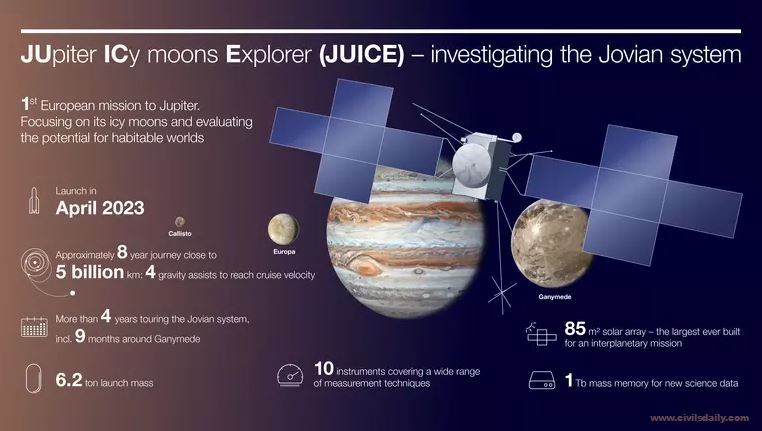
    European scientists are preparing to execute a first-of-its-kind ‘Double Slingshot’ orbital maneuver to guide the JUICE probe towards Jupiter using a double slingshot technique.

    About JUICE Mission:

    Details
    Launch
    • By European Space Agency (ESA) on April 14, 2023, Ariane 5 rocket
    • To study Jupiter’s Moons
    Aim Investigating the potential for life on Jupiter’s moons and understanding the Jovian system
    Mission Duration
    • Approximately 12 years
    • Expected arrival at Jupiter in July 2031
    Primary Objectives
    • Ganymede Exploration: Study its surface, subsurface, magnetic field, and potential subsurface ocean to assess habitability.
    • Europa Exploration: Investigate the surface, subsurface, and potential ocean beneath the ice; analyze interactions with Jupiter’s magnetosphere to assess its potential to support life.
    • Callisto Exploration: Study its surface, geological diversity, and possible subsurface ocean; understand its history of impacts and tectonic activity.
    • Jupiter System Exploration: Analyze Jupiter’s atmosphere, magnetosphere, and their interactions with the moons; study the dynamics of the magnetosphere and its influence on the surrounding environment.
    Key Instruments
    • JANUS: Jovis, Amorum ac Natorum Undique Scrutator (Optical Camera)
    • RIME: Radar for Icy Moons Exploration
    • J-MAG: JUICE Magnetometer
    • MAJIS: Moons and Jupiter Imaging Spectrometer
    Significance
    • First interplanetary spacecraft to the outer Solar System planets not launched by the United States
    • First mission set to orbit a moon other than Earth’s Moon

    What is the Double Slingshot Maneuver?

    • The JUICE probe will first use the moon’s gravity to set itself on the correct trajectory towards Earth.
    • Immediately after, it will use Earth’s gravity to slow down and redirect towards Venus and, eventually, Jupiter.

    Significance of the Gravity Assist

    • This technique, used for decades in space exploration, involves using a planet or moon’s gravity to alter the speed or direction of a spacecraft.
    • It is unique as it involves back-to-back gravity assists using both the moon and Earth’s gravity, which has never been attempted before.

    PYQ:

    [2020] The experiment will employ a trio of spacecraft flying in formation in the shape of an equilateral triangle that has sides one million kilometres long, with lasers shining between the craft.” The experiment in question refers to

    (a) Voyager-2

    (b) New Horizons

    (c) LISA Pathfinder

    (d) Evolved LISA

More posts