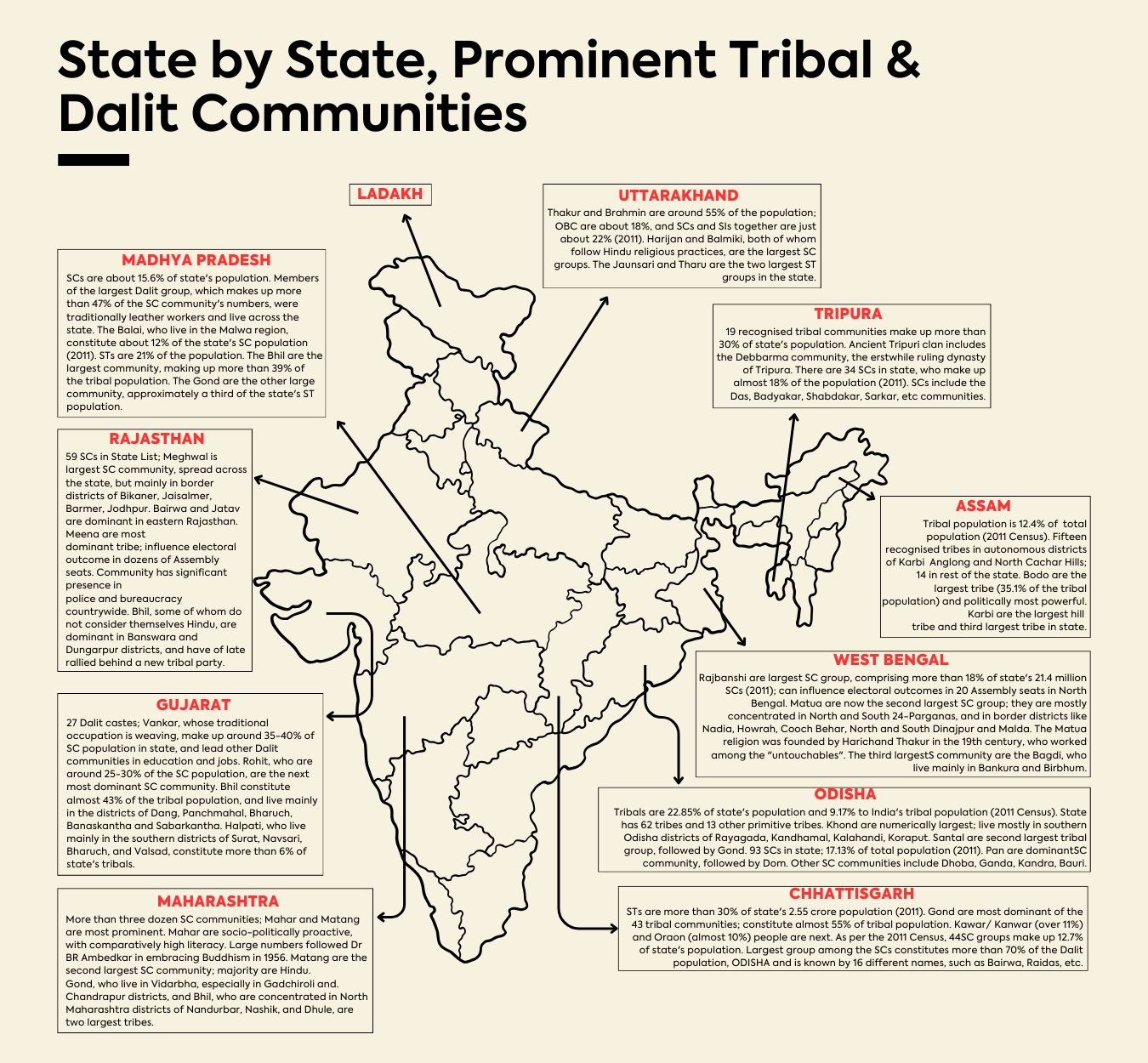
A seven-judge Bench of the Supreme Court has ruled that States can subdivide Scheduled Castes (SC) into groups to allocate sub-quotas within the Dalit reservation.
Will the Weaker Among Dalits Get Representation from Further Sub-Classification?
The Supreme Court’s ruling allows states to create sub-classifications within the SC category, which is expected to enable states to earmark sub-quotas for the most marginalized sections of Dalits.
This decision aims to ensure better representation for weaker groups within the SC community who have historically been underrepresented and have not benefitted adequately from existing reservations.
The ruling emphasizes that treating SC communities as a homogeneous group undermines the objective of reservations, as there are significant differences in advancement and discrimination among various SC communities.
Why Did the Supreme Court Overrule a Five-Judge Decision of 2004?
The 2004 judgment in E.V. Chinnaiah vs. State of Andhra Pradesh held that SCs constitute a single homogeneous class and that any sub-classification was unconstitutional, as it violated Article 341, which empowers the President to notify the list of SCs.
The recent seven-judge Bench, led by Chief Justice D.Y. Chandrachud, found this ruling to be incorrect, stating that SC communities are not homogeneous and that there are inter se differences among them.
The majority opinion argued that the act of notifying a list of SCs does not create a uniform class, and sub-classification is permissible based on “intelligible differentia” and should have a rational nexus to the purpose of doing it.
What are the views on Creamy layer exclusion?
The concept of the creamy layer, which excludes more advanced members of a community from benefiting from affirmative action, is currently applicable only to Other Backward Classes (OBCs) and has not been extended to Dalit communities.
Justice B.R. Gavai, in a separate opinion, emphasized the need to identify and exclude the more advanced among SCs from affirmative action benefits, arguing that treating all members equally disregards the principle of equality.
The opinions regarding creamy layer exclusion do not constitute a directive for the government to implement this concept for SCs, as the issue was not directly addressed in the current case.
Do the Judges’ Opinions on this Constitute a Direction to the Government?
The judges’ opinions on sub-classification and creamy layer exclusion provide a legal framework for states to follow but do not serve as a direct mandate for the government to implement changes.
The ruling establishes that states have the authority to sub-classify SCs for the purpose of extending reservation benefits, but the specific implementation details and parameters for creamy layer exclusion remain open for further consideration and do not compel immediate action from the government.
Way forward:
Implementation Framework for Sub-Classification: The government should establish a comprehensive framework that outlines the criteria and process for sub-classification of SCs.
Addressing Creamy Layer Exclusion: The government should consider developing specific criteria for identifying the “creamy layer” within SCs, similar to the criteria used for OBCs.
New research has documented previously unseen shapes at the base of a West Antarctic ice shelf.
Base of a West Antarctic Ice Shelf
Basal Melt Dynamics: The base of West Antarctic ice shelves, including the Dotson Ice Shelf, experiences basal melt driven by warm ocean water. This process leads to thinning and hollows out cavities beneath the ice, reducing structural support for the grounded ice above.
Autonomous Underwater Vehicle (AUV) Research: Recent research utilized an AUV equipped with multibeam sonar to explore the topography of the basal melt cavity beneath the Dotson Ice Shelf, revealing previously unquantified melt mechanisms and unique formations at the ice shelf’s base.
Warm salty water, which is transported through ocean currents, significantly contributes to the melting of ice shelves. This bottom-up melting is critical to understanding the dynamics of ice loss and its implications for global sea level rise.
The AUV discovered tear-shaped indents and other unique shapes at the base of the ice shelf, indicating diverse melting patterns influenced by the flow of warm water.
About the Dotson Ice Shelf (DIS) in Amundsen Sea
Dotson Ice Shelf is part of the West Antarctic ice sheet and is located next to Thwaites Glacier in the Amundsen Sea.
Thwaites Glacier is considered to have a potentially large impact on future sea level rise due to its size and location.
Reasons behind ocean warming
Greenhouse Gas Emissions: Since the Industrial Revolution, human activities such as burning fossil fuels have significantly increased greenhouse gas (GHG) concentrations in the atmosphere, including carbon dioxide, methane, and nitrous oxide. These gases trap heat, leading to global warming.
Heat Absorption: The oceans have absorbed more than 93% of the excess heat from greenhouse gas emissions since the 1970s. This resulted in an average increase in ocean temperature of about 1°F (0.6°C) over the past century.
Impact of El Niño: The El Niño weather pattern, characterized by the abnormal warming of surface waters in the equatorial Pacific Ocean, contributes to both ocean warming and rising global surface temperatures.
International Efforts and Agreements
The United Nations Framework Convention on Climate Change (UNFCCC) was signed by 166 countries in 1992, acknowledging humanity’s role in climate change.
The Paris Agreement, adopted in 2015, sets the international community the goal of limiting global warming to “well below” 2°C in this century.
The Green Climate Fund, established in 2010, aims to help developing countries adopt initiatives to combat climate change and deforestation
Way forward:
Enhanced Global Commitments: Nations need to reinforce their commitments under international agreements like the Paris Agreement. This includes setting more ambitious targets for reducing greenhouse gas emissions and adhering to these goals through stringent policies and regulations.
Funding and Technology Transfer: Developed countries should increase financial contributions to climate funds such as the Green Climate Fund to support mitigation and adaptation efforts in developing countries.
Mains Question for practice:
Q Bring out the relationship between the shrinking Himalayan glaciers and the symptoms of climate change in the Indian sub-continent. (2014)
Modi’s government launched advanced tech missions and boosted private space participation, achieving a moon landing, amid concerns over basic research neglect and stagnant research funding.
Priority areas – productivity and resilience in agriculture, energy security, and manufacturing and services:
Productivity and Resilience in Agriculture
The Union Budget emphasizes transforming agricultural research to enhance productivity and climate resilience.
Initiatives such as “speed breeding platforms” have been established to accelerate the development of climate-resilient crop varieties, allowing multiple generations of crops to be grown in a single year.
Energy Security
The budget prioritizes energy security with a focus on research and development of small and modular nuclear reactors and advanced thermal power plants.
The proposed “Critical Minerals Mission” is expected to enhance research in critical minerals essential for clean energy technologies.
Manufacturing and Services
The budget highlights the importance of enhancing domestic manufacturing capabilities and attracting foreign investment through initiatives like the Production Linked Incentive (PLI) schemes.
Plans for “plug and play” industrial parks in 100 cities are expected to facilitate the uptake of indigenous technologies and boost manufacturing output.
The focus on commercializing technologies with private sector involvement aims to strengthen the manufacturing sector’s contribution to the economy.
Concerns about the sidelining of basic research and stagnation in research funding
Sidelining of Basic Research
Focus on Advanced Technology: The previous two terms of the Indian government emphasized advanced technology missions (e.g., supercomputing, quantum technologies), which raised concerns that basic research was being neglected.
Limited Funding for Basic Research: The establishment of the Anusandhan National Research Fund (ANRF) aims to prioritize basic research, but there are concerns that the emphasis on “prototype development” alongside basic research may indicate a shift towards translational research, potentially sidelining pure scientific inquiry.
Disparity in Funding Distribution: Currently, about 65% of research funding is allocated to premier institutions like IITs, while state-run universities receive only about 11% of the funds provided by the Department of Science and Technology (DST). This disparity hampers the growth of basic research across a broader range of institutions.
Stagnation in Research Funding
Actual Expenditure vs. Allocation: Concerns were raised that the actual expenditure on science and technology and higher education in 2023-2024 was much less than the initial allocation for that year.
Demand for Increased Funding: The scientific community has long demanded higher government funding for basic research, as the private sector has shown limited interest in investing in this area.
Impact of Inflation: The nominal increases in budget allocations for research may not be sufficient to counteract inflation, leading to a real decrease in available funding for research activities.
Way forward:
Increase Research Funding: Need to boost the overall research funding as a percentage of GDP to ensure adequate resources for both basic and applied research. This includes adjusting allocations to counteract the effects of inflation.
Equitable Distribution: The government should ensure a more balanced distribution of funds across premier institutions and state-run universities to foster a broader base of scientific inquiry and innovation.
The Central government is considering the legality of declaring the landslide a national disaster.
Wayanad Landslide: Destruction and Casualties
The landslide, triggered by heavy rain, devastated at least three villages.
Kerala’s official death toll stands at 221, with over 200 people still missing.
Rescue workers continue to retrieve bodies and body parts from the mud and debris.
Approximately 9,000 people displaced by the disaster have taken refuge in government-run relief camps in Wayanad.
Defining a Disaster:
A naturaldisaster includes natural events like earthquakes, floods, landslides, cyclones, tsunamis, urban floods, and heatwaves.
Man-made disasters can include nuclear, biological, and chemical incidents.
According to the Disaster Management Act, 2005, a disaster is defined as:
A catastrophe, mishap, calamity, or grave occurrence in any area arising from natural or man-made causes.
It results in substantial loss of life or human suffering, damage to or destruction of property, or environmental degradation.
The damage must be of such a nature or magnitude that it is beyond the coping capacity of the affected community.
Is there any provision to declare a ‘National Disaster/Calamity’?
There is NO provision under the existing guidelines to declare any disaster, including floods, as a national calamity.
The guidelinesdo NOT contemplate declaring a disaster as a National Calamity.
Attempts to Define National Calamity:
National Committee (2001):
Chaired by the then Prime Minister, the committee was tasked with defining parameters for a national calamity.
The committee did not suggest any fixed criteria for such a declaration.
10th Finance Commission (1995-2000):
It proposed that a disaster be termed “a national calamity of rarest severity” if it affects one-third of a state’s population.
It did not define “calamity of rare severity” but suggested that each case be adjudged individually.
Response to such calamities in India
When a calamity is declared as such, support is provided at the national level.
The Centre considers additional assistance from the NDRF.
A Calamity Relief Fund (CRF) is established, with the corpus shared 3:1 between the Centre and the state.
If resources in the CRF are insufficient, additional assistance is considered from the National Calamity Contingency Fund (NCCF), funded entirely by the Centre.
Relief measures can include the repayment of loans or the provision of fresh loans to affected individuals on concessional terms.
PYQ:
[2020] Discuss the recent measures initiated in disaster management by the Government of India departing from the earlier reactive approach.
[2019] Vulnerability is an essential element for defining disaster impacts and its threat to people. How and in what ways can vulnerability to disasters be characterized? Discuss different types of vulnerability with reference to disasters.
Indian Navy’s submarine INS Shalki, recently docked at Colombo Port on its two day visit to Sri Lanka.
This visit comes against the backdrop of China’s persistent attempts to enhance its strategic and military influence over the island nation.
About INS SHALKI
INS Shalki is a Shishumar classdiesel-electric submarine, commissioned into the Indian Navy on 07 Feb 1992.
Shishumar class submarines are an Indian variant of the Type 209 submarines developed by the German yard Howaldtswerke-Deutsche Werft under the internal designation “Type 1500”.
This is the first ever submarine to be built in India.
It was constructed under licence by the Mazgaon Dock Limited, Mumbai.
Significance of Sri Lanka Visit
India sends submarines to a handful of countries with whom it has close defence and strategic ties.
This is the third submarine to visit SriLanka after the visit of INS Vagir and INS Karanj in June 2023 and February 2024, respectively.
India has been expanding its defence and strategic ties with Sri Lanka amid concerns over China’s attempts to increase its military presence in the Indian Ocean.
Countering Chinese presence:
The docking of the Chinese missile and satellite tracking ship ‘Yuan Wang’ at Hambantota port in August 2022 had triggered a diplomatic row between India and Sri Lanka.
Another Chinese warship docked at the Colombo port in August last year.
PYQ:
[2017] Consider the following in respect of Indian Ocean Naval Symposium (IONS):
1. Inaugural IONS was held in India in 2015 under the chairmanship of the Indian Navy.
2. IONS is a voluntary initiative that seeks to increase maritime co-operation among navies of the littoral states of the Indian Ocean Region.
Which of the statements given above is/are correct?
Researchers in Sweden have developed a new blood test, PrecivityAD2, which is about 90% accurate in identifying Alzheimer’s Disease (AD) in people experiencing cognitive symptoms.
What is Alzheimer’s Disease (AD)?
Alzheimer’s disease is the most common type of dementia (loss of memory and cognitive abilities).
It is a progressive disease beginning with mild memory loss and possibly leading to loss of the ability to carry on a conversation and respond to the environment.
Alzheimer’s disease involves parts of the brain that control thought, memory, and language.
Brain cell connections and the cells themselves degenerate and die, eventually destroying memory and other important mental functions.
Memory loss and confusion are the main symptoms.
No cure exists, but medication and management strategies may temporarily improve symptoms.
How PrecivityAD2 Testworks?
The test measures a combination of two ratios within a blood sample:
Plasma Phosphorylated-tau217 (p-tau217) to Not-Phosphorylated-tau21: The test measures the ratio of p-tau217 to non-phosphorylated tau21. Tau proteins are associated with the formation of neurofibrillary tangles in the brain, a hallmark of AD.
Amyloid-beta (AB42 and AB40): The test also measures the ratio of two types of amyloid-beta proteins, AB42 and AB40. Amyloid plaques are another key pathological feature of AD.
Both tau and amyloid-beta proteins are considered pathological hallmarksof AD.
Benefits of PrecivityAD2
Early Detection: PrecivityAD2 can diagnose AD at the early stage of mild cognitive impairment, enabling timely intervention and management.
Accurate Identification: With an accuracy rate of around 90%, the test provides reliable results, reducing the chances of misdiagnosis.
Non-Invasive: Unlike current diagnostic methods that involve complex PET scans or lumbar punctures, PrecivityAD2 requires only a simple blood draw.
Cost-Effective: The test is expected to be more affordable compared to expensive PET scans and cerebrospinal fluid analysis, making AD diagnosis more accessible.
Ease of Use: The blood test simplifies the diagnostic process, making it easier for primary care physicians to screen for AD.
Wider Reach: By reducing the complexity and cost of diagnosis, more patients can be tested, particularly in resource-limited settings.
Significance of the Test
Standard of Care: PrecivityAD2 has the potential to become the standard first-line test for AD diagnosis, replacing more invasive and costly methods.
Support for Early Intervention: Early and accurate diagnosis allows for timely intervention, which is crucial for managing AD and improving patient outcomes.
Reduction in Misdiagnosis: The test’s high accuracy rate can help reduce the rates of misdiagnosis, particularly in primary care settings.
Prevalence of Alzheimer’s Disease in India:
Alzheimer’s disease and dementia are significant public health concerns in India with a rapidly increasing prevalence rate.
According to CSIR-NIScPR, in 2019, there were 37 lakhactive cases of Alzheimer’s disease and other dementias.
By 2050, dementia cases in India could exceed 11 crore as per projections from the Global Burden of Disease Study (GBDS).
The burden of non-communicable neurological disorders, including Alzheimer’s, more than doubled between 1990 and 2019.
Feasibility for India:
In India, the current diagnostic tools for Alzheimer’s disease primarily include MRI and regular PET scans.
Advanced diagnostic tools like amyloid or Tau PET scans are not yet commercially available.
The introduction of PrecivityAD2 in India will require approval from the Drug Controller General of India (DCGI) and other relevant regulatory bodies.
Coal India Limited (CIL) has launched a CSR initiative named CIL ASHIS to provide scholarships to children who lost their parents to COVID-19 and were unable to continue their studies.
What is CIL ASHIS Scheme?
The CIL ASHIS Scheme, launched by Coal India Limited (CIL), stands for Ayushman Shiksha Sahayata.
The scheme aims to provide financial support for the education of children who lost their parents to COVID-19, ensuring they can continue their studies and achieve their dreams.
Features of the CIL ASHIS Scheme
Each eligible child receives a scholarship worth ₹45,000 per year.
The scholarship is provided for a period of 4 years.
The scheme targets 1,645 children who have been identified as needing assistance.
Compassionate Appointment for:
Dependents of CIL employees who lost their lives while in service.
Beneficiaries need to apply for compassionate appointments through CIL’s established procedures.
PYQ:
[2024] With reference to Corporate Social Responsibility (CSR) rules in India, consider the following statements:
CSR rules specify that expenditures that benefit the company directly or its employees will not be considered as CSR activities.
CSR rules do not specify minimum spending on CSR activities.
Which of the statements given above is/are correct?
A rare session where Mentor and Mentee come together to discuss how they made it happen.
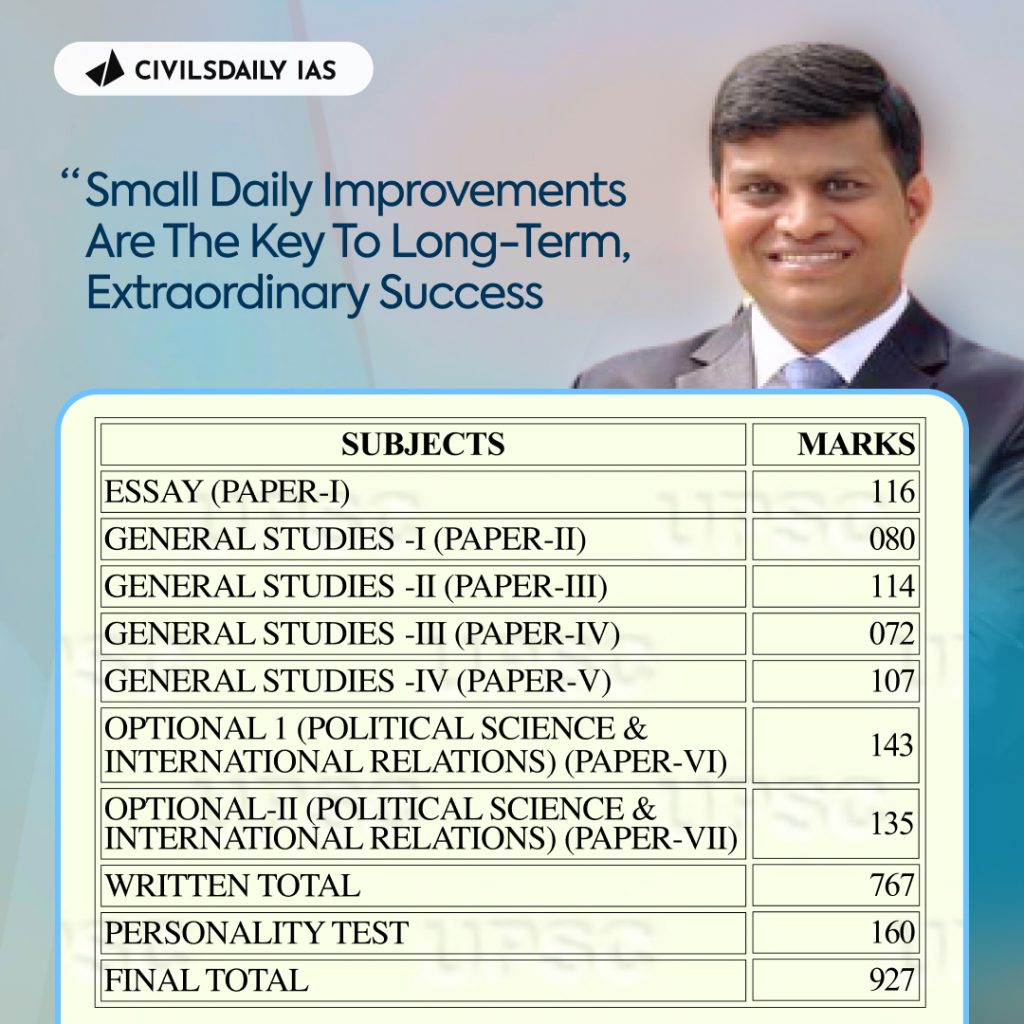
Introducing Pritesh, our UAP 23 Mentorship student who cleared UPSC with flying colors and is now an IRS officer. His Mentor Shubham Sir ensured that the upcoming 3 months (August to November) were the most productive. Its a crucial period to build a strong base. His Mentor Shubham Sir ensured that this period is was utilized effectively 1. Preparing for prelims and mains in an integrated manner 2. Ensuring answer writing practice as answer writing takes a lot of time to fix 3. Proper timetable, planning each day and making progress.
We will discuss this and much much more – overcoming FOMO, navigating through abundance of resources, By when should you revise your GS? When should you start CSAT?, everything.
Read about IRS Pritesh’s UPSCMentorship Journey.
Starting your UPSC preparation with a timetable is crucial. Mains in 2025 start early in August, so beginning this August gives you exactly 12 months to prepare for the exam. Preparing for prelims and mains in an integrated manner is necessary, and planning each day is essential. Pritesh Sir, now an IRS officer, was part of our UAP 2023 cohort. He credits much of his success to his mentor, Shubham Jatte Sir. Shubham Sir’s methodology, especially regarding content and timetable, worked best for him. Pritesh Sir emphasized the importance of staying consistent, noting that the timetable must be precise, workable, and tailored to the aspirant’s needs, covering all three stages of the exam.
By when should the optional be finished? By when should you revise your GS? When should you start CSAT? When should you start writing your tests? All these questions are important. Aspirants who are beginning their preparation often experience a lot of FOMO due to the vast syllabus and the abundance of resources. Having a personalized timetable and constant one-on-one discussions with mentors is a proven way to overcome this fear. If you have just started your UPSC preparation or are in the initial days of preparing for this exam, knowing what to do in the upcoming 3 months (August to November) is crucial. Start slow but stay steady—that’s the right mantra.
Join the live session with IRS Pritesh Sir and Shubham Sir to better understand the dynamics on 6th August, Tuesday at 7 PM.
It will be a 45 minute webinar, post which we will open up the floor for all kinds of queries which a beginner must have. No questions are taboo and Pritesh & Shubham sir is known to be patiently solving all your doubts.
Join us for a Zoom session on 06th August 2024 at 7:00 p.m. This session is a must-attend for you If you are attempting UPSC for the first time or have attempted earlier and now preparing for next year, then it is going to be a valuable session for you too.
In the session, we will discuss how mentorship works. Why Mentorship is a must when you attempting for the first time.
We will deal with all the aspects for a comprehensive UPSC Preparation.We’ll talk about starting with the basics, and move to advanced level.
See you in orientation session”
Join the live session with IRS Pritesh and Shubham Sir on 6th August, Tuesday at 7 PM.
At Civilsdaily, we treat Mentorship as a specialization. Not every Mains or interview candidate can be a mentor. Most such mentors will suggest cosmetic changes and will only help you evolve slowly. It is easy to find comfort in sentences like ‘every topper is different’ and’ they have their own path’. Finding what’s different about you and then figuring out your own path is why Mentorship is essential. We walk the talk by helping you craft your own way of preparation. A method that enhances your probability of qualifying UPSC-CSE in a single attempt. We give you that near-perfect certainty. Delivering this consistently to hundreds of aspirants (now rankers) in the past was challenging. We still stick to it and keep getting better at it with each passing year.
At CD, we understand the science and the art of everything UPSC. If you have a problem, we will sit with you and find a solution. If that doesn’t work, then we try solution 2. Eventually, we will make sure you end up making progress. What’s the point of any content, program, or mentorship without progress? This is precisely why aspirants trust they have the best shot at clearing the exam with Civilsdaily.
We invest a significant amount of time, effort, and energy into creating lectures, notes, and tests, understanding your needs as an aspirant. We take this responsibility seriously because, ultimately, your future depends on it.
The heart of the Civilsdaily platform is the Yearlong Mentorship Program. For years, aspirants have enrolled here because they couldn’t find such depth and passion towards quality content and Mentorship anywhere. Their search inevitably ends at Civilsdaily. Enrollment in these programs and Mentorship also makes us accountable to aspirants for the value they get.
In the past few years, we’ve worked quietly in the background with hundreds of aspirants; many now serve as IAS, IPS, IFS and more. We are very proud of what we’ve achieved.Overwhelmed by quick fixes, content overload and messy timetables which never work? Join us as we take you through a realistic and relatable roadmap for UPSC 2026 preparation.
(Don’t wait—the next webinar won’t be until Aug 24)
These masterclasses are packed with value. They are conducted in private with a closed community. We rarely open these webinars for everyone for free. This time we are keeping it for 300 seats only.
Q1 The China-Pakistan Economic Corridor (CPEC) is viewed as a cardinal subset of China’s larger ‘One Belt One Road’ initiative. Give a brief description of CPEC and enumerate the reasons why India has distanced itself from the same. (UPSC IAS/2018)
Q2 China is using its economic relations and positive trade surplus as tools to develop potential military power status in Asia’, In the light of this statement, discuss its impact on India as her neighbour. (UPSC IAS/2017)
Prelims: Q ‘Belt and Road Initiative’ is sometimes mentioned in the news in the context of the affairs of: (a) African Union (b) Brazil (c) European Union (d) China
Note4Students:
Prelims: Internation groups in which India and China are both members;
Mains:Issues between India and China;
Mentor comments: India-China relations are characterized by a complex interplay of cooperation and conflict. Historically rooted in ancient civilizations, the two nations have faced significant challenges, particularly territorial disputes along their shared border. The 2020 clashes heightened tensions, leading to military standoffs and economic measures. Despite these issues, both countries recognize the importance of dialogue and mutual respect, as emphasized in recent diplomatic engagements. The “Five Mutuals” framework aims to foster cooperation, highlighting shared interests and the potential for collaboration in regional and global contexts.
Let’s learn!
__
Why in the News?
The appointment of a new Chinese ambassador to India in May 2024 signals a potential intent to normalize relations.
Five guidelines of ‘Mutuals’
Mutual Respect: This principle emphasizes the importance of recognizing and valuing each other’s unique cultural identities, social systems, and developmental paths.
Mutual Understanding: This guideline focuses on the need for empathy and support, particularly in acknowledging each other’s historical struggles for independence and development. It advocates for increased dialogue and communication at all levels to build political trust and a solid foundation for bilateral relations.
Mutual Trust: This principle highlights the necessity of overcoming suspicion and fostering a strategic perspective on bilateral relations. It encourages both countries to view each other as partners rather than competitors, promoting peaceful coexistence and the resolution of disputes through dialogue.
Mutual Accommodation: This guideline acknowledges that differences and frictions are natural between neighbouring countries. It stresses the importance of effectively managing these differences through dialogue and finding mutually acceptable solutions, ensuring that cooperation is not hindered by isolated incidents.
Mutual Accomplishment: This principle emphasizes the shared goals of national development and revitalization. It encourages China and India to support each other’s growth and collaborate on global issues, reinforcing the idea that their successes are interconnected and beneficial for both nations.
Issues between India and China:
Border Disputes: The most significant source of tension is the unresolved border disputes, particularly in regions like Aksai Chin and Arunachal Pradesh. The deadly clashes in Galwan Valley in 2020 marked a severe escalation, leading to a prolonged military standoff and ongoing military tensions along the Line of Actual Control (LAC).
Unequal Trade Relations: India faces a substantial trade deficit with China, leading to concerns about economic dependence. This imbalance has fueled economic nationalism and calls for reducing reliance on Chinese imports, further straining relations.
Strategic Alliances and Regional Influence: China’s strategic ties with Pakistan and its increasing influence in South Asia and the Indian Ocean have raised alarms in India.
India’s growing partnerships with the United States and other Quad members (Japan and Australia) are viewed by China as a challenge to its regional dominance, exacerbating the security dilemma between the two nations.
Political Pressure: China has used its influence to block India’s attempts to gain membership in international forums, such as the Nuclear Suppliers Group, and to prevent India from placing individuals wanted for terrorism on UN watchlists.
Need an ‘all-round relationship’ (Way forward)
Recognition of Differences: The relationship between China and India acknowledges the inevitability of differences and frictions due to their geographical proximity.
Understanding and correctly perceiving these differences is essential for developing a constructive relationship.
Dialogue and Mutual Accommodation: Byemphasizing the importance of dialogue, both nations can effectively address core interests and concerns, allowing them to reach mutually acceptable solutions. This approach is rooted in the political wisdom of their ancient civilizations.
Comprehensive Cooperation: The relationship is all-encompassing, meaning it should not be defined solely by specific differences.
Cooperation should be resilient enough to withstand isolated incidents, ensuring that broader collaboration continues.
Shared Development Goals: Both countries are at critical stages of national development and revitalization, with common interests that provide ample opportunities for cooperation.
This shared vision fosters mutual accomplishments, promoting unity and collaboration in the Global South.
The introduction of the new ELI scheme for corporates by the Narendra Modi government acknowledges the disconnect between GDP growth and job creation.
About Employment Linked Incentives (ELI)
The ELI scheme aims to encourage companies to hire more employees by providing financial incentives for each new hire.
Target Sectors: The scheme is expected to focus on labour-intensive sectors such as toys, textiles, apparel, furniture, tourism, and logistics, which have significant potential for job creation.
Incentives Offered: Financial incentives may include tax relief and wage subsidies for new jobs created, along with non-financial incentives like reduced regulatory burdens and support for skill development programs.
Government’s Failure of Initiatives
Previous Economic Strategies: Over the past decade, the Indian government relied on traditional economic models, such as the trickle-down approach and production-linked incentives (PLI), which did not yield the expected job growth.
Initiatives like “Make in India” and corporate tax cuts aimed to stimulate investment but failed to translate into significant employment opportunities.
Jobless Growth: Despite policies designed to boost production, employment growth has been stagnant, with a study indicating a negligible employment growth rate of just 0.01%.
Issue of Job and Ideas Deficit
Jobs Deficit: The lack of job creation has prompted proposals like reserving jobs for locals, reflecting political pressures in a democracy where job scarcity is prevalent.
Ideas Deficit: Economists often suggest reforms in labour, education, and business practices as solutions to job creation, but these are complex and difficult to implement.
Unemployment Trends: The unemployment rate has shown fluctuations, with a reported decline from 6.0% in 2017-18 to 3.2% in 2022-23.
What can be done?
Policy Shift: The ELI scheme represents a significant policy shift towards prioritizing job creation over mere economic output. By encouraging firms to hire rather than invest solely in automation, it aims to address the capital-labour imbalance in the economy.
Support for MSMEs: Special focus on micro, small, and medium enterprises (MSMEs) is crucial, as they employ a substantial portion of the workforce.
Alignment of Goals: Need to Collaborate among various ministries, particularly finance, skill development, and labour, is essential to ensure that skill development aligns with industry needs, enhancing employability and job creation
In July, the Odisha government approved a proposal to plant 1.9 million palm trees to mitigate deaths caused by lightning strikes, which were declared a state-specific disaster in 2015.
How many people have lost their lives to lightning in Odisha?
Over the last 11 years, a total of 3,790 people have lost their lives due to lightning strikes in Odisha.
In the previous three fiscal years, 791 fatalities were reported, indicating an increasing frequency of lightning strikes.
On September 2, 2023, Odisha recorded 61,000 lightning strikes in a two-hour period, resulting in the deaths of at least 12 people.
Why are Lightning strikes of particular concern in Odisha?
Odisha is located in a tropical zone and experiences a hot, dry climate that creates ideal conditions for lightning strikes.
The state has the highest number of cloud-to-ground lightning strikes in eastern and central India. The Annual Lightning Report 2023-2024 indicates a significant concentration of lightning activity in this region.
Research indicates that climate change exacerbates lightning activity, with a 10% increase in lightning occurrences for every degree Celsius of warming. This is particularly relevant in Odisha, where climatic factors contribute to frequent lightning events.
With 96% of lightning strikes occurring in rural areas, the most affected populations include farmers and daily wage earners who work outdoors, making them particularly vulnerable during peak agricultural seasons.
How can Odisha defend Itself against lightning strikes?
Planting Palm Trees: The Odisha government has approved a proposal to plant 19 lakh palm trees as a natural defense against lightning strikes. Palm trees are considered effective conductors of lightning due to their height and moisture content, which can absorb lightning and mitigate its impact on the ground.
Financial Commitment: The state has allocated Rs 7 crore for the palm tree plantation initiative and has banned the felling of existing palm trees to enhance this strategy.
Public Awareness and Early Warning Systems: While the state has implemented early warning systems to forecast lightning strikes, experts emphasize the need for widespread public education on safety measures during lightning events.
Concerns: Experts have raised concerns about the effectiveness of palm trees as a long-term solution, noting that it takes 15 to 20 years for them to reach a height where they can effectively mitigate lightning strikes.
NDMA Guidelines for Lightning
Preparation and Awareness: The Local government should educate the communities about lightning safety and the risks associated with thunderstorms.
Seek Shelter: During a thunderstorm, individuals should seek shelter in a fully enclosed building or a hard-topped metal vehicle. Open vehicles and structures such as metal sheds or under-construction buildings are unsafe.
Avoid Trees: Taking shelter under trees is discouraged, as they can attract lightning. If in a wooded area, find the shortest trees for shelter.
Crouching Position: If no shelter is available, crouch down with heels touching and head between the knees to minimize height and reduce risk.
30-30 Rule: After seeing lightning, start counting to 30. If you hear thunder before reaching 30, go indoors. This rule helps assess the distance of the storm.
Way forward:
Installation of Lightning Rods and Conductors: The government should invest in the widespread installation of lightning rods and conductors in rural and vulnerable areas. These devices can provide immediate protection to critical infrastructure, homes, and open fields where farmers and workers are most at risk.
Advanced Early Warning Systems: Need to enhance the existing early warning systems with more accurate, real-time data and ensure these warnings are disseminated quickly through multiple channels, including mobile alerts, community announcements, and local radio.
Main PYQ:
Q Explain the mechanism and occurrence of cloudburst in the context of the Indian subcontinent. Discuss two recent examples. (2022)
The government’s recent decision to lift the ban on government employees participating in RSS activities threatens to undermine the remnants of a free and fair bureaucracy.
Whether or not civil servants are banned from joining RSS
Lifting the Ban: The Central government has lifted a 58-year ban on government servants joining the Rashtriya Swayamsevak Sangh (RSS). This ban was originally imposed in 1966 due to concerns about the organization’s political activities.
Government Justification: The government stated that the activities of the RSS are no longer deemed incompatible with civil service conduct rules, suggesting that the organization has been wrongly categorized as a banned entity.
Judicial Commentary: The Madhya Pradesh High Court remarked that it took nearly five decades for the government to recognize its mistake in banning civil servants from joining the RSS, indicating a shift in perception regarding the organization.
Political Reactions: The decision has sparked controversy, with opposition parties criticizing it as a threat to India’s secular fabric and accusing the government of politicizing the civil service. Critics argue that the RSS’s ideology conflicts with the principles of a secular state.
Support from RSS: The RSS welcomed the decision, asserting that it strengthens India’s democratic system and has historically contributed to national unity and social service.
The idea of Constitutional Democracy
Constitutional democracy is a system of government that combines the principles of democracy with a constitution that limits the powers of the state and protects the rights of citizens.
The people are the ultimate source of power, and the government derives its authority from their consent. The constitution places restrictions on the government’s actions and establishes the structure of the government.
There is a separation of powers between the legislature, executive, and judiciary, with each acting as a check on the others. The rule of law applies equally to all citizens and the government itself.
Minority rights are protected, and the will of the majority is balanced against the rights of individuals and minority groups. Constitutional democracy guarantees some rights to everyone, irrespective of their status as a minority or majority.
The origins of constitutional democracy can be traced back to Enlightenment ideas of natural rights, social contract theory, and the separation of powers. The United States Constitution, adopted in 1787, was a pioneering example of a written constitution establishing a federal system of government with a separation of powers
RSS Ideology vs Constitutional Democracy
Conflict of Ideologies: The lifting of the ban raises questions about the relationship between the RSS’s ideology and the constitutional framework of India. The RSS promotes a vision of a Hindu nation, which may conflict with the secular and pluralistic ideals enshrined in the Constitution.
Constitutional Morality: The Constitution aims to create a society that respects diverse religions and cultures, contrasting with the RSS’s focus on a singular religious identity. This juxtaposition presents challenges to the commitment of civil servants to uphold constitutional values.
Historical background of the Constitution: The Constitution was designed to restructure Indian society post-independence, ensuring inclusivity and rejecting the idea of a state aligned with a single religious community. The RSS’s ideology, which criticizes the post-1947 restructuring, poses a fundamental challenge to this vision.
Democratic Challenges: The existence of non-democratic and exclusionary ideas within a democratic framework complicates governance. The rise of Hindutva politics, which emphasizes majoritarianism and exclusion, threatens the principles of constitutional democracy.
Need for Reinforcement: To counter the influence of ideologies that contradict constitutional morality, there is a pressing need to reinvigorate the commitment to constitutional democracy among civil servants and the broader public.
Conclusion: To uphold constitutional democracy, it is crucial to reinforce the commitment to secularism, inclusivity, and the rule of law among civil servants and the broader public amidst ideological challenges.
Mains PYQ:
Q To enhance the quality of democracy in India the Election Commission of India has proposed electoral reforms in 2016. What are the suggested reforms and how far are they significant to make democracy successful? (2017)
On Friday, the Central government released the sixth draft notification, designating 56,825.7 square kilometre of the Western Ghats as an ecologically sensitive area (ESA) across the states of Gujarat, Maharashtra, Goa, Karnataka, Kerala, and Tamil Nadu.
Recommendations of the Gadgil and Kasturirangan Committees
Gadgil Committee: Recommended that 75% of the Western Ghats (129,037 sq km) be designated as ecologically sensitive areas (ESAs) with restrictions on development activities.
Kasturirangan Committee: Notified only 37% of the Western Ghats as ESAs, reducing the extent compared to the Gadgil report. It split the region into cultural (human settlements) and natural (non-human settlements) zones.
Ecologically Sensitive Areas (ESAs)
ESAs are regions recognized for their environmental significance, where human activities are regulated to protect biodiversity, ecosystems, and natural habitats. These areas are often home to endemic species of plants and animals and are crucial for maintaining ecological balance.
The Environment (Protection) Act of 1986 allows the Central Government to restrict industrial activities in these sensitive areas to safeguard their ecological integrity. Although the term “Eco-Sensitive Zones” is not explicitly mentioned in the Act, provisions exist to prohibit or regulate activities based on biodiversity and environmental considerations.
The reason behind it:
Biodiversity Hotspot: The Western Ghats is recognized as one of the world’s eight “hottest hotspots” of biological diversity and a UNESCO World Heritage Site. It is home to numerous endemic species and globally threatened flora and fauna, making its protection crucial for conserving biodiversity.
Recent Natural Disasters: The draft notification follows severe landslides in Wayanad, Kerala, which resulted in significant loss of life and property. These events underscored the vulnerability of the region to ecological disasters, highlighting the need for protective measures to prevent further environmental degradation
Opposition from States
State governments, including Kerala, have opposed the proposals in the draft notifications for declaring ESAs along the Western Ghats.
The Kerala government want to reduce the ESA to 9,993.7 sq km from the Kasturirangan committee’s recommendation of 13,108 sq km.
The then Kerala government led by Oommen Chandy opposed the Gadgil report and appointed another panel to come up with an independent report.
New Panel Formed by the Government
In April 2022, the Centre formed another panel to “re-examine suggestions by these six state governments while keeping in view the conservation aspects of the disaster-prone pristine ecosystem, as well as rights, privileges, needs and developmental aspirations of the region”.
The Centre and expert panel held 10 meetings with states having Western Ghats to discuss the fifth draft notification at various forums.
The sixth draft notification, issued on Friday, declared 56,825.7 sq km of the Western Ghats as ESAs in the states of Gujarat, Maharashtra, Goa, Karnataka, Kerala and Tamil Nadu
Way forward:
Integrated Management Plans: The Government should develop and implement integrated management plans that balance ecological conservation with the developmental needs of the region.
Enhanced Monitoring and Enforcement: There is a need to strengthen the regulatory framework by enhancing monitoring mechanisms and enforcing existing environmental laws more stringently.
Mains PYQ:
Q Differentiate the causes of landslides in the Himalayan region and Western Ghats. (2021)
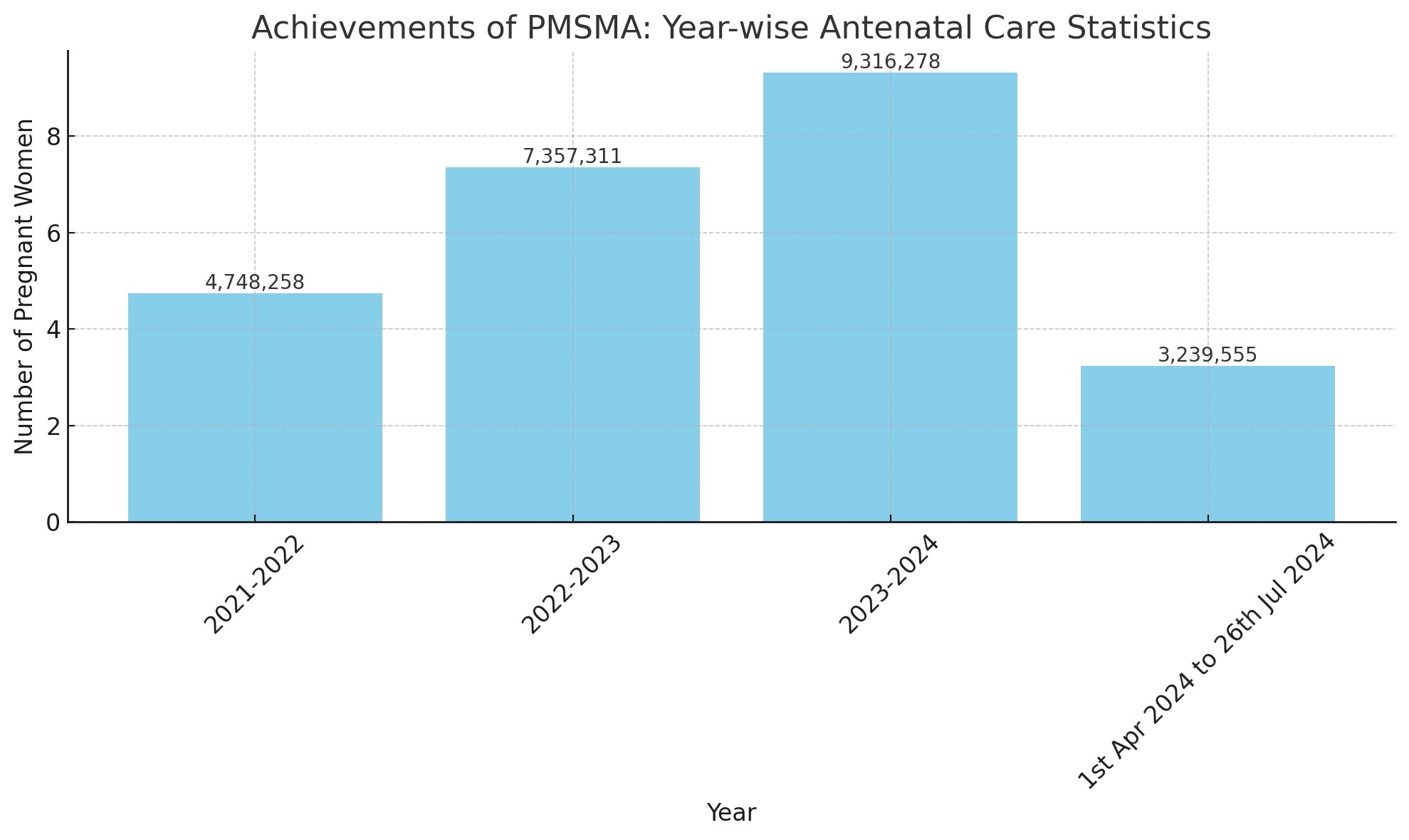
An Extended Pradhan Mantri Surakshit Matritva Abhiyan (E-PMSMA) strategy was launched to ensure quality Antenatal Care (ANC) for pregnant women.
The strategy focuses on individual tracking of high-risk pregnancies (HRP) and provision of additionalPMSMA sessions beyond the 9th of every month.
AboutHigh-Risk Pregnancy:
A high-risk pregnancy involves greater risk of health complications for the mother, the foetus, or both, due to pre-existing medical conditions, conditions that develop during pregnancy, or foetal issues.
Common Factors:
Maternal Health Conditions: Pre-existing diabetes, hypertension, HIV, kidney disease, or conditions arising during pregnancy like gestational diabetes and preeclampsia.
Obstetric Factors: Previous caesarean section, history of preterm labor, multiple pregnancies, and congenital malformations.
About Pradhan Mantri Surakshit Matritva Abhiyan (PMSMA)
Details
About
An initiative to provide quality antenatal care (ANC) to all pregnant women.
Launch
October 2016
Target Group
All pregnant women, especially those in their second and third trimesters.
Frequency
Services provided on the 9th of every month at government health facilities.
Objective
Ensure safe motherhood by providing comprehensive and quality antenatal care universally.
Key Functions
General Check-Up: Physical and clinical examinations by medical professionals.
Laboratory Investigations: Routine blood tests, urine tests, and other necessary laboratory investigations.
Ultrasound: Ultrasound examination to monitor foetal growth and development.
Counseling: Nutritional and lifestyle counseling to ensure a healthy pregnancy.
High-Risk Identification: Screening and identification of high-risk pregnancies and appropriate referrals for specialized care.
Key Features
Free of Cost: All services under PMSMA are provided free of cost.
Fixed Day ANC Services: Antenatal care services are provided on a fixed day every month.
Lab Investigations: Basic investigations like Hb, urine albumin, RBS, malaria test, VDRL test, blood grouping, CBC, ESR, and USG.
Public-Private Partnership: Encourages participation of private sector healthcare providers in providing ANC services.
Incentives: Incentives for healthcare providers who participate in the program.
Categorization of Pregnant Women
Green Sticker – for women with no risk factor detected
Red Sticker – for women with high risk pregnancy
BlueSticker – for women with Pregnancy Induced Hypertension
YellowSticker – pregnancy with co-morbid conditions such as diabetes, hypothyroidism, STIs
Benefits
Improved Maternal Health: Regular and comprehensive ANC helps in early detection and management of complications, improving maternal health outcomes.
Reduced Mortality Rates: Timely and quality care reduces maternal and infant mortality rates.
Health Education: Provides health education and counseling to pregnant women, promoting better health practices.
High-Risk Management: Identifies and manages high-risk pregnancies effectively, ensuring specialized care for those who need it.
PYQ:
[2024] With reference to the ‘Pradhan Mantri Surakshit Matritva Abhiyan’, consider the following statements:
1. This scheme guarantees a minimum package of antenatal care services to women in their second and third trimesters of pregnancy and six months post-delivery health care service in any government health facility.
2. Under this scheme, private sector health care providers of certain specialities can volunteer to provide services at nearby government health facilities.
Which of the statements given above is/are correct?
For better implementation and efficient monitoring, all schemes implemented by the Ministry for the betterment of children have been consolidated into 3 verticals:
These verticals aim to improve nutrition and health indicators, ensure safety and empowerment of women, and provide protection and welfare for children in difficult circumstances.
The Anganwadi Services Scheme, POSHAN Abhiyaan, and Scheme for Adolescent Girls have been reorganized into three primary sub-verticals:
Nutrition Support: For POSHAN and Adolescent Girls.
Early Childhood Care and Education: Targeting children aged 3-6 years.
Anganwadi Infrastructure: Upgrading and modernizing Saksham Anganwadis.
Key Features:
Fortified rice supplied to Anganwadi Centres to meet micronutrient requirements and control anemia among children.
Emphasis on the use of millets for Hot Cooked Meals at least once a week and Take Home Ration (THR) at Anganwadi centers.
[2] Mission Shakti
Sambal: Focuses on the safety and security of women.
Includes schemes like One Stop Centres (OSC), Women Helpline (181-WHL), and Beti Bachao Beti Padhao (BBBP).
Samarthya: Aims at the empowerment of women.
Encompasses schemes like Pradhan Mantri Matru Vandana Yojana (PMMVY), Ujjwala, Swadhar Greh (renamed as Shakti Sadan), Working Women Hostel (renamed as Sakhi Niwas), National Hub for Empowerment of Women (NHEW), and National Creche Scheme (renamed as Palna).
[3] Mission Vatsalya
Objective: To provide better outreach and protection for children in need of care in a mission mode.
Goals:
Support and sustain children in difficult circumstances.
Develop context-based solutions for the holistic development of children from varied backgrounds.
Encourage innovative solutions through green field projects.
Facilitate convergent action by gap funding if required.
PYQ:
[2016] Which of the following are the objectives of ‘National Nutrition Mission’?
1. To create awareness relating to malnutrition among pregnant women and lactating mothers.
2. To reduce the incidence of anaemia among young children, adolescent girls and women.
3. To promote the consumption of millets, coarse cereals and unpolished rice.
4. To promote the consumption of poultry eggs.
Select the correct answer using the code given below:
The Ministry of Ports, Shipping and Waterways has approved the project proposal for setting up a Major Port at Vadhavan, Palghar District of Maharashtra.
About Vadhavan Port Project
The project involves the development of core infrastructure, terminals, and other commercial infrastructure through a public-private partnership (PPP) mode.
The shareholding for the project is divided between the Jawaharlal Nehru Port Authority (74%) and the Maharashtra Maritime Board (26%).
The project aims to create a total capacity of 298 million metric tonnes per annum (MMTPA).
The port will accommodate mainline mega vessels operating on international shipping routes connecting the Far East, Europe, the Middle East, Africa, and America.
Existing Major Ports in India
India has 12 Major Ports: Chennai, Cochin, Deendayal (Kandla), Jawaharlal Nehru (Nhava Sheva), Kolkata, Mormugao, Mumbai, New Mangalore, Paradip, V.O. Chidambaranar (Tuticorin), Visakhapatnam, and Kamarajar Port Limited.
Private Sector participation is allowed in Major Ports for specific projects/berths/terminals through concession agreements for a specific period via open competitive bidding on revenue share/royalty between the Concessionaire and the Major Port Authority.
After the expiry of the concession period, the asset is handed over to the Port Authority.
Significance of Major Ports
Major ports play a critical role in facilitating international trade and commerce.
They serve as gateways for the import and export of goods, significantly contributing to the country’s economy.
Ports generate substantial revenue for the government through customs duties, port fees, and other related charges.
Ports facilitate international collaboration and partnerships, enhancing diplomatic and trade relations with other countries.
PYQ:
[2016] Recently, which of the following States has explored the possibility of constructing an artificial inland port to be connected to sea by a long navigational channel?
Q1 The Indian Constitution has provisions for holding joint sessions of the two houses of the Parliament. Enumerate the occasions when this would normally happen and also the occasions when it cannot, with reasons thereof. (UPSC IAS/2017)
Q2 Rajya Sabha has been transformed from a ‘useless stepney tyre’ to the most useful supporting organ in the past few decades. Highlight the factors as well as the areas in which this transformation could be visible. (UPSC IAS/2020)
Note4Students:
Prelims: Money Bill
Mains: Issues related to Money Bill
Mentor comments: In the coming weeks, a seven-judge Bench of the Supreme Court of India will address key questions regarding the definition and scope of a Money Bill. The ruling will impact numerous legislations passed recently without Rajya Sabha approval. The case, stemming from the November 2019 Rojer Mathew vs. South Indian Bank Ltd. verdict, challenges the Finance Act, 2017. This Act, certified as a Money Bill, made extensive changes to 26 tribunals’ authority and jurisdiction, including their abolition, merger, and the imposition of new qualifications and service conditions.
Let’s learn!
__
Why in the News?
The Supreme Court’s ruling will impact legislation passed without the Rajya Sabha’s approval and influence the state of India’s federal structure.
Articles and definitions: •Article 109: Allows Money Bills to become law with only the Lok Sabha’s approval; Rajya Sabha can only make recommendations, which are not binding. •Article 110(1): Defines a Money Bill, listing subjects such as taxation, borrowing, and appropriation from the Consolidated Fund of India. A Bill must address only these subjects to be deemed a Money Bill. •Article 110(3): Grants the Speaker of the Lok Sabha the final authority to determine if a proposed legislation is a Money Bill.
A colourable exercise of power:
This term refers to actions taken by a legislative body that, while appearing to be within their authority, actually circumvent constitutional limits or principles.
In the context of the Finance Act, 2017, the petitioners argue that the Act’s provisions extend beyond the permissible scope of a Money Bill, thereby constituting a subterfuge to bypass the Rajya Sabha.
Arguments Against the Finance Act, 2017
The Finance Act, 2017, included extensive amendments affecting the terms of office, qualifications, and regulatory powers of tribunals. These changes were seen as far-reaching and not merely incidental to financial matters, which should be the sole concern of a Money Bill as defined in Article 110(1) of the Constitution.
The Act conferred significant powers to the executive to regulate tribunals through delegated legislation. This delegation was criticized as granting unbridled authority, undermining the independence of the judiciary.
The petitioners contended that the Act perverted the Constitution’s plain language, aiming to defeat its fundamental principles, particularly the separation of powers and the independence of the judiciary.
Judicial Precedents and Constraints
K.S. Puttaswamy Case: The majority in the Rojer Mathew case felt constrained by the precedent set in K.S. Puttaswamy vs. Union of India, where the Supreme Court upheld the classification of the Aadhaar Act as a Money Bill. The majority opinion noted that the Puttaswamy case did not adequately clarify the implications of the word “only” in Article 110(1), which is crucial for determining the legitimacy of a Money Bill.
Need for Clear Standards: The lack of bright-line rules regarding the Speaker’s certification of a Bill as a Money Bill has led to ambiguity. The Rojer Mathew case emphasizes the necessity for a definitive interpretation of what constitutes a Money Bill to prevent future misuse of this classification.
Implications of the Rojer Mathew Case
Potential for Future Challenges: The outcome of the Rojer Mathew case could have significant implications for the classification of future legislation as Money Bills, particularly regarding the balance of power between the Lok Sabha and Rajya Sabha.
Broader Legislative Impact: If the seven-judge Bench decides to interpret the term “only” in a manner that restricts the scope of Money Bills, it could limit the legislative powers exercised through this route, thereby reinforcing constitutional safeguards against the misuse of legislative authority.
Role of Rajya SabhaFederal Backbone:
•Justice D.Y. Chandrachud emphasized that the Rajya Sabha is an “indispensable constitutive unit of the federal backbone of the Constitution.” It represents the interests of states and ensures their voices are heard in the legislative process. •Representation of Pluralism: The Rajya Sabha acts as a mirror to the pluralistic nature of Indian society, reflecting diverse regional and cultural interests that may not be adequately represented in the Lok Sabha.
Checks and Balances •Preventing Authoritarianism: The Rajya Sabha serves as a check on the Lok Sabha, especially when the ruling party has a significant majority. It can prevent hasty or ill-considered legislation driven by populist sentiment. •Deliberative Role: As a deliberative body, the Rajya Sabha provides a platform for thorough debate on major issues, allowing for a more measured approach to law-making compared to the often fast-paced decisions of the Lok Sabha.
Legislative Review • The Rajya Sabha is designed to review and re-evaluate legislation passed by the Lok Sabha, ensuring that laws are carefully considered and that potential flaws are addressed before enactment. • It acts as a guardian of the rights of states, promoting decentralization and ensuring that state interests are adequately represented in national legislation.
Representation of Vulnerable Sections •Inclusivity: The Rajya Sabha allows for representing marginalized and minority groups, providing them a voice in the legislative process. This is particularly important for women, and religious, ethnic, and linguistic minorities who may struggle to gain representation in the Lok Sabha. • The President nominates members to the Rajya Sabha for their expertise in various fields, ensuring that diverse perspectives are included in legislative discussions.
Way forward:
Clarification of Money Bill Criteria: The Supreme Court should provide a clear and definitive interpretation of Article 110, particularly the implications of the term “only” in defining what constitutes a Money Bill.
Strengthening the Role of the Rajya Sabha: The Court’s ruling should reinforce the importance of the Rajya Sabha as a critical component of India’s federal structure.
During his welcome of Vietnamese Prime Minister Pham Minh Chinh, Prime Minister Narendra Modi emphasized the significance of freedom of navigation while subtly referencing China.
Evolution of Bilateral Relations to Strategic Partnership
Early Relations: Cultural and economic links between India and Vietnam date back to the 2nd century, with significant support from India during Vietnam’s struggles against colonialism and foreign intervention, particularly during the Vietnam War.
Formal Diplomatic Relations: Official diplomatic relations were established in 1992, marking the beginning of extensive economic ties, including cooperation in oil exploration, agriculture, and manufacturing.
Upgrade to Strategic Partnership (2007): The relationship was elevated to a “Strategic Partnership” during Vietnamese Prime Minister Nguyen Tan Dung’s visit to India in July 2007. This marked a significant step in formalizing cooperation across various sectors, particularly in defence and security.
Comprehensive Strategic Partnership (2016): During Indian Prime Minister Narendra Modi’s visit to Vietnam in September 2016, the partnership was further upgraded to a “Comprehensive Strategic Partnership.” This upgrade emphasized enhanced cooperation in defence, trade, and cultural exchanges, as well as a shared commitment to regional security.
Vietnam’s Remarkable Strides under Communist Party of Vietnam (CPV) Leadership
Economic Development: Under the CPV’s leadership, Vietnam has experienced significant economic growth and development, embracing a foreign policy of independence and multilateralism.
This approach has positioned Vietnam as a reliable partner in the region, fostering deeper economic ties with countries like India.
Strategic Investments: Vietnam has actively sought to attract Indian investments in various sectors, including renewable energy, pharmaceuticals, and technology.
The Vietnamese government has expressed gratitude for India’s support during the COVID-19 pandemic, particularly in vaccine distribution, which has further solidified ties between the two nations.
Building Bridges in Strategic Relationship through Foreign Policy
Shared Vision for the Indo-Pacific: Both Prime Ministers emphasized their commitment to a free, open, and rules-based Indo-Pacific.
Indian PM’s assertion that India supports development, not expansionism, reflects a mutual stance against aggressive territorial claims, particularly in the South China Sea, where both nations advocate for adherence to international law.
Collective Approach to Conflicts: The leaders highlighted the importance of a collective approach to resolving regional conflicts, including those in Myanmar and West Asia.
This stance underscores their commitment to multilateralism and regional stability, with Vietnam recognizing India’s role as a stabilizing force in the Indo-Pacific.
Significance of the Visit
Strengthening Strategic Ties: Prime Minister Chinh’s visit signifies a deepening of the strategic partnership, with both sides committing to enhanced cooperation in defence, maritime security, and economic development.
The agreement on a $300 million credit line for Vietnam’s maritime capabilities is a notable outcome of the discussions.
Cultural and Economic Connectivity: The visit also marked the signing of multiple agreements across various sectors, including customs, agriculture, and traditional medicine, demonstrating a comprehensive approach to enhancing bilateral relations.
The establishment of digital payment connectivity is another step towards strengthening economic ties.
Way forward:
Strengthening Economic and Trade Ties: Both nations should focus on achieving the proposed bilateral trade target of $20 billion by expanding cooperation in key sectors such as renewable energy, technology, and agriculture.
Enhancing Defense and Security Cooperation: To address regional security challenges, particularly in the context of the South China Sea, India and Vietnam should deepen their defence and security collaboration.
The Union Budget for 2024-25 announced that “a policy will be introduced to promote pumped storage projects aimed at electricity storage and ensuring the seamless integration of the increasing share of renewable energy.
Why is renewable power generation subject to variations and weather changes?
Due to Intermittent nature: Renewable energy sources, particularly solar and wind, are inherently intermittent. Solar energy is only available during daylight hours and is affected by weather conditions such as cloud cover, while wind energy varies with wind speed and direction. This variability leads to fluctuations in power generation, making it challenging to match supply with demand consistently.
Daily and Seasonal Variations: The generation capacity of renewable sources can change significantly over short periods (hours to days) and longer periods (seasonal). For instance, solar power generation peaks during sunny days and drops to zero at night, while wind power can vary greatly depending on seasonal weather patterns.
Significance of Pumped Storage Projects
Grid Stabilization: Pumped storage projects are critical for stabilizing the power grid by addressing the variability and intermittency of renewable energy sources like solar and wind.
Energy Storage Capacity: PSPs account for over 94% of the installed global energy storage capacity, making them the most widely used technology for large-scale energy storage.
Flexible Energy Generation: These projects can provide both base load and peaking power, offering flexibility in energy generation.
Environmental Benefits: Pumped storage is a clean and environmentally friendly technology.
Economic Viability: The cost of energy from pumped storage is competitive compared to other energy storage technologies.
How do Power Managers decide which energy source to use?
Use of forecasting Techniques: Power managers utilize advanced forecasting techniques to predict renewable energy generation based on expected weather conditions. This allows them to plan the operation of different power plants in advance, ensuring a steady supply of electricity.
Demand and Supply Management: Decisions on which energy source to use are based on real-time demand and the availability of renewable energy. When there is a surplus of renewable energy (e.g., during sunny or windy periods), it may be used to pump water in pumped storage systems. Conversely, when renewable generation is low, power managers may rely on more stable sources like hydro, coal, or nuclear power to meet demand.
Where are some of the Pumped Storage Projects of India situated?
Kadamparai: Located in Tamil Nadu, this facility has a capacity of 400 MW and operates by pumping water to a higher reservoir during periods of surplus power generation.
Other Notable Projects: India has several other pumped storage projects, including those at Nagarjunasagar, Kadana, and Panchet. These facilities contribute to managing the variability of renewable energy generation in the country.
How do the reservoirs in Kadamparai, Tamil Nadu operate?
The Kadamparai pumped storage plant consists of two reservoirs at different elevations. Water is pumped from the lower reservoir to the upper reservoir when there is surplus power available, typically from solar or wind sources.
When demand rises, especially during peak evening hours, water flows from the upper reservoir to the lower reservoir, turning turbines to generate electricity. This operation allows the plant to provide power for three to four hours during peak demand periods, effectively stabilizing the grid.
The plant can switch between pumping and generating modes, allowing it to respond quickly to changes in power demand. This flexibility is crucial for integrating variable renewable energy sources into the grid.
Conclusion: The need to Develop a robust and flexible grid infrastructure that can efficiently handle the integration of renewable energy sources is crucial. Implementing smart grid technologies, including real-time monitoring, advanced forecasting techniques, and automated demand-response systems, can optimize the balance between supply and demand.
However, the seven-judge Bench, led by Chief Justice of India (CJI) D.Y. Chandrachud, emphasized that this must be grounded on “quantifiable and demonstrable data” rather than political motivations.
Why sub-classification is necessary?
Addressing Inequality Within SCs: The Supreme Court ruling emphasizes that SCs are not a homogeneous group. Instead, there are significant disparities in socio-economic and educational status among different castes within the SC category.
Sub-classification allows for the identification of those who are more disadvantaged and ensures that benefits are equitably distributed among them.
Equitable Distribution of Benefits: States have argued that despite existing reservations, certain castes remain grossly underrepresented compared to others.
Sub-classification aims to create separate quotas for these underrepresented groups within the SC quota, thereby promoting fairness and equity in the distribution of affirmative action benefits.
Legal Precedent and Historical Evidence: The majority opinion of the Supreme Court referenced historical and empirical evidence indicating that specific castes within the SCs face greater oppression and discrimination.
Judicial Oversight: The ruling stipulates that any sub-classification must be based on “quantifiable and demonstrable data” regarding levels of backwardness and representation, ensuring that the process is transparent and justifiable.
What does the creamy layer principle say?
Exclusion of the Creamy Layer: The creamy layer principle refers to the exclusion of the more affluent and advanced members within a backward class from receiving reservation benefits. This principle is currently applied to Other Backward Classes (OBCs) but has been suggested for implementation within SCs and STs as well.
Achieving True Equality: Justice B.R. Gavai, in his concurring opinion, emphasized the need for states to identify and exclude the creamy layer among SCs and STs to ensure that affirmative action benefits reach those who are genuinely disadvantaged.
Historical reason: The creamy layer principle has been upheld in various Supreme Court judgments (Indra Sawhney judgment in 1992), which have recognized that certain individuals within reserved categories may have advanced socio-economic status and should not benefit from reservations intended for the disadvantaged.
Way forward:
Data Collection and Analysis: States should prioritize the collection of comprehensive and quantifiable data on the socio-economic status of different castes within the SC and ST categories.
Policy Framework for Creamy Layer Exclusion: States should develop clear policies to identify and exclude the creamy layer within SCs and STs from reservation benefits.
![[UPSC Openhouse] How To Plan Each Day Of Your UPSC Preparation? Next 3 months strategy for UPSC 2025 || Join on 06th August 2024 At 7 PM.](https://www.civilsdaily.com/wp-content/uploads/2024/08/IRS-Thumb-1-1568x882.jpg)

![[3rd August 2024] The Hindu Op-ed: The five guidelines to a Dragon-Elephant tango](https://www.civilsdaily.com/wp-content/uploads/2024/08/3-Aug-1568x882.jpg)
![[2nd August 2024] The Hindu Op-ed: A verdict on the Money Bill that India awaits](https://www.civilsdaily.com/wp-content/uploads/2024/08/2-Aug-1568x882.jpg)