💥UPSC 2026, 2027, 2028 UAP Mentorship (March Batch) + Access XFactor Notes & Microthemes PDF

Search results for: “”

  • Prelims 2016 Test Series

    —————————————————–

    To write the tests, click on this link – Prelims Mocks

    —————————————————–

    Hello Everyone,

    We had promised you that it shall be our endeavour to provide you with quality MCQs in the form of a test series. Beginning Monday, we shall set down to fulfil our promise. And as we get down to the task, here are some ground rules/instructions, by whatever name you may call them:

    #1. There shall be 25 questions each in sectional tests from Test 1 to Test 10.

    #2. Liberty has been taking in framing few questions from sources which were not explicitly mentioned in the schedule but nonetheless constitute the standard text we read.

    #3. We fill fix a time for releasing the test series and the same shall be followed throughout (save the exigencies) so you can set yourself a time to attempt the test in exam-like conditions.

    #4. The main purpose of these tests is not to judge you in anyway but to let you identify your weaknesses and strengths. So be active and place your answers in the comment sections because that is the way it shall trigger discussions from others who might have different answers. Such lively discussions are among the best ways to remember things.

    #5. There might be instances where we may differ in our answer choices owing to the reference we may take or the different interpretations we may have. In such cases we shall point our reference and settle down on the answers and interpretations.

    #6. On Sundays, solutions shall be appended at the end of the tests with references.

    #7. The master blaster Dr. V has already enumerated the various ‘saam daam dand bhed’ ways in which you can zero in on the right answers in MCQs. Read the blog several times over and make sure you have mastered the ‘art of answering MCQs’.

    Best Wishes!

  • IAS Prelims tit-bits- Current Affairs part 2

    1. Nobel prize 2015

    1. Physics -Takaaki Kajita and Arthur B. McDonald for the discovery of neutrino oscillations, which shows that neutrinos have mass
    2. Chemistry– Tomas Lindahl, Paul Modrich and Aziz Sancar for mechanistic studies of DNA repair
    3. Physiology or Medicine– William C. Campbell and Satoshi Omura for a novel therapy against infections caused by roundworm parasites and to Tu Youyou for a novel therapy against Malaria
    4. Literature-Svetlana Alexievich for her polyphonic writings, a monument to suffering and courage in our time.
    5. Peace Prize– National Dialogue Quartet for its decisive contribution to the building of a pluralistic democracy in Tunisia in the wake of the Jasmine Revolution of 2011
    6. Economics– Angus Deaton for his work on consumption, poverty and welfare that helped governments improve their policies through household surveys and tax changes.
    • Discuss – Properties of Neutrino which make them useful for humankind
    • Discuss– Indian Neutrino Observatory (INO)
    • Discuss – Particular drugs discovered by Medicine Nobel laureates

    2. Swadesh Darshan, PRASAD and HRIDAY

    1. Swadesh Darshan for Integrated Development of Tourist Circuits around Specific Themes
    2. PRASAD- National Mission on Pilgrimage Rejuvenation and Spiritual Augmentation Drive (PRASAD) to beautify and improve the amenities and infrastructure at pilgrimage centres of all faiths
    3. Under PRASAD twelve cities have been identified – Ajmer, Amritsar, Amravati, Dwarka, Gaya, Kedarnath, Kamakhaya, Kanchipuram, Mathura, Puri, Varanasi and Velankanni <please try to recognize their names>
    4. HRIDAY– National Heritage Development and Augmentation Yojana (HRIDAY) seeks to preserve and rejuvenate the rich cultural heritage of the country
    • Discuss – Circuits of Sawdesh Darshan
    • Discuss– Cities common to both HRIDAY and PRASAD
    • Discuss – Nodal Ministries for all three schemes

    3. Important Military Exercises 

    1. Naval – Malabar with USA, Varuna with France, Indra with Russia, Slinex with SL, Konkan with Britain, Naseem al Bahar with Oman
    2. Coast Guard – Sahyog-Kaijin with Japan
    3. Air force – Indra Dhanush with UK, Garuda with France
    4. Army – Hand in Hand with China, Mithra Shati with SL, Youdh Abhyas with USA, Shakti with Frnace
    • Discuss – Indian Ocean Naval Symposium
    • Discuss- Malabar Exercise and japan
    • Discuss– International Fleet Review 2016

    4. Random Govt. Initiatives

    1. e – Sahayog Launched by ministry of finance to facilitate taxpayers
    2. Mahila E Haat is an online platform for women for Showcasing products made/manufactured/sold by women entrepreneur
    3. Vikalp It aims to provide confirmed accommodation to waitlisted passengers in alternate trains

    Discuss – Other such inititives

    5. Mission Indradahnush

    1. Against 7 vaccine preventable diseases
    2. For reform of Public Sector Banks
    3. Four new vaccines added to national immunization programme – Injectable Polio, Rubella, Rotavirus, Adult vaccine aganist Japanese Encephalitis
    • Discuss – Seven diseases which Indradhnush seek to protect against
    • Discuss– switch over day (polio)
    • Discuss – Difference b/w Oral polio and Injectable Polio Vaccine
    • Discuss – theme of world Health Day
  • Repatriation of Artifacts & Antiquities under Colonial Possession

    In previous blog of this series we learnt that our heritage under Colonial possession qualifies as an “illegal acquisition” as per international conventions. 

    So technically, countries like UK are indeed liable to return antiquities and heritage properties under their private or public possession. But politics aside, there are some other reasons due to which there has been little progress on restitution of Peacock Throne, or everyone’s favourite- the Koh-i-Noor diamond.

    International Conventions on returning colonial possessions

    1. UNESCO’s Convention on the Means of prohibiting and preventing the illicit import, export and transfer of ownership of cultural property (1970)
      • Newly independent states after World wars, were trying to recover important cultural objects that are mostly found in the museums of their former colonizing state.
      • Three main pillars: Protection against theft (Preventive Measure), Restitution Measures through Diplomatic channels, and International cooperation.
      • But the issue with this convention is that its mandate is not retroactive and most of the illegal acquisitions were made before 1970 before the fall of Colonialism.
      • Contemporary relevance: Monuments are being destroyed locally (IS in Syria or the Taliban in Afghanistan) can be taken out and protected for the sake of the whole world by a capable country under this convention. It can later be returned to the “source” countries when the conflict ends.
    2. UN General Assembly resolutions
      • UNGA has made successive resolutions on this matter
      • Deplored “the wholesale removal of Cultural Heritage, virtually without payment” as a result of colonial or Foreign Occupation
      • Unlike UNESCO’s convention- their mandates has been retroactive
      • Covered cultural property lost either as a consequence of
        1. Foreign or colonial occupation, or
        2. Through illicit traffic “prior” to the adoption of the 1970 Convention
      • Then why no success?
        • Covers cultural properties that are currently in safe places and open to the public, like museums, archives and libraries. Thus, it does not cover the equally important Private Sphere
        • CAG’s findings that Indian artifacts have reached foreign auction houses like Sotheby’s and Christie’s
        • Eg- Bonhams, the london private auctioneer, recently auctioned Tipu Sultan’s property against all efforts by India to claim its ownership over it.
        • Most of the personal wealth and possessions of the 18th century Mysore ruler including that of Tipu Sultan, is in the illegal private possession of families, descendants of British and Scottish soldiers <which particular soldier/general could we be referring to?>
      • Why no repatriation from Public Museums?
        • Cultural institutions like Public Museums have yet to acknowledge the full negative legacy of the colonial rulers.
        • While many of these museums are autonomous, when such demands are made on an International level, local governments do intervene and matter turns diplomatic and political.

    Why Repatriation of possessions is a just demand?

    1. Repatriation is already happening: Restitution of Jewish Artifacts by Nazis
      • Association of Art Museum Directors (AAMD) adopted a series of protocols to ensure that any work of art proven to be taken forcibly from a Jewish family during the Nazi regime should be returned to the rightful heirs
      • Between 1998 and 2006, 26 works in American museums were identified as being looted by the Nazis and were, in each case, restituted to the heirs
    2. Non-governmental actors succeeding on many levels— students resident in the U.K. — getting into the discussion around national cultural patrimony
      • Nigerian students demanding the return of the Benin bronzes looted from Nigeria at the time of the British imperial siege of the country in the late 19th century
      • Pressure generated so far has led for Cambridge University to remove the articles from Public display. It goes a long way into acknowledging the mistakes, if not outrightly returning the possessions.
      • Furthermore, few descendants of British Soldiers have shown the way by returning Nigerian Artifacts to their rightful owners, that was otherwise looted by their grandfathers in 19th century.

    Why are ex-Colonialists against repatriation?      

    1. They say that Encyclopedic museums of Europe and the U.S. are repositories of world art under one roof.
      • That they take care (by acting as protectors) of our global heritage, as art knows no boundaries
      • In this way they claim to be promoting international understanding of art.
      • Counter: This argument reeks of old European big-brother attitude that claims to be a superior civilization taking upon itself the task of correcting other civilizations.
    2. Objects were taken from countries such as Egypt, China, or India because none of these countries had the resources or the inclination to protect their own treasures
      • It was British officials who discovered, excavated or restored great sites such as Sanchi or Ajanta while there was no indigenous interest in preserving them at the time.
      • Counter: By this logic, they should return these artifacts to us, because now capable and resourceful enough to preserve the

    What are the “real” consequences of Repatriation on ex-Colonial countries?

    • Former colonizers would have to acknowledge various wrongs perpetrated by them on the colonies they ruled. This would result in a domino effect and not just restricted to repatriation of heritage objects, and could cause an International debacle and domestic shame.
    • Many of the biggest museums, especially the Louvre, the British Museum, and even some major American museums would get hollowed out of their collections

    So how do we resolve this issue?

    1. Museums of the Euro-American world could create a Long-term Loan programme
      • National Museum in New Delhi were to receive a long-term loan of Egyptian objects or 19th century American landscape paintings so that the National Museum too could begin to resemble an encyclopaedic museum of the West
    2. Seriously think about returning the ownership of objects back to the source countries
      • This could only happen if Western museums actually acknowledged the colonial past.
      • And simply recognising their role as “protectors” of, and not “owners” of global heritage.

    Published with inputs from Amar 
  • “IGNOU:MPA-018 Disaster Management”

    whether i read whole
    “IGNOU:MPA-018 Disaster Management” or Selected Chapter’s ??
    or any better option then “IGNOU:MPA-018 Disaster Management” ??

  • IAS Prelims tit-bits- Current Affairs part 1

    1. Four Export Control Regimes

    • Wassenaar Arrangement – on Export Controls for Conventional Arms and Dual Use Goods and Technologies
    • Australia Group (AG) for control of chemical and biological technology that could be weaponized
    • Missile Technology Control Regime (MTCR) for the control of rockets and other aerial vehicles capable of delivering weapons of mass destruction
    • Nuclear Suppliers Group (NSG), for the control of nuclear related technology

    Discuss – India’s membership to these regimes

    Discuss – Brahmos missile and MTCR relationship

    2. Nuclear Suppliers Group 

    • founded in response to the Indian Nuclear Test in May 1974 <what was the name of that operation? What was the name of 1998 test operation?>
    • 48 member body prevents civilian nuclear trade being used for military purposes
    • Though signing of NPT is not a strict requirement for joining NSG, it has opened it’s doors to only those who have signed NPT or CTBT <notably France joined without being a signatory to NPT>

    Discuss- Difference b/w NPT and CTBT

    Discuss- India’s stand on NPT and CTBT

    3. Scheme for women Scientists 

    • KIRAN – Department of science and technology (DST) has restructured all the women specific programmes under one umbrella known as KIRAN (Knowledge Involvement in Research Advancement through Nurturing)
    • KIRAN is addressing issues related with women scientists (e.g. unemployment, relocation etc.) and provide opportunities in research, technology development/demonstration, and self-employment
    • CURIE – Under this name CURIE (Consolidation of University Research for Innovation and Excellence in Women Universities) KIRAN plans to develop state-of-the-art infrastructure in women universities in order to attract, train and retain promising girls students in S&T domain
    • Mobility Scheme – landmark programme under KIRAN will address relocation issue of women scientists working in regular position in Government Organizations

    Discuss – Similar initiatives for girl education like Digital Gender Atlas

    4. Tale of two Udaans

    • Central Board of Secondary Education (CBSE) launched the UDAAN scheme
    • aimed at promoting girl education and addressing the lowering of girl enrollment rates in engineering colleges in the nation.
    • It will assist the girls to prepare for IIT-JEE examinations to crack through to the best technological institutes in the country from 11th and 12th standard
    • Udaan, the Special Industry Initiative (SII) for J&K is funded by Ministry of Home Affairs and implemented by National Skill Development Corporation (NSDC).
    • special initiative to address the needs of the educated unemployed in J&K.
    • Udaan program is focused on youth of Jammu & Kashmir (J&K) who are graduate, post graduate and three year diploma engineer

    Discuss – STAR scheme, scheme for youth in Maoist areas

    5. AMRIT and AMRUT

    • Affordable Medicines and Reliable Implants for Treatment (AMRIT)
    • Launched by Ministry of Health and family welfare
    • aims to provide drugs for cardiovascular and cancer diseases at highly affordable prices
    • 1st AMRIT outlet opened at AIIMS, New Delhi
    • AMRUT – Atal Mission for Rejuvenation and Urban Transformation

    Discuss -Compare and Contrast Smart City Mission and AMRUT

    Discuss – Jan Aushadhi Store scheme and this year’s budget

  • Why would I buy the magazine when all the news is on the app & web?

    Hello,

    Here’s a valid concern/ legitimate query which we often receive on our mailboxes where the aspirants wonder – if all the news is available for FREE anyway, what’s the point behind buying the Civilsdigest magazine?

    Why even spend 50 bucks for a pdf when I am reading news daily on the FREE app and bookmarking important news to take them offline and revise without any internet access.

    OR

    Even if I do not have an android phone (since the Civilsdaily App is for android only), I can anyday go back on the NEWS tab on the website and read news filtered by calendar dates and that’s also super easy.

    Yes, it is. And you are right. You do not have to buy the magazine if these two amazing products are able to help you save time everyday and keep up with daily news that is focussed and important for your IAS Prep.

    So, buy the magazine only and only if

    #1. You find it convenient to read from a consolidated pdf which gives you a book-like feel and allows you to highlight specific words and points for easy recall

    #2. You value the time when you read things OFFLINE and do not want to be connected to internet and its interruptions while you are in DEEP STUDY mode

    #3. You are not very regular with news (because there is tons of static material to be covered) and love the comfort of a consolidated magazine just in case you miss some important bookmarks

    If you haven’t tried reading from our richly curated and nicely designed monthly magazines, we would invite you to try on one. FOR FREE.

    Click here to download the Edition #0

    It’s a 9 mb file and we would request you to be patient while you do so.

    If you like reading the FREE version… 

    We would request you to go to our Instamojo STORE and buy the rest of the editions for a princely sum of 50 bucks each!

    Click here to go to the instamojo store

  • Prelims tit-bits- Environment and Ecology part 2

    1. Ecotone v/s Ecocline

    • Ecotone describes a variation in species prevalence and is often not strictly dependent on a major physical factor separating an ecosystem from another, with resulting habitat variability
    • Ecocline is a variation of the physicochemical environment dependent of one or two physico-chemical factors of life, and thus presence/absence of certain species

    2. Keystone species and Ecosystem engineer

    Keystone species is a species that has a disproportionately large effect on its environment relative to its abundance <think of keystone of an arch>

    Ecosystem engineer is any organism that creates, significantly modifies, maintains or destroys a habitat.

    Discuss– Flagship and Foundation species

    3. Indicator species 

    • An indicator species is any species that defines a trait or characteristic of the environment.
    • are also known as sentinel organisms, i.e. organisms which are ideal for bio monitoring
    • Eg. Some species of lichens are very sensitive to air pollution. Their presence thus indicates low air pollution

    4. Ecological interaction

    • Mutualism is an interaction between species that is beneficial to both. <+ +> <eg. Flowering plants and pollinators>
    • Commensalism is an interaction in which one species benefits and the other species is unaffected <+ 0> <eh. Epiphytes and host plants>
    • Parasitism relationship is one in which one member of the association benefits while the other is harmed <+ ->
    • Amensalism is the type of relationship that exists where one species is inhibited or completely obliterated and one is unaffected by the other. <- 0> <competition and antibiosis>

    Discuss- What is symbiosis?

    Discuss- Difference b/w competition and antibiosis

    5. biodiversity hotspot 

    • A biogeographic region with significant levels of  that is under threat from humans
    • Norman Myers described the concept

    2 Criterias –

    • it must contain at least 0.5% or 1,500 species of vascular plants as endemics <species richness and endemicity>
    • it has to have lost at least 70% of its primary vegetation <threat perception>

    Discuss- Hotspots of India

  • Theft of Artifacts & Antiquities, Domestic Laws and International Conventions

    Every year INTERPOL issues alert on most-wanted art objects stolen and illicitly traded across the world and invariably Indian artifacts find a mention.

    Theft Of Artifacts: Why Is It Important Issue?

    • Global Financial Integrity (GFI) Report says that Illegal trade of artifacts and antiquities is one of the world’s most Profitable Criminal Enterprises ($6 Billion dollar)
      • GFI is a Washington based non-profit, research, advisory, and advocacy organization, which produces analyses of illicit financial flows. It was founded by Raymond baker.
    • UNESCO recently confirmed that ISIS is trafficking in art and antiquities to finance its operations, and earning approximately $1 million of revenue a day.
    • In 2015, Operation Hidden Idol was launched by USA’s Homeland Securities Investigation Department which to recover and repatriate looted around 2600 Artifacts and Antiquities by Subhash Kapoor worth an estimated 650 Crores ($100 million)
      • A Chola era sculpture of Shiva and Parvati (“Festival Bronze statute”) stolen from Tamil Nadu and smuggled into the US was eventually returned to India.
    • International Art market is a $50 billion market that is almost entirely unregulated

    source

    What does a country stand to lose when its Antiquities are stolen?

    • Double Jeopardy due to illicit removal of cultural objects
    • Irreplaceable: Stolen antiquities are irreplaceabe by themselves
    • Loss of Heritage: Crucial historical information and legacy about the artifact and its period is lost

    What are the Legal Provisions available with India to address such theft?

    • Antiquities And Art Treasures Act 1972
    • Indian Treasure Trove Act 1949
    • National Mission On Monuments And Antiquities– it creates a National Register On Artifacts that are unprotected
    • National Manuscript Mission for Documenting Heritage
    • Bilateral agreements to recover smuggled artifacts
      • For instance- Australia will return Nataraja Idol (Bronze) under its own Protection of Movable Cultural Heritage Act
      • It was originally from Sapthakanni Temple in Sripuranthan (under Chola times)
      • Australia is also a signatory to a UNESCO convention on the illicit import, export and transfer of ownership of cultural property

    source

    International Treaties and Conventions that protect Artifacts and Antiquities:

    source

    #1. Protection under Hague Convention (1954)

    • It provides for protection of Cultural Property in the Event of Armed Conflict
    • Rules to protect cultural goods during armed conflicts such as monuments, art, archaeological sites, scientific collections, manuscripts, books and other objects of artistic, historical or archaeological interest to ensure the cultural legacy doesn’t get affected during war.
    • The Hague Convention was adopted in the wake of the severe cultural destruction that occurred during the Second World War
    • Convention defines a Protective Sign (“Blue Shield”) to facilitate the Identification of protected cultural property during an armed conflict

    #2. Protection under Geneva Convention on War

    • Establishes the standards of international law for the humanitarian treatment of war.
    • Under Article 53 of Protection Of Cultural Objects And Of Places Of Worship in the Event of Armed Conflict– it provides for protection of UNESCO world heritage sites

    #3. Under UNESCO Convention (1970) on the Means of Prohibiting and Preventing the Illicit Import, Export and Transfer of Ownership of Cultural Property

    • Circulation of artifacts are prohibited under this UNESCO treaty
    • India is a signatory to this treaty

    Why have Legal Provisions in India been ineffective?

    1. Indian Treasure Trove Act (1949)
      • This act is too obsolete, was last amended in 1949
      • Because any object worth more than (mere) 10 Rs found hidden in soil is regarded as “Treasure”!
      • Barriers to Good Samaritans: Person who dutifully reports the find is often made to go through Cumbersome procedure
    2. Antiquities And Art Treasures Act
      • Under this act- antiquities in private possession must be registered and person trading in them must get a license.
      • But improper enforcement of law, and lack of punitive action on traders without licences has made a mockery of this law
    3. Archaeological Survey of India (ASI) has been criticized by a 2013 CAG report for failing to even recognize few artifacts set to return for repatriation by USA and Australian authorities
      • That ASI has no policy for management of antiquities. Storage conditions of these antiquities in monuments like Safdarjung’s Tomb and Purana Qila are pathetic.
    4. Our laws inhibit Community Participation
      • Local community is usually the first respondant to path-breaking discoveries
      • Many a cases such as recent Rakhigarhi Excavation (which went on to become largest IVC site) was first reported on Farming land by local workers and farmers
      • In absence of incentives to identify and report such Treasure Troves to authorities, they suffer irreparable damage as people treat them as derelicts

    Solutions: Lessons From Other Countries

    (i) Community Participation

    • Best practices in England and Wales have shown remarkable success in reducing theft of artefacts
    • Portable Antiquities Scheme: Encourages local communities to voluntarily report and registr discovery of artefacts with help of experts
    • Resulting database is placed in the public domain
    • India can learn from such laws and adapt features to suit Indian Conditions

    (ii) Enhanced And Dedicated Policing

    • Dedicated Art Police in Italy (country with highest UNESCO Natural and Cultural Heritage sites)
    • In 2009 itself, they recovered 60,000 pieces of looted antiquities and helped reduce art theft by 15%

    (iii) India should learn from USA’s Operation Hidden Idol

    • India should work on a mission mode to recover theft of its own artifacts by launching a policy for management of Antiquities and make ASI accountable for it.
    • It includes checking catalogues at international auction houses, posting news of such theft on websites, posting information about theft in the International Art Loss Registry, sending photographs of stolen objects electronically to dealers and auction houses and scholars in the field.

    What about Colonial Possessions of artifacts?

    • Yes, some argue that our heritage such as Koh-i-noor diamond and others in Western Museums is nothing but illegal acquisition.
    • Hence, that too comes under the mandate of Convention On The Means Of Prohibiting And Preventing The Illicit Import, Export and Transfer of Ownership of Cultural Property of which India and UK both are signatories

    We shall address topic of Colonial Repatriation in detail in the next blog of this series. Keep checking this collection


    Published with inputs from Amar 
  • Museums of India and Associated Issues

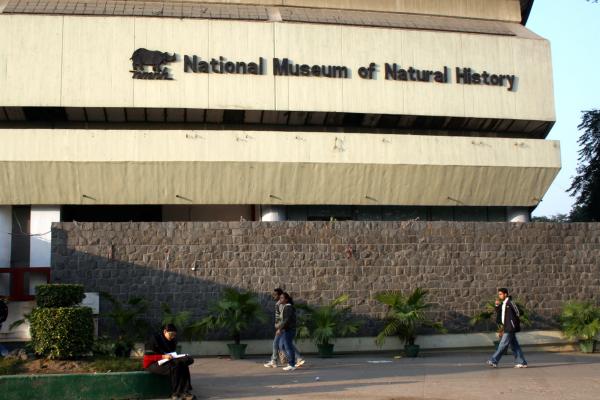
    Recently National Museum of Natural History caught fire due to adequate safeguards. It brought to our attention- the appalling state of our century old museums, and our utter disregard towards it.

    In today’s blog we will discuss at length as to what are the reasons behind it. What could be done to restore their legacy?

    As usual, we’ll start by learning about some notable institutions and harvest some important tid-bits for prelims along the way.

    Notable Museums of India

    1. National Museum, New Delhi (Subordinate Office under Ministry of Culture)

    source

    2. National Gallery of Modern Art, Bengaluru

    source

    3. Victoria Memorial Hall (VMH)

    source
    • Launched by Lord Curzon in 1906

    4. Asiatic Society, Kolkata

    source
    • Founder: British Indologist William Jones
    • Patronized by Warren Hastings (1st Governor of Bengal)
      • Notable: Charles Wilkins under his patronage published first English translation of Bhagvat Gita
    • Most important of the society’s achievements was the decipherment of the Brahmi script by James Prinsep in 1837
    • Successful decipherment inaugurated the study of Indian palaeography
    • First Museum in India was established by the Asiatic Society in 1814 called “Indian Museum” at Kolkata

    5. National Museum of Natural History (NMNH)

    source
    • Initiated in 1972 on the occasion of the 25th anniversary of India’s Independence
      • Although publically launched on 1978, coinciding with World Environment Day
    • Functions under the Ministry of Environment, Forest & Climate Change <and not Ministry of Culture>
    • NMNH has extended its geographical range by establishing Regional Museums of Natural History (Bhopal, Mysuru etc)

    Aims and Objectives of NMNH:

    • Museum of Natural History to depict its flora, fauna and mineral wealth
    • Environmental awareness among the masses (including conservation)
    • Educational programmes, guided tours and Teacher Orientation Workshops

    What are the issues with Indian Museums?

    1. Lack of a comprehensive Museum Policy

    • Salary and Personnel issues
      • Since the government does not assess or rate museums, there is no incentive for anyone to work.
      • Government does not pay professional salaries to personnel involved in restoration and conservation. Neither does it engage productively with Private and Civil Society
    • Revenue and Financial Issues
      • Currently there is no revenue model for museums, and the only source of money for them is from Ticket Sales that are meagre (Rates as low as 5 Rs for ASI renovated Museums)
      • Some revenue does come from increase in merchandise sales but any money a government museum makes- goes into a common kitty and is not spent on well performing museums.
      • Mumbai’s chhatrapati shivaji maharaj vastu sangrahalaya (MCSMVS) runs without government support By a handful of influential Mumbaites under a Board of Trustees
    • Lack of Privatisation
      • Government museums make up 90 per cent of the roughly 1,000 museums in India
      • They are banned from Partnerships with private individuals or organisations, and have to depend on Central funding even for day-to-day operations
    • Multiple ministries holding charges of various Museums <remember that not all museums come under Ministry of Culture, for eg- the recently fire hit NMNH>
    • Lack of autonomy

    2. Appalling state of Museum Management

    • 2011, UNESCO published a scathing report on the appalling conditions at India’s top 8 museums
      • Sub-standard maintenance, Lighting and signage, Archaic policies, no skilled manpower
    • Recently ASI lamented on the damages caused to 2nd BC Yakshi statue and a 3rd BC Mauryan lion, at the oldest museum of India in Kolkata due to careless handling by inadequately trained museum workers
    • Fire Safety Issues in Museums: That many of our museums would fail Fire Safety Audit requirements by NBC (National Building Code)
    • Failure in Mandate of Museums: That they act as mere closed-door guardians of treasures instead of disseminating them

    3. Security Issues

    • CISF is in charge of providing security to National Museum, New Delhi and Indian Museum in Kolkata.
    • But government has not been able to provide barrack accommodation in their campus as per CISF requirements.


    So how do we improve status of our Museums?

    1. Aforementioned UNESCO report and a 14-point museum reforms agenda put together by the Ministry of Culture in 2010-11 served as a wake-up call
    2. Instead of spending money in acquiring new collections, government should focus on launching Museum awareness drives. Relaunch old Museums with renewed vigor by highlighting their contemporary relevance to people.
    3. Increase people’s engagement to History by providing guided tours free of cost
      • For it is people that transform a museum from what is essentially just an archive.
    4. Administration should balance autonomy and accountability. Here we can take a cue from British Museums that are run by a government-appointed Board of Trustees.
    5. Digitization of information can cause the traditional model of museums (i.e. as static bricks-and-mortar) to expand to include virtual exhibits and high-resolution images of their collections that patrons can peruse.
    6. Train museum professionals by International Tie-ups. Organize exchange of Museum professionals as part of Biateral treaties between diplomatic exchanges.
    7. Improve Disaster Management of Museums
      • GIS and national library for ease of tracking and prioritizing evacuation of valuable artifacts
      • Follow NBC guidelines for strengthening museum structures
      • Cases of galleries must be shatter proof and bullet proof
      • In flood prone areas, valuable artifacts must not be stored in basements
    8. Involving Civil Society organizations by incentivising donation of precious artifacts for public viewing and conservation by NGOs like INTACH
    9. Training staff of museums to respond to disasters such as Fire, Earthquakes etc

    And how to reduce Fires in Museums?

    • Use of “plywood” for keeping the exhibits should be minimised
    • Ensure ventilation system in place
    • Ensure Fire Audit for the building has been conducted
    • Sprinkler system and water hydrants in the building, but should be functional- i.e. connected to a water source
    • Post Damage issues:
      • Structural damage due to fire may not keep building safe for long
      • Hence adequate reinforcements may be necessary, because complete collapse can’t be ruled out

    Annex: International Museum Day (IMD)

    • Theme of 2016 IMD: “Museums and Cultural Landscapes
    • Coordinated by the International council of museums (ICOM)
      • ICOM is a NGO maintaining formal relations with UNESCO <but not part of it>
      • ICOM also partners with entities such as the World Intellectual Property Organization, INTERPOL and the World Customs Organization,
    • International public service missions on fighting illicitly traded Artifacts and Ethical standards for Museums

    Published with inputs from Amar 
  • Prelims tit-bits- Environment and Ecology part 1

    1. Global Environment Facility

    It was established in October 1991 as a $1 billion pilot program in the World Bank to assist in the protection of the global environment and to promote sustainable development 

    It serves as financial mechanism for

    1. Convention on Biological Diversity (CBD)
    2. United Nations Framework Convention on Climate Change (UNFCCC)
    3. Stockholm Convention on Persistent Organic Pollutants (POPs)
    4. UN Convention to Combat Desertification (UNCCD)
    5. Minamata Convention on Mercury
    6. although not linked formally to Montreal Protocol on Ozone depleting substances, supports implementation of the Protocol in countries with economies in transition

    Discuss– Green Climate Fund and Green Bnds

    2. Earth summit, 1992 (UNCED)

    United Nations Conference on Environment and Development (UNCED) led to

    • UNFCC
    • CBD
    • UNCCD <combat desertification>

    Note – United Nation Conference on Human environment was held in 1972 at Stockholm

    Discuss-  what happened in Rio+20

    3. IPCC and UNEP

    • United Nations Environment Programme (UNEP) is an agency of United Nations and coordinates its environmental activities.
    • It was founded in 1972
    • It publishes Global Environment Outlook <GEO>
    • Intergovernmental panel on Climate Change (IPCC) was established in 1988 by two UN organization, UNEP and World meteorological Organization (WMO)
    • The IPCC does not carry out its own original research, nor does it do the work of monitoring climate or related phenomena itself. The IPCC bases it’s assessment on published literature.
    • So far 5 assessment reports have been published

    Discuss – who publishes global economic outlook

    Discuss- major findings of 5th assessment report

    Discuss- what is this Brundtland commission report? When was it published?

    4. Convention on Biological Diversity

    3 goals

    1. conservation of biological diversity <cartagena protocol on biosafety, 2003, to protect biodiversity from LMOs>
    2. sustainable use of its components
    3. fair and equitable sharing of benefits arising from genetic resources < Nagoya Protocol on Access to Genetic Resources and the Fair and Equitable Sharing of Benefits Arising from their Utilization, wef 2014>
    4. There are 20 Aichi <place in Japan> Targets for biodiversity under short term strategic plan for biodiversity 2011- 2020
    • COP 13, 2016 will take place in Cancum, Mexico
    • COP 12, 2014 was held in Pyeongchang, ROK and the theme was Biodiversity for Sustainable Development

    Discuss- Imp Aichi targets

    5. Biological Diversity Act, 2002

    enacted to meet the obligations under CBD

    3 tier structure

    • National Biodiversity Authority (NBA)-autonomous body, headquartered in Chennai
    • State Biodiversity Boards (SBB)
    • Biological management committees (for each local body)

    Imp.- foreigner, non-resident Indian or foreign company need to take permission from NBA before obtaining any biological resources or associated knowledge from India for research, survey, commercial utilisation while citizens orIndian companies need to take permission from the concerned State Biodiversity Board

    Result of research using biological resources from India cannot be transferred to a non-citizen or a foreign company without the permission of NBA

    Discuss- Traditional Knowledge Digital Library (TKDL)


More posts