💥UPSC 2026, 2027, 2028 UAP Mentorship (March Batch) + Access XFactor Notes & Microthemes PDF

Search results for: “”

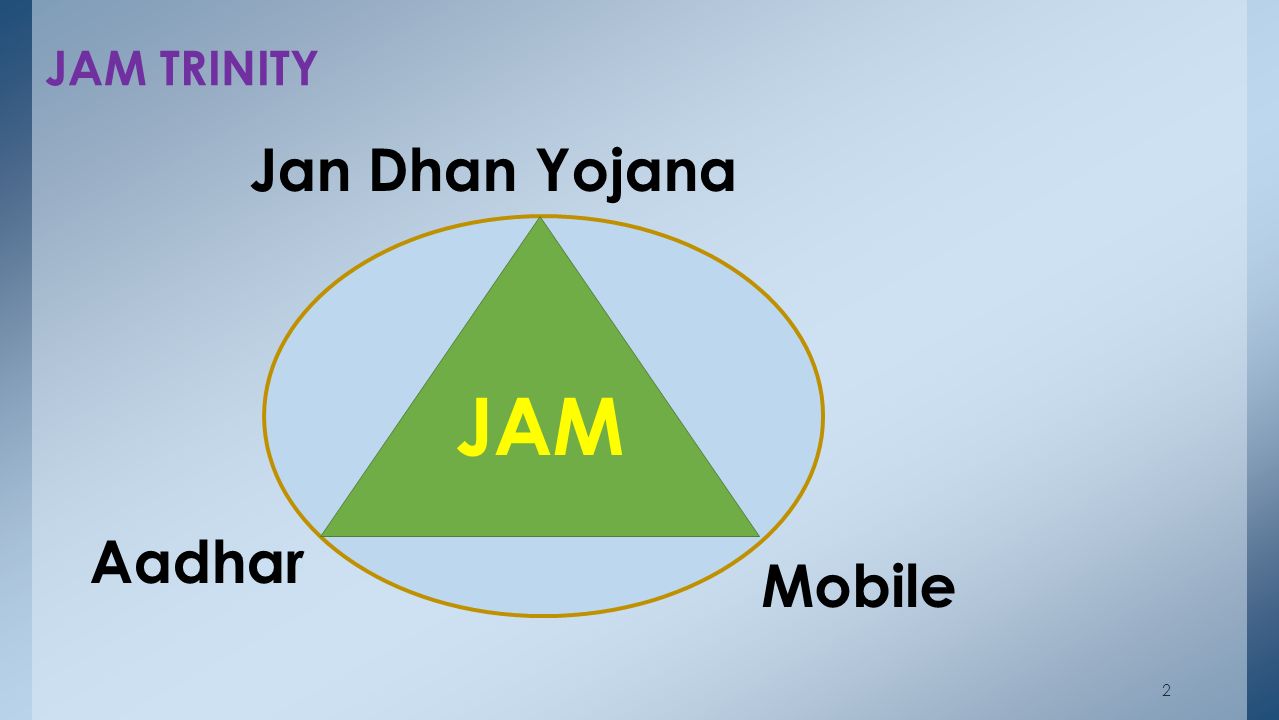
  • Economic Survey For IAS | Chapter 03 | Spreading JAM across India’s economy

    source-slideplayer.com
    source-slideplayer.com

    If you haven’t read chapter one and two, read them here first, Chapter two

    Data which you can quote in exam to buttress your point-

    • 975 million individuals now hold an Aadhaar card – over 75% of the population and nearly 95% of the adult population
    • Nearly one-third of all states have Aadhar coverage rates greater than 90%; and only in 4 states—Nagaland (48.9), Mizoram (38.0), Meghalaya (2.9) and Assam (2.4)—is penetration less than 50%
    • Basic savings account penetration in most states is still relatively low – 46% on average and above 75% in only 2 states (Madhya Pradesh and Chattisgarh).
    • only 27% of villages have a bank within 5 km
    • The Kenyan BC:population ratio is 1:172. By contrast, India’s average is 1:6630, less than 3% of the Kenyan level
    • spatial density of BC’s in India is 17% the Kenyan level
    • Mobile penetration-Only in Bihar (54%) and Assam (56%) is penetration lower than 60%
    • there are approximately 1.4 million agents or service posts to serve the approximately 1010 million mobile customers in India, a ratio of about 1:720

    This contrast of bank account penetration and accessibility v/s mobile penetration suggests that-

    • India should take advantage of its deep mobile penetration and agent networks by making greater use of mobile payments technology. Govt response- licensing of payment banks
    • Mobiles can not only transfer money quickly and securely, but also improve the quality and convenience of service delivery
    • For example, they can inform beneficiaries that food supplies have arrived at the ration shop or fertilizer at the local retail outlet

    Let’s come to the main issue of Direct Benefit Transfer using JAM-

    Suppose the govt wanted to transfer 1000$ to every Indian tomorrow. It would require-

    1. Ability to identify beneficiaries (Authentication / identification or first mile)
    2. Ability to transfer money to beneficiaries (bank account )
    3. Ability to withdraw money from bank accounts (accessibility to bank branches / last mile)


    First mile/ identification issues-

    • Failure on identification front leads to leakage – benefits intended for the poor flow to rich and “ghost” households, resulting in fiscal loss
    • It was due to administrative and political discretion involved in granting identity proofs like BPL cards, driving licenses and voter IDs (not giving BPL card to poor etc)
    • Aadhaar uses technology to replace human discretion and can better help in identification

    3 Broad issues-

    1. Targeting –  targeted subsidies are harder to JAM than universal programs, as they require government to have detailed information about beneficiaries.  For instance-  Subsidies targeted at the poor (like food and kerosene) require government to know people’s wealth while a universal subsidy like LPG requires no such information.
    2. Beneficiary databases: to identify beneficiaries, the government needs a database of eligible individuals in digital form to be seeded with Aadhaar. Socioeconomic caste census (SECC) data needs to be continuously updated to serve as a baseline in sectors where data does not exist.
    3. Eligibility: household-individual connection, while Aadhaar is an individual identifier, some schemes such as PDS ration are implemented at household level and spending priorities of male and female beneficiaries are often different.

    2. Middle mile- administrative challenge of coordinating government actors and the political economy challenge of sharing rents with supply chain interest groups.

    1. Within-government coordination: among various ministries, departments, state govt., departments etc.
    2. Supply chain interest groups: distributors need incentives before they invest in JAM infrastructure and if their interests are threatened, they would obstruct the spread of JAM.

    3. Last mile/ Transfer and Access issues (Bank account and access)- failure here  risks excluding genuine beneficiaries, especially the poor.

    1. Beneficiary financial inclusion: Bank accounts and accessibility to bank branches.

    In rural areas physical connectivity to the banking system remains limited, and BCs, banking correspondents and mobile money providers have not yet solved this last-mile problem

    2. Beneficiary vulnerability: amount of subsidy consumed by poor

    • exclusion error risks increase when the beneficiary population is poorer
    • For instance, the poorest 30% of households consume only 3% subsidized LPG consumption, but 49% of subsidized kerosene i.e. if excluded from LPG subsidy not much effect on poor but exclusion from kerosene subsidy will hurt them the most

    Where next to spread JAM?

    Policymakers should decide where to apply JAM based on two considerations of-

    1. Amount of leakages- subsidies with higher leakages will have larger returns from introducing JAM
    2. Control of the central government-control of central government will reduce administrative challenges of co-ordination and political challenges of opposition by interest groups (middle mile challenge)

    Fertilizer subsidies (huge leakages) and within-government transfers (govt control) are two most promising areas for introduction of the JAM

    JAM Preparedness Index:

    • Aadhaar penetration, basic bank account penetration and Banking Correspondents (BC) density are used as indicators for the indices
    • Preparation across states is varied with urban preparation being better than rural one
    • In urban areas, Madhya Pradesh and Chattisgarh show preparedness scores of about 70% while Bihar and Maharashtra, have scores of only about 25%
    • DBT rural preparedness has an average score of 3% and a maximum of just 5%(Haryana)

    It is clear that last-mile financial inclusion is the main constraint to making JAM happen in much of rural India. Jan Dhan’s vision must truly succeed before much of India can JAM

    What is this BAPU?

    Biometrically Authenticated Physical Uptake

    • It is an interim solution– while banking correspondent networks develop and mobile banking spreads
    • Beneficiaries verify their identities through scanning their thumbprint on a POS (point of sale) machine while buying the subsidised product—say kerosene at the PDS shop just like your biometric attendance machine
    • BAPU preparedness is much better (12%) than for Rural DBT preparedness (3%)

    Remarkable success of LPG DBT scheme (PAHAL) 

    Source-Pradhanmantrijoajana
    Source-Pradhanmantrijoajana


    • Use of Aadhaar has made black marketing harder (commercial establishments buying subsidiesd domestic cylinder)
    • LPG leakages have reduced by about 24 per cent with limited exclusion of genuine beneficiaries

    However, diversion of LPG from domestic to commercial sources continues, because of the differential tax treatment of “commercial” and “domestic” LPG (no tax on domestic unsubsidized cylinders (after 12 cylinders) v/s upto 30% tax on commercial cylinders)

    Solution- apply the One Product One Price principle and equalise taxes across end-uses

    Way forward on JAM

    In those areas where the centre has less control, it should incentivise the states to-invest in first-mile capacity (by improving beneficiary databases),deal with middle-middle challenges (by designing incentives for supply chain interest groups to support DBT) and improve last-mile financial connectivity (by developing the BC and mobile money space). States should be incentivised by sharing fiscal savings from DBT.

    • Centre can invest in last-mile financial inclusion via further improving BC networks and promoting the spread of mobile money
    • Regulations governing the remuneration of BCs need to be reviewed to ensure that commission rates are sufficient to encourage BCs to remain active

    What you have to read for yourself

    1. All the boxes from the chapter
    2. Open all the hyperlinks. Learn, understand and revise
    3. Read this chapter wiping every tear from every eye from last year’s economic survey to understand conceptual framework behind DBT and also follow this story on Direct Benefit Transfer

    Ask all your doubts in the comment section below or in doubts clearing forum . all your suggestions, criticism and feedback are most welcome.


    If you like what you read, show your support to Civilsdaily and give us a hi 5 at the Android Play – Click here.

  • Important Judgemets of Supreme Court in 2015 | Part 3


    Catch up on the previous links to this series:

    #5. Unwed mother can become sole guardian of a child

    ABC vs. State (NCT of Delhi)

    Summary:

    In a landmark judgment, a Supreme Court bench headed by Justice Vikramajit Sen held that an unwed mother in India can apply to become the sole guardian of a child, without giving notice to the father of the child and without disclosing his identity.

    The Court also directed that if a single parent/unwed mother applies for the issuance of a Birth Certificate for a child born from her womb, the Authorities concerned may only require her to furnish an affidavit to this effect, and must thereupon issue the Birth Certificate, unless there is a Court direction to the contrary.

    Background:

    • The child was born in 2010, and the woman petitioner raised him without any assistance from or involvement of his putative father
    • She desired to make her son her nominee in all her savings and other insurance policies
    • But was informed that she must either declare the name of the father or get a guardianship/adoption certificate from the Court
    • She then filed an application under Section 7 of the Guardians and Wards Act, 1890 (the Act) before the Guardian Court for declaring her the sole guardian of her son
    • Section 11 of the Act requires a notice to be sent to the parents of the child before a guardian is appointed
    • However, both the Courts (the guardian court and Delhi High court) held that she needed to disclose the father’s name to get his consent while filing a guardianship petition
    • Then she filed a petition in SC against ruling of the trial court and the Delhi High Court

    SC observations:

    • The predominant thought in these jurisdictions, as is in India, is to bestow guardianship and related rights to the mother of a child born outside of wedlock
    • The mother need not disclose the identity of the father and include him as a party to the guardianship petition in certain cases
    • The ruling relied on the best interest of the child, which requires that the procedural requirement should be done away with

    #6. Section 364A IPC awarding death penalty not unconstitutional

    Vikram Singh vs. Union of India

    Summary:

    The Supreme Court of India dismissed an appeal by a death row convict, and held that Section 364A awarding death penalty as a possible punishment, for kidnapping any person threatening to cause death in order to compel Government or any other person, to pay ransom, is not unconstitutional.

    Three Judge Bench of Justices T.S. Thakur, R.K. Agrawal and Adarsh Kumar Goel examined the background of the Section 364A and held that it was enacted for the safety and security of the citizens and the unity, sovereignty and integrity of the country.

    About Section 364A:

    • Introduced: 1993
    • Awards: death penalty or life imprisonment
    • For: kidnapping or abducting any person and threatening to cause death or hurt to such person
    • Protects: the Government, any foreign State or international inter-governmental organisation or any other person

    Observations:

    • Private persons are also covered:
      Section 364A is wide enough to cover even cases where the demand for ransom is made not as a part of any terrorist act but also for monetary gain from a private individual.
    • 364A deals with ordinary crimes too:
      The counsel for petitioner had argued- since the Kidnapping/abduction of a person for ransom is already covered by other provisions of IPC hence Section 364A was added only to deal with terrorist related ransom situations and not ordinary crimes.
      However, the SC held that ingredients of 364A are unique, and cannot be found in other provisions of IPC even in the provisions dealing with extortion.
    • Rule of Ejusdem generis does not apply:
      The meaning of the term ‘person’ can not be restricted to the ‘government’ or ‘foreign State’ or ‘international inter-governmental organisations’ only.
    • Section 364A not disproportionate:
      Citing various Indian and foreign decisions, the court laid down the principles governing proportionality of punishments
      ○ Punishments must be proportionate to the nature and gravity of the offences for which the same are prescribed
      ○ Prescribing punishments is the function of the legislature and not the Courts’.
      ○ The legislature is presumed to be supremely wise and aware of the needs of the people and the measures to meet those needs
      ○ Courts show deference to the legislative will and wisdom and are slow in upsetting the enacted provisions dealing with the quantum of punishment prescribed for different offences
      ○ Courts, however, have the jurisdiction to interfere when the punishment prescribed is so outrageously disproportionate or so inhuman or brutal which cannot be accepted by any standard of decency
      ○ Absence of objective standards for determining the legality of the prescribed sentence makes the job of the Court reviewing the punishment difficult
      ○ Courts cannot interfere with the prescribed punishment only because the punishment is “perceived to be” excessive

    What is Ejusdem Generis?

    • A Latin term which means “of the same kind
    • It is used to interpret loosely written statutes
    • Where a law lists specific classes of persons or things and then refers to them in general then the general statements only apply to the same kind of persons or things specifically listed


    Published with inputs from Swapnil
  • Art and culture (Indian painting)

    In art and culture part, how to approach the Indian painting portion? What should be the focus area of study? I’m asking this because it’s full of facts and I couldn’t scavenge out highlighting points.

  • Tribal Issues | Part 3 | Post-independence integration of tribals

    Moving on from our last discussed piece – Tribal Issues | Part 2 | Pre Independence Tribal Revolts

    The task of integrating the tribal people into the mainstream was extremely complex. This was because of the varied conditions under which they live in different parts of the country, and their different languages and distinct cultures. The 1971 Census recorded over 400 tribal communities numbering nearly 38 million people and constituting nearly 6.9% of the Indian population.

    Effects of colonialism

    Colonialism brought radical transformation of the tribals.

    #1. Isolation:

    Their relative isolation was eroded by the penetration of market forces and they were integrated with the British and princely administrations.

    #2. Debt-trap:

    A large number of moneylenders, traders, revenue farmers and other middlemen and petty officials invaded the tribal areas and disrupted the tribals’ traditional way of life.
    They were increasingly engulfed in debt and lost their lands to outsiders.
    They were often reduced to the position of agricultural labourers, sharecroppers and rack-rented tenants.
    Many were forced to retreat further into the hills.

    #3. Missionaries:

    Simultaneously, ‘missionaries were destroying their art, their dances, their weaving and their whole culture’.

    #4. Relation with forests:

    Tribals depended on the forest for food, fuel and cattle feed and for raw materials for their handicrafts.
    In many parts of India, the hunger for land by the immigrant peasants from the plains led to the destruction of forests, depriving the tribals of their traditional means of livelihood.
    To conserve forests and to facilitate their commercial exploitation, the colonial authorities bought large tracts of forest lands under forest laws.
    Laws forbade shifting cultivation and put severe restrictions on the tribals’ use of the forest and their access to forest products.

    Roots of tribal policy

    Heart of the tribal integration policy = preservation of the tribal people’s rich social and cultural heritage. Jawaharlal Nehru (JLN) = the main influence in shaping the govt’s attitude towards the tribals.

    Challenges in tribal integration (According to JLN):

    • To inspire them with confidence
    • To make them feel at one with India
    • To realise that they are part of India and have an honoured place in it
    • India to them should signify not only a protecting force but a liberating one

      JLN thought that Indian nationalism was capable of accommodating the uniqueness of the tribal people.

      Approach to tribal integration:

      There were two major approaches regarding the place to be accorded to tribals in Indian society:

    #1. To leave the tribal people alone, uncontaminated by modern influences & to let them stay more or less as they were.

    Problem: External influences had already gone too far into tribal areas to keep them isolated. Hence it was neither desirable nor appropriate to keep them isolated. Thus this approach was rejected.

    #2. Assimilating them completely and as quickly as possible into the Indian society. The disappearance of the tribal way of life was not to be regretted; it was to be welcomed because that would represent their ‘upliftment’.

    Problem: Loss of the tribals’ social and cultural identity and of the many virtues they possessed. This was also rejected.

    The JLN Approach

    ‘Making them an integral part of the Indian nation, even while maintaining their distinct identity and culture.’

    Two parameters:

    1. The tribal areas have to progress
    2. The progress should be in their own way

    The challenge was to combine these seemingly contradictory parameters.
    The 5 guidelines:

    1. Tribals should develop along the lines of their own genius- There should be no imposition or compulsion from outside
    2. Tribal rights in land and forests should be respected- No outsider should be able to take possession of tribal lands
    3. To encourage the tribal languages
    4. For administration, reliance should be placed on the tribal people themselves- administrators should be recruited from amongst them and trained
    5. No over-administration of tribal areas- The effort should be to administer and develop the tribals through their own social and cultural institutions

      The measures undertaken: To give shape to this policy, beginning was made in the constitution itself:

    Article 46: The state should

    • Promote the educational and economic interests of the tribals, with special care
    • Protect them from social injustice and all forms of exploitation, through special legislation

    Schedule V & VI:

    • The governors of the states in which tribal areas were situated were given special responsibility to protect tribal interests
    • They were also given the power to- modify central and state laws in their application to tribal areas; frame regulations for the protection of tribals’ right to land; protect them from moneylenders
    • Tribal Advisory Councils- In all states containing tribal areas; to advise on matters concerning the welfare of tribals.

    Commissioner for SCs & STs: Appointed by the President; to investigate whether the safeguards provided for them were being observed

    Political rights: Reservation of seats in the legislatures and positions in the administrative services for the STs.

    Other developments

    1. Legislative & executive action by the states- to prevent loss of tribal lands to non-tribal people and to prevent exploitation of the tribals by moneylenders
    2. Special facilities & programmes- for the welfare and development of the tribal areas and the tribal people
    3. Promotion of cottage and village industries and generation of employment
    4. Large expenditures were undertaken and large sums set apart in the Five-Year Plans for the purpose
    5. The funding for tribal welfare significantly increased after 1971

    A Critical assessment of the measures

    1. Weak execution of the well-intended measures- Due to divergence between centre and states & weak performance of Tribal Advisory Council
      Administrative apathy
    2. Lack of development of tribal languages- It led to slow spread of education among tribals
    3. Weakness in the justice delivery mechanism & lack of awareness about legal system- It led to continued alienation of tribal land, indebtedness, bonded labour
    4. Development of class differences among tribal societies & upper class tribals co-operating with non-tribals- This led to inter-tribal conflict and discontentment


    This series is a part of How to crack the Tribal Issues for IAS Mains?. For a much detailed understanding, read up with all the post in this section as we develop this story in full.

  • Tribal Issues | Part 2 | Pre Independence Tribal Revolts

    We plan to take up two major revolts where the details can help you answer some static questions @IAS Mains. Post that, we will help you with a consolidated table on the all the major uprisings and revolts in India (leaving none!) and then will cover the revolts of North East India in a separate table.

    The Santhal Uprising

    Santhals: Live in Daman-i-koh= area between Bhagalpur and Rajmahal
    Uprising = ‘hool’ in Santhal language

    This was one of the most massive revolt

    1. A determined attempt to expel the outsiders — the dikus
    2. Proclaimed the complete ‘annihilation’ of the alien regime

    Social conditions which drove them to insurrection

    • Zamindars, police, revenue & courts exercised a combined system of extortions, oppressive exactions, forcible dispossession of property, abuse & personal violence and a variety of petty tyrannies
    • Usurious interest on loans (50 – 500 %)
    • False measures at the haul and the market
    • Wilful and uncharitable trespass by the rich by means of their untethered cattle, tattoos, ponies and even elephants, on the growing crops of the poorer race

    How did the fire broke?

    • By 1854, the tribal heads, the majhis and parganites, had begun to meet and discuss the possibility of revolting.
    • Stray cases of the robbing of zamindars and moneylenders began to occur.
    • 30 June, 1855- tribal leaders called an assembly of 6000 Santhals, representing 400 villages, at Bhaganidihi.
    • They decided to raise the banner of revolt, get rid of the dikus once and for all, to usher in Satyug- ‘The Reign of Truth,’ and ‘True Justice.’

    Belief in the magic

    They believed that their actions had the blessings of God. Sido and Kanhu, the principal rebel leaders, claimed that Thakur (God) had communicated with them and told them to take up arms and fight for independence.

    Non tribal help

    1. Insurrection was helped by a large number of non-tribal and poor dikus.
    2. Gwalas (milkmen) and others helped the rebels with provisions and services;
    3. Lohars (blacksmiths) accompanied the rebel bands, keeping their weapons in good shape.

    Suppression:

    • Government realized the scale of the rebellion & organized a major military campaign
    • Mobilized many regiments, declared Martial Law, offered rewards of upto Rs. 10,000 for the capture of various leaders
    • The rebellion was crushed ruthlessly
    • More than 15,000 Santhals were killed while tens of villages were destroyed.
    • Sido was betrayed and captured and killed in August 1855
    • Kanhu was arrested by accident at the tail-end of the rebellion in February 1866
    • ‘The Rajmahal Hills were drenched with the blood of the fighting Santhal peasantry.’


    The Munda Rebellion

    Rebellion = ‘ulgulan’ in Munda language | Leader = Birsa Munda

    Reason:

    For over 30 years the Munda sardars had been struggling against the destruction of their system of common land holdings by the intrusion of jagirdar, thikadar (revenue farmers) and merchant moneylenders.

    The Break Out:

    • Birsa had a vision of God & declared himself to be a divine messenger & possessing miraculous powers.
    • Thousands supported him, seeing a messiah in him.
    • Under the influence of the sardars, the religious movement soon acquired an agrarian and political form.
    • Birsa moved from village to village, organizing rallies and mobilizing his followers on religious and political grounds.
    • On Christmas Eve, 1899, Birsa proclaimed rebellion to establish Munda rule in the land.

    The form of the revolt:

    • Encouraged ‘the killing of thikadars and jagirdars and Rajas and Hakims (rulers) and Christians.’
    • Armed with- swords, spears, battle-axes, and bows and arrows
    • Satyug would be established in place of the present-day Kalyug

    The end:

    Birsa was captured in the beginning of February 1900 and died in jail in June. The rebellion had failed. But Birsa entered the realms of legend.


    This series is a part of How to crack the Tribal Issues for IAS Mains?. For a much detailed understanding, read up with all the post in this section as we develop this story in full.

  • Tribal Issues | Part 1 | Pre Independence conditions

    Following up from the introduction post on tribal issues.

    In this post, you are going to read up about the events and factors which changed the tribal life with the advent of british in India. Summarising the developments under the major heads.

    The territorial living

    Over centuries, the Tribals have evolved an intricate custodial mode of living. Tribals belong to their territories, which are the essence of their existence. Back in history, the Tribals were in effect self-governing ‘first nations’. In general and in most parts of the pre-colonial period, they were part of the ‘unknown frontier’ where the rule of the reign in fact did not extend. Tribals governed themselves outside of the influence of the particular ruler.

    The entry of Europeans and subsequent colonisation transformed the relationship between the mainstream communities and tribal communities.

    Exploitation for business

    • They used forest produces for their business.
    • Trees were cut down for timber. Forestland was used for tea, rubber and coffee plantations.
    • Train lines and roads were built in forest areas. Routes from forest to sea coasts were built to transport goods.

    Example 1: The early years of the expansion of the railway network, 1853 onwards, led to tremendous deforestation in peninsular India due to the railways’ requirements of fuel wood and construction timber.

    Example 2: The Grand Trunk Road, which was built through tribal labour, helped in business, and there was an inflow of outsiders adding to the population. The so-called outsiders dominated the tribals in many ways. Most of the tribal families lost their agricultural lands and lived in a state of starvation. The tribals were also victims of a host of middlemen who operated between the new rulers and the tribals.

    Private property

    • The introduction of the alien concept of private property began with the Permanent Settlement of the British in 1793 and the establishment of the “Zamindari” system.
    • It gave control over vast territories, including tribal territories, to feudal lords for the purpose of revenue collection by the British.
    • This started the forced restructuring of the relationship of Tribals to their territories as well as the power relationship between Tribals and ‘others’.

    Missionaries

    • The missionaries, with the patronage of the government, spread Christianity among the tribals and helped them with health care and education.
    • Unlike Hinduism and Islam, Christianity spread widely in the tribal regions with the patronage of the British and established a firm footing.
    • The result was a feeling of discontent and unrest among the tribals.
    • At this stage, a number of movements took place. They raised protesting voices against the oppression and exploitation by landlords and British rulers who in general, stood by the side of the landlords.

    Some notable movements are the Kherwar movement (1871 -80), the Birsa Munda Movement (1874-1901), the Bhil Rebellion (1879-80), the Sardari Movement (1881-95), the Bastar Uprising (1910-11), and the Tana Bhagat Movement (1920-35).

    What happened in the North-East?

    1. Historically the north-east was never a part of mainland India.
    2. The colonial incorporation of north-east took place much later than the rest of the Indian subcontinent.
    3. Assam came under British control in 1826, Bengal was annexed in 1765, Garo Hills in 1873, Naga Hills in 1879 and Mizoram in 1881-90.

    Consequently, the struggles for self-determination took various forms as independence to greater autonomy.

    Factors inherent in Indian system which did not work for Indian Tribals

    #1. Caste based religious system:

    The predominant caste-based religion sanctioned and practiced a rigid and highly discriminatory hierarchical system.

    This became the natural basis for the altered perception of Tribals by the ‘others’ in determining the social, and hence, the economic and political space in the emerging larger society.

    #2. Upper caste rule:

    Relegating the Tribals to the lowest rung in the social ladder was but natural. And it formed the basis of social and political decision making by the largely upper caste controlled mainstream.

    The ancient Indian scriptures, scripted by the upper castes, also further provided legitimacy to this.


    This series is a part of How to crack the Tribal Issues for IAS Mains?. For a much detailed understanding, read up with all the post in this section as we develop this story in full.

  • How to crack the Tribal Issues for IAS Mains?

    Tribal Affairs/ Tribal Issues are one of those important subjects which have a healthy mix of static + dynamic portions across IAS Prelims and Mains.

    #1. Syllabus

    Prelims: History of India and Indian National Movement => includes all pre-independence movements, reasons etc

    Mains:

    1. Modern Indian history from about the middle of the eighteenth century until the present- significant events, personalities, issues
    2. The Freedom Struggle – its various stages and important contributors /contributions from different parts of the country
    3. Post-independence consolidation and reorganization within the country => tribal policy post-independence & other developments
    4. Society Point of View: Salient features of Indian Society, Diversity of India
      Population and associated issues, poverty and developmental issues, urbanization, their problems and their remedies
    5. Effects of globalization on Indian society
    6. Current events of national and international importance- This is a “nuclear bomb”, it can include anything from current affairs related to tribals and areas around it. In last few years, UPSC has even asked to match pairs of tribes and their location. So be careful not to miss it.

    #2. Relevance / expected questions

    IAS Prelims – Match the pairs of different tribal revolts, their leaders & reasons

    IAS Mains – Reasons for revolts, reasons for failure of revolts etc

    Examples –

    1. The tribal (or peasant) revolts failed to achieve much. Analyse
    2. Tribal revolts were not in the nature of freedom struggle but were localised and context specific. Comment.

    #3. What is an aspirant exactly supposed to do?

    1. First read it all and understand the context. This gives a clear idea of why it all happened?
    2. Then revisit it frequently (but give less time) => this makes for faster revision and helps in memorisation.

    So, focus here – Get the context and remember the facts

    #4. Useful resources

    1. India’s Struggle for Independence by Bipin Chandra
    2. India Since Independence by Bipin Chandra
    3. CD’s existing stories on latest developments on Tribal affairs –
    4. Along with this, we are starting a series of sequential posts on as a follow up to this article to help you plug your learning gaps

    More in this series:

  • Discussing Budget 2016-17 | Skills and Job Creation

    In this section, we will deal with the sector which seeks to empower the youth – Skills and Job Creation.

    Take a look at basic statistics, which will give you a larger picture about govt.’s approach towards Education, Skills and Job Creation, where the emphasis is to make India a knowledge based and productive society:

    • 1500 Multi-skill training institutes to be set up
    • Objective to skill 1 crore youth in the next 3 years under the PM Kaushal Vikas Yojna
    • National Skill Development Mission has imparted training to 76 lakh youth


    Focus Areas

    #1. Skill India Mission

    The National Skill Development Mission has created an elaborate skilling eco-system and imparted training to 76 lakh youth. Govt. will set up 1500 multi-Skill training institutes across the country, to capitalise our demographic advantage.

    Govt. will further scale up Pradhan Mantri Kaushal Vikas Yojna to skill one crore youth over the next 3 years.

    Benefits: The emphasis on skill development will resonate with India’s youth seeking to improve their employability quotient.

    Career Portal

    Govt. had launched National Career Service in July, 2015, where 35 million jobs seekers have registered. Govt. will make 100 Model Career Centres operational by the end of 2016-17. It will also inter-link State Employment Exchanges with the National Career Service platform.

    New Initiative

    Certification

    Govt. will set up a National Board for Skill Development Certification in partnership with the industry and academia.

    Benefits: This will help formally skilled youth to be recognised for employment purposes in public & private sector.

    Massive Open Online Courses

    Entrepreneurship education and training will be provided in 2200 colleges, 300 schools, 500 govt ITIs and 50 vocational training centres through Massive Open Online Courses. Govt. will make efforts to connect aspiring entrepreneurs, particularly those from remote parts of the country, to mentors and credit markets.

    Job Creation

    Govt of India will pay the Employee Pension Scheme contribution of 8.33% for all new employees drawing a salary of up to Rs.15,000 a month and enrolling in EPFO, for the first 3 years of their employment.

    Govt. will amend Income Tax Act in order to broaden the scope of employment generation incentives.

    Benefits: This will incentivize the employers to recruit unemployed persons and that too in the formal sector. It could also lead to migration of informal sector workers to the formal sector. Of the 470 million plus workforce in India, less than 10% are in the formal sector.

    Retail Sector

    In order to simplify the regulations for the retail sector, which is the largest service sector employer in the country, Govt will circulate a model Model Shops and Establishments Bill, which can be adopted by the State Govts on voluntary basis. The model bill seeks to allow small and medium shops to remain open all 7 days a week on voluntary basis. This will help in creation of new jobs in retail sector.

    Challenge

    • In India, only about 2.2% of workforce had received formal vocational training. Even those who had received any form of vocational training, the majority had either acquired a hereditary skill or learned on the job
    • Without access to affordable and appropriate skills training, young people, particularly those leaving rural areas and small towns for big cities, will be stuck in low-wage, insecure jobs that will leave them in want or poverty
    • Job creation has not kept pace with India’s demographic momentum, and in the coming days, it will pose a problem for a skilled workforce

    Learn about Deen Dayal Upadhyaya Grameen Kaushalya Yojana and Agency involved in Skill IndiaFollow our story on Skill India too.

    PS: Please click on the green hyperlinked text to read more about the concepts. Revise and revise & feel free to ask pertinent questions.


    Published with inputs from Pushpendra | Image: Finmin
  • Medium Issue

    What shld be the strtgy for Hindi Medium Aspirants…??

  • Discussing Budget 2016-17 | Education

    In this section, we will deal with the sector which will determine how well we use our demographic dividend – Education Sector.

    Take a look at basic statistics, which will give you a larger picture about govt.’s approach towards Education, Skills and Job Creation, where the emphasis is to make India a knowledge based and productive society:

    • Allocation for education sector – Rs 68,968 cr
    • Higher Education Financing Agency to be set-up with initial capital base of Rs 1000 Crores
    • Digital Depository to be set-up for certificates, mark sheets, etc
    • Initiative to make world-class teaching and research institutions

    budget_edu

    Focus Areas

    #1. School Education 

    Govt. will allocate increasing share for quality improvement under Sarva Shiksha Abhiyan. 62 new Navodaya Vidyalayas will be opened in the remaining uncovered districts over the next two years

    #2. Higher Education

    Govt. will ensure an enabling regulatory architecture to empower 10 public and 10 private institutions to emerge as world-class Teaching and Research Institutions. This will enhance affordable access to high quality education for ordinary Indians.

    Benefits: Govt. seeks to stress on the importance of teaching along with recognising the role of private sector in the education sector – not all world-class institutions that emerge from India need to be publicly funded.

    Read more about The State Of Affairs In Higher Education

    New Initiative

    Finance

    Govt. will setup a Higher Education Financing Agency with an initial capital base of Rs. 1,000 crores. It will be a not-for-profit organisation that will leverage funds from the market and supplement them with donations and CSR funds. These funds will be used to finance improvement in infrastructure in the top institutions.

    According to ministry of corporate affairs, education and skill development attracted 23% of the CSR spending for FY15.

    Benefits: Since Banks are finding it difficult to manage the NPAs from the education loans, a dedicated agency would give the much needed thrust.

    Digital Depository

    Govt. will establish a Digital Depository for School Leaving Certificates, College Degrees, Academic Awards and Mark sheets, on the pattern of a Securities Depository. This will help validate authenticity, safe storage and easy retrieval of these documents.

    Read more about Digital India Initiatives

    Criticism

    • There is little to offer in terms of any concrete steps to improve the quality of elementary education
    • Teachers training does not figure in this year’s budget
    • The whole purpose of CSR is defeated if the govt lays down the agenda on what the priority areas for companies should be. It also shifts the accountability for CSR from the company to the govt
    • It seems that the Rs.1000 crore fund will be mostly used for redressal of the problems of students seeking educational loan. Also, the current outstanding educational loans are around Rs.50,000 crore, how a fund of Rs.1,000 crore will resolve the massive requirements of educational loans

    Future

    There is group of secretaries proposal to phase out Sarva Shiksha Abhiyan as it currently exists and replace it with an outcome-based financing program that links 20% of the education budget to performance on outcomes

    Read more about Ministry of Human Resource Development : Important Updates

    PS: Please click on the green hyperlinked text to read more about the concepts. Revise and revise & feel free to ask pertinent questions.


    Published with inputs from Pushpendra | Image: Finmin

More posts
