Food Safety Regulations in India and the Way Forward
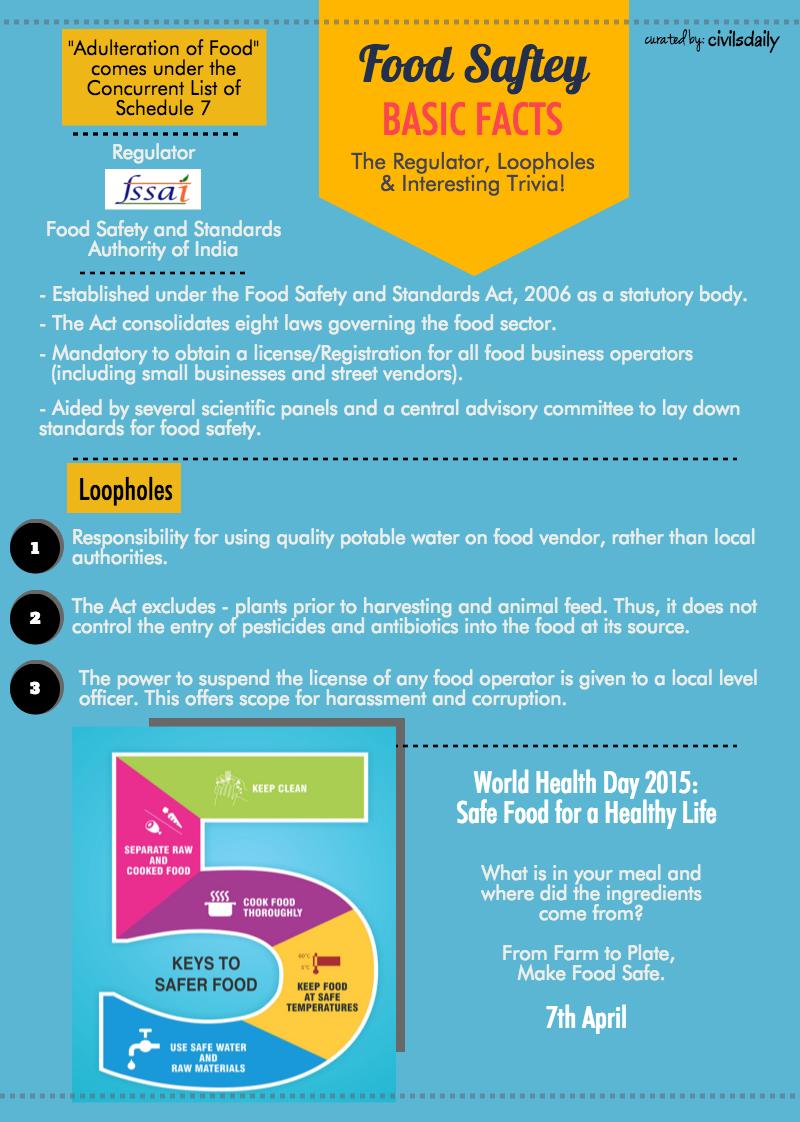
From junk food bans to street food regulations, FSSAI has been in news all the year round and most notoriously for the Maggie ban! UPSC does not necessarily goes for the most hot topic in news which is the Maggie ban in this context but this whole episode opens up a hitherto unknown organisation to us – The FSSAI.
And what must a worthy IAS aspirant do? Study the ins and outs of this organisation – food safety regulations – its latest victories and controversies! And that’s not it, one more reason which makes this topic important is the declaration of the World Health Day’s 2015 theme – Food Safety.
So, what all have been the cases of FSSAI activism this year? For starters, these guys banned junk food in Delhi school canteens!
- Acting on a public interest writ petition, the Delhi HC had earlier directed FSSAI to regulate sale of foods high in salt, fats and sugar in and around 50 metres of schools.
- Court also directed CBSE to consider including the adherence to these guidelines while giving affiliation to the schools.
- The draft guidelines suggested creation of a canteen policy and education program to inform students and parents of link between ‘High in fats, salt & sugar’ (HFSS) foods and non-communicable diseases like obesity, hypertension, diabetes etc.
But what was the need to do this? Glad you wondered!
A study published in the noted medical journal Lancet says India is just behind US and China in this global hazard list of top 10 countries with highest number of obese people.
Fair enough, what about the street food that we devour?
This is where CSE came in and presented a case for regulation on the street food. They want the agencies to:
- Strengthen the implementation and enforcement of the Food Safety and Standards Act (FSS) .
- Improve food testing laboratory infrastructure and skills.
- The Food Safety and Standards Authority of India (FSSAI) should set maximum residual limits for antibiotic residues in chicken etc.
- Set a national level disease surveillance and public alert system.
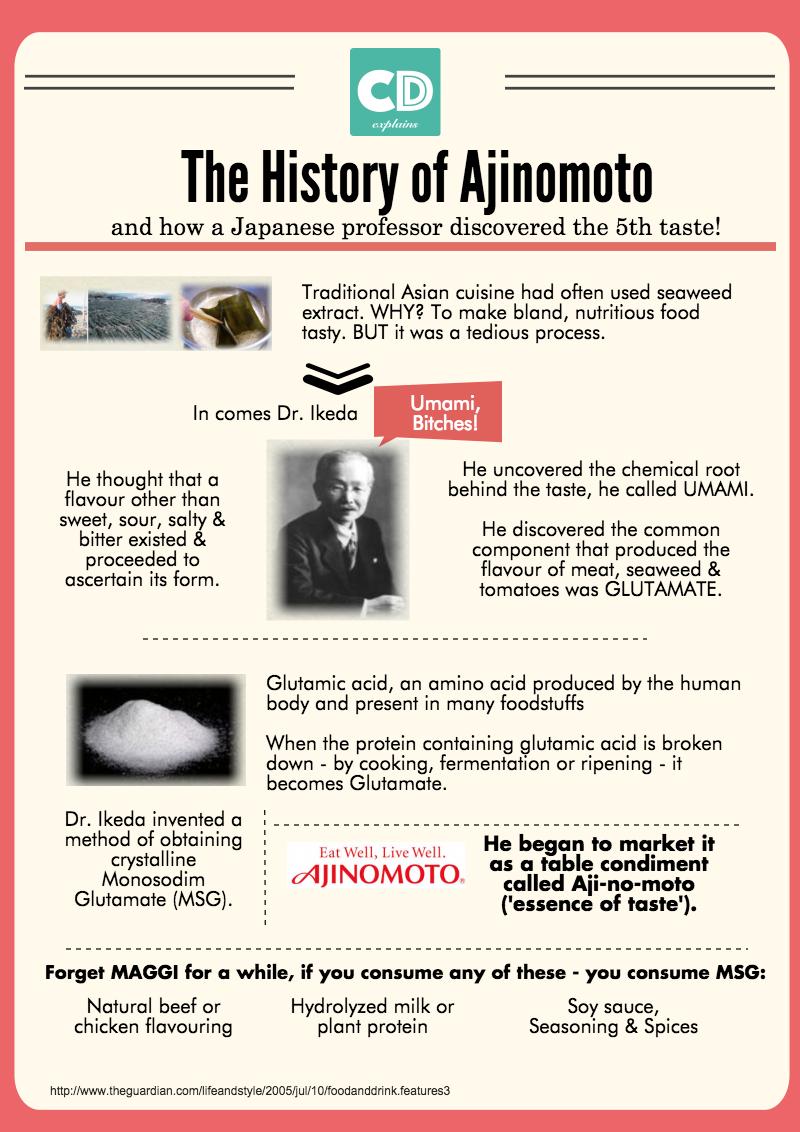
All this is well and fine but you probably still want to know what happened with the Maggi case? More particularly, what was the issue with MSG (Ajinomoto)!
Here’s all that we could find on the MSG/ Ajinimoto issue. UPSC Might not ask a direct question but can probably check you on a quick objective (IAS 2016) or you can use this as a quick criticism point on FSSAI’s propensity to escalate issues!
Some major criticisms that came in the way of FSSAI:
- It is time we wake up and work on a science-based approach and move forward rapidly.
- If we have periodical evaluation in aviation for pilots, why not for analysts who test our food?
- Ideally, scientists should be involved in monitoring at every stage, including sampling protocols, setting standards, and testing and simulation.
- The state labs are short of analytical personnel and ill-equipped to perform to capacity as compared to private labs which are approved by FSSAI.
Published with inputs from Sumer.