💥UPSC 2026, 2027, 2028 UAP Mentorship (March Batch) + Access XFactor Notes & Microthemes PDF

Search results for: “”

  • Two committees to ensure consistency in tax policies

    The Union Government has constituted two new committees:

    1. Tax Policy Research Unit (TPRU)
    2. Tax Policy Council (TPC)
    • Aim: To streamline the taxation policy and administration
    • These committees have been constituted based on the recommendation of the Tax Administration Reform Commission (TARC)

    Tax Policy Research Unit

    • The TPRU will be headed by Revenue Secretary
    • It will carry out studies on various topics of fiscal and tax policies
    • It will assist the TPC in taking appropriate policy decisions and shall prepare tax proposal and analysis of legislative intent
    • It will also take decisions on expected increase or decrease in tax collection and economic impact
    • It will comprise of officers from CBEC, CBDT as well as economists, researchers, statisticians and legal experts

    Tax Policy Council

    • The TPC will help the government in identifying key policy decisions for taxation
    • It shall aim to have a consistent and coherent approach to the issue of tax policy
    • It will look at all the research findings coming from TPRU and suggest broad policy measures for taxation
    • The council will be headed by Union Finance Minister
    • It shall have 9 members – Minister of State for Finance, Commerce Minister, NITI Aayog Vice-Chairman, Chief Economic Advisor and Finance Secretary
    • It would also have secretaries from the department of Revenue, DEA, DIPP and Ministry of Commerce

    Background:

    • Presently, taxation policy and administration is handled in the CBDT and the CBEC
    • But there are also two independent boards Tax Research Unit (TRU) and Tax Policy and Legislation (TPL) wings which are also sending proposals to the Union Finance Minister
    • TARC in its First Report had identified handling of tax policy and related legislation as one of the areas in need of structural modifications
    • In order to bring consistency, multidisciplinary inputs and coherence in taxation policy making, it had recommended establishment of Tax Council supported by a common Tax Policy and Analysis (TPA) unit to cater to needs of both direct and indirect taxes

  • [E&B special] 6 Animal Welfare Organisations of Importance in India

    If you have been keeping up with news, then you would know that very recently, PETA issued a statement that government has banned the use of animals in tests for soaps and detergents. This welcome news opens us up to do a quick recap of some of the well known animal welfare organisations in India working for this worthy cause.

    #1. Bombay Natural History Society (BNHS)

    • Founded on 15 September 1883, is one of the largest non-governmental organisations in India engaged in conservation and biodiversity research
    • Headquarters: Hornbill House, Mumbai
    • The BNHS logo is the great hornbill, inspired by a great hornbill named William, who lived on the premises of the Society from 1894 until 1920

    Trivia:

    #2. Hoollongapar Gibbon Sanctuary

    A golden-capped Langur
    A golden-capped Langur. Photo: WikimediaCommons
    • An isolated protected area of evergreen forest located in Assam, India. The sanctuary was officially constituted and renamed in 1997
    • The Hoollongapar Gibbon Sanctuary contains India’s only gibbons – the hoolock gibbons, and Northeastern India’s only nocturnal primate – the Bengal slow loris

    Trivia:

    While the western hoolock gibbon is listed as an endangered species by the International Union for Conservation of Nature (IUCN), the establishment of the Gibbon Conservation Centre in 2004 has made a difference, leading to a considerable increase in its numbers.

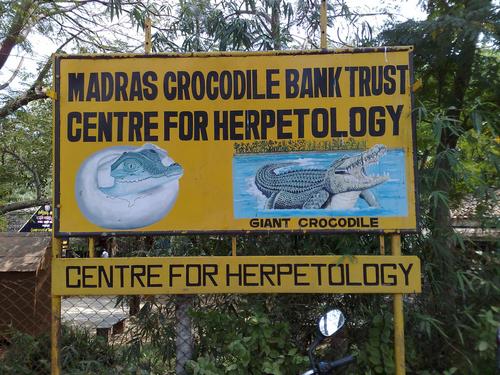
    #3. Madras Crocodile Bank Trust

    • A reptile zoo and herpetology research station
    • What’s herpetology? The branch of zoology concerned with the study of amphibians (including frogs, toads, salamanders, newts, and caecilians (gymnophiona) and reptiles
    • The bank is the first crocodile breeding centre in Asia and comes under the purview of the Central Zoo Authority, Ministry of Environment and Forests

    The core purpose of MCBT was saving 3 Indian endangered species of crocodile—the marsh or mugger crocodile, the saltwater crocodile, and the gharial.

    #4. PETA India

    • PETA India, based in Mumbai, was launched in January 2000
    • PETA India operates under the simple principle that animals are not ours to eat, wear, experiment on or use for entertainment
    • The group has launched investigations of jallikattu events, circuses that use animals in performances, and filthy horse stables in Mumbai, among others

    Trivia:

    Aside from the recent news, PETA India has in past also uncovered gruesome abuse, including the live scalding, starvation and mutilation of birds, and conditions that could lead to potential health hazards, including E. coli, salmonella and bird flu.

    #5. Wildlife Protection Society of India

    • WPSI is one of the most respected and effective wildlife conservation organisations in India
    • Has no direct links to the government
    • Primary focus has been curbing the illegal poaching of tigers and helping GoI with investigation and crime data regarding that

    WPSI is different from theWildlife Institute of India (WII), which is an autonomous institution under the Ministry of Environment Forest and Climate change, Government of India.

    #6. [Bonus] WWF-India

    • Parent organisation: World Wide Fund for Nature (WWF), which is an international non-governmental organization founded on April 29, 1961
    • The group’s mission is “to stop the degradation of the planet’s natural environment and to build a future in which humans live in harmony with nature.”
    • WWF’s giant panda logo originated from a panda named Chi Chi that had been transferred from Beijing Zoo to London Zoo in 1958!
    • Publications: WWF publishes the Living Planet Index in collaboration with the Zoological Society of London.
  • Khongjom day

    The Anglo-Manipur War was an armed conflict between the British Empire and the Kingdom of Manipur
    Khongjom Day is observed on the 23rd April every year by the Government of Manipur to pay tribute

  • Anti-Defection law

    Are anti-defection laws exercised by Judiciary also? Like Disqualification of Lalu Yadav on grounds of Fodder Scam!!

  • Suggestion for mains answer writing

    Hi,

    From last few weeks I am trying to start my answer writing practice for mains but not able to due to lots of reason.

    Can you please suggest how to approach for initial state or right approach for that.

    Thanks,

  • UPSC notification delayed?

    Anyone knows the reason why?

  • Economics MCQs from an Intl. ECO Newspaper

    I am posting these ones from some good newspapers sources. Donno how you will all appreciate but …

    1. Gold tranche referes to…?
    a.) A loan system of the World Bank
    b.) One of the operations of a Central Bank
    c.) A credit system granted by WTO to its members
    d.) Quota holding norm under the IMF

    2. The highest form of economic integration is
    a.) European Economic Community
    b.) European Union
    c.) European Monetary Union
    d.) ASEAN

    3. Refugee capital is?
    a.) Investment made by refugees in the US
    b.) Investment made by the UNCTAD in developing countries to empower the refugees
    c.) Aid given y the World Bank to promote the welfare of refugees in war tone countries
    d.) Investment made by developed country investors in developing countries

    4. What is international development association?
    a.) A voluntary association of developing countries
    b.) A federation of International lending agencies
    c.) An affiliate of World Bank
    d.) An organization of donor countries of European Union

    5. The REER is calculated with?
    a.) Pound Sterling
    b.) Dollar
    c.) SDR
    d.) A basket of selected currencies

    6. The infant industry argument is often advocated wth?
    a.) Price discrimination
    b.) Product diversification
    c.) Protection
    d.) Resource mobilisation

    7. Dumping aims at flooding a foreign country with…
    a.) High-priced commodities
    b.) Low-priced commodities
    c.) Commodities with similar prices
    d.) Commodities with fluctuating prices

  • What do you want to read next?

    Hello,

    If you were to decide for once, the theme or topic that CD should write its next blog on, what would it be?

    We have tried to cover static aspects of the syllabus which are more meaningful for the imminent IAS Prelims by clubbing them in “Collections”. 

    We hope you enjoyed reading through these ones – 

    Keeping in mind the mood swings of UPSC, we started with some compilations which can be useful wrt prelims –

    And we revived the Discussions module with a motive to dig deep into issues and come out with Mains worthy points/ questions. Click to read them here.

    BUT

    We want you to come forth and let us know the topics which you like more clarifications on – Prelims worthy themes and topics where you need a better compilation or a better clarification. 

More posts