💥UPSC 2026, 2027, 2028 UAP Mentorship (March Batch) + Access XFactor Notes & Microthemes PDF

Search results for: “”

  • [Registration Starts] Campus Ambassadors for Civilsdaily


    We are following up on our week old post on *How to Help Civilsdaily Grow*

    1. This initiative is strictly for college going students who have completed the first year.
    2. We do not require you to send in your CVs/ Resume. We have built a very short, cool application form and we would like you to fill just that for us! Fill it up for us, please!

  • Electoral Reforms In India

    Time and again, many electoral reforms have been proposed by various committees, Law Commission and ECI itself. A discussion on these crops up during every election. We’ve tried to comprehensively list the proposed reforms under various sub-headings. A brute-force memorization of all this information is not required. Go through this list so that you have a background while reading news items on Electoral Reforms and ECI.
    I.Amendment to the Constitution of India
    1. Constitutional protection for all members of the Commission.
    2. Budget of the Commission to be ‘charged’ on the CFI.
    3. Independent Secretariat for the Commission.
    II.Electoral Roll Matters
    While Army personnel are allowed to vote, Navy and Airforce are not.
    There are no provisions for overseas electors to vote despite being eligible to do so. Amendments proposed provide the option of proxy voting or postal ballot voting.
    At present, the Electoral Rolls prepared by the Election Commission are not used by the State Election Commissions leading to duplication of effort and errors costing both in terms of time and money. Common Electoral Rolls to be used in local elections was a recommendation endorsed by the Law Commission.
    III.Election Management Issues
    At present, filing false declarations about the background of the candidate attracts penalty under Section 125A of The Representation of the People Act, 1951. The offence is punishable by up to 6 months, or with fine, or with both.
    The Commission has proposed that the punishment under section 125A should be increased to 2 years’ imprisonment without the alternative clause of  fine, and also that the offence should be included in the list of offences listed in sub-section (1) of section 8 which would attract disqualification on conviction irrespective of the term if sentence. The Commission also proposed that furnishing of false affidavit or suspension of material information in the affidavit should also be specified as ground for challenging the election under section 100 (1) of The Representation of the People Act, 1951.
    In S. Subramaniam Balaji vs Govt. Of T.Nadu & Ors, the SC observed that “although, the law is obvious that the promises in the election manifesto cannot be construed as ‘corrupt practice’ under section 123 of The Representation of the People Act, the reality cannot be ruled out that distribution of freebies of any kind, undoubtedly, influences all people. It shakes the root of free and fair elections to a large degree. In this regard the EC has proposed an amendment to RPA, 1951 allowing Adjournment of poll or countermanding of elections on ground of bribery.
    IV.Election Officials and Logistics
    Use of Totalizer Machines
    EVM totalizer can count votes of multiple Electronic Voting Machines (EVMs) simultaneously. This way the results of votes in a group of EVMs can be taken without ascertaining the result in individual EVM corresponding to polling booth.
    As per the present provisions in The Conduct of Elections Rules, 1961, votes in the EVMs are to be counted polling station wise, which leads to situations where voting pattern in various localities/pockets become known to everyone. There is a view that this can result in victimization and/or discrimination and intimidation of electors of particular localities. This issue can be addressed by use of totalizer that can be used for taking out the results of voting in a group of 14 EVMs without revealing the votes in individual EVMs.
    V.Nomination of Candidates
    Contesting the elections from 2 seats  – At present as per RPA 1951, a person is allowed to contest from 2 seats. However it is imperative that he has to vacate one of the two seats should he win both. This leads to holding by-elections which causes inconvenience to voters and financial expenditure. The amendment to RPA 1951 calls for removal of this provision of contesting from 2 seats.
    VI.De- Criminalization of politics
    2. Misuse of religion for electoral gain
    3. Making bribery in elections a cognizable offence
    VII.Reforms relating to Political Parties
    1. De-registration of political parties
    2. Tax Relief for Political Parties
    3. Compulsory Maintenance of Accounts by Political Parties
    4. Accounting and Auditing Report of Political Parties
    5. Form 24A under Rule 85B of The Conduct of Elections Rules, 1961
    6. Prohibition on Anonymous Donations
    7. Sale of Coupons
    8. Maintenance of separate bank accounts by each contesting candidate for poll expenses
    9. Cap on Expenditure by Political Party on a Candidate for election campaign
    10. Ceiling of campaign expenditure by political parties
    11. Limit the Number of Star Campaigners
    12. Time period for maintaining books of account under section 77 of The Representation of the People Act, 1951
    VIII.Election campaign and advertisements
    1. Ban on exit polls and opinion polls
    2. Ban on Government Sponsored Advertisement before elections
    3. Section 126 of The Representation of the People Act, 1951
    4. Paid news in connection with elections
    5. Section 125A of The Representation of the People Act, 1951
    IX.Election Expenses and Election Petitions
    1. Ceiling on Election Expenditure to legislature from Local Authorities’, Graduates’ and Teachers’ Constituencies
    2. Election expenditure in case of adjournment of poll under section 52 of The Representation of the People Act, 1951
    3. Appointment of additional judges in the High Courts
    PDF for proposed electoral reforms –  PROPOSED ELECTORAL REFORMS
  • A Primer on India – Sri Lanka Foreign Relations


    The Broad Sketch of our bilateral relationship

    • India and Sri Lanka hold important position in the Asian continent based on location, people, ethnicity, culture.
    • The relationship between the two countries were good since their  independence until the Sri Lankan Civil War, with the Indian intervention through Indian Peace Keeping Force (IPKF).
    • The key issues which are important for India are  fishermen issue, Kachchatheevu, 13th amendment and the Chinese influence in Sri Lanka.

    Historical issues and their recurrence

    • Sri Lanka is very much close to India and so the Indian fishermen tend to move away into the Sri Lankan waters very often. This is a recurring issue when we follow the news everyday. But the issue arises due to the maritime demarcation between India and Sri Lanka.
    • In 1974, the Indian government recognized Kachchatheevu as a Sri Lankan territory on a conditional agreement with few provisions for the Indian fishermen.

    What are the key provisions?

    • The Indian government wanted the Sri Lankan government to allow the fishermen from India to use the Kachchatheevu Island for their fishing purposes and also to allow Indians to participate in the St.Antony’s Catholic Church festival which is held yearly once.
    • The island was given to Sri Lanka without the ratification of the Indian Parliament.
    • The provisions were included due to political agitations in Tamil Nadu.

    Ethnic conflicts and the LTTE

    It is important to understand the issue which led India into Sri Lanka

    • Sinhalas are the majority in Sri Lanka with 70% of the population.
    • The Sri Lankan Tamils, Indian Tamils and Moors are the remaining part of the population.
    • The conflict between the Tamils and Sinhalas started due to the suppressive Sinhala only Act which recognised only the Sinhalas as the citizens of Sri Lanka and it did not recognise the other ethnic minority communities.
    • This led to the Sri Lankan Civil War which began on 23rd July 1983 and lasted till 18th May 2009.
    • Liberation Tigers of Tamil Eelam (LTTE), a militant organisation was formed in 1976 to fight against Sri Lankan government and also to create a nation for the Tamils.
    • LTTE gained momentum in 1983 with the attacks against the Sri Lankan officials.
    • They occupied the northern and north eastern parts of the Sri Lanka. LTTE is one of the militant organisation in the world, believed to have been destroyed completely.

    Indian intervention in the Sri Lankan Civil War

    • The Indian intervention is one of the key issues which had its impact on Indian government.
    • The Indian military forces were deployed in Sri Lankan territories to ensure peace and security. They were named as Indian Peace Keeping Force (IPKF).
    • The deployment of  IPKF followed the Indo-Sri Lankan Accord signed in 1987 with an aim to end the Sri Lankan Civil War.
    • However the IPKF and LTTE involved in serious battle for two years till 1989, complete withdrawal of the IPKF happened in 1990.

    What is the 13th amendment?

    • The amendment aims at creating provincial councils in Sri lanka and enable Sinhalese and Tamil as national languages while preserving English as the link language.
    • Devolution of power to the provinces.
    • Merger of the northern and eastern provinces  and official status for the Tamil language.

    Assassination of Rajiv Gandhi

    • In 1991, Rajiv Gandhi was assassinated by suicide bombing by the LTTE cadre.
    • This led to a major setback in the relationship between the two countries.

    What about the commercial ties?

    • The two nations are members of SAARC , South Asia Co-operative Environment Programme, South Asian Economic Union, and BIMSTEC which helps to improve the cultural and commerce between them.
    • They signed a bilateral Free Trade Agreement in 2000 which provided huge benefits for both the sides through trading activities.
    • India and Sri Lanka are signatories of South Asia Free Trade Agreement (SAFTA).
    • NTPC India will provide assistance to setup a Thermal Power Plant in Sri Lanka which is a key development in the relationship between the two nations.

    China’s influence in Sri Lanka

    • The Chinese provided all the needs of Sri Lanka with the construction of a huge port in Hambantota.
    • China- Sri Lanka ties are closely monitored by India as the Island nation is the most important player in the Indian Ocean.
    • China has built up a good relationship with an aim to control the economic activities in the South Asian region.
    • But the influence of Chinese in Sri Lanka has given a setback in the country with no development in economy.
    • Chinese utilize them for naval activities as well.

    Government Change. What Next?

    • The change in government in India is a key factor in the relations between India- Sri Lanka.
    • With election of Maithripala Sirisena as President of Sri Lanka earlier this year and the election of Ranil Wickramasinghe as Prime Minister last month, their visits to India is of strategically important.
    • The implementation of 13th Amendment, fishermen issue, Chinese influence in the Island nation are the important issues at the moment for India with them.


  • The Concept of Currency Devaluation & The Chinese Move: Part #2

    This theme has been covered in 2 parts. Read the Part #1, here.


    Before, we proceed to understand the current move, let’s put some light on the background:

    During 1997, most of East Asian countries witnessed financial crisis. This led China to devalue its currency in order to encourage its exports.

    During 2005-06, China had come back to market-determined exchange rates , but later shifted to managed exchange rates.

    Now, let’s take a look at how the recent events unfolded

    Currently, Chinese economy is witnessing slowdown, due to dip in exports.
    Do keep in mind, that China is export-oriented economy, unlike US which is more of consumption-based economy.


    Now, let’s explore the Chinese move.

    Technically, it is depreciation because China has allowed market forces to operate in determining the exchange rates. This is the reason, you may find at times, newspaper writing depreciation.

    Now, the obvious question, why is it called devaluation ?

    Because, Central Bank of China determines when the market forces will play their role.

    Basically, before the this move, Chinese currency was a managed exchange rates, i.e. Central Bank decided the exchange rates.

    As China knew that its currency will depreciate due to economic slowdown, so it allowed market forces to operate, i.e. China withdrew from currency exchange market.

    Now, let’s dive deep into the issue.

    Few questions, which may surface into your mind, that China could have simply devalued its currency. Why does it want market forces to play a role in determining the exchange rate.

    What are the intentions behind such a move ?

    Since Chinese economy is heavily dependent on exports, therefore China wanted to make its exports cheaper & thereby boost its exports.

    China has been demanding from long time, that its currency Yuan, be made a global reserve currency at IMF.

    Now, why would IMF reject such a demand?

    Actually, IMF is a vocal supporter of free market economy, but, Chinese currency was managed by its Central Bank. Therefore, IMF rejected the demand to include Yuan in SDR.

    This was the reason Chinese central bank allowed market forces to play their role.

    Lets understand, Why would China want Yuan to be included in IMF.

    1. When a currency becomes part of SDR, then every country’s Central Bank would hold those currencies as part of their FOREX.
    2. This makes a Yuan a hard currency.
    3. Politically, a country has a major role to play in IMF, once its currency becomes part of SDR.

    Now let’s come to India, the biggest question, what will be the impact on India.

    • We are losing out in export markets with respect to China, as some common exports on which we are competing with China such as textile are facing the heat.
    • As Chinese products will become cheaper in India too, the industries aligned to domestic markets, will also face the pressure.
    • The indirect impact is that many FPI’s are moving out of India, to China and US.

    Published with inputs from Pushpendra
  • UPSC Syllabus | GS Paper 3 | IAS Prep


    UPSC Syllabus for GS Paper 3 with Infographics [250 marks]


    Read the IAS Mains - GS Paper 1 Syllabus already? Click Here.
    Read the IAS Mains - GS Paper 2 Syllabus already? Click Here.

    The Civil Services Main examination is designed to test the academic talent of the aspirant, also his/her ability to present his/ her knowledge in a clear and coherent manner.

    The Main Examination is intended to assess the overall intellectual traits and depth of understanding of candidates rather than merely the range of their information and memory.

    Economics & Enviro are the mainstay of this GS Paper 3. While we can say that Economics will be an interesting read, not much can be said about Environment & Biodiversity. The other 3 topics form a relatively small segment of this paper and are mostly covered at the end of time (which is a euphemism for last month of IAS Mains).


    #1. Indian Economy


    1. Indian Economy and issues relating to planning, mobilization of resources, growth, development and employment.
    2. Inclusive growth and issues arising from it.  
    3. Government Budgeting.
    4. Major cropping patterns in various parts of the country, different types of irrigation and irrigation systems  storage, transport and marketing of agricultural produce and issues and related constraints; e-technology in the aid of farmers.
    5. Issues related to direct and indirect farm subsidies and minimum support prices; Public Distribution System– objectives, functioning, limitations, revamping;  issues of buffer stocks and food security; Technology missions;  economics of animal-rearing.
    6. Food processing and related industries in India– scope and significance, location, upstream and downstream requirements, supply chain management.
    7. Land reforms in India.
    8. Effects of liberalization on the economy, changes in industrial policy and their effects on industrial growth.
    9. Infrastructure: Energy, Ports, Roads,  Airports, Railways  etc.
    10. Investment models

    Civilsdaily.com focuses on Current Economics News here – Stories @Economics


    #2. Environment & Biodiversity


    #3. Science & Tech

    1. Science and  Technology – developments and their applications and effects in everyday life.
    2. Achievements of Indians in science & technology; indigenization of technology and developing new technology.
    3. Awareness in the fields of IT, Space, Computers, robotics, nano-technology, bio-technology and issues relating to intellectual property rights.

      #4. Disaster Management

    It forms an integral part of Environment & BioD. So, beyond policy and institutional maneuvers (by Center and State), you won’t have to focus on anything separately.


    #5. Internal Security 

    1. Linkages between development and spread of extremism.
    2. Role of external state and nonstate actors in creating challenges to internal security.
    3. Challenges to internal security through communication networks, role of media and social networking sites in internal security challenges, basics of cyber security; money-laundering and its prevention.
    4. Security challenges and their management in border areas;linkages of organized crime with terrorism.
    5. Various Security forces and agencies and their mandate.


    What’s with all the hashtags?

    1. We are thinking of adding sub categories to news and explainers which we put forth.
    2. What that will do is bring more focus to your preparation and give you more context on current affairs.
    3. While we do make efforts to make current affairs easy and approachable – that still leaves a LOT and LOT of current affairs to be covered! Hence, in our continued efforts on making “complex news, easy” – we will try out this experiment.
    4. The Civilsdaily’s Android App however will still carry the same old broad categories. Don’t want to create a clutter of categories everywhere!

    Anything that you would love to share? or Propose?

    PS: We will be sharing the pdfs of these infographics in a short while.


  • The Super Blood Moon Delights Stargazers

    On 27 September, an evening remembered for skywatchers or stargazers in most parts of the world, for they were witness to a rare celestial event, aptly described by many as “once in a generation”.

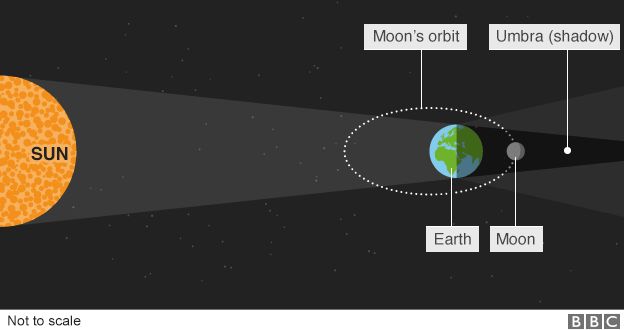
    An exceptional celestial treat is in store for sky gazers as the event, called the Super Blood Moon, saw the Supermoon phenomenon combine with a lunar eclipse (where the Sun, the Earth and a brighter, much larger Moon lined up together).

    The result? The Moon appeared blood red in colour, nearly 30% brighter.


    So, What exactly The Supermoon Is?

    A Supermoon is a phenomenon that occurs when, a full or new Moon coincides with a Moon that is nearing its minimum distance (perigee) to Earth.

    The Moon takes an elliptical orbit around Earth, which means that the average distance between the two changes from as much as 405,000km (its apogee) to as low as 363,000km at the perigee.

    Simply put, the Supermoon occurs when the Moon is at its closest to the Earth. NASA says the phenomenon can make the Moon appear larger by nearly 14% larger than its usual visible size.


    Lunar eclipse


    But, Why the Moon turns red during a total lunar ?

    During a total lunar eclipse, white sunlight hitting the atmosphere on the sides of the Earth gets absorbed and then radiated out (scattered). That is, the atmosphere filters out (scatters away) most of the blue-colored light and what’s left is the orange and red coloured light.

    This red coloured light passes through our atmosphere without getting absorbed and scattered, before the atmosphere bends it (refracts it) back out, projecting indirect, reddish light on to the Moon.

    The reddish light projected on the Moon is dimmer than the full white sunlight that the Moon typically reflects back to us. That’s because the light is indirect and because the red-coloured wave lengths are only part of what makes up the white light from the Sun that the Moon usually receives.

    When we see a sunrise or sunset from our perspective on Earth, sunlight is coming in at a low angle. It has to travel through a lot of atmosphere, scattering more and more blue-colored light as it goes until what is left when the light reaches us at these day/night transition times is the more reddish wavelengths that get through.
    But, interesting fact is that everyone may see a Moon that is brick-coloured, rusty, blood red or sometimes dark grey, depending on terrestrial conditions.

     superblood lunar eclipse


    Do you know next appearance is directly in 2033 ?

    Don’t worry, we have full coverage here.

    Sunday’s event was the first Supermoon lunar eclipse in over three decades. The last time the two phenomena combined was in 1982. The next such occurrence is expected to be 18 years later, in 2033. Sunday also saw the fourth instance of a blood Moon in the last two years as part of the “tetrad series” or a series of four consecutive total eclipses occurring at intervals of approximately six months.

    So, is that We’re basically seeing all of the sunrises and sunsets across the world, all at once, being reflected off the surface of the Moon, How amazing it is !


    Published with inputs from Arun

More posts