💥UPSC 2026, 2027, 2028 UAP Mentorship (March Batch) + Access XFactor Notes & Microthemes PDF

Search results for: “”

  • Climate targets are becoming outdated: India needs its own

    Climate

    What’s the news?

    • The media’s attention has been focused on the 1.5 degrees Celsius warming target and the influence of El Niño this year. While crossing this temperature threshold is a cause for concern, the hyperbolic end-of-the-world messaging around the climate crisis deserves revaluation.

    Central idea

    • The target in the Paris Agreement, to keep the planet’s surface from warming by 2 degrees Celsius by 2100, has been touted as a monumental goal. However, despite negotiations for more than two decades, global carbon emissions have not slowed. Also, the target was not derived scientifically. Instead of fixating on alarming scenarios, it is crucial to approach the climate challenge with a balanced perspective.

    What is 2 Degrees Celsius Target?

    • In 2015, during the United Nations Climate Change Conference (COP21) in Paris, the Paris Agreement was adopted by nearly all countries of the world.
    • The central aim of the agreement is to keep global temperature rise well below 2 degrees Celsius above pre-industrial levels.
    • The 1.5 degrees Celsius target was introduced to address concerns raised by vulnerable nations, particularly small island states.
    • To achieve the 2 degrees Celsius target, countries are required to make nationally determined contributions (NDCs) that outline their planned efforts to reduce greenhouse gas emissions.
    • The Paris Agreement emphasizes the importance of global cooperation and collective action to tackle climate change

    What is Earth System Models (ESM’s)?

    • ESM’s are complex computational models used by climate scientists to simulate the Earth’s climate system.
    • These models are designed to represent the interactions and feedbacks between various components of the Earth system, including the atmosphere, oceans, land surface, ice, and biogeochemical processes.
    • These models use numerical methods to solve these equations over a grid covering the entire globe, allowing scientists to simulate climate processes and changes over both short and long-time scales.

    Key concerns regarding 2 Degrees target

    • The 2 degrees Celsius target was not established based on robust scientific evidence or a comprehensive understanding of the potential impacts of such warming.
    • Despite the international efforts and commitments made under the Paris Agreement, global carbon emissions have not shown signs of significant reduction.
    • The 2 degrees Celsius target may not adequately address the regional variations in climate impacts.
    • ESM’s used for climate projections struggle to accurately simulate regional-scale climate variations, especially in places like the Indian subcontinent.
    • There are doubts about the ability to distinguish between the consequences of 1.5- and 2-degrees Celsius warming and to design region-specific climate adaptation policies.

    Uncertainties for India

    • Uncertainties in ESM’s make it difficult to accurately predict regional climate impacts at the scale of the Indian subcontinent.
    • Climate change affects water availability, precipitation patterns, and glacial melt in the Himalayas. Unpredictability of these factors can have significant implications for India’s overall water security.
    • Uncertainties in climate projections impact India’s agricultural sector, making it challenging to predict crop yields and plan for food security.
    • Coastal areas in India, including major cities like Mumbai and Kolkata, are vulnerable to the impacts of rising sea levels, leading to increased risks of flooding and coastal erosion.
    • Climate change can exacerbate health issues, including heat-related illnesses, vector-borne diseases, and air pollution. Uncertainties in how climate change affects disease patterns make it challenging to plan and implement effective public health responses.

    Way forward

    • Set ambitious and science-based climate targets that align with the latest climate research and international commitments.
    • Revisit the 2 degrees Celsius warming target and consider more stringent goals to limit global warming.
    • Invest in climate science and research to enhance the accuracy of regional climate projections and improve understanding of climate impacts on India.
    • Strategies should focus on sectors like agriculture, water resources, infrastructure, and health to build resilience against the impacts of climate change.
    • Accelerate the transition to renewable energy sources such as solar, wind, and hydropower.
    • Develop and implement measures to protect coastal areas from sea-level rise and extreme weather events.
    • Strengthen public health systems to address health challenges related to climate change. This includes heatwave preparedness, disease surveillance, and measures to reduce air pollution.
    • Foster climate education and empower citizens to participate in climate mitigation and adaptation efforts.

    Conclusion

    • The 2 degrees Celsius target, while widely accepted and seen as a significant milestone in addressing climate change, is not without its flaws and uncertainties. Going forward, it is essential for the global community to reassess and update climate targets based on the best available scientific evidence and consider the specific needs of different regions to effectively combat the climate crisis.

    Also read:

    Climate Change: Mission Adaptation A Comprehensive Measure

  • How to cover Environment & Science Tech for UPSC Prelims 2024-25? LIVE with Zeeshan sir | Get resources, complete strategy and Telegram group access

    How to cover Environment & Science Tech for UPSC Prelims 2024-25? LIVE with Zeeshan sir | Get resources, complete strategy and Telegram group access

    Almost 30% of Prelims 2024 Questions will come from this section | Register for Zeeshan sir’s Dominate Prelims FREE Webinars | 25th July, 7:30 pm | Get CD’s Atomic Notes PDF post-webinar | Register below to secure your spot


    Civilsdaily IAS is excited to announce the launch of our highly anticipated “Dominate Prelims Webinars” featuring the renowned mentor, Zeeshan Hashmi Sir.

    These webinars are designed to equip UPSC aspirants with the best approach to tackle the UPSC Prelims paper effectively. From covering the GS and current affairs syllabus to mastering note-making techniques and smart elimination strategies, these webinars will provide comprehensive guidance for aspirants aiming to excel in the Prelims examination.

    Dominate Prelims Webinars will empower you with a well-structured study plan and strategic approach tailored specifically for UPSC Prelims. We believe in realistic and achievable goals, ensuring that you gain a solid foundation of knowledge and skills necessary for success.

    Zeeshan sir

    In this inaugural webinar, Zeeshan Sir will dive into the intricacies of the Environment and Science Tech section for UPSC Prelims 2024-25. Join us to gain valuable insights and a comprehensive understanding of this crucial subject.

    Webinar Highlights:

    In the “Dominate Prelims” webinar series, Zeeshan sir will be conducting the first webinar on how to cover Environment and Science & Technology (E&S) for UPSC Prelims 2024-25. Aspirants can expect to learn the following important points during the session:

    1. Syllabus Coverage: Zeeshan sir will provide a detailed analysis of the UPSC Prelims syllabus for Environment and Science & Technology. He will identify the most important topics and areas that aspirants must focus on.
    2. Study Resources: He will recommend the best study resources for E&S, including standard textbooks, government publications, and online sources. Aspirants will gain insights into the most effective materials for comprehensive preparation.
    3. Current Affairs Relevance: Zeeshan sir will emphasize the significance of current affairs in the E&S section. He will discuss how to connect current events with core concepts to answer relevant questions accurately.
    4. Mind Maps and Mnemonics: Aspirants can expect to learn about the creation of mind maps and mnemonics to retain crucial information easily. These aids will help in quick recall during the exam.
    5. Smart Elimination Techniques: Zeeshan sir will share smart elimination techniques to handle tricky and confusing questions. Aspirants will understand how to use logic and reasoning to arrive at the correct answer even when unsure.
    6. Previous Year Questions: The webinar will include a thorough analysis of previous year questions from E&S. Zeeshan sir will highlight the recurring themes and patterns to help aspirants identify frequently asked topics.
    7. Important Government Reports: Aspirants will gain insights into the significance of government reports related to the environment and technology. Zeeshan sir will discuss how to extract valuable information from these reports for the exam.
    8. Time Management: Zeeshan sir will address effective time management during the preparation of E&S. Aspirants will learn how to allocate time to different topics and sections to cover the syllabus efficiently.
    9. Conceptual Clarity: The webinar will focus on building conceptual clarity for better retention and understanding of topics. Zeeshan sir will simplify complex concepts for easy comprehension.
    10. Q&A Session: The webinar will conclude with a dedicated Q&A session where aspirants can interact with Zeeshan sir and get their doubts and queries clarified.

    Entry is FREE but seats are limited (only 100)


    Civilsdaily’s Toppers

    https://youtube.com/shorts/DEnW_FoZFBk?feature=share

    How to attend this webinar?

    Date: 25th July 2023, Tuesday

    Time: 7:30 pm

    Mode: Online through Zoom

    The Zoom Link for the webinar will be shared by email

    Entry is FREE but seats are limited (only 100)

    However, you can come and visit Civilsdaily’s Karol Bagh Center and meet Sajal sir and other mentors personally.

    Address: Civilsdaily IAS, 1 LGF, Apsara Arcade, (near Karol Bagh metro station gate number 7) New Delhi, Rajinder Nagar, New Delhi, 110060

    Contact here: +917303316700

    Who Should Attend This Webinar?

    This webinar will benefit:

    • Aspirants targeting UPSC 2024.
    • Those who found UPSC Prelims 2023 challenging and unpredictable.
    • Aspirants seeking to understand the changing dynamics of UPSC exams.
    • Anyone keen on getting insights from successful UPSC mentors and rankers.

    So, come join us and uncover the skills and understanding necessary to be a part of that 1% for UPSC 2024. Register now for the webinar and take your first step towards achieving your IAS dream!

    What Can You Expect to Learn from Dominate Prelims Webinars?

    Through these webinars, Zeeshan sir will prepare you for the changed expectations of UPSC, which is targeting not just rote knowledge but also Common Sense, Stress Response, and Risk Appetite. 

    • Learn the best approach to cover the GS and current affairs syllabus.
    • Master note-making techniques for effective revision.
    • Acquire smart elimination strategies for accurate answering.
    • Explore recommended study resources and toolkits for comprehensive preparation.
    • Stay updated with summaries of government reports and surveys.
    • Interact with Zeeshan Hashmi Sir and gain valuable insights from his experience.

    Entry is FREE but seats are limited (only 100)

    You will also get an opportunity to interact 1-1 with Zeeshan sir to discuss:

    1. What most important reports/publications you must cover?
    2. Critical insights to fill gaps in your preparation.
    3. Decoding the complex and changing patterns of UPSC wrt government data,reports, etc.
    4. Practical insights and tips for tackling common challenges on your UPSC journey.
    5. Strategies for continuously adapting to the evolving nature of UPSC.

    (Note: The zoom link will be shared soon. Stay tuned for updates!)

    CivilsDaily’s FREE Atomic Notes Magazine

    Post-webinar we will share Civilsdaily’s Atomic Notes Magazine with you all along with other important PDFs, timetable framework, and notes.

    • Samachar Manthan Current Affairs Module for FREE
    • Prelims and Mains 2024 Toolkit

    We will also schedule your 1-1 detailed mentorship call to help you prepare your self-study routine.

    Join us for this power-packed webinar session with Zeeshan Hashmi Sir to gain a competitive edge in your UPSC Prelims 2024-25 preparation. Enhance your knowledge, refine your approach, and boost your confidence in tackling the various components of UPSC Prelims effectively.

    Entry is FREE but seats are limited (only 100)

    Book your seat now!

  • World’s Largest Office Space: Surat Diamond Bourse

    surat diamond

    Central Idea

    • The Surat Diamond Bourse (SDB), hailed as the world’s largest office space project, is set to be inaugurated by Prime Minister.

    About Surat Diamond Bourse

    • The SDB is a large-scale project located in Surat, Gujarat, India.
    • It is claimed to be the world’s biggest office space in a single project.
    • It is built to expand and consolidate the diamond trading business from Mumbai to Surat.
    • Surat is renowned as a major hub for cutting and polishing diamonds, and the development of SDB aims to bring all diamond-related activities and infrastructure under one roof.

    Key features  

    • Location: The SDB is situated at DREAM (Diamond Research and Mercantile) city in Surat.
    • Size: The bourse spans an area of 66 lakh square feet (approximately 6.6 million square feet), making it one of the largest office spaces in the world.
    • Design: The thematic landscaping of the project is based on the ‘panch tatva’ theme, representing the five elements of nature – air, water, fire, earth, and sky.
    • Infrastructure: The SDB consists of nine towers, each with ground plus 15 floors. It will accommodate over 4,200 offices with sizes ranging from 300 square feet to 7,500 square feet.
    • Security: Given the high-security nature of the diamond industry, over 4,000 CCTV cameras have been installed at different locations inside and outside the SDB.
    • Shifting from Mumbai: The bourse seeks to address the space crunch and expensive office real estate in Mumbai, where much of the diamond trading currently takes place.

    Economic significance of SDB

    • Businesses: The complex will house various diamond-related businesses, including the sale of rough and polished diamonds, diamond manufacturing machinery, diamond planning software, diamond certificate firms, lab-grown diamonds, and more.
    • Employment: The SDB is expected to generate significant employment opportunities, providing direct employment to over 1 lakh people in various roles related to the diamond industry.
  • [pib] IMD launches Heat Index

    heat index

    Central Idea

    • Union Ministry of Earth Sciences informed that the India Meteorological Department (IMD) has introduced the Heat Index on an experimental basis.

    IMD Heat Index

    • The Heat Index aims to provide general guidance for regions in India where the combination of temperature and humidity leads to higher apparent temperatures, causing discomfort for people.
    • It is derived using an equation similar to the one used by the National Weather Service, National Oceanic and Atmospheric Administration (NOAA) in the USA.
    • It considers the impact of humidity on high temperatures, providing a “feel-like” temperature for human beings and indicating the level of discomfort.

    Color Codes for Experimental Heat Index

    The Heat Index is represented with different color codes to signify the varying levels of heat impact and discomfort:

    1. Green: Below 35°C
    2. Yellow: Range of 36-45°C
    3. Orange: Range of 46-55°C
    4. Red: Above 55°C

    Mitigating heat impact in India

    • The Heat Index is currently being implemented on an experimental basis across India, including Andhra Pradesh.
    • Under the Heat Action Plan, the National Disaster Management Authority (NDMA) collaborates with local agencies such as the Indian Institute of Public Health (IIPH) to implement the Heat Index project for Bhubaneshwar and Ahmedabad.
  • Niti Aayog’s Export Preparedness Index, 2022

    export
    PC: Live Mint

    Central Idea

    • Tamil Nadu has emerged as the most export-competitive state in India, securing the top spot in the Export Preparedness Index 2022 by Niti Aayog.

    Export Preparedness Index (EPI)

    • EPI is a comprehensive tool aimed at gauging the export readiness of India’s states and union territories (UTs).
    • The index analyses various parameters, enabling the identification of strengths and weaknesses in each region and offering valuable insights for effective policy formulation.
    • EPI focuses on four pillars:
    1. Policy: This pillar evaluates the effectiveness of a state’s trade policy, providing strategic direction for both exports and imports.
    2. Business Ecosystem: The efficiency of a business ecosystem is crucial for attracting investments and fostering an enabling infrastructure for startups and entrepreneurship.
    3. Export Ecosystem: This pillar assesses the business environment specific to exports, determining the level of support and facilitation provided to exporters.
    4. Export Performance: The sole output-based parameter, this pillar examines the reach of export footprints in states and UTs, measuring their actual export achievements.
    • 10 Sub-pillars include: Export Promotion Policy; Institutional Framework; Business Environment; Infrastructure; Transport Connectivity; Export Infrastructure; Trade Support; R&D Infrastructure; Export Diversification; and Growth Orientation.

    States performance

    • Export-Competitive State: Top Contenders: Maharashtra, Karnataka, and Gujarat (last year’s leader) followed closely, while Haryana claimed the fifth position.
    • Coastal States’ Dominance: Coastal states dominated the top rankings, with four out of the top five positions occupied by them. Andhra Pradesh also secured the ninth spot.
    • Gujarat- Leading Merchandise Exporter: Gujarat holds the top position as the leading merchandise exporter, accounting for one-third of India’s total merchandise exports.
    • Top Five Exporting States: Maharashtra, Tamil Nadu, Karnataka, and Uttar Pradesh complete India’s top five exporters.
    • Seven States’ Dominance: An impressive 75% of India’s total exports are contributed by just seven states.

    Reasons for export boost

    • Export Promotion Policies: The top-performing states have implemented export promotion policies at both state and district levels.
    • Diversified Export Basket: These states have a diverse export basket, showcasing their global footprint.
    • Promoting Unique Products: Successful states focus on promoting products unique to their region. Tamil Nadu and Karnataka lead in exporting geographical indication (GI) products.

    India’s Export Performance

    • Resilient Exports: Despite pandemic challenges and supply-side issues, India’s goods exports remained robust, reaching an all-time high of $447 billion in FY23.
    • Target for FY24: The government refrained from setting a specific export target for FY24 due to global headwinds but may aim for $450 billion to $500 billion in goods exports.
    • Services Exports: Services exports amounted to $323 billion in FY23, bringing India’s overall exports to $770 billion.
  • Eighth Schedule of Indian Constitution

    langauge eighth

    Central Idea

    • The Supreme Court said it cannot direct the Centre to include Rajasthani as an official language in the Eighth Schedule of the Constitution.

    About Eighth Schedule

    • The Eighth Schedule outlines the official languages of the Republic of India.
    • Articles 344(1) and 351 of the Constitution contain constitutional provisions relating to the Eighth Schedule.
    • It was originally created to grant representation on the Official Languages Commission and enrich Hindi and English, the official languages of the Union.
    • Candidates appearing for public service examinations have the privilege of using any language from the Eighth Schedule as a medium to answer the exam papers.
    Article 344(1): It mandates the appointment of a Commission by the President after 5 years from the date the Constitution comes into effect.

    Article 351: It places the responsibility on the Union to promote and develop the Hindi language, enabling it to be a medium of expression for India’s diverse cultural elements.

    Article 351(1): The President is required to establish a commission every five years, and subsequently every ten years, with a chairman and members representing languages listed in the Eighth Schedule. The primary role is to provide advice to the President on the effective use of Hindi for official purposes by the GOI.

    Languages included

    • 22 languages: Assamese, Bengali, Bodo, Dogri, Gujarati, Hindi, Kannada, Kashmiri, Konkani, Maithili, Malayalam, Manipuri, Marathi, Nepali, Odia, Punjabi, Sanskrit, Santali, Sindhi, Tamil, Telugu, and Urdu.
    • Classical Languages among these: Tamil (declared in 2004), Sanskrit (2005), Kannada (2008), Telugu (2008), Malayalam (2013), and Odia (2014).

    Chronological Additions

    • 1950: The Constitution initially included 14 languages in the Eighth Schedule.
    • 1967: Sindhi was added through the 21st Constitutional Amendment Act.
    • 1992: Konkani, Manipuri (Meitei), and Nepali were included through the 71st Constitutional Amendment Act.
    • 2003: Bodo, Dogri, Maithili, and Santali were added through the 92nd Constitutional Amendment Act.
    • 2011: The spelling “Oriya” was replaced with “Odia” through the 96th Constitutional Amendment Act.

    Try this PYQ:

    Consider the following languages:

    1. Gujarati
    2. Kannada
    3. Telugu

    Which of the above has/have been declared as ‘Classical Language / Languages’ by the Government?

    (a) 1 and 2 only

    (b) 3 only

    (c) 2 and 3 only

    (d) 1, 2 and 3


    Post your answers here.


  • Opposition calls for President’s Rule in Manipur

    manipur president rule
    PC: The Hindu

    Central Idea

    • A political party has called for the dismissal of the state government in Manipur and immediate imposition of President’s Rule to initiate a peace process under a neutral administration.

    What is President’s Rule?

    • Article 356 of the Indian Constitution, commonly known as President’s Rule, empowers the President to impose central rule in a state where the constitutional machinery has broken down.
    • While initially intended for extraordinary circumstances, it has often been misused by central governments for political purposes.

    Provisions of Article 356:

    • Imposition of President’s Rule: Article 356 allows the President to withdraw the executive and legislative powers of a state government when it cannot function in accordance with the Constitution.
    • Triggering factors: The President can invoke Article 356 based on a report from the Governor or suo motu if the constitutional machinery has broken down in the state.
    • Duration: It can be imposed for six months at a time, with a maximum duration of three years.
    • Parliamentary approval: Every six months, Parliament’s approval is required to continue the imposition of President’s Rule.

    Historical Origins

    • Inspiration from the Government of India Act, 1935: Article 356 was inspired by Section 93 of this act, which allowed the Governor of a province to assume the powers of the government under certain circumstances.
    • Controlled democracy: The provision provided some autonomy to provincial governments while enabling British authorities to exercise ultimate power when necessary.

    Political Misuse of Article 356

    • Early instances: During Congress dominance, Article 356 was used against governments of the Left and regional parties in states. Jawaharlal Nehru’s government utilized it six times until 1959, including to dislodge Kerala’s elected communist government.
    • Increasing misuse: In subsequent decades, Article 356 was used frequently against state governments by various central governments, including those led by Indira Gandhi and the Janata Party.

    Landmark Judgment: S R Bommai Case

    • Landmark Supreme Court ruling: In the 1994 R. Bommai v. Union of India case, the Supreme Court provided detailed guidelines on the use of Article 356.
    • Specific instances for imposition: The court stated that President’s Rule can be invoked in cases of physical breakdown of the government or a ‘hung assembly.’
    • Curbing arbitrary use: The judgment emphasized the need to give the state government a chance to prove its majority or instances of violent breakdown before imposing President’s Rule.

    Try this PYQ:

    Which of the following are not necessarily the consequences of the proclamation of the President’s rule in a State?

    1. Dissolution of the State Legislative Assembly
    2. Removal of the Council of Ministers in the State
    3. Dissolution of the local bodies

    Select the correct answer using the code given below:

    (a) 1 and 2

    (b) 1 and 3

    (c) 2 and 3

    (d) 1, 2 and 3


    Post your answers here. 


  • Cinematograph (Amendment) Bill, 2023

    cinema

    Central Idea

    • Union Information and Broadcasting Minister has introduced the Cinematograph (Amendment) Bill, 2023, in the Rajya Sabha, with the goal of addressing piracy concerns in the film industry.
    • It seeks to amend the Cinematograph Act, 1952.

    What is the Cinematograph Act, 1952?

    • The Cinematograph Act of 1952, was enacted by the Parliament to ensure that films are shown in accordance with the limits of tolerance of society.
    • The Act establishes the Central Board of Film Certification (CBFC, or the censor board) to certify films.
    • Under the Act, the Board scrutinizes the films following the procedure laid down in the Act and can either reject or grant a certificate, valid for ten years.
    • The Act authorizes the police to perform search and seizure actions if the film is being exhibited in contravention of any of the provisions of the Act.

    Cinematograph Amendment Bill, 2023

    Amendment The bill proposes to amend the Cinematograph Act, 1952
    Harsher Penalty The act has provisions for harsher penal provisions for film piracy
    New Age Categories It introduces new sub-age categories for films to bring about uniformity in categorisation across platforms
    Perpetual Certification The certification once given will be perpetual
    New Sub-age based Certification UA-7+’, ‘UA-13+’, and ‘UA-16+’ in place for 12 years
    Alignment The act will be aligned with Supreme Court judgments
    Recertification Recertification of the edited film for television broadcast
    Public Exhibition Only Unrestricted Public Exhibition category films can be shown on television
    Uniformity It will make the act provisions in line with the provisions of the Jammu and Kashmir Reorganisation Act, 2019 to maintain uniformity

    Stringent Laws against Piracy

    Details
    Imprisonment and Penalty It includes imprisonment for three years and a Rs 10 lakh penalty for those found involved in piracy
    Legal Offence The act of piracy will be a legal offense, and even transmitting pirated content will be punishable

    Indian Cinema: A Backgrounder

    • The history of Indian cinema dates back to the late 19th century, with the screening of the Lumiere Brothers’ short films in Bombay (now Mumbai) in 1896.
    • Dadasaheb Phalke is considered to be the father of Indian cinema.
    • The first Indian-made film, Raja Harishchandra, was released by him in 1913 and marked the beginning of Indian cinema.
    • The first Indian talkie, Alam Ara, was released in 1931, marking a new era in Indian cinema.

    Contribution of Indian Cinema

    (1) Economic contribution

    • Revenue Source: The film industry contributes significantly to the country’s economy, generating substantial revenue through production, distribution, and exhibition.
    • Employment Generation: The film sector offers employment opportunities to millions of people in various related fields.
    • Allied Sectors: The film industry provides a boost to other industries like advertising, hospitality, tourism, and fashion.
    • Entertainment Economy: Cinema houses and multiplexes generate revenue through ticket sales, concessions, and merchandise sales.

    (2) Societal Contribution

    • Social Cause: Movies have addressed crucial social issues, raising awareness and encouraging discussions.
    • Breaking Gender Stereotypes: Strong female characters in films challenge traditional gender roles, positively impacting women’s status.
    • Accessible Entertainment: Cinema breaks social barriers by providing affordable and accessible entertainment.
    • Inspirational Aspects: Movies inspire the youth, leading them to look up to their favorite stars as role models.

    (3) Nation Building

    • Promotion of Social Harmony: Indian cinema showcases diversity and cultural richness, promoting social harmony and unity.
    • Inculcation of Moral Values: Films play a crucial role in imparting moral values and social responsibilities.
    • Creating Awareness about Social Issues: Movies raise awareness about various social issues, breaking taboos and addressing important topics.

    Issues with Indian Cinema

    • Portrayal of Violence and Sexuality: Some films depict violence and sexual content, impacting younger viewers negatively.
    • Reinforcement of Stereotypes: Certain films reinforce gender, caste, and religious stereotypes, perpetuating prejudice.
    • Promotion of Materialism: Movies that promote materialism can lead to unrealistic expectations and values.
    • Lack of Diversity: The lack of diversity in mainstream films needs to be addressed to ensure equal representation.
    • Undue Commercialization: Excessive commercialization may overshadow the importance of quality content.
    • Nepotism: The practice of nepotism can hinder deserving talent from entering the industry.

    Way Forward

    • Revising the Certification Process: Ensure transparency and accountability in the certification process.
    • Protecting Artistic Freedom: Safeguard artistic freedom and creativity in filmmaking.
    • Encouraging Regional Cinema: Promote and support regional cinema through incentives and subsidies.
    • Promoting Cultural Diversity: Encourage filmmakers to explore diverse cultures and promote intercultural dialogue.
    • Combating Piracy: Take effective measures to combat film piracy and protect revenues.
    • Developing Film Infrastructure: Invest in developing film infrastructure and educational facilities.
  • The dramatic transformation of India’s oil trade with Russia

    oil

    What’s the news?

    • For over a year, India, the world’s third-largest consumer of crude oil with an import dependency of more than 85%, has been entangled in a passionate affair with Russian oil.

    Central idea

    • Aftermath invasion of Ukraine, Russia began offering deep discounts to willing buyers as Western countries turned their backs on its oil. Prior to the conflict, Russia had a minor role in India’s oil trade, which was predominantly dominated by West Asian suppliers like Iraq, Saudi Arabia, and the UAE. However, the discounts offered by Russia led to a drastic transformation, making it India’s primary source of crude oil

    Recent growth in Russian oil imports

    • According to data from the Directorate General of Commercial Intelligence and Statistics (DGCI&S), India’s oil imports from Russia surged more than tenfold since April 2022.
    • This steady growth gained momentum, particularly after the G7 imposed a $60-per-barrel price cap on seaborne Russian crude in December 2022.
    • Russia’s market share skyrocketed to 24.2% during the 14-month period, up from a mere 2% in FY22. In contrast, other major suppliers such as Iraq, Nigeria, and the US witnessed substantial declines in their market shares.
    • OPEC’s share in India’s oil imports fell by almost half, from 75.3% in May 2022 to 40.3% in May 2023.
    • Among the major suppliers to India, several OPEC members saw their market shares decline, while Russia’s share surged from 6% to 40.4%.

    How it transformed India’s energy landscape?

    • Before the Ukraine conflict, Russia was a minor player in India’s oil trade, and the country relied heavily on West Asian suppliers like Iraq, Saudi Arabia, and the UAE.
    • The deep discounts offered by Russia created an opportunity for India to diversify its sources of crude oil, reducing its dependence on a few dominant suppliers and increasing energy security.
    • The discounts on Russian oil provided significant foreign exchange savings for Indian refiners. Till May 2023, Indian refiners saved approximately $7.17 billion in foreign exchange due to increased purchases of discounted Russian oil.
    • These savings positively impacted India’s trade balance and current account deficit, contributing to overall economic stability.

    What are the concerns?

    • India’s deepening energy ties with Russia amid geopolitical tensions and international sanctions may expose India to geopolitical risks.
    • The association with Russian oil could lead to diplomatic complexities with other nations.
    • Despite diversifying energy sources, there is still concern about over-reliance on Russian oil.
    • India’s substantial imports from Russia could leave it vulnerable to supply disruptions or geopolitical developments affecting Russian exports.
    • The volatility of discount levels on Russian oil adds uncertainty to India’s energy trade calculations.
    • The lack of transparency in the pricing of Russian oil cargoes makes determining exact discounts challenging, leading to uncertainties in trade negotiations and financial planning.

    Way forward

    • India should continue diversifying its sources of crude oil to reduce dependence on a single supplier.
    • Ensuring transparency in oil pricing and understanding the actual discounts offered by Russia can help in making informed decisions.
    • As India deepens its energy ties with Russia, it should manage its relationships with other oil-producing nations, especially those from OPEC.
    • India should develop a comprehensive and forward-looking energy policy that considers both short-term energy needs and long-term sustainability.
    • Adequate energy infrastructure, including ports, pipelines, and storage facilities, is crucial to support diverse energy sources and efficient energy trade.

    Conclusion

    • The unprecedented shift in India’s oil trade reflects the dramatic impact of Russia’s deep discounts amid geopolitical conflicts. Although the recent erosion of discounts poses challenges for Indian refiners, the affair with Russian oil has left a lasting impact on India’s energy trade dynamics. The future of this relationship remains uncertain, but the profound influence of Russia’s discounts will be remembered as a transformative episode in India’s oil trade history.

    Also read:

    India’s export of Russian oil to West

  • Demographic transition and change in women’s lives

    What is the news?

    • The observance of World Population Day (11 July) provides an opportunity to reflect upon India’s demographic journey and its transformative impact on the lives of its citizens, particularly women. This article presents insights and perspectives on how population growth, fertility decline, and social norms have influenced various aspects of women’s lives in India.

    Central idea

    • From a population of 340 million at Independence to a staggering 1.4 billion today, India has experienced remarkable growth fueled by advancements in public health, diminished starvation, and medical breakthroughs. This demographic transition has had profound implications for Indian women throughout their lives, presenting both positive and negative changes.

    Challenges Faced by Indian Women

    • Son Preference and Gender Bias: Indian society’s preference for sons is reflected in the sex ratio imbalance. The number of girls per 100 boys under the age of five dropped from 96 to 91 between 1950 and 2019. This decline can be attributed to practices such as sex-selective abortion and the neglect of sick daughters, resulting in limited opportunities and discrimination against girls.
    • Early Marriage and Childbearing: The early marriage and childbearing continue to be significant challenges for Indian women. The average age at first birth has remained low, with women born in the 1980s still having a first birth below 22 years of age. Early motherhood limits women’s educational and employment prospects, perpetuating gender inequality.
    • Limited Access to Education: While recent improvements have been made, access to quality education remains limited for many girls and women in India. The article emphasizes that although over 70% of girls enroll in secondary education, early marriage and childbearing restrict their educational opportunities, hindering their skill development and access to better employment prospects.
    • Gender-based Violence and Harassment: There is prevalence of gender-based violence and harassment, including domestic violence, dowry-related violence, and sexual harassment. Such incidents negatively impact women’s physical and psychological well-being, restrict their freedom, and limit their ability to fully participate in society.
    • Limited Economic Opportunities: Gender pay gaps, occupational segregation, and biases in hiring and promotion processes contribute to limited economic opportunities for women in India. The burden of unpaid domestic and caregiving work falls disproportionately on women, hindering their ability to engage in paid employment and achieve economic empowerment.
    • Lack of Social and Financial Support: The widowed or elderly women often lack adequate social and financial support systems. Dependence on male family members, particularly sons, for financial support can perpetuate gender inequality and leave women vulnerable to economic hardships, social isolation, and limited access to healthcare and pension benefits

    Aging women and its implications

    • Increase in Proportion: The proportion of the female population aged 65 and above has risen significantly over the years. Between 1950 and 2022, the proportion of women aged 65 and above increased from 5% to 11% and is projected to reach 21% by 2050.
    • Outliving Husbands: Women tend to marry older men and are more likely to outlive their husbands. As a result, a higher percentage of elderly women are widowed compared to men in the same age group. The 2011 Census shows that while only 18% of men above age 65 are widowed, about 55% of the women are widowed.
    • Financial Challenges: Widowed women often face financial difficulties, as they may lack access to savings, property, and other financial resources. This dependence on their husbands and subsequent reliance on their children, primarily sons, can perpetuate the cycle of son preference.
    • Limited Agency: Widowed women may experience limited decision-making power and agency in their later years. Their dependence on sons for support can restrict their ability to make independent choices and contribute to a sense of social and economic vulnerability.

    Changing Dynamics for Indian Women

    • Difficulty in ensuring the birth of a son: With families having fewer children, the likelihood of not having a son increased. Social norms, patrilocal kinship patterns, and financial insecurity reinforced the preference for sons. This led to practices such as sex-selective abortion and neglect of sick daughters.
    • Decreased years spent on active mothering: As fertility rates declined, women had more time for education and employment. NFHS finds that the number of years women spend caring for children under five declined from 14 years in 1992-93 to eight in 2018-20; the years spent caring for children ages six to 15 dropped from 20 to 14 years.
    • Persistent early marriage and childbearing: While women’s educational attainment increased, with over 70% of girls enrolling in secondary education, early marriage and childbearing remain the predominant forces defining women’s lives. As a recent article by Park, Hathi, Broussard, and Spears documents, the average age at first birth has hardly budged about 20 for women born in the 1940s and still remains well below 22 years for those born in the 1980s.

    What is mean by Gender Dividend?

    • Gender Dividend refers to the concept that societies can achieve greater productivity and equity by investing in women and girls and closing gender gaps, particularly in the labor market.
    • It emphasizes that by realizing the economic potential of women and girls through increased investments and opportunities, societies can become more productive and equitable.

    Strategies to harness the Gender Dividend

    • Education and Skill Development: Promote gender equality in education by ensuring equal access to quality education for girls and women. Encourage girls’ enrollment and retention in schools, address barriers to education, and provide skill development programs that equip women with relevant skills for employment.
    • Economic Empowerment: Create an enabling environment for women’s economic participation by addressing gender disparities in the labor market, promoting entrepreneurship, and ensuring equal pay for equal work. Implement policies and programs that support women’s access to financial resources, credit, and business opportunities.
    • Women’s Leadership and Decision-making: Increase women’s representation and participation in leadership positions across sectors, including politics, business, and public institutions. Encourage women’s involvement in decision-making processes at all levels to ensure their perspectives and voices are heard.
    • Legal Reforms and Gender Equality: Enact and enforce laws that protect women’s rights and promote gender equality. Address discriminatory practices, such as early marriage, dowry, and violence against women. Strengthen the implementation of existing laws to ensure justice and protection for women.
    • Health and Well-being: Improve women’s access to healthcare services, including reproductive healthcare, maternal health, and preventive care. Address specific health issues affecting women, such as gender-based violence, reproductive health concerns, and mental health.
    • Social Support and Safety: Establish social support systems that provide safety nets for women, particularly vulnerable groups such as widows, elderly women, and single mothers. Create awareness campaigns to challenge social norms and attitudes that perpetuate gender inequality and violence against women.
    • Engaging Men and Boys: Engage men and boys as allies in promoting gender equality and challenging harmful gender norms. Encourage men’s involvement in caregiving, domestic responsibilities, and advocating for women’s rights.
    • Data Collection and Monitoring: Collect sex-disaggregated data and conduct gender analysis to identify gaps, monitor progress, and inform evidence-based policymaking. Regularly evaluate and measure the impact of gender equality initiatives to ensure accountability and guide future interventions.

    Strategies for enhancing childcare access

    • Utilize National Rural Employment Guarantee Scheme (NREGS): Consider making staffing crèches an acceptable form of work under NREGS. This would involve using NREGS workers to help staff childcare centers, thereby expanding access to affordable childcare services.
    • Leverage the Self-Help Group Movement: Harness the self-help group movement to establish neighborhood childcare centers in urban and rural areas. This can involve utilizing the network and resources of self-help groups to set up and manage childcare facilities.
    • Expand Anganwadis: Increase the reach and scope of Anganwadis, which are government-funded centers providing integrated childcare and early education services. Expand their capacity and include provisions for crèche services to accommodate working parents.
    • National Rural Livelihood Mission (NRLM): Integrate childcare services within the NRLM framework, which aims to enhance the livelihoods of rural households. This can involve incorporating childcare as part of the skill development and income-generation activities supported by NRLM.
    • Financial Support for Childcare: Explore the implementation of subsidy programs or financial assistance schemes to make childcare more affordable for low-income families. This could include income-based subsidies, vouchers, or tax credits to alleviate the financial burden of childcare expenses.
    • Neighbourhood Childcare Centers: Encourage the establishment of neighborhood-based childcare centers, particularly in urban areas, to cater to the local community’s childcare needs. This approach ensures proximity and accessibility for parents, making it easier for them to balance work and childcare responsibilities.
    • Recognition of Childcare as Work: Recognize the valuable work of childcare providers and promote the professionalization of the childcare sector. This can include offering training programs, certification, and support systems to improve the quality of care provided by childcare professionals

    Conclusion

    • Realizing India’s demographic dividend requires fully harnessing the gender dividend by empowering women throughout their lives. Access to childcare plays a pivotal role in facilitating women’s labor force participation. Efforts to improve childcare access should be combined with strategies to challenge patriarchal norms and create an enabling environment for women’s education, employment, and asset ownership. By embracing these measures, India can empower its women and achieve inclusive and sustainable development.

    Also read:

    Women’s Political Representation in India: Moving Beyond Tokenism

  • What is an adjournment motion, moved by Congress MPs in Parliament?

    adjournment

    What’s the news?

    • In the second day of the Monsoon Session of Parliament, the Lok Sabha witnessed adjournment proceedings as Opposition parties demanded an urgent discussion on the alleged sexual assault of women in Manipur amid the ongoing ethnic violence in the state.

    Central idea

    • Congress MPs moved adjournment motions, urging Prime Minister Narendra Modi to address the matter and uphold the government’s constitutional commitment to protect religious minorities and Scheduled Tribes. This article will delve into the concept of adjournment motions and their differences from other parliamentary motions raised in Indian Parliament.

    What is an adjournment motion?

    • An adjournment motion is a parliamentary procedure used to raise an issue of urgent public importance that requires immediate discussion and debate.
    • It allows Members of Parliament (MPs) to interrupt the regular business of the house and seek the attention of the entire house on a specific matter that is deemed pressing and critical.
    • Adjournment motion can be moved in the Lok Sabha by any member who seeks the Speaker’s consent to discuss a definite matter of urgent public importance.
    • The notice for an adjournment motion must be given before 10 am to the Lok Sabha Secretary-General on the day it is to be raised.

    Parliamentary Procedures in Indian Parliament

    • Members of Parliament in both the Lok Sabha and Rajya Sabha have various procedures to draw attention to relevant issues.
    • There are four main procedures under which discussions can take place in the Lok Sabha – a debate without voting under Rule 193, a motion (with a vote) under Rule 184, an adjournment motion, and a no-confidence motion.
    • Similar measures, except no-confidence motion, also exist in the Rajya Sabha.

    Rule 193: Short Duration Discussion

    • Under Rule 193 of the Lok Sabha’s rules and Rule 176 of the Rajya Sabha’s rules, Short Duration Discussions can take place.
    • These discussions require the Chairman or Speaker’s satisfaction that the matter is urgent and of sufficient public importance.
    • The Chairman or Speaker can then fix a date for discussion, allowing a time period of up to two and a half hours.
    • Disagreements over the rule to invoke led to the adjournment of the Rajya Sabha on the issue of Manipur.

    Rule 184: Motion with a Vote

    • A motion on a matter of general public interest can be admitted under Rule 184 if it satisfies certain conditions.
    • The motion should not contain arguments, inferences, ironical expressions, imputations, or defamatory statements.
    • It must be restricted to a recent occurrence and cannot pertain to a matter pending before any statutory authority, commission, or court of enquiry.
    • The Speaker can allow such a motion to be raised at his own discretion, and a time period for discussion can be allotted.

    Significance of the adjournment motion

    • It allows the Parliament to discuss pressing matters promptly, ensuring that critical issues do not get overlooked or delayed.
    • It serves as a tool for holding the government accountable for its actions or inactions.
    • By raising urgent matters and initiating discussions, MPs can seek clarifications, explanations, and government responses, which promotes transparency in governance.
    • The discussions resulting from an adjournment motion bring urgent matters into the public domain, raising awareness among citizens about significant issues affecting the country.
    • The government is obligated to address the concerns raised during the adjournment motion debate.
    • It provides an opportunity for the government to present its stance, actions, and plans to address the issue, thus ensuring greater accountability.
    • It empowers the Opposition to raise important issues and bring government shortcomings to the forefront.
    • It gives them a platform to voice dissent and critique government policies, fostering healthy democratic debates.

    Criticisms over the adjournment motion

    • The adjournment motion, once admitted, disrupts the regular proceedings of the house.
    • Other important legislative business, debates, or bills scheduled for that session may get delayed or postponed, affecting the overall productivity of the Parliament.
    • The debate resulting from an adjournment motion can be time-consuming
    • Some critics argue that the adjournment motion overlaps with other parliamentary motions, such as the calling attention motion and the motion for an urgent discussion, which also provide opportunities to discuss urgent matters.
    • In some cases, the adjournment motion can be misused for political purposes rather than genuinely addressing urgent matters.
    • While the adjournment motion raises urgent matters and demands government attention, it does not guarantee immediate action or resolution.

    Conclusion

    • The recent demand for an urgent discussion on the ethnic violence in Manipur through an adjournment motion resulted in the Lok Sabha’s adjournment. Parliament has various procedures to address relevant issues, each with its own set of conditions and implications. As the proceedings are set to resume, it remains to be seen how the government and Opposition parties will navigate the demands for discussion on this critical matter.

    Also read:

    Short Duration Discussions in Parliament

  • Covering Most Important Govt publications, Surveys, and Commission Reports for UPSC Prelims & Mains | Webinar by Parth Verma sir | Get Summary of Reports

    Covering Most Important Govt publications, Surveys, and Commission Reports for UPSC Prelims & Mains | Webinar by Parth Verma sir | Get Summary of Reports

    Join Parth sir for this important Webinar | 22nd July, 7:30 pm | Get summary of reports and CD’s Atomic Notes PDF post-webinar | Register below to secure your spot


    Government reports like the Economic Survey, Union Budget, Administrative Reforms Commission reports, India Year Book, NITI reports, State of the Forest reports, and other important reports play a crucial role in UPSC preparation. They provide valuable insights into various sectors, policies, and government priorities. Understanding and analyzing these reports can significantly enhance your knowledge, analytical skills, and answer-writing abilities.

    There are 25 govt reports that UPSC aspirants must cover for Prelims and Mains..however, right approach is a must..

    Parth Verma

    Join our upcoming webinar with Parth Verma sir, a senior IAS mentor who has personally mentored more than 50 rankers in UPSC 2022.

    In this insightful session, Parth Verma sir will guide you on covering the most important government publications, surveys, and commission reports for UPSC Prelims and Mains.

    Table of content:

    1. Details of the webinar
    2. What can you expect to learn from this webinar?
    3. Who should attend this webinar?
    4. Download: Civilsdaily’s Atomic Notes Magazine

    Civilsdaily’s Toppers

    https://youtube.com/shorts/DEnW_FoZFBk?feature=share

    How to attend this webinar?

    Date: 22nd July 2023, Saturday

    Time: 7:30 pm

    Mode: Online through Zoom

    The Zoom Link for the webinar will be shared by email

    Entry is FREE but seats are limited (only 100)

    However, you can come and visit Civilsdaily’s Karol Bagh Center and meet Sajal sir and other mentors personally.

    Address: Civilsdaily IAS, 1 LGF, Apsara Arcade, (near Karol Bagh metro station gate number 7) New Delhi, Rajinder Nagar, New Delhi, 110060

    Contact here: +917303316700

    Who Should Attend This Webinar?

    This webinar will benefit:

    • UPSC 2024-25 aspirants seeking a comprehensive understanding of government reports
    • UPSC Mains 2023 aspirants aiming to strengthen their answer-writing skills and boosting Mains Marks
    • Students looking for expert guidance on utilizing government publications for effective preparation

    So, come join us and uncover the skills and understanding necessary to be a part of that 1% for UPSC 2024. Register now for the webinar and take your first step towards achieving your IAS dream!

    Entry is FREE but seats are limited (only 100)

    What Can You Expect to Learn in This Webinar?

    • What are the absolute essential reports and surveys that you must cover for UPSC?
    • Importance and relevance of government reports in UPSC preparation
    • Strategies to cover and analyze economic surveys, budget reports, and commission reports
    • Effective note-making techniques and information extraction methods
    • Approaches to integrate government report insights into UPSC Mains answer writing
    • Tips for utilizing government reports to stay updated on current affairs

    Entry is FREE but seats are limited (only 100)

    You will also get an opportunity to interact 1-1 with Parth sir to discuss:

    1. What most important reports/publications you must cover?
    2. Critical insights to fill gaps in your preparation.
    3. Decoding the complex and changing patterns of UPSC wrt government data,reports, etc.
    4. Practical insights and tips for tackling common challenges on your UPSC journey.
    5. Strategies for continuously adapting to the evolving nature of UPSC.

    (Note: The zoom link will be shared soon. Stay tuned for updates!)

    CivilsDaily’s FREE Atomic Notes Magazine

    Post-webinar we will share Civilsdaily’s Atomic Notes Magazine with you all along with other important PDFs, timetable framework, and notes.

    • Samachar Manthan Current Affairs Module for FREE
    • Prelims and Mains 2024 Toolkit

    We will also schedule your 1-1 detailed mentorship call to help you prepare your self-study routine.

    Entry is FREE but seats are limited (only 100)

    Book your seat now!

  • Places in news: Kerch Bridge

    kerch

    Central Idea

    • The Kerch Bridge, linking the Russian mainland to the Crimean Peninsula, suffered an attack by Ukrainian sea drones, leading to retaliatory actions by Russia.

    About Kerch Bridge

    • The Kerch Bridge, across the Kerch Strait, is 19 km long and has two parallel rail and roadways.
    • It was opened in 2018 by Russian President Vladimir Putin with great fanfare, four years after Russia annexed Crimea from Ukraine through a contested referendum.
    • It is also a symbol of Russia’s control over Crimea, annexed in 2014.
    • It holds symbolic importance for Russia, as it provides direct connectivity between the mainland and the annexed Crimea.

    Significance of the Kerch Bridge for Russia

    • Establishing Connectivity: Following the annexation of Crimea in 2014, the bridge was constructed to secure a “land bridge” between mainland Russia and Crimea.
    • Logistical Supply Link: The bridge plays a critical role in facilitating logistical supplies to Russian troops in southern Ukraine.
    • Strategic Vulnerability: The bridge remains within range of Ukrainian fire, making its security vital for Russia’s military operations.
  • Section 69 (A) of IT Act

    Central Idea

    • The Indian government has exercised its powers under Section 69(A) of the Information Technology Act, 2000.
    • It requested Twitter and other social media platforms to remove a video depicting the naked parade and sexual assault of two Manipur women.

    What is Section 69(A) of the IT Act?

    • Empowering Content Takedown: Section 69(A) allows the government to issue content-blocking orders to online intermediaries like ISPs, web hosting services, search engines, etc.
    • Grounds for Blocking: Content can be blocked if it is considered a threat to India’s national security, sovereignty, public order, or friendly relations with foreign states, or if it incites the commission of cognizable offenses.
    • Review Committee: Requests made by the government for blocking content are sent to a review committee, which issues the necessary directions. Such orders are typically kept confidential.

    Supreme Court’s Verdict on Section 69(A)

    • Striking Down Section 66A: In the case of Shreya Singhal vs. Union of India (2015), the Supreme Court struck down Section 66A of the IT Act, which penalized the sending of offensive messages through communication services.
    • Section 69(A) Validated: The Court upheld the constitutionality of Section 69(A) of the Information Technology Rules 2009, noting that it is narrowly drawn and includes several safeguards.
    • Limited Blocking Authority: The Court emphasized that blocking can only be carried out if the Central Government is satisfied about its necessity, and the reasons for blocking must be recorded in writing for legal challenges.

    Other Rulings on Section 69(A)

    • Twitter’s Challenge: Twitter approached the Karnataka High Court in July last year, contesting the Ministry of Electronics and Information Technology’s (MeitY) content-blocking orders issued under Section 69(A).
    • Court’s Dismissal: In July of this year, the single-judge bench of the Karnataka HC dismissed Twitter’s plea, asserting that the Centre has the authority to block tweets.
    • Extending Blocking Powers: Justice Krishna D Dixit ruled that the Centre’s blocking powers extend not only to single tweets but to entire user accounts as well.

    Conclusion

    • The application of Section 69(A) has been a subject of legal and societal debate, as it aims to balance national security and public order concerns with the protection of free speech and expression.
  • Short Duration Discussions in Parliament

    Central Idea

    • The Opposition called for the suspension of all other business under Rule 267 to discuss the Manipur issue, while the government preferred a “Short Duration Discussion” under Rule 176.
    • Understanding the nuances of these rules and their implications is essential for effective parliamentary discussions.

    Rule 267: Suspension of Business

    • Overview: Rule 267 allows Rajya Sabha MPs to suspend all listed business and engage in discussions on matters of national importance.
    • Consent and Suspension: As per the Rules of Procedure and Conduct of Business in Rajya Sabha, any member can seek the Chairman’s consent to suspend the application of a rule related to the day’s listed business.
    • Temporary Suspension: If the motion receives approval, the concerned rule is temporarily suspended.

    Short Duration Discussions under Rule 176

    • Brief Duration Discussions: Rule 176 facilitates short-duration discussions in Rajya Sabha, lasting up to two-and-a-half hours.
    • Notice and Explanatory Note: MPs desiring to raise urgent public matters must provide a written notice to the Secretary-General, including an explanatory note justifying the discussion.
    • Scheduling and Procedure: The Chairman, in consultation with the Leader of the Council, schedules the discussion without formal motions or voting.
    • Statement and Reply: The member who issued the notice presents a brief statement, followed by a concise reply from the Minister.

    Contention Surrounding Rule 267

    • Opposition’s Discontent: The Opposition expresses discontent as their notices under Rule 267 have not been addressed recently.
    • Past Precedents: In the past, several discussions on diverse subjects occurred under this rule during different Chairmen’s tenures.
    • Misuse of Rule: Experts suggest that Rule 267 is being misused as a substitute for the adjournment motion in Lok Sabha, where discussions involve motions with elements of censure, which do not apply to Rajya Sabha.

    Why discuss this?

    • Parliamentary debates hold significant value in addressing pressing public matters and discussing issues critical to the nation.
    • They provide a platform for representatives from various political parties to engage in informed discussions, leading to more effective decision-making and improved governance.
  • NITI Aayog suggests changes to APMC System

    apmc

    Central Idea

    • Experts from NITI Aayog have put forth recommendations to revamp the existing Agriculture Produce Marketing Committee (APMC) system in India’s agriculture sector.

    NITI Aayog

    • NITI Aayog stands for the National Institution for Transforming India. It is a policy think tank and a government institution in India.
    • It was established on January 1, 2015, to replace the Planning Commission, which was the central agency responsible for formulating India’s Five-Year Plans.
    • PM serves as the ex-officio Chairman of NITI Aayog.
    • It has a full-time Vice-Chairperson, who is usually a renowned economist or policy expert, and also includes several full-time members and special invitees.
    • Its primary objective is to provide strategic and policy inputs to the central and state governments in India with a focus on sustainable and inclusive development.

    What is APMC?

    • APMCs are created by state governments, reflecting agriculture’s status as a State List subject under the Indian Constitution.
    • APMC’s existence aims to safeguard farmers from exploitation by large retailers and maintain reasonable retail price spreads.
    • All food produce must first be brought to market yards and then sold through auction as per the Agricultural Produce Marketing Regulation (APMR) Act.

    Establishments of APMCs

    • British Raj Influence: The regulation of raw cotton under the Hyderabad Residency Order in 1886 marked the beginning of agriculture produce market regulation in India.
    • Royal Commission’s Recommendation: The 1928 Royal Commission on Agriculture recommended the regulation of marketing practices and the establishment of regulated markets.
    • Model Bill and Independence: The Government of India prepared a Model Bill in 1938, but significant progress was made only after India gained independence.
    • Enactment of APMR Acts: During the 1960s and 1970s, most states enacted and enforced Agricultural Produce Markets Regulation (APMR) Acts, bringing primary wholesale assembling markets under their ambit.

    Working of APMCs

    • APMCs operate on two principles:
    1. Ensure that farmers are not exploited by intermediaries (or money lenders) who compel farmers to sell their produce at the farm gate for an extremely low price.
    2. All food produce should first be brought to a market yard and then sold through auction.
    • Each state that operates APMC markets (mandis) establish their markets in different places within their borders, geographically dividing the state.
    • Farmers are required to sell their produce via auction at the mandi in their region.
    • Traders require a license to operate within a mandi.

    Key Reforms Suggested by NITI Aayog

    (1) Alternative Marketing Options

    • App-Based Sales and E-commerce: The experts suggest leveraging technology for app-based sales of farm produce by individual farmers or farmer groups. Additionally, they emphasize the potential of e-commerce and digital commerce as alternative marketing avenues.
    • Subsidy Reforms: To address the over-exploitation of groundwater due to free or highly subsidized power, they recommend direct payment of subsidy amounts to farmers and shifting to the metered power supply.

    (2) Modernizing Agriculture

    • Corporate Investments: The paper highlights that about 80% of investments in agriculture come from private sources, mainly farmers. However, the corporate sector’s involvement remains low, and they believe there is significant potential for corporate expansion in agribusiness.
    • Market Integration and Competition: Encouraging corporate investment in areas like warehousing, logistics, cold chain, food processing, and value chain development would improve market integration and competition over time and space.

    (3) Enhancing Farmer Income

    • High-Value Crops and Livestock Activities: To boost the income of farmers with small land holdings, the experts suggest enabling them to focus on high-value crops and livestock activities while supplementing their agricultural income with non-agricultural sources.
    • MSP Reforms: The Minimum Support Price (MSP) system should be designed to avoid market distortions. The paper proposes using a combination of procurement and price deficiency payment to pay MSP to farmers, linked to public distribution system needs, price stability, and strategic stocks.

    Earlier reforms: Three Farm Laws

    Reforms were passed in the form of three acts in 2020 (later repealed) which led to massive protests.

    1. Farmers’ Produce Trade and Commerce Act: This act aimed to promote and facilitate trade and commerce of farmers’ produce outside the physical boundaries of APMCs, allowing farmers to sell their produce in other markets and directly to buyers.
    2. Farmers Agreement on Price Assurance and Farm Services Act: This act empowered farmers to enter into agreements with buyers, ensuring a guaranteed price for their produce and access to various farm services.
    3. Essential Commodities Amendment Act: This amendment sought to remove restrictions on the movement and storage of essential commodities, promoting a more open market.

    Conclusion

    • Balancing Farmer Interests and Market Efficiency: While the reforms aim to create a more competitive and liberalized market, it is crucial to address farmers’ concerns and protect their interests.
    • Dialogue and Collaboration: To find common ground, constructive dialogue and collaboration between the government and farmers are essential in shaping the future of agricultural reforms.
  • Monsoon session of Parliament to decide fate of Biological Diversity (Amendment) Bill

    Biological

    What’s the news?

    • The Biological Diversity (Amendment) Bill, 2022 is set to be tabled during the monsoon session of the Parliament. Earlier, it was to be discussed in the Lok Sabha on March 29, 2023 but was deferred.

    Central idea

    • The Biological Diversity (Amendment) Bill, 2022, introduced in 2021 seeks to amend the existing Biological Diversity Act, 2002. However, it has faced criticism and reservations due to concerns that certain amendments may favor industry interests and not adequately uphold the principles of the Convention on Biological Diversity (CBD). The bill’s journey so far has raised questions about its potential impact on biodiversity conservation in India.

    Objectives of the Bill

    • The main objectives of the amendment bill are to ease regulations on wild medicinal plants,
    • Promote the Indian system of medicine
    • Foster an environment for collaborative research and investments
    • Reduce the burden of obtaining permissions from the National Biodiversity Authority (NBA) for practitioners and companies producing medicinal products

    Controversial Provisions of the Biological Diversity (Amendment) Bill, 2022

    • The bill proposes to de-criminalize violations of biodiversity laws and withdraws the power given to the National Biodiversity Authority (NBA) to file a First Information Report (FIR) against defaulting parties.
    • The bill allows domestic companies to use biodiversity without seeking approval from biodiversity boards. Only foreign controlled companies are required to acquire permission.
    • The bill includes the term codified traditional knowledge, which grants exemptions to users, including practitioners of Indian systems of medicine, from the provisions of approvals for accessing or sharing benefits.

    Concerns raised by the activists

    • Some critics argue that the proposed amendments may weaken biodiversity conservation efforts in India
    • Lack of oversight and accountability may lead to unchecked utilization of biodiversity resources, which could negatively impact ecosystems and biodiversity.
    • The codified traditional knowledge may enable profit-seeking domestic companies to exploit traditional knowledge without adequately compensating the communities that have conserved and developed it for generations.
    • The Convention on Biological Diversity (CBD) emphasizes the fair and equitable sharing of benefits arising from the utilization of biodiversity. The proposed amendments may not fully align with these principles.
    • While the bill aims to promote traditional medicine and ease regulations, it may not sufficiently address the broader issues of biodiversity loss, habitat degradation, and the need for stronger conservation measures.
    • Weakening biodiversity protection and benefit-sharing mechanisms could disproportionately affect indigenous and local communities, which often rely on biodiversity for their livelihoods and cultural practices.

    Way forward

    • Reassess and redraft the contentious provisions in the bill, particularly those related to decriminalizing violations, exempting domestic companies from seeking permission, and codified traditional knowledge.
    • Establish robust and transparent mechanisms for equitable benefit sharing from the use of biodiversity.
    • Adequately compensate indigenous communities and traditional knowledge holders for their role in conserving and preserving biodiversity.
    • Incentivize businesses that prioritize conservation and sustainable utilization of resources.
    • Strengthen enforcement measures to ensure compliance with biodiversity conservation regulations. Establish appropriate penalties for violations to deter non-compliance.
    • Align the bill with India’s international commitments, especially those agreed upon during the 15th Conference of Parties to the CBD.
    • Strengthen the capacity and authority of biodiversity governance bodies like the National Biodiversity Authority (NBA) to effectively regulate and monitor biodiversity-related activities.

    Conclusion

    • The Biological Diversity (Amendment) Bill, 2022 presents a complex dilemma for biodiversity conservation in India. As the bill awaits discussion in the monsoon session, it becomes crucial for policymakers to address the concerns raised by activists and legal experts, ensuring that India’s biodiversity is safeguarded and aligned with global conservation goals.

    Also read:

    Why is there a controversy on the forest Bill?

  • Heat domes, anticyclones and climate change: What’s causing heat waves across the world?


    What’s the news?

    • The average daily global temperature on Thursday was recorded at 17.12 degrees Celsius, encompassing measurements over land, ocean, ice sheets, and mountainous snow regions.

    Central idea

    • In a concerning announcement, the National Oceanic and Atmospheric Administration (NOAA) declared June as the hottest month ever recorded on Earth since temperature tracking began 174 years ago. The heatwave has persisted into July, with 18 out of the first 20 days witnessing unprecedented average daily global temperatures.

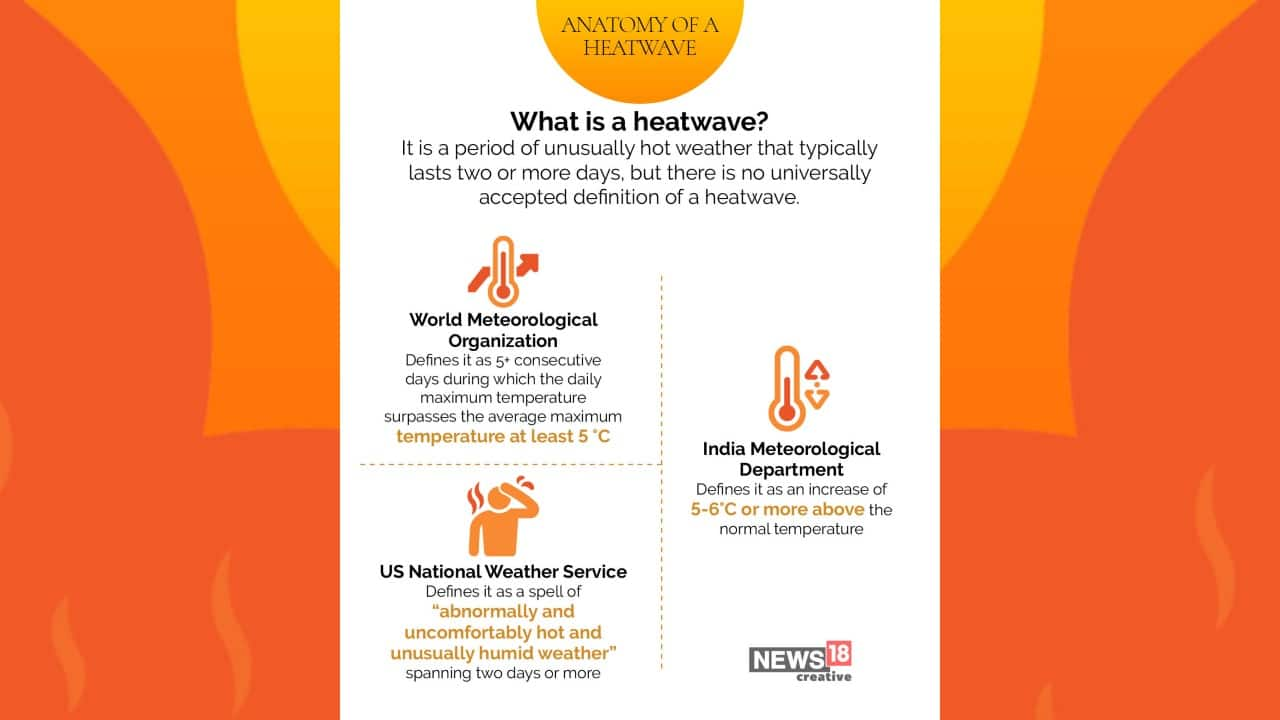
    What is Heat-wave?

    It is a period of unusually hot weather that typically lasts two or more days, but there is no universally accepted definition of a heatwave. (Image: News18 Creative)

    • A heatwave is a prolonged period of abnormally hot weather.
    • Heatwaves usually last for several days or weeks and can occur in both dry and humid
    • Characterized by temperatures that are significantly higher than the average for a particular region during that time of year.

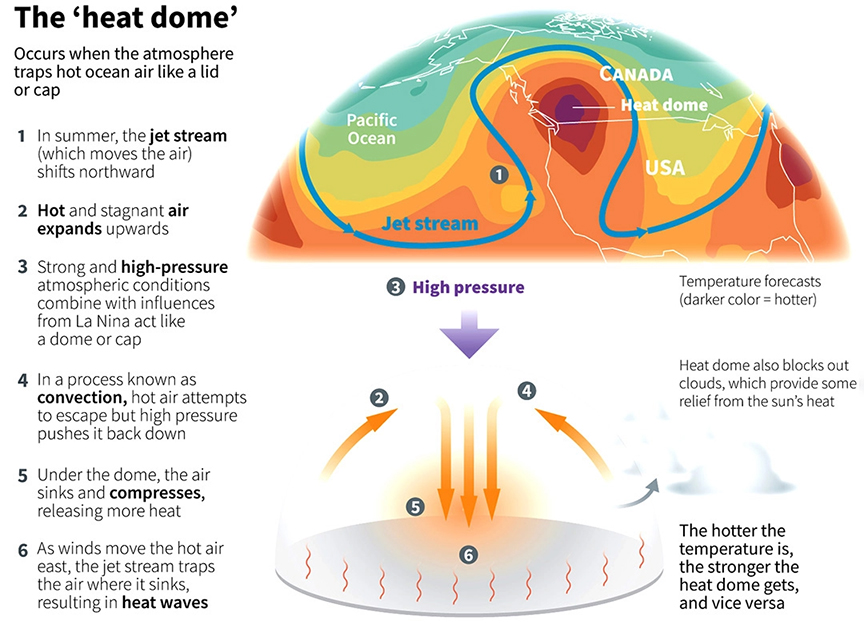
    What are heat domes?

    Heat Waves and Heat Dome | 20 Jul 2021

    • A heat dome occurs when an area of high-pressure stays over a region for days and weeks. It traps warm air, just like a lid on a pot, for an extended period.
    • The longer that air remains trapped, the more the sun works to heat the air, producing warmer conditions with every passing day.
    • Heat domes, if they last for a long period, may cause deadly heat waves.

    What are Anticyclones?

    • An anticyclone, also known as a high-pressure system, is essentially an area of high pressure in which the air goes downwards towards the Earth’s surface.
    • As the air sinks, its molecules get compressed, which increases the pressure, making it warmer. This causes dry and hot weather.
    • The winds remain calm and gentle during an anticyclone, and there is almost no formation of clouds because here the air sinks rather than rises.

    Factors behind this scorching trend?

    • Climate change: The primary driver behind the escalating heatwaves and rising global temperatures is human-induced climate change.
    • The burning of fossil fuels, deforestation, industrial processes, and other human activities release greenhouse gases, such as carbon dioxide (CO2), methane (CH4), and nitrous oxide (N2O), into the atmosphere. These gases trap heat and lead to the greenhouse effect, resulting in the warming of the Earth’s surface.
    • El Nino events, characterized by abnormal warming of surface waters in the equatorial Pacific Ocean, can elevate temperatures worldwide and exacerbate heatwaves.
    • Heat domes and anticyclones are weather phenomena that can intensify and extend heatwaves.
    • Warmer oceans release more heat into the atmosphere, fueling extreme weather events like heatwaves.
    • Urban areas with concrete and asphalt surfaces can create heat islands that retain and amplify heat, leading to higher temperatures within cities compared to surrounding rural areas.
    • Climate change can trigger feedback loops that amplify its effects. For example, melting ice in the Arctic reduces the Earth’s reflective surface, leading to increased absorption of sunlight and further warming.

    *NOTE: Although heat domes and anticyclones don’t occur due to climate change, they have become more intense and longer as a result of soaring global temperatures.

    Impact of Heatwaves

    1.Human Health Impacts:

    • Heat-related Illnesses: Heatwaves can cause heat-related illnesses such as heat exhaustion and heatstroke, which can be life-threatening if not treated promptly. The elderly, young children, and individuals with pre-existing health conditions are more vulnerable.
    • Dehydration: High temperatures and excessive sweating can lead to dehydration, especially if individuals do not consume enough fluids.

    2.Impact on Agriculture:

    • Crop Failure: Prolonged heatwaves can cause damage to crops and reduce agricultural yields due to drought conditions and water shortages.
    • Livestock Stress: High temperatures can lead to heat stress in livestock, affecting their productivity and overall health.

    3.Environmental Impact:

    • Drought: Heatwaves can contribute to drought conditions by increasing evaporation and reducing water availability, leading to water scarcity and affecting ecosystems.
    • Wildfires: Hot and dry conditions during heatwaves can increase the risk of wildfires, leading to extensive damage to forests and wildlife habitats.
    • Water Quality: Heatwaves can lead to higher water temperatures, which may negatively impact aquatic ecosystems and decrease water quality.

    4.Energy Demand and Infrastructure Stress:

    • Increased Energy Consumption: Heatwaves result in higher energy demand due to the use of air conditioning and cooling systems, putting strain on the power grid.
    • Power Outages: The increased demand for electricity during heatwaves can lead to power outages if the electrical infrastructure becomes overloaded.

    5.Social and Economic Impact:

    • Disruption of Daily Activities: Heatwaves can disrupt daily life, making it uncomfortable to work, travel, or engage in outdoor activities.
    • Economic Losses: Heatwaves can result in productivity losses, increased healthcare costs, and damage to infrastructure, leading to economic impacts on communities and businesses.

    Worse affected countries

    • United States: North America, particularly the United States, has experienced prolonged heatwaves covering a large swath of the country. States like California, Florida, New Mexico, and Arizona have been experiencing extreme temperatures. Temperature remained around 43.3 degree Celsius.
    • Europe: Countries in Europe, such as Italy and Greece, have been gripped by two consecutive heatwaves. Italy’s island of Sardinia saw temperatures reaching 47.7 degrees Celsius, and Greece experienced temperatures exceeding 40 degrees Celsius, leading to wildfires and affecting historical sites.
    • Spain: Spain witnessed a temperature of 45.4 degrees Celsius in the town of Figueres, the highest temperature recorded in the country since 1928. It led to dry spells and wildfires.
    • Asia: China, Iraq and Saudi Arabia remain some of the worst affected countries. A remote township in China saw temperatures touching 52 degree Celsius
    • Algeria: North Africa’s Algeria has reported record-breaking temperatures, with some experts suggesting temperatures exceeding 50 degrees Celsius in certain areas.
    • Tunisia: Tunisia has also been impacted by severe heatwaves, with temperatures reaching up to 49 degrees Celsius in some regions.

    Mains Marks enhancer: Best Practices in India

    • Andhra Pradesh:
      • Setting up Heat Action Plans: Cities like Vijayawada have implemented Heat Action Plans that include public awareness campaigns, heat helplines, and designated cooling centers to provide relief to vulnerable populations.
    • Telangana:
      • Early Warning Systems: The Telangana State Development Planning Society issues heatwave alerts and early warnings to district authorities and the public, allowing them to take precautionary measures.
    • Rajasthan:
      • Urban Heat Island Mitigation: Cities like Jaipur have implemented measures to reduce the urban heat island effect by promoting green spaces, reflective surfaces, and better urban planning.
    • Gujarat:
      • Cool Roofs: The Gujarat government has encouraged the use of cool roofs in buildings to reflect sunlight and reduce indoor temperatures during heatwaves.
    • Tamil Nadu:
      • Heatwave Awareness Programs: The Tamil Nadu government conducts awareness programs through schools, colleges, and community organizations to educate people about heatwave safety and preparedness.

    Way forward: Urgent actions needed

    • The international community must strengthen and implement the commitments made under climate agreements, such as the Paris Agreement.
    • Countries should set more ambitious targets for reducing greenhouse gas emissions
    • Provide support to developing nations to enhance climate resilience and adaptation.
    • Prioritize the transition to renewable energy sources and invest in clean technologies.
    • Develop robust adaptation strategies such as involves establishing heat emergency response plans, cooling centers, and public awareness campaigns.
    • Cities should adopt green urban planning practices, incorporating green spaces, green roofs, and sustainable building designs to mitigate the urban heat island effect and promote natural cooling.
    • Promote sustainable land management practices, including reforestation and afforestation
    • Enhance early warning systems to detect and respond to extreme heat events promptly.

    Conclusion

    • The alarming surge in global temperatures, culminating in devastating heatwaves across continents, is a potent reminder of the urgency to combat climate change. As nations grapple with the immediate impacts of heatwaves, it is imperative to take collective action to reduce greenhouse gas emissions, mitigate the effects of climate change, and safeguard the planet for future generations. The time to act is now; the consequences of inaction are too dire to ignore.

    Also read:

    Heatwaves in India: Increasing Frequency Needs Range of Measures to Mitigate

More posts