💥UPSC 2027,2028 Mentorship (May Batch) + Access XFactor Notes & Microthemes PDF

Search results for: “”

  • BRICS Foreign Ministers’ Meeting 2026

    Why in the News

    Prime Minister Narendra Modi met several foreign ministers attending the BRICS Foreign Ministers’ Meeting in New Delhi during India’s 2026 chairship of the grouping.

    India’s 2026 BRICS Chairship

    • India assumed BRICS chairmanship on 1 January 2026.
    • India took over the presidency from Brazil.
    • This is India’s fourth BRICS presidency.

    About BRICS

    • BRICS originally included: Brazil, Russia, India, China, and South Africa
    • Expanded BRICS: Egypt, Ethiopia, Indonesia, Iran, Saudi Arabia, and the United Arab Emirates (UAE)

    India’s 2026 BRICS Chairship

    • India assumed BRICS chairmanship on 1 January 2026.
    • India took over the presidency from Brazil.
    • This is India’s fourth BRICS presidency.

    Previous Indian Presidencies

    • 2012
    • 2016
    • 2021
    [2025] Consider the following statements with regard to BRICS; 
    I. 16th BRICS Summit was held under the Chairmanship of Russia in Kazan. 
    II. Indonesia has become a full member of BRICS. 
    III. The theme of the 16th BRICS Summit was Strengthening Multiculturalism for Just Global Development and Security. 
    Which of the statements given above is/are correct? 
    [A] I and II [B] II and III [C] I and III [D] I only
  • Behind Government Ban on Sugar Exports

    Why in the News

    The Government of India banned sugar exports till 30 September 2026 due to concerns over El Niño, the Iran war, fertiliser disruptions, and inflation.

    Key Reasons for the Ban

    • El Niño Concerns: El Niño causes weak monsoon and higher temperatures in India. This may reduce sugarcane planting and future yields.
    • Threat to Sugarcane Production: Sugarcane is water and fertiliser intensive. Poor rainfall and fertiliser shortages may affect the 2027-28 sugar crop.
    • Iran War and Supply Disruptions: Conflict near the Strait of Hormuz threatens:
      • Fertiliser imports
      • Energy supplies
      • Shipping routes
    • Inflation Concerns: The government aims to prevent: Food inflation, Fuel inflation, and Rise in sugar prices

    India’s Sugar Position (2025-26)

    • Production: 279 lakh tonnes
    • Domestic consumption: 280 lakh tonnes
    • Expected closing stock: 42.5 lakh tonnes
    • Lowest closing stock in nearly 9 years

    Export Policy Change

    • Earlier: Sugar exports under “Restricted” category
    • Now: Shifted to “Prohibited” category
    • Exception: Limited quota exports to EU and US
    [2021] Among the following which one is the least water-efficient crop? 
    [A] Sugarcane 
    [B] Sunflower 
    [C] Pearl millet 
    [D] Red gram
  • PMOS (Earlier PCOS)

    Why in the News?

    A global medical consensus led by Monash University renamed Polycystic Ovary Syndrome (PCOS) as Polyendocrine Metabolic Ovarian Syndrome (PMOS) to better reflect its multisystem nature.

    What is PMOS?

    • PMOS is a hormonal, metabolic, and reproductive disorder affecting women of reproductive age.
    • It involves:
      • Excess androgen production
      • Irregular ovulation
      • Metabolic dysfunction
      • Psychological and skin-related symptoms

    Full Form of PMOS

    • Polyendocrine: Multiple hormonal systems affected
    • Metabolic: Linked with diabetes, obesity, insulin resistance
    • Ovarian: Reproductive involvement
    • Syndrome: Group of symptoms

    Why Was PCOS Renamed?

    • The term “PCOS” focused mainly on ovaries and “cysts”.
    • Experts noted that the condition also involves:
      • Hormonal imbalance
      • Metabolic disorders
      • Endocrine complications

    Major Features of PMOS

    • Metabolic Features
      • Obesity
      • Type 2 diabetes
      • Dyslipidemia
      • Hypertension
      • Fatty liver disease (MASLD)
    • Reproductive Features
      • Irregular periods
      • Infertility
      • Ovulation problems
      • Pregnancy complications
    • Psychological Features
      • Depression
      • Anxiety
      • Eating disorders
    • Dermatological Features
      • Acne
      • Facial hair growth
      • Hair thinning

    Importance for India

    • Estimated prevalence in India: 16% to 18%
    • Indians have higher risk of:
      • Diabetes
      • Heart disease
      • Insulin resistance
    [2024] Which one of the following is synthesised in human body that dilates blood vessels and increases blood flow 
    [A] Nitric oxide 
    [B] Nitrous oxide 
    [C] Nitrogen dioxide 
    [D] Nitrogen pentoxide
  • [14th May 2026] The Hindu OpED: The Xi-Trump summit- shadow boxing on Iran

    Mentor’s Comment

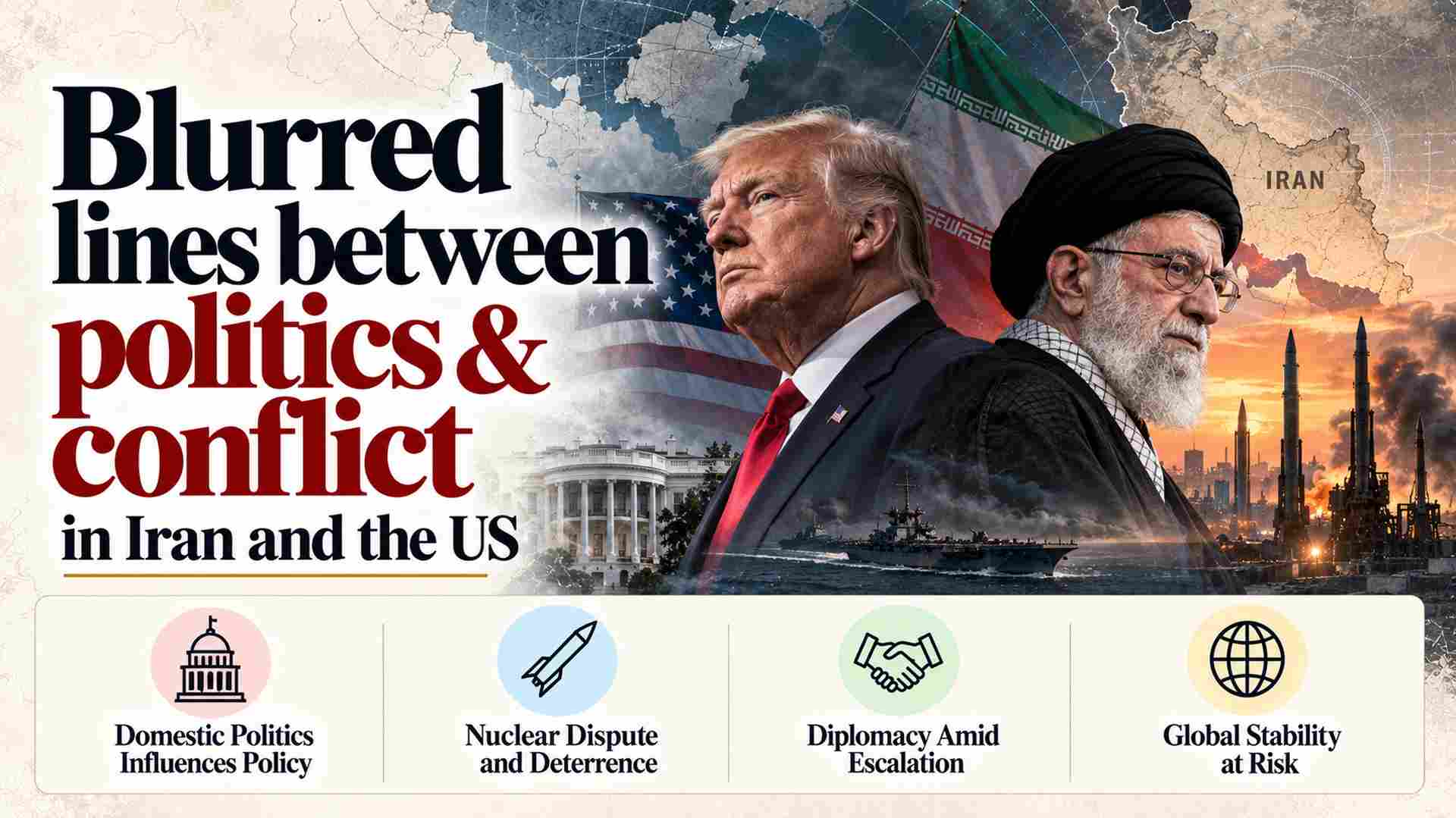
    The Xi-Trump (China-USA) summit in Beijing (2026) has become geopolitically important as the U.S. faces growing difficulty in managing its confrontation with Iran. The conflict has become costly, unpopular, and difficult to resolve, pushing Washington to explore China’s help for a diplomatic exit. This marks a major shift from earlier U.S. resistance to China’s rise and resembles the 1972 Nixon-China diplomatic opening, where strategic cooperation helped solve larger geopolitical problems.

    Why is the Xi-Trump summit being compared to the 1972 Nixon-China breakthrough?

    1. Historical Parallel: The summit is compared with the 1972 Nixon-Mao meeting, which fundamentally altered Cold War geopolitics and enabled U.S.-China normalization.
    2. Strategic Bargaining: The 1972 summit involved reciprocal concessions, including U.S. recognition of the People’s Republic of China and downgrading Taiwan’s status in exchange for strategic cooperation.
    3. Current Context: Present negotiations similarly indicate transactional diplomacy, where Chinese cooperation on Iran could be exchanged for concessions on tariffs, technology restrictions, or Taiwan.
    4. Geopolitical Reordering: The summit may redefine strategic alignments amid intensifying great-power competition and regional instability in West Asia.

    How has the Iran crisis emerged as the central issue in the U.S.-China diplomacy?

    1. Strategic Deadlock: The U.S. seeks an exit from an increasingly costly and unpopular confrontation with Iran without appearing strategically weak.
    2. Hormuz Leverage: Iran retains strategic influence through the Strait of Hormuz, through which nearly 20% of global crude oil trade passes, creating risks of global energy disruption.
    3. Military Asymmetry: Iran has adopted asymmetric tactics instead of direct military confrontation. This increases costs for adversaries while avoiding conventional escalation.
    4. Domestic Political Pressure: The inability of the U.S. administration to secure a decisive outcome risks political consequences during domestic electoral cycles.

    Why has China emerged as Iran’s principal strategic anchor?

    1. Energy Dependence: China purchases more than 80% of Iranian oil exports, estimated at nearly $45 billion in 2025, making it Tehran’s largest economic partner.
    2. Trade Connectivity: Bilateral trade between China and Iran exceeds $9 billion, including dependence on Chinese industrial and technological inputs.
    3. Diplomatic Engagement: Iranian Foreign Minister Abbas Araghchi visited Beijing for consultations, signalling China’s increasing diplomatic role.
    4. Strategic Shielding: China, alongside Russia, has resisted Western-led pressure, including opposition to the U.S.-backed resolutions in the United Nations Security Council (UNSC).

    How has Iran responded to American pressure and negotiations?

    1. Negotiation Breakdown: Iran reportedly rejected a U.S. proposal after prolonged negotiations, indicating declining trust between Washington and Tehran.
    2. Escalatory Risks: The U.S. military option remains constrained due to fears of wider regional destabilisation and concerns over legal authorisation under the War Powers Act.
    3. Expanded Demands: Iran has reportedly increased demands involving security guarantees, sanctions relief, release of frozen assets, closure of U.S. military bases, and ceasefires in regional conflict zones.
    4. Strategic Confidence: Iran’s ability to sustain pressure despite sanctions reflects its confidence in alternative partnerships, particularly with China and Russia.

    Can China realistically mediate between the United States and Iran?

    1. Mediator Role: China possesses leverage due to its economic dependence relationship with Iran and growing diplomatic acceptance in West Asia.
    2. Transactional Diplomacy: Beijing may seek concessions on bilateral issues such as tariffs, sanctions, technology controls, and Taiwan in return for diplomatic assistance.
    3. Regional Stability Interest: Sustained conflict threatens Chinese energy security through rising oil prices and disruption of Gulf maritime routes.
    4. Calculated Neutrality: China may prefer limited mediation rather than deep intervention, preserving relations with all regional actors.

    What are the larger geopolitical implications of the summit?

    1. Great Power Politics: The summit reflects increasing interdependence between geopolitical rivals despite strategic competition.
    2. Multipolar Transition: China’s expanding diplomatic role indicates a gradual movement toward a more multipolar global order.
    3. Energy Security Risks: Prolonged instability in West Asia threatens global oil prices and maritime trade.
    4. Institutional Contestation: Divergence in the UNSC demonstrates weakening consensus among major powers on conflict resolution.

    Conclusion

    The Xi-Trump summit highlights the intersection of regional crises and great-power diplomacy. Iran has evolved from a regional security issue into a strategic bargaining chip in U.S.-China relations. Any durable resolution will depend on balancing coercive diplomacy with negotiated settlements while ensuring regional stability and uninterrupted energy flows.

    PYQ Relevance

    [UPSC 2018] In what ways would the ongoing US-Iran Nuclear Pact controversy affect the national interest of India? How should India respond to this situation?

    Linkage: The rising U.S.-Iran tensions have their impact on global oil supply, regional stability, and diplomacy. The PYQ links directly to India’s energy security, West Asia policy, and strategic balancing amid great-power rivalry

  • How farm exports have grown despite US tariffs

    Why in the News?

    India’s agricultural exports recorded growth in 2025-26 despite higher tariff barriers imposed by the United States. This assumes importance because farm exports grew even when tariffs were raised sharply from 10% to 25% and then to 50% within months.

    How has India’s agricultural trade performed amid U.S. tariff pressures?

    1. Export Growth: Agricultural exports increased by 2.3% year-on-year, reaching $53.13 billion in 2025-26, marginally below the all-time high of $53.2 billion in 2022-23.
    2. Trade Resilience: Overall exports rose 0.9% to $441.7 billion, despite aggressive tariff increases by the U.S. administration.
    3. Tariff Escalation: The U.S. increased tariffs from 10% (February 10) to 25% (August 7) and later 50% (August 27), creating major trade uncertainty.
    4. Comparative Contrast: Contrary to expectations of export contraction under higher tariffs, India sustained agricultural export growth through diversification.
    5. Trade Balance: Agricultural trade surplus narrowed over time, despite remaining positive, due to increasing imports.

    Why were Indian agricultural exports able to withstand U.S. tariff shocks?

    1. Market Diversification: Exporters reduced excessive dependence on the U.S. market and expanded into Vietnam, UAE, Japan, Belgium, Saudi Arabia, Egypt and Bangladesh.
    2. Commodity Diversification: Growth shifted toward high-performing sectors such as marine products, buffalo meat, coffee and basmati rice, reducing concentration risks.
    3. Demand Expansion: Alternative markets compensated for reduced U.S. demand through higher shipments.
    4. Competitive Pricing: India retained export competitiveness in labour-intensive and agro-processing sectors.
    5. Supply Flexibility: Exporters redirected shipments geographically instead of relying on one dominant market.

    How did marine products perform?

    1. Marine Exports: Marine exports grew 13.9%, crossing $8.4 billion, becoming the top-performing agricultural export.
    2. Alternative Markets: Exports expanded to China ($1.2 billion), Vietnam ($881.8 million), Japan ($408.5 million) and Belgium ($225.3 million).
    3. Frozen Shrimp Diversification: Exporters offset reduced U.S. demand through shipments to alternative destinations.

    Why did buffalo meat exports rise significantly?

    1. Export Surge: Buffalo meat exports increased 25.6%, touching a record $5.1 billion, surpassing the previous peak of $4.8 billion (2014-15).
    2. Major Markets: Key destinations included Vietnam ($740.8 million), Egypt ($656.1 million), UAE ($300.4 million) and Saudi Arabia ($317.6 million).
    3. Volume Growth: Exports rose from 1.2 lakh tonnes (2024-25) to 14.2 lakh tonnes (2025-26).

    How has India emerged as a stronger coffee exporter?

    1. Coffee Boom: Coffee exports crossed the $2 billion mark for the first time in 2025-26.
    2. Structural Driver: High global coffee prices and supply disruptions in major producers such as Brazil and Vietnam increased India’s competitiveness.
    3. Export Destinations: Major buyers included Italy, Germany, Russia, UAE and Belgium.

    What explains growth in basmati rice and processed foods?

    1. Basmati Exports: Basmati rice exports increased from $337.1 million to $285.9 million (decline in U.S. market but overall diversification sustained demand).
    2. Processed Foods: Processed fruits and vegetables exports expanded due to rising international demand.
    3. Fresh Produce: Exports of grapes, pomegranates, mangoes, bananas, onions and vegetables reached record levels.

    Why do edible oil imports remain structurally high?

    1. Import Dependence: Vegetable oil imports reached a record $19.56 billion, despite declining volumes.
    2. Domestic Deficit: India imports nearly 40% of edible oil consumption, exposing vulnerability in oilseed production.
    3. Top Imports: Major imports included palm oil, soybean oil and sunflower oil.

    Why has cotton turned from an export to an import commodity?

    1. Import Surge: Cotton imports rose due to domestic shortages and absence of new yield-enhancing technologies.
    2. Structural Weakness: Bt cotton productivity gains stagnated, affecting competitiveness.
    3. Export Decline: Cotton shifted from a traditional export commodity toward higher import dependence.

    What trends are visible in fruit and pulse imports?

    1. Fresh Fruits: Imports rose to $3.5 billion, including apples, kiwis, grapes, pears and dates.
    2. Pulses: Imports increased because of domestic supply shortfalls and consumption demand.
    3. Nutritional Demand: Rising incomes contributed to diversified food demand.

    Does India’s agricultural trade surplus remain sustainable?

    India’s agricultural trade surplus faces critical sustainability risks despite remaining positive at $12.7 billion in 2025-26.

    1. Trade Surplus: India continues to remain a net agricultural exporter.
    2. Aggressive Structural Erosion: Agricultural trade surplus declined from $27.7 billion (2013-14) to $12.7 billion (2025-26).
    3. Import Growth: Faster growth in edible oil, cotton and fruit imports reduced net gains.
      1. The Forex Drain: High-volume imports of edible oils ($19.5B) and pulses ($3.6B) create an structural annual drag of $23.1 billion.
    4. Weak Import Substitution: Domestic policy interventions have failed to scale local oilseed and pulse production to displace international imports.

    What are the broader economic and policy implications?

    1. Export Diversification: Reduces overdependence on single-country markets and strengthens trade resilience.
    2. Food Processing: Expands value-added exports and rural employment.
    3. MSP and Competitiveness: Balances domestic food security with export competitiveness.
    4. Oilseed Mission: Necessitates domestic edible oil production reforms.
    5. Technology Adoption: Requires improved cotton productivity and climate-resilient farming.
    6. Trade Diplomacy: Strengthens India’s negotiating position amid rising global protectionism.

    Conclusion

    India’s farm export resilience despite U.S. tariff escalation demonstrates the benefits of market diversification and commodity specialization. However, rising dependence on edible oils, cotton and select food imports highlights structural weaknesses in domestic agricultural productivity. A balanced strategy combining export competitiveness with import substitution and technological modernization remains essential for sustaining India’s agricultural trade surplus.

    PYQ Relevance

    [UPSC 2018] How would the recent phenomena of protectionism and currency manipulations in world trade affect macroeconomic stability of India?

    Linkage: This article directly relates to global protectionism and tariff barriers, as India’s agricultural exports faced higher U.S. tariffs but remained resilient through diversification. It helps in understanding how trade shocks, export diversification and global market shifts affect India’s macroeconomic and agricultural stability.

  • Centre doubles import duty on gold, silver; move is criticised as retrograde

    Why in the News?

    India has doubled the effective import duty on gold and silver from nearly 9.2% to 18.4%. The decision came amid concerns over the impact of the West Asia crisis on India’s external sector and soon after the Prime Minister urged citizens to reduce gold purchases to conserve foreign exchange.

    How has the government changed the import duty structure on gold and silver?

    1. Customs Duty Revision: The government increased basic customs duty on gold and silver from 5% to 10%.
    2. AIDC Increase: The Agriculture Infrastructure and Development Cess (AIDC) increased from 1% to 5%.
    3. IGST Continuity: The Integrated Goods and Services Tax (IGST) remains 3% on the assessable value.
    4. Effective Tax Burden: The cumulative effective tax burden increased from around 9.2% to 18.4%, including customs duty, cess, insurance, freight cost, and IGST.
    5. Immediate Implementation: The revised rates came into force through official notifications issued on 13 May, without prior consultation.

    Why did the government increase import duty on precious metals?

    The government increased the import duty on gold and silver to defend India’s macroeconomic balance against external shocks by prioritizing non-discretionary resource allocations.

    1. Current Account Deficit (CAD): Reducing import volumes directly curbs the widening Current Account Deficit to keep the trade balance within sustainable limits.
    2. Foreign Exchange Conservation: India aims to preserve forex reserves and rupee stability, especially amid geopolitical uncertainty.
    3. West Asia Crisis: Regional instability threatens oil prices, logistics chains, and shipping routes, increasing vulnerability for a crude oil-import dependent economy.
    4. Import Prioritisation: The government appears to prioritise foreign exchange for essential imports such as:
      1. Crude Oil
      2. Fertilisers
      3. Industrial Raw Materials
      4. Defence Requirements
      5. Critical Technologies
      6. Capital Goods
    5. Demand Management: Gold is treated as a consumption and investment good, unlike strategic imports necessary for production.

    Why are the gems and jewellery industry opposing the decision?

    1. Export Cost Escalation: Exporters argue that expensive imported gold raises production costs, reducing competitiveness in international markets.
    2. Working Capital Blockage: Exporters now face bank guarantees of ₹28-30 lakh per kg of duty-free gold, creating liquidity stress.
    3. MSME Vulnerability: MSMEs constitute nearly 80% of Gems and Jewellery Export Promotion Council (GJEPC) membership, making the sector particularly vulnerable.
    4. Employment Risks: Higher costs could reduce export orders and employment in a labour-intensive sector.
    5. Export Disruption: Industry stakeholders warn of lower shipments during a period already marked by trade disruption due to the West Asia crisis.

    Can higher import duties reduce gold imports effectively?

    1. Historical Experience: India’s past experience indicates that higher gold tariffs often fail to proportionately reduce imports.
    2. Persistent Demand: Cultural demand for gold in India remains high due to:
      1. Marriage Expenditure
      2. Household Savings
      3. Investment Demand
      4. Inflation Hedge
    3. Price Transmission: Higher tariffs often increase domestic gold prices rather than reduce demand.
    4. Import Resilience: Despite global gold prices doubling in recent years, imports have not fallen proportionately.
    5. Limited Elasticity: Demand for gold in India demonstrates low price elasticity, limiting tariff effectiveness.

    Does a higher duty increase smuggling and informal trade?

    1. Smuggling Incentives: Large differences between domestic and international prices create incentives for illegal gold inflows.
    2. Historical Precedent: India witnessed higher gold smuggling during earlier phases of elevated import duties.
    3. Revenue Leakage: Smuggling reduces formal tax collection and weakens customs enforcement.
    4. Informal Economy Expansion: Illegal channels strengthen hawala networks and black-market transactions.
    5. Policy Trade-off: Excessively high tariffs may undermine the original objective of reducing imports.

    How important is West Asia for India’s gems and jewellery trade?

    1. Diamond Export Share: West Asia accounts for nearly 18% of India’s diamond exports during the first nine months of FY 2025-26.
    2. Import Dependence: Around 68% of India’s rough diamond imports originate from the UAE and Israel.
    3. Trade Vulnerability: Regional instability directly affects supply chains, shipping, insurance costs, and export demand.
    4. Strategic Dependence: The sector remains deeply linked to West Asian trade networks.

    What concerns have been raised regarding policy transparency?

    1. Complex Taxation Structure: Multiple amendments and notifications complicate duty calculations.
    2. Ease of Doing Business Issues: Frequent tariff changes increase compliance burdens for traders and exporters.
    3. Predictability Deficit: Sudden duty revisions reduce policy certainty for investment planning.
    4. Administrative Complexity: Multi-layered taxation may weaken transparency in customs administration.

    What are the Policy Alternatives to Import Duty Hike?

    1. Gold Monetisation Scheme (GMS): Mobilises idle household gold through bank deposits, reducing dependence on fresh imports.
    2. Sovereign Gold Bonds (SGBs): Provides gold-linked returns without physical purchase, lowering demand for imported gold.
    3. Financial Savings Alternatives: Encourages investment in mutual funds, fixed deposits, equities, and pension schemes, reducing gold dependence as a savings tool.
    4. Recycling of Domestic Gold: Strengthens refining and reuse of existing gold stock, reducing import needs.
    5. Formalisation of Gold Trade: Improves hallmarking, digital tracking, and compliance, reducing smuggling and increasing tax collection.

    Conclusion

    The increase in gold and silver import duties shows India’s effort to protect foreign exchange reserves and manage external economic pressures during global uncertainty. However, past experience suggests that very high duties on gold may increase smuggling, disrupt markets, and hurt exports. A balanced approach, combining moderate tariffs with alternatives like digital or financial gold investments, may work better in the long run.

    PYQ Relevance

    [UPSC 2017] Account for the failure of the manufacturing sector in achieving the goal of labour-intensive exports rather than capital-intensive exports. Suggest measures for more labour-intensive rather than capital-intensive exports

    Linkage: The article links directly to this PYQ because the gems and jewellery sector is a labour-intensive export industry, and higher gold import duties can reduce its global competitiveness. It also highlights the challenge of balancing trade policy with export growth and MSME employment.

  • Sabarimala Review Case and Religious Freedom

    Why in the News

    • During the Sabarimala Temple Entry Dispute review hearing, the Union government argued before the Supreme Court that all religious practices are presumed constitutionally protected unless they violate: Public order, Morality, and Health
    • The Centre also questioned the judicially evolved doctrine of “Essential Religious Practices” (ERP).

    What is ERP?

    The ERP doctrine was evolved by the Supreme Court to determine:

    • Which religious practices are “essential” to a religion
    • Only such essential practices receive constitutional protection

    Centre’s Criticism of ERP Doctrine

    • The Centre argued:
      • The phrase “essential religious practices” does not appear in the Constitution.
      • It is a judicial innovation created through court interpretation.
    • According to the Centre:
      • Articles 25 and 26 should receive broad interpretation like other Fundamental Rights.
      • Courts should avoid excessive interference in religious matters.

    Supreme Court’s Observations

    • Faith Beyond Rituals: Surya Kant observed:
      • One need not visit temples to be religious.
      • Even lighting a lamp in a hut can express faith.
    • Hinduism as a Way of Life: Justice B. V. Nagarathna remarked:
      • Hinduism is a “way of life”
      • It is not dependent solely on rituals or temple visits

    Related Case Laws

    • Shirur Mutt Case
      • Origin of ERP doctrine
      • Court held religion includes essential practices
    • Indian Young Lawyers Association v. State of Kerala
      • Allowed women of all ages entry into Sabarimala Temple
      • Linked exclusion to constitutional equality
    • Sardar Syedna Taher Saifuddin Case: Upheld denominational autonomy regarding excommunication
    [2020] Consider the following statements: 
    1. The Constitution of India defines its ‘basic structure’ in terms of federalism, secularism, fundamental rights and democracy. 
    2. The Constitution of India provides for ‘judicial review’ to safeguard the citizens’ liberties and to preserve the ideals on which the Constitution is based. 
    Which of the statements given above is/are correct? 
    a) 1 only b) 2 only c) Both 1 and 2 d) Neither 1 nor 2
  • Indian National Centre for Ocean Information Services and ‘Kallakkadal’ Monitoring

    Why in the News

    Indian National Centre for Ocean Information Services (INCOIS) has installed a second Coastal Flood Monitoring System (CFMS) near Kollam Harbour to improve forecasting of ‘Kallakkadal’ or swell surge events along India’s southwest coast.

    What is ‘Kallakkadal’?

    • “Kallakkadal” is a Malayalam term meaning: “Sea that comes stealthily”
    • It refers to:
      • Sudden high-energy swell surges
      • Coastal flooding without local storms or rainfall

    Purpose

    • Improve accuracy of coastal flood forecasts
    • Study nearshore wave transformation
    • Build better early warning systems

    About Coastal Flood Monitoring System (CFMS)

    • A scientific monitoring system developed by Indian National Centre for Ocean Information Services for:
      • Real-time monitoring of coastal wave activity
      • Early warning for swell surges

    Components of CFMS

    • The system integrates:
      • Coastal Automatic Weather Station
      • Four high-frequency pressure sensors
    • Installed at: Shallow depths of 3 to 7 metres

    Why Kollam?

    • Kollam Harbour was selected because:
      • Kerala’s southwest coast frequently experiences swell surges
      • Fishing communities are highly vulnerable
    [2017] At one of the place in India, if you stand on the seashore and watch the sea, ‘you will find that the sea water recedes from the shore line a few kilometers and comes back to the shore, twice a day, and you can actually walk on the seafloor when the water recedes. This unique phenomenon is seen at 
    a. Bhavnagar 
    b. Bheemunipatnam 
    c. Chandipur 
    d. Nagapattinam 
  • Indian Ocean Rim Association (IORA)

    Why in the News

    India’s Ministry of External Affairs, along with the IORA Secretariat, organised the 10th Indian Ocean Dialogue.

    About IORA

    • An intergovernmental organisation of countries bordering the Indian Ocean.
    • Established in 1997.
    • Earlier known as:
      • Indian Ocean Rim Initiative
      • Indian Ocean Rim Association for Regional Cooperation (IOR-ARC)

    Headquarters

    • Secretariat located in Ebène, Mauritius.

    Objectives

    • Promote sustainable and balanced regional development.
    • Enhance economic cooperation and regional integration.
    • Encourage liberalisation of trade and investment.

    Membership

    • 23 Member States
    • 12 Dialogue Partners

    Member Regions

    • Asia: India, Bangladesh, Indonesia, Iran, Malaysia, Maldives, Oman, Singapore, Sri Lanka, Thailand, UAE, Yemen
    • Africa: Kenya, Madagascar, Mozambique, Somalia, South Africa, Tanzania, Comoros, Mauritius, Seychelles
    • Oceania: Australia
    • Europe: France

    Dialogue Partners

    • China, EU, Germany, Italy, Japan, Russia, Saudi Arabia, South Korea, Türkiye, UK, US, Egypt
    [2015] With reference to ‘Indian Ocean Rim Association for Regional Cooperation (IOR-ARC)’, Consider the following statements: 
    1. It was established very recently in response to incidents of piracy and accidents of oil spills 
    2. It is an alliance meant for maritime security only 
    Which of the following statements given above is/are correct? 
    [A] 1 only [B] 2 only [C] Both 1 and 2 [D] Neither 1 nor 2
  • National Florence Nightingale Award

    Why in the News

    The President of India conferred the National Florence Nightingale Awards 2026 on outstanding nursing professionals.

    About the Award

    • Instituted in 1973.
    • Established by the Ministry of Health and Family Welfare, Government of India.
    • Recognises exceptional nursing services and contributions to public health.

    Who Receives the Award?

    • The award is presented to:
      • Registered Nurses
      • Midwives
      • Auxiliary Nurse Midwives (ANMs)
      • Lady Health Visitors (LHVs)
    • Serving in:
      • Central Government
      • State Governments
      • Union Territories
      • Voluntary organisations

    Award Components

    • Each award includes:
      • Certificate of Merit
      • Medal
      • Cash prize of ₹1 lakh

    Role of Nurses in Healthcare

    • Nurses play a vital role in:
      • Primary healthcare
      • Immunisation
      • Community outreach
      • Emergency care

    About Florence Nightingale

    • English social reformer and statistician.
    • Known as the founder of modern nursing.
    • Gained prominence during the Crimean War by organising nursing care for wounded soldiers.
    • Professionalised nursing practice and introduced scientific healthcare methods.
    • Founded the Nightingale School of Nursing at St. Thomas’ Hospital, London, considered the world’s first scientifically based nursing school.
    [2024] With reference to the ‘Pradhan Manti Surakshit Matritva Abhiyan’, consider the following statements: 
    1. This scheme guarantees a minimum package of antenatal care services to women in their second and third trimesters of pregnancy and six months post-delivery health care service in any government health facility. 
    2. Under this scheme, private sector health care providers of certain specialties can volunteer to provide service at nearby government health facilities. 
    Which of the statements given above is/are correct ? 
    [A] 1 only [B] 2 only [C] Both 1 and 2 [D] Neither 1 nor 2

More posts