India’s one million Accredited Social Health Activists (ASHA) volunteers have received World Health Organization’s Global Health Leaders Awards 2022.
Background of the ASHA program
In 1975, a WHO monograph titled ‘Health by the people’ and then in 1978, an international conference on primary health care in Alma Ata (in the then USSR and now in Kazakhstan), gave emphasis for countries recruiting community health workers to strengthen primary health-care services that were participatory and people centric.
Soon after, many countries launched community health worker programmes under different names.
India launched the ASHA programme in 2005-06 as part of the National Rural Health Mission.
The biggest inspiration for designing the ASHA programme came from the Mitanin (meaning ‘a female friend’ in Chhattisgarhi) initiative of Chhattisgarh, which had started in May 2002.
The core of the ASHA programme has been an intention to build the capacity of community members in taking care of their own health and being partners in health services.
Each of these women-only volunteers work with a population of nearly 1,000 people in rural and 2,000 people in urban areas, with flexibility for local adjustments.
A well thought through and deliberated program
The ASHA programme was well thought through and deliberated with public health specialists and community-based organisations from the beginning.
1] Key village stakeholders selected: The ASHA selection involved key village stakeholders to ensure community ownership for the initiatives and forge a partnership.
2] Ensure familiarity: ASHAs coming from the same village where they worked had an aim to ensure familiarity, better community connect and acceptance.
3] Community’s representative: The idea of having activists in their name was to reflect that they were/are the community’s representative in the health system, and not the lowest-rung government functionary in the community.
4] Avoiding the slow process of government recruitment: Calling them volunteers was partly to avoid a painfully slow process for government recruitment and to allow an opportunity to implement performance-based incentives in the hope that this approach would bring about some accountability.
Contribution of ASHA
It is important to note that even before the COVID-19 pandemic, ASHAs have made extraordinary contributions towards enabling increased access to primary health-care services; i.e. maternal and child health including immunisation and treatment for hypertension, diabetes and tuberculosis, etc., for both rural and urban populations, with special focus on difficult-to-reach habitations.
Over the years, ASHAs have played an outstanding role in making India polio free, increasing routine immunisation coverage; reducing maternal mortality; improving new-born survival and in greater access to treatment for common illnesses.
Challenges
Linkages with AWW and ANM: When newly-appointed ASHAs struggled to find their way and coordinate things within villages and with the health system, their linkage with two existing health and nutrition system functionaries — Anganwadi workers (AWW) and Auxiliary Nurse Midwife (ANM) as well as with panchayat representatives and influential community members at the village level — was facilitated.
This resulted in an all-women partnership, or A-A-A: ASHA, AWW and ANM, of three frontline functionaries at the village level, that worked together to facilitate health and nutrition service delivery to the community.
No fixed salary to ASHAs: Among the A-A-A, ASHAs are the only ones who do not have a fixed salary; they do not have opportunity for career progression.
These issues have resulted in dissatisfaction, regular agitations and protests by ASHAs in many States of India.
Way forward
The global recognition for ASHAs should be used as an opportunity to review the programme afresh, from a solution perspective.
1] Higher remuneration: Indian States need to develop mechanisms for higher remuneration for ASHAs.
2] Avenues for career progression: It is time that in-built institutional mechanisms are created for capacity-building and avenues for career progression for ASHAs to move to other cadres such as ANM, public health nurse and community health officers are opened.
3] Extend the benefits of social sector services: Extending the benefits of social sector services including health insurance (for ASHAs and their families) should be considered.
4] Independent and external review: While the ASHA programme has benefitted from many internal and regular reviews by the Government, an independent and external review of the programme needs to be given urgent and priority consideration.
5] Regularisation of temporary posts: There are arguments for the regularisation of many temporary posts in the National Health Mission and making ASHAs permanent government employees.
Conclusion
The WHO award for ASHA volunteers is a proud moment and also a recognition of every health functionary working for the poor and the underserved in India. It is a reminder and an opportunity to further strengthen the ASHA programme for a stronger and community-oriented primary health-care system.
India has hit out at the Organisation of Islamic Cooperation (OIC) over its statement condemning the comments made by two Indian leaders in retaliation to the insults on Hindu deities.
The spread of religious hatred should be condemned in any form.
But do you think that the onus of secularism has been bestowed only on a particular religious community?
It is often observed that the other community is free to make blasphemous comments on various deities in guise of the exercise of their freedom of speech!
What is the news?
The remark had triggered outrage in the Islamic world.
Qatar and Kuwait summoned India’s Ambassadors and handed over to them protest notes.
India has categorically rejected and condemned the controversial remarks.
Why is Gulf outraging?
Barring the Jewish state of Israel, the 10 other countries of the Gulf region — Saudi Arabia, Qatar, Iran, Iraq, Bahrain, Kuwait, UAE, Oman, Jordan and Yemen — together account for one-fifth of the world’s Muslim population.
They are among the strongest voices of the Muslim world.
Gulf countries and India
India has enjoyed centuries of good relations with countries like Iran, while smaller gas-rich nation Qatar is one of India’s closest allies in the region.
India shares good relations with most of the countries in the Gulf.
The two most important reasons for the relationship are oil and gas, and trade.
Two additional reasons are the huge number of Indians who work in the Gulf countries, and the remittance they send back home.
How much trade does India do with countries in this region?
The Gulf Cooperation Council (GCC) substantial oil and gas reserves are of utmost importance for India’s energy needs.
The GCC includes UAE, Bahrain, Saudi Arabia, Oman, Qatar and Kuwait.
It has emerged as a major trading partner of India and has vast potential as India’s investment partner for the future.
(1) UAE
The UAE was India’s third largest trading partner in 2021-2022, and second largest for both exports ($28 billion) and imports ($45 billion) when these are counted individually.
In terms of total trade volume, the UAE ($72.9 billion) was behind the United States ($1.19 trillion) and China ($1.15 trillion).
The UAE accounted for 6.6% of India’s total exports and 7.3% of imports in the last financial year, up 68.4% since the previous year when international trade was impacted by the pandemic.
(2) Saudi Arabia
At a total volume of $42.9 billion in 2021-22, Saudi Arabia was India’s fourth largest trading partner.
While exports were low at $8.76 billion (2.07% of India’s total exports), imports from Saudi Arabia were the fourth largest at $34.1 billion (7%), up 50% from the previous year.
Most of it was crude oil.
(3) Iraq
It was India’s fifth largest trading partner in 2021-22 at $34.3 billion.
(4) Qatar
The total trade was $15 billion, accounting for just 1.4% of India’s total trade, but the country is India’s most important supplier of natural gas.
Qatar accounts for 41% of India’s total natural gas imports.
The UAE accounts for another 11%.
How much oil does India import?
More than 84% of India’s petroleum demand, which included crude oil and petroleum products, was met with imports.
The share of Persian Gulf countries in India’s crude imports has remained at around 60% over the last 15 years.
India sourced crude oil from 42 countries in 2021-22, up from 27 countries in 2006-07. Hence the sources are now more diversified.
In 2021-2022, the largest exporter of oil to India was Iraq, whose share has gone up from 9% in 2009-2010 to 22%.
Saudi Arabia has accounted for 17-18% of India’s oil imports for over a decade. Kuwait and UAE remain major oil exporters to India.
Iran used to be the second largest oil exporter to India in 2009-2010, its share went down to less than 1% in 2020-21, due to US sanctions.
Why Gulf matters?
Ans. Huge remittances
More than 13.46 million Indian citizens work abroad. If Persons of Indian Origin are added, this number goes up to over 32 million.
Counting only the 13.4 million non-resident Indians (NRIs), the Gulf has the largest numbers.
The UAE (3.42 million), Saudi Arabia (2.6 million) and Kuwait (1.03 million) together account for over half of all NRIs.
In terms of remittances from abroad, India was the largest recipient in 2020 at $83.15 billion, according to World Bank data.
This was nearly twice the remittances to the next highest recipient, Mexico, at $42.9 billion.
The UAE accounted for 26.9%, Saudi Arabia for 11.6%, Qatar for 6.4%, Kuwait for 5.5% and Oman for 3%.
Beyond the GCC, remittances from the US accounted for 22.9%, second only to the UAE.
The finance ministry said the Rs 6,000-crore National Asset Reconstruction Company (NARCL) or bad bank is expected to take over the first set of non-performing accounts of banks next month.
What is a Bad Bank?
A bad bank conveys the impression that it will function as a bank but has bad assets to start with.
Technically, it is an asset reconstruction company (ARC) or an asset management company that takes over the bad loans of commercial banks, manages them and finally recovers the money over a period of time.
Such a bank is not involved in lending and taking deposits, but helps commercial banks clean up their balance sheets and resolve bad loans.
The takeover of bad loans is normally below the book value of the loan and the bad bank tries to recover as much as possible subsequently.
Bad Banks to be established
The NARCL-IDRCL structure is the new bad bank.
The National Asset Reconstruction Company Limited (NARCL) has already been incorporated under the Companies Act.
It will acquire stressed assets worth about Rs 2 lakh crore from various commercial banks in different phases.
Another entity — India Debt Resolution Company Ltd (IDRCL), which has also been set up — will then try to sell the stressed assets in the market.
How will the NARCL-IDRCL work?
The NARCL will first purchase bad loans from banks.
It will pay 15% of the agreed price in cash and the remaining 85% will be in the form of “Security Receipts”.
When the assets are sold, with the help of IDRCL, , the commercial banks will be paid back the rest.
If the bad bank is unable to sell the bad loan, or has to sell it at a loss, then the government guarantee will be invoked.
The difference between what the commercial bank was supposed to get and what the bad bank was able to raise will be paid from the Rs 30,600 crore that has been provided by the government.
Will a bad bank resolve matters?
From the perspective of a commercial bank saddled with high NPA levels, it will help.
That’s because such a bank will get rid of all its toxic assets, which were eating up its profits, in one quick move.
When the recovery money is paid back, it will further improve the bank’s position.
Meanwhile, it can start lending again.
Why do we need a bad bank?
The idea gained currency during Rajan’s tenure as RBI Governor.
The RBI had then initiated an asset quality review (AQR) of banks and found that several banks had suppressed or hidden bad loans to show a healthy balance sheet.
However, the idea remained on paper amid lack of consensus on the efficacy of such an institution.
ARCs have not made any impact in resolving bad loans due to many procedural issues.
While commercial banks resume lending, the so-called bad bank, or a bank of bad loans, would try to sell these “assets” in the market.
Good about the bad banks
The problem of NPAs continues in the banking sector, especially among the weaker banks.
The bad bank concept is in some ways similar to an ARC but is funded by the government initially, with banks and other investors co-investing in due course.
The presence of the government is seen as a means to speed up the clean-up process.
Many other countries had set up institutional mechanisms such as the Troubled Asset Relief Programme (TARP) in the US to deal with a problem of stress in the financial system.
Back2Basics: NARCL
NARCL has been incorporated under the Companies Act and has applied to Reserve Bank of India for license as an Asset Reconstruction Company (ARC).
NARCL has been set up by banks to aggregate and consolidate stressed assets for their subsequent resolution.
Public Sector Banks will maintain 51% ownership in NARCL.
The NARCL will acquire assets by making an offer to the lead bank.
Once NARCL’s offer is accepted, then, IDRCL will be engaged for management and value addition.
British Prime Minister will face a no-confidence vote that could oust him from power.
What is No-Confidence Vote?
If the government has to demonstrate its strength on the floor of the House, it can have a motion of confidence.
However, the opposition parties (or any member) can move a motion expressing want of confidence (no confidence) in the Council of Ministers.
The procedure is laid down under Rule 198 of the rules of procedure and conduct of the business of the Lok Sabha.
A no-confidence motion need not set out any grounds on which it is based.
Even when grounds are mentioned in the notice and read out in the House, they do not form part of the no-confidence motion.
Its procedure
A no-confidence motion can be moved by any member of the House.
It can be moved only in the Lok Sabha and not Rajya Sabha.
Rule 198 of the Rules of Procedure and conduct of Lok Sabha specifies the procedure for moving a no-confidence motion.
The member has to give written notice of the motion before 10 am which will be read out by the Speaker in the House.
A minimum of 50 members have to accept the motion and accordingly, the Speaker will announce the date for discussion for the motion.
The allotted date has to be within 10 days from the day the motion is accepted. Otherwise, the motion fails and the member who moved the motion will be informed about it.
If the government is not able to prove its majority in the House, then the government of the day has to resign.
How is the voting done?
These are the modes by which voting can be conducted:
Voice vote: In a voice vote, the legislators respond orally.
Division vote: In case of a division vote, voting is done using electronic gadgets, slips or in a ballot box.
Ballot vote: The ballot box is usually a secret vote – just like how people vote during state or parliamentary elections.
What happens if there is a tie?
Following the vote, the person who has the majority will be allowed to form the government.
In case there is a tie, the speaker can cast his vote.
Try this PYQ:
Q.Consider the following statements regarding a No-Confidence Motion in India:
There is no mention of a No-Confidence Motion in the Constitution of India.
A Motion of No-Confidence can be introduced in the Lok Sabha only.
Which of the statements given above is / are correct?
(a) 1 only
(b) 2 only
(c) Both 1 and 2
(d) Neither 1 nor 2
Post your answers here.
Back2Basics: What is a Trust-Vote?
A confidence motion or a trust vote is a procedure for the government to prove its majority in the House.
A trust vote can take place by way of a motion of confidence which is moved by the government or brought by the opposition.
It is a motion normally proposed by the Prime Minister to test the majority in the Lok Sabha.
Such an exercise normally takes place when a new government is set to be formed.
Any party will first have to prove its majority on the floor of the House before taking over.
A trust vote can also be brought about if a government resigns and another party stakes a claim to form the government.
President Kovind inaugurated the Sant Kabir Academy and Research Centre Swadesh Darshan Yojana and paid tribute to the Bhakti saint, Kabir at Maghar, his resting place in Uttar Pradesh.
Kabir and the Bhakti Movement
The Bhakti movement, which began in the 7th century in South India, had begun to spread across north India in the 14th and the 15th centuries.
The movement was characterized by popular poet-saints who sang devotional songs to God in vernacular languages.
Most of the preaching were meant for abolishing the Varna system and promoting Hindu-Muslim unity.
They emphasized an intense emotional attachment with God.
Who was Sant Kabir?
One school within the Bhakti movement was the Nirguni tradition and Sant Kabir was a prominent member of it.
In this tradition, God was understood to be a universal and formless being.
Many of the saints of the Bhakti movement came from the ranks of the lower to middle artisanal classes.
Kabir was an alleged ‘low caste’ weaver (Julaha), Raidas was a leather worker and Dadu a cotton carder.
Their radical dissent against orthodoxy and rejection of caste made these poet-saints extremely popular among the masses and their ideology of egalitarianism spread across India.
His life
He was born in Varanasi and lived between the years 1398 and 1448, or till the year 1518 according to popular belief.
He was from a community of ‘lower caste’ weavers of the Julaha caste, a group that had recently converted to Islam.
He learned the art of weaving, likely studied meditative and devotional practices under the guidance of a Hindu guru and grew to become an eminent teacher and poet-singer.
Kabir’s beliefs were deeply radical, and he was known for his intense and outspoken voice which he used to attack the dominant religions and entrenched caste systems of the time.
He composed his verses orallyand is generally assumed to be illiterate.
His literary works
Kabir’s compositions can be classified into three literary forms – dohas (short two liners), ramanas (rhymed 4 liners), sung compositions of varying length, known as padas (verses) and sabdas (words).
There are myriad legendary accounts on the other hand, for which there exists less of a factual historical basis.
Kabir’s critique of religion and caste
Kabir is in modern times portrayed as a figure that synthesized Islam and Hinduism.
While he did borrow elements from different traditions, he very forcefully proclaimed his independence from them.
He did not only target the rituals and practices of both Hinduism and Islam, but also dismissed the sacred authority of their religious books, the Vedas and the Quran.
He even combined Allah and Ram in his poems.
He sought to eradicate caste distinctions and attempted to create an egalitarian society, by stressing the notion that a Bhakt (devotee) was neither a Brahmin nor an ‘untouchable’ but just a Bhakt.
Kabir’s legacy
Kabir’s own humble origins and his radical message of egalitarianism fostered a community of his followers called the Kabir Panth.
A sect in northern and central India, many of their members are from the Dalit community.
All regard Kabir as their guru and treat the Bijak as their holy scripture.
The Bijak contains works attributed to Kabir and is argued by historians to have been written in the 17th century.
Several of Kabir’s verses and songs form a vital part of the Guru Granth Sahib.
Try this PYQ from CSP 2019:
Q.Consider the following statements:
1.Saint Nimbarka was a contemporary of Akbar.
2.Saint Kabir was greatly influenced by Shaikh Ahmad Sirhindi.
Which of the statements given above is/are correct?
Ten antiquities (sculptures) retrieved from Australia and the United States were handed over to the Government of Tamil Nadu.
Some of the returned antiquities, and how they had gone missing:
(1) Dvarapala:
Retrieved in 2020 from Australia, this stone sculpture belongs to the Vijayanagar dynasty dating to the 15th-16th century.
He is holding a gada in one hand and has another leg raised up to the level of his knee.
The sculpture was burgled from Moondreeswaramudayar Temple, Tiruneveli in1994.
(2) Nataraja:
Retrieved in 2021 from the US, this image of Nataraja, a depiction of Shiva, in his divine cosmic dance form, is in tribhanga posture, standing on the lotus pedestal.
It is dateable to the 11th-12th century. Possibly, ananda tandava or the Dance of Bliss is portrayed here.
The sculpture was burgled from the strong room of Punnainallur Arulmigu Mariyamman Temple, Thanjavur, in 2018.
(3) Kankalamurti:
Retrieved in 2021 from the US, Kankalamurti is depicted as a fearsome aspect of Lord Shiva and Bhairava.
The sculpture is four-armed, holding ayudhas such as damaru and trishula in the upper hands and a bowl and a trefoil shaped object, as a treat for the playful fawn, in the lower right hand.
The idol is dateable to the 12th-13th century, and was stolen from Narasinganadhar Swamy Temple, Tirunelveli in 1985.
(4) Nandikeshvara:
Retrieved in 2021 from the US, this bronze image of Nandikeshvara is dateable to the 13th century.
It is shown standing in tribhanga posture with folded arms, holding an axe and a fawn in the upper arms, with his forearms in namaskara mudra.
This sculpture was stolen from Narasinganadhar Swamy Temple, Tirunelveli, in 1985.
(5) Four-armed Vishnu:
Retrieved in 2021 from the US, dateable to the 11th century, and belonging to the later Chola period.
The sculpture has Lord Vishnu standing on a padma pedestal holding attributes such as shankha and chakra in two hands; while the lower right hand is in abhaya mudra.
It was stolen from Arulmigu Varadharaja Perumal Temple, Ariyalur, in 2008.
(6) Goddess Parvati:
Retrieved in 2021 from the US, the image depicts a Chola-period sculpture dateable to the 11th century.
She is shown holding a lotus in the left hand whereas the right is hanging down near her kati.
This sculpture was also stolen from Arulmigu Varadharaja Perumal Temple, Ariyalur in 2008.
(7) Standing child Sambandar:
Retrieved in 2022 from Australia. Sambandar, the popular 7th-century child saint, is one of the Muvar, the three principal saints of South India.
The sculpture is dateable to the 11th century.
The legend goes that after receiving a bowl of milk from Goddess Uma, the infant Sambandar devoted his life to composing hymns in praise of Lord Shiva.
The sculpture displays the saint’s childlike quality, while also empowering him with the maturity and authority of a spiritual leader.
It was stolen from Sayavaneeswarar Temple, Nagapattinam, between 1965 and 1975.
The country’s response to its burden of malnutrition and growing anaemia has to be practical and innovative.
What is malnutrition?
Malnutrition refers to deficiencies, excesses or imbalances in a person’s intake of energy and/or nutrients.
The term malnutrition covers 2 broad groups of conditions.
One is ‘undernutrition’—which includes stunting (low height for age), wasting (low weight for height), underweight (low weight for age) and micronutrient deficiencies or insufficiencies (a lack of important vitamins and minerals).
The other is overweight, obesity and diet-related non-communicable diseases (such as heart disease, stroke, diabetes, and cancer).
What are the root causes of malnutrition in India?
The following three deficits are the root cause of malnutrition in India.
1) Dietary deficit
There is a large dietary deficit among at least 40 per cent of our population of all age groups, shown in— the National Nutrition Monitoring Bureau’s Third Repeat Survey (2012), NFHS 4, 2015-16, the NNMB Technical Report Number 27, 2017.
Our current interventions are not being able to bridge this protein-calorie-micronutrient deficit.
The NHHS-4 and NFHS-5 surveys reveal an acute dietary deficit among infants below two years, and considerable stunting and wasting of infants below six months.
Unless this maternal/infant dietary deficit is addressed, we will not see rapid improvement in our nutritional indicators.
2) Information deficit at household level
We do not have a national IEC (information, education and communication) programme that reaches targeted households to bring about the required behavioural change regarding some basic but critical facts.
For example, IEC tells about the importance of balanced diets in low-income household budgets, proper maternal, child and adolescent nutrition and healthcare.
3) Inequitable market conditions
The largest deficit, which is a major cause of dietary deficiency and India’s chronic malnutrition, pertains to inequitable market conditions.
Such market conditions deny affordable and energy-fortified food to children, adolescents and adults in lower-income families.
The market has stacks of expensive fortified energy food and beverages for higher income groups, but nothing affordable for low-income groups.
The vicious cycle of malnutrition
Link with mother: A child’s nutritional status is directly linked to their mother.
Poor nutrition among pregnant women affects the nutritional status of the child and has a greater chance to affect future generations.
Impact on studies: Undernourished children are at risk of under-performing in studies and have limited job prospects.
Impact on development of the country: This vicious cycle restrains the development of the country, whose workforce, affected mentally and physically, has reduced work capacity.
Marginal improvement on Stunting and Wasting
The National Family Health Survey (NFHS-5) has shown marginal improvement in different nutrition indicators, indicating that the pace of progress is slow.
This is despite declining rates of poverty, increased self-sufficiency in food production, and the implementation of a range of government programmes.
Children in several States are more undernourished now than they were five years ago.
Increased stunting in some states: Stunting is defined as low height-for-age.
While there was some reduction in stunting rates (35.5% from 38.4% in NFHS-4) 13 States or Union Territories have seen an increase in stunted children since NFHS-4.
This includes Gujarat, Maharashtra, West Bengal and Kerala.
Wasting remains stagnant: Wasting is defined as low weight-for-height.
Malnutrition trends across NFHS surveys show that wasting, the most visible and life-threatening form of malnutrition, has either risen or has remained stagnant over the years.
Prevalence of anaemia in India
What is it? Anaemia is defined as the condition in which the number of red blood cells or the haemoglobin concentration within them is lower than normal.
Consequences: Anaemia has major consequences in terms of human health and development.
It reduces the work capacity of individuals, in turn impacting the economy and overall national growth.
Developing countries lose up to 4.05% in GDP per annum due to iron deficiency anaemia; India loses up to 1.18% of GDP annually.
The NFHS-5 survey indicates that more than 57% of women (15-49 years) and over 67% children (six-59 months) suffer from anaemia.
Way forward
1] Increase investment:
There is a greater need now to increase investment in women and children’s health and nutrition to ensure their sustainable development and improved quality of life.
Saksham Anganwadi and the Prime Minister’s Overarching Scheme for Holistic Nourishment (POSHAN) 2.0 programme have seen only a marginal increase in budgetary allocation this year (₹20,263 crore from ₹20,105 crore in 2021-22).
Additionally, 32% of funds released under POSHAN Abhiyaan to States and Union Territories have not been utilised.
2] Adopt outcome oriented approach on the nutrition programme
India must adopt an outcome-oriented approach on nutrition programmes.
It is crucial that parliamentarians begin monitoring needs and interventions in their constituencies and raise awareness on the issues, impact, and solutions to address the challenges at the local level.
Direct engagement: There has to be direct engagement with nutritionally vulnerable groups and ensuring last-mile delivery of key nutrition services and interventions.
This will ensure greater awareness and proper planning and implementation of programmes.
This can then be replicated at the district and national levels.
3] Increase awareness and mother’s education
With basic education and general awareness, every individual is informed, takes initiatives at the personal level and can become an agent of change.
Various studies highlight a strong link between mothers’ education and improved access and compliance with nutrition interventions among children.
4] Monitoring
There should be a process to monitor and evaluate programmes and address systemic and on the ground challenges.
A new or existing committee or the relevant standing committees meet and deliberate over effective policy decisions, monitor the implementation of schemes, and review nutritional status across States.
Conclusion
We must ensure our young population has a competitive advantage; nutrition and health are foundational to that outcome.
Q1. “Rapid Financing Instrument” and “Rapid Credit Facility” are related to the provisions of lending by which one of the following?
(a) Asian Development Bank
(b) International Monetary fund
(c) United National Environment Programme Finance initiative
(d) Word bank
Ans: (b)
Explanation: “Rapid Financing Instrument” and “Rapid Credit Facility are initiatives of IMF.
Q2. With reference to the Indian economy, consider the following statements:
An increase in Nominal Effective Exchange Rate (NEER) indicates the appreciation of the rupee.
An increase in the Real effective Exchange rate (REER) indicates an improvement in trade competitiveness.
An increasing trend in domestic inflation relative to inflation in other countries in likely to cause an increasing divergence between NEER and REER.
Which of above statements are correct?
(a) 1 and 2 only
(b) 2 and 3 only
(c) 1 and 3 only
(d) 1, 2 and 3
Ans: (b)
Explanations: Statement-1 is incorrect, while Statement-2 and 3 are correct.
An increase in NEER indicated the depreciation of the Rupee, it will increase trade competitiveness. Hence, Statement-1 is incorrect.
Q3. With reference to Indian Economy, consider the following statements, consider the following statements:
If inflation is too high, Reserve bank to buy government securities.
If the rupee is rapidly depreciating, RBI is likely to sell dollars in the market.
If the interest rate in USA or European Union were to fall, that is likely to induce RBI to buy dollars.
Which of the following statements given above are correct?
(a) 1 and 2 only
(b) 2 and 3 only
(c) 1 and 3 only
(d) 1, 2, and 3 only
Ans: (b)
Explanations: If inflation is too high, RBI is likely to see government securities to reduce the money supply in the market, which will reduce inflation. Hence, Statement-1 is incorrect.
If the Rupee is rapidly depreciating, RBI is likely to sell dollars in the market, which will lead to the appreciation of the rupee. Hence, Statement-2 is correct.
Statement-3 is also correct.
Q4. With reference to “G-20 Common Framework”, Consider the following statements:
It is an initiative endorsed by the G-20 together with Paris club.
It is an initiative to support low income countries with un-sustainable debit.
Which of the following statements is/are correct?
(a) 1 only
(b) 2 only
(c) 1 and 2 only
(d) Neither 1 nor 2
Ans: (c)
Explanation: The Common Framework for debt treatment beyond the DSSI (Common Framework) is an initiative endorsed by the G20, together with the Paris Club, last November to support, in a structural manner, Low Income Countries with unsustainable debt. Hence, both of Statements are correct.
Q5. With reference to the Indian economy, what are the advantages of “Inflation indexed bonds (IIB)”.
Government can reduce the coupon rates on its borrowing by way of IIBs
IIBs provide protection to investors from uncertainty regarding inflation.
The interest received as well as capital gains on IIBs are not taxable.
Which of the statements given above are correct?
(a) 1 and 2 only
(b) 2 and 3 only
(c) 1 and 3 only
(d) 1, 2 and 3
Ans: (a)
Explanation: Only Statements- 1 and 2 are correct, while Statement-3 is not correct.
The CIBs issued in 1997 provided inflation protection only to principal and not to interest payment.
Interest rate provide protection against inflation by paying fixed coupon rate on the principal adjusted against inflation.
Extant tax provisions are applicable on interest payment and capital gains on IIBs. Hence, Statement-3 is incorrect.
Usually Coupon rate (1.5%) on the IIBs is less government securities ( G- secs), hence Statement-1 is correct.
Q6. With reference to Foreign owned E-commerce firms operating in India, which of the following statements is/are correct?
They can sell their own goods in addition to offering their platforms as market places
The degree to which they can own big sellers on their platforms is limited.
Select the correct answer using the code given:
(a) 1 Only
(b) 2 only
(c) 1 and 2
(d) Neither 1 nor 2
Ans: (d)
Explanation: E commerce Rules -2021: The rules barred online marketplaces from holding inventory of their own or influencing the price of goods on their platforms. They also prohibited group companies or entities in which marketplaces have control of inventory to sell on their platforms, among other things. Hence, both statements are incorrect.
Q7. Which of the following activities constitute real sector in the economy?
1. Farmers harvesting their crops
2. Textile mills converting raw cotton into fabrics
3. A commercial bank lending money to a trading company
4. A corporate body issuing Rupee Denominated Bonds overseas
Select the correct answer using the code given below:
(a) 1 and 2 only
(b) 2, 3 and 4 only
(c) 1, 3 and 4 only
(d) 1, 2, 3 and 4
Ans: (a)
Explanation:
Statement-1 and 2 are correct, while 3 and 4 are incorrect.
The real economy concerns the production, purchase and flow of goods and services (like oil, bread and labor) within an economy. It is contrasted with the financial economy, which concerns the aspects of the economy that deal purely in transactions of money and other financial assets, which represent ownership or claims to ownership of real sector goods and services.
Q8. Which one of the following situations best reflects “Indirect Transfers” often talked about in media recently with reference to India?
(a) An Indian company investing in a foreign enterprise and paying taxes to the foreign country on the profits arising out of its investment
(b) A foreign company investing in India and paying taxes to the country of its base on the profits arising out of its investment
(c) An Indian company purchases tangible assets in a foreign country and sells such assets after their value increases and transfers the proceeds to India
(d) A foreign company transfers shares and such shares derive their substantial value from assets located in India
Ans: (d)
Indirect transfers refer to situations where when foreign entities own shares or assets in India, the shares of such foreign entities are transferred instead of a direct transfer of the underlying assets in India.
As per landmark ruling of the Hon’ble Supreme Court in Vodafone International Holdings BV v. Union of India (the “Vodafone case”) (2012) in which the Court held that Transfer of shares of a Cayman Islands company would not be subject to capital gains tax in India since the shares of the Cayman Islands company were not located in India.
Q9. With reference to the expenditure made by an organization or a company, which of the following statements is/are correct?
1. Acquiring new technology is capital expenditure.
2. Debt financing is considered capital expenditure, while equity financing is considered revenue expenditure.
Select the correct answer using the code given below:
(a) 1 only
(b) 2 only
(e) Both 1 and 2
(d) Neither 1 nor 2
Ans: (a)
Statement-1 is correct, while statement-2 is incorrect.
Capital expenditures (CAPEX) are funds used by a company to acquire, upgrade, and maintain physical assets such as property, buildings, or equipment or technology.
Statement-1 is correct.
Companies often use debt financing or equity financing to cover the substantial costs involved in acquiring major assets (Capital expenditure) for expanding their business.
Hence, statement-2 is incorrect.
Q10. With reference to the Indian economy, consider the following statements:
1. A share of the household financial savings goes towards government borrowings.
2. Dated securities issued at market-related rates in auctions form a large component of internal debt.
Which of the above statements is/are correct?
(a) 1 only
(b) 2 only
(c) Both 1 and 2
(d) Neither 1 nor 2
Ans: (c)
Household Savings is often deposited in financial institutions, which are used by them to buy government securities. Hence, Statement-1 is correct.
Internal debt consists of marketable debt and non-marketable debt. Marketable debt comprises of Government dated securities and Treasury Bills. Dated Securities form a large component of internal debt.
11. Consider the followings Statements:
1. Pursuant to the report of H.N. Sanyal Committee, the Contempt of Courts Act, 1971 was passed.
2. The Constitution of India empowers the Supreme Court and the High Courts to punish for contempt of themselves.
3. The Constitution of India defines Civil Contempt and Criminal Contempt.
4. In India, the Parliament is vested with the powers to make laws on Contempt of Court.
Which of the statements given above is/are correct?
(a) 1 and 2 only
(b) 1, 2 and 4
(c) 3 and 4 only
(d) 3 only
Ans: (b)
Statement-1, 2 and 4 are correct and 3 is incorrect.
A committee was set up in 1961 under the chairmanship of the late H N Sanyal, the then additional solicitor general. The committee made a comprehensive examination of the law and problems relating to contempt of court in the light of the position obtaining in our own country and various foreign countries.
The Contempt of Court Act, 1971 was passed which dealt with such above concept. Article 129 and 215 of the Constitution of India empowers the Supreme Court and High Court respectively to punish people for their respective contempt.
Q12. With reference to India, consider the following statements:
Government law officers and legal firms are recognized advocates, but as corporate lawyers and patent attorneys are excluded from recognition as advocates.
Bar Councils have the power to lay down the rules relating to legal education and recognition of law colleges.
Which of the statements given above is/are correct?
(a) 1 only
(b) 2 only
(c) Both 1 and 2
(d) Neither 1 nor 2
Ans: b
Under Advocates Act, 1961, Advocates to be the only recognized class of persons entitled to practice law.―Subject to the provisions of this Act and any rules made thereunder, there shall, as from the appointed day, be only one class of persons entitled to practice the profession of law, namely, advocates. Hence, Statement-1 is incorrect.
The Bar Council of India was established by Parliament under the Advocates Act, 1961. The Bar Council of India is a statutory body created by Parliament to regulate and represent the Indian bar. We perform the regulatory function by prescribing standards of professional conduct and etiquette and by exercising disciplinary jurisdiction over the bar. It sets standards for legal education and grants recognition to universities whose degree in law will serve as qualification for enrolment as an advocate. Hence, Statement-2 is correct.
13. Consider the following statements:
A bill amending the Constitution requires a prior recommendation of the President of India.
2. When a Constitution Amendment Bill is presented to the President of India, it is obligatory for the President of India to give his/her assent.
3. A Constitution Amendment Bill must be passed by both the Lok Sabha and the Rajya Sabha by a special majority and there is no provision for joint sitting.
Which of the statements given above are correct?
(a) 1 and 2 only
(b) 2 and 3 only
(c) 1 and 3 only
(d) 1, 2 and 3
Ans: (b)
Statement-1 is correct and statement-2 and 3 are incorrect.
A bill for Constitutional amendment doesn’t require prior permission of President under article 368. However, it is obligatory for president of India go giver his/her consent. Such bill is passed in each House by a majority of the total membership of that House and by a majority of not less than two-thirds of the members of that House present and voting. There is no provision for joint sitting.
Q14. Consider the following statements:
The Constitution of India classifies the ministers into four ranks viz. Cabinet Minister, Minister of State with Independent Charge, Minister of State and Deputy Minister.
The total number of ministers in the Union Government, including the Prime Minister, shall not exceed 15 percent of the total number of members in the Lok Sabha.
Which of the statements given above is/are correct?
(a) 1 only
(b) 2 only
(c) Both 1 and 2
(d) Neither 1 nor 2
Ans: (b)
Statement-1 is incorrect, while statement-2 is correct.
The constitution mentions the word ‘council of ministers’, however it doesn’t classify ministers into 4 categories. Hence, statement-1 is incorrect.
As provided by 91th amendment, 2003 under Anti-defection law, as per article 75(1A) The total number of Ministers, including the Prime Minister, in the Council of Ministers shall not exceed fifteen per cent. of the total number of members of the House of the People. Hence, statement-2 is correct.
15. Which of the following is/are the exclusive power(s) of Lok Sabha ?
1. To ratify the declaration of Emergency
2. To pass a motion of no-confidence against the Council of Ministers
3. To impeach the President of India
Select the correct answer using the code given below:
(a) 1 and 2
(b) 2 only
(c) 1 and 3
(d) 3 only
Ans: (b)
Only statement-2 is correct, while statement-1 and 3 are incorrect.
To pass a motion of no-confidence against the Council of Ministers is special power of Lok Sabha, not available to Rajya Sabha. However, matters relating to ratify the declaration of Emergency and impeachment of President, both houses have equal powers.
Source: M. Laxmikant
Q16. With reference to anti-defection law in India, consider the following statements :
The law specifies that a nominated legislator cannot join any political party within six months of being appointed to the House.
The law does not provide any time-frame within which the presiding officer has to decide a defection case.
Which of the statements given above is/are correct?
(a) 1 only
(b) 2 only
(c) Both 1 and 2
(d) Neither 1 nor 2
Ans: (b)
Explanation- The law specifies that a nominated legislator can join any political party within six months of being appointed to the House. Hence statement 1 is incorrect. There is no time limit as per the law within which the Presiding Officers should decide on a plea for disqualification. The courts also can intervene only after the officer has made a decision, and so the only option for the petitioner is to wait until the decision is made. Hence statement 2 is correct
Q17. Consider the following statements :
1. Attorney General of India and Solicitor General of India are the only officers of the Government who are allowed to participate in the meetings of the Parliament of India.
2. According to the Constitution of India, the Attorney General of India submits his resignation when the Government which appointed him resigns.
Which of the statements given above is/are correct?
(a) 1 only
(b) 2 only
(c) Both 1 and 2
(d) Neither 1 nor 2
Ans: (d)
Explanation- Under Article 76, Attorney General of India is the only officers of the Government who are allowed to participate in the meetings of the Parliament of India. Hence statement 1 is incorrect
He holds office during President’s pleasure & can be removed by President at any time. Further, no grounds for removal or procedure have been mentioned in Constitution. Hence statement 2 is incorrect.
Q18. With reference to the writs issued by the Courts in India, consider the following statements
1. Mandamus will not lie against a private organization unless it is entrusted with a public duty.
2. Mandamus will not lie against Company even though it may be a Government Company.
3. Any public minded person can be a petitioner to move the Court to obtain the writ of Quo Warranto.
Which of the statements given above are correct?
(a) 1 and 2 only
(b) 2 and 3 only
(c) 1 and 3 only
(d) 1, 2fand 3
Ans: (c)
Explanation: Mandamus does not lie against a private person or body, whether incorporated or not except where the state is in collusion with such private party. Further, the writ of mandamus will lie against a private company if it performs a public function or a public obligation. Hence statement 1 is correct and statement 2 is incorrect. Unlike other writs Quo Warranto can be sought by any person and not necessarily an aggrieved person. Hence statement 3 is correct.
Q19. With reference to Ayushman Bharat Digital Mission, consider the following statements:
1. Private and public hospitals must adopt it.
2. As it aims to achieve universal health coverage, every citizen of India should be part of it ultimately.
3. It has seamless portability across the country.
Which of the statements given above is/are correct?
(a) 1 and 2 only
(b) 3 only
(c) 1 and 3 only
(d) 1, 2 and 3
Ans: (b)
Explanation: Participation in ABDM is voluntary including for citizens. Participation of a healthcare facility or an institution is also voluntary and shall be taken by the respective management (government or private management). However, once the management decides to register the respective healthcare facility/institution in ABDM, it is essential for all the healthcare professionals serving the said facility/institution to register in Healthcare Professionals Registry so that the institution can become fully integrated with the National Digital Health Ecosystem (NDHE). Hence statement 1 and 2 is incorrect. ABDM provides for seamless portability across the country. Hence statement 3 is correct
Q20. With reference to Deputy Speaker of Lok Sabha, consider the following statements :
1. As per the Rules of Procedure and Conduct of Business in Lok Sabha, the election of Deputy Speaker shall be held on such date as the Speaker may fix.
2. There is a mandatory provision that the election of a candidate as Deputy Speaker of Lok Sabha shall be from either the principal opposition party or the ruling party.
3. The Deputy Speaker has the same power as of the Speaker when presiding over the sitting, of the House and no appeal lies against his rulings.
4. The well-established parliamentary practice regarding the appointment of Deputy Speaker is that the motion is moved by the Speaker and duly seconded by the Prime Minister.
Which of the statements given above are correct?
(a) 1 and 3 only
(b) 1, 2 and 3
(c) 3 and 4 only
(d) 2 and 4 only
Ans: (a)
Explanation: The date of election of the Deputy Speaker is fixed by the Speaker. Hence statement 1 is correct.
The Deputy Speaker performs the duties of the Speaker’s office when it is vacant. He also acts as the Speaker when the latter is absent from the sitting of the House. In both the cases, he assumes all the powers of the Speaker.
He also presides over the joint sitting of both the Houses of Parliament, in case the Speaker is absent from such a sitting. Hence statement 3 is correct.
Upto the 10th Lok Sabha, both the Speaker and the Deputy Speaker were usually from the ruling party. Since the 11th Lok Sabha, there has been a consensus that the Speaker comes from the ruling party (or ruling alliance) and the post of Deputy Speaker goes to the main opposition party. However it is not mandatory. Hence statement 2 is incorrect.
For election of deputy speaker, any member may give notice in writing, addressed to the Secretary-General, of a motion that another member be chosen as the Deputy Speaker of the House and the notice shall be seconded by a third member and shall be accompanied by a statement by the member whose name is proposed in the notice that the member proposed is willing to serve as Deputy Speaker, if elected. Hence statement 4 is incorrect.
Q21. Among the following crops, which one is the most important anthropogenic source of both methane and nitrous oxide?
(a) Cotton
(b) Rice
(c) Sugarcane
(d) Wheat
Ans: (b)
Explanation: Factual based
Q22. “System of Rice Intensification” of cultivation, in which alternate wetting and drying of rice fields is practised, results in
1. Reduced seed requirement
2. Reduced methane production
3. Reduced electricity consumption
Select the correct answer using the code given below:
(a) 1 and 2 only
(b) 2 and 3 only
(c) 1 and 3 only
(d) 1, 2 and 3
Ans: (d)
Explanation: All the statements are correct.
In SRI paddy cultivation, less quantity of seeds – 2 kg / acre is required. Hence fewer plants per unit area (25 x 25 cm) whereas in mainstream chemical intensive paddy cultivation requires 20 kg seed per acre.
The management methods of the System of Rice Intensification (SRI), by creating aerobic soil conditions through shallow and intermittent irrigation or alternate wetting and drying (AWD), bring about mostly aerobic soil conditions that sharply reduce methane emissions. Research has shown that intermittent paddy irrigation by SRI or AWD reduced methane emissions by between 22% and 64%.
As SRI reduces water requirement, electricity consumption for irrigation also reduces.
Q23. Which one of the following lakes of West Africa has become dry and turned into a desert?
Which of the pairs given above is/are correctly matched?
(a) 1 and 2
(b) 2 only
(c) 1 and 3
(d) 3 only
Ans- (b)
Explanation- Namcha Barwa is in North Eastern India whereas Garhwal Himalaya is in Uttarakhand.
Nanda Devi is in Kumaon Himalaya.
Nokrek is in Megalaya.
Q26. The term “Levant” often heard in the news roughly corresponds to which of the following regions?
(a) Region along the eastern Mediterranean shores
(b) Region along North African shores stretching from Egypt to Morocco
(c) Region along Persian Gulf and Horn of Africa
(d) The entire coastal areas of Mediterranean Sea
Ans- (a)
Explanation:
The Levant is an approximate historical geographical term referring to a large area in the Eastern Mediterranean region of Western Asia. In its narrowest sense, which is in use today in archaeology and other cultural contexts, it is equivalent to a stretch of land bordering the Mediterranean in southwestern Asia, i.e. the historical region of Syria (“greater Syria”), which includes present-day Syria, Lebanon, Jordan, Israel, Palestine and most of Turkey southwest of the middle Euphrates. Its overwhelming characteristic is that it represents the land bridge between Africa and Eurasia.
Q27. Consider the following countries:
1. Azerbaijan
2. Kyrgyzstan
3. Tajikistan
4. Turkmenistan
5. Uzbekistan
Which of the above have borders with Afghanistan?
(a) 1, 2 and 5 only
(b) 1, 2, 3 and 4 only
(c) 3, 4 and 5 only
(d) 1,2,3,4 and 5
Ans- (c)
Explanation: Refer map.-School Atlas
Q28. With reference to India, consider the following statements:
1. Monazite is a source of rare earths.
2. Monazite contains thorium.
3. Monazite occurs naturally in the entire Indian coastal sands in India.
4, In India, Government bodies only can process or export monazite.
Which of the statements given above are correct?
(a) 1, 2 and 3 only
(b) 1, 2 and 4 only
(c) 3 and 4 only
(d) 1, 2, 3 and 4
Ans- (b)
Exp- Monazite is a reddish-brown phosphate mineral containing rare earth metals. Hence statement 1 is correct
Monazite is one of the beach sand minerals that contains rare earths like, lanthanum, cerium, praseodymium, neodymium etc. It also contains thorium which is a “prescribed substance”, the list of which was revised in 2006 under the Atomic Energy Act, 1962. Hence statement 2 is correct
Hence statement 3 is wrong
A licence from the Department of Atomic Energy (DAE) under the Atomic Energy (Working of the Mines. Minerals and Handling of Prescribed Substances) Rules 1984 promulgated under the Atomic Energy Act 1962 is necessary for exporting monazite. DAE has not issued any licence to any private entity either for production of monazite, or for its downstream processing for extracting thorium, or the export of either monazite or thorium. Indian Rare Earths Limited (IREL), a wholly owned Public Sector Undertaking of the Government of India (GOI) under DAE, is the only entity which has been permitted to produce and process monazite, and handle it for domestic use as well as for export. Hence statement 4 is correct
Q29. In the northern hemisphere, the longest day of the year normally occurs in the:
(a)First half of the month of June
(b)Second half of the month of June
(c)First half of the month of July
(d)Second half of the month of July
Ans- (b)
Explanation- The longest day of 2021 for those living north of the Equator is June 21. In technical terms, this day is referred to as the summer solstice, the longest day of the summer season. It occurs when the sun is directly over the Tropic of Cancer, or more specifically right over 23.5 degree north latitude.
During the solstice, the Earth’s axis — around which the planet spins, completing one turn each day — is tilted in a way that the North Pole is tipped towards the sun and the South Pole is away from it.
This day is characterised by a greater amount of energy received from the sun. According to NASA, the amount of incoming energy the Earth received from the sun on this day is 30 per cent higher at the North Pole than at the Equator.
The maximum amount of sunlight received by the Northern Hemisphere during this time is usually on June 20, 21 or 22. In contrast, the Southern Hemisphere receives most sunlight on December 21, 22 or 23 when the northern hemisphere has its longest nights– or the winter solstice.
Source- Class 11 Geography NCERT
Q30. Consider the following pairs :
Wetland /Lake Location
1. Punjab Hokera Wetland
2. Himachal Renuka Wetland
3. Tripura Rudrasagar Lake —
4. Tamil Nadu Sasthamkotta Lake
How many pairs given above are correctly matched?
(a) Only one pair
(b) Only two pairs
(c) Only three pairs
(d) All four pairs
Ans- (b)
Exp- Hokera Wetland is in Zainakote near Srinagar in Jammu and Kashmir, India. Sasthamkotta Lake which is known as the Queen of Lakes is located 29 km from Kollam, Kerala. It is the largest freshwater lake in Kerala
Q31. Consider the following:
Aarogya Setu
COWIN
DigiLocker
DIKSHA
Which of the above are built on top of open-source digital platforms?
(a) 1 and 2 only
(b) 2, 3 and 4 only
(c) 1, 3 and 4 only
(d) 1, 2, 3 and 4
Answer: (d)
What is an Open Source Platform?
An open source platform is any platform that allows access to its source code to any other users or developers. An open source platform is one aspect of a wide availability of open source products. In contrast with closed source software, which is a type of proprietary software that reserves rights only to authorized individuals, open source software aims to allow equal access to anyone and everyone.
Aarogya Setu
· Aarogya Setu is an Indian COVID–19 “contact tracing, syndromic mapping and self-assessment” digital service, primarily a mobile app, developed by the National Informatics Centre under the Ministry of Electronics and Information Technology.
· With nearly 200 million users, the ‘Aarogya Setu’ app is a readily available package for developers: PM
CoWIN
CoWIN is an Indian government web portal for COVID-19 vaccination registration, owned and operated by India’s Ministry of Health and Family Welfare.
The CoWin platform is being made open source and it will be available to any and all countries, Prime Minister Modi said, addressing the CoWin Global Conclave here on Monday.
Digilocker
DigiLocker is an initiative by the government to offer Indian citizens a free platform to store and access important documents. The platform uses several open source technologies to deliver a mass solution and contributes back to the ever-growing community.
DIKSHA
DIKSHA is built on open source technology, made in India and made for India, which incorporates internet scale technologies and enables several use-cases and solutions for teaching and learning. DIKSHA is built using MIT licensed open source technology called Sunbird, which is a digital infrastructure for learning and is designed to support multiple languages and solutions and offers over a 100 micro services as building blocks for the development of platforms and solutions.
Q32. With reference to Web 3.0, consider the following statements :
Web 3.0 technology enables people to control their own data.
In Web 3.0 world, there can be blockchain based social networks.,
Web 3.0 is operated by users collectively rather than a corporation.
Which of the statements given above are correct?
1 and 2 only
2 and 3 only
1 and 3 only
1, 2 and 3
Ans: (d)
Explanation:
Web 3.0 is highly decentralized, driven by machine learning and artificial intelligence, and leverages blockchain technology. The result is real-world human communication. Users retain control over their data and content, and they can sell or trade their data without losing ownership, risking privacy or relying on intermediaries. In this business model, users can log into a website without having their internet identity tracked.
Key to the innovation in Web 3.0 is the digitization of assets via tokenization. Tokenization converts assets and rights into a digital representation, or token, on a blockchain network. Cryptocurrency and fungible tokens are forms of digital currency that can easily be exchanged across networks, driving a new business model that democratizes finance and commerce. Non fungible tokens (NFTs) are units of data that represent unique assets such as avatars, digital art, or trading cards, that can be owned by users and monetized for their own gain.
It’s relatively easy to identify the major differences between Web 1.0 and Web 2.0. With the former, users passively consult web pages and, generally, do not generate their own content. With the latter, users generate content and interact with sites (and each other) through social media platforms, forums and more. With the Web 3.0 generation of the internet, the differences are not as clearly defined.
The term Web 3.0, coined by reporter John Markoff of The New York Times in 2006, refers to a new evolution of the Web which includes specific innovations and practices. Below are eight main features that can help us define Web 3.0:
Semantic Web: The next evolution of the Web involves the Semantic Web. The Semantic Web improves the abilities of web technologies to generate, share and connect content through search and analysis by understanding the meaning of words rather than by keywords or numbers.
Artificial Intelligence: By combining semantic capabilities with natural language processing, computers can understand information on a human-like level to provide faster and more relevant results. In doing so, they become more intelligent and better satisfy the needs of users.
3D Graphics: Three-dimensional design is used extensively in websites and services in Web 3.0. Museum guides, computer games, eCommerce, geospatial contexts and more are all common examples of this.
Connectivity: With Web 3.0, information is more connected thanks to semantic metadata. As a result, the user experience evolves into a new level of connectivity that leverages all available information.
Ubiquity: Internet content and services can be accessed anywhere at any time via any number of devices, rather than exclusively via computers and smartphones. Web 2.0 is already ubiquitous in many ways, but the growth of IoT devices will take it to new levels.
Blockchain: With blockchain technology, user data is protected and encrypted. This prevents large companies from controlling and/or using users’ personal data for their gain.
Decentralized: Decentralized data networks store data within a peer-to-peer interconnection. Users maintain ownership over their data and digital assets and are able to log in securely over the internet without being tracked.
Edge Computing: Web 3.0 relies on the advance of edge computing in which apps and data are processed at the network edge on devices such as mobile phones, laptops, appliances, sensors and even smart cars.
Q33. With reference to “Software as a Service | 35 (SaaS)”, consider the following statements:
SaaS buyers can customize the user interface and can change data fields.
SaaS users can access their data through their mobile devices.
Outlook, Hotmail and Yahoo! Mail are forms of SaaS.
Which of the statements given above are correct?
(a) 1 and 2 only
(b) 2 and 3 only
(c) 1 and 3 only
(d) 1, 2 and 3
Ans: (d)
What Is Software-as-a-Service (SaaS)?
Software-as-a-Service (SaaS) is a software licensing model in which access to the software is provided on a subscription basis, with the software being located on external servers rather than on servers located in-house.
Software-as-a-Service is typically accessed through a web browser, with users logging into the system using a username and password. Instead of each user having to install the software on their computer, the user is able to access the program via the Internet.
Key Takeaways
Software-as-a-Service (SaaS) is a software licensing model, which allows access to software a subscription basis using external servers.
SaaS allows each user to access programs via the Internet, instead of having to install the software on the user’s computer.
SaaS has many business applications, including file sharing, email, calendars, customer retention management, and human resources. As Outlook, Hotmail and Yahoo mail is your email system they are part of SaaS.
SaaS is easy to implement, easy to update and debug, and can be less expensive (or at least have lower up-front costs) since users pay for SaaS as they go instead of purchasing multiple software licenses for multiple computers.
Drawbacks to the adoption of SaaS center around data security, speed of delivery, and lack of control.
Q34. Which one of the following statements best reflects the idea behind the “Fractional Orbital Bombardment System” often talked about in media?
(a) A hypersonic missile is launched into space to counter the asteroid approaching the Earth and explode it in space.
(b) A spacecraft lands on another planet after making several orbital motions.
(c) A missile is put into a stable orbit around the Earth and deorbits over a target on the Earth.
(d) A spacecraft moves along a comet with the same speed and places a probe on its surface.
Ans: (c)
Explanation:
Fractional orbital Bombardment system is a warhead put into a stable orbit and it deorbits over the target. If the target and the launch position is lined up and the warhead keeps going round, it will complete a circle.Obviously, with the earth moving during this, it is more of a spiral than a ring, but the horizontal movement is countered in such a way that the warhead still goes over the target.
Q35. Which one of the following is the context in – which the term “qubit” is mentioned ?
(a) Cloud Services
(b) Quantum Computing
(c) Visible Light Communication Technologies
(d) Wireless Communication Technologies
Ans: (b)
Explanation:
A qubit (or quantum bit) is the quantum mechanical analogue of a classical bit. In classical computing the information is encoded in bits, where each bit can have the value zero or one. In quantum computing the information is encoded in qubits. A qubit is a two-level quantum system where the two basis qubit states are usually written as
∣0⟩∣0⟩ and ∣1⟩∣1⟩. A qubit can be in state ∣0⟩∣0⟩, ∣1⟩∣1⟩ or (unlike a classical bit) in a linear combination of both states. The name of this phenomenon is superposition.
Q36. Consider the following communication technologies:
1. Closed-circuit Television
2. Radio Frequency Identification
3. Wireless Local Area Network
Which of the above are considered Short-Range devices/technologies ?
(a) 1 and 2 only
(b) 2 and 3 only
(c) 1 and 3 only
(d) 1, 2 and 3
Ans: (d)
Explanation:
Closed-circuit television
CCTV stands for closed-circuit television and is commonly known as video surveillance. “Closed-circuit” means broadcasts are usually transmitted to a limited (closed) number of monitors, unlike “regular” TV, which is broadcast to the public at large. CCTV networks are commonly used to detect and deter criminal activities, and record traffic infractions, but they have other uses.
CCTV technology was first developed in 1942 by German scientists to monitor the launch of V2 rockets. It was later used by American scientists during the testing of the atomic bomb.
A radio frequency identification reader (RFID reader) is a device used to gather information from an RFID tag, which is used to track individual objects. Radio waves are used to transfer data from the tag to a reader.
RFID is a technology similar in theory to bar codes. However, the RFID tag does not have to be scanned directly, nor does it require line-of-sight to a reader. The RFID tag it must be within the range of an RFID reader, which ranges from 3 to 300 feet, in order to be read. RFID technology allows several items to be quickly scanned and enables fast identification of a particular product, even when it is surrounded by several other items.
The finalization of industry standards, and the corresponding release of WLAN products by leading manufacturers, has sparked the implementation of WLAN solutions in many market segments, including small office/home office (SOHO), large corporations, manufacturing plants, and public hotspots such as airports, convention centers, hotels, and even coffee shops.
In some instances WLAN technology is used to save costs and avoid laying cable, while in other cases it is the only option for providing high-speed Internet access to the public. Whatever the reason, WLAN solutions are popping up everywhere.
To address this growing demand, traditional networking companies, as well as new players to the market, have released a variety of WLAN products. These products typically implement one of the many WLAN standards, although dual-mode products that support multiple standards are starting to emerge as well. When evaluating these products, some key areas should be considered, including:
Range/coverage. The range for WLAN products is anywhere from 50 meters to 150 meters.
Short Range Devices (SRD) are radio devices that offer a low risk of interference with other radio services, usually because their transmitted power, and hence their range, is low. The definition ‘Short Range Device’ may be applied to many different types of wireless equipment, including various forms of:
Access control (including door and gate openers)
Alarms and movement detectors
Closed-circuit television (CCTV)
Cordless audio devices, including wireless microphones
1. Biofilms can form on medical implants within human tissues.
2. Biofilms can form on food and food processing surfaces.
3. Biofilms can exhibit antibiotic resistance.
Which of the statements given above are correct?
(a) 1 and 2 only
(b) 2 and 3 only
(c) 1 and 3 only
(d) 1, 2 and 3
Answer: (d)
Explanation:
A biofilm is an assemblage of microbial cells that is irreversibly associated (not removed by gentle rinsing) with a surface and enclosed in a matrix of primarily polysaccharide material. Noncellular materials such as mineral crystals, corrosion particles, clay or silt particles, or blood components, depending on the environment in which the biofilm has developed, may also be found in the biofilm matrix.
Biofilms may form on a wide variety of surfaces, including living tissues, indwelling medical devices, industrial or potable water system piping, or natural aquatic systems.
Biofilms are composed primarily of microbial cells and EPS.
EPS also contribute to the antimicrobial resistance properties of biofilms by impeding the mass transport of antibiotics through the biofilm, probably by binding directly to these agents.
Biofilms can form on food and food processing surfaces.
food industry biofilms associated with health issues in dairy products, ready-to-eat foods and other food matrixes.
Q38. Consider the following statements in respect of probiotics:
Probiotics are made of both bacteria and yeast.
The organisms in probiotics are found in foods we ingest but they do not naturally occur in our gut.
Probiotics help in the digestion of milk sugars.
Which of the statements given above is/are correct?
(a) 1 only
(b) 2 only
(c) 1 and 3
(d) 2 and 3
Answer: (c)
Explanation:
Probiotics are a combination of live beneficial bacteria and/or yeasts that naturally live in your body.
Though the most common place linked to beneficial microbes is your gut (mostly large intestines), you have several locations in and on your body that host good microbes. These locations are in contact with the “outside world” and include your:
Gut.
Mouth.
Vagina.
Urinary tract.
Skin.
Lungs.
Though there are many types of bacteria that can be considered probiotics, there are two specific types of bacteria that are common probiotics found in stores. These include:
Lactobacillus.
Bifidobacterium.
Probiotics are also made up of good yeast. The most common type of yeast found in probiotics is:
Saccharomyces boulardii.
Lactobacillus can also help the body metabolise and break down lactose, the natural sugar found in dairy foods.
Q39. In the context of vaccines manufactured to prevent COVID-19 pandemic, consider the following statements :
1. The Serum Institute of India produced COVID-19 vaccine named Covishield using mRNA platform.
2. Sputnik V vaccine is manufactured using vector based platform.
3. COVAXIN is an inactivated pathogen ve based vaccine.
Which of the statements given above are correct?
(a) 1 and 2 only
(b) 2 and 3 only
(c) 1 and 3 only
(d) 1, 2 and 3
Ans: (b)
Explanation:
What kind of vaccine is COVISHIELDTM?
It is a recombinant, replication-deficient chimpanzee adenovirus vector encoding the SARS-CoV-2 Spike (S) glycoprotein. Following administration, the genetic material of part of corona virus is expressed which stimulates an immune response.
Sputnik V is the world’s first registered vaccine based on a well-studied human adenovirus vector platform. It has been approved for use in 71 countries with a total population of 4 billion people.
○ What technology has been used in development of the currently available two vaccines in India?
Covishield® vaccine, manufactured by the Serum Institute of India, is a Viral Vector-based Technology which is also used to manufacture Ebola vaccine.
Covaxin® vaccine, manufactured by the Bharat Biotech, is a Whole-virion Inactivated Coronavirus Vaccine which is also used to manufacture vaccines like Influenza, Rabies and Hepatitis- A.
Q40. If a major solar storm (solar-flare) reaches the Earth, which of the following are the possible effects on the Earth?
1. GPS and navigation systems could fail.
2. Tsunamis could occur at equatorial regions.
3. Power grids could be damaged.
4. Intense auroras ‘could occur over much of the Earth.
5. Forest fires could take place over much of the planet.
6. Orbits of the satellites could be disturbed.
7. Shortwave radio communication of the aircraft flying over polar regions could be interrupted
Select the correct answer using the code given below:
(a) 1, 2, 4 and 5 only
(b) 2, 3, 5, 6 and 7 only
(c) 1, 3, 4, 6 and 7 only
(d) 1, 2, 3, 4, 5, 6 and 7
Ans: (c)
Explanation:
A massive solar flare erupted from the Sun’s surface, disrupting radio waves, telecommunication networks, and power systems by triggering an intense magnetic storm.
All earthquakes do not cause tsunamis. There are four conditions necessary for an earthquake to cause a tsunami:
The earthquake must occur beneath the ocean or cause the material to slide into the ocean.
The earthquake must be strong, at least magnitude6.5 on the Richter Scale
The earthquake must rupture the Earth’s surface and it must occur at shallow depth – less than 70km below the surface of the Earth.
The earthquake must cause vertical movement of the seafloor (up to several
2. Landslides
A landslide that occurs along the coast can force large amounts of water into the sea, disturbing the water and generate a tsunami. Underwater landslides can also result in tsunamis when the material loosened by the landslide moves violently, pushing the water in front of it.
3. Volcanic Eruption
Although relatively infrequent, violent volcanic eruptions represent also impulsive disturbances, which can displace a great volume of water and generate extremely destructive tsunami waves in the immediate source area. According to this mechanism, waves may be generated by the sudden displacement of water caused by a volcanic explosion, by a volcanos slope failure, or more likely by a phreatomagmatic explosion and collapse/engulfment of the volcanic magmatic chambers.
4. Extraterrestrial Collision
Tsunamis caused by extraterrestrial collision (i.e. asteroids, meteors) are an extremely rare occurrence. Although no meteor/asteroid induced tsunami has been recorded in recent history, scientists realize that if these celestial bodies should strike the ocean, a large volume of water would undoubtedly be displaced to cause a tsunami.
Hence, 2 is wrong.
Q41. “Climate Action Tracker” which monitors the emission reduction pledges of different countries is a:
(a) Database created by coalition of research organizations
(b) Wing of “International Panel of Climate Change”
(c)Committee under “United Nations Framework Convention on Climate Change”
(d) Agency promoted and financed by United Nations Environment Programme and World Bank
Ans: (a)
Explanation:
The Climate Action Tracker is an independent scientific analysis that tracks government climate action and measures it against the globally agreed Paris Agreement aim of “holding warming well below 2°C, and pursuing efforts to limit warming to 1.5°C.” A collaboration of two organisations, Climate Analytics and NewClimate Institute, the CAT has been providing this independent analysis to policymakers since 2009.
CAT quantifies and evaluates climate change mitigation targets, policies and action. It also aggregates country action to the global level, determining likely temperature increases during the 21st century using the MAGICC climate model. CAT further develops sectoral analysis to illustrate required pathways for meeting the global temperature goals.
1. “The Climate Group” is an international non-profit organization that drives climate action by building large so networks and runs them.
2. The International Energy Agency in partnership with the Climate Group launched a global initiative “EP100”.
3. EP100 brings together leading companies committed to driving innovation in energy efficiency and increasing competitiveness while delivering on emission reduction goals.
4. Some Indian companies are members of EP100.
5. The International Energy Agency is the Secretariat to the “Under2 Coalition”.
Which of the statements given above are correct?
(a) 1, 2, 4 and 5
(b) 1, 3 and 4 only
(c) 2, 3 and 5 only
(d) 1, 2, 3, 4 and 5
Ans: (b)
Explanation:
Climate group an international non-profit founded in 2003, with offices in London, New York, New Delhi, Amsterdam and Beijing.
In that time, it has grown our network to include over 500 multinational businesses in 175 markets worldwide. The Under2 Coalition, for which we are the Secretariat, is made up of over 260 governments globally, representing 1.75 billion people and 50% of the global economy.
The Climate Group’s global EP100 initiative in partnership with the Alliance to Save Energy brings together a growing group of energy-smart companies committed to using energy more productively, to lower greenhouse gas emissions and accelerate a clean economy.
Q43. “If rainforests and tropical forests are the lungs of the Earth, then surely wetlands function as its kidneys.” Which one of the following functions of wetlands best reflects the above statement ?
(a) The water cycle in wetlands involves surface runoff, subsoil percolation and evaporation.
(b) Algae form the nutrient base upon which fish, crustaceans, molluscs, birds, reptiles and mammals thrive.
(c) Wetlands play a vital role in maintaining sedimentation and balance soil stabilization.
(d) Aquatic plants absorb heavy metals and excess nutrients.
Answer: (d)
Explanation:
Your kidneys remove wastes and extra fluid from your body. Your kidneys also remove acid that is produced by the cells of your body and maintain a healthy balance of water, salts, and minerals—such as sodium, calcium, phosphorus, and potassium—in your blood.
Hence the D option matches the most.
Q44. In the context of WHO Air Quality Guidelines, consider the following statements :
The 24-hour mean of PM2.5 should not exceed 15 ug/m2 and annual mean of PM2.should not exceed 5 ug/m3.
In a year, the highest levels of ozone pollution occur during the periods of inclement weather.
PM10 can penetrate the lung barrier and enter the bloodstream.
Excessive ozone in the air can trigger asthma.
Which of the statements given above are correct?
(a) 1, 3 and 4
(b) 1 and 4 only
(c) 2, 3 and 4
(d) 1 and 2 only
Ans: (b)
Explanation:
The updated guidelines state that annual average concentrations of PM2.5 should not exceed 5 µg/m3, while 24-hour average exposures should not exceed 15 µg/m3 more than 3 – 4 days per year.
The size of particles is directly linked to their potential for causing health problems. Fine particles (PM2.5) pose the greatest health risk. These fine particles can get deep into lungs and some may even get into the bloodstream. Exposure to these particles can affect a person’s lungs and heart. Coarse particles (PM10-2.5) are of less concern, although they can irritate a person’s eyes, nose, and throat.
So 3 is wrong.
Depending on the level of exposure, ozone can:
Cause coughing and sore or scratchy throat.
Make it more difficult to breathe deeply and vigorously and cause pain when taking a deep breath.
Inflame and damage the airways.
Make the lungs more susceptible to infection.
Aggravate lung diseases such as asthma, emphysema, and chronic bronchitis.
Q45. With reference to “Gucchi” sometimes mentioned in the news, consider the following statements:
1. It.is a fungus.
2. It grows in some Himalayan forest areas.
3. It is commercially cultivated in the Himalayan foothills of north-eastern India.
Which of the statements given above is/are correct?
(a) 1 only
(b) 3 only
(c) 1 and 2
(d) 2 and 3
Ans: (c)
Explanation:
Guchhi mushroom is a species of fungus in the family Morchellaceae of the Ascomycota. They are pale yellow in colour with large pits and ridges on the surface of the cap, raised on a large white stem.
The mushrooms cannot be cultivated commercially and grow in conifer forests across temperature regions, and the foothills in Himachal Pradesh, Uttaranchal, and Jammu and Kashmir. And it takes months for villagers to collect enough of these mushrooms, dry them and bring them to the market.
Q.46. With reference to polyethylene Terephthalate, the use of which is so widespread in our daily lives, consider the following statements :
1. Its fibres can be blended with wool and cotton fibres to reinforce their properties.
2. Containers made of it can be used to store any alcoholic beverage.
3. Bottles made of it can be recycled into other products.
4. Articles made it can be easily disposed of by incineration without causing greenhouse gee missions.
Which of the statements given above are correc?
(a) 1 and 3
(b) 2 and 4
(c) 1 and 4
(d) 2 and 3
Ans: (a)
Explanation
They are often used in durable-press blends with other fibres such as rayon, wool, and cotton, reinforcing the inherent properties of those fibres while contributing to the ability state govt bans it and says its harmful
PET is completely recyclable, and is the most recycled plastic in the U.S and worldwide. More than 1.5 billion pounds of used PET bottles and containers are recovered in the United States each year for recycling.
The burning of plastics releases toxic gases like dioxins, furans, mercury and polychlorinated biphenyls (better known as BCPs) into the atmosphere, and poses a threat to vegetation, and human and animal health.
Golden Mahseer roughly translates as mahi – fish and sher – tiger, and hence is also referred as tiger among fish.
It is a large cyprinid and known to be the toughest among the fresh water sport fish.
The body colour of an adult Golden Mahseer is golden on dorsal side and fins are reddish-yellow.
Also the fish is characterized by their large scales and thick powerful lips with relatively longer barbels (sensory hair-like organs in front of the mouth).
Golden Mahseer lives in fast-moving waters, inhabiting hill streams with a rocky and stony substrate.
They can be found in temperatures between 5°C and 25°C.
Q.48 Which of the following are nitrogen-fixing plants?
1. Alfalfa
2. Amaranth
3. Chickpea
4. Clover
5. Purslane (Kulfa)
6. Spinach
Select the correct answer using the code given below:
(a) 1,3 and 4 only
(b) 1, 3, 5 and 6 only
(c) 2, 4, 5 and 6 only
(d) 1,2,4,5 and 6
Ans: (a) (doubtful)
Explanation:
Alfalfa: Alfalfa fixes more nitrogen than any legume crop. In fact, a stand can fix as much as 300 pounds of N per acre per year. It uses much of this nitrogen to produce protein in the plant, which growers can harvest and feed to livestock.
Amaranth: Nutrient-poor soils coupled with micronutrient deficiency among many rural resource-poor communities remain a challenge in sub-Saharan Africa. Nutrient-poor soils can be managed through various soil amendment or fertilisation strategies. Micronutrients can be supplied through plants. The study was aimed at determining the symbiotic nitrogen fixation of cowpea as well as the contribution of inter-cropping under varying levels of nitrogen, phosphorus, and potassium (NPK) fertilisation.
Chickpea: Chickpea and faba bean provide many benefits in northern cropping rotations, including the ability to fix atmospheric nitrogen (N2), resulting in more soil N for following cereal crops. The amount of nitrogen fixed is determined by how well the pulse crop grows and the level of nitrate in the soil at planting.
Clover: Nitrogen fixation is one of many economically important features of clover, particularly when clover represents a substantial proportion of available forage. A vigorous stand of white clover will fix 100-150 pounds of nitrogen per year depending on soil and growing conditions
Purslane (Kulfa): Purslane is known for its phytochemicals such as alkaloids, flavonoids, catecholamines and carotenoids. Results showed no influence of nitrogen treatment concentration on purslane shoot tissue fresh weight accumulation.
Spinach: Does not have any role in nitrogen fixation.
Q.49 “Biorock technology” is talked about in which one of the following situations
(a) Restoration of damaged coral reefs
(b) Development of building materials using plant residues
(c) Identification of areas for exploration/extraction of shale gas
(d) Providing salt licks for wild animals in forests/protected areas
Ans: (a)
Explanation: The Zoological Survey of India (ZSI), with help from Gujarat’s forest department, is attempting for the first time a process to restore coral reefs using biorock or mineral accretion technology.
Mineral Accretion Technology:
Also called ‘Biorock Technology’, it is a method that applies safe, low voltage electrical currents through seawater, causing dissolved minerals to crystallize on structures, growing into a white limestone (CaCo3) similar to that which naturally makes up coral reefs and tropical white sand beaches.
Biorock, also known as Seacrete or Seament, refers to the substance formed by electro-accumulation of minerals dissolved in seawater.
The formed material has a strength similar to concrete. It can be used to make robust artificial reefs on which corals grow at very rapid rates.
Fragments of broken corals are tied to the biorock structure, where they are able to grow at least four to six times faster than their actual growth as they need not spend their energy in building their own calcium carbonate skeletons.
The technology also helps corals, including the highly sensitive branching corals, to counter the threats posed by global warming.
(a) Promotion of commercial farming in arid and semiarid areas
(b) Development of gardens using genetically modified flora
(c) Creation of mini forests in urban areas
(d) Harvesting wind energy on coastal areas and on sea surfaces
Ans: (c)
Explanation
Miyawaki method is a method of urban afforestation by turning backyards into mini-forests.
It includes planting trees as close as possible in the same area which not only saves space, but the planted saplings also support each other in growth and block sunlight from reaching the ground, thereby preventing the growth of weed.
Thus the saplings become maintenance-free (self-sustainable) after the first three years.
It helps to create a forest in just 20 to 30 years while through conventional methods it takes anywhere between 200 to 300 years.
Q.51 In the Government of India Act 1919, the functions of provincial government were divided into “Reserved” and “Transferred” subjects. Which of the following were treated as Reserved subjects?
Administration ofJustice
Local Self-Government
Land Revenue
Police
Select the correct answer using the code given below:
(a) 1, 2 and 3
(b) 2, 3 and 4
(c) 1, 3 and 4
(d) 1, 2 and 4
Ans: (c)
Explanation: The reserved subjects came under the heading of law and order and included justice, the police, land revenue, and irrigation. The transferred subjects (i.e., those under the control of Indian ministers) included local self-government, education, public health, public works, and agriculture, forests, and fisheries.
Source) GOI Act, 1919, Spectrum, Brief history of Modern India.
Explanation: In this country , they have three kinds of money , made of gold mixed with alloy; one called varahab, weight about one mithkal, equivalent to two dinars; lopeki,the second which is called, which is called pertab, is the half of the thirst; the third called fanam, is equivalent in value to the tenth part of the last mentioned coin. Of these different coins the fanam is the most useful. They cast in pure silver a coin which is the sixth of the fanam, which they call tar. This latter is also very useful coin in currency. A copper coin with the third of a tar is called dijitel. According to the practice adopted in this empire, all the provinces at a fixed period, bring their gold to the mint.
If any man receives from the divan an allowance in gold, he was to be paid by the darabkhana”.
Who of the above was/were actively associated with the Ghadar Party?
(a) 1 and 2
(b) 2 only
(c) 1 and 3
(d) 3 only
Ans: (d)
Explanation:
Barindra Kumar Ghosh:
Barindra Kumar Ghosh, the younger brother of Sri Aurobindo Ghosh, was an Indian revolutionary and journalist. Being born in England, he received education in Deoghar and military training from Baroda. He was highly influenced by Aurobindo and thus, joined the revolutionary movement. He was actively associated with Jatindra Nath Banerjee (a prominent freedom fighter, also known as Niralamba Swami).
In the year 1906, Barindra Kumar published the Bengali weekly Jugantar. Later, the secret revolutionary arm Jugantar was formed under the guise of a fitness club in Bengal. He, along with Jatindranath Mukherjee (or Bagha Jatin), was instrumental in recruiting young revolutionaries. Maniktala, Kolkata, emerged as a secret place where the revolutionaries used to manufacture bombs, and collected arms and ammunition.
In the intensive police investigation following the murder attempt of Magistrate Douglas Kingsford (1908), Barindra and Aurobindo were arrested on 2nd May 1908 along with other freedom fighters. In the Alipore Bomb Case, Barindra Ghosh and Ullaskar Dutta (a member of the Jugantar party) were sentenced to death. With the intervention of Deshbandhu Chittaranjan Das, the sentence was reduced to life imprisonment. In 1909, Barindra Kumar was deported to the Cellular Jail, Andaman. Upon his release from jail, Barindra began his journalistic career and became associated with Dainik Basumati and the Statesman.
Jogesh Chandra Chatterjee: Jogesh Chatterjee was born in 1895 and initially joined Anushilan Samiti of Bengal, later he became part of the Hindustan Republican Association/ Army (HRA). He remained imprisoned. The members of the HRA once planned to free him but the plan failed. Later he joined Revolutionary Socialist Party (RSP) and remained with it till 1953. He became a Rajya Sabha member from the Congress party in 1956 and died as MP on 2 April 1960. His two books are well known, viz. his autobiography, In Search of Freedom and Indian Revolutionaries in Conference.
Rash Behari Bose: Rash Behari Bose was born in Bardhawan, West Bengal. Although he was more interested in revolutionary activities, he earned a degree in medical science and engineering.
Bose learned the tricks of making crude bombs even before he had passed matriculation.
His sacrifices and organisational skills formed a big part in India’s struggle for independence.
He was one of the key organisers of Ghadar revolution that aimed to attack the British army from the inside. It helped in activating an uprising in India. He also played a crucial role in organising the Indian National Army (Azad Hind Fauj).
To activate the Indian independence struggle in abroad, he, along with A M Nair, persuaded the Japanese authorities to support and stand by the Indian nationalists.
He performed a key role in establishing the Indian Independence League.
He attempted to assassinate Lord Hardinge by throwing a bomb at his parade in Delhi on December 23, 1912.
He escaped the arrest but several of his confidants were arrested and hanged for the famous Lahore Conspiracy Case.
Rash Behari Bose escaped from India in 1915 and lived in Japan as an escapee. In 1943, he handed over the charge of Azad Hind Fauj to Subhas Chandra Bose.
The Japanese government had honoured him with the ‘Order of the Rising Sun’
Q.54 With reference to the proposals of Cripps Mission, consider the following statements:
The Constituent Assembly would have members nominated by the Provincial Assemblies as well as the Princely States.
Any Province, which is not prepared to accept the new Constitution would have the right to sign a separate agreement with Britain regarding its future status.
Which of the statements given above is/are correct?
a) 1 only
b) 2 only
c) Both 1 and 2
d) Neither 1 nor 2
Ans: (b)
Explanation:
Proposals of Cripps Mission:
Setting up of an Indian dominion. This dominion would have the freedom to remain with the British Commonwealth or to secede from it. It would also be at liberty to take part in international organisations.
A Constituent Assembly would be formed to frame a new constitution for the country. This Assembly would have members elected by the provincial assemblies and also nominated by the princes. Hence, Statement 1 is incorrect.
Any province unwilling to join the Indian dominion could form a separate union and have a separate constitution.
The transfer of power and the rights of minorities would be safeguarded by negotiations between the Constituent Assembly and the British government.
In the meantime, until this new constitution came into force, India’s defence would be controlled by the British and the powers of the Governor-General would remain unaltered.
Source: Cripps Mission, A brief history of Modern India, Spectrum.
Q.55) With reference to Indian history, consider the following texts:
1. Nettipakarana
2. Parishishtaparvan
3. Avadanashataka
4. Trishashtilakshana Mahapurana
Which of the above are Jaina texts?
(a) 1, 2 and 3 only
(b) 2 and 4 only
(c) 1, 3 and 4 only
(d) 2, 3 and 4 only
Ans: (b)
Explanation:
Nettipakaraṇa is related to Buddhism’s Pali Canon. Hence, option 1 is incorrect.
The Parishishtaparvan also known as the Sthaviravalicharitra is a 12th-century Sanskrit mahakavya by Hemachandra which details the histories of the earliest Jain teachers. Hence, option 2 is correct.
The Avadānaśataka or “Century of Noble Deeds” is an anthology in Sanskrit which contains some collection of Buddhist narratives compiled from the second to fifth centuries CE. Hence, option 3 is incorrect.
Mahapurana (महापुराण) or Trishashthilkshana Mahapurana is a major Jain text composed largely by Acharya Jinasena during the rule of Rashtrakuta. Hence, option 4 is correct.
Q.56) With reference to Indian history, consider the following pairs:
Historical person-Known as
1. Aryadeva – Jaina scholar
2. Dignaga – Buddhist scholar
3. Nathamuni – Vaishnava scholar
How many pairs given above are correctly matched?
(a) None of the pairs
(b) Only one pair
(c) Only two pairs
(d) All three pairs
Ans: (c)
Explanation:
Āryadeva, was a Mahayana Buddhist monk, a disciple of Nagarjuna and a Madhyamaka philosopher. Hence, pair 1 is incorrectly matched.
Dignāga was an Indian Buddhist scholar. Hence, pair 2 is correctly matched.
Sri Ranganathamuni, popularly known as Sriman Nathamuni, was a Vaishnava theologian who collected and compiled the Nalayira Divya Prabandham. Hence, pair 3 is correctly matched.
Q. 57 With reference to Indian history, consider the following statements:
The first Mongol invasion of India happened during the reign of Jalal-ud-din Khalji.
During the reign of Ala-ud-din Khalji, one Mongol assault marched up to Delhi and besieged the city.
Muhammad-bin-Tughlaq temporarily lost portions of north-west of his kingdom to Mongols.
Which of the statements given above is/are correct?
(a) 1 and 2
(b) 2 only
(c) 1 and 3
(d) 3 only
Ans: (b)
Explanation:
Statement 1 is incorrect: Chengez Khan invaded India during the reign of Iltumish for the first time. He was the founder and first Great Khan of the Mongol Empire.
Statement 2 is correct: During the reign of Ala-ud-din Khalji, one of the Mongol invasion reached till the outskirts of Delhi city and besieged it.
Statement 3 is incorrect: Muhammad-bin-Tughlaq defeated the Mongols and he had not lost any of the portions of his kingdom to them.
Source: The Mongols and Delhi Sultanate- Satish Chandra, Medieval India NCERT, Class 11.
Q.58. With reference to Indian history, who of the following were known as “Kulah-Daran”?
(a) Arab merchants
(b) Qalandars
(c) Persian calligraphists
(d) Sayyids
Ans: (d)
Explanation:
The Sayyids were claimed to descent from the Prophet through his daughter Fatima. They Commanded special respect in Muslim society.
Even the Timur protected the life of Sayyids during his invasion in India. Although his policy was one of general slaughter.
The sayyids put on a pointed cap (kulah) and they were known as ‘Kulah Daran’ during Delhi sultanate.
Source) History of Medieval India by V.D Mahajan
Q.59 With reference to Indian history, consider the following statements:
The Dutch established their factories/werehouses on the east coast on lands granted to them by Gajapati rulers.
Alfonso de Albuquerque captured Goa from the Bijapur Sultanate.
The English East India Company established a factory at Madras on a plot of land leased from a representative of the Vijayanagara empire.
Which of the statements given above are correct?
(a) 1 and 2 only
(b) 2 and 3 only
(c) 1 and 3 only
(d) 1, 2 and 3
Ans: (b)
Explanation:
Statement 1 is incorrect: Next to the Portuguese, the Dutch set their feet in India.
In 1602, the United East India Company of the Netherlands was formed and given permission by the Dutch government to trade in the East Indies including India.
Gajapati Rule has declined in 1541. The last ruler was Kakharua Deva.
Statement 2 is correct: Alfanso de Albuquerque captured Goa from the Bijapur sultanate king Adil Shahis with the help of Vijaynagara Empire.
Statement 3 is correct: the English East India Company established a factory in Madras in 1639 on land leased from representatives of Vijayanagara Empire called the Nayakas.
Source) The Hindu newspaper- founders of Madras city, EAST INDIA COMPANY FACTORY RECORDS from British Library, London.
Q.60 According to Kautiyla’s Arthahastra, which of the following are correct?
A person could be a slave as a result of a judicial punishment.
If a female slave bore her master a son, she was legally free.
If a son born to a female slave was fathered by her master, the son was entitled to the legal status of the master’s son.
Which of the statements given above are correct?
(a) 1 and 2 only
(b) 2 and 3 only
(c) 1 and 3 only
(d) 1, 2 and 3
Ans: (d)
Explanation:
The Arthashastra states that a man could be a slave either by birth, by voluntarily selling himself, by being captured in war, or as a result of a judicial punishment. Slavery was a recognized institution and the legal relationship between master and slave was clearly defined e.g. if a female slave bore her master a son, not only was she legally free but the child was entitled to legal status of the master’s son. Hence, all the statements are correct.
61) Consider the following statements:
1. Tight monetary policy of US Federal Reserve could lead to capital flight.
2. Capital flight may increase the interest cost of firms with existing External Commercial Borrowings (ECBs).
3. Devaluation of domestic currency decreases the currency risk associated with ECBs.
Which of the following statements are correct?
(a) 1 and 2 only
(b) 2 and 3 only
(c) 1 and 3 only
(d) 1, 2 and 3
Ans) b Exp) Tight monetary policy= high interest rate= investors are more willing to invest in USA. There will be no capital flight. Instead there will be capital inflow to USA. So statement 1 is false.
By eliminating statement 1 we can get answer as b.
1. In India, credit rating agencies are regulated by Reserve bank of India.
2. The rating agency popularly known as ICRA is a public limited company.
3. Brickwork Ratings is an Indian credit rating agency.
Which of the statements given below are correct?
(a) 1 and 2 only
(b) 2 and 3 only
(c) 1 and 3 only
(d) 1, 2 and 3
Ans: b
Exp: SEBI regulates the agencies which are engaged in the business of rating securities offered by way of public or rights issue. Hence statement 1 is not correct.
ICRA Limited (formerly Investment Information and Credit Rating Agency of India Limited) was set up in 1991 by leading financial/investment institutions, commercial banks and financial services companies as an independent and professional investment Information and Credit Rating Agency.
Brickwork Ratings (BWR), a SEBI registered Credit Rating Agency, has also been accredited by RBI offers rating services on Bank Loans, NCD, Commercial Paper, Fixed deposits, Securitised paper, Security receipts etc.
64) With reference to the ‘Banks Board Bureau (BBB)’, which of the following statements are correct?
1. The Governor of RBI is the Chairman of BBB.
2. BBB recommends for the selection of heads for Public Sector banks.
3. BBB helps the Public Sector banks in developing strategies and capital raising plans.
Select the correct answer using the code given below :
(a) 1 and 2 only
(b) 2 and 3 only
(c) 1 and 3 only
(d) 1, 2 and 3
Ans: b
Exp: Banks Board Bureau is an Autonomous Body of Government of India. It are committed to improving the Governance and Boards of public sector financial institutions. The Secretariat of the Bureau currently comprises Secretary and four officers.
Chairman can be any person of such expertise who can be appointed by Central Government. Hence Statement 1 is incorrect.
Department of Financial Services Secretary, Deputy Governor of the Reserve Bank of India and Secretary, Department of Public Enterprises are ex-officio members of the BBB.
The Banks Board Bureau is mandated to select and appointment Board members for various financial institutions in public sector. It is also required to undertake activities in the sphere of governance in these institutions.
65) With reference to Convertible Bonds, consider the following statements:
1. As there is an option to exchange the bond for equity, Convertible Bonds pay a lower rate of interest.
2. The option to convert to equity affords the bondholder a degree of indexation to raising consumer prices.
Which of the statements given above is/are correct?
(a) 1 only
(b) 2 only
(c) Both 1 and 2
(d) Neither 1 nor 2
Ans) a Exp) Convertible bonds tend to offer a lower coupon rate or rate of return in exchange for the value of the option to convert the bond into common stock. Hence statement 1 is true.
Companies benefit since they can issue debt at lower interest rates than with traditional bond offerings. However, not all companies offer convertible bonds.
Equity has nothing to do with inflation, as its returns depend on performance of the company. Hence statement 2 is wrong. Source: https://www.investopedia.com/terms/c/convertiblebond.asp#:~:text=However%2C%20convertible%20bonds%20tend%20to,all%20companies%20offer%20convertible%20bonds
66) Consider the following:
1. Asian Infrastructure Investment Bank
2. Missile Technology Control Regime 3. Shanghai Cooperation Organisation
India is a member of which of the above?
(a) 1 and 2 only
(b) 3 only
(c) 2 and 3 only
(d) 1, 2 and 3 only
Ans: d
Exp: India is member of all the above mentioned organisations.
1. Vietnam has been one of the fastest growing economies in the world in the recent years.
2. Vietnam is led by a multi-party political system.
3. Vietnam’s economic growth is linked to its integration with global supply chains and focus on exports.
4. Foe along time Vietnam’s low labour costs and stable exchange rates have attracted global manufacturers.
5. Vietnam has the most productive e-service sector in the Indo-Pacific region.
Which of the statements given above are correct?
a) 2 and 4
b) 3 and 5
c) 1, 3 and 4
d) 1 and 2
Ans: c
Exp: GDP growth statistics report states that Vietnam is the fastest growing world economy with a growth rate of 7.31% in 2019. It has surpassed the growth rate of other Asian economies including India and China, which stand at 4.5% and 6% CAGR respectively. Below article of WB shows us that statement 1, 3 and 4 are true.
Unfortunately, their e-service sector isn’t that productive which is why statement 5 is wrong.
It is a one party socialist republic state. Hence statement 2 is not correct.
68) In India, which one of the following is responsible for maintaining price stability by controlling inflation?
(a) Department of Consumer Affairs
(b) Expenditure Management Commission
(c) Financial Stability and Development Council
(d) Reserve Bank of India
Ans: d
Exp: RBI’s primary objective of monetary policy is to maintain price stability while keeping in mind the objective of growth. Price stability is a necessary precondition to sustainable growth.
69) With reference to Non-Fungible Tokens (NFTs), consider the following statements:
1. They enable the digital representation of physical assets.
2. They are unique cryptographic tokens that exist on a blockchain.
3. They can be traded or exchanged at equivalency and therefore can be used as a medium of commercial transactions.
Which of the statements given above are correct?
(a) 1 and 2 only
(b) 2 and 3 only
(c) 1 and 3 only
(d) 1, 2 and 3
Ans) a Exp) Non-fungible tokens (NFTs) are cryptographic assets on a blockchain with unique identification codes and metadata that distinguish them from each other. Unlike cryptocurrencies, they cannot be traded or exchanged at equivalency. This differs from fungible tokens like cryptocurrencies, which are identical to each other and, therefore, can serve as a medium for commercial transactions.
71) In India, which one of the following compiles information on industrial disputes, closures, retrenchments and lay-offs in factories employing workers?
(a) Central Statistics Office
(b) Department for Promotion of Industry and Internal trade
(c) Labour Bureau
(d) National Technical manpower Information System
Ans: c
Exp: The Departments of Labour in the States and Regional Labour Commissioners (Central) collect the basic information from the affected Primary Units in respect of the work stoppages in the State and Central Spheres respectively on account of strikes and lockouts.
73) If a particular area was brought under the Fifth Schedule of the Constitution of India, which one of the following statements best reflects the consequence of it?
(a) This would prevent the transfer of land of tribal people to non-tribal people.
(b) This would create a local self-governing body in that area.
(c) This would convert that area into a Union territory.
(d) The State having such areas would be declared Special Category State.
Ans) a Exp) Governor may formulate rules to prevent the transfer of the land of tribal to non-tribal people. Hence option a is correct.
Statement b will correct for Schedule VI areas.
Source: https://www.mea.gov.in/Images/pdf1/S5.pdf
74) Consider the following statements:
1. The India Sanitation Coalition is a platform to promote sustainable sanitation and is funded by the Government of India and the World Health Organization.
2. The National Institute of Urban Affairs is an apex body of the Ministry of Housing and Urban Affairs in Government of India and provides innovative solutions to address the challenges of Urban India.
Which of the statements given above is/are correct?
(a) 1 only
(b) 2 only
(c) Both 1 and 2
(d) Neither 1 nor 2
Ans: b
Exp: The India Sanitation Coalition was launched on June 25, 2015, at FICCI, New Delhi. ISC is a multi-stakeholder platform that brings together the private sector, government, financial institutions, civil society groups, media, donors/bi-lateral/multilateral, experts etc. to work in the sanitation space to drive sustainable sanitation through a partnership model. There is no involvement of WHO. Hence Statement 1 is not correct
The National Institute of Urban Affairs (NIUA) is India’s leading national think tank on urban planning and development. In 1976, NIUA was appointed as an apex body to support and guide the Government of India in its urban development plans. Since then, it has worked closely with the Ministry of Housing and Urban Affairs, alongside other government and civil sectors, to identify key areas of research. Hence statement 2 is true
75) Which of the following has been constituted under the Environment (Protection) Act, 1986?
(a) Central Water Commission
(b) Central Ground Water Board
(c) Central Ground Water Authority
(d) National Water Development Agency
Ans: c
Exp: Central Ground Water Authority has been constituted under Section 3 (3) of the Environment (Protection) Act, 1986 to regulate and control development and management of ground water resources in the country.
Powers & Functions:
The Authority has been conferred with the following powers:
(i) Exercise of powers under section 5 of the Environment (Protection) Act, 1986 for issuing directions and taking such measures in respect of all the matters referred to in sub-section(2) of section 3 of the said Act.
(ii) To resort to penal provisions contained in sections 15 to 21 of the said Act.
(iii) To regulate and control, management and development of ground water in the country and to issue necessary regulatory directions for the purpose.
(iv) Exercise of powers under section 4 of the Environment (Protection) Act, 1986 for the appointment of officers.
Q.77) Which one of the following statements best describes the ‘Polar Code’?
(a) It is the international code of safety for ships operating in polar waters.
(b) It is the agreement of the countries around the North Pole regarding the demarcation of their territories in the polar region.
(c) It is a set of norms to be followed by the countries whose scientists undertake research studies in the North Pole and South Pole.
(d) It is a trade and security agreement of the member countries of the Arctic Council.
Ans) (a)
Exp)
Statement (a) is correct. Polar Code is International Code for Ships Operating in Polar Waters. The Polar Code covers the full range of design, construction, equipment, operational, training, search and rescue and environmental protection matters relevant to ships operating in the inhospitable waters surrounding the two poles.
Q.78) With reference to the United Nations General Assembly, consider the following statements:
1. The UN General Assembly can grant observer status to the non-member States.
2. Inter-governmental organisations can seek observer status in the UN General Assembly.
3. Permanent Observers in the UN General Assembly can maintain missions at the UN headquarters.
Which of the statements given above are correct ?
(a) 1 and 2 only
(b) 2 and 3 only
(c) 1 and 3 only
(d) 1, 2 and 3
Ans) (d)
Exp)
Statement 1 is correct. The United Nations General Assembly may grant non-member states, international organizations and other entities Permanent Observer Status.
Statement 2 is correct. General Assembly decided that observer status would be confined to States and intergovernmental organizations whose activities cover matters of interest to the Assembly.
Statement 3 is correct. Permanent Observers may participate in the sessions and workings of the General Assembly and maintain missions at the UN Headquarters.
Source)
https://www.un.org/en/about-us/about-permanent-observers – click me
Q.80) Which one of the following best describes the term “greenwashing” ?
(a) Conveying a false impression that a company’s products are eco-friendly and environmentally sound.
(b) Non-inclusion of ecological/environmental costs in the Annual Financial Statements of a country.
(c) Ignoring the disastrous ecological consequences while undertaking infrastructure development.
(d) Making mandatory provisions for environmental costs in a government project/programme
Ans) (a)
Exp)
Statement (a) is correct. Greenwashing is the process of conveying a false impression or providing misleading information about how a company’s products are more environmentally sound.
Greenwashing is considered an unsubstantiated claim to deceive consumers into believing that a company’s products are environmentally friendly.
1. High clouds primarily reflect solar radiation and cool the surface of the Earth.
2. Low clouds have a high absorption of infrared radiation emanating from the Earth’s surface and thus cause warming effect.
Which of the statements given above is/are correct?
(a) 1 only
(b) 2 only
(c) Both 1 and 2
(d) Neither 1 nor 2
Which of the statements given above is/are correct?
(a) 1 only
(b) 2 only
(c) Both 1 and 2
(d) Neither 1 nor 2
Ans) (d)
Exp)
Statement 1 is incorrect. High clouds are often thin and do not reflect very much. They let lots of the Sun’s warmth in They radiate less energy into space than the lower, warmer clouds. Therefore, high clouds work to “trap” more energy than the low clouds.
Statement 2 is incorrect. Low clouds are often quite thick and reflect lots of sunlight back to space. Low clouds are excellent reflectors. But, they don’t stop the longwave energy from escaping to space. Therefore, low clouds help to cool the Earth.
Which of the above are members of the Organization of Turkic States?
(a) 1, 2 and 4
(b) 1 and 3
(c) 2 and 5
(d) 3, 4 and 5
Ans) (c)
Exp)
The Organization of Turkic States, formerly called the Turkic Council or the Cooperation Council of Turkic Speaking States, is an international organization comprising prominent independent Turkic countries: Azerbaijan, Kazakhstan, Kyrgyzstan, Turkey and Uzbekistan.
Q.85) With reference to the United Nations Convention on the Law of Sea, consider the following statements:
1. A coastal state has the right to establish the breadth of its territorial sea up to a limit not exceeding 12 nautical miles, measured from baseline determined in accordance with the convention.
2. Ships of all states, whether coastal or land-locked, enjoy the right of innocent passage through the territorial sea.
3. The Exclusive Economic Zone shall not extend beyond 200 nautical miles from the baseline from which the breadth of the territorial sea in measure.
Which of the statements given above are correct?
(a) 1 and 2 only
(b) 2 and 3 only
(c) 1 and 3 only
(d) 1, 2 and 3
Ans) (d)
Exp)
Statement 1 is correct. Every State has the right to establish the breadth of its territorial sea up to a limit not exceeding 12 nautical miles, measured from baselines determined in accordance with this Convention.
Statement 2 is correct: The innocent passage has been codified in the United Nations Convention on the Law of the Sea (UNCLOS III) was adopted in 1982 [1] , it is also known as the Law of the Sea Treaty [2] . Its purpose is to establish a comprehensive set of rules governing the oceans and to replace previous U.N. Conventions on the Law of the Sea, 1958 (UNCLOS I) which was adopted in 1958 and another in 1960 (UNCLOS II), since these two convention were believed to be inadequate.
The term Innocent Passage is defined under international law referring to a ship or aircraft’s right to enter and pass through another’s territory so long as it is not prejudicial to the peace, good order or security of the other state. Under Article 19 of the UNCLOS III it is defined “Passage is innocent so long as it is not prejudicial to the peace, good order or security of the coastal State.” Such passage shall take place in conformity with this Convention and with other rules of international law. The right of innocent passage of foreign ships through the territorial waters of a coastal state is one of the oldest and most universally recognized rules of public international law.
Q.86) Which one of the following statements best reflects the issue which Senkaku Islands, sometimes mentioned in the news?
(a) It is generally believed that they are artificial islands made by a country around South China Sea.
(b) China and Japan engage in maritime disputes over these islands in East China Sea
(c) A permanent American military base has been set up there to help Taiwan to increase its defence capabilities.
(d) Through International Courts of Justice declared them as no man’s land, some South-East Asian countries claim them.
Ans) (b)
Exp)
Option (B) is the correct answer.
Japan and China claim the uninhabited islands, known as the Senkaku in Japan and Tiaoyu in China, as their own, but Japan has administered them since 1972. The Senkaku/Diaoyu Islands were formally claimed by Japan in 1895. After Japan’s defeat in World War II, the island chain was controlled by the US until 1971 before its return. Since then, Japan has administered the island chains. China began to reassert claims over the Senkaku/Diaoyu Islands in the 1970s, citing historic rights to the area. However, Japan does not recognise Chinese claims.
The Diaoyu archipelago (known as the Senkakus in Japanese) is an uninhabited chain of islands in the East China Sea claimed by China, Taiwan and Japan.
The Japanese-administered island chain, formed by five islets and three barren rocks, covers an area of 7 square km. It is located about 200km southwest of Japan’s Okinawa island and a similar distance northeast of Taiwan.
Senkaku islands are a part of the Ryukyu chain of islands.
Country Important reason for being in the news recently
1. Chad – Setting up of permanent military base by China
2. Guinea – Suspension of Constitution and Government by military
3. Lebanon — Severe and prolonged economic depression
4. Tunisia – Suspension of Parliament by the President
How many pairs given above matched?
(a) Only one pair
(b) Only two pairs
(c) Only three pairs
(d) All four pairs
Ans) (c)
Exp)
Pair 1 is incorrectly matched. China has a permanent military base in Equatorial Guinea. It is the culmination of nearly a decade’s investment in Africa.
Pair 2 is correctly matched. On 5 September 2021, President of Guinea Alpha Condé was captured by the country’s armed forces in a coup d’état after gunfire in the capital, Conakry. Special forces commander Mamady Doumbouya released a broadcast on state television announcing the dissolution of the constitution and government.
Pair 3 is correctly matched. As per the World Bank, Lebanon’s severe and prolonged economic depression is likely to rank in the top 10, possibly top 3, most severe crisis episodes globally since the mid-nineteenth century’. Poverty in Lebanon has spread dramatically over the past year and now affects about 74 % of the population.
Pair 4 is correctly matched. Tunisian President Kais Saied extended the suspension of parliament until further notice in the month of August, 2021.
Q.88) Consider the following pairs:
Country – Region often mentioned, in the news
1. Anatolia – Turkey
2. Amhara – Ethiopia
3. Cabo Delgado- Spain
4. Catalonia – Italy
How many pairs given above are correctly matched?
(a) Only one pair
(b) Only two pairs
(c) Only three pairs
(d) All four pairs
Ans) (b)
Exp)
Pair 1 is correctly matched. Anatolia, also known as Asia Minor, is a large peninsula in Western Asia and the westernmost protrusion of the Asian continent.
Pair 2 is correctly matched. The Amhara are one of the two largest ethnolinguistic groups in Ethiopia (the other group being the Oromo). They constitute more than one-fourth of the country’s population. The Amharic language is an Afro-Asiatic language belonging to the Southwest Semitic group.
Pairs 3 and 4 are incorrectly matched. Cabo Delgado is the northernmost province of Mozambique.
Catalonia Catalonia remains one of the most economically dynamic communities of Spain. The Catalan capital and largest city, Barcelona, is a major international cultural centre and a major tourist destination.
Q.89) With reference to Indian laws about wildlife protection, consider the following statements:
1. Wild animals are the sole property of the government.
2. When a wild animal is declared protected, such animal is entitled for equal protection whether it is found in protected areas or outside.
3. Apprehension of a protected wild animal becoming a danger to human life is sufficient ground for its capture or killing.
Which of the statements given above is/are correct?
(a) 1 and 2 only
(b) 2 only
(c) 1 and 3 only
(d) 3 only
Ans) (a)
Exp)
Statement 1 is correct. In a significant verdict, the Bombay High Court has ruled that wild animals including tiger should be treated as “government property for all purposes” and any damage caused by them should be compensated by the Government.
Statement 2 is correct. The law governing the subject of wildlife, the Wildlife (Protection) Act, 1972, does not discriminate between animals found in protected areas and outside. It provides for equal protection for wild animals irrespective of where they are found.
Statement 3 is incorrect. Only if the wild animal becomes a danger to human life or is diseased or disabled beyond recovery can it be allowed to be captured or killed by the competent authority, the Chief Wildlife Warden of the State. This provision is applicable to wild animals listed in Schedule I of the Wildlife (Protection) Act, 1972, which includes leopards. Mere apprehension or fear that a wild animal could endanger human life is not a ground for capture or killing.
Q.90) Certain species of which one of the following organisms are well known as cultivators of fungi?
(a) Ant
(b) Cockroach
(c) Crab
(d) Spider
Ans) (a)
Exp)
Fungi and insects are two hyperdiverse groups of organisms that have interacted for millennia. Over time, some insects have come to rely on fungi for a variety of resources, including room and board.
Ants, wasps, beetles and a variety of other insects have adapted to using fungi primarily for reinforcing structures or as sources of food, with the most extreme examples resulting in cultivation of fungal crops. Chief among these examples are the mushroom-farming ants and termites, and the wood-boring beetles and wasps.
Q.91) Consider the following pairs:
Site of Ashoka’s major rock edicts – Location in the state of:
1. Dhauli – Odisha
2. Erragudi – Andhra Pradesh
3. Jaugad – Madhya Pradesh
4. Kalsi – Karnataka
How many pairs given above are correctly matched?
(a) Only one pair
(b) Only two pairs
(c) Only three pairs
(d) All four pairs
Ans) (b)
Exp)
Only two pairs are correctly matched. The correct answer is B.
The historically important Dhauli hills are located on the banks of Daya river, in Odisha. Dhauli is a small hillock rising conspicuously on the southern bank of the river Daya, in the midst of green fields. This is the site where Ashoka waged the final battle against Kalinga in 261 BC. Ashokan Rock Edicts numbering I-X and XIV are found on the bank of Daya river. Hence, pair 1 is correctly matched.
Ashoka’s rock edict site near Yerraguidi or Erragudi on Gooty-Pathikonda road in Kurnool district of Andhra Pradesh is the most important location in the entire South India. Hence, statement 2 is correctly matched.
Jaugada (located in Odisha) is the location of some of the Major Rock Edicts of Ashoka, inscribed circa 250 BCE: Major Rock Edicts 1-10 and 14 are inscribed on a central rock in the compound, as well as Separate Edicts 1&2. This configuration is similar to that of the nearby Dhauli Edicts of Ashoka (250 km to the northeast). Hence, pair 3 is incorrectly matched.
Kalsi is a town in Dehradun District, Uttarakhand. It is known for the Rock edicts of Khalsi, a group of major inscriptions by emperor Ashoka. The Khalsi rock contains the Major Rock Edicts 1 to 14. Hence, pair 4 is incorrectly matched.
Only two pairs are correctly matched. Hence, the correct answer is B.
King Nannuka was the founder of the Chandela dynasty. Hence, pair 1 is correctly matched.
King Jayashakti belonged to the Chandela dynasty. Hence, pair 2 is incorrectly matched.
Nagabhata II (reign 795–833) was an Indian Emperor from Gurjara-Pratihara dynasty. Hence, pair 3 is correctly matched.
Bhoja popularly known as Raja Bhoj Parmar was an Indian King from the Paramara dynasty. Hence, pair 4 is incorrectly matched.
Q.93) Which one of the following statements about Sangam literature in ancient South India is correct?
(a) Sangam poems are devoid of any reference to material culture.
(b) The social classification of Varna was known to Sangam poets.
(c) Sangam poems have no reference, to warrior ethic.
(d) Sangam literature refers to magical forces as irrational.
Ans) (b)
Exp)
The Sangam literature is our major source for the study of south Indian society, economy and polity during BC300–AD300.
Some of the earliest works in Tamil, known as Sangam literature, were composed around 2300 years ago. These texts were called Sangam because they were supposed to have been composed and compiled in assemblies (known as sangams) of poets that were held in the city of Madurai.
The Sangam literature mentions various aspects of material culture such as agriculture, trade (salt merchants), roads and carts etc. The descriptions given in the Sangam literatures are confirmed by archaeological finds and accounts of foreign travellers. Hence, statement A is incorrect.
Sati, caste, idol worship were common during the sangam period. Widows were treated badly. Hence, option B is correct.
The sangam literature consists of short and long poems in praise of various heroes, written probably to be recited in the courts.
Pathinenkilkanakku contains eighteen works about ethics and morals. The most important among these works is Tirukkural authored by Thiruvalluvar, the tamil great poet and philosopher.
The Hero Stone or Nadu Kal worship was significant in the Sangam period and was erected in memory of the bravery shown by the warriors in the battle. Hence, option C is incorrect.
Q.94) “Yogavnistha” was translated into Persian by Nizamuddin Panipati during the reign of :
(a) Akbar
(b) Humayun
(c) Shahjahan
(d) Aurangzeb
Ans) (a)
Exp)
Yoga Vashishta is a Hindu mystical text in the form of a dialogue between Vashishta, a Hindu sage and his student which is infused with Vedantic and Buddhist thought. It was translated during the reign of Akbar.
Q.95) The world’s second tallest statue in sitting pose of Ramanuja was inaugurated by the Prime Minister of India at Hyderabad recently. Which one of the following statements correctly represents the teachings of Ramanuja?
(a) The best means of salvation was devotion.
(b) Vedas are eternal, self-existent and wholly authoritative.
(c) Logical arguments were essential means for the highest bliss.
(d) Salvation was to be obtained through meditation.
Ans) (a)
Exp)
Ramanuja was a Bhakti saint. He was born in Tamil Nadu in the 11th century. He was deeply influenced by the Alvars.
The main points of his preachings are :
Ramanuja taught people that the best means of attaining salvation was through intense devotion to Vishnu. Vishnu in His grace helps the devotee to attain the bliss of union with Him. He propounded the doctrine of Vishishtadvaita or qualified oneness in that the soul even when united with the Supreme God remained distinct. Hence, option A is correct.
Q.96) The Prime Minister recently inaugurated the new Circuit House near Somnath Temple at Veraval. Which of the following statements are correct regarding Somnath Temple?
1. Somnath Temple is one of the Jyotirlinga shrines.
2. A description of Somnath Temple was given by Al-Biruni.
3. Pran Pratishtha of Somnath Temple (installation of the present day temple) was done by President S. Radhakrishnan.
Select the correct answer using the code given below:
(a) 1 and 2 only
(b) 2 and 3 only
(c) 1 and 3 only
(d) 1, 2 and 3
Ans) (a)
Exp)
Somnath, literally translated as the Lord of Moon (Soma) houses the first of the 12 Jyotirlingas or the symbolic representation of Lord Shiva. Hence, statement 1 is correct.
This highly famed pilgrim destination is located at the Viraval Port or PrabhasPattan in Saurashtra, Gujrat.
The temple’s positioning is quite unique. The temple is positioned in such a way that not a single piece of land is visible from the Somnath seashore until Antarctica.
Statement 2 is correct. A description of the temple by Al-Biruni, an 11th century Arab traveller, was so glowing that it prompted a visit in 1024 by Mahmud of Ghazni, from Afghanistan.
Statement 3 is incorrect. Somnath temple’s pran pratishtha took place on this day in 1951. The President of India- Rajendra Prasad attended Pran Pratishtha ceremony of Somnath temple.
Source)
Somnath temple's pran pratishtha took place on this day in 1951. Read in #SomnathSeries
Q.97) Which one of the following statements best describes the role of B cells and T cells in the human body?
(a) They protect the body from environmental allergens.
(b) They alleviate the body’s pain and inflammation.
(c) They act as immunosuppressants in the body.
(d) They protect the body from the diseases caused by pathogens.
Ans) (d)
Exp)
T cell, also called T lymphocyte, type of leukocyte (white blood cell) that is an essential part of the immune system. T cells are one of two primary types of lymphocytes—B cells being the second type—that determine the specificity of immune response to antigens (foreign substances) in the body. Hence, the correct answer is D.
Q.98) Consider the following statements:
1. Other than those made by humans, nanoparticles do not exist in nature.
2. Nanoparticles of some metallic oxides are used in the manufacture of some cosmetics.
3.Nanoparticles of some commercial products which enter the environment are unsafe for humans.
Which of the statements given above is/are correct?
(a) 1 only
(b) 3 only
(c) 1 and 2 only
(d) 2 and 3 only
Ans) (d)
Exp)
Statement 1 is incorrect. In fact, many kinds of physical and chemical processes (both human activities and natural processes) produce nanoparticles. Naturally occurring nanoparticles can be found in volcanic ash, ocean spray, fine sand and dust, and even biological matter (e.g. viruses).
Statement 2 is correct. Nanomaterials/ nanoparticles have been used to try and improve the performance of a wide range of products, from moisturiser and anti-ageing creams to hair care.
Statement 3 is correct.
Q.99) Consider the following statements: DNA Barcoding can be a tool to:
1. assess the age of a plant or animal.
2. distinguish among species that look alike.
3. identify undesirable animal or plant materials in processed foods.
Which of the correct?
(a) 1 only
(b) 3 only
(c) 1 and 2 only
(d) 2 and 3 only
Ans) (d)
Exp)
DNA barcoding is a system for species identification focused on the use of a short, standardized genetic region acting as a “barcode” in a similar way that Universal Product Codes (UPCs) are used by supermarket scanners to distinguish commercial products.
The greatest advantage of DNA metabarcoding is its ability to identify each single species within complex multi‐ingredient and processed mixtures simultaneously, where the application of DNA barcoding and conventional analytical methods is limited considerably.
Q.100) Consider the following:
1. Carbon monoxide
2. Nitrogen oxide
3. Ozone
4. Sulphur dioxide
Excess of which of the above in the environment is/are cause(s) of acid rain?
(a) 1, 2 and 3
(b) 2 and 4 only
(c) 4 only
(d) 1, 3 and 4
Ans) (b)
Exp)
Options 1 and 3 are incorrect. Acid rain occurs when Sulphur dioxide (SO2) and oxides of Nitrogen (NOx) are emitted into the atmosphere, undergo chemical transformations and are absorbed by water droplets in clouds. This causes the formation of sulphuric and nitric acids in rain clouds. Hence, options 2 and 4 is correct.
The droplets then fall to earth as rain, snow or mist. If rain falls through polluted air it picks up more of these gases and increases its acidity. This is called acid rain. This can increase the acidity of the soil, and affect the chemical balance of lakes and streams. Thus, acid rain is defined as any type of precipitation with a pH that is unusually low. A pH of less than about 5 is used as a definition of acid rain. Acid rain is a serious environmental problem that affects large parts of the world.
Recently, a mega congregation organized by a community at Deoband in Saharanpur district of Uttar Pradesh, passed a resolution against the proposed Uniform Civil Code.
It went on to say that it would be in contravention of not only the Constitution of India but also Shariayat, which is the religious law regulating the particular society in the country.
What is the news?
The resolution claimed that their religious laws on issues like marriage, divorce, inheritance, etc. have not been created by some society, community, group or person… but they are heavenly orders.
They are part of their religious directive, and any changes to them or attempts to stop someone from following them is a clear interference with the religion.
This would go against the guarantee of freedom to practice and propagate religion given in section 25 of the Constitution.
The question is: The subject has been a matter of debate for years, but whether it is feasible in India or not? Given the diversity India is known for, how doable is the idea of bringing about uniformity? What are the challenges in doing so?
What is a Uniform Civil Code?
A Uniform Civil Code (UCC) is one that would provide for one personal civil law for the entire country.
This would be applicable to all religious communities in their personal matters such as marriage, divorce, inheritance, adoption etc.
Basis for UCC
Article 44, one of the Directive Principles of the Constitution lays down that the state shall endeavour to secure a UCC for the citizens throughout the territory of India.
These, as defined in Article 37, are not justiciable (not enforceable by any court) but the principles laid down therein are fundamental in governance.
Personal Laws And Uniform Civil Code: Timeline
# British period During the British Raj, Personal laws were first framed mainly for Hindu and Muslims citizens.
# Start of 20th Century In the beginning of the twentieth century, the demand for a uniform civil code was first put forward by the women activists. The objective behind this demand was the women’s rights, equality and secularism.
# 1940 – The Idea of Uniform Civil Code is born The idea of Uniform Civil Code was tabled by the National Planning Commission (NPC) appointed by the Congress. There was a subcommittee who was to examine women’s status and recommends reforms of personal law for gender equality.
# 1947 – Question of UCC as a Fundamental Right UCC was sought to be enshrined in the Constitution of India as a fundamental right by Minoo Masani, Hansa Mehta, Amrit Kaur and Dr. B.R Ambedkar.
# 1948 – Constitution Assembly debated UCC Article 44 of the Indian Constitution i.e. Directive Principles of State Policy sets implementation of uniform civil laws which is the duty of the state under Part IV.
# 1950 – Reformist Bill passed Reformist bills were passed which gave the Hindu women the right to divorce and inherit property. Bigamy and child marriages are outlawed. Such reforms were resisted by Dr. Rajendra Prasad.
# 1951 – Dr. Ambedkar Resigns Dr. Ambedkar resigned from the cabinet in 1951 when his draft of the Hindu Code Bill was stalled by the Parliament.
# 1985 – Shah Bano Case In this case, a divorced Muslim woman was brought within the ambit of Section 125 of Code of Criminal Procedure, 1973 by the Supreme Court in which it was declared by the Apex court that she was entitled for maintenance even after the completion ofiddatperiod.
# 1995- Sarla Mudgal v. Union of India In this case, Justice Kuldip Singh reiterated the need for the Parliament to frame a Uniform Civil Code, which would help the cause of national integration by removing contradictions based on ideologies. Therefore, the responsibility entrusted on the State under Article 44 of the Constitution whereby a Uniform Civil Code must be secured has been urged by the Supreme Court repeatedly as a matter of urgency.
# 2000 – Supreme Court advocates UCC The case of Lily Thomas v. Union of India (2000),where the Supreme Court said it could not direct the centre to introduce a UCC.
# 2015 – The Debate lives through The apex court refused to direct the government to take a decision on having a UCC.
# 2016 – Triple Talaq Debate When PM asked the Law Commission to examine the issue.
# 2017 – Ruling of the Triple Talaq case Triple Talaq (Talaq -e- biddat) was declared unconstitutional on August 22, 2017.
UCC vs. Right to Freedom of Religion
Article 25 lays down an individual’s fundamental right to religion
Article 26(b) upholds the right of each religious denomination or any section thereof to “manage its own affairs in matters of religion”
Article 29 defines the right to conserve distinctive culture
Reasonable restrictions on the Freedom of Religion
An individual’s freedom of religion under Article 25 issubject to “public order, health, morality” and other provisions relating to FRs, but a group’s freedom under Article 26 has not been subjected to other FRs.
In the Constituent Assembly, there was division on the issue of putting UCC in the fundamental rights chapter. The matter was settled by a vote.
By a 5:4 majority, the fundamental rights sub-committee headed by Sardar Patel held that the provision was outside the scope of FRs and therefore the UCC was made less important.
Minority Opinion in the Constituent Assembly
Some members sought to immunize Muslim Personal Law from state regulation.
Mohammed Ismail, who thrice tried unsuccessfully to get Muslim Personal Law exempted from Article 44, said a secular state should not interfere with the personal law of people.
B Pocker Saheb said he had received representations against a common civil code from various organisations, including Hindu organisations.
Hussain Imam questioned whether there could ever be uniformity of personal laws in a diverse country like India.
B R Ambedkar said “no government can use its provisions in a way that would force the Muslims to revolt”.
Alladi Krishnaswami, who was in favour of a UCC, conceded that it would be unwise to enact UCC ignoring strong opposition from any community.
Gender justice was never discussed in these debates.
Enacting and Enforcing UCC
Fundamental rights are enforceable in a court of law.
While Article 44 uses the words “state shall endeavour”, other Articles in the ‘Directive Principles’ chapter use words such as “in particular strive”; “shall in particular direct its policy”; “shall be obligation of the state” etc.
Article 43 mentions “state shall endeavour by suitable legislation” while the phrase “by suitable legislation” is absent in Article 44.
All this implies that the duty of the state is greater in other directive principles than in Article 44.
What are more important — fundamental rights or directive principles?
There is no doubt that fundamental rights are more important.
The Supreme Court held in Minerva Mills (1980): Indian Constitution is founded on the bed-rock of the balance between Parts III (Fundamental Rights) and IV (Directive Principles).
To give absolute primacy to one over the other is to disturb the harmony of the Constitution.
Article 31C inserted by the 42nd Amendment in 1976, however, lays down that if a law is made to implement any directive principle, it cannot be challenged on the ground of being violative of the FRs under Articles 14 and 19.
What about Personal Laws?
Citizens belonging to different religions and denominations follow different property and matrimonial laws which are an affront to the nation’s unity.
If the framers of the Constitution had intended to have a UCC, they would have given exclusive jurisdiction to Parliament in respect of personal laws, by including this subject in the Union List.
“Personal Laws” are mentioned in the Concurrent List.
Various customary laws
All Hindus of the country are not governed by one law, nor are all Muslims or all Christians.
Muslims of Kashmir were governed by a customary law, which in many ways was at variance with Muslim Personal Law in the rest of the country and was, in fact, closer to Hindu law.
Even on registration of marriage among Muslims, laws differ from place to place.
In the Northeast, there are more than 200 tribes with their own varied customary laws.
The Constitution itself protects local customs in Nagaland. Similar protections are enjoyed by Meghalaya and Mizoram.
Even reformed Hindu law, in spite of codification, protects customary practices.
Why need UCC?
UCC would provide equal status to all citizens
It would promote gender parity in Indian society.
UCC would accommodate the aspirations of the young population who imbibe liberal ideology.
Its implementation would thus support the national integration.
Hurdles to UCC implementation
There are practical difficulties due to religious and cultural diversity in India.
The UCC is often perceived by the minorities as an encroachment of religious freedom.
It is often regarded as interference of the state in personal matters of the minorities.
Experts often argue that the time is not ripe for Indian society to embrace such UCC.
These questions need to be addressed which are being completely ignored in the present din around UCC.
Firstly, how can uniformity in personal laws are brought without disturbing the distinct essence of each and every component of the society.
Secondly, what makes us believe that practices of one community are backward and unjust?
Thirdly, has other uniformities been able to eradicate inequalities which diminish the status of our society as a whole?
Way forward
It should be the duty of the religious intelligentia to educate the community about its rights and obligations based on modern liberal interpretations.
A good environment for the UCC must be prepared by the government by explaining the contents and significance of Article 44 taking all into confidence.
Social reforms are not overnight but gradual phenomenon. They are often vulnerable to media evils such as fake news and disinformation.
Social harmony and cultural fabric of our nation must be the priority.
Conclusion
The purpose behind UCC is to strengthen the object of “Secular Democratic Republic” as enshrined in the Preamble of the Constitution.
This provision is provided to effect the integration of India by bringing communities on a common platform on matters which are at present governed by diverse personal laws.
Hence UCC should be enforced taking into confidence all the sections of Indian society.
With its deadline of June 2022 almost up, the status of targets under the Accessible India Campaign (AIC) is likely to be discussed during a meeting of the Central Advisory Board on Disability.
What is Accessible India Campaign?
Accessible India Campaign or Sugamya Bharat Abhiyan is a program that is launched to serve the differently-able community of the country.
The flagship program has been launched on 3 December 2015, the International Day of People with Disabilities.
The program comes with an index to measure the design of disabled-friendly buildings and human resource policies.
The initiative also in line with Article 9 of the (UN Convention on the Rights of Persons with Disabilities) which India is a signatory since 2007.
The scheme also comes under the Persons with Disabilities Act, 1995 for equal Opportunities and protection of rights which provides non-discrimination in Transport to Persons with Disabilities.
Recent developments
The Central Public Works Department (CPWD) released the Harmonised Guidelines and Standards for Universal Accessibility in India 2021.
Drafted by a team of the IIT-Roorkee and the National Institute of Urban Affairs of the MoHUA, the revised guidelines aim to give a holistic approach.
Earlier, the guidelines were for creating a barrier-free environment, but now they are focusing on universal accessibility.
Key highlights
Ramps: The guidelines provide the gradient and length of ramps — for example, for a length of six metres, the gradient should be 1:12. The minimum clear width of a ramp should be 1,200 mm.
Beyond PwDs: While making public buildings and transport fully accessible for wheelchair users is covered in the guidelines, other users who may experience temporary problems have also been considered. For instance, a parent pushing a child’s pram while carrying groceries or other bags, and women wearing saris.
Women friendly: Built environment needs for accessibility for women should consider diverse age groups, diverse cultural contexts and diverse life situations in which women operate. Diverse forms of clothing (saris, salwar-kameez, etc.) and footwear (heels, kolhapuri chappals, etc.) require a certain orientations.
Accessibility symbols: The guidelines call for accessibility symbols for PwD, family-friendly facilities and transgender to be inclusively incorporated among the symbols for other user groups.
Targeted authorities: The guidelines are meant for State governments, government departments and the private sector, as well as for reference by architecture and planning institutes.
Policy measures for PwDs
India is a signatory to the UN Convention the Right of Persons with Disabilities, which came into force in 2007.
The Union Minister for Social justice and Empowerment has also launched the “Sugamya Bharat App” to complain for ease accessibility for PwDs.
India has its dedicated the Rights of Persons with Disabilities Act, 2016, which is the principal and comprehensive legislation concerning persons with disabilities.
The CBI is in the process of sending requests to several countries seeking information under the MLATs about those involved in the online sexual abuse of minors and circulation of child pornographic material on social media platforms.
What are MLATs?
The MLATs in criminal matters are the bilateral treaties entered between the countries for providing international cooperation and assistance.
These agreements allow for the exchange of evidence and information in criminal and related matters between the signing countries.
Benefits of Treaty
It enhances the effectiveness of participating countries in the investigation and prosecution of crime, through cooperation and mutual legal assistance.
It will provide a broad legal framework for tracing, restrain and confiscation of proceeds and instruments of crime as well as the funds meant to finance terrorist acts.
It will be instrumental in gaining better inputs and insights in the modus operandi of organized criminals and terrorists.
These in turn can be used to fine-tune policy decisions in the field of internal security.
Enforcing MLATs in India
The Ministry of Home Affairs (MHA) is the nodal Ministry and the Central authority for seeking and providing mutual legal assistance in criminal law matters.
The Ministry of External Affairs (MEA) may be involved in this process when such requests are routed through diplomatic channels by these Ministries.
Section 105 of the Criminal Procedure Code (CrPC) speaks of reciprocal arrangements to be made by the Centre with the Foreign Governments
Three Chinese astronauts floated into the country’s new Tiangong space station for a three-month mission.
Tiangong Space Station
Tiangong means “Heavenly Palace”.
It was 10.4 metres long and 3.35 metres wide at its widest point, and weighed 8.6 metric tonnes.
It was launched on September 15, 2016 and, in late 2016, hosted two Chinese astronauts for 30 days in what was China’s longest manned space mission so far.
The recently decommissioned space lab followed the Tiangong-1, China’s first space station, which crashed into the southern Pacific Ocean on April 1, 2018 after Chinese scientists lost control of the spacecraft.
China had launched Tiangong-1 in 2011 as proof-of-concept of technologies for future stations.
The Tiangong will be fully operational by the end of 2022.
Features of this Space Station
The significant feature of Tiangong is its two robotic arms.
The US has previously expressed concern over its ability to grab objects including satellites from space.
The 10-meter-long arm was in action previously seen in action successfully grabbing and moving a 20 tonne Tianzhou-2 cargo ship in a test.
One of the noteworthy tasks for the Shenzhou-14 crew is to test and operate the large and small
The small arm is quite flexible and can perform operations with greater precision.
The Union Civil Aviation Ministry is exploring the possibility of inviting manufacturers of Electric Vertical Take-off and Landing (eVTOL) aircraft to set up base in India.
What is eVTOL?
EVTOL aircraft is one that uses electric power to hover, take off, and land vertically.
Most eVTOLs also use what is called as distributed electric propulsion technology which means integrating a complex propulsion system with the airframe.
There are multiple motors for various functions; to increase efficiency; and to also ensure safety.
It works on electric propulsion based on progress in motor, battery, fuel cell and electronic controller technologies.
It is also fuelled by the need for new vehicle technology that ensures urban air mobility (UAM).
Features of eVTOL
eVTOL is emerging as a runway independent technological solution” for the globe’s transportation needs.
There are an estimated 250 eVTOL concepts or more being fine-tuned to bring alive the concept of UAM.
Some of these include the use of multi-rotors, fixed-wing and tilt-wing concepts backed by sensors, cameras and even radar.
The key word here is “autonomous connectivity”. Some of these are in various test phases.
In short, eVTOLs have been likened to “a third wave in an aerial revolution”; the first being the advent of commercial flying, and the second, the age of helicopters.
What are the developments in powering eVTOLs?
The roles eVTOLs adopt depends on battery technology and the limits of onboard electric power.
Power is required during the key phases of flight such as take-off, landing and flight (especially in high wind conditions).
There is a “Diamond Nuclear Voltaic (DNV) technology”using minute amounts of carbon-14 nuclear waste encased in layered industrial diamonds to create self-charging batteries.
There are some industry experts who are questioning the use of only batteries and are looking at hybrid technologies such as hydrogen cells and batteries depending on the flight mission.
What are the challenges?
As the technology so far is a mix of unpiloted and piloted aircraft, the areas in focus include “crash prevention systems”.
There are also issues such as ensuring safety in case of power plant or rotor failure.
Aircraft protection from cyberattacks is another area of focus.
A third area is in navigation and flight safety and the use of technology when operating in difficult terrain, unsafe operating environments, and also bad weather.
The Chilika Lake, Asia’s largest brackish water lagoon, has 176 fishing cats, according to a census done by the Chilika Development Authority (CDA) in collaboration with the Fishing Cat Project (TFCP).
About Fishing Cats
About twice the size of a typical house cat, the fishing cat is a feline with a powerful build and stocky legs.
It is an adept swimmer and enters water frequently to prey on fish as its name suggests.
It is known to even dive to catch fish.
It is nocturnal and apart from fish also preys on frogs, crustaceans, snakes, birds, and scavenges on carcasses of larger animals.
It is capable of breeding all year round but in India its peak breeding season is known to be between March and May.
Conservation status
IUCN Red List: Endangered
CITES: Appendix II
Indian Wildlife (Protection) Act, 1972: Schedule I
Various threats
One of the major threats facing the fishing cat is the destruction of wetlands, which is its preferred habitat.
As a result of human settlement, drainage for agriculture, pollution, and wood-cutting most of the wetlands in India are under threat of destruction.
Another threat to the fishing cat is the depletion of its main prey-fish due to unsustainable fishing practices.
It is also occasionally poached for its skin.
Back2Basics: Chilika Lake
Chilika Lake is a brackish water lagoon, spread over the Puri, Khurda and Ganjam districts of Odisha.
It is located at the mouth of the Daya River, flowing into the Bay of Bengal, covering an area of over 1,100 km2.
It is the largest coastal lagoon in India and the largest brackish water lagoon in the world after The New Caledonian barrier reef.
It has been listed Ramsar Site as well as a tentative UNESCO World Heritage site.
Its formation
The process of the formation of the Chilika might have begun in the latter part of the Pleistocene epoch, around 20,000 years ago.
India’s peninsular river Mahanadi carried a heavy load of silt and dumped part of it at its delta.
As the sediment-laden river met the Bay of Bengal, sand bars were formed near its mouth.
These created a backflow of the seawater into the sluggish fresh water at the estuary, resulting in the huge brackish water lake.
Marine archaeological studies on the Odisha coast clearly show that the Chilika once acted as a safe harbor for cargo ships bound for Southeast Asia and other parts of the world.
The economy now seems to be largely out of the shadow of Covid-19, and only a notch better than in 2019-20. But the big question remains: can India rein in the raging inflation that is at 7.8 per cent (CPI for April 2022), with food CPI at 8.4 percent, and WPI at more than 15 per cent?
Need for bold steps on three fronts to tackle inflation
Unless bold and innovative steps are taken at least on three fronts, GDP growth and inflation both are likely to be in the range of 6.5 to 7.5 per cent in 2022-23.
1] Tightening of loose monetary policy: The Reserve Bank of India (RBI) is mandated to keep inflation at 4 per cent, plus-minus 2 per cent.
The RBI has already started the process of tightening monetary policy by raising the repo rate, albeit a bit late.
It is expected that by the end of 2022-3, the repo rate will be at least 5.5 per cent, if not more.
It will still stay below the likely inflation rate and therefore depositors will still lose the real value of their money in banks with negative real interest rates.
That only reflects an inbuilt bias in the system — in favour of entrepreneurs in the name of growth and against depositors, which ultimately results in increasing inequality in the system.
2] Prudent fiscal policy: Fiscal policy has been running loose in the wake of Covid-19 that saw the fiscal deficit of the Union government soar to more than 9 per cent in 2020-21 and 6.7 per cent in 2021-22, but now needs to be tightened.
Government needs to reduce its fiscal deficit to less than 5 per cent, never mind the FRMB Act’s advice to bring it to 3 per cent of GDP.
However, it is difficult to achieve when enhanced food and fertiliser subsidies, and cuts in duties of petrol and diesel will cost the government at least Rs 3 trillion more than what was provisioned in the budget.
3] Rational trade policy: Export restrictions/bans go beyond agri-commodities, even to iron ore and steel, etc. in the name of taming inflation.
But abrupt export bans are poor trade policy and reflect only the panic-stricken face of the government.
A more mature approach to filter exports would be through a gradual process of minimum export prices and transparent export duties for short periods of time, rather than abrupt bans, if at all these are desperately needed to favour consumers.
Liberal import policy: A prudent solution to moderate inflation at home lies in a liberal import policy, reducing tariffs across board.
Way forward
If India wants to be atmanirbhar (self-reliant) in critical commodities where import dependence is unduly high, it must focus on two oils — crude oil and edible oils.
In crude oil, India is almost 80 per cent dependent on imports and in edible oils imports constitute 55 to 60 per cent of our domestic consumption.
In both cases, agriculture can help.
Ethanol production: Massive production of ethanol from sugarcane and maize, especially in eastern Uttar Pradesh and north Bihar, where water is abundant and the water table is replenished every second year or so through light floods, is the way to reduce import dependence in crude oil.
Palm plantation: In the case of edible oils, a large programme of palm plantations in coastal areas and the northeast is the right strategy.
Conclusion
We need to invest in raising productivity, making agri-markets work more efficiently.
80% of UPSC 2021 Mains+Prelims Questions are from Samachar Manthan Current Affairs Test Series!!
100+ rankers vouch for the efficacy of Samachar Manthan, a result-oriented Current Affairs Course…
What is Samachar Manthan?
Samachar Manthan is our flagship program designed to help you develop a solid command of your newspaper reading and current affairs analyzing skills. We are also going to focus on imparting skills required to utilize current affairs. Since it builds your core, it is important for both Prelims and Mains & Interview also.
Guys! UPSC Prelims 2022 GS Paper 1 is just over now.
Sharing with you the question paper. 2023 Aspirants please go through these questions and tell us in the comments- how was the paper? which question did you find troubling? and let us solve the paper in the comment box.
‘Civilsdaily has its finger on the pulse of UPSC’. And our students’ success rate is increasing year to year…The Hindu has already acknowledged CD’s 80% success rate.
Guys, Are you a beginner who has no idea about UPSC, but want to check if you have the aptitude for the same? Do you want to assess your performance and interest in UPSC before targetting 2023 preparation?
we have got the perfect opportunity for you. Presenting, Civilsdaily’s UPSC-CSE 2023, Free-To-Register National Scholarship on 5th & 12th June 2022.Both in Online and Offline Mode.
Last year’s scholarship test by Civilsdaily has seen a phenomenal response and pan India interest for the test. Many toppers have emerged out of the test to be subsequently mentored in the Civilsdaily Foundation Program. So aspirants, ensure you don’t miss out on the benefits of the test.
UPSC-CSE 2021 Hall of Fame:
…Still Counting…
Toppers’ Talk Series of our foundation course:
Yaksh Chaudhary AIR-6 UPSC CSE 2021 CD’s Hall Of FameMantri Mourya Bharadwaj AIR 28 UPSC CSE 2021Mantri Mourya Bharadwaj AIR 28 UPSC CSE 2021Rohan Kadam AIR 295 UPSC CSE 2021 Hall of FameSoham Mandre AIR 267 UPSC CSE 2021 Hall of FameSparsh Verma AIR 644 UPSC CSE 2021 Hall of Fame
1. Test your preparation on UPSC-CSE grade questions, at the national level.
2. Chance to compete against the best. See where you stand.
3. Identify your subject-wise strengths, weak points, and problem areas before you start preparation.
4. Mentors will provide personalized counseling based on your performance in the scholarship test.
5. A detailed discussion will help you navigate through the challenges during the preparation.
6. Achieve up to 50% scholarship in our exclusive umbrella foundation course.
Ultimate Assessment Program and Foundation Program include –
Mentorship (1:1, throughout the preparation till the Interview stage)
Masterclasses (complete GS syllabus covered, Only provided in Foundation course)
Samachar Manthan (Current affairs Programme)
Decimate Prelims (Prelims Crash course)
Mains Answer Writing Initiative (Every week)
Smash Mains (upon Qualifying prelims 2023)
Essay Guidance Program (To score above 120+ in Essay Mains Paper)
Interview Guidance Program (more than 1 mock interview will be conducted with a panel)
Civilsdaily IAS Community for Peer to Peer Interaction
The main objective of the program is to identify and nurture serious aspirants to become future UPSC toppers. And that’s why we have designed a scholarship test.
Our foundation course will be intensive yet personalized. You will be getting individual coaching on how to conquer the basics, develop analytical skills, inculcate conceptual clarity, and acquire the necessary knowledge to face the unpredictable and dynamic UPSC.
Apart from conducting subject-wise classes that cover all the Prelims-Mains syllabus from scratch, aspirants will follow a customized timetable and will complete their revision daily to attempt our weekly prelims and mains tests. Once the test is over, they will get a strategy call from a mentor, who will clear their doubts and tell them how to improve their performance from the next test onwards.
Simply put, you will be getting a unique coaching experience that eludes other UPSC aspirants. Even aspects like Essay, Ethics, and CSAT which are ignored in other normal coaching programs, will be covered over here with tests, mentorship, classes, and notes.
If you take the upcoming free UPSC national scholarship test and come out with flying colors, you will get about 50% scholarship on the Civilsdaily Flagship Foundation Course.


![UPSC Prelims 2022 GS 1 Question Paper, Answer Key, and Analysis [Download]](https://d18x2uyjeekruj.cloudfront.net/wp-content/uploads/2022/06/Group-1927.jpg)


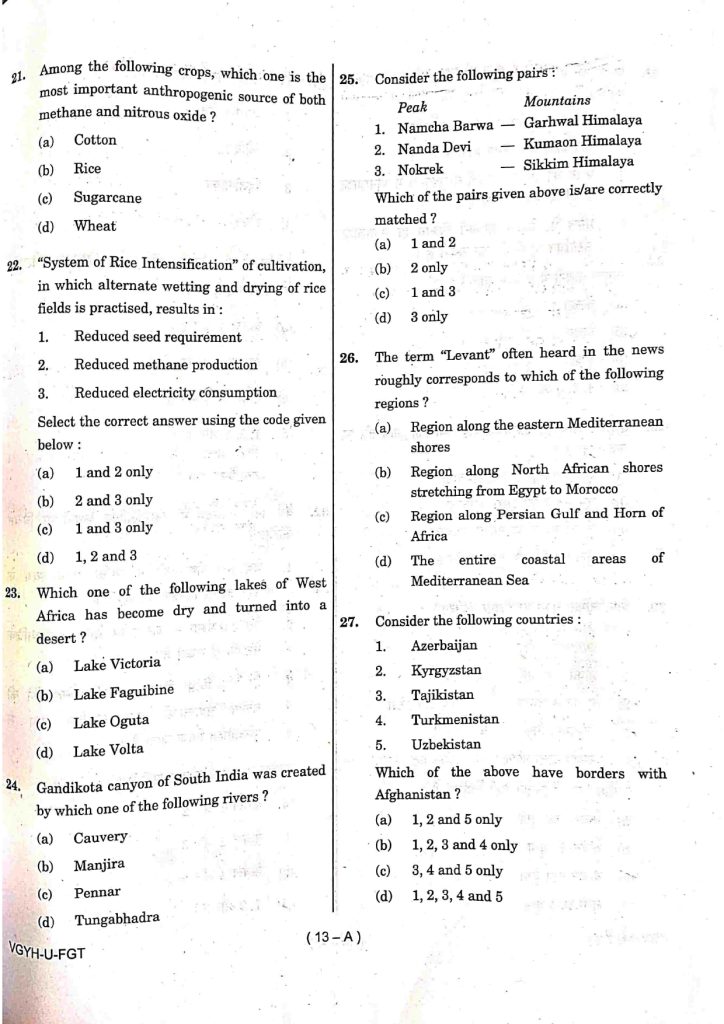


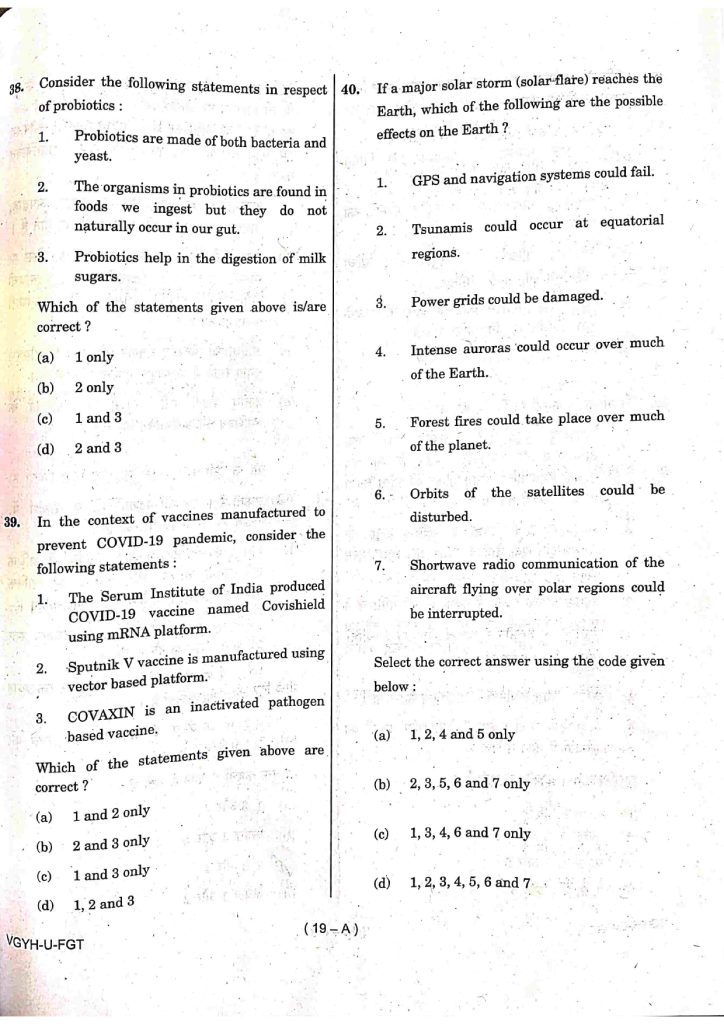


![[LIVE NOW]– National Scholarship Test is starting for UPSC CSE-2023 Foundation Course | Register Now & Attend the Test (Free)| Starts Today @10 A.M | LINK INSIDE](https://d18x2uyjeekruj.cloudfront.net/wp-content/uploads/2022/06/Group-1879-1.png)