💥UPSC 2026, 2027, 2028 UAP Mentorship (March Batch) + Access XFactor Notes & Microthemes PDF

Search results for: “”

  • Nikaalo Prelims Spotlight || Constitutional Bodies, Statutory Bodies, Local government/ ULBs

    Dear Aspirants,

    This Spotlight is a part of our Mission Nikaalo Prelims-2023.

    You can check the broad timetable of Nikaalo Prelims here

    Session Details

    YouTube LIVE with Parth sir – 7 PM  – Prelims Spotlight Session

    Evening 04 PM  – Daily Mini Tests

    Join our Official telegram channel for Study material and Daily Sessions Here


    11th May 2023

    Constitutional Bodies

    Constitutional bodies derive their powers and authorities from the Constitution of India. They are mentioned in the Constitution. Since they get their power from the Indian Constitution, any change in the mechanism of the constitutional bodies would require a constitutional amendment.

    The list of constitutional bodies in India along with the article pertaining to it in the Constitution and other details are given below:

    • Attorney General of India
    Attorney General
    Article in the Constitution76
    Tenure & RemovalHolds office during the pleasure of the President
    Further AppointmentYes
    PowersPrivileges of an MPRight of an audience in all Indian courtsCan attend both Lok Sabha and Rajya Sabha but cannot vote
    • Comptroller and Auditor General (CAG)
    Comptroller & Auditor General of India
    Articles148
    Tenure & removalHolds the office for six years or 65 years (whichever comes earlier)Removal is the same as for a judge of the Supreme Court
    Further appointmentNo
    PowersAudits accounts concerned with the Contingency Fund, the Consolidated Fund of India and states,  and the Public Accounts Fund of the states and centre.Advisory function with respect to accounts to the country’s President
    • Election Commission
    Election Commission of India
    Article324
    CompositionCEC/Chief Election Commissioner, Other Election Commissioners
    Tenure & removalPresently for 6 years or 65 years, whichever is earlier
    Further appointmentYes
    PowersConduct of free and fair elections in IndiaPolitical parties’ registrationOverseeing elections
    • Finance Commission
    Finance Commission of India
    Article280
    CompositionChairman, Four members
    Further appointmentYes
    PowersDecides the basis for sharing the divisible taxes by the centre and the statesAny matter in the interest of sound finance can be referred to the Presidentevaluates the rise in the Consolidated Fund of a state in order to affix the resources of the state Municipalities and PanchayatsFC has the powers of a civil court
    • National Commission for Scheduled Castes
    National Commission for Scheduled Castes
    Articles338
    CompositionChairman, Vice-chairman, 3 other members
    Tenure & removal3 years
    Further appointmentYes
    PowersIt is a quasi-judicial bodyMonitoring and reporting about the implementation of constitutional safeguards for Scheduled CastesIt has a civil court’s powers
    • National Commission for Scheduled Tribes
    National Commission for Scheduled Tribes
    Articles338-A
    CompositionChairman, Vice-chairman, 3 other members
    Tenure & removal3 years
    Further appointmentYes
    PowersIt is a quasi-judicial bodyMonitoring and reporting about the implementation of constitutional safeguards for Scheduled TribesIt has a civil court’s powers
    • National Commission for Backward Classes
    National Commission for Backward Classes
    Articles338-B
    CompositionChairman, Vice-chairman, 3 other members
    Tenure & removal3 years
    Further appointmentYes
    PowersExamine complaints and welfare measures regarding socially and educationally backward classesIt has a civil court’s powers
    • Special officer for Linguistic Minorities
    Special officer for Linguistic Minorities
    Articles350 B
    CompositionCommissioner, Deputy Commissioner, Assistant Commissioner
    Tenure and removalPleasure of the President
    Further appointmentYes
    PowersMonitoring and reporting the working of constitutional safeguards for linguistic minorities
    • Union Public Service Commission
    Union Public Service Commission
    Articles315 – 323
    Composition9 to 11 members
    Tenure & removalPresently for 6 years or 65 years (whichever is earlier) whichever is earlier
    Further AppointmentUPSC Chairman is not eligible for a second term. Other members are eligible only for an appointment within SPSC and UPSC
    PowersRecruitment of All India Services, public services of centrally administered territories, Central services, advisory powers

    State Public Service Commission

    State Public Service Commission
    Articles315 – 323
    Tenure & removalPresently for 6 years or 62 years, whichever is earlier


    Statutory Bodies in India

    • Statutory bodies are established by acts that Parliament or State Legislatures.
    • Statutory bodies have the authority to make laws and make decisions on behalf of the state or country.
    • A statutory body is a self-governing corporate body. A statutory body is established via an Act of Parliament or an Act of State Legislatures. The Act also specifies the body’s powers, objectives, and functions.
    • These bodies are known as statutory bodies because they get their power from statutes or laws adopted by Parliament.
    • Statutory Bodies are divided into two types depending on their tasks and responsibilities. They are classified as:
      • Regulatory Bodies
      • Quasi-Judicial Bodies.
    • Regulatory Bodies – A regulatory body is a government entity responsible for exerting autonomous power over a specific area of human activity in a regulatory or supervisory role.
    • For example, the Biodiversity Authority of India (BAI), the Pension Fund Regulatory and Development Authority (PFRDA), and others.
    • Quasi-Judicial bodies – Non-judicial bodies that can interpret the law are referred to as quasi-judicial bodies. They vary from judicial entities in that their scope is narrower than that of a court.
    • For example, the National Green Tribunal, the National Human Rights Commission, and the Central Information Commission.

    Local Government

    • About:
      • Local Self Government is the management of local affairs by such local bodies who have been elected by the local people.
      • The local self-Government includes both rural and urban government.
      • It is the third level of the government.
      • There are 2 types of local government in operation – panchayatas in rural areas and Municipalities in urban areas.
    • Rural Local Governments:
      • Panchayati Raj Institution (PRI) is a system of rural local self-government in India.
      • PRI was constitutionalized through the 73rd Amendment Act, 1992 to build democracy at the grass roots level and was entrusted with the task of rural development in the country.
        • This act has added a new Part-IX to the Constitution of India. This part is entitled as ‘The Panchayats’ and consists of provisions from Articles 243 to 243 O.
        • In addition, the act has also added a new Eleventh Schedule to the Constitution. This schedule contains 29 functional items of the panchayats. It deals with Article 243-G.
      • In its present form and structure PRI has completed 30 years of existence. However, a lot remains to be done in order to further decentralization and strengthen democracy at the grass root level.
    • Urban Local Governments:
      • They were established with the purpose of democratic decentralisation.
      • There are eight types of urban local governments in India – Municipal Corporation, Municipality, Notified Area Committee, Town Area Committee, Cantonment Board, township, port trust, special purpose agency.
      • At the Central level the subject of ‘urban local government’ is dealt with by the following three Ministries.
        • The Ministry of Urban Development was created as a separate ministry in 1985 (now Ministry of Housing and Urban Affairs).
        • Ministry of Defense in the case of cantonment boards.
        • Ministry of Home Affairs in the case of Union Territories.
      • The 74th Amendment Act pertaining to urban local government was passed during the regime of P.V. Narsimha Rao’s government in 1992. It came into force on 1st June, 1993.
        • Added Part IX -A and consists of provisions from articles 243-P to 243-ZG.
        • Added 12th Schedule to the Constitution. It contains 18 functional items of Municipalities and deals with Article 243 W.

    What are the Salient Features of 73rd Constitutional Amendment?

    • Compulsory Provisions:
      • Organisation of Gram Sabhas;
      • Creation of a three-tier Panchayati Raj Structure at the Zila, Block and Village levels;
      • Almost all posts, at all levels to be filled by direct elections;
      • Minimum age for contesting elections to the Panchayati Raj institutions be twenty one years;
      • The post of Chairman at the Zila and Block levels should be filled by indirect election;
      • There should be reservation of seats for Scheduled Castes/ Scheduled Tribes in Panchayats, in proportion to their population, and for women in Panchayats up to one-third seats;
      • State Election Commission to be set up in each State to conduct elections to Panchayati Raj institutions;
      • The tenure of Panchayati Raj institutions is five years, if dissolved earlier, fresh elections to be held within six months;
      • A State Finance Commission is set up in each State every five years.
    • Voluntary:
      • Giving voting rights to members of the Central and State legislatures in these bodies;
      • Providing reservation for backward classes; and
      • The Panchayati Raj institutions should be given financial powers in relation to taxes, levy fees etc. and efforts shall be made to make Panchayats autonomous bodies.

    What are the Salient Features of 74th Amendment Act?

    • Compulsory:
      • Constitution of nagar panchayats, municipal councils and municipal corporations in small, big and very big urban areas respectively;
      • Reservation of seats in urban local bodies for Scheduled Castes / Scheduled Tribes roughly in proportion to their population;
      • Reservation of seats for women up to one-third seats;
      • The State Election Commission, constituted in order to conduct elections in the Panchayati raj bodies (see 73rd Amendment) will also conduct elections to the urban local self- governing bodies;
      • The State Finance Commission, constituted to deal with financial affairs of the panchayati raj bodies also looks into the financial affairs of the local urban selfgoverning bodies;
      • Tenure of urban local self-governing bodies is fixed at five years and in case of earlier dissolution fresh elections are held within six months;
    • Voluntary:
      • Giving voting rights to members of the Union and State Legislatures in these bodies;
      • Providing reservation for backward classes;
      • Giving financial powers in relation to taxes, duties, tolls and fees, etc;
      • Making the municipal bodies autonomous and devolution of powers to these bodies to perform some or all of the functions enumerated in the Twelfth Schedule added to the Constitution through this Act and/or to prepare plans for economic development.


  • Celebrating India’s Nuclear Tests

    Nuclear Tests

    Central Idea

    • On May 11 and 13, 1998, India conducted five nuclear tests that brought about significant changes in the country’s self-esteem and status in the world. The country’s military nuclear policy had been shrouded in ambiguity and opacity for two decades since its first test in 1974. However, with the 1998 tests, India emerged as a nuclear weapons state, which was received with mixed reactions from the international community, resulting in sanctions and isolation. Nonetheless, the tests marked a significant moment for India’s self-confidence and awareness of its potential.

    Nuclear Tests

    India’s nuclear tests

    • Smiling Buddha (Pokhran-I): India’s first nuclear test was conducted on May 18, 1974, in Pokhran, Rajasthan. The test was code-named “Smiling Buddha” and was a “peaceful nuclear explosion.”
    • Pokhran-II: India’s second series of nuclear tests were conducted on May 11 and 13, 1998, in Pokhran, Rajasthan. The tests included three underground nuclear tests on May 11 and two on May 13. These tests were conducted under the leadership of Prime Minister Atal Bihari Vajpayee and were code-named Operation Shakti.

    Nuclear tests dispelled myths that had dominated international opinion

    • India’s Isolation: The myth that India would be isolated and its economy would collapse under the weight of sanctions and international opprobrium was dispelled. Instead, the US took the first steps to mainstream India, treating it as an exceptional case, which culminated in the India-US Civil Nuclear Agreement in 2005.
    • India’s Inability to Manage nuclear weapons: The ethnocentric myth perpetuated by non-proliferation absolutists of the West that India and South Asia could not be trusted to manage nuclear weapons was also dispelled.

    Facts for prelims

    Treaty/Agreement Objective India’s Status
    NPT (Non-Proliferation Treaty) To prevent the spread of nuclear weapons and weapons technology Non-signatory
    CTBT (Comprehensive Nuclear-Test-Ban Treaty) To ban all nuclear explosions for both civilian and military purposes Signatory
    FMCT (Fissile Material Cut-Off Treaty) To prohibit the production of fissile material for nuclear weapons or other explosive devices Supporter
    NSG (Nuclear Suppliers Group) A group of countries that seeks to contribute to the non-proliferation of nuclear weapons through the implementation of guidelines for nuclear exports and nuclear-related exports Not a member but has applied for membership
    New START (Strategic Arms Reduction Treaty) To limit the number of deployed strategic nuclear warheads and delivery systems Not a signatory
    MTCR (Missile Technology Control Regime) To limit the spread of missiles and unmanned aerial vehicles capable of delivering weapons of mass destruction Member since 2016

    Advantages of the nuclear tests: From India’s point of view

    • Deterrence: The nuclear tests provided India with a credible nuclear deterrence capability, which could potentially deter other nuclear-armed adversaries and prevent them from using nuclear weapons against India.
    • National pride and self-confidence: The successful nuclear tests were seen as a major achievement and a source of national pride for many Indians. They helped boost India’s self-confidence and reaffirmed its status as a major global power.
    • Recognition: India’s successful nuclear tests brought it international recognition and established it as a nuclear-armed state. This recognition was particularly important for India’s security and diplomatic interests.
    • Negotiating power: With its new nuclear status, India gained greater negotiating power in international forums and in its bilateral relationships with other countries.
    • Technological advancement: The development and testing of nuclear weapons required advanced scientific and technological capabilities, and the successful tests demonstrated India’s progress in these areas.

    International Consequences: series of events

    • The United States imposed sanctions against India under the Glenn Amendment.
    • Pakistan conducted a series of nuclear tests in response.
    • Many other countries, including China, castigated India for what they saw as an outrageous contempt for the common will of the international community.

    Nuclear Tests

    Conclusion

    • India’s nuclear tests on May 11 and 13, 1998, marked a significant moment in the country’s history, boosting its self-confidence and changing its status in the world. Despite facing international criticism and sanctions, India’s nuclear program has helped to create a credible nuclear deterrent, making it a vital player in the international system.

    Get an IAS/IPS ranker as your personal mentor for UPSC 2024 | Schedule your FREE session and get the Prelims prep Toolkit!

    Also Read:

    Whether The Nuclear Power in India Should Be Phased Out?


  • China objects to Indian proposal to blacklist terrorist at UN

    Central Idea: China has objected to India’s proposal to blacklist Abdul Rauf Azhar, a senior terrorist from Pakistan-based Jaish-e Mohammed (JeM) on the UN Security Council’s 1267 List.

    China’s objection to the proposal

    • China is a permanent, veto-wielding member of the UN Security Council.
    • It has put a hold on proposals to blacklist other Pakistan-based terrorists in the past, including Hafiz Talah Saeed, Shahid Mahmood, and Sajid Mir.

    The UNSC 1267 list

    • The UNSC resolution 1267 was adopted unanimously on 15 October 1999.
    • It came to force in 1999, and strengthened after the September 2001 attacks.
    • It is now known as the Da’esh and Al Qaeda Sanctions Committee.

    What is UNSC 1267 committee?

    • It comprises all permanent and non-permanent members of the United Nations Security Council (UNSC).
    • The 1267 list of terrorists is a global list, with a UNSC stamp.
    • It is one of the most important and active UN subsidiary bodies working on efforts to combat terrorism, particularly in relation to Al Qaeda and the Islamic State group.
    • It discusses UN efforts to limit the movement of terrorists, especially those related to travel bans, the freezing of assets and arms embargoes for terrorism.

    How is the listing done?

    (1) Submission of Proposal

    • Any member state can submit a proposal for listing an individual, group, or entity.
    • The proposal must include acts or activities indicating the proposed individual/group/entity had participated in the financing, planning, facilitating, preparing, or perpetrating of acts or activities linked to the said organizations.

    (2) Actual decision

    • Decisions on listing and de-listing are adopted by consensus.
    • The proposal is sent to all the members, and if no member objects within five working days, the proposal is adopted.
    • An “objection” means rejection for the proposal.

    (3) Putting and resolving ‘Technical Holds’

    • Any member of the Committee may also put a “technical hold” on the proposal and ask for more information from the proposing member state.
    • During this time, other members may also place their own holds.
    • The matter remains on the “pending” list of the Committee.
    • Pending issues must be resolved in six months, but the member state that has placed the hold may ask for an additional three months.
    • At the end of this period, if an objection is not placed, the matter is considered approved.

    Here is a timeline of how China disrupts the global efforts against terrorism:

    • 2009: After the 26/11 Mumbai attacks, India moved an independent terror designation proposal against Masood Azhar but China blocked the move.
    • 2016: After seven years, India proposes listing of Masood Azhar as a global terrorist and is supported by the US, the UK and France. China blocks the move again.
    • 2017: The trio moves a third proposal only to be blocked by China again.
    • 2019: After the attacks on the CRPF personnel in J-K’s Pulwama, India calls 25 envoys of different countries to highlight the role Islamabad plays in funding, promoting and strengthening global terrorism. India moves the fourth proposal demanding Masood Azhar’s listing. China lifted its technical hold.
    • June 2022: China blocked a proposal by India and the US to list Pakistan-based terrorist Abdul Rehman Makki as a ‘Global Terrorist’
    • August 2022: China blocks India-US joint proposal to list Jaish-e-Mohammad (JeM) deputy chief Abdul Rauf Azhar as UNSC designated terrorist.

    Conclusion

    • China’s actions expose its double speak and double standards when it comes to the international community’s shared battle against terrorism.
    • This clearly depicts its care for its vassal state Pakistan.

    Back2Basics: United Nations Security Council

    Description
    Purpose International peace and security
    Powers Establish peacekeeping operations, impose international sanctions, and authorize military action. Its resolutions are binding.
    Membership 15 members. 5 permanent members are Russia, the United Kingdom, France, China, and the United States. The remaining 10 are non-permanent members elected on a regional basis to serve two-year terms.
    Veto Power P5 members have veto power, which means they can veto any substantive resolution, including those on new member states or candidates for Secretary-General.
    Presidency Rotates monthly among its members.


    Get an IAS/IPS ranker as your personal mentor for UPSC 2024 | Schedule your FREE session and get the Prelims prep Toolkit!

  • Indian Space Policy 2023: A Vision that Needs Legislative Support

    Space Policy

    Central Idea

    • India’s new space policy released in 2023 is a promising move towards a flourishing commercial presence in space. However, the policy needs to be accompanied by clear rules and regulations and suitable legislation to create a conducive environment for private sector participation in the Indian space industry.

    The Indian Space Policy 2023

    • The Indian Space Policy 2023 is a short 11-page document that includes a vision to enable, encourage and develop a flourishing commercial presence in space.
    • It recognizes the private sector as a critical stakeholder in the entire value chain of the space economy.
    • It makes five key points and outlines the roles of various entities, including the Department of Space, ISRO, Indian National Space Promotion and Authorisation Centre (IN-SPACe), and the NewSpace India Limited (NSIL).
    • The policy lays out a strategy and spells out the roles of the entities mentioned above.

    What is mean by The Second Space Age and its features?

    • The Second Space Age refers to a period in the space industry following the early 1990s when private sector involvement in space technology began to increase.
    • The Second Space Age is characterized by the following features:
    • Increased private sector involvement: The Second Space Age has seen private sector companies take a more prominent role in the space industry. This shift has led to innovation and growth, with private companies investing in space tourism, satellite-based services, and other commercial applications of space technology.
    • Commercial applications of space technology: The Second Space Age is marked by a shift towards commercial applications of space technology. Private sector companies are investing in satellite-based services such as broadband, OTT, and 5G, which promise a double-digit annual growth rate.
    • Increased global competition: The Second Space Age has led to increased global competition in the space industry. Countries such as China, India, and private companies like SpaceX, Blue Origin, and Virgin Galactic are competing for a share of the space industry’s market.
    • Increased collaboration: The Second Space Age has seen increased collaboration between government agencies and private sector companies. This collaboration has led to the development of new technologies and innovative solutions to problems faced in space exploration.

    Space Policy

    Facts for prelims

    IN-SPACe

    • IN-SPACe stands for Indian National Space Promotion and Authorization Centre.
    • It is a new regulatory body that was set up by the Indian government in 2020 to promote and regulate the activities of non-government entities (NGEs) in the Indian space sector.
    • The primary objective of IN-SPACe is to create an enabling environment for private sector participation in the Indian space industry.
    • IN-SPACe will be responsible for granting licenses and permits to private companies for carrying out space-related activities, including the establishment and operation of space objects, ground-based assets, and related services such as communication, remote sensing, and navigation.

    New Space India Limited (NSIL)

    • NSIL is a public sector company under the Department of Space, Government of India.
    • It was established in March 2019 as the commercial arm of ISRO to enable commercial exploitation of ISRO’s research and development activities, products, and services.
    • NSIL’s primary objective is to facilitate the transfer of technologies developed by ISRO to industries for commercial exploitation.
    • It aims to promote the development of the Indian space industry and create a level playing field for the private sector in the space domain.
    • NSIL also aims to launch new satellites and provide space-based services such as satellite-based communication, navigation, and remote sensing.
    • NSIL is also responsible for organizing and coordinating the participation of Indian industries in international exhibitions, symposiums, and workshops related to the space sector.

    Gaps in Indian Space Policy 2023

    • Lack of legislative framework: The policy provides a broad framework for promoting private sector participation in the Indian space industry but lacks a legislative framework to support it. A regulatory body like IN-SPACe needs legislative authority to be effective.
    • Lack of clear rules and regulations: The policy framework envisaged will need clear rules and regulations pertaining to FDI and licensing, government procurement to sustain the new space start-ups, liability in case of violations, and an appellate framework for dispute settlement.
    • Ambiguity in IN-SPACe’s position: IN-SPACe currently functions under the purview of the Department of Space, and its position is ambiguous. The Secretary (Space) is also the Chairman of ISRO, the government entity to be regulated by IN-SPACe. This ambiguity could create conflicts of interest and undermine IN-SPACe’s effectiveness.
    • Lack of timelines: The policy sets out an ambitious role for IN-SPACe but provides no timeline for the necessary steps ahead. There is no indicative timeline for ISRO’s transitioning out of its current practices, nor is there a schedule for IN-SPACe to create the regulatory framework.

    Way ahead: Steps to implement the policy effectively

    • Enactment of a new Space Activities Bill: The draft Space Activities Bill, which lapsed in 2019 with the outgoing Lok Sabha, needs to be reintroduced and enacted. The Bill will provide a comprehensive legislative framework to support the Indian Space Policy 2023 and regulate space activities carried out by government and non-government entities.
    • Establishment of a clear regulatory framework: IN-SPACe needs to create a clear regulatory framework that sets out the rules and regulations for private sector participation in the Indian space industry. This will ensure a level playing field and promote the growth and development of the industry.
    • Timely implementation of the policy: The Indian government needs to work closely with ISRO and other stakeholders to ensure the timely implementation of the policy. This will require setting clear timelines for the necessary steps ahead and ensuring their effective implementation.
    • Promotion of private sector participation: The Indian government needs to promote private sector participation in the Indian space industry by providing incentives, facilitating technology transfer, and creating a conducive environment for innovation and growth.
    • Collaboration with international partners: The Indian government needs to collaborate with international partners to share knowledge, expertise, and resources in the space domain. This will help in promoting innovation and growth in the Indian space industry and enhancing India’s global competitiveness.

    Space Policy

    Conclusion

    • The Indian Space Policy 2023 is a promising move towards creating a conducive environment for private sector participation in India’s space industry. However, it needs legislative support to create a stable and predictable regulatory framework and ensure a level playing field for the private sector. A vision that needs legislative support to launch India into the Second Space Age.

    Get an IAS/IPS ranker as your personal mentor for UPSC 2024 | Schedule your FREE session and get the Prelims prep Toolkit!

    Also read:

    The Indian Space Policy 2023 and The Role of Private Sector


  • Santiniketan in tentative list for UNESCO World Heritage list

    santiniketan

    Central Idea

    • The article announces that Santiniketan, the home of Nobel laureate Rabindranath Tagore in West Bengal, has been recommended for inclusion in UNESCO’s World Heritage List.

    About Santiniketan

    Santiniketan is a renowned cultural and heritage place located in Birbhum District, West Bengal, India. It holds historical significance and is known for its association with Nobel laureate Rabindranath Tagore. Here are key points about Santiniketan:

    • It was the home of Rabindranath Tagore, where he lived and composed many of his literary works, including songs, poems, and novels.
    • The Santiniketan campus is adorned with splendid sculptures, frescoes, murals, and paintings created by renowned artists such as Rabindranath Tagore, Nandalal Bose, Ramkinkar, Binodbehari Mukhopadhyay, and others.
    • The region of Birbhum District, where Santiniketan is located, is also famous for its fairs and festivals. Some notable ones are Poush Mela (December), Joydev Mela (January), Basanta Utsav (Holi) in March, and the famous mystic Baul Singers.
    • Special cultural events are held during Bengali New Year and Rabindra Janmotsav (birth anniversary of Rabindranath Tagore) in the Bengali month of Boisakh with great enthusiasm.
    • Santiniketan celebrates unique festivals like Briksharopan (festival of Planting Saplings) and Halakarshan (festival of Plowing the Fields) on the 22nd and 23rd days of Sravana (August), respectively.
    • Varshamangal, the festival of rains, is celebrated during August/September.
    • Poush Mela is an annual fair and festival held in Santiniketan, starting on the 7th day of the month of Poush. The fair officially lasts for three days, but vendors may stay until the end of the month. It is known for live performances of Bengali folk music, particularly by bauls (traditional wandering minstrels), and also features tribal dances like Santali.

    Recommendation by ICOMOS

    • The recommendation for Santiniketan’s inclusion was made by the International Council on Monuments and Sites (ICOMOS), which is the advisory body to the UNESCO World Heritage Centre.
    • ICOMOS is a France-based international cultural body dedicated to the conservation and enhancement of global architectural and landscape heritage.

    West Bengal’s Representation in World Heritage List

    • If selected, Santiniketan would be the second cultural symbol from West Bengal to be included in the UNESCO list.
    • In 2021, UNESCO included ‘Durga Puja in Kolkata’ in its list of Intangible Cultural Heritage of Humanity.

    Back2Basics: UNESCO World Heritage Sites

    Description
    UNESCO World Heritage Sites Landmarks or areas selected by UNESCO for their cultural, historical, scientific, or other significant value, legally protected by international treaties.
    Importance World Heritage Sites represent collective and preservative interests of humanity, signifying remarkable accomplishments and intellectual history.
    Selection Criteria Sites must be already-classified landmarks, unique and significant culturally or physically, such as ancient ruins, historical structures, cities, monuments, etc.
    Conservation World Heritage Sites require practical conservation to protect them from risks like trespassing, uncontrolled access, or administrative negligence.
    World Heritage Committee Selects and monitors World Heritage Sites, manages the World Heritage Fund, and provides financial assistance. Composed of 21 states parties elected for a four-year term.
    Membership India is not a member of the World Heritage Committee.

    Note: “States parties” refer to the countries that have ratified the World Heritage Convention and participate in the decision-making process.


    Get an IAS/IPS ranker as your personal mentor for UPSC 2024 | Schedule your FREE session and get the Prelims prep Toolkit!

  • Indian Sludge Shows High Fertilizer Potential: First Study Reveals

    Central Idea: The article discusses the results of an analysis of the sludge found in Indian sewage treatment plants (STP) that were set up to treat polluted water from the Ganga under National Mission for Clean Ganga.

    About National Mission for Clean Ganga

    Description
    Launch 2014
    Aim Cleaning and rejuvenating the Ganga river
    Interventions Development of sewage treatment infrastructure, riverfront development, and public awareness campaigns
    Approach River basin approach, identifying pollution hotspots and implementing targeted interventions
    Implementing Agency NMCG
    Responsibilities Coordinating efforts across stakeholders, including state governments, municipalities, and civil society organizations
    Objective Improve water quality and ensure ecological and socio-economic sustainability of the Ganga river


    Sludge classification

    • India doesn’t yet have standards classifying sludge as class A or B.
    • Treated sludge can be classified as class A or class B, as per the standards of the United States Environment Protection Agency.
    1. Class A sludge: It is safe to be disposed of in the open and useful as organic fertilizer.
    2. Class B sludge: It can be used in restricted agricultural applications, with the edible parts of the crop not exposed to the sludge-mixed soil, and animals and people not come into extensive contact.

    Current sludge disposal practices

    • Currently, those awarded contracts for developing and maintaining STPs under the Namami Ganga Mission are also apportioned land for disposing off sludge.
    • However, the sludge is rarely treated, and during rains, it often makes its way back into rivers and local water sources.

    Study’s findings

    • The sludge analysed after drying fell into the class B category.
    • Nitrogen and phosphorus levels were higher than those recommended by India’s fertilizer standards, but potassium levels of some sludges were less than recommended.
    • The degree of pathogens, as well as heavy metal contamination, was above the recommended fertilizer standards.
    • The calorific value of sludge ranged from 1,000-3,500 kcal/kg, which is lower than the average calorific value of Indian coal.

    Recommendations to improve sludge quality

    • The report recommends storing the sludge for at least three months to kill pathogens and blending it with cattle manure and husk or local soil to reduce heavy metal.
    • However, this would still put it in class B, and converting it into grade A sludge would require far more extensive treatment.


    Get an IAS/IPS ranker as your personal mentor for UPSC 2024 | Schedule your FREE session and get the Prelims prep Toolkit!

  • Significance of Meerut: Birthplace of India’s First War of Independence

    meerut

    Central Idea

    • The article highlights the historical significance of Meerut, a city in western Uttar Pradesh.
    • Alamgirpur, the easternmost settlement of the Harappa civilization, is located in Meerut and has archaeological importance.
    • However, Meerut gained fame for its role in India’s First War of Independence on May 10, 1857, also known as the Indian Mutiny or Revolt.

    Meerut: Historical origins and name

    • Meerut has historical origins, possibly deriving its name from Mayarashtra, the capital of Mayasura, who was Ravana’s father-in-law.
    • The archaeological site of Vidura-ka-tila, located northeast of Meerut, is believed to be the remains of Hastinapur, the ancient capital of the Kauravas and Pandavas from the Mahabharata.
    • Meerut was ruled by the Scindias before being ceded to the British in 1803, which eventually paved the way for the British exit from India.

    The 1857 Rebellion

    • The rebellion in Meerut was sparked by the introduction of the Enfield rifle and the use of cartridges rumored to be greased with a mixture of cow and pig fat.
    • Sepoys (Indian soldiers) who refused to use the cartridges were punished and stripped of their uniforms.
    • This incident led to a rebellion among the sepoys and a call for the uprising against British rule.

    Outbreak of the Mutiny

    • On May 10, 1857, while the European residents of Meerut were attending church, the sound of musketry and columns of smoke signalled the revolt of the native troops.
    • The sepoys, having revolted, marched towards Delhi, considering it the power center and the capital of Mughal India.

    Meerut’s Significance

    • Meerut played a crucial role in the Indian Mutiny, serving as the starting point for the rebellion that spread across the country.
    • The mutiny in Meerut inspired and influenced the subsequent events of the uprising.
    • D. Savarkar later referred to the Mutiny as the First War of Independence.


    Get an IAS/IPS ranker as your personal mentor for UPSC 2024 | Schedule your FREE session and get the Prelims prep Toolkit!

  • Answer writing with IAS-IPS Rankers; Ranker Mains Guidance Program 2024 | Replicating 85% Success Rate of Mains 2022 results | Enrollment Open

    Answer writing with IAS-IPS Rankers; Ranker Mains Guidance Program 2024 | Replicating 85% Success Rate of Mains 2022 results | Enrollment Open

    UPSC 2024 calls for an integrated approach whereby you are learning and sharpening your Mains answer writing skills from DAY 1 along with your prelims prep. RMGP 2024 encapsulates this idea.


    GS feels like a massive, insurmountable mountain with 1000 marks spread across the four papers in Mains. Polishing your thought is essential for success, and to keep up with the hands of the clock, practice, and practice are the only things that matter the most to an IAS aspirant.

    What should be your motto to clear UPSC Mains?

    The simple answer is writing more tests, Doing more practice, and improving answer writing skills, for fetching better scores.

    But under a strategically devised plan, constant evaluation, and measurement of progress. (Check how we measure and evaluate progress)

    And this time, to fulfill the motto Civilsdaily Mains program (Led by Sukanya Ma’am)

    Civilsdaily had a great 2022. With 85% of the questions in UPSC Mains were directly/indirectly from our previous RMGP tests. And after receiving feedback from nearly 1000+ of our successful UPSC candidates, we decided to increase the number of tests this time.

    Check Program Inclusion Details👉

    “Impressed by the efforts put in to improve my answer writing, structured phone calls. Grateful for personal guidance.”

    Karishma Nair, AIR 14, UPSC 2020

    “UPSC level questions, detailed evaluation, and in-depth discussion of tests (question by question) improved my score.”

    AIR 28, Mourya Bharadwaj UPSC 2021

    To satisfy the high demand, we are fully prepared now to launch RMGP 2024 batch.


    Table of Content:


    What is RMGP 2024?

    Rankers Mains Guidance Program (RMGP) 2024 is your solution to low confidence wrt Mains Answer writing. You shouldn’t procrastinate and instead deliberately start answer writing, learning the skills and techniques right now.

    Rankers Mains Guidance Program 2024 is a Mentor guided comprehensive and intensive program for GS Mains papers. The focus is on making students understand the requirement of the Mains Question, and its elements, using information and imparting answer writing skills for that.


    Why start Mains answer writing now?

    Your knowledge is tested through your answers: If you have not learned the art to articulate your thoughts on paper, then that’s a disaster waiting to happen. Studying and writing answers is a symbiotic relationship and one reinforces the other.

    • Helps you retain concepts, facts, and figures.
    • Learning the trick to formulate the structure of the answer.
    • Helps to revise things and learn new things not covered by conventional books.
    • Improves your writing speed, and handwriting.
    https://www.youtube.com/watch?v=mhKgcq_AOqY

    Know-How Our Mains Test Program Stands Apart?

    1. Personalised 1-1 Mentorship to correct you at each step

    We believe in personalized individual attention. A one-to-one discussion with your Mentor will not only highlight your weaknesses but will also help in tracking your improvements over the subsequent tests. It will also ensure consistency, continuity, and progressive improvement.

    Students usually get swayed by only seeing the theme of the question. The question is not about electoral bonds only. Many aspirants write everything they know about electoral bonds. You need to first mention how it will cleanse India’s electoral system. After that, link it with democracy. How it violates key features of democracy like transparency, accountability, and a level playing field. Writing only Pros and Cons will not fetch you marks.

    Just schedule a call with our mentor to clear all your doubts and queries.

    2. Our performance review system ensures your progress is being evaluated and measured

    After every test we prepare and update your performance on two levels: one by the evaluator – who actually checked your test answer copy, and at the second level by Mentor.

    We evaluate and review it on the basis of gaps that you have to overcome and there are four such gaps identified by Sukanya ma’am:

    • Knowledge gap
    • Value addition gap
    • Structure gap
    • Representation gap

    3. Quality standards of questions in our test series

    Our Test series questions have consistently proven to be similar to UPSC standards.

    Here’s the proof

    The whole syllabus will be divided into portions like history, economics, and geography. The other 12 tests will be spread over 8 months. This will ensure that your basic static preparation happens continuously alongside your Mains answer writing program. Killing two birds with one stone!


    Program Inclusion Details:

    • 36 Tests: 24 sectional + 12 FLT – We are adding 12 extra tests from our test series – to practice sectional subjects better
    •  1-on-1 mentorship after every test
    • Lecture sessions with IAS-IPS Rankers – Exclusive for students of this test series, we’ll have IAS-IPS rankers like Areeba (AIR 109), Shubham, IPS and Soham (AIR 267) take LIVE sessions with students on answer writing skills, strategy building, conceptual clarity, doubt resolution and more of such topics. This will ensure that you are learning from the best and keeping up to date with the latest Main trends.
    • Monthly webinar session with Sajal sir to discuss Mains strategy.
    • Performance Review reportNew feature added for 2024 series. (Check here)
    • Civilsdaily’s hand holding: Interact with peers on strategies to improve your Mains writing. You can also contact mentors like Sajal sir, Sukanya ma’am, Rahul sir, and Parth sir. They all have interview-level experience, so utilize their experience to your benefit.
    • High-value Mains Content:
      • Mains Value added material: 250+ Most Probable Topics
      • Documents on the latest and most relevant Case Studies, data
      • Best answer writing practices PDF
      • Civilsdaily magazine: Your current affairs will be covered with access to our 1-year subscription. (June 2023 to May 2024)

    Our Philosophy Behind RMGP 2024

    1. Question Formulation

    It happens under a team of experienced Civilsdaily faculty. Questions framed are from the most important UPSC relevant themes and papers are based on the latest pattern of UPSC.

    Our questions specifically state:

    • Whether they are straightforward or thought-provoking/analytical.
    • Whether they have subparts.
    • Why this question – similar to previous year’s questions, the importance of the theme, etc.

    CD InnovationRed highlight – to let you know about the necessary and innovative points.

    2. One-to-One Discussion

    We believe in personalized individual attention. This is the biggest reason why you should join our TS. Students can schedule a call within 2 days of receiving their checked copies.

    A one-to-one discussion with your Mentor will not only highlight your weaknesses but will also help in tracking your improvements over the subsequent tests. It will also ensure consistency, continuity, and progressive improvement.

    3. Answer Checking

    Our evaluation focuses on multiple dimensions and parameters like structure, flow, presentation, contextuality, relevance to question, analytical excellence, and cross-domain inter-linkages than simply on superficial, memory-based lapses.
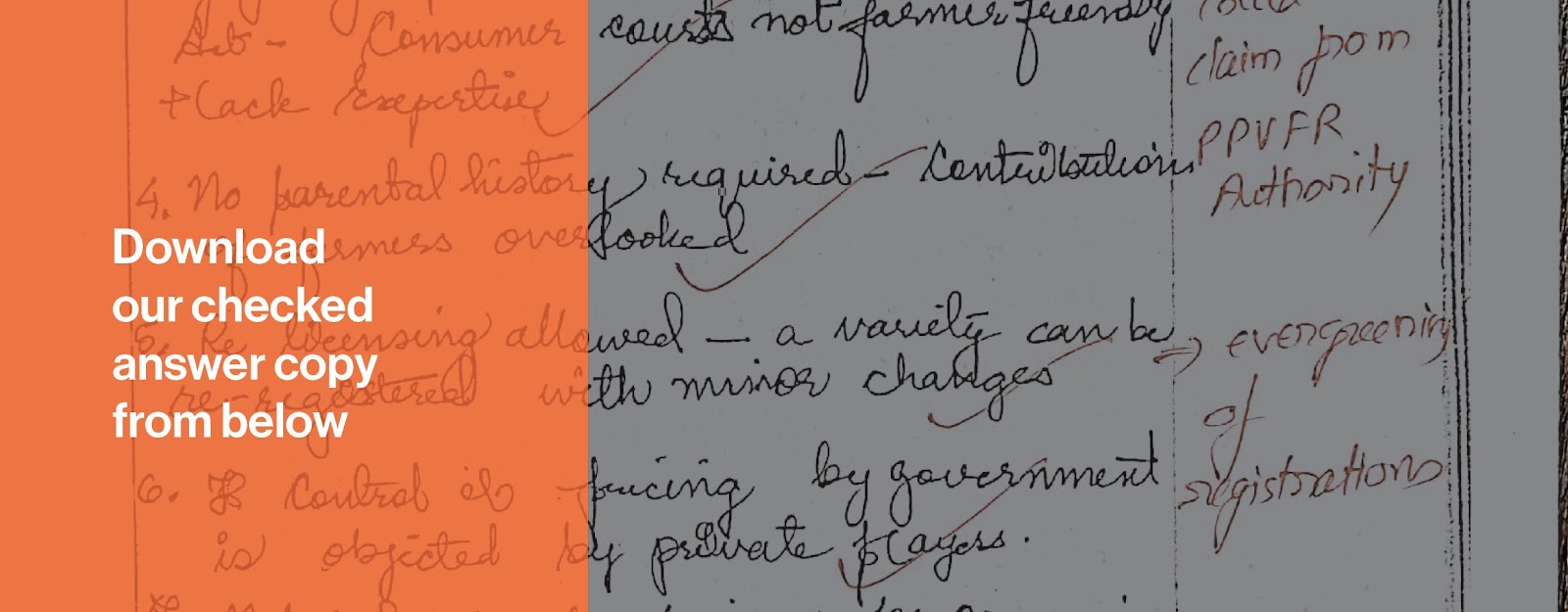
    Evaluated answer copy – 1 (Click to download)

    Evaluated answer copy – 2 (Click to download)
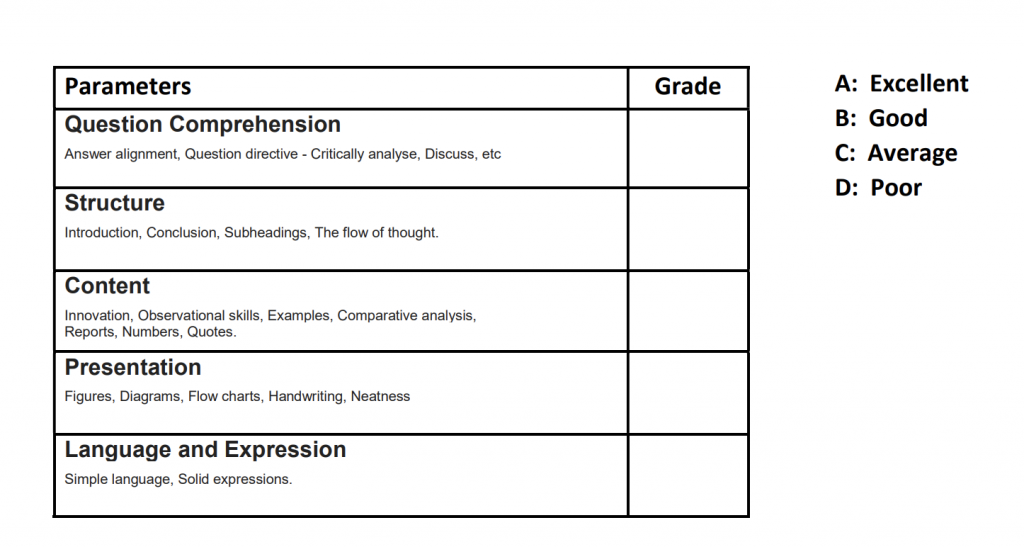
    Parameters we use to evaluate your answers

    4. Model Answers

    More than just simply providing information, our model answers cover all the aspects of a question and provide enriching points to the student. They also include:

    • For ‘thought-provoking/analytical’ type of questions, we’ll provide the best way to approach them.
    • Alternate introductions
    • Subheadings and categorization to enhance readability and answer structure.
    • Colour coding for main arguments, reports, data, scholars, etc.
      OTB – Out-of-the-box points for additional marks

    5. Civilsdaily’s Handholding

    You’ll be assigned to a special group on Civilsdaily’s Habitat, there you can interact with different mentors like Sajal Sir, Sukanya Ma’am, Parth Sir, Rahul sir, and others.

    6. Value-added material

    Current affairs magazines – Civilsdaily’s Magazines are the best in terms of comprehensive coverage, superb design, and high readability.

    Listicles and other relevant study material – Supplementary content provided will help cover multiple related questions.


    About Mentor:

    Sukanya Rana:

    Sukanya Ma’am has firsthand experience of 4 mains and 2 interviews with UPSC. In 2019, she scored 140 in ethics. She has also appeared in the State PCS interview. Before she worked as a Probationary officer at Canara Bank. Now at Civilsdaily, she heads the Mains program and is engaged in a core team of Civilsdaily.

    As per need, we will also involve our Civilsdaily core mentors like Swatantra sir, Parth sir, etc.

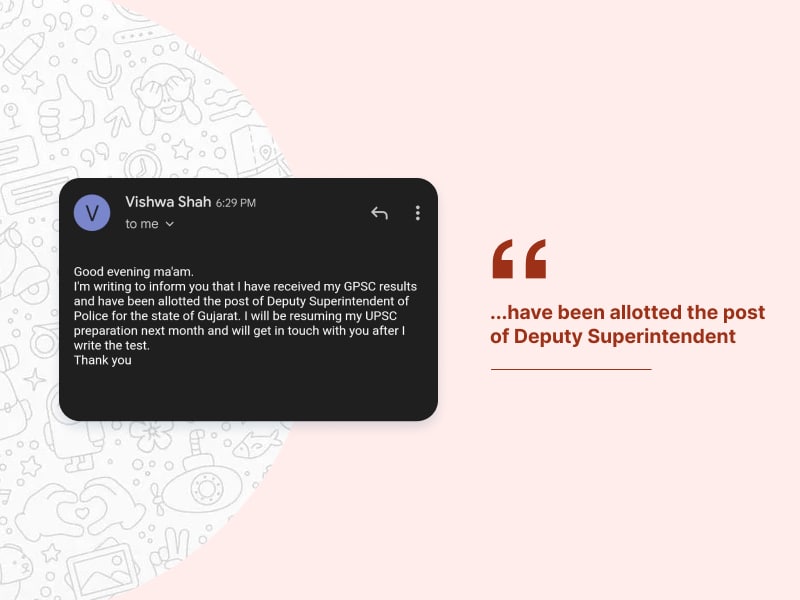
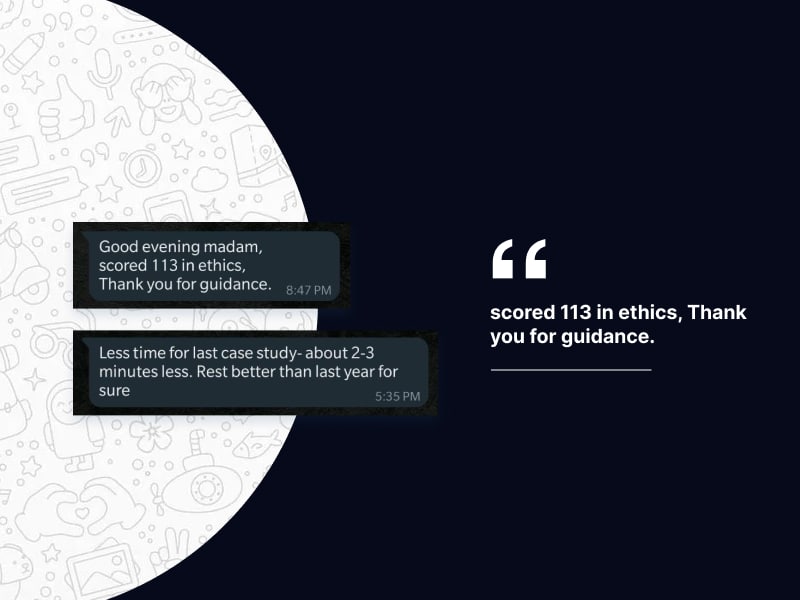
    This is what our students have to say…

    From Quora’s answer. (Read the full answer here)

More posts