💥UPSC 2026, 2027, 2028 UAP Mentorship (March Batch) + Access XFactor Notes & Microthemes PDF

Search results for: “”

  • Why India needs a fresh Fertilizer Policy?

    fertilizer

    The government is expected to come out with a new fertilizer policy.

    What is the news?

    • A task force to examine the production and promotion of bio-fertilizer and organic fertilizers has already been set up under the NITI Aayog.

    How much fertilizer does India consume?

    • Total consumption of fertilizers between April and mid-December 2022 was 40.146 million metric tonnes (mmt), with production of 32.076 mmt and imports of 12.839 mmt.
    • The gap between demand and production is met through timely imports.

    How is fertilizers availability monitored?

    • Some steps undertaken by the government to improve the availability of fertilizers include:
    1. Assessment of state-wise requirements every month;
    2. 100% neem coating of urea, which increases nutrient efficiency;
    3. Monitoring of crop yield and soil health; and
    4. Online monitoring of the movement of fertilizers through the integrated Fertilizer Monitoring System.

    Impact of the current policy

    • Heavy subsidies: This has prompted many farmers to use chemical fertilizers like urea, which leads to higher productivity, but affects soil fertility in the long run.
    • Excessive and inefficient use of fertilizers: This leads to nutrient losses to the environment and could also result in drinking water contamination and impact human lives as a result of unsafe storage practices, as per a UN report.
    • Emission causing: With the subsidy being released directly to companies, technology-inefficient companies are being protected causing carbon emission.

    While attempts have been made to reform the fertilizer policy, they had to be rolled back after pressure from various quarters.

    Trend in government expenditure

    • Food subsidy: The government has spiked spending on food, fertilizer and fuel subsidy by nearly 70%.
    • Increased expenditure: For 2023-24, the fertilizer ministry might seek budgetary support of ₹2.5 trillion subsidy – outgo for FY23 has already crossed ₹2 trillion.
    • Increased import bill: Russia being a major exporter of liquefied natural gas -critical input for manufacturing of urea – has also led to higher prices.

    Steps taken in 2022

    • Implementation of DBT: The department of fertilizers disbursed subsidies for urea and nutrient-based subsidy, and implemented direct benefit transfer.
    • One Nation One Fertilizers Scheme: It also implemented the ONOF scheme which aims to ensure timely supply of fertilizers.
    • Model fertilizer retail outlets: The existing village, block/sub district/taluk and district level fertilizer retail outlets are being converted into model fertilizer retail outlets.

    Way forward

    • Promoting local fertilizers: Lower duty on imported phosphoric acid to raise the competitiveness of local fertilizer manufactures, and an incentive for promoting organic fertilizers, could be proposed.
    • Bio-fertilizer and organic fertilizers: A task force on bio-fertilizer and organic fertilizers has already been set up under NITI Aayog.
    • Curbing hefty subsidies: Considering the long-term interests of agriculture and the effects of using inorganic fertilizers, saving a huge amount on account of subsidy support is a step in the right direction.


    Crack Prelims 2023! Talk to our Rankers

    (Click) FREE 1-to-1 on-call Mentorship by IAS-IPS officers | Discuss doubts, strategy, sources, and more

  • What is National Coal Index (NCI)?

    The Ministry of Coal has launched the sixth round of commercial coal mines’ auction for 141 coal mines.

    What is the news?

    • As per the provisions of the tender document, the Performance Bank Guarantee (PBG) to be submitted for each successfully auctioned coal mine is to be revised annually based on the National Coal Index (NCI).

    What is National Coal Index (NCI)?

    • Ministry of Coal has started commercial auction of coal mines on revenue share basis.
    • In order to arrive at the revenue share based on market prices of coal, one National Coal Index (NCI) is conceptualized.
    • The NCI is a price index which reflects the change of price level of coal on a particular month relative to the fixed base year.
    • The base year for the NCI is FY 2017-18.
    • NCI is a price index combining the prices of coal from all the sales channels- Notified Prices, Auction Prices and Import Prices.
    • It is released every month.

    Components of NCI

    • The concept and design of the Index as well as the Representative Prices have been developed by the Indian Statistical Institute, Kolkata.
    • NCI is composed of a set of five sub-indices: three for Non-Coking Coal and two for Coking Coal.
    • The three sub-indices for Non-Coking Coal are combined to arrive at the Index for Non-Coking Coal and the two sub-indices for Coking Coal are combined to arrive at the Index for Coking Coal.
    • Thus, indices are separate for Non-coking and Coking Coal.
    • As per the grade of coal pertaining to a mine, the appropriate sub-index is used to arrive at the revenue share.

    Implementation of NCI

    • The amount of revenue share per tonne of coal produced from auctioned blocks would be arrived at using the NCI by means of a defined formula.
    • The Index is meant to encompass all transactions of raw coal in the Indian market.
    • This includes coking and non-coking of various grades transacted in the regulated (power and fertilizer) and non-regulated sectors.
    • Washed coal and coal products are not included.


    Crack Prelims 2023! Talk to our Rankers

    (Click) FREE 1-to-1 on-call Mentorship by IAS-IPS officers | Discuss doubts, strategy, sources, and more

  • [pib] Grameen Udyami Scheme

    grameen

    The Ministry of Skill Development and Entrepreneurship the felicitation program of 200 tribal women under the Grameen Udyami Scheme.

    Grameen Udyami Scheme

    • It was launched to augment skill training in tribal communities for their inclusive and sustainable growth.
    • It is a unique multiskilling project, funded by National Skill Development Corporation (NSDC) that aims to train tribal students in select states.
    • It is implemented under Sansadiya Parisankul Yojana.
    • Under the program, 49 ST clusters in 15 states of India have been selected by 40 tribal MPs of Lok Sabha and Rajya Sabha.
    • Under their leadership, the scheme in respective clusters is being implemented.
    • One development associate is appointed by the MPs in each cluster.

    Stated objectives

    • Increase in Rural/Local Economy
    • Enhance employment opportunities
    • Reduce forced migration due to lack of local opportunities
    • Conservation of natural resources

    Scope of the project

    • The project is being implemented in six states – Maharashtra, Rajasthan, Chhattisgarh, Madhya Pradesh, Jharkhand, and Gujarat.

    Benefits

    • Transportation, boarding & lodging during the learning period is provided to candidates
    • The training under the project will be conducted in the job roles which are relevant to the local economy.


    Crack Prelims 2023! Talk to our Rankers

    (Click) FREE 1-to-1 on-call Mentorship by IAS-IPS officers | Discuss doubts, strategy, sources, and more

  • Chinese hydro-hegemony over Brahmaputra

    brahmaputra

    India has planned to build a buffer reservoir in the proposed Arunachal hydropower project to counter China’s proposed 60,000 MW Medog hydropower project on the Brahmaputra River.

    Brahmaputra hydrology: A tool of aggression for China

    • China has continued to use the water of river Brahmaputra for its interest and has intentionally created hazardous conditions for downstream states like India and Bangladesh.
    • Concerns over China’s proposed 60,000 MW hydropower in Medog, Tibet are influencing the design of a proposed hydropower project in Arunachal Pradesh’s Upper Siang district.
    • Still only in the planning stage, a ‘pre-feasibility report’ on the 11,000 MW project, or more than five times the size of the largest such projects in India – has been submitted.

    What is Medog super-dam Project?

    • China is planning a mega dam in Tibet able to produce triple the electricity generated by the Three Gorges—the world’s largest power station.
    • The structure will span the Brahmaputra River before the waterway leaves the Himalayas and flows into India.
    • It is billed as able to produce 300 billion kilowatts of electricity each year and said to be largest dam in the world once completed.

    India’s plan: To build buffer reservoir

    • The design of the proposed project incorporates a buffer storage” of 9 billion cubic metres (or about 9 billion tonnes of water) during monsoonal flow.
    • This could act as a store of water worth a year’s flow that would normally be available from the Brahmaputra or buffer against sudden releases.

    Threats posed by Medog Project

    Chinese dams can hold large amounts of water, during times of droughts China could stop the flow of the river, jeopardizing the lives of millions of people in Arunachal Pradesh, Assam, and Bangladesh.

    • Reduced flow in the Brahmaputra: The 60,000 MW dam in Medog could reduce the natural flow of water from the Brahmaputra.
    • Triggering artificial floods: Away from India during lean patches, it might be used to trigger “artificial floods” in the Brahmaputra basin.
    • Degradation of the entire basin: Silt carried by the river would get blocked by dams leading to a fall in the quality of soil and eventual reduction in agricultural productivity.
    • Seismic threats: Seismologists consider the Himalayas as most vulnerable to earthquakes and seismic activity.
    • Ecological threats: The cumulative impact of these two megaprojects might aggravate ecological degradation, converting lotic ecosystems into lentic ones.
    • Water security: Damming Brahmaputra would result in water security in an era of unprecedented shifting climate patterns.
    • Catastrophic threat: Any damage to the mega dam, if constructed here, will cause dam breaching and consequent flood havoc in India and Bangladesh.

    Why are such issues unaddressed?

    • No treaty on water sharing: We do not have any bilateral or multilateral treaty or any other effective and formal instrument of understanding for collaborative management of the Brahmaputra River.
    • Hostility over borders: Undemarcated borders are at the core of all hostilities between India and China.

    India’s dilemma

    • Flood control dichotomy: India’s hydropower projects, while potentially beneficial in controlling flooding from the Brahmaputra in Assam and Arunachal Pradesh.
    • No deterrence to China: This might not necessarily serve as a strategic deterrent to China.
    • Resentment to Bangladesh: A large dam in India may help control floods within India but might open fresh disputes over water sharing with Bangladesh downstream.

    Way forward

    • There must be collaborative management of our shared rivers.
    • Hydro-diplomacy should form an important ingredient of Indian foreign policy, especially as India shares river basins with neighbors.

    Brahmaputra River

    brahmaputra

    • Origin → Chemayungdung Glacier (Kailash Range, Tibet)
    •     In Tibet, known as TSANG – PO
    •     In China, known as YARLUNG ZANBO
    •     Forms grand canyon in Tibet
    •     Turns southward near Namcha – Barwa
    •     Enters Arunachal Pradesh as Dihang River at Sadiya, emerging from the mountains
    •     Joined by Dibang river from the north & Lohit river from the south → Known as Brahamputra
    •     Turns at Dhubri to enter into Bangladesh
    •     After joining Teesta, known as Jamuna in BD
    •     Joins Ganga & Megna → Merges to BOB.
    •     Forms many river island of which Majuli is world 2nd largest one
    •     Major tributaries → Dihang, Lohit, Subansiri, Teesta, Meghna (Barack in Assam), Manas


    Crack Prelims 2023! Talk to our Rankers

    (Click) FREE 1-to-1 on-call Mentorship by IAS-IPS officers | Discuss doubts, strategy, sources, and more

  • Agnipath Scheme game changer says PM

    unsc

    The Agnipath scheme for recruitment is a “transformative policy” which will be a “game changer” in strengthening the armed forces, said the Prime Minister.

    What is Agnipath Scheme?

    • This will be the only form of recruitment of soldiers into the three defence services from now.
    • Recruits under the scheme will be known as ‘Agniveers’.
    • After completing the four-year service, they can apply for regular employment in the armed forces.
    • They may be given priority over others for various jobs in other government departments.
    • The move is expected to decrease the average age profile of armed forces personnel from the current 32 to 24-26 years over a period of time.

    Working of the scheme

    • The process of recruitment will commence in 90 days with a planned intake of 46,000 young men and women this year.
    • Enrolment to all three services will be through a centralized online system, with special rallies and campus interviews at recognized technical institutes.
    • Recruitment will be carried out on an “All India All Class” basis with the eligibility age ranging from 17.5 to 21, with medical and physical fitness standards in accordance with existing norms.

    Payouts of the Agniveers

    • The ‘Agniveers’ will receive an annual package of ₹4.76 lakh in the first year to ₹6.92 lakh in the fourth year, apart from risk and hardship and other allowances as applicable.
    • Under the ‘Seva Nidhi’ package, they will receive about ₹11.71 lakh, including contribution and interest, on completion of service.
    • The recruits will have to contribute 30% of their monthly emoluments to Seva Nidhi, with a matching contribution made by the government.
    • There will be no entitlement to gratuity and pension benefits under the scheme.
    • However, the ‘Agniveers’ will be provided a non-contributory life insurance cover of ₹48 lakh during their service.

    Why are aspirants protesting?

    • Contractualisation of armed forces: The foundation of this scheme is a four-year contract.
    • Jobs for the majority: States such as Bihar, Jammu & Kashmir, Punjab, Himachal Pradesh, Haryana, Uttar Pradesh, Uttarakhand and Rajasthan, are where the bulk of the Army recruitment takes place.
    • Perks and benefits: Many of these people value job stability, which includes retirement benefits and pensions over competitive salaries.
    • Uncertainty after end of commission: Most of them will be forced to leave the job within four years, which doesn’t fit into their hopes and aspirations.
    • Casualization of Training: It reportedly takes two to three years to train a member of the army, but as a part of the Agnipath, soldiers will only be trained for six months.
    • Threats to national security: Defence analysts have allegedly pointed out that the Russian soldiers who were trained for a limited amount of time before they went to war have performed disastrously.
    • Conflicts of interest: Apprehensions have been voiced against how the new recruits will be adjusted in the existing system under which most of the Army units are region, caste or class-based.

    Reasons behind aspirants’ frustration

    • Unemployment: Analysts always cite the crunch of gazetted officers in the Armed forces and there has been no recruitment for the last two years.
    • Pandemic impact: Many aspirants lost their chance to join the Armed forces as they are now overage.’
    • Unanticipated reforms: In guise of a push for “major defence policy reform”, the scheme is a fuss.
    • Coaching mafias: Coaching mafias have played a significant role in sparking and provoking protesters.

    Need for the Scheme: Official explanation

    • Budgetary efficiency: With the largest volunteer army in the world, paying an increased salary and pension bill, given rising incomes all around, has steadily eroded the capital side of the defence budget.
    • Preferential treatment: For job-seekers, the government has already said they will get priority in the Central Armed Police Forces.
    • Promotional avenues: One significant advantage of this scheme would be the much lower age profile of the service. It will increase the promotional avenues of the permanent cadre.
    • Diverse career options: Once retired, aspirants will be free to pursue other careers, with several departments and governments.
    • Selective skilling: Aspirants will get preference, educational credits, skill certificates, to help them rehabilitate in other fields.
    • Financial assistance: Those wishing to be entrepreneurs will get a financial package and bank loans and those wishing to study further will be given 12 class equivalent certificate.

    Way forward

    • Longer contract term: Make the period of the contract for new recruits longer than four years. The present clarification fails to address this issue.
    • Continuance of the commission: Relook the 25 per cent re-enlistment at the end of the contractual period. Ideally, it should be over 50 per cent retention for long-term posts.
    • Policy commitment for reabsorption: For those leaving after their short service, do obtain a binding commitment from CAPFs, states’ police forces and other organisations that they are willing to absorb this trained military manpower.
    • Gradual shift in recruitment policy: Continue with existing regular enrolment, in reduced numbers, and gradually shift to the Tour of Duty once it stabilizes after five to ten years.

    Conclusion

    • A nation should never compromise with the personnel who make up the fighting sinews of its armed forces.
    • The best way to prevent such an impression is to look upon them not as a burden to the exchequer, but as rough diamonds, to be cut and polished to their maximum capabilities and then deployed in the defence of the nation.
    • A diamond is forever, our future men and women in uniform too deserve to serve to their maximum for the betterment of the nation and their own lives.


    Crack Prelims 2023! Talk to our Rankers

    (Click) FREE 1-to-1 on-call Mentorship by IAS-IPS officers | Discuss doubts, strategy, sources, and more

  • UNSC bans LeT’s Makki after China lifts its hold

    makki

    The ISIL and Al Qaida Sanctions Committee of the UN Security Council (UNSC) has placed Abdul Rehman Makki, a fundraiser and key planner of the Pakistan-based terrorist outfit Lashkar-e-Taiba (LeT), on its sanctions list.

    Blacklisting Maki: Under UNSC 1267 list 

    • The UNSC resolution 1267 was adopted unanimously on 15 October 1999.
    • It came to force in 1999, and strengthened after the September, 2001 attacks.
    • It is now known as the Da’esh and Al Qaeda Sanctions Committee.

    What is UNSC 1267 committee?

    • It comprises all permanent and non-permanent members of the United Nations Security Council (UNSC).
    • The 1267 list of terrorists is a global list, with a UNSC stamp.
    • It is one of the most important and active UN subsidiary bodies working on efforts to combat terrorism, particularly in relation to Al Qaeda and the Islamic State group.
    • It discusses UN efforts to limit the movement of terrorists, especially those related to travel bans, the freezing of assets and arms embargoes for terrorism.

    How is the blacklisting done?

    (1) Submission of Proposal

    • Any member state can submit a proposal for listing an individual, group, or entity.
    • The proposal must include acts or activities indicating the proposed individual/group/entity had participated in the financing, planning, facilitating, preparing, or perpetrating of acts or activities linked to the said organizations.

    (2) Actual decision

    • Decisions on listing and de-listing are adopted by consensus.
    • The proposal is sent to all the members, and if no member objects within five working days, the proposal is adopted.
    • An “objection” means rejection for the proposal.

    (3) Putting and resolving ‘Technical Holds’

    • Any member of the Committee may also put a “technical hold” on the proposal and ask for more information from the proposing member state.
    • During this time, other members may also place their own holds.
    • The matter remains on the “pending” list of the Committee.
    • Pending issues must be resolved in six months, but the member state that has placed the hold may ask for an additional three months.
    • At the end of this period, if an objection is not placed, the matter is considered approved.

    How China supports Terror in Pakistan?

    • China has exposed its double standards on the issue of terrorism for consistently stopping the listing of Pakistan-based terrorists.
    • This time, Beijing has argued that the blacklisting is in fact a “recognition” of Pakistan’s record of fighting terrorism.

    Here is a timeline of how China disrupts the global efforts against terrorism:

    • 2009: After the 26/11 Mumbai attacks, India moved an independent terror designation proposal against Masood Azhar but China blocked the move.
    • 2016: After seven years, India proposes listing of Masood Azhar as a global terrorist and is supported by the US, the UK and France. China blocks the move again.
    • 2017: The trio moves a third proposal only to be blocked by China again.
    • 2019: After the attacks on the CRPF personnel in J-K’s Pulwama, India calls 25 envoys of different countries to highlight the role Islamabad plays in funding, promoting and strengthening global terrorism. India moves the fourth proposal demanding Masood Azhar’s listing. China lifted its technical hold.
    • June 2022: China blocked a proposal by India and the US to list Pakistan-based terrorist Abdul Rehman Makki as a ‘Global Terrorist’
    • August 2022: China blocks India-US joint proposal to list Jaish-e-Mohammad (JeM) deputy chief Abdul Rauf Azhar as UNSC designated terrorist.

    Why China shields Pak-based terrorists?

    • Rewarding Pakistan: China rewards Pakistan to keep India engaged in regional battles and internal conflicts.
    • Oppressing the Uighurs: The quid pro quo is that Pakistan does not utter a word against Uighur Muslim oppression by China in restive Xinjiang province.

    Conclusion

    • China’s actions expose its double speak and double standards when it comes to the international community’s shared battle against terrorism.
    • This clearly depicts its care for its vassal state Pakistan.

    Back2Basics: United Nations Security Council (UNSC)

    • The UNSC is one of the six principal organs of the United Nations and is charged with the maintenance of international peace and security.
    • Its powers include the establishment of peacekeeping operations, the establishment of international sanctions, and the authorization of military action through Security Council resolutions.
    • It is the only UN body with the authority to issue binding resolutions to member states.
    • The Security Council consists of fifteen members. Russia, the United Kingdom, France, China, and the United States—serve as the body’s five permanent members (P5).
    • These permanent members can veto any substantive Security Council resolution, including those on the admission of new member states or candidates for Secretary-General.
    • The Security Council also has 10 non-permanent members, elected on a regional basis to serve two-year terms. The body’s presidency rotates monthly among its members.


    Crack Prelims 2023! Talk to our Rankers

    (Click) FREE 1-to-1 on-call Mentorship by IAS-IPS officers | Discuss doubts, strategy, sources, and more

  • UPI for NRIs: What it means for India and Indians abroad

    upi

    The National Payments Corp. of India (NPCI) has allowed Indians abroad to use fast payments network UPI, if their domestic bank accounts are linked to their foreign mobile numbers.

    What is UPI?

    • UPI is an instant real-time payment system developed by National Payments Corporation of India (NPCI) facilitating inter-bank transactions.
    • The interface is regulated by the Reserve Bank of India and works by instantly transferring funds between two bank accounts on a mobile platform.

    What exactly has NPCI allowed on UPI?

    • NPCI issued a circular that paved the way for wider adoption of homegrown payments platform UPI.
    • So far, only Indian phone numbers were allowed on UPI, leaving out non-resident bank accounts linked to their phone numbers abroad.
    • In the first phase, phone numbers from 10 countries including Singapore, Australia, Canada, Hong Kong, Oman, Qatar, the US, Saudi Arabia, United Arab Emirates, and the UK have been allowed to be used on UPI.
    • NPCI said it could extend this to other nations as well.

    How will it benefit Indians abroad?

    • Once the systems are in place, non-resident Indians will be able to transact using UPI, irrespective of whether they are in India or abroad.
    • To use UPI, non-residents need to have either a non-resident external (NRE) account or a non-resident ordinary (NRO) account in India.
    • It would, of course, be more useful when account holders visit India, given the scale of UPI merchant infrastructure in India.
    • While abroad, they can use UPI to transfer funds to families in India and use it on e-commerce portals that allow such payments.

    What are the prerequisites for this facility?

    • NPCI has asked banks to onboard only those accounts that meet the Foreign Exchange Management Act guidelines and instructions issued by the departments of the Reserve Bank of India (RBI).
    • Apart, the remitter, as well as beneficiary banks, will have to ensure they comply with anti-money laundering (AML) and combating of financial terrorism (CFT) checks.

    Does it help the plan to take UPI global?

    • NPCI has been attempting to make UPI a global phenomenon and the idea to tap NRIs is a step towards that.
    • 10 countries are just to begin with and the list will expand in future.
    • NPCI has been trying to push homegrown payment systems in other countries through NPCI International Payments Ltd, a subsidiary it set up in 2020.
    • It has already tied up with payment system operators in Nepal, UAE, France, UK and others to allow UPI usage there.
    • There is also a plan to link UPI with Singapore’s Paynow.

    How will it help the UPI ecosystem?

    • UPI is almost synonymous with digital payments in India, clocking over ₹12.8 trillion worth of transactions in December.
    • After a slow start in 2016, UPI payments have grown at a rapid pace. Given there are over 13.5 million NRIs, the availability of UPI is expected to raise transaction volumes.
    • Industry experts said that just like resident Indians do not have to pay for UPI, it will also be available to NRIs at no extra cost.
    • That said, it might be off to a slow start as the acceptance infrastructure abroad is still being developed.


    Crack Prelims 2023! Talk to our Rankers

    (Click) FREE 1-to-1 on-call Mentorship by IAS-IPS officers | Discuss doubts, strategy, sources, and more

  • [pib] First evidence of Solitary Waves near Mars

    In a first-of-its-kind discovery, a team of Indian scientists from the Indian Institute of Geomagnetism (IIG) reported the first evidence of the presence of solitary waves around Mars.


    Mars

    mars

    • Of the largest Mars is the fourth planet from the Sun and the second-smallest planet in the Solar System, being larger than only Mercury.
    • In English, Mars carries the name of the Roman god of war and is often referred to as the “Red Planet”.
    • The latter refers to the effect of the iron oxide prevalent on Mars’s surface, which gives it a reddish appearance distinctive among the astronomical bodies visible to the naked eye.
    • Mars is a terrestrial planet with a thin atmosphere, with surface features reminiscent of the impact craters of the Moon and the valleys, deserts and polar ice caps of Earth.
    • The days and seasons are comparable to those of Earth, because the rotational period, as well as the tilt of the rotational axis relative to the ecliptic plane, is similar.
    • Mars is the site of Olympus Mons, the largest volcano and highest known mountain on any planet in the Solar System, and of Valles Marineris, one canyons in the Solar System.


    What are Solitary Waves?

    • Solitary waves are distinct electric field fluctuations (bipolar or monopolar) that follow constant amplitude-phase relations.
    • Their shape and size are less affected during their propagation.
    • Solitary waves are known to be responsible for the plasma energization and its transport in Earth’s magnetosphere.

    Unveiling the undercover solitary waves

    • Earth is a giant magnetic entity, wrapped in a magnetosphere generated by the motion of molten iron in its core.
    • This magnetosphere casts a protective layer around our home planet, shielding us from the solar winds coughed towards us by the Sun.
    • But unlike Earth, Mars lacks a robust intrinsic magnetic field, which effectively allows the high-speed solar wind to interact directly with the Martian atmosphere.
    • This interaction suggests that even with a weak and flimsy magnetosphere, the frequent occurrences of solitary waves on Mars remain a possibility.

    Why this is a significant feat for India?

    • Despite several missions to Mars, their presence has never been detected — until now.
    • However, Indian Scientists have successfully identified and reported the first-ever solitary waves detected on Mars.
    • They arrived at this result by analyzing about 450 solitary wave pulses observed by the Langmuir Probe and Waves instrument on NASA’s Mars Atmosphere and Volatile EvolutioN (MAVEN) spacecraft.

    Decoding the data

    • Their analysis revealed distinct electric field fluctuations, which lasted for about 0.2-1.7 milliseconds.
    • Such signals were predominant during dawn or between afternoon to dusk at an altitude of 1000-3500 km from Mars’ surface.
    • Further investigation is needed to determine exactly why these waves are dominant during a fixed time of the day.

    Significance of such waves on Mars

    • These pulses are dominantly seen in the dawn and afternoon dusk sectors at an altitude of 1000–3500 km around Mars.
    • Researchers are further exploring their role in the particle dynamics in the Martian magnetosphere and whether such waves play any role in the loss of atmospheric ions on Mars.
    • The study of these waves is crucial as they directly control particle energization, plasma loss, transport, etc., through wave-particle interactions.


    Crack Prelims 2023! Talk to our Rankers

    (Click) FREE 1-to-1 on-call Mentorship by IAS-IPS officers | Discuss doubts, strategy, sources, and more

  • From 60 to 110: Sureshot way to increase your UPSC Prelims 2023 score | FREE Webinar by Zeeshan sir, senior IAS faculty and Prelims guru

    From 60 to 110: Sureshot way to increase your UPSC Prelims 2023 score | FREE Webinar by Zeeshan sir, senior IAS faculty and Prelims guru


    Zeeshan sir will share PDF notes (GS And Current Affairs), and Imp Lecture recorded videos. Register for the PDF here.

    Consistently scoring in the range of 60-70 marks in Prelims mocks?

    Not being able to pinpoint where you’re making mistakes, and how to rectify them so that you can up the score?

    Don’t want to fail UPSC Prelims 2023.

    If you can relate then this is for you.

    Attempting mocks for Prelims is important to assess your current preparation level but it must be process-oriented activity instead of mindlessly attempting mocks, looking at the answer keys, and crying after a bad performance.

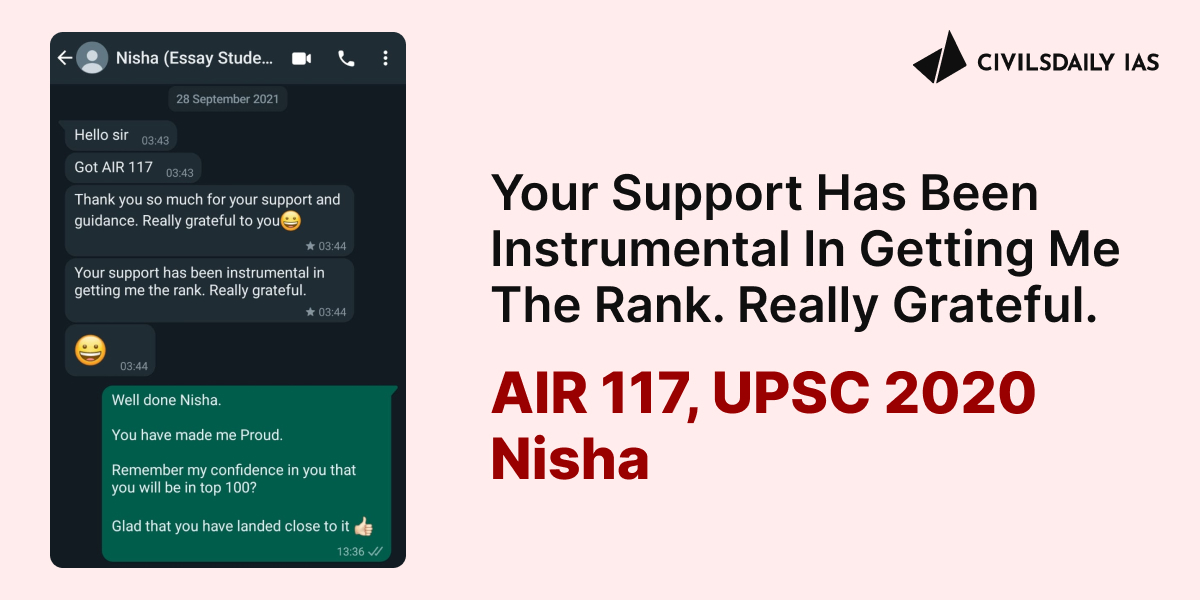
    AIR 117, Nisha was Zeeshan sir’s student

    Want to ace the UPSC? Start with mock tests. Want to guarantee Prelims success? Make it a process driven activity.

    Zeeshan Hashmi, Senior IAS mentor


    Webinar Details:

    • 19th Jan 2023 at 7:30 PM
    • The Zoom link will be emailed to you post-registration
    • Zeeshan sir will share PDF notes (GS And Current Affairs), and Imp Lecture videos.

    Key takeaways: absolute clarity on a number of issues

    1. How to attempt mocks in the most effective way for preparation and revision?
    2. Perfect the post mock process
      • How to self-evaluate a Prelims mock paper?
      • Analyzing questions like a pro?
      • Rectifying mistakes and course correction
      • Making notes
    3. Smart techniques to attempt mocks: Elimination and tikdams
    4. Compounding effect: Making guaranteed improvements after every mock and eventually a massive jump in actual prelims
    5. Avoiding mistakes that make you feel silly after the test.
    6. Devising your strategy: Finding your unique way of attempting and approaching a prelims paper
    7. Revision and syllabus completion
    Feedback on Zeeshan sir’s mentorship by AIR 65, Pranav (from Quora: https://qr.ae/pvH4yA)

    What The Hindu opined about Civilsdaily Mentorship

    best coaching for upsc in delhi

    19th Jan 2023, 7:30 pm | Zeeshan sir will PDF notes (GS And Current Affairs), and Imp Lecture videos.

More posts