💥UPSC 2026, 2027, 2028 UAP Mentorship (March Batch) + Access XFactor Notes & Microthemes PDF

Search results for: “”

  • [Burning issue] The tussle between Executive and Judiciary

    [Burning issue] The tussle between Executive and Judiciary

    Context

    • Recently, the Supreme court asked the Centre to produce in 24 hours the file related to the appointment of former bureaucrat Arun Goel as an EC so as to demonstrate how ECs are chosen.
    • In reply to it, Solicitor general (SG) Tushar Mehta urged the court not to traverse through a path that may disturb the constitutional scheme of separation of power.
    • The incident highlights the tussle between the two branches of the state- the executive and judiciary. This edition of the burning issue will analyse this issue in length.

    Previous incidences of the tussle

    • Fundamental Rights vs DPSP: The tussle between the judiciary and executive began when the judiciary defended the fundamental Rights in the Golak Nath Case,1967 against the supremacy of legislature (Parliament) established by the executive under the leadership of Mrs. Indira Gandhi, the Prime Minister of India.
    • Shield of “Basic Structure”: Mrs. Indira Gandhi in her next move got the three arbitrary constitutional Amendment Acts in 1971. The judiciary in response established the “Doctrine of Basic Structure‟ of the constitution through the Kesavanda Bharti case,1973.
    • Struck down of NJAC– The NJAC judgment was a crucial turning point leading to the present confrontation. No doubt, there always has been a certain amount of creative tension but NJAC judgment became the tipping point. 
    • Struck down of tribunal ordinance: Supreme Court struck down the Tribunal Reforms (Rationalisation and Conditions of Service) Ordinance of 2021
    • Displeasure over Delays in clearing recommendations of collegium: The Supreme Court expressed anguish over the delay by the Centre in clearing the names recommended by the Collegium for appointment as judges in the higher judiciary, saying it “effectively frustrates” the method of appointment.

    What does the constitution say about it?

    • Division of powers: The constitution of India divided the power and authority among three organs of government –executive, legislature and judiciary.
    • Article 50: The article puts an obligation on the State to separate the judiciary from the executive. But, since this falls under the Directive Principles of State Policy, it is not enforceable.
    • Article 123: The President, being the executive head of the country, is empowered to exercise legislative powers (Promulgate ordinances) in certain conditions.
    • Articles 121: No discussions shall take place in Parliament with respect to the conduct of any Judge of the Supreme Court or of a High Court in the discharge of his duties except upon a motion for presenting an address to the President praying for the removal of the Judge as hereinafter provided.
    • Article 211: This provides that the legislatures cannot discuss the conduct of a judge of the Supreme Court or High Court. They can do so only in case of impeachment.
    • Article 361: The President and Governors enjoy immunity from court proceedings.
    • The doctrine of separation of powers: it is a part of the basic structure of the Constitution, although not specifically mentioned. It calls for the division of powers of the state among three organs to avoid the overpowering of any one organ.

    Reasons for the tussle

    • Wide range of powers: The power of the Indian Supreme Court is comparable to those of its United States counterpart, including broad original and appellate jurisdiction and the right to pass on the constitutionality of laws passed by the Parliament. In the exercise of its power, however, the court has been at the center of major two controversies concerning the constitutional and political order in India.
    • Court’s FR vs State’s DPSP: The efforts by the court to give priority to the Fundamental Rights provisions in the constitution in a case where they have come into conflict with the Directive Principles, especially the broad ideological and policy goals of the Indian state and to which the executive and legislature have often given priority
    • Power of judicial review: The court’s power of judicial review of legislation passed by Parliament, which has on numerous occasions led to stalemates that point to a constitutional contradiction between the principle of Parliamentary sovereignty and that of judicial review.
    • The Collegium system: The collegium system of appointment of judges is popularly referred to as judges selecting judges. The collegium system is the Supreme Court’s invention. There is no mention of the collegium system either in the original constitution of India or successive amendments. From 1950 to 1973, the practice has been to appoint the senior most judge of the Supreme Court as Chief Justice of India. But the appointment and transfer of judges in the Supreme Court and High Courts became a matter of controversy between the judiciary and executive in 1973.
    • Collegium System vs National Judicial Appointment Commission: The judiciary withheld the NJAC as unconstitutional and void. The Supreme Court objects to the inclusion of politicians in the NJAC particularly the two eminent members of the society. These eminent persons are to be nominated for a three-year term by a Selection Committee consisting of the Chief Justice, the Prime Minister and the leader of the opposition in the Lok Sabha, and are not eligible for re-nomination. The Court blamed if politicians are involved, what about judicial independence? Those against the NJAC argue that it will give the executive undue influence over the selection of judges.
    • The decline of Parliament: Due to the failure of the executive and legislature to provide a solution to problems of the citizenry, citizens move to court for remedies. In the process of providing justice to the citizens, the judiciary sometimes crosses its boundary which leads to its tussle with the executive.

    Consequences of the tussle

    • Creates an Environment of distrust: the tussle creates an environment of distrust between the branches, leading to reduced cooperation and stagnancy in the reform process. some blame games and grandstanding are thrown in to either hide their limitations or to proclaim their superiority.
    • The struggle of power: Both sides seem to be engaged in a game of tug of war where each wants something important, which is the power of judicial appointment to the higher judiciary. But what is surprising and difficult to understand is that both executive and judiciary believe in making appointments to the higher judiciary on merit which can contribute to the accountability and efficiency of the judiciary and yet there is no consensus between the two!
    • Ignorance of separation of powers: Many of them miss the principle of separation of functions enshrined in the Constitution, a basic tenet of the Constitution for maintaining harmonious inter-institutional balance, as well as the differences in their respective ecosystems.
    • A mismatch between expectations and realization: Several laws such as contract laws, environmental laws and even corporate laws are not fully in tune with the new aspirations. Interpretations of economic laws by the judiciary remain in a static mode. Even when they come late, they are at times not in tune with the direction the executive would like it to be. So, there is disenchantment with the judiciary. While some may be genuine, many of them are the result of the mismatch between expectations and realization.

    Way forward

    • Strike a balance, especially by the executive: Inter-institutional balancing, even with strong constitutional provisions, is a difficult task. While the three wings of the State (Legislature, Executive and Judiciary) have to work for maintaining that delicate balance, it is primarily the responsibility of the executive to strive extra hard for the same. Because the executive is the most visible organ of the State as it is the government for all practical purposes.
    • Improving overall governance system: There is also a lot of disenchantment with the executive on multiple aspects of day-to-day civic life. Further, it is well-known that the executive is the largest litigant, clogging the judicial system. These are the result of suboptimal governance from the side of the executive.
    • Human resource management and ensuring sufficient financial resources and operational freedom for all agencies are all functions of the executive branch, the government.
    • Respecting the boundaries of each: To break this sub-optimal governance trap and to enhance the performance of all wings and agencies, those in responsible positions need to take a deep breath, think aloud and come out with appropriate solutions; understanding and respecting the boundaries of each of the three wings of the State. Institutional solutions on weighty issues like inter-institutional balancing and efficiency enhancement require a balanced, institutionalized approach.

    Conclusion

    • The “tussle” between the executive/legislature and the judiciary is not a real one. On the other hand, a judiciary and executive on the same page is disastrous for constitutional government and human rights.
    • The problem is inbuilt into the institution. The executive has to ensure the judiciary that they have no intention of curbing their independence. Also, the judiciary should not be too touchy that every small little thing is a challenge to their independence. The tension between them is due to this confrontation.

    Click and get your FREE Copy of CURRENT AFFAIRS Micro Notes

    (Click) FREE1-to-1 on-call Mentorship by IAS-IPS officers | Discuss doubts, strategy, sources, and more

  • Multi-Dimensional Poverty (MPI) Estimation

    MPI

    Context

    • There is debate going on over Multi-dimensional Poverty (MPI) estimation and Covid impact on poverty. Various experts are arguing that poverty decline faster during NDA years than UPA years.

    How MPI is estimated as per oxford poverty and human development initiative (OPHD)?

    • Two set of estimates: There are two sets of poverty estimates provided by the Oxford Poverty and Human Development Initiative (OPHI) that compile these data across countries, primarily from Demographic and Health Surveys (DHS).
    • Uncensored estimate: The first are uncensored estimates for individual indicators, which correspond to a simple question regarding whether a household is deprived (poor) in a given indicator for example, nutrition.
    • Censored estimate: Alternatively, one can obtain an indicator-specific censored poverty estimate via a two-stage process. Censored data helps shift the focus onto those who have been (multidimensionally) identified as poor. A higher MPI suggests greater intensity of deprivation while a higher censored poverty rate is an important signal to policymakers to redirect policy focus.

    Poverty

    Click and get your FREE Copy of CURRENT AFFAIRS Micro Notes

    Two stage process under censored estimates?

    • Multidimensionally poor: The first stage estimates the population that is multidimensionally poor.
    • Poor on each indicator: The second stage estimates the population that is poor in each indicator for the multi-dimensionally (MP) poor. For example, in 2005-06, the MP poor were 55.1 per cent; uncensored nutritionally poor were 57.3 per cent; and 44.3 per cent were censored nutritionally poor.
    • Poor in both categories: In other words, close to 80 per cent of the nutritionally deprived are also multidimensionally poor. For the DHS India survey years, censored estimates are used.

    Advantage of using censored estimates

    • No mismatch in absolute and indicator specific poor: For some individual indicators such as assets, some households may be considered as deprived (poor) even as they are relatively better off in other areas such as nutrition, sanitation, etc.
    • Interlinkages between poverty indicators: Other advantage of a censored approach is that it allows the capture of interlinkages between several poverty indicators. For example, environmental enteropathy is known to have a key role in nutrition absorption in children. Therefore, investments made towards providing sanitation facilities and piped water connections will have an impact on nutritional absorption.

    MPI

    What latest data on MPI says?

    • Annual improvement in health and education: Annual pace of improvement in the health, education and living standards indicators during 2005-15: 7.3, 10.0 and 9.6 per cent respectively. In the NDA years: 11, 8.4 and an outsized 17.2 per cent annual gain in living standards.
    • Efficient redistribution of resources: An efficient redistribution combined with direct fiscal resources targeted specifically to reduce deprivation across individual indicators.
    • Inclusive growth: The inclusive growth belief was that period I would show a greater improvement because the dominant component of poverty decline, growth in per capita consumption, was about 0.8 percentage point higher in period I (annual 3.8 per cent increase vs. 3 per cent in period II).
    • Faster poverty decline: The pace of MPI index decline was almost twice the pace in period II relative to period I! This result is strongly indicative of considerably more inclusive (and more efficient and less corrupt) growth in period II compared to period I.
    • Poor performance on some indicators: For only four indicators is the rate of uncensored poverty decline lower in period II. Assets and school attendance are lower in period II for both uncensored and censored poverty. Incidentally, school attendance improvement is expected to be lower as one approaches 100 per cent enrolment, the pace of change from 20 to 25 per cent enrolment is 25 per cent versus a pace of only 1 per cent when enrolment increases from 95 to 96 per cent.

    MPI

    Conclusion

    • Poverty estimation debate will continue among the experts. Government should solely focus on poverty reduction policies. Present priority should be reducing the Covid induced poverty.

    Mains Question

    Q. What is the censored and uncensored poverty estimates? Analyse the recent data on multi-dimensional poverty index (MPI) in India?

    (Click) FREE1-to-1 on-call Mentorship by IAS-IPS officers | Discuss doubts, strategy, sources, and more

  • Domestic violence: Why women choose to remain silent?

    Domestic violence

    Click and get your FREE Copy of CURRENT AFFAIRS Micro Notes

    Context

    • Just ahead of the International Day for Elimination of All Forms of Violence against Women (November 25), the brutal murder and mutilation of a young woman by her partner has drawn attention to intimate partner violence, also recognized under the Protection of Women from Domestic Violence Act 2005 (PWDVA) as a kind of domestic violence.

    Background

    • Due to prevalence of patriarchy women have been discriminated not only in India but in most parts of the world.
    • According to The United Nations, one out of every three women experience domestic violence. The same UN report suggests that the most dangerous place for women is their home.
    • Gender equality and women’s empowerment are essential for the development and well-being of families, communities and nations.

    Domestic Violence

    • Domestic violence is any pattern of behavior that is used to gain or maintain power and control over an intimate partner. It encompasses all physical, sexual, emotional, economic and psychological actions or threats of actions that influence another person.

    Domestic violence can include the following

    • Physical violence: Use of Physical force or hurting or trying to hurt a partner .it also includes denying medical care.
    • Sexual violence: Forcing a partner to take part in a sex act when the partner does not consent.
    • Psychological violence: Psychological violence involves causing fear, threatening physical harm or forcing isolation from friends, family, school or work.
    • Economic violence: Making or attempting to make a person financially dependent by maintaining total control over financial resources.
    • Emotional violence: Undermining a person’s sense of self-worth through constant criticism; belittling one’s abilities; verbal abuse. 

    Domestic violence

    Analysis of Domestic violence cases and protection of women in India

    • Punishable offence: Domestic violence is a punishable offence under Indian law. It is a violation of human rights.
    • According to NFHS-5: yet, National Family Health Survey-5 (2019-21) reveals that we live in a society where violence against women persists to such an extent that 32% of ever-married women aged 18-49 years have ever experienced emotional, physical, or sexual violence committed by their husband, with more rural than urban women reporting experiences of domestic violence.
    • Protection of women from domestic violence Act 2005: Over 17 years ago the PWDVA, a progressive legislation, was passed, promising a joined-up approach, involving civil and criminal protections, to support and protect women from violence within the household, not just from husbands.
    • Unable to access the law: Despite the law existing on paper, women are still largely unable to access the law in practice. Its promise and provisions are unevenly implemented, unavailable and out of reach for most Indian women.
    • Very less percentage of women who seek help: The most disheartening reality is that despite almost a third of women being subject to domestic violence, the National Family Health Survey-5 (2019-21) reports that only 14% of women who have experienced domestic violence have ever sought help; and this number is much lower in the rural areas.
    • Despite of multiple laws, most women choose not to seek help: In a country where domestic violence is a crime, where there are multiple laws explicitly designed to protect women against violence, most women survivors of domestic violence never seek help.

    Domestic violence

    An interesting first-hand case study on “why women choose to remain silent”?

    • Subject: Research in Maharashtra, West Bengal and Tamil Nadu aims to better understand ‘help seeking’ and the everyday realities, obstacles, prejudices and fears that women experience around sharing and reporting experiences of violence.
    • Questions: Simple and well-meaning questions, “Why didn’t you leave earlier?” “Why didn’t you tell someone about the violence earlier?”
    • Thoughts and Response:
    1. Women were hopeful that things would change, that they could change their husband’s behaviour, that he would listen to them.
    2. Crucially women did not want to be a ‘burden’ on others, in particular their families. ‘My mother has a lot of worries, she has her own life so I didn’t want to add to her own worries, with mine.’
    3. By naming the violence they experienced, women believed that they would become ‘a problem’ or a source of ‘tension’ for their families, in bringing them shame and dishonor, irrespective of the survivor’s level of education, caste, or class.
    4. For migrant women, transpeople or those with several sisters, or ill, older or deceased parents, it was felt even more acutely that the perpetrator’s violence was their individual responsibility to manage.

    Domestic violence

    Findings of the case study on seeking help

    • Majority of parents asks to accommodate: The first group of women mainly turned to their parents who, in a majority of cases, insisted on their daughter preserving the family environment which they should do by ‘adjusting’ to, or accommodating their husband’s (and his family’s) needs better.
    • Minority cases where daughters’ welfare is prioritized: In a minority of cases, the daughter’s welfare was prioritized over the well-being of the ‘the family’ and steps were taken to help mediate or exit the relationship, and much more infrequently approach the police and lawyers.
    • Accepted as patriarchal norm mostly by women themselves: So ingrained are social norms about gender inequality that NFHS-5 data reports that women are more likely than men to justify a scenario in which it is acceptable for a husband to beat or hit his wife.
    • Sharing experience gives relief: For instance, one interviewee explained, ‘the way we are conditioned, it was hard to complain about any suffering’. Though survivors who did (finally) confide in relatives and friends about domestic violence described feeling a ‘sense of a relief’ and that a ‘burden had been lifted’, giving them new ‘hope’ that things might change.
    • Confession is powerful step, seek for help comes with mixed emotions: Whilst sharing experiences of violence was an incredibly powerful step for women, actually transforming their violent domestic experiences and accessing services and support provided by the state and non-state actors proved to be an arduous roller coaster of emotions, promises, uncertainty, fear and disappointment.
    • Financial dependence stops women form accessing legal justice: With few safe houses across India, the simple reality was that many women have nowhere else to go, and access to legal justice through the courts was a material possibility only for women with independent wealth and connections or those supported by specialist non-governmental organizations. So, for many survivors, transforming their situation depended on securing their economic self-sufficiency by pursuing new skills and livelihood opportunities.

    Role of the police

    • Police were the part of problem than the solution: Women who reported experiences of violence to the police were cynical about the outcome. Though a small minority had positive experiences, for the majority of those we interviewed, the police were part of the problem rather than a solution to violence.
    • Police more likely to send women back to reconcile: Across the States, that the police were more likely to send women back to violent households to reconcile with the perpetrator or use violence against perpetrators as a deterrent instead of filing an official complaint or connecting women to protection officers and other service providers, as the PWDVA outlines they should.
    • Absence and under resourced Protection officers: Several States are yet to implement Protection officers. And where they are in post, they are under resourced, under-skilled and overworked, making their remit impossible.

    Domestic violence

    Conclusion

    • Even whilst its legislature recognizes that domestic violence is a crime, and civil remedies exist through protection orders, managing the fallout of domestic violence is still being subcontracted to survivors and the family. That is the biggest crime being committed against women today. Women empowerment without social justice is a futile exercise, State must take appropriate social empowerment steps in this direction.

    Mains question

    Q. What is the status of women facing domestic violence in India? Despite many laws and a country where domestic violence is a crime, most women prefer to remain silent and do not seek help. Discuss.

    (Click) FREE1-to-1 on-call Mentorship by IAS-IPS officers | Discuss doubts, strategy, sources, and more

  • Russia postpones with US under New START nuclear treaty

    Russia postponed nuclear weapons talks with the United States under the New START Treaty with neither side giving a reason for the postponement.

    New START Treaty

    • The New Strategic Arms Reduction Treaty (New START) pact limits the number of deployed nuclear warheads, missiles and bombers and is due to expire in 2021 unless renewed.
    • The treaty limits the US and Russia to a maximum of 1,550 deployed nuclear warheads and 700 deployed missiles and bombers, well below Cold War caps.
    • It was signed in 2010 by former US President Barack Obama and then-Russian President Dmitry Medvedev.
    • It is one of the key controls on the superpower deployment of nuclear weapons.

    Background of US-Russia Nuclear Relations

    • The US formally QUIT the Intermediate-Range Nuclear Forces (INF)
    • The agreement obliged the two countries to eliminate all ground-based missiles of ranges between 500 and 5,500 km.

    When did nuclear disarmament begin?

    • In 1985, the two countries entered into arms control negotiations on three tracks.
    • The first dealt with strategic weapons with ranges of over 5,500 km, leading to the START agreement in 1991.
    • It limited both sides to 1,600 strategic delivery vehicles and 6,000 warheads.
    • A second track dealt with intermediate-range missiles and this led to the INF Treaty in 1987.
    • A third track, Nuclear, and Space Talks was intended to address Soviet concerns regarding the U.S.’s Strategic Defence Initiative (SDI) but this did not yield any outcome.

    Success of INF

    • The INF Treaty was hailed as a great disarmament pact even though no nuclear warheads were dismantled.
    • As it is a bilateral agreement, it did not restrict other countries.
    • By 1991, the INF was implemented. USSR destroyed 1,846 and the US destroyed 846 Pershing and cruise missiles. 
    • Associated production facilities were also closed down.
    • INF Treaty was the first pact to include intensive verification measures, including on-site inspections.

    How has the nuclear behavior been?

    • With the end of the Cold War and the break-up of the USSR in end-1991, former Soviet allies were joining NATO and becoming EU members.
    • The U.S. was investing in missile defense and conventional global precision strike capabilities to expand its technological lead.
    • In 2001, the U.S. announced its unilateral withdrawal from the 1972 Anti-Ballistic Missile Treaty (ABM Treaty).
    • The US also blamed Russia for not complying with the ‘zero-yield’ standard imposed by the Comprehensive Test Ban Treaty (CTBT). This may indicate the beginning of a new nuclear arms race.

    Implications of the New Start

    • The 2011 New START lapsed in 2021. It may meet the fate of the INF Treaty.
    • The 2018 NPR envisaged the development of new nuclear weapons, including low-yield weapons.
    • China is preparing to operate its test site year-round with its goals for its nuclear force.
    • CTBT requires ratification by U.S., China, and Iran, Israel and Egypt and adherence by India, Pakistan and North Korea. It is unlikely to ever enter into force.

    Conclusion

    • A new nuclear arms race could just be the beginning. It may be more complicated because of multiple countries being involved.
    • Technological changes are bringing cyber and space domains into contention. It raises the risks of escalation.


    Click and get your FREE Copy of CURRENT AFFAIRS Micro Notes

    (Click) FREE1-to-1 on-call Mentorship by IAS-IPS officers | Discuss doubts, strategy, sources, and more

  • In news: Kerala’s SilverLine Project

    Protests are taking place across Kerala against SilverLine, a semi high-speed railway project that envisages trains running at 200 km/h between the state’s northern and southern ends.

    What is the SilverLine project?

    • The proposed 529.45-km line will link Thiruvananthapuram in the south to Kasaragod in the north, covering 11 districts through 11 stations.
    • KRDCL, or K-Rail, is a joint venture between the Kerala government and the Union Ministry of Railways created to execute this project.
    • The deadline for the project, being executed by the Kerala Rail Development Corporation Limited (KRDCL), is 2025.

    Features of the Project

    • The project will have trains of electric multiple unit (EMU) type, each with preferably nine cars extendable to 12.
    • A nine-car rake can seat a maximum of 675 passengers in business and standard class settings.
    • The trains can run at a maximum speed of 220 km/hr on a standard gauge track, completing journeys in either direction in fewer than four hours.
    • At every 500 metres, there will be under-passages with service roads.

    Need for the SilverLine project

    • Time saving: On the existing network, it now takes 12 hours. Once the project is completed, one can travel from Kasaragod to Thiruvananthapuram in less than four hours at 200 km/hr.
    • Old infrastructure: Existing railway infrastructure in Kerala cannot meet the demands of the future.
    • Terrain limitations: Most trains run at an average speed of 45 km/hr due to a lot of curves and bends on the existing stretch.
    • De-trafficking: The project can take a significant load of traffic off the existing stretch and make travel faster for commuters, which in turn will reduce congestion on roads and help reduce accidents.
    • Others: The project would reduce greenhouse gas emissions, help in expansion of Ro-Ro services, produce employment opportunities, integrate airports and IT corridors, and enable faster development of cities it passes through.

    Present status of the Project

    Ans. Land acquisition is underway

    • The state government has begun the process of land acquisition after the cabinet approved it this year.
    • As part of the first stage of acquisition, local revenue and K-Rail officials are on the ground, demarcating land and placing boundary stones.
    • This is done to give the officials a sense of how much private land will have to be acquired and the number of families who will be displaced.

    Issues with the Project

    • Political rhetoric: All political parties have been spearheading separate protests.
    • Huge capital requirement: They argue that the project was an “astronomical scam in the making” and would sink the state further into debt.
    • Displacement of families: The project was financially unviable and would lead to the displacement of over 30,000 families.
    • Ecological damage: It would cause great environmental harm as its route cuts through precious wetlands, paddy fields and hills.
    • Flood hazard: The building of embankments on either side of the major portion of the line will block natural drainage and cause floods during heavy rains.


    UPSC 2022 countdown has begun! Get your personal guidance plan now! (Click here)

  • SARAS 3 Telescope gives clues to first stars, galaxies of universe

    saras

    India’s SARAS radio telescope has helped scientists determine the properties of the earliest radio luminous galaxies formed 200 million years after the Big Bang, a period known as the Cosmic Dawn.

    SARAS 3 Telescope

    • SARAS stands for Shaped Antenna measurement of the background Radio Spectrum 3 (SARAS) telescope.
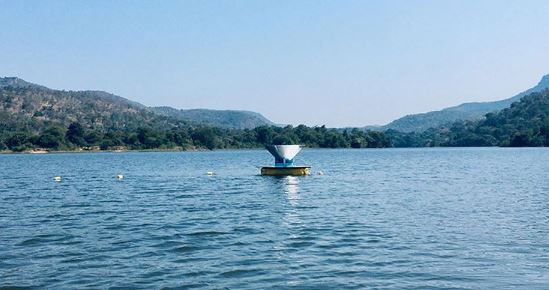
    • It is an indigenously designed and built at Raman Research Institute and was deployed over Dandiganahalli Lake and Sharavati backwaters, located in Northern Karnataka, in early 2020.

    What have the researchers found?

    • Researchers have been able to determine properties of radio luminous galaxies formed just 200 million years post the Big Bang, a period known as the Cosmic Dawn.
    • These are the masses of the first generation of galaxies that are bright in radio wavelengths.
    • This helps provide an insight into the properties of the earliest radio loud galaxies that are usually powered by supermassive black holes.

    What is Cosmic Dawn?

    • The ignition of the first stars marks the end of the Dark Ages and the beginning of our “Cosmic Dawn,” some 100 million years after the Big Bang.
    • For the first time, our universe began shining with a light other than the afterglow of the Big Bang.
    • SARAS 3 had improved the understanding of astrophysics of Cosmic Dawn by telling astronomers that less than 3% of the gaseous matter within early galaxies was converted into stars.
    • It found that the earliest galaxies that were bright in radio emission were also strong in X-rays, which heated the cosmic gas in and around the early galaxies.


    Click and get your FREE Copy of CURRENT AFFAIRS Micro Notes

    (Click) FREE1-to-1 on-call Mentorship by IAS-IPS officers | Discuss doubts, strategy, sources, and more

  • What is Bluebugging?

    Bluebugging

    Cybersecurity experts note that apps that let users connect smartphones or laptops to wireless earplugs can record conversations, and are vulnerable to hacks through a process called Bluebugging.

    What is Bluebugging?

    • It is a form of hacking that lets attackers access a device through its discoverable Bluetooth connection.
    • Once a device or phone is blue-bugged, a hacker can listen to the calls, read and send messages and steal and modify contacts.
    • It started out as a threat for laptops with Bluetooth capability. Later hackers used the technique to target mobile phones and other devices.
    • Independent security researcher Martin Herfurt blogged about the threat of bluebugging as early as 2004.
    • He noted that the bug exploited a loophole in Bluetooth protocol, enabling it to download phone books and call lists from the attacked user’s phone.

    How does bluebugging hack devices?

    • Bluebugging attacks work by exploiting Bluetooth-enabled devices.
    • The device’s Bluetooth must be in discoverable mode, which is the default setting on most devices.
    • The hacker then tries to pair with the device via Bluetooth. Once a connection is established, hackers can use brute force attacks to bypass authentication.
    • They can install malware in the compromised device to gain unauthorised access to it.
    • Bluebugging can happen whenever a Bluetooth enabled device is within a 10-metre radius of the hacker.
    • However, according to a blog by VPN service provider NordVPN, hackers can use booster antennas to widen the attack range.

    Why is it a big threat?

    • Even the most secure smartphones like iPhones are vulnerable to such attacks.
    • Any app with access to Bluetooth can record users’ conversations with Siri and audio from the iOS keyboard dictation feature when using AirPods or Beats headsets, some app developers say.
    • Through Bluebugging, a hacker can gain unauthorised access to these apps and devices and control them as per their wish.

    How can one prevent bluebugging?

    Here are some of the ways to prevent bluebugging-

    1. Turning off Bluetooth and disconnecting paired Bluetooth devices when not in use,
    2. Updating the device’s system software to the latest version,
    3. Limiting the use of public Wi-Fi, and
    4. Using VPN as an additional security measure


    Click and get your FREE Copy of CURRENT AFFAIRS Micro Notes

    (Click) FREE1-to-1 on-call Mentorship by IAS-IPS officers | Discuss doubts, strategy, sources, and more

  • What is Wet Leasing of Aircraft?

    wet

    In efforts to boost international air traffic, the civil aviation ministry has allowed Indian airlines to take wide-body planes on wet lease for up to one year.

    What is Wet Leasing?

    • Wet leasing means taking the plane along with the operating crew and engineers, while dry leasing refers to taking only the aircraft on rent.
    • The technical term for wet leasing is ACMI which stands for aircraft, crew, maintenance and insurance.
    • These are the aspects of the operation that the wet lease airline takes care of, while the airline client will still be responsible for paying for direct operating costs.
    • This includes catering and fuel as well as fees such as airport fees, ground handling charges and navigation fees.
    • Operations of an aircraft on wet lease are more difficult for the Directorate General of Civil Aviation (DGCA) to monitor, which is why it is allowed for shorter durations.

    What are the new rules?

    • The rules had been relaxed, allowing the wet leasing for a year as opposed to the six months permitted so far.
    • Dry leasing was already allowed for up to 12 months, with the option to extend the contract for 12 another year.

    Why has govt extended limit now?

    • The civil aviation ministry’s decision came on a request by the country’s largest airline, IndiGo.
    • It plans for inducting B777 aircraft on wet/damp lease basis during the current winter schedule.
    • The relaxation will be available to all Indian carriers and will be granted based on international destinations they wish to operate to.
    • With Covid-related restrictions lifting, international travel is lifting up, and the wet leasing will allow airlines to fly more routes and rounds.
    • Wide-body planes can accommodate more passengers, thereby boosting revenue.

    Why airlines lease aircraft?

    • About half the planes used by airlines around the world are not owned but leased.
    • Airlines and aircraft operators prefer leasing planes in order to avoid massive lump sum payments that buying them would entail, and to quickly increase capacity, perhaps temporarily, on certain routes or sectors.


    Click and get your FREE Copy of CURRENT AFFAIRS Micro Notes

    (Click) FREE1-to-1 on-call Mentorship by IAS-IPS officers | Discuss doubts, strategy, sources, and more

  • PR23: A perennial rice variety developed by China

    pr23

    Farmers in China are now growing a perennial variety of rice called PR 22 which does not need to be planted every year.

    What is PR23?

    • Researchers at the Yunnan University have developed a variety of perennial rice named PR23 by cross-breeding regular annual rice Oryza sativa with a wild perennial variety from Africa.
    • Unlike regular rice which is planted every season, PR23 can yield eight consecutive harvests across four years (as these plants with stronger roots grow back vigorously after each harvest).
    • PR23 yields, reported at 8 tons per hectare, are comparable to regular irrigated rice.
    • But growing it is much cheaper since it requires less labour, seeds and chemical inputs.

    Benefits of the variety

    • It can result in remarkable environmental benefits such as soils accumulating close to a ton of organic carbon (per hectare per year) along with increases in water available to plants.
    • It is were preferred by farmers since it saved 58% in labour and 49% in other input costs, over each regrowth cycle.
    • The researchers claim it can transform farming by improving livelihoods, enhancing soil quality and by inspiring research on other grains.
    • The invention could transform rice farming by making it climate-friendly, besides using less of labour and other inputs.

    Why is the discovery of the new variety significant?

    • Rice feeds about half of the world, and its farming and consumption are primarily in Asia.
    • Most crops grown today were once perennial, but bred to be annual, short-duration, to make them more productive.
    • Perennial rice could be a transformational innovation if it proves to be economically sustainable.

    Significance for India

    • India is the world’s second largest rice producer, after China, and the largest exporter with a 40% share in global trade.
    • It is grown during both summer and winter crop seasons.
    • Perennial rice can reduce the drudgery of annual trans-plantation, a back-breaking task, and generate savings on seeds and other inputs.
    • China’s early success has another lesson for India: to raise investments in public research and agricultural sciences.
    • This can help counter the impact of climate change on food security and rural incomes.


    Click and get your FREE Copy of CURRENT AFFAIRS Micro Notes

    (Click) FREE1-to-1 on-call Mentorship by IAS-IPS officers | Discuss doubts, strategy, sources, and more

More posts