💥Join UPSC 2027,2028 Mentorship (July Batch) + XFactor Notes & Microthemes PDF

Subject: Agriculture

  • Progress track: PM Matsya Sampada Yojana (PMMSY)

    matsya sampada

    Central Idea

    • In 2020, as India’s fisheries sector was gearing up for a transformation through government-initiated reforms, the COVID-19 pandemic threatened to disrupt progress.
    • However, PM Modi turned this crisis into an opportunity by launching the Atmanirbhar Bharat package, specifically targeting the fisheries sector.
    • This initiative breathed new life into the sector, with a substantial allocation of ₹20,050 crore for the Pradhan Mantri Matsya Sampada Yojana (PMMSY), making it the largest-ever investment in Indian fisheries history.

    About PM Matsya Sampada Yojana

    Aim To catalyze the Blue Revolution in India’s fisheries sector.
    Investment Rs. 20,050 crores over five years (FY 2020-21 to FY 2024-25) as part of Aatmanirbhar Bharat Package.
    Fish Production Increase fish production by an additional 70 lakh tonnes by 2024-25.
    Export Earnings Raise fisheries export earnings to Rs. 1,00,000 crore by 2024-25.
    Income Doubling Double the incomes of fishers and fish farmers.
    Post-Harvest Losses Reduce post-harvest losses from 20-25% to about 10%.
    Employment Generation Generate substantial employment opportunities in the fisheries sector.
    Aims and Objectives 1. Sustainable and equitable fisheries development.

    2. Increased productivity through diversification.

    3. Modernizing the value chain. 4. Income doubling.

    5. Boosting exports.

    6. Ensuring security for fisheries communities.

    7. Effective management.

    Implementation Components Central Sector Scheme and Centrally Sponsored Scheme with active state participation.
    Implementation Approach Structured framework and cluster-based approach for optimal outcomes

    Key Achievements of PMMSY

    • Broad Development Spectrum: PMMSY addressed critical gaps in the fisheries value chain, spanning fish production, productivity, quality, technology, post-harvest infrastructure, and marketing.
    • Strategic Priority Areas: The initiative strategically focused on various key areas, including marine fisheries, inland fisheries, fishermen’s welfare, infrastructure development, post-harvest management, cold water fisheries, ornamental fisheries, aquatic health management, and seaweed cultivation.
    • Empowering Youth: PMMSY encouraged young entrepreneurs to venture into fisheries, fostering technological innovation and youth engagement. Notable success stories include young women in Kashmir rearing cold water rainbow trout and aquapreneurs in Nellore becoming successful exporters of biofloc-cultivated shrimps.
    • Expanding to Non-Traditional Areas: The program expanded fisheries activities to non-traditional regions, converting saline wastelands into productive aquaculture zones in landlocked states like Haryana and Rajasthan.
    • Empowering Fisherwomen: PMMSY empowered fisherwomen to explore alternative livelihoods, such as ornamental fisheries, pearl culture, and seaweed cultivation. The establishment of the ₹127 crore Seaweed Park in Tamil Nadu exemplifies this forward-looking approach.
    • Infrastructure and Research: The initiative supported the establishment of 900 fish feed plants, 755 hatcheries, and invested in research and genetic improvement of Indian White Shrimp, specific pathogen-free brood stock development, and domestication of tiger shrimp.

    Impact on India’s Fisheries Sector

    • Global Recognition: India has risen to become one of the world’s top three countries in fish and aquaculture production and stands as the largest shrimp exporter globally.
    • Investment Growth: The government’s commitment to the fisheries sector is evident, with recent announcements of ₹6,000 crore as a sub-scheme under PMMSY, totalling investments exceeding ₹38,500 crore over the past nine years.
    • Record Production and Exports: India achieved record fisheries production of 174 lakh tonnes in 2022-23, marking a significant increase. Shrimp production alone surged by 267% from 2013-14 to 2022-23, reaching 11.84 lakh tonnes. Seafood exports doubled from ₹30,213 crore in 2013-14 to ₹63,969 crore in 2022-23.
  • Understanding Curbs on Rice Exports

    rice

    Central Idea

    • The Indian government takes measures to stabilize domestic rice prices and ensure food security.
    • Recent actions include banning white rice exports, imposing a 20% export duty on par-boiled rice, and allowing Basmati rice exports under specific conditions.

    Rice Production Estimate: Shows decline

    • Third Advanced Estimate shows a 13.8% decline in Rabi season 2022-2023’s rice production.
    • Kharif sowing data indicates increased rice cultivation, but delayed sowing predicted due to monsoon issues.
    • Expectations of new season crop arrivals starting after the first week of September.

    Rice Exports

    • India holds a 45% share in the global rice market and leads in exports.
    • April-May 2023 rice exports show a 21.1% increase compared to the previous fiscal year.
    • May records a 10.86% rise in Basmati rice exports and 7.5% increase in non-Basmati rice exports.
    • Non-Basmati rice shipments have been rising for three years, and Basmati exports in 2022-2023 exceed the previous year.
    • Total rice exports (excluding broken rice) till August 17 are 15% higher than the same period last year.

    Impact on Indian Farmers

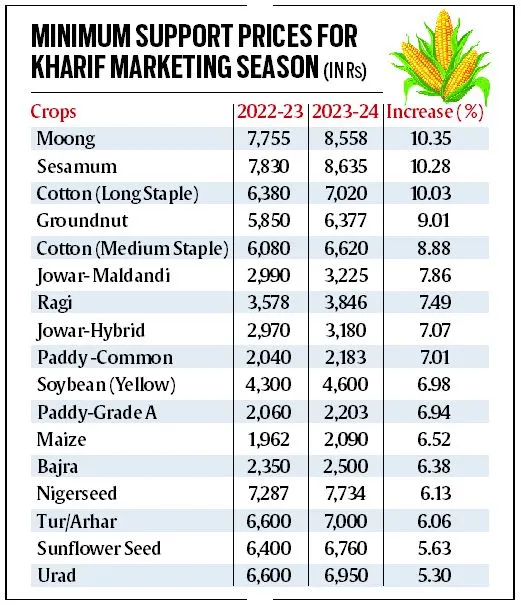
    • Increased Minimum Support Price (MSP) for rice benefits farmers.
    • Current paddy procurement prices by rice millers are higher than MSP, ensuring better returns.
    • Export restrictions prevent steep rice price increases in the domestic market.
    • The government’s high benchmark price strategy benefits farmers, ensures availability, and avoids price spikes.

    Exporters’ Perspectives

    • Competitive prices of Indian par-boiled rice globally, despite the 20% export duty.
    • Some rice-exporting countries, like Indonesia, now seek imports due to market dynamics.
    • Calls for classifying rice based on type (common vs. specialty) instead of Basmati and non-Basmati.
    • Suggestion to insulate Geographical Indication (GI) recognized rice from general market interventions.
    • Concerns about the impact of export restrictions on farmers and calls for policy adjustments.

    Conclusion

    • India’s efforts to balance domestic and international rice markets involve export restrictions and price management.
    • Rice exports remain competitive even with export duty, driven by global demand.
    • Export policies and decisions need to be aligned with market dynamics to benefit farmers and the economy.
  • Magic Rice ‘Chokuwa Saul’ gets GI Tag

    chokuwa

    Central Idea

    • Chokuwa rice, the unique possession of Assam’s Ahom dynasty, recently earned a GI (Geographical Indication) tag.

    Chokuwa Saul

    • Chokuwa rice, a semi-glutinous winter rice type known as Sali rice, carries the legacy of the past.
    • The rice variety is classified into Bora and Chokuwa based on amylose concentration, which affects stickiness.
    • The Chokuwa variant, low in amylose, yields soft rice, referred to as Komal Chaul.
    • This whole grain can be consumed after a preliminary soaking process.
    • Its versatility extends to its application in traditional Assamese delicacies like Pithe and various local dishes.
    • It is primarily cultivated in the Brahmaputra region and various parts of Assam, including Tinsukia, Dhemaji, Dibrugarh, Lakhimpur, Sivasagar, Jorhat, Golaghat, Nagaon, and Morigaon.

    Back2Basics: Geographical Indication (GI)

    • A GI is a sign used on products that have a specific geographical origin and possess qualities or a reputation that are due to that origin.
    • Nodal Agency: Department for Promotion of Industry and Internal Trade (DPIIT), Ministry of Commerce and Industry
    • India, as a member of the World Trade Organization (WTO), enacted the Geographical Indications of Goods (Registration and Protection) Act, 1999 w.e.f. September 2003.
    • GIs have been defined under Article 22 (1) of the WTO Agreement on Trade-Related Aspects of Intellectual Property Rights (TRIPS) Agreement.
    • The tag stands valid for 10 years.
  • Gene-Edited Mustard: Less pungent, more useful

    Central Idea

    • Among India’s domestically grown oilseeds, rapeseed-mustard stands out.
    • However, its pungent oil and unpalatable meal have posed challenges for both consumers and livestock.
    • Scientists have undertaken breeding efforts to create Canola-quality (white) mustard with reduced pungency and improved meal quality.

    About Rapeseed-Mustard

    • Rapeseed-Mustard: India’s significant oilseed is rapeseed-mustard, contributing significantly to vegetable oil production and meal availability.
    • Pungency: Mustard seeds contain glucosinolates, compounds that give the oil and meal their pungent flavor and odor.

    Quest for Canola-Quality Mustard

    • Canola-Quality Pursuit: Scientists aimed to breed mustard lines with low glucosinolate content similar to Canola.
    • Reducing Pungency: Efforts to create low-pungency oil and meal have faced challenges due to the necessity of glucosinolates in plant defense.
    • Vulnerability to Pests and Diseases: Canola-quality mustard lines have not been cultivated extensively due to their susceptibility to pests and diseases.

    Role of Gene Editing

    • Innovative Research: Gene editing emerges as a solution to balance glucosinolate levels for improved quality and plant defence.
    • CRISPR/Cas9 Approach: Researchers used CRISPR/Cas9 gene editing tool to target and modify 10 out of 12 GTR genes in Indian mustard.
    • Achieving Desired Changes: Editing GTR genes led to lower glucosinolate content in seeds while preserving higher levels in leaves and pod walls.

    Benefits of GE Mustard

    • Easy Synthesis: Glucosinolates are synthesized in mustard leaves and pod walls before translocation to seeds.
    • Dual Benefit of Glucosinolates: The study revealed that edited mustard lines with low-seed glucosinolates exhibited improved defence against pests and diseases.

    Distinction between GE and GM

    • GE Mustard: The new mustard lines are genome-edited (GE), not genetically modified (GM).
    • Transgene-Free Solution: Unlike GM crops with foreign genes, GE lines have no foreign DNA and no residual gene-editing tools.

    Regulatory Considerations and Future Prospects

    • Regulation Changes: India’s regulatory environment is shifting, exempting GE plants free of exogenous introduced DNA from stringent approval requirements.
    • Potential Field Trials: Scientists are preparing for open field trials of GE mustard, with expectations to conduct them in the upcoming planting season.
    • Importance of Self-Reliance: With massive edible oil imports, domestic oilseed production through breeding advancements like GE mustard becomes vital for self-reliance.

    Economic Implications and Self-Sufficiency

    • Importance of Oilseeds: India’s substantial edible oil imports highlight the need for boosting domestic oilseed production.
    • Mustard’s Role: Mustard’s high oil content and protein-rich meal position it as a significant oilseed crop.
    • Potential Benefits: Both GE mustard and GM hybrid mustard have the potential to reduce dependence on imported vegetable oils.

    Conclusion

    • The journey of rapeseed mustard from its pungent state to a potentially improved, self-sufficient crop demonstrates the power of innovative breeding techniques.
    • The breakthrough in gene editing opens doors to balancing quality and plant defence.

    Back2Basics: CRISPR/Cas9 Gene Editing Tool

    crispr mustard

    • CRISPR-Cas9 is a revolutionary technology allowing precise genetic modifications by altering DNA sequences.
    • It’s a cutting-edge tool in genetic manipulation, generating excitement in the scientific community.

    How does it work?

    • CRISPR-Cas9 employs two crucial components for DNA change:
      1. Cas9 enzyme: Functions as molecular scissors, cutting DNA strands at a specific location.
      2. Guide RNA (gRNA): Composed of a short, pre-designed RNA sequence within a longer scaffold. The scaffold guides Cas9 to the right genomic spot.
    • Guide RNA complements a target DNA sequence. It binds only to the specific DNA region, avoiding unintended interactions.
    • Cas9 follows guide RNA to the DNA sequence, creating a cut across both strands.
    • Cell recognizes the DNA damage and initiates repair.
    • Scientists harness repair processes to modify genes in a cell’s genome.
  • Urea Gold: Making Urea more efficient

    urea gold

    Central Idea

    • The recent launch of “Urea Gold,” a fortified fertiliser by Rashtriya Chemicals and Fertilizers Ltd (RCF), has sparked interest as it combines urea with sulphur to enhance nitrogen use efficiency (NUE).
    • It seeks to tackle challenges of escalating urea consumption and declining agricultural efficiency.

    What is Urea Gold?

    • Composition: “Urea Gold” blends urea with sulphur to create a fortified fertiliser aimed at improving NUE and crop performance.
    • NUE Enhancement: The fortified blend ensures gradual nitrogen release, sustaining plant health and potentially reducing fertiliser application frequency.

    Challenges of Urea Consumption and NUE Decline

    urea

    • Urea Consumption Surge: Urea consumption has risen from 26.7 million tonnes to 35.7 million tonnes between 2009-10 and 2022-23, making it India’s predominant fertiliser choice.
    • Import Dependency: Domestic urea production relies heavily on imported natural gas. India’s annual consumption trails only China’s, where coal-based production prevails.
    • Declining NUE: Only around 35% of nitrogen applied through urea benefits crops, raising concerns about resource wastage and increased fertiliser application.

    Fortified Fertiliser Solution

    • Coating Strategy: Fortified fertilisers entail coating primary nutrients (N, P, K) with secondary nutrients (S, calcium, magnesium) and micronutrients (zinc, boron, manganese, etc.).
    • Enhanced Benefits: Coated fertilisers act as “carrier products” for secondary and micronutrients, thereby increasing their N and P use efficiency and ensuring controlled nutrient release.
    • Innovation by Yara International: The “Procote” technology facilitates micronutrient coating, demonstrating improved fertiliser efficacy.
    • Efficacy Confirmation: The trials substantiated amplified paddy and wheat yields through micronutrient-coated fertilisers, potentially mitigating NUE concerns.

    Pricing and Distribution Challenges

    • Pricing Complexities: Existing subsidies for coated fertilisers like zincated urea and boronated DAP may not incentivise companies to promote fortified products.
    • Farmer Adoption Hurdles: Discrepancies in pricing between fortified and non-fortified fertilisers have deterred farmers from embracing coated options.
    • Optimal Implementation: Advocates suggest factory-level coating to ensure uniform nutrient distribution and user convenience. Freeing maximum retail prices (MRPs) for coated fertilisers could bolster adoption.
    • Striking Pricing Balance: Since traditional fertilisers receive substantial subsidies, fortified product premiums must remain reasonable to encourage affordability.

    Conclusion

    • Amidst the challenges of dwindling NUE and escalating urea consumption, the introduction of “Urea Gold” and fortified fertilisers holds promise for enhancing agricultural efficiency.
    • The journey to successful implementation necessitates addressing pricing discrepancies and distribution intricacies.
  • NITI Aayog suggests changes to APMC System

    apmc

    Central Idea

    • Experts from NITI Aayog have put forth recommendations to revamp the existing Agriculture Produce Marketing Committee (APMC) system in India’s agriculture sector.

    NITI Aayog

    • NITI Aayog stands for the National Institution for Transforming India. It is a policy think tank and a government institution in India.
    • It was established on January 1, 2015, to replace the Planning Commission, which was the central agency responsible for formulating India’s Five-Year Plans.
    • PM serves as the ex-officio Chairman of NITI Aayog.
    • It has a full-time Vice-Chairperson, who is usually a renowned economist or policy expert, and also includes several full-time members and special invitees.
    • Its primary objective is to provide strategic and policy inputs to the central and state governments in India with a focus on sustainable and inclusive development.

    What is APMC?

    • APMCs are created by state governments, reflecting agriculture’s status as a State List subject under the Indian Constitution.
    • APMC’s existence aims to safeguard farmers from exploitation by large retailers and maintain reasonable retail price spreads.
    • All food produce must first be brought to market yards and then sold through auction as per the Agricultural Produce Marketing Regulation (APMR) Act.

    Establishments of APMCs

    • British Raj Influence: The regulation of raw cotton under the Hyderabad Residency Order in 1886 marked the beginning of agriculture produce market regulation in India.
    • Royal Commission’s Recommendation: The 1928 Royal Commission on Agriculture recommended the regulation of marketing practices and the establishment of regulated markets.
    • Model Bill and Independence: The Government of India prepared a Model Bill in 1938, but significant progress was made only after India gained independence.
    • Enactment of APMR Acts: During the 1960s and 1970s, most states enacted and enforced Agricultural Produce Markets Regulation (APMR) Acts, bringing primary wholesale assembling markets under their ambit.

    Working of APMCs

    • APMCs operate on two principles:
    1. Ensure that farmers are not exploited by intermediaries (or money lenders) who compel farmers to sell their produce at the farm gate for an extremely low price.
    2. All food produce should first be brought to a market yard and then sold through auction.
    • Each state that operates APMC markets (mandis) establish their markets in different places within their borders, geographically dividing the state.
    • Farmers are required to sell their produce via auction at the mandi in their region.
    • Traders require a license to operate within a mandi.

    Key Reforms Suggested by NITI Aayog

    (1) Alternative Marketing Options

    • App-Based Sales and E-commerce: The experts suggest leveraging technology for app-based sales of farm produce by individual farmers or farmer groups. Additionally, they emphasize the potential of e-commerce and digital commerce as alternative marketing avenues.
    • Subsidy Reforms: To address the over-exploitation of groundwater due to free or highly subsidized power, they recommend direct payment of subsidy amounts to farmers and shifting to the metered power supply.

    (2) Modernizing Agriculture

    • Corporate Investments: The paper highlights that about 80% of investments in agriculture come from private sources, mainly farmers. However, the corporate sector’s involvement remains low, and they believe there is significant potential for corporate expansion in agribusiness.
    • Market Integration and Competition: Encouraging corporate investment in areas like warehousing, logistics, cold chain, food processing, and value chain development would improve market integration and competition over time and space.

    (3) Enhancing Farmer Income

    • High-Value Crops and Livestock Activities: To boost the income of farmers with small land holdings, the experts suggest enabling them to focus on high-value crops and livestock activities while supplementing their agricultural income with non-agricultural sources.
    • MSP Reforms: The Minimum Support Price (MSP) system should be designed to avoid market distortions. The paper proposes using a combination of procurement and price deficiency payment to pay MSP to farmers, linked to public distribution system needs, price stability, and strategic stocks.

    Earlier reforms: Three Farm Laws

    Reforms were passed in the form of three acts in 2020 (later repealed) which led to massive protests.

    1. Farmers’ Produce Trade and Commerce Act: This act aimed to promote and facilitate trade and commerce of farmers’ produce outside the physical boundaries of APMCs, allowing farmers to sell their produce in other markets and directly to buyers.
    2. Farmers Agreement on Price Assurance and Farm Services Act: This act empowered farmers to enter into agreements with buyers, ensuring a guaranteed price for their produce and access to various farm services.
    3. Essential Commodities Amendment Act: This amendment sought to remove restrictions on the movement and storage of essential commodities, promoting a more open market.

    Conclusion

    • Balancing Farmer Interests and Market Efficiency: While the reforms aim to create a more competitive and liberalized market, it is crucial to address farmers’ concerns and protect their interests.
    • Dialogue and Collaboration: To find common ground, constructive dialogue and collaboration between the government and farmers are essential in shaping the future of agricultural reforms.
  • PM-PRANAM Scheme gets cabinet nod

    pranam

    Central Idea

    • The union cabinet has given its approval to PM-PRANAM scheme, which aims to promote the usage of alternative fertilizers and balanced utilization of chemical fertilizers.
    • This scheme, announced in the budget for 2023-24, reflects the government’s commitment to sustainable agricultural practices and the conservation of natural resources.

    What is PM-PRANAM Scheme?

    • PM-PRANAM stands for Prime Minister Promotion of Alternate Nutrients for Agriculture Management Yojana.
    • The scheme was proposed during the National Conference on Agriculture for Rabi Campaign in September 2022.
    • Its objective is to reduce the subsidy burden on chemical fertilizers by promoting the use of alternative fertilizers.

    Notable features of the scheme

    • Incentivizing States and UTs: The scheme incentivizes states and Union Territories to promote the usage of alternative fertilizers and achieve a balanced use of chemical fertilizers. States that demonstrate significant savings in funds due to reduced chemical fertilizer usage receive grants as incentives.
    • Subsidy Savings Allocation: Around 50% of the subsidy savings resulting from reduced chemical fertilizer consumption will be allocated as a grant to the state that exhibits the highest savings. This encourages states to actively participate in the adoption of alternative fertilizers.
    • Creation of Assets: A significant portion (70%) of the granted funds will be utilized for creating assets associated with the technological integration of alternate fertilizers. This includes establishing production units at the village, block, and district levels, facilitating local production and availability of alternative fertilizers.
    • Recognition and Incentives for Farmers: The remaining 30% of the granted funds will be utilized to incentivize and recognize farmers and other village entities for their contributions to reducing fertilizer usage. This recognizes their efforts in adopting sustainable agricultural practices.
    • Environmentally Friendly Farming Practices: The scheme aims to promote environmentally friendly farming practices by encouraging the adoption of alternative fertilizers. This reduces the dependency on chemical fertilizers, which in turn contributes to environmental conservation and sustainability.
    • Long-term Soil Health and Agricultural Ecosystems: By promoting a balanced use of fertilizers, the scheme ensures the long-term health and fertility of agricultural ecosystems. It emphasizes sustainable agricultural practices that preserve soil health and protect natural resources.
    • Technological Integration: The scheme supports the integration of technology into agriculture for the production and utilization of alternative fertilizers. This includes the establishment of production units at the grassroots level, encouraging local production and accessibility of alternative fertilizers.
  • Direct Seeding of Rice (DSR): A Water-Saving Alternative for Paddy Cultivation

    rice paddy direct

    Central Idea

    • The ongoing southwest monsoon season in India has registered a deficiency of 37.2% in rainfall.
    • Weak monsoon affects paddy cultivation, a water-intensive crop.
    • This article explores the Direct Seeding of Rice (DSR) as a water-saving alternative to traditional transplanting methods in the context of deficient rainfall.

    Understanding Direct Seeding of Rice (DSR)

    • DSR is the method of directly sowing paddy in the field without nursery preparation, puddling, or flooding.
    • Traditional transplanting methods use flooded fields to suppress weed growth and provide oxygen to the roots.
    • DSR replaces water with chemical herbicides for weed control.
    • DSR offers potential water savings and reduces irrigation dependency during early crop stages.

    DSR Technique and Water Savings

    • Field Preparation: Ploughing, laser levelling, and soil compaction to retain moisture.
    • Sowing: Using DSR machines for direct sowing in the field.
    • Weed Control: Application of pre-emergent herbicides to suppress weed germination.
    • Reduced Irrigation: First irrigation required 18-20 days after sowing, reducing water usage.

    Benefits and Cost Savings

    • Water Savings: DSR reduces the total number of irrigations compared to traditional methods.
    • Labor Savings: DSR machines cover larger areas in less time, reducing labor requirements and costs.
    • Herbicide Costs: Additional expenses for herbicides are offset by savings in labor costs.

    Challenges and Adoption of DSR

    • Subsidized Electricity: Availability of subsidized or free electricity for irrigation reduces incentives for DSR adoption.
    • Machine Design: Limited access to well-designed and efficient DSR machines hampers widespread adoption.
    • Proper Plant Spacing: Achieving optimal plant-to-plant distance is crucial for successful DSR.
    • Policy Incentives: State governments offering financial incentives for DSR adoption, such as in Haryana and Punjab.

    Environmental and Sustainability Benefits

    • Conservation of Water Resources: DSR reduces water consumption and contributes to water conservation efforts.
    • Reduced Carbon Footprint: DSR eliminates the need for flooding fields, reducing methane emissions.
    • Soil Health and Erosion Prevention: DSR promotes soil health by minimizing soil disturbance and erosion risks.

    Future Outlook

    • Government Initiatives: Promoting DSR through subsidies, awareness campaigns, and support for efficient machine development.
    • Research and Development: Continuous research to improve DSR techniques, herbicide efficiency, and machine design.
    • Farmer Education and Training: Enhancing knowledge and capacity-building programs to encourage wider DSR adoption.
    • Future Prospects: Increasing DSR adoption can contribute to sustainable agriculture and resilience against water scarcity.

    Conclusion

    • Direct Seeding of Rice (DSR) offers a viable water-saving alternative to traditional transplanting methods.
    • Adoption of DSR can mitigate the impact of deficient rainfall and water scarcity.
    • Development of efficient DSR machines, supportive policies, and continuous research are crucial for widespread adoption of this sustainable farming technique.
  • Kari Ishad Mango from Karnataka gets GI tag

    mango

    Central Idea

    • The Kari Ishad mango, prominently grown in Ankola taluk of Uttara Kannada, has been awarded the Geographical Indication (GI) tag by the Geographical Indications Registry.
    • The GI certificate has been issued to Matha Totagars Farmer Producer Company Limited, Ankola, and is valid until March 1, 2032 from March 31, 2023.

    Kari Ishad Mango

    • The Kari Ishad mango is renowned for its unique aroma, luscious taste, high amount of pulp, and distinctive shape and size.
    • They are large and have an oblique to oval shape.
    • Typically, each panicle bears only one fruit, and a well-grown tree can produce up to 2,000 fruits in a season.
    • However, the fruit has a short shelf life of about five days.

    Cultivation and Production

    • Apart from Ankola, the Kari Ishad mango is grown in Karwar and to a certain extent in Kumta of Uttara Kannada.
    • The prominent cultivation areas include Belse, Shetgeri, Belambara, Mogata, and Vandige villages of Ankola.
    • Vandige village stands out as the highest producer, yielding around 600 tonnes of fruits per season. Belse village boasts 1,500 plants.

    Variants of the Mango

    • The Ishad mango has two variants:
    1. Kari Ishad, characterized by its thin skin, abundance of pulp, and sweetness,
    2. Bili Ishad, which has thick skin, less pulp, and sweetness.

    Back2Basics: Geographical Indication (GI)

    • A GI is a sign used on products that have a specific geographical origin and possess qualities or a reputation that are due to that origin.
    • Nodal Agency: Department for Promotion of Industry and Internal Trade (DPIIT), Ministry of Commerce and Industry
    • India, as a member of the World Trade Organization (WTO), enacted the Geographical Indications of Goods (Registration and Protection) Act, 1999 w.e.f. September 2003.
    • GIs have been defined under Article 22 (1) of the WTO Agreement on Trade-Related Aspects of Intellectual Property Rights (TRIPS) Agreement.
    • The tag stands valid for 10 years.
  • Transgenic Crops in India

    transgenic crop

    Central Idea

    • The states of Gujarat, Maharashtra, and Telangana in India have deferred a proposal to test a new type of transgenic cotton seed.
    • This proposal had been approved by the Genetic Engineering Appraisal Committee (GEAC) of the central government.
    • The deferral of the proposal by these states indicates that the broader acceptance of genetically modified crops, including transgenic cotton, remains challenging to achieve in India.

    What are Transgenic Crops?

    • Transgenic crops, also known as genetically modified (GM) crops or genetically engineered (GE) crops, are plants that have been modified through genetic engineering techniques.
    • These techniques involve the introduction of specific genes from one organism into the genetic material of another organism, resulting in the expression of new traits or characteristics in the modified crop.
    • The introduction of transgenic technology allows scientists to selectively transfer desirable genes into crop plants to impart beneficial traits such as:
    1. Pest Resistance: Genes from naturally pest-resistant organisms can be inserted into crops to make them resistant to specific pests or insects.
    2. Disease Resistance: Genes conferring resistance to diseases can be introduced into crops to enhance their ability to withstand infections caused by viral, bacterial, or fungal pathogens.
    3. Herbicide Tolerance: Transgenic crops can be engineered to tolerate specific herbicides, allowing farmers to effectively control weeds without harming the crop.
    4. Improved Nutritional Content: Genetic engineering techniques can be employed to enhance the nutritional profile of crops by increasing the levels of essential nutrients, such as vitamins, minerals, or proteins.
    5. Abiotic Stress Tolerance: Transgenic crops can be engineered to withstand environmental stresses such as drought, salinity, or extreme temperatures.
    6. Extended Shelf Life: Such crops have extended shelf life or resistance to spoilage, thereby reducing food waste and increasing marketability.

    Transgenic Crops in India

    • Cotton: Cotton is currently the only transgenic crop being commercially cultivated in India. It contains a gene called Cry2Ai, which is believed to confer resistance against the American pink bollworm, a significant pest affecting cotton crops.
    • Other Crops in Trials: Apart from cotton, there are several other crops in various stages of trials using transgenic technology. These include brinjal (eggplant), tomato, maize (corn), and chickpea. These crops are being developed with traits such as insect resistance, disease resistance, and improved nutritional content.
    • Mustard Hybrid DMH-11: The Genetic Engineering Appraisal Committee (GEAC) approved the environmental release of Mustard hybrid DMH-11 and its parental lines for seed production and testing. This transgenic mustard variety is awaiting final clearance.

    Regulation Process in India

    • Safety Assessments: Transgenic crops go through rigorous safety assessments conducted by committees before they are approved for further testing. These assessments evaluate the potential environmental, health, and socioeconomic impacts of genetically modified crops.
    • Confined Trials: After safety assessments, transgenic crops undergo confined trials in controlled environments. These trials are conducted at agricultural universities or plots controlled by the Indian Council for Agricultural Research (ICAR). The aim is to assess the performance, agronomic traits, and potential risks associated with transgenic crops.
    • Open Field Trials: Upon successful confined trials, transgenic crops can proceed to open field trials. These trials are conducted over multiple crop seasons and in different geographical regions to evaluate the performance of the crops under diverse environmental conditions.
    • Comparative Evaluation: Transgenic crops can seek commercial clearance only if they demonstrate superiority over comparable non-GM varieties in terms of desired traits, such as resistance to pests, diseases, or drought, without causing harm to the environment or other cultivated species.

    Issues in Acceptance of Transgenic Crops

    • Public Perception and Opposition: The acceptance of genetically modified crops continues to be elusive in India due to concerns raised by activists, farmers, and consumer groups regarding the safety, environmental impact, and long-term consequences of GM crops.
    • Legal and Regulatory Framework: The litigation in the Supreme Court regarding the approval and cultivation of transgenic crops adds complexity to the regulatory framework. The decision-making process involves multiple stakeholders, including government agencies, scientists, activists, and judicial authorities.
    • State-Level Approvals: Agriculture being a state subject, companies interested in testing transgenic seeds often require approvals from the respective states. Varying attitudes and policies towards GM crops among states can create challenges and inconsistencies in the regulatory process.
    • Ecological Impact and Biodiversity: Critics argue that the release of transgenic crops into the environment may have unintended ecological consequences, such as the potential harm to non-target organisms, disruption of ecosystems, and loss of biodiversity.
    • Socioeconomic Implications: The adoption of transgenic crops may have socioeconomic implications, including concerns about farmer dependency on seed companies, patenting of genetic materials, and potential impacts on traditional farming practices and indigenous seed varieties.

    Way forward

    • Robust Regulation: Strengthen the regulatory framework for transgenic crops to ensure rigorous evaluation, transparent decision-making, and effective monitoring of potential risks to human health, environment, and biodiversity.
    • Public Awareness: Conduct comprehensive campaigns to educate the public about the benefits and safety of transgenic cotton, dispelling misconceptions, and promoting informed decision-making.
    • Stakeholder Engagement: Foster open dialogue among farmers, scientists, policymakers, and consumer groups to address concerns, share information, and build mutual understanding.
    • Environmental Monitoring: Implement long-term monitoring programs to assess the impact of transgenic cotton cultivation on factors such as pest resistance, gene flow, and ecological interactions to ensure sustainability.
    • Farmer Training and Support: Provide training programs and technical assistance to farmers, equipping them with proper cultivation practices and effective management strategies for transgenic cotton, maximizing benefits of improved yields and pest control.
    • Socioeconomic Assessments: Conduct comprehensive assessments to evaluate the potential impact of transgenic cotton on farmers’ livelihoods, rural economies, and social well-being, addressing issues of equity, access, and distribution of benefits.
    • Transparent Labelling and Traceability: Implement clear labeling and traceability mechanisms to ensure transparency in marketing and trade of transgenic cotton products, enabling consumers to make informed choices.

    Conclusion

    • The GEAC is exploring options to streamline the regulatory process for GM crops.
    • The proposal to declare certain regions as “notified testing sites” aims to provide a standardized framework for conducting trials and minimize the dependency on state-level approvals.