💥Mains Ready By December. Smash Mains & Smash PYQ Admissions Open

Subject: Basic Sciences

  • What is an Electromagnet?

    PC: The Hindu

    Why in the News?

    Recently Scientists have designed a magnetic resonance imaging (MRI) scanner that costs a fraction of existing machines, setting the stage for improving access to this widely used diagnostic tool. So we need to know about the Electromagnet.

    What is an Electromagnet?

    • Invented in 1824 by William Sturgeon, electromagnets revolutionised technology.
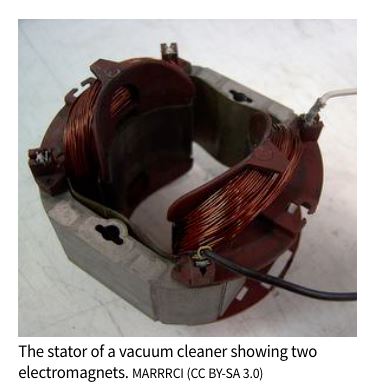
    • Sturgeon was an English physicist and inventor who discovered that wrapping a coil of wire around a piece of iron and passing an electric current through the wire produced a magnetic field.
    • Electromagnets are used in Loudspeakers for sound reproduction, Motors for mechanical movement., and MRI machines for medical imaging, etc

    How Electromagnets Work?

    • Electric current flowing through a wire generates a magnetic field around the wire.
    • Coiling the wire enhances this magnetic field by concentrating it within the coil’s core.
    • This configuration creates an electromagnet, where the strength of the magnetic field is directly proportional to the current flowing through the coil.
    • The magnetic flux density so generated is measured in ‘Tesla’.

    Enhancing Magnetic Strength with a Core

    • Coiling the wire around a magnetic material (core), such as iron or steel:
      • Amplifies the magnetic field produced by the electric current.
      • Ferromagnetic materials like iron align their internal magnetic domains with the external magnetic field generated by the coil.
      • This alignment significantly increases the overall magnetic strength of the electromagnet compared to a non-magnetic core.

    Persistence of Magnetization

    • It refers to the property of a material to retain a certain amount of magnetization even after the removal of an external magnetic field.
    • Certain core materials exhibit retained magnetization even after the current ceases.
    • This residual magnetism is useful in applications requiring sustained magnetic fields, such as:
      • Superconducting electromagnets used in MRI machines, are capable of producing magnetic fields up to 30 Tesla.
      • Research electromagnets like those used in particle physics, which require stable and powerful magnetic fields.

    Who was Michael Faraday (1791-1867)?

    • Michael Faraday was a pioneering English scientist and physicist who made substantial contributions to the fields of electromagnetism and electrochemistry.
    • Faraday is best known for his experiments and discoveries in electromagnetism, which laid the groundwork for the principles of electromagnetic induction and the laws of electrolysis.

    Key achievements of Michael Faraday include:

    1. Electromagnetic Induction: He discovered electromagnetic induction in 1831, showing that a changing magnetic field induces an electric current in a nearby conductor.
    2. Electrochemistry: Faraday formulated the laws of electrolysis, which describe the quantitative relationship between the amount of material produced or consumed during electrolysis and the amount of electricity passed through the electrolyte.
    3. Faraday’s Laws of Electromagnetic Induction: These laws describe the fundamental principles of generating electricity using magnetic fields, forming the basis for the development of electric generators and transformers.
    4. Faraday Cage: He invented the Faraday cage, a device used to block electromagnetic fields.


    PYQ:

    [2011] Microbial fuel cells are considered a source of sustainable energy. Why?

    1. They use living organisms as catalysts to generate electricity from certain substrates.
    2. They use a variety of inorganic materials as substrates.
    3. They can be installed in wastewater treatment plants to cleanse water and produce electricity.

    Which of the statements given above is/are correct?

    (a) 1 only

    (b) 2 and 3 only

    (c) 1 and 3 only

    (d) 1, 2 and 3

  • Kavli Prize, 2024 Announced

    Why in the News? 

    The winners of the 2024 Kavli Prize were announced, recognising achievements in astrophysics, neuroscience, and nanoscience.

    About Kavli Prize

    • The Kavli Prize celebrates outstanding achievements in astrophysics, neuroscience, and nanoscience.
    • It is established in honour of Norwegian-American businessman and philanthropist Fred Kavli (1927-2013).
    • Awarded biennially, the prize recognizes researchers whose work pushes the boundaries of human knowledge and enhances our understanding of the universe, the brain, and nanoscale phenomena.

    About Fred Kavli

    • Fred Kavli, born in Erejsford, Norway, immigrated to California in 1956 and quickly made a mark in the engineering field.
    • His entrepreneurial journey began in 1958 with the founding of Kavlico, a pioneering company known for its precision pressure sensors used across diverse industries, from aviation to consumer electronics.

    The Kavli Foundation:

    • In 2000, after selling Kavlico for $340 million, Fred Kavli established the Kavli Foundation.
    • This philanthropic organisation supports fundamental research aimed at improving global quality of life.
    • The foundation operates 20 institutes worldwide dedicated to astrophysics, neuroscience, nanoscience, and theoretical physics.

    Prize Structure and Prestige:

    1. Comparison with Nobel Prize: The Kavli Prize mirrors the Nobel Prize in its prestige and international recognition but differs by not limiting awards to achievements within the preceding year, allowing broader scope and longevity in selection criteria.
    2. Award Ceremony: Each Kavli Prize includes a $1 million cash award per field, a scroll, and a 7 cm diameter medal. The ceremony, held at the Oslo Concert Hall and attended by global scientific leaders, features a red-carpet event, emphasizing its significance in the scientific community.
    3. Selection Process:
    • Committees: Three international committees nominate and review candidates, providing a unanimous recommendation to the Norwegian Academy of Science and Letters.
    • Nominees: Nominees come from prestigious institutions worldwide, ensuring a diverse and comprehensive evaluation process.

    Winners of the 2024 Kavli Prize:

    Field Winners Contributions
    Astrophysics David Charbonneau (Harvard University), Sara Seager (Massachusetts Institute of Technology) Pioneering methods for detecting atomic species in planetary atmospheres and measuring their thermal infrared emission, are crucial for identifying molecular fingerprints in atmospheres of exoplanets.
    Nanoscience Robert Langer (MIT), Armand Paul Alivisatos (University of Chicago), Chad Mirkin (Northwestern University) Langer: Nano-engineering for controlled drug delivery systems.

    Alivisatos: Development of semiconductor quantum dots for bio-imaging.

    Mirkin: Concept of spherical nucleic acids (SNAs) for applications in gene regulation and immunotherapy.

    Neuroscience Nancy Kanwisher (MIT), Winrich Freiwald (Rockefeller University), Doris Tsao (University of California, Berkeley) Mapping brain functions related to facial recognition using neuroimaging and neuronal recording techniques, identifying brain centers and neural architectures involved in face processing.


    PYQ:

    [2021] The Nobel Prize in Physics of 2014 was jointly awarded to Akasaki, Amano and Nakamura for the invention of Blue LEDs in the 1990s. How has this invention impacted the everyday life of human beings?

    [2018] Discuss the work of ‘Bose-Einstein Statistics’ done by Prof. Satyendra Nath Bose and show how it revolutionized the field of Physics.

    [2008] Nobel Prize-winning scientist James D. Watson is known for his work in which area? (2008)

    (a) Metallurgy

    (b) Meteorology

    (c) Environmental protection

    (d) Genetics

  • 2025 to be International Year of Quantum Science and Technology

    Why in the News?

    • The United Nations has designated 2025 as the ‘International Year of Quantum Science and Technology’ to increase public awareness about the significance of quantum science and its applications.
      • This initiative, led by Mexico and supported by nearly 60 countries, aims to promote activities at all levels to highlight the importance of quantum science and technology worldwide.

    International Year of Quantum S&T

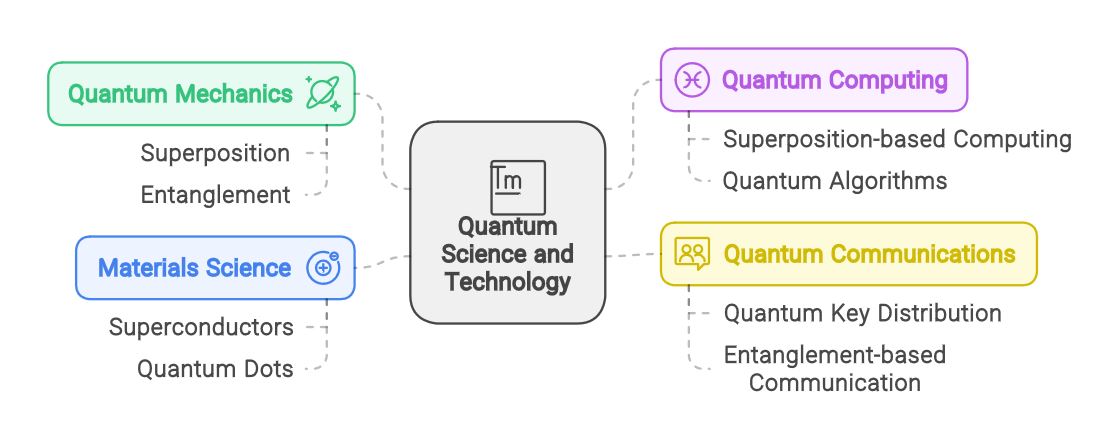
    • Growing Relevance: Quantum science and technologies, especially quantum computing, have gained prominence in public discourse due to their potential transformative impact on various fields.
    • Anniversary of Heisenberg’s Work: The proclamation coincides with the upcoming centenary of Werner Heisenberg’s groundbreaking paper on quantum mechanics, published in 1925.
    • Support from International Bodies: The proclamation has received endorsements from various international organisations, including the International Union of Pure and Applied Physics and the International Union of Pure and Applied Chemistry.

    What does one mean by Quantum?

    • “Quantum” refers to the smallest discrete unit of any physical quantity involved in an interaction according to quantum theory.
    • In classical physics, many properties, such as energy and momentum, are thought to be continuous and infinitely divisible.
    • However, in quantum mechanics, certain properties, like energy levels and the behaviour of particles, are quantised, meaning they can only exist in specific discrete amounts or levels.

    What is Quantum Theory?

    • Quantum theory is a fundamental theory in physics that provides a description of the physical properties of nature at the scale of atoms and subatomic particles.
    • Quantum mechanics differs from classical physics in that energy, momentum, and angular momentum.

    Development in Quantum Theory So Far

    • Planck’s assumption: In 1900, Planck made the assumption that energy was made of individual units or quanta.
    • Albert Einstein’s theory: In 1905, Albert Einstein theorized that not just the energy, but the radiation itself was quantized in the same manner.
    • Louis de Broglie theory: In 1924, Louis de Broglie proposed that there is no fundamental difference in the makeup and behaviour of energy and matter; on the atomic and subatomic level either may behave as if made of either particles or waves. This theory became known as the principle of wave-particle duality: elementary particles of both energy and matter behave, depending on the conditions, like either particles or waves (wave-particle duality).
    • Heisenberg proposed: In 1927, Werner Heisenberg proposed that precise, simultaneous measurement of two complementary values – such as the position and momentum of a subatomic particle – is impossible. Contrary to the principles of classical physics, their simultaneous measurement is inescapably flawed; the more precisely one value is measured, the more flawed will be the measurement of the other value. This theory became known as the uncertainty principle, which prompted Albert Einstein’s famous comment, “God does not play dice.”

    What is Entanglement?

    • Entanglement was another of several weird properties exhibited by these tiny particles.
    • Two particles, having ‘interacted’ with each other at some stage, were found to have got ‘entangled’ in a way that the behaviour of one produced an instantaneous reaction in the other even if the two were no longer connected in any way and were separated by very large distances.
    • The entanglement property opened up new technological possibilities first time that it was possible to ‘teleport’ the quantum states of a particle to another location without the particle moving anywhere and without a medium.

    What is Superposition?

    • It’s a phenomenon where, a particle exists simultaneously at multiple locations, known as superposition.
    • The chance of finding the particle at any given place was dictated by probabilistic calculations, and once it was found, or observed, at one location, it ceased to exist at all other places.

    What is Quantum Computing?

    • Quantum computing is a new and super powerful way of doing computer stuff.
    • Instead of using regular computer bits that are either 0 or 1, quantum computers use special bits called qubits that can be both 0 and 1 at the same time, thanks to a thing called “quantum superposition.”
    • This allows them to do lots of calculations all at once, making them really fast at solving certain types of problems.

    Back2Basics: National Quantum Mission (NQM)

    Details
    Mission Duration 2023-2031
    Implementing Authority Department of Science and Technology (DST) under the Ministry of Science & Technology
    India’s Position Seventh country to have a dedicated quantum mission after the US, Austria, Finland, France, Canada, and China
    Focus Areas
    • Intermediate-scale quantum computers with 50-100 physical qubits in 5 years and 50-1000 physical qubits in 8 years
    • Quantum computation, Quantum communication, Quantum Sensing & Metrology, Quantum Materials & Devices
    Development
    • High-sensitivity magnetometers for precision timing, communications, and navigation
    • Satellite-based secure quantum communications within India and with other countries
    • Design and synthesis of quantum materials like superconductors, novel semiconductor structures, and topological materials
    Thematic Hubs Establishment Four Thematic Hubs (T-Hubs) would be set up in top academic and National R&D institutes on the domains of Quantum Technology:

    1. Quantum computation
    2. Quantum communication
    3. Quantum Sensing & Metrology
    4. Quantum Materials & Devices

    PYQ:

    [2022] Which one of the following is the context in which the term “Qubit” is mentioned?

    (a) Cloud Services

    (b) Quantum Computing

    (c) Visible Light Communication Technologies

    (d) Wireless Communication Technologies

  • Portable Optical Atomic Clock for accurate timekeeping at Sea

    Why in the News?

    • Atomic clocks power GPS systems, guiding us in navigation, emergencies, and military operations.
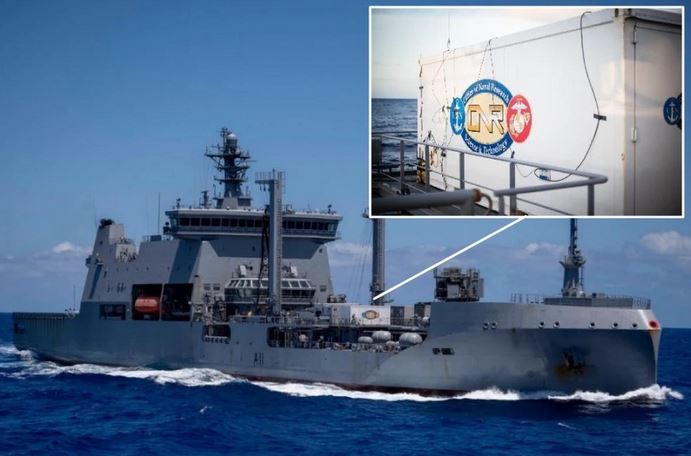
      • Scientists are developing optical atomic clocks to enhance timekeeping accuracy for Navies.

    What are Atomic Clocks?

    • Atomic clocks are accurate timekeeping devices that use the vibrations of atoms as a precise measure of time.
    • They rely on the natural oscillations of atoms, usually Caesium or Rubidium atoms, which are extremely stable and predictable.
    • This stability allows atomic clocks to keep time with extraordinary accuracy, often losing or gaining less than a second over millions of years.
      • However they are big, need a lot of power, and are expensive, so they’re mostly used in big research places.

    Working Principle:

    • Use of Stable Atoms: Atomic clocks use stable atoms like Cs-133 to keep time really accurate.
    • Atom Energy Levels: Atoms have energy levels like steps on a ladder, and they move between these levels when they’re excited.
    • Creating Resonance: Cesium atomic clocks make caesium atoms vibrate by using microwave radiation at a certain frequency.
    • Defining Time: One second is how long it takes for caesium atoms to vibrate a certain number of times, which sets the standard for time.
    • Accuracy Control: Atomic clocks keep themselves accurate by constantly adjusting to make sure they’re vibrating at the right rate.

    Portable Optical Atomic Clocks for Maritime Use

    • New portable optical atomic clocks for ships are more accurate and durable, making them suitable for use at sea.
    • These clocks are the best at sea, which is a big deal for keeping time on ships.

    How Optical Atomic Clocks Are Different?

    • Use of Laser: Optical atomic clocks are even more accurate because they use lasers instead of microwaves.
    • Operating Frequency: They work at higher frequencies, which means they can measure smaller time intervals more precisely.
    • Narrow Linewidths: Optical atomic clocks are really stable because they have a narrow range of frequencies, which helps them stay accurate.

    Testing and Applications of Portable Optical Atomic Clocks

    • Initial Testing: Scientists tested the new clocks and found they were really stable and accurate, which is a big deal for keeping time.
    • Comparative Performance: These new clocks worked better than old ones, showing they could change how we keep time.
    • Sea Trials: Tests at sea showed the clocks worked well even on a moving ship, proving they could be used for navigation and other important tasks.

    Do you know?

    • Three rubidium atomic clocks and six hydrogen maser clocks onboard the Indian Regional Navigation Satellite System (IRNSS) had failed.
    • The failed satellite, IRNSS-1A, is still being used for messaging activities, and the data from other operational satellites will be used to maintain the system’s functionality.


    PYQ:

    [2018] Why is Indian Regional Navigational Satellite System (IRNSS) needed? How does it help in navigation?

    [2018] With reference to the Indian Regional Navigation Satellite System (IRNSS), consider the following statements:

    1. IRNSS has three satellites in geostationary and four satellites in geosynchronous orbits.
    2. IRNSS covers entire India and about 5500 sq. km beyond its borders.
    3. India will have its own satellite navigation system with full global coverage by the middle of 2019.

    Which of the statements given above is/are correct?

    (a) 1 only
    (b) 1 and 2 only
    (c) 2 and 3 only
    (d) None

  • Hydrogen Line: A Unique Signal

    Why in the News?

    The hydrogen line stands as a pivotal tool in contemporary astronomy, serving various purposes from studying distant stars to questing for extraterrestrial intelligence, should it exist.

    What is a Hydrogen Line?

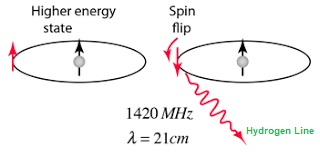
    • The hydrogen line is a special type of light that hydrogen atoms emit.
    • It happens when an electron, a tiny particle that orbits the nucleus of the hydrogen atom, jumps from a higher energy level to a lower one.
    • This jump releases energy in the form of light, specifically with a wavelength of about 21 centimetres. This wavelength is what scientists call the hydrogen line.

    Why is it Important?

    • Hydrogen is everywhere in the universe. It’s the simplest and most abundant element, making up about 75% of the universe’s elemental mass.
      • So, studying the hydrogen line allows us to understand a lot about the composition and distribution of matter in the universe.
    • By observing the hydrogen line’s emission from different regions of space, astronomers can create maps showing where hydrogen gas is located.
    • Secrets about the early Universe: The hydrogen line also holds secrets about the early universe. Shortly after the Big Bang, the universe was filled with hydrogen gas.
      • By studying the hydrogen line from distant parts of the universe, astronomers can learn about its conditions and evolution billions of years ago.

    How Do We Interpret Hydrogen Line?

    • Radio telescope data enables mapping of hydrogen distribution, revealing locations of hydrogen clouds crucial for understanding galaxy and galaxy cluster formation and evolution.
    • Observing hydrogen line emission from different galaxy parts enables studying internal structures and dynamics, like rotation curves, offering insights into mass distribution within galaxies.
    • Observing hydrogen lines from distant galaxies unveils early universe conditions, aiding in understanding cosmic evolution’s initial stages.

    What’s Next?

    • New Discoveries: Scientists are continually developing new technologies and techniques to improve the sensitivity and resolution of radio telescopes.
      • This enables them to detect fainter signals and uncover new insights into the universe’s hydrogen content.
    • Exploring Dark Matter: The hydrogen line observations could also contribute to understanding dark matter, an invisible substance that makes up about 27% of the universe’s total mass-energy content.
      • By studying the hydrogen distribution in relation to the gravitational effects observed in galaxies, scientists hope to shed light on the nature of dark matter.

    PYQ:

    [2012] A team of scientists at Brookhaven National Laboratory including those from India created the heaviest anti-matter (anti-helium nucleus). What is/are the implication/implications of the creation of anti-matter?

    1. It will make mineral prospecting and oil exploration easier and cheaper.
    2. It will help prove the possibility of the existence of stars and galaxies made of anti-matter.
    3. It will help us understand the evolution of the universe.

    Select the correct answer using the codes given below:

    (a) 1 only

    (b) 2 and 3 only

    (c) 3 only

    (d) 1, 2 and 3

  • EU activated Copernicus EMS to Locate Crashed Iranian Helicopter

    Why in the News?

    • In response to the helicopter crash involving Iranian President Ebrahim Raisi, the European Union had activated its Copernicus Emergency Management Service (EMS) to aid in search and rescue efforts.

    About the Copernicus Programme

    • This Programme was launched in 1998 by the European Union’s earth observation
    • Named for Copernicus, it uses satellites and ground systems for environmental data.
    • It is implemented by EU member states with support from entities like the European Space Agency (ESA) and the European Environment Agency (EEA).

    Utility of GMES: Rapid Response Mapping Service

    • The Copernicus EMS offers rapid response mapping, a crucial component activated during emergencies like natural disasters or accidents.

    How Rapid Mapping Works?

    • Rapid mapping involves acquiring, processing, and analyzing satellite images and relevant data to provide timely information.
    • It offers several products, including pre-event reference and post-event assessments like first estimates, delineation, and grading of the impacted area.

    Application in the Iranian President’s Case

    • In the case of the Iranian President’s helicopter crash, the EU activated the rapid response mapping service to aid search and rescue operations.
    • This technology helps locate the crash site and assess the extent of the impact, facilitating swift response efforts.

    PYQ:

    [2018] With reference to the Indian Regional Navigation Satellite System (IRNSS), consider the following statements:

    1. IRNSS has three satellites in geostationary and four satellites in geosynchronous orbits.
    2. IRNSS covers entire India and about 5500 sq. km beyond its borders.
    3. India will have its own satellite navigation system with full global coverage by the middle of 2021.

    Which of the statements given above is/are correct?

    (a) 1 only

    (b) 1 and 2 only

    (c) 2 and 3 only

    (d) None

  • PM WANI Wi-Fi Scheme: All you need to know

    Why in the News?

    • Under the PM-WANI scheme, India witnesses a swift rise in public Wi-Fi hotspots, reaching approximately 1,99,896 hotspots nationwide, according to government data.

    What is the PM WANI Initiative?

    • PM Modi launched the Prime Minister Wi-Fi Access Network Interface (PM WANI) in December 2020.
    • It is an initiative under the Department of Telecommunications (DoT).
    • It takes forward the goal of the National Digital Communications Policy, 2018 (NDCP) of creating a robust digital communications infrastructure.
      • Objective: To democratize internet access, particularly in remote and underserved areas.
      • Implementation: Leverages Public Data Offices (PDOs) established in public spaces like railway stations, banks, post offices, and more. Users can access the internet via Wi-Fi at these locations without requiring a SIM card.

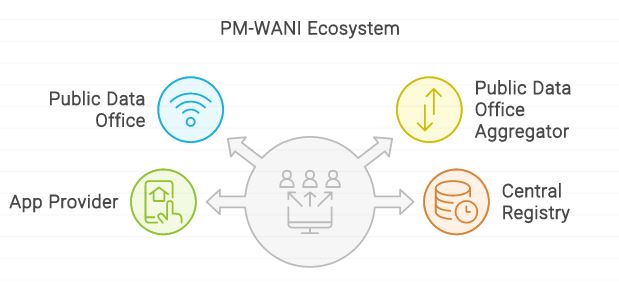
    PM-WANI ecosystem consists of four parts: 

    1. Public Data Office (PDO): It establishes the Wi-Fi Hotspots and provides internet access to users
    2. Public Data Office Aggregator (PDOA):  It provides authorisation and accounting services to PDOs.
    3. App Provider: It displays the available hotspots in the phone’s proximity.
    4. Central Registry: This overseen by the Centre for Development of Telematics maintains details of App Providers, PDOs, and PDOAs.

    How to Utilize PM WANI?

    • To access PM WANI services, users must install the Data PM WANI app on their smartphones.
    • Through the app, users can connect to nearby public Wi-Fi PDOs.
    • This application facilitates seamless connectivity to PM-WANI-compliant Wi-Fi hotspots, empowering users to access broadband services conveniently.

    Data Plans Offered

    PM WANI offers various data plans to suit different usage needs:

    • Rs 6 plan: 1GB data for 1 day
    • Rs 9 plan: 2GB data for 2 days
    • Rs 18 plan: 5GB data for 3 days
    • Rs 25 plan: 20GB data for 7 days
    • Rs 49 plan: 40GB data for 14 days
    • Rs 99 plan: 100GB data for 30 days

    Role of Public Data Offices (PDOs)

    • The PM-WANI scheme includes a provision for establishing Public Data Offices (PDOs) by rural entrepreneurs in remote regions.
    • These PDOs procure internet bandwidth from telecom service providers or ISPs to offer Wi-Fi services at minimal charges.
    • This model enables individuals to access the internet even in areas with limited or no data connectivity.

    PYQ:

    [2018] Which of the following is/are the aim/aims of “Digital India” Plan of the Government of India?

    1. Formation of India’s own Internet companies like China did.
    2. Establish a policy framework to encourage overseas multinational corporations that collect Big Data to build their large data centres within our national geographical boundaries.
    3. Connect many of our villages to the Internet and bring Wi-Fi to many of our school, public places and major tourists.

    Select the correct answer using the codes given below:

    (a) 1 and 2 only

    (b) 3 only

    (c) 2 and 3 only

    (d) 1, 2 and 3

  • X chromosome revival in older Women increases Autoimmune Disease risk

    Why in the News?

    The X chromosome influences biological functions and disease susceptibilities, affecting genetic disorders, autoimmune diseases, and Alzheimer’s, with research offering potential new treatments and therapies.

    Back2Basics: Chromosomes

    • Chromosomes are fundamental components of cells that play a vital role in storing and transmitting genetic information.
    • These structures contain genes, which carry instructions for the development, functioning, and inheritance of traits.
    • Chromosomes consist of tightly coiled DNA molecules wrapped around proteins called histones, forming chromatin.
    • Before cell division, chromosomes replicate into identical sister chromatids held together at the centromere.

    Types of Chromosomes:

    1. Autosomes: Non-sex chromosomes (22 pairs in humans) determine most traits.
    2. Sex Chromosomes: Determine biological sex (XX for females, XY for males).

    Functions of Chromosomes

    • Genetic Information Storage: Genes on chromosomes encode instructions for protein production and cellular processes.
    • Inheritance: Chromosomes transmit genetic information during sexual reproduction through meiosis, ensuring genetic diversity in offspring.
    • Gene Expression Regulation: Chromosomes control gene activation or silencing, crucial for development and cell functioning.

    Genetic Landscape of the X chromosome:

    • The human X chromosome encodes around 800 genes, producing proteins.
    • Loss of function in these genes can lead to various genetic diseases.
    • Diseases influenced by the X chromosome fall into three categories:
    1. X-linked genetic diseases
    2. Diseases influenced by XCI (X chromosome inactivation) escape
    3. Diseases linked to X-chromosome aneuploidy

    What is the X chromosome?

    • It is one of the two sex chromosomes in humans, the other being the Y chromosome.
    • Females have two X chromosomes (XX), while males have one X and one Y chromosome (XY).
    • Significance:
      • Encodes around 800 genes that are crucial for various biological processes.
      • Plays a significant role in determining sex and influencing many physiological functions.
      • Loss of function or mutations in X chromosome genes can lead to several genetic disorders.

    What are Autoimmune Diseases?

    • Diseases where the immune system mistakenly attacks the body’s own cells and tissues.
    • Normally, the immune system defends against infections by targeting harmful pathogens.
    • Common Autoimmune Diseases:
      • Systemic Lupus Erythematosus (SLE): Chronic inflammation affecting various body parts.
      • Rheumatoid Arthritis (RA): Inflammation of joints and surrounding tissues.
      • Sjogren’s Syndrome: Affects glands that produce moisture, leading to dry mouth and eyes.

    How does the X chromosome cause Autoimmune Diseases?

    • X Chromosome Inactivation (XCI):
      • In females, one of the two X chromosomes is randomly inactivated during early embryonic development to balance gene expression between males and females.
      • This process is crucial to prevent overexpression of X-linked genes.
    • XCI Escape:
      • Not all genes on the inactive X chromosome are completely silenced.
      • Up to a fourth of these genes may escape inactivation and continue to be expressed.
    • Link to Autoimmune Diseases:
      • Skewed XCI: Uneven inactivation of X chromosomes may lead to an imbalance in gene expression, contributing to autoimmune disorders.
      • Incomplete XCI: Reactivation of genes that should be silenced can result in abnormal immune responses.

    Studies, such as one published in Science Advances (May 3, 2023), have shown that reactivation of X-linked genes in immune cells can lead to lupus-like symptoms in mice.

    Linkage between X chromosome and Alzheimer’s disease

    • Sex Bias in Alzheimer’s:
      • Women are almost twice as likely as men to develop Alzheimer’s disease.
    • Role of X-Linked Genes:
      • Researchers have identified a gene called ubiquitin-specific peptidase 11 (USP11) on the X chromosome.
      • USP11 Gene: Involved in protein modification processes and thought to influence the accumulation of tau proteins in the brain.
      • XCI Escape: USP11 may escape XCI in females, leading to higher expression levels and contributing to Alzheimer’s pathology.
      • A study from Case Western Reserve University (Cell, October 2022) highlighted this mechanism, suggesting it as a target for new treatments.

    PYQ:

    [2011] At present, scientists can determine the arrangement or relative positions of genes or DNA sequences on a chromosome. How does this knowledge benefit us?

    1. It is possible to know the pedigree of livestock.
    2. It is possible to understand the causes of all human diseases.
    3. It is possible to develop disease-resistant animal breeds.

    Which of the statements given above is/are correct?

    (a) 1 and 2 only

    (b) 2 only

    (c) 1 and 3 only

    (d) 1, 2 and 3

  • IFPMA Report on Antimicrobial Resistance

    Why in the news?

    The International Federation of Pharmaceutical Manufacturers and Associations (IFPMA) released a report titled “From Resistance to Resilience: Reinforcing the Response to Antimicrobial Resistance,” emphasizing the urgent need for enhanced Antibiotic development.

    Report Highlights: Current State of Antibiotic Development:

    • Weak Pipeline: The current pipeline for developing new antibiotics is described as weak, fragile, and insufficient against growing antimicrobial resistance.
    • AMR Threat: Recognized by the World Health Organization (WHO) as one of the greatest global health threats, AMR is linked to around 1.2 million direct deaths and 5 million associated deaths annually.

    What is Antimicrobial Resistance (AMR)?

    • Antimicrobials are substances designed to eliminate or suppress the growth of microorganisms.
    • This category encompasses antibiotics, fungicides, antiviral drugs, and agents targeting parasites.
    • AMR occurs when microbes such as bacteria, viruses, parasites, and fungi become resistant to antimicrobial treatments to which they were previously susceptible.
    • Microorganisms that develop resistance to antimicrobials are sometimes referred to as “superbugs”.

    Global Status of AMR

    A recent report from the Global Research on Anti-microbial Resistance (GRAM) project found that:

    • In 2019, an estimated 4.95 million people suffered from at least one drug-resistant infection and AMR directly caused 1.27 million deaths.
    • AMR is one of India’s major public health problems, directly contributing to about 30% of deaths due to neonatal sepsis across India.
    • These are due to multidrug-resistant (MDR) hospital-acquired infections in many cases.
    • 30% of the COVID-19 deaths in India could be attributed to our failure to treat the secondary bacterial infections caused by MDR pathogens with the appropriate antibiotics.

    What are the factors that cause AMR? 

    • Over-prescription of Antibiotics: Frequently prescribing antibiotics for conditions that do not require them, such as viral infections, accelerates the emergence of resistance.
    • Incomplete Treatment Courses: Patients not completing their antibiotic courses as prescribed can leave surviving bacteria that adapt to become resistant.
    • Self-Medication: Individuals using antibiotics without a prescription, especially in regions where they are available over the counter, increases misuse and drives resistance.
    • Lack of New Antibiotics: The slow pace of new antibiotic development fails to keep up with the rate of bacterial evolution, reducing effective treatment options.
    • Hospital Settings: Hospitals are critical hotspots for the spread of resistant infections due to the high use of antibiotics and the concentration of vulnerable patients with open wounds, invasive devices, and weakened immune systems.
    • Global Travel: International travel allows for the rapid spread of resistant mutant strains between communities and across borders.

    India’s efforts to combat AMR:

    Description
    National Action Plan on Antimicrobial Resistance (NAP-AMR)
    • Launched in 2017, this 5-year plan involves multiple ministries to tackle AMR across human, animal, and environmental sectors.
    • Focuses on enhancing awareness, surveillance, infection prevention, optimizing antimicrobial use, promoting research, and fostering international collaborations.
    New Delhi Declaration on AMR
    • Adopted in 2023 at the G20 Summit.
    • It emphasizes strengthening surveillance, regulating antibiotic sales, and boosting research for new treatments and diagnostics in the South-East Asia Region.
    National Anti-Microbial Resistance Research and Surveillance Network
    • Established under the Indian Council of Medical Research to monitor AMR trends through a network of laboratories across India.
    National Programme on Containment of Antimicrobial Resistance
    • Initiated by the Ministry of Health and Family Welfare to enhance AMR surveillance, infection control, and antimicrobial stewardship in healthcare facilities.
    Red Line Campaign
    • Started in 2016, it raises awareness about the irrational use of antibiotics.
    • Medicines marked with a red line on their packaging are prescription-only, aiming to reduce misuse and over-the-counter sales.
    National One Health Program for Prevention and Control of Zoonoses
    • Launched in 2019, this program uses a multi-sectoral approach to strengthen responses to zoonotic diseases, including those caused by antibiotic-resistant pathogens.
  • [pib] Sangam: Digital Twin Initiative enters Stage I

    Why in the news?

    The Department of Telecommunications (DoT) has unveiled the selected participants for Stage I of the ‘Sangam: Digital Twin with AI-Driven Insights Initiative’.

    What is Digital Twin Technology?

    • A digital twin is a digital representation of a physical object, person, or process, contextualized in a digital version of its environment.
    • Digital twins can help an organization simulate real-time situations and their outcomes, ultimately allowing it to make better decisions.

    About Sangam: Digital Twin Initiative

    • Launched in February 2024, it aligns with the past decade’s technological advancements in communication, computation, and sensing, in line with the vision for 2047.
    • Department of Telecommunications (DoT) will begin this with a campaign to engage potential participants, including industry experts, academia, and other relevant stakeholders to spread awareness and interest wide.
    • It is a Two-stage Initiative: It will be distributed in two stages, and conducted in one of India’s major cities.
      1. First Stage: An exploratory phase focusing on clarifying horizons and creative exploration to unleash potential.
      2. Second Stage: A practical demonstration of specific use cases, generating a future blueprint for collaboration and scaling successful strategies in future infrastructure projects.
    • Objectives:
      1. To demonstrate practical implementation of innovative infrastructure planning solutions.
      2. To develop a Model Framework for facilitating faster and more effective collaboration.
      3. To provide a future blueprint for scaling and replicating successful strategies in future infrastructure projects.

    Features: It represents a collaborative leap towards reshaping infrastructure planning and design.

    • It integrates 5G, IoT, AI, AR/VR, AI native 6G, Digital Twin, and next-gen computational technologies, fostering collaboration among public entities, infrastructure planners, tech giants, startups, and academia.
    • Sangam brings all stakeholders together, aiming to translate innovative ideas into tangible solutions, bridging the gap between conceptualization and realization, and paving the way for groundbreaking infrastructure advancements.

    PYQ:

    [2020] In India, the term “Public Key Infrastructure” is used in the context of:

    (a) Digital security infrastructure

    (b) Food security infrastructure

    (c) Health care and education infrastructure

    (d) Telecommunication and transportation infrastructure