Sri Lankan President Anura Kumara Dissanayake’s visit to India, his first international trip as per tradition, underscores the continuity in India-Sri Lanka bilateral relations.
What are the current China-related challenges in India-Sri Lanka relations?
Geopolitical Tensions: Sri Lanka’s historical ties with China, particularly during the Mahinda Rajapaksa regime, have raised concerns in India regarding potential Chinese influence in the region.
China’s investment in Sri Lanka, particularly in the Hambantota Port, is closely tied to its broader String of Pearls strategy.
Economic Dependency: Sri Lanka’s reliance on Chinese investments has created a “debt trap” scenario, limiting its ability to align with Indian interests fully. The need for economic assistance from both nations complicates Sri Lanka’s foreign policy decisions, as it seeks support without alienating either side.
Balancing Act: Sri Lanka is attempting to navigate its relationships with India and China, which often puts it in a difficult position.
President Anura Kumara Dissanayake has expressed intentions to strengthen ties with India while maintaining relations with China, indicating a desire for a balanced approach. However, this balancing act is complicated by India’s concerns over Chinese influence and activities in the Indian Ocean.
How can India and Sri Lanka enhance their economic and strategic partnerships?
Trade Agreements: There is a push for an upgraded India-Sri Lanka Free Trade Agreement (FTA) to facilitate bilateral trade and investment. This could include provisions for Foreign Direct Investment (FDI) protection and expanded coverage of goods and services.
Production-Linked Incentive (PLI) Scheme: Implementing a regional PLI scheme could encourage Indian businesses to invest in Sri Lanka, particularly in sectors like renewable energy and electronics. This initiative would help build regional supply chains and reduce dependency on imports.
B2B Engagement: Strengthening business-to-business ties, especially between smaller enterprises, could enhance economic collaboration. This involves increasing participation in trade fairs and fostering connections between businesses in southern Indian states and Sri Lanka.
What role does regional stability play? (Way forward)
Security Cooperation: Regional stability is crucial for both nations as they address external threats, particularly from China. Dissanayake’s assurance that Sri Lankan territory will not be used against Indian interests is vital for maintaining security cooperation and trust between the two countries.
Economic Recovery: As Sri Lanka recovers from its recent economic crisis, stable relations with India are essential for securing ongoing support from international financial institutions like the IMF. Enhanced cooperation can serve as a model for regional partnerships that promote stability and economic growth across South Asia.
Geopolitical Balance: A collaborative approach can help mitigate risks associated with external influences and ensure that both nations can pursue their national interests without compromising sovereignty.
Mains PYQ:
Q What do you understand by ‘The String of Pearls’? How does it impact India? Briefly outline the steps taken by India to counter this. (UPSC IAS/2013)
Indian and Nicaragua has signed an umbrella agreement on Quick Impact Projects (QIPs).
The agreement aims at socio-economic development by implementing QIPs in Nicaragua, which will directly benefit local communities.
About Nicaragua: Quick Facts
Nicaragua is located in Central America, bordered by Honduras to the north, Costa Rica to the south, the Pacific Ocean to the west, and the Caribbean Sea to the east.
The capital of Nicaragua is Managua; official language spoken in Nicaragua is Spanish; currency is the Nicaraguan córdoba (NIO).
Nicaragua operates as a unitary presidential republic.
The country’s economy is primarily based on agriculture, including coffee, bananas, and sugar, along with manufacturing and mining.
Geographical Features:
Nicaragua’s topography is predominantly mountainous in the interior, with lowland plains along its Pacific and Caribbean coasts.
The country is home to over 20 volcanoes, with active ones such as Masaya and San Cristóbal.
The largest lake in Nicaragua is Lake Cocibolca, also known as Lake Nicaragua, which is one of the largest lakes in Latin America.
Nicaragua is also known for its significant rivers, including the San Juan River, which flows into the Caribbean Sea, and the Río Coco, the longest river in Central America.
India- Nicaragua Relations:
Diplomatic relations were established in March 1983, and the Indian Embassy in Panama is concurrently accredited to Nicaragua.
Nicaragua’s embassy in India was closed in 1990, and currently, Nicaragua is represented in India through its Embassy in Tokyo.
What are Quick Impact Projects (QIPs)?
QIPs are initiatives designed to deliver rapid and visible benefits to local communities, especially in areas with critical infrastructure and social development needs.
These projects are often implemented in a short time frame.
They are focused on addressing urgent and immediate issues that can have a significant positive impact on the community.
The term is commonly used by organizations like the UNHCR to describe such initiatives in crisis or displacement situations.
Examples of QIPs may include:
Building roads in remote areas to improve connectivity.
Establishing community centers that serve as hubs for local services.
Improving healthcare facilities with basic medical equipment and services.
Upgrading educational infrastructure by building schools or providing learning materials.
Q) Discuss the impediments India is facing in its pursuit of a permanent seat in the UNSC. (UPSC CSE 2015)
Mentor’s Comment: UPSC Mains have previously ‘India is facing in its pursuit of a permanent seat in the UNSC’ (in 2015).
Pakistan will join the United Nations Security Council (UNSC) as a non-permanent member for a two-year term, starting January 1, 2025. This is Pakistan’s eighth term. Half of the 10 elected members for 2025-26 will be from the Organisation of Islamic Cooperation (OIC). Pakistan, Denmark, Greece, Panama, and Somalia will replace Ecuador, Japan, Malta, Mozambique, and Switzerland.
Today’s editorial underscores the implication of Pakistan as a non-permanent member of the UNSC.
_
Let’s learn!
Why in the News?
On January 1, 2025, Pakistan will begin its eighth term as a non-permanent member of the United Nations Security Council (UNSC) for two years.
Significance of Pakistan’s Election as a Non-Permanent Member of the UNSC
Pakistan’s election as a non-permanent member of the United Nations Security Council (UNSC) for the 2025-2026 term is significant for several reasons:
Representation of OIC: With Pakistan’s entry, half of the elected UNSC members will be from the Organisation of Islamic Cooperation (OIC), highlighting the bloc’s influence within the Council and potentially shaping discussions on issues pertinent to member states, particularly those related to Islamic nations.
Diplomatic Leverage: Pakistan aims to use its position to strengthen ties with the Taliban in Afghanistan, leveraging support from allies like Russia and China for diplomatic rehabilitation efforts. This could reshape regional dynamics and influence international responses to Afghanistan.
Focus on Key Issues: Pakistan intends to prioritize peacekeeping and humanitarian issues, particularly in conflict zones like Gaza and Kashmir, framing its agenda around combating terrorism while attempting to shift scrutiny away from its own challenges related to terrorism.
Pakistan’s Approach to Its Responsibilities in the UNSC
Pakistan is expected to approach its responsibilities in the UNSC with a clear agenda:
Anti-India Initiatives: Historically, Pakistan has utilized its UNSC membership to advocate against India, particularly regarding Kashmir. It is likely to continue this trend by pushing for discussions on Kashmir and presenting claims against India’s actions in the region.
Islamophobia Narrative: Pakistan has previously attempted to introduce Islamophobia into discussions on terrorism, seeking to frame it as a justification for violence. This narrative may resurface during its term, especially with support from OIC countries.
Peacekeeping and Humanitarian Efforts: As a major contributor to UN peacekeeping missions, Pakistan will likely emphasize its role in peacekeeping operations and humanitarian assistance, attempting to position itself as a responsible global actor despite its contentious regional relationships.
Expectations for India
India should prepare for several outcomes as Pakistan assumes its role in the UNSC:
Increased Anti-India Rhetoric: India can expect Pakistan to leverage its UNSC platform for anti-India initiatives, including attempts to highlight alleged human rights violations in Jammu and Kashmir and presenting dossiers against India concerning terrorism.
Limited Multilateral Cooperation: Despite any bilateral engagements that may occur outside the Council, enhanced multilateral cooperation is unlikely. Historical patterns suggest that countries aligned with Pakistan may support anti-India drafts within the UNSC.
Focus on Counter-Terrorism Issues: India should remain vigilant as Pakistan seeks to frame itself as a victim of terrorism while attempting to label India similarly. This could manifest in proposals aimed at listing Indian nationals or organizations under UN sanctions.
Way forward:
Strengthen Diplomatic Engagements: India should enhance its diplomatic outreach to UNSC members, particularly the P5 countries, to counter any anti-India initiatives by Pakistan. Building stronger alliances with like-minded countries can help mitigate any biased resolutions or discussions on Kashmir and terrorism.
Focus on Counter-Narratives and Humanitarian Diplomacy: India should actively engage in countering Pakistan’s use of Islamophobia and terrorism-related narratives. By promoting peacekeeping contributions, humanitarian assistance, and multilateral cooperation
After the recent Elections, U.S. President-elect Donald Trump will likely hold a more favourable view of India compared to other nations.
What are the potential impacts of Trump’s protectionist trade policies on India?
Increased Tariffs: Trump’s administration is likely to impose higher tariffs on Chinese imports, which could lead to a shift in trade dynamics.
India might benefit from this situation as companies look to relocate their manufacturing bases away from China, potentially increasing Indian exports.
Supply Chain Diversification: As U.S. firms seek to diversify their supply chains to reduce dependency on China, India could emerge as an attractive alternative for manufacturing and technology services, boosting economic ties between the two nations.
Pressure on Indian Goods: Conversely, if Trump’s policies lead to retaliatory measures from China or other countries, Indian goods may face increased scrutiny or tariffs in those markets, affecting India’s export competitiveness.
How will Trump’s immigration policies affect the Indian workforce in the US?
H-1B Visa Restrictions: Trump’s administration may implement stricter immigration policies, particularly affecting H-1B visas commonly used by Indian IT professionals. This could limit the ability of Indian workers to enter or remain in the U.S. job market.
Talent Drain: Stricter immigration laws might lead to a talent drain, where highly skilled Indian professionals seek opportunities in other countries with more favorable immigration policies, impacting India’s tech sector.
Focus on Skilled Workers: On the flip side, if Trump prioritizes skilled labor that aligns with U.S. economic needs, there could be opportunities for Indian professionals who meet those criteria to gain entry into the U.S. market.
What strategic opportunities and challenges will arise for India in the Indo-Pacific region?
Strengthened Alliances: Under Trump’s leadership, India is likely to see strengthened ties with the U.S. and other allies like Japan and Australia through frameworks such as the Quad, which aims to counterbalance China’s influence in the region.
Defence Cooperation: Enhanced defence cooperation could lead to increased military sales and joint exercises between India and the U.S., bolstering India’s defence capabilities against regional threats.
Balancing Relations with China: While India may benefit from a closer relationship with the U.S., it will need to navigate its complex relationship with China carefully. Increased tensions between the U.S. and China could put India in a difficult position regarding its economic and security interests.
Regional Stability Challenges: Trump’s assertive foreign policy might lead to greater instability in the Indo-Pacific region. India will need to manage its responses carefully to maintain peace while pursuing its strategic interests.
Way forward:
Leverage Strategic Partnerships: India should capitalize on strengthened ties with the U.S. and allies like Japan and Australia to enhance its defence, trade, and technology capabilities while maintaining a robust independent foreign policy to balance regional dynamics.
Promote Domestic Resilience: By advancing initiatives like “Make in India” and diversifying export markets, India can reduce reliance on vulnerable sectors impacted by U.S. protectionism and prepare to attract global supply chains shifting away from China.
Mains PYQ:
Q Quadrilateral Security Dialogue (Quad) is transforming itself into a trade bloc from a military alliance, in present times Discuss. (UPSC IAS/2020)
A stocktake visit for the India-AustraliaComprehensive Economic Cooperation Agreement (CECA) recently concluded in New Delhi.
Key Takeaways from the Meet
The discussions covered a wide range of critical aspects of the CECA, including:
Trade in goods and services
Mobility and agri-tech cooperation
Market access modalities that align with India’s food security objectives.
Both sides emphasized their shared commitment to ensuring that the CECA produces meaningful benefits and delivers a balanced outcome for both nations.
The discussions have opened up pathways for enhanced collaboration in areas such as agricultural innovation, market access, and supply chain resilience.
About India-Australia CCEA Negotiations:
CECA is a comprehensive trade agreement between India and Australia.
More comprehensive than the earlier India-Australia Economic Cooperation and Trade Agreement (ECTA) , which is a limited trade agreement in force since December 2022.
Negotiations for CECA began in May 2011, suspended in 2016, and re-launched in 2021 after concluding the ECTA.
So far 10 rounds of negotiations have taken place.
Key Features of CECA:
Covers goods, services, digital trade, government procurement, and Rules of Origin/Product-Specific Rules Schedule.
New areas: competition policy, MSMEs, innovation, agri-tech, critical minerals, sports.
India-AU Trade Statistics:
2023-24:
India’s imports from Australia fell by 15% to USD 16.15 billion.
India’s exports to Australia rose by 14.23% to USD 7.94 billion.
Australia is India’s 13th largest export destination and 14th largest import source.
PYQ:
[2017] ‘Broad-based Trade and Investment Agreement (BTIA)’ is sometimes seen in the news in the context of negotiations held between India and:
(a) European Union
(b) Gulf Cooperation Council
(c) Organization for Economic Cooperation and Development
(d) Shanghai Cooperation Organization
PYQ Relevance: Q) The West is fostering India as an alternative to reduce dependence on China’s supply chain and as a strategically to counter China’s political and economic dominance.” Explain this statement with examples. (UPSC CSE 2024)
Mentor’s Comment: UPSC Mains is recently focusing on growing Chinese dominance in West and Central Asia (2024) and the power play struggle between the USA and China (2022).
China has been using its ‘slicing strategy’ of debt trap to evolve as a global power by countering the USA and its ‘String of Pearls’ theory to circle out Indian activities.
Today’s editorial explores the implications of the China-Nepal-India trio, the ongoing negotiations, and the need for a sustained dialogue. This content can be used to represent Chinese dominance in regional geopolitics and the challenges arising due to it.
_
Let’s learn!
Why in the News?
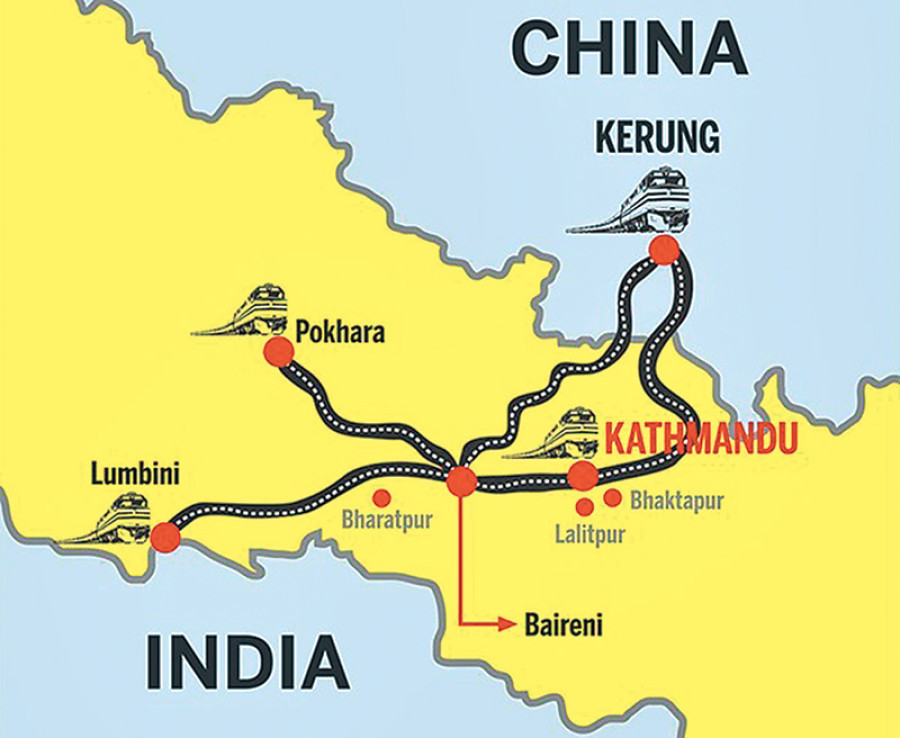
The recent agreements between Nepal and China mark a significant step in the regional geopolitics of South Asia, particularly under the framework of China’s Belt and Road Initiative (BRI).
While the signing of these agreements is a positive development, India must continue negotiations to ensure effective implementation and address potential challenges due to Chinese dominance in the region.
Recent Developments in Nepal-China Relations: In December 2024, Nepal’s Prime Minister KP Sharma Oli concluded a four-day official visit to China, during which several key agreements were signed, including a framework cooperation agreement related to the BRI.
Key Points of the Nepal-China Agreements: • Framework Cooperation Agreement: This agreement lays the groundwork for various infrastructure projects, including: – Tokha-Chhahare Tunnel; – Hilsa Simkot Road Project; – Kathmandu-Khandbari Road; – Kimathanka Bridge; – Cross-border railway project from Rasuwagadhi to Kathmandu; – Amargadhi City Hall.
• Focus on Implementation: The Nepali government emphasized the importance of not just signing agreements but also effectively implementing them. Past experiences have shown that while many agreements were signed, tangible progress on the ground has been limited. • Investment Modalities: The negotiations included discussions on financing modalities, with a shift from strictly “grants” to more flexible terms such as “aid.”This change aims to facilitate broader investment opportunities from various sources, including private sectors and international financial institutions.
Challenges Ahead for Nepal-China Relationship:
• Implementation Gaps: Historical precedents indicate that many signed agreements have not translated into actionable projects. There is a pressing need for both governments to focus on practical steps that will lead to real-world outcomes. • Project-Specific Negotiations: Future negotiations are expected to be project-specific, which may complicate the overarching framework if not managed effectively. Clear communication and defined objectives will be essential in these discussions. • Geopolitical Considerations: As Nepal navigates its relationships with neighboring countries like India and global powers such as the United States, balancing these interests while engaging with China will require careful diplomacy.
What were the substantive statements in Parliament on India-China relations?
Troop Disengagement and Temporary Measures: The External Affairs Minister highlighted the successful disengagement of troops following China’s military buildup and India’s counter-deployment, mentioning that temporary and limited measures were implemented at certain friction points to prevent further clashes.
However, he noted that these measures could be revisited as needed, indicating that while disengagement is a priority, the situation remains fluid.
Ongoing De-escalation Efforts: The Minister reiterated India’s stance that maintaining peace in border areas is essential for developing bilateral relations, suggesting that current troop deployments indicate that normalcy has not yet been restored.
Cautious Optimism in Bilateral Relations: The Minister indicated that while there has been some improvement in India-China relations following recent developments between Nepal-China, significantly remains a challenge.
He cautioned against expecting a major reset in relations until the border situation stabilizes and structural issues are addressed, particularly regarding economic security concerns with China.
What are the several key questions that remain unanswered?
Unclear Disengagement Terms: While disengagement is declared complete, India lacks clarity on its specifics.
Questions remain about access to traditional patrolling points in Depsang and Demchok, the concept of “coordinated patrolling,” and the implications of “temporary steps” that limit patrols and grazing rights for Indian troops.
Status Quo Concerns: The Minister stated that India will not accept unilateral changes to the status quo, yet China has altered it since April 2020.
Discussions with military officials suggest restricted access to traditional patrol points, highlighting a shift in how both countries view the Line of Actual Control (LAC).
India should prioritize restoring the previous status quo in patrolling and grazing activities.
Chinese Patrols in Arunachal Pradesh: Reports indicate that Chinese troops are attempting to patrol areas like the Yangtse, despite previous assertions that such demands were unreasonable. If no quid pro quo exists in this sector, it should be firmly denied.
Call for Restoration of Status Quo: The Army Chief emphasized returning to the status quo of April 2020, while the Ministry of External Affairs has shifted its language away from this goal. Accepting changed ground realities would play into China’s strategy of gradual territorial gains without provoking outright conflict.
What strategies can both countries employ to bridge this political divide?
Diplomatic Engagement: Regular high-level meetings and dialogues, such as those initiated between Prime Minister Modi and President Xi Jinping, can help rebuild trust.
Both nations should prioritize discussions on strategic issues beyond border conflicts, including economic cooperation, climate change, and technology.
Cultural and Economic Exchanges: Resuming direct flights, easing visa restrictions for citizens and diplomats, and promoting cultural exchanges (like film screenings) can enhance people-to-people connections.
This approach can foster goodwill and mutual understanding, essential for improving bilateral relations.
Institutional Frameworks: Establishing mechanisms for coordinated patrolling and joint military exercises can help manage tensions along the Line of Actual Control (LAC).
Additionally, creating platforms for multilateral discussions involving other regional players can facilitate broader cooperation and address shared security concerns.
Q) “If the last few decades were of Asia’s growth story, the next few are expected to be of Africa’s.” In the light of this statement, examine India’s influence in Africa in recent years. (UPSC CSE 2021)
Mentor’s Comment: UPSC Mains have focused on ‘India’s influence in Africa (2021), and anti-colonial struggles in West Africa were led by the new elite of Western-educated Africans(in 2016).
The Prime Minister’s visit to Nigeria, Brazil, and Guyana from November 16-21, 2024, was carefully planned to achieve multiple goals. This trip showcased India’s efforts in diplomacy across Africa, Latin America, and the Caribbean, focusing on important discussions about bilateral, regional, and global issues. While the main reason for the visit was to attend the G-20 summit in Brazil, dedicating time to Nigeria and Guyana added more value to this journey. The trip reflects India’s key foreign policy priorities.
Today’s editorial highlights the what are the outcomes of the recent visits of the PM of India to Nigeria, Brazil and Guyana.
_
Let’s learn!
Why in the News?
The recent visit to Nigeria, Brazil, and Guyana provides valuable insights into India’s prevailing foreign policy priorities.
Outcomes of the recent visit of the Indian PM to Nigeria in West Africa
Significance of the Visit: This was the first visit by an Indian Prime Minister to Nigeria in 17 years, underscoring the importance of strengthening bilateral ties. The visit was at the invitation of the Nigerian President, emphasizing a shared belief in democracy and pluralism.
Bilateral Cooperation: Discussions focused on enhancing cooperation in sectors such as trade, investment, education, energy, health, and culture.
New areas for collaboration included agriculture, urban transportation, renewable energy, and digital transformation.
Recognition and Awards: The Nigerian government conferred a top national award on the Indian leader for contributions to bilateral relations, signalling a strong appreciation for India’s expanding influence in Africa.
Counter-Terrorism Cooperation: Both leaders reaffirmed their commitment to combating terrorism and extremism together. However, only three memoranda of understanding (MoUs) were signed, likely due to bureaucratic delays.
Recently visit of PM to Brazil for the G20 summit:
Summit Overview: Hosted in Rio de Janeiro on November 18-19, the G-20 Summit aimed to incorporate perspectives of the Global South into its decision-making processes. Key priorities included social inclusion, sustainable development, and reforming global governance institutions.
Outcomes: The summit led to the launch of the Global Alliance against Hunger and Poverty and the adoption of a roadmap for more effective multilateral development banks. However, progress on climate finance remained limited.
Bilateral Engagements: The Indian delegation engaged with several world leaders during the summit, including discussions with U.S. and European leaders, as well as a meeting with the Chinese Foreign Minister to advance bilateral relations.
Last visit of PM to Guyana: The Wrap-Up
Historical Significance: The visit to Guyana marked the first by an Indian Prime Minister since 1968, underscoring India’s commitment to strengthening ties with Caribbean nations, particularly given that 40% of Guyana’s population is of Indian origin.
Cooperation Agreements: Ten MoUs were signed across various sectors, including energy, defence, urban development, digital collaboration, education, and food security, reflecting a robust bilateral cooperation program.
India-CARICOM Summit: During the visit, the Indian leader co-chaired the second India-CARICOM Summit in Georgetown, proposing seven pillars for enhanced cooperation that align with regional priorities.
Importance of Carrabian for India
Strategic Trade Gateway: The Caribbean serves as a crucial gateway to North and South American markets, making it an important trade partner for India.
Strengthening ties with CARICOM nations can facilitate access to these markets, enhancing India’s economic outreach and trade opportunities in the region.
Energy Security and Resource Collaboration: The Caribbean, particularly nations like Guyana, is rich in hydrocarbons and other natural resources.
India’s engagement in the region aims to diversify its energy sources and reduce dependence on traditional suppliers.
Cultural and Historical Ties: The Caribbean has a significant Indian diaspora, providing a strong foundation for cultural exchange and bilateral relations.
Way forward:
Strengthen Regional Partnerships: Build on existing MoUs by establishing follow-up mechanisms to ensure timely implementation of agreements across sectors like energy, education, and digital transformation. Enhance India’s role in regional forums like CARICOM and AU to solidify partnerships.
Leverage Cultural and Economic Ties: Utilize India’s cultural connections, especially in Guyana and Nigeria, to foster people-to-people links while expanding trade and investment in renewable energy, agriculture, and technology to deepen economic cooperation.
Despite China’s increasing involvement in financing and infrastructure development, India continues to hold a significant position as one of Nigeria’s key partners in West Africa.
What are the strategic objectives of India in West Africa?
Strengthening Bilateral Relations: India aims to enhance its strategic partnership with Nigeria, which is pivotal as Nigeria is both the largest economy and democracy in Africa. This partnership is expected to extend beyond Nigeria, influencing broader regional dynamics in West Africa.
Focus on Security Cooperation: Given the challenges of terrorism, piracy, and drug trafficking in Nigeria, India seeks to bolster security cooperation. This includes defence collaboration and joint efforts in counterterrorism operations against groups like Boko Haram.
Development Partnerships: India positions itself as a development partner by providing concessional loans and capacity-building programs, demonstrating a commitment to supporting Nigeria’s socio-economic growth.
Promotion of Global South Aspirations: Both India and Nigeria share common goals as leaders of the Global South, aiming to amplify their voices in international forums like the UN Security Council.
How does India plan to enhance its economic ties with West African countries?
Diversifying Trade Relations: India plans to revitalize trade with Nigeria, which has seen a decline recently. Efforts include negotiating trade agreements such as the Economic Cooperation Agreement (ECA) and the Bilateral Investment Treaty (BIT) to facilitate investment and trade.
Sectoral Collaboration: The focus areas for economic collaboration include defence, energy, technology, health, and education. India’s PM discussions with the President of Nigeria emphasized leveraging India’s expertise in these sectors to foster mutual growth.
Infrastructure Development: India aims to support infrastructure development through concessional loans and technical assistance, building on existing projects that have benefited from Indian investment.
Cultural and People-to-People Exchanges: Enhancing cultural ties and promoting exchanges between citizens are also part of India’s strategy to strengthen bilateral relations, fostering goodwill and mutual understanding.
What challenges does India face in its engagement with West Africa?
Geopolitical Competition: India’s engagement is challenged by China’s significant presence in Nigeria, where Chinese companies dominate various sectors including infrastructure and telecommunications. This competition complicates India’s efforts to establish itself as a key partner.
Economic Fluctuations: The decline in trade between India and Nigeria from $14.95 billion in 2021-22 to $7.89 billion in 2023-24 highlights vulnerabilities due to shifting global oil markets and increasing imports from other countries like Russia.
Political Instability: The political landscape in Nigeria can be unpredictable, posing risks for long-term investments and cooperation initiatives that require stability for successful implementation.
Capacity Constraints: While India offers developmental assistance, the effectiveness of these initiatives can be hindered by local capacity constraints in Nigeria, necessitating a tailored approach that considers local needs and capabilities.
Way forward:
Deepen Strategic Collaboration: Strengthen defence and security partnerships, diversify trade, and enhance collaboration in sectors like energy, technology, and health to counter China’s growing influence and foster mutual growth.
Focus on Regional Capacity Building: Expand developmental assistance with tailored initiatives addressing local needs, while supporting Nigeria’s stability through diplomatic engagement and joint Global South aspirations in international forums.
Mains PYQ:
Q Increasing interest of India in Africa has its pros and cons. Critically Examine. (UPSC IAS/2015)
The bilateral investment treaty (BIT) between India and the United Arab Emirates (UAE), signed earlier this year, has recently been made public. This new treaty will replace the 2014 India-UAE investment agreement and holds significant importance.
What is the Bilateral Investment Treaty (BIT) for investors?
The Model BIT is a framework established by India to guide negotiations for bilateral investment treaties, aiming to protect foreign investments while balancing the state’s regulatory rights.
It emphasizes clear definitions, local remedies, and limits on investor-state dispute settlement (ISDS) claims.
Background of 2024 BIT:
The 2014 India-UAE investment treaty, formally known as the Bilateral Investment Promotion and Protection Agreement (BIPPA), was established to enhance economic cooperation and protect investments between India and the United Arab Emirates.
This treaty aimed to create a stable and predictable investment climate for investors from both countries, facilitating foreign direct investment (FDI) flows.
The 2014 BIPPA was replaced by a new Bilateral Investment Treaty (BIT) signed in February 2024, which came into effect in August 2024.
This new BIT introduces several changes aimed at improving investment protection and reducing arbitral discretion while maintaining India’s regulatory sovereignty.
What are the implications of India’s revised Model BIT for foreign investors?
Enhanced Investor Protection: The new BIT aims to provide greater protection for foreign investments while balancing the state’s right to regulate. This is expected to boost investor confidence by assuring minimum standards of treatment and non-discrimination.
Quicker Access to ISDS: The reduction of the local remedies exhaustion period from five years to three years allows investors to access international arbitration more quickly if disputes arise, potentially making India a more attractive destination for foreign investments.
Clearer Definitions and Reduced Discretion: By refining the definition of what constitutes an investment and removing subjective criteria related to the significance of investments for host state development, the BIT reduces arbitral discretion, which can lead to more predictable outcomes in dispute resolution.
How does the India-UAE BIT depart from the Model BIT?
Exhaustion of Local Remedies: As noted, the India-UAE BIT lowers the exhaustion period from five years to three years, reflecting India’s responsiveness to concerns about lengthy legal processes in its judicial system.
Removal of Development Significance Criterion: The BIT omits the requirement that investments must significantly contribute to the host state’s development—a criterion present in the Model BIT. This change simplifies the definition of what constitutes an investment eligible for protection, reducing subjective interpretations by ISDS tribunals.
No Reference to Customary International Law: Unlike the Model BIT, which links treaty violations to customary international law (CIL), Article 4 of the India-UAE BIT does not reference CIL, thereby limiting arbitral discretion and providing clearer grounds for evaluating state actions against investments.
Prohibition on Third-Party Funding: The new treaty explicitly disallows third-party funding in ISDS proceedings, which may impact investors’ ability to finance their claims against states without personal financial risk.
What are the positives and future opportunities for India-UAE BIT relations?
Strengthened Economic Cooperation: The BIT is expected to enhance bilateral economic ties by providing a stable legal framework that encourages investment flows between India and the UAE, both of which have significant stakes in each other’s economies.
Increased FDI Inflows: With UAE being a key source of foreign direct investment (FDI) for India, estimated at around $19 billion, the new treaty is anticipated to stimulate further investments, benefiting various sectors in both countries.
Alignment with Broader Economic Agreements: The BIT complements other agreements such as the Comprehensive Economic Partnership Agreement (CEPA), reinforcing a comprehensive framework for economic collaboration beyond just investment protection.
Potential Influence on Future Treaties: India’s approach in negotiating this BIT may serve as a model for future treaties with other countries, reflecting a more flexible stance that could attract additional foreign investments while still safeguarding national interests.
Conclusion: The India-UAE BIT offers stronger investment protection, quicker dispute resolution, and clearer definitions, fostering bilateral economic ties. This new agreement balances investor rights and state regulation, encourages increased FDI, strengthens economic cooperation, and could influence future treaties for enhanced global investment.
Mains PYQ:
Q How will the I2U2 (India, Israel, UAE and USA) grouping transform India’s position in global politics? (UPSC IAS/2022)
Q) ‘India is an age-old friend of Sri Lanka.’ Discuss India’s role in the recent crisis in Sri Lanka in the light of the preceding statement. (UPSC CSE 2022)
Mentor’s Comment: UPSC Mains have always focused on Regional Geopolitics (2019), Bilateral Ties (2022) and Neighbourhood Policy (2013).
Political shifts in the Asian continent can be characterized by several distinct phases, reflecting the diverse historical, social, and economic contexts of various countries. Recent years have seen significant protests and movements demanding political change (e.g., Hong Kong protests, Myanmar coup), reflecting a desire for democratic governance and human rights.
Today’s editorial focuses on the recent elections in Sri Lankathat illustrate a significant departure from traditional political dynamics, characterized by the decline of elite control and the rise of reformist movements.
This content can be used for presenting ‘Bilateral ties’ between India-Srilanka and ‘Asian Geopolitics’.
_
Let’s learn!
Why in the News?
The Sri Lankan Presidential election held in September 2024, marked the historic shift in Asian democracy.
What led to the significant political shift in Sri Lanka?
Economic Crisis: The country faced its worst economic crisis, leading to high inflation, shortages of essentials, and widespread public discontent.
Public Protests: The ‘Aragalaya’ Mass Movement protests against the government highlighted demands for accountability and change, reflecting the anger over economic mismanagement.
Rejection of Established Parties: Voters grew frustrated with traditional political elites, particularly the Rajapaksa family, and sought alternatives.
Rise of New Political Forces: National People’s Power (NPP) emerged as a popular choice by advocating for reform and anti-corruption measures, appealing to those wanting a break from the past. Dissanayake’s left-wing platform attracted voters looking for state intervention and social welfare solutions.
How does this election reflect a departure from traditional political dynamics?
Rejection of Established Parties: The election resulted in a substantial loss for established parties, particularly the Rajapaksa-led SLPP and the SJB, signaling a clear rejection of the political elite that has dominated Sri Lankan politics for decades.
Shift in Voter Sentiment: Voters expressed a strong desire for change, driven by the economic crisis and widespread protests. This shift indicates a demand for leaders who prioritize the needs of ordinary citizens over elite interests.
Multi-Ethnic Appeal: The NPP made significant inroads in Tamil-majority areas, such as Jaffna, traditionally dominated by Tamil nationalist parties. This marks a notable shift towards a more inclusive political landscape.
Increased diversity in Representation: The new parliament features a record number of first-time MPs and women, reflecting a broader representation of society and moving away from the previously homogenous political class.
Ideological Shift and Leftist Policies: The NPP’s Marxist orientation represents a departure from previous neoliberal policies, appealing to voters seeking state intervention to address economic challenges.
How India will be impacted due to the political shift in Sri Lanka?
Enhanced Bilateral Relations: The new government under Anura Kumara Dissanayake is likely to seek closer relations with India, promoting cooperation in trade and cultural exchanges.
Strategic Considerations: Sri Lanka may aim for a balanced relationship with both India and China, potentially renegotiating Chinese deals to align more with Indian interests this time.
Tamil Rights and Ethnic Issues: Addressing the concerns of the Tamil population will be crucial for maintaining good relations with India, given the historical ties between Tamils in both countries.
Dissanayake’s ability to manage internal challenges, such as ethnic tensions and economic issues, will be essential challenging factor for regional stability and bilateral relations.
Economic Dependency: Sri Lanka’s economic recovery will likely rely on Indian assistance, reinforcing India’s role as a key partner.
Did you Know?
India has traditionally been among Sri Lanka’s largest trade partners and Sri Lanka remains among the largest trade partners of India in the SAARC. India was Sri Lanka’s largest trading partner with an overall bilateral merchandise trade of US$ 5.45 billion in 2021.
Way Forward: Sri Lanka has faced significant turmoil and deserves the opportunity to navigate its democratic recovery without external interference. Instead of focusing on exploiting Sri Lanka, major powers (USA, China, and India) should prioritize democratization within their own countries, which would ultimately benefit Sri Lanka’s progress.