💥Join UPSC 2027,2028 Mentorship (August Batch) + XFactor Notes & Microthemes PDF

Subject: Biotech and Medical Sciences

  • Primary Amoebic Meningoencephalitis (PAM) Cases in Kerala

    Why in the News?

    There have been four cases, including three deaths, of the rare, but fatal brain-eating primary amoebic Meningoencephalitis (PAM) in Kerala in the last two months.

    What is Primary Amoebic Meningoencephalitis (PAM)?

    • PAM is a rare brain infection caused by Naegleria fowleri, a free-living amoeba found in warm freshwater and soil worldwide.
      • An amoeba is a type of cell or unicellular organism with the ability to alter its shape, primarily by extending and retracting pseudopods.
      • Higher temperatures of up to 115°F (46°C) are conducive to its growth and it can survive for short periods in warm environments.
    • The amoeba enters the body through the nose, typically during activities like swimming, and travels to the brain, causing severe damage.
    • PAM is also non-communicable.
    • Symptoms: Headache, fever, nausea, vomiting, stiff neck, confusion, seizures, hallucinations, and coma.
      • According to the US Centers for Disease Control and Prevention (CDC), most people with PAM die within 1 to 18 days after symptoms begin. It usually leads to coma and death after 5 days.

    Diagnosis and Treatment:

    • Currently, there are no established effective treatments for PAM.
    • Diagnosis involves PCR tests of cerebrospinal fluid, though detection can be challenging due to the rarity of PAM.
    • Treatment follows CDC guidelines, including miltefosine, Azithromycin, and Amphotericin B, with miltefosine recently procured by the State Health Department from Germany.
      • Medical interventions typically involve a combination of drugs, including amphotericin B, azithromycin, fluconazole, rifampin, miltefosine, and dexamethasone.
  • Four-year UG Program formally launched in Kerala

    Why in the News?

    Kerala CM Pinarayi Vijayan inaugurated the curriculum of Four-Year Undergraduate Programmes (FYUP) in the state, stressing that it is in line with changes in the Global Education System where the focus is equally on imparting knowledge as well as the transfer of skills and vocational training.

    About Four-Year Undergraduate Program (FYUP):

    Parameters Details
    Key features 
    • Students can choose their major and minor subjects freely, for example science students can pursue humanities courses.
    • Provision for students to complete the degree in 2.5 years if they secure the required credits.
    • Offers 16 FYUP honors programs with research across science, arts, commerce and business streams at the University of Kerala.
    FYUP curriculum
    • It is designed to provide students with knowledge, intellectual abilities, multidisciplinary perspectives, flexible skills, social commitment and research aptitude to make them responsible citizens and offer multiple opportunities in research and employment
    • Includes online courses, skill development, internships and research projects.
    Eligibility criteria
    • Students need a CGPA of 7.5 or above to advance to the 4th year and get an honors degree with research.
    •  Admission based on 12th marks for now, entrance exam planned from next year.

    Administrative and Technological Upgrades required:

    • Regulatory Revisions: Plans for a comprehensive revision of University Acts and Regulations to streamline academic processes and enhance efficiency.
    • K-REAP Initiative: Introduction of Kerala Resources for Education Administration and Planning (K-REAP), a governance software to centralize institutional activities.

    Issues with FYUP Program

    • Implementation Challenges: The introduction of the FYUP faced logistical and administrative hurdles, impacting its rollout across Kerala’s higher educational institutions.
    • Curriculum Adaptation: Critics argue that the FYUP’s curriculum overhaul lacks sufficient alignment with industry needs and fails to adequately prepare students for real-world challenges.
    • Student Adaptation: Some students and educators have expressed concerns about the abrupt shift in academic structure and its impact on learning outcomes and student performance.
    • Evaluation Methods: There is ongoing debate over the effectiveness of the FYUP’s assessment methods, with some stakeholders questioning its ability to accurately gauge student knowledge and skills.
    • Policy Revisions: Continuous revisions and adjustments to the FYUP’s policies and regulations are needed to address evolving educational needs and feedback from various stakeholders.

    New Education Policy (NEP), 2020:

    • The New Education Policy (NEP) 2020 introduced by the Government of India aims to transform the educational landscape of the country.
    • One of the key changes in the NEP is the restructuring of the duration and framework of undergraduate programs.
    • The NEP 2020 introduces a four-year undergraduate program as a standard duration for bachelor’s degrees, replacing the traditional three-year format.
    • Students can exit the program at different stages with a qualification. For example:
      • After 1 Year: Certificate
      • After 2 Years: Diploma
      • After 3 Years: Bachelor’s Degree
      • After 4 Years: Bachelor’s Degree with Research


    PYQ:

    [2015] The quality of higher education in India requires major improvement to make it internationally competitive. Do you think that the entry of foreign educational institutions would help improve the quality of technical and higher education in the country. Discuss.

  • India lacks diagnostic tests for emerging infectious diseases

    Why in the news?

    The detection of a Zika virus infection in Pune has once again raised concerns regarding India’s readiness to diagnose emerging infectious diseases.

    Recent Outbreaks in Various Regions of India

    • Zika Virus: Recent cases of Zika virus in Pune and previous outbreaks in Kerala and Uttar Pradesh highlight sporadic but concerning outbreaks across India.
    • Avian Influenza: Ongoing outbreaks affecting poultry, with occasional human cases reported, indicating challenges in surveillance and testing.
    • Nipah Virus: Multiple outbreaks in Kerala and sporadic cases in West Bengal underscore the recurrent nature of Nipah virus outbreaks in India.

    India’s Lack of Significant Zika Surveillance and Other Diseases

    • Limited Diagnostic Capabilities: India faces challenges with the absence of approved diagnostic tests for the Zika virus, relying on clinical symptoms and selective testing, which may lead to underreporting.
    • Surveillance Gaps: There is a notable gap in systematic surveillance systems specifically tailored for Zika and other emerging infectious diseases, hampering early detection and containment efforts.
    • Infrastructure Deficiencies: The country’s diagnostic infrastructure outside major institutes is inadequate, affecting the timely identification and response to outbreaks of diseases like Zika, Nipah, and avian influenza.
    • Dependency on Apex Institutes: Diagnostic facilities are largely concentrated in apex national institutes, limiting accessibility and delaying the implementation of crucial public health measures during outbreaks.

    Impacts of Unavailability of Infrastructure

    • Delayed Response: Lack of accessible diagnostics delays the identification and isolation of cases, contact tracing, and implementation of containment measures during outbreaks.
    • Loss of Time: Delays in releasing genomic sequences and validating diagnostic tests impede the rapid development and deployment of effective diagnostics.

    Way Forward (Role of ICMR)

    • Enhanced Surveillance: ICMR (Indian Council of Medical Research) should lead efforts to decentralize testing facilities, ensuring availability at district and sub-district levels.
    • Capacity Building: Develop accessible and affordable diagnostic tests for Zika, Nipah, and avian influenza, leveraging lessons from COVID-19 testing infrastructure expansion.
    • Genomic Surveillance: Establish a system for the rapid release of whole genome sequences into public repositories like GISAID to enhance understanding and response capabilities.
    • Collaboration: Foster collaboration with industry and research institutions to streamline diagnostic test approvals and improve preparedness for future outbreaks.

    Mains PYQ: 

    Q COVID-19 pandemic has caused unprecedented devastation worldwide. However, technological advancements are being availed readily to win over the crisis. Give an account of how technology was sought to aid the management of the pandemic. (UPSC IAS/2020)

  • What was the tussle over Covaxin IPR?

    Why in the News?

    • Bharat Biotech International Limited (BBIL), maker of the indigenous coronavirus vaccine Covaxin, admitted to an “inadvertent error” in patent filings. The error involved failing to include scientists from the Indian Council of Medical Research (ICMR) as co-inventors in the patent filings.

    COVAXIN Story

    • BBIL patented the process of making a batch of vaccines from virus strains provided by ICMR-NIV (National Institute of Virology).
    • ICMR-NIV’s role involved extracting viruses, identifying characteristics, conducting tests, and qualifying strains for vaccine development.
      • ICMR funded these clinical trials with ₹35 crore and incurred costs in developing Covaxin.
      • In return, ICMR was to receive 5% of the royalties BBIL earned from the sale of Covaxin.

    Vaccine Patents in India 

    • In India, patents, including those for vaccines, are governed by the Patents Act, 1970, and its subsequent amendments.
    • This act aligns with the TRIPS Agreement (Trade-Related Aspects of Intellectual Property Rights) under the World Trade Organization (WTO).

    Key Provisions of the Patents Act, 1970:

    • Patentable Inventions:
        • An invention must be novel, involve an inventive step, and be capable of industrial application.
        • Section 3 of the Patents Act outlines what are not considered inventions, which includes methods of treatment, and processes for medicinal, surgical, curative, prophylactic, diagnostic, therapeutic, or other treatments of human beings.
    • India grants both process and product patents:
      • Product Patents: Grant a monopoly over a specific drug.
      • Process Patents: Prevent competitors from using the same sequence of steps to create a similar product.
    • Compulsory Licensing:
      • Under Section 84, compulsory licenses can be issued if the patented invention is not available to the public at a reasonably affordable price, or if the reasonable requirements of the public are not being met.
    • Bolar Provision:
      • Section 107A allows the use of patented inventions, including vaccines, for the purpose of research and development to obtain regulatory approval before the patent expires.

    Why was the ICMR not included?

    • Bharat Biotech initially excluded ICMR from patent applications because they viewed the ICMR’s role primarily as providing virus strains and conducting clinical trials, rather than being directly involved in the technical processes of vaccine development.
    • There might have been a miscommunication or oversight regarding the understanding of intellectual property rights and inventorship between BBIL and ICMR initially.


    PYQ:

    [2013] Bringing out the circumstances in 2005 which forced amendment to the section 3(d) in Indian Patent Law, 1970, discuss how it has been utilized by the Supreme Court in its judgement in rejecting Novartis’ patent application for ‘Glivec’. Discuss briefly the pros and cons of the decision. (200 words)

    [2014] In a globalized world, Intellectual Property Rights assume significance and are a source of litigation. Broadly distinguish between the terms—Copyrights, Patents and Trade Secrets.

  • Motor Neuron Disease (MND)

    Why in the News?

    The annual conference on Motor Neuron Disease (MND) ‘Awareness, Care and Management’ was held at NIMHANS.

    What is Motor Neuron Disease (MND)?

    • MND is a condition that affects the nerves in the brain and spinal cord, which are responsible for controlling your muscles.
    • Over time, these nerves (called motor neurons) stop working properly, leading to muscle weakness and wasting away.

    Types of MND:

    1. Amyotrophic Lateral Sclerosis (ALS): The most common type. It affects both upper and lower motor neurons, leading to weakness in various body parts.
    2. Progressive Bulbar Palsy (PBP): Affects the nerves in the brainstem, leading to problems with speaking and swallowing.
    3. Progressive Muscular Atrophy (PMA): Affects only the lower motor neurons, causing muscle weakness and wasting.
    4. Primary Lateral Sclerosis (PLS): Affects only the upper motor neurons, causing stiffness and movement difficulties.

    Causes of MND:

    • Genetic Factors: In some families, MND can be inherited due to specific gene mutations.
    • Environmental Factors: Exposure to certain toxins, viruses, or physical injuries might contribute, but this is less clear.
    • Age and Gender: It usually affects people between the ages of 50 and 70 and is slightly more common in men.

    Symptoms:

    • Muscle Weakness: Starts in one part of the body, like an arm or leg, and gradually spreads.
    • Muscle Cramps and Twitching: Small, involuntary muscle movements.
    • Difficulty Speaking and Swallowing: Due to weakness in the muscles used for these functions.
    • Breathing Problems: In advanced stages, muscles that control breathing can be affected.
    • Emotional Changes: Some people might experience changes in behavior or thinking.

    Diagnosis:

    • Clinical Examination: A doctor examines your symptoms and medical history.
    • Electromyography (EMG): Tests the electrical activity of your muscles.
    • Nerve Conduction Studies (NCS): Checks how well your nerves send signals.
    • MRI: Scans to rule out other conditions.
    • Genetic Testing: To check for inherited forms of MND.

    Treatment:

    There is no cure for MND, but treatments can help manage symptoms and improve quality of life.

    1. Medications:
      • Riluzole: Can slow down the progression of ALS.
      • Edaravone: Another drug that may slow down the decline in daily activities.
      • Symptomatic Treatments: For muscle cramps, excess saliva, and emotional symptoms.
    2. Therapies:
      • Physical Therapy: Helps maintain muscle strength and mobility.
      • Occupational Therapy: Aids in performing daily activities.
      • Speech Therapy: Assists with speech and swallowing difficulties.
      • Respiratory Therapy: Supports breathing issues.

    Back2Basics: National Institute of Mental Health and Neuro-Sciences (NIMHANS)

    Details
    Location Bangalore, India
    Affiliation Autonomous institute under the Ministry of Health and Family Welfare, Government of India
    Ranking Ranked 4th best medical institute in India by the National Institutional Ranking Framework (NIRF)”
    History
    • Founded in 1847 as the Bangalore Lunatic Asylum.
    • Renamed as the Mental Hospital in 1925.
    • Amalgamated with the All India Institute of Mental Health (AIIMH) in 1974 to form NIMHANS.
    • Conferred with deemed university status by the University Grants Commission in 1994.
    • Declared an Institute of National Importance by an act of parliament in 2012.
    Governance
    • Operates with academic autonomy under the “Societies Registration Act, 1860”.
    • Prioritises service, manpower development, and research in mental health and neurosciences.
    • A multidisciplinary integrated approach was adopted for translating research results into practice.
    Funding Receives resources for academic and research activities from national and international funding organisations.
    Outreach
    • Engages in mental health outreach initiatives including critiquing mental health reports and collaborating with government agencies for training and counseling.
    • Known for diagnosing and treating various mental health conditions including depression and neurobiological disorders.
  • [pib] Cabinet approves Central Sector Scheme “National Forensic Infrastructure Enhancement Scheme” (NFlES)

    Why in the News?

    The Union Cabinet, chaired by PM Narendra Modi, approved the National Forensic Infrastructure Enhancement Scheme (NFIES).

    Do you know?

    • Central sector schemes: They are 100% funded by the Union government and implemented by the Central Government machinery. It covers subjects from Union List (central subjects).
    • Centrally Sponsored Scheme (CSS): It has a certain percentage of the funding borne by the States and the implementation is by the State Governments.It covers subjects from Concurrent List (shared subjects).
      • States have some flexibility to modify schemes to suit local needs within central guidelines.

    About National Forensic Infrastructure Enhancement Scheme (NFlES)

    • The Central Sector Scheme NFIES aims to strengthen national forensic infrastructure, expand NFSU’s reach, and establish CFSLs to meet growing forensic demands.
    • It aligns with India’s goals of enhancing forensic capabilities and securing robust criminal justice outcomes.

    Key Components of NFlES:

    • Campuses of NFSU: Establishing campuses of the National Forensic Sciences University (NFSU) across India.
    • Central Forensic Science Laboratories (CFSLs): Setting up new CFSLs nationwide.
      • Delhi Campus Enhancement: Upgrading infrastructure at the Delhi Campus of NFSU.
      • Financial outlay: Rs. 2254.43 crore for 2024-25 to 2028-29, funded by the Ministry of Home Affairs.
    • Objectives:  
      • Enhancing the criminal justice system with timely and scientific forensic examinations.
      • Addressing the increased workload due to new criminal laws requiring forensic investigation for serious offences.
      • Mitigating the shortage of trained forensic professionals in Forensic Science Laboratories (FSLs).

    Impact and Benefits

    • Improved Efficiency: Ensuring high-quality forensic examinations for efficient criminal justice processes.
    • Technology Integration: Leveraging advancements to handle evolving crime methods effectively.
    • Capacity Building: Training more forensic professionals to reduce case backlogs and support a high conviction rate exceeding 90%.

    PYQ:

    [2017] ‘Recognition of Prior Learning Scheme’ is sometimes mentioned in the news with reference to:

    (a) Certifying the skills acquired by construction workers through traditional channels.

    (b) Enrolling the persons in Universities for distance learning programmes.

    (c) Reserving some skilled jobs to rural and urban poor in some public sector undertakings.

    (d) Certifying the skills acquired by trainees under the National Skill Development Programme.

  • Possible risks of “Acute Poisoning” due to high Capsaicin Levels

    Why in the News?

    Food safety authorities in Denmark have recalled three types of South Korean spicy instant noodles due to potential risks of “acute Capsaicin poisoning.”

    What is Capsaicin?

    • Capsaicin, the chemical responsible for chili pepper spiciness, is primarily found in the white membrane (placenta) of some chili peppers.
    • Mechanism of Capsaicin:
      • Capsaicin binds to TRPV1 receptors in the human body, which detect heat and pain.
      • These receptors are tricked by capsaicin into reacting as if there is a rise in temperature, causing a painful, burning sensation.
      • The body’s response includes sweating, facial redness, runny nose, teary eyes, gut cramps, and diarrhoea as it attempts to cool down and expel the perceived heat.

    Evolutionary Benefits of Capsaicin

    • While birds avoid chilies, rodents consume them.
    • Birds lack TRPV1 receptors, unlike rodents act as seed dispersers, aiding in the germination of chili seeds.
    • Capsaicin serves an evolutionary purpose by deterring mammals from eating the seeds and protecting the plant from fungi and insects.
    • Producing capsaicin is resource-intensive, making spicy chilies more vulnerable to droughts.

    Human Affinity for Spicy Foods

    • Over 3,000 chili cultivars have been bred for varying color, taste, and pungency.
    • Some experts believe humans’ love for spicy foods stems from their antimicrobial benefits, which are particularly useful in hotter climates where food spoils faster.
    • Psychologists argue that eating spicy foods is similar to thrill-seeking activities, providing a simulated risk without actual danger.

    Potential Risks of Capsaicin

    • High concentrations of capsaicin can cause heartburn, gastrointestinal pain, and diarrhoea.
    • Long-term ingestion of high levels may lead to chronic gastrointestinal disorders.
    • Capsaicin poisoning is rare due to the large amount required for toxicity, with a person needing to consume around 2.5 liters of Tabasco sauce to overdose.
  • AMRSense Project

    Why in the News?

    • The AMRSense Project of the IIIT-Delhi has won the joint second prize in Trinity Challenge’s competition focused on combating Antimicrobial resistance (AMR).
      • The project shares the £600,000 joint second prize with ‘OASIS: OneHealth Antimicrobial Stewardship for Informal Health Systems,’ also from India.

    The Trinity Challenge

    • It is a global initiative aimed at fostering innovative solutions to major global health challenges, particularly focusing on pandemic and epidemic threats.
    • It operates as a charity organization.
      • Objective: The Trinity Challenge seeks to harness the power of data and analytics to address global health threats, including pandemics, epidemics, and antimicrobial resistance (AMR). It encourages collaboration across sectors to develop data-driven solutions that can protect populations worldwide.
      • Focus Areas: The initiative primarily focuses on:
    1. Enhancing global health security by improving early detection and response to disease outbreaks.
    2. Strengthening health systems and resilience against future health crises.
    3. Promoting innovations in public health, healthcare delivery, and data analytics to mitigate health risks.

    What is the AMRSense Project?

    • The AMRSense is aimed at addressing the critical issue of Antimicrobial Resistance (AMR) through a comprehensive and proactive approach.
    • The project focuses on empowering communities, particularly Community Health Workers (CHWs), with tools and strategies to enhance AMR surveillance and management.
    • It seeks to bridge the gap in data collection and evidence-based interventions at the community level in India.
    • Collaborators: The project involves collaboration with CHRI-PATH, 1mg.com, and the Indian Council of Medical Research (ICMR).

    Four Components of AMRSense:

    1. Community Engagement: AMRSense empowers CHWs with AI-assisted tools for accurate and simplified data collection related to AMR. This helps in improving the quality and reliability of AMR data gathered from local communities.
    2. Data Integration: The project integrates various sources of AMR-related data, including antibiotic sales, consumption patterns, and WHONet-compliant surveillance data. This integration is facilitated through open-source tools and APIs, aiming to create a unified AMR data ecosystem.
    3. Predictive Analytics: AMRSense employs federated analytics across the OneHealth ecosystem. This approach provides integrated insights into AMR trends, facilitating proactive decision-making and interventions to manage and mitigate AMR risks.
    4. AMRaura Scorecard: This tool is designed to monitor and evaluate AMR trends over time. It helps in assessing the effectiveness of interventions and guiding targeted strategies to combat AMR effectively.

    Impact and Future Prospects

    • AMRSense aims to fill gaps in CHW awareness, training, and motivation, enhancing community-level AMR data collection and management in India.
    • The project’s comprehensive approach seeks to foster proactive AMR surveillance and management practices.

    National Programme on AMR Containment

    • India has launched a “National Programme on AMR Containment” during the 12th five-year plan (2012-2017) which is being coordinated by the National Centre for Disease Control (NCDC).
    • The network of labs is being expanded in a phased manner and currently includes 35 state medical college labs in 26 States/UTs.


    PYQ:

    [2020] What is the importance of using Pneumococcal Conjugate Vaccines in India?

    1. These vaccines are effective against pneumonia as well as meningitis and sepsis.

    2. Dependence on antibiotics that are not effective against drug-resistant bacteria can be reduced.

    3. These vaccines have no side effects and cause no allergic reactions.

    Select the correct answer using the code given below:

    (a) 1 only

    (b) 1 and 2 only

    (c) 3 only

    (d) 1, 2 and 3

  • CRISPR Cas9 Gene Therapy for Sickle Cell Disease

    Why in the News?

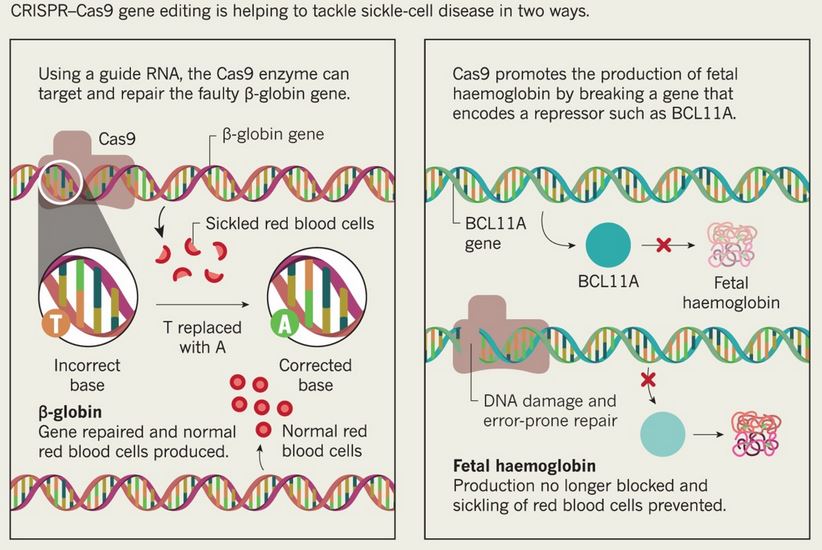
    • India is close to developing a gene therapy using CRISPR-Cas9, a gene-editing tool for sickle cell disease (SCD).
      • SCD is a genetic blood disorder prevalent among the Scheduled Tribes.

    What is Sickle Cell Disease?

    • Sickle cell disease (SCD) is a group of inherited blood disorders caused by a genetic mutation in the hemoglobin-β gene located on chromosome 11.
    • This mutation results in defective hemoglobin, which forms rod-like structures after releasing oxygen.
    • As a result, red blood cells become rigid and assume a sickle shape.
    • The disease is inherited in an autosomal recessive pattern, meaning both parents must carry the abnormal gene for a child to inherit it.
    • Symptoms may not manifest immediately in newborns but can include extreme tiredness, fussiness, swollen hands and feet, and jaundice.
    • Implications:
        • The mis-shapen RBCs can block small blood vessels, leading to impaired blood flow and causing chronic anaemia.
        • Individuals with SCD often experience acute pain episodes, severe bacterial infections, and tissue damage due to inadequate blood supply.
    • Treatment:
      • Presently treatment includes medications for pain relief, regular blood transfusions to replace damaged red blood cells.
      • In rare cases, a bone marrow or stem cell transplant, which carries significant risks, is recommended.

    Eliminating Sickle Cell Disease: Global and National Context

    • This progress follows the approval of CRISPR-Cas9 technology by the U.S. Food and Drug Administration for a cell-based gene therapy to treat sickle cell disease in December 2023.
    • One of the main challenges for India is to develop a cost-effective therapy, as part of its mission to eradicate sickle cell disease by 2047, launched by Prime Minister in July 2023.
    • The mission aims to conduct over 7 crore screenings among vulnerable tribal populations across 17 States and Union Territories, with three crore screenings completed so far.

    Back2Basics: CRISPR-Cas9 Gene Editing

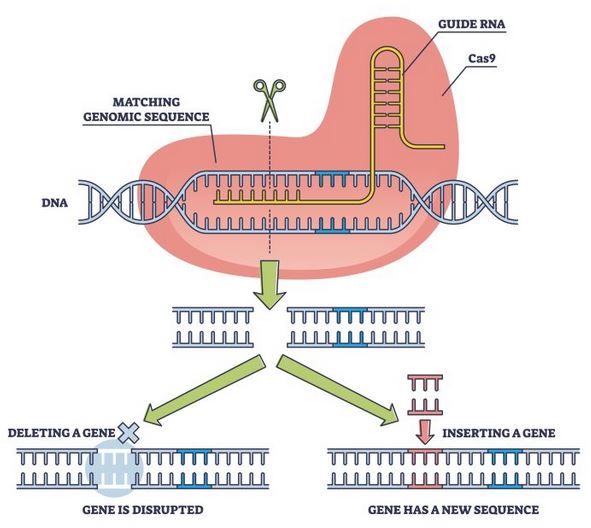
    • CRISPR-Cas9 stands for Clustered Regularly Interspaced Short Palindromic Repeats and CRISPR-associated protein 9.
    • It is a technology that allows geneticists and researchers to edit parts of the genome by altering sections of the DNA sequence.
    • Emmanuelle Charpentier and Jennifer Doudna’s work on CRISPR-Cas9 as a ‘molecular scissor’ earned them the 2020 Nobel Prize in chemistry.
    • The system consists of two key components:
    1. Cas9: This is the enzyme that acts like a pair of molecular scissors. It is responsible for cutting the DNA strand at a specific location, allowing for the removal, addition, or alteration of DNA at that site.
    2. Guide RNA (gRNA): This is a piece of RNA that is designed to find and bind to a specific sequence of DNA that matches its code. The gRNA guides the Cas9 enzyme to the exact spot in the genome where an edit is desired.
    • Mechanism:
      • The process begins with the design of a gRNA that matches the DNA sequence where an edit is needed.
      • Once inside the cell, the Cas9 enzyme and the gRNA form a complex that can identify and bind to the target DNA sequence.
      • The Cas9 then cuts the DNA at this location.
      • After the DNA is cut, the cell’s natural repair mechanisms can be harnessed to add or remove genetic material, or to make specific changes to the DNA.


    PYQ:

    [2023] Consider the following statements in the context interventions being undertaken under Anaemin Mukt Bharat Strategy :

    1. It provides prophylactic calcium supplementation for pre-school children, adolescents and pregnant women.
    2. It runs a campaign for delayed cord clamping at the time of child-birth.
    3. It provides for periodic deworming to children and adolescents.
    4. It addresses non-nutritional causes of anaemia in endemic pockets with special focus on malaria, hemoglobinopathies and fluorosis.

    How many of the statements given above are correct?

    (a) Only one
    (b) Only two
    (c) Only three
    (d) All four

  • Does H5N1 pose a threat for humans? | Explained

    Why in the news?

    The highly pathogenic avian influenza (HPAI) H5N1’s spread to cattle and first human cases in U.S. dairy workers heighten fears of wider human transmission.

    Can the highly pathogenic avian influenza H5N1 strain spread from cattle to humans?

    • Recent Infections: Three cases of human infection in dairy farm workers were reported in the U.S., indicating the potential for the virus to spread from cattle to humans.
    • Transmission: The virus appears to spread to humans who are in close interaction with infected birds or animals without adequate personal protection.
    • Current Risk Level: Scientists note that the virus currently lacks changes that would make it better adapted to human-to-human transmission, keeping the risk to human health low. However, the potential for the virus to rapidly evolve remains a concern.

    What is the strategy to identify and contain the spread of the virus?

    • Surveillance in Kerala: Kerala has implemented a community-based disease surveillance network involving 2.5 lakh volunteers trained in the ‘One Health’ concept across four districts: Alappuzha, Pathanamthitta, Kottayam, and Idukki.
    • Early Warning System: These volunteers report any unusual events or deaths of animals/birds in their locality, allowing for early warning and prompt preventive or control measures.
    • Global Coordination: There is a call for a robust and coordinated response to H5N1, as emphasized in a recent editorial by The Lancet.

    What is the concept of ‘One Health’ 

    • ‘One Health’ Concept: ‘One Health’ is an approach that recognizes the interconnection between people, animals, plants, and their shared environment, emphasizing the need for collaborative efforts across different sectors to achieve optimal health outcomes.

    How is Kerala using it to limit the spread of avian influenza?

    • Implementation of the ‘One Health’ concept in Kerala: Kerala has operationalized the ‘One Health’ concept through the World Bank-aided ‘Rebuild Kerala’ project. This involves a community-based disease surveillance network where volunteers are trained to monitor and report on animal and bird health, ensuring early detection and response to potential outbreaks.
    • Other Operational Measures: The state has taken proactive steps beyond the conceptual framework of ‘One Health’ by establishing an on-ground, volunteer-driven network for disease monitoring and control.

    Way forward:

    • Strengthen Global Surveillance and Collaboration: Enhance international cooperation for surveillance, data sharing, and rapid response mechanisms to monitor and control the spread of H5N1, leveraging the ‘One Health’ approach for coordinated action across human, animal, and environmental health sectors.
    • Implement Rigorous Biosecurity and Safety Protocols: Ensure strict biosecurity measures and personal protective equipment (PPE) for workers in close contact with animals, particularly in high-risk areas, to prevent zoonotic transmission and reduce the potential for human infections.

    Mains PYQ: 

    Q The public health system has limitations in providing universal health coverage. Do you think that the private sector can help in bridging the gap? What other viable alternatives do you suggest? (UPSC IAS/2015)