💥Join UPSC 2027,2028 Mentorship (August Batch) + XFactor Notes & Microthemes PDF

Subject: Biotech and Medical Sciences

  • What is the drug Captagon?

    Why in the News?

    Captagon, the “poor man’s cocaine,” has become increasingly popular among young adults in the Middle East and North Africa.

    What is the Drug Captagon?

    • Captagon is a synthetic drug that was originally developed in Germany in the 1960s and 1970s.
    • It was initially created as a pharmaceutical treatment for attention deficit disorders, narcolepsy, and sometimes depression.
    • The primary active ingredient in Captagon is fenethylline, a compound that, once ingested, is metabolized into two powerful stimulants: amphetamine and theophylline.
    • These substances stimulate the central nervous system, leading to increased alertness, reduced fatigue, and a sense of euphoria.

    How Addictive is Captagon?

    • Captagon is highly addictive due to its powerful effects on the brain and body.
    • As a psychostimulant, Captagon significantly impacts the central nervous system, leading to a range of effects that can make it very difficult for users to stop taking the drug once they start.
    • It is also reportedly used by fighters in conflict zones to enhance their endurance and suppress fatigue.
    • The primary effects of Captagon include:
    1. Euphoria: Users often experience an intense feeling of happiness or well-being.
    2. Increased Wakefulness: The drug reduces the need for sleep, keeping users awake and alert for extended periods.
    3. Enhanced Physical and Mental Performance: Users may feel stronger, more focused, and more capable of performing both physically and mentally demanding tasks.
    • However, the heavy use of Captagon comes with serious risks such as cognitive impairment, cardiovascular issues, and risk of addiction.

    Where is Captagon Made?

    • In recent years, Syria the “narco state” of Middle East has emerged as the largest producer of Captagon.
    • Its production increased after 2011 Arab Spring protests, which led to civil unrest and conflict in the region.

    PYQ:

    [2019] Consider the following statements:

    1. The United Nations Convention against Corruption (UNCAC) has a ‘Protocol against the Smuggling of Migrants by Land, Sea and Air’.
    2. The UNCAC is the ever-first legally binding global anti-corruption instrument.
    3. A highlight of the United Nations Convention against Transnational Organized Crime (UNTOC) is the inclusion of a specific chapter aimed at returning assets to their rightful owners from whom they had been taken illicitly.
    4. The United Nations Office on Drugs and Crime (UNODC) is mandated by its member States to assist in the implementation of both UNCAC and UNTOC.

    Which of the statements given above are correct?

    (a) 1 and 3 only
    (b) 2, 3 and 4 only
    (c) 2 and 4 only
    (d) 1, 2, 3 and 4

  • WHO declares Mpox as Public Health Emergency of International Concern

    Why in the news?

    The World Health Organization (WHO) has declared mpox as a “public health emergency of international concern” (PHEIC).

    What is a PHEIC?

    • A PHEIC is a formal declaration by the WHO under the International Health Regulations (IHR), 2005.
    • It refers to an “extraordinary event” posing a public health risk through the international spread of disease, potentially requiring a coordinated global response.
    • Criteria for PHEIC:
      • Serious and unusual event: Poses a significant public health risk.
      • Cross-border implications: Affects more than one country.
      • International response needed: Requires immediate global coordination.
    • Purpose: Mobilizes resources, raises awareness, and coordinates efforts to manage and contain the threat.

    What is Mpox?

    • Mpox is a disease caused by the orthopoxvirus, related to the smallpox virus.
    • First detected in humans in 1970, it is endemic in central and West Africa.
    • Transmission: Spread from animals to humans (zoonotic) and between humans via close contact, respiratory droplets, or contaminated materials.
    • Symptoms: Fever, rash, swollen lymph nodes; can lead to severe complications or death.
    • Vaccination: WHO recommends vaccines, widely used in Nigeria and the Democratic Republic of the Congo (DRC) to control outbreaks.

    Recent Developments: 

    • In recent years, there has been an increase in mpox cases, including the emergence of new strains such as clade 1b, which has spread to countries outside of its typical endemic regions.
    • This led to the declaration of mpox as a Public Health Emergency of International Concern (PHEIC) due to its potential for widespread impact.


    PYQ:

    [2014] Consider the following diseases

    1. Diphtheria

    2. Chickenpox

    3. Smallpox

    Which of the above diseases has/have been eradicated in India?

    (a) 1 and 2 only

    (b) 3 only

    (c) 1, 2 and 3

    (d) None

  • Hidden dangers of irrational use of antibiotics on microbiome    

    Why in the news?

    While vital for treating infections, antibiotics can disrupt the microbiome by indiscriminately killing both harmful pathogens and beneficial gut bacteria, especially broad-spectrum types.

    Various roles played by Antibiotics (Applications):  


    Treatment of Infections

    Antibiotics are essential for treating bacterial infections, significantly reducing mortality rates associated with infectious diseases

    For example, penicillin and other antibiotics, the mortality rate from strep throat dropped dramatically from 1% to less than 0.1%.

    Preventing Disease Spread 

    Treating bacterial infections, antibiotics can prevent the spread of disease to other individuals

    For instance, during the 2009 H1N1 influenza pandemic, antibiotics were used to treat secondary bacterial pneumonia, which was a major cause of death.

    Reducing Complications

    Antibiotics can reduce the risk of serious complications from bacterial infections.

    For instance, In the case of urinary tract infections (UTIs), untreated infections can lead to kidney damage or life-threatening conditions like sepsis. However, with prompt antibiotic treatment, the risk of complications is greatly reduced

    Supporting Medical Procedures

    Antibiotics are used prophylactically to prevent infections before certain medical procedures

    For example in surgery

    Concerning Aspects of Antibiotic Use

    • Dysbiosis: The disruption of the microbiome, known as dysbiosis, can lead to severe health issues, including inflammatory bowel disease (IBD) and irritable bowel syndrome (IBS). 
    • Increased Infection Risk: Antibiotics can reduce colonization resistance, which is the microbiome’s ability to prevent pathogenic microorganisms from establishing infections. This reduction increases the risk of infections by harmful bacteria, such as Clostridioides difficile.
    • Antimicrobial Resistance (AMR): Overuse of antibiotics contributes to the development of antimicrobial resistance, making it more challenging to treat infections. The global crisis of antibiotic resistance is exacerbated by the enrichment of antibiotic resistance genes within the gut microbiota due to antibiotic exposure.
    • Long-term Health Consequences: Repeated antibiotic use can prevent full recovery of the microbiome, leading to chronic health issues. Research shows that children who receive multiple courses of antibiotics are at higher risk for developing conditions like IBD later in life.
    • Impact on Other Organ Systems: Dysbiosis can affect various organ systems through gut-organ axes, influencing conditions such as mental health disorders (via the gut-brain axis), liver diseases (via the gut-liver axis), and skin conditions (via the gut-skin axis) due to altered immune responses and increased permeability.

    Government initiatives: 

    1. The Indian Council of Medical Research (ICMR) has initiated an antibiotic stewardship program (AMSP) on a pilot basis in 20 tertiary care hospitals across India to control the misuse and overuse of antibiotics in hospital wards and ICUs.
    2. ICMR collaborated with the Indian Council of Agriculture Research, Department of Animal Husbandry, Dairy and Fisheries, and the Drugs Controller General of India (DCGI) to ban the use of Colistin as a growth promoter in animal feed in poultry.
    3. The Government of India launched the National Action Plan on Antimicrobial Resistance (NAP-AMR) in April 2017, focusing on a One Health approach.

    Way forward: 

    • Antibiotic Stewardship Programs: Implement and promote antibiotic stewardship programs in healthcare settings to ensure antibiotics are prescribed only when necessary and with the appropriate dosage and duration.
    • Probiotic Supplementation: Encourage the use of probiotics alongside antibiotic treatments to help maintain a healthy microbiome and mitigate the risks of dysbiosis and related health issues.

    Mains PYQ: 

    Q Can overuse and free availability of antibiotics without Doctor’s prescription, be contributors to the emergence of drug-resistant diseases in India? What are the available mechanisms for monitoring and control? Critically discuss the various issues involved. (2014)
  • India to roll out BPaL Regimen for Drug-Resistant TB

    Why in the News?

    India is preparing to introduce the BPaL (bedaquiline, pretomanid, and linezolid) regimen for all patients with multi/extensively drug-resistant tuberculosis (M/XDR-TB).

    What is BPaL Regimen? 

    Details
    Purpose
    • Treatment for multi-drug resistant (MDR) and extensively drug-resistant (XDR) tuberculosis (TB).
    • Provides a potent, shorter, and more effective treatment option for patients resistant to standard TB drugs.
    Components of the regimen Bedaquiline (Bdq):

    • Targets ATP synthase enzyme in Mycobacterium tuberculosis, disrupting energy production.
    • Key drug in combating drug-resistant TB.
    Pretomanid (Pa):

    • Inhibits bacterial cell wall synthesis and kills bacteria under anaerobic conditions.
    • Enhances effectiveness when combined with other TB drugs.
    Linezolid (Lzd):

    • Inhibits protein synthesis, stopping bacterial growth.
    • Effective against MDR and XDR TB strains.


    Significance of BPaL Regimen

    • Studies and trials have shown that the BPaL regimen has higher success rates in treating MDR and XDR TB compared to older regimens.
    • It reduces treatment duration for MDR/XDR-TB from the traditional 18-24 months to 6 months approx.  
    • It is entirely oral with NO injectable, making it easier for patients to adhere to the treatment.
    • It reduces number of drugs patients need to take daily from up to 14 to just 3.

    PYQ:

    [2014] Can overuse and free availability of antibiotics without Doctor’s prescription, be contributors to the emergence of drug-resistant diseases in India? What are the available mechanisms for monitoring and control? Critically discuss the various issues involved.

  • Why Silica Dust could become the ‘New Asbestos’ Health Risk?

    Why in the News?

    UK researchers suggest stricter daily silica dust exposure limits in industries could save 13,000 lives as per British Medical Journal Thorax.

    What is Silicosis?

    • Silicosis is a lung disease that results in the hardening of the lungs. It is caused by inhaling silica dust or crystals, commonly found in soil, sand, concrete, mortar, granite, and artificial stone.
    • Silicosis is a chronic disease that develops slowly, often after 10 to 20 years of exposure.
    • Silicosis can lead to other severe conditions, including lung cancer, tuberculosis, and chronic obstructive pulmonary disease (COPD).
    Note: Silicosis is a recognized disease under the Mines Act (1952) and the Factories Act (1948).

    Causes of Silicosis:

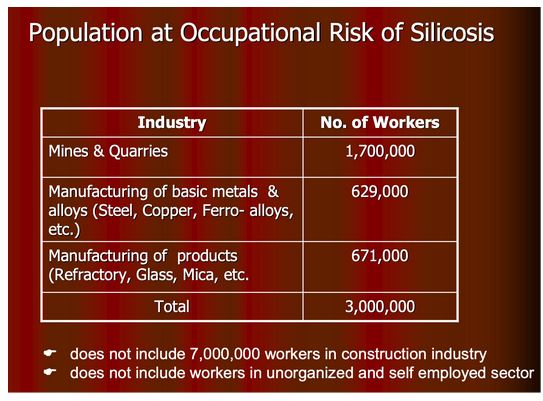
    • Workers in industries such as construction, mining, oil and gas extraction, kitchen engineering, dentistry, pottery, and sculpting are at high risk.
    • The cutting, drilling, or breaking down of materials containing silica releases fine dust into the air.

    As per National Programme on Elimination of Silicosis in India

    Remedies for Silicosis:

    Currently, there is no cure for silicosis, and treatment focuses on managing symptoms and preventing complications.

    Preventive measures:

    • Water Suppression Techniques: Using water or foam to suppress dust at the source.
    • Proper Ventilation: Ensuring adequate airflow in work environments to reduce dust accumulation.
    • Personal Protective Equipment (PPE): Providing workers with masks and respirators that filter out fine particles.
    • Regular Monitoring: Implementing regular health checks for workers and monitoring air quality in workplaces.

    Case study related to reducing Silica Dust Exposure

    • United States: Implemented stricter regulations on silica dust, resulting in a significant reduction in silicosis cases.
    • Australia: Banned the use of engineered stone due to its propensity to release high levels of silica dust when cut or drilled.


    PYQ:

    [2019] Why is there a great concern about the ‘microbeads’ that are released into environment?

    (a) They are considered harmful to marine ecosystems.

    (b) They are considered to cause skin cancer in children.

    (c) They are small enough to be absorbed by crop plants in irrigated fields.

    (d) They are often found to be used as food adulterants.

  • Trichophyton indotineae: A drug resistant fungal infections   

    Why in the News?

    The increase in drug-resistant fungal infections, especially Trichophyton indotineae, is becoming a major health problem in India.

    What Is Trichophyton Indotineae?

    • Trichophyton indotineae is a dermatophyte commonly known as ringworm or jock itch.
    • First identified in India, this fungus has now spread to several countries worldwide.
    • It belongs to genotype VIII within the T. mentagrophytes/T. interdigitale species complex, found in regions including Australia and Oman.

    Factors causing its spread 

    • Patients often present with persistent, treatment-resistant rashes that can be mistaken for eczema or other skin conditions.
    • Misdiagnosis leads to the use of ineffective treatments, prolonging patient suffering and allowing the infection to worsen.
    • Trichophyton indotineae has shown resistance to terbinafine due to genetic mutations, with growing resistance to itraconazole also a concern.
    • The unregulated sale of steroid-containing combination creams further complicates treatment efforts.

    Treatments available

    • Alternative to terbinafine and Itraconazole are available but often come with significant side effects, requiring close monitoring by healthcare providers.
    • Integrating comprehensive skin care regimens can enhance treatment efficacy, including maintaining skin hydration and using barrier creams.

    PYQ:

    [2014] Lichens, which are capable of initiating ecological succession even on a bare rock, are actually a symbiotic association of:

    (a) algae and bacteria

    (b) algae and fungi

    (c) bacteria and fungi

    (d) fungi and mosses

  • The hormone Oestrogen

    Why in the News?

    • “Osteoporosis” is a condition where bones become weak and brittle, with over 10 million cases annually in India.
      • It predominantly affects ageing women due to decreased oestrogen levels post-menopause.
    A recent study in Nature by researchers at the Universities of California uncovered a brain-derived hormone, CCN3, which increases bone mass in postpartum lactating mothers.


    What is Oestrogen?

      • Oestrogen is a primary female sex hormone essential for reproductive and sexual development.
      • It regulates the menstrual cycle and is crucial for the development of secondary sexual characteristics like breast development. 
      • Oestrogen also plays a vital role in maintaining bone density and cardiovascular health.
    • It is produced mainly in the ovaries but also in smaller amounts by the adrenal glands and fat tissue. 
    • The hormone influences various tissues, including the brain, heart, skin, and bones.
    • Imbalances in oestrogen levels can lead to various health issues, such as osteoporosis and cardiovascular disease.

    Role of Oestrogen in Bone Growth

    • Oestrogen is crucial for bone growth and formation, acting as a manager signaling the bone construction crew.
    • During breastfeeding, oestrogen production drops to focus on milk production, which should weaken bones.
    • Contrary to expectations, mothers’ bones become stronger to meet their babies’ high calcium demands.

    How does the ‘Hidden’ Hormone Keep Mice Mothers’ Bones Healthy?

    • During breastfeeding, the body suppresses oestrogen production to focus on milk production, which should weaken bones.
    • Despite low oestrogen, mothers’ bones strengthen.
    Researchers found that KISS1 neurons in the hypothalamus (a part of the brain) release the CCN3 hormone, which helps maintain and even increase bone mineralisation.

    Experimental Findings:

    • In experiments with genetically modified mice, those lacking the oestrogen receptor alpha still maintained healthy bones due to CCN3.
    • When CCN3 was introduced to skeletal stem cells, it significantly increased bone formation, showing its potential to strengthen bones independently of oestrogen.

    PYQ:

    [2019] ‘RNA interference (RNAi)’ technology has gained popularity in the last few years. Why?

    1. It is used in developing gene silencing therapies.
    2. It can be used in developing therapies for the treatment of cancer.
    3. It can be used to develop hormone replacement therapies.
    4. It can be used to produce crop plants that are resistant to virtual pathogens.

    Select the correct answer using the code given below.

    (a) 1, 2 and 4

    (b) 2 and 3

    (c) 1 and 3

    (d) 1 and 4 only

  • What is ‘PrecivityAD2’ the new Alzheimer’s Blood Test?

    Why in the News?

    Researchers in Sweden have developed a new blood test, PrecivityAD2, which is about 90% accurate in identifying Alzheimer’s Disease (AD) in people experiencing cognitive symptoms.

    What is Alzheimer’s Disease (AD)?

    • Alzheimer’s disease is the most common type of dementia (loss of memory and cognitive abilities).
    • It is a progressive disease beginning with mild memory loss and possibly leading to loss of the ability to carry on a conversation and respond to the environment.
    • Alzheimer’s disease involves parts of the brain that control thought, memory, and language.
    • Brain cell connections and the cells themselves degenerate and die, eventually destroying memory and other important mental functions.
    • Memory loss and confusion are the main symptoms.
    • No cure exists, but medication and management strategies may temporarily improve symptoms.

    How PrecivityAD2 Test works?

    • The test measures a combination of two ratios within a blood sample:
    1. Plasma Phosphorylated-tau217 (p-tau217) to Not-Phosphorylated-tau21: The test measures the ratio of p-tau217 to non-phosphorylated tau21. Tau proteins are associated with the formation of neurofibrillary tangles in the brain, a hallmark of AD.
    2. Amyloid-beta (AB42 and AB40): The test also measures the ratio of two types of amyloid-beta proteins, AB42 and AB40. Amyloid plaques are another key pathological feature of AD.
    • Both tau and amyloid-beta proteins are considered pathological hallmarks of AD.

    Benefits of PrecivityAD2

    • Early Detection: PrecivityAD2 can diagnose AD at the early stage of mild cognitive impairment, enabling timely intervention and management.
    • Accurate Identification: With an accuracy rate of around 90%, the test provides reliable results, reducing the chances of misdiagnosis.
    • Non-Invasive: Unlike current diagnostic methods that involve complex PET scans or lumbar punctures, PrecivityAD2 requires only a simple blood draw.
    • Cost-Effective: The test is expected to be more affordable compared to expensive PET scans and cerebrospinal fluid analysis, making AD diagnosis more accessible.
    • Ease of Use: The blood test simplifies the diagnostic process, making it easier for primary care physicians to screen for AD.
    • Wider Reach: By reducing the complexity and cost of diagnosis, more patients can be tested, particularly in resource-limited settings.

    Significance of the Test

    • Standard of Care: PrecivityAD2 has the potential to become the standard first-line test for AD diagnosis, replacing more invasive and costly methods.
    • Support for Early Intervention: Early and accurate diagnosis allows for timely intervention, which is crucial for managing AD and improving patient outcomes.
    • Reduction in Misdiagnosis: The test’s high accuracy rate can help reduce the rates of misdiagnosis, particularly in primary care settings.

    Prevalence of Alzheimer’s Disease in India:

    • Alzheimer’s disease and dementia are significant public health concerns in India with a rapidly increasing prevalence rate.
    • According to CSIR-NIScPR, in 2019, there were 37 lakh active cases of Alzheimer’s disease and other dementias.
    • By 2050, dementia cases in India could exceed 11 crore as per projections from the Global Burden of Disease Study (GBDS).
    • The burden of non-communicable neurological disorders, including Alzheimer’s, more than doubled between 1990 and 2019.

    Feasibility for India:

    • In India, the current diagnostic tools for Alzheimer’s disease primarily include MRI and regular PET scans.
    • Advanced diagnostic tools like amyloid or Tau PET scans are not yet commercially available.
    • The introduction of PrecivityAD2 in India will require approval from the Drug Controller General of India (DCGI) and other relevant regulatory bodies.
  • ‘Zombies’ in our Genes helped us evolve      

    Why in the News?

    Research suggests that around 8% of the human genome is composed of Endogenous Retroviruses (ERVs) often referred to as ‘zombie’ regions.

    Retroviruses and Human Genome Integration

    • Most viruses can’t affect the human genome, but retroviruses are an exception.
    • Retroviruses can integrate and reshape the genomes of their hosts.
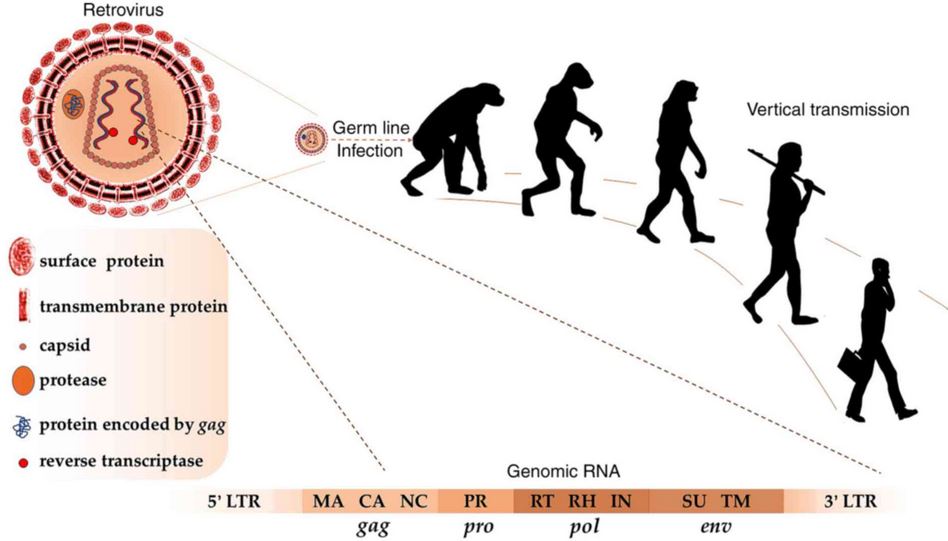
    • They have an RNA genome and can reverse-transcribe it to DNA, inserting it into the host’s genome.
    • This process is facilitated by the enzyme reverse transcriptase.
    • Discovered by Howard Temin and David Baltimore in 1971, this enzyme converts the virus’s RNA into a corresponding DNA sequence.
    • Historical Discoveries:
      • Viral causes of cancer were known even before the mechanism was understood.
      • In 1908, Oluf Bang and Vilhelm Ellermann discovered the viral cause of chicken leukosis.
      • In 1957, Ludwik Gross isolated a leukaemia-causing virus in mice.

    What are Endogenous Retroviruses (ERVs)?

    • ERVs are remnants of ancient viral infections that have integrated into the genome of the host species.
    • When these retroviruses infect germ cells (sperm or egg cells), their genetic material can be passed down to the next generation, becoming a permanent part of the host’s DNA.
    • Zombie Regions:
      • They refer to inactive viral sequences within the genome that no longer produce functional viruses but remain as embedded genetic fossils.
      • These regions are a result of retrovirus integration that has lost its ability to replicate and produce proteins, yet they persist in the host’s DNA.

    Evolutionary Significance of ERVs:

    • In the life cycle of a retrovirus, reverse-transcribed DNA is integrated into the host’s DNA with the help of integrase.
    • The viral DNA, called a provirus, hijacks human cells, turning them into virus-making factories.
    • Over tens of thousands of years, many retroviruses have left genomic elements in human genome, contributing to evolutionary processes.
    • Example:
      • Syncytins are genes thought to have descended from ERVs and are crucial for placental development. These genes originally came from viruses and were acquired during mammalian evolution.

    Their Contribution to Human Biology

    • ERVs are highly expressed in the placenta and may influence conditions like preeclampsia.
    • Researchers found that a particular RNA derived from an ERV is dysregulated in early-onset preeclampsia, suggesting it could be used as a biomarker for the condition.
    • ERVs play a role in cell-type differentiation during embryo development.
    • A protein called MERVL-gag is derived from an ERV. This transition is crucial for producing pluripotent stem cells capable of forming different cell types.
    • Researchers also found that a human ERV element LTR10 affects tumour formation in colorectal cancer.

    PYQ:

    [2021] Consider the following statements :​

    1. Adenoviruses have single-stranded DNA genomes whereas retroviruses have double-stranded DNA genomes.​

    2. Common cold is sometime caused by an adenovirus whereas AIDS is caused by a retrovirus.​

    Which of the statements given above is/are correct?

    (a) 1 only

    (b) 2 only

    (c) Both 1 and 2

    (d) Neither 1 nor 2

  • Teaching computers to forget   

    Why in the news?

    The emergence of artificial intelligence has revolutionized various facets of our lives and has even prompted us to reevaluate our concepts of the mind, brain, and consciousness.

    Antithesis of Machine Learning (ML):

    • Machine Unlearning (MUL) is considered the antithesis of Machine Learning (ML). It was first proposed by Cao and Yang in their work “Towards Making Systems Forget with Machine Unlearning.”
    • Machine Unlearning focuses on the ability to make AI models forget specific data they have learned. This concept addresses the challenges of removing or correcting sensitive, false, incorrect, or outdated information from trained AI models.
      • While ML is about learning from data to make predictions or decisions, MUL aims to reverse this process, ensuring that certain data can be effectively and completely erased from the models.
    • This concept is crucial for maintaining data privacy, reducing AI bias, and complying with regulations that require the deletion of personal or sensitive information.

    Implementation approaches

    • Private Approach: Data fiduciaries voluntarily implement MUL algorithms, allowing flexibility but potentially limiting access for smaller companies due to cost and expertise barriers.
    • Public Approach: Governments can legislate requirements for MUL implementation, potentially creating a standard framework that data fiduciaries must follow. This can include guidelines under existing data protection laws, as seen in the EU’s AI Act, which addresses data poisoning and mandates security controls.
    • International Approach: This emphasizes the need for a global framework for MUL, recognizing that AI innovations have cross-border implications. International standard-setting organizations could play a crucial role in developing these standards

    Techniques for Machine Unlearning

    • Exact Unlearning: This method completely removes the influence of specific data points from the model.
    • Approximate Unlearning: Instead of fully erasing the data’s influence, this technique minimizes its impact on the model’s predictions to an acceptable level.
    • Data-Centric Approaches: Techniques like data reorganization and pruning are employed to manage the dataset, making it easier to identify and remove unwanted data points.
    • Model-Centric Approaches: These methods involve manipulating the model parameters directly. For example, algorithms can adjust the weights associated with the data points that need to be forgotten, thereby reducing their influence on the model’s outputs.
    • Prompting-Based Methods: In large language models (LLMs), developers can use carefully crafted prompts to induce behaviours that mimic unlearning.
    • Algorithmic Innovations: New algorithms, such as MU-Mis, focus on minimizing the contribution of specific data points to the model’s decision-making process.

    Way forward: 

    • Development of Standardized Frameworks: The need to establish a comprehensive regulatory framework for MUL can facilitate its adoption across various sectors. Governments and international organizations should collaborate to create guidelines that mandate the use of MUL techniques for data privacy compliance, similar to the EU’s AI Act. 
    • Investment in Research and Education: The need to increase funding and resources should be directed toward research in machine unlearning techniques and their applications.

    Mains PYQ: 

    The emergence of the Fourth Industrial Revolution (Digital Revolution) has initiated e-Governance as an integral part of government”. Discuss. (2020)