💥Join UPSC 2027,2028 Mentorship (August Batch) + XFactor Notes & Microthemes PDF

Subject: Biotech and Medical Sciences

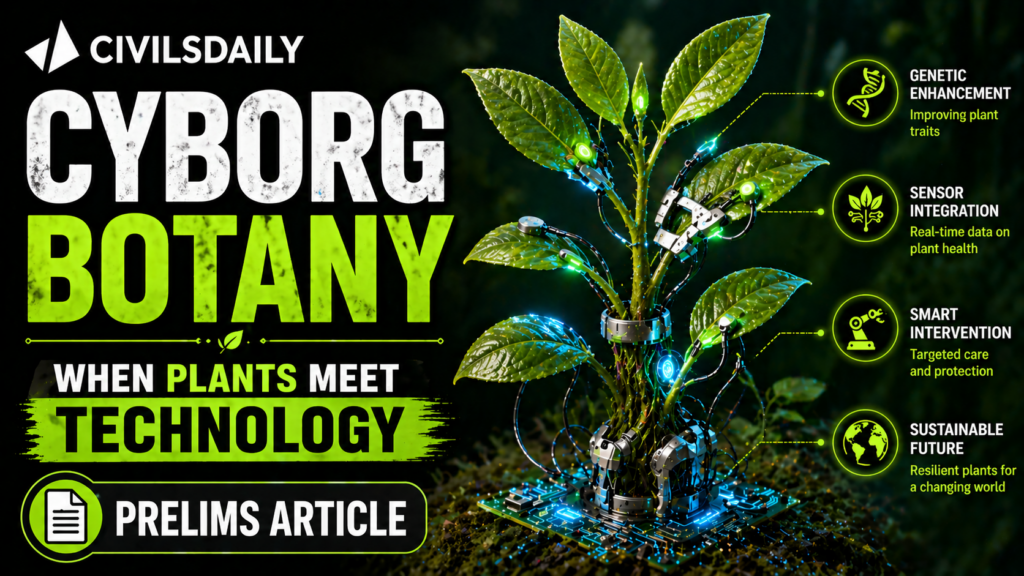
  • Cyborg Botany

    Why in the News

    Recent research across global institutions is advancing the field of Cyborg Botany, where scientists are transforming plants into living electronic systems capable of sensing and transmitting data.

    What is Cyborg Botany

    • A hybrid system integrating living plants with electronic components
    • Combines:
      • Biology
      • Materials Science
      • Engineering
    • Derived from the term “cyborg” (cybernetic organism)
    • Aim: Merge natural plant processes with artificial electronic functions

    How it Works

    Embedding Nanowires and Transistors

    • Inserted into plant cell walls
    • Act as biosensors
    • Detect biochemical changes in real time

    Conductive Polymers (Living Wires)

    • Example: PEDOT (Poly 3,4 ethylenedioxythiophene)
    • Functions as electrical pathways inside plant tissues
    • Transmits signals from plant cells to external devices

    Key Concept

    • Biosensor: A device that uses biological material to detect changes and produce signals

    Types of Plant Stress (Important for Prelims)

    • Biotic Stress
      • Caused by living organisms
      • Example: pests, diseases
    • Abiotic Stress
      • Caused by environmental factors
      • Example: drought, temperature extremes

    Significance

    • Enables early detection of crop stress before visible symptoms
    • Helps in precision agriculture
    • Reduces water and chemical usage
    • Improves crop productivity and sustainability
    • Supports climate resilient agriculture
    [2020] With reference to carbon nanotubes, consider the following statements: 
    1 They can be used as carriers of drugs and antigens in the human body. 
    2 They can be made into artificial blood capillaries for an injured part of human body. 
    3 They can be used in biochemical sensors. 
    4 Carbon nanotubes are biodegradable. 
    Select the correct answer using the code given below: 
    (a) 1 and 2 only (b) 2, 3 and 4 only (c) 1, 3 and 4 only (d) 1, 2, 3 and 4
  • CAR T-Cell Therapy Breakthrough for Solid Tumours

    Why in the News?

    A recent study published in the journal Science has reported a breakthrough in CAR T-cell therapy, where scientists developed a highly sensitive receptor capable of detecting faint tumour signals, potentially enabling treatment of solid cancers such as kidney and ovarian cancer.

    What is CAR T-cell Therapy (Chimeric Antigen Receptor T-cell Therapy)?

    • A form of immunotherapy where a patient’s T-cells are genetically modified to identify and destroy cancer cells

    Existing Limitation

    • Effective mainly in blood cancers like leukemia and lymphoma
    • Limited success in solid tumours due to
      • Antigen Heterogeneity
        • Tumour cells vary in protein expression
        • Some cells remain undetectable to CAR T-cells

    Note: An antigen is any substance—such as bacteria, viruses, toxins, or foreign proteins—that causes the immune system to produce antibodies or mount a specific defense response

    Key Discovery

    • Target protein: CD70
    • Found in
      • 70 to 80 percent of kidney and ovarian cancers
      • Around 25 percent of pancreatic cancers
    • Many tumour cells thought to lack CD70 actually contain it in very low quantities

    New Innovation

    HIT Receptor (HLA Independent T-cell Receptor): engineered immune receptors that enable T cells to target cancer cells without requiring HLA matching.

    • Detects very low levels of tumour antigens
    • Works by linking detection directly to the natural T-cell activation pathway
    • Bypasses the HLA system

    Results of Study

    • Conventional CAR T-cells failed to eliminate all tumour cells
    • HIT receptor based T-cells:
      • Eliminated hidden tumour cells
      • Achieved complete tumour removal in experimental models

    Safety Concerns

    • High sensitivity may attack normal cells
    • Known as Goldilocks Challenge
    • CD70 mostly absent in vital organs like Heart, Lungs, and Brain
    • Minor effects observed in immune cells
    [2022] Which one of the following statements best describes the role of B cells and T cells in the human body? 
    (a) They protect the body from environmental allergens. 
    (b) They alleviate the body’s pain and inflammation. 
    (c) They act as immunosuppressants in the body. 
    (d) They protect the body from the diseases caused by pathogens.
  • Haemophilia 

    Why in the News?

    • Renewed focus due to World Health Organization resolution on improving care access and awareness on World Haemophilia Day

    What is Haemophilia

    • Haemophilia is a genetic bleeding disorder
    • Caused by: Deficiency of clotting factors:
      • Factor VIII (Haemophilia A)
      • Factor IX (Haemophilia B)

    Key Characteristics

    • Blood does not clot properly
    • Leads to:
      • Prolonged bleeding
      • Internal bleeding (joints, muscles)
    • Severe cases:
      • Spontaneous bleeding episodes

    Causes and Inheritance

    • Genetic Nature Inherited as: X-linked recessive disorder
    • Affected Population: Mostly males are affected, and Females are carriers.
    • Mutation Cases: ~1/3 cases: Occur due to spontaneous mutations
    [2009] In the context of genetic disorders, consider the following: A woman suffers from colour blindness while her husband does not suffer from it. They have a son and a daughter. In this context, which one of the following statements is most probably correct? 
    (a) Both children suffer from colour blindness. 
    (b) Daughter suffers from colour blindness while son does not suffer from it. 
    (c) Both children do not suffer from colour blindness. 
    (d) Son suffers from colour blindness while daughter does not suffer from it.
  • Societies embrace gene therapy but resist genetic change in crops

    Why in the News?

    There exists a critical paradox in modern science: societies readily accept gene therapy in humans but resist genetic modification in crops, despite decades of safe usage globally. This contrast is significant because it exposes inconsistent regulatory and ethical standards. While high-risk human interventions are embraced, relatively safer agricultural innovations face opposition.

    Why do societies accept gene therapy but resist GM crops?

    The disparity in public acceptance between gene therapy and Genetically Modified (GM) crops is rooted in risk-benefit asymmetry. While both use similar biotechnological tools, they are perceived through different moral and practical lenses.

    1. The “Life-Saving” vs. “Commercial” Benefit; Risk Perception Bias: Human therapies are accepted due to direct life-saving benefits (e.g., treatments for cancer, thalassemia), while crop benefits appear indirect.
      1. Indirect Benefits (Agriculture): The benefits of GM crops, such as herbicide tolerance or slightly lower food prices, often feel indirect to the consumer. The perceived “reward” does not outweigh the “fear” of altering the food supply
    2. Ethical and “Naturalness” Framing: Society categorizes these technologies into different moral buckets:
      1. Healing vs. Enhancement: Gene therapy is framed as restorative medicine, returning a body to its “natural” healthy state.
      2. Interference with Nature: GM crops are often framed as “playing God” or “Frankenfoods.” Because eating is an intimate act of consumption, the idea of “foreign DNA” in food triggers a visceral “disgust” response that medical injections do not.
    3. Regulatory Asymmetry: Somatic gene therapy is permitted despite risks, but germline editing is banned, showing selective acceptance.
      1. Controlled Environment: Gene therapy is performed in highly regulated clinical settings on individuals.
      2. Environmental Spread: Resistance to GM crops is often fueled by the fear of uncontrolled environmental release (e.g., cross-pollination or “superweeds”), which feels like a permanent, irreversible change to the planet.
    4. Corporate Trust vs. Medical Trust
      1. The “Big Ag” Narrative: GM crops are frequently associated with large multinational corporations and patent-protected seeds, leading to concerns about food sovereignty and corporate greed.
      2. The Clinical Narrative: While pharmaceutical companies also profit, the primary face of gene therapy is the doctor or researcher “curing” a patient, which carries a higher level of institutional.

    How has genetic engineering historically shaped human survival and agriculture?

    1. Domestication Legacy: Humans have engineered plants and animals for over 10,000 years through selective breeding.
      1. Transformation: Ancestral plants like Teosinte (a wild grass with tiny, hard kernels) were transformed into modern Maize through thousands of years of human selection.
    2. Migration Impact: Movement of humans led to spread of crops, animals, and diseases, shaping ecosystems globally.
      1. The Columbian Exchange: The transfer of potatoes and maize to Europe and wheat and cattle to the Americas fundamentally changed the caloric availability and survival rates of human populations globally.
    3. Modern Agricultural Dependence: The food systems we rely on today, particularly in India, are almost entirely built on “engineered” non-native species.
      1. The Green Revolution: In the 1960s, India avoided mass famine by adopting High-Yielding Varieties (HYVs) of wheat and rice. These were semi-dwarf varieties specifically bred to respond to fertilizers and resist lodging (falling over).
      2. Non-Native Dominance: Staples like tomatoes, potatoes, and chillies, central to Indian diet and identity, are not native to the region but were successfully adapted through human-led breeding and selection.
    4. Technological Evolution: The shift from selective breeding to modern transgenics (GMOs) and gene editing (CRISPR) is a change in speed and precision, not intent:
      1. Historical: Breeding took decades and involved moving thousands of genes at once.
      2. Modern: Genetic engineering allows for the insertion or “switching off” of specific genes to provide immediate traits like Bt-resistance (pest control) or drought tolerance.

    What explains the contradiction in regulatory and societal responses?

    1. Precautionary Regulation: Agriculture faces excessive precaution, slowing adoption despite safety evidence.
      1. Agricultural Hyper-Precaution: Because food is consumed by everyone, every day, regulators demand decades of longitudinal data. This slows the adoption of crops that could survive the extreme heat mentioned in the FAO report.
      2. The “Compassionate Use” Loophole: In medicine, we allow experimental gene therapies for the terminally ill even when safety data is incomplete. The visible suffering of a patient overrides the abstract fear of the technology.
    2. Innovation Bias: Societies prefer visible breakthroughs (medicine) over incremental gains (agriculture).
      1. Invisible Gains: A crop that uses 10% less water or resists a specific pest provides an incremental benefit to a supply chain. To the consumer, the food looks and tastes the same, so they see only the “unnatural” process, not the “beneficial” result.
    3. Market Structure: The history of seed patents and the dominance of a few multinational firms have tied GM crops to “corporate greed” in the public imagination.
    4. Asymmetric Risk: People feel they must eat, but they choose medicine. When a choice feels forced (like what’s available in a grocery store), the psychological threshold for risk-taking becomes much lower.

    How has biotechnology delivered proven successes across sectors?

    1. Medical Revolutions: From Treatment to Cure: Biotechnology has shifted medicine from general chemical formulas to targeted biological interventions.
      1. Synthetic Hormones: Before biotech, insulin was extracted from the pancreases of slaughtered cows and pigs. Today, it is produced cleanly by genetically engineered bacteria, ensuring a stable, high-quality supply for millions.
      2. Biologics and Gene Therapy: Breakthroughs like CAR-T cell therapy literally reprogram a patient’s own immune cells to hunt cancer.
      3. Rapid Vaccine Response: The COVID-19 mRNA vaccines utilized synthetic biology platforms to move from a viral sequence to a functional vaccine in record time, preventing an estimated 20 million deaths globally in the first year alone.
    2. Agricultural Resilience and Productivity: Despite the perception challenges, the data shows that agricultural biotech has significantly buffered the global food supply.
      1. Bt Technology: By inserting a gene from a soil bacterium into crops like cotton and maize, plants can produce their own natural pest protection. This has reduced chemical pesticide use by over 37% and increased crop yields by 22%.
      2. Herbicide Tolerance: “Roundup Ready” crops allow for more efficient weed control and support no-till farming, which helps keep carbon in the soil rather than releasing it through plowing.
      3. Biofortification: Tools like those used in Golden Rice have the potential to deliver Vitamin A to malnourished populations, directly addressing nutritional blindness.
    3. Industrial and Synthetic Biology: Biotech is moving production from land-intensive farming to high-efficiency labs.
      1. Compound Synthesis: Artemisinin, the world’s most effective anti-malarial drug, was traditionally extracted from the sweet wormwood plant. Scientists can now produce it at scale using engineered yeast, stabilizing prices and saving lives.
      2. Sustainable Materials: Synthetic biology is being used to create lab-grown silk, leather, and even meat alternatives, reducing the environmental footprint of fashion and food.
      3. Example: COVID-19 vaccines used synthetic biology platforms, demonstrating rapid innovation capacity.
    4. Proven Impact at Scale: The scale of these successes is often underestimated:
      1. Economic Value: Since 1996, GM crops have provided an estimated $225 billion in net global farm income.
      2. Environmental Footprint: Biotech crops have reduced CO2 emissions equivalent to removing 15 million cars from the road for one year by enabling reduced tillage.

    What are the risks of overregulation in science and innovation?

    Overregulation creates a “stagnation trap” where the fear of hypothetical risks prevents the management of certain, existing crises like the extreme heat threats.

    1. Innovation Slowdown: Excessive compliance discourages bold scientific experimentation.
    2. The Innovation “Brain Drain“: When compliance becomes too costly or slow, “bold” science moves elsewhere.
    3. Widening Global Disparities: Rigid systems often create a “technology divide” between nations.
      1. Innovation Leaders vs. Laggards: Countries with agile, science-based frameworks (like the US or Brazil) capture the economic and food security benefits of biotech, while rigid regions (like the EU) often fall behind in R&D.
      2. The Dependency Paradox: Nations that ban the cultivation of GM crops often end up importing the same products for livestock feed or industrial use. This maintains the “risk” of consumption while exporting the economic “reward” to other countries.
    4. Economic Impact: Delays in adopting technologies reduce competitiveness and productivity.
      1. Opportunity Cost: The time spent in regulatory limbo is time lost in scaling solutions that could lower food prices, reduce pesticide use, or sequester more carbon.
    5. The “Sunk Cost” of Precaution: Overregulation often focuses on the risk of doing something, but ignores the risk of doing nothing. Example: Excessive precaution regarding Golden Rice contributed to decades of delay in its deployment, during which time millions of children suffered from preventable Vitamin A deficiency-related blindness.

    Can safety concerns and innovation coexist effectively?

    1. Balanced Regulation: Ensures risk management without stifling innovation.
    2. Evidence-Based Policy: Decisions based on scientific outcomes rather than perception.
    3. Adaptive Governance: Regulations evolve with technological advancements.
    4. Example: Synthetic biology regulations that allow controlled testing before scaling.

    Conclusion

    There is a fundamental inconsistency in how societies evaluate technological risk and benefit. While embracing high-risk medical innovations, resistance to agricultural biotechnology reflects perception-driven policymaking rather than evidence-based governance. Future progress requires balanced regulation that safeguards safety without undermining innovation, especially in the context of global challenges like food security and climate change.

    PYQ Relevance

    [UPSC 2019] How can biotechnology improve the living standards of farmers?

    Linkage: The PYQ directly connects to the debate on GM crops vs societal resistance, highlighting the gap between scientific potential and public acceptance. It tests understanding of biotechnology applications, regulatory challenges, and ethical concerns, core issues raised in the article.

  • How altered mosquitoes could reshape malaria control

    Why in the News?

    A major breakthrough has emerged in malaria control as genetically modified mosquitoes, using CRISPR-Cas9, have been shown for the first time in real-world conditions to block malaria parasites, not just in laboratories. This marks a decisive shift from the traditional strategy of killing mosquitoes (through insecticides and nets) to biologically altering them so they cannot transmit disease.

    What explains the shift from mosquito eradication to genetic modification?

    The shift from traditional mosquito eradication to genetic modification (GM) is driven by the declining effectiveness of chemical insecticides, the rise of widespread insecticide resistance, and the need for more targeted, environmentally friendly, and sustainable solutions to curb diseases like malaria, dengue, and Zika. While past eradication efforts focused on widespread pesticide spraying (e.g., DDT) and environmental manipulation, these methods proved unsustainable, costly, and ecologically harmful, often leading to rapid population rebounds

    1. Resistance crisis: Insecticide resistance in mosquitoes and drug resistance in parasites reduces effectiveness of conventional methods.
    2. Behavioral Adaptation: Mosquitoes have changed their behaviors, such as biting outdoors or earlier in the day, reducing the effectiveness of traditional indoor-targeted insecticide treatments.
    3. Limited sustainability: Bed nets and spraying require continuous intervention; not self-propagating.
    4. Targeted Precision: Genetic modification, particularly CRISPR-Cas9 gene drives, allows researchers to target specific mosquito species (e.g., Aedes aegypti or Anopheles gambiae) without harming other beneficial insects.
    5. Scientific innovation: CRISPR-based gene editing allows targeted modification of mosquito genomes.
    6. Outcome shift: Focus moves from killing vectors to interrupting disease transmission cycle.

    How do gene drives alter inheritance patterns in mosquitoes?

    Gene drives alter inheritance in mosquitoes by using CRISPR-Cas9 to force a specific genetic trait to be inherited by nearly all offspring (up to 100%), overriding the standard 50% Mendelian inheritance rate. The drive cuts the wild-type chromosome, forcing the cell to repair it using the drive-carrying chromosome as a template, ensuring the modification spreads rapidly through populations.

    1. The “Homing” Mechanism: A gene drive, containing instructions for both a desired trait and an enzyme (Cas9), is inserted into a mosquito’s chromosome. In germline cells, this enzyme cuts the corresponding location on the homologous chromosome (the one without the drive).
    2. Conversion to Homozygosity: The mosquito’s DNA repair machinery, specifically homology-directed repair (HDR), fills the gap by copying the drive-containing sequence into the cut chromosome. This converts a heterozygote (one copy) into a homozygote (two copies), guaranteeing that all sperm or eggs produced carry the alteration.
    3. Biased inheritance: Ensures >50% inheritance; often exceeds 90% transmission rate.
    4. Rapid spread: Trait propagates through wild populations within few generations.
    5. Example: Modified genes preventing malaria parasite survival spread across mosquito populations.

    What evidence establishes real-world effectiveness of modified mosquitoes?

    Malaria still kills over half a million people annually, mostly in sub-Saharan Africa, and existing methods are faltering due to rising insecticide resistance and drug resistance. A Nature-published study demonstrated that modified mosquitoes can suppress parasites circulating in endemic African settings, while gene drives can spread traits to over 90% of offspring, making this a potentially transformative, scalable solution rather than a localized intervention.

    1. Field-linked validation: Study showed suppression of malaria parasites in endemic African regions, not just lab conditions.
    2. Nature publication: Confirms scientific credibility and peer-reviewed validation.
    3. Transmission blocking: Parasites severely impaired in mosquito salivary glands, preventing human infection.
    4. Population Suppression in Large-Scale Simulators: In “near-natural” cage trials, gene-drive systems targeting the doublesex fertility gene completely collapsed Anopheles gambiae populations within 7 to 11 generations. These trials showed nearly 100% inheritance bias, meaning almost all offspring carried the modification.
    5. Success Against Real-World Parasites: Recent research in Tanzania demonstrated that modified mosquitoes could block 90% or more of Plasmodium falciparum parasites taken from naturally infected children. This proves the technology works against diverse wild strains rather than just laboratory cultures.

    What are the competing approaches: population suppression vs modification?

    1. Population suppression:
      1. Gene targeting; Mechanism: Targets genes essential for survival or reproduction (e.g., disrupting the doublesex gene).
      2. Outcome: Collapse of mosquito populations within few generations.
      3. Examples: CRISPR-based drives causing female infertility (targeting doublesex or miR-184).
      4. Advantages/Disadvantages: Highly effective at breaking transmission cycles, similar to insecticides. However, it may cause significant disruption to ecosystems by eliminating a species. 
    2. Population modification:
      1. Mechanism(Gene insertion): Inserts “cargo” genes that do not kill the mosquito but instead render them unable to transmit the malaria parasite (anti-Plasmodium genes).
      2. Outcome: Lower ecological risk; avoids species extinction.
      3. Examples: Inserting genes that produce antibodies against Plasmodium parasites in the mosquito’s gut.
      4. Advantages/Disadvantages: Lower ecological risk as it avoids species extinction, but is technically more challenging to develop and might face faster evolution of resistance in the parasite
    3. Comparison and Policy Preference
      1. Policy Preference: While both are being evaluated, there is increasing support for population modification due to concerns about the long-term ecological consequences of permanently removing a species from an environment.
      2. Safety Measures: “Split drives” (dividing Cas9 and guide RNA) are being developed for both methods to make the interventions more controllable, localized, and potentially reversible.

    What are the ecological and ethical concerns surrounding gene drives?

    1. Ecological risk: Potential unintended effects on food chains and ecosystems.
    2. Niche Replacement: Removing a major vector could open a niche for secondary, less-understood vectors to take over.
    3. Horizontal Gene Transfer: There is a concern that engineered genetic material could transfer to non-target species (horizontal gene transfer).
    4. Irreversibility: Self-propagating drives may be difficult to control once released.
    5. Ethical concerns:
      1. Transboundary Impacts without Consent: Mosquitoes do not respect political borders. A gene drive released in one country could spread to neighboring nations that did not approve the release.
      2. Consent and Community Engagement: It is difficult to obtain informed consent from every individual in an affected community. Ethical issues arise when a trial affects people who are not actively enrolled in the study.
      3. Governance Gaps: Existing regulations for Genetically Modified Organisms (GMOs) are often inadequate for self-propagating gene drives.
      4. Playing God” and Naturalness: Concerns exist regarding the ethical limits of human power in modifying entire species and altering natural ecosystems. 

    What are the scientific and operational challenges ahead?

    1. Parasite diversity: Multiple malaria strains may require different genetic strategies.
    2. Resistance evolution: Parasites may adapt to modified mosquitoes.
    3. Regulatory gaps: Need for biosafety frameworks in endemic countries.
    4. Capacity building: Study shows gene engineering can be done locally, enhancing scientific infrastructure.

    Can gene drives replace existing malaria control strategies?

    1. Complementary role: Not a standalone solution.
    2. Integrated approach: Requires continued use of bed nets, medicines, vaccines, and surveillance.
    3. Public health systems: Strengthening healthcare delivery remains essential.
    4. Outcome: Gene drives act as an additional tool in malaria elimination.

    Conclusion

    Genetically modified mosquitoes represent a transformative approach to malaria control by targeting transmission rather than vector elimination. While promising, the technology requires robust regulatory frameworks, ethical consensus, and integration with existing public health strategies to ensure safe and effective deployment.

    PYQ Relevance

    [UPSC 2021] What are the research and developmental achievements in applied biotechnology? How will these achievements help to uplift the poorer sections of society?

    Linkage: It directly relates to gene editing (CRISPR) in mosquitoes as a biotech advancement for malaria control. It shows how biotechnology improves public health outcomes, especially for vulnerable populations in endemic regions.

  • How BioPharma Shakti can transform biologics with non-animal models

    Why in the News?

    The Union Budget 2026-27 launched BioPharma SHAKTI with ₹10,000 crore to build a global biologics and biosimilars hub. This marks a shift beyond generic drugs. The article highlights failures of animal models (e.g., 2006 Northwick Park trial), raising concerns in biologics research. It brings focus on New Approach Methodologies (NAMs) as part of broader technological and regulatory upgrades.

    Why are animal models increasingly considered unreliable in biologics research?

    1. Northwick Park trial (2006): Phase I trial of TGN1412, a monoclonal antibody (mAb), a lab-made protein targeting specific human antigens, caused severe adverse reactions in humans despite safe monkey testing. Shows failure of animal models in biologics.
    2. Clinical failure evidence: Semagacestat (2022) failed in 457 Alzheimer’s patients despite success in mouse models. Shows poor human translation.
    3. Human-specific action of biologics: Biologics such as mAbs act on highly specific human immune pathways. Animal systems cannot replicate this accurately.
    4. Species-specific differences: Variations in receptors and immune responses reduce predictive reliability across species.
    5. Complexity of biologics: Interactions in human biological systems are multi-layered and not reproducible in animals.
    6. Safety risks: Inadequate prediction of human response increases risk in clinical trials. 

    What are Non-Animal Methodologies (NAMs) and how do they work?

    Non-Animal Methodologies (NAMs) are innovative, human-relevant scientific tools, including computational models, cell-based systems (like organ-on-a-chip), and artificial intelligence, used to assess chemical safety, drug efficacy, or toxicity without animal testing. They work by simulating human biology at the molecular, cellular, or tissue level to provide faster, more accurate, and ethical predictive data than traditional animal studies.

    How do NAMs Work?

    1. In Vitro Systems: Using human cell cultures, organoids, or organs-on-chips (e.g., Emulate’s liver-on-a-chip) to replicate human organ function and predict toxic responses.
    2. In Silico/Computational Modeling: Utilizing computer modeling, AI, and big data to predict how a chemical will behave or interact with biological systems based on known data.
    3. In Chemico/Molecular Techniques: Investigating chemical interactions with molecules, such as DNA or proteins, to assess reactivity.
    4. “Omics” Studies: Using genomics, proteomics, and metabolomics to analyze cellular responses, focusing on molecular events rather than late-stage pathology.

    Where are NAMs being implemented?

    1. India: New Drugs and Clinical Trials Rules, 2023 enable use of non-animal data.
    2. Global trend: Regulators example in UK are encouraging shift toward human-relevant models. 

    What are Biologics?

    Biologics are complex, high-precision medicines derived from living sources, such as human, animal, or microorganism cells, rather than chemical synthesis. Used to treat diseases like cancer, autoimmune disorders, and rare genetic conditions, they are administered via injection or infusion to target specific molecular pathways. 

    Key Aspects of Biologics

    1. Composition: They are large, intricate molecules, such as proteins, antibodies, or gene therapies, making them much more complex than small-molecule chemical drugs
    2. Production: Unlike synthetic drugs, biologics are “grown” or manufactured using engineered cells in a laboratory, requiring rigorous production monitoring
    3. Administration: Because they are large, delicate molecules that would be broken down by stomach acid, they are given by injection or intravenous (IV) infusion
    4. Mechanism: They are targeted therapies, designed to interact with specific parts of the immune system or other biological pathways to treat conditions such as rheumatoid arthritis, Crohn’s disease, and psoriasis.

    How does BioPharma SHAKTI aim to transform India’s biologics sector?

    1. Domestic manufacturing push: Strengthens local production of biologics and biosimilars.
    2. Innovation ecosystem: Supports development of advanced human-relevant models.
    3. Cost efficiency: Reduces drug development costs by 10-26% (2019 analysis).
    4. Time reduction: Shortens lead optimization timelines by ~15%.
    5. Global competitiveness: Positions India as a hub for next-generation drug development. 

    What are the economic and regulatory challenges in adopting NAMs?

    1. High infrastructure costs: Requires investment of ₹10,000 crore under BioPharma SHAKTI.
    2. Patent barriers: Extended exclusivity (e.g., trastuzumab case) delays biosimilar entry until 2018.
    3. Regulatory lag: CDSCO approvals based on outdated guidelines.
    4. Validation challenges: Lack of standardized protocols for NAMs.
    5. Investor hesitation: Limited risk appetite in emerging technologies. 

    How can NAMs improve efficiency and outcomes in drug development?

    1. Precision medicine: Enables patient-specific testing using human cells.
    2. Reduced attrition rates: Improves success rates in clinical trials.
    3. Ethical compliance: Aligns with global shift toward cruelty-free testing.
    4. Faster approvals: Reliable data accelerates regulatory processes.
    5. Better disease modelling: Particularly useful for complex diseases like cancer and Alzheimer’s. 

    Why is regulatory reform crucial for the success of BioPharma SHAKTI?

    1. Policy alignment: Ensures NAMs are integrated into approval frameworks.
    2. Guideline modernization: Updates CDSCO standards for emerging technologies.
    3. Validation systems: Establishes independent validation mechanisms.
    4. Industry confidence: Encourages investment and adoption.
    5. Global harmonization: Aligns India with EU and US regulatory practices. 

    Conclusion

    BioPharma SHAKTI represents a paradigm shift toward human-centric drug development. Its success depends on regulatory reforms, investment, and industry collaboration. Transitioning from animal models to NAMs enhances safety, efficiency, and ethical compliance, positioning India as a leader in biologics innovation.

    PYQ Relevance

    [UPSC 2018] Why is there so much activity in the field of biotechnology in our country? How has this activity benefitted the field of biopharma?

    Linkage: This PYQ highlights growth of biotechnology in driving biopharma innovation, biologics, and advanced drug development systems. BioPharma SHAKTI and shift to human-relevant models (NAMs) reflect this transition toward more reliable and modern biopharmaceutical research.

  • Biopharma SHAKTI Scheme: Boosting India’s Biologics & Biosimilars Sector

    Why in the News

    The Government has announced the Biopharma SHAKTI Scheme with an outlay of ₹10,000 crore (5 years) to strengthen India’s biopharmaceutical ecosystem and enhance global competitiveness.

    What is Biopharma SHAKTI?

    • A flagship initiative to:
      • Promote biologics and biosimilars manufacturing
      • Support R&D, clinical trials, and innovation
    • Goal: Make India a global biopharma hub and ensure affordable healthcare

    Key Objectives

    • Build a self-reliant biopharma ecosystem
    • Reduce import dependence
    • Improve global competitiveness
    • Promote innovation-driven manufacturing

    Major Components of the Scheme

    • Funding Support: Discovery Grant Fund and Equity Fund for drug development
    • R&D Ecosystem
      • Strengthening: National Institute of Pharmaceutical Education and Research (NIPER)
      • Creation of a National Biopharma R&D Network
    • Clinical Trials Expansion
      • 1,000 accredited trial sites across India
      • Led by Indian Council of Medical Research (ICMR)
    • Manufacturing Boost
      • Incentives for: Fermentation-based bulk drugs and Biopharma manufacturing inputs
    • Devices & Packaging
      • Develop ecosystem for: Drug delivery devices and Advanced packaging. 
    • Biosimilars & Biologics Production: Biosimilars (cost-effective versions of biologics) and Emerging biologics like gene therapies.
    • Regulatory Strengthening: Strengthen Central Drugs Standard Control Organisation (CDSCO)
      • Create scientific review cadre
      • Faster and globally credible approvals

    What are Biologics & Biosimilars?

    • Biologics: Medicines derived from living organisms (e.g., vaccines, monoclonal antibodies)
    • Biosimilars: Cheaper versions of biologics with similar efficacy
    • Not identical (due to complexity of biologics)
    • Must show no clinically meaningful differences in safety, purity, and effectiveness
    [2025] With reference to monoclonal antibodies, consider the following: 
    1. They are man-made proteins. 
    2. They stimulate the patient’s immune system to fight the specific disease. 
    3. They are produced using animal cells only. 
    Select the correct answer using the code given below: 
    (a) I and II only (b) II and III only (c) I and III only (d) All the three
  • Proteins Tweaked as Quantum Sensors Inside the Body

    Why in the News

    Two recent studies published in Nature in February 2026 have demonstrated that fluorescent proteins can be genetically engineered to function as quantum sensors inside living cells, detecting magnetic fields and radio waves.

    Background

    • The discovery of Green Fluorescent Protein revolutionised biology by allowing scientists to visualise cellular processes. This breakthrough was recognised with the Nobel Prize in Chemistry in 2008.
    • Now, researchers have shown that such proteins can be modified to detect quantum level signals inside cells.

    Core Scientific Principle

    When a fluorescent protein absorbs light:

    1. An electron moves to a higher energy state.
    2. It usually returns, emitting light.
    3. In some cases, a radical pair forms with unpaired electrons.
    4. Their spin states are influenced by weak magnetic fields.
    5. Changes in spin alter fluorescence intensity.

    This is known as optically detected magnetic resonance, a quantum phenomenon.

    Key Research Findings

    1. Enhanced Yellow Fluorescent Protein

    • Exhibits a metastable triplet state
    • Spin state controlled using laser pulses and microwaves
    • Demonstrated qubit like behaviour inside cells
    • Observed in human kidney cells and in Escherichia coli at room temperature

    2. MagLOV Proteins

    • Engineered from plant light sensing proteins
    • Magneto sensitive fluorescent variants
    • Show stable magnetic resonance inside living bacterial cells
    • Genetically encodable and biologically compatible
    [2022] Which one of the following is the context in which the term “qubit” is mentioned? (a) Cloud Services 

    (b) Quantum Computing 

    (c) Visible Light Communication Technologies 

    (d) Wireless Communication Technologies

  • Kerala declares Bacillus subtilis ‘State microbe’

    Why in the News?

    Kerala has declared Bacillus subtilis as its State Microbe, becoming the first State in India to officially notify a state microbe during the inauguration of the Centre of Excellence in Microbiome (CoEM).

    About Bacillus subtilis

    • A probiotic or beneficial bacterium
    • Widely found in soil, environment, human gut and fermented foods
    • Known for disease control, soil health improvement and boosting agricultural productivity
    • Has potential for development of commercial microbial products

    Centre of Excellence in Microbiome (CoEM)

    • Established by the Kerala government to study the role of microorganisms in health, environment and sustainability
    • Focuses on translational research for societal benefit
    • Works under Kerala State Council for Science, Technology and Environment in collaboration with Kerala Development and Innovation Strategic Council

    Prelims Takeaway

    • Kerala is the first State to declare a State Microbe
    • Bacillus subtilis is a probiotic bacterium with health and agriculture applications
    • CoEM is India’s first integrated microbiome translational research platform
    [2022] Consider the following statements in respect of probiotics: 

    1. Probiotics are made of both bacteria and yeast

    2. The organisms in probiotics are found in foods we ingest but they do not naturally occur in our gut

    3. Probiotics help in the digestion of milk sugars

    Which of the statements given above is/are correct? 

    (a) 1 only (b) 2 only (c) 1 and 3 (d) 2 and 3

  • Coconut Root Wilt Disease

    Why in the News?

    Coconut Root Wilt Disease is witnessing rapid spread across major coconut growing regions of Kerala, Tamil Nadu and Karnataka, affecting lakhs of coconut palms and causing severe yield losses.

    About

    • Chronic, non fatal disease of coconut
    • Caused by a phytoplasma which is a phloem limited pathogen
    • Leads to long term decline in palm health and productivity
    • Infected palms remain alive and act as persistent inoculum sources

    Origin and spread

    • First reported over 150 years ago from Erattupetta, Kerala
    • Continues as an endemic disease in southern India
    • Vector borne transmission is the primary mode of spread
    • Spread accelerates due to continuous coconut belts
    • Wind assisted vector movement enhances transmission
    • Abiotic stress such as temperature extremes and biotic stress like new sucking pests increase susceptibility

    Vector

    • Spread by sap sucking insect vectors
    • Important vectors include Stephanitis typica and Proutista moesta

    UPSC Prelims Pointers

    • Disease is non fatal but debilitating
    • Caused by phytoplasma
    • Spread through insect vectors
    • Endemic to southern India
    • Management focuses on tolerance, soil health and stress reduction
    [2018] Consider the following: 

    1. Birds 

    2. Dust blowing 

    3. Rain 

    4. Wind blowing

    Which of the above spread plant diseases? 

    (a) 1 and 3 only (b) 3 and 4 only (c) 1, 2 and 4 only (d) 1, 2, 3 and 4