💥Join UPSC 2027,2028 Mentorship (August Batch) + XFactor Notes & Microthemes PDF

Subject: Biotech and Medical Sciences

  • [pib] NAFED launches Fortified Rice Bran Oil

    The Department of Food and Public Distribution today E-launched “NAFED Fortified Rice Bran Oil”.

    Rice Bran Oil

    • Rice bran oil is the oil extracted from the hard outer brown layer of rice called chaff (rice husk).
    • It is known for its high smoke point of 232 °C (450 °F) and mild flavor, making it suitable for high-temperature cooking methods such as stir-frying and deep-frying.
    • It is popular as a cooking oil in the Indian subcontinent.
    • It has a composition similar to that of peanut oil, with 38% monounsaturated, 37% polyunsaturated, and 25% saturated fatty acids.
    • It is generally safe for consumption for most people when used in moderate amounts. However excessive usage of rice bran oil can lead to stomach discomfort.

    What is NAFED oil?

    • Rice Bran oil from NAFED will be fortified and it will be ensured that it will contain additional nutrients and vitamins.
    • This Rice bran oil will be marketed by NAFED (National Agricultural Cooperative Marketing Federation of India Ltd).
    • According to the FSSAI, fortified oil can help a person fulfill 25-30% of the recommended dietary intake for vitamins A and D.
    • NAFED Fortified Rice Bran Oil will be available at all NAFED Stores and also on various online platforms.

    Benefits of the NAFED oil

    • This initiative will significantly reduce the country’s consumption dependence on imported edible oil in the future.
    • This will provide opportunities for Indian edible oil manufacturers further, and also will give an impetus to the Aatmnirbhar Bharat initiative.
    • It will provide easy access to NAFED branded high-quality rice bran oil, which will also give a boost to the indigenous oil manufacturing industry.

    Health benefits of rice bran oil

    • Rice Bran oil has multiple health benefits, including lowering cholesterol levels due to its low trans-fat content and high monounsaturated and polyunsaturated fat contents.
    • It also acts as a booster and reduces the risk of cancer due to the high amount of Vitamin E it contains.
    • This oil is recommended by The American Heart Association and the World Health Organization (WHO) as one of the best substitutes for other edible oils.

    About NAFED

    • NAFED is an apex organization under the Ministry of Agriculture that deals with marketing cooperatives for agricultural produce in India.
    • It is registered under the Multi-State Co-operative Societies Act.
    • It was set up with the object to promote Cooperative marketing of agricultural produce to benefit the farmers.
    • Agricultural farmers are the main members of NAFED, who have the authority to say in the form of members of the General Body in the working of NAFED.
  • Indian SARS-CoV-2 Genomic Consortia (INSACOG)

    In early March, members of the Indian SARS-CoV-2 Genomic Consortia (INSACOG), an advisory group to the Central government, warned of a new and contagious form of the novel coronavirus.

    What is INSACOG?

    • INSACOG is a consortium of 10 labs across the country tasked with scanning COVID-19 samples from swathes of patients and flagging the presence of variants that were known to have spiked transmission internationally.
    • It has also been tasked with checking whether certain combinations of mutations were becoming more widespread in India.
    • Some of these labs had begun scanning for mutations in April 2020 itself, but it was not a pan-India effort.
    • The institutes involved were laboratories of the Department of Biotechnology, the CSIR, the ICMR, and the Ministry of Health & Family Welfare (MoHFW).
    • The National Centre for Disease Control (NCDC) under the MoHFW was tasked with coordinating the collection of samples from the States as well correlating disease with the mutations.
    • The work began in January by sequencing samples of people who had a history of travel from the United Kingdom and a proportion of positive samples in the community.

    What are the findings?

    • The “foreign” variants identified were primarily the B.1.1.7 (first identified in the United Kingdom) and the B.1.351 (first found in South Africa) and a small number of P2 variants (from Brazil).
    • However, some labs flagged the growing presence of variants identified in India that were clubbed into a family of inter-related variants called B.1.617, also known as the ‘double mutant’ variant.
    • It was primarily due to two mutations — E484Q and L452R — on the spike protein.
    • The B.1.617 family was marked as an international ‘variant of concern’ after it was linked to a recent spike in cases in the UK.
    • INSACOG labs also found that the B.1.1.7 variant, which is marked by increased infectivity, is distinctly more prevalent in several northern and central Indian States in comparison to southern States.

    Beyond identifying patterns, why is genome sequencing useful?

    • The purpose of genome sequencing is to understand the role of certain mutations in increasing the virus’s infectivity.
    • Some mutations have also been linked to immune escape, or the virus’s ability to evade antibodies, and this has consequences for vaccines.
    • Labs across the world, including many in India, have been studying if the vaccines developed so far are effective against such mutant strains of the virus.
    • They do this by extracting the virus from COVID-19-positive samples and growing enough of it. Then, blood serum from people who are vaccinated, and thereby have antibodies, is drawn.
    • Using different probes, scientists determine how much of the antibodies thus extracted are required to kill a portion of the cultured virus.
    • In general, the antibodies generated after vaccination — and this was true of Covaxin, Covishield, Pfizer and Moderna jabs — were able to neutralize variants.
    • Antibody levels are not the only markers of protection and there is a parallel network of cellular immunity that plays a critical role in how vaccines activate immunity.
    • The current evidence for most COVID-19 vaccines is that they have almost 75% to 90% efficacy in protecting against disease but less so in preventing re-infection and transmission.

    Challenges faced by INSACOG

    • Given that the novel coronavirus is spreading, mutating, and showing geographical variations, the aim of the group was to sequence at least 5% of the samples.
    • For many reasons, this has so far been only around 1%, primarily due to a shortage of funds and insufficient reagents and tools necessary to scale up the process.
    • While some of these issues, the INSACOG, in spite of being peopled by expert scientists, is ultimately an advisory group to the Central government and part of its communication structure.
    • Warnings about emerging variants were not made public with sufficient urgency and the sharing of datasets, even within constituent groups of the INSACOG, was less than ideal.
  • Medicine from the Sky Project

    The Telangana government has selected 16 primary healthcare centres (PHCs) spread around Vikarabad area hospital for pilot testing the ambitious ‘Medicine from the sky’, the first-of-its-kind project involving delivery of medicines through multiple drones.

    Medicine from the Sky Project

    • A consortium of seven operators headed by Blue Dart Med-Express had been selected for the project to be launched in the VLOS range of 500 metres initially and will be scaled up gradually to a 9 km range.
    • The selected PHCs are both within the Visual Line of Sight (VLOS) and Beyond Visual Line of Sight (BVLOS) range.
    • The project would be launched in three waves starting with a pilot followed by mapping the route network for the operation of drones for delivering vaccine/medicine in the desired community health centres and PHCs.
    • The project is being launched following the approval granted by the Civil Aviation Ministry to the request made by the State to grant conditional exemption from the Unmanned Aircraft System Rules 2021.

    Benefits of the project

    • The project is aimed at assessing alternative logistics route in providing safe, accurate and reliable pickup and delivery of health care items like medicines, vaccines, units of blood and other lifesaving equipment from the distribution centre to a specific location and back.
    • The model, once successful, would enable deliveries from district medical stores and blood banks to PHCs, CHCs and further from PHCs/CHCs to central diagnostic laboratories.

    Back2Basics: What is VLOS (Visual Line of Sight)?

    • Visual Line of Sight (‘VLOS’) operations are a type of operation in which the remote pilot maintains continuous, unaided visual contact with the unmanned aircraft. In its simplest term, the aircraft must always be visible to the pilot.
    • This allows the remote pilot to control the flight path of the unmanned aircraft in relation to other aircraft, people, and obstacles for the purpose of avoiding collisions.
    • Extended Visual Line of Sight operations (‘EVLOS’) allows flight Beyond Visual Line of Sight of the Remote Pilot by using ‘trained observers’.
    • Trained observers are used to comply with the separation and collision avoidance responsibilities of the operator.
    • ‘Beyond Visual Line of Sight’ operations is where the flying of a drone is without  a pilot maintaining a visual line of sight on the aircraft at all times.
    • Instead, the pilot operates the UAV using Remote Pilot Station (RPS) / Ground Control Station (GCS) instruments.
  • Mucormycosis infection in COVID-19 patients

    Hospitals across the country have started to report a number of cases of Mucormycosis, an invasive fungal infection affecting patients who have recently recovered from COVID-19.

    What is Mucormycosis?

    • Mucormycosis is an aggressive and invasive fungal infection caused by a group of moulds called micromycetes.
    • It can affect various organs but is currently manifesting as invasive rhino-orbito-cerebral disease, crawling through the sinus and working its way to the brain, affecting the ear, nose, throat, and mouth.
    • While it is not contagious, it can cause a lot of damage internally and can be fatal if not detected early.
    • It is an old disease; perhaps new and concerning is the sudden increase in the invasive form of the sinus variant, which involves the orbit, and at times the brain, leading to blindness, stroke or death.

    What causes the disease?

    • Diabetes mellitus is the most common underlying cause, followed by haematological malignancies and solid-organ transplants.
    • Diabetes mellitus was reported in 54% to 76% of cases, according to a report.
    • What seems to be triggering Mucormycosis in patients post COVID-19 is indiscriminate use of a high dose of steroids in COVID-19 patients, sometimes even in minimally symptomatic patients.
    • This leads to spikes in the sugar level among diabetics, which, in turn, renders them vulnerable.

    Symptoms

    • The symptoms to watch out for are a stuffy nose, bloody, blackish, or brown discharge from the nose etc.
    • Other symptoms include blackish discolouration of the skin, swelling or numbness around the cheek, one-sided facial pain, toothache or jaw pain, drooping of the eyelids or eyelid swelling, double vision, redness of eyes, and sudden decrease in vision.

    Treatment

    • The mainline of treatment is an anti-fungal drug called amphotericin B, which is given over an extended period of time under the strict observation of a physician.
    • Rational use of steroids is necessary, and constant monitoring of sugar levels and resorting to insulin use to control these levels if required is essential.
    • Surgery to remove the fungus growth might also be warranted.

    Preventive measures

    • It is important to keep blood sugar levels under control and ensure that appropriate calibration of oral drugs or insulin is done from time to time.
    • Further, recognising the symptoms and seeking treatment early if there are two or three symptoms at a time is key.
    • Like most illnesses, if detected early, Mucormycosis can be cured.
  • 2-DG: DRDO’s new oral drug for Covid-19

    Defence Minister has released the first batch of the indigenously developed anti-Covid-19 drug, 2-deoxy-D-glucose or ‘2-DG’.

    What is the news?

    • The Drugs Controller General of India (DCGI) had cleared the formulation on May 1 for emergency use as an adjunct therapy in moderate to severe Covid-19 patients.

    What is 2-DG?

    • 2-DG has been developed by the Institute of Nuclear Medicine and Allied Sciences (INMAS), New Delhi, a lab of the DRDO in collaboration with Hyderabad-based pharma company Dr Reddy’s Laboratories (DRL).
    • The 2-DG anti-Covid drug is expected to reduce dependence on medical oxygen in Covid-19 infected patients.
    • The pseudo glucose molecule in the drug stops the virus in the tracts.
    • Hence, it has been prescribed for Coronavirus infected patients requiring critical medical oxygen.

    How does it work?

    • Clinical trial data show that the molecule helps in faster recovery of patients hospitalized with Covid-19, and reduces their dependence on supplemental oxygen.
    • The drug accumulates in virus-infected cells, and prevents the growth of the virus by stopping viral synthesis and energy production.
    • Its selective accumulation in virally-infected cells makes this drug unique.

    Advantages

    • 2-DG being a generic molecule and an analogue of glucose, it can be easily produced and made available in large quantities.
    • The drug is available in powder form in a sachet, and can be taken orally after dissolving in water.
  • Risk of mucormycosis in Covid-19 patients

    About mucormycosis

    • Mucormycosis is a fungal infection that has a high mortality rate of 50 per cent.
    • An increasing number of Covid-19 patients have been developing this infection while still at the hospital or after discharge.
    • The disease often manifests in the skin and also affects the lungs and the brain.
    • Some of the common symptoms include sinusitis, blackish nasal discharge, facial pain, headaches, and pain around the eyes.

    Who is at risk

    • Patients who have been hospitalised for Covid-19 and particularly those who require oxygen therapy during Covid-19 illness are at a much higher risk of mucormycosis.
    • However, there are some cases of mucormycosis in patients with asymptomatic Covid-19 infection.
    • Before the pandemic, patients with uncontrolled diabetes were at a higher risk of mucormycosis.
    • The risk of mucormycosis rises for these patients for two reasons.
    • First is that Covid-19 further impairs their immune system.
    • Second, they are given corticosteroids for their treatment it leads to a rise in their blood sugar level thus increasing their risk of mucormycosis.

    Treatment

    • Today, we have a number of drugs and anti-fungal medicines that can treat mucormycosis.
    • These are given by IV or taken orally.
    • Surgery is needed to remove the affected dead tissues along with antifungal therapy.
  • Understanding the Ct value in a Covid-19 test

    Recently, the Maharashtra government sought clarity from the Indian Council of Medical Research (ICMR) on the threshold Ct value to treat a person Covid-negative.

    What is Ct value

    • Short for cycle threshold, Ct is a value that emerges during RT-PCR tests.
    • In an RT-PCR test, RNA is extracted from the swab collected from the patient.
    • It is then converted into DNA, which is then amplified.
    • Amplification refers to the process of creating multiple copies of the genetic material — in this case, DNA.
    • Amplification takes place through a series of cycles — one copy becomes two, two becomes four, and so on.
    • Put simply, the Ct value refers to the number of cycles after which the virus can be detected.
    • The lower the Ct value, the higher the viral load — because the virus has been spotted after fewer cycles.

    Why Ct value is important

    • According to the ICMR, a patient is considered Covid-positive if the Ct value is below 35.
    • If the benchmark were to be lowered to 24 — the value mentioned in Maharashtra’s letter — it would mean that Ct values in the range 25-34 would not be considered positive.
    • A benchmark of 35, therefore, means that more patients would be considered positive than we would get if the benchmark were 24.
    • The ICMR has said lowering Ct threshold parameter may lead to missing several infectious persons.

    Does Ct score indicate the severity of disease

    • A small study published in the Indian Journal of Medical Microbiology in January this year found that there was no correlation between Ct values and severity of disease or mortality in patients with Covid-19 disease.
    • It found that the time since the onset of symptoms has a stronger relationship with Ct values as compared to the severity of the disease.
    • The Ct value tells us about the viral load in the throat and not in the lungs.
    • The Ct value does not correlate with severity – only with infectivity.
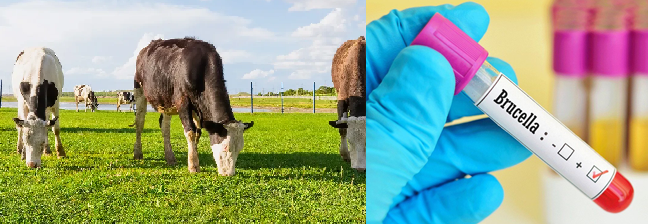
  • Brucellosis: Preventive measures launched

    Health and Animal Husbandry teams have launched preventive measures and initiated an epidemiological investigation, after one case of brucellosis, was confirmed in a prisoner.

    • The infection is passed on to humans through the ingestion of unpasteurized milk and milk products or contact with animal secretions.

    Brucellosis:

    • Brucellosis is a bacterial disease that mainly infects cattle, swine, goats, sheep and dogs.
    • Humans can get infected if they come in direct contact with infected animals or by eating or drinking contaminated animal products or by inhaling airborne agents.
    • According to the WHO, most cases of the disease are caused by ingesting unpasteurised milk or cheese from infected goats or sheep.

    Symptoms:

    • Fever, sweats, malaise, anorexia, headache and muscle pain
    • While some signs and symptoms can last for long periods of time, others may never go away.
    • These include recurrent fevers, arthritis, swelling of the testicles and scrotum area, swelling of the heart, neurologic symptoms, chronic fatigue, depression and swelling of the liver or spleen.
    • Human to human transmission of the virus is rare.
  • Plasmid

    • Scientists have developed a Covid-19 vaccine that could offer protection against not only existing and future strains of the SARS-CoV-2 coronavirus.
    • The vaccine costs $1 a dose. It uses the plasmid of E-coli bacteria to produce the vaccine.
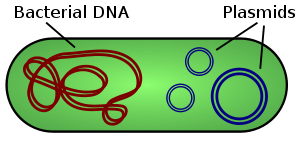
    • A plasmid is a small, extrachromosomal DNA molecule within a cell that is physically separated from chromosomal DNA and can replicate independently.

    • They are most commonly found as small circular, double-stranded DNA molecules in bacteria; however, plasmids are sometimes present in archaea and eukaryotic organisms.
  • How & why of oxygen therapy

    How Covid-19 leads to shortness of breath?

    • Shortness of breath occurs because of the way Covid-19 affects the patient’s respiratory system.
    • When a person inhales, the tiny air sacs in the lungs — alveoli — expand to capture this oxygen, which is then transferred to blood vessels and transported through the rest of the body.
    • Respiratory epithelial cells line the respiratory tract.
    • Their primary function is to protect the airway tract from pathogens and infections, and also facilitate gas exchange.
    • And the SARS-CoV-2 coronavirus can infect these epithelial cells.
    • To fight such infection, the body’s immune system releases cells that trigger inflammation.
    • When this inflammatory immune response continues, it impedes the regular transfer of oxygen in the lungs.
    • Simultaneously, fluids too build up.
    • Both these factors combined make it difficult to breathe.
    •  Low levels of oxygen triggered by Covid-19 are inflammatory markers, which include elevated white blood cell counts and neutrophil counts.

    Does a patient always show Covid symptoms when their oxygen levels drop?

    • No.
    • According to the FAQs on Covid-19 from AIIMS e-ICUS, sudden deaths have been reported at presentation to the emergency department, as well as in hospital.
    • AIIMS has said that the reasons that have been proposed include a sudden cardiac event, preceding “silent hypoxia” that went unnoticed, or due to a thrombotic complication such as pulmonary thromboembolism.
    • In silent hypoxia, patients have extremely low blood oxygen levels, yet do not show signs of breathlessness.