COP29 is set to be hosted by Azerbaijan from November 11 to 22. It has a central focus on finalising a agreement on Climate Finance Action Fund (CFAF) particularly for the post-2025 period.
Proposals by Azerbaijan:
Azerbaijan has included key proposals in the COP29 Action Agenda, such as:
Increasing global energy storage capacity by six times by 2030.
Promoting a global market for green hydrogen.
Ensuring the carbon footprint from digitisation and data centres is kept to a minimum.
About the Climate Finance Action Fund (CFAF):
The CFAF will be capitalised with contributions from fossil fuel producing countries
It will be headquartered with its secretariat in Baku, Azerbaijan.
It will rely on voluntary contributions from fossil-fuel producing countries and companies.
Azerbaijan, a major petroleum economy, will make the first contribution to kickstart the fund.
Fossil-fuel producing countries and companies will have the option to make annual contributions, either as a fixed sum or based on production volumes.
The funds will be divided equally:
50% will go toward climate projects in developing countries.
50% will support developing nations in implementing national climate action plans.
The fund will become operational once it reaches a minimum corpus of $1 billion.
At least 10 countries must commit to being shareholders for the fund to start.
20% of the revenues generated from investments will be deposited in a Rapid Response Funding Facility (2R2F) providing highly concessional and grant-based support.
What did Paris Agreement of 2015 said on Climate Finance?
Under the Paris Agreement (2015), developed countries are obligated to raise at least $100 billion annually to aid developing nations in their fight against climate change.
This amount is expected to increase after 2025.
Negotiations have been slow, and countries are still debating the quantum of finance that industrialised nations should provide.
PYQ:
[2016] With reference to the Agreement at the UNFCCC Meeting in Paris in 2015, which of the following statements is/are correct?
The Agreement was signed by all the member countries of the UN, and it will go into effect in 2017.
It aims to limit the greenhouse gas emissions so that the rise in average global temperature by the end of this century does not exceed 2ºC or even 1.5ºC above pre-industrial levels.
Developed countries acknowledged their historical responsibility in global warming and committed to donate $1000 billion a year from 2020 to help developing countries to cope with climate change.
Select the correct answer using the code given below:
(a) 1 and 3 only
(b) 2 only
(c) 2 and 3 only
(d) 1, 2 and 3
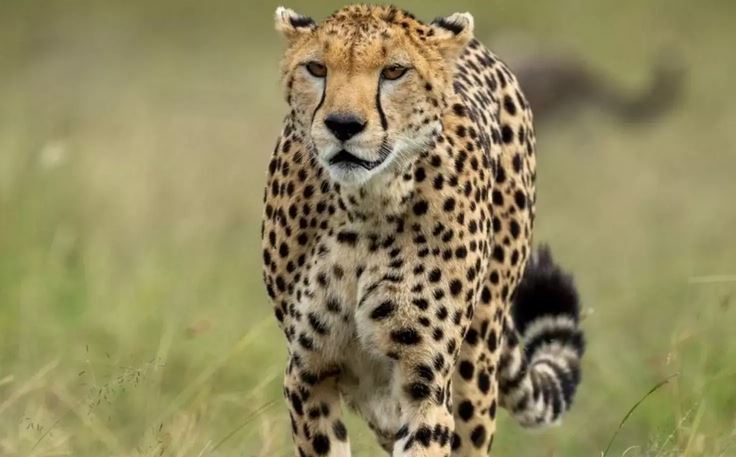
The Cheetah Action Plan (CAP) which aimed to introduce African cheetahs into India’s Open Natural Ecosystems (ONEs), is completing its two years.
About Cheetah:
The cheetah is a fast-running big cat, and there are two types of Cheetahs globally:
African (savannahs, arid mountains, and hilly deserts)
Asiatic (desert and semi-desert areas only in Iran)
Cheetahs live in three main groups: females with cubs, male coalitions, and solitary males. They hunt during the day, preferring dawn and dusk.
The global cheetah population was 6,500 mature individuals (IUCN, 2021).
IUCN Status: Vulnerable (Globally) and Critically Endangered (Asiatic Cheetah)
Cheetah Reintroduction in India:
In India, cheetahs disappeared in the early 1950s due to hunting and the loss of their habitat.
Cheetahs (i.e. Southeast African Cheetah) from Namibia were reintroduced in Kuno National Park(MP) under the Project Cheetah.
This area was deemed a habitat parallel to Maasai Mara (National Park) in Kenya, suitable for cheetahs.
Current Issues:
Despite the initial excitement, all of these cheetahs remain in captivity at Kuno.
Unfortunately, no cheetahs are currently roaming freely in the wild, raising concerns about the success of the reintroduction efforts.
What is Project Cheetah?
Aim: To conserve threatened species and restore ecosystem functions. It is spearheaded by the National Tiger Conservation Authority (NTCA).
The plan involves partnering with other countries to conserve cheetahs, enhancing conservation and eco-tourism in India’s dry forests.
The population should reach Kuno National Park’s capacity in 15 years, needing sustained support.
Sunset Clause: The concept of a sunset clause in the context of Project Cheetah refers to the long-term criteria (at least 30-40 years) for establishing a viable cheetah population in India.
PYQ:
[2012] Consider the following: (2012)
Black-necked crane
Cheetah
Flying squirrel
Snow leopard
Which of the above are naturally found in India?
(a) 1, 2 and 3 only
(b) 1, 3 and 4 only
(c) 2 and 4 only
(d) 1, 2, 3 and 4
Q ‘Climate change’ is a global problem. How India will be affected by climate change? How Himalayan and coastal states of India will be affected by climate change? (UPSC CSE 2015)
Q Describe the major outcomes of the 26th session of the Conference of the Parties (COP) to the United Nations Framework Convention on Climate Change (UNFCCC). What are the commitments made by India in this conference? (UPSC CSE 2021)
Q ‘Clean energy is the order of the day.’ Describe briefly India’s changing policy towards climate change in various international fora in the context of geopolitics. (UPSC CSE 2022)
Prelims:
With reference to the ‘Global Climate Change Alliance’, which of the following statements is/are correct? (UPSC CSE 2017) 1. It is an initiative of the European Union. 2. It provides technical and financial support to targeted developing countries to integrate climate change into their development policies and budgets. 3. It is coordinated by the World Resources Institute (WRI) and the World Business Council for Sustainable Development (WBCSD). Select the correct answer using the codes given below: (a) 1 and 2 only (b) 3 only (c) 2 and 3 only (d) 1, 2 and 3
Mentor’s Comment: The alarming trend of breaching planetary boundaries, highlighted by the shift of Earth’s “overshoot day” from 1970 to 2024, underscores the urgent need for immediate action.
So, what is Earth’s Overshoot Day?
Earth’s Overshoot Day (30 December 1970), is the day when humanity’s demand for resources exceeds the Earth’s ability to regenerate them within a year. The Global Footprint Network, an international research organization, calculates Earth Overshoot Day by dividing the Earth’s biocapacity by humanity’s ecological footprint and multiplying by 365. The remainder is the number of days when humanity exceeds the Earth’s capacity.
Now, as we have exhausted our planet’s capacity to renew its natural resources, we risk upcoming future generations with a depleted and uninhabitable world. We must change our course to not only safeguard the well-being of those currently affected by environmental degradation but also to fulfill our moral obligation to protect the rights and livelihoods of future generations.
_
Let’s learn!
Why in the News?
The Summit of the Future at the UN in September 2024 will bring together stakeholders to explore multilateral solutions to pressing global challenges, to create a more secure and equitable future for all.
About Summit of the Future 2024:
• United Nations is convening this Summit on 20 and 21 September 2024 at UN Headquarters in New York. •Theme: Multilateral Solutions for a Better Tomorrow. •Aim: To bring world leaders together to forge a new international consensus on how we deliver a better present and safeguard the future. •Major Pillars of the Summit: Sustainable development and Financing for development, International peace and security, Science and Technology, Youth and Future generations, Global Governance.
How do different countries view the legal obligations towards future generations?
An argument against Legal Duties: Some, like legal scholar Stephen Humphreys, believe the focus on future generations is just rhetoric belief that distracts from the real needs of people alive today.
It allows governments to prioritize short-term economic gains over environmental protection, by claiming they are securing a better future.
Argument for Future Generations’ Rights: In contrast, a group of legal experts, including Margaretha Wewerinke-Singh, argue that existing human rights law already protects future generations.
They point to the Maastricht Principles, which state that human rights extend across time and that states have legal duties to future generations.
How do Maastricht Principles connect future generations to Climate justice?
•Intergenerational Equity: The Principles assert that human rights are not limited to present generations; they extend to future generations as well. •Right to a Healthy Environment: A core aspect of the Principles is the right to a clean, healthy, and sustainable environment which is essential for ensuring that future generations can enjoy their fundamental human rights, including health, adequate living standards, and access to natural resources. •State Obligations: The Principles clarify that states have binding obligations which include taking proactive measures to combat climate change, promote sustainable development, and prevent environmental degradation that could harm future populations. •Guidance for Legal Frameworks: They help ensure that national and international laws reflect commitments to intergenerational justice, particularly in the context of environmental policies and climate action.
Growing Legal Recognition:
Global Scenario:
Germany’s top court ruled parts of its climate law were unconstitutional for not sufficiently protecting young people’s rights.
Pakistan’s Supreme Court upheld a ban on polluting industries to prevent “decolonizing our future generations”.
Kenya’s High Court stated the present generation has a legal obligation to maintain natural resources for the future.
Norway’sConstitution gives everyone a right to a well-maintained environment for future generations.
Indian Scenario:
Recently, the National Green Tribunal (NGT) of India has also upheld the principle of intergenerational equity in the right to environment.
Need to pay heed to ‘overshoot day’: By prioritizing sustainable practices and responsible stewardship of our planet, we should prevent the irresponsible legacy of environmental bankruptcy and ensure a thriving Earth for generations to come. The time to act is now; our collective future depends on it.
The National Green Tribunal (NGT) has instructed the Central Pollution Control Board (CPCB) to submit a fresh report on the generation and treatment of electronic waste by states and Union territories (UTs).
AboutCentral Pollution Control Board (CPCB):
Details
Constitution
Established in September 1974 under the Water (Prevention and Control of Pollution) Act, 1974.
Additional Powers
Empowered under the Air (Prevention and Control of Pollution) Act, 1981.
Also works under the provisions of the Environment (Protection) Act, 1986.
Nodal Ministry
Functions under the Ministry of Environment, Forest and Climate Change.
Main Objective
To promote the prevention, control, and abatement of water and air pollution across India.
Collects and disseminates technical and statistical data on water and air pollution.
Key Programs
National Air Monitoring Programme (NAMP)
National Water Quality Monitoring Program (NWQMP)
Oversees the National Air Quality Index (NAQI) to provide real-time data on air quality.
Initiatives
Graded Response Action Plan (GRAP)
Clean Air Campaign
PYQ:
[2018] How is the National Green Tribunal (NGT) different from the Central Pollution Control Board (CPCB)?
1. The NGT has been established by an Act whereas the CPCB has been created by an executive order of the Government.
2. The NGT provides environmental justice and helps reduce the burden of litigation in the higher courts whereas the CPCB promotes cleanliness of streams and wells and aims to improve the quality of air in the country.
Which of the statements given above is/are correct-?
The Centre has recently approved transferring 256 acres of Mumbai’s salt pan land to DRPPL, a joint venture with Adani Realty, for constructing rental housing for slum residents.
What are Salt Pan Lands?
Salt pan lands are low-lying areas where seawater is allowed to flow in and evaporate, leaving behind salt and other minerals.
These lands are part of an important ecological system that, along with mangroves, helps in flood control by absorbing excess water during heavy rainfall and high tides.
Why are Mumbai’s Salt Pan Lands at Risk?
Development Pressures: Salt pans are valuable as undeveloped land in Mumbai, leading to proposals for various development projects, including affordable housing and infrastructure.
Government Plans: Recent approvals, such as the transfer of 256 acres of salt pan land for the Dharavi Redevelopment Project, have faced criticism due to concerns that such development will encroach on these ecologically sensitive areas.
Legal and Administrative Challenges: Past plans for using saltpan lands for development have been put on hold or altered due to legal and environmental challenges, including those concerning the Coastal Regulation Zone (CRZ) norms.
Why do Salt Pans Matter?
Flood Prevention: Salt pans play a crucial role in preventing flooding in Mumbai’s eastern suburbs by acting as natural reservoirs for excess water during heavy rains and high tides.
During significant rainfall events, such as the July 2005 deluge, salt pans helped mitigate the impact of flooding, emphasizing their importance in urban flood management.
Environmental Protection: They support local biodiversity, including various species of birds and insects. Destroying or altering these lands could disrupt these ecosystems.
Climate Resilience: Salt pans contribute to the city’s climate resilience strategy, making their preservation crucial for managing future climate-related challenges.
National Context:
Across India, approximately 60,000 acres are designated as salt pan lands, distributed among states like Andhra Pradesh, Tamil Nadu, and Maharashtra.
These lands are crucial for local ecosystems and flood management, highlighting the broader importance of preserving such areas from development pressures.
Way Forward:
Strengthen Environmental Regulations: Enhance the enforcement of Coastal Regulation Zone (CRZ) norms and other environmental regulations to safeguard salt pan lands.
Promote Sustainable Land Use Planning: Integrate salt pan lands into urban planning strategies as critical components of flood management and biodiversity conservation.
Natural geographic separation is happening among Asiatic lion populations in Gujarat, and there is no immediate need to relocate them, says the director general of the International Big Cat Alliance.
About Asiatic Lion
Asiatic Lion, part of the Panthera Leo Leo subspecies, is found only in India, with a distinct belly skin fold.
Once spread across West Asia and India, now limited to Gir National Park, where the population increased in 2020.
Asiatic lions face threats from diseases, natural disasters, poaching and retaliation for livestock attacks.
They are classified as Endangered(IUCN), listed in CITESAppendix I, and protected under Schedule I of the Wildlife Protection Act.
The Asiatic Lion Conservation Project (2018-2021) aims for scientific management and community involvement.
About International Big Cat Alliance (IBCA)
Details
Objective
Protect and conserve 7 big cats: tiger, lion, leopard, snow leopard, puma, jaguar, and cheetah.
Initial Funding
₹150 crore from the Government of India for five years, with additional funding from global agencies.
Membership
Open to 96 range countries with natural big cat habitats.
Key Activities
Advocacy, knowledge sharing, capacity building, eco-tourism promotion, and resource mobilization.
Governance
General Assembly, elected Council, and Secretariat. Secretary General appointed by the Assembly.
Governance Framework
Based on the International Solar Alliance (ISA); finalized by the International Steering Committee.
India’s Role
India is home to 5 of the 7 big cats: tiger, lion, leopard, snow leopard, and cheetah.
India hosts about 70% of the world’s tiger population and has seen steady growth in its Asiatic lion population.
PYQ:
[2012] Consider the following:
Black-necked crane
Cheetah
Flying squirrel
Snow leopard
Which of the above are naturally found in India?
(a) 1, 2 and 3 only
(b) 1, 3 and 4 only
(c) 2 and 4 only
(d) 1, 2, 3 and 4
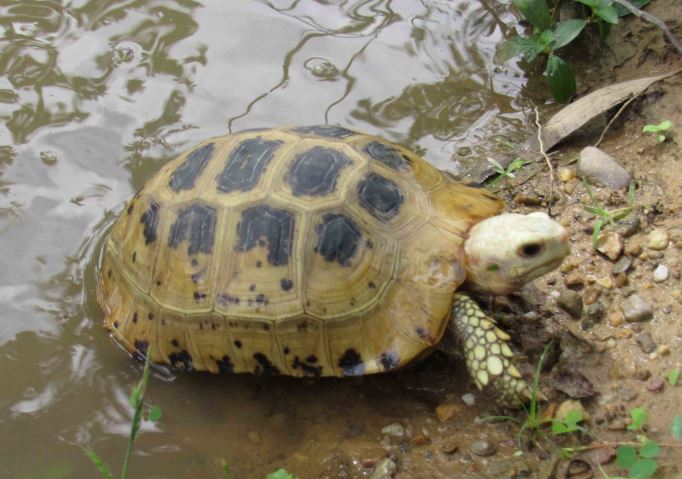
The elongated tortoise (Indotestudo elongata), a critically endangered species, was recently spotted in Haryana’s Damdama area during a research survey in the Aravalli hills.
About Elongated Tortoise:
Details
Physical Features
Medium-sized body with a yellowish-brown or olive-colored shell
Black blotches at the center of each scute
Pink ring around nostrils during breeding season
Habitat
Found in Sal deciduous and hilly evergreen forests
Distribution includes Southeast Asia, northern India, Nepal, Bhutan, Bangladesh, and other regions
Indian Range
Present in the Chhota Nagpur plateau and Himalayan foothills at elevations up to 1,000 meters
Threats
Human exploitation for food and traditional medicine
Hunting, often with the help of dogs
Habitat degradation and illegal wildlife trade
Ecological Role
Significant species in its ecosystems but highly vulnerable to environmental changes and anthropogenic pressures
Population Decline
Significant population decline due to hunting, habitat degradation, and illegal wildlife trade, despite its wide distribution
The National Tiger Conservation Authority (NTCA), the apex body responsible for tiger conservation, recently issued directives urging 19 States to prioritize the relocation of villagers residing in core tiger zones.
NTCA’s Directive:
According to the NTCA, 591 villages, comprising 64,801 families, reside in the core tiger zone, posing a significant concern for tiger conservation.
The core zone refers to the part of a tiger reserve where human activities such as hunting and forest produce collection are PROHIBITED, and tribals CANNOT reside.
Outside the core zone is the buffer zone, where certain activities are allowed but regulated.
About National Tiger Conservation Authority (NTCA):
Details
Constitution
Statutory body under MoEFCC, constituted under Wildlife (Protection) Act, 1972.
Chairmanship
Chaired by the Minister for Environment and Forests.
Structure
• 8 experts in wildlife conservation and tribal welfare.
• 3 MPs.
• Inspector General of Forests as ex-officio Member Secretary.
Objectives
• Provide statutory authority to Project Tiger.
• Enhance Centre-State accountability in managing Tiger Reserves.
• Provide parliamentary oversight.
• Address livelihood concerns of local communities.
Powers and Functions
• Approve state-prepared tiger conservation plans.
• Prevent unsustainable land use in Tiger Reserves.
• Set standards for tourism and tiger conservation guidelines.
• Conduct tiger censuses (via M-STrIPES app).
• Support biodiversity conservation through eco-development and people’s participation.
Key Initiative
• Project Tiger, a Centrally Sponsored Scheme for in-situ conservation of tigers, launched on April 1, 1973.
PYQ:
[2014] Consider the following statements:
1. Animal Welfare Board of India is established under the Environment (Protection) Act, 1986.
2. National Tiger Conservation Authority is a statutory body.
3. National Ganga River Basin Authority is chaired by the Prime Minister.
Which of the statements given above is/ are correct?
The World Health Organization (WHO) released its first-ever global guidance on managing antibiotic pollution from manufacturing processes.
What is Antibiotic Pollution?
Antibiotic pollution refers to the contamination of natural environments, particularly water and soil, by antibiotics.
This pollution occurs when antibiotics are released into ecosystems through various sources, leading to the proliferation of antimicrobial resistance (AMR).
AMR happens when bacteria, viruses, fungi, and parasites evolve to resist the effects of antibiotics, making infections harder to treat and posing a significant threat to global health.
How does Antibiotic Pollution occur from the Manufacturing Process?
Wastewater Discharge: Antibiotic plants release wastewater with residual antibiotics and active pharmaceutical ingredients (APIs) into local water bodies, contributing to drug-resistant bacteria.
Improper Solid Waste Disposal: Unused antibiotics, raw materials, and by-products are often disposed of improperly, contaminating soil and groundwater.
Inadequate Treatment: Many facilities lack effective systems to treat pharmaceutical waste, allowing antibiotics to enter the environment.
Mass Balance Calculations: Inefficient systems or mismanagement can lead to unintentional antibiotic discharge during recycling and waste estimation.
Leaks and Spills: Accidental leaks or spills during manufacturing, transportation, or storage introduce antibiotics into ecosystems.
Runoff: Rainwater can carry antibiotics from waste into nearby rivers, lakes, or agricultural land, further contaminating the environment.
![[17th September 2024] The Hindu Op-ed: Rights of future generations must guide climate debate](https://www.civilsdaily.com/wp-content/uploads/2024/09/17-SEP2-1568x882.jpg)