💥Join UPSC 2027,2028 Mentorship (July Batch) + XFactor Notes & Microthemes PDF

Subject: e-Governance

  • E-Governance is not only about utilization of the power of new technology, but also much about critical importance of the ‘use value’ of information Explain.

    The World Bank defines e-governance as the use by government agencies of information technologies that can transform relations with citizens, businesses, and other arms of government.

    E-Governance as Utilization of the Power of New Technology

    Digital Platforms like e-Office, UMANG, DigiLocker, CPGRAMS, and GeM.

    Automation and Paperless Processes: Eg- e-Procurement, e-Courts.

    Connectivity and Infrastructure Expansion: Eg- Digital India, BharatNet, and 5G rollout.

    Data Integration and Interoperability: Eg- Unified databases such as Aadhaar and SECC.

    Smart Technologies and AI Use: Eg- IndiaAI Mission, Smart Cities.

    Citizen-Government Interface: Eg- Mobile governance and MyGov platform.

    Importance of the ‘Use Value’ of Information

    Use Value – The relevance, accessibility, and usability of information by citizens, administrators, and policymakers to make informed decisions and ensure accountability.

    Informed Decision-Making: Data-driven policies depend on real-time, accurate information. Eg- Aadhaar-linked welfare, PM-KISAN, JAM Trinity

    Platforms like RTI Portal, NJDG, and CPGRAMS ensure information availability, empowering citizens to hold government accountable.

    Targeted Service Delivery: Use of information helps identify beneficiaries and prevent inclusion exclusion errors. Eg- SECC data.

    Citizen Empowerment: Information accessibility through UMANG, DigiLocker, and MyGov enables citizens to interact directly with the state.

    Evidence-Based Governance- Dashboards like PRAGATI and Aspirational District Programme use information analytics for performance monitoring.

    Crisis Management and Responsiveness: During COVID-19, platforms like CoWIN and Aarogya Setu turned data into real-time governance tools for vaccine delivery and tracking.

    Reduction in Asymmetry and Corruption: Public disclosure reduces discretion and builds public trust. Eg- GeM portal, PFMS

    Technology enables e-governance; the use value of information sustains it.

  • Implementation of information and Communication Technology (ICT) based Projects / Programmes usually suffers in terms of certain vital factors. Identify these factors, and suggest measures for their effective implementation.

    Major ICT-Based Projects/Programmes in India

    Digital India: The umbrella programme for transforming India into a digitally empowered society.

    BharatNet: connected over 2.15 lakh Gram Panchayats with 42.36 lakh route km of optical fiber.

    e-NAM: A pan-India electronic trading portal for agricultural commodities.

    UMANG App: provide access to 1,500+ central and state government services.

    DigiLocker: cloud-based platform for issuance and verification of digital documents/certificates.

    e-Courts: Aimed at digitizing the Indian judiciary to reduce case pendency and improve access.

    U-WIN: Digital platforms for tracking universal immunization.

    ONDC: Open Network for Digital Commerce, democratizing e-commerce for MSME.

    Bhashini: AI-led language translation platform to overcome linguistic barriers.

    Major Issues in ICT Projects

    Digital Divide – Eg: Rural internet penetration 59.06% vs urban 131.45% (TRAI Q1 2025).

    Cybersecurity Vulnerabilities- Eg: cybercrime losses in 2024 – 206% rise (I4C, MHA 2025).

    Data Privacy Concerns – Weak enforcement of data protection exposes citizens to misuse risks.

    Poor Digital Literacy – Eg: Only 38% women have ever used internet (NFHS-5, MoHFW).

    Inadequate Infrastructure – Internet connectivity, electricity, devices remain insufficient in remote regions.

    Capacity Constraints – lower level government staff lack training in digital tools, data analytics, AI skills.

    Targeting and verification errors exclude genuine beneficiaries from welfare schemes. Eg: PM-Kisan validation errors stranded 2.18 crore families (Dvara Research).

    Departmental Silos – Ministries operate in isolation; lack integrated digital data ecosystems for governance.

    Faulty validation processes. Eg: Aadhaar-PDS biometric failures linked to Simdega starvation death, Jharkhand (NHRC).

    Linguistic Barriers – English-dominant interfaces exclude regional language users from accessing services.

    Measures for Effective Implementation

    Bridge Digital Divide – Saturate rural connectivity through BharatNet expansion and affordable smartphones distribution.

    Strengthen Cybersecurity Framework – Implement zero-trust architecture, ICT audits, dedicated CERT-In response teams.

    Strengthen DPDP Act 2023 – Enforce verifiable consent, data minimisation, breach reporting through Data Protection Board.

    Mass Digital Literacy Drive – Scale PMGDISHA and Mission Karmayogi to all citizens and government employees.

    Citizen Co-creation – Engage citizens through MyGov, hackathons, and pilot testing before scaling projects.

    Inter-Ministerial Convergence – Adopt PM Gati Shakti model integrating data across ministries on single GIS platform.

    Outcome-Based Monitoring – Real-time dashboards, third-party audits, beneficiary feedback for course correction.

    Public-Private Partnerships – Engage startups, fintechs, and academia for innovation and last-mile delivery.

    Adopt Global Best Practices – Estonia’s X-Road, Once-Only Principle for seamless inter-departmental data sharing.

    For Viksit Bharat 2047, robust ICT governance demands inclusion, security, capacity, and citizen-centric design.

  • “The emergence of Fourth Industrial Revolution (Digital Revolution) has initiated e-Governance as an integral part of government”. Discuss.

    The Fourth Industrial Revolution (4IR), marked by digital technologies, AI, IoT, blockchain, and big data, is transforming governance, economy, and society. Klaus Schwab (WEF), “the Fourth Industrial Revolution is fundamentally changing how governments serve citizens.”

    Core Pillars of Industry 4.0:

    Autonomous Robots

    Augmented Reality

    Cloud Computing

    Internet of Things (IoT)

    System Integration

    Additive Manufacturing (3D Printing)

    Cybersecurity

    Simulation / Digital Twin

    Extensive Data Analysis (Big Data & AI)

    Digital Revolution Enabling e-Governance

    Data-Driven Governance: Use of real-time data and analytics for decision-making. Eg- PRAGATI Portal.

    Efficient Service Delivery: Eg- UMANG, DigiLocker, e-SHRAM, PM-KISAN.

    Administrative Efficiency through automation and paperless systems. Eg- e-Office, SPARROW, CPGRAMS.

    Transparency & Accountability: Eg- RTI Portal, NJDG, GeM, Open Data Portal.

    Financial Inclusion through UPI, DBT, JAM Trinity. Eg- 491 million UPI users

    Participatory governance through MyGov, CPGRAAMS.

    Digital Connectivity through Digital India, BharatNet, PM-WANI, 5G rollout.

    Cybersecurity: Creation of secure cyberspace via CERT-In and National Cyber Security Policy 2023.

    E-Administration: e-Courts, GeM, DigiLocker replacing manual, paper-based procedures.

    Digital Literacy: PMGDISHA trained 6.3 crore citizens across 2.5 lakh Gram Panchayats.

    promoting AI-based decision-making.

    Thus, the future of governance is data-led, citizen-centric, and digitally empowered.

  • Has digital illiteracy, particularly in rural areas, coupled with lack of Information and Communication Technology (ICT) accessibility hindered socio-economic development? Examine with justification.

    As per UNDP (2022), Digital access is now a core dimension of human development. However, digital illiteracy and poor ICT access have created a digital divide, restricting equitable growth.

    Digital illiteracy and accessibility

    Internet Access: Only 43% of rural households have internet access (NFHS-5, 2021).

    Digital Literacy: Merely 10% of rural population is digitally literate (NSSO data, 2022).

    Infrastructure Gaps: More than 35 thousand Gram Panchayats lack connectivity under BharatNet.

    Device Ownership: Less than 15% of rural households have computers or tablets (NSSO).

    Gender Divide: Only 33% of rural women have mobile internet access (GSMA Report, 2023).

    Exclusion and inclusion errors in digital systems reduce trust in e-services. Eg- authentication errors in Aadhaar-linked DBT or ration delivery.

    Weak Common Service Centre (CSC) Infrastructure: poor connectivity, limited equipment, and untrained staff

    Lack of People-Centric Governance: Most government websites are only in English, not in vernacular languages, excluding non-English users.

    Education and Skill Development

    Limited online learning: Only 24% rural students could attend online classes during COVID-19 (ASER 2021).

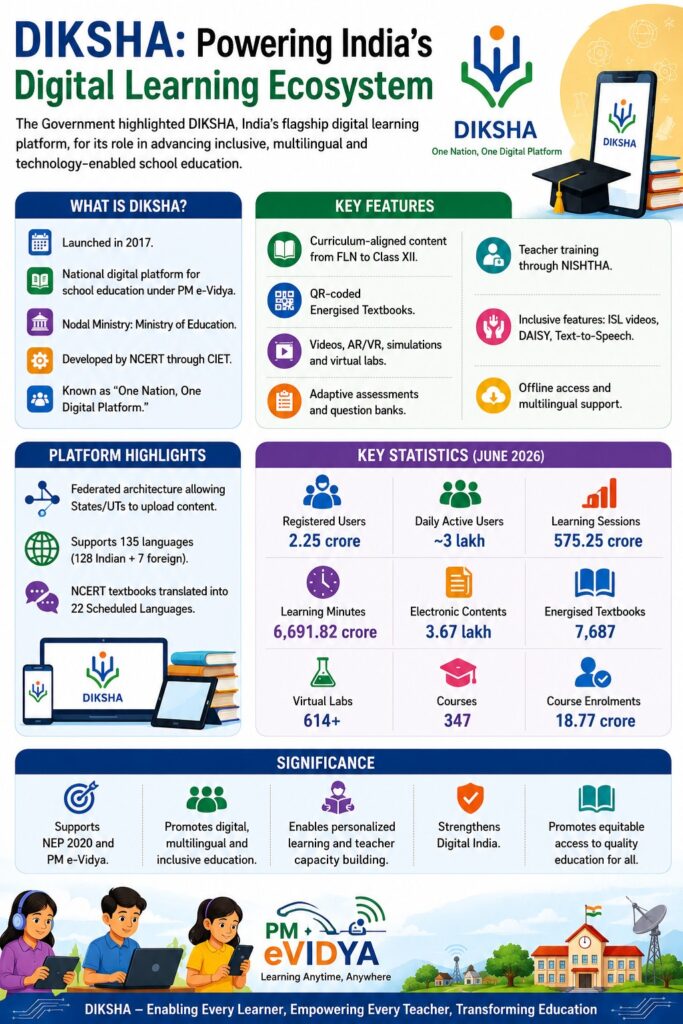
    Digital exclusion restricts access to e-learning platforms like SWAYAM, PMGDISHA, and DIKSHA.

    Employment and Livelihoods

    Rural youth miss digital job opportunities in gig economy and e-commerce.

    Farmers lack access to digital market tools like e-NAM or Kisan Suvidha App.

    Financial Inclusion

    Inability to use UPI, digital banking, and DBT systems limits access to formal finance.

    Rural MSMEs struggle with e-payments and online compliance (GST, MCA21).

    Governance and Welfare Access – Eg- exclusion from Aadhaar-based DBT due to authentication errors and poor connectivity.

    Health and Social Services – Lack of ICT prevents use of telemedicine platforms (eSanjeevani) and digital health records.

    Gender and Social Inequality – Women, SC/ST, and elderly are most excluded due to low literacy and device ownership.

    However, there are some Achievements

    Expanding Digital Infrastructure

    BharatNet: Over 2.14 lakh Gram Panchayats connected with optical fibre; 97.6% villages have mobile coverage.

    5G rollout (2022-25): 4.7 lakh towers covering 99.6% districts.

    Massive Digital Empowerment

    PMGDISHA: Trained over 6.3 crore citizens in digital literacy.

    Common Service Centres (5.3 lakh) serve as ICT hubs in 2.5 lakh Gram Panchayats.

    Financial and Payment Revolution

    UPI: Handles 85% of India’s digital payments, processing (June 2025). Enabled financial inclusion of 491 million individuals and 65 million merchants.

    e-Governance and Inclusion

    UMANG: 2,300+ services in 23 languages; 8.7 crore users.

    DigiLocker: 56 crore users; promotes paperless governance.

    Jan Soochna Portal (Rajasthan): Promotes proactive transparency.

    Way Forward

    Strengthen Digital Infrastructure: Accelerate BharatNet Phase-II to connect all Gram Panchayats

    Enhance Digital Literacy: Expand PMGDISHA and integrate digital literacy in school curricula (e-Kidz, IT clubs).

    Affordable Access: Subsidize data costs and promote public Wi-Fi hotspots (PM-WANI) in rural regions.

    Promote Local Language Content: Use platforms like BHASHINI for vernacular digital inclusion.

    Encourage PPP Models: Collaborate with private sector for last-mile connectivity and training. Eg- CSC-SPV.

    Inclusive Design: Ensure gender-sensitive and community-based ICT training modules.

    Bridging this digital divide is essential to achieve “Digital India for All” and realize the vision of inclusive growth under Viksit Bharat@2047.

  • e-governance, as a critical tool of governance, has ushered in effectiveness, transparency and accountability in governments. What inadequacies hamper the enhancement of these features?

    The 2nd ARC’s 11th Report (2008) envisioned “SMART Governance”, Simple, Moral, Accountable, Responsive, and Transparent, through e-governance.

    E-governance ushering in effectiveness

    Direct Benefit Transfer (DBT)- saved more than

    Unified Payments Interface (UPI) – Revolutionised digital payments with real-time, low-cost, interoperable transactions. Eg: 20+ billion transactions/month

    Aadhaar-Based Authentication – Universal digital identity enables paperless, presence-less service delivery at scale.

    DigiLocker – Digital storage of documents enables instant verification across services.

    PM Gati Shakti – Inter-Ministerial Convergence

    E-governance ushering in transparency

    Open, competitive procurement on Government e-Marketplace (GeM) eliminates discretion and middlemen.

    CoWIN Platform – Real-time vaccination tracking with public dashboards ensured transparent COVID response.

    Online RTI Portal

    Open Government Data Portal – data.gov.in publishes datasets across ministries for citizen scrutiny and research.

    e-Procurement and e-Tendering – reduces corruption opportunities.

    E-governance ushering in accountability

    CPGRAMS Grievance Redressal – enables time-bound resolution and tracking by citizens.

    MyGov – Direct policy participation through online consultations, polls, and feedback mechanisms.

    Social Audit via MGNREGA – Online MIS publishes worksite details, wages, attendance

    Aspirational Districts Dashboard – Real-time performance ranking of 112 districts on 49 indicators

    Inadequacies hampering e-governance

    Digital Divide – Eg: Rural internet penetration 59.06% vs urban 131.45% (TRAI Q1 2025).

    Cybersecurity Vulnerabilities- Eg: cybercrime losses in 2024 – 206% rise (I4C, MHA 2025).

    Data Privacy Concerns – Weak enforcement of data protection exposes citizens to misuse risks.

    Poor Digital Literacy – Eg: Only 38% women have ever used internet (NFHS-5, MoHFW).

    Inadequate Infrastructure – Internet connectivity, electricity, devices remain insufficient in remote regions.

    Capacity Constraints – lower level government staff lack training in digital tools, data analytics, AI skills.

    Targeting and verification errors exclude genuine beneficiaries from welfare schemes. Eg: PM-Kisan validation errors stranded 2.18 crore families (Dvara Research).

    Departmental Silos – Ministries operate in isolation; lack integrated digital data ecosystems for governance.

    Faulty validation processes. Eg: Aadhaar-PDS biometric failures linked to Simdega starvation death, Jharkhand (NHRC).

    Linguistic Barriers – English-dominant interfaces exclude regional language users from accessing services.

    Measures for Effective Implementation

    Bridge Digital Divide – Saturate rural connectivity through BharatNet expansion and affordable smartphones distribution.

    Mass Digital Literacy Drive – Scale PMGDISHA and Mission Karmayogi to all citizens and government employees.

    Citizen Co-creation – Engage citizens through MyGov, hackathons, and pilot testing before scaling projects.

    Outcome-Based Monitoring – Real-time dashboards, third-party audits, beneficiary feedback for course correction.

    Adopt Global Best Practices – Estonia’s X-Road, Once-Only Principle for seamless inter-departmental data sharing.

    For Viksit Bharat 2047, robust ICT governance demands inclusion, security, capacity, and citizen-centric design.

  • e-governance is not just about the routine application of digital technology in service delivery process. It is as much about multifarious interactions for ensuring transparency and accountability. In this context evaluate the role of the ‘Interactive Service Model’ of e-governance.

    The World Bank defines e-governance as the use by government agencies of information technologies that can transform relations with citizens, businesses, and other arms of government.

    E-Governance – multifarious interactions for ensuring transparency and accountability.

    Government to Citizen (G2C)

    UMANG, DigiLocker – Online service access.

    CPGRAMS – Grievance redressal & feedback.

    MyGov, Jan Bhagidari – Citizen participation.

    Aadhaar-DBT, PM-KISAN – Direct benefit transfers.

    Government to Business (G2B)

    MCA21, GSTN, NSWS – Digital compliance & licensing.

    GeM Portal – Transparent procurement.

    Invest India, Ease of Doing Business Dashboard – Single-window clearance.

    Government to Government (G2G)

    PRAGATI, e-Office – Inter-departmental coordination.

    PFMS – Fund tracking & financial accountability.

    Government to Employee (G2E)

    SPARROW – Online performance appraisal.

    iGOT-Karmayogi – Capacity building & training.

    e-Office, HRMS – Paperless workflow.

    Interactive service model

    Role of the ‘Interactive Service Model’ of e-Governance

    Citizen-Centric Governance: Shifts from departmental silos to integrated, citizen-focused service delivery. Eg- Sakala (Karnataka) – time-bound, transparent service guarantee.

    Bridging Government-Citizen Gap: through digital and doorstep access to services. Eg- MPeSeva in Madhya Pradesh.

    Participative and Responsive Governance through two-way interaction between citizens and government. Eg- MyGov portal.

    Trust-Based Model of Governance through transparency and proactive disclosure of information. Eg- Jan Soochna Portal (Rajasthan) – real-time public data access.

    Transparency and Accountability in Service Delivery: Enables real-time grievance tracking and service feedback loops. Eg- CPGRAMS, UMANG, GeM Portal.

    Ensures zero tolerance to corruption through traceable digital transactions. Eg- DBT has saved

    Empowered and Informed Citizens to shape governance outcomes. Eg- Open Government Data Portal, NDAP.

    From Ad hoc to Whole-of-Government Approach: Promotes integrated and citizen-centric service delivery.

    Challenges in Implementing the Interactive Service Model

    Digital Divide: Only 43% of rural households have internet access (NFHS-5, 2021), limiting inclusivity.

    Digital Literacy: Merely 10% of rural population is digitally literate (NSSO data, 2022).

    Data Privacy and Security Risks: Eg- CoWIN data leak.

    Institutional Resistance to adopt open data and feedback-based systems.

    Multiple portals without integration and interoperability hinder seamless user experience.

    Exclusion and inclusion errors in digital systems reduce trust in e-services. Eg- authentication errors in Aadhaar-linked DBT or ration delivery.

    Weak Common Service Centre (CSC) Infrastructure: poor connectivity, limited equipment, and untrained staff

    Lack of People-Centric Governance: Most government websites are only in English, not in vernacular languages, excluding non-English users.

    Way Ahead

    Strengthening Digital Infrastructure: Extend optical fibre connectivity under BharatNet to all Gram Panchayats.

    Promote citizen digital engagement and training through PMGDISHA and Digital India initiatives.

    Embedding Digital Literacy in Education: Integrate e-literacy programmes like e-Kidz and IT Clubs in school curricula.

    Business Process Reengineering (2nd ARC): Simplify procedures, ensure platform integration, and promote seamless inter-departmental coordination.

    Leverage 4th Industrial Revolution Technologies: Use AI, IoT, and blockchain for predictive governance and smart delivery systems.

    This can transform e-Governance into a trust-based, citizen-driven, and participatory governance model.

  • E-governance projects have a built-in bias towards technology and back-end integration than user-centric designs. Examine.

    The World Bank defines e-governance as the use by government agencies of information technologies that can transform relations with citizens, businesses, and other arms of government.

    E-governance Projects

    Government to Citizen (G2C) – UMANG, DigiLocker

    Government to Business (G2B) – MCA21, GSTN, GeM Portal

    Government to Government (G2G) – PRAGATI, e-Office

    Government to Employee (G2E) – SPARROW, iGOT-Karmayogi

    Built-in Bias Towards Technology and Back-End Integration

    Infrastructure-Centric Approach: Focus on servers, networks, and databases rather than citizen interface.

    Neglect of ease of access for end-users. Eg- complexity in GSTN and MCA 21 portals.

    Exclusion Errors: Aadhaar authentication failures lead to denial of benefits. Eg- Jharkhand PDS (2017) saw 10-15% exclusion (NITI Aayog).

    Technology Outpacing Capacity: Rapid adoption of AI, blockchain, and analytics without adequate digital literacy or institutional capacity at the local level.

    Lack of User-Centric Designs

    Language and Accessibility Barriers: Most portals available only in English, excluding non-English users.

    Complex Interfaces and Poorly designed websites discourage participation. Eg- multiple logins and verification steps.

    Digital Divide and Exclusion: Only 43% of rural households have internet (NFHS-5, 2021).

    Most systems lack built-in feedback loops or grievance redressal.

    Absence of Design Thinking: Systems designed from administrative, not citizen, perspective

    One-Size-Fits-All Approach: Uniform design ignores regional, gender, and social diversity, affecting inclusivity.

    However, there are few Achievements

    UMANG App: Unified access to 2,300+ government services in 23 languages

    MyGov Platform: Enables citizen consultation and idea crowdsourcing.

    Jan Soochna Portal (Rajasthan): Promotes proactive disclosure of welfare data.

    eSanjeevani Telemedicine Platform: Over 18 crore consultations, with simple, accessible interface for rural users.

    BHASHINI: Supports 35+ Indian languages, breaking language barriers and enhancing inclusivity.

    PMGDISHA: Over 6.3 crore citizens trained in digital literacy.

    Way Forward

    Adopt Design Thinking: Involve citizens in service design and usability testing.

    Local Language Interfaces: Scale BHASHINI integration across all digital services.

    Social Audits and Human Interface: Combine digital governance with local institutions for last-mile trust.

    Strengthen Digital Infrastructure: Accelerate BharatNet Phase-II to connect all Gram Panchayats

    India must move toward “Technology with Inclusion” – ensuring no beneficiary is left behind.

    Civil Society Organisations

  • Abhigyan App and NAFIS

    Why in the news?

    The Union Home Minister, Amit Shah, launched Abhigyan, a mobile application developed by the National Crime Records Bureau that enables police personnel to identify suspects through portable fingerprint scanning linked to the national fingerprint database.

    Abhigyan App

    • Enables police officers to capture fingerprints using portable scanners and smartphones.
    • Connected to the National Automated Fingerprint Identification System (NAFIS).
    • Can match fingerprints with national records in about 35 seconds.
    • Features:
      • Real-time identification
      • Mobile access to criminal records
      • Two-factor authentication
      • Field-level policing support

    National Automated Fingerprint Identification System (NAFIS)

    • Launched in 2022 by NCRB.
    • A centralized biometric database of Criminal suspects, Arrested persons, Convicts, and Prison inmates
    • Contains over 1.3 crore fingerprint records.
    • Facilitates nationwide sharing and matching of fingerprint data.

    Legal Basis

    • Based on the Criminal Procedure (Identification) Act, 2022.
    • Authorizes collection of biometric measurements including Fingerprints, Palm prints, Iris and retina scans, Photographs, and Biological samples

    Significance

    • Faster identification of repeat offenders and absconders.
    • Strengthens inter-state criminal tracking.
    • Supports crime investigation and law enforcement.
    • Raises concerns regarding Privacy, Data protection, and Scope of biometric collection from individuals not formally accused.

    Criminal Procedure (Identification) Act, 2022

    • Replaced the Identification of Prisoners Act, 1920.
    • Expands the categories of persons whose biometric data can be collected.
    • NCRB is designated as the central repository of records.
    • Data may generally be retained for 75 years, subject to prescribed conditions.

    [2018] In addition to fingerprint scanning, which of the following can be used in the biometric identification of a person?
    1. Iris scanning
    2. Retinal scanning
    3. Voice recognition
    Select the correct answer using the code given below.

    [A] 1 only

    [B] 2 and 3 only

    [C] 1 and 3 only

    [D] 1, 2 and 3

  • NIXI Celebrates 23rd Foundation Day

    Why in News?

    The National Internet Exchange of India (NIXI) is celebrating its 23rd Foundation Day on 19 June 2026, highlighting its role in strengthening India’s internet infrastructure and digital ecosystem.

    About NIXI

    • Established under the aegis of the Ministry of Electronics and Information Technology (MeitY).
    • Not-for-profit organization promoting internet growth and resilience in India.
    • Functions:
      • Management of ‘.IN’ and ‘.भारत’ country-code top-level domains (ccTLDs).
      • Internet Exchange (IX) services.
      • Allocation of IPv4 and IPv6 addresses through the Indian Registry for Internet Names and Numbers (IRINN).

    Key Achievements

    • Manages over 3.9 million .IN domain names.
    • India is among the top 10 country-code domain registries globally.
    • Operates 79 Internet Exchange Points (IXPs) across the country.
    • Supports domain names in 22 Indian languages.
    • Facilitated migration of banking platforms to the .bank.in domain.
    • India’s IPv6 penetration has reached 78.34%.

    New Initiative

    • Launch of an AI-Powered WHOIS Screening Platform.
    • Aim: Improve trustworthiness of the .IN domain ecosystem. Strengthen domain security and fraud detection.

    Key Terms

    • Internet Exchange Point (IXP): Physical infrastructure through which Internet Service Providers (ISPs) exchange domestic internet traffic. Reduces latency and international bandwidth costs.
    • WHOIS: A public database that stores information about domain name registration, ownership, and administrative details.
    • IPv6: Latest version of the Internet Protocol. Provides a vastly larger address space than IPv4.

    Significance

    • Enhances India’s digital sovereignty.
    • Strengthens internet security and resilience.
    • Promotes multilingual internet access.
    • Supports the vision of a digitally empowered society and knowledge economy.

    [2018] Which one of the following links all the ATMs in India?

    a) Indian Banks’ Association

    b) National Securities Depository Limited

    c) National Payments Corporation of India

    c) Reserve Bank of India

  • 4 Years of Jan Samarth Portal

    Why in the news?

    Jan Samarth Portal has completed four years since its launch on 6 June 2022, marking progress in digital financial inclusion and seamless credit delivery.

    About Jan Samarth Portal

    • A single-window digital platform for credit-linked government schemes.
    • Connects:
      • Beneficiaries
      • Banks
      • Government schemes through one integrated system.
    • Objective:
      • Simplify access to institutional credit.
      • Improve financial inclusion and digital lending.
    • Sectors covered:
      • Agriculture
      • Business
      • Housing
      • Renewable energy
      • Livelihoods.

    Schemes Available on the Portal

    Agriculture and Rural Sector

    • Kisan Credit Card
    • Agriculture Infrastructure Fund
    • Agri Clinics and Agri Business Centres Scheme (ACABC)

    Business and Livelihood

    • Pradhan Mantri Mudra Yojana
    • PM SVANidhi
    • Prime Minister’s Employment Generation Programme
    • Loan for Startups

    Renewable Energy

    • Rooftop Solar Installation Financing.

    Housing

    • Home loans for:
      • Economically Weaker Sections (EWS)
      • Lower Income Group (LIG)
      • Middle Income Group (MIG)

    Scale and Impact

    • Applications Processed 54.10 lakh applications processed.
    • Loan Value ₹3,00,951 crore applications processed through the portal.
    • Digital Approvals
    • 49.55 lakh beneficiaries approved.
    • ₹2,76,493.78 crore sanctioned digitally.

    [2020] Under the Kisan Credit Card scheme, short-term credit support is given to farmers for which of the following purposes?
    1.Working capital for maintenance of farm assets
    2.Purchase of combine harvesters, tractors and mini trucks
    3.Consumption requirements of farm households
    4.Post-harvest expenses
    5.Construction of family house and setting up of village cold storage facility
    Select the correct answer using the code given below:

    [A] 1, 2 and 5 only

    [B] 1, 3 and 4 only

    [C] 2, 3, 4 and 5 only

    [D] 1, 2, 3, 4 and 5