💥Mains Ready By December. Smash Mains & Smash PYQ Admissions Open

Subject: Economics

  • Oil and Gas Sector – HELP, Open Acreage Policy, etc.

    Recently, Cabinet has approved new Hydrocarbon Exploration and Licensing Policy (HELP), which will replace New Exploration Licensing Policy (NELP), for Oil and Gas exploration, Will that make any change in oil and gas exploration regime? Let’s see this in brief!

    Let’s first take an overview of New Exploration Licensing Policy (NELP)

    • New Exploration Licensing Policy (NELP) was created in 1997
    • To provide an equal platform to both Public and Private sector companies in exploration and production of hydrocarbons
    • Directorate General of Hydrocarbons (DGH) was a nodal agency for its implementation
    • Between 1998 and 2012, there were 9 rounds of oil and gas block auction (NELP 1 to NELP 9)
    • Although 126 discoveries have been made in 41 active blocks, commercial production has commenced only in 3 blocks
    • Reasons for the delay vary from inadequate technology to delayed regulatory approvals
    • Today, only 2 blocks, the Reliance Industries-operated KG D6 block and the Gujarat State Petroleum Corporation-operated Cambay onshore block, are producing oil or gas

    <Let’s Move towards new version of Policy>

    What are the Main facets of HELP policy?

    • Uniform License for exploration and production of all forms of hydrocarbon
    • Open acreage policy
    • Easy to administer Revenue sharing model
    • Marketing and pricing freedom for the crude oil and natural gas produced

    What is Unified Licensing Policy?

    • As the name suggests, all licenses are unified i.e. this allows exploration and production of all hydrocarbons such as oil, gas, coal bed methane and shale oil and gas in a block
    • Contrast this with NELP, which required separate licensing for different types of hydrocarbons time and cost overruns

    Concept of Open Acreage Policy

    • Contractors will now have the flexibility to request bidding for any block on-tap under Open Acreage Licensing
    • Earlier, they had to wait for the government to auction blocks, and could only bid for blocks that were put up for auction
    • This will enable Exploration & Production (E&P) companies choose the blocks from the area they like

    What’s new in Revenue-sharing formula?

    • Present system is that of of production sharing based on Investment Multiple and cost recovery/ production linked payment
    • Under the new revenue-sharing formula, contractors will share the revenue from the time first drop of oil/gas starts flowing from the field.

    How this policy of revenue sharing is in tune with Ease of Doing Business?

    • Earlier, under the Production/profit Sharing Methodology, it became necessary for the Govt to scrutinize cost details of private participants and this led to many delays and disputes<as govt was given its share only after all the costs were recovered, govt had to make sure that private parties do not inflate cost to reduce govt’s share>
    • To prevent loss of government revenue, there were requirements for Government approval at various stages to prevent the contractor from exaggerating the cost
    • Activities could not be commenced till the approval was given.  This process became a major source of delays and disputes
    • Under the new regime, the Govt will not be concerned with the cost incurred and will receive a share of the gross revenue from the sale of oil, gas etc.
    • So, no CAG audit, no approvals required, no micromanagement by govt.
    • Companies would worry less about the govt and focus more on operations
    Parameter Production sharing Contract Revenue Sharing Contract
    Risk Investor can take higher risk as he will be able to recover investment before sharing with govt Won’t take higher risk, has to share revenues from the first drop of oil
    Govt interference Higher as costs have to be rechecked minimal
    Useful for High risk high cost environment such as deep fields Low cost environment, fully explored blocks
    Recommended by Kelkar Committee Rangrajan Committee
    Govt policy NELP HELP

    India remains one of the least explored countries and could hold large potential resources. For example, 15 basins out of a total 26 sedimentary basins in India spread over on-land, offshore and deepwater, are estimated to hold prognosticated hydrocarbon resources of over 200 billion barrels of oil equivalent. Hence some recommend Production sharing contracts for India with investing capacity to manage such contracts better.

     Graded system of royalty to boost investment

    • The current policy regime, in fixing royalties, does not distinguish between shallow water fields (lower costs and risks) and deep/ultra-deep water fields(much higher costs and risks)
    • Under the new policy, there is lower royalty rates for difficult areas compared to NELP royalty rates
    • A graded system of royalty rates have been introduced, in which royalty rates decreases from shallow water to deepwater and ultra-deep water
    • Royalty rate for onland areas have been kept intact so that revenues to the state governments are not affected

    Pricing and Marketing Freedom

    At present, natural gas price is determined by taking into account the average of prices in gas-surplus countries such as the US, Canada and Russia, but proposed formula is market-efficient

    • New Policy allows pricing freedom to companies with a cap on prices to protect consumer interest
    • Gas price will be the lowest of imported fuel price; weighted avg of naphtha, coal and fuel oil; and the price of imported LNG
    • Policy also gives marketing freedom
    • The new price will apply to undeveloped gas discoveries and not on currently producing fields

    So, new price formula combined with lower royalty rates will help in undeveloped gas discoveries in deep-sea, ultra-deep sea and high-temperature, high-pressure fields. Increased investment and competition will eventually bring down gas prices as well as import dependence of India and lead to the development of a competitive gas market in the country.

    From NELP to HELP

    UNIFORM Licensing Policy One license for E&P of all the hydrocarbons from a block
    Open acreage system Licenses on tap
    Revenue sharing model Minimal govt interference
    Marketing and pricing freedom Sell to whoever you want at market determined prices subject to a ceiling price


    How Contract extension will help to remove further obstacles?

    • The grant of extension of production sharing contracts for 28 small, medium sized discovered fields is welcome
    • Because, this move will remove uncertainty and help contractors plan their investments in these blocks
    • The extension will be for 10 years, both for oil and gas fields or economic life of the field, whichever is earlier

    Way forward

    • India currently produces around 90 mmscmd (Million Metric Standard Cubic Meter Per Day) of gas, hardly meeting 40 per cent of the needs (imports majority of gas from Qatar)
    • Oil and Natural Gas Corp (ONGC), Reliance Industries and Gujarat State Petroleum Corporation(GSPC) will now get freedom to price gas from its idle discoveries in deep sea, ultra deepsea and high-pressure and high-temperature areas
    • So, overall we can say that, Govt’s target for O&G seems to be on track, to attract more investments, boost production and take away govt discretion from Oil and Gas Exploration
  • Food Processing Industry: Issues and Developments

    Developments in Food Processing Industry

    The food processing industry in India is increasingly seen as a potential source for driving the rural economy as it brings about synergy between the consumer, industry and the farmer. However, food processing activity is still at a nascent stage in India with low penetration.

    Importance of Food Processing Industry

    • It holds the potential of reducing enormous wastage of agricultural produce in the absence of processing technologies and cold chain facility
    • It is labour-intensive industry, which has the potential to employ 13 million people directly and 35 million people indirectly
    • This will also lead to increase in farm income, generate employment opportunities, foster forward and backward linkage effects, contribute to exports and integrate Indian economy with the rest of world

    What is the magnitude and size of this industry?

    India is strategically located at the centre of the Middle-East and South-East with a long coastal line and easy sea connectivity as well as plenty of raw material for long period which can attract multi-national companies instead of food processing.

    It is the 5th largest industry and has the highest rate of growth as well as a very high employment elasticity. Currently, it accounts for nearly 16% of total employment in the organized manufacturing sector and 32% in unorganized sector.

    What are the factors which can drive this industry?

    • India’s demographic profile with 65% of population below 30 years of age
    • Fast changing consumption patterns
    • Increase in disposable incomes of the people
    • Fast increase in the number of working women, who prefer the packaged food
    • Growth of organised food retail in India
    • Nearly 55% of the total expenditure on an average is spent on food and grocery in rural areas and nearly 40% in urban areas and only 10% of what we grow is processed in India

    What are the challenges faced by FPI?

    • Indifference of policy makers as very little outlays are allocated in Five Year Plans. In the XI FYP, an outlay of Rs. 4000 crore was earmarked out of which significant proportion was not spent
    • The legislation’s like APMC Acts, Essential Commodities Act, etc restricts free movement of commodities
    • Very poor infrastructure i.e. near absence of technologies, incubation facilities, pre-cooling chambers, irradiation facilities, etc < Food Irradiation is a technology that improves the safety and extends the shelf life of foods by reducing or eliminating microorganisms and insects>
    • High tariffs in the form of high excise duties as well as import duties
    • Non-tariff barriers in the form of stringest regulation of laboratory testing, grading, sampling and packaging
    • Lack of entrepreneurship, as 70% of the total value of food processing items manufactured in India is dominated by the unorganised sector
    • Lack of training facilities related to this industry
    • Very low Research & Development
    • Indian agriculture focuses on traditional crops rather than market-oriented agriculure with diversified commercial crops

    What are the Govt efforts to promote this industry?

    XI Five Year Plan: Govt. recognized the potential of this sector and launched Mega Food Park. It also adopted various measures such as modernization of Abattoir (Slaughter houses), modernization of meat shops, upgradation of street food, effective implementation of Food Safety and Standards Act 2006, technology upgradation, entrepreneurship development programme, setting up of training institutes, etc

    Mega Food Park

    These are the parks with state-of-art infrastructure related to all of the facilities required for food processing industry with their captive power plants, transportation and other hygienic facilities to attract food processing units to avail of this infrastructure for manufacturing food-processed items.

    The target was to set up 30 Mega Food Parks, but only 9 came up.

    XII Five Year Plan: There was significant shift in govt. policy towards this industry in XII FYP, as it allocation to the tune of 4-times as compared to XI FYP, with an outlay of Rs. 15000 crore. It also launched National Mission on Food Processing, in the background of the success of National Mission on Horticulture.

    National Mission on Food Processing

    The mission has two main principles: Decentralization and Outreach.

    The mission is totally centrally sponsored and the responsibility of its implementation lies with the state govt., who will have to take initiative in organizing the unorganized food processors into SHGs (Self-Help Group) and provide them training and other facilities. State govt. will have to bring about synergy between agriculture and food processing industries.

    Budget 2016-17

    Govt. has decided to allow 100% FDI in multi-brand retail for food products produced and processed in India will play a catalytic role in leapfrogging Indian economy.

    Future

    It will be the endeavor of policy makers to ensure that food processing industry conform to global standards of health and hygiene and adopt CODEX standards (related to food safety) laid down by Food & Agriculture Organization and WHO, for the protection of consumer health.

    Food processing needs a fillip in the form of better logistics, access to credit, technology indigenisation and implementation of food safety laws.

    Suggested Readings: 
    Untapped potential of food processing – The Hindu
    Food Processing in India – Make in India

  • Rural Infrastructure Schemes

    Has 2 departments under it – Dept. of Rural Development and Dept. of Land Resources. National level schemes under them – Pradhan Mantri Gram Sadak Yojana (PMGSY) for rural roads development, Swarnajayanti Gram Swarozgar Yojana (SGSY) rural emploment and for rural housing, Indira Awaas Yojana (IAY) & Integrated Watershed Management Programme (IWMP).

  • Genetically Modified (GM) crops – cotton, mustards, etc.

    Genetically Modified Organisms(GMO): Developments and Concerns

    Recently, Genetic Engineering Appraisal Committee (GEAC) decided to put on hold the government’s decision to commercialise genetically modified (GM) mustard, because of growing outrage by farmer groups against it. Let’s understand its basics in brief!

    What is GMO?

    • GMOs can be defined as organisms (i.e. plants, animals or microorganisms) in which the genetic material (DNA) has been altered in a way that does not occur naturally by mating and/or natural recombination
    • It allows selected individual genes to be transferred from one organism into another, also between non related species
    • Foods produced from or using GM organisms are often referred to as GM foods
    • Recently in India, GM mustard crop was introduced, which was later withdrawn. There is a raging debate going on advantages and disadvantages of GMOs
    • For a long time, further study was requested by farmers, environmentalist on GMO crops

    <Genetic Engineering Appraisal Committee (GEAC) is a body under the Environment Ministry that regulates the use of genetically modified organisms>

    Why are GM foods produced?

    • GM foods are developed – and marketed – because there is some perceived advantage either to the producer or consumer of these foods
    • This is meant to translate into a product with a lower price, greater benefit (in terms of durability or nutritional value) or both
    • Initially GM seed developers wanted their products to be accepted by producers and have concentrated on innovations that bring direct benefit to farmers (and food industry generally)
    • One of the objectives for developing plants based on GM organisms is to improve crop protection

    What really is India’s recently developed GM mustard?

    • A team of scientists at Delhi University led by former vice-chancellor Deepak Pental has bred DMH-11, a genetically modified (GM) mustard hybrid
    • Hybrids are normally obtained by crossing two genetically diverse plants from the same species
    • The first-generation offspring resulting from it has higher yields than what either of the parents is individually capable of giving
    • But there is no natural hybridisation system in mustard, unlike in, say, cotton, maize or tomato
    • What team has done is, that they have created a viable hybridisation system in mustard using GM technology
    • The resulting GM mustard hybrid, it is claimed, gives 25-30% more yield than the best varieties such as ‘Varuna’ currently grown in the country

    Is there a need, in the first place, for developing a mustard hybrid?

    • In 2014-15, India imported 14.5 million tonnes of edible oils valued at $10.5 billion
    • With the country’s own annual edible oil production stuck at below 7.5 million tonnes, of which mustard’s share is roughly a quarter
    • So, there is need to raise domestic crop yields and cut dependence on imports
    • Hybrid technology is a potential technique to boost yields, as has been successfully demonstrated in a host of crops

    What are the environmental risks?

    • GMOs contaminate forever. GMOs cross pollinate and their seeds can travel far and wide
    • It is impossible to fully clean up our contaminated gene pool
    • Genetic engineering allows plants to survive high doses of weed killers, resulting in higher herbicide residues in our food
    • GMO crops are creating ‘super weeds’ and ‘super bugs,’ which can only be killed with more toxic poisons

    Are there any advantages?

    Insect Resistance

    • Some GMO foods have been modified to make them more resistant to insects and other pests
    • This means the amount of pesticide chemicals used on the plants are reduced, so their exposure to dangerous pesticides are also reduced

    Stronger Crops

    • Another benefit that GM technology is believed to bring about is that crops can be engineered to withstand weather extremes and fluctuations,
    • This means that there will be good quality and sufficient yields even under a poor or severe weather condition

    Environment Protection

    GM crops often requires less time, tools and chemicals, and may help with reducing greenhouse gas emissions, soil erosion and environmental pollution

    More Nutritious Foods

    According to the UN Food and Agricultural Organization (FAO), some GM foods have been engineered to become more nutritious in terms of vitamin or mineral content.

    Economic Benefits

    • Larger production leading to increased farm income, reduced poverty, low food prices and thus reduced hunger and malnutrition.
    • Besides new food products are also included, diversifying food varieties

    Then, Why has there been so much concern about GM foods among some public interest groups, activists and consumers?

    • Since the first introduction on the market in the mid-1990s of a major GM food (herbicide-resistant soybeans), there has been concern about such food among activists and consumers, especially in Europe
    • In fact, public attention has focused on the risk side of the risk-benefit equation, often without distinguishing between potential environmental impacts and public health effects of GMOs
    • Consumers have questioned the validity of risk assessments, both with regard to consumer health and environmental risks, focusing particulary on long-term effects
    • Consumer concerns have triggered a discussion on the desirability of labeling GM foods, allowing for an informed choice of consumers

    What further developments can be expected in the area of GMOs?

    • GM organisms are likely to include plants with improved resistance against plant disease or drought, crops with increased nutrient levels, fish species with enhanced growth characteristics
    • For non-food use, they may include plants or animals producing pharmaceutically important proteins such as new vaccines
    Published with inputs from Arun
  • Organic Farming – Paramparagat Krishi Vikas Yojna (PKVY), NPOF etc.

    The market for organic food in this country is likely to treble in the next four years, according to a report from business chamber Assocham and TechSci Research, a non-government body.

    source

    • What is organic farming?
    • Need for organic farming in India
    • Key characteristics of organic farming
    • Steps taken by the Government to promote organic farming in India
    • Key features of PKVY
    • Status of Organic farming in India
    • Why demand for organic products are increasing in recent years?
    • Challenges and constraints faced by Organic farming in India

    What is organic farming?

    Organic farming system in India is not new and is being followed from ancient time.

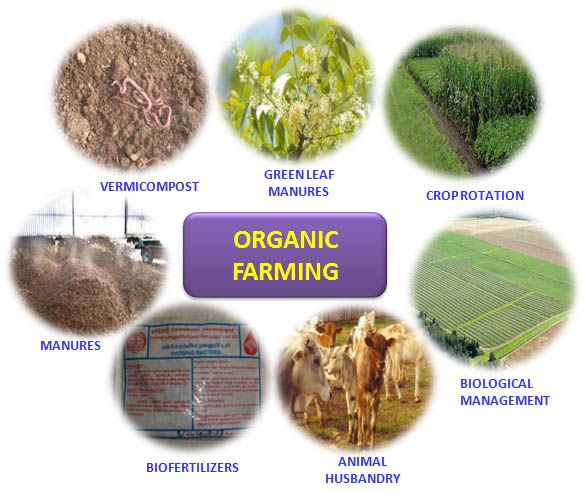
    It is a method of farming system which primarily aimed at cultivating the land and raising crops in such a way, as to keep the soil alive and in good health by use of organic wastes (crop, animal and farm wastes, aquatic wastes) and other biological materials along with beneficial microbes (biofertilizers) to release nutrients to crops for increased sustainable production in an eco friendly pollution free environment.

    Need for organic farming in India

    With the increase in population our compulsion would be not only to stabilize agricultural production but to increase it further in sustainable manner.

    The scientists have realized that the ‘Green Revolution’ with high input use has reached a plateau and is now sustained with diminishing return of falling dividends.

    Thus, a natural balance needs to be maintained at all cost for existence of life and property. The obvious choice for that would be more relevant in the present era, when these agrochemicals which are produced from fossil fuel and are not renewable and are diminishing in availability. It may also cost heavily on our foreign exchange in future.

    The key characteristics of organic farming include

    • Protecting the long term fertility of soils by maintaining organic matter levels, encouraging soil biological activity, and careful mechanical intervention
    • Providing crop nutrients indirectly using relatively insoluble nutrient sources which are made available to the plant by the action of soil micro-organisms
    • Nitrogen self-sufficiency through the use of legumes and biological nitrogen fixation, as well as effective recycling of organic materials including crop residues and livestock manures
    • Weed, disease and pest control relying primarily on crop rotations, natural predators, diversity, organic manuring, resistant varieties and limited (preferably minimal) thermal, biological and chemical intervention
    • The extensive management of livestock, paying full regard to their evolutionary adaptations, behavioral needs and animal welfare issues with respect to nutrition, housing, health, breeding and rearing
    • Careful attention to the impact of the farming system on the wider environment and the conservation of wildlife and natural habitats

    Steps taken by the Government to promote organic farming in India

    Government is promoting Organic farming through various schèmes

    1. National Project on Organic Farming (NPOF)
    2. National Horticulture Mission (NHM)
    3. Horticulture Mission for North East and Himalyan States (HMNEH)
    4. Rashtriya Krishi Vikas Yojana (RKVY)
    5. Network Project on Organic Farming of Indian Council Agricultural Research (ICAR).
    6. In addition to this, Government is implementing  a Cluster based programme   to encourage the farmer for promoting organic farming called Paramparagat Krishi Vikas Yojana (PKVY)

    Key features of PKVY

    • Groups of farmers would be motivated to take up organic farming under Paramparagat Krishi Vikas Yojana (PKVY). Fifty or more farmers will form a cluster having 50 acre land to take up the organic farming under the scheme.
    • In this way during three years 10,000 clusters will be formed covering 5.0 lakh acre area under organic farming. There will be no liability on the farmers for expenditure on certification.
    • Every farmer will be provided Rs. 20,000 per acre in three years for seed to harvesting of crops and to transport produce to the market.
    • Organic farming will be promoted by using traditional resources and the organic products will be linked with the market.
    • It will increase domestic production and certification of organic produce by involving farmers

    Status of Organic farming in India

    source

    • The current market (pulses and foodgrain the bulk) of organic food is at $500 million (about Rs 3,350 crore). It was $360 million (Rs 2,400 crore) in 2014.
    • Although nascent, the Indian organic food market has begun growing rapidly in last few years. A report by Yes Bank in 2014 said that the organic food sector is growing at about 20% in India, with more than 100 retail organic outlets in Mumbai and about 60 in Bangalore.
    • Total area under organic certification in India in 2013-14 is estimated to be 4.72 million ha with 15 per cent are certified and the rest under forest area. India has the highest number of organic producers in the world (5,97,873), mainly due to small holdings.
    • During 2013-14, India exported 135 products, realisation from which was to the tune of $403, million including $183 million contributed by exports of organic textile. Major destinations for organic products from India are the US, EU, Canada, Switzerland, Australia, New Zealand, South-East Asian countries, West Asia, South Africa, etc.
    • Soyabean (70 per cent) lead among the products exported followed by cereals and millets other than basmati (six per cent), processed food products (five per cent), basmati rice (four per cent), sugar (three per cent), tea (two per cent), pulses and lentils (one per cent), dry fruits (one per cent), spices (one per cent).

    Why is the demand for organic products increasing in recent years

    source

    Challenges and constraints faced by Organic farming in India

    • The most important issue facing organic farming is its failure to raise the productivity to keep pace with the growing population. Studies, according to a latest report in The Wall Street Journal, have shown that organic yields are far less than yields of conventional farming. As per the 2011 survey data of National Agricultural Statistics Service, a branch of the US organic farming would require 14.5 million acres more to equal conventional farming’s production of 14 staple (human-focused food crops).
    • There is a wide gap in scientific validation and research compared to the progress in the same for general agriculture. Also, there is a need to aid farmers with advisory services (technical and managerial support to form cluster and adopt best management practices).
    • Due to lack of government support, the courage needed to convert inorganic land into organic land is missing also there is  absence of globally recognized consultancy for timely guidance to farmers. Thus, huge support from states and the Centre is required.
    • Key problems faced by organic farmers during the transition phase are non-realisation of premium.

    References:

  • Irrigation In India – PMKSY, AIBP, Watershed Management, Neeranchan, etc.

    Neeranchal National Watershed Project

    As a part GS-3 – Irrigation systems, We need to focus on relevant projects/schemes launched in 2015-16. We will try to bring all such important projects/schemes. One such project is, “Neeranchal” for the Watershed Component of the Pradhan Mantri Krishi Sinchayi Yojana (PMKSY), Let’s see it in brief!

    What is a watershed?

    A watershed also known as drainage basin is an extent or an area of land where surface water from rain, melting snow or ice converges to a single point at a lower elevation, usually the exit of the basin, where the waters join another waterbody, such as a river, lake etc.


    What is watershed management?

    • Watershed management is an adaptive, comprehensive, integrated multi-resource management planning process that seeks to balance healthy ecological, economic, and cultural/social conditions within a watershed.
    • Watershed management serves to integrate planning for land and water; it takes into account both ground and surface water flow, recognizing and planning for the interaction of water, plants, animals and human land use found within the physical boundaries of a watershed.

    What are the objectives of Neeranchal?

    • The Neeranchal Project will support PMKSY to improve watershed management practices and demonstrate measurable results in selected sub-watersheds
    • It will introduce new hydrological approaches and innovative tools for community participation with a more integrated watershed planning process
    • Pilot new field practices that will improve conservation outcomes, water availability, agricultural yields and climate resilience, and scale up a more effective monitoring and evaluation system to track performance
    • The project will be implemented by the Ministry of Rural Development over a six-year period (2016-21)

    Let’s first learn about Pradhan Mantri Krishi Sinchai Yojana (PMKSY)

    • PMKSY is a central scheme that aims at providing irrigation facilities to every village in the country by converging ongoing irrigation schemes
    • The vision of extending the coverage of irrigation ‘Har Khet Ko Paani’ and improving water use efficiency ‘More crop per drop’ in a focused manner
    • With end to end solution on source creation, distribution, management, field application and extension activities
    • A dynamic annual fund allocation methodology mandates states, to allot more funds to irrigation sectors for becoming eligible to access funds under this scheme, is being considered

    The Pradhan Mantri Krishi Sinchayee Yojana programme should concentrate on 2 important things –

    • First, it should quickly put to use 20–40 million ha of unutilised irrigation potential created in major, medium and minor irrigation projects
    • Second, it should provide better quality power rations to farmers during the time of peak irrigation demand.
    • Madhya Pradesh has done precisely this and multiplied the state’s irrigated area quickly, at small incremental cost, delivering double-digit agricultural growth

    What about funding ?

    • The Government of India and the World Bank have signed a US$ 178.50 million credit for the Neeranchal National Watershed Project to improve watershed management in rural rainfed areas
    • The credit will support the watershed activities of the PMKSY in selected states of Andhra Pradesh, Telangana, Chhattisgarh, Gujarat, Jharkhand, Madhya Pradesh, Maharashtra, Odisha and Rajasthan
    • It will cover about 400 sub-watersheds of about 5,000 ha each and reach approximately 482,000 farmer households and two million people
    • The credit is from the International Development Association (IDA) – the World Bank’s concessionary lending arm with a maturity of 25 years, including a 5 year grace period

    [IDA – International financial institution which offers concessional loans and grants to the world’s poorest developing countries. The IDA is a member of the World Bank Group]

    Concerns that will be addressed by Neeranchal-

    • Bring about institutional changes in watershed and rainfed agricultural management practices in India
    • Build systems that ensure watershed programmes and rainfed irrigation management practices are better focused, and more coordinated, and have quantifiable results
    • Devise strategies for the sustainability of improved watershed. management practices in programme areas, even after the withdrawal of project support
    • Through the watershed plus approach, support improved equity, livelihoods, and incomes through forward linkages, on a platform of inclusiveness and local participation


     What are the benefits?

    • Lead to reducing surface runoff of rainwater
    • It will increase recharge of groundwater and better availability of water in rainfed areas
    • It resulting in incremental rainfed agriculture productivity, enhanced milk yield and increased cropping intensity through better convergence related programmes in project areas
    • It will strengthen and provide technical assistance to enhance delivery capacity
    • This is an area development programme and all people living in the project area will be benefitted

    What are the challenges ahead?

    • Enhanced participation of communities, building stronger capacities and systems to plan, implement, monitor and post-project sustainability of local institutions and assets
    • These challenges, if not resolved, can result in implementation delays, slow disbursements and benefits

    Want to read more?

    Published with inputs from Arun