The Shiveluch volcano on the Kamchatka Peninsula in the Russian Far East has increased its activity and is now in danger of erupting violently.
About Shiveluch
Shiveluch is one of the largest and most active volcanoes in Kamchatka, having erupted at least 60 times in the past 10,000 years.
Kamchatka is home to 29 active volcanoes, part of a vast belt of Earth known as the “Ring of Fire” which circles the Pacific Ocean and is prone to eruptions and frequent earthquakes.
It has two main parts: Old Shiveluch, which tops 3,283 metres (10,771 ft), and Young Shiveluch – a smaller, 2,800-metre peak protruding from its side.
Young Shiveluch lies within an ancient caldera – a large crater-like basin that likely formed when the older part underwent a catastrophic eruption at least 10,000 years ago.
It is this part that has become extremely active; the lava dome continues to grow and that stronger “fumarole activity” has been observed.
All 197 Parties to the UN Framework Convention on Climate Change (UNFCCC) agreed to enable financing for loss and damage to those that need it the most.
What is Loss and damage (L&D) fund?
Adverse impact of climate change: Loss and damage (L&D) refer to the adverse impacts that vulnerable communities and countries face as a result of a changing climate.
Making the rich countries pay: Rich countries had resisted L&D payments for years. Under pressure, they could no longer duck their responsibility.
Formation of Transition committee: The COP27 decision includes the development of a Transition Committee dedicated to L&D, with equal representation from rich and poor countries.
Operationalizing the funding arrangement: The committee has been tasked with configuring institutional arrangements, identifying and expanding sources of funding, and coordinating with existing funding arrangements — by COP28 in the UAE next year.
What role India can play in facilitating the Loss & Damage?
Develop a Global Vulnerability Index: Last year, CEEW developed a Climate Vulnerability Index for India. It found that over 80 per cent of Indians are highly vulnerable to extreme climatic disasters. Such data in the public domain helps map critical vulnerabilities and plan strategies to build resilience by climate-proofing communities, economies and infrastructure.
South-led research consortium: India would do well to convene experts and encourage the development of a South-led research consortium dedicated to scientific exploration of “event attribution” science. This would enrich climate science, draw attention to the more vulnerable regions, build research capacity in developing countries, and strengthen the L&D framework.
Champion the Early Warning Systems Initiative: The Executive Action Plan for the Early Warnings for All Initiative, unveiled at COP27. It aims to ensure every person on Earth is protected by early warning systems within five years. It has called for targeted investments of $ 3.1 billion during 2023-27, which could avoid annual losses of $3-16 billion against natural hazards in developing countries.
Leverage the Coalition for Disaster Resilient Infrastructure (CDRI): India founded the CDRI “to promote the resilience of new and existing infrastructure systems to climate and disaster risks in support of sustainable development”. CDRI is currently undertaking a Fiscal Risk Assessment study to support the development of a comprehensive disaster-risk financing strategy in more than 35 countries and multilateral entities.
Other strategies for Loss & Damage funds
Pressurizing the developing countries: Pressure must also be put on large emerging economies, with rising emissions, to contribute to L&D financing. Limiting L&D compensation depends on increasing adaptation spending.
Global Resilience Reserve Fund: The global resilience reserve fund is capitalized by IMF Special Drawing Rights, to create an insurance cushion against severe physical and macroeconomic shocks that climate risks would impose.
Enhanced and accelerated emissions mitigation: While countries around the globe released its long-term low-carbon emissions development strategy last week, it must use scientific methods to quantify its long-term targets, to give direction to industry and investors.
Conclusion
Loss & Damage financing is just a band-aid. Global emissions must reduce by 50 per cent by 2030 but there is no opprobrium for failing to present credible plans to do so. India drew attention to sustainable lifestyles via its Lifestyle for Environment mission. World must change its attitude towards climate change because it is already too late.
Mains Question
Q. What is Loss and damage fund agreed Under COP 27? What role India can play for global south for facilitating the L&D fund?
If India has to achieve the set of goals enunciated in the ‘Panchamrit’ resolution of the COP26 climate summit in Glasgow 2021, it is necessary that Panchayati raj institutions, the third tier of government which are closest to the people are involved.
Major impact on rural areas: The greater variability in rainfall and temperatures, etc. experienced of late has directly affected the livelihood and well-being of millions of rural households.
PRI excluded from National action plan: India’s National Action Plan on Climate Change 2008 identifies a range of priority areas for coordinated intervention at the national and State levels. However, there would have been better results had Panchayati raj institutions been given a greater role.
Decentralization of climate efforts are necessary: Through the ongoing decentralization process which ensures people’s participation, panchayats can play a crucial and frontline role in coordinating effective responses to climate risks, enabling adaptation and building climate-change resilient communities.
The climate change discussion also focuses on the emerging and widely accepted concept of ‘carbon neutrality’ which puts forth the notion of zero carbon developments, nature conservation, food, energy and seeds sufficiency, and economic development.
As human activities are the cause of the current climate crisis, mitigating greenhouse gas emissions and adapting to growing and extreme weather events are critical.
Zero carbon development which promotes sustainable living is the effective solution to reducing anthropogenic emissions and improving climate resilience.
Efforts of Panchayat raj institutes to fight climate change: Case study of Meenangadi
Carbon neutral Meenangadi: In 2016, the panchayat envisaged a project called ‘Carbon neutral Meenangadi’, the aim being to transform Meenangadi into a state of carbon neutrality. There were campaigns, classes and studies to begin with. An awareness programme was conducted initially. A greenhouse gases emission inventory was also prepared. The panchayat was found to be carbon positive.
Implementation of Multi-sectoral schemes: An action plan was prepared by organising gram Sabha meetings. Socio-economic surveys and energy-use mapping were also carried out. Several multi sector schemes were implemented to reduce emissions, increase carbon sequestration, and preserve the ecology and bio-diversity.
Tree plantation Initiative: ‘Tree banking’ was one of landmark schemes introduced to aid carbon neutral activities which encouraged the planting of more trees by extending interest-free loans. Interestingly 1,58,816 trees were planted which have also been geo-tagged to monitor their growth.
People’s participation: The entire community was involved in the process, with school students, youth, and technical and academic institutions given different assignments. Five years have passed and the changes are visible. Local economic development was another thrust area where LED bulb manufacturing and related micro-enterprises were initiated.
Government of India’s effort to support climate change: ‘Clean and Green Village’
SDG theme: The Ministry of Panchayati Raj has focused its attention on localising the Sustainable Development Goals (SDGs) on a thematic basis.
Various activities delegated to PRI: ‘Clean and Green Village’ has been identified as the fifth theme where panchayats can take up activities on natural resource management, biodiversity protection, waste management and afforestation activities.
Documentation of best practices: According to the latest data, 1,09,135-gram panchayats have prioritised ‘Clean & Green Village’ as one of their focus areas for 2022-23. The Ministry has highlighted the need for the documentation of best practices and for wider dissemination.
Integrated panchayat development plan: The net result is that many panchayats are coming forward with their eco plans. The integrated Panchayat Development Plan prepared by all panchayats is a stepping stone towards addressing many of the environmental concerns of villages.
Conclusion
In today’s age of rapid technological advancements and digital transformation, India’s rural local bodies are silently contributing their strength to ensuring the global target of carbon neutrality, as envisaged in the UN conference on climate change.
Mains Question
Q. What role PRIs can play in a fight against climate change? What is the scheme of “Clean and Green Village” of Ministry of Panchayat Raj?
India’s decision not to vote against a proposal to re-open the international trade in ivory at the ongoing conference of the Convention on International Trade in Endangered Species of Wild Fauna and Flora (CITES).
What is CITES?
CITES stands for the Convention on International Trade in Endangered Species of Wild Fauna and Flora.
It is as an international agreement aimed at ensuring “that international trade in specimens of wild animals and plants does not threaten their survival”.
It was drafted after a resolution was adopted at a meeting of the members of the International Union for Conservation of Nature (IUCN) in 1963.
It entered into force on July 1, 1975, and now has 183 parties.
The Convention is legally binding on the Parties in the sense that they are committed to implementing it; however, it does not take the place of national laws.
India is a signatory to and has also ratified CITES convention in 1976.
CITES Appendices
CITES works by subjecting international trade in specimens of selected species to certain controls.
All import, export, re-exports and introduction from the sea of species covered by the convention has to be authorized through a licensing system.
It has three appendices:
Appendix I includes species threatened with extinction. Trade-in specimens of these species are permitted only in exceptional circumstances.
Appendix II provides a lower level of protection.
Appendix III contains species that are protected in at least one country, which has asked other CITES Parties for assistance in controlling trade.
What is the news?
India remained absent during the CITES conference aimed to re-open the international trade in ivory.
Why such move by India?
Elephant remains one of India’s most powerful cultural and religious symbols.
A pioneer in banning even the domestic trade in ivory in 1986, India has always been at the forefront of global elephant conservation initiatives.
What is the tussle over Ivory?
The international ivory trade was globally banned in 1989 when all African elephant populations were put in CITES Appendix I.
However, the populations of Namibia, Botswana, and Zimbabwe were transferred to Appendix II in 1997, and South Africa’s in 2000 to allow two “one-off sales”.
This is because ivory stockpiled from natural elephant deaths and seizures from poachers.
Subsequently, Namibia’s proposal for allowing a regular form of controlled trade in ivory by delisting the elephant populations of the four countries from Appendix II was rejected at CoP17 (2016) and CoP18 (2019).
At the ongoing CoP19, the proposal was moved by Zimbabwe but met the same fate.
These are low income countries often battling to generate some revenue from Ivory trade.
India and ivory trade
The endangered Asian elephant was included in CITES Appendix I in 1975, which banned the export of ivory from the Asian range countries.
In 1986, India amended The Wild Life (Protection) Act, 1972 to ban even domestic sales of ivory.
After the ivory trade was globally banned, India again amended the law to ban the import of African ivory in 1991.
In 1981 when New Delhi hosted COP3, India designed the iconic CITES logo in the form of an elephant.
Over the years, India’s stand has been unequivocal on the ivory issue.
What has changed now?
After protracted negotiation, India signed an agreement in July with Namibia to fly in cheetahs.
India has agreed to promote “sustainable utilisation and management of biodiversity” by supporting advances in this area of bilateral cooperation “at international forums including meetings of” CITES.
While the word “ivory” was not mentioned, Namibia sought India’s support under this agreement.
The Tamil Nadu Government has issued a notification declaring Arittapatti in Melur block, Madurai district, a biodiversity heritage site.
About Arittapatti
Arittapatti village, rich in ecological and historical significance, houses around 250 species of birds including three important raptors -birds of prey, namely the Laggar Falcon, the Shaheen Falcon and Bonelli’s Eagle.
It is also home to wildlife such as the Indian Pangolin, Slender Loris and pythons.
The biodiversity-rich area is surrounded by a chain of seven hillocks or inselbergs that serve as a watershed, charging 72 lakes, 200 natural springs and three check dams.
The Anaikondan tank, built during the reign of Pandiyan kings in the 16th century is one among them, the government notification said.
Several megalithic structures, rock-cut temples, Tamil Brahmi inscriptions and Jain beds add to the historical significance of the region.
What is a Biodiversity Heritage Site (BHS)?
Biodiversity Heritage Sites are rich Biodiversity Areas and are important components of local ecosystems which are being conserved and managed by the society.
BHS are declared as per provision under Section 37(1) of Biological Diversity Act, 2002.
The State Government may, from time to time in consultation with the local bodies, notify the areas of biodiversity importance as biodiversity heritage sites under this Act.
India has expressed its concern over the draft decision text to implement the Koronivia Joint Work on Agriculture.
What is the news?
India said developed countries are blocking a pro-poor and pro-farmer decision by insisting on expanding the scope for mitigation to agriculture.
Developed countries are thereby compromising the very foundation of food security in the world.
What is the Koronivia Joint Work?
The KJWA is a decision under the United Nations Framework Convention on Climate Change (UNFCCC).
It seeks to recognize the unique potential of agriculture in tackling climate change.
It emphasizes reducing emissions of greenhouse gases due to the agriculture sector.
The Koronivia decision addresses six interrelated topics on soils, nutrient use, water, livestock, methods for assessing adaptation, and the socio-economic and food security dimensions of climate change across the agricultural sectors.
India’s arguments against Koronivia joint work
India said that agricultural emissions are not “luxury” emissions but “survival” emissions of the poor.
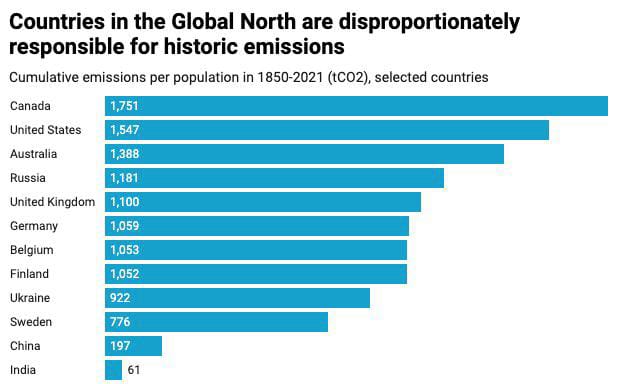
The world is facing a climate crisis today because of the excessive historic cumulative emissions by the developed nations.
These nations are unable to reduce their emissions domestically by any worthwhile change in their lifestyles.
Rather, they are searching for cheaper solutions abroad.
In most developing countries across the world, agriculture is done by small and marginal farmers who toil hard and brave the vagaries of extreme weather and climate variability to ensure food security.
Back2Basics: Agricultural Emissions
Farms emitted 6 billion tonnes of GHGs in 2011, or about 13 percent of total global emissions.
That makes the agricultural sector the world’s second-largest emitter, after the energy sector (which includes emissions from power generation and transport).
Most farm-related emissions come in the form of methane (CH4) and nitrous oxide (N2O).
Cattle belching (CH4) and the addition of natural or synthetic fertilizers and wastes to soils (N2O) represent the largest sources, making up 65 percent of agricultural emissions globally.
Smaller sources include manure management, rice cultivation, field burning of crop residues, and fuel use on farms.
A recent report by Lancet, has traced in detail the intimate link between changing weather events and their impact on the health of people.
What is the news?
The 2022 Lancet Countdown on Health and Climate Change: Health at the Mercy of Fossil Fuels points out that the world’s reliance on fossil fuels increases the risk of disease, food insecurity and other illnesses related to heat.
Impact of climate change on health
(1) Extreme Events
Heatwaves: The Lancet report indicates that rapidly increasing temperatures exposed vulnerable populations (adults above 65 years old and children younger than 1) to 3.7 billion more heatwave days in 2021 than annually in 1986–2005.
Shift in patterns: There is no doubt that events such as floods, droughts and recurrent cyclones are direct outcome of climate change.
(2) Impact on health
Infectious diseases: The changing climate is affecting the spread of infectious disease, raising the risk of emerging diseases and co-epidemics. For instance, coastal waters are becoming more suited for the transmission of Vibrio pathogens.
More vector borne diseases: The number of months suitable for malaria transmission has increased in the highland areas of the Americas and Africa.
More lives loss: The WHO has predicted that between 2030 and 2050, climate change is expected to cause approximately 2,50,000 additional deaths per year, from malnutrition, malaria, diarrhoea and heat stress.
Others: Low air quality, Rise in zoonotic diseases.
(3) Food security
Crop loss: Higher temperatures threaten crop yields directly, with the growth season shortening for many cereal crops.
Malnutrition: The prevalence of undernourishment increased during the COVID-19 pandemic, and up to 161 million more people faced hunger in 2020 than in 2019.
Way forward
Health-centred response: A health-centred response to the coexisting climate, energy, and cost-of-living crises provides an opportunity to deliver a healthy, low-carbon future.
Realization of the problem: The governments’ commitment to assess and address the threats from climate change, are positive signs, the report stresses.
Holistic approach: This is the way a health-centred response would work – it would reduce the likelihood of the most catastrophic climate change impacts, while improving energy security and creating an opportunity for economic recovery.
Shift in dietary patterns: The report also calls for an accelerated transition to balanced and more plant-based diets, as that would help reduce emissions from red meat and milk production, and prevent diet-related deaths.
Easing the healthcare: The report emphasizes reducing the strain on health-care providers, and leading to more robust health systems.
A new satellite-based system will now help governments detect methane emissions and tackle them. The Methane Alert and Response System (MARS) was launched at the 27th Conference of Parties (COP27) to the United Nations Framework Convention on Climate Change in Sharm El-Sheikh, Egypt.
What is Methane Alert and Response System (MARS)?
MARS is a part of global efforts to slow climate change by tracking the global warming gas.
The system will be the first publicly available global system to connect methane detection to notification processes transparently.
The data-to-action platform was set up as part of the UN Environment Programme’s (UNEP) International Methane Emissions Observatory (IMEO) strategy to get policy-relevant data into the right hands for emissions mitigation.
How the “MARS” will work?
The Methane Alert and Response System, or MARS, will integrate data from a large number of existing and future satellites to identify significant methane emission events anywhere in the world.
It will send out notifications to the relevant stakeholders and support and track mitigation progress.
According to the UN statement MARS will track the large point emission sources, mainly in the fossil fuel industry, but with time, would be able to detect emissions from coal, waste, livestock and rice fields as well.
UNEP will continue to monitor the event location and make the data and analysis available to the public between 45 and 75 days after detection.
Methane a dangerous greenhouse gas
A major greenhouse gas: Methane is the second-most common of the six major greenhouse gases, but is far more dangerous than carbon dioxide in its potential to cause global warming.
One of major contributor of GHG emissions: Contribution Accounting for about 17 per cent of the current global greenhouse gas emissions.
One of the key reasons behind Temperature rise: Methane is blamed for having caused at least 25 to 30 per cent of temperature rise since the pre-industrial times.
Methane largely a Sectoral gas: Unlike carbon dioxide, methane is largely a sectoral gas, and there are only a few sources of emission.
Few sources large emissions of methane: The global warming potential of methane is about 80 times that of carbon dioxide. It accounts for a small portion of human-induced greenhouse gas emissions compared to carbon dioxide.
To achieve the target set by Global methane pledge: At the Glasgow climate conference last year, nearly 100 countries had come together in a voluntary pledge the Global Methane Pledge to cut methane emissions by at least 30 per cent by 2030 from the 2020 levels. More countries have joined in this initiative since then, bringing the total to nearly 130.
To keep the temperature, rise below 5-degree Celsius: A 30 per cent reduction in methane emissions by 2030 is expected to result in avoiding 0.2 degree rise in temperature by the year 2050, and is considered absolutely essential in the global efforts to keep the temperature increase below the 1.5-degree Celsius target. This is a global, not a national reduction target.
Reducing methane emissions from the atmosphere provides multiple benefits: Methane being a sectoral gas with few sources of emission, it is possible to cut down on methane emissions without having widespread impact on the economy, a reduction in methane emissions brings big benefits in a short time.
MARS Provides technical and advisory to the partners: If requested, MARS partners will also provide technical or advisory services, such as help in assessing mitigation opportunities.
All you need to know about Conference of Parties (COP).
Unless the parties decide otherwise, every year The United Nations Framework Convention on Climate Change (UNFCCC) convenes what is called a Conference of Parties (COP), a meeting that brings together leaders and delegates from around the world to strengthen their commitments and actions against specific climate change goals.
The parties are the 198 countries that ratified the UNFCCC.
The UNFCCC is an international treaty focused on preventing dangerous human interference with the climate system, primarily by stabilizing greenhouse gas (GHG) emissions.
Conclusion
Cutting methane is the fastest opportunity to reduce warming and keep 1.5°C within reach, and this MARS a new alert and response system is going to be a critical tool for helping all of us deliver on the Global Methane Pledge.
Mains Question
Q. Methane is thought to be 80 times more efficient than carbon dioxide at trapping atmospheric heat in the 20 years following its release. Discuss how MARS a new alert system would be helpful to keep the temperature rise below 1.5 degree Celsius?
27th Conference of Parties (COP27, beginning November 6, in Egypt) of the United Nations Framework Convention on Climate Change (UNFCCC).
Realization of climate action: Birth of UNFCCC
The idea led to the formation of the United Nations Framework for Climate Change Convention (UNFCCC, also known as ‘The Convention’) in 1992, at the Earth Summit in Rio de Janeiro.
The convention divided the countries on the basis of their differing commitments: Annex I and II consisted of industrialized and developed countries and Non-Annex I comprised developing countries.
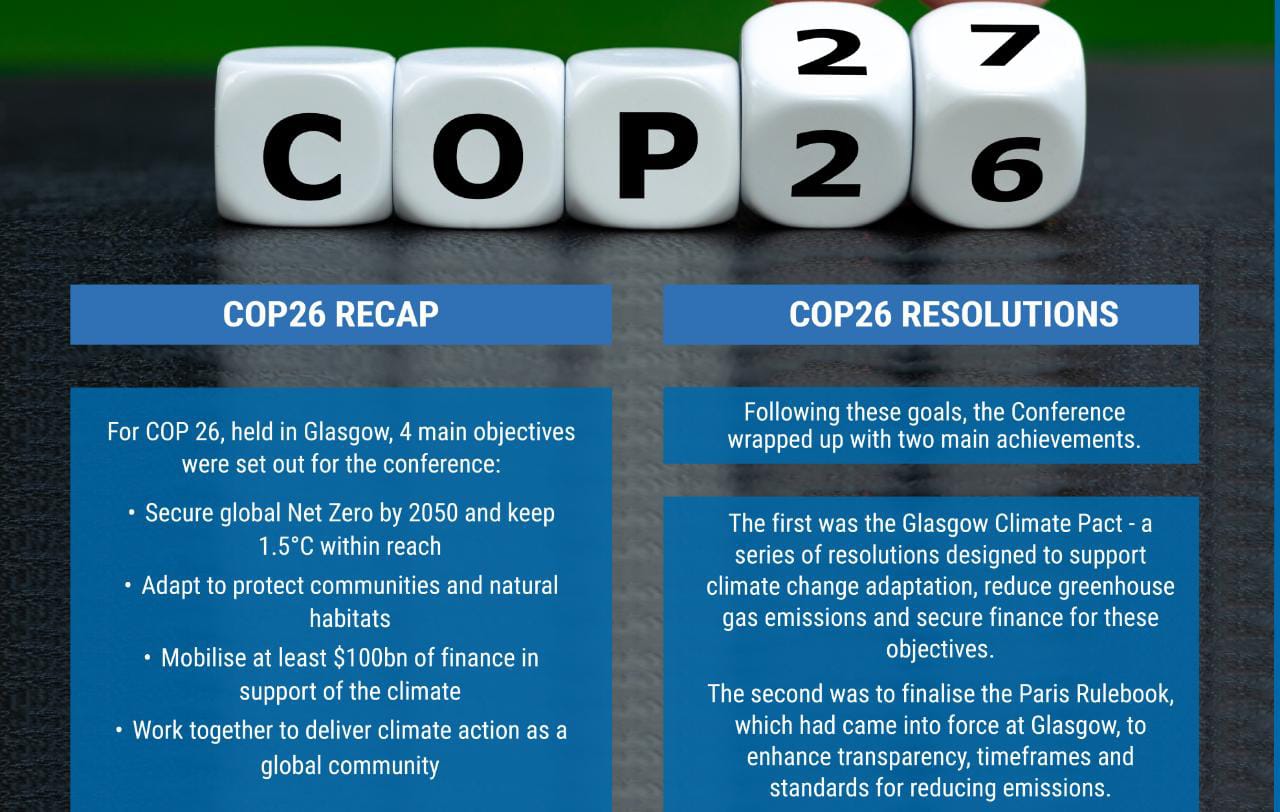
Summary of COP26
Inadequate reduction commitment: In the runup to COP26, last year in Glasgow, several developed countries had declared their intention to reach net zero emissions by 2050. These declarations did not square with the requirements of “keeping 1.5 deg. C alive”.
Global carbon budget: Four fifths of the global carbon budget to limit warming to 1.5°C (with 50% probability) has already been exhausted. Developed countries are responsible for more than half of these historical CO2 emissions. Nevertheless, there was much celebration of these targets.
Politics over phasing out coal: There was also high drama at COP26, with moral grandstanding by many developed country negotiators who invoked the future of their children, because India and other countries understandably balked at the singling out of any one fossil fuel for immediate action.
Developed countries didn’t meet the commitment: It is important to recall some of these shenanigans at COP26, as in the last year, it has become clear that developed countries may be unlikely to meet even the inadequate targets they have set, keeping to the trend of the last three decades.
What is the present energy situation in developing countries?
Energy poverty concentrated in the developing countries: Global energy poverty is concentrated in the developing countries. In 2021, 733 million people had no access to electricity and almost 2.6 billion people lacked access to clean fuels and technologies.
The average per capita energy: Energy use of the richest 20 countries is 85 times higher than that of the 20 poorest countries. Addressing this stark energy poverty in developing countries is important because there is a strong correlation between energy supply and human development.
The average annual per capita electricity: Electricity consumption of sub-Saharan Africa is 487 kilowatt hours (kWh), alongside an infant mortality rate of 73 per 1,000 live births; maternal mortality ratio of 534 per 1,00,000 live births, and per capita GDP of $1,645. On the other hand, the OECD group of countries have a per capita electricity consumption of 7,750 kWh, corresponding to an infant mortality rate of seven, maternal mortality ratio of 18, and per capita GDP of $42,098.
Slowdown due to lack of energy: The reality of global inequality was acutely evident during the COVID19 pandemic. Several countries in Africa, Asia and Latin America are facing severe agricultural and industrial slowdowns in the post pandemic period.
The lack of reliable energy infrastructure: Infrastructure unavailability has compounded the difficulties and has multidimensional impacts across developmental indicators. In 2022, these inequalities have been aggravated by soaring energy and food prices.
Rising cost of living: Several countries face a severe rise in the cost of living and nearly 70 million additional people are estimated to fall below the poverty line of $3.20 per person per day. Poor and vulnerable communities in the energy importing countries of the global South suffer the most. Almost 90 million people in Asia and Africa, who gained access to electricity recently, cannot afford to pay their energy bills.
No acknowledgement of problem by developed countries: In this background, COP27 affords a critical moment to acknowledge and address the concerns surrounding energy access and security in developing countries. Unfortunately, these longstanding problems of the global South have been ignored by developed country governments, academia, and civil society. At a time when the language of energy poverty and security is re-entering the northern vocabulary, it is time to call out the hypocrisy of the advice on fossil fuel use given by the north to some of the world’s poorest regions since the Paris Agreement was signed.
Fossil fuel as primary energy source: In the United States, 81% of primary energy is from fossil fuels. In Europe, fossil fuels constitute 76% of the energy consumption (coal, oil, and natural gas contribute 11%, 31%, and 34% respectively).
Negligible efforts for decarbonization: Thirty years after acknowledging the problem of anthropogenic global warming and committing in the UNFCCC, to take the lead in climate change mitigation, the level of decarbonization in the global North has been minuscule.
Increasing coal consumption: In July 2022, the European Union (EU) voted to classify the use of natural gas for some uses as “green and sustainable”. Natural gas was responsible for 7.5 billion tonnes of CO2 (i.e., 23% of the total CO2 by the major fossil fuels), in 2020. Additionally, in 2022, even coal consumption in the U.S. and the EU is estimated to increase by 3% and 7%, respectively.
Double standard for fossil fuel: These same developed countries argue that green energy constitutes a great business opportunity for developing countries as it has become cheaper. They have used this dubious argument to dismiss differentiation between developed and developing countries and are lobbying for banning the financing of any fossil fuel projects in some of the poorest countries.
What should be the agenda of developing countries at COP 27?
Bring the energy poverty issue: At COP27, the global South must put the question of its energy poverty and the severe global inequalities in energy access squarely at the Centre of all discussions.
Achieving SDGs with climate actions: We need to achieve zero hunger, zero malnutrition, zero poverty, and universal wellbeing even as we collectively contribute to ensuring effective climate action.
No empty commitments: As the strapline for COP27 (“Together for Implementation”) suggests, we must work together to ensure that these developmental goals are not side-lined, as they were at COP26, in the pursuit of hollow declarations of net zero targets three decades into the future.
Conclusion
A developing country leadership at COP27 can ensure effective discussions, based on equity and common but differentiated responsibilities and respective capabilities, on the relative responsibilities and sharing of mitigation and adaptation burdens while coping with loss and damage.
Mains Question
Q. Describe the energy inequality situation among developed and developing countries. How India can lead the developing countries for negotiations at COP27?
India has announced its long-term strategy to transition to a “low emissions” pathway at the United Nations Conference of Parties (COP) ongoing in Sharm el-Sheikh, Egypt.
What are LT-LED Strategy?
The LT-LEDS are qualitative in nature and are a requirement emanating from the 2015 Paris Agreement.
Hereby, countries explain how they will transition their economies beyond achieving near-term NDC targets.
It signifies their path towards the larger climate objective of cutting emissions by 45% by 2030 and achieve net zero around 2050.
BACKGROUND
What is the meaning of Net Zero?
A state in which a country’s emissions are compensated by absorption and removal of greenhouse gases (GHGs) from the atmosphere is called Net Zero State; it is also referred to as carbon-neutrality.
It is done through natural processes as well as futuristic technologies such as carbon capture and storage.
Nationally Determined Contributions (NDCs):
To achieve the targets under the agreement, the member countries must submit the targets themselves, which they believe would lead to substantial progress towards reaching the Paris temperature goal.
Initially, these targets are called Intended Nationally Determined Contributions (INDCs).
They are converted to NDCs when the country ratifies the agreement.
Key announcements by India
Nuclear energy: India is set to expand its nuclear power capacity by at least three-fold in the next decade.
Green hydrogen: India aims for becoming an international hub for producing green hydrogen through the National Hydrogen Mission.
Ethanol blending: India aspires to maximise the use of electric vehicles, with ethanol blending to reach 20% by 2025 (it is currently 10%) and a “strong shift” to public transport for passenger and freight traffic.
Carbon sequestration: India’s forest and tree cover are a net carbon sink absorbing 15% of CO2 emissions in 2016, and it is on track to fulfilling its NDC commitment of 2.5 to 3 billion tonnes of additional carbon sequestration in forest and tree cover by 2030.
Hurdles in achieving net-zero
Huge cost of transition: The transition to low carbon pathway will entail several costs amounting to several trillion dollars. It involves the development of new technologies, new infrastructure, and other transaction costs.
No climate finance mechanism: Provision of climate finance by developed countries will play a very significant role and needs to be considerably enhanced.
Significance of India’s LTS
India’s long-term strategy (LTS) follows up on the net zero pledge.
It clearly outlines key interventions across sectors that are going to be the focus of India’s efforts.
Considerations made by India
India’s approach is based on the following four key considerations that underpin its long-term low-carbon development strategy:
India has contributed little to global warming: its historical contribution to cumulative global GHG emissions being minuscule despite having a share of ~17% of the world’s population.
Huge domestic energy demand: India has significant energy needs for development.
National circumstances: India is committed to pursuing low-carbon strategies for development and is actively pursuing them, as per national circumstances
India needs to build climate resilience: It is the capacity of social, economic and ecosystems to cope with a hazardous event or trend or disturbance.