💥Join UPSC 2027,2028 Mentorship (July Batch) + XFactor Notes & Microthemes PDF

Subject: Environment

  • Species in news: Garcinia kusumae

    Why in the News?

    Researchers in Assam have discovered a new tree species, Garcinia kusumae, locally called thoikora, adding to the Garcinia genus in a notable botanical find.

    About Garcinia kusumae:

    • Species Identity: Garcinia kusumae is a newly discovered evergreen tree species that is endemic to Assam, India.
    • Genus and Local Name: It belongs to the Garcinia genus, locally called thoikora in Assamese.
    • Discovery: It was discovered in 2024 by Jatindra Sarma, during a field survey in Bamunbari, Baksa district.
    • Botanical Traits: It is dioecious, grows up to 18 metres, flowers between February and April, and fruits between May and June.
    • Distinct Features: It differs from similar species by having up to 15 staminate flowers per fascicle, fewer stamens, and blackish resinous berries.
    • Ethnobotanical Uses: Its fruit is used in sherbet, fish curries, and for diabetes and dysentery remedies; the seed aril is eaten raw with condiments.

    What is the Garcinia Genus?

    • Taxonomy: Garcinia is the largest genus in the Clusiaceae family, comprising trees and shrubs.
    • Geographical Spread: It is found in tropical regions of Africa, Southeast Asia, and Australasia, especially in rainforests.
    • Notable Characteristics: The genus is known for floral diversity, medicinal value, and culinary applications.
    • Presence in India: India hosts 33 species and 7 varieties of Garcinia, with Assam having 12 species and 3 varieties.
    • Famous Species: Commonly known species include Garcinia indica (kokum), Garcinia cowa, and Garcinia mangostana (mangosteen).
    • Utility and Significance: It is important for ethnobotanical uses, rural livelihoods, and climate-resilient forestry.
    • Traditional Practices: Several species are used in traditional food, medicine, and rituals.
    [UPSC 2016] Recently, our scientists have discovered a new and distinct species of banana plant which attains a height of about 11 metres and has orange-coloured fruit pulp.

    In which part of India has it been discovered?

    Options: (a) Andaman Islands* (b) Anaimalai Forests (c) Maikala Hills (d) Tropical rain forests of northeast


  • New Collective Quantified Goal (NCQG)

    Why in the News?

    With focus shifting to COP30, climate finance is in the spotlight as the Fourth International Financing for Development Conference (FfD4) works to finalise the New Collective Quantified Goal (NCQG) — a more ambitious target to replace the unmet $100 billion annual pledge.

    About New Collective Quantified Goal (NCQG):

    • Overview: It is a new global climate finance target under negotiation to replace the unmet $100 billion pledge made by developed countries in 2009.
    • Basis: It is being framed through the Meeting of the Parties to the Paris Agreement (CMA).
    • Minimum Starting Point: The goal will begin at a minimum of $100 billion per year, with future revisions based on real needs of developing nations.
    • Areas to be Covered: NCQG supports mitigation, adaptation, and resilience, with an explicit focus on the needs of developing countries.

    How it differs from earlier Pledge?

    • From Political to Need-Based: The earlier $100 billion was a political promise, while NCQG is a data-driven, needs-based goal.
    • Backed by National Priorities: Funding estimates will use developing countries’ own assessments and climate plans.
    • Greater Transparency and Trust: NCQG seeks to rebuild trust by addressing the trust deficit from past failures and improving accountability.

    True Scale of Climate Finance Needs:

    • Requirement: As per UNFCCC (2021), developing countries may need $6 trillion/year by 2030 to meet their climate goals.
    • Global Energy Transition Costs: A low-carbon global transition could need $4–6 trillion annually until 2050.
    • Renewable Energy Goals: Tripling renewables by 2030, agreed at COP28, may cost $30 trillion (IRENA).
    • India’s Stand: India has proposed an NCQG of $1 trillion/year, with a focus on grants and concessional finance, avoiding debt-heavy solutions.
    [UPSC 2024] Which one of the following launched the ‘Nature Solutions Finance Hub for Asia and the Pacific’?

    Options: (a) The Asian Development Bank (ADB) (b) The Asian Infrastructure Investment Bank (AIIB) (c) The New Development Bank (NDB) (d) The International Bank for Reconstruction and Development (IBRD)


  • Places in News: Kariyachalli Island

    Why in the News?

    The Tamil Nadu government, with World Bank support, has launched a ₹50 crore restoration project for the sinking Kariyachalli Island.

    About Kariyachalli Island:

    • Overview: Kariyachalli Island is one of the 21 uninhabited islands in the Gulf of Mannar Marine National Park.
    • Geographic Location: It lies 4 km south of Sippikulam and 20 km northeast of Thoothukudi, between Rameswaram and Thoothukudi.
    • Made of Reef Sediments: The island is a low-lying landform made of reef debris, sand dunes, spits, and sandy plains.
    • Biodiversity Hotspot: Located in India’s coral reef zone, it supports 4,300+ marine species, including 132 coral types and the endangered dugong.
    • Ecological Importance: It has seagrass beds and coral reefs that provide food and shelter for marine life.
    • Natural Coastal Shield: Kariyachalli acts as a barrier against cyclones and tsunamis, helping protect the Tamil Nadu coast.
    • Historical Significance: It played a role in mitigating the 2004 Indian Ocean tsunami impact.

    Why is it sinking?

    • Rapid Land Loss: The island has shrunk by over 70%, from 20.85 ha in 1969 to under 6 ha in 2024.
    • High Tide Erosion: At high tide, only 3.14 ha remains, per an IIT Madras (2025) study.
    • Wave and Sediment Pressure: Wave action, sediment loss, and lack of natural shoreline defense are accelerating erosion.
    • Climate Change Impact: Rising sea levels and coral bleaching have weakened the island’s natural protection.
    • Seagrass Depletion: Loss of seagrass beds has reduced the island’s ability to hold sediments and resist erosion.
    • Extreme Weather Events: Frequent cyclones and storms are making the island more vulnerable.
    • Future Risk: If the current trend continues, Kariyachalli may vanish by 2036.
    [UPSC 2023] Which one of the following is the best example of repeated falls in sea level, giving rise to present-day extensive marshland?

    Options: (a) Bhitarkanika Mangroves (b) Marakkanam Salt Pans (c) Naupada Swamp (d) Rann of Kutch*


  • Why Tigers keep migrating?

    Why in the News?

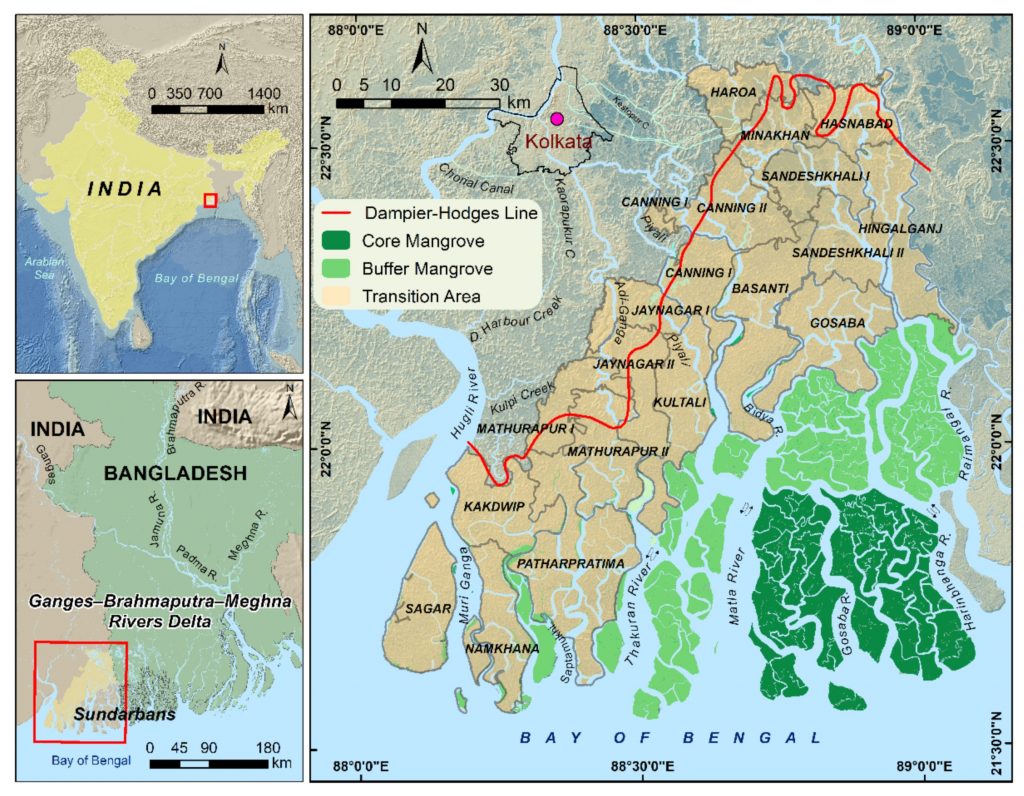
    India’s tiger population is undergoing a major eastward expansion, as young male tigers from central India’s source reserves (like Kanha and Bandhavgarh) disperse into eastern forests (Jharkhand, Odisha, and West Bengal) in search of territory and mates.

    tiger

    Recent Incidents of Tiger Migration:

    • Bandhavgarh (MP) → Palamu (Jharkhand) → Purulia (WB) → Rescued and sent back to Palamu
    • Simlipal (Odisha) → Jharkhand → Lalgarh (WB) → Tiger killed by villagers
    • Tadoba (Maharashtra) → Simlipal (Odisha) → West BengalZeenat the tigress translocated and dispersed

    Back2Basics: Royal Bengal Tiger

    • Declared National Animal of India in 1972 by the Indian Board for Wildlife (IBWL).
    • Largest population in India; also found in Bangladesh, Nepal, Bhutan, China, and Myanmar. India harbours 75% of the world’s wild tigers.
    • Occupies habitats such as high mountains, mangrove swamps, grasslands, deciduous forests, evergreen, and shola forests.
    • Ecological Significance:
      • Flagship species: Essential for conservation efforts since it’s the topmost predator in food chain.
      • Umbrella species: Protecting tigers helps conserve other species (through food chain regulation).
    • Protection Status:
      • Indian Wildlife (Protection) Act, 1972: Schedule I.
      • IUCN Red List: Endangered.
      • CITES: Listed in Appendix I.
    • Project Tiger is a wildlife conservation initiative in India that was launched in 1973.

    Behavioural Traits of Tigers Influencing Dispersal:

    • Territorial Independence: Upon maturity, male tigers must leave their natal territory to find exclusive prey-rich zones and mates, triggering long-distance dispersal.
    • Gendered Dispersal:
      • Males are wanderers – they cover vast areas and often cross multiple states.
      • Females are philopatric – they stay close to their birthplace and are usually accepted by nearby relatives.
    • Source-Sink Dynamics:
      • Source forests (e.g. Kanha, Bandhavgarh) produce surplus tigers due to good prey and protection.
      • Sink forests (e.g. Palamu, Dalma) cannot sustain tiger populations without new immigrants.
    • Adaptive but Risk-Prone: Tigers are biologically wired to explore new habitats, even degraded ones, but often face food scarcity, isolation, and human conflict.
    • Prey Dependence and Conflict: In prey-deficient forests, floater tigers’ resort to livestock hunting, increasing the risk of human-tiger conflict.
    • Resilience and Colonisation Instinct: Despite setbacks, tigers attempt to colonise new areas, offering hope for species expansion if supported by proper conservation.
    [UPSC 2024] Consider the following statements:

    1. Lions do not have a particular breeding season.

    2. Unlike most other big cats, cheetahs do not roar.

    3. Unlike male lions, male leopards do not proclaim their territory by scent marking.

    Which of the statements given above are correct?

    (a) 1 and 2 only*  (b) 2 and 3 only (c) 1 and 3 only (d) 1, 2 and 3


  • Groundwater crisis deepens in Karnataka’s hard rock terrain 

    Why in the News?

    In a recent study, researchers from WELL Labs in Chennai studied Aralumallige and Doddathumakuru gram panchayats in the Upper Arkavathy watershed near Bengaluru, and found a sharp drop in groundwater levels caused by intensive farming practices.

    What drives groundwater depletion in the Deccan Plateau?

    • Hard Rock Aquifers with Low Storage Capacity: The Deccan Plateau is underlain by basalt and granite (hard rock aquifers) that have limited porosity. These rely on fractures and weathered zones to store water, making them less efficient in holding groundwater. Eg: In Karnataka, 99% of the area depends on such aquifers, making sustainable storage difficult.
    • Deep Borewell Drilling Alters Natural Recharge: Borewells drilled into granite cause microfractures, allowing rainwater to bypass shallow aquifers and flow deep underground. This disrupts the natural recharge cycle and reduces groundwater retention.  
    • Water-Intensive Agriculture: Cultivation of vegetables, flowers, and exotic crops for urban markets like Bengaluru demands large volumes of groundwater. These crops are not suited to the dry, hard-rock geology of the region.  
    • Encroachment of Traditional Recharge Systems: Lakes and tanks, once used for groundwater recharge, are being encroached upon or neglected. Their discharge channels are blocked, eliminating natural recharge opportunities. Eg: The lake in Aralumallige (Karnataka), once a major recharge source, remained dry in 2022 despite heavy rainfall.

    Why is reliance on borewells unsustainable in rural Karnataka?

    • Rapid Groundwater Depletion and Borewell Failures: Continuous extraction through deep borewells causes the water table to drop, making it harder to access groundwater over time. Eg: In the Upper Arkavathy watershed, the average borewell depth increased from 183m to 321m in just two decades. Over 70% of drinking water wells failed within 10 years of construction.
    • High Financial Burden on Farmers and Panchayats: Drilling deeper borewells costs ₹4–5 lakh, often unaffordable for small farmers, with no guarantee of success. Free electricity for pumping increases electricity consumption and debt for gram panchayats. Eg: Panchayats face mounting electricity bills, diverting funds away from development works to cover power costs.
    • Disruption of Natural Recharge and Local Hydrology: Borewells alter subsurface geology, causing rainwater to bypass shallow aquifers, reducing natural recharge. Eg: In Aralumallige and Doddathumakuru, borewell drilling weakened long-term water retention, contributing to chronic scarcity despite seasonal rains.

    What is the socio-economic impact on local communities and governance?

    • Rising electricity debt: Free power for farmers fuels overuse, pushing gram panchayats into unsustainable debts as they divert development funds to pay power bills.
    • Borewell burden on small farmers: Drilling costs ₹4-5 lakh with no assurance of success, leading many farmers to lease land and migrate to cities.

    What are the issues related to groundwater in Indian?

    • Overexploitation and Depletion: Unregulated extraction of groundwater for agriculture and urban use has led to rapid depletion of water tables. Eg: In parts of Punjab, Haryana, and Karnataka (like Aralumallige), water tables have fallen by over 100 meters in two decades due to borewell dependence.
    • Poor Groundwater Quality: Contamination by nitrates, fluoride, and arsenic poses serious health risks, especially in rural areas. Eg: In Bihar and West Bengal, arsenic contamination affects drinking water; in Karnataka, nitrate levels often exceed safe limits (50 mg/l).
    • Inadequate Data and Poor Management: Lack of real-time monitoring, insufficient local-level data, and fragmented water governance hinder sustainable planning. Eg: Despite groundwater overuse, local panchayats often lack predictive tools to estimate borewell failure or manage recharge zones effectively.

    What are the steps taken by the Indian Government?

    • Jal Shakti Abhiyan (JSA): A nationwide water conservation campaign launched in 2019 to promote rainwater harvesting, recharge structures, and sustainable water use. Eg: In water-stressed blocks of states like Maharashtra and Rajasthan, the JSA promoted check dams and contour trenches to boost groundwater recharge.
    • Atal Bhujal Yojana (Atal Jal): A World Bank-assisted scheme launched in 2019 for sustainable groundwater management in 7 states. It focuses on community participation, water budgeting, and crop water use efficiency. Eg: In Gujarat and Madhya Pradesh, water user associations have helped monitor and reduce groundwater extraction.
    • Groundwater Regulation by Central Groundwater Authority (CGWA): The CGWA regulates groundwater usage in over-exploited areas by mandating No Objection Certificates (NOCs) for industries and commercial users.

    Way forward: 

    • Promote Sustainable Farming Practices: Shift from water-intensive crops (like paddy, sugarcane) to less water-demanding crops suited to agro-climatic conditions.
    • Strengthen Local Water Governance: Empower Gram Panchayats to manage groundwater through community water budgeting, real-time monitoring, and local recharge efforts.

    Mains PYQ:

    [UPSC 2019] Enumerate the indirect taxes which have been subsumed in the goods and services tax (GST) in India. Also, comment on the revenue implications of the GST introduced in India since July 2017.

    Linkage: The article talks about the GST replaced many older taxes like VAT and excise duty, helping create a single national market. Although GST collections have steadily grown—reaching ₹22.08 lakh crore in 2024–25—the revenue from tobacco (about ₹551 billion a year) is much less than the huge cost of tobacco-related health problems, which is ₹2,340 billion every year.

  • ZSI records 683 faunal discoveries in its 110th year

    Why in the News?

    The Zoological Survey of India (ZSI) released Version 2.0 of the Checklist of Fauna of India, documenting 105,244 species and subspecies.

    Back2Basics: Zoological Survey of India

    • The ZSI was set up by British zoologist Thomas Nelson Annandale in 1916.
    • It is the premier taxonomic research organisation in India, based in Kolkata.
    • It was established to promote surveys, exploration and research leading to the advancement of our knowledge of various aspects of the exceptionally rich animal life of India.
    • The ZSI had its genesis as the Zoological Section of the Indian Museum at Calcutta in 1875.
    • Since its inception, the ZSI has been documenting the diversity and distribution of the fauna of India towards carrying out its mandate of conducting exploration-cum-taxonomic-research programmes.
    • The ZSI has published an extremely large amount of information on all animal taxa, from Protozoa to Mammalia.

    Key Findings About ZSI’s Work and Discoveries (2024–25):

    • Significant Animal Discoveries:
      • New Genus: Dravidoseps gouensis – a new genus of skink (lizard) from Western Ghats
      • New Species of Snakes: Anguiculus dicaprioi – named after actor Leonardo DiCaprio, belongs to the Colubridae family
      • Other Reptiles: 2 new genera and 37 new species of reptiles discovered
      • Amphibians: 5 new amphibian species, including frogs from northeastern and southern India
      • Other Invertebrates: Multiple new insect species, particularly among beetles, moths, flies, and bees
    • Highest representation among newly discovered species were insects, especially:
      • Coleoptera (beetles)
      • Lepidoptera (moths and butterflies)
      • Diptera (flies)
      • Hymenoptera (ants, bees, wasps)
    [2020] With reference to India’s Biodiversity, Ceylon frogmouth, Coppersmith barbet, Gray-chinned minivet and White-throated redstart are:

    (a) Birds

    (b) Primates

    (c) Reptiles

    (d) Amphibians


  • New flowering plant named after Nyishi Tribe

    Why in the News?

    A new species of flowering plant, Begonia nyishiorum, has been discovered in the East Kameng district of Arunachal Pradesh.

    New flowering plant named after Nyishi Tribe

    About Begonia nyishiorum:

    • Overview: Begonia nyishiorum is a recently identified flowering plant found in East Kameng, Arunachal Pradesh, and is endemic to this region.
    • Scientific Recognition: It was officially described in June 2025 in Novon, a peer-reviewed journal published by the Missouri Botanical Garden.
    • Feature: The species is notable for its crimson, fringed scales (indumentum) on light green petioles, a distinct trait among Asian begonias.
    • Habitat and Range: It thrives on moist, shaded mountain slopes between 1,500 and 3,000 metres in altitude.
    • Ecological Sensitivity: Known from only two forest locations, the plant is potentially vulnerable and warrants conservation attention.
    • Name Origin: The species name nyishiorum honours the Nyishi tribe, known for their traditional ecological stewardship of local forests.

    About the Nyishi Tribe:

    • Overview: The Nyishi are the largest ethnic group in Arunachal Pradesh, with a population of about 300,000.
    • Name Meaning: The word “Nyishi” combines “Nyi” (man) and “Shi” (being), signifying a civilised human in their language.
    • Linguistic Identity: Their language belongs to the Sino-Tibetan family, although its origins remain debated among scholars.
    • Geographic Spread: They live in eight districts of Arunachal Pradesh (like East Kameng, Papum Pare, and Kurung Kumey) and parts of Assam.
    • Livelihood Practices: Their economy includes slash-and-burn farming, hunting, fishing, and handicrafts such as bamboo work and weaving.
    • Key Festivals: They celebrate Boori-Boot (Feb) for unity, Nyokum (Feb) for prosperity, and Longte (Apr) for protection from evil.
    • Social Structure: Nyishi society is patrilineal and clan-based, with no caste system or rigid social hierarchy.
    • Role of Women: Women are seen as symbols of peace and prosperity, and marriages involve reciprocal family exchanges that build community ties.
    [UPSC 2016] Recently, our scientists have discovered a new and distinct species of banana plant which attains a height of about 11 metres and has orange-coloured fruit pulp.

    In which part of India has it been discovered?

    Options: (a) Andaman Islands* (b) Anaimalai Forests (c) Maikala Hills (d) Tropical rain forests of northeast


  • Secondary Pollutants constitute up to third of PM2.5 Pollution

    Why in the News?

    A recent study by the Centre for Research on Energy and Clean Air (CREA) highlights that secondary pollutants, particularly ammonium sulphate, are responsible for nearly one-third of India’s PM2.5 pollution.

    What are Primary Air Pollutants?

    • Definition: Primary air pollutants are directly released into the atmosphere from specific sources like vehicles, coal plants, industries, and biomass burning.
    • Natural and Man-made Origins: They arise from both natural events, such as dust storms, and human activities like fuel combustion.
    • Key Examples:
      • Carbon monoxide (CO) – from incomplete fuel combustion in vehicles and stoves.
      • Sulphur dioxide (SO) – from burning sulphur-rich coal, especially in power plants.
      • Nitrogen oxides (NOₓ) – from high-temperature fuel combustion in vehicles and factories.
      • Particulate Matter (PM) – includes soot, dust, smoke, and other visible particles.
      • Volatile Organic Compounds (VOCs) – released from fuel fumes and industrial solvents.
    • Impact: These pollutants are immediately harmful to health and easier to trace to their sources.

    About Secondary Air Pollutants:

    • Definition: Secondary pollutants form in the atmosphere through chemical reactions involving primary pollutants and environmental agents like sunlight and water vapour.
    • Formation Factors: Their creation depends on weather, sunlight, and existing pollutants, making them more complex.
    • Key Examples:
      • Ammonium sulphate and nitrate – from SO and NH reacting in the air.
      • Ground-level ozone (O) – formed when NOₓ and VOCs react under sunlight.
      • Acid rain components – such as sulfuric and nitric acids.
      • Photochemical smog – a mix of toxic secondary pollutants in urban air.
    • Impact: They contribute heavily to PM2.5 pollution and have long-lasting, widespread effects.

    Highlights from CREA’s Study:

    • Ammonium Sulphate Share: This secondary pollutant accounts for 34% of India’s PM2.5, averaging 11.9 μg/m³ nationwide.
    • Source Link: It forms from SO (mainly from coal plants) reacting with ammonia from fertilisers and waste.
    • FGD Compliance: Only 8% of India’s coal plants have installed flue gas desulphurisation (FGD) units, despite regulations.
    • High Exposure Zones: Within 10 km of coal plants, ammonium sulphate levels are 2.5 times higher than in distant areas.
    • NCAP City Impact: In 130 cities, it contributes 20–43% of PM2.5; in 114 cities, the share exceeds 30%.
    • Other Contributors: Ammonium nitrate and similar secondary compounds form up to 50% of PM2.5 in many places.
    • Policy Suggestions: The study urges rapid FGD rollout, fertiliser reform, and strict pollution control enforcement.
    [UPSC 2013] Photochemical smog is a resultant of the reaction among-

    Options: (a) NO 2 , O 3 and peroxyacetyl nitrate in the presence of sunlight * (b) CO 2 , O 2 , and peroxyacetyl nitrate in the presence of sunlight (c) CO, CO 2 , and NO 2 at low temperature (d) high concentration of NO 2 , O 3 and CO in the evening


  • Species in news: Asiatic Wild Dog (Dhole)

    Why in the News?

    The elusive dhole (Cuon alpinus), also known as the Asiatic wild dog, has been rediscovered in Assam’s Kaziranga-Karbi Anglong Landscape (KKAL) after being thought locally extinct.

    About Dhole:

    • Overview: The dhole (Cuon alpinus), also known as the Asiatic wild dog, is a carnivorous mammal from the Canidae family.
    • Habitat: Historically, dholes inhabited southern Russia, Central Asia, South Asia, and Southeast Asia but are now limited to South and Southeast Asia, including India, Nepal, Bhutan, Bangladesh, and China.
    • Clusters in India: In India, dholes are found mainly in the Western and Eastern Ghats, the Central Indian Landscape, and the Northeast.
    • Key States: According to a 2020 study, Karnataka, Maharashtra, and Madhya Pradesh lead in dhole conservation efforts.
    • Social Behaviour: Dholes live in packs of up to 30 but may also hunt solo or in pairs depending on prey availability.
    • Ecological Role: As predators, dholes help regulate prey populations and maintain ecosystem balance.
    • Conservation Status:
      • IUCN Red List: Endangered
      • CITES: Appendix II (not necessarily threatened with extinction but may become so if trade is not closely controlled).
      • Wildlife Protection Act, 1972: Schedule II (considered important for conservation and are granted a high degree of protection).

    Back2Basics: Kaziranga-Karbi Anglong Landscape (KKAL)

    • Geographic Spread: KKAL is located south of the Brahmaputra River in Assam, comprising Kaziranga National Park (KNP) and the Karbi Anglong Hills.
    • Ecological Importance: KNP is a UNESCO World Heritage Site and part of the Indo-Burma Biodiversity Hotspot, known for rich, unmodified ecosystems.
    • Wildlife Corridor: KKAL facilitates seasonal migration during Brahmaputra floods, supporting species movement and survival.
    • Flagship Species: The landscape hosts the world’s largest population of Indian one-horned rhinoceroses, as well as Bengal tigers, elephants, swamp deer, and wild buffalo.
    • B2B Corridor: KKAL forms a vital link in the proposed Bhutan-to-Burma (B2B) Connected Landscape, a 1,400 km biodiversity corridor across northeast India.


  • Two billion people don’t have safe drinking water

    Why in the News?

    It’s shocking that 2 billion people around the world still don’t have access to safe drinking water, even though 95% of the global population uses what are called “improved water sources”. This reveals a hidden but serious public health problem.

    IBAT Alliance

    What defines ‘safe drinking water’?

    Safe drinking water refers to water that is free from harmful contaminants such as bacteria, viruses, and chemicals. It must be located on the premises, readily available when needed, and safe to consume without causing health issues.

    How does access vary across populations?

    • Majority Have Access, but Not Always at Home: While nearly 6 billion people have access to drinking water, around 2 billion still lack safe water at home.  Just 156 million people (around 1.4% of the global population) still collect water from unsafe sources like rivers or lakes.  
    • Disparities Exist Across Income and Geography: People in low-income or rural areas are more likely to lack access to safe, on-premises water. In most parts of Sub-Saharan Africa and South Asia, people still get their water from open sources such as rivers and lakes.

    How does a lack of safe water impact public health in poor countries?

    • Spread of Waterborne Diseases: Unsafe water is a major source of diarrhoeal diseases like cholera, dysentery, polio, and hepatitis A. Over 800,000 deaths annually are attributed to waterborne illnesses, especially in low-income nations with inadequate sanitation.
    • Child Mortality and Malnutrition: Contaminated water contributes to malnutrition, as diarrhoeal diseases hinder nutrient absorption in children. In India, nearly 21% of children under five suffer from wasting (NFHS-5), with poor water and sanitation as key contributors. 
    • Healthcare Burden and Economic Loss: Frequent illness from unsafe water overwhelms fragile public health systems and reduces workforce productivity. In India, poor access to safe water and sanitation leads to an annual GDP loss of over 4% due to health and productivity issues (Ministry of Jal Shakti, 2021). 

    SDG Goal 6 (Clean Water): Progress and challenges since its adoption 

    • Progress in Access to Improved Water Sources: As of recent estimates, 95% of the global population uses an improved water source like piped water, borewells, and springs, even in many low-income countries.
    • Challenge of Household-Level Accessibility: Despite improvements, safe water is often not available at home, requiring people—mostly women—to travel long distances. Around 1.5 billion people still lack on-premise access, which limits reliability and increases the risk of contamination during transport.
    • Polluted water at the point of use: Water may be clean at the source, but it becomes contaminated during collection, storage, or transport.  

    What are the alternative technologies which can solve this crisis?

    • Desalination Technology: Converts seawater into freshwater by removing salts and impurities using methods like reverse osmosis. Israel’s Sorek Desalination Plant provides 20% of the country’s water supply.
    • Solar Water Disinfection (SODIS): Uses UV rays from sunlight to kill bacteria and viruses in water stored in transparent bottles. It is widely used in rural Africa and India by households.
    • Atmospheric Water Generators (AWG): Extracts moisture from humid air and condenses it into clean drinking water. It was deployed in Rajasthan and UAE for areas with limited water but high humidity.

    What are the steps taken by the Government?

    • Jal Jeevan Mission (JJM): Aims to provide functional household tap connections (FHTCs) with safe and adequate drinking water to all rural households by 2024. Eg: As of 2024, over 13 crore rural households have been provided with tap water connections under JJM.
    • Swachh Bharat Mission and Water Quality Monitoring: Focuses on reducing open defecation and water contamination by improving sanitation infrastructure and promoting hygiene.  
    • Atal Mission for Rejuvenation and Urban Transformation (AMRUT): Ensures universal water supply coverage in urban areas, with a focus on poor and underserved households. Under AMRUT, cities like Surat and Nagpur have significantly improved their 24×7 piped water supply networks.

    Way forward

    • Strengthen Last-Mile Delivery through Infrastructure Expansion: Focus on household-level water connections, especially in rural and remote regions, by upgrading existing water supply networks and ensuring regular quality checks.
    • Promote Community-Based Water Management and Awareness: Encourage local governance (Panchayats, SHGs) and water user groups to manage water resources and promote safe water handling practices.

    Mains PYQ:

    [UPSC 2024] The world is facing an acute shortage of clean and safe freshwater. What are the alternative technologies which can solve this crisis? Briefly discuss any three such technologies, citing their key merits and demerits.

    Linkage: The artice talks about the emphasizes that for water to be considered “safe drinking water,” it must be “free from contamination, located at home, and available whenever needed. This question directly addresses the global issue of an “acute shortage of clean and safe freshwater”. This directly aligns with the core problem presented in the article , which states that “two billion people” still do not have safe drinking water in their homes.