💥Join UPSC 2027,2028 Mentorship (July Batch) + XFactor Notes & Microthemes PDF

Subject: Fundamental Rights,DPSP

1. History + Evolution
2. Features
3. Amendments
4. Basic Structure

  • Arun Goel appointed as Election Commissioner

    Former secretary of the Ministry of Heavy Industries Arun Goel has been appointed as the Election Commissioner.

    About Election Commission of India (ECI)

    • The ECI is a constitutional body was established by the Constitution of India to conduct and regulate elections in the country.
    • Article 324 of the Constitution provides that the power of superintendence, direction, and control of elections.
    • The body administers elections to the Lok Sabha, Rajya Sabha, State Legislative Assemblies, State Legislative Councils and the offices of the President and Vice President of the country.
    • Thus, the Election Commission is an all-India body in the sense that it is common to both the Central government and the state governments.
    • The Election Commission operates under the authority of Constitution per Article 324 and subsequently enacted Representation of the People Act.

    Composition of ECI

    • The ECI was established in 1950 and originally only had one Chief Election Commissioner.
    • Two additional Commissioners were appointed to the commission for the first time during the 1989 General Election, but they had a very short tenure, ending on 1 January 1990.
    • The Election Commissioners are assisted by Deputy Election Commissioners, who are generally IAS officers.
    • They are further assisted by Directors General, Principal Secretaries, and Secretaries and Under Secretaries.
    • At the state level, Election Commission is assisted by the Chief Electoral Officer of the State, who is an IAS officer of Principal Secretary rank.
    • At the district and constituency levels, the District Magistrates (in their capacity as District Election Officers), Electoral Registration Officers and Returning Officers perform election work.

    Tenure

    • The tenure of election commissioners is not prescribed by Indian Constitution.
    • However, the Election Commission conduct of service Act, 1991 prescribes the term of service.
    • Chief Election Commissioner or an Election Commissioner shall hold office for a term of six years, or up to the age of 65 years, whichever is earlier, from the date on which he/she assumes his/her office.

    Removal from office

    • The Chief Election Commissioner of India can be represented removed from their office in a manner similar to the removal of a judge of the Supreme Court of India.
    • It requires a resolution passed by the Parliament of India a two-thirds majority in both the Lok Sabha and the Rajya Sabha on the grounds of proved misbehaviour or incapacity.
    • Other Election Commissioners can be removed by the President of India on the recommendation of the Chief Election Commissioner.
    • A Chief Election Commissioner has never been impeached in India.

    Recent incidence of criticisms of ECI

    Ans. Partiality in Elections

    • Over the last couple of years, several actions and omissions of the commission have come in for criticism.
    • Nearly 66 former bureaucrats in a letter addressed to the President, expressed their concern over the working of the Election Commission.
    • They felt was suffering from a credibility crisis, citing various violations of the model code of conduct during the 2019 Lok Sabha Elections.

    Importance of ECI for India

    • Conduction of Election: The ECI has been successfully conducting national as well as state elections since 1952.
    • Electoral participation: In recent years, however, the Commission has started to play a more active role to ensure greater participation of people.
    • Discipline of political parties: It had gone to the extent of disciplining the political parties with a threat of derecognizing if the parties failed in maintaining inner-party democracy.
    • Upholds federalism: It upholds the values enshrined in the Constitution viz, equality,
      equity, impartiality, independence; and rule of law in superintendence, direction, and control over electoral governance.
    • Free and fair elections: It conducts elections with the highest standard of credibility, freeness, fairness, transparency, integrity, accountability, autonomy and professionalism.

    Issues with ECI

    • Flaws in the composition: The Constitution doesn’t prescribe qualifications for members of the EC. They are not debarred from future appointments after retiring or resigning.
    • No security of tenure: Election commissioners aren’t constitutionally protected with security of tenure.
    • Partisan role: The EC has come under the scanner like never before, with increasing incidents of breach of the Model Code of Conduct in the 2019 general elections.
    • Political favor: The opposition alleged that the ECI was favoring the ruling party by giving clean chit to the model code of conduct violations made by the PM.
    • Non-competence: Increased violence and electoral malpractices under influence of money have resulted in political criminalization, which ECI is unable to arrest.

     

    Click and get your FREE Copy of CURRENT AFFAIRS Micro Notes

    (Click) FREE1-to-1 on-call Mentorship by IAS-IPS officers | Discuss doubts, strategy, sources, and more

  • Right to Privacy in an era of social media

    Right to Privacy

    Context

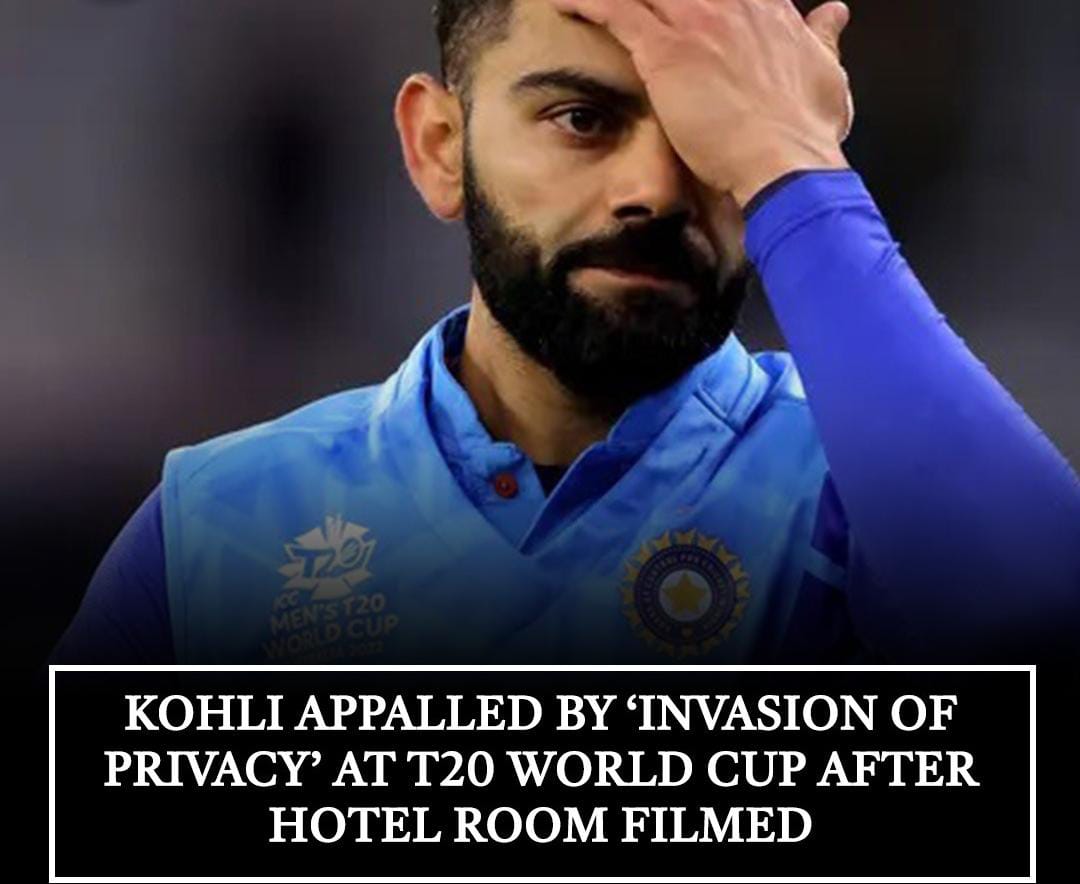
    • The recent outrage over the unauthorized video of cricketing superstar Virat Kohli’s hotel room in Perth including glimpses of his private spaces and objects is best viewed through an understanding of the changed landscape of the “private” and the “public” in our times. It is a topography shaped through our engagements with social media of different kinds.

    What does the Constitution say?

    • Fundamental right under Article.21: Article 21 is also known as the heart of the constitution; this right is granted to citizens of India as well as the non-citizens. This fundamental right not only talks about life and liberty but it also covers wide variety of rights.
    • Interpretation of Maneka Gandhi v. Union of India and Anr (1978): The interpretation of the term Personal Liberty has been discussed in many cases and finally had a wider interpretation in the case of Maneka Gandhi v. Union of India and Anr (1978) here the Delhi Regional officer ordered the petitioner Maneka Gandhi to surrender her passport within 7 days without giving her proper reason for the same.
    • Supreme court on Personal liberty: The Supreme Court held that ‘Personal Liberty’ covered variety of rights and that such right could only be taken away according to the procedure established by law which had to be just, fair and reasonable and not arbitrary in nature. Personal liberty means various rights that provide for personal liberty of a person.
    • Right to privacy: In Article 21 the term Right to Life includes right to participate in activities, right to tradition, heritage, culture, livelihood and so on. One of the most important right to live also includes Right to Privacy. Each and every human being would want some privacy in their life. No one would want others to intrude in their private space and disturb the happiness and peace.

    Right to Privacy

    What is the Fight for right to Privacy?

    • Not in the original constitution: This right of privacy was not granted to the citizens for a long time and there had been a lot of debate going on about the same, there is no explicit provision in the constitution which emphasizes about the right to privacy.
    • Data is fundamental to the privacy: Even the data we save in our mobile phones and laptops are also our private data which needs to be protected, if the data is stolen our right to privacy is lost and fundamental right is infringed. Unprotected data causes a disturbance in the right to privacy.

    Some of the Important cases related to right to privacy

    • Kharak Singh V. The State of U.P.(1962): The discussion about the right to privacy first came up in the case of Kharak Singh V. The State of U.P.(1962) Kharak Singh’s house was visited by the police at strange hours, frequently waking him up from his sleep, it was held by the court that this infringed his ‘right to life’ but however court dismissed the petitioner’s allegation that the shadowing of chronic criminals infringed on his right to privacy as at that time the right to privacy was not recognised as the Fundamental Right.
    • Rajagopal v. State of Tamil Nadu (1994): With the case of R. Rajagopal v. State of Tamil Nadu (1994) where this case prepared the way for subsequent decisions on the Right to Privacy, paving the way for it to be included in the Fundamental Rights given under Part III of the Constitution.
    • X v. Hospital Z case (1998): There are reasonable restrictions for this right about which it was held by the Supreme Court in the case of Mr. X v. Hospital Z (1998) here the appellant Mr. X was tested positive for HIV about which the doctors informed someone else without his consent because of which marriage of Mr. X was called off, the appellant approached the court stating that his right to privacy was violated. The court here held that this fact has to been known to the person whom he marries as this fact would affect her life as well as it being a communicable disease and that there is no violation to the ‘Right of Privacy’ of Mr. X.

    Right to Privacy

    The landmark case of K.S. Puttaswamy v/s Union Of India 2017.

    • Right to privacy is fundamental right: In the landmark case K.S. Puttaswamy V. Union of India which was passed in the year 2017, Right to Privacy was recognised as Fundamental Right and was then enshrined in Article 21 as a Right to life and personal liberty.
    • Social media endangered the privacy: Judges held that because there is enormous technical advancement both state and non-state factors may be at risk of loss of privacy, also it was held that an Individual is very concerned with his / her personal Data, they control their data and what to be posted on social media what to be displayed to the public and what to hide from outsiders, so unauthorized use of such information by anyone else except to whom that information belongs to may lead to violation of individuals privacy.
    • Privacy is integral to fundamental rights: On 24th August 2017 the nine-judge bench of India passed a unanimous historic Judgement with concurring opinions. Part III of the Indian constitution lays down different articles for the protection of one’s Fundamental Rights. The judgement stated privacy to be an integral component of Part III.
    • Overturning the previous judgements: The bench recognized that the right to privacy should also be a key element of Fundamental Rights and should be included in Article 21 of right to life and personal liberty. In this judgement the decisions given in the case of Kharak Singh V. The State of U.P. (1962) and MP Sharma V. Satish Chandra (1954) were overruled.

    Right to Privacy

    Conclusion

    • The great deal of hand wringing over the invasion of Virat Kohli’s privacy has been accompanied by seemingly endless circulation of the video clip. The line between outrage and enjoyment is as unclear as that between the alternating desire for publicity that ethereal frisson of celebrity-ness and revulsion over too much of it.

    Mains Question

    Q. How right to privacy is integral part of right to life? How social media affected the privacy of individual and enlist the solutions associated with it.

    Click and Get your FREE copy of Current Affairs Micro notes

  • Hate speech

    Former Supreme Court Judge Rohinton Fali Nariman has said civil suits against hate speech leading to the award of punitive damages should be taken up by courts.

    What did the ex-Judge say?

    • He described the Fundamental Duty of fraternity (Article 51A(5)) as the only Constitutional method of assuring the dignity of every citizen and the unity and integrity of the nation.
    • The cardinal principle of fraternity prescribed that every citizen honoured the other citizen in the spirit of brotherhood, transcending religious, sectarian, and other tendencies.
    • He opined that civil suits like defamation being dealt with fines would be more efficient in curbing hate speeches against individuals.

    Article 51A(5): Promote harmony and the spirit of common brotherhood amongst all the people of India transcending religious, linguistic and regional or sectional diversities and to renounce practices derogatory to the dignity of women.

    What is ‘Hate Speech?

    • There is no specific legal definition of ‘hate speech’.
    • The Law Commission of India, in its 267th Report, says: “Hate speech generally is an incitement to hatred primarily against a group of persons defined in terms of race, ethnicity, gender, sexual orientation, religious belief and the like
    • Thus, hate speech is any word written or spoken, signs, visible representations within the hearing or sight of a person with the intention to cause fear or alarm, or incitement to violence.”
    • In general, hate speech is considered a limitation on free speech that seeks to prevent or bar speech that exposes a person or a group or section of society to hate, violence, ridicule or indignity.

    How is it treated in Indian law?

    • Provisions in law criminalize speeches, writings, actions, signs and representations that foment violence and spread disharmony between communities and groups and these are understood to refer to ‘hate speech’.
    • Sections 153A and 505 of the Indian Penal Code are generally taken to be the main penal provisions that deal with inflammatory speeches and expressions that seek to punish ‘hate speech’.

    [I] Section 153A:

    • Promotion of enmity between different groups on grounds of religion, race, place of birth, residence, language, etc., and doing acts prejudicial to maintenance of harmony’, is an offence punishable with three years’ imprisonment.

    [II] Section 505:

    • 505(1): Statements conducing to public mischief– The statement, publication, report or rumour that is penalized under Section 505(1) should be one that promotes mutiny by the armed forces, or causes such fear or alarm that people are induced to commit an offence against the state or public tranquillity. This attracts a jail term of up to three years.
    • 505(2): It is an offence to make statements creating or promoting enmity, hatred or ill-will between classes.
    • 505(3): Same offence will attract up to a five-year jail term if it takes place in a place of worship, or in any assembly engaged in religious worship or religious ceremonies.

    Why curb hate speeches?

    • Creates social divide: Individuals believe in stereotypes that are ingrained in their minds and these stereotypes lead them to believe that a class or group of persons are inferior to them and as such cannot have the same rights as them.
    • Threat to peaceful co-existence: The stubbornness to stick to a particular ideology without caring for the right to co-exist peacefully adds further fuel to the fire of hate speech.

    Issues in regulating hate speech

    • Powers to State: Almost every regulation of speech, no matter how well-intentioned, increases the power of the state.
    • Hate speeches are Political: The issue is fundamentally political and we should not pretend that fine legal distinctions will solve the issue.
    • Legal complications: An over-reliance on legal instruments to solve fundamental social and political problems often backfires.

    Way forward

    • Subjects like hate speeches become a complex issue to deal with, in a country like India which is very diverse, as it was very difficult to differentiate between free and hate speech.
    • There are many factors that should be considered while restraining speeches like strong opinions, offensive comments towards certain communities, the effect on values like dignity, liberty and equality.
    • We all have to work together and communicate efficiently for our country to be a healthy place to live in.


    Click and get your FREE Copy of CURRENT AFFAIRS Micro Notes

  • Jharkhand wants new quota Bill placed in Ninth Schedule

    The Jharkhand assembly on Friday cleared two bills, one fixing land records of 1932 as the basis for a domicile in the state and another to increase reservation in state government jobs across categories to 77%

    What is the news?

    • Though both these bills were cleared unanimously, they would come into effect only after the Centre includes them in the Ninth Schedule of the Constitution.
    • A law in the Ninth Schedule is shielded from judicial review.

    Why the need to include in Ninth Schedule?

    • The 77 per cent reservation breaches the 50 per cent ceiling set by the Supreme Court in the landmark 1992 Indra Sawhney v Union of India verdict.
    • However, placing legislation in the Ninth Schedule shields it from judicial scrutiny.

    What is the Ninth Schedule?

    • The Ninth Schedule contains a list of central and state laws which cannot be challenged in courts.
    • Most of the laws protected under the Schedule concern agriculture/land issues.
    • The Schedule became a part of the Constitution in 1951, when the document was amended for the first time.
    • It was created by the new Article 31B, which along with 31A was brought in by the government to protect laws related to agrarian reform and for abolishing the Zamindari system.
    • While A. 31A extends protection to ‘classes’ of laws, A. 31B shields specific laws or enactments.

    How many laws are there in ninth schedule?

    • Currently, 284 such laws are shielded from judicial review.
    • The First Amendment added 13 laws to the Schedule. Subsequent amendments in 1955, 1964, 1971, 1974, 1975, 1976, 1984, 1990, 1994, and 1999 have taken the number of protected laws to 284.

    Previous instances — Tamil Nadu’s case

    • A Tamil Nadu Law of 1993, reserves 69 per cent of the seats in colleges and jobs in the state government.
    • When it ran into legal obstacles in the 1990s after the SC verdict, the then CM led a delegation to New Delhi to meet the then PM PV Narasimha Rao.
    • The reservation provision was then included in the Ninth Schedule.

    Nature of exemption from Judicial Review

    • While the Ninth Schedule provides the law with a “safe harbour” from judicial review, the protection is not blanket.
    • The Tamil Nadu law was challenged in 2007 in the I R Coelho v State of Tamil Nadu
    • The Supreme Court ruled in a unanimous nine-judge verdict that while laws placed under Ninth Schedule cannot be challenged on the grounds of violation of fundamental rights.
    • They can be challenged on the ground of violating the basic structure of the Constitution, said the apex court.

    Verdict of the IR Coelho Case

    • The IR Coelho verdict said, “A law that abrogates or abridges rights guaranteed by Part III of the Constitution may violate the basic structure doctrine or it may not.
    • If former is the consequence of law, whether by amendment of any Article of Part III or by an insertion in the Ninth Schedule, such law will have to be invalidated in exercise of judicial review power of the Court.”


    What is the 1973 deadline about?

    • The court clarified that the laws cannot escape the “basic structure” test if inserted into the Ninth Schedule after 1973.
    • As it was in 1973 that the basic structure test was evolved in the Kesavananda Bharati case as the ultimate test to examine the constitutional validity of laws.


    (Click) FREE1-to-1 on-call Mentorship by IAS-IPS officers | Discuss doubts, strategy, sources, and more

  • New Category of Reservation, EWS

    Reservation

    Context

    • The Supreme Court has now upheld the validity of the 103rd constitutional amendment. For instance, economic criterion was provided for this new category of affirmative action.

    What is the verdict of supreme court?

    • SC/ST Excluded in new clause: The Scheduled Castes, Scheduled Tribes and non-creamy layer Other Backward Classes were excluded from the newly inserted clauses of Article 15(4) and 16(4).
    • The ceiling of 50 per cent reservation was breached: The cap of 50% is breached and the individual rather than the group became the basis of backwardness.

    Reservation

    Do you know?

    • Indra Sawhney Vs. Union of India -Issued 50% Cap on Caste-based reservation: In the case the Supreme Court held that reservation for beneficiaries should not exceed 50% of India’s population. It was this case that issued a cap limit on caste-based reservations.

    The Backgrounder: What are concerns over the reservation verdicts so far?

    • Judiciary is reluctant supporter of reservation: A closer look at the judicial response to reservation policies from Dorairajan (1951) to MR Balaji (1963) to Indra Sawhney (1992) to M Nagaraj (2006) shows that the Indian judiciary has not been quite supportive of such policies.
    • New conditions for new category of reservation: In many cases, it created new conditions in the implementation of such policies by introducing several exclusions/doctrines/rules etc. In fact, Parliament had to amend the Constitution through the 77th amendment to overturn Indra Sawhney judgment against reservation in promotions.
    • Reservation in promotion cancelled: The 85th constitutional amendment was passed to undo the Virpal Singh Chauhan (1995) and Ajit Singh (1999) judgments that had introduced the “catch up rule” under which general candidates, who are promoted after SC/ST candidates, will regain their seniority over earlier promoted SC/ST candidates.
    • Concerns about dilution of merit: Basically, Indian courts have been emphasising merit and have been concerned about the dilution of “merit”. In several reservation matters, the courts have been more interested in protecting the interests of general categories.
    • 90% population is eligible under EWS: As a matter of fact, the EWS reservation is for the erstwhile general candidates: The Rs 8-lakh family income provision covers over 90 per cent of our population.

    Reservation

    What is the significance of this recent Judgement?

    • New category on economic basis: The majority verdict is right in saying that though reservation on economic basis is new it has not made the Constitution unrecognizable. Justice Trivedi said the legislature best understands the needs of the people. The majority does have a point in holding that the basic structure doctrine does not bind Parliament from laying down the economic criterion. Such a basis does not impinge on the equality code of the Constitution.
    • Poverty as an injustice: Justice Maheshwari has quoted a number of judgments in which poverty was mentioned as a fundamental source backwardness. Justice Maheshwari held that poverty is not merely a stage of stagnation but a point of regression.
    • Identity of constitution will not change: India’s affirmative action programme far was catering to only historical injustices and social backwardness. The extension of this benefit to others, in the opinion of Justice Maheshwari, won’t change the identity of the Constitution.
    • Towards the justice: The court observed that the new reservation is in furtherance of the Preamble’s goal of achieving justice – social, economic and political.
    • Consistent with FR’s and DPSP’s: The other judges were also of the view that any provision that is consistent with fundamental rights and directive principles cannot be held to be in the teeth of the basic structure doctrine.
    • Constitutional amendment upheld: Constitutional amendments are rarely struck down since this can be done only on the narrow ground of the amendment being violative of the basic structure of the Constitution. Since 1973, when the basic structure doctrine was propounded, over 70 amendments had been passed but only five have so far been struck down. The NJAC was the last one in 2016.

    Reservation

    Critical analysis of judgement

    • Goes to Individual and not group reservation: Economic disadvantage is individual, unlike caste discrimination. It carries no social stigma. The Court has gone against the earlier precedents on this point, which is why Justice Bhat was not able to persuade himself to agree with this reasoning, particularly when SC/ST/OBC categories have been excluded.
    • Argument over level playing field for open category: The majority was of the view that such an exclusion was inevitable for the true operation and effect of new policy. If existing beneficiaries are not excluded, it would amount to excessive benefit and advantage. Justice Maheshwari said that in the vertical reservation provided to these groups also, others are excluded. He said that those who are themselves receiving the benefit of others’ exclusion cannot object to their exclusion in the reservation policy made for others.
    • Debate on SC/ST exclusion: Justice Bhat observed that since the bulk of the poorest people belong to SC/ST/OBC groups, their exclusion is not right. The majority was also of the view that Parliament is entitled to experiment with new policies.
    • 50% ceiling breached: The majority also cited a number of earlier judgments on the 50 per cent ceiling such as NM Thomas (1976), in which Justices Fazal Ali and V R Krishna Iyer observed that the arithmetical limit cannot be pressed too far. In Vasanth Kumar (1985), Justice Chinnappa Reddy observed that “for a court to say that reservation should not exceed 40 per cent, 50 per cent or 60 per cent would be arbitrary and the Constitution does not permit us to be arbitrary”.
    • Indira Sawhney judgement is overturned: Even Indra Sawhney had kept a small window for the government to go beyond the 50 per cent ceiling. The real question is would the Court have permitted such a breach at the all-India level if the same had been done for the existing beneficiaries of the reservation policy.
    • justice to general categories is not injustice to others: Justice Maheshwari admitted so when he observed that the 50 per cent limit was for the benefit of general candidates and it causes no injustice to the reserved categories. Justice Bhat, though, felt this may open the floodgates.

    Conclusion

    • Justice should not only be done but should also be appear to have been done. Economical weaker section reservation was an effort to pacify the dissatisfaction among general categories against reservation. However, the merit system will be compromise or not only time will tell.

    Mains Question

    Q. Does exclusion of SC/ST from EWS reservation is justifiable? How EWS reservation will impact the merit system in India? 

    Click and Get your FREE copy of Current Affairs Micro notes

  • Supreme Court, in a majority verdict, upholds the EWS Quota

    ews

    A Constitution Bench of the Supreme Court, in a 3:2 majority decision, upheld the validity of the 103rd Constitutional Amendment, which provides 10% reservation in government jobs and educational institutions to the Economically Weaker Sections (EWS) of society.

    What else?

    • The judgment excludes the “poorest of poor” among Scheduled Castes (SC), Scheduled Tribes (ST), Socially and Educationally Backward Classes (SEBC) and Other Backward Classes (OBC) from its scope.

    What was the 103rd Amendment?

    • The 103rd Amendment inserted Articles 15(6) and 16(6) in the Constitution to provide up to 10 per cent reservation to the economically weaker sections (EWS) among non-OBC and non-SC/ST sections .
    • In other words, the amendment had changed the Constitution and introduced a quota for the poor among the so-called ‘forward castes’ or ‘general category’.

    Quota available to EWS

    • The quota is available in:
    1. Admissions to higher educational institutions and
    2. Initial recruitment in central government jobs
    • The amendment also empowered state governments to provide reservation on the basis of economic backwardness.

    On what basis was the quota challenged?

    Ans. Violation of Basic Structure

    • Violation of basic structure: Essentially, the challenge was based on the argument that the 103rd amendment violated the “basic structure” of the Constitution.
    • Socially disadvantage: The primary argument in this case stemmed from the view that the special protections guaranteed to socially disadvantaged groups is part of the basic structure.
    • Sole economic criterion: The 103rd Amendment departs from this by promising special protections on the sole basis of economic status.

    Key arguments by the Judges

    [A] Majority Opinion

    Three judges, Justices Dinesh Maheshwari, Bela Trivedi, and S B Pardiwala, have upheld the validity of the 103rd amendment.

    1. Justice Dinesh Maheshwari: He has ruled that reservation based only on economic criteria does not violate the basic structure of the Constitution, and that the exclusion of classes covered in Article 15(4) and 16(4) — that is OBCs and SC/STs — in the 103rd amendment does not damage the basic structure.
    2. Justice Bela Trivedi: She has concurred with Justice Maheshwari. She ruled that treating EWS as a separate class would be a reasonable classification, and that treating unequals equally would violate the principle of equality under the Constitution.
    3. Justice Trivedi: He said that 75 years after independence, it was time to revisit the system of reservation in the larger interest of society.
    4. Justice S B Pardiwala: He concurred with Justice Maheshwari and Justice Trivedi. He observed that “Reservation is not an end, it is means, it should not be allowed to become a vested interest.

    [B] Minority (Dissenting) Opinion

    1. Justice Bhat: He has ruled that while reservation on economic criteria is per se not violative of the Constitution, excluding SC/ST/OBC from the purview of EWS is violative of basic structure. He has struck down Articles 15(6) and 16(6) for being discriminatory and violative of the equality code.
    2. CJI Lalit: He said he concurs entirely with the judgment of Justice Bhat.

    What about the 50% ceiling on quotas?

    • The judgment appears to have struck down the ceiling of 50%.
    • Justice Maheshwari said that reservations for EWS does not violate basic structure on account of 50% ceiling limit because ceiling limit is not inflexible.

    How the judiciary deviated from its earlier judgments?

    • However, the dissenting opinion says that permitting breach of 50% would result in compartmentalization, and the rule of right to equality will become right to reservations.
    • The apex court has repeatedly underlined the 50% ceiling on reservations imposed by the landmark Indra Sawhney judgment of 1992.
    • On that basis, attempts by a number of states have been struck down.
    • Several of those issues can now be reopened. Now states can rebel with their populist moves to provide reservations to some communities. Ex. Nomadic Tribes case in Maharashtra.

    What is the EWS Quota?

    • The EWS criteria for employment and admission was notified on January 31, 2019 by the Department of Personnel and Training (DoPT) based on the 103rd Amendment.
    • Under the 2019 notification, a person who was not covered under the scheme of reservation for SCs, STs, and OBCs, and whose family had a gross annual income below Rs 8 lakh, was to be identified as EWS.
    • The notification specified what constituted “income”, and excluded some persons from the EWS category if their families possessed certain specified assets.

    Broad issues with EWS quota

    • Reduction within general category: The EWS quota remains a controversy as its critics say it reduces the size of the open category, besides breaching the 50% limit on the total reservation.
    • Arbitrariness over income limit: The court has been intrigued by the income limit being fixed at ₹8 lakh per year. It is the same figure for excluding the ‘creamy layer’ from OBC reservation benefits.
    • Socio-economic backwardness: A crucial difference is that those in the general category, to whom the EWS quota is applicable, do not suffer from social or educational backwardness, unlike those classified as the OBC.
    • Metropolitan criteria: There are other questions as to whether any exercise was undertaken to derive the exceptions such as why the flat criterion does not differentiate between metropolitan and non-metropolitan areas.
    • OBC-like criteria: The question the court has raised is when the OBC category is socially and educationally backward and, therefore, has additional impediments to overcome.
    • Not based on relevant data: In line with the Supreme Court’s known position that any reservation or norms for exclusion should be based on relevant data.
    • Breaches reservation cap: There is a cap of 50% on reservation as ruled in the Indira Sawhney Case. The principle of balancing equality ordains reservation.

    Way forward

    • Preserving the merit: We cannot rule out the sorry state of economic backwardness hampering merit in our country.
    • Rational criteria: There has to be collective wisdom to define and measure the economic weakness of certain sections of society in order to shape the concept of economic justice.
    • Judicial guidance: Judicial interpretation will pave the wave forward for deciding the criterion for EWS Quota.
    • Targetted beneficiaries. The center needs to resort to more rational criteria for deciding the targeted beneficiary of this reservation system. Caste Census data can be useful in this regard.
    • Income study: The per capita income or GDP or the difference in purchasing power in the rural and urban areas, should be taken into account while a single income limit was formulated for the whole country.


    Click and get your FREE Copy of CURRENT AFFAIRS Micro Notes

  • MHA annual report underlines need to update NPR

    The Home Ministry in its latest annual report has underlined the need to update the National Population Register (NPR) database across the country, except Assam.

    What did the MHA say?

    • The report said the NPR is prepared under various provisions of the Citizenship Rules, 2003, framed under the Citizenship Act, 1955.
    • In 2015, a few fields such as name, gender, date and place of birth, place of residence and father’s and mother’s name were updated and Aadhaar, mobile and ration card numbers were collected.
    • To incorporate the changes due to birth, death and migration, the MHA pressed the need to update it again.

    What is National Population Register (NPR)?

    • The NPR is a Register of usual residents of the country.
    • It is being prepared at the local (Village/sub-Town), sub-District, District, State and National level.
    • This is carried under provisions of the Citizenship Act 1955 and the Citizenship Rules, 2003 (Registration of Citizens and issue of National Identity Cards).
    • It is mandatory for every usual resident of India to register in the NPR.
    • A usual resident is defined for the purposes of NPR as a person who has resided in a local area for the past 6 months or more or a person who intends to reside in that area for the next 6 months or more.

    Why NPR is under fire?

    • Though NPR was first compiled in 2010 and updated in 2015, the new questions were part of a trial exercise involving 30 lakh respondents in September 2019.
    • The exercise has perceived the first step toward the compilation of the National Register of Indian Citizens (NRIC) according to Citizenship Rules, 2003.

    How are NRIC and NPR related?

    • Out of the NPR, a set of all usual residents of India, the government proposes to create a database of “citizens of India”.
    • Thus, the “National Register of Indian Citizens” (NRIC) is a sub-set of the NPR.
    • The NRIC will be prepared at the local, sub-district, district and State levels after verifying the citizenship status of the residents.
    • The rules say the particulars of every family and individual found in the Population Register shall be verified and scrutinized by the Local Registrar.

    How NPR is different from Census?

    • The census involves a detailed questionnaire — there were 29 items to be filled up in the 2011 census.
    • They are aimed at eliciting the particulars of every person, including age, sex, marital status, children, occupation, birthplace, mother tongue, religion, disability and whether they belonged to any SC or ST.
    • On the other hand, the NPR collects basic demographic data and biometric particulars.
    • While the census is legally backed by the Census Act, 1948, the NPR is a mechanism outlined in a set of rules framed under the Citizenship Act, 1955.


    Click and get your FREE Copy of CURRENT AFFAIRS Micro Notes

  • Pahari Ethnic Community added to STs List of J&K

    The National Commission for Scheduled Tribes (NCST) has now cleared the way for the inclusion of the ‘Pahari ethnic group’ on the Scheduled Tribes list of the Union Territory of Jammu and Kashmir.

    Who are the Scheduled Tribes?

    • The term ‘Scheduled Tribes’ first appeared in the Constitution of India.
    • Article 366 (25) defined scheduled tribes as “such tribes or tribal communities or parts of or groups within such tribes or tribal communities as are deemed under Article 342 to be Scheduled Tribes for the purposes of this constitution”.
    • Article 342 prescribes procedure to be followed in the matter of specification of scheduled tribes.
    • Among the tribal groups, several have adapted to modern life but there are tribal groups who are more vulnerable.
    • The Dhebar Commission (1973) created a separate category “Primitive Tribal Groups (PTGs)” which was renamed in 2006 as “Particularly Vulnerable Tribal Groups (PVTGs)”.

    How are STs notified?

    • The first specification of Scheduled Tribes in relation to a particular State/ Union Territory is by a notified order of the President, after consultation with the State governments concerned.
    • These orders can be modified subsequently only through an Act of Parliament.

    Status of STs in India

    • The Census 2011 has revealed that there are said to be 705 ethnic groups notified as Scheduled Tribes (STs).
    • Over 10 crore Indians are notified as STs, of which 1.04 crore live in urban areas.
    • The STs constitute 8.6% of the population and 11.3% of the rural population.

    Who are the Paharis referred to in this article?

    • The proposal called for the inclusion of the “Paddari tribe”, “Koli” and “Gadda Brahman” communities to be included on the ST list of J&K.
    • The suggestion for the inclusion had come from the commission set up for socially and educationally backward classes in the UT.
    • The J&K delimitation commission has reserved six of the nine Assembly segments in the Pir Panjal Valley for STs.


    Click and get your FREE copy of Current Affairs micro notes

  • CAA is an internal matter of India: Bangladesh Minister

    Bangladesh Information Minister has said that the Citizenship Amendment Act (CAA) framed to grant Indian citizenship to minorities of Bangladesh, Pakistan and Afghanistan was an “internal matter” of India.

    What is Citizenship Amendment Act (CAA), 2019?

    • The Citizenship (Amendment) Act, 2019 (CAA) is an act that was passed in the Parliament on December 11, 2019.
    • The 2019 CAA amended the Citizenship Act of 1955 allowing Indian citizenship for religious minorities who fled from the neighboring Muslim majority countries before December 2014 due to “religious persecution or fear of religious persecution”.
    • However, the Act excludes Muslims.
    • Under CAA, migrants who entered India by December 31, 2014, and had suffered “religious persecution or fear of religious persecution” in their country of origin, were made eligible for citizenship by the new law.
    • These type of migrants will be granted fast track Indian citizenship in six years.
    • The amendment also relaxed the residence requirement for naturalization of these migrants from eleven years to five.

    Key feature: Defining illegal migrants

    • Illegal migrants cannot become Indian citizens in accordance with the present laws.
    • Under the CAA, an illegal migrant is a foreigner who: (i) enters the country without valid travel documents like a passport and visa, or (ii) enters with valid documents, but stays beyond the permitted time period.
    • Illegal migrants may be put in jail or deported under the Foreigners Act, 1946 and The Passport (Entry into India) Act, 1920.

    Exceptions

    • The Bill provides that illegal migrants who fulfil four conditions will not be treated as illegal migrants under the Act.  The conditions are:
    1. They are Hindus, Sikhs, Buddhists, Jains, Parsis or Christians;
    2. They are from Afghanistan, Bangladesh or Pakistan;
    3. They entered India on or before December 31, 2014;
    4. They are not in certain tribal areas of Assam, Meghalaya, Mizoram, or Tripura included in the Sixth Schedule to the Constitution, or areas under the “Inner Line” permit, i.e., Arunachal Pradesh, Mizoram, and Nagaland.

    Controversy with the Act

    • Country of Origin: The Act classifies migrants based on their country of origin to include only Afghanistan, Pakistan and Bangladesh.
    • Other religious minorities ignored: It is unclear why illegal migrants from only six specified religious minorities have been included in the Act.
    • Defiance of purpose: India shares a border with Myanmar, which has had a history of persecution of a religious minority, the Rohingya Muslims.
    • Date of Entry: It is also unclear why there is a differential treatment of migrants based on their date of entry into India, i.e., whether they entered India before or after December 31, 2014.

    Why discuss this?

    • The CAA became a huge cause of concern between India and Bangladesh when it was passed by the Parliament in December 2019, with Dhaka seeking a written assurance from India.
    • Dhaka, then was irked by the remarks about religious persecution of minority Hindus in Bangladesh.


    Click and get your FREE copy of Current Affairs micro notes

  • SC admits plea challenging first amendment to Constitution

    The Supreme Court has agreed to examine a PIL challenging changes made to the right to freedom of speech and expression by the first amendment to the Constitution in 1951.

    Why in news?

    • The fresh petition argues that the 1st Constitutional Amendment damages the basic structure doctrine.

    What was the first amendment?

    • The Constitution (First Amendment) Act, 1951 made several changes to the Fundamental Rights provisions of the Indian constitution.
    • It provided means to:
    1. Restrict freedom of speech and expression,
    2. Validation of zamindari abolition laws, and
    3. Clarified that the right to equality does not bar the enactment of laws which provide “special consideration” for weaker sections of society
    • This Amendment set the precedent of amending the Constitution to overcome judicial judgements impeding fulfilment of the government’s perceived responsibilities.

    Why in news now?

    • In his plea, the petitioner said Section 3(1) of the 1951 Amending Act substituted original Clause (2) of Article 19.
    • This clause 19(2) deals with reasonable restrictions on the freedom of speech and expression guaranteed under Article 19(1)(a).

    (a) Objectionable insertions

    • It which contained two objectionable insertions allowing restrictions also:
    1. In the interest of public order and
    2. In relation to incitement to an offence

    (b) Crucial omissions

    • The new Clause (2) also omitted the expression “tends to overthrow the State” as appearing in the original Clause (2).
    • Section 3 (2) of the amending Act effected validation of certain laws even if they took away or abridged the right to freedom of speech and expression, the petitioner said.

    Issues created by Clause (2) of Article 19

    Ans. It protects certain arbitrary sections of IPC from constitutionality check

    • The petition contended that these two insertions protect certain IPC sections such as from the vice of unconstitutionality –
    1. Sections 124A: Sedition
    2. Section 153A: Promoting enmity between different groups on grounds of religion, race, place of birth, residence, language, etc. prejudicial to maintenance of harmony
    3. Section 295A: Deliberate and malicious acts, intended to outrage religious feelings of any class by insulting its religion or religious beliefs and
    4. Section 505: Statements conducing to public mischief
    • The questionable expressions inserted unduly abridge the fundamental right under Article 19 (1)(a) { freedom of speech and expression}.

    How it sought to trivialize national security?

    • The amendment also neglects national security by dropping the expression ‘tends to overthrow the State’.
    • The omission of this expression raises grave concern in the context of the dangers posed to the concept of secular democratic republic by radicalism, terrorism and religious fundamentalism.
    • This could either be radicalism or right-wing extremism.

    How did the petition invoke basic structure doctrine here?

    • The petition argued that undue abridgement does not advance or sub serve any constitutional objectives.
    • They appear more to damages inter alia democracy and republicanism and supremacy of the Constitution.


    Click and Get your FREE copy of Current Affairs Micro notes