💥Join UPSC 2027,2028 Mentorship (August Batch) + XFactor Notes & Microthemes PDF

Subject: History

  • 15th Century Copper Plates from the Vijayanagara Empire discovered

    Why in the News?

    A set of copper plates from the early 15th Century, dating back to the reign of Devaraya I of the Sangama Dynasty, were recently unveiled by the Archaeological Survey of India (ASI).

    About the Sangama Dynasty 

    • The Sangama Dynasty was the first ruling dynasty of the Vijayanagara Empire, founded in the 14th century by brothers Harihara I and Bukka Raya I.
    • They were the sons of Bhavana Sangama, a chieftain from a pastoralist community with Yadava descent.
    • The Sangama Dynasty was established in 1336 CE by Harihara I and Bukka Raya I, who founded the city of Vijayanagara on the south bank of the Tungabhadra River.
    • The early rulers focused on building the foundations of the empire, both administratively and culturally.

    Notable Rulers

    • Harihara I: Known for founding the empire and laying its initial foundations.
    • Bukka Raya I: Expanded the empire’s territories significantly, ruling from 1343 to 1379 CE.
    • Harihara II: Conquered coastal Andhra and important Indian ports like Goa, continuing his predecessor’s expansion.
    • Deva Raya I: Ruled from 1404 to 1422 CE, further expanding the empire.
    • Deva Raya II (Krishnadeva Raya): Regarded as one of the greatest rulers of the dynasty, he expanded the empire and promoted art, literature, and diplomacy from 1422 to 1446 CE.

    Downfall

    • Internal conflicts, particularly succession disputes, and external pressures from the Bahmani Sultanate and neighboring kingdoms weakened the dynasty.
    • The final blow came when Narasimha of the Saluva Dynasty usurped the throne in 1485 CE, marking the end of the Sangama Dynasty’s reign.

    Key Features of the Copper Plates

    • These plates are unique, dating back to the coronation of King Devaraya I of the Vijayanagara Empire.
      • The king granted the village of Gudipalli, along with the hamlets Rajendramada and Udayapalli, during his coronation.
      • The village was renamed Devarayapura-agrahara and divided into 61 shares allocated to various Brahmins with expertise in Vedas and Shastras.
    • They are written in Sanskrit, Kannada and Nagari characters.
    • The seal features an image of Vamana, rather than the usual Varaha (boar), which is the royal insignia of the Vijayanagara Empire.

    Historical Significance:

    • Dated to Saka 1328 (November 5, 1406 CE), the plates provide insights into the Sangama Dynasty.
    • It helps trace the lineage from Chandra, Yadu, and Sangama to the five sons of King Harihara: Harihara, Kampa, Bukka, Mãrapa, and Muddapa.
    [UPSC 2023] Who among the following rulers of Vijayanagara Empire constructed a large dam across Tungabhadra River and a canal-cum-aqueduct several kilometres long from the river to the capital city?

    (a) Devaraya I (b) Mallikarjuna (c) Vira Vijaya (d) Virupaksha


  • Mahabodhi Temple, Gaya 

    Why in the News?

    Since February 2025, Buddhists across India have been protesting, demanding the repeal of the Bodh Gaya Temple Act (BTA), 1949.

    Mahabodhi Temple, Gaya 

    Controversy surrounding the Bodh Gaya Temple Act (BTA), 1949:

    • The BTA was enacted after disputes between the Hindu and Buddhist communities regarding control of the temple.
    • Prior to this, the temple was under Hindu control, especially after the Mughal Empire in 1590 and following the Pala decline.
    • The BTA created an 8-member management committee for the temple with equal representation from Hindus and Buddhists.
    • However, the District Magistrate (usually from the Hindu community) was the ex-officio chairperson, giving Hindus a majority.
    • This has been a point of contention for the Buddhist community, leading to calls for reform.
    • The Supreme Court petition filed by monks in 2012 is yet to be heard, further fuelling their cause.

    About the Mahabodhi Temple:

    Details
    About
    • Bodh Gaya, Bihar, 96 km from Patna, 15 km from Gaya
    • The temple marks the spot where Gautama Buddha attained enlightenment under the Bodhi Tree in 531 BCE.
    • Designated in 2002 for its religious, historical, and architectural importance.
    Architectural Features
    • Early example of brick architecture.
    • Features two large shikhara towers, tallest being 55 meters high.
    • Houses Vajrasana (Seat of Enlightenment).
    • Sculptural reliefs depicting scenes from Buddha’s life.
    Sacred Sites within the Temple Complex
    • Bodhi Tree (descendant of original tree planted by Buddha)
    • Animeshlochan Chaitya (Second Week of Buddha’s meditation)
    • Ratnachakrama (Third Week of Buddha’s meditation)
    • Ratnaghar Chaitya (Fourth Week)
    • Ajapala Nigrodh Tree (Fifth Week)
    • Lotus Pond (Sixth Week)
    • Rajyatana Tree (Seventh Week)
    Historical Timeline
    • First temple built by Emperor Ashoka in 3rd century BCE.
    • Current structure from 6th century CE with restorations during Pala period.
    • Hiuen Tsang visited in 629 AD.
    Key Features and Preservation
    • Built with brick and stucco.
    • Large Buddha statue in meditative posture.
    • Stone railings relocated to nearby museum.
    • Actively preserved and restored as a UNESCO World Heritage Site.


    [UPSC 2023] In which one of the following regions was Dhanyakataka, which flourished as a prominent Buddhist centre under the Mahasanghikas, located?

    (a) Andhra (b) Gandhara (c) Kalinga (d) Magadha


  • Sarhul Festival Celebrations in Jharkhand

    Why in the News?

    On April 1, 2025, tribals in Jharkhand and the larger Chhotanagpur region will celebrate Sarhul, marking both the New Year and the arrival of spring.

    About Sarhul Festival

    • Sarhul is a significant Adivasi festival celebrated in Jharkhand and the Chhotanagpur region, covering parts of Chhattisgarh, Odisha, and Bihar.
    • It is celebrated in the Hindu month of Chaitra, typically three days after the appearance of the new moon.
      • It marks the new year and celebrates the arrival of spring.
    • It is celebrated by various tribes, including Oraon, Munda, Santal, Khadia, and Ho, each with its own unique customs.
    • The Sal tree (Shorea robusta) is venerated as the abode of Sarna Maa, the deity who protects the village from natural calamities and misfortunes.
    • The festival symbolizes the union of the Sun and Earth.
      • The pahan (male priest) represents the Sun, while his wife, the pahen, symbolizes the Earth. This union is essential for sustaining life, emphasizing the connection between sunlight and soil.
    • It also marks the renewal of life.
    • After the rituals, Adivasis begin ploughing their fields, sowing crops, or gathering produce from the forest.

    Cultural Significance of Sarhul

    • Sarhul evolved from a hunting festival to one that celebrates agriculture, reflecting the changing lifestyle of the Adivasi communities.
    • Sarhul is a cultural movement to preserve Adivasi heritage amidst urbanization and modernization, helping reinforce tribal identity.
    • Over time, Sarhul has become a platform for Adivasi political assertion, with some groups using the festival to demand the recognition of Sarna religion and its inclusion in India’s caste census.
    • Sarhul has also become a means for advocating tribal rights and social justice, particularly through the leadership of Baba Karthik Oraon.
    [UPSC 2018] Consider the following pairs: Tradition State

    1. Chapchar Kut festival — Mizoram

    2. Khongjom Parba ballad — Manipur

    3. Thong-To dance — Sikkim

    Which of the pairs given above is/are correct?

    (a) 1 only (b) 1 and 2 (c) 3 only (d) 2 and 3


  • Tribhuvandas Patel: the Father of Cooperative Movement

    Why in the News?

    The Lok Sabha recently passed a Bill to establish Tribhuvan Sahkari University in Anand, Gujarat, in honour of Tribhuvandas Kishibhai Patel, a visionary leader known as the “father of the cooperative movement” in India, particularly in dairy farming.
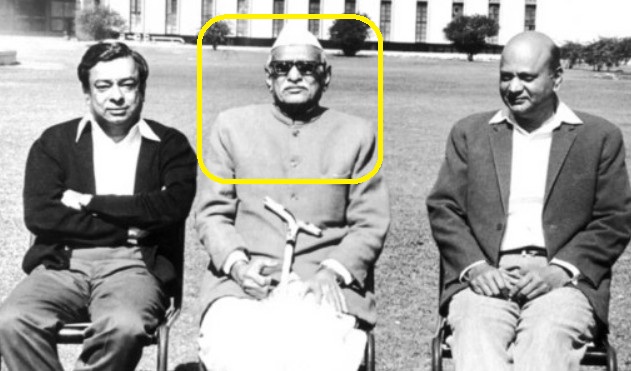
    Tribhuvandas Patel the Father of Cooperative Movement

    Who was Tribhuvandas Patel?

    • Patel was born in 1903 to Kishibhai Patel and Lakhiba in Anand, Gujarat. He was an alumnus of Gujarat Vidyapith and was deeply influenced by Mahatma Gandhi.
    • A dedicated freedom fighter, Patel participated in the civil disobedience movement, campaigns against untouchability, and the salt satyagraha.
    • He was jailed in 1930 for his participation in the Salt Movement.
    • He is widely recognized as the “father of the cooperative movement” in India, particularly for his transformative work in the dairy industry.

    Patel’s Contribution to the Cooperative Movement

    • In 1946, Patel founded the Kaira District Cooperative Milk Producers’ Union Limited (KDCMPUL), known later as Amul, to empower farmers and challenge the monopoly of the Polson Dairy in Anand, Gujarat.
    • Patel collaborated with Verghese Kurien, a mechanical engineer, to modernize the dairy plant and increase milk production. This collaboration eventually led to the White Revolution in India.
    • Patel was also instrumental in setting up the Gujarat Cooperative Milk Marketing Federation (GCMMF), the National Dairy Development Board (NDDB), and the Institute of Rural Management Anand (IRMA), which played a pivotal role in cooperative dairy farming and rural development.
    • After his retirement, Patel used funds from the cooperative community to establish the Tribhuvandas Foundation, focused on community health and welfare.

    Cooperative Movement in India:

    • Pre-Independence Era:
      • The cooperative movement originated from informal local initiatives like Chit Funds and Mutual-Loan Associations in places like Madras Presidency and Punjab.
      • The 1904 Cooperative Credit Societies Act formally recognized cooperatives.
      • The Government of India Act, 1919 empowered provinces to legislate on cooperatives, leading to the Bombay Cooperative Society Act of 1925.
    • Post-Independence Developments:
      • Cooperatives became central to India’s economic strategies, particularly for rural development and social justice.
      • The National Cooperative Development Corporation (NCDC) (1963) and NABARD (1982) supported rural cooperatives and provided credit to farmers.
      • The 97th Constitutional Amendment (2011) granted the right to form cooperatives under Article 19.
      • The Ministry of Cooperation was formed in 2021 to strengthen the cooperative framework.
      • The MSCS Amendment Act 2023 aims to improve governance and operational efficiency of cooperatives.

    Key Types of Cooperatives in India:

    1. Consumers’ Cooperatives: Provide affordable goods by removing intermediaries (e.g., Kendriya Bhandar).
    2. Producers’ Cooperatives: Support small producers by supplying essential materials.
    3. Cooperative Marketing Societies: Help producers market products collectively (e.g., Amul).


    [UPSC 2011] In India, which of the following have the highest share in the disbursement of credit to agriculture and allied activities?

    (a) Commercial Banks (b) Cooperative Banks (c) Regional Rural Banks (d) Microfinance Institutions


  • Who was Rana Sanga (1484–1527)?

    Why in the News?

    A recent statement by an MP in Parliament labelling Rajput ruler Rana Sanga a “traitor,” has sparked controversy over his role in inviting Babur to invade India.

    Who was Rana Sanga?

    • Rana Sanga, also known as Maharana Sangram Singh, was a Rajput king who ruled the kingdom of Mewar in present-day Rajasthan from 1509 to 1527.
    • He expanded his kingdom significantly, conquering parts of Madhya Pradesh, Gujarat, Haryana, and Sindh.
    • He formed a powerful Rajput confederacy and led a massive army of 80,000 warhorses and 500 elephants.
    • He was known for his military campaigns against the Lodi dynasty of Delhi, the Sultanates of Malwa and Gujarat, and even the Mughals.
    • His most notable victories include the Battle of Gagron against Sultan Mahmud Khilji of Malwa and the Battle of Dholpur in 1519 against Ibrahim Lodi of Delhi.
    • Battle with Babur:
      • Rana Sanga eventually came into conflict with Babur, the founder of the Mughal Empire.
      • The two fought in the Battle of Khanwa in 1527, where Babur’s forces defeated Sanga’s Rajput army.
      • This marked the end of Rajput resistance to the Mughals in Northern India.
    • Legacy:
      • Despite his defeat at Khanwa, he is remembered as a hero of Rajput resistance and is considered one of the last independent Hindu rulers in Northern India before the rise of Mughal dominance.

    Recent Controversy:

    • The remarks were made amid growing debates about Medieval Indian history, particularly surrounding Aurangzeb and the role of various historical figures in Indian politics.
    • Historians are divided on whether Rana Sanga explicitly invited Babur to invade India.
    • Babur’s memoirs, the Baburnama, mention that Rana Sanga offered assistance against Ibrahim Lodi.
    • Yet, historians like Satish Chandra propose that Rana Sanga might have viewed Babur as a means to weaken the Lodi Sultanate, possibly underestimating Babur’s intentions to establish his own rule in India.
    • Some argue that Rana Sanga might have seen Babur as a useful ally against Ibrahim Lodi, while others believe his role was exaggerated by Babur in his memoir, the Baburnama.
    [UPSC 2023] With reference to the Mughal Empire, which one of the following statements is NOT correct?

    (a) Mughal officials who were in charge of land revenue were known as Karoris.

    (b) The term ‘Jagirdar’ was used for the holders of revenue assignments.

    (c) The office of ‘Mir Bakshi’ was related to the imperial household.

    (d) The Rajput chiefs were integrated into the Mughal nobility.


  • How Sir Syed reconciled Faith with Reason?

    Why in the News?

    March 27 is the death anniversary of Sir Syed Ahmad Khan, a prominent 19th-century reformer and educationist who significantly advanced the social and educational development of Muslims.

    How Sir Syed reconciled Faith with Reason?

    About Sir Syed Ahmad Khan (1817-1898)

    • Sir Syed Ahmad Khan was born in 1817 in Delhi, into a renowned Muslim family.
    • He received education in Persian and Arabic and was well-versed in Islamic studies from an early age.
    • Public Service and Recognition:
      • He joined the British government’s judicial service in 1876 and was exposed to Western education and ideas, significantly influencing his later reforms.
      • He served as a member of the Viceregal Council (1878-1883), the Lieutenant Governor’s Council of the North-Western Province (1887), and was involved in educational reforms as part of the Imperial Education Commission (1888) and the Royal Public Service Commission (1886).
      • He was knighted by the British in 1888 for his contributions to social and educational reforms.
    • Role During British Rule:
      • After the 1857 revolt, Sir Syed helped change the British perception of Muslims, utilizing British support to improve Muslim progress.
      • He focused on education and cultural reform within the British framework to improve Muslim society.

    Key Contributions:

    • Educational Reforms:
      • Sir Syed founded Madrasatul Uloom in 1875, which later became Muhammadan Anglo-Oriental (MAO) College in 1877, laying the foundation for Aligarh Muslim University (AMU).
      • He encouraged English education, believing it was essential for India’s progress. His visit to England in 1869-1870 further convinced him of its importance.
    • Promotion of Critical Thinking and Modernity:
      • Sir Syed advocated for the reconciliation of Islamic faith with modern scientific thought and believed Islamic principles could coexist with modernity and science.
      • He emphasized reason and critical thinking, opposing blind tradition.
    • Social and Religious Reforms:
      • He supported women’s education, opposed purdah and polygamy, and advocated for easier divorce laws.
      • He criticized the Piri and Muridi System and promoted self-discipline and independent thought.
    • Political Views:
      • While involved in governance, Sir Syed was cautious about direct political engagement to avoid hostility from the British.
    • Literary Contributions:
      • Sir Syed launched 3 bilingual periodicalsThe Loyal Mohammedans of India (1860), The Aligarh Institute Gazette (1866), and Tehzibul Akhlakh (1870) — to promote modernity, rational thought, and cultural pluralism, combating sectarianism and bigotry.
    • Hindu-Muslim Unity:
      • He once famously described Hindus and Muslims as “two eyes of the beautiful bride, that if any of the eyes hurt, made the bride ugly.” He had declared in 1884 at Gurdaspur that the Hindus and Muslims should try to become one heart and soul and act in unison.
    • The Aligarh Movement:
      • It aimed to modernize the Muslim community by promoting modern education while preserving Islamic values.
      • It led to social reforms such as the abolition of purdah and polygamy, and the promotion of widow remarriage and women’s education.
    [UPSC 2000] Consider the following pairs:

    Institution – Founder

    1. Sanskrit College at Benaras – William Jones

    2. Calcutta Madarsa – Warren Hastings

    3. Fort William College – Arthur Wellesley

    4. Muhammedan Anglo-Oriental College at Aligarh – Syed Ahmad Khan

    How many of the above are correctly matched?

    (a) Only one (b) Only two (c) Only three (d) All four


  • Revival of Vikramshila University

    Why in the News?

    A decade after the resurgence of Nalanda University, the Government of Bihar is now focusing on the revival of Vikramshila University.

    About Vikramshila University

    • Vikramshila University was founded by King Dharmapala of the Pala Dynasty in the 8th-9th century AD in Bhagalpur district, Bihar, near the Ganges River.
    • It was established to address the decline in academic standards at Nalanda University.
    • The university specialized in Tantric Buddhism and Vajrayana Buddhism. Subjects taught included philosophy, grammar, metaphysics, logic, and tantras.
    • Notable scholars like Atisa Dipankara and Naropa were associated with Vikramshila.
    • It housed over 1,000 students and employed more than 100 teachers.
      • The university had 208 monastic cells, where monks studied and meditated.
    • Administration was managed by a Kulpati, or Mahasthavir, overseeing both academics and operations.
    • Key Features:
      • The university’s iconic cruciform brick stupa stood at 15 meters.
      • It also had a library with a unique cooling system to preserve manuscripts.
      • The architecture included a square layout with gates at four cardinal directions and surrounding votive stupas.
    • Decline and Destruction:
      • It thrived for about 400 years before being destroyed by Muhammad Bakhtiyar Khalji in 1193 AD.
      • The decline was due to the rise of Hinduism, the fall of Buddhism, and foreign invasions.

    Cultural Significance of Vikramshila University

    • Vikramshila was a major centre for Tantric and Vajrayana Buddhism, focusing on esoteric practices and rituals.
    • The Cakrasamvara Tantra was developed here, with scholars like Buddhajnanapada contributing to its spread.
    • The teachings from Vikramshila spread Buddhism across the Himalayas, Central Asia, and the Far East.
    • Vikramshila represented the zenith of Buddhist scholarship in India and contributed significantly to Buddhist texts, some of which survived through Tibetan manuscripts.
    [UPSC 1998] Which of the following pairs are correctly matched?

    I. Lothal: Ancient dockyard

    II. Sarnath: First Sermon of Buddha

    III. Rajgir: Lion capital of Asoka

    IV. Nalanda: Great seat of Buddhist learning

    Select the correct answer using the codes given below:

    (a) I, II, III and IV (b) III and IV (c) I, II and IV (d) I and II


  • Lapis Lazuli and its Ancient Significance

    Why in the News?

    This newscard is an excerpt from the original article published in ‘The Hindu’.

    Lapis Lazuli and its Ancient Significance

    About Lapis Lazuli

    • Lapis lazuli is a deep-blue metamorphic rock prized for its vibrant colour, often used in jewellery and decorative items.
    • It is composed mainly of lazurite, with other minerals like calcite and pyrite, which give it its characteristic golden specks.
    • It is mainly found in Afghanistan’s Badakhshan province, though it is also present in Chile, Russia, and the US.
    • It has been valued since ancient times, particularly in Egypt, Mesopotamia, and Greece, and is known for its use in making pigments, especially ultramarine.

    Lapis Lazuli and its Ancient Significance

    Lapis Lazuli in Indus Valley Civilization (IVC):

    • The Indus Valley Civilization (IVC) (3300-1900 BC) had extensive trade with Mesopotamia and Afghanistan, where lapis lazuli was imported.
    • It was used for beads and ornaments found at Mohenjo-daro and Harappa, underscoring its value in Indus jewellery.
    • It was a sacred stone, often used in beads, pendants, and amulets, symbolizing spirituality and high social status.
    • It was likely associated with religious ceremonies and used to represent the gods.
    • The Indus people were skilled at bead-making, often combining lapis lazuli with other stones, such as gold.
    • The intricate designs, including incised or painted beads, reflect their technical expertise.

    Other Semi-Precious Stones Found in IVC:

    Several semi-precious stones were used by the IVC to create jewellery and ornaments:

    • Carnelian beads were made into pendants and rings, valued for their reddish-orange hue and durability.
    • Amethyst beads, a purple quartz variety, were also used, likely imported from other regions.
    • Jasper, a chalcedony variety, was used for beads and pendants, valued for its earthy tones.
    • Turquoise was used in beads, often combined with lapis lazuli and carnelian.
    • Steatite (Soapstone) was used for seals and beads, often engraved with animal motifs or symbols.
    • Crystal and quartz were used for translucent beads, adding a mystical quality to jewelry.
    • Gold, combined with semi-precious stones like lapis lazuli, carnelian, and turquoise, was extensively used in necklaces, bracelets, and earrings.


    [UPSC 2023] Lothal, a significant site of the Indus Valley Civilization, was particularly well-known as a:

    (a) major agricultural centre

    (b) centre for textile production

    (c) major trade hub for beads, gems, and ornaments

    (d) site with extensive fire altars


  • Why Pots are integral to understanding Culture?

    Why in the News?

    This newscard is an excerpt and extension of the original article published in the Indian Express.

    Why Pots are integral to understanding Culture?

    Types of Potteries in Ancient India:

    1. Neolithic Age (10000 BCE): Pottery in this period was handmade, with rough, unglazed surfaces. Later, the footwheel was introduced, making pottery shaping more refined. Materials like clay, mica, and sand were used.
    2. Chalcolithic Age (4500-2000 BCE): The main pottery types during this era were Black-and-Red Ware, Black-on-Red Ware, and Ochre Colored Pottery (OCP). These were seen in cultures like Ahar-Banas and Jorwe, often featuring geometric designs.
    3. Indus Valley Civilization (3300-1500 BCE): Pottery was wheel-thrown, with both polished and unpolished varieties. Common pottery types included Black-and-Red Ware and Painted Grey Ware, adorned with geometric patterns and depictions of animals and plants.
    4. Vedic Era (1500-500 BCE): During this period, Painted Grey Ware (PGW) became prominent, characterized by fine grey pottery with black geometric patterns. Northern Black Polished Ware (NBPW) emerged, glossy and associated with the elite for its fine finish.
    5. Mauryan and Gupta Periods: The Mauryan period continued the use of NBPW, while the Gupta period introduced redware pottery. The Kushana period added red polished ware with stamped designs.

    Rise in Mercantile Activities and Evolution of Pottery Styles:

    • The Vedic period saw the emergence of Painted Grey Ware (PGW), often linked with the Mahabharata and Ramayana.
    • With the rise of Buddhism, Jainism, and urbanization, NBPW emerged during the Mahajanapada period.
    • Glazed porcelain was introduced around 1000 AD through trade with China and Muslim traders, significantly influencing India’s pottery tradition.

    How Pots are integral to understanding Culture?

    • Material Culture: Pottery is a direct reflection of daily life and technological expertise. It reveals how ancient societies lived, worked, and expressed their culture through artistic and functional objects.
    • Socio-Economic Indicators: The types of pottery indicate economic status. Luxury pottery like NBPW was reserved for the elite, while more common pottery suggests the everyday life of the broader society.
    • Cultural and Religious Practices: Pottery had significant ritualistic and symbolic importance, used in religious ceremonies and burial rituals. Specific pots represented deities or were filled with sacred items like coconuts, bananas, and flowers.
    • Technological and Artistic Development: The evolution of pottery-making, from handmade to wheel-thrown pottery, marks the increasing technological and artistic sophistication of ancient civilizations, highlighting advancements in both craftsmanship and creativity.
    • Chronological Understanding: Pottery helps date ancient sites, providing key insights into the timeline of cultural and technological progress. It allows historians to map out the development of civilizations and better understand their historical context.
  • Anniversary of the Muzhara Movement

    Why in the News?

    On March 19, the anniversary of the Muzhara movement is observed, marking a significant chapter in Punjab’s agrarian struggles.

    About Muzhara Movement

    • Muzharas were farmers who worked the land but had no ownership rights.
      • They were part of a larger class of landless peasants in Punjab, facing oppressive feudal systems.
    • The biswedars (landlords), who took one-third of the produce, controlled the land.
      • This system led to economic exploitation, with a significant portion of the produce and profits going to the feudal landlords and, ultimately, the British colonial rulers.
    • The muzharas were seeking ownership of the land they had tilled for generations, asserting their right to the land in opposition to both the feudal and colonial systems.
    • In March 1949, when the biswedars tried to reclaim land from the muzharas, Kishangarh village became the epicentre of the struggle.
    • A violent standoff between the muzharas and the Patiala police ensued, which resulted in the death of a police officer on March 17.
    • The army intervened on March 19, leading to four muzharas being killed in the ensuing confrontation.

    Other Contemporary Peasant’s Movements

    Details
    Champaran Satyagraha (1917)
    • Led by Mahatma Gandhi in Bihar against the tinkathia system, where peasants were forced to grow indigo on part of their land.
    • Resulted in the Champaran Agrarian Act (1918), which abolished oppressive practices.
    Kheda Satyagraha (1918)
    • Organized in Gujarat after crop failures when the government refused to remit land revenue.
    • Gandhi and Sardar Patel supported peasants in withholding revenue payments until demands were met.
    Bardoli Satyagraha (1928)
    • Led by Vallabhbhai Patel in Gujarat against a 30% hike in land revenue.
    • The movement succeeded, and Patel earned the title “Sardar” for his leadership.
    Tebhaga Movement (1946-47)
    • Initiated by the Kisan Sabha in Bengal, demanding a two-thirds share of produce for tenants instead of the customary half.
    • Despite being suppressed violently, it highlighted peasant rights.
    Telangana Movement (1946-51)
    • A communist-led peasant guerrilla struggle in Andhra Pradesh against feudal landlords and the Nizam’s oppressive regime.
    • Achieved redistribution of land and improved


    PYQ:

    [UPSC 2013] The demand for the Tebhaga Peasant Movement in Bengal was for:

    (a) the reduction of the share of the landlords from one-half of the crop to one-third,

    (b) the grant of ownership of land to peasants as they were the actual cultivators of the land,

    (c) the uprooting of Zamindari system and the end of serfdom,

    (d) writing off all peasant debts